SUBSCRIBE TO OUR FREE NEWSLETTER
Daily news & progressive opinion—funded by the people, not the corporations—delivered straight to your inbox.
5
#000000
#FFFFFF
To donate by check, phone, or other method, see our More Ways to Give page.
Daily news & progressive opinion—funded by the people, not the corporations—delivered straight to your inbox.
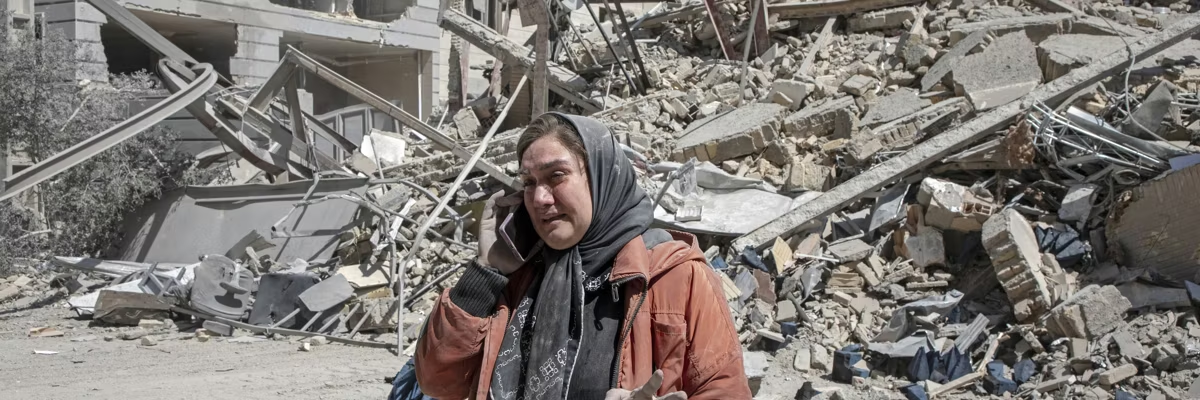
A resident weeps while talking on the phone near a residential building that was hit by a US-Israeli airstrike on March 30, 2026 in the west of Tehran, Iran.
"Attacking civilian infrastructure, and acutely desalination plants, is a war crime," said former Swedish Prime Minister Carl Bildt. "Will American armed forces accept orders to do so?"
US President Donald Trump on Monday threatened to destroy every desalination plant in Iran along with the country's energy infrastructure, which human rights organizations and legal experts say would be a grave violation of international law and a war crime.
In a post on his Truth Social platform, Trump warned that if Iran's government doesn't agree to a deal with his administration "shortly," the US military will "conclude our lovely 'stay' in Iran by blowing up and completely obliterating all of their Electric Generating Plants, Oil Wells, and Kharg Island (and possibly all desalinization plants!), which we have purposefully not yet 'touched.'"
Former Swedish Prime Minister Carl Bildt wrote in response that "attacking civilian infrastructure, and acutely desalination plants, is a war crime."
"Will American armed forces accept orders to do so?" he asked.
Brian Finucane, senior adviser to the US Program at the International Crisis Group, wrote that "the categorical and retributive framing of this threat to attack Iranian infrastructure makes clear that this is a threat to commit war crimes."
Trump's Monday post marked an escalation of his previous threat to target Iran's civilian infrastructure, specifically its power plants, if the Strait of Hormuz was not fully reopened. The US president initially gave Iran 48 hours to capitulate to his demand, but he later pushed his arbitrary deadline back to April 6, claiming progress in diplomatic talks with Iran.
Iranian officials have repeatedly denied that any direct talks with the US are taking place and rejected the administration's proposed 15-point ceasefire plan.
Erika Guevara-Rosas, senior director of research, advocacy, policy, and campaigns at Amnesty International, said last week that by threatening strikes on Iran's civilian infrastructure, the Trump administration is "effectively indicating its willingness to plunge an entire country into darkness, and to potentially deprive its people of their human rights to life, water, food, healthcare and adequate standard of living, and to subject them to severe pain and suffering."
"When power plants collapse, horrific consequences cascade instantly," said Guevara-Rosas. "Water pumping stations would stop functioning, clean water would become scarce, and preventable diseases would spread. Hospitals would lose electricity and fuel, forcing surgeries to be cancelled and life-support machines to shut down. Food production and distribution networks would collapse, deepening hunger and causing widespread food scarcity. Many businesses would also shut down with devastating economic consequences, including mass unemployment."
Kenneth Roth, the former executive director of Human Rights Watch, told The New York Times that he sees "no difference between what Trump is threatening to do in Iran and what the International Criminal Court charged four Russian commanders for doing in Ukraine."
"Trump is openly threatening a war crime," said Roth.
In June 2024, ICC judges issued arrest warrants for top Russian commanders accused of "the war crime of directing attacks at civilian objects." The judges cited "a large number of strikes against numerous electric power plants and sub-stations were carried out by the Russian armed forces in multiple locations in Ukraine."
According to Iranian Foreign Minister Abbas Araghchi, the US has already targeted Iran's water infrastructure, specifically "a freshwater desalination plant on Qeshm Island."
"Water supply in 30 villages has been impacted," Abbas wrote in a March 7 social media post. "Attacking Iran's infrastructure is a dangerous move with grave consequences. The US set this precedent, not Iran."
Iran is among the most water-stressed countries on the planet, and large-scale US strikes on the country's desalination and power plants would make conditions significantly worse.
While "only a small fraction of Iran’s water supply comes from desalination plants," Grist's Frida Garza wrote last week, "strikes on its power plants would indeed hamper the country’s water supply."
"Without electricity," Garza wrote, "water treatment operations could not run."
Dear Common Dreams reader, It’s been nearly 30 years since I co-founded Common Dreams with my late wife, Lina Newhouser. We had the radical notion that journalism should serve the public good, not corporate profits. It was clear to us from the outset what it would take to build such a project. No paid advertisements. No corporate sponsors. No millionaire publisher telling us what to think or do. Many people said we wouldn't last a year, but we proved those doubters wrong. Together with a tremendous team of journalists and dedicated staff, we built an independent media outlet free from the constraints of profits and corporate control. Our mission has always been simple: To inform. To inspire. To ignite change for the common good. Building Common Dreams was not easy. Our survival was never guaranteed. When you take on the most powerful forces—Wall Street greed, fossil fuel industry destruction, Big Tech lobbyists, and uber-rich oligarchs who have spent billions upon billions rigging the economy and democracy in their favor—the only bulwark you have is supporters who believe in your work. But here’s the urgent message from me today. It's never been this bad out there. And it's never been this hard to keep us going. At the very moment Common Dreams is most needed, the threats we face are intensifying. We need your support now more than ever. We don't accept corporate advertising and never will. We don't have a paywall because we don't think people should be blocked from critical news based on their ability to pay. Everything we do is funded by the donations of readers like you. When everyone does the little they can afford, we are strong. But if that support retreats or dries up, so do we. Will you donate now to make sure Common Dreams not only survives but thrives? —Craig Brown, Co-founder |
US President Donald Trump on Monday threatened to destroy every desalination plant in Iran along with the country's energy infrastructure, which human rights organizations and legal experts say would be a grave violation of international law and a war crime.
In a post on his Truth Social platform, Trump warned that if Iran's government doesn't agree to a deal with his administration "shortly," the US military will "conclude our lovely 'stay' in Iran by blowing up and completely obliterating all of their Electric Generating Plants, Oil Wells, and Kharg Island (and possibly all desalinization plants!), which we have purposefully not yet 'touched.'"
Former Swedish Prime Minister Carl Bildt wrote in response that "attacking civilian infrastructure, and acutely desalination plants, is a war crime."
"Will American armed forces accept orders to do so?" he asked.
Brian Finucane, senior adviser to the US Program at the International Crisis Group, wrote that "the categorical and retributive framing of this threat to attack Iranian infrastructure makes clear that this is a threat to commit war crimes."
Trump's Monday post marked an escalation of his previous threat to target Iran's civilian infrastructure, specifically its power plants, if the Strait of Hormuz was not fully reopened. The US president initially gave Iran 48 hours to capitulate to his demand, but he later pushed his arbitrary deadline back to April 6, claiming progress in diplomatic talks with Iran.
Iranian officials have repeatedly denied that any direct talks with the US are taking place and rejected the administration's proposed 15-point ceasefire plan.
Erika Guevara-Rosas, senior director of research, advocacy, policy, and campaigns at Amnesty International, said last week that by threatening strikes on Iran's civilian infrastructure, the Trump administration is "effectively indicating its willingness to plunge an entire country into darkness, and to potentially deprive its people of their human rights to life, water, food, healthcare and adequate standard of living, and to subject them to severe pain and suffering."
"When power plants collapse, horrific consequences cascade instantly," said Guevara-Rosas. "Water pumping stations would stop functioning, clean water would become scarce, and preventable diseases would spread. Hospitals would lose electricity and fuel, forcing surgeries to be cancelled and life-support machines to shut down. Food production and distribution networks would collapse, deepening hunger and causing widespread food scarcity. Many businesses would also shut down with devastating economic consequences, including mass unemployment."
Kenneth Roth, the former executive director of Human Rights Watch, told The New York Times that he sees "no difference between what Trump is threatening to do in Iran and what the International Criminal Court charged four Russian commanders for doing in Ukraine."
"Trump is openly threatening a war crime," said Roth.
In June 2024, ICC judges issued arrest warrants for top Russian commanders accused of "the war crime of directing attacks at civilian objects." The judges cited "a large number of strikes against numerous electric power plants and sub-stations were carried out by the Russian armed forces in multiple locations in Ukraine."
According to Iranian Foreign Minister Abbas Araghchi, the US has already targeted Iran's water infrastructure, specifically "a freshwater desalination plant on Qeshm Island."
"Water supply in 30 villages has been impacted," Abbas wrote in a March 7 social media post. "Attacking Iran's infrastructure is a dangerous move with grave consequences. The US set this precedent, not Iran."
Iran is among the most water-stressed countries on the planet, and large-scale US strikes on the country's desalination and power plants would make conditions significantly worse.
While "only a small fraction of Iran’s water supply comes from desalination plants," Grist's Frida Garza wrote last week, "strikes on its power plants would indeed hamper the country’s water supply."
"Without electricity," Garza wrote, "water treatment operations could not run."
US President Donald Trump on Monday threatened to destroy every desalination plant in Iran along with the country's energy infrastructure, which human rights organizations and legal experts say would be a grave violation of international law and a war crime.
In a post on his Truth Social platform, Trump warned that if Iran's government doesn't agree to a deal with his administration "shortly," the US military will "conclude our lovely 'stay' in Iran by blowing up and completely obliterating all of their Electric Generating Plants, Oil Wells, and Kharg Island (and possibly all desalinization plants!), which we have purposefully not yet 'touched.'"
Former Swedish Prime Minister Carl Bildt wrote in response that "attacking civilian infrastructure, and acutely desalination plants, is a war crime."
"Will American armed forces accept orders to do so?" he asked.
Brian Finucane, senior adviser to the US Program at the International Crisis Group, wrote that "the categorical and retributive framing of this threat to attack Iranian infrastructure makes clear that this is a threat to commit war crimes."
Trump's Monday post marked an escalation of his previous threat to target Iran's civilian infrastructure, specifically its power plants, if the Strait of Hormuz was not fully reopened. The US president initially gave Iran 48 hours to capitulate to his demand, but he later pushed his arbitrary deadline back to April 6, claiming progress in diplomatic talks with Iran.
Iranian officials have repeatedly denied that any direct talks with the US are taking place and rejected the administration's proposed 15-point ceasefire plan.
Erika Guevara-Rosas, senior director of research, advocacy, policy, and campaigns at Amnesty International, said last week that by threatening strikes on Iran's civilian infrastructure, the Trump administration is "effectively indicating its willingness to plunge an entire country into darkness, and to potentially deprive its people of their human rights to life, water, food, healthcare and adequate standard of living, and to subject them to severe pain and suffering."
"When power plants collapse, horrific consequences cascade instantly," said Guevara-Rosas. "Water pumping stations would stop functioning, clean water would become scarce, and preventable diseases would spread. Hospitals would lose electricity and fuel, forcing surgeries to be cancelled and life-support machines to shut down. Food production and distribution networks would collapse, deepening hunger and causing widespread food scarcity. Many businesses would also shut down with devastating economic consequences, including mass unemployment."
Kenneth Roth, the former executive director of Human Rights Watch, told The New York Times that he sees "no difference between what Trump is threatening to do in Iran and what the International Criminal Court charged four Russian commanders for doing in Ukraine."
"Trump is openly threatening a war crime," said Roth.
In June 2024, ICC judges issued arrest warrants for top Russian commanders accused of "the war crime of directing attacks at civilian objects." The judges cited "a large number of strikes against numerous electric power plants and sub-stations were carried out by the Russian armed forces in multiple locations in Ukraine."
According to Iranian Foreign Minister Abbas Araghchi, the US has already targeted Iran's water infrastructure, specifically "a freshwater desalination plant on Qeshm Island."
"Water supply in 30 villages has been impacted," Abbas wrote in a March 7 social media post. "Attacking Iran's infrastructure is a dangerous move with grave consequences. The US set this precedent, not Iran."
Iran is among the most water-stressed countries on the planet, and large-scale US strikes on the country's desalination and power plants would make conditions significantly worse.
While "only a small fraction of Iran’s water supply comes from desalination plants," Grist's Frida Garza wrote last week, "strikes on its power plants would indeed hamper the country’s water supply."
"Without electricity," Garza wrote, "water treatment operations could not run."