SUBSCRIBE TO OUR FREE NEWSLETTER
Daily news & progressive opinion—funded by the people, not the corporations—delivered straight to your inbox.
5
#000000
#FFFFFF
To donate by check, phone, or other method, see our More Ways to Give page.
Daily news & progressive opinion—funded by the people, not the corporations—delivered straight to your inbox.
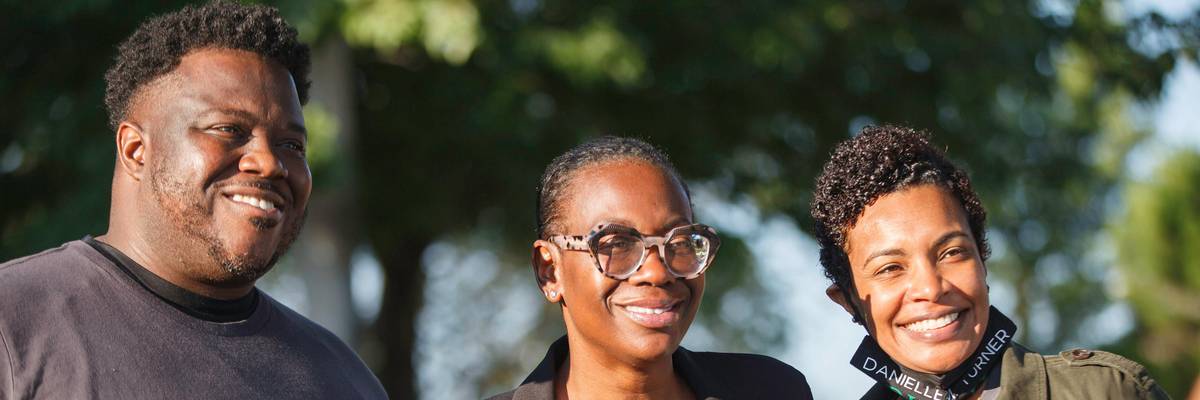
Progressive Democratic candidate Nina Turner poses with Democratic politician from Louisiana, Gary Chambers and a woman wearing a Danielle M. Turner-Birch shirt, for Board of Education for Bedford. Voters came out to the polls for a special election in Ohios 11th district. The two main leading candidates for this House of Representatives seat are two Democrats, Nina Turner, a progressive candidate, and Shontel Brown, who represents the traditional Democratic establishment.
Sometimes one decision speaks volumes. And so it was when the Congressional Progressive Caucus--with 98 members in the House--recently chose to have its PAC endorse a corporate "moderate" against the strong progressive candidate Nina Turner. In the process, the Progressive Caucus underscored its loyalty to establishment Democrats while damaging its credibility among progressives nationwide.
By siding with Brown against Turner, the Progressive Caucus appears to be operating like much of official Washington does--as an incumbent protection racket.
The endorsement of Congresswoman Shontel Brown against Turner in their upcoming May 3 rematch came just five months after Brown took office following last year's special election in a Cleveland area district. In last August's Democratic primary, Brown defeated Turner with the help of funding from big corporate, Republican and hawkishly pro-Israel donors--as well as support from Republicans who voted for Brown in Ohio's open primary. (Brown's two most notable national endorsers were Hillary Clinton and Rep. Jim Clyburn (D-S.C.).
Brown is such an establishment politician that she didn't just join the Progressive Caucus--she also quickly joined the rival New Democrat Coalition, an alliance of the most corporate Democrats in the House.
By siding with Brown against Turner, the Progressive Caucus appears to be operating like much of official Washington does--as an incumbent protection racket.
And the endorsement brought questions to the surface that have been festering for a long time. Such as:
Does the Progressive Caucus represent the interests of progressive constituencies to the establishment? Or does the Progressive Caucus represent the interests of the establishment to progressives? And if the answer is "both," then how does that work?
Unless such questions are answered with clarity, illusions will undermine the efforts of grassroots progressives to assess situations accurately and organize effectively.
While the endorsement of Brown is a bellwether event, it is not an isolated incident. After a long history of backing down rather than using its leverage (as when it abandoned its demand in 2009 that a "public option" be part of the Affordable Care Act), the Progressive Caucus appeared to wield some real clout during the early months of the Biden presidency. Most importantly, its leadership insisted that it would not back last year's bipartisan infrastructure bill unless it moved through Congress in tandem with the Build Back Better legislation proposed by President Biden with major input from Sen. Bernie Sanders.
Build Back Better was crucial for economic and social justice as well as for substantively addressing the climate emergency. And for a time, it seemed that the Progressive Caucus, under the leadership of Rep. Pramila Jayapal (D-Wash.), was holding firm onto the necessity of passing Build Back Better along with the infrastructure measure. Simultaneity was crucial because Senate obstructionist Joe Manchin of West Virginia badly wanted the infrastructure bill signed into law but was hostile to Build Back Better.
The Progressive Caucus leadership vowed to not back down. And then it caved, opting to wave the infrastructure bill through the House. Rep. Alexandria Ocasio-Cortez (D-N.Y.) was concise when she said: "I'm a No. This is bullshit."
Other members of the expanded Squad--including Reps. Ilhan Omar, Cori Bush, Rashida Tlaib, Jamaal Bowman, and Ayanna Pressley--also voted against the stand-alone infrastructure measure (and took plenty of abuse as a result).
Ocasio-Cortez, Omar, Bush, Tlaib, Bowman, and Pressley saw what was coming, as a result of the Progressive Caucus's surrender. The infrastructure bill got through Congress, and Biden signed it on November 15. Progressives immediately lost their leverage for Build Back Better. It died.
In December, RootsAction.org (which we co-founded) published an in-depth report on the Congressional Progressive Caucus, documenting that many of its members fail to support the CPC's main priorities (like Medicare for All and a Green New Deal) and that some in the caucus are just PINOs ("Progressive In Name Only"). Those lawmakers obviously believe the "progressive" label helps them with activists and constituents back in their districts, but in Washington they tend to legislate on behalf of the corporate status quo.
The PINO report found that "16 CPC members are also part of the ideologically corporatist New Democrat Coalition"--a "moderate" caucus that advocates "market-oriented" and "fiscally responsible" policies to solve the big economic and environmental crises of our time. Add Rep. Shontel Brown to this list of dual members. (When the CPC's PAC endorsed Brown this month, it also announced its endorsement of several of the worst PINOs running for re-election, including Rep. Jimmy Panetta of California.)
The report analyzed the lack of cohesion in the Progressive Caucus and cited that deficiency in asking how one of Congress' biggest caucuses did not muster the power to get Build Back Better across the finish line.
The Progressive Caucus leadership approach that gave up leverage for Build Back Better is akin to the one that just endorsed Shontel Brown against Nina Turner. Progressives around the country should take note and not forget: We can't depend on the Congressional Progressive Caucus to provide the kind of leadership we need. It must come from the grassroots.
Dear Common Dreams reader, It’s been nearly 30 years since I co-founded Common Dreams with my late wife, Lina Newhouser. We had the radical notion that journalism should serve the public good, not corporate profits. It was clear to us from the outset what it would take to build such a project. No paid advertisements. No corporate sponsors. No millionaire publisher telling us what to think or do. Many people said we wouldn't last a year, but we proved those doubters wrong. Together with a tremendous team of journalists and dedicated staff, we built an independent media outlet free from the constraints of profits and corporate control. Our mission has always been simple: To inform. To inspire. To ignite change for the common good. Building Common Dreams was not easy. Our survival was never guaranteed. When you take on the most powerful forces—Wall Street greed, fossil fuel industry destruction, Big Tech lobbyists, and uber-rich oligarchs who have spent billions upon billions rigging the economy and democracy in their favor—the only bulwark you have is supporters who believe in your work. But here’s the urgent message from me today. It's never been this bad out there. And it's never been this hard to keep us going. At the very moment Common Dreams is most needed, the threats we face are intensifying. We need your support now more than ever. We don't accept corporate advertising and never will. We don't have a paywall because we don't think people should be blocked from critical news based on their ability to pay. Everything we do is funded by the donations of readers like you. When everyone does the little they can afford, we are strong. But if that support retreats or dries up, so do we. Will you donate now to make sure Common Dreams not only survives but thrives? —Craig Brown, Co-founder |
Norman Solomon is the national director of RootsAction.org and executive director of the Institute for Public Accuracy. The paperback edition of his latest book, War Made Invisible: How America Hides the Human Toll of Its Military Machine, includes an afterword about the Gaza war.
Sometimes one decision speaks volumes. And so it was when the Congressional Progressive Caucus--with 98 members in the House--recently chose to have its PAC endorse a corporate "moderate" against the strong progressive candidate Nina Turner. In the process, the Progressive Caucus underscored its loyalty to establishment Democrats while damaging its credibility among progressives nationwide.
By siding with Brown against Turner, the Progressive Caucus appears to be operating like much of official Washington does--as an incumbent protection racket.
The endorsement of Congresswoman Shontel Brown against Turner in their upcoming May 3 rematch came just five months after Brown took office following last year's special election in a Cleveland area district. In last August's Democratic primary, Brown defeated Turner with the help of funding from big corporate, Republican and hawkishly pro-Israel donors--as well as support from Republicans who voted for Brown in Ohio's open primary. (Brown's two most notable national endorsers were Hillary Clinton and Rep. Jim Clyburn (D-S.C.).
Brown is such an establishment politician that she didn't just join the Progressive Caucus--she also quickly joined the rival New Democrat Coalition, an alliance of the most corporate Democrats in the House.
By siding with Brown against Turner, the Progressive Caucus appears to be operating like much of official Washington does--as an incumbent protection racket.
And the endorsement brought questions to the surface that have been festering for a long time. Such as:
Does the Progressive Caucus represent the interests of progressive constituencies to the establishment? Or does the Progressive Caucus represent the interests of the establishment to progressives? And if the answer is "both," then how does that work?
Unless such questions are answered with clarity, illusions will undermine the efforts of grassroots progressives to assess situations accurately and organize effectively.
While the endorsement of Brown is a bellwether event, it is not an isolated incident. After a long history of backing down rather than using its leverage (as when it abandoned its demand in 2009 that a "public option" be part of the Affordable Care Act), the Progressive Caucus appeared to wield some real clout during the early months of the Biden presidency. Most importantly, its leadership insisted that it would not back last year's bipartisan infrastructure bill unless it moved through Congress in tandem with the Build Back Better legislation proposed by President Biden with major input from Sen. Bernie Sanders.
Build Back Better was crucial for economic and social justice as well as for substantively addressing the climate emergency. And for a time, it seemed that the Progressive Caucus, under the leadership of Rep. Pramila Jayapal (D-Wash.), was holding firm onto the necessity of passing Build Back Better along with the infrastructure measure. Simultaneity was crucial because Senate obstructionist Joe Manchin of West Virginia badly wanted the infrastructure bill signed into law but was hostile to Build Back Better.
The Progressive Caucus leadership vowed to not back down. And then it caved, opting to wave the infrastructure bill through the House. Rep. Alexandria Ocasio-Cortez (D-N.Y.) was concise when she said: "I'm a No. This is bullshit."
Other members of the expanded Squad--including Reps. Ilhan Omar, Cori Bush, Rashida Tlaib, Jamaal Bowman, and Ayanna Pressley--also voted against the stand-alone infrastructure measure (and took plenty of abuse as a result).
Ocasio-Cortez, Omar, Bush, Tlaib, Bowman, and Pressley saw what was coming, as a result of the Progressive Caucus's surrender. The infrastructure bill got through Congress, and Biden signed it on November 15. Progressives immediately lost their leverage for Build Back Better. It died.
In December, RootsAction.org (which we co-founded) published an in-depth report on the Congressional Progressive Caucus, documenting that many of its members fail to support the CPC's main priorities (like Medicare for All and a Green New Deal) and that some in the caucus are just PINOs ("Progressive In Name Only"). Those lawmakers obviously believe the "progressive" label helps them with activists and constituents back in their districts, but in Washington they tend to legislate on behalf of the corporate status quo.
The PINO report found that "16 CPC members are also part of the ideologically corporatist New Democrat Coalition"--a "moderate" caucus that advocates "market-oriented" and "fiscally responsible" policies to solve the big economic and environmental crises of our time. Add Rep. Shontel Brown to this list of dual members. (When the CPC's PAC endorsed Brown this month, it also announced its endorsement of several of the worst PINOs running for re-election, including Rep. Jimmy Panetta of California.)
The report analyzed the lack of cohesion in the Progressive Caucus and cited that deficiency in asking how one of Congress' biggest caucuses did not muster the power to get Build Back Better across the finish line.
The Progressive Caucus leadership approach that gave up leverage for Build Back Better is akin to the one that just endorsed Shontel Brown against Nina Turner. Progressives around the country should take note and not forget: We can't depend on the Congressional Progressive Caucus to provide the kind of leadership we need. It must come from the grassroots.
Norman Solomon is the national director of RootsAction.org and executive director of the Institute for Public Accuracy. The paperback edition of his latest book, War Made Invisible: How America Hides the Human Toll of Its Military Machine, includes an afterword about the Gaza war.
Sometimes one decision speaks volumes. And so it was when the Congressional Progressive Caucus--with 98 members in the House--recently chose to have its PAC endorse a corporate "moderate" against the strong progressive candidate Nina Turner. In the process, the Progressive Caucus underscored its loyalty to establishment Democrats while damaging its credibility among progressives nationwide.
By siding with Brown against Turner, the Progressive Caucus appears to be operating like much of official Washington does--as an incumbent protection racket.
The endorsement of Congresswoman Shontel Brown against Turner in their upcoming May 3 rematch came just five months after Brown took office following last year's special election in a Cleveland area district. In last August's Democratic primary, Brown defeated Turner with the help of funding from big corporate, Republican and hawkishly pro-Israel donors--as well as support from Republicans who voted for Brown in Ohio's open primary. (Brown's two most notable national endorsers were Hillary Clinton and Rep. Jim Clyburn (D-S.C.).
Brown is such an establishment politician that she didn't just join the Progressive Caucus--she also quickly joined the rival New Democrat Coalition, an alliance of the most corporate Democrats in the House.
By siding with Brown against Turner, the Progressive Caucus appears to be operating like much of official Washington does--as an incumbent protection racket.
And the endorsement brought questions to the surface that have been festering for a long time. Such as:
Does the Progressive Caucus represent the interests of progressive constituencies to the establishment? Or does the Progressive Caucus represent the interests of the establishment to progressives? And if the answer is "both," then how does that work?
Unless such questions are answered with clarity, illusions will undermine the efforts of grassroots progressives to assess situations accurately and organize effectively.
While the endorsement of Brown is a bellwether event, it is not an isolated incident. After a long history of backing down rather than using its leverage (as when it abandoned its demand in 2009 that a "public option" be part of the Affordable Care Act), the Progressive Caucus appeared to wield some real clout during the early months of the Biden presidency. Most importantly, its leadership insisted that it would not back last year's bipartisan infrastructure bill unless it moved through Congress in tandem with the Build Back Better legislation proposed by President Biden with major input from Sen. Bernie Sanders.
Build Back Better was crucial for economic and social justice as well as for substantively addressing the climate emergency. And for a time, it seemed that the Progressive Caucus, under the leadership of Rep. Pramila Jayapal (D-Wash.), was holding firm onto the necessity of passing Build Back Better along with the infrastructure measure. Simultaneity was crucial because Senate obstructionist Joe Manchin of West Virginia badly wanted the infrastructure bill signed into law but was hostile to Build Back Better.
The Progressive Caucus leadership vowed to not back down. And then it caved, opting to wave the infrastructure bill through the House. Rep. Alexandria Ocasio-Cortez (D-N.Y.) was concise when she said: "I'm a No. This is bullshit."
Other members of the expanded Squad--including Reps. Ilhan Omar, Cori Bush, Rashida Tlaib, Jamaal Bowman, and Ayanna Pressley--also voted against the stand-alone infrastructure measure (and took plenty of abuse as a result).
Ocasio-Cortez, Omar, Bush, Tlaib, Bowman, and Pressley saw what was coming, as a result of the Progressive Caucus's surrender. The infrastructure bill got through Congress, and Biden signed it on November 15. Progressives immediately lost their leverage for Build Back Better. It died.
In December, RootsAction.org (which we co-founded) published an in-depth report on the Congressional Progressive Caucus, documenting that many of its members fail to support the CPC's main priorities (like Medicare for All and a Green New Deal) and that some in the caucus are just PINOs ("Progressive In Name Only"). Those lawmakers obviously believe the "progressive" label helps them with activists and constituents back in their districts, but in Washington they tend to legislate on behalf of the corporate status quo.
The PINO report found that "16 CPC members are also part of the ideologically corporatist New Democrat Coalition"--a "moderate" caucus that advocates "market-oriented" and "fiscally responsible" policies to solve the big economic and environmental crises of our time. Add Rep. Shontel Brown to this list of dual members. (When the CPC's PAC endorsed Brown this month, it also announced its endorsement of several of the worst PINOs running for re-election, including Rep. Jimmy Panetta of California.)
The report analyzed the lack of cohesion in the Progressive Caucus and cited that deficiency in asking how one of Congress' biggest caucuses did not muster the power to get Build Back Better across the finish line.
The Progressive Caucus leadership approach that gave up leverage for Build Back Better is akin to the one that just endorsed Shontel Brown against Nina Turner. Progressives around the country should take note and not forget: We can't depend on the Congressional Progressive Caucus to provide the kind of leadership we need. It must come from the grassroots.