SUBSCRIBE TO OUR FREE NEWSLETTER
Daily news & progressive opinion—funded by the people, not the corporations—delivered straight to your inbox.
5
#000000
#FFFFFF
To donate by check, phone, or other method, see our More Ways to Give page.
Daily news & progressive opinion—funded by the people, not the corporations—delivered straight to your inbox.
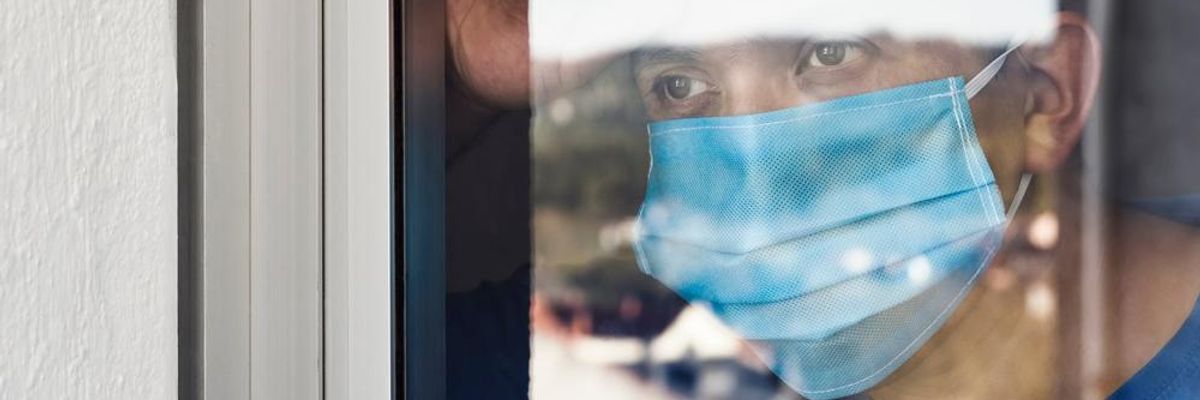
Congress must take bold action to guarantee universal paid sick leave on the federal level. (Photo: Shutterstock)
When my mother was hospitalized for COVID-19 in early February, my first thought was, "will she be okay?"
I was consumed with anxiety not just about her health, but also about money. How much time would she need to take off work? Would her rent and bills be paid on time or at all? Could I afford to help cover some of these costs for her?
My mother works a low-wage job in medical billing at a small doctor's office. Unlike me, she doesn't have the option to work from the safety of her home and physically interacts with patients on a daily basis. Her job offers only three paid sick days a year--with no other form of paid leave.
The average recovery time for COVID-19 is two weeks. But for people with underlying health conditions--like my mother--it could be much longer.
This means she's stuck not knowing when her next paycheck will come--while simultaneously trying to recover from a virus that has left her dependent on an oxygen tank and multiple medications.
In many ways, her lost wages from this unpaid leave have caused our family more stress than the virus itself.
Unfortunately, my mother's situation is depressingly similar to those of millions of working people. While the labor market has recovered slightly from the peak of the pandemic, many continue to face deep financial hardship.
According to the Pew Research Center, people who have experienced job or wage loss during the pandemic--either personally or in their household--are more than twice as likely to say they've had trouble paying their bills, struggled to pay their rent or mortgage, used money from savings or retirement to pay bills, or borrowed money from friends or family.
The Families First Coronavirus Response Act, passed in March 2020, required certain employers to provide employees two weeks of leave at regular pay if they were experiencing COVID-19 symptoms or needed to quarantine because of exposure. But Congress allowed those benefits to expire at the end of 2020, leaving workers like my mom without a safety net.
The most recent COVID-19 relief package won't restore those requirements--it only provides temporary tax credits to businesses that offer paid leave. That still puts workers at the mercy of their bosses.
Even though the emergency paid leave provided through Families First was only accessible to half the workforce, it was a statistical success. According to researchers at Cornell University and the Swiss Economic Institute, states that gained access to paid sick leave through the first relief package experienced about 400 fewer cases of COVID-19 per day.
Imagine how much better a robust paid leave policy would protect people.
Congress must take bold action to guarantee universal paid sick leave on the federal level. If this pandemic has taught us anything, it's that it benefits us all when workers get paid to stay home when they are ill.
In the richest country in the world, no one should have to worry about how they will pay their bills when they're sick and unable to work.
Dear Common Dreams reader, It’s been nearly 30 years since I co-founded Common Dreams with my late wife, Lina Newhouser. We had the radical notion that journalism should serve the public good, not corporate profits. It was clear to us from the outset what it would take to build such a project. No paid advertisements. No corporate sponsors. No millionaire publisher telling us what to think or do. Many people said we wouldn't last a year, but we proved those doubters wrong. Together with a tremendous team of journalists and dedicated staff, we built an independent media outlet free from the constraints of profits and corporate control. Our mission has always been simple: To inform. To inspire. To ignite change for the common good. Building Common Dreams was not easy. Our survival was never guaranteed. When you take on the most powerful forces—Wall Street greed, fossil fuel industry destruction, Big Tech lobbyists, and uber-rich oligarchs who have spent billions upon billions rigging the economy and democracy in their favor—the only bulwark you have is supporters who believe in your work. But here’s the urgent message from me today. It's never been this bad out there. And it's never been this hard to keep us going. At the very moment Common Dreams is most needed, the threats we face are intensifying. We need your support now more than ever. We don't accept corporate advertising and never will. We don't have a paywall because we don't think people should be blocked from critical news based on their ability to pay. Everything we do is funded by the donations of readers like you. When everyone does the little they can afford, we are strong. But if that support retreats or dries up, so do we. Will you donate now to make sure Common Dreams not only survives but thrives? —Craig Brown, Co-founder |
When my mother was hospitalized for COVID-19 in early February, my first thought was, "will she be okay?"
I was consumed with anxiety not just about her health, but also about money. How much time would she need to take off work? Would her rent and bills be paid on time or at all? Could I afford to help cover some of these costs for her?
My mother works a low-wage job in medical billing at a small doctor's office. Unlike me, she doesn't have the option to work from the safety of her home and physically interacts with patients on a daily basis. Her job offers only three paid sick days a year--with no other form of paid leave.
The average recovery time for COVID-19 is two weeks. But for people with underlying health conditions--like my mother--it could be much longer.
This means she's stuck not knowing when her next paycheck will come--while simultaneously trying to recover from a virus that has left her dependent on an oxygen tank and multiple medications.
In many ways, her lost wages from this unpaid leave have caused our family more stress than the virus itself.
Unfortunately, my mother's situation is depressingly similar to those of millions of working people. While the labor market has recovered slightly from the peak of the pandemic, many continue to face deep financial hardship.
According to the Pew Research Center, people who have experienced job or wage loss during the pandemic--either personally or in their household--are more than twice as likely to say they've had trouble paying their bills, struggled to pay their rent or mortgage, used money from savings or retirement to pay bills, or borrowed money from friends or family.
The Families First Coronavirus Response Act, passed in March 2020, required certain employers to provide employees two weeks of leave at regular pay if they were experiencing COVID-19 symptoms or needed to quarantine because of exposure. But Congress allowed those benefits to expire at the end of 2020, leaving workers like my mom without a safety net.
The most recent COVID-19 relief package won't restore those requirements--it only provides temporary tax credits to businesses that offer paid leave. That still puts workers at the mercy of their bosses.
Even though the emergency paid leave provided through Families First was only accessible to half the workforce, it was a statistical success. According to researchers at Cornell University and the Swiss Economic Institute, states that gained access to paid sick leave through the first relief package experienced about 400 fewer cases of COVID-19 per day.
Imagine how much better a robust paid leave policy would protect people.
Congress must take bold action to guarantee universal paid sick leave on the federal level. If this pandemic has taught us anything, it's that it benefits us all when workers get paid to stay home when they are ill.
In the richest country in the world, no one should have to worry about how they will pay their bills when they're sick and unable to work.
When my mother was hospitalized for COVID-19 in early February, my first thought was, "will she be okay?"
I was consumed with anxiety not just about her health, but also about money. How much time would she need to take off work? Would her rent and bills be paid on time or at all? Could I afford to help cover some of these costs for her?
My mother works a low-wage job in medical billing at a small doctor's office. Unlike me, she doesn't have the option to work from the safety of her home and physically interacts with patients on a daily basis. Her job offers only three paid sick days a year--with no other form of paid leave.
The average recovery time for COVID-19 is two weeks. But for people with underlying health conditions--like my mother--it could be much longer.
This means she's stuck not knowing when her next paycheck will come--while simultaneously trying to recover from a virus that has left her dependent on an oxygen tank and multiple medications.
In many ways, her lost wages from this unpaid leave have caused our family more stress than the virus itself.
Unfortunately, my mother's situation is depressingly similar to those of millions of working people. While the labor market has recovered slightly from the peak of the pandemic, many continue to face deep financial hardship.
According to the Pew Research Center, people who have experienced job or wage loss during the pandemic--either personally or in their household--are more than twice as likely to say they've had trouble paying their bills, struggled to pay their rent or mortgage, used money from savings or retirement to pay bills, or borrowed money from friends or family.
The Families First Coronavirus Response Act, passed in March 2020, required certain employers to provide employees two weeks of leave at regular pay if they were experiencing COVID-19 symptoms or needed to quarantine because of exposure. But Congress allowed those benefits to expire at the end of 2020, leaving workers like my mom without a safety net.
The most recent COVID-19 relief package won't restore those requirements--it only provides temporary tax credits to businesses that offer paid leave. That still puts workers at the mercy of their bosses.
Even though the emergency paid leave provided through Families First was only accessible to half the workforce, it was a statistical success. According to researchers at Cornell University and the Swiss Economic Institute, states that gained access to paid sick leave through the first relief package experienced about 400 fewer cases of COVID-19 per day.
Imagine how much better a robust paid leave policy would protect people.
Congress must take bold action to guarantee universal paid sick leave on the federal level. If this pandemic has taught us anything, it's that it benefits us all when workers get paid to stay home when they are ill.
In the richest country in the world, no one should have to worry about how they will pay their bills when they're sick and unable to work.