SUBSCRIBE TO OUR FREE NEWSLETTER
Daily news & progressive opinion—funded by the people, not the corporations—delivered straight to your inbox.
5
#000000
#FFFFFF
To donate by check, phone, or other method, see our More Ways to Give page.
Daily news & progressive opinion—funded by the people, not the corporations—delivered straight to your inbox.
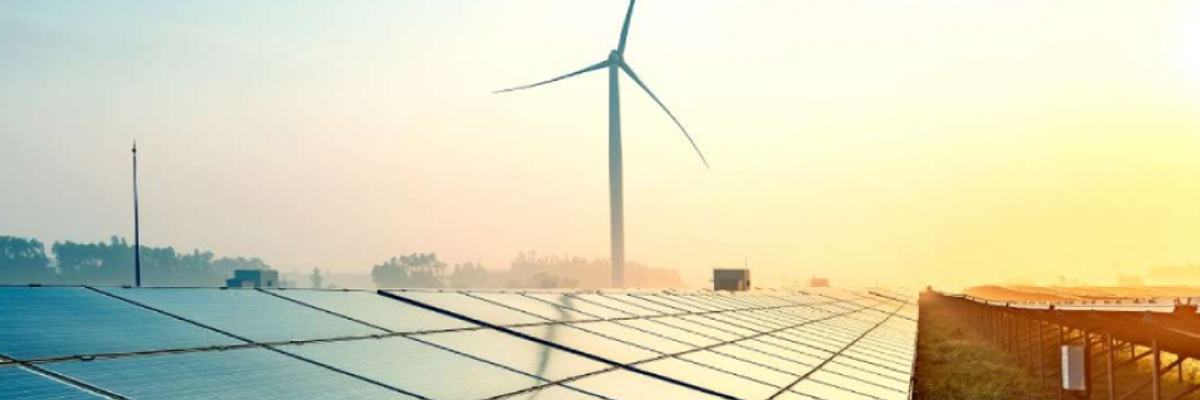
"Climate experts say it is imperative, for the sake of the planet and its inhabitants, that every effort be made to keep global warming to 1.5 degrees Celsius rather than the 2 degrees we appear to be headed for without strong action," writes Usha Lee McFarling. (Photo: Report cover detail/Energy Watch Group/Lappeenranta University of Technology)
It's clear that 2018 was a terrible year for Earth's climate. California saw the deadliest and most destructive wildfires in its history, the continually thawing Arctic got down to the last 5% of its oldest and thickest ice, and after slowing in recent years, greenhouse gas emissions were once again on the rise. This year was the fourth hottest on record.
"While it may seem there may be nothing to be optimistic about, there is one very good reason for hope: renewable energy."Reports from climate experts were grim as well. A dire report from the U.N.'s Intergovernmental Panel on Climate Change, released in October, predicted widespread food shortages, massive coral reef die-offs and more deadly heat waves by 2040 if greenhouse gas emissions are not rapidly brought under control. A U.S. government study released last month warned that the country's agriculture, infrastructure and economy will all suffer stark consequences if global warming is not reined in.
While it may seem there may be nothing to be optimistic about, there is one very good reason for hope: renewable energy.
In the past decade, the cost of producing solar power has dropped 80% -- a shift that is pricing dirtier energy sources like coal and natural gas out of the energy market. In 2017, coal-hungry China added 53 gigawatts of solar power, eclipsing the total solar output of most nations. Morocco, Egypt and even the oil-exporting United Arab Emirates are investing in renewable power. More than half of the world's new capacity for making energy comes from renewable sources such as wind and solar.
That renewable energy can also replace fossil fuel to power automobiles. There were more than three million electric cars on the road in 2017. The International Energy Agency predicts that number will balloon to 125 million by 2030. A fleet that size would keep an estimated 2.57 million barrels of oil -- the amount Germany uses in a year -- out of out the energy pipeline.
Some newer studies, based largely on how quickly electric cars are catching on and how dramatically their prices are dropping, now predict a "fast adoption scenario" where electric cars could make up 90% of cars in the U.S. by the mid-2040s. One International Monetary Fund economist who studies the issue equates today's gas and diesel cars to yesterday's horses and buggies -- transportation modes that went by the wayside as the price of the Model T dropped.
The march toward carbon-free power and transportation is being propelled by advances in battery technology that can store power generated by the sun and wind for later use and increase the range of electric cars. The world's largest lithium-ion battery (made by Tesla) started up this year in South Australia and is expected to earn back a third of its $65 million cost in its first year. Even more exciting game-changing battery technologies -- using screen printing, graphene/cellulose or zinc -- are under development.
Of course government policies and subsidies could speed these developments even further. But the turn toward carbon-free renewable energy sources seems to have enough momentum from market forces to continue even if leaders of countries, like ours, are set against mandating the shift. For one example, look to many of the more than two dozen states that challenged President Obama's Clean Power Plan in court in recent years; most of them -- even states once heavily dependent on oil and coal such as Texas, Oklahoma and Arkansas -- were on track to meet the reduced emissions goals because it makes economic sense to do so.
Climate experts say it is imperative, for the sake of the planet and its inhabitants, that every effort be made to keep global warming to 1.5 degrees Celsius rather than the 2 degrees we appear to be headed for without strong action.
Can we decarbonize the global economy as quickly as we need to? It's a daunting task that will likely require much more effort -- from our best engineers, but also from individuals and government leaders. In the meantime, the speed at which renewables are rapidly being adopted over more traditional energy sources -- think mobile phones overtaking landlines -- definitely offers some hope.
This country and this world are at a monumental crossroads. US voters have an opportunity to beat back the forces of fascism and confront the billionaires who are rigging the economy, our media system, and our democracy, making it increasingly impossible for ordinary people to get by. We’re not just talking about the election. We’re talking about what must be done once these fascist elements are vanquished from power. We need a bolder set of solutions than what either major party has so far been willing to offer and a working-class movement ready to fight like hell for it. Trump didn't emerge from nowhere. The conditions that fueled MAGA authoritarianism were created by decades of radical neoliberal economic policies and a corrupt political system dominated by corporate interests. They slashed taxes on the super-rich, promising that the benefits would trickle down. They said giveaways to the corporate titans would make life more affordable for the rest of us. It was all bullshit. And when a bitter, betrayed populace searches for someone to blame, right-wing demagogues have little trouble finding scapegoats. People know when they're being lied to, but you won't hear any of this from the corporate media. Only independent journalism—powered and funded by people who believe in building a better world—can deliver truly trustworthy daily news. If you share our vision, please contribute whatever you can to sustain our work. |
It's clear that 2018 was a terrible year for Earth's climate. California saw the deadliest and most destructive wildfires in its history, the continually thawing Arctic got down to the last 5% of its oldest and thickest ice, and after slowing in recent years, greenhouse gas emissions were once again on the rise. This year was the fourth hottest on record.
"While it may seem there may be nothing to be optimistic about, there is one very good reason for hope: renewable energy."Reports from climate experts were grim as well. A dire report from the U.N.'s Intergovernmental Panel on Climate Change, released in October, predicted widespread food shortages, massive coral reef die-offs and more deadly heat waves by 2040 if greenhouse gas emissions are not rapidly brought under control. A U.S. government study released last month warned that the country's agriculture, infrastructure and economy will all suffer stark consequences if global warming is not reined in.
While it may seem there may be nothing to be optimistic about, there is one very good reason for hope: renewable energy.
In the past decade, the cost of producing solar power has dropped 80% -- a shift that is pricing dirtier energy sources like coal and natural gas out of the energy market. In 2017, coal-hungry China added 53 gigawatts of solar power, eclipsing the total solar output of most nations. Morocco, Egypt and even the oil-exporting United Arab Emirates are investing in renewable power. More than half of the world's new capacity for making energy comes from renewable sources such as wind and solar.
That renewable energy can also replace fossil fuel to power automobiles. There were more than three million electric cars on the road in 2017. The International Energy Agency predicts that number will balloon to 125 million by 2030. A fleet that size would keep an estimated 2.57 million barrels of oil -- the amount Germany uses in a year -- out of out the energy pipeline.
Some newer studies, based largely on how quickly electric cars are catching on and how dramatically their prices are dropping, now predict a "fast adoption scenario" where electric cars could make up 90% of cars in the U.S. by the mid-2040s. One International Monetary Fund economist who studies the issue equates today's gas and diesel cars to yesterday's horses and buggies -- transportation modes that went by the wayside as the price of the Model T dropped.
The march toward carbon-free power and transportation is being propelled by advances in battery technology that can store power generated by the sun and wind for later use and increase the range of electric cars. The world's largest lithium-ion battery (made by Tesla) started up this year in South Australia and is expected to earn back a third of its $65 million cost in its first year. Even more exciting game-changing battery technologies -- using screen printing, graphene/cellulose or zinc -- are under development.
Of course government policies and subsidies could speed these developments even further. But the turn toward carbon-free renewable energy sources seems to have enough momentum from market forces to continue even if leaders of countries, like ours, are set against mandating the shift. For one example, look to many of the more than two dozen states that challenged President Obama's Clean Power Plan in court in recent years; most of them -- even states once heavily dependent on oil and coal such as Texas, Oklahoma and Arkansas -- were on track to meet the reduced emissions goals because it makes economic sense to do so.
Climate experts say it is imperative, for the sake of the planet and its inhabitants, that every effort be made to keep global warming to 1.5 degrees Celsius rather than the 2 degrees we appear to be headed for without strong action.
Can we decarbonize the global economy as quickly as we need to? It's a daunting task that will likely require much more effort -- from our best engineers, but also from individuals and government leaders. In the meantime, the speed at which renewables are rapidly being adopted over more traditional energy sources -- think mobile phones overtaking landlines -- definitely offers some hope.