

5
#000000
#FFFFFF
To donate by check, phone, or other method, see our More Ways to Give page.
Daily news & progressive opinion—funded by the people, not the corporations—delivered straight to your inbox.
"This executive order was a blatant power grab designed to silence voters and undermine our elections, but it failed because the people and the law were on our side."
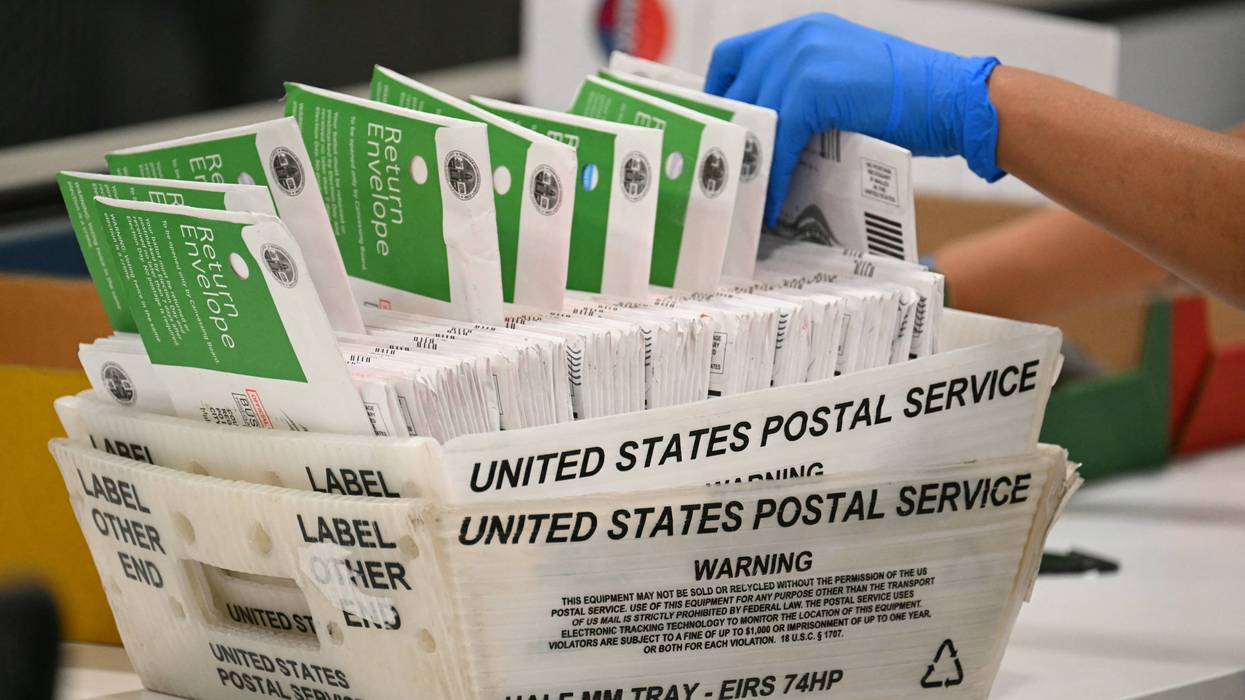
The US Supreme Court on Monday night rejected a bid by the Trump administration to keep onerous US Postal Service rules for mail-in ballots in place, which voting-rights defenders said risked depriving millions of people of the franchise in this year's midterm elections.
After a back-and-forth legal battle over the USPS rules that dragged on for months, the nation's highest court issued the 7-2 ruling without elaborating on its legal reasoning, though right-wing Justices Samuel Alito and Clarence Thomas issued dissents in favor of President Donald Trump's side.
The ruling in USPS v. California was in response to a legal challenge brought by the League of Women's Voters, the attorneys general of numerous states, and others who argued that newly-announced rules by the Postal Service regarding mail-in ballots, changes prompted by an executive order issued by Trump, would prevent people from having their ballots counted and cause chaos for those trying to administer this year's elections.
In response to the ruling, the plaintiffs' legal team said the decision was "a critical step to ensuring free and fair elections this November by maintaining access to mail voting for millions of eligible voters across the United States and lifting the dire threat that the Postal Service would disenfranchise them."
"Mail voting is safe, secure, and reliable—and the Trump administration has presented no evidence to the contrary, as the courts have repeatedly recognized," the statement continued. "We will remain vigilant in countering threats to free and fair elections and ensuring that every eligible voter is able to cast a ballot and have it count.”
“Today’s decision is a victory for our democracy and a powerful affirmation of the rule of law,” said California Attorney General Rob Bonta in a statement. “The stakes in this litigation could not have been higher.”
Virginia Kase Solomón, president and CEO of Common Cause, was among the other pro-democracy advocates who welcomed the decision.
“Today’s decision is a major win for the millions of everyday Americans who count on vote-by-mail—our seniors, service members, busy parents, rural voters, and voters with disabilities," said Solomón in a statement. "Vote-by-mail is safe, proven, and vital; even the president uses it. This executive order was a blatant power grab designed to silence voters and undermine our elections, but it failed because the people and the law were on our side. Our Constitution is clear: states run our elections, and voters choose their leaders—not the other way around. No administration can strip the people of their power.”
Michael McNulty, senior policy director for Issue One, a nonpartisan group that works to defend free and fair elections, also welcomed the ruling, but said vigilance would still be necessary going forward.
“The fight to preserve states’ authority to administer elections is far from over," warned McNulty.
"President Trump continuously and falsely claims fraud in mail-in voting without evidence," he added. "Despite voting multiple times with this method, he remains obsessed with centralizing control over elections to tilt the playing field. However, for now, one piece of that centralization effort is blocked, and it ensures that mail-in voting for the midterms won't be disrupted.”

“Donald Trump and his administration are obsessed with election conspiracy theories and operate under the wrong assumption that they are above the law—they are not."
US Senate Minority Leader Chuck Schumer and Democratic Sen. Alex Padilla on Monday accused the Trump administration of directing federal immigration officers to violate state laws in an aggressively quixotic campaign to identify supposed “unlawful voters,” warning that the operation could ensnare American citizens and undermine the November midterm elections.
At a press conference, Padilla (Calif.) and Schumer (D-NY) cited a whistleblower disclosure alleging that US Citizenship and Immigration Services (USCIS) personnel were instructed to access sensitive state voter records by misrepresenting their identities and falsely claiming authorization to obtain individual voters’ information.
According to the disclosure:
An anonymous federal whistleblower disclosed that USCIS headquarters has directed USCIS Fraud Detection and National Security Directorate (FDNS) officers to use individuals’ personal information to search state voter registration systems—likely resulting in thousands of violations of state laws. If necessary, officers are even told to lie and misrepresent themselves as voters on state election agency websites. USCIS leaders are directing officers to generate law enforcement records against so-called “unlawful voters” based on adding “magic” to data which in many cases will be inaccurate. Tens or hundreds of thousands of people in all 50 states, including naturalized US citizens, are being swept up in this rushed effort in the lead-up to Election Day.
The New York Times noted that the whistleblower disclosure "offers an inside view of what the Department of Homeland Security is calling the 'Unlawful Voter Initiative,'" which the paper revealed earlier this month.
According to the whistleblower, hundreds of FDNS employees were abruptly pulled from their regular immigration and national security work to investigate alleged noncitizen voting—a practically nonexistent occurrence.
For example, a Brennan Center for Justice analysis of around 23.5 million votes cast during the 2016 election cycle found 30 suspected cases of noncitizens voting, or 0.0001% of all votes cast. A 25-year-audit in Republican-controlled Georgia found zero votes cast by noncitizens.
The two senators said in a joint statement that the whistleblower's allegations "are especially alarming because they come just weeks before the November 2026 midterm elections."
"The administration is publicly asserting, without evidence, that large numbers of noncitizens are unlawfully registered to vote and deploying federal law enforcement resources to investigate those claims," they added.
Schumer warned that the US Department of Homeland Security "is sending hundreds of officers who should be focused on our security on a wild goose chase to prove [President Donald] Trump’s long-debunked election conspiracy theories—and DHS is telling officers to lie to do it."
"This new DHS initiative is nothing more than an unlawful order by the government to silence the voices of Americans," he added.
Padilla said that “Donald Trump and his administration are obsessed with election conspiracy theories and operate under the wrong assumption that they are above the law—they are not."
“The whistleblower’s disclosure outlines shocking allegations of unlawful and unethical conduct that includes potentially thousands of violations of state law and the use of highly questionable data, which they refer to as ‘supplemental magic,’ to falsely flag naturalized US citizens as ineligible voters in federal law enforcement records," the son of Mexican immigrants continued.
"At the same time, USCIS is directing employees to ignore the law in search of voters’ personal information because this administration’s unlawful attempts to coerce states to hand over their voter rolls have been rejected by the courts," Padilla said. "I thank the whistleblower for the bravery and integrity to come forward with these shocking reports and for standing up for the rule of law."
Padilla added that US Homeland Security Secretary Markwayne Mullin "must be transparent and shut down this sham ‘investigation’ now."
On Sunday, Padilla and Schumer sent a letter to Mullin and USCIS Director Joseph Edlow accusing DHS of prioritizing "manufacturing evidence for election conspiracy theories, rather than FDNS’ fraud detection and national security mission."
"The disclosure shows how DHS is deploying federal law enforcement resources to go around those judicial rulings and gather state voter information by any means, regardless of state laws," the senators continued. "Further, the administration’s continued claims of election fraud signal its intent to use this unreliable evidence of 'unlawful voters' in ways that can disenfranchise eligible voters, disrupt state and local election administration, and subject election officials to additional unwarranted threats of prosecution."
The lawmakers demanded that DHS and USCIS "be transparent about what they intend to do with the unreliable records they are generating, immediately stop this initiative and related activities, and remove any TECS or other law enforcement or administrative records generated from it."
The legal nonprofit advocacy group Democracy Defenders Fund—which is representing the whistleblower—said Monday that its client "feels it is their duty to come forward and reveal potentially unlawful conduct related to the 'unlawful voteri nitiative.”
"Our client is understandably extremely concerned about retaliation by administration officials should their identity become known," the group continued. "As such, we ask that reasonable steps be taken to maintain their anonymity throughout the whistleblowing process."
"The whistleblower makes this disclosure out of concern that law enforcement records used against individuals, including US citizens, being created through potentially unlawful means and based upon unreliable information," Democracy Defenders Fund added. "That is a dangerous abuse of the power of the federal government. We respectfully submit this disclosure for inquiry and investigation."
League of Women Voters of the United States CEO Celina Stewart said in a statement that “if these reports are true, this is not merely alarming. It is a five-alarm fire for American democracy."
"Allegations that federal workers were pressured to fabricate evidence and falsely frame citizens as criminals strike at the heart of the Constitution and the rule of law," she continued. “The power of government must never be used to manufacture suspicion, silence dissent, or, as reported, create false justification for investigations. Yet these reports suggest an effort to further fuel unfounded narratives about our elections while placing eligible voters at risk of intimidation and government scrutiny."
“Every eligible voter deserves to participate in our democracy free from fear, harassment, or wrongful investigation," Stewart added. "The federal government has a duty to protect constitutional rights, not undermine them through unreliable data, flawed processes, or political pressure."

“Putting armed officers in polling places is a tactic used by dictators, but we won’t be scared out of exercising our rights."
Noncitizens are barred from voting in federal elections, and a coalition of rights groups suggested Thursday that President Donald Trump's plan to have armed immigration agents enter polling places isn't aimed at cracking down on unlawful immigrants at all.
"Sending armed ICE officers to polling places is not immigration enforcement—it is voter suppression, plain and simple,” said Janet Murguía, president and CEO of UnidosUS, referring to US Immigration and Customs Enforcement.
UnidosUS joined Common Cause, the League of United Latin American Citizens (LULAC), and the city and county of Denver, Colorado in filing a lawsuit to stop the administration from authorizing ICE deployments in polling places during the 2026 elections, in which early voting will soon be underway in a number of states.
The groups filed the legal challenge in the US District Court for the District of Columbia several days after Homeland Security Secretary Markwayne Mullin said ICE could be sent to polling sites to address "specific threats."
Earlier this year, the Department of Justice ended long-standing guidance on why federal law enforcement activity is restricted at polling places, and ICE agents conducted enforcement actions at voting sites in Texas and New York.
clMullin said in July that states could be denied federal aid if they refuse to comply with election directives from the Department of Homeland Security related to the administration's baseless claims that undocumented immigrants engage in widespread "voter fraud."
A Reuters analysis this year found that only 73 people in the last three decades have ever been convicted of illegally voting as noncitizens. The right-wing Heritage Foundation has proidentified about 100 cases of proven noncitizen voting dating back to 2000—representing around 0.0001% of total votes cast over that time.
In their lawsuit, the groups argued that Mullin's plan to deploy ICE agents to voting sites violates the nationwide prohibition against armed federal agents in polling places, which was first enacted during the Civil War out of concerns "about executive overreach, and the risk that the federal executive would use armed force to interfere in state and federal elections."
The policy also violates "the federal prohibition on arbitrary and capricious government action," said the groups.
The administration is pushing to deploy ICE to polling places as voters express widespread disapproval of numerous Republican policies, including ICE's violent crackdown in cities such as Minneapolis and Chicago, Trump's war on Iran, and tariffs that have worsened the cost-of-living crisis the president pledged to solve.
Virginia Kase Solomón, president and CEO of Common Cause, said that Americans will not be "silenced by the administration’s continuous efforts to meddle with our elections."
“Putting armed officers in polling places is a tactic used by dictators, but we won’t be scared out of exercising our rights,” said Kase Solomón. “No American should ever have to walk past armed federal law enforcement just to cast a ballot, yet this administration has adopted a policy that allows exactly that."
The lawsuit emphasizes that with ICE having unlawfully detained more than 170 US citizens and killed at least three citizens since Trump took office, Americans "may reasonably fear interactions with ICE."
“All Americans—including Latino voters—have a constitutional right to cast their ballot without fear of interrogation, detention, or family separation," said Murguía. "This case is about protecting voters, preserving confidence in our elections, and ensuring that every eligible voter can participate free from intimidation.”
At the Democracy Project at New York University School of Law, poSoephen Richer and Gina Goldenberg cautioned that the threat of ICE agents potentially being at the polls could serve as a voter suppression tactic and "real voting deterrent" in itself.
"ICE-at-the-polls is something that American elections are well-equipped to handle," they wrote. "The highly decentralized nature of our elections, plus the massive growth of early voting, combined with a strong legal framework, would make widespread ICE interference a heavy lift for the federal government. Ironically, the real threat of ICE-at-the-polls could be in its potential voter-deterrent effect.
"It’s not too far-fetched to imagine a newly naturalized, brown-skinned American in Michigan who only casually follows political news, but hears that ICE might be at the polls," they added. "This person knows he’s in a higher-risk category for being mistakenly apprehended by ICE, and he wonders, 'Why risk it?'"
All voters, said Juan Proaño, CEO of LULAC, "should be able to cast their ballots without fear of intimidation by armed ICE officers at polling places."
“The right to vote is foundational to our democracy," he added, "and yet this administration continues in its endless attempts to weaken the very institutions it is entrusted to protect."
The effort to undermine the election is failing. It will succeed only if citizens stay home.
Benjamin Franklin wrote, “Never trouble trouble until trouble troubles you.” That’s not quite our approach at the Brennan Center. We worry. (Dr. Franklin also advised, “An ounce of prevention is worth a pound of cure.”)
What are we particularly concerned about as we look toward November?
Voter confusion is perhaps the biggest risk. People ask, understandably, can they still vote by mail? Will I need to show a passport or birth certificate to register? It has been many years since the freedom to vote has faced so many proposed challenges, and never before from the federal government. With all the news and noise, citizens cannot be expected to follow the executive edicts and ping-ponging court rulings in minute detail.
In fact, for voters, very little has actually changed. Congress and courts blocked all those bad ideas. The SAVE Act never passed. As a general matter, citizens can cast ballots as before.
After all the push and pull, voters can make their voices heard. Make a plan to vote. Vote early if possible. In person, with a drop box, or if necessary, using the mail.
With less than two months to go, President Donald Trump’s drive to undermine the election is failing. Judges, states and counties, and voting rights groups have blocked his moves. If we keep at it, we can have free and fair elections in 2026.
What else keeps us on edge? The Supreme Court, of course. It is now considering whether to undo a trial court’s decision blocking a rule that would allow the US Postal Service to withhold mail ballots. The trial court determined that rule is illegal and unconstitutional.
If the court allows the USPS to implement its rule, it would introduce chaos and disenfranchise many voters just before the election, as a USPS whistleblower explained in a friend-of-the-court brief detailing the agency’s rushed and flawed process to implement the rule. The court will likely rule in a matter of days on the administration’s request to allow the USPS rule. Fingers crossed.
Here’s a third concern: a growing risk of foreign interference. America is at war. (An illegal, unauthorized war, worth noting.) In 1980, the “October surprise” was the notion that Iran would release Americans it held hostage to influence that year’s election. Let’s hope that Iranian hackers do not produce a digital “October surprise” this year.
Iran has shown its ability to break into municipal water systems in Minnesota. In previous elections, Russia and China have tried to sway voters or attack registration lists. Trump’s purge of election security offices means that American elections have less federal protection against malevolent foreign hackers than before.
States have worked hard to get ready. And it’s important to remember that there is no way for even the most sophisticated schemer to change the results. Voting machines are not connected to the internet. And citizens cast ballots with a paper record, which can be audited and recounted.
Some of our worries are decreasing.
First, “ICE at the polls.” That could still happen. But deployment of federal forces is illegal under numerous federal and state laws. The chairman of the Joint Chiefs of Staff pledged recently not to use federal troops, correctly asserting, “Election administration and security remain the fundamental responsibility of state and local officials.” We have growing confidence that courts would step in fast. At the Brennan Center, we are prepared to sue if necessary. The briefs are written, and the toner is in the printer.
Then there are the Justice Department observers deployed to some states. They are annoying and often seem like a bit of a mess. But they too are subject to the laws that prohibit voter intimidation, and state officials are prepared to speak up if observers are disruptive.
And as for the worry that electoral winners won’t be certified, we are increasingly confident that courts will step in here, too. Judges have been heroes and upheld the rule of law.
But courts are not enough. We need a citizen mobilization to watch polls, help voters, and blow the whistle on abuse. That, too, gives hope.
It’s going to be a busy two months. No doubt Trump and his partisans will fling new charges every few days. All that clatter can confuse voters further. Perhaps that’s part of the goal.
So for all of us who want voters to have their say in 2026, a chief job is to stay calm and make clear that—as of right now, at least—little has changed. That’s a task for the news media. Public officials should be clear and calm. We who fight for voting rights must measure our own tone, so as not to rattle confidence.
After all the push and pull, voters can make their voices heard. Make a plan to vote. Vote early if possible. In person, with a drop box, or if necessary, using the mail. As we’ve said before, the effort to undermine the election is failing. It will succeed only if citizens stay home.

"The Trump administration is trying to use the United States Postal Service to decide who gets to vote in this year's election. Unacceptable."
Sen. Bernie Sanders warned Tuesday that President Donald Trump's attempt to leverage the US Postal Service to advance his assault on mail-in voting is part of a broader and intensifying "authoritarian power grab" that poses an existential threat to American democracy.
"The Trump administration is trying to use the United States Postal Service to decide who gets to vote in this year's election. Unacceptable," Sanders (I-Vt.) wrote after an anonymous federal official said in a whistleblower disclosure that USPS systems being hastily implemented at the president's direction—and in possible violation of court orders—could threaten the delivery of millions of ballots in the fast-approaching midterm elections.
Sanders said that Trump's assault on mail-in voting via the Postal Service is "blatantly unconstitutional," noting that the nation's founders empowered states to administer elections "precisely so that no authoritarian in Washington could ever seize that power for himself."
"Trump is trying to seize it anyway—in a blatant attempt to rig the election in his favor," the senator warned. "Trump knows this has nothing to do with the safety of mail-in ballots, because he himself has voted by mail in Florida twice this year. He knows mail-in voting is safe and secure."
"Voter fraud is not the problem," Sanders continued. "Trump's problem is that his agenda is deeply unpopular. He has waged illegal wars the American people did not ask for. He is throwing 15 million Americans off the healthcare they have and has made the largest cuts to education and nutrition assistance in history in order to pay for $1 trillion in tax breaks to the top 1% and his billionaire friends."
"He knows that when people vote, they will reject oligarchy and corporate greed. So instead of changing his policies, he is trying to decide which voters get to participate in elections this November," he added. "Too many Americans have fought and died to defend American democracy. We must stop Trump’s authoritarian power grab—before it is too late."
Trump Must Not Be Allowed to Prevent Millions of Americans from Voting
The Trump administration is trying to use the United States Postal Service to decide who gets to vote in this year's election. Unacceptable. We will not accept Trump’s authoritarianism.
Last month, the…
— Bernie Sanders (@BernieSanders) September 1, 2026
Following the USPS whistleblower disclosure, the investigative outlet ProPublica reported on Wednesday that top Postal Service officials have "expressed concerns" during recent internal meetings about how the new policies the agency is implementing in compliance with Trump's March executive order "could delay or block ballots from reaching large swaths of eligible voters for the upcoming midterms."
Days after the Postal Service published its final rule on new mail-in voting requirements, election clerks warned USPS officials that potentially millions of ballots could be impacted, according to ProPublica.
"An example was given of Maricopa County, Arizona, which often sends out more than 2 million ballots at a time in its initial mailing," the outlet reported. "USPS officials confirmed it was possible that one ballot with a bad barcode or wrong voter information within the more than 2 million ballots could delay the entire mailing, according to two people who attended the related committee meeting."
The USPS rule is currently blocked by a federal court, but the Trump administration is working to clear legal hurdles and implement the mail-in ballot restrictions ahead of the midterms.
In a letter to Postmaster General David Steiner on Tuesday, every Democratic member of the House Oversight Committee called for an immediate end to "this irresponsible and illegal scheme to implement the Trump administration’s plan to control our federal elections."
"The right of all Americans to have their votes counted is sacrosanct," the lawmakers wrote. "The Postal Service's current actions are putting clear obstacles in the way of that right."
“The most powerful people in this county, the most powerful people in this country, don’t want us to be able to vote easily."
Texas Democratic Senate nominee James Talarico is pushing for one of Texas' most important swing counties to drop plans to close nearly a third of its polling places before November's midterms.
Amid public outcry, the Commissioners Court for Tarrant County—which contains Fort Worth and borders Dallas—plans to hold a vote on Tuesday on whether to shutter 92 of the polling places used in the 2022 election, many of which serve the city's poorer and minority populations.
If Democrats flip the Senate this November, the road to that outcome will almost certainly run through Texas. A Democrat has not won a statewide election there since 1994, but Talarico may be in a position to break the trend—leading Republican Attorney General Ken Paxton in most polls.
Tarrant County narrowly supported then-Rep. Collin Allred, the Democratic challenger to Sen. Ted Cruz (R-Texas) in 2024. Talarico said the closure of polling places was meant to suppress turnout and help Republicans cling to their advantage in the state.
“The most powerful people in this county, the most powerful people in this country, don’t want us to be able to vote easily,” Talarico said at a press event Sunday, during which he argued that the closures would result in longer travel for voters and lower turnout, especially in heavily Black and Latino communities.
"We're here fighting for the rights of everybody," Talarico added. "The problem is when we let voting rights become a partisan issue. That's when we walk down a very dangerous path in this country."
Proponents of the closures have described them as a way for the county to save money, rather than a political tactic.
“We’re clearly not trying to suppress the vote,” state Rep. Matt Shaheen (R-66), the chairman of the Texas House Elections Committee, told the Associated Press. “That’s a silly accusation.”
But Republican officials in Tarrant County have, in the past, explicitly tied closures of certain voting locations to partisan aims. In 2024, Republican County Judge Tim O'Hare attempted, unsuccessfully, to remove several early voting sites on college campuses, a move that the county's GOP chairman said would have been "a serious win for Republicans in Tarrant County."
In 2025's off-year elections, Republicans voted 3-2 to reduce the number of polling locations by more than a third and cut funding for free bus rides to the polls for low-income residents. The previous year, they introduced new rules blocking what they derided as "left-wing" groups from registering voters inside county buildings.
At the state level, meanwhile, Texas has carried out unprecedented mid-decade redistricting to hand more US House seats to Republicans at the behest of President Donald Trump. And following Trump's false assertions that his loss in the 2020 election was marred by fraud, Texas introduced several new restrictions on mail-in voting that were found to have significantly reduced turnout.
Tuesday's scheduled vote in Tarrant County comes after commissioners opted to table an earlier proposal that would have shuttered nearly half the county's polling places.
An analysis of that plan showed that the lowest-income third of ZIP codes would lose nearly 58% of their Election Day polling sites, while the highest-income third would lose just under 22%. Majority-minority ZIP codes would have lost nearly 52% of their polling places, while majority-white ones would have lost just a third of theirs.
A similar analysis has not yet been conducted for the new proposal. But civil rights groups still argue that the proposal will disenfranchise many voters.
"Cutting the number of poll sites, especially at such a large scale, will harm Tarrant County voters and their right to participate in the democratic process—and cause particular harm to Black, Latino, and [Asian American and Pacific Islander] voters who already face significant barriers to exercising that fundamental right," wrote groups including the ACLU, the Legal Defense Fund, and the Texas Civil Rights Project, in a letter to the Commissioners' Court on Friday.
They emphasized that the polling places slated to close under the new proposal were clustered in areas such as south and southeast Fort Worth and central and eastern Arlington, which have predominantly nonwhite populations.
Tarrant County Commissioner Alisa Simmons, a Democrat who is running to unseat O'Hare as county judge and spoke alongside Talarico on Sunday, argued that while it was an improvement on the earlier proposal, "dropping 92 Election Day polling places is crazy."
"We should not compare this proposal to the worst proposal," she said. "We should compare it to the access that Tarrant County voters actually had in 2022."
US District Judge Indira Talwani said states will "face irreparable harm where they are required to comply with a likely unconstitutional regulation for which compliance is practically impossible as to the 2026 midterm elections," now just two months away.
A federal judge in Boston on Thursday evening issued a new and complete block on rules recently set forth by the US Postal Service designed to severely restrict mail-in voting nationwide—a ruling that comes just days after the US Supreme Court put a hold on a previous, similar injunction against the rules that stemmed from an executive order issued last year by President Donald Trump.
US District Judge Indira Talwani said the group of Democratic-led states and voting rights group that filed separate legal challenges over the changes to how the USPS would handle mail-in ballots adequately proved that they would "face irreparable harm where they are required to comply with a likely unconstitutional regulation for which compliance is practically impossible as to the 2026 midterm elections, now little more than two months away."
When the Supreme Court ruled Monday on the lawsuit, it lifted a previous injunction ordered by Judge Talwani, ruling not on the legality of the rules themselves but arguing that the states and other plaintiffs did not have proper legal standing at the time because the Postal Service had yet to release the finalized rules stemming from Trump's order at the time the lawsuit was filed.
However, because the USPS did finalize its rules at the end of last week, Talwani's new temporary injunction ordered on Thursday would not fall prey to that dynamic. As the New York Times reports:
[Talwani] wrote that while the Supreme Court had “admonished” her on Monday that the Postal Service had not finalized any changes when the groups sued initially, making court action premature, the stakes had changed since then because of the step the agency took Friday to formalize its plan.
Her ruling marked the third court decision on the issue in less than a week, a whipsaw of action that threatened to confuse voters. But each delay has reduced the administration’s chances of clearing the legal hurdles to execute its logistically complicated mail-in ballot plan before the November election. She blocked the rule from taking effect for 14 days, and she had previously scheduled a hearing to discuss the legality of the rule on Sept. 3.
In her order, Judge Talwani explained that the prospect of the new rule suddenly taking effect carried “significant risk of their members’ disenfranchisement” for voting rights organizations, which had also sued, along with the states.
Counsel and plaintiffs in the lawsuit by voting rights groups—led by the League of Women Voters of Massachusetts—issued a statement welcoming Thursday's decision.
“The Administration previously dismissed plaintiffs’ ongoing harms from the executive order as speculative, but the newly finalized rule confirmed what plaintiffs have been saying all along," the statement read. "The Rule implements the Executive Order’s unprecedented attempt to usurp electoral authority from the states and Congress at the expense of voters. We welcome the court’s order, which recognized the immediate need to protect the entire electorate from the damaging impacts of this unlawful final rule in the lead-up to November’s general elections. This is an important step towards affirming the public’s confidence in the system of mail ballots, which thousands of eligible voters nationwide rely on as a core method of democratic participation.”
After Monday's ruling by the Supreme Court, the group's behind the challenge vowed to keep fighting and introduced a new round of legal challenges.
"USPS’s decision to rush this blatantly unconstitutional rule into effect just weeks before an election is the latest step in a rollout that has sown confusion at every turn and now threatens to disenfranchise voters who did everything right. This is chaos by design, and voters are the ones who will pay for it,” warned Sophia Lin Lakin, director of the ACLU's Voting Rights Project, on Wednesday.
Attorneys General from the coalition of 24 states that had challenged the rule also welcomed Talwani's latest intervention.
“From the beginning, it’s been clear that President Trump doesn’t understand how elections work. He’s repeatedly broken the law, so we’ve repeatedly taken him to court,” said California Attorney General Bonta in a statement. “On Monday, the US Supreme Court issued an order on the emergency docket stating we brought our lawsuit too early but did not address the merits of our challenge to the President’s executive order seeking to impose additional, unlawful restrictions on the ability to vote by mail. Just two days later, consistent with that order, we sued to stop the illegal USPS rule in its tracks. Today, the district court blocked the rule, making it clear that President Trump must keep his hands off our elections. The right to vote is a foundational principle of our democracy, and we’re making sure it remains protected for everyone.”
With the Trump administration almost certain to appeal, the case is likely headed back to the US Supreme Court, likely on a fast track, to decide the legal merits presented by the challengers.
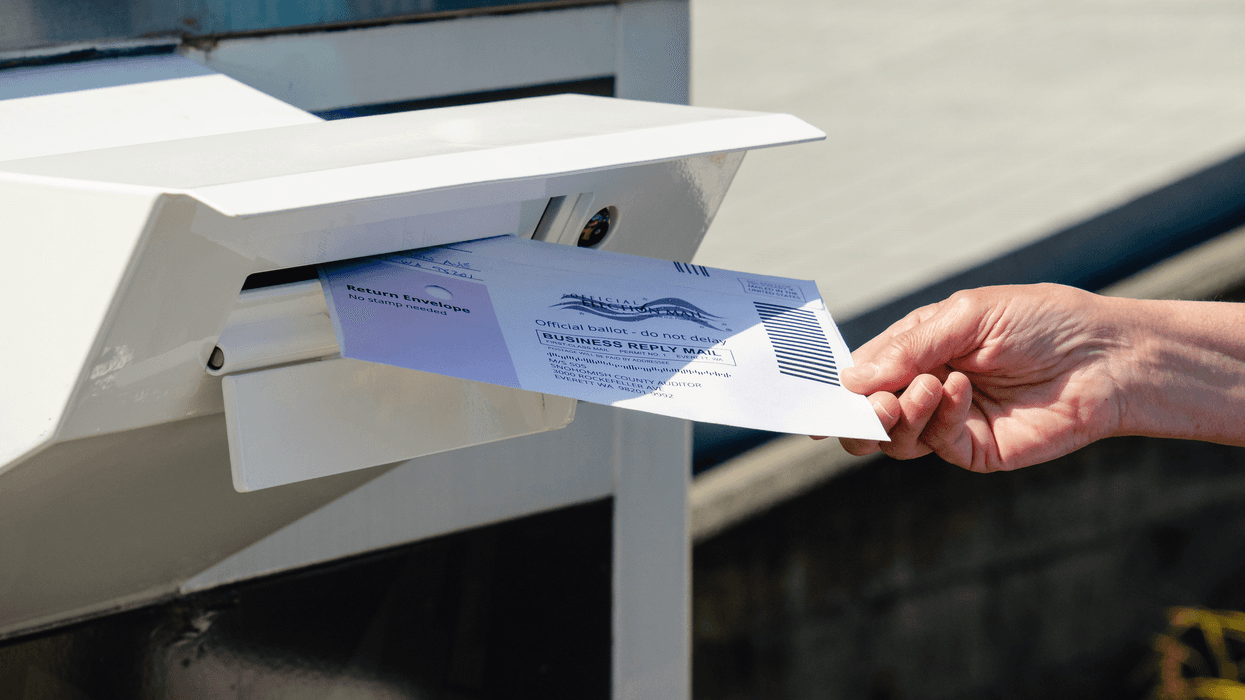
“These mail-in ballot restrictions threaten to disenfranchise millions of eligible voters who rely on mail voting to participate in our democracy," said one advocate.
A day after a federal judge lifted her injunction on President Donald Trump's executive order targeting mail-in ballots, a quartet of civil rights groups on Thursday filed fresh claims in their lawsuit challenging the administration's weaponization of the US Postal Service to attack the right to vote under the pretense of fighting nearly nonexistent fraud.
The Lawyers’ Committee for Civil Rights Under Law, NAACP, Common Cause, and Black Voters Matter Fund argued in the US District Court for the District of Columbia that Trump’s March 31 executive order unlawfully attempts to federalize important parts of election administration—especially voter eligibility verification and mail-ballot delivery—by presidential fiat, without authorization from Congress, while creating serious risks of disenfranchisement and misuse of personal data.
The plaintiffs—and many legal experts—argue that the US Constitution gives the states and Congress the authority to regulate federal elections, not the president.
"Our democracy is under attack," NAACP president and CEO Derrick Johnson said Thursday in a statement. "No federal entity should be allowed to implement last-minute rules that disenfranchise voters and override state election laws."
"This new USPS rule is a direct assault on the fundamental freedoms of millions of Americans—particularly Black voters, communities of color, seniors, military members, and rural residents—just weeks before a critical election,” Johnson added, referring to November's pmidterms. "We will not stand idly by while the voices of the people are silenced. We must protect every eligible citizen’s right to cast their ballot.”
Damon Hewitt, president and executive director of the Lawyers’ Committee for Civil Rights Under Law, warned that “these mail-in ballot restrictions threaten to disenfranchise millions of eligible voters who rely on mail voting to participate in our democracy while balancing work, caregiving responsibilities, disabilities, and other realities of daily life."
"The Trump administration is trying to limit access to the ballot, sow confusion at the polls, and to use the ensuing chaos as an excuse to exert power over agencies and processes in a politicized way," Hewitt added. “We will not let this or any administration further undermine our democratic process. We will fight to ensure our elections are free and fair, and that eligible voters are not shut out—especially Black voters and other voters of color, who are frequently targeted by voter suppression schemes.”
Several courts had ruled against Trump's order. But this week, the US Supreme Court cleared the way for the administration to proceed with its plans, and on Wednesday US District Judge Indira Talwani, an appointee of former President Barack Obama, was compelled to lift her injunction on the executive order as a result of the high court's decision.
Also on Wednesday, the groups behind the case before Talwani moved to block the Postal Service rule, as did a coalition of two dozen Democratic state attorneys general, whose initial challenge had resulted in the ruling from the Supreme Court—which found that the AGs filed their first suit prematurely.
Republicans including Trump—who has repeatedly voted by mail—have used fearmongering and disinformation to push the nearly nonexistent “threat” of voter fraud, especially in regard to mailed ballots, and noncitizens voting in US elections.
“Mail-in voting is so safe that even the president has used it twice this year,” Common Cause president and CEO Virginia Kase Solomón said on Thursday. “The Postal Service exists to deliver our mail, not to be weaponized by this administration to silence voters. Common Cause will keep fighting to protect a democracy where people choose their leaders—not the other way around.”
Trump’s March order is part of a broader attack on voting rights that includes pushing an updated version of Republicans’ so-called SAVE America Act, which would mandate proof of citizenship and strict photo ID requirements to register to vote in federal elections. The legislation, which was passed by the House of Representatives in February, is stalled in the narrowly split Senate, where it lacks the support of 60 lawmakers needed to avoid a Democrat filibuster.
"Mail-in voting gives people the freedom and flexibility to participate in our democracy, and we should be honest about what these efforts to restrict it are really doing: creating barriers to the ballot under the guise of election security," Black Voters Matter Fund co-founders Cliff Albright and LaTosha Brown said in a joint statement Thursday. "We are not fooled. This is the same old playbook—manufacture confusion, create unnecessary hurdles, and chip away at voting access."
“When the same politicians who defend their own access to mail-in voting move to restrict that access for others, the hypocrisy is hard to ignore," Albright and Brown continued. "We cannot allow voter suppression to be repackaged as voter protection or allow political interference to determine who gets to participate and whose voice counts."
"This is not about making democracy more secure; it is about reshaping who can fully participate in it," they added. "We will continue to call these efforts what they are and fight for every eligible voter’s freedom to make their voice heard.”
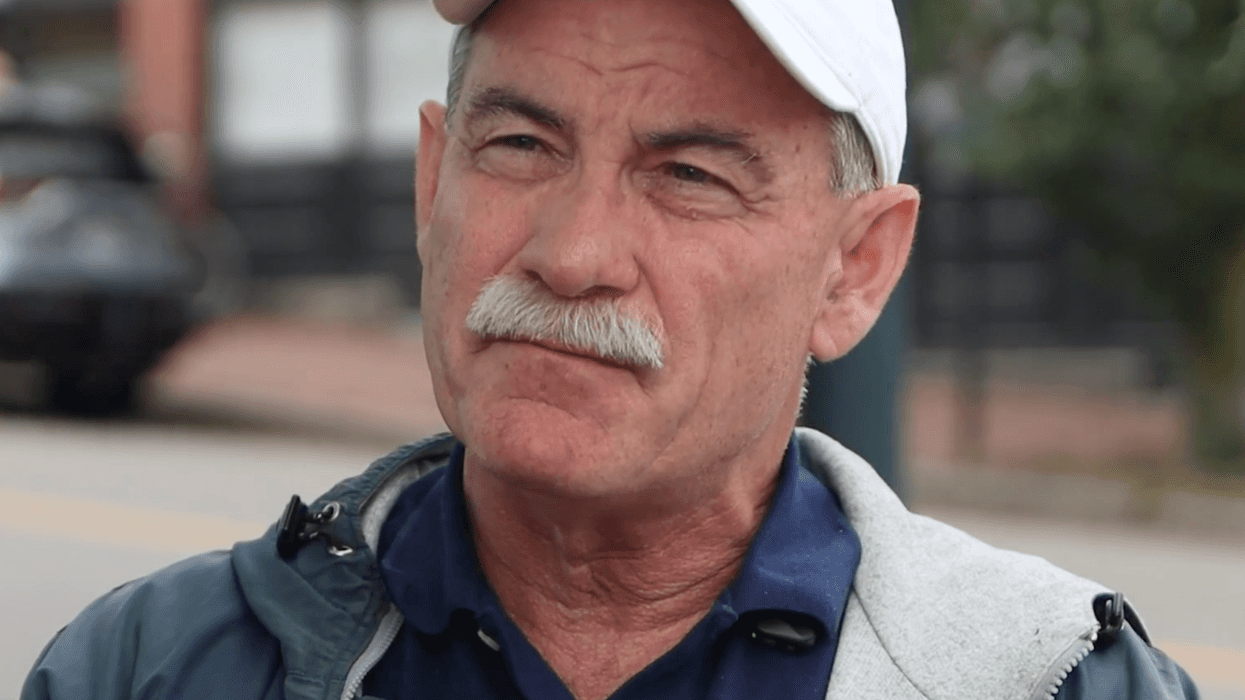
"His plan to ask Trump’s border czar to send ICE agents to Maine polling places just weeks before Election Day is not only deeply alarming—it is likely illegal," said the head of the state Democratic Party.
By letting attendees at a Maine Young Republicans event in on his "secret" plan for the midterm elections, the state's Republican nominee for governor detailed a proposal that, according to one public policy think tank, is wholly illegal.
In an audio clip released Wednesday by the Bangor Daily News, Bobby Charles, a lawyer and former Reagan administration staffer, boasted about his connections to the Trump administration's border czar, Tom Homan, a key figure in President Donald Trump's mass deportation operation.
"Here's my secret. I have a friend named Tom Homan," said Charles, drawing applause from the GOP voters. "I'm going to ask Tom... three or four weeks before the election, maybe three, I'm going to make an appeal for ICE and Marshals to be at our voting booths."
🚨 NEW Audio: Bobby Charles reveals "secret" plan to invite ICE to Maine three weeks before Election Day. pic.twitter.com/nSx2o9yxjJ
— Maine Democrats (@MaineDems) August 26, 2026
Charles was referring to US Immigration and Customs Enforcement and the US Marshals, both armed federal law enforcement officers whose presence at polling sites to intimidate voters would be against the law, according to the Brennan Center for Justice .
Trump has also alluded to sending ICE and other armed federal agents to polling places during the midterm elections in November, saying in May when he was asked about the idea that he would "do anything necessary to make sure we have honest elections."
At the Brennan Center for Justice last month, senior counsel Hayne Yoon wrote that "despite the implied threat, the law is clear."
"Sending armed federal agents, including those from ICE, to election sites is illegal," wrote Yoon. "Federal law and many states’ laws prohibit not only armed federal agents at polling sites, but also interference in elections or voter intimidation by any officials or private citizens. More important, using these tactics would be a flagrant attempt to hold on to power through force and intimidation and an affront to free and fair elections."
In his comments at the Young Republicans event, Charles also asked rhetorically whether “illegals who are being paid money” to vote would "like" the deployment of ICE agents at polling places. The remark made the gubernatorial candidate one of several Republicans to push the baseless claim that undocumented immigrants or noncitizens have committed voter fraud in order to sway elections.
There are no documented reports of immigrants ever being paid to vote, and a 2024 American Immigration Council analysis of data collected by the right-wing Heritage Foundation found only 68 cases of proven noncitizen voting dating back to 2000, "amounting to less than 0.0001% of total votes."
Democratic gubernatorial candidate Hannah Pingree said Wednesday that Charles' comments make clear that he would push Trump's MAGA agenda, despite his recent attempts to distance himself from the president, who is unpopular with Mainers.
"He is begging Trump's ICE to come interfere with our free and fair elections," said Pingree. "I think that conduct speaks for itself and I trust the Maine people to see it for what it is."
Devon Murphy-Anderson, executive director of the Maine Democratic Party, added that Charles "continues to prove that he is a MAGA extremist who will stop at nothing to put himself and his MAGA agenda ahead of Mainers. His plan to ask Trump’s border czar to send ICE agents to Maine polling places just weeks before Election Day is not only deeply alarming—it is likely illegal. This is a blatant attempt to intimidate voters and yet another reason Bobby Charles is too extreme for Maine.”
Charles' comments come six weeks after an ICE agent fatally shot Biddeford, Maine resident Johan Sebastián Durán Guerrero in an incident that the Trump administration has not appeared to investigate. ICE has made more arrests in Maine so far this year than it did in all of 2024-25 combined, and out of 491 arrests made, 89% of those detained had no criminal convictions.
Homan recently told a Republican state lawmaker that the state would soon "see a lot more enforcement action" due to Trump's decision to end Temporary Protected Status for Haitians and Syrians.
The Justice Department announced this month that it would deploy at least 1,000 federal officers to polling places as people vote in the November 3 elections. The administration has suggested the public should not be alarmed by the plan because anyone who is a citizen will not be targeted by the agents, but as the ACLU noted, at least 155 citizens in eight states last year, including 32 children, were detained, targeted, or subjected to misconduct by federal immigration agents.
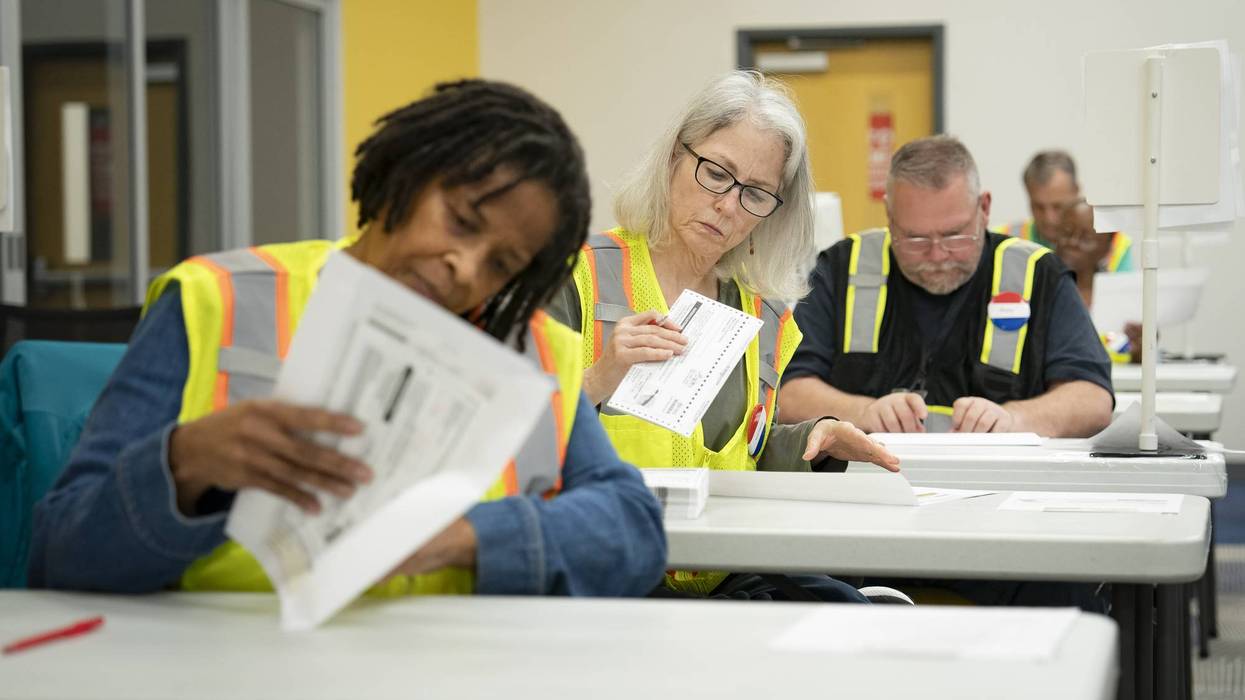
"This is yet another example of this administration’s unlawful overreach," said Rhode Island's attorney general.
A coalition of two dozen Democratic-led states filed a lawsuit on Wednesday challenging President Donald Trump's attempt to use the US Postal Service as a vehicle for his assault on mail-in voting, which he has targeted incessantly during both of his White House terms.
The lawsuit targets a newly finalized USPS rule under which the postal service would not deliver ballots in states that don't provide their voter data to the federal government. Rhode Island Attorney General Peter Neronha said in a statement Wednesday that "this is yet another example of this administration’s unlawful overreach and is in direct violation of the Constitution, which makes clear that states have the primary authority to administer elections."
"Voting by mail is a tried-and-true method of exercising our most fundamental right as American citizens," Neronha added. "Indeed, it’s the preferred voting method of the president himself. I am confident that we will succeed here, as we have many times before, thereby protecting the right of American citizens, Donald Trump included, to vote without interference.”
The states' lawsuit comes days after the US Supreme Court, which includes three Trump-nominated justices, stayed a lower-court injunction that had blocked implementation of the president's March executive order instructing the US Postal Service to enact restrictions on mail-in voting to prevent "fraud," which is rare in American elections. On Wednesday, a federal judge in Boston lifted the nationwide injunction on the mail-in voting restrictions following a request from Trump's Justice Department.
The office of New York Attorney General Letitia James, who joined the new lawsuit, emphasized that states "would have just weeks to comply" if the USPS rule is allowed to take effect ahead of the 2026 midterms.
"Election officials will have to redesign ballot envelopes, obtain federal approval, and establish entirely new systems to transmit voter lists to USPS, all while preparing to mail ballots to millions of Americans," James' office warned. "If states or local election officials cannot comply in time, eligible voters could be prevented from receiving or returning their ballots."
The US Constitution does not give the president any power over elections, but Trump has spoken repeatedly of his desire to "take over" and "nationalize" voting in the wake of his 2020 loss.
As part of his scheme, Trump has focused heavily on exerting control over the US Postal Service, which is currently led by David Steiner. The postmaster general, whom Trump boosted for the role, has faced calls to resign for allowing USPS to be used as "a partisan instrument of voter suppression."
Trump is currently pushing to fill four of the five vacancies on the US Postal Service's Board of Governors. All of the president's nominees, which must be confirmed by the Senate, are Republicans. As The New York Times noted on Tuesday, "Trump's selections broke with a longstanding practice of nominating board members in bipartisan pairs."
"The quiet attempt to restructure the leadership of the Postal Service comes as the president and his allies are trying to transform the 251-year-old agency into a central player in their quest to overhaul the nation’s elections," the Times observed.
Last month, as Common Dreams reported, US Sen. Gary Peters (D-Mich.) called for a pause on Trump's postal board nominees, warning that their confirmation would "undermine public confidence in the board’s ability to serve the public interest above any partisan political aims."
"This imbalance in representation would be unprecedented," said Peters.