
SUBSCRIBE TO OUR FREE NEWSLETTER
Daily news & progressive opinion—funded by the people, not the corporations—delivered straight to your inbox.
5
#000000
#FFFFFF
To donate by check, phone, or other method, see our More Ways to Give page.


Daily news & progressive opinion—funded by the people, not the corporations—delivered straight to your inbox.
In speaking with residents in several parts of Minneapolis, beautiful stories of organizing on a block-by-block level emerged as people mobilized to defend their neighbors from ICE.
Last week I was in Minneapolis, Minnesota to observe and learn from those who have attempted to protect members of their community from the brutal assaults by Immigration and Customs Enforcement and other government agencies and hold those agencies accountable for the violence they are wrecking on the community.
The Trump administration’s decision to surge 2,000 ICE and Border Patrol agents into Minneapolis to uphold White House Deputy Chief of Staff Steven Miller’s directive for the arrest in the US of 3,000 persons each day to teach immigrants, and everyone in the US a lesson, backfired as the actions of the federal agents in Minneapolis outraged the city, state, and nation.
Due to community pressure and noncompliance with the violent attempts by ICE agents to force capitulation by the community and the lawlessness of the masked agents, caught on video by bystanders in busting doors to homes, smashing car windows, and beating up and murdering two Minneapolis residents eventually forced the Trump administration to replace the well-known, mean-spirited Gregory Bovino and bring in “border czar” Tom Homan who very quickly reduced the number of ICE agents in Minneapolis by one-third and required the agents to wear body cameras.

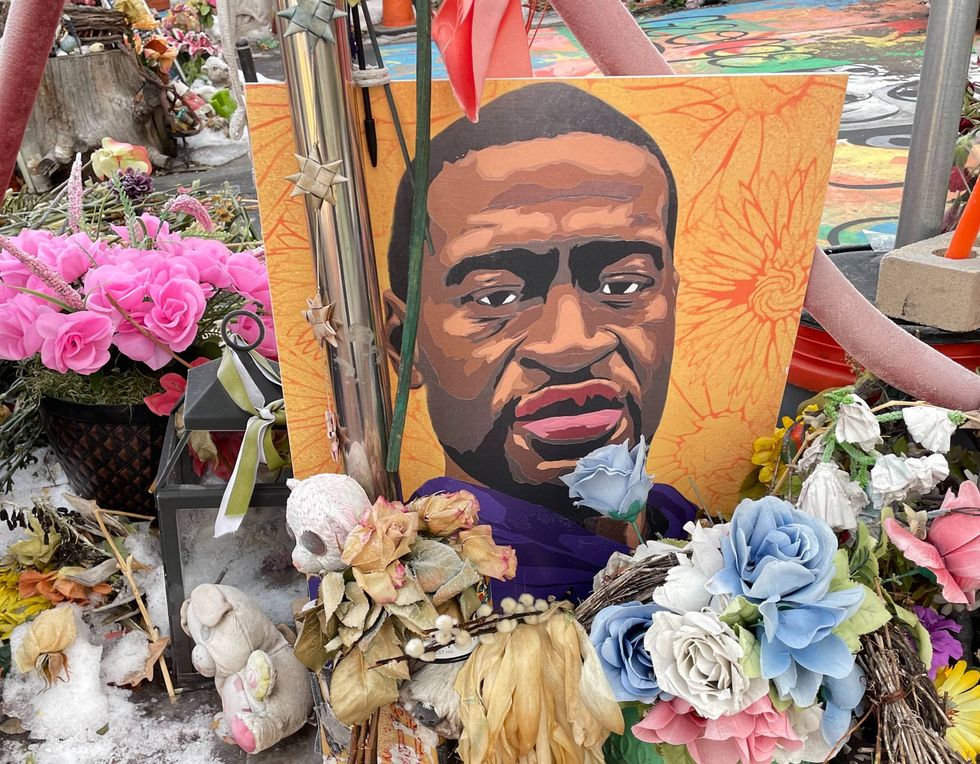
Community organizing began six years ago with the community response to the horrific murder of George Floyd. The protests and vigils for George Floyd in Minneapolis and around the world brought attention to the continuing targeting of African Americans for minor incidents that the police escalated into “I Can’t Breathe” and death.
To this day, each day for six years, a group from the community meets at 8:00 am at George Floyd Square located across the street from the Memorial over coffee to discuss the previous day’s events and the organizing needed for that day. There are several persons who are at the Square each day who can provide to a newcomer the historical context for the treatment by police of African Americans, Native Americans, and immigrants in the Minneapolis area.
Others arriving may be unhoused who are needing a cup of coffee and a doughnut for breakfast or some “new clothing” from the donations that are located inside a city bus stop shelter located at the square. By 9:30 am, the group has disbursed: some left quickly after 8:00 am to take kids to school or to go to work, others to continue work on community mutual aid projects.

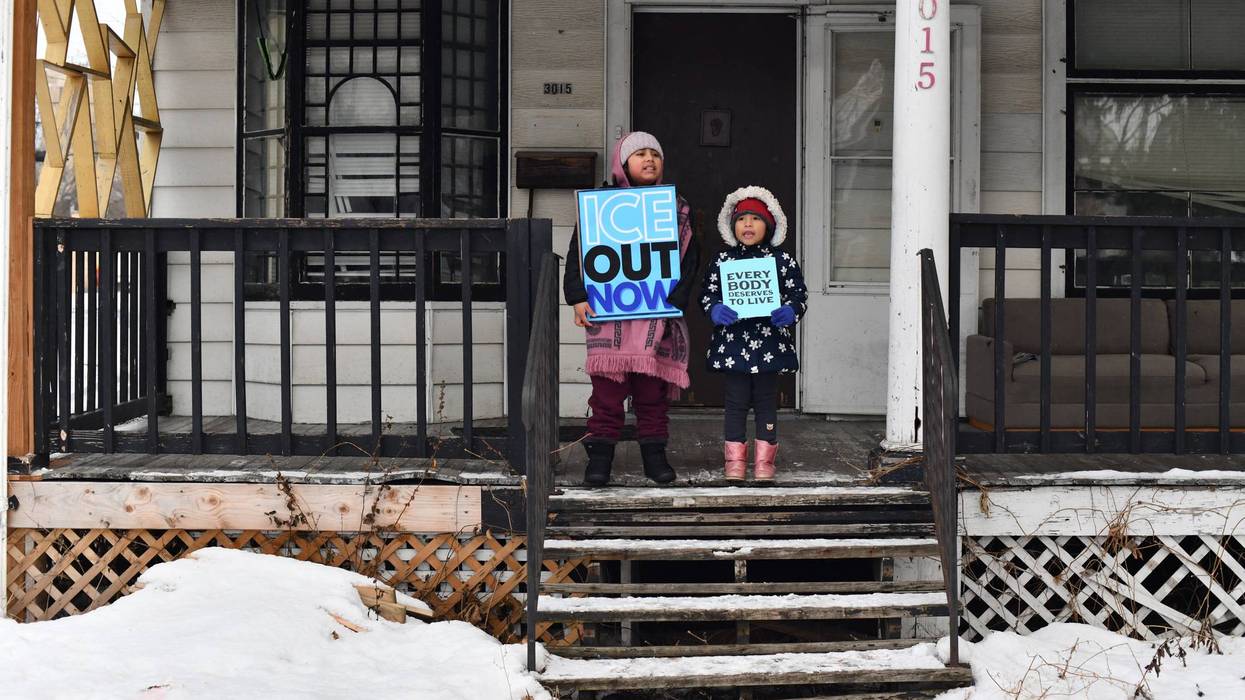
In speaking with residents in several parts of Minneapolis, beautiful stories of organizing on a block-by-block level emerged! Residents got to know those who lived on the same block. Everyone had a whistle to alert the neighborhood that suspicious cars were in the area. Those residents who were not targeted by ICE, generally Caucasian, came out on the streets to find out what was happening and ready to record ICE actions. They began doing grocery shopping for those fearful of leaving their homes, taking kids to school, picking them up from school, and taking people to medical appointments.
The Minneapolis friend who housed us for this visit usually has at least two things per day that she was doing for immigrants in her neighborhood. Others in teams of two or three stand outside businesses that ICE might target, with the businesses thanking the volunteers by providing coffee and snacks.
Other volunteers in their personal cars follow vehicles that they suspect may be driven by ICE agents. Many of these volunteers have been physically assaulted by ICE agents who stop the volunteers, damage their cars, take their license plate numbers, find out the addresses of the volunteers, and then harass them at their homes.
Minnesota “Nice” has turned into “F**k ICE.”
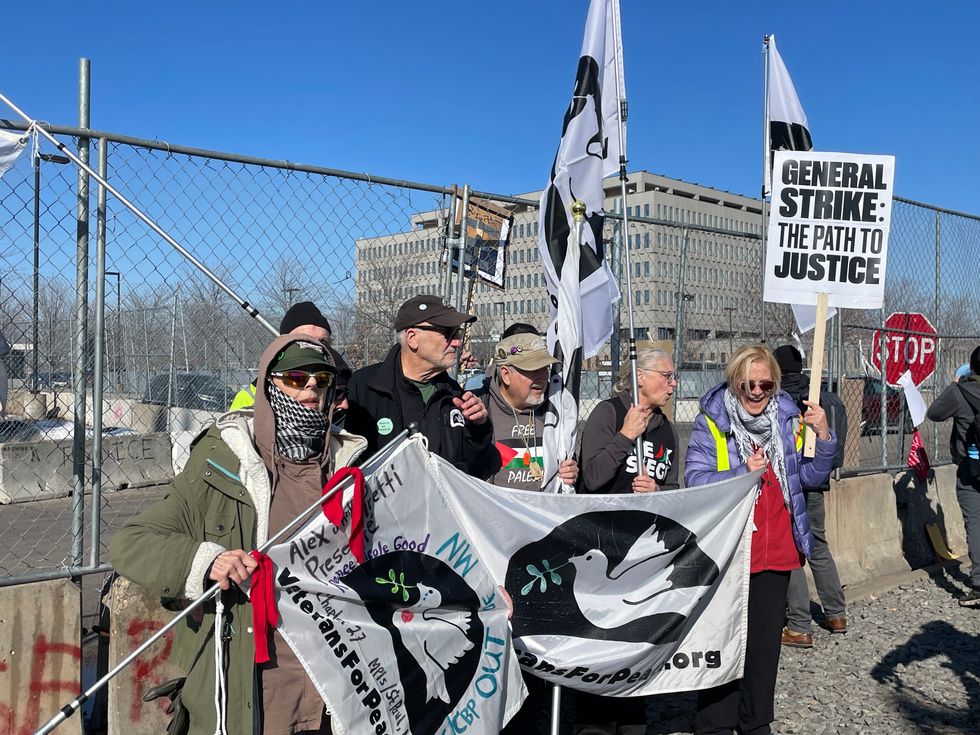
The Veterans For Peace (VFP) chapter in Minneapolis has a Rapid Response team composed of veteran volunteers from around the country that has provided a presence in various parts of the city. In an article by VFP board member Gerry Condon, he relates: “Younger Post-9/11 veterans have taken the lead. They have been patrolling in at-risk neighborhoods, monitoring for agitators, deescalating situations at protests, and training people how to stop bleeding. At least four veterans have been arrested while peacefully protesting but have been released without charges.”
These types of community volunteering happen every day all over the city, including a team of carpenters who replace doors that ICE has knocked down when entering a residence, to a team of tow truck operators who return a vehicle that occupants have been kidnapped from to the residence of the person—free of charge.
Many of these stories, organizations, and actions are chronicled in the website: Stand With Minnesota.
Every day hundreds come to the Whipple immigrant court and detention building located in south Minneapolis. ICE agents mobilize in the huge parking lot with hundreds of rental cars and drive out to terrorize the community and bring those arrested into the Whipple facility before sending them to other detention locations.
Volunteers with megaphones speak their minds to the departing ICE agents with the most “F” words I have ever heard in all my life!!! Spontaneous “F**k ICE” chants erupt everywhere—from the entire audience in a recent Minneapolis hockey game to whenever Minneapolis residents meet on a street corner.
Minnesota “Nice” has turned into “F**k ICE.”
ICE put up tall fences on both sides of the roadway used for departure. In one remarkable action, community members threw dildos over the fences at ICE cars because they were such “dicks.”
Due to AI and facial recognition devices used by ICE, most who go to Whipple wear masks and leave their phones in their cars.
Another group of volunteers formed “Haven Watch” to provide 24-hour-a-day coverage for those who have been detained and subsequently allowed to leave Whipple. Generally, they are released from the detention facility at night, with no coats and sometimes no shoes, in the bitter cold with no phones to call for help. The volunteers provide warm drinks and food, clothing, a phone, and a ride home.

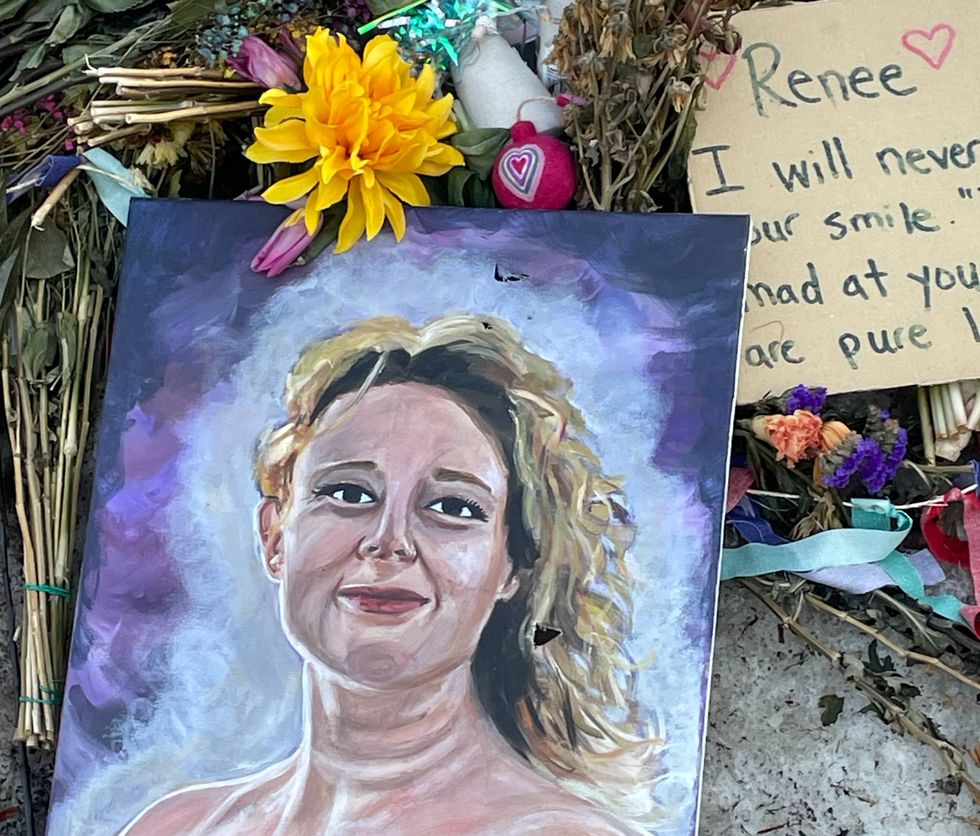
Hundreds of people visit the memorials each day of Renee Good and Alex Pretti. New flowers, photos, poems, and statements are placed at the site where each was murdered by ICE agents. We have all seen the videos of ICE agent Jonathan Ross shooting mother of three Renee Good in her car on January 7, 2026 and of Border Patrol agent Jesus Ochoa and Customs and Border Protection officer Raymundo Gutierrez murdering Veterans Affairs ICU nurse Alex Pretti on January 24, 2026 as five of them pinned Alex on the ground.
President Donald Trump, Homeland Security Secretary Kristi Noem, and other administration officials' attempts to characterize both Good and Pretti as terrorists backfired badly as videos of the federal agents murdering them emerged.
The allegations against four others shot by federal immigration agents unraveled in court with little publicity.
Before Trump officials declared Renee Good and Alex Pretti at fault for instigating violence before they were killed, the administration’s allegations against four others shot at by federal immigration agents quietly unraveled in court. There have been 16 shootings by on-duty federal immigration agents patrolling in US cities and towns over the past year, including those that took the lives of Minnesota protesters Renee Good and Alex Pretti.

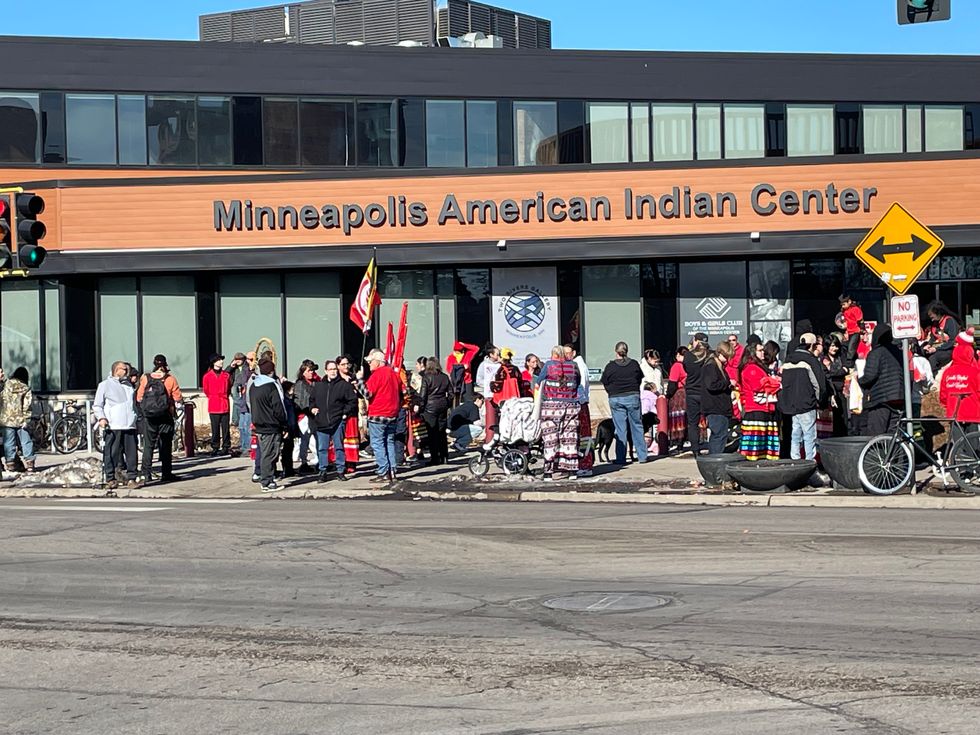
ICE violence is not the only type of violence in Minnesota. Saturday, February 14, 2026 we went to the Minneapolis American Indian Center to participate in the Missing and Murdered Indigenous Relatives Day of Remembrance, which is held each February 14, to bring awareness to the epidemic of Indigenous people who have gone missing or have been murdered.
Startling data collected by the state of Minnesota is evidence that Indigenous people are a high percentage of the state’s missing person cases.
The Minnesota state Bureau of Criminal Apprehension reports that 732 Indigenous persons went missing in Minnesota in 2025, more than 64% of whom were women. In 2025, the average number of Indigenous people in Minnesota who were missing on any one day was 63, according to the BCA.
According to 2024 data, American Indians accounted for more than 4% of all reported victims of homicide or nonnegligent manslaughter in Minnesota, despite American Indians making up only a little more than 1% of the population.

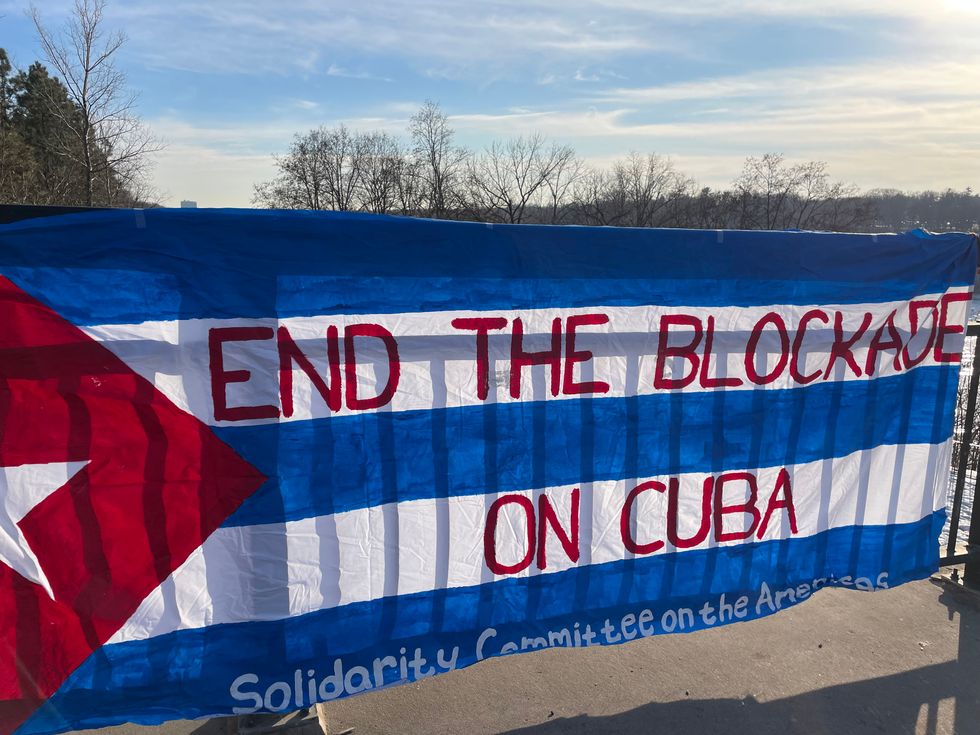
While ICE raids are the main focus of citizens of Minneapolis-St. Paul, they are still active in other issues. They have not forgotten Cuba and Palestine, among many issues, with weekly bridge bannering on Wednesday and Friday afternoons… after a day filled with protest of ICE!
Minnesota NICE—It Surely IS, Despite all the Challenges!
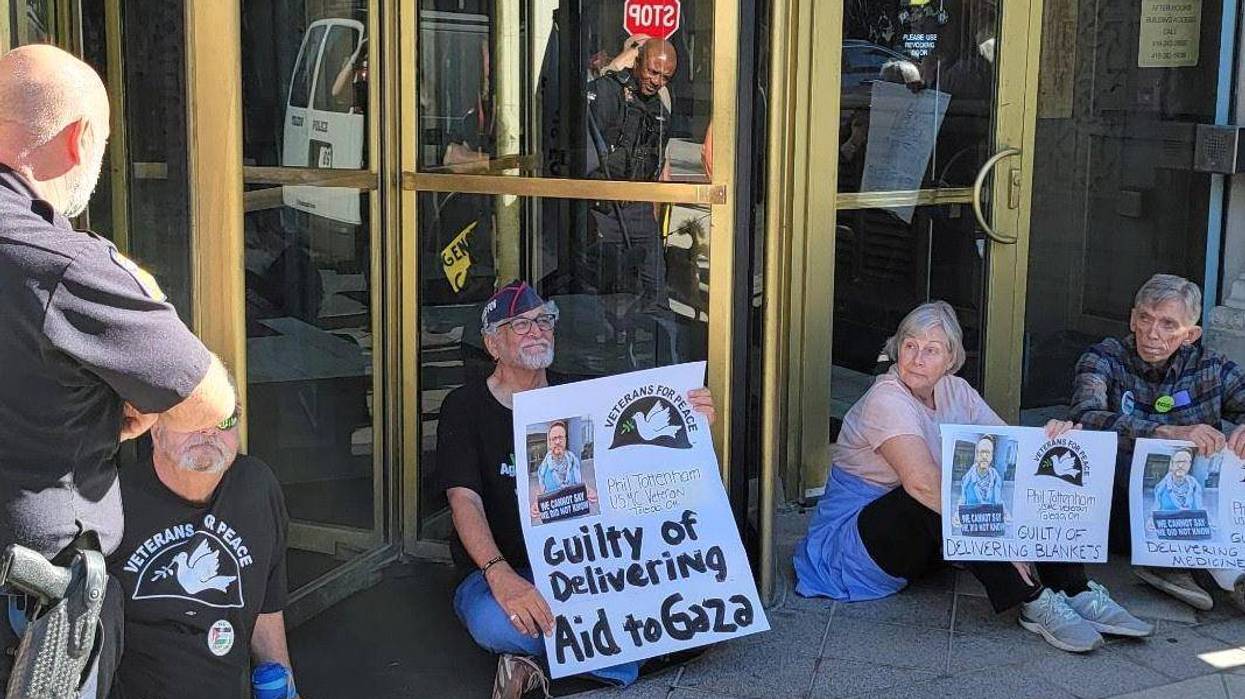
Can eight jurors be made to understand why four activists blocked the entrance to a senator's office to protest the Gaza genocide?
Will a jury in Middle America’s flyover country care enough about the genocide in Gaza to acquit four protesters arrested for nonviolent civil resistance? Will it matter once they’ve seen “Bringing Gaza Home?”
That’s the question eight jurors will decide in Toledo a few weeks from now when they hear from four activists arrested October 3 for blocking the entrance to the local office of US Sen. John Husted (R-Ohio). They, along with the local peace movement, had run out of patience with Husted because of his continuing support for Israel’s genocide.
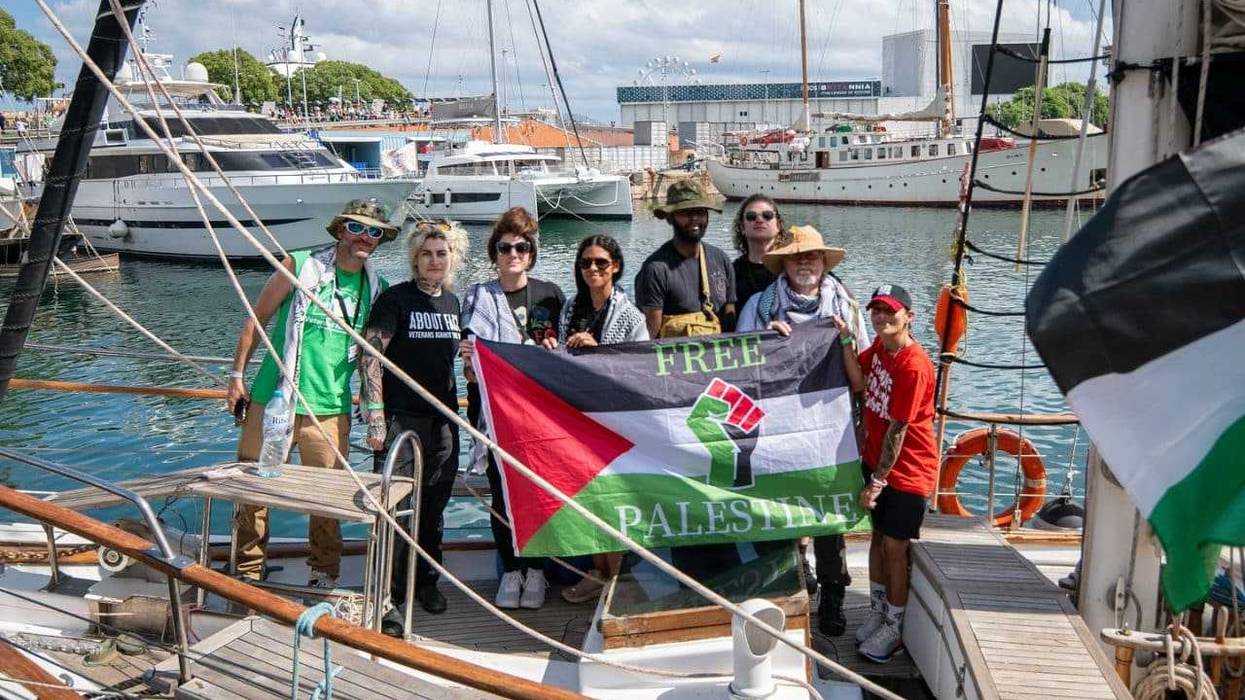
The final straw was when Husted refused to even make a statement supporting our friend and fellow Toledoan, Phil Tottenham, a former Marine, who was abducted in international waters by Israel during last fall’s Sumud Flotilla. That simply demanded the strongest nonviolent response we could make. We simply could not sit in comfort here in Toledo and watch this obscenity and simply hold a sign on a street corner to protest. We had to do more.
The other three people arrested were Al Compaan, professor emeritus of physics, University of Toledo; Nancy Larson, retired counselor-social worker; and Steve Masternak, retired industrial engineer. Two others were arrested but have since pled guilty and paid fines.
Our hope at trial is that our fellow citizens and neighbors will be as horrified by what Gazans have suffered as we are and decide it’s time to stand and be counted.
Information we will show the jury is included in the extensively documented Veterans For Peace report, Bringing Gaza Home. The report is compiled from information published by international news outlets such as the Guardian, Al Jazeera and Anadolu Agency, reporting on the effects of two years of Israel’s US-funded genocide in Palestine.
What makes it local to Toledo, county seat of Lucas County, Ohio, is comparing the destruction in Gaza to what Lucas County would be like after similar bombardment. The methodology simply compares Gaza’s area and population to Lucas County’s and calculates the comparable numbers.
We will hold up large photos and show videos of human casualties and physical destruction in Gaza, and describe to jurors what the effect would be in our own neighborhoods. We will tell the jury, “If this sounds utterly impossible or like a horror movie script, it’s neither. But for the grace of God this could be us instead of Gaza.”
Our hope at trial is that our fellow citizens and neighbors will be as horrified by what Gazans have suffered as we are and decide it’s time to stand and be counted, that blocking the entrance to a senator’s office is a minimal response to a genocide.
When military members have claimed such power and refused blind military obedience, it has had a significant impact on this country’s politics and policies, as well as on individual lives.
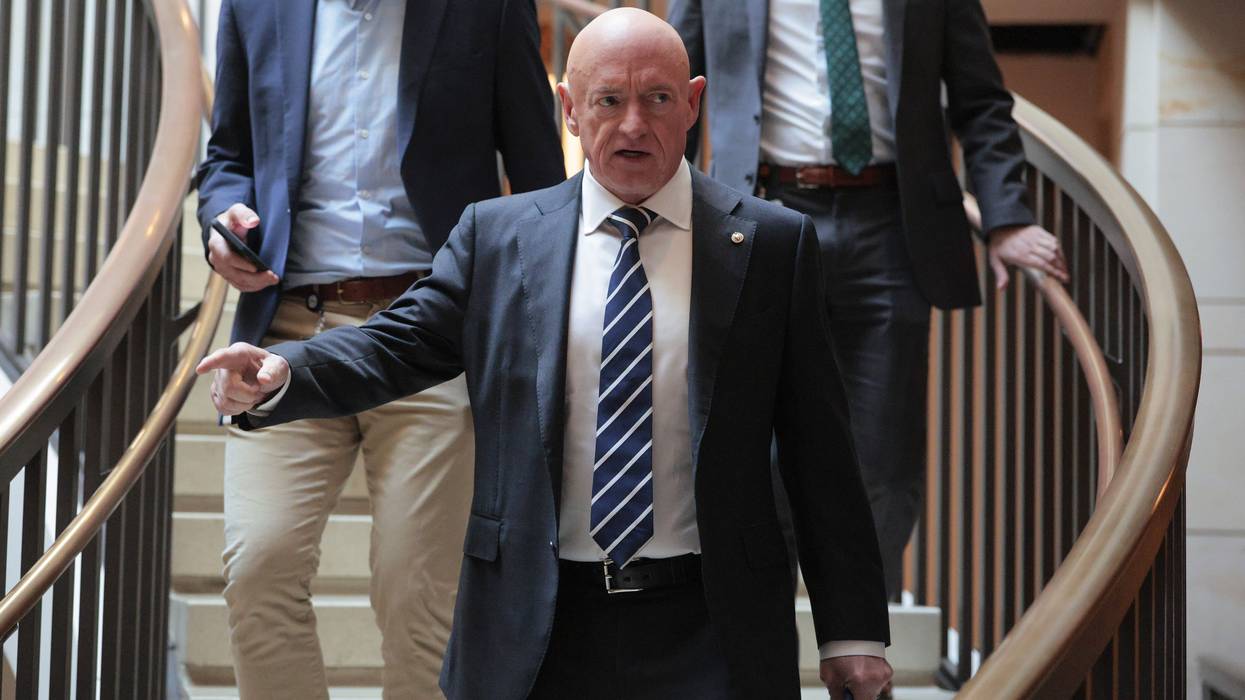
Any story about resistance within the military must begin by recognizing that it’s not an easy thing to do. Apparently, that’s true even for a much-decorated retired Navy commander, former astronaut, and sitting United States senator. I’m talking about Arizona Sen. Mark Kelly. He was one of six Democratic legislators, all military veterans or former intelligence officers, who, on November 18, released a 90-second video reminding members of the military that the oath they took on enlisting requires them to refuse illegal orders. The implicit context was the Trump administration’s deployment of National Guard troops to American cities, but their message took on added urgency after the Washington Post published an exposé about an order coming from high up to kill survivors of an airstrike in the Caribbean Sea.
Michigan Sen. Elissa Slotkin, who served in the CIA, on the National Security Council, and at the Defense Department, and had three tours of duty as a CIA analyst in Iraq, spearheaded the action. She was joined by Kelly; Pennsylvania Reps. Chrissy Houlahan (former Air Force captain) and Chris Deluzio (former Navy lieutenant with one tour in Iraq); New Hampshire Rep. Maggie Goodlander (Navy Reserve lieutenant, intelligence); and Colorado Rep. Jason Crow (Army Ranger, three tours in Iraq).
Speaking directly to the camera, their voices imbued with sincerity, the six stated their affiliations, noted the precariousness of what the military is being asked to do in the second presidency of Donald Trump, and repeated their duty-to-refuse refrain, ending with a rousing, “Don’t give up the ship!” It was pretty straightforward stuff and, except for a few digs at the administration, an accurate statement of legal fact.
On enlistment, everyone in the military takes an oath of loyalty not to a person, a party, or any form of politics, but to the Constitution. Enlistees in all branches also pledge to obey orders from their officers and the president. As stipulated in the Uniform Code of Military Justice (UCMJ), it’s clear that this means only lawful orders. Officers take a slightly different oath: They, too, swear to support and defend the Constitution, but their oath doesn’t include anything about obeying orders from their superiors or the president, presumably because they’re responsible for giving orders and ensuring that those orders are lawful. Officers reaffirm their oath whenever they’re promoted. Across the board, the UCMJ, the Nuremberg Principles, and the US Constitution establish the right and responsibility of servicemembers to refuse illegal orders or to refuse to participate in illegal wars, war crimes, or unconstitutional deployments.
Never one to bother with legal niceties, Donald Trump (commander-in-chief, no military service) quickly denounced the video on Truth Social as “SEDITIOUS BEHAVIOR AT THE HIGHEST LEVEL,” adding, “Each one of these traitors to our Country should be ARRESTED AND PUT ON TRIAL.” He also posted: “SEDITIOUS BEHAVIOR, punishable by DEATH!” He then backtracked on the death threat on Fox’s “Brian Kilmeade Show.”
Members of his administration followed Trump’s lead with ever more strident outrage. Within days, Defense Secretary Pete Hegseth (former Army National Guard major, one tour each in Afghanistan and Iraq) called the lawmakers the “Seditious Six.” He then began to investigate Kelly, threatening to recall him to active duty so that he could be court-martialed for misconduct.
He went after Kelly because, as a retired military officer, he’s the only 1 of the 6 who could still fall under the military’s jurisdiction. Nonetheless, it’s unusual, to say the least, for a secretary of defense (oops, war!) to think about punishing an officer so long after he has retired. Meanwhile, the FBI began investigating all six of those legislators. (Consider it unlikely indeed, however, that the FBI will also investigate the death threats the six have received.)
If the courts and Congress can’t figure all this out, imagine the risk for servicemembers, especially in the lower ranks, trying to do so on their own.
Less half-baked responses came from places like Military.com, which criticized the legislators for attempting to politicize the military by bypassing the chain of command and speaking directly to the troops, while not citing specific examples of illegal orders and so potentially confusing them. If true, this wouldn’t be the first time this country’s troops were confused by orders. As a Marine sergeant testified at the 2008 Winter Soldier hearings, “During the siege of Fallujah [in Iraq], we changed rules of engagement more often then we changed our underwear.” As for politicizing the military, you need look no further than the Trump version of political theater—National Guard deployments to Democratic-run cities on his shitlist.
The straight-speaking six and their supporters were anything but cowed by the accusations. In a joint response to the president, they proclaimed their love for this country and fealty to the Constitution before concluding, “Our servicemembers should know that we have their backs as they fulfill their oath to the Constitution and obligation to follow only lawful orders. It is not only the right thing to do, but also our duty… This is a time for moral clarity.”
In a town hall in Tucson, Kelly said of Trump and Hegseth, “They’re not serious people and I’m not backing down.” At the University of Pittsburgh (repeatedly designated a Military Friendly School), someone projected pictures of the six legislators onto its landmark 42-story Cathedral of Learning under the message, “This is what courage looks like.”
It might normally seem unlikely that Kelly could be punished for such constitutionally protected speech, a protection particularly robust for members of Congress. Unfortunately, “unlikely” could be considered the Trump administration’s middle name and, by now we should have learned that, in this political moment, anything is possible.
Playing armchair psychologist, I have no idea if Trump really believes that video to be seditious or if he even knows what actually constitutes sedition. I doubt it matters to him. For whatever reason—distraction? attention-grabbing? meat for his base? unbridled id?—he used that video to effectively change the subject, while a pliant media and public largely went along with him. In the process, he managed to refocus attention (yet again) on himself and his minions at the—yes, War, not Defense—Department, and the Department of (In)Justice, and on protected versus seditious speech, as well as courageous versus outrageous politicians. Take your pick, just don’t talk about what members of the military are being asked to do these days and how they might themselves think about such orders.
Joy Metzler, a 24-year-old graduate of the Air Force Academy, left the military as a conscientious objector this past April. She credits two required courses on law and ethics at the academy for leading her to first question and then conclude that she couldn’t support her country’s role in the then-ongoing genocide in Gaza. “The thought of being given an order that was illegal or unconstitutional was almost unthinkable to me at the time, I just didn’t think it happened,” she emailed me recently. “Line officers, low ranks, sure—from people who didn’t understand the law—but I never imagined one would come from the president or the secretary of defense.”
How much time and attention are given to the legal and moral intricacies of war making no doubt varies from branch to branch, unit to unit, commander to commander of the military. Whatever enlistees or officers are taught about resisting illegal orders is, of course, wildly outweighed by what they’re taught about the need to obey orders, which is inculcated into them until it becomes a reflexive response. Military units aren’t debating societies for good reason, and military training strongly discourages disobedience of any sort, but even more to the point, what is or isn’t legal isn’t necessarily clear-cut.
Military law can hold servicemembers accountable for participating in illegal actions, even if they were following orders. Nonetheless, a recent survey found that, while 4 out of 5 active-duty troops understand their obligation to disobey illegal orders, they are far less clear on what orders they would disobey. “Starving [a] civilian population” or “shooting unarmed civilians” were cited most often as orders “so obviously unlawful” that they would be disobeyed, but by only 43% and 45% of those responding to each possibility. Yet, when asked if they would follow an order “to shoot into a crowd of unarmed civilians protesting US government policy and refusing to disperse,” 59% said they would.
Civil courts have waffled and disagreed about whether recent orders to the military are legal, and the Trump administration has been known to ignore rulings that go against it. For instance, assessments of the legality of sending National Guard troops from different states into Chicago, Los Angeles, Memphis, Portland (Oregon), and Washington, DC have changed almost weekly. And while legal experts generally agree that the airstrikes on what may or may not be drug-running boats in the Caribbean and eastern Pacific Ocean are illegal under international law, Congress is just beginning to dip its toe into the issue. If the courts and Congress can’t figure all this out, imagine the risk for servicemembers, especially in the lower ranks, trying to do so on their own.
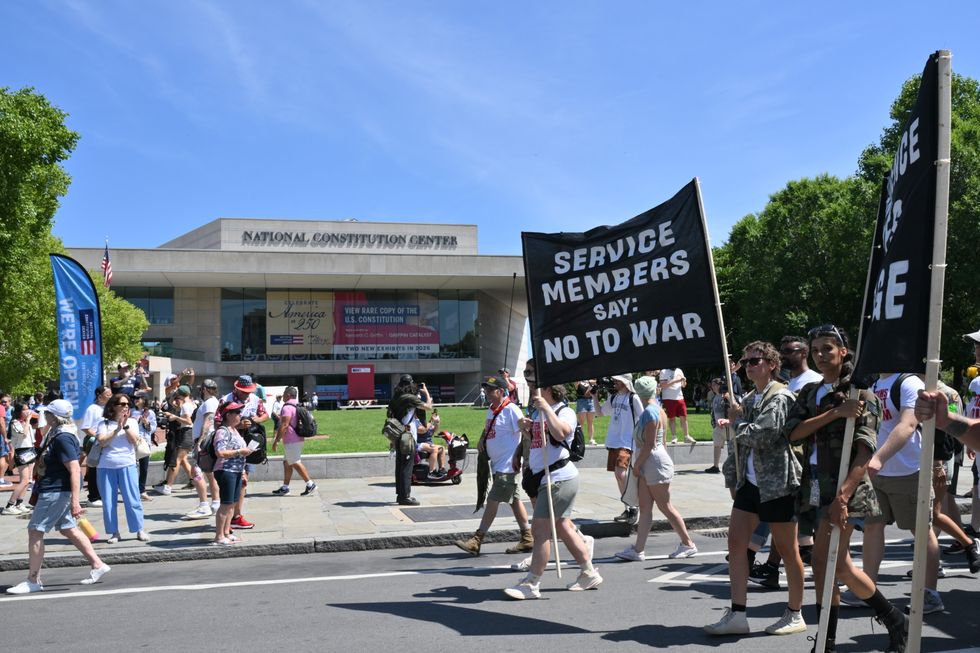
While in uniform, service members have limited speech rights and the military generally suppresses dissent, so veterans are in a far better position to question military policy. Veterans For Peace (VFP) used the uproar over the lawmakers’ video to reinforce its opposition to the murderous airstrikes in the Caribbean, genocide in Gaza, and the deployment of troops to American cities. They and other veteran-related organizations have long been pushing back at iffy, illegal, or immoral orders, often by committing disobedience of the civil kind. Here is a distinctly incomplete rundown of some of their actions.
On Easter Sunday 2024, VFP member Larry Hebert, an Air Force senior airman then on active duty in Spain, began a hunger strike in front of the White House to protest US support for Israel’s war in Gaza. He was inspired by the resolve of Aaron Bushnell, also an active-duty airman, who had set himself on fire at the Israeli embassy in Washington, DC the month before to protest that nightmare. When Hebert was ordered back to his base, two VFP members took his place. As the barbarity in Gaza progressed, anti-war veterans continued their opposition in the People’s Arms Embargo, a series of protests blocking entrances to Travis Air Force Base in California, where planes were taking off to deliver weapons to Israel. Twelve people were arrested at a protest there on April 9 of this year.
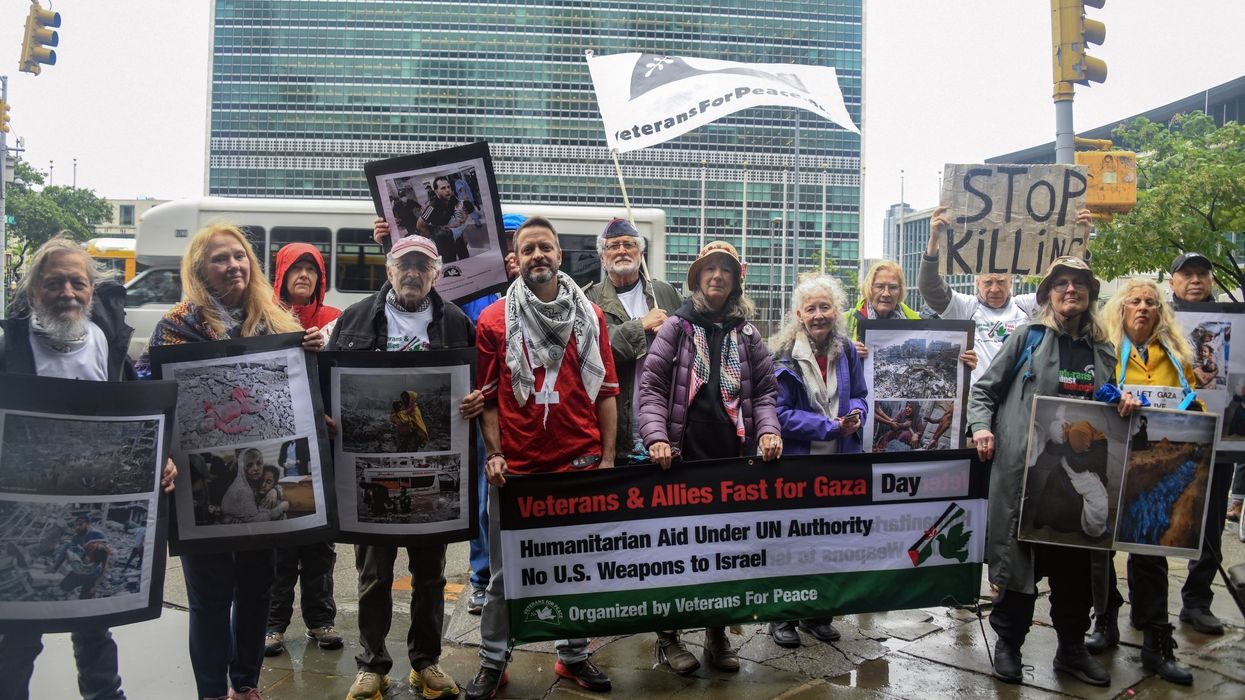
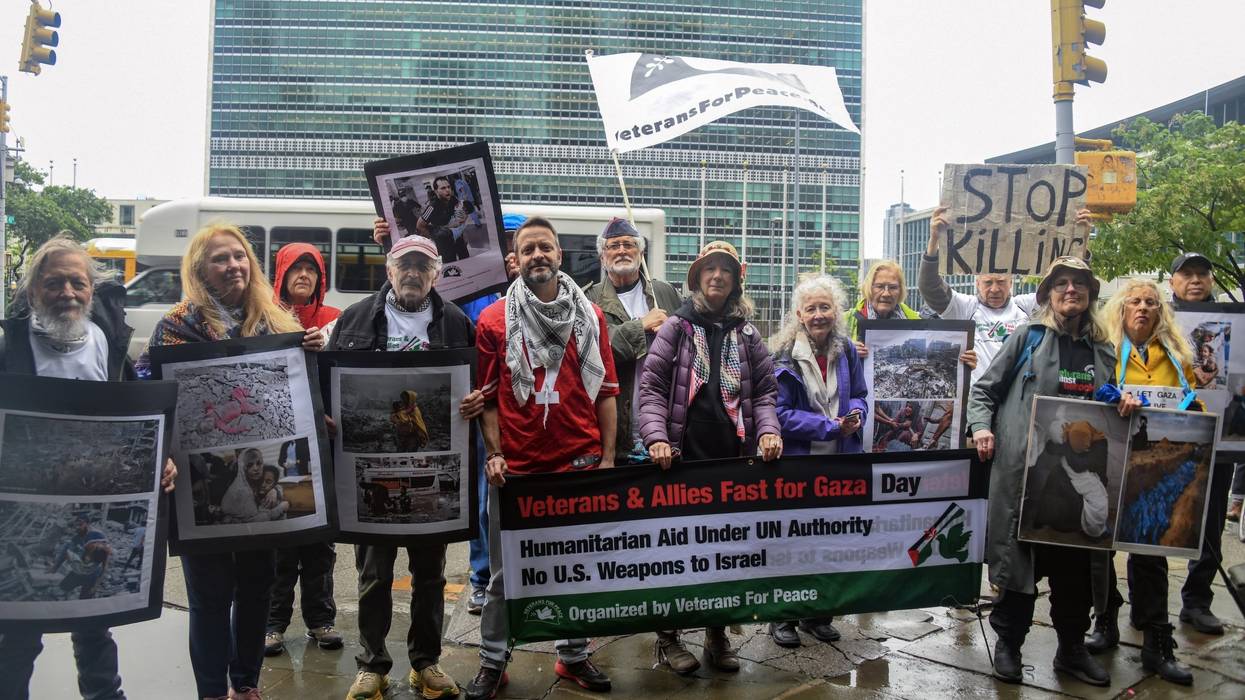
Next came a 40-day Fast for Gaza, which ended this past Memorial Day. That protest grew out of a conversation between two veteran activists, Mike Ferner, a Navy corpsman during the Vietnam era, and Phil Tottenham, who had served in the Marines more recently. VFP took up the idea, and 38 other organizations joined in to demand full humanitarian aid for Gaza and an end to US weapons deliveries to Israel. About 800 people took part in the fast around the country, while a handful of regulars staged a hunger strike outside the US Mission to the United Nations. That fast culminated in a “die-in” at the Israeli mission in New York City, where 28 people were arrested, after which Ferner threw barely defrosted, bright red cow’s blood on a window at the American UN mission. He, too, got arrested.
Simply recognizing that you have the legal capacity to do what’s right is no small thing.
When Trump made good on his threats to send National Guard troops into American cities, these actions expanded to include resistance there. In September, aiming to speak directly to active-duty, reserve, and National Guard personnel, the progressive foreign policy coalition Win Without War launched a new project, Not What You Signed Up For. That project began with a mobile billboard and posters in Washington, DC, asking, “Is this what you signed up for?” and directing anyone with questions or misgivings to a website listing three counseling and support organizations: About Face: Veterans Against the War, the GI Rights Hotline, and the National Lawyers Guild’s Military Law Task Force. Billboards subsequently went up near Fort Bragg and Camp Lejeune in North Carolina and near US Southern Command headquarters in Florida, among other places. In the project’s first month, the accompanying resource webpage got about 8,000 unique visitors. By November, it was nearly 20,000. About Face Organizing Director Brittany DeBarros says that she alone spoke with more than 100 active servicemembers looking for support this year.
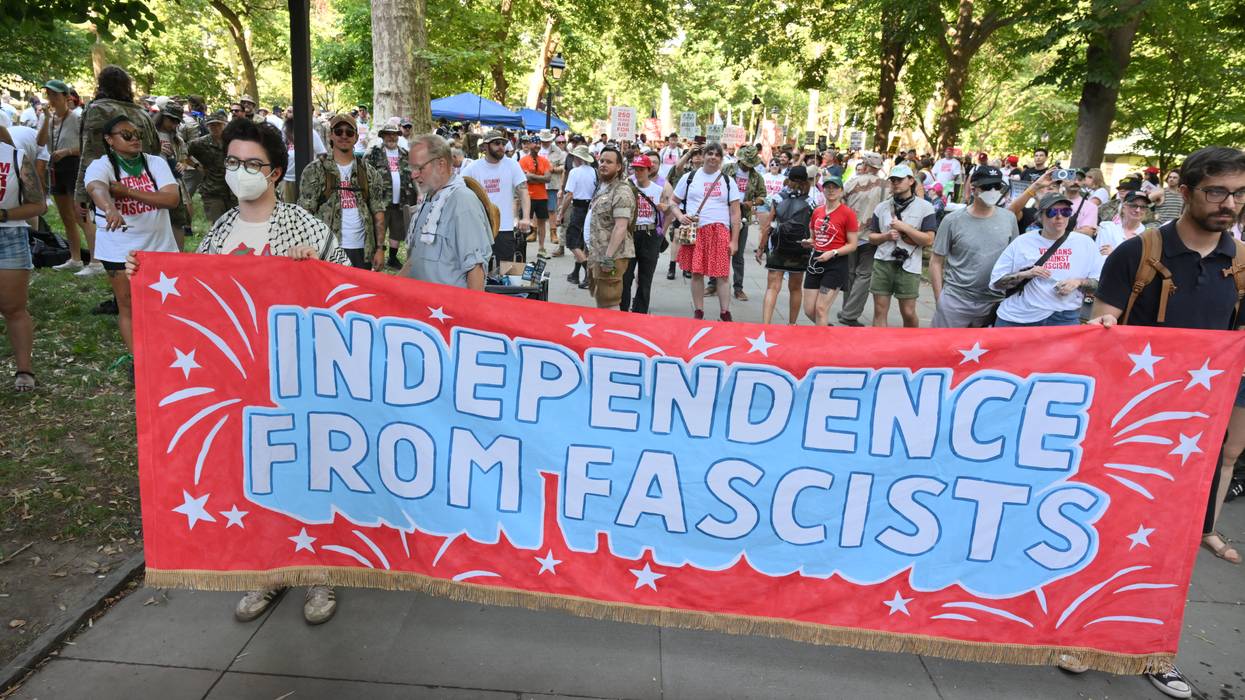
In June, on the eve of the nationwide No Kings protests and the costly Trump birthday celebration (also known as the Army’s 250th anniversary parade), members of VFP and About Face, ranging in age from their 20s to 87, held a sit-in on the steps of the US Capitol to protest Trump’s National Guard deployments. About 60 of them were charged with crossing a police line and arrested, including that 87 year old.
Which takes us to this Veterans Day, when military-affiliated and labor union anti-war groups organized their own celebrations under the banner “Vets Say No,” as protests against the administration’s use (and misuse) of the military only continued to grow. Crowds gathered in cities around the country, including in Washington, DC and a frigid Boston.
While this isn’t yet enough to constitute a trend, let alone a movement of resistance within the military, it gives that controversy over the video of those Democratic legislators a necessary (and underreported) context. It also suggests at least one reason why President Trump was so eager to deflect attention from the import of their message.
Of course, what he said in response to them wasn’t just meant to change the subject. It was typical of his usual intolerance of any challenge to his version of authority. And I don’t mean to minimize the importance of what those Democrat politicians did either. Though they’re only a handful of the 98 veterans in Congress and in the minority party, they have the standing to be heard, including among their colleagues. It’s possible, for instance, that their outspokenness lent both cover and courage to other legislators on both sides of the aisle to question, as they recently did, the legality of the military’s murky and wildly destructive acts off the Venezuelan coast.
What I want to do here is refocus attention on the underlying message in that video from congressional representatives and its significance for enlistees, reservists, and part-time military members: that they have the power—as individuals and supportive groups —to resist what they know to be wrong. Admittedly, doing so will be anything but easy. It may be scary, confusing, and lonely. But simply recognizing that you have the legal capacity to do what’s right is no small thing. It may even help protect servicemembers against the soul-crushing transgression of one’s innate moral code that has come to be known as “moral injury.”
When military members have claimed such power and refused blind military obedience—during the Vietnam War and the post-9/11 wars in Afghanistan and Iraq—it has had a significant impact on this country’s politics and policies, as well as on individual lives. But of course, the responsibility doesn’t fall only to the people in our military. Maybe we could all join in on a chorus or two of doin’-the-right-thing rag.