

SUBSCRIBE TO OUR FREE NEWSLETTER
Daily news & progressive opinion—funded by the people, not the corporations—delivered straight to your inbox.
5
#000000
#FFFFFF
To donate by check, phone, or other method, see our More Ways to Give page.
Daily news & progressive opinion—funded by the people, not the corporations—delivered straight to your inbox.
"The fact that they’re dropping this rule into place abruptly, without a comment period," said one advocate, "shows how little they care about the safety of our students.”
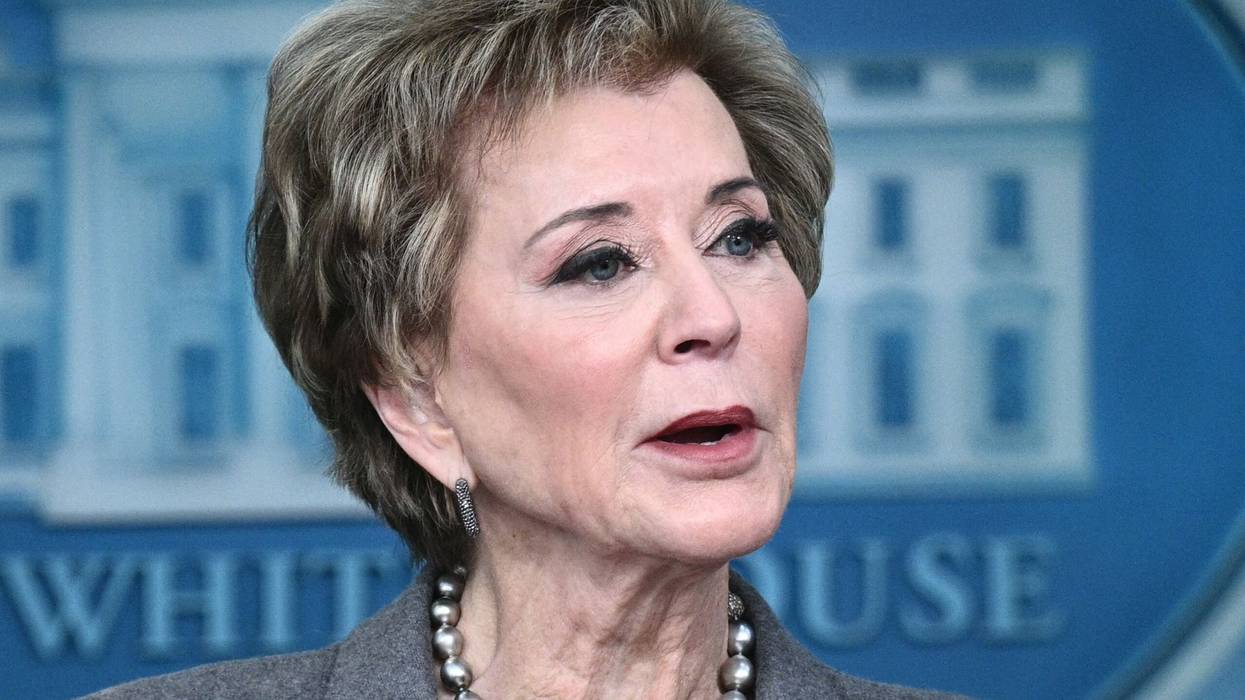
Education Secretary Linda McMahon's announcement that the Trump administration was formally rescinding Biden-era anti-discrimination protections was enough to spark outrage among women's rights and LGBTQ+ advocates on Monday—but one group pointed to officials' decision to make the change without gathering feedback from the public as even more reason for outcry.
"You get no say," said Human Rights Campaign (HRC) as the Education Department announced it was taking former President Joe Biden's Title IX rules off the books and returning to President Donald Trump's 2020 regulations, which set stricter standards for what constitutes sexual harassment and requires colleges to hold court-like hearings regarding complaints of sexual misconduct, complete with witnesses who can challenge the credibility of survivors or the accused.
HRC said the administration was displaying "contempt for the rule of law and democratic governance" as it "denied the public any opportunity to comment on the dangers of returning to these prior rules, and has announced that the changes will go into effect tomorrow."
"In its typical Orwellian fashion, the administration claims that 'engaging in public notice and comment would be contrary to public interest," said HRC.
Biden had amended Title IX regulations in 2024, clarifying protections against discrimination for students who are pregnant or are parents, transgender, or have other sex differences, and strengthening protections against sexual harassment and assault. The guidelines were subject to court challenges brought by Republican states.
The Trump administration has already been enforcing aspects of its own interpretation of Title IX, including by targeting schools that allow transgender students to play on women's and girls' sports teams. The Education Department said on social media Monday that in rescinding Biden's Title IX rules, "the Trump administration is formally putting into regulation what the law has said all along: Title IX’s protections are based on SEX, not 'gender identity.'"
Kelley Robinson, president of HRC, said Monday that Title IX "is, quite simply, about protecting students and ensuring that they are safe from abuse, harassment, and discrimination while they pursue their education. But Donald Trump and his cronies aren’t interested in any of that."
"Instead of enforcing protections for students, they’re rescinding them," said Robinson. "They don’t care if sexual harassment and assault go unaddressed. And they’re happy to strip funding away from school districts and states that are actually trying to keep students safe. We know who will be hurt: women, girls, and others who are vulnerable to sexual harassment, assault, and abuse—including LGBTQ+ students. The fact that they’re dropping this rule into place abruptly, without a comment period, denying families, educators, loved ones and the students themselves a say in how they should be treated, shows how little they care about the safety of our students.”
Democratic Gov. JB Pritzker of Illinois, a vocal critic of Trump and a potential 2028 presidential contender, said Monday that his state would continue working to ensure that all students of all gender identities are safe on campuses. He accused Trump of "once again attacking the civil rights protections that help make our country great."
At the National Women's Law Center, Shiwali Patel, the group's senior director of education justice, noted that the decision came as prosecutors reopened a high-profile sexual assault case at Cornell University, following public outrage.
“The Cornell University case is a devastating example of why robust federal Title IX enforcement matters,” said Patel. “Sexual harassment and assault continue to be pervasive in schools and, to the fullest extent possible, we should be working to enforce the laws that protect student survivors of sexual violence. Yet, Education Secretary Linda McMahon and the Trump administration have decided to ignore what survivors need, instead weaponizing Title IX to attack trans students."
“While the administration is unlawfully eroding protections for trans students under the guise of ‘protecting women and girls,’ they are systematically weakening the very laws that keep students safe and schools accountable," added Patel. "‘Protecting women and girls’ means not limiting Title IX protections based on students’ reproductive traits and anatomy and enforcing Title IX to make sure schools are inclusive spaces that provide equal educational opportunity for all students.”
At HRC, Robinson said the decision "drives home how essential it is that we take action at the polls this November to start bringing some accountability to an administration that has turned its back on the very students Title IX was written to protect.”
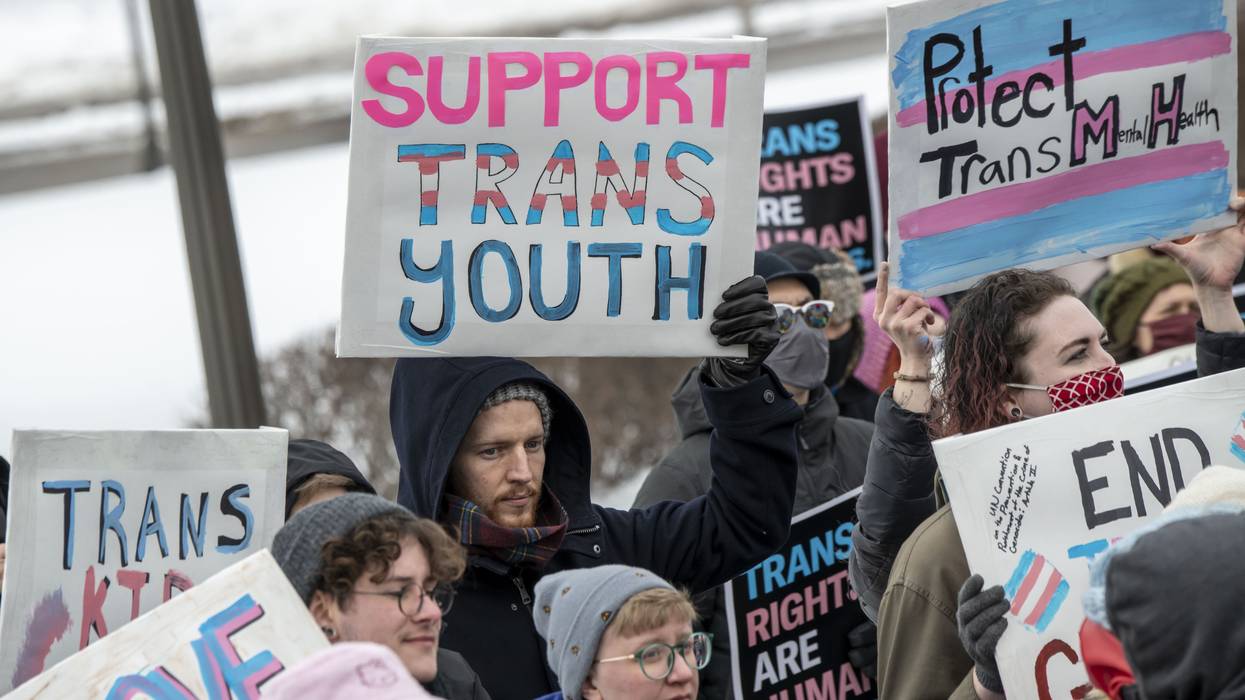
When we allow our government to dismantle the fundamental rights of transgender people, we validate a legal precedent that threatens the liberties of every single citizen tomorrow.
In 1993, Minnesota became the first state in the country to protect people from discrimination based on sexual orientation and gender identity in its Human Rights Act, with explicit trans-inclusive language built into the law from the start. In 2014, the Minnesota State High School League clarified that student athletes can participate on teams that align with their gender identity. And just last year, the Minnesota Supreme Court unanimously ruled in Cooper v. USA Powerlifting that it’s illegal discrimination for sports organizations to ban trans women from participating.
Throughout these 30-plus years of trans inclusion, girls' and women's sports in Minnesota have thrived—the state ranks No. 1 in the nation on Action Network's Girls' Sports Opportunity Index, which measures participation, access, and gender parity across all 50 states. Minnesota is also home to the winningest coach in Women's National Basketball Association history.
As a cisgender woman, I believe it's past time for more women like me to stand in loud, public solidarity with trans people, rather than let this manufactured fight be waged in our name. The people most invested in “protecting” women's sports have rarely shown up for women's sports at all. And as the executive director of Gender Justice, a nonprofit advocacy organization based in the Upper Midwest, I’d love to know where all the urgency around fairness in women’s sports has been.
This is a familiar political playbook: Choose a wedge issue that polls well, use it to normalize the once-radical idea that civil rights law is negotiable, then expand from there.
I've spent years talking with women athletes across Minnesota. They talk about the sexual harassment. The state of their locker rooms. Subpar training facilities. Uneven access to fields and courts. Unequal pay and unequal media coverage. They talk about the coaches and administrators who still don't take their teams seriously. What they don’t talk about is the urgent need for the government to ban trans women from participating in sports.
So why does the noise persist? Republicans and their allies spent nearly $215 million on network television ads vilifying transgender people during the last presidential election cycle alone—more money than has ever been spent championing the women and girls they claim to want to protect.
Because sports was never the destination—they were the entry point. This is a familiar political playbook: Choose a wedge issue that polls well, use it to normalize the once-radical idea that civil rights law is negotiable, then expand from there. Across the country, courts are being asked whether Title IX protections extend to transgender students. The very law, passed in 1972, that guarantees equal access to education and athletics, protection from harassment, and freedom from discrimination based on sex, is being weaponized as a tool for exclusion. Executive orders now redefining "sex" across federal law and agencies don't stop at locker rooms either; they reach into schools, healthcare, and workplaces—into the fabric of American life. Title IX has never required schools to exclude trans students. It has long protected them.
What we are witnessing is not about fairness in athletics. It's political theater, and transgender youth are the ones paying the price—subjected to fear, harassment, and public scrutiny that lawmakers should be ashamed to have invited. What's happening now isn't a return to what the law always meant—it's a rewrite, carving an exception into a civil rights statute so that protections can be revoked for whichever group is politically convenient to sacrifice.
Attacks on trans rights, attacks on abortion rights, and persistent pay inequity are not separate fights; they are one fight against gender inequality, taking on different forms depending on the news cycle. Minnesota already answered the question of whether trans girls and women should have the right to play, with 30 years of evidence and a unanimous state supreme court ruling showcasing that trans inclusion works. The question still on the table is much more dangerous: Do we accept a government empowered to decide who gets rights, and who doesn't? When we allow our government to dismantle the fundamental rights of transgender people, we validate a legal precedent that threatens the liberties of every single citizen tomorrow.
If trans inclusion were the threat opponents claim, then three decades of it in Minnesota would have proven it. Instead, it's proven the opposite.
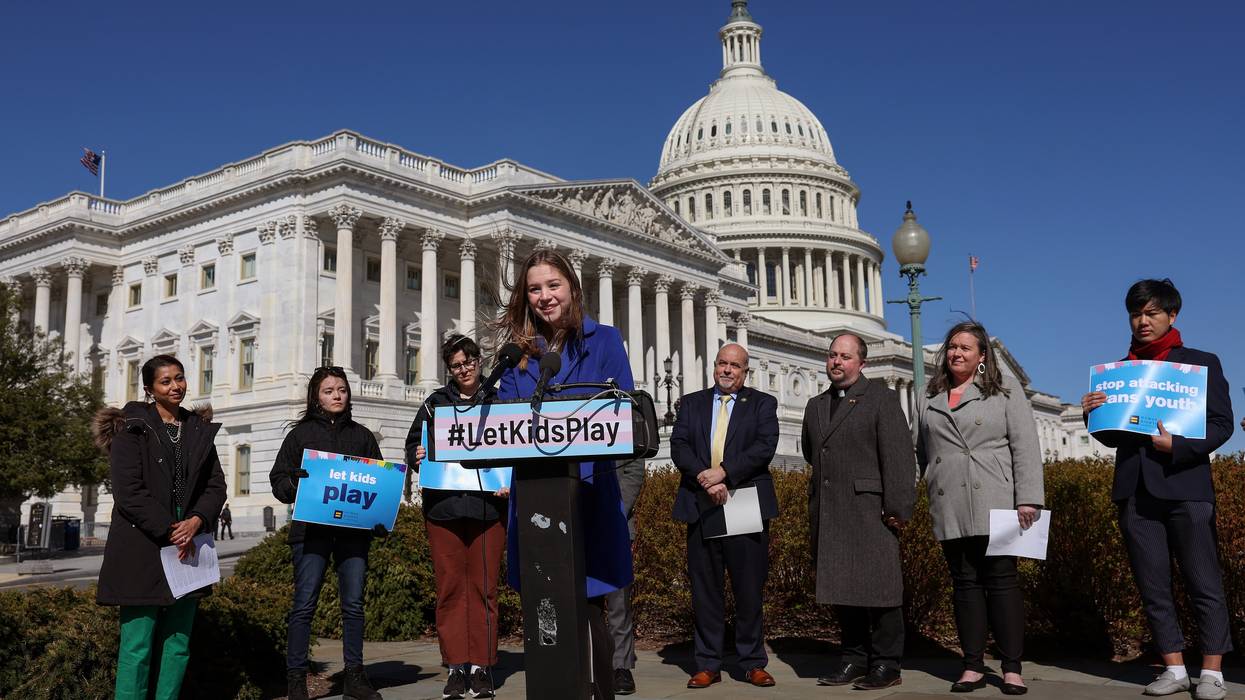
The decision codifies transphobic language and opens the potential for the sex testing of youth athletes.
In one of its final decisions of the 2025-26 term, the Supreme Court of the United States solidified its place in the onslaught of eradicating trans rights, in a ruling that revolved largely around whether state bans of transgender athletes violated Title IX and the Equal Protection clause of the 14th Amendment.
In response to the question placed before the court of whether states could implement bans on transgender athlete participation in girls’ and women’s sports, 6 of the 9 justices said, “Yes.”
Outside of patchy citations and contradicting interpretations of legal precedents, the rationale behind the majority opinion of the court, written by Justice Brett Kavanaugh, echoed three key premises in the “sports context.” First, female bodies are inherently physiologically different from male bodies, which map onto sex-based athletic advantages for males. Second, regardless of these differences, girls and women should have equal opportunities to boys and men. And third, because of these differences and because of equal guarantees between the sexes, “competitive fairness” and “safety” look different for the female category as compared with the male category. Consequently, the only way to ensure equal sporting opportunities for girls and women is to keep transgender girls and women, or “biological males,” out of the female category.
Anti-transgender advocates in the broader “save women’s sports” movement frequently draw from these rationales, but also ignore the underlying deeply problematic and troubling considerations. On an ethical level, this approach undermines inclusive efforts and further stigmatizes transgender individuals. On a public health level, this reasoning deprives an exceptionally vulnerable population from enjoying the social, mental, and physical benefits from physical activity that should be enjoyed by all. And on a pragmatic level, these declarations overlook the minimal number of out transgender youth, of which even fewer participate in high school level sports.
Notably, of all the documented issues in and across women’s sports, there is no evidence demonstrating that transgender athletes, in any way, contribute to these inequalities.
Beyond parroting this tired transphobic logic, the majority opinion also points to other sports governing bodies, such as the National Collegiate Athletic Association (NCAA) and the US Olympic and Paralympic Committee, who have “drawn a biological line” to ensure safe and fair competition by banning transgender athletes. What Justice Kavanaugh omits, however, is that both organizations abruptly changed their policies following President Donald Trump’s Executive Order No. 14201, rather than in response to any scientific evidence or domination of transgender athletes (in response to a Senate hearing question about how many transgender athletes compete in the NCAA, NCAA President Charlie Baker infamously responded that of the more than 500,000 athletes competing, he knew of “only 10”).
While this ruling itself does not necessarily come as a surprise to those who have followed along with the US’ steady rollback of transgender rights, perhaps the most shocking element of the SCOTUS’ majority opinion is the brazen use of transphobic and misogynistic language in their ruling. “Biological males” and “biological females,” which are used 64 and 31 times respectively in Justice Kavanaugh’s 29-page majority opinion, are not rooted in medical terminology. Instead, these are terms that have become popularized and mobilized by anti-transgender advocates to reinforce a binary model of sex difference. This type of sex segregation is premised on patriarchal beliefs of male athletic superiority and female athletic inferiority, and has historically led to harmful body policing, racial discrimination, and erasure of intersex persons.
There is also reference to an “ongoing medical and scientific debate” surrounding whether transgender athletes maintain athletic and performative advantages after transitioning. What is absent from this brief discussion of science, however, is the concrete evidence that has shown the abundant health disparities experienced by the transgender community, particularly transgender youth. In 2024, the US Centers for Disease Control and Prevention (CDC) reported that, compared with their cisgender counterparts, transgender youth are more likely to report violence, victimization, unstable housing, and suicidal thoughts and behaviors. Similarly, a 2024 study in Nature Human Behavior found that anti-transgender state laws, including transgender sport participation bans, directly increased incidents of suicide attempts among transgender and nonbinary youth by as much as 72%.
The (mis)direction of attention to abstract ideas of “competitive fairness” and unsettled science also disregards the rampant incompliance of institutions with Title IX. In 2023, Florida State University (FSU) agreed to add women’s lacrosse as a varsity sport after threats of a sexual discrimination lawsuit from its women’s club lacrosse team. The threat came on the heels of an 18-month USA TODAY investigation, which revealed that the university was egregiously out of Title IX compliance. FSU was far from the exception, however, as the investigation exposed how hundreds of colleges and universities manipulated their roster numbers for women’s sports to create a mirage of compliance. These Title IX transgressions emerged under the backdrop of several systemic issues in women’s sports, such as the decline in the number of women coaches for women’s sports, consistent underfunding, disproportionate rates of harassment and abuse experienced by girls and women, and media underrepresentation. Notably, of all the documented issues in and across women’s sports, there is no evidence demonstrating that transgender athletes, in any way, contribute to these inequalities.
Despite these relevant considerations, and as Justice Sonia Sotomayer wrote in her dissent, “to the Court, the facts do not matter, even though the consequences are serious.”
In addition to the immediate impact on transgender athletes, this decision prompts questions around how girls’ and women’s sports will now be policed to “catch” athletes who do not fit within normative assumptions or understandings of female bodies. International sports governing organizations, such as World Athletics and the International Olympic Committee, have recently paired bans on transgender athlete participation with implementations of sex testing via chromosome tests, which has long been established as a fraught, unethical, and discriminatory practice.
The impacts on youth and high school sports are, and will be, more pronounced. Organizations at these levels lack the same resources and financial capacities, meaning that, for high school athletic associations, sex testing would most likely involve some type of genital or physical examination. While these might be conducted by medical personnel (though the Larry Nassar sex abuse scandal is evidence that this does not guarantee safeguarding minors), depending on access or finances, these could also be conducted by coaches, other parents, or officials, which prompts further questions and justified concerns surrounding training, confidentiality, consent, and protections of minors. These practices not only impact transgender athletes, but all athletes, regardless of gender identity or, to borrow from Justice Kavanaugh, “biological sex.”
The ruling closes with a half-hearted remark that “no student-athlete on either side of the issue, whether a biological female or transgender, deserves to be ostracized or vilified.” What the SCOTUS fails to recognize, however, is that their ruling is predicated on the misguided vilification of transgender athletes, with impacts that will continue to ostracize transgender people in sports and broader society.
"We have entered a period when the legal recognition and legal protections for trans and intersex people are at an all-time low," said the Center for Constitutional Rights.
In a ruling that defenders of LGBTQ+ rights say clears the way for discrimination, the US Supreme Court upheld state laws banning transgender girls and women from participating on school and college athletic teams.
In a decision that will likely supercharge attacks on transgender people by red states and the Trump administration, the court said that state-level bans on transgender athletes did not violate either the 14th Amendment of the Constitution or Title IX, the federal law prohibiting sex discrimination in education.
The court's six conservatives ruled that Idaho and West Virginia did not violate the equal protection clause because the laws were made in the interest of athletic fairness.
"Biological males generally possess inherent physical advantages in sports," wrote Justice Brett Kavanaugh for the majority, describing it as a topic where there is still "medical and scientific uncertainty."
He dismissed equal protection claims from two athletes: 16-year-old shot put champion Becky Pepper-Jackson of West Virginia and 25-year-old Boise State student Lindsey Hecox, who failed to make her school's cross-country team because she was "too slow" but played in club-level sports.
The athletes argued that they took puberty-blocking medication that would have blunted their advantages, but Kavanaugh wrote that states were under no obligation to "grant individualized exemptions to specific athletes or subclasses."
The court ruled unanimously that West Virginia's state ban did not violate Title IX. But the court's three liberals disagreed on the question of equal protection.
Justice Sonia Sotomayor said that the scientific uncertainty surrounding the question was precisely why states should proceed with caution rather than enact categorical bans.
“In the end, to the court, the facts do not matter, even though the consequences are serious,” she wrote in her dissent.
She added that state bans will be harmful to trans people seeking friendship and community through sports. She said because of the court's decision, a state can deny young people "these experiences simply because it thinks they have an inherent athletic advantage, even if the facts show that they do not."
Sasha Buchert, senior attorney and director of the Non-Binary and Transgender Rights Project at Lambda Legal—which represented Pepper-Jackson—said the ruling was "deeply harmful for transgender women and girls who only asked for the ability to participate in sports with their peers."
"Countless studies have demonstrated the myriad benefits that come with participation in team sports," she added. "Now, one population, transgender youth and collegians, are targeted for specific and baseless discrimination."
The decision effectively legitimizes efforts in more than two dozen Republican-led states that have adopted bans on transgender athletes. However, Shannon Minter, the legal director of the National Center for LGBTQ Rights (NCLR), noted that the decision did not go as far as it could have, allowing other states to leave intact policies that let trans students participate.
"This is a disappointing decision, but also a narrow one that leaves the door open for the many states and schools that have adopted reasonable policies that protect both fairness and inclusion with respect to transgender students," Minter said. "Today’s limited decision means that states and schools across the country still have the power to make reasonable rules to ensure fairness without banning all transgender girls."
NCLR staff attorney Rachel Berg said that the ruling still "ignores clear discrimination and political attacks against transgender girls" and invites "invasive policing of young people's bodies."
"Blanket bans on transgender girls playing school sports invite anyone to call for a ‘gender check’ on any girl who wants to play sports if they think she is ‘too tall’ or ‘too strong,’” she warned.
Lambda Legal listed several cases in which young people in states with bans have been singled out and targeted with aggressive physical scrutiny by state officials:
In Florida, a 15-year-old junior varsity volleyball player was the subject of a police investigation after an anonymous accusation, prompting local officials to draft a 500-page report investigating her medical history, body weight, and anatomy. In Utah, a teenage basketball player was accused of being transgender by a member of the state board of education, leading to threats of violence against her and her family, and a teenager in Maine faced a similar attack from a state senator. In May, President Donald Trump similarly targeted a 16-year-old transgender girl for participating in a high school track meet. Under an Arizona ban, a cisgender male student was prohibited from participating on the boys’ team at his high school because of a clerical error that listed him as female on his original birth certificate.
Tuesday's decision comes amid an onslaught of other state-level legislation attacking transgender people, including bans on gender-affirming care for youth, bathroom bans, restrictions and invalidations of legal documents, and laws prohibiting schools from respecting students' preferred gender identities.
Karla Gonzales Garcia, the gender, sexuality, and identity director at Amnesty International USA, said the decision also "comes at a time of rising authoritarian practices under the Trump administration, which use gender and sexuality as a cultural battle for political gain."
The administration has threatened to investigate, sue, and strip funding from schools that accept trans athletes; attempted to throttle medical funding for hospitals that provide gender-affirming care; banned transgender people from the military; and pushed to force transgender women into men's prisons where they are at severe risk of sexual assault.
The Center for Constitutional Rights said that Tuesday's ruling "confirms what trans and intersex advocates have known for some time: we are in the Plessy v. Ferguson/Bowers v. Hardwick era of trans rights," referring to Supreme Court cases that upheld Jim Crow segregation and state bans on homosexuality.
"We have entered a period when the legal recognition and legal protections for trans and intersex people are at an all-time low," the group continued. "Anti-trans policymakers and activists have, through their actions and rhetoric, made their goal clear: to terrorize trans people and remove them from public life."
Several Democratic members of Congress expressed solidarity with the transgender community following the ruling.
"The Supreme Court’s ruling to allow states to ban trans kids from playing in sports is discriminatory and opens the door to incredibly invasive examinations of children to determine who can play on what team," said Rep. Pramila Jayapal (D-Wash.), whose adult daughter is trans. "This decision targets a tiny population of athletes and further emboldens Republicans’ anti-trans crusade."
Rep. Brittany Pettersen (D-Colo.) warned that the decision "hands Trump yet another weapon to strip protections and funding from schools across our nation," and said Republicans were "weaponizing our most vulnerable kids as pawns in a fight they did not choose."
Sen. Ed Markey (D-Mass.) said: "We will keep fighting. Discrimination and hate will not win."
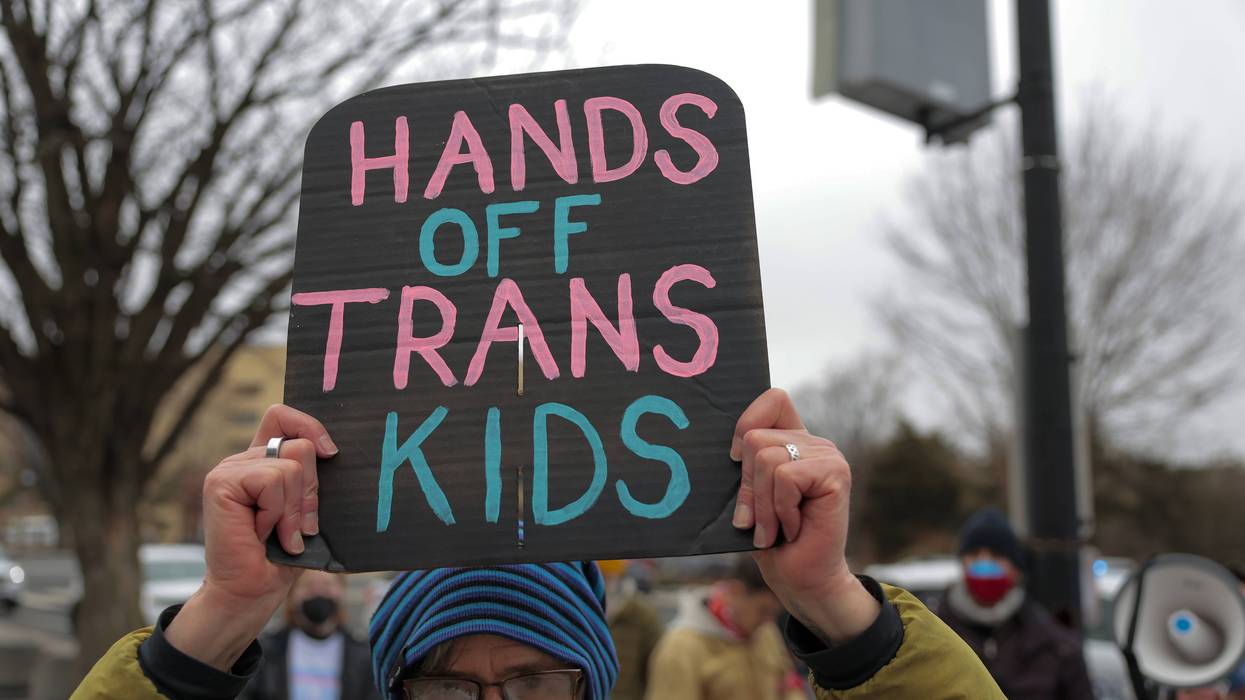
"There is absolutely no basis for what the Department of Education is doing, and it is unimaginably cruel," said a leader at the National Women's Law Center.
Continuing the assault on transgender people that President Donald Trump launched as soon as he returned to power last year, the US Department of Education's Office for Civil Rights rescinded portions of settlements intended to protect trans students at five school districts and one college.
The department framed the move as "freeing schools" from the Biden and Obama administrations' "illegal and burdensome enforcement of Title IX of the Education Amendments of 1972," a landmark civil rights law that bars sex-based discrimination in schools that receive federal funding.
According to The Associated Press, "One of the school systems, Delaware Valley School District in rural eastern Pennsylvania, received notice of the change from the Trump administration in February and has since voted to roll back its antidiscrimination protections for transgender students."
The administration also rescinded provisions of resolution agreements with Cape Henlopen School District in Delaware and Fife School District in Washington, as well as California's La Mesa-Spring Valley School District, Sacramento City Unified, and Taft College.
This is a cruel step by the Trump administration that will make our schools less safe and welcoming for all.Trans kids deserve what every student deserves — a school that supports their freedom to thrive.
[image or embed]
— ACLU (@aclu.org) April 6, 2026 at 6:05 PM
"The Trump administration has opened at least 40 civil rights investigations into educational institutions that provide protections for transgender students," and filed lawsuits in California and Minnesota, The New York Times reported. However, "Education Department officials said there was no precedent for the federal government terminating previously negotiated civil rights settlements with schools. Civil rights lawyers who worked under Democratic and Republican administrations said they were unaware of previous examples of such a move."
Advocates for trans people sharply condemned the rollback, which came on the heels of last week's International Transgender Day of Visibility.
"This sends a chilling alarm that trans students really are a target of this administration," Shelby Chestnut, executive director of the California-based Transgender Law Center, told the Times. "It's extremely concerning. Students should be safe to go to school and get an education."
Shiwali Patel, senior director of education justice at the National Women's Law Center, said in a statement that "there is absolutely no basis for what the Department of Education is doing, and it is unimaginably cruel. Title IX exists to ensure that students are protected from discrimination and treated with dignity so that they can learn and thrive in our schools. It's always been about that. It's what students, families, lawmakers, and advocates fought for when Title IX was passed decades ago. But the Trump administration's Department of Education has spent its limited resources to strip Title IX of that very purpose."
"Real complaints of discrimination and sexual assault are going unanswered by the Department of Education while conservative lawmakers continue to escalate their attacks on a small minority of students," Patel noted. "Parents, teachers, and students need the department to focus on addressing real harms on campuses instead of rolling back policies that keep all students safe."
"We should all be alarmed at the Trump administration's cruel escalation of their anti-trans agenda," she added. "When they push laws that explicitly target trans people or attempt to use scientifically inaccurate language to define sex, they are also inevitably targeting all women and girls. They want to control what we do, how we look, and how we act until we are pushed out of public life. But we are not going anywhere."
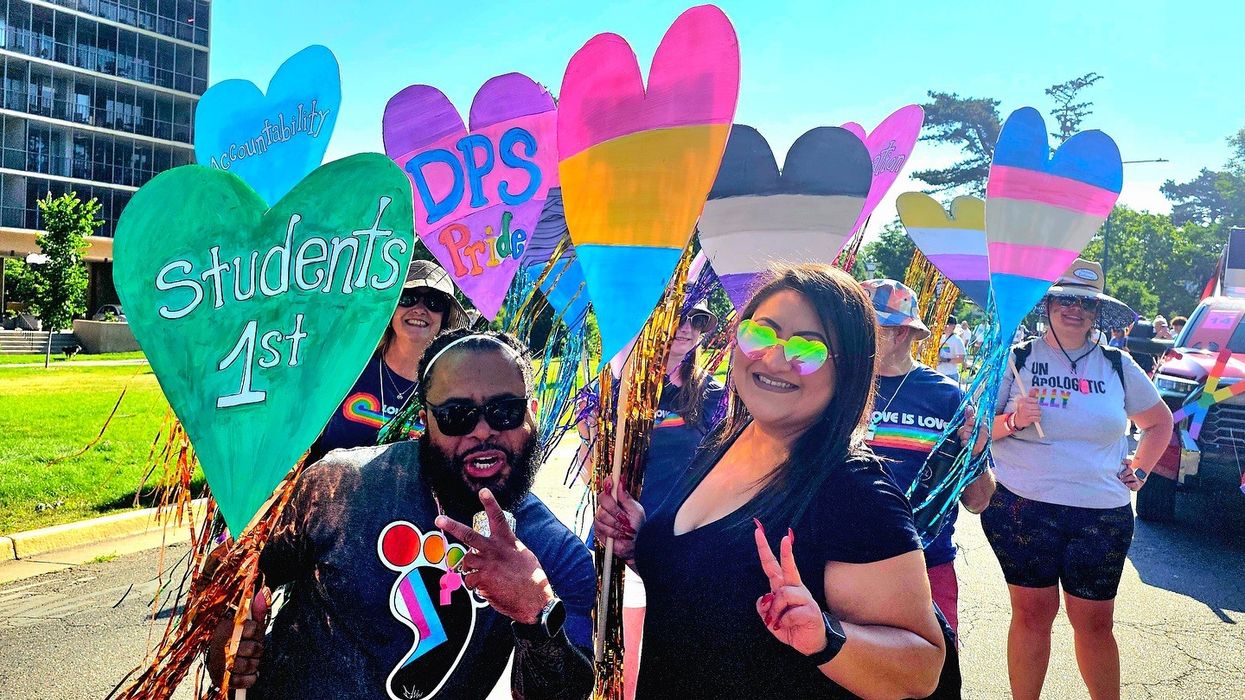
"The district has made clear it will not fold quietly, signaling that some institutions still have the resolve to stand against a federal campaign of erasure," wrote one LGBTQ+ rights journalist.
As educational institutions around the country capitulate, Denver's public school system said Tuesday that it would defy demands from the Trump administration to discriminate against transgender students even if it means losing federal funds.
Alex Marrero, the superintendent of Denver Public Schools (DPS), said the school "will protect all of their students from this hostile administration," by refusing to implement a ban on gender-neutral bathrooms mandated by Trump's Department of Education.
On Thursday, the department's Office for Civil Rights (OCR) sent Denver Public Schools an email demanding that the school remove a multi-stall, gender-neutral restroom at one of its high schools, which it claimed violated Title IX of the Civil Rights Act.
As Erin Reed, an independent journalist who covers LGBTQ+ rights, notes, the facility built by DPS and other schools is "similar to facilities in major airports, European cities, and increasingly across the United States." The school, meanwhile, has said that the facility was requested by students themselves and has 12-foot high partitions to protect their privacy.
The OCR went further. To be compliant with Title IX, it said, the school also had to "adopt biology-based definitions for the words 'male' and 'female'," meaning they needed to classify transgender students by their biological sex at birth rather than their preferred identities, including banning them from restrooms that do not correspond to their biological sex.
The Trump administration also called on the school to eliminate components of its "LGBTQ+ Toolkit," which includes guidance on how students and faculty can create a welcoming environment for their trans peers. Among other things, the document encourages members of the school community to step in to stop bullying of LGBTQ+ students, respect the preferred pronouns of all students, and for faculty to enforce dress codes in a gender-neutral way.
As Reed put it, the department was effectively "claiming that Title IX actually mandates discrimination against transgender students."
If DPS refused to comply within 10 days, the department threatened to strip the district of federal funding, which makes up 7% of the school's annual budget, according to Chalkbeat. A large portion of that federal money goes toward low-cost school lunches for poor children.
In a statement issued Tuesday, DPS's school board and administration put out a statement "disagreeing unequivocally" with the government's interpretation of the law.
"Title IX permits schools to provide sex-separate restrooms. It does not require that to be the only option," DPS argued. "The interpretation put forward by OCR would undercut our equity commitments, contradict our mission, harm the very students we are entrusted to support, and would have a devastating impact on East High School and the broader LGBTQ+ community. What matters most is that students are safe, have privacy, and can learn without fear."
"The decision to implement gender-neutral restrooms at East followed direct feedback from LGBTQ+ students who reported they did not feel safe," the statement continued. "For these students, access to a restroom where they feel secure is not symbolic. It is about dignity, health, and the ability to learn. When students speak, we listen and we act."
Superintendent Marrero, meanwhile, put out a short video on Instagram expressing his support for the district's LGBTQ+ students.
"As you might have seen in the news, the federal government has decided to take a firm stance and have us roll back our support to the LGBTQ+ community, and of course, we're not having it," Marrero said. "We will continue to stand in solidarity, and as you engage this weekend and beyond, I just wanted to let you know that we got you, and everything is going to be ok."
In a statement published alongside the video, Marrero wrote: "We will fight. In the courts, if we must. In the public square, when necessary. Always in partnership with those who believe that every student deserves to show up to school ready to learn, free from fear."
With this pledge to stand by its LGBTQ+ students, DPS joined five school districts in Virginia that last month responded with similar defiance when the Trump administration ordered them to stop allowing trans students to use bathrooms matching their gender. Those districts—which include Loudoun, Arlington, and Fairfax Counties—have launched a lawsuit against the Trump administration to keep their federal funding.
"Elite institutions like Brown, Columbia, and Penn—as well as multiple hospitals serving transgender youth—have already capitulated, signing away protections through bathroom and sports bans or cutting off medical care entirely," Reed wrote. "Denver Public Schools, by contrast, has drawn a line. With the Department of Education's deadline looming next Monday, the district has made clear it will not fold quietly, signaling that some institutions still have the resolve to stand against a federal campaign of erasure."
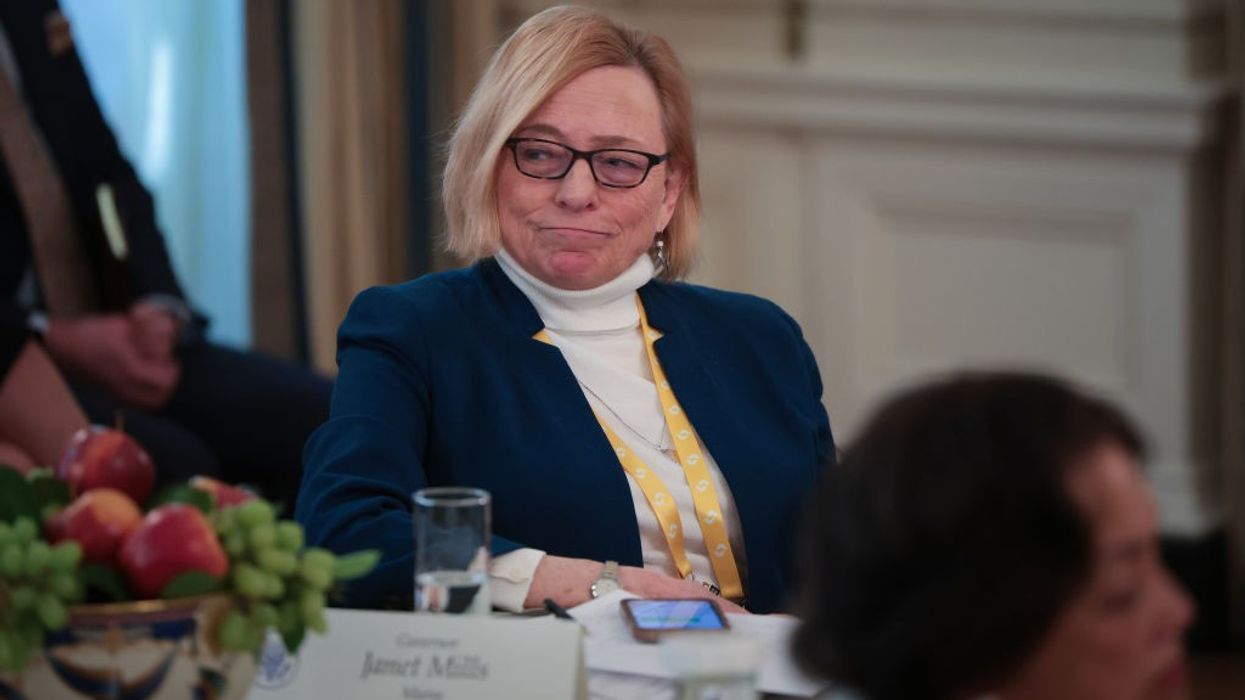
Rather than descend into reactionary advocacy that centers an untrustworthy, increasingly fascist government, we must go above and beyond Title IX, standing up for actionable, lasting solutions to sex-based discrimination in schools.
“Are you going to comply with that?”
The question came at a bipartisan governors’ meeting, lobbed unceremoniously by U.S. President Donald Trump toward Gov. Janet Mills of Maine. Gov. Mills is one of the few representatives of any political party or institution to defy a recent executive order barring transgender students from women’s sports—and to stand firmly and vocally against the weaponization of Title IX to advance a bigoted, anti-trans agenda.
“I’m complying with the state and federal laws,” she replied. And then—“See you in court.”
Even as we identify and invest in alternate approaches to protecting students from gender-based discrimination, we cannot grant right-wing politicians leeway to weaponize Title IX for their own political gain.
The exchange, though brief, and the rushed and retaliatory federal investigation that followed, echoed far beyond the White House as a rare but critical example of how state, local, and school officials must stand up for students in the absence of adequate federal protections against sex discrimination. And those federal protections have never been adequate.
It is high time to recognize that in practice—and without states and schools moving beyond compliance to true advocacy for their students—Title IX has never offered comprehensive, accessible solutions to gender-based violence. I should know: I’ve experienced Title IX’s failings as a student, an organizer, and a policy advocate working to change how schools treat—and advocate for—survivors.
I was a college student in the Obama years, during what should have been a progressive “golden age” for Title IX, the federal civil rights law prohibiting gender-based discrimination in publicly funded schools. The reality on the ground was marked less by progress than by confusion and chaos. When my peers sought support from our Title IX office, administrators called their reasonable requests for support “too difficult” to address. Without on-campus advocates, nearly 40% of survivors who reported abuse during this period experienced a substantial disruption in their education due to retaliation, institutional betrayal, and being pushed out of schools. Many survivors stayed silent.
When Betsy DeVos gutted Title IX protections during the first Trump administration, I joined the survivor- and youth-led project Know Your IX, where I worked with student activists whose horror stories under the Trump administration’s Title IX rule sounded eerily familiar. Survivors experiencing traumatic investigations dropped out of school—paying off student loans for a degree they would never get. Medical school students chose not to report abuse for fear of losing professional opportunities. Young people who had experienced dating abuse developed new mental health challenges, and their schools refused to grant accommodations. And though Joe Biden won the presidency in 2020, Trump-era guidance on how schools should enforce Title IX persisted throughout nearly the entirety of his presidency. President Trump moved to officially reinstate DeVos-era guidance, after appointing people who have caused sexual harm or been complicit in it (including Secretary of Education Linda McMahon) to the highest positions of power in our country. If it wasn’t already clear, it should be staggeringly so now: We cannot rely on the federal government to save us.
Rather than descend into reactionary advocacy that centers an untrustworthy, increasingly fascist government, we must go above and beyond Title IX, standing up for actionable, lasting solutions to sex-based discrimination in schools. Local organizing at K-12 schools and college campuses led by students and survivors offers one path forward. We can also fight for stronger state anti-discrimination policies that reflect the needs of marginalized students. And we can empower student groups with resources and training to support their peers in the absence of federal or administrative protections.
Most importantly, it is time for schools to take responsibility for protecting their students and act accordingly—regardless of state and federal policy, or how the president decides to interpret the 37 words that make up the statute of Title IX. While federally funded schools are required to comply with Trump’s Title IX rule, they can and should create separate anti-discrimination policies that fill in the gaps of the current Title IX rule. We should encourage schools to go above and beyond what federal law requires to protect students from sexual violence, and respond with care when it occurs.
Of course, in the absence of strong, federal legislation codifying students’ protections and schools’ responsibility to address gender-based discrimination, “sending education back to the states” creates an inequitable patchwork of civil rights protections, resulting in even more students experiencing traumatic disruptions to their education. While investing in school- and state-level organizing, we must build wide networks of support and mutual aid that persist no matter how hostile the environment. Groups like Know Your IX, now a project of the national youth activism organization Advocates for Youth, will continue to organize alongside brilliant and dedicated survivors and student activists holding their schools accountable and fighting for survivor-centered solutions.
Even as we identify and invest in alternate approaches to protecting students from gender-based discrimination, we cannot grant right-wing politicians leeway to weaponize Title IX for their own political gain. We must join Gov. Mills and shout from the rooftops that bigoted, transphobic attempts to attack marginalized young people through education policy will never be a solution to this country’s epidemic of sexual harassment and assault. We must hold strong in the face of increasingly brazen attempts from federal officials to curb students’ rights and retaliate against dissidence. If lawmakers actually cared about women and girls, they would bolster Title IX protections—not attempt to dismantle them.
Title IX was always the floor, not the ceiling. Now, it’s time to aim for the stars. Student survivors, LGBTQI+ youth, and pregnant and parenting people deserve nothing less.

The president threatened to cut off federal funding to the state for respecting the identities of trans student-athletes.
Democratic Maine Gov. Janet Mills stood up to U.S. President Donald Trump at a Friday event in Washington, D.C. after the Republican threatened to cut off federal funding because the state allows transgender youth to participate in sports in line with their identities.
While at the podium, Trump asked if Maine's governor was at the event. After Mills confirmed her presence, he asked if she will comply with his executive order intended to use his administration's interpretation of Title IX—a federal law barring discrimination on the basis of sex at educational institutions that get federal funds—to block trans girls and women from competing as female athletes.
"You better do it, because you're not gonna get any federal funding at all if you don't," Trump said to Mills—who replied that she would follow state and federal laws. She also told the president, "See you in court."
Mills also released a statement vowing that "if the president attempts to unilaterally deprive Maine school children of the benefit of federal funding, my administration and the attorney general will take all appropriate and necessary legal action to restore that funding and the academic opportunity it provides. The state of Maine will not be intimidated by the president's threats."
Maine Morning Star reported Friday that the state's attorney general, Aaron Frey, said in a statement that any attempt by Trump to cut federal funding over the issue "would be illegal and in direct violation of federal court orders."
"Fortunately," he said, "the rule of law still applies in this country, and I will do everything in my power to defend Maine's laws and block efforts by the president to bully and threaten us."
"It is disturbing that President Trump would use children as pawns in advancing his political agenda," added Frey, who earlier this month joined other Democratic attorneys general in vowing to protect access to gender-affirming healthcare, another GOP target.
While the National Collegiate Athletic Association swiftly updated its policies to align with Trump's order, the Maine Principals' Association—which governs athletics for all public high schools and multiple private institutions in the state—confirmed earlier this month that it will continue allowing trans athletes to compete in girls' sports. Mike Burnham, executive director of MPA's Interscholastic Division, cited a 2021 update to state law.
As the Bangor Daily News detailed Friday:
Between 2013 and 2021, the association allowed kids to compete in a manner consistent with their gender identity as long as there were no safety concerns. An MPA committee assessed cases one by one, and there were 54 such cases during that period. Only four involved transgender girls.
In 2021, the Democratic-led Legislature added education-related protections for gender identity to [the] Maine Human Rights Act. Since then, the MPA has allowed students to compete with those of their identified gender.
The Friday exchange between Mills and Trump—whose administration is engaged in a sweeping effort to erase trans people—came after the result of a recent pole vaulting state championship for high schoolers and one Republican lawmaker's Facebook post about it garnered national media attention.
State Rep. Laurel Libby (R-90) on Monday posted a pair of photos identifying one Greely High School pole vaulter as trans and put the teenager's preferred name in quotation marks. She later told Maine's Total Coverage, "I think we have a responsibility to protect girls' sports, to protect Maine girls, and to ensure that they have a level playing field."
The outlet noted that state House Minority Leader Katrina Smith (R-62) "shared on her Instagram the names and email addresses of the Maine Department of Education commissioner, the state attorney general, and the executive director of the Maine Principals' Association telling constituents to call on them to follow President Trump's executive order."
Libby—who on Friday made several more Facebook posts highlighting Trump's threat to Mills and thanking the president—has faced strong backlash from Democratic lawmakers and various other critics for her initial post bullying the teenage athlete.
"We have been reminded this week of the importance of respecting the privacy of Maine kids, and the value in treating people of all ages with kindness and decency," Rep. Ryan Fecteau (D-103), the first openly gay speaker of the Maine House of Representatives, wrote in a Friday opinion piece for the Bangor Daily News.
"To young people who are members of the LGBTQ+ community, know that I see you and I stand with you," he said. "After the events of this week, I ask all my legislative colleagues to recommit to keeping kids out of the political fray. They deserve better. There is a time and place for policy debates. That time and place will never be a social media post attacking a student. Full stop."
Later on Friday, the Trump administrationsent a letter to Maine Department of Education Commissioner Pender Makin announcing a federal investigation into the state agency and Maine School Administrative District #51, which includes Greely High School.
"Let me be clear: If Maine wants to continue to receive federal funds from the Education Department, it has to follow Title IX," said Craig Trainor, acting assistant secretary for civil rights at the federal level. "If it wants to forgo federal funds and continue to trample the rights of its young female athletes, that, too, is its choice."
Responding in a lengthy statement, Mills said that "no president—Republican or Democrat—can withhold federal funding authorized and appropriated by Congress and paid for by Maine taxpayers in an attempt to coerce someone into compliance with his will. It is a violation of our Constitution and of our laws, which I took an oath to uphold."
"Maine may one of the first states to undergo an investigation by his administration, but we won't be the last," warned Mills, a former district attorney and state attorney general. "Today, the president of the United States has targeted one particular group on one particular issue which Maine law has addressed. But you must ask yourself: Who and what will he target next, and what will he do? Will it be you? Will it be because of your race or your religion? Will it be because you look different or think differently? Where does it end? In America, the president is neither a king nor a dictator, as much as this one tries to act like it—and it is the rule of law that prevents him from being so."
"I imagine that the outcome of this politically directed investigation is all but predetermined," she added, again pledging to fight Trump in court. "But do not be misled: This is not just about who can compete on the athletic field, this is about whether a president can force compliance with his will, without regard for the rule of law that governs our nation. I believe he cannot."
This post has been updated to include the Trump administration's letter to the Maine Department of Education and the governor's response.
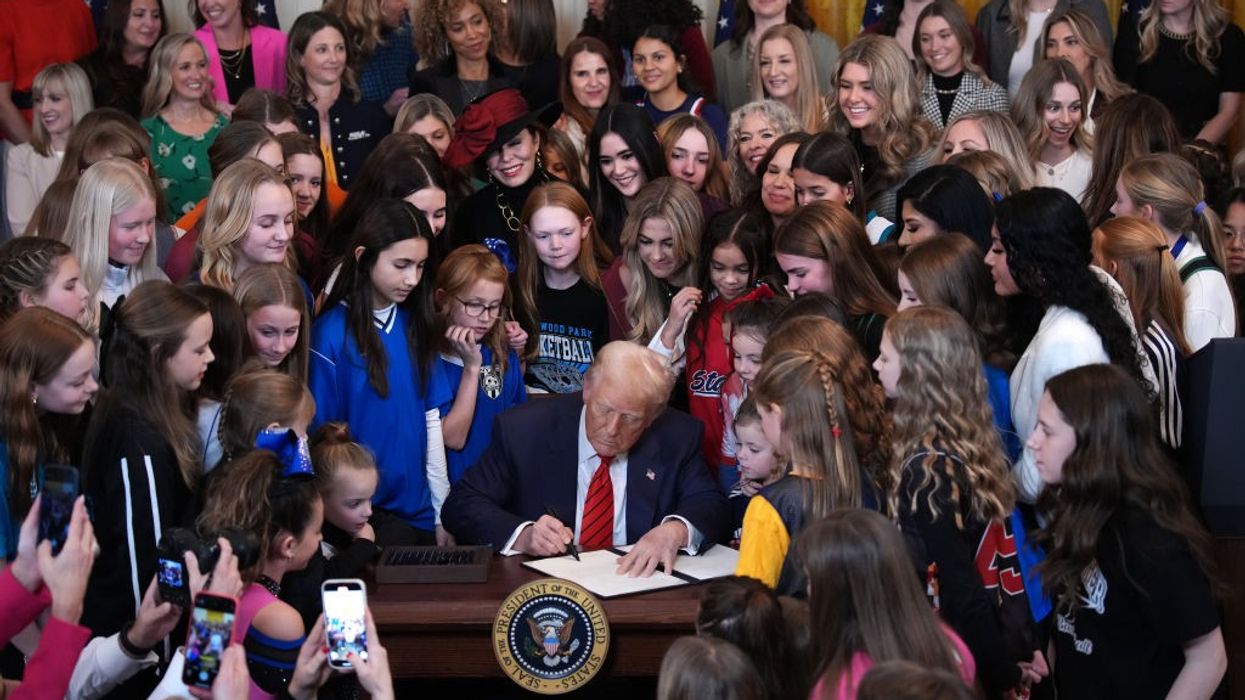
"We will not let the president turn back the clock or deter us from upholding California values," said Rob Bonta, the state's attorney general.
Fifteen Democratic state attorneys issued a joint statement Wednesday vowing to protect access to gender-affirming healthcare amid the Trump administration's attacks on transgender people, which include a new executive order aiming to ban trans girls and women from competing on female sports teams.
"We stand firmly in support of healthcare policies that respect the dignity and rights of all people," the attorneys general said in a statement decrying Republican President Donald Trump's January 28 executive order banning federal support for gender-affirming care—which the president described as "chemical and surgical mutilation"—for young adults and minors under the age of 19.
"Healthcare decisions should be made by patients, families, and doctors, not by a politician trying to use his power to restrict your freedoms," the statement continues. "Gender-affirming care is essential, lifesaving medical treatment that supports individuals in living as their authentic selves."
"The Trump administration's recent executive order is wrong on the science and the law," the attorneys general asserted. "Despite what the Trump administration has suggested, there is no connection between 'female genital mutilation' and gender-affirming care, and no federal law makes gender-affirming care unlawful. President Trump cannot change that by executive order."
"State attorneys general will continue to enforce state laws that provide access to gender-affirming care, in states where such enforcement authority exists, and we will challenge any unlawful effort by the Trump administration to restrict access to it in our jurisdictions," they added.
The attorneys general of California, Colorado, Connecticut, Delaware, Hawaii, Illinois, Maine, Maryland, Massachusetts, New Jersey, New York, Nevada, Rhode Island, Vermont, and Wisconsin signed the statement.
"California supports the rights of transgender youth to live their lives as their authentic selves," California Attorney General Rob Bonta said in a statement Wednesday. "We will not let the president turn back the clock or deter us from upholding California values."
"I understand that the president's executive order on gender-affirming care has created some confusion," Bonta added. "Let me be clear: California law has not changed, and hospitals and clinics have a legal obligation to provide equal access to healthcare services."
The statement from the 15 attorneys general came on the same day that Trump signed an executive order titled "Keeping Men Out of Women's Sports" that directs the Department of Education—which the president has vowed to abolish—to notify school districts that allowing transgender girls and women to compete on female teams violates Title IX, the federal law prohibiting discrimination on the basis of sex in education.
The executive order also directs the administration to "convene representatives of major athletic organizations and governing bodies, and female athletes harmed by such policies," and "convene state attorneys general to identify best practices in defining and enforcing equal opportunities for women to participate in sports and educate them about stories of women and girls who have been harmed by male participation in women's sports."
Wednesday's directive is the latest salvo in Trump's war on transgender people, which includes a day one executive order declaring that only two genders exist, another order advocating action against educators who "facilitate the social transition of a minor," a reinstatement of his first-term ban on new military enlistment by trans people—who, according to the White House, cannot lead an "honorable, truthful, and disciplined lifestyle"—nominating a transphobe to head the Justice Department's civil rights office, and scrubbing all mention of transgender people and issues from federal agency websites.
Trans people and their allies are fighting back. Lawsuits have been filed
challenging restrictions on access to gender-affirming healthcare and the transfer of transgender women inmates to men's prisons. On Wednesday, a federal judge appointed by former Republican President Ronald Reagan temporarily blocked federal prisons from moving transgender women to men's facilities and cutting off their access to hormone therapy, citing the Constitution's ban on cruel and unusual punishment. At least two federal judges have also issued temporary restraining orders on Trump administration efforts to freeze funding for federal agencies and programs.
Protests in defense of gender-affirming healthcare and other trans rights have also taken place at hospitals and other locations across the country as Trump and allies including Department of Government Efficiency chief Elon Musk pressure the U.S. Treasury Department to defund any programs specifically helping transgender and other LGBTQ+ people.
"The protection of marginalized communities will not come solely from elected officials or bureaucratic processes—it will come from sustained, organized resistance," trans rights activist Erin Reed wrote Wednesday. "History shows that real power lies not in centralized institutions but in the collective action of those who refuse to be divided."
"Authoritarian governments rely on fragmentation, banking on the idea that the public will see themselves as isolated rather than interconnected," Reed added. "As protests grow and solidarity strengthens across movements, the coming months may test just how powerful a unified public can be."
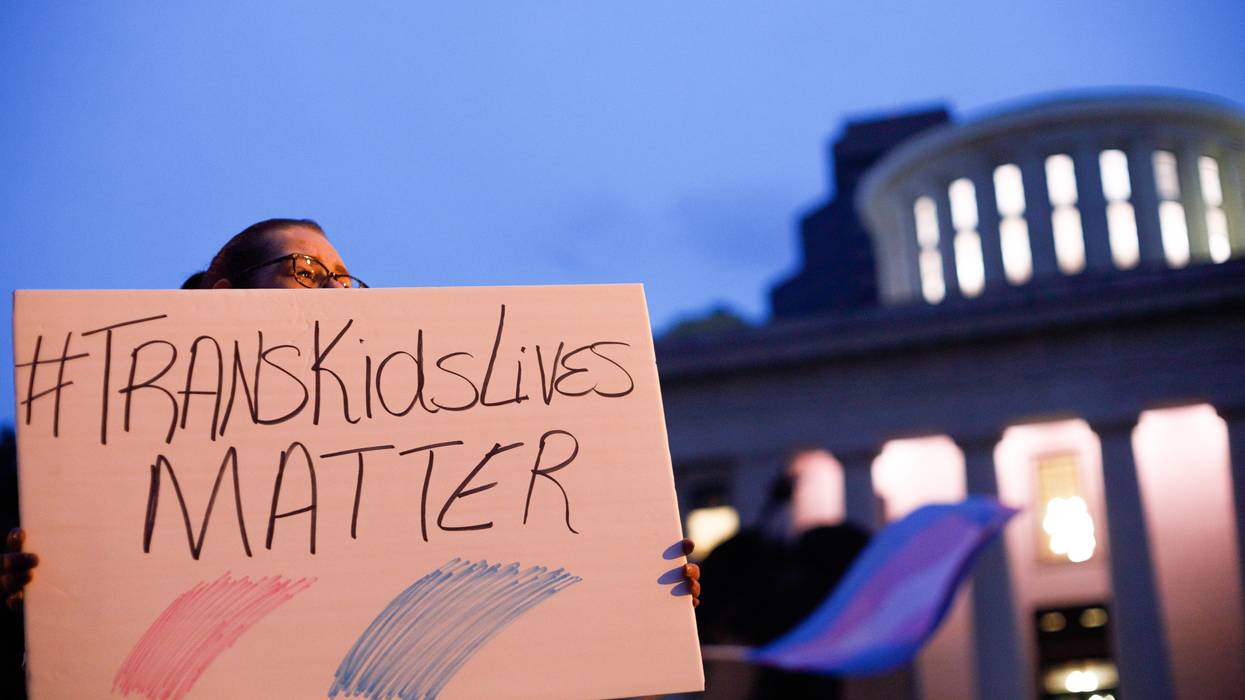
"Schools must step up to protect students in the absence of adequate federal guidance," said one advocate.
A "Dear Colleague" letter sent by the U.S. Department of Education to K-12 schools and colleges will leave transgender students without the anti-discrimination protections that were introduced under former President Joe Biden, warned advocates on Friday.
The letter informed schools that effective immediately, the department is returning to Title IX rules that were in place under the first Trump administration, protecting students from discrimination "on the basis of biological sex"—not gender identity, sexual orientation, or pregnancy status.
The updated rules, said one DOE official, are aimed at correcting an "egregious slight to women and girls," as the administration characterized protections for transgender and nonbinary students.
The Trump administration and Republican lawmakers have been intensely focused on stopping transgender students from participating in women's sports in college and high school. Biden's rules, unveiled last April, stopped short of requiring schools to allow students to play on teams that correspond with their gender identity.
But Emma Levine, manager of the advocacy group Know Your IX, said the rollback of Biden's guidance will put students across the country at "greater risk of harassment and discrimination."
Biden's guidance had been on hold in 26 states as Republican attorneys general have challenged the rules in court.
Earlier this month, a federal judge in Kentucky struck down Biden's rules, saying protections for transgender students under the 1972 anti-discrimination law rendered the measure "meaningless."
Levine said Friday that "schools must step up to protect students in the absence of adequate federal guidance," and Massachusetts Secretary of Education Patrick Tutwiler was quick to call on schools in the state to continue ensuring all students are protected from harassment and discrimination.
"It is incumbent on schools and school administrators to create a culture in which all students feel safe, supported, and fully included, including in athletics," said Tutwiler. "I am proud that in Massachusetts our state constitution has strong, comprehensive protections for LGBTQ+ students who deserve to live and learn as their full, authentic self."
Under the 2020 Title IX rules that the DOE is returning to, schools were also informed Friday that the Trump administration will once again limit schools' liability in sexual assault cases and afford expanded rights to students accused of assault and harassment.
During his first term, Trump introduced Title IX requirements for schools to hold live hearings in which students accused of misconduct and those who accused them could cross-examine one another through lawyers. The rules also narrowed the definition of harassment and placed some misconduct cases outside of a school's jurisdiction.
"The 2020 Title IX rule fails students," said Levine. "This is an incredibly disappointing decision that will leave many survivors of sexual violence, LGBTQ+ students, and pregnant and parenting students without the accommodations critical to their ability to learn and attend class safely."