

SUBSCRIBE TO OUR FREE NEWSLETTER
Daily news & progressive opinion—funded by the people, not the corporations—delivered straight to your inbox.
5
#000000
#FFFFFF
To donate by check, phone, or other method, see our More Ways to Give page.
Daily news & progressive opinion—funded by the people, not the corporations—delivered straight to your inbox.
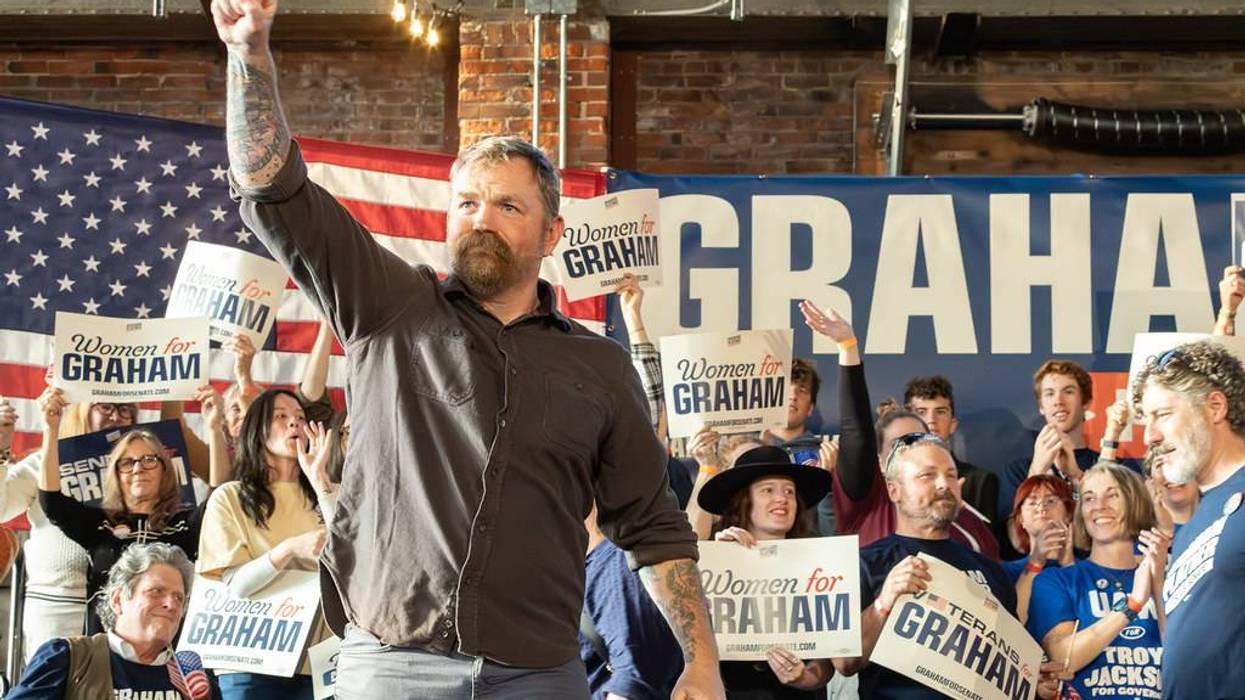
Because of Morris Katz and Chuck Schumer's failures, we're left with a broken Maine Democratic Party now scrambling to find a replacement for Graham Platner in less than two weeks.
The Maine Senate race may be the most consequential in the country. If Susan "Kavanaugh promised me he wouldn't overturn Roe v Wade" Collins is reelected to the Senate, it may guarantee a small Republican Senate majority that will approve young extremist right-wing Supreme Court Justices to replace Samuel Alito and Clarence Thomas and control the law for the next 30-40 years.
But young "progressive" Democratic consultants like Morris Katz and old "moderate" Democratic politicians like Sen. Chuck Schumer (NY) may have collectively f**cked up the process.
Graham Platner was recruited to run with minimal vetting by Katz, a 20-something political consultant from Tribeca who produces brilliant campaign ads. Chuck Schumer used his political muscle to ensure that 78-year old Maine Gov. Janet Mills would be the other contender in the Democratic primary. After Platner took a commanding lead in the polls, Mills dropped out, virtually assuring that Platner would be the then-likely nominee.
Katz is a 26-year old (or maybe 28-year-old since he previously lied about his age)) who grew up in a Tribeca to family of writers and film producers. Katz produced a series of brilliant ads for Mandami that help propel him to the NY mayoralty. Katz had previously produced ads for Democrat John Fetterman's (Pa.) successful Senate campaign depicting Fetterman as a populist working class hero, although once in the Senate Fetterman turned Republican-lite.
But Chuck Schumer is even worse. His anointing of Janet Mills as the party-approved candidate was as disastrous as Katz's anointing of Platner as the working class progressive hero.
Last autumn Katz formed a Brooklyn-based political consulting firm, The Fight Agency. Based on Mandami's success, Katz seemed to have decided that he himself was the singularly best person in the entire country to "cast" progressives to successfully win office.
Katz focused much of his efforts on recruiting a progressive working class candidate who he believed could defeat Susan Collins in Maine. He was tipped off to Platner by some labor organizers and traveled to Maine to meet him. “Within a few minutes of talking to him, I was, like, ‘This guy owes it to the country to run for Senate'" Katz recalled of his first meeting with Platner.
Platner fit Katz's script for a rough working class guy with progressive politics, and he virtually immediately cast Platner as his leading man. Katz and his partners didn't bother to vet Platner, a process that takes several weeks and costs over $20,000. In three days, New York-based Northside Research was paid $6,250 to produce a brief, risk-assessment memo in lieu of a detailed research book—or the start of one—that can be hundreds of pages long. According to The Wall Street Journal, "The expedited research didn’t discover issues that would later hurt his campaign, including the full trove of Platner’s Reddit posts or sexually explicit texts Platner sent to other women while married."
Less than two weeks later, Platner released a brilliant populist launch video produced by Katz that went viral and catapulted Platner into prominence. He drew adoring crowds, and his polling showed him overwhelming Gov. Janet Mills in the primaries.
But while concerning revelations about Platner's personal life kept dripping out, Platner's consultants brushed them off arguing they were irrelevant compared with Platner's charisma and his populist politics. As Slate reported: "Each time a new and disturbing Platner story landed—the Reddit posts, the tattoo, the alleged physical abuse, the sexting, the rape allegation—Platner’s team responded with an almost Trumpian playbook. They disparaged the media, played it off as a targeted attack by a vengeful political establishment, and insinuated that each scandal only made Platner more authentically Maine."
I'm generally in agreement with the populist anti-oligarchy themes of Platner's campaign and those of his progressive consultants (and even sent him a contribution). But they were immature and deluded to not vet Platner and to cavalierly dismiss the charges against him. The unvetted revelations about Platner's abusive treatment of women eventually doomed Platner's campaign.
Adam Jentleson, the late Democratic Senate Majority Leader Harry Reid's former chief of staff, characterizes Katz's view of the ideal progressive candidate as "a highly selective image of populism that is tailored to an Upper West Sider’s political sensibilities.”
Katz grew up in Tribeca. His father is a successful screenwriter, his mother is a successful children's book author, and his godfather was the late actor Philip Seymour Hoffman. After dropping out of college, he worked as a production assistant and wrote screenplays, before entering politics.
That's a good background for learning progressive politics but not necessarily one to designate yourself as the leading casting director for progressive candidates with a working class background. This failure was demonstrated by his casting of the unvetted Platner and of John Fetterman who turned into a corporate Democrat.
But Chuck Schumer is even worse. His anointing of Janet Mills as the party-approved candidate was as disastrous as Katz's anointing of Platner as the working class progressive hero.
Because of both of their failures, we're left with a broken Maine Democratic Party now scrambling to find a replacement for Platner in less than two weeks. Let's hope it doesn't lead to Collins being returned to the Senate and helping confirm right-wing Supreme Court justices who could shape the law for decades to come.
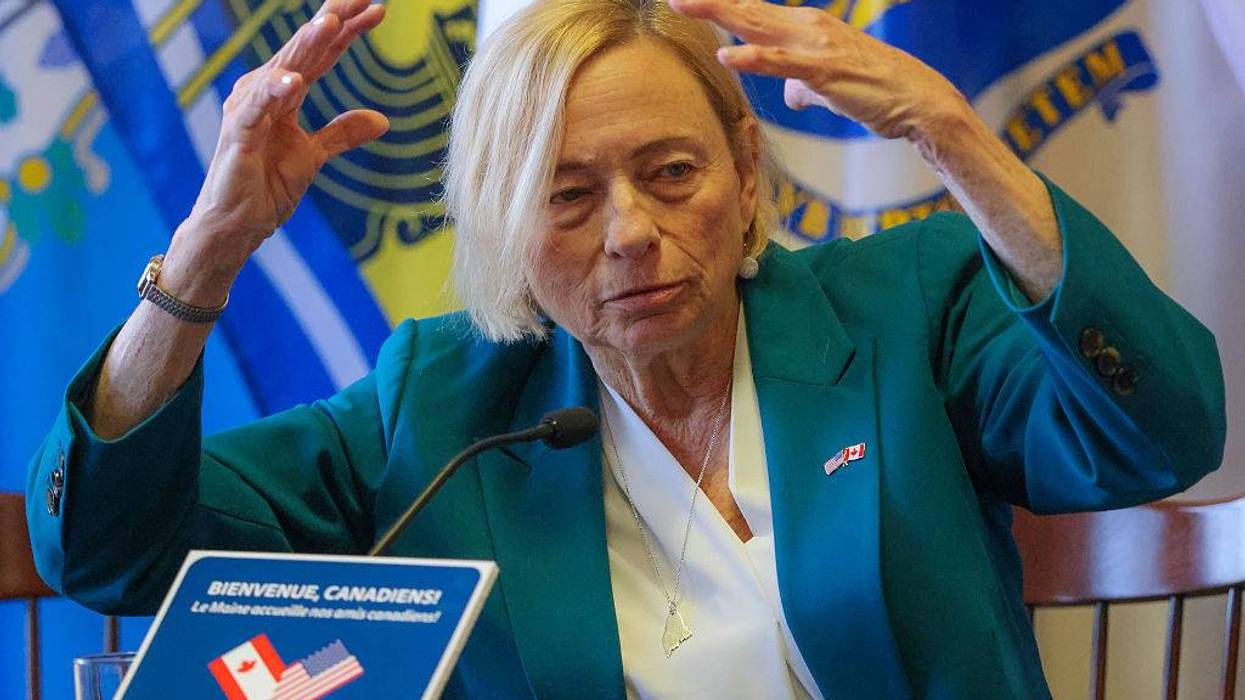
"Now let's unify to defeat Susan Collins," said one progressive.
Maine Gov. Janet Mills on Thursday officially suspended her campaign for the US Senate, clearing the path for progressive candidate Graham Platner to secure the Democratic nomination.
In a statement posted on social media, Mills claimed that she no longer had the financial resources to continue with the campaign, which multiple polls projected she was losing badly to the upstart Platner.
"I step back from campaigning with unending love, admiration, and hope for Maine people," wrote Mills, "a people whose hearts are filled with love and whose integrity and humility is surpassed only by their kindness, generosity, and compassion."
Shortly after Mills announced her decision, Senate Minority Leader Chuck Schumer (D-NY) and Democratic Senatorial Campaign Committee Chair Kirsten Gillibrand (D-NY) released a statement supporting Platner's candidacy.
“After years of allowing Trump’s abuses of power, Senator Collins has never been more vulnerable," they said, "and we will work with the presumptive Democratic nominee Graham Platner to defeat her."
Mills' decision to suspend her campaign came less than a week after she vetoed a bill passed by the Maine Legislature that would have imposed a statewide moratorium on building artificial intelligence data centers.
Mitch Jones, the managing director of litigation for Food & Water Watch, described Mills' veto of the data center moratorium as symbolic of her out-of-touch Senate campaign, saying "it is no wonder" that the Maine governor's "political career seems to be limping to a feeble conclusion."
While Mills' decision to end her Senate campaign was not entirely unexpected given how badly she trailed Platner in both opinion polls and fundraising, some observers nonetheless found it a stunning development given that she's a two-term Maine governor running against a populist oyster farmer who has never held political office.
"A sitting two-term governor recruited by the leader of the Senate Democrats just lost to a Bernie Sanders-endorsed guy who started the race with zero name ID," wrote Zeteo News reporter Prem Thakker.
Kevin Robillard, senior politics editor at HuffPost, said that Mills' campaign will go down as "one of the most stunning flops in recent political history."
"Suspending a Senate campaign because you ran out of cash is something that happens to gadfly state legislators," he observed, "not sitting governors running with the endorsement of party leaders."
Tommy Vietor, a former National Security Council staffer under President Barack Obama and cohost of Pod Save America, questioned Mills' claim that she was suspending her campaign due to lack of resources.
"Her problem was lack of support from Maine voters," Vietor wrote, "not money."
Faiz Shakir, a longtime adviser to US Sen. Bernie Sanders (I-Vt.), graciously welcomed Mills' concession.
"Tough to make these kinds of decisions, but kudos to her for making the right one," wrote Shakir. "Now let's unify to defeat Susan Collins."
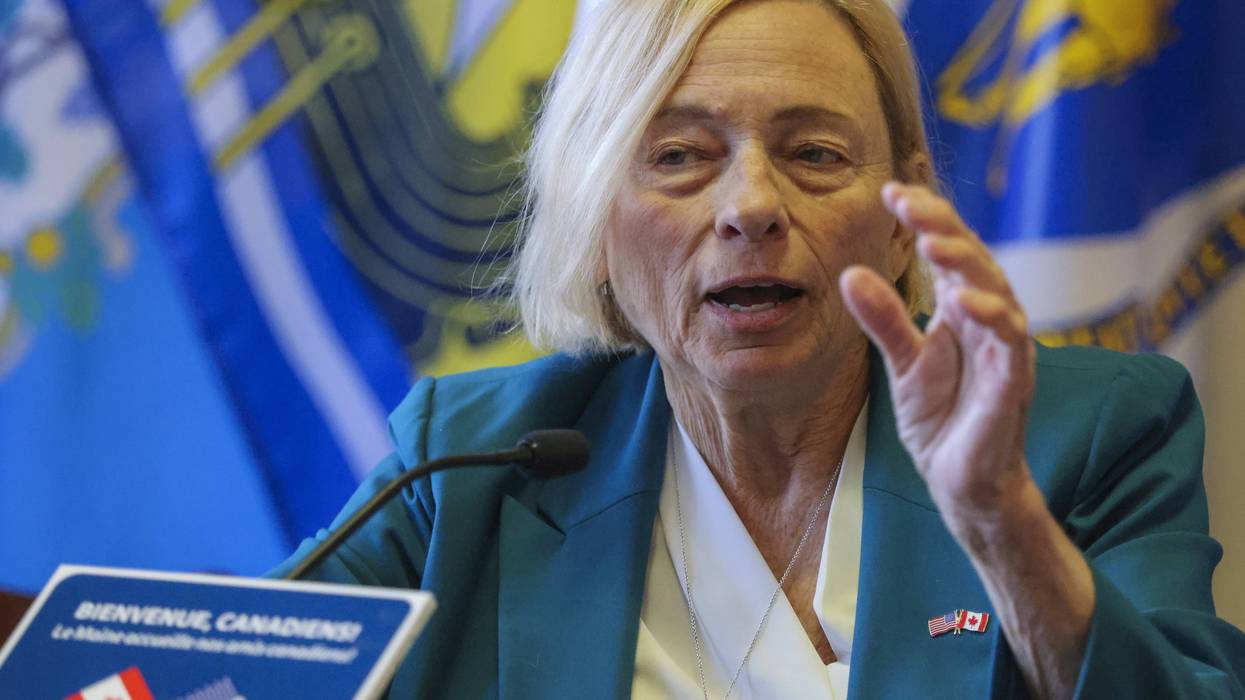
"When a corporate-funded group like Americans for Prosperity is cheering a veto that benefits an energy- and water-intensive industry like data centers," said one advocate, "it raises serious flags for the public."
The Maine Legislature on Wednesday failed to override Democratic Gov. Janet Mills' veto of a bill that would have established an 18-month moratorium on the expansion of artificial intelligence data centers in the state.
The state House needed 101 votes, of two-thirds of the members' support, to override the veto. The vote on reversing the governor's decision was 72-65.
Environmental and local control advocates were among those expressing anger in recent days over Mills' veto of the trailblazing bill that would have made Maine the first state to impose such a moratorium—while a group with strong ties to President Donald Trump and the Republican Party applauded the move this week, claiming the Democratic governor, also running for US Senate this year, has stood up "for Maine’s economic future" by siding against the ban.
“Gov. Mills made the right decision to veto the data center moratorium," said Ross Connolly, Northeast region director for Americans for Prosperity, the right-wing political advocacy group affiliated with the billionaire Koch brothers, earlier this week.
"At a time when states across the country are competing for investment and innovation, this veto sends a strong signal that Maine is open for business and reinforces the state’s commitment to growth and innovation," said Connolly. "AFP looks forward to working with policymakers to advance solutions that keep Maine on a path toward long-term economic opportunity.”
The group previously denounced the Maine Legislature for passing the bill, which would have stopped state and local governments from approving data center projects with electrical loads of 20 megawatts or more until November 2027. The bill passed with bipartisan support, and its lead sponsor, state Rep. Melanie Sachs (D-48), told Puck that the protections in the legislation would allow the government to “get it right" in Maine by studying the impacts of large data centers before allowing industry-friendly expansions to continue.
President Donald Trump and lawmakers from both sides of the aisle have pushed for state and local governments to welcome the "innovation" offered by artificial intelligence companies by allowing the construction of massive data centers.
But opposition lawmakers in Congress and state legislatures as well as numerous public advocacy groups have warned the expansion of the energy-sucking facilities is already pushing working families' electricity bills higher, straining resources by consuming up to 5 million gallons of water per day, and being used for an industry that's projected to replace nearly 100 million jobs in the next decade, according to an analysis put out by Sen. Bernie Sanders (I-Vt.).
In numerous states—including Arizona, Wisconsin, and Michigan—communities have rallied to block the construction of data centers, citing many of those concerns.
Trump issued an executive order late last year aimed at blocking state governments from regulating the rapidly growing industry.
In Maine, Mills vetoed the legislation after lawmakers voted down an amendment that would have provided a carve-out for the town of Jay, where the local Select Board voted last month to approve a data center that would be housed in the former Androscoggin Mill site. The paper mill was closed in 2023 following a wood pulp digester explosion on the premises, resulting in the loss of about 230 jobs.
"People will say all kinds of things to get their project approved. And then rural communities are often left holding the bag... And the record is clear: Data centers are not producing jobs. They're taking jobs away from people."
Though local policymakers backed the plan to build an over 200-megawatt data center, Seth Berry of Our Power, a group that advocates for clean energy and local control over energy resources, emphasized that Republican lawmakers in Maine appeared intent on ensuring the desires of working people in Jay and other towns aren't represented.
An amendment that would have allowed the Jay project to go forward also would have permitted data centers in "any community where there was a referendum of all voters," Berry, executive director of the group and a former Democratic member of the state House, told Common Dreams. "That amendment was shot down 29-115, and the vast majority of those who voted against it also voted against any moratorium at all."
"So it leaves me wondering, do people really want local communities to have a say?" said Berry, who also served in the state legislature and was House majority leader as well as leading the Joint Standing Committee on Energy, Utilities and Technology for three terms. "I'm all for that. I don't think that's what data center developers want."
He added that plans for data centers have been developed "secretly" between companies and Mills' Department of Energy Resources, which officials "failed to disclose" at a public hearing on the moratorium.
"There was extraordinary dishonesty on the part of the administration," Berry told Common Dreams.
Jim Walsh, policy director for Food & Watch, which advocated for Maine's data center moratorium, cautioned that while many people in Jay and other towns where the facilities are being considered may see the expansion of data centers as a solution to job loss and economic struggles, the employment provided by the centers would mostly be "some level of short-term construction jobs that tend to be for people that aren't in the communities."
"The long-term job prospects are minimal," Walsh told Common Dreams, citing research. "While the impacts on our energy and water infrastructure and water supplies are significant, and we need to be working to move forward with investments in communities that will help to improve people's lives, not drive up costs and allow corporations to profit off of scarce water resources."
Berry suggested that working people in struggling towns where data centers are being proposed need only "look at the facts" to determine whether the "pretty promises made by data center developers are actually trustworthy."
"People will say all kinds of things to get their project approved," Berry told Common Dreams. "And then rural communities are often left holding the bag. And that's exactly the reason in many cases that these towns are in desperate situations, because they trusted people in the past who proved not trustworthy. We've seen paper mills purchased and then sold for scrap after promises of hundreds of jobs. And the record is clear: Data centers are not producing jobs. They're taking jobs away from people."
As Drop Site News reported Tuesday, job loss among Jay residents who worked in paper manufacturing wasn't just the result of the 2023 equipment explosion. Private equity firm Apollo Global Management ran the paper mill in Jay as well as one in Bucksport from 2006-20, during which time it bankrupted "them both, selling off their carcasses for scraps, and eliminating more than 1,000 jobs" in the two towns.
Drop Site noted that the billionaire founder and CEO of Apollo, Marc Rowan, has contributed $50,000 so far to a super political action committee backing Sen. Susan Collins (R-Maine), a strong AI supporter. The super PAC, Pine Tree Results, recently began running attack ads against Mills' progressive opponent in the Democratic primary, political newcomer and combat veteran Graham Platner, who supported the moratorium.
Platner told NBC News after Mills announced her veto that his "biggest problem with data centers and AI" is not the technology itself, but with who benefits and who is harmed by the manner in which it is rolled out.
"In every moment in human history where a new, transformative technology arises that increases productivity, when it’s left in the hands of corporate power, it is always used to disenfranchise people," Platner warned. "It is always used to, frankly, impact workers negatively.”
Along with the project proposed for Jay, a Minnesota-based company called LiquidCool Solutions has been proposed in Limestone, with the center expected to use up to 26 megawatts of power—the equivalent amount of energy used by more than 20,000 Maine households.
Texas-based multiFUELS has also proposed an integrated energy center including a data center in Sanford in southern Maine. A lawyer representing the company, Anthony Buxton, told Maine Morning Star last week that the project would be in the 100-200 megawatt range.
"A moratorium would be a pretty clear signal they weren’t welcome here,” said Buxton, who, according to Federal Election Commission records, donated just over $2,000 to Mills' Senate campaign late last year.
Walsh told Common Dreams that "when a corporate-funded group like Americans for Prosperity is cheering a veto that benefits an energy- and water-intensive industry like data centers, and that decision comes after financial support from interests tied to a proposed project, it raises serious flags for the public."
Berry was unsurprised that the Trump-aligned group supported Mills' veto.
"Sadly, corporate multinationals tend to call the shots in the Mills administration," Berry told Common Dreams. "This is why she vetoed multiple pro-labor bills, tribal sovereignty, and [publicly owned utility] Pine Tree Power, among other key bills. And all of these vetoes have been sustained by support not from her own party, but from legislative Republicans."
Berry expressed hope that following the Legislature's failure to override Mills' veto, communities across Maine will take action, as other towns have across the country, to ensure they have a say in whether data centers operate there. He also said he hopes voters back candidates for office who who supported the moratorium.
"My expectation is that the conversation will turn to local action and also to the election," said Berry. "It is a big election year. We will choose the next governor. We'll choose the next US senator... And I expect that energy affordability in general, and data centers, as well will be very front of mind."

"They’re getting scared," Platner said. "And they should be."
A super political action committee supporting Sen. Susan Collins, backed by Wall Street and tech billionaires, has dropped nearly $2 million on attack ads targeting Democratic primary frontrunner Graham Platner.
Federal Election Commission (FEC) filings noting the Pine Tree Results PAC’s expenditures on April 22 were first reported on Sunday by Drop Site News co-founder Ryan Grim, who noted the firm’s support from a who’s who of elite financial benefactors, many of whom have close ties to the Trump administration.
Previous FEC filings reveal that Pine Tree Results has received $2 million from Stephen Schwarzman, CEO of the private equity firm Blackstone. Infamously, those funds came right before Collins cast a decisive vote to advance President Donald Trump’s “One Big Beautiful Bill Act,” which included major tax breaks for private equity while slashing more than $1 trillion from Medicaid and federal food assistance.
Another major Pine Tree backer is Paul Singer, CEO of the hedge fund Elliott Management and a leading Trump donor, who has been identified as one of the biggest beneficiaries of Trump's overthrow of Venezuelan President Nicolás Maduro.
Aside from Wall Street, the pro-Collins super PAC has also received $100,000 from Alex Karp, the CEO of the intelligence giant Palantir, which has provided the Trump administration with intelligence and surveillance software used by the US government to target immigrants for deportation and by the US and Israeli militaries.
The company recently published what many called a “manifesto” based on a new book by Karp, which argued for mandatory national military service and the advancement of autonomous killer robot technology while railing against cultural “pluralism.”
These are just some of the donors backing the new round of ads aimed at taking down Platner before the June 9 primary, where polls show him with a commanding lead over Democratic Gov. Janet Mills on the back of a campaign laser-focused on attacking billionaire power, championing progressive policies like a tax on extreme wealth and Medicare for All, and decrying Trump's aggressive foreign wars and attacks on the rights of people across the US.
As independent journalist Nathan Bernard explained, Pine Tree Results' new ad against Platner "is essentially the same attack ad Janet Mills ran [last month], which backfired badly."
It seizes on a comment made by Platner in a 2013 Reddit thread in which he said both victims and perpetrators of sexual assaults while under the influence of alcohol need to "take some responsibility" for their actions. Platner has since disavowed these and other questionable comments he made around the time, saying, "I did not know what the fuck I was talking about.”
The ad also claims that Platner "bragged about having a Nazi tattoo on his chest." Platner said he got the tattoo, a skull and crossbones resembling an insignia worn by the SS, in Croatia in 2007 while serving as a young Marine. He said at the time he was unaware of the symbol's connotations, believing it to be merely a “terrifying-looking skull and crossbones." He has since had the tattoo covered.
While Mills and other liberal opponents of Platner have suggested these controversies may make him less electable in the critical general election—which could prove decisive as Democrats seek to retake the Senate in November—Platner has consistently polled further ahead of Collins in general election polls than Mills, with one from early April showing him ahead by 11 points over the five-term incumbent, and has rallied crowds at standing-room only events across the state.
"I thought Collins was relishing running against Platner," wrote American Prospect editor David Dayen in a sarcastic social media post. "Why wouldn't she save this until after the primary?"
Platner, who has raised three times more than Mills and Collins combined from small donors, decried the fact that the new ads against him were funded “by 12 billionaires” using “all out of state money” and “not a single dollar coming from Maine.”
However, he seemed unfazed by the attack.
"They’re getting scared," he said. "And they should be."

One critic said Mills “demonstrated a shocking disconnect with the people of Maine, their elected legislators, and a large and growing national movement against the reckless explosion of this highly problematic industry.”
Maine's Democratic Gov. Janet Mills is facing criticism from lawmakers and environmental groups after vetoing a bill that would have enacted the nation's first statewide moratorium on artificial intelligence data centers.
The bill, LD 307, which passed both chambers of Maine's Legislature with bipartisan support earlier this month, would have stopped state and local governments from issuing permits for data centers with electric loads of 20 megawatts or more until November 2027, giving the state time to study their effects.
Mills opted to veto the bill after lawmakers voted down an amendment that would have carved out an exception for a proposed data center project in the town of Jay.
“A moratorium is appropriate given the impacts of massive data centers in other states on the environment and on electricity rates," Mills wrote to the Legislature on Friday. "But the final version of this bill fails to allow for a specific project in the Town of Jay that enjoys strong local support from its host community and region."
While there has not been much organized opposition to the Jay project, proposals in other towns, like Lewiston and Wiscasset, have been met with furious resistance from locals who fear sharp rises in utility costs.
The moratorium's sponsor, Rep. Melanie Sachs (D-48), said that by vetoing the bill, Mills was “resisting the will of a majority of Maine people."
“While a veto might protect the proposed data center project in Jay, it poses significant potential consequences for all ratepayers, our electric grid, our environment, and our shared energy future,” she told the Portland Press Herald. “This decision is simply wrong.”
Maureen Drouin, the executive director for Maine Conservation Voters, said that Mills had "sided with large-scale data center developers over safeguards for Maine people and the environment, leaving communities at risk to higher energy prices and more pollution."
"Across the country, the development of large-scale data centers has far outpaced the ability of policy and lawmakers to properly regulate them and establish sensible protections," she continued. "Maine had a chance to push pause and establish the right regulatory framework to protect its people, their wallets, and the environment from polluting, resource-hungry data centers."
Mitch Jones, the managing director of litigation for Food & Water Watch, which has backed proposals in several other states—including New York, Pennsylvania, California, and Michigan—agreed that Mills' veto "demonstrated a shocking disconnect with the people of Maine, their elected legislators, and a large and growing national movement against the reckless explosion of this highly problematic industry."
"Mainers and people across the country are becoming increasingly fed up with the skyrocketing electricity rates, false jobs promises, and harmful industrialization of small-town communities that hyperscale data centers bring wherever they land," he said.
Mills' veto comes as she is running for the Democratic nomination to challenge Republican US Sen. Susan Collins for her seat in November. The establishment-backed governor is facing increasingly long odds amid the insurgent progressive candidacy of the former Marine-turned-oyster farmer Graham Platner, who leads by wide margins in recent polls.
A leaked Zoom meeting last month showed that Mills was lambasted by voters over her decisions to veto other popular bills that would have strengthened gun control laws, protected tribal sovereignty, allowed farmworkers to unionize, and lowered prescription drug prices.
“It is no wonder that Janet Mills’s political career seems to be limping to a feeble conclusion," Jones said following her veto of the data center bill Friday. "The Maine Legislature must now do what Mills won’t: stand up for the best interests of Mainers and their communities, and override this foolish veto immediately.”

In a video posted online, US Senate candidate Graham Platner read a letter sent by a donor who had enclosed a $35 check for his campaign.
For the second consecutive quarter, US Senate candidate Graham Platner's campaign reported Wednesday, he's out-raised both his top Democratic primary opponent, Gov. Janet Mills, and Republican Sen. Susan Collins, and the political newcomer emphasized in a video posted online that his fundraising haul has largely been powered by "working people" who "are willing to send what they can to support this campaign."
Platner, a combat veteran and oyster farmer who is running on proposals including Medicare for All and a billionaire minimum tax, read part of a letter from one of the 88,000 supporters who were able to send donations to his campaign in the first quarter of 2026—amounting to a total of $4.1 million.
"My wife and I have very little reserved assets, living now largely on our combined Social Security checks," Platner read. "But I want to make this small gesture of my support for your candidacy. My check for $35 is enclosed. Thank you so much for what you're doing. Keep up the good work. Respectfully, Jim Bishop."
Platner said in the video that his campaign is not taking money from large corporations or super political action committees (PACs), which are able to raise unlimited amounts of money for candidates.
"These are people who are going to miss the money they sent to us," said Platner. "When you spend your time sinking it into just trying to make ends meet, every dollar counts... It actually makes me feel a deep responsibility to not let you down."
Platner has $2.7 million on hand, while Mills brought in $2.6 million and has just over $1 million in the bank.
Collins' seat, the only one held by a Republican in a state won by former Vice President Kamala Harris in 2024, is a top target for the Democratic Party as it tries to win back control of the Senate. The senator, whom Platner has attacked over her donations from Wall Street, raised just over $3 million this quarter and has over $10 million on hand. A super PAC that is supporting her, Pine Tree Results, also has more than $11 million, according to Politico.
Platner also led in fundraising in the last quarter of 2025, bringing in $4.6 million in a haul that he said was also powered by donors who gave less than $200. More than $3 million of those funds came from small-dollar contributors—about three times the amount Mills and Collins collected from small donors combined.
The first-time candidate has led by wide margins in several recent polls as Mills' campaign has attacked him over controversies that broke last fall regarding a tattoo he got that resembled a skull and crossbones that appeared on the uniforms of Nazi guards during World War II, and posts he wrote years ago on the message board site Reddit.
After Mills released an ad regarding comments he made in 2013 about sexual assault, 55% of respondents to an Emerson College poll said they supported Platner, while 28% backed Mills.
Mills' campaign said last week it would drop the attack ads on Platner's Reddit posts, while Platner has begun shifting his attention to Collins in some of his advertising. The primary is set for June 9.

"Great credit to the people and state legislators of Maine for being at the forefront of a large and swelling national movement to put a halt to the reckless, unchecked explosive growth of hyperscale AI data centers."
Democratic Maine Gov. Janet Mills is facing pressure to sign what would be the nation's first statewide moratorium on artificial intelligence data centers after state legislators passed the bill on Tuesday.
The Maine House of Representatives approved the bill 79-62, and then the state Senate sent it to Mills' desk with a 21-13 vote.
"The bill, LD 307, would create a limitation on data centers with electric loads of at least 20 megawatts by preventing the state, local governments, and quasi-governmental agencies from issuing permits or other approvals until November 2027," according to the Portland Press Herald. "In the meantime, a new Data Center Coordination Council—also created in the bill—would get time to study the centers' potential impact in Maine and issue policy recommendations."
In addition to calling for a national moratorium on constructing new AI data centers, the advocacy group Food & Water Watch (FWW) has fought for related proposals in not only Maine but also California, Michigan, New Jersey, New York, Ohio, and Pennsylvania.
"Great credit to the people and state legislators of Maine for being at the forefront of a large and swelling national movement to put a halt to the reckless, unchecked explosive growth of hyperscale AI data centers," Mitch Jones, FWW's managing director of policy and litigation, said in a Tuesday statement.
"These massive facilities suck up unimaginable amounts of water and electricity, and wreak havoc on the everyday Americans in nearby communities that are forced to foot the bills for this irresponsible, profit-hungry industry," Jones stressed. "Gov. Mills should listen to the people and legislators of Maine, and sign this smart, nation-leading bill into law immediately."
However, as Maine Public detailed on Monday:
Mills has said the measure needs to have an exemption for a proposed $550 million project at the former Androscoggin paper mill in Jay to get her support.
"The people of Jay need those jobs, with appropriate guardrails on preserving water resources, electricity resources, local generation and all those things," Mills told reporters during an event in Bangor last week.
Mills' office did not respond to an email Monday asking if the governor intends to veto the bill.
After the votes on Tuesday, The Washington Post similarly noted that legislators had rejected an amendment for the exception sought by Mills, and a spokesperson for the governor "did not immediately respond to a query about whether she plans to approve the legislation."
Mills is locked in an intense US Senate primary race with combat veteran and oyster farmer Graham Platner, who has been leading her in various polls. While the governor has released attack advertisements targeting her opponent, Platner has largely focused on his platform—which prioritizes the needs of the working class—and Sen. Susan Collins, the Republican trying to keep her seat in November.

"We need to defeat Susan Collins," said the Senate candidate. "That work can’t wait until June."
As Maine's US Senate primary draws near, Democratic Gov. Janet Mills has gone negative—focusing on online posts that her rival, political newcomer Graham Platner, wrote more than a decade ago.
But with poll after poll showing Platner beating the governor by double digits—and with the gap getting larger with each attack ad Mills releases—Platner this week turned his attention away from the primary race altogether, releasing an ad focusing on Republican Sen. Susan Collins, whom the Democrats are hoping to unseat next November.
In a one-minute ad released online Tuesday evening, Platner is seen in black and white at one of the many rallies he's held across Maine since launching his campaign last August, where he's spoken in support of Medicare for All, condemned President Donald Trump's mass deportation campaign and war in Iran, and spoken out against oligarchy.
Collins, Platner tells the audience in the ad, "is the epitome of the establishment politician who serves the donors and serves herself, who is cynical and duplicitous, who's willing to say one thing and do another."
"We had to shed her from our politics. Quite frankly, we have to shed all the people like her," Platner continues as a musician plays the labor movement anthem, "Which Side Are You On?"
We need to defeat Susan Collins. That work can’t wait until June. So we plan to make clear to Mainers starting today: Susan Collins is not on our side.
Every dollar you donate to the ActBlue link in the reply will go directly behind this ad, to taking back this Senate seat. pic.twitter.com/djyuwSHfiI
— Graham Platner for Senate (@grahamformaine) March 31, 2026
While Platner addresses the crowd, text appears on screen:
"Collins raked in Wall Street cash before advancing Trump tax bill," it reads at one point, referring to the $2 million donation Blackstone CEO Steve Schwarzman gave to the senator's super political action committee (PAC) one day before she voted to advance President Donald Trump's One Big Beautiful Bill Act, which contained tax cuts for the rich as it slashed public programs like Medicaid and federal food assistance.
"Collins accepts thousands from insurers while health costs soar," the text continues, citing a Maine Beacon article about $120,000 in campaign donations from PACs associated with for-profit health insurance companies—"the same companies now raising premiums on Mainers by as much as 23% in 2026."
"Collins expresses support for Trump's war in Iran," the text reads at another point, regarding the senator's comment last month that Trump has "inherent abilities as commander-in-chief to react" to what he claimed was a threat posed by Iran when he began attacking the country along with Israel.
A poll released by The Associated Press-NORC Center for Public Affairs Research last week showed nearly 6-in-10 Americans say the war has gone too far. Fifty-six percent of respondents to a Data for Progress survey last month said the war would benefit Israel more than the US, and this week two polls found a majority of Jewish Americans oppose the war.
"We need to defeat Susan Collins. That work can’t wait until June," said Platner on Tuesday, referring to the June 9 primary. "So we plan to make clear to Mainers starting today: Susan Collins is not on our side."
The ad was released as the latest polling from Impact Research found 66% of likely Democratic primary voters backing Platner, with just 28% supporting the governor.
That poll bolsters other recent surveys that have found Platner with a commanding lead, including at least one other that was taken after Mills launched her first negative ad against her opponent. A second ad was released days later, focusing on the same subject matter: comments Platner made on Reddit in 2013 about sexual assault survivors, which the candidate has said don't represent his current views.
"Janet Mills going negative backfired," said Ryan Grim of Drop Site News, "which doesn’t bode well for Collins either."

As the latest poll results were released, the Maine governor launched her second ad against her Senate primary opponent, again attacking him for comments he made online 13 years ago.
Days after Maine Gov. Janet Mills released her first attack ad against her rival in the Democratic Senate primary, Graham Platner, focusing on comments he made about sexual assault victims online 13 years ago, Emerson College Polling conducted the latest survey of likely primary voters regarding their support for the two candidates.
Between March 21-23, the polling group surveyed 1,075 Maine Democrats and found that 55% expressed support for Platner, while just 28% supported Mills—giving the first-time political candidate, oyster farmer, and combat veteran nearly a 2-to-1 advantage.
When asked about a hypothetical general election matchup with Republican Sen. Susan Collins, respondents gave both Democratic candidates an edge over her, but Platner had a more comfortable lead.
Forty-eight percent supported him over Collins, while 41% backed Collins and 12% said they were undecided or supported another candidate. Mills had the backing of 46% of voters compared to Collins' 43%, and 11% were undecided.
The poll was consistent with numerous other surveys that have been taken since Mills entered the race last October, at which point it came to light that Platner had written offensive messages on Reddit in the past and had gotten a tattoo while in the Marines that resembled a skull-and-crossbones that appeared on the uniforms of Nazi guards during World War II.
Platner said his views had evolved since he wrote the posts and said he had not been aware that the symbol was associated with Nazis; he then got the tattoo covered up and continued holding rallies in cities and towns across the state—often addressing overflow crowds—where he has been speaking out against oligarchy, pushing for Medicare for All, demanding a billionaire's minimum tax, and condemning the Trump administration's "authoritarian overreach" with its mass deportations agenda.
Polls taken in the weeks after the controversies broke suggested the negative stories about Platner's past weren't sticking. The University of New Hampshire (UNH) found in late October that 58% of voters backed Platner compared to 24% who supported the governor.
He was 20 points ahead of Mills in a poll by the Progressive Change Campaign Committee weeks later, and in February UNH found Platner had widened his already significant lead, with 64% of Maine Democrats supporting him and 26% backing Mills. He also had an 11-point lead over Collins compared to Mills 1-point lead.
Despite the evidence that the attacks on Platner's Reddit history were doing little to damage his chances of winning, Mills made his comments the focus of her first attack ad earlier this month—a move that was panned at a local Democrats meeting days later in Hancock County, with attendees telling the governor directly that the ad was "odious" and "underhanded" and demanding to know: “Do you believe in a Maine and a country where a person can be redeemed? Where they can change and become a better version of themself?”
At the meeting, several voters also expressed disapproval of Mills' record of vetoing drug pricing and labor rights legislation and her opposition to a red flag gun control law.
On Thursday, as the latest Emerson College poll results were released, Mills released a second ad that, like the first one, focused on Platner's 2013 comments about sexual assault.
"Since her last attack ad, he has only climbed in the polls against both Mills and Collins," said journalist Ryan Grim of Drop Site News. "All these ads do is tell voters that the Democratic establishment is still a closed-off world where you are not welcome if you previously held different views or said something offensive on the internet. Nobody wants that world."
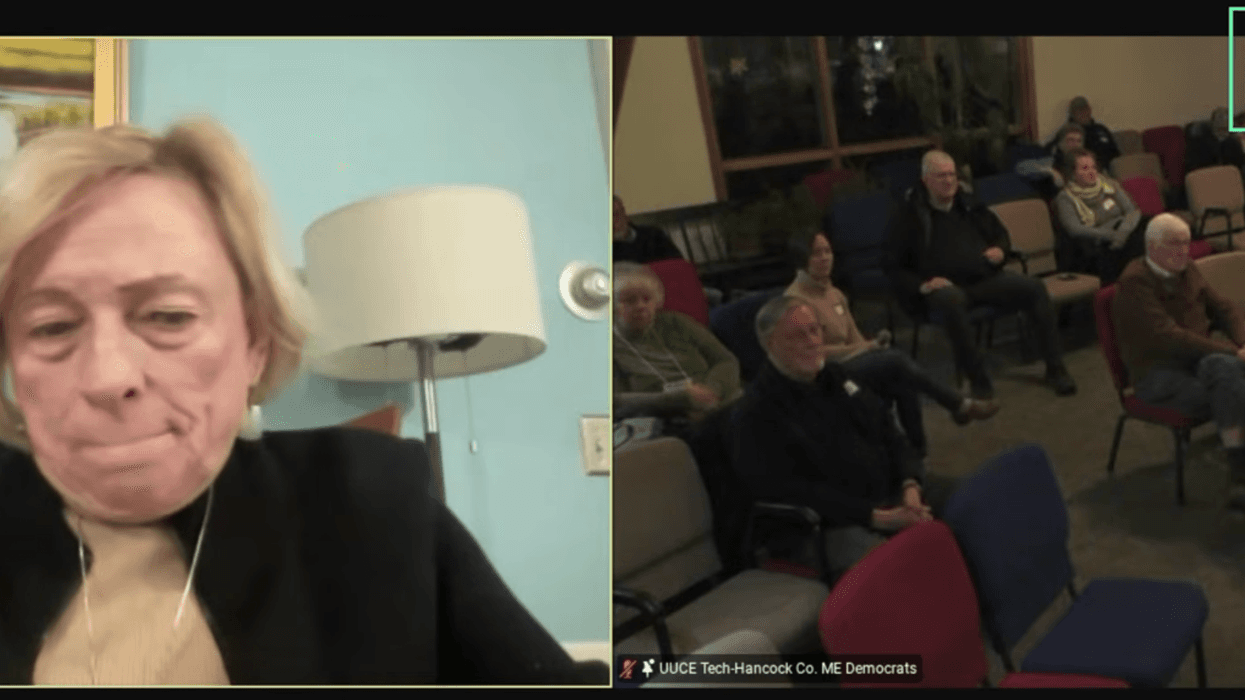
One voter told the Maine governor, who is running for US Senate, that she is wondering "why you would fight on behalf of us on the national level if you couldn't do it on the state level."
Most of the national news surrounding the Maine Democratic Senate primary has zeroed in on candidate Graham Platner's record—a tattoo he got while serving in the Marines and posts he wrote several years ago on Reddit.
But a video recording obtained by Drop Site News of a local Democratic group's Zoom meeting last week with Platner's main opponent, Gov. Janet Mills, brought to light discussions Maine voters are having not about the first-time candidate's controversies—which have done little to damage his campaign, according to numerous polls—but about the record of the governor who's run the state for the last six years.
For 30 minutes on March 19, members of the Hancock County Democrats grilled Mills about her history of vetoing significant pieces of legislation and opposing measures broadly supported by Mainers.
⚡️Leaked Video: Janet Mills Attack Ad Against Graham Platner Backfires With Maine Democrats
A Zoom recording with Gov. Janet Mills captures unfiltered voter reactions to the governor’s recent attack ad against her U.S. Senate primary opponent, Graham Platner.
Story by… pic.twitter.com/xF6bmqDsAf
— Drop Site (@DropSiteNews) March 23, 2026
A former Democratic state representative, Mark Worth, asked Mills early in the question-and-answer session about her "record on tribal sovereignty, labor, and gun safety bills, such as your veto of the red flag law"—an apparent reference to Mills' opposition to the red flag law that was passed by referendum in 2025, with 62% supporting the measure to make it easier for law enforcement to take away someone's firearm if they pose a threat to themself or others.
Mills instead supported the state's "yellow flag law," which requires police to take a person into custody and obtain an assessment by a mental health professional before a gun can be taken away.
Nearly two dozen states and the District of Columbia have red flag laws, also known as extreme risk protection orders, and they are supported by 77% of Americans, including a majority of gun owners and Republicans, according to an APM Research Lab/Guns & America/Call To Mind poll from 2019.
Mills responded to the question by defending gun control legislation that has passed in Maine during her tenure—including a ban on ghost guns and expanded background checks—but did not mention the broadly popular red flag law that she opposed.
She said that she had sought to find "common ground" between gun control advocates and gun owners—even though the referendum was supported by nearly two-thirds of voters, including many gun owners—one of whom was Platner, a combat veteran.
The governor has also been criticized for vetoing a bill that would have barred the state from seizing tribal lands, and has angered the state's labor movement several times, including when she vetoed an offshore wind development bill due to her opposition to an amendment requiring collective bargaining agreements, and another measure that would have allowed farmworkers to unionize.
At the meeting this month, a voter named Diana Morenda introduced herself as a "three-time cancer veteran" and asked about two other vetoes by the governor—those of LD 765, which aimed to prohibit "unsupported price increases" of prescription drugs, and LD 1117, which would have prohibited excessive rises in the price of generic prescription drugs.
With the vetoes, Morenda told Mills, she "essentially destroyed any chance that your constituents would have had to combat excessive pricing, kind of siding with Big Pharma."
"You can understand why I... and many others in Hancock County, we might be wondering out loud why you would fight on behalf of us on the national level if you couldn't do it on the state level," said Morenda.
Mills responded similarly as she had to the earlier question, naming other moves she's taken to increase access to prescription drugs and price transparency and telling the voter, "Whoever gave you those two numbers didn't give you the rest of the bills that we did pass."
The controversies surrounding Platner's campaign came up during the meeting, with Worth telling Mills her recent attack ad against Platner was "divisive and odious," and another voter accusing the governor of "using underhanded means" against her opponent.
The ad included several women looking at posts Platner wrote in 2013 disparaging sexual assault survivors. Platner has addressed his old online comments several times, saying his views have evolved since he wrote them.
One voter disclosed that he is a friend of Platner's before asking Mills: "Do you believe in a Maine and a country where a person can be redeemed? Where they can change and become a better version of themself?"
Mills deflected the question, claiming that her concern is not "whether he's reformed or thinks better," but electability.
"The issue is who can beat Susan Collins," said Mills, referring to the state's Republican senator.
The governor has persistently claimed that she has the greatest chance of beating Collins in November, contrary to several polls.
The voter addressed those claims in his question.
"You say electability is what you're looking for here," he said. "And if you truly do believe that and you've read the polls—which I imagine you have—that isn't the case."