

SUBSCRIBE TO OUR FREE NEWSLETTER
Daily news & progressive opinion—funded by the people, not the corporations—delivered straight to your inbox.
5
#000000
#FFFFFF
To donate by check, phone, or other method, see our More Ways to Give page.
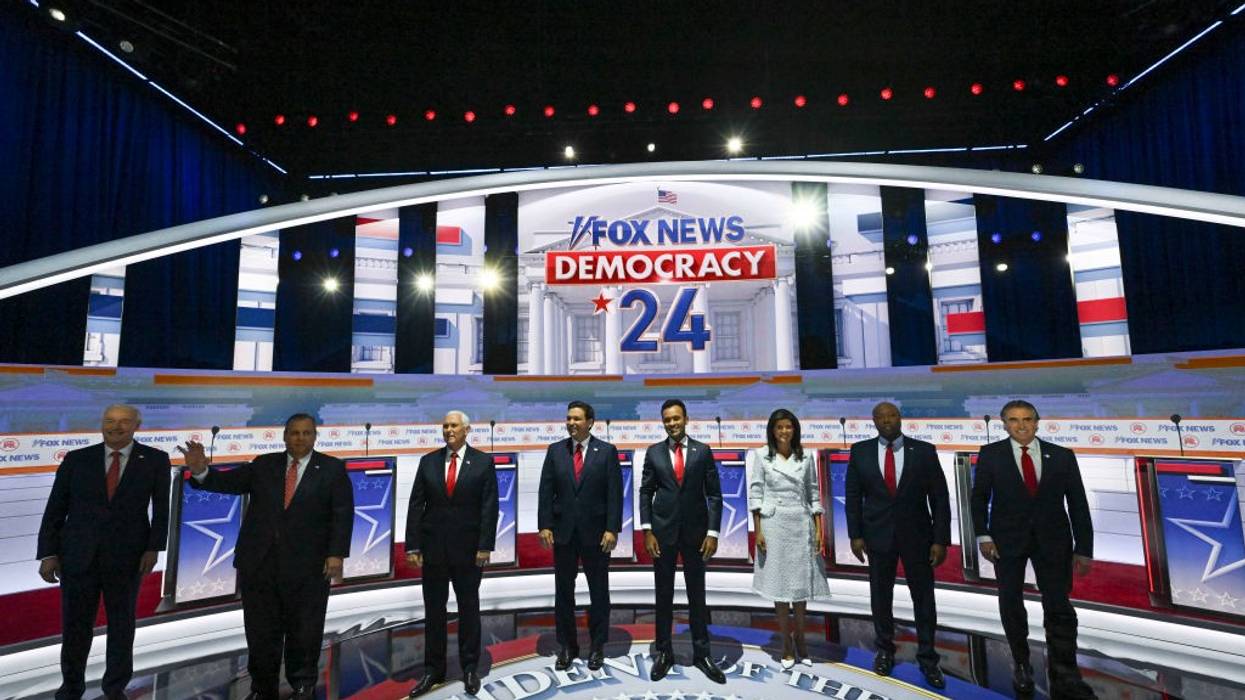
The candidate who has consistently polled second—Florida Gov. Ron DeSantis—never surpassed 16% during the debate period, making the RNC debates more a ritual than a meaningful forum for picking a Republican standard bearer. Yet they still offered an opportunity to clarify where prominent members of the GOP stand on the most important issues to voters, and to put them on the record about Trump’s attacks on democracy. But the questions the journalist moderators asked revealed that they had little appetite for challenging the GOP’s democracy-threatening turn—or much of any other right-wing orthodoxy, for that matter.
One of the most important questions hanging over the 2024 presidential election is whether the country’s threadbare democracy will hold together in the face of GOP attacks on voting rights and rule of law, led by Trump but widely embraced in the party.
The first debate (8/23/23) was hosted by Fox News and moderated by Fox correspondents Bret Baier and Martha MacCallum. The second debate (9/27/23) was hosted by Fox Business and moderated by Dana Perino and Stuart Varney from Fox News and Ilia Calderón from Univision.
NBC News hosted the third debate (11/8/23), with moderators Lester Holt and Kristen Welker of NBC and Hugh Hewitt of Salem Radio Network.
The fourth and final RNC debate (12/6/23) was hosted by NewsNation and the CW. That debate was moderated by Megyn Kelly, who hosts the Megyn Kelly Show on SiriusXM; Elizabeth Vargas from NewsNation; and Eliana Johnson of The Washington Free Beacon.
FAIR recorded 218 questions across the four debates, assigning them to one or more issue categories. The topic that dominated every single debate was foreign policy, with 73 questions, closely followed by social issues (71), and then economics (38), non-policy (27), governance (19), immigration (16), and environment (1).

The economy is the top concern for voters overall, but especially for Republican voters (Pew, 6/21/23, Redfield & Wilton, 12/8/23), making the relative dearth of economy-related questions surprising.
The first question of the first debate (8/23/23) was about the economy, though Fox moderators Baier and MacCallum approached the topic in an unusual way: They played a montage of clips from President Joe Biden celebrating “Bidenomics,” juxtaposed with Republican voters lamenting inflation and mortgage rates.
The video concluded with a short clip of the song “Rich Men North of Richmond,” which was No. 1 on the Billboard charts at the time. MacCallum described the lyrics as rife with “alienation” and “deep frustration with the state of government and of this country.” (The song also includes an attack on “the obese milking welfare” and an apparent nod to the QAnon conspiracy theory.) She then asked DeSantis, “Why is this song striking such a nerve in this country right now? What do you think it means?”
Across all debates, the moderators asked no questions about economic policy proposals that are popular with both Democrats and Republicans but get next to no traction in the GOP or the media, like raising taxes on billionaires or raising the federal minimum wage.
The other candidates were each given an opportunity to weigh in, some with vague prompts and others with more leading ones, such as MacCallum’s question to South Carolina Sen. Tim Scott: “You have been a senator though for 10 years. So what have you done to rein in the increasing size of government?”
The second debate (9/27/23) saw a much bigger economic focus, opening with a discussion of the United Auto Workers strikes in Milwaukee. There were 15 total questions about the economy during the second debate, with subtopics ranging from surging gas prices to unaffordable childcare and economic competition with China.
NBC’s Welker (11/8/23) asked every single candidate in the third debate whether they would be “open to” cutting Social Security, leading off the questions with the framing: “Americans could see their Social Security benefits drastically cut in the next decade because the program is running out of money.”
Welker’s question repeated the longstanding media myth that Social Security is nearly bankrupt (see FAIR.org, 6/25/19). In fact, since all on-the-books workers pay into Social Security, it will never go bankrupt, though a relatively small shortfall is projected in the coming years. The shortfall could easily be fixed by removing the payroll tax cap that lets high earners exclude much of their income from the Social Security tax (CEPR, 2/28/23). And voters from both parties strongly prefer taxing the rich to cutting benefits (Data for Progress, 8/1/23)—but Welker didn’t press any of the candidates to make the rich pay their fair share.
Moderators of the fourth debate asked only three economy-related questions total. Across all debates, the moderators asked no questions about economic policy proposals that are popular with both Democrats and Republicans but get next to no traction in the GOP or the media, like raising taxes on billionaires or raising the federal minimum wage.
South Carolina Gov. Nikki Haley was asked more questions about the economy than any other candidate, despite DeSantis receiving more questions total—52 questions to Haley’s 43.
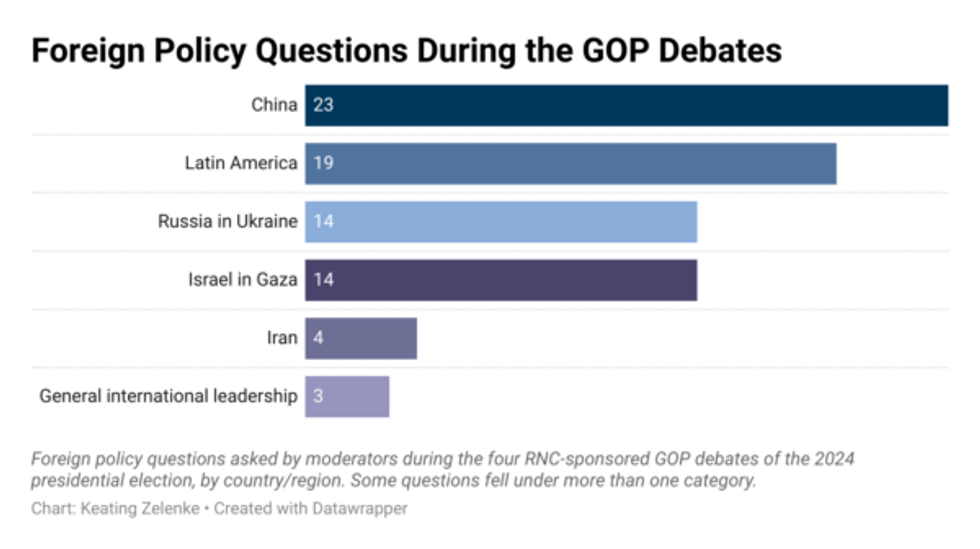
The foreign policy-related questions in the first two debates were dominated by three topics: how to “deter” China, policy towards Latin America concerning both drugs and migration, and the continuation of aid to Ukraine. During the two debates following Hamas’ October 7 attack, questions about each candidate’s approach to Israel’s assault on Gaza also became prominent.
The most frequent foreign policy topic did not have to do with either of the ongoing military campaigns in Ukraine (14 questions) or Gaza (14), both made possible with billions of dollars in funding from the United States. Rather, the spotlight fell on China, with 23 questions, nearly all of them framing China as a threat, either militarily or economically. Ten had to do with the candidates’ plans to ward off a hypothetical invasion of Taiwan. Others ranged from potential Chinese interference on TikTok, to Chinese economic and political competition, and even Chinese chemicals in fentanyl.
In one example, Baier (8/23/23) contextualized a question to North Dakota Gov. Doug Burgum by citing Chinese aggression towards Taiwan, the possibility of 1,500 Chinese nuclear warheads “in the coming years,” and Chinese spies in the U.S. military. “So the question is,” Baier asked, “how would you deter China, as President Burgum?”
Twelve out of the 19 Latin America questions regarded the flow of fentanyl from Latin America into the United States. The issue of drugs coming through the southern border was one of the only topics to be brought up in questions during every single debate.
Eight of those questions mentioned the use of lethal force, either at the border or in Mexico itself, to deter dealers, which some candidates had been promising. During only one exchange—between NewsNation’s Vargas and DeSantis—did a moderator question the legality of that strategy.
According to the Pew Research Center (6/21/23), 64% of Republicans and right-leaning independents indicated drug addiction was a “very big problem” facing the country. But every question in the RNC debates about the drug crisis focused on the importation of drugs; the moderators asked zero questions about drug treatment or mental healthcare related to drug use.
The conflict in Gaza came up in two debates. In the third debate (11/8/23), NBC’s moderators asked mostly vague questions about what the candidates would tell Israeli Prime Minister Benjamin Netanyahu to do, though Lester Holt’s question to Haley included the only mention of anything resembling de-escalation: “Would you consider humanitarian pause, for example?” Then Holt passed the baton to Matthew Brooks of the Republican Jewish Coalition, who asked Vivek Ramaswamy what he would “say to university presidents and college presidents who have not met the moral clarity moment to forcefully condemn Hamas terrorism.”
In the fourth debate (12/6/23), the Israel/Gaza questions turned more hawkish. NewsNation’s Vargas asked multiple candidates whether they would “send in American troops” to rescue the American citizens taken hostage in Israel on October 7. The Washington Free Beacon’s Johnson then pressed Ramaswamy: “The Hamas terror attack left dozens of Americans dead and was the deadliest attack on Jews since the Holocaust. Why wouldn’t it be a good thing to finish Hamas?”
Moderators asked about Ukraine in three debates. In the first debate (8/23/23), the Fox hosts asked, “Is there anyone on stage who would not support the increase of more funding to Ukraine?” In the third debate, NBC’s Welker likewise asked about funding, but with a more leading set-up:
The United States has given Ukraine financial and military support since the war began more than 600 days ago. President Zelensky told me on Sunday, if Russia isn’t stopped now, “The price will be higher for the United States,” and Americans would be forced to “send your sons and daughters to defend NATO countries.”
But perhaps the most leading Ukraine question came in the second debate (9/27/23), the only Ukraine question asked in that debate. Fox‘s Perino asked DeSantis:
Today, the Republican Party is at odds over aid to Ukraine. The price tag so far is $76 billion. But is it in our best interest to degrade Russia’s military for less than 5% of what we pay annually on defense, especially when there are no U.S. soldiers in the fight?
This came after an ad by Republicans for Ukraine, and echoed the argument of the ad (Daily Kos, 9/28/23).
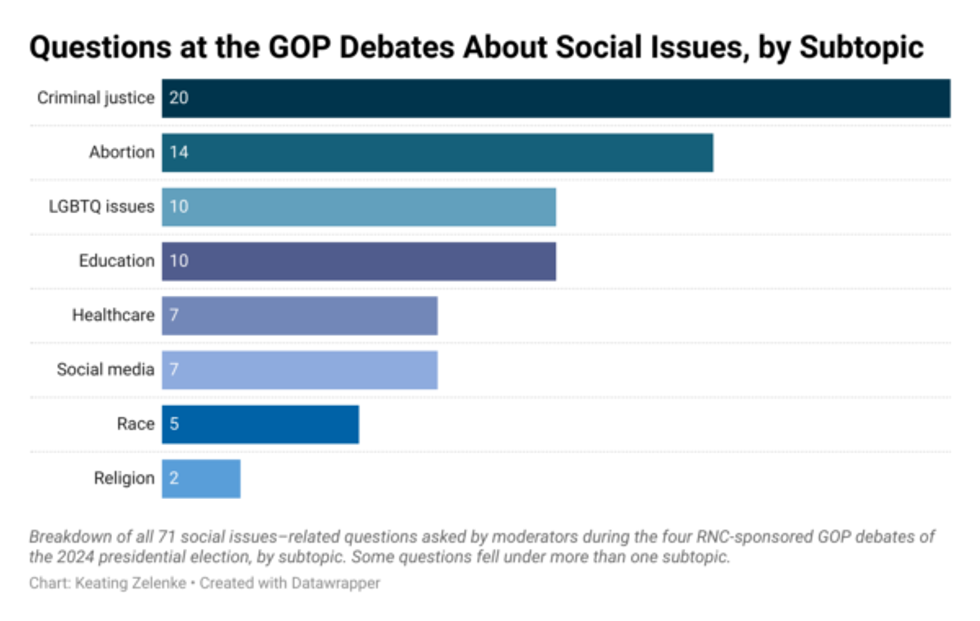
FAIR categorized as “social issues” a number of topics, which included criminal justice (20), abortion (14), LGBTQ issues (10), education (10), healthcare (7), social media (7), race (5), and religion (2).
The low number of healthcare questions was striking, given that the Pew poll found the second most important issue among U.S. voters to be the affordability of healthcare, with 64% of respondents indicating it was a “very big problem.” Among Republican and right-leaning independent voters specifically, this percentage drops down to 54%—lower, but still the majority of conservative voters.
DeSantis was the only candidate asked about health insurance on two different occasions; both questions pointed out Florida’s high rate of uninsured people.
The abortion questions were overwhelmingly framed in terms of the issue’s impact on Republicans—as a “losing issue”—and asked how candidates could find a winning “path forward.” Only one question alluded to the impact of abortion policy on pregnant people, and even that was framed electorally, when Fox’s MacCallum (8/23/23) asked Haley:
Abortion has been a losing issue for Republicans since the Dobbs decision. In six state referendums, all have upheld abortion rights in this country. And even in red states, there are more swing state referendums that are coming up as we head into the elections, as well on this. So, Governor Haley, what do you say to your party and to your state, which today confirmed a six-week abortion law as well, especially the impact on women suburban voters across this country?
Moderators occasionally asked questions that challenged GOP talking points on social issues. Univision’s Calderon (9/27/23), for instance, pushed Burgum on gun violence:
For the first time ever, a Univision poll found that mass shootings and gun safety are one of the most important issues for Latino voters. Mental health concerns are not unique to the United States, but gun violence is. What is your specific plan to curb gun violence?
But many questions and their lead-ins were strongly skewed to the right, as when SiriusXM’s Kelly (12/6/23) posed this LGBTQ-related question to former New Jersey Gov. Chris Christie:
Governor Christie, you do not favor a ban on trans medical treatments for minors, saying it’s a parental rights issue. The surgeries done on minors involve cutting off body parts, at a time when these kids cannot even legally smoke a cigarette. Kids who go from puberty blockers to cross-sex hormones are at a much greater likelihood of winding up sterile. How is it that you think a parent should be able to OK these surgeries, nevermind the sterilization of a child, and aren’t you way too out of step on this issue to be the Republican nominee?
Similarly, Fox’s Baier and MacCallum larded a question to former Vice President Mike Pence (8/23/23) with misleading right-wing talking points about crime, homelessness, and lockdowns:
Murders in Los Angeles, New York, Chicago, all up 30% between 2019 and 2022. Homelessness is up 11%, the largest jump in recorded history. Vice President Pence, a lot of this began in the Covid era. How much of what we are seeing happening around this country is a result of those Covid lockdowns? And is your administration in part to blame for how we got here?
Studies have found no positive correlation between Covid restrictions and homicide rates (e.g., Criminology and Public Policy, 8/21; Statistics and Public Policy, 6/22).
Meanwhile, homelessness had been on the rise pre-Covid, and actually leveled off during the pandemic—when federal aid and eviction moratoriums helped keep people in their homes, despite rising housing costs. It has only spiked again now that that aid has run out (NPR, 12/15/23).
Rather than use their only reference to homelessness across four debates to attack Covid lockdowns, the moderators might have more usefully asked Arkansas Gov. Asa Hutchinson why he turned away federal Emergency Rental Assistance funding last year when evictions were soaring in his state (Arkansas Democrat-Gazette, 5/22/22).
One of the most important questions hanging over the 2024 presidential election is whether the country’s threadbare democracy will hold together in the face of GOP attacks on voting rights and rule of law, led by Trump but widely embraced in the party. Yet the moderators asked only 19 questions about governance, only 10 of which touched on this core issue—and nine of those came in the first debate.
Baier noted that all candidates had signed a pledge (required by the RNC for participation in the debates) to support the eventual party nominee, and asked for a show of hands of those who would still support Trump if he were “convicted in a court of law.” (All of the candidates except for former New Jersey Gov. Chris Christie and Hutchinson indicated they would.) He asked three candidates to explain their position, and, as a follow-up, MacCallum asked five of the candidates whether Pence “did the right thing on January 6″—referring to his certification of the election.
The 10th question about election integrity was not asked until the fourth debate (12/6/23), by guest questioner Tom Fitton of the right-wing activist group Judicial Watch, who offered an unsurprising right-wing spin:
Many Republicans are concerned about the legitimacy of elections. A federal judge just ruled that Pennsylvania must count undated mail-in ballots, and, unlike Alabama, many states still don’t require any identification to vote. What should states do now to increase election integrity and voter confidence for the 2024 election?
One of the most striking things almost entirely ignored in the debates was the climate crisis. Across all four debates, a single question was asked about the issue, and not by a journalist moderator but a guest questioner, Alexander Diaz from Young America’s Foundation, during the first debate (8/23/23):
Polls consistently show that young people’s No. 1 issue is climate change. How would you, as both president of the United States and leader of the Republican Party, calm their fears that the Republican Party doesn’t care about climate change?
But rather than asking candidates to answer Diaz’s question, Fox’s MacCallum reframed it: “So, we want to start on this with a show of hands. Do you believe in human behavior is causing climate change? Raise your hand if you do.”
After DeSantis jumped in to try to thwart the hand-raising exercise and redirect the conversation away from the climate crisis, pharmaceutical executive Ramaswamy interrupted to announce, “I’m the only person on the stage who isn’t bought and paid for, so I can say this—the climate change agenda is a hoax.” He added that “more people are dying of bad climate change policies than they are of actual climate change.”
Fox’s Baier, rather than focusing on Ramaswamy’s outrageous climate claims, proceeded to ask Haley and Scott whether they were “bought and paid for”—and then went to a commercial break, bringing the climate conversation to an abrupt end.
Even in 2015 the Republican primary debates featured more climate questions, with six across four debates (FAIR.org, 12/14/15).
Moderators, especially in the earlier debates, seemed especially interested in hearing from DeSantis. In the first debate, Fox’s Baier and MacCallum singled out DeSantis nearly twice as much as any other single candidate, with 10 direct questions, compared to most other candidates’ six.
Despite this apparent tilt in DeSantis’ favor, recaps of the debate from mainstream media mostly expressed disappointment about his performance. Politico (8/24/23) wrote that DeSantis “faded into the crowd” in their summary of the night, while Vox (8/24/23) noted that he was “hardly ever the center of attention.” The Hill (8/24/23) reported: “DeSantis arrived in Milwaukee needing a big night. He didn’t get it.”
Things evened out considerably during the second debate, though DeSantis still came away with the most direct questions.
Haley, who gained the most in the polls over the course of the four debates, and DeSantis received 14 questions apiece during the third debate. The NBC-hosted debate was, in general, a much more level playing field between all of the candidates, perhaps because fewer candidates meant more time for each one; almost every question was fielded to the whole slate of candidates. Tim Scott followed close behind DeSantis and Haley with 13 direct questions, while Christie and Ramaswamy took 11 questions each.
Though DeSantis’ lead over the others on stage had narrowed substantially by the fourth and final debate, he once again pulled away with the most direct questions from the moderators (13). The other three candidates were all addressed roughly the same amount of times—Nikki Haley got nine questions from the moderators, Chris Christie got eight, and Vivek Ramaswamy came away with seven.




(A friend of my wife’s once had an astonishingly ugly dog, with a body like a moldy potato and a Picasso-esque nightmare head. He had eyes in different quadrants of his face and a single tooth that might have been passed around by the Furies of Greek mythology. But I digress.)
They say unhinged, lying, and hateful things while pursuing policies that hurt and kill.
While the GOP candidates had a certain vulpine quality, they seemed to lack the empathy inherent in canines and some humans. Their mirror neurons have rusted over so badly they must look like old beer cans in sea water.
Their words and demeanor were, by any objective standard, abnormal. Their presentation was utterly detached from real people and real-life problems. And yet, they were taken seriously by pundits and politicians. That reflects a deep social psychosis, a detachment from reality so profound it would call for clinical treatment in a human being.
I didn’t watch the debate on my birthday—what a grim augury for the year that would have been—but now I have. I will live with these memories forever. Seeing these characters arrayed from left to right was like those M.C. Escher drawings of staircases where, no matter which way you go, you’re always headed down.
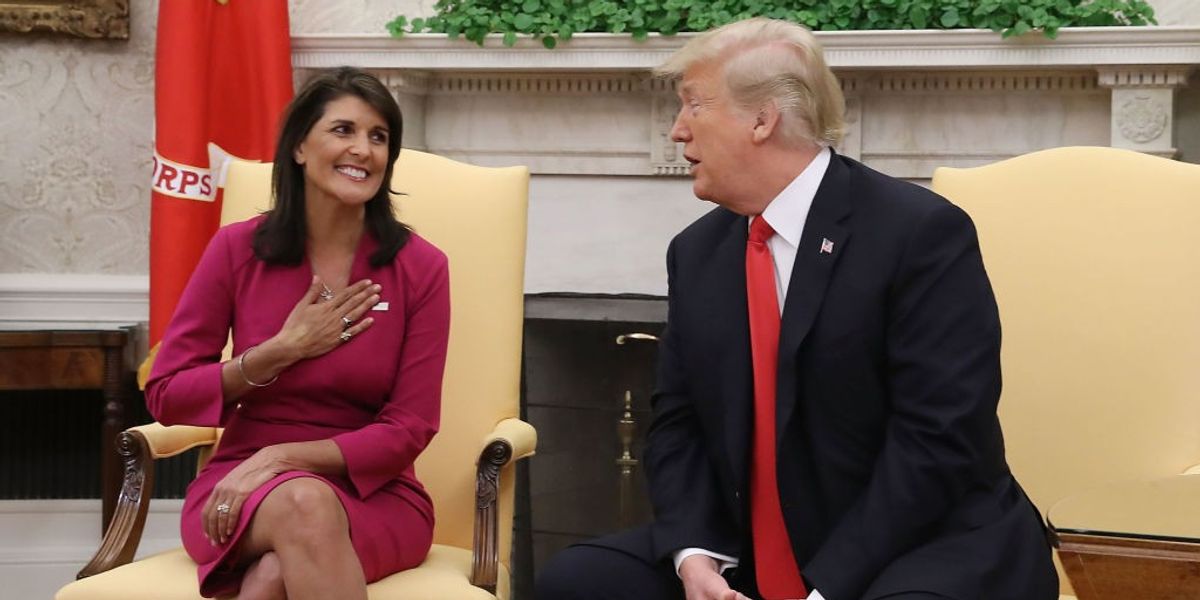
Former U.S. President Donald Trump in the White House as he accepted the resignation of Nikki Haley as U.S. Ambassador to the United Nations, on October 9, 2018, in Washington, D.C.
(Photo by Mark Wilson/Getty Images)“I think it’s time for an accountant in the White House,” Nikki Haley told the audience, which means she’s cornered the vision thing. “Our kids are never going to forgive us” for emergency Covid-19 spending, she added, a statement that’s not only implausible but requires our kids to be alive.
I saw Haley address a conservative women’s dinner a while back. Her speech was typical right-wing red meat, the kind she served up when she ran for governor with the backing of Sarah Palin and the Tea Party. Haley hewed to xenophobic tropes, dismissing the United Nations as a “club” and diplomatic norms as “a culture.”
“When I first came to the U.N.,” Haley said, “I told my colleagues that the United States was taking names. Taking names of the countries that didn’t have our back.” That seems like an unnecessary bookkeeping chore. Why not put down the pencil and pad and just look up the countries we’ve bombed and sanctioned?
The media loves to treat Haley with legitimacy because she’s a former U.N. Ambassador. But she was reprimanded in that job by a federal ethics watchdog for improperly endorsing a political candidate as a political appointee. An independent ethics group also called for an investigation of Haley’s flights on wealthy executives’ private jets, a perk whose value she reportedly failed to fully disclose.
And yet, for all her extremism and questionable ethics, Haley can still seen like a class act—at least, compared to the other guys. Like, for example...
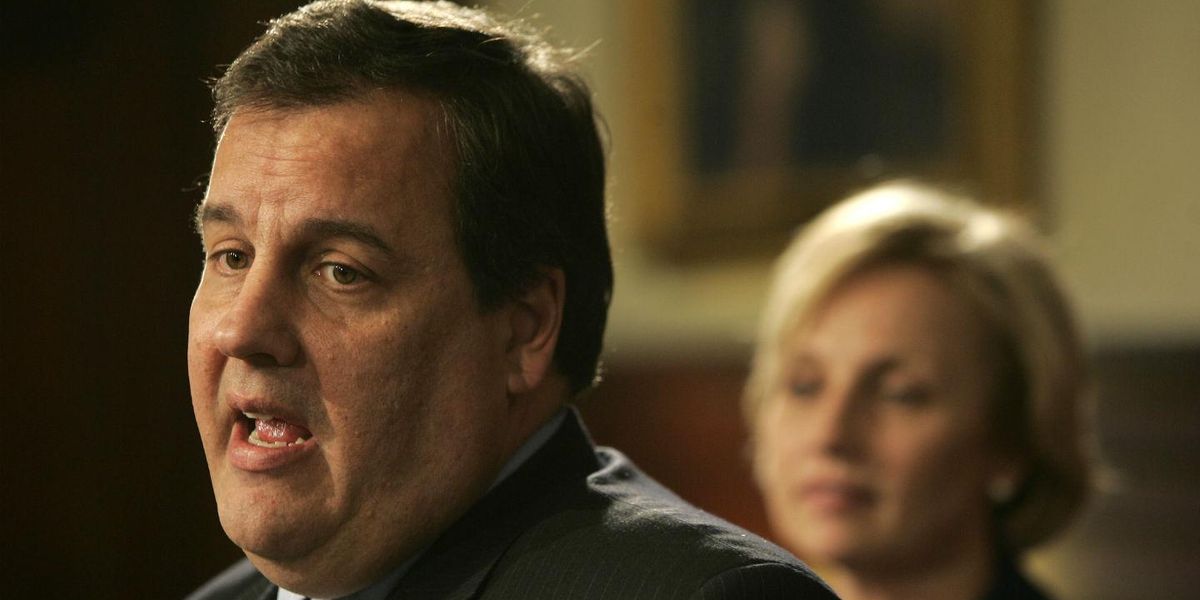
Former New Jersey Governor Chris Christie speaks.
(Photo: AP/Rich Schultz)
Him again? We’ve seen his schtick before. Sure, it’s fun to hear him attack former President Donald Trump, although he didn’t do much of that in the debate. And yes, he’s funnier and slightly more watchable than the others, but that’s because he makes fun of people. He’s the political equivalent of Triumph, the Insult Comic Dog. But Triumph is funnier and has better politics.
Back in 2012 I wrote about Christie’s hostility to women, his servility toward lobbyists, and his overall nastiness. Please don’t make me do it again. Christie displayed utter contempt toward working people that year, insulting the jobless and the elderly. As governor, he was a bully and probably corrupt.
Nothing has changed since then, except his newfound tendency to insult other Republicans. He should stick to that.
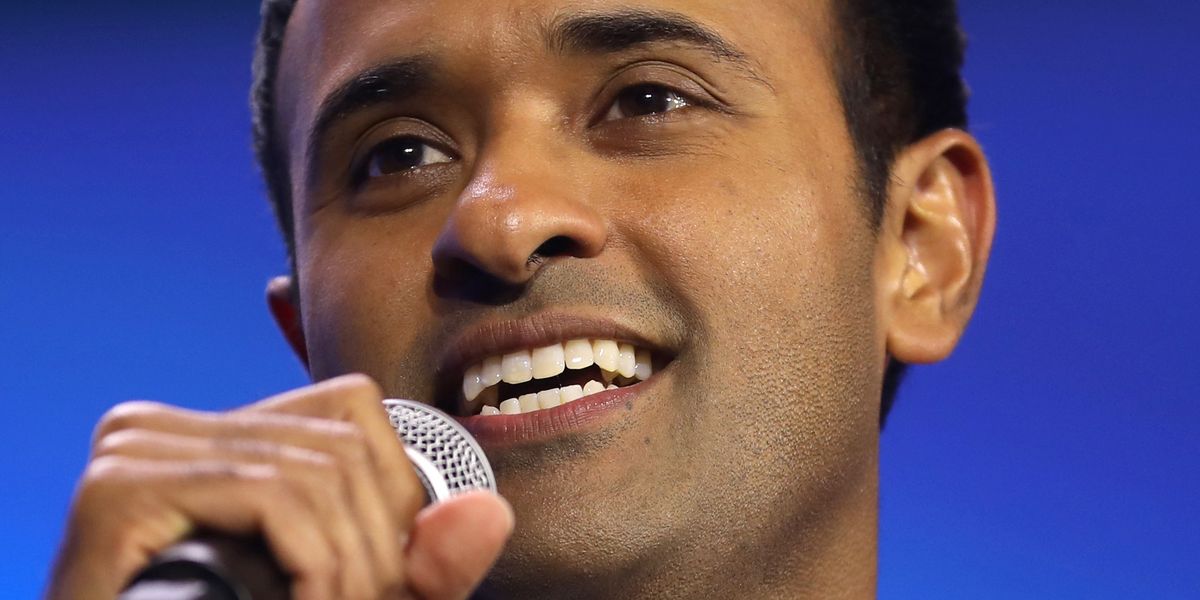
Vivek Ramaswamy speaking at an event in West Palm Beach, Florida.
(Photo: Gage Skidmore/ via Wikipedia)
Back in 1961 in Utica, New York, there was a little kid—we’ll call him “Brucie”—who went from house to house singing a song called “Artificial Flowers” for all the moms in their kitchens. If that sounds like it might be a bad song, friend, you don’t know the half of it. It was about a poor little orphan girl who survives by selling those flowers—but not for long, what with (spoiler alert!) winter coming on and all. All the moms would “ooh” and “aah” over crooning little Brucie.
All of ‘em except my mom, that is. Her face, God love her, was a grim mask as she endured the maudlin tune. The compliment she finally mustered was transparently insincere. Not that it mattered. Brucie was extremely pleased with his performance; the possibility that anyone else might feel differently never crossed his mind.
Which brings us to Vivek Ramaswamy.
Christie said Ramaswamy “sounds like ChatGPT,” which was probably the truest thing said all night.
Ramaswamy is a salesman, a hustler, a pitchman. What he sells is as artificial as the orphan girl’s flowers. Sure, he hits all the right buttons for a conservative crowd, which means he says things that are clinically insane. But who knows what he really thinks? He’s all nerve ends, and the signals coursing through each one of them spell out “always be closing” in Morse code.
Also, he’s a phony. “My parents came to this country with no money 40 years ago,” he said. “I have gone on to found multibillion-dollar companies.” He leaves out the part about his father and mother being well-to-do professionals during his childhood—his father as an engineer and patent attorney for General Electric and his mother as a psychiatrist—and he omits his fancy education at a private high school, Harvard, and then Yale Law School.
Vivek constantly says things like, “I’m not a politician. I’m an entrepreneur.” That’s like the flu product whose advertising says it was “invented by a teacher, not a doctor.” It sounds good until you think about it for a second.
An entrepreneur is the last thing we should want for a president. That is, unless you think the problem with our politics is that there’s too much substance and too little salesmanship...
Christie said Ramaswamy “sounds like ChatGPT,” which was probably the truest thing said all night. But Vivek doesn’t just talk like an AI output. His entire being seems like something you’d get by typing a few phrases into an AI program—phrases like “insufferability incarnate,” “unwarranted self-love,” “Dr. Sardonicus death-rictus smile,” “the kid everybody hated in junior high,” and, “what’s with the hair?”
Said young Vivek:
“This isn’t that complicated, guys, unlock American energy, drill, frack, burn coal and embrace nuclear, put people back to work by no longer paying them more to stay at home, reform the U.S. Fed, stabilize the U.S. dollar, and go to war.”
With that sentence, Ramaswamy finally outpaced Mike Pence in the category of “Most likely to portray the Antichrist in a direct-to-video movie.”
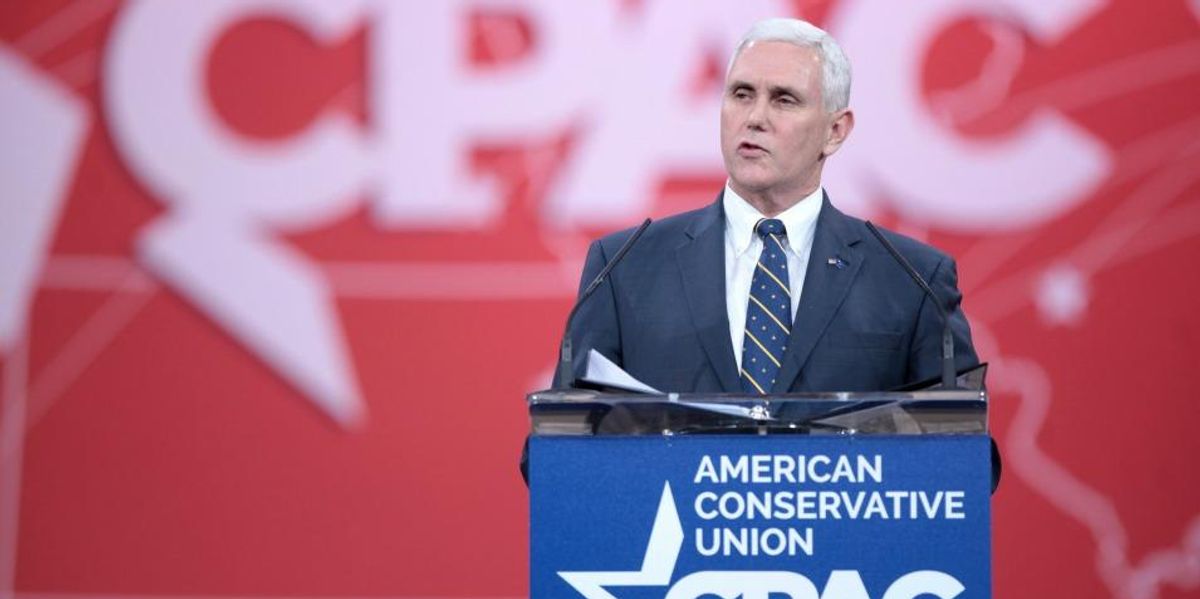
Former Vice President Mike Pence gives a speech.
(Photo: Gage Skidmore/flickr/cc)
Mike Pence did the right thing on January 6. But then there’s the rest of his life, which shouldn’t be left out of the conversation. Besides, obeying the law doesn’t make somebody qualified for the presidency. It doesn’t even make them a good person, necessarily. Deterrence theory relies heavily on fear of punishment, and if there’s one thing that shines through Pence’s personality it’s fear of punishment—divine and otherwise.
Pence has a long record of right-wing extremism and the forceful insertion of his private religious beliefs into the public sphere.
Poor ol’ Mike was his usual joyless self in the debate. He isn’t just wrong; he’s also, unfortunately, quite dull. (His court testimony, however, should be interesting.)
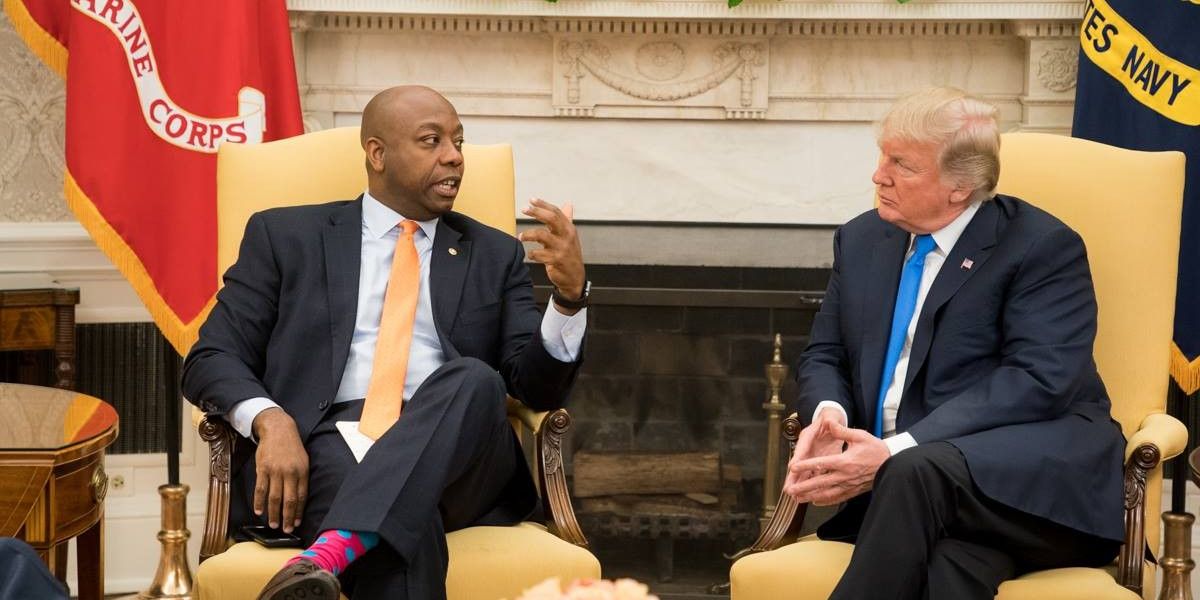
Senator Tim Scott speaks with then-President Donald Trump in 2017.
(Photo: The White House/ via Wikipedia)
“I regard all life as sacred,” Tim Scott says via his website. Then he says, “I will rebuild a military so lethal and powerful that our adversaries will fear us and our allies will respect us.”
And yet: Scott maligns lifesaving programs like Medicare, Medicaid, and Social Security as “the entitlement state” and says things like, “We have to wrestle this beast to the ground.” Apparently, some lives are more sacred than others.
That privileged group includes insurance executives. While calling to tame the costs of “entitlements,” Scott sided with other Republicans to protect the siphoning off of Medicare funds to private wealth under the so-called “Medicare Advantage” scheme.
For all the hype—if you can call Scott’s sporadic coverage “hype”—it turns out he’s just a typical Republican.
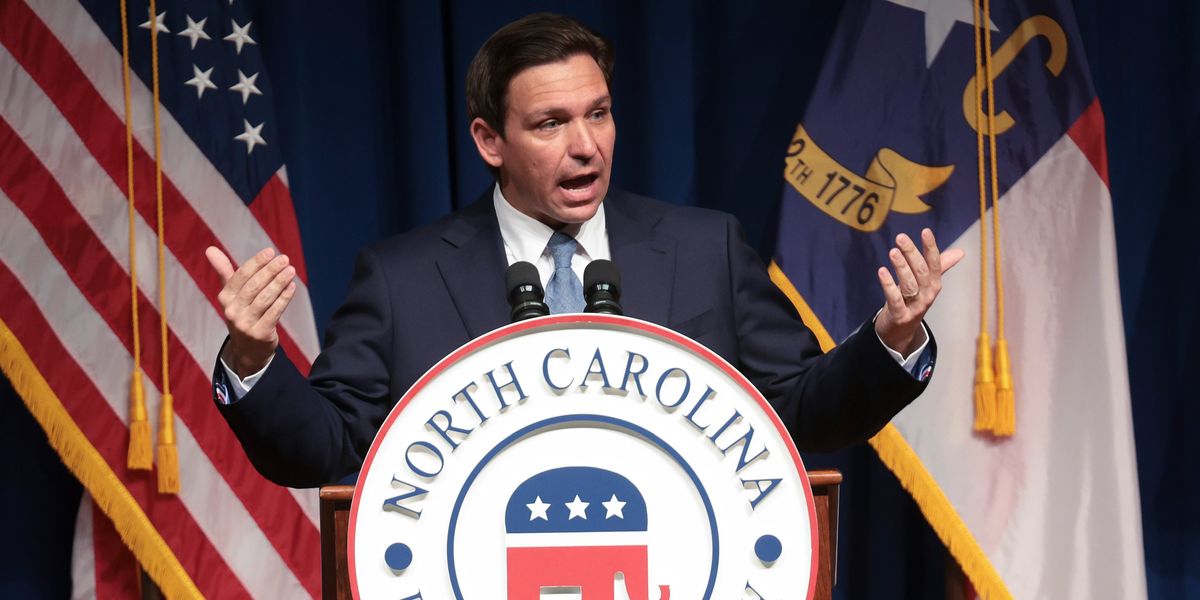
Florida Gov. Ron DeSantis speaks in North Carolina.
(Photo: Win McNamee/Getty Images)Do we have to? Oh, okay. Everybody knows what he’s been up to in Florida, so we’ll stick to his debate performance.
It was sad.
On Wednesday night, DeSantis mentioned yet again that he was “deployed with the Navy SEALS in Iraq.” Naturally, that left everyone with the impression that he was a Navy SEAL. He wasn’t. The elite-educated DeSantis served as an attorney, not a combat soldier.
By choosing his words carefully enough to leave a false impression without actually lying, DeSantis sounded like a fighter but demonstrated what he really is: a lawyer.

Former Arkansas Gov. Asa Hutchinson speaks before a meeting of the Republican Party of Orange County.
(Photo: Leonard Ortiz/MediaNews Group/Orange County Register via Getty Images)Somebody said that Asa Hutchinson seems like a decent man.
You mean the Asa Hutchinson who pandered to Islamophobic bigotry by pledging to close his state to innocent Syrian refugees? The Asa Hutchinson who, after serving in the Department of Homeland Security, made a million dollars with a secretive company that trades with that department? The Hutchinson who carried out a hasty and chaotic spree of death row executions in his state soon after taking office, almost certainly killing at least one innocent man? Who urged businesses not to comply with mandated protections to public health and worker safety and dictatorially forbade local communities from democratically deciding how to protect their own health?
You mean that Asa Hutchinson?
“Decent” is not a synonym for “occasionally takes a break from doing execrable things.”
Nah.
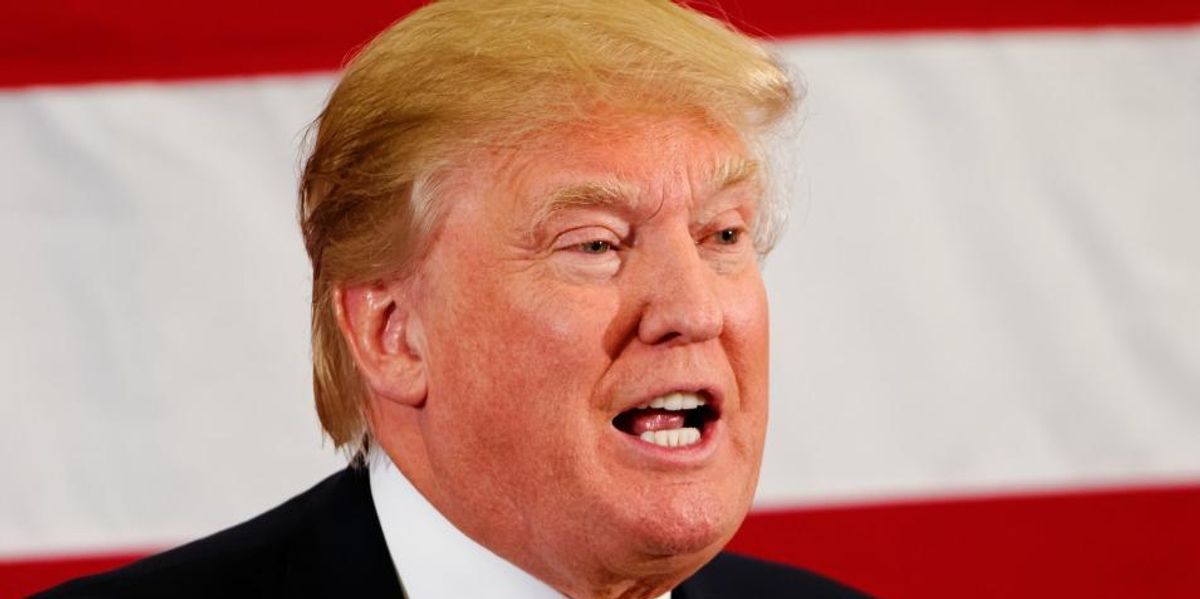
Donald Trump speaks
(Photo: Michael Vadon/flickr/cc)As the debate groaned on, Tucker Carlson released a one-on-one interview with Donald Trump where, like any good wingman, he made his alpha pal look good by making himself even less attractive. Carlson lobbed extremely crazy statements to Trump, whose responses—being merely very crazy—looked sane by comparison. But crazy is as crazy does.
Incidentally, these comments aren’t personal. Nikki Haley and her compatriots were very nice at that dinner. Some of the Republican senators and representatives I’ve met have been nice, too. Hey, I was on Tucker’s program once and I even liked him, just as I’ve liked other Fox hosts. (Not you, though, Hannity.)
But their public personae are—politically, historically, existentially—who they really are. And what they really are is bad. They say unhinged, lying, and hateful things while pursuing policies that hurt and kill. It’s insane to treat them like serious political figures. That our media and political cultures do so reflects a profound societal sickness.
If Trump doesn’t lead his party again next year, one of these yo-yos probably will. The fact that the Democrats could lose to them—which they could—says more about the state of our nation than many of us would ever care to know. That’s understandable. After all, to see insanity is to risk becoming insane yourself.
PS: I apologize to ugly dogs everywhere, including my wife’s friend’s dog. He was a good boy.