

SUBSCRIBE TO OUR FREE NEWSLETTER
Daily news & progressive opinion—funded by the people, not the corporations—delivered straight to your inbox.
5
#000000
#FFFFFF
To donate by check, phone, or other method, see our More Ways to Give page.
Daily news & progressive opinion—funded by the people, not the corporations—delivered straight to your inbox.

"Democrats should walk away from any deal that makes further cuts to the spending levels agreed upon in the bipartisan compromise," said one advocate.
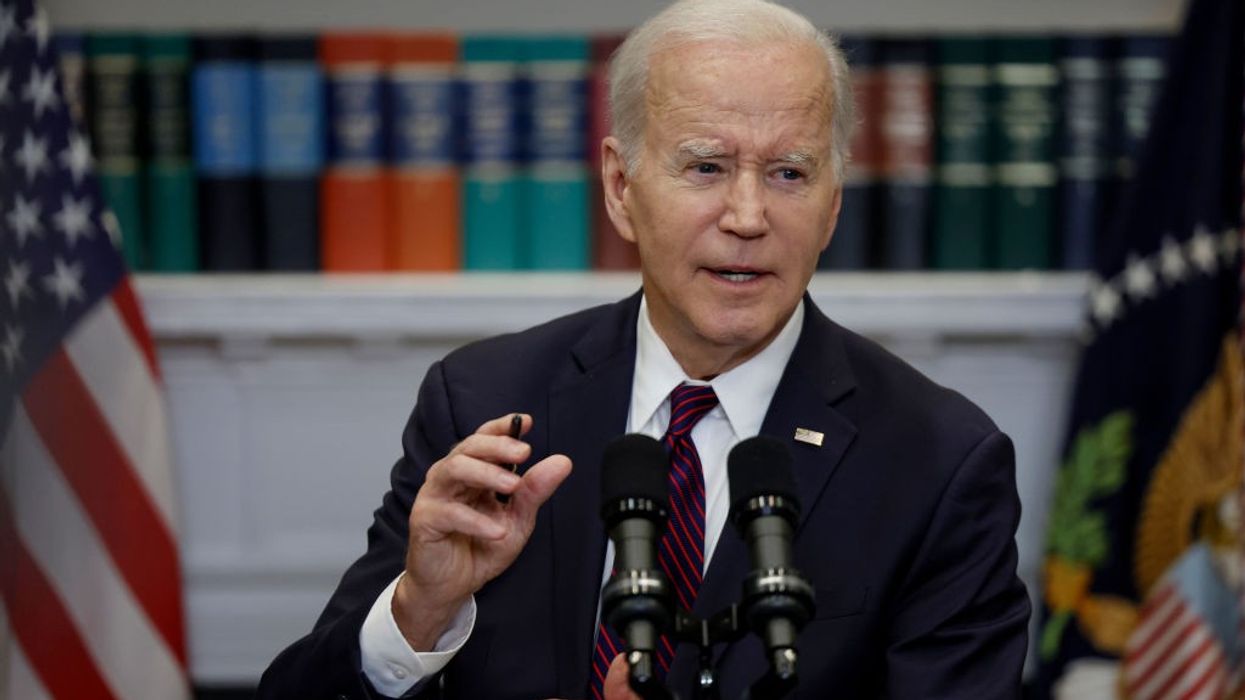
As a U.S. government shutdown yet again looms, a progressive coalition on Thursday warned Democrats against allowing federal spending cuts beyond what was agreed to in the debt ceiling deal that President Joe Biden negotiated with Republicans last year.
"Congressional Republicans aren't hiding the ball. They want to eviscerate funding for programs working families rely on and they are willing to shut down the government to do it," said Groundwork Collaborative executive director Lindsay Owens, a member of the ProsperUS coalition, in a statement.
"There is absolutely no reason for Democrats to participate in their efforts to starve programs that provide food, housing, and childcare for families," Owens argued. "Democrats should walk away from any deal that makes further cuts to the spending levels agreed upon in the bipartisan compromise."
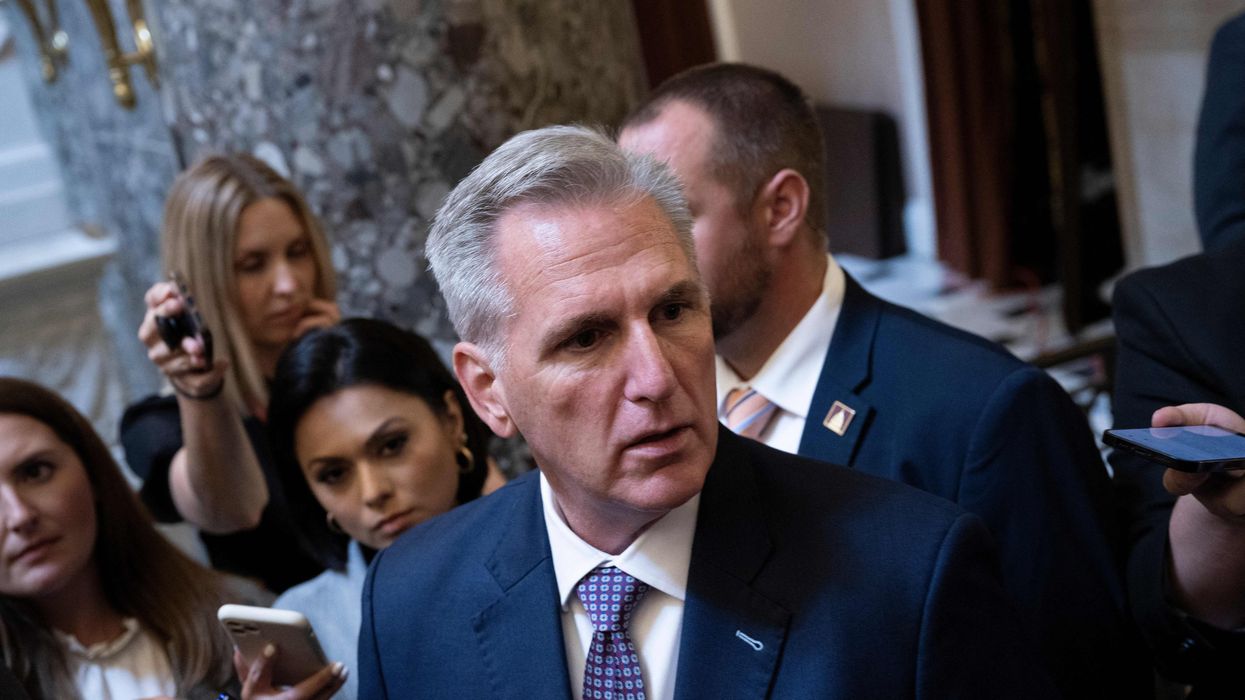
To avoid an economically catastrophic U.S. default last spring, Biden and then-House Speaker Kevin McCarthy (R-Calif.) struck a deal on the so-called Fiscal Responsibility Act, which included two years of spending caps for nondefense discretionary spending.
Since then, government shutdowns were narrowly avoided with temporary measures in September and November. Between those moves, House Republicans also ousted McCarthy—who then resigned from Congress at the end of last year—and eventually replaced him with Rep. Mike Johnson (R-La.), whose rise to power was widely seen as a signal of the far-right's hold on the party.
Neither chamber of Congress will be in session until next week, but Johnson and Senate Majority Leader Chuck Schumer (D-N.Y.) have told reporters that budget talks are underway to potentially reach an agreement before the two government shutdown deadlines—which are midnight on January 19 and February 2, with various agencies set to be affected by one date or the other.
A shutdown could be prevented with an omnibus bill or a continuing resolution. Although Johnson claimed in November that "I'm done with short-term CRs," Forbes noted Tuesday that "full budgets appear unlikely given the tight timeline and limited progress so far. The House and Senate have both passed some appropriations bills, but they are a long way from being reconciled. Specifically, the House has passed seven appropriation bills and the Senate three."
While leading a Republican trip to the border city of Eagle Pass, Texas on Wednesday to demand hardline immigration policies, Johnson said that "we have been working in earnest and in good faith with the Senate and the White House virtually every day through the holidays trying to come to an agreement. Negotiations are still ongoing."
"And let me tell you what our top two priorities are right now," he said. "In summary, we want to get the border closed and secured first, and we want to make sure that we reduce nondefense discretionary spending."
Johnson supports the GOP's Secure the Border Act (H.R. 2)—which Republicans have tied to the budget battle and Biden's supplemental funding request for Ukraine, Israel, and Taiwan—but the speaker "stopped short of embracing his right flank's demand to shut down the government without action," Politico pointed out Wednesday.
However, far-right Republicans, including House Freedom Caucus members, have a clear message. Fox News' Bill Melugin reported from Eagle Pass that GOP Reps. Andy Biggs (Ariz.), Eli Crane (Ariz.), Matt Gaetz (Fla.), Bob Good (Va.), and Matt Rosendale (Mont.) said: "Shut the border down, or we'll shut the government down. We control the money."
The House Freedom Caucus is also a barrier to getting an agreement more broadly. According to NBC News:
A source familiar with the talks, who wasn't authorized to share details, said that they're "moving along" and that it "appears we'll reach agreement soon" on a dollar amount that includes less spending in fiscal year 2024 than was in the budget deal, "without any cuts to defense" spending.
Republicans are targeting cuts to a side pot of $69 billion in domestic nonmilitary funding that was part of the budget deal, alongside a spending "cap" of $1.59 trillion.
"One obstacle to a deal is the House Freedom Caucus, a group of ultraconservative lawmakers who want to wipe away the entire side agreement," the outlet explained. "A Freedom Caucus spokesperson said they still oppose any deal that would add to the $1.59 trillion level and pointed to the group's statement Friday blasting the use of 'disingenuous gimmicks' to secure separate funding for programs."
"There is no room to negotiate when it comes to our communities," said a coalition of 87 groups.
As a potential government shutdown once again looms, a coalition on Wednesday urged U.S. President Joe Biden to reject any spending bills that include "inhumane" cuts to programs that working and low-wealth people rely on every day.
The 87 labor groups, civil society organizations, and policy experts demanded that Biden and congressional Democrats "brush aside the threats of a small group of extremists" to slash crucial spending.
The White House reached a deal with Republicans in Congress in September to keep the government open until November 17, and progressives celebrated the bill that was passed without cuts to housing assistance, the Women, Infants, and Children (WIC) nutrition program, scientific research, and other domestic spending.
But when the 45-day stopgap measure was passed, progressive lawmakers and advocates knew House Republicans, now led by hard-right House Speaker Mike Johnson of Louisiana, still aim to cut social spending.
The coalition, under the name ProsperUS and including groups such as Communications Workers of America, the Friends Committee on National Legislation, and Groundwork Collaborative, thanked Biden for requesting emergency supplemental funding for disaster relief at the Federal Emergency Management Agency, childcare stabilization for one year, and other domestic programs, and credited the administration with spending that has helped keep unemployment low.
"But extremists in Congress are trying to undo these successes," the groups wrote, citing the so-called Fiscal Responsibility Act that was passed in June in exchange for an increase to the nation's arbitrary debt limit. The package included work requirements for the Supplemental Nutrition Assistance Program (SNAP) and other safety net programs and cut Internal Revenue Service (IRS) funding meant to stop tax evasion by wealthy Americans.
Even with those cuts, ProsperUS warned, "House Republicans have signaled they are willing to make even more draconian cuts in a potential stopgap bill."
Extremists in the party have proposed substantial cuts to the U.S. Department of Education, agricultural programs, violence prevention initiatives at the U.S. Department of Justice, and the IRS. Other social spending they aim to reduce includes home heating assistance for low-income families and SNAP, which they would take away from 1.3 million people with low incomes, according to the Center for Budget and Policy Priorities.
"Polls consistently show that Americans oppose cuts to essential programs and support reinvesting our tax dollars back into our communities, whether it's for teachers' salaries, clean drinking water, or ensuring that every child has enough healthy food to succeed," said ProsperUS. "These public investments make our economy more stable, families more secure, and our nation safer."
Jhumpa Bhattacharya, co-president of the Maven Collaborative, which is part of the coalition, said that considering the White House has requested $14 billion in aid for Israel this month, "it's way past time for our policymakers to give programs that help feed, educate, and care for American families the value they deserve."
"If we can find money to fund war and destruction internationally, we should be able to also fund programs that save lives domestically," said Bhattacharya. "All Americans deserve to have a roof over their heads, food on the table, and their children educated and cared for. We should never let extremist, racist ideology take that away from us."
The groups noted that housing assistance, Social Security, and nutrition programs are among the "lifesaving, economy-building" initiatives that have faced "chronic underfunding."
"Cutting critical programs and failing to invest more in our communities undermines our economic progress," said Bilal Baydoun, director of policy and research at Groundwork Collaborative. "The president must reject any proposal that cuts the public investments that pushed unemployment to record lows and restarted our economic engine. There is no room to negotiate when it comes to our communities."
"The proposed continuing resolution backed by Speaker McCarthy is trying to force a path to deep cuts that were rejected in the debt ceiling deal he agreed to with President Biden earlier this year," said one expert.
Two weeks out from a U.S. government shutdown, some House Republicans on Sunday evening reached a potential deal—one which Democrats on Capitol Hill and other critics across the country warn is a dangerous proposal that is "doomed to fail."
The GOP's continuing resolution (CR) would avert a government shutdown on October 1, but the 30-day stopgap funding bill also lacks military assistance for Ukraine and requested U.S. disaster relief, would impose an 8% cut for nondefense spending, and includes immigration riders opposed by congressional Democrats and President Joe Biden.
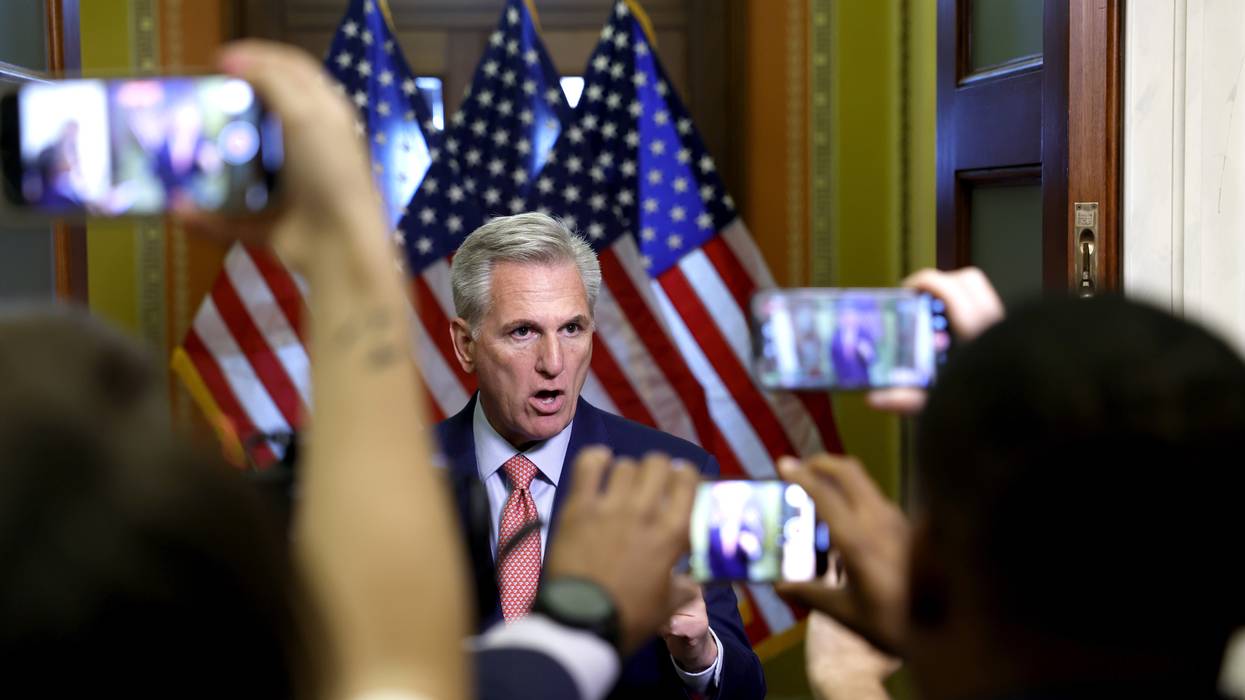
House Speaker Kevin McCarthy (R-Calif.) "was well aware" that the CR wouldn't pass the Democrat-controlled upper chamber "but was hoping House passage would be a show of strength that would force a response from the Senate and potentially shift responsibility for a shutdown across the Rotunda," noted The New York Times.
However, Politico reported Monday, "as details of the deal hashed out by leaders of the Main Street Caucus and House Freedom Caucus trickled out, a bevy of conservative hardliners piped up with various versions of 'Hell No'." At least a dozen far-right House members have voiced their opposition, with some suggesting they won't support any CR.
Congressional Progressive Caucus Chair Pramila Jayapal (D-Wash.) wrote on social media Monday that "we cannot allow Kevin McCarthy and his radical posse to throw yet another tantrum at the expense of poor and working Americans. Period."
The 87-member ProsperUS coalition said in a statement Monday that "these last-ditch efforts to slash critical investments in workers and families are deeply unpopular and doomed to fail. Extreme House GOP members should accept reality: The majority of Congress is with the American people in rejecting hostage-taking and painful and irresponsible cuts."
The coalition also noted that the proposed CR betrays the Fiscal Responsibility Act, the bipartisan debt ceiling deal Biden and McCarthy negotiated earlier this year, as House Republicans nearly forced an economically catastrophic U.S. default.
"The House majority should set aside this latest failed proposal and allow the full House to vote on government funding bills at or above the floor set in the bipartisan debt limit deal," ProsperUS argued. "Anything less would be a clear step backward for our economy and hurt the most vulnerable communities we represent."
In a series of posts on X, formerly Twitter, Center on Budget and Policy Priorities president Sharon Parrott similarly stressed that "the proposed continuing resolution backed by Speaker McCarthy is trying to force a path to deep cuts that were rejected in the debt ceiling deal he agreed to with President Biden earlier this year."
The GOP proposal would slash funding for federal programs—including on childcare, education, environmental protection, food assistance, medical research, and transportation—for 30 days, but that could be dragged out much longer. As Parrott explained, "The nondefense cuts will create some near-term challenges, but more importantly, once a CR is in place, it is likely to be extended until final appropriations bills are complete—which is sure to take more than a month."
"Congress needs to pass a CR that allows the government to continue operations until funding bills are done, addresses near-term needs that cannot wait for final appropriations bills, and doesn't try to renegotiate the debt ceiling agreement," she asserted. "The public deserves a government that stays open to deliver services people count on and policymakers who negotiate agreements in good faith and govern by a theory other than brinkmanship."
In an apparent reference to Sen. Ron Johnson (R-Wis.) blocking a "minibus" packaging three spending bills, Parrott also said that "last week's hiccup notwithstanding, the Senate has demonstrated that reasonable funding bills crafted under the basic framework of the debt ceiling agreement can garner broad bipartisan support."
Senate Appropriations Committee Chair Patty Murray (D-Wash.) on Monday moved to suspend a rule invoked by Johnson—which will require 67 votes later this week.
"This is an effort to move forward on the minibus, and keep the appropriations process on track here in the Senate," said Senate Majority Leader Chuck Schumer (D-N.Y.) on Monday. "It's unfortunate that one member—who does not represent the views of most senators—prevented us from moving forward last week."
"But I believe a majority of senators want to keep moving forward. Our Republican colleagues have asked for regular order and we have worked with them to let that happen," he added, thanking not only Murray but also Susan Collins (R-Maine), the top Republican on the Senate Appropriations Committee, who last week called out Johnson.
Schumer also took aim at Republicans in the lower chamber for "what they called a deal for a CR but in reality reads like a hard-right screed," declaring that the proposal "can be boiled down to two words: slapdash, reckless. Slapdash because it is not a serious proposal for avoiding a shutdown, and reckless because if passed it would cause immense harm to so many priorities that help the American people."
"To his credit, the speaker knows a shutdown would be a terrible outcome. When I spoke with him in late July, we had a very encouraging conversation about the need for bipartisanship to avoid a shutdown. We both recognized that a bipartisan CR would be the way forward," Schumer added. "Two months later, a bipartisan CR is still the only answer for avoiding a government shutdown. I urge Speaker McCarthy, as well as reasonable House Republicans, to resist the 30 or so extremists within their ranks who seem dead-set on provoking a crisis."
"We cannot allow a handful of extremists in the House to force a government shutdown over cruel and unnecessary cuts to essential programs that workers and families rely on."
A coalition of nearly 90 progressive groups and labor organizations condemned U.S. House Republicans on Friday for threatening a destructive government shutdown as they push for steep and unpopular cuts to education, healthcare, food aid, and environmental protection programs.
"We urge Congress to quickly pass appropriations bills—at least at the spending levels agreed upon in the bipartisan Fiscal Responsibility Act of 2023—and to refuse to entertain legislation that guts critical programs so many Americans rely on," the ProsperUS coalition wrote in a letter to Republican and Democratic congressional leaders.
The Fiscal Responsibility Act was the product of weeks of negotiations between the Biden White House and House Republicans, who threatened to force the U.S. government to default on its debt and send the economy into a tailspin if the administration and congressional Democrats didn't agree to massive spending cuts.
The two sides ultimately reached a deal that included two years of caps on nonmilitary federal spending—which are effectively cuts, as spending won't keep up with inflation—as well as new work requirements for older food aid recipients.
But Republicans quickly reneged on the deal by putting forth appropriations bills that would set federal spending well below the agreed-upon levels—heightening the risk of a government shutdown come September 30, the end of the current fiscal year.
The Center for American Progress—a member of the ProsperUS coalition—estimated in an analysis released last week that the House GOP's 12 appropriations bills would "provide $58 billion less for ongoing nondefense programs than the levels agreed to in the debt limit deal," leaving the programs with their lowest funding levels since at least 1962. The House has only passed one of the dozen appropriations bills.
"There is absolutely no reason for deal-breaking and hostage-taking to be rewarded and encouraged by caving to the demands of a small, reckless group of radical members in the House."
In its letter on Friday, ProsperUS warned that House Republicans' proposals "would hurt workers, families, and communities, particularly low-income people of color, by slashing investments in K-12 education, healthcare, lead poisoning prevention, safe drinking water, cancer research, and more."
"They would also empower the wealthiest Americans and biggest corporations by slashing the resources that the Internal Revenue Service needs to go after wealthy tax cheats and recoup billions of dollars in unpaid taxes," the letter continues. "These cuts fly in the face of what the vast majority of people across the country want."
The coalition cites new survey data from Navigator Research showing that U.S. voters overwhelmingly oppose cuts to clean water programs, education, the Social Security Administration, and other areas that Republicans have targeted in recent weeks.
"We urge the House to abandon the dangerous, partisan path it has chosen so far and instead follow the example set by the Senate and pass appropriations bills that, at minimum, adhere to the contours of the recent bipartisan budget deal, invest appropriately in critical national priorities, and can earn bipartisan support," the coalition wrote. "Simply put, there is absolutely no reason for deal-breaking and hostage-taking to be rewarded and encouraged by caving to the demands of a small, reckless group of radical members in the House."
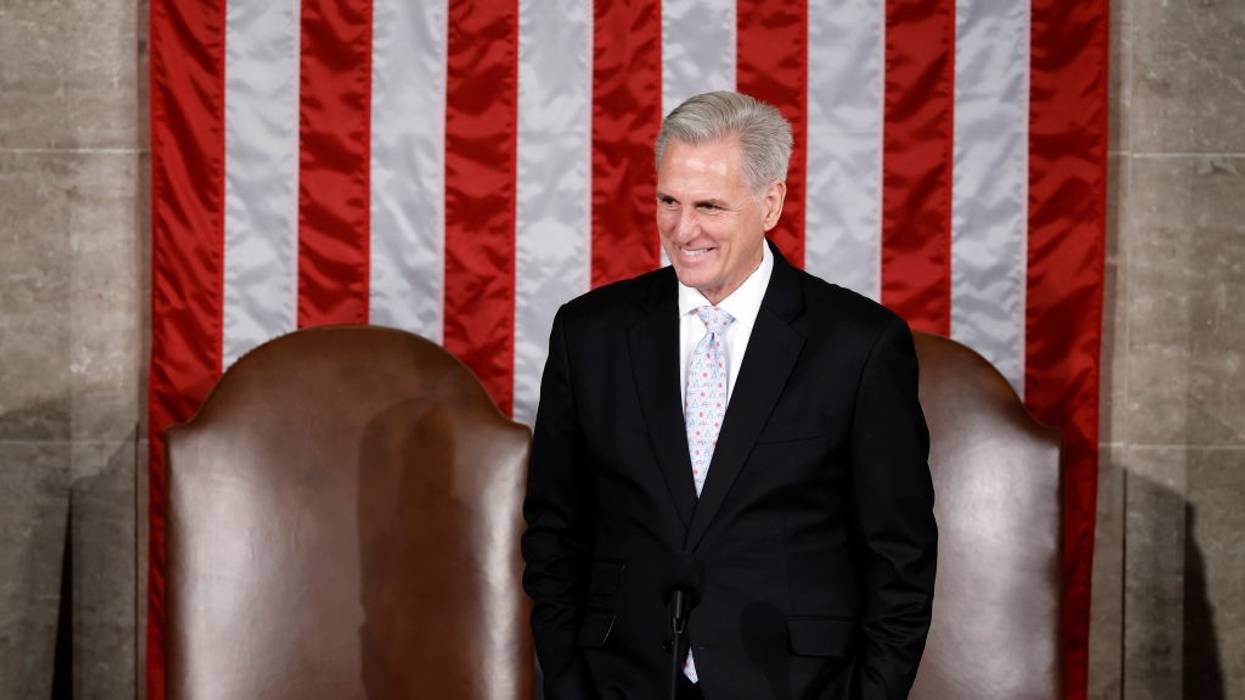
The letter comes a day after House GOP leaders were forced to postpone a procedural vote on the chamber's military appropriations bill. As Reuters reported, the move "may be a sign that Republicans, who hold a narrow 222-212 majority, are not confident they have the votes to pass the measure, as party hardliners push back against Speaker Kevin McCarthy."
A day earlier, McCarthy (R-Calif.) was accused of caving to the most far-right members of his caucus by announcing an impeachment inquiry into President Joe Biden.
McCarthy is also facing pressure from members of the far-right House Freedom Caucus to pursue even larger cuts to federal spending than what's already been proposed, further increasing the likelihood of a shutdown that would risk damage to critical nutrition assistance programs and other services.
"We're gonna have a shutdown," Rep. Ralph Norman (R-S.C.), a Freedom Caucus member, said earlier this week. "It's just a matter of how long."
Bilal Baydoun, director of policy and research at the Groundwork Collaborative—which is part of the ProsperUS coalition—said Friday that "the choice by House Republicans to deprive the American public of food aid, clean water funding, or lifesaving cancer research is not about red ink or 'funding levels.'"
"It's a moral verdict that the majority of communities and vulnerable Americans do not deserve public support," said Baydoun. "We cannot allow a handful of extremists in the House to force a government shutdown over cruel and unnecessary cuts to essential programs that workers and families rely on."

Blasting attempts to jam through "harmful cuts" to food aid as "reckless," Sen. John Fetterman said that "it's time to stop playing games and guarantee the full faith and credit of the United States."
With a possible first-ever U.S. debt default looming closer by the day, progressive lawmakers and groups on Tuesday implored President Joe Biden to stand firm in the face of what some called "Republican budget sabotage" while stepping up warnings about the harmful impacts that potential spending cuts could have on the most vulnerable Americans.
Biden has unnerved progressives in recent days by signaling an openness to "cutting spending" and including more stringent work requirements for recipients of federal safety net programs in order to reach a debt ceiling compromise with Republicans.
"We have made clear publicly and privately that not just work requirements but spending cuts, broad spending cuts, these are off the table," Congressional Progressive Caucus Chair Pramila Jayapal (D-Wash.) told HuffPost on Tuesday as the president prepared to meet with congressional leaders.
Echoing Jayapal, Sen. John Fetterman (D-Pa.) said in a statement that "I cannot in good conscience support a debt ceiling proposal that pushes people into poverty."
"We're already addressing SNAP in a bipartisan way in the Farm Bill," Fetterman added, referring to the Supplemental Nutrition Assistance Program. "But with default looming, jamming through harmful cuts to that program is reckless. It's time to stop playing games and guarantee the full faith and credit of the United States."
A Congressional Budget Office analysis published Tuesday estimated that Republican plans to extend 2017 tax breaks for the wealthy could add nearly $3.5 trillion to the national deficit.
Claire Guzdar, a spokesperson for the progressive ProsperUS coalition, said in a statement Tuesday that "we urge President Biden to oppose any deal that would hurt the most vulnerable people in our economy."
"If House Republicans were serious about reducing deficits and raising revenue, they would stop shielding the wealthy and big corporations from paying their fair share in taxes," Guzdar added.
With the U.S. potentially just two weeks away from a catastrophic default, House Speaker Kevin McCarthy (R-Calif.) "is busy elevating the economic threat level by drawing a red line at one of the more unreasonable and harmful MAGA demands," warned Liz Zelnick, director of the economic and corporate power division at the watchdog Accountable.US.
"McCarthy is busy elevating the economic threat level by drawing a red line at one of the more unreasonable and harmful MAGA demands," she continued.
"Apparently the best the MAGA majority can do on any default deal is to make the lives of low-income seniors, single moms, and veterans more difficult while they protect every penny of the costly Trump tax breaks for billionaires and big corporations that never trickled down to anyone else," Zelnick added.
McCarthy (R-Calif.) said that Tuesday's White House meeting was "a little more productive" than previous talks last week, but that the two sides were still "a long way apart."
As HuffPost notes:
As part of their debt limit bill, which the House approved on a party-line vote last month, Republicans proposed a new limit on Medicaid benefits for unemployed adults without dependents, as well as expanding existing "work requirements" for the Supplemental Nutrition Assistance Program. The bill would limit SNAP benefits to unemployed childless adults up to age 55 instead of limiting them only to those younger than 50, as under current law.
Most households that receive SNAP benefits include minors, people with disabilities, and seniors. The Republican proposal only targets able-bodied adults without dependents.
The White House—which on Tuesday tapped Office of Management and Budget Director Shalanda Young and presidential adviser Steve Ricchetti to lead debt ceiling negotiations going forward—called the meeting "productive and direct."
"The president emphasized that while more work remains on a range of difficult issues, he's optimistic that there is a path to a responsible, bipartisan budget agreement if both sides negotiate in good faith and recognize that neither side will get everything it wants," the White House said in a statement.
According to Government Executive:
Biden and congressional Democrats previously refused to negotiate and demanded a "clean" debt limit increase without conditions. The Senate is not expected to take up the House's bill, and the White House has said Biden would veto it. The Biden administration has warned the Republican plan would force furloughs across federal agencies and, in at least some cases, layoffs of federal workers.
The White House said Tuesday that Biden will still travel to Japan on Wednesday to attend the Group of Seven (G7) summit in Hiroshima. However, the president will curtail what was meant to be a multi-nation trip to Asia and Australia and return to Washington, D.C. on Sunday "to be back for the final negotiations with congressional leaders."
Rep. Jamaal Bowman (D-N.Y.) told HuffPost that he believed Biden shouldn't be negotiating with Republicans at all.
"I'm frustrated that we even have to engage in these conversations because it gives credibility to what Republicans are trying to do, which is pretty much hold the global economy hostage to fake as if they are fiscally responsible when they're not," he said.
Referring to McCarthy, Sen. Elizabeth Warren (D-Mass.) said that she understands that Biden is "in a difficult position with such a man who is willing to inflict so much damage on the nation."
"But we cannot accept cuts that will do real damage to millions of people in this country at the same moment that every billionaire, every billionaire corporation, and every loophole to protect those billionaires and billionaire corporations is carefully protected," she added.
A day after she said that the U.S. government would only be able to pay its bills through the end of the month without a debt limit increase, Treasury Secretary Janet Yellen warned Tuesday that a default would have severe consequences, including a likely recession.
"It is very conceivable that we'd see a number of financial markets break—with worldwide panic triggering margin calls, runs, and fire sales," Yellen said. "Our economy would suddenly find itself in an unprecedented economic and financial storm, and the resulting income shock could lead to a recession that destroys many American jobs and businesses."
"This default would be a crisis for our economy and our democracy, and it threatens to devastate communities across the country."
Ahead of congressional leaders' Tuesday meeting at the White House, economists and other experts have renewed warnings about what the GOP's threatened first-ever U.S. default—or even coming precariously close to it—could mean for the country.
"Any time would be a bad time to default, but right now, in particular, would be pretty catastrophic," said Mike Konczal, director of macroeconomic analysis at the Roosevelt Institute, during a Monday press conference. "The conservative agenda right now is to try to reduce the standard of living for many people without having to have their fingerprints on it."
Openly backed by most Senate Republicans, the House GOP—led by Speaker Kevin McCarthy (R-Calif.)—is pushing for sizable cuts to federal spending, as made clear in the so-called Limit, Save, Grow Act they passed last month. The bill, which Senate Majority Leader Chuck Schumer (D-N.Y.) has called "dead on arrival," would raise the debt ceiling by $1.5 trillion or until March 31, 2024, either way with severe austerity and on the backs of working people.
After months of zero progress on increasing the debt limit and amid estimates from Treasury Secretary Janet Yellen and others that the U.S. government could run out of money to pay its bills as soon as June 1, President Joe Biden is set to host McCarthy, Schumer, House Minority Leader Hakeem Jeffries (D-N.Y.), and Senate Minority Leader Mitch McConnell (R-Ky.) at 4:00 pm ET.
"We cannot allow extremists in the House to make devastating ransom demands in exchange for not cratering our economy."
"President Biden will discuss the urgency of preventing default and stress that Congress must take action to avoid default without conditions," Michael Kikukawa, a White House spokesperson, said in a statement to The Washington Post early Tuesday. "He will discuss how to initiate a separate process to address the budget and FY2024 appropriations."
Despite similar votes under GOP presidents, House Republicans keep refusing to pass a clean bill raising the nation's arbitrary borrowing limit—and the budget blueprint Biden unveiled in March, featuring major social investments paid for with tax hikes targeting rich individuals and corporations, differs dramatically from GOP priorities, leaving few optimistic about the meeting.
Still, Claire Guzdar, a spokesperson for the ProsperUS coalition—which is made up of over 85 progressive groups—declared Tuesday that "Congress and the White House must move quickly to pass a clean debt limit bill before it's too late. We cannot allow extremists in the House to make devastating ransom demands in exchange for not cratering our economy—period."
"The Republican House majority's shameful default bill is completely unworkable. Their plan is full of wildly unpopular and damaging cuts to healthcare, food assistance, clean energy jobs, and more," said Guzdar. "This bill would be devastating for workers and the economy while doing nothing to make corporations and the wealthy pay their fair share. Negotiating on the debt limit should be a nonstarter at any time and rejected immediately as an egregious attempt to push our economy into crisis."
Experts warn that "we can't afford to undo the extraordinary economic progress we've made in the last two years," as Groundwork Collaborative executive director Lindsay Owens said during the Monday media briefing with other economists.
"President Biden should not agree to negotiate a deal on the debt ceiling that increases unemployment or slows growth—not when there [is] a myriad of easier and softer ways to avoid default," she argued. "We're at a 53-year record low in unemployment. It would be an incredible tragedy to undermine the gains that we're finally seeing in the labor market, particularly for marginalized workers."
Similarly stressing that "the labor market is actually starting to produce gains for workers who tend to be the last hired and first fired," Demos chief of programs Angela Hanks said that "the dangerous brinkmanship over the debt ceiling and the extremist position that Speaker McCarthy has staked out really poses a deep threat to that progress and threatens to trigger a recession."
Republicans' proposed spending cuts "will be borne by people who are already marginalized… who cannot afford to have another economic crisis triggered by our politics," Hanks warned. "This default would be a crisis for our economy and our democracy, and it threatens to devastate communities across the country."
"The dangerous brinkmanship over the debt ceiling and the extremist position that Speaker McCarthy has staked out really poses a deep threat to that progress and threatens to trigger a recession."
The high stakes have led some to urge the White House to take unilateral action if GOP lawmakers continue to hold the global economy hostage. Options include minting a platinum coin worth $1 trillion and invoking a section of the 14th Amendment to the U.S. Constitution that states the validity of the national debt "shall not be questioned."
Proponents and opponents of the 14th Amendment route have suggested that Biden invoking it could lead to a consequential decision by the right-wing U.S. Supreme Court. Such a ruling could already be in the works, thanks to a federal lawsuit filed Monday by the National Association of Government Employees, which aims to have the debt limit law declared unconstitutional.
Robert Hockett, a Cornell University law professor of law and Westwood Capital senior counsel who previously worked at the Federal Reserve Bank of New York and the International Monetary Fund, told the Post Monday that "I don't think the Supreme Court is prepared to bring on global financial calamity by finding in favor of the congressional Republicans."
"I think the Supreme Court would expedite review very quickly on this, and for that reason, I don't think we'd see terrible turmoil in the markets," he said. "I think we'd have more turmoil if we have to wait to see if McCarthy and Biden will come to an accommodation."
In a Tuesday opinion piece for The New York Times, Hockett wrote that if the U.S. defaults, "we would see a great tottering—if not worse—of U.S. banking, U.S. financial markets, and the world's capital markets."
Hockett continued:
For one thing, U.S. Treasury securities, valued at over $24 trillion (by far, the largest asset market in the world), are the primary safe asset held in banking, pension fund, mutual fund, and other business portfolios. Our present regional bank crisis involving Silicon Valley Bank and others is occurring in response to a relatively slight, temporary drop in the value of low-yield Treasuries largely because of the Fed's interest rate hikes. An outright default would leave us nostalgic for the comparable placidity of this troubled moment.
We would also probably see a rapid plunge in the value of the dollar worldwide as a global reserve asset. Our currency's value in relation to others' is rooted primarily in global demand for dollar-denominated financial assets, since we have relinquished our primacy as a goods exporter to China. Since Treasury securities are by far the most voluminous asset, their slide would be the dollar’s slide. This would quickly render imports, on which we continue to rely, far more expensive. Inflation could look more like that of Argentina or Russia 20 years ago than that of the present or even the 1970s.
This is to say nothing of our subsequent incapacity to maintain our military bases and other assets abroad and pay thousands of U.S. military personnel.
"Even the serious prospect of U.S. default would quickly raise debt-servicing costs, rendering our deficit larger than it currently is—a consequence dramatically at odds with Republicans' professed concerns about tying the debt ceiling hike to massive budget cuts," he added, advocating an end to the debt limit, which comes from a 1917 law. "Let us now end the absurdity."'
After outlining the impacts of a default—including cuts to Inflation Reduction Act climate provisions that "would be literally catastrophic"—Economic Policy Institute experts Josh Bivens and Samantha Sanders also asserted Tuesday that "all of this clearly calls for abolishing the debt limit to keep irresponsible congressional majorities from holding the nation's economy hostage to its policy preferences in the future."
"But what makes today's debt limit showdown so bad is how normalized it has become—often with the encouragement of too many in D.C. policymaking circles who should know better," the pair added. "If this drive to normalize debt limit brinkmanship does not spark an economic meltdown this time, we all know where it leads next time."
This post has been updated with comment from the Economic Policy Institute.

"My family and I depended on food stamps. So do over 65,000 men, women, and children in the community I serve," said the Pennsylvania Democrat.
House Speaker Kevin McCarthy is reportedly set to unveil a proposal Monday morning that would slash federal food aid for millions of people as part of Republicans' broader plan to avert a debt ceiling crisis of their own making.
But Democratic lawmakers were quick to reject the idea of food assistance cuts, denouncing the Republican leader's proposal as immoral and unacceptable.
"My family and I depended on food stamps. So do over 65,000 men, women, and children in the community I serve," Rep. Summer Lee (D-Pa.) said in a statement Sunday after Politico reported that McCarthy's (R-Calif.) proposal includes an expansion of work requirements for certain Supplemental Nutrition Assistance Program (SNAP) recipients and a call to limit states' ability to waive work mandates—a power that has been used to ensure consistent aid access during times of economic turmoil.
The outlines of McCarthy's proposal resemble legislation introduced last month by Rep. Dusty Johnson (R-S.D.), who suggested expanding SNAP work requirements for adults deemed able-bodied and without dependents. Specifically, Johnson's bill would impose the stringent requirements on such adults between the ages of 18 and 65, up from the current age ceiling of 49.
As the Center on Budget and Policy Priorities (CBPP) notes, the existing SNAP work requirements for able-bodied adults limit benefits "to just three months in any 36-month period when they are not employed or participating in a work or training program for at least 20 hours a week."
Most SNAP recipients already work, and research has shown that work requirements do virtually nothing to boost employment—though they do succeed at adding administrative hurdles that deny people access to benefits.
In a recent analysis, CBPP estimated that Johnson's bill would put 10 million people at risk of losing benefits. The think tank stressed that around 4 million children live in households that the legislation would impact.
In her statement on Sunday, Lee said Congress "cannot allow Republicans' threats to crash our economy if we don't bend to their pro-starvation agenda."
"Stop playing politics with people's lives," Lee added.
Lee's fellow Pennsylvania Democrat, Sen. John Fetterman, also voiced opposition to the Republican speaker's planned attack on food aid:
McCarthy's plan will come weeks after millions of people across the U.S. saw their federal food aid cut—in some cases by hundreds of dollars per month—as emergency allotments for the Covid-19 pandemic were terminated, forcing many to turn to food banks for support amid elevated prices.
The Republican leader is expected to lay out his caucus' proposals in a speech at the New York Stock Exchange on Monday morning.
The GOP plan's prospects are uncertain given Democratic control of the Senate and the White House's stated opposition to attaching more punitive work requirements or other attacks on aid programs to an agreement to raise the debt ceiling. The U.S. is expected to default on its debt this summer if Congress doesn't act.
Senate Republicans have expressed doubts that McCarthy's food aid proposal would be able to pass while still praising "the intent behind the House GOP efforts to expand work requirements for SNAP," as Politico reported.
"I mean, Godspeed. Get what you can," an unnamed Republican Senate aide told Politico. "We're going to live in reality over here."
According to Punchbowl, the broader debt ceiling plan that House Republicans are considering would raise the limit until May 2024—setting up another dangerous standoff in the near future—in exchange for "either a cap on non-defense discretionary spending or a cap on overall discretionary spending after reducing it to FY 2022 levels."
Such caps would require significant cuts to key federal education, healthcare, and housing programs. The U.S. Department of Housing and Urban Development warned last month that the GOP's proposed spending cuts could affect rental assistance for 640,000 families and make it "impossible to stave off mass evictions."
Claire Guzdar, a spokesperson for the ProsperUS coalition, said in a statement that "the House Republican majority's latest proposal is a complete nonstarter."
"We have already lived through the economic devastation of deep cuts like those proposed here," said Guzdar. "Enough is enough. Congress must raise the debt limit without conditions or risk economic catastrophe."

Grassroots progressive groups on Tuesday urged Democratic congressional leaders to ignore Republicans, right-wing members of their own party, and neoliberal economists who are pushing lawmakers to hit the brakes on federal spending as inflation surges to levels not seen in decades.
"Pulling back on effective, popular investments will not solve the problems we face."
In a letter to House Speaker Nancy Pelosi (D-Calif.) and Senate Majority Leader Chuck Schumer (D-N.Y.), the ProsperUS coalition counters that such a "pivot to austerity" would only "make families poorer, increase unemployment, and cancel long-overdue, necessary, and widely-popular investments in our economy."
"Without further action, the economic gains we've made since we passed the American Rescue Plan will be erased," the coalition wrote, referring to a $1.9 trillion coronavirus relief measure that economist Larry Summers--who served as secretary of the Treasury Department during the Clinton years--has attempted to blame for rising inflation.
But ProsperUS--a diverse alliance coalition of labor, faith-based, small business, and policy organizations--argues "that "while rising prices are creating real harm for millions of families, it is increasingly clear that rising prices are the result of corporate greed and supply chain issues, not public spending."
To bolster its case, the coalition points to a recent analysis by the Economic Policy Institute's Josh Bivens, who contends that "the rise in inflation has not been driven by anything that looks like an overheating labor market--instead it has been driven by higher corporate profit margins and supply-chain bottlenecks."
"Policy efforts meant to cool off labor markets--like very rapid and sharp interest rate increases--are likely not necessary to restrain inflationary pressures in the medium term," Bivens concluded. "Other tools that would be less damaging to typical families--like care investments to boost expected growth in labor supply or a temporary excess profits tax--could be effective in tamping down inflation over the next year and should be a bigger part of the policy mix."
ProsperUS sent its letter as President Joe Biden's flagship Build Back Better package continues to languish in the U.S. Senate due largely to opposition from Sen. Joe Manchin (D-W.Va.), who has cited inflation and the national debt to argue against additional federal spending on green energy, child care, and other priorities.
In a statement on Tuesday, ProsperUS spokesperson Claire Guzdar cautioned that "choosing to veer away from investments that succeeded so incredibly in keeping families and the economy afloat over the last two years could derail our economic recovery altogether"--an assessment that economists have echoed, citing the consequences of austerity in the wake of the Great Recession.
"Starving our economy of these long-term investments," added Guzdar, "is penny wise and pound foolish and will lead to slower growth, fewer jobs, less revenue, and larger deficits in the long run."
As a cautionary tale, ProsperUS points to the expiration of the boosted Child Tax Credit at the end of last year. In January--the first month since June 2021 that eligible families didn't receive the monthly benefit--child poverty spiked by 41%, and subsequent survey results showed that Democrats are shedding support among families that have been cut off from the payments.
"Pulling back on effective, popular investments will not solve the problems we face," the coalition's letter reads. "As both polling and recent demonstrations remind us, people across the country are looking to Congress to build on the successes of the last year by delivering on care, climate, and good jobs. We urge you to act now to fulfill the promise of desperately needed federal investments--workers, families, and communities across the country are counting on you."