

SUBSCRIBE TO OUR FREE NEWSLETTER
Daily news & progressive opinion—funded by the people, not the corporations—delivered straight to your inbox.
5
#000000
#FFFFFF
To donate by check, phone, or other method, see our More Ways to Give page.
Daily news & progressive opinion—funded by the people, not the corporations—delivered straight to your inbox.
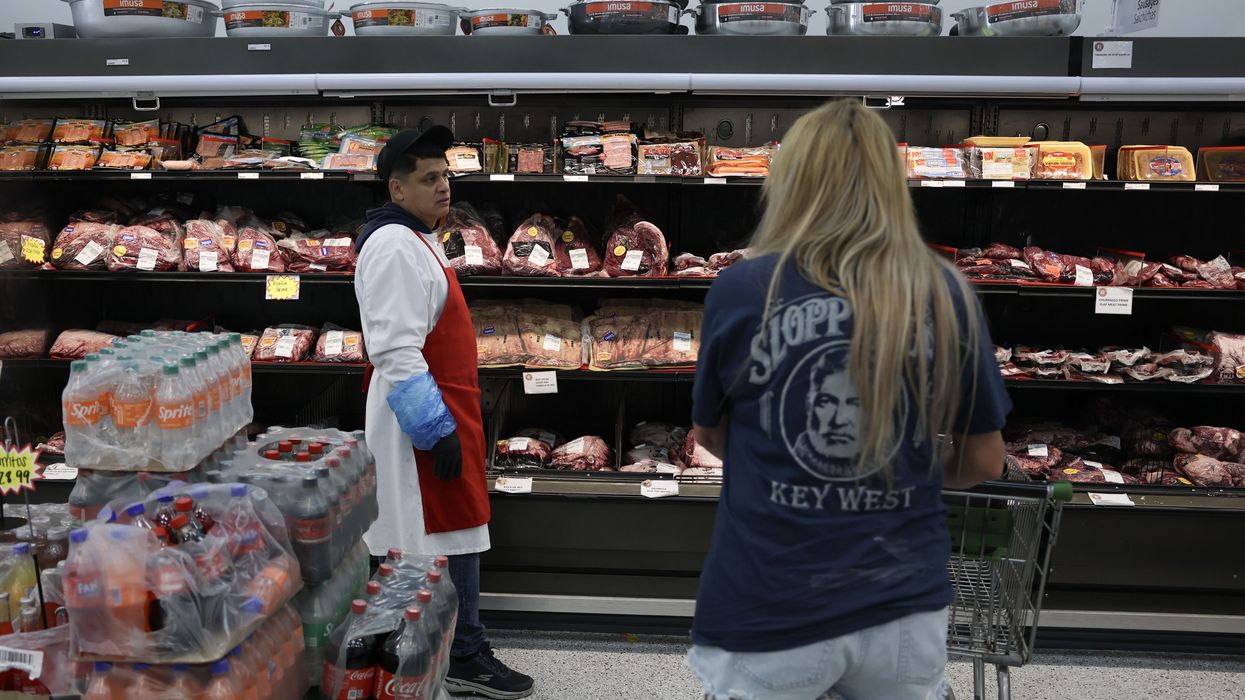
"Get ready for even higher prices for chicken, turkey, and pork," said one antitrust attorney.
US President Donald Trump's Justice Department moved Thursday to settle a Biden-era antitrust lawsuit against the analytics firm Agri Stats, proposing an agreement that critics say would effectively give the stamp of federal approval to meat industry price-fixing schemes.
The Justice Department—now headed by Acting Attorney General Todd Blanche, formerly Trump's personal lawyer—hailed the proposed settlement as a "historic" win over a company whose "business model directly raised the price of chicken, turkey, and pork in local grocery stores across our nation." But critics said the agreement, which must undergo review by a federal judge, would do nothing substantial to rein in price-fixing in the meat industry.
Lee Hepner, senior legal counsel for the American Economic Liberties Project, said the deal "stinks of rotting meat," noting that the settlement was proposed just days before the case was set to go to trial.
"No way does it address the harms," Hepner said of the 79-page settlement. "Agri Stats spent decades hiking prices on over 90% of processed meat in the country. Now they're being told to exercise some discretion going forward."
"It's a gut punch to those who worked on this case for four years thinking it might actually deter these price fixing services from cropping up in every other industry," Hepner added.
The Biden administration brought the antitrust lawsuit against Agri Stats in September 2023, accusing the company and its subsidiary EMI of "collecting, integrating, and distributing competitively sensitive information related to price, cost, and output among competing meat processors."
"While distributing troves of competitively sensitive information among participating processors, Agri Stats withholds its reports from meat purchasers, workers and American consumers, resulting in an information asymmetry that further exacerbates the competitive harm of Agri Stats’ information exchanges," the Biden DOJ said.
"This settlement legalizes meat price-fixing—it just says you have to bring the giant retailers and distributors in on the game."
The Trump Justice Department's settlement would require Agri Stats to "make the vast majority of information" it distributes "available to all interested domestic purchasers on reasonable and non-discriminatory terms," along with several other conditions.
But the settlement states that EMI is not otherwise "prohibited... from continuing to provide EMI Price Reports in substantially the same manner as it did as of April 24, 2026."
Agri Stats noted in a statement Thursday that it "denied all allegations" of illegal conduct and "has admitted no wrongdoing" as part of the settlement. Agri Stats' lead counsel in the case called the deal "a win" for both the company and consumers—a claim that antitrust advocates rejected, calling the agreement blatantly one-sided in the corporation's favor.
"This settlement legalizes meat price-fixing—it just says you have to bring the giant retailers and distributors in on the game," wrote Basel Musharbash, managing attorney at Antimonopoly Counsel. "Get ready for even higher prices for chicken, turkey, and pork."
The proposed Agri Stats settlement is the latest favorable deal that Trump's Justice Department—which is in the grip of lobbyists with ties to the president—has cut with a major corporation accused of illegal price-fixing.
Last November, as Common Dreams reported, the Justice Department agreed to settle a Biden-era lawsuit filed against the real estate software company RealPage, which was accused of an "unlawful scheme to decrease competition among landlords in apartment pricing and to monopolize the market for commercial revenue management software."
RealPage welcomed the settlement, noting that the agreement included "no financial penalties, damages, or findings or admissions of wrongdoing."

Evidence released by California's attorney general shows "blatant price-fixing" by the retail giant, said one consumer advocate.
California's top law enforcement official on Monday released a legal filing packed with evidence that Amazon is leveraging its dominance of the online retail market to artificially drive up prices for a range of goods, fueling a nationwide affordability crisis while padding its profits.
The filing was first submitted to the San Francisco Superior Court in February as part of California Attorney General Rob Bonta's broader legal effort to halt what he described as Amazon's "illegal price-fixing scheme." At the time, the filing was heavily redacted, obscuring specific examples of Amazon conspiring with vendors and competing retailers to drive up prices for apparel, pet treats, fertilizer, and other items. California's case against Amazon is set to go to trial next year.
“The evidence we've uncovered is clear as day: Amazon is working to make your life more unaffordable," Bonta said in a statement. "The company is price-fixing, colluding with vendors and other retailers to raise costs for Americans beyond what the market requires—beyond what is fair."
"Amid a crisis of affordability," Bonta added, "Amazon is illegally working to rake in profits by making sure consumers have nowhere else to turn to for lower prices. We’ll see them in court."
The filing identifies three specific tactics Amazon uses to fix prices—"breaking the price match," "increasing the competitor retail price," and "removing the product"—and offers concrete examples, backed by email evidence, of the company deploying each method.
In one instance from 2021, Amazon alerted Levi’s that Walmart.com had some of the clothing company's pants listed at a price of $25.47-$26.99—which Amazon indicated was too low for its liking. At Amazon's request, Levi's connected with Walmart, which agreed to price one of the identified products at $29.99. Amazon then matched that higher price for Levi's Easy Khaki Classic fit on its platform, locking in the cost increase for online shoppers.
"This should make your blood boil. Amazon is using its market power to coerce major retailers to hike prices," said Lee Hepner, senior counsel at the American Economic Liberties Project. "It is pouring kerosene on an affordability crisis. Forcing price hikes to preserve market share is illegal monopoly maintenance, clear as day."
Bonta's filing also details a case in which Amazon, the vendor GlobalOne, and the pet supplies company Chewy agreed to fix prices on more than 10 pet treat products.
As Bonta's office summarized:
The plan was written in an email between Amazon and its vendor, GlobalOne. For its part, Amazon would raise GlobalOne’s Canine Naturals pet treat prices to get Chewy to follow, then GlobalOne would “reach out to Chewy” to let them know that Amazon was increasing the pricing and “would ask that [Chewy] follow.” In other words, if Chewy agreed, Amazon would increase its retail pricing for the Canine Naturals pet treats and Chewy would match the price increase. The plan materialized. Amazon told GlobalOne that the pricematch override was in place, and to “let Chewy know to update [pricing] immediately.” That same day, GlobalOne confirmed the “ones that went up on Amazon immediately went up on Chewy [happy face emoji] … Overall this looks like it’s working!” The result of Amazon, Chewy and GlobalOne’s price fixing agreement was to increase the retail prices of over ten Canine Naturals pet treat products on Amazon and Chewy.
"The examples above are not outliers and are not exhaustive," Bonta's office stressed in a statement. "They are illustrative of countless interactions—spanning years and product lines—in which Amazon, vendors, and Amazon’s competitors agree to increase and fix the prices of products on other retail websites. As Amazon told one vendor explicitly: 'I am very determined to help you hunt the disrupters in the market.'"
Amazon has been coordinating with vendors and major retailers — including Target, Walmart, Chewy, and Home Depot — to raise prices across the market.
This is a widespread scheme spanning years across markets — and it’s illegal.
We’re fighting to stop it. pic.twitter.com/p77N6P0kV3
— Rob Bonta (@AGRobBonta) April 20, 2026
Stacy Mitchell, co-director of the Institute for Local Self-Reliance, said Bonta's filing shows "blatant price-fixing" by Amazon that is "almost certainly the tip of a much bigger price-fixing operation."
In a piece published at Washington Monthly on the same day that Bonta's largely unredacted filing was released, Mitchell highlighted a Biden-era federal complaint accusing Amazon of using "sophisticated AI-driven pricing systems that draw on torrents of real-time data" to raise prices. (That case, backed by 17 states, is set to go to trial next March.)
"Here’s how it allegedly worked: Amazon’s anti-discounting algorithm immediately matched competitors’ price changes to the penny, but never undercut them," Mitchell wrote. "When a rival offered a discount, Amazon’s algorithm matched it; when rivals raised prices, Amazon’s algorithm followed. This denied competing retailers a crucial tactic for luring customers from Amazon. If other retailers could never offer lower prices, Amazon’s roughly 200 million paying subscribers had little reason to shop elsewhere."
"These allegations point to a novel form of monopoly power: The ability of a dominant platform to use algorithms to lift prices across an entire market," Mitchell added.
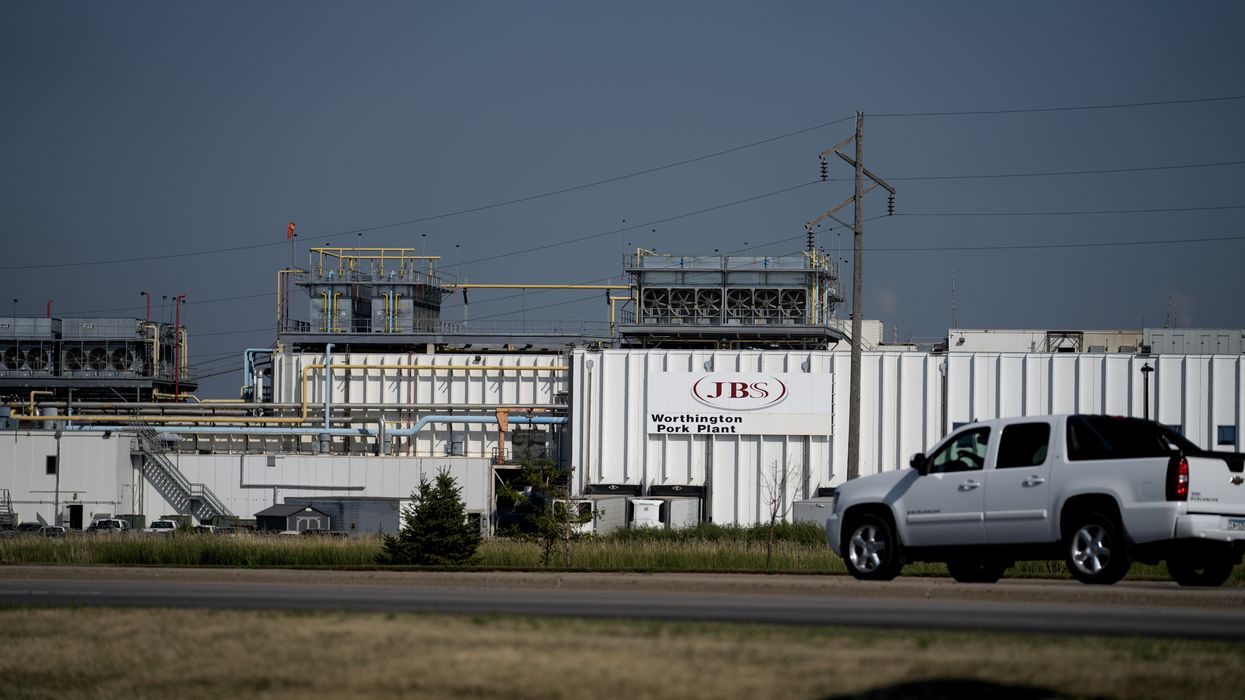
Even in industrial meat production, an industry known for its corruption and poor conditions, JBS stands out for the scope and severity of its violations.
Earlier this summer, JBS, the world’s largest meatpacking corporation, was approved to list on the New York Stock Exchange. The move was celebrated in business media as a milestone of corporate growth and a testament to the leadership of JBS’ 33-year-old CEO of their US division Wesley Batista Filho. But behind the headlines lies a far more troubling story, one of exploitation, impunity, and environmental devastation that should not be ignored.
Turning a blind eye to abuses at a company as large and powerful as JBS is dangerous, with the harms extending far beyond the meatpacking industry. Consumers, advocates, and investors must stop normalizing this behavior. We have the power and the responsibility to demand better.
JBS has built its empire not through innovation or sustainability, but through exploitation. Price fixing, child labor, wage theft, bribery, tax avoidance, deforestation, animal cruelty—these are not isolated scandals. They are core ingredients of JBS’ business model. And while many corporations would work to correct and address their abuses, JBS has repeatedly treated legal penalties and reputational damage as just another cost of doing business.
Even in industrial meat production, an industry known for its corruption and poor conditions, JBS stands out for the scope and severity of its violations. The company recently agreed to pay over $80 million to settle a beef price-fixing lawsuit. Earlier this year, the company was cited for illegally employing migrant children, some as young as 13, on overnight cleaning shifts in its slaughterhouses. Meanwhile, workers across its global operations report being injured, silenced, or discarded when they speak up.
We must stop sending the message that corporations can endanger workers, break the law, and destroy the environment without consequence, as long as they remain profitable.
A recent federal lawsuit filed by Salima Jandali, a former safety trainer at JBS’ Greeley, Colorado plant, alleges that she faced racial and religious harassment, was retaliated against for raising safety concerns, and was pressured to falsify injury reports. Her allegations closely mirror a separate class action lawsuit filed by Black workers at another JBS facility in Pennsylvania who describe enduring racist slurs, being passed over for promotions, and working in unsafe conditions.
Beyond the factory floor, JBS has long been linked to illegal deforestation and environmental destruction in the Amazon, both directly through its supply chains and indirectly through pressure on local ecosystems. The company’s climate footprint is staggering, with greenhouse gas emissions that rival those of entire countries. And yet, instead of reckoning with this impact, JBS continues to expand production and avoid accountability.
In Brazil, where the company is headquartered, the recent passage of most of the so-called “devastation bill” further weakens environmental safeguards and accelerates the damage. Now that President Luiz Inacio Lula da Silva approved the bill, even with some environmental restrictions, it continues to grant free rein to agribusiness giants like JBS that profit from the destruction of forests and the displacement of Indigenous communities.
This is not a case of a few bad actors or isolated scandals. JBS has thrived because of weak enforcement, political influence, and a financial system that rewards short-term gains over long-term responsibility.
Just months before its New York Stock Exchange (NYSE) debut, JBS subsidiary Pilgrim’s Pride made a $5 million donation to the Trump-Vance Inaugural Committee. This is the context in which JBS was allowed to access US capital markets. Even though top proxy advisory firms, including Glass Lewis and Institutional Shareholder Services, urged shareholders to vote against the listing, citing serious governance concerns and lack of transparency, their warnings were ignored, and just this June, JBS began trading on the NYSE.
JBS now generates over $39 billion a year from its US operations alone, profits that are often routed through tax havens in Luxembourg, Malta, and the Netherlands. And when caught breaking the law, JBS often faces only minor consequences that rarely match the scale of the harm.
We must stop sending the message that corporations can endanger workers, break the law, and destroy the environment without consequence, as long as they remain profitable. There is another path forward. Consumers, advocates, and investors need to reject this status quo and demand change.
That starts with consumers actively choosing not to buy JBS products. Investors can divest from JBS and urge their asset managers to do the same. Universities, pension funds, and retirement plans can reexamine whether their portfolios are supporting a company with this kind of track record. At the same time, policymakers must push for stronger corporate accountability, not just in meatpacking, but across industries that harm people and the planet.
JBS should not be rewarded with more money, more access, and more influence. Instead, we must make JBS the example and let it serve as a warning about the costs of putting profit above all else. The future of our food system, our environment, and our communities depends on drawing the line and holding it.
"The idea that employers would leverage surveillance data to exploit a worker in a desperate position and offer them a lower wage is appalling," said Rep. Rashida Tlaib.
A pair of U.S. House progressives have introduced a bill that would stop companies from using artificial intelligence to set prices and wages based on the personal information of customers and workers.
The "Stop AI Price Gouging and Wage Fixing Act," introduced Wednesday by Reps. Greg Casar (D-Texas) and Rashida Tlaib (D-Mich.), is an effort to curb the growing trend of "surveillance-based price setting," where companies use data from customers to determine how much they are willing to pay for a service.
According to a recent report by the Federal Trade Commission, "Retailers frequently use people's personal information to set targeted, tailored prices for goods and services—from a person's location and demographics, down to their mouse movements on a webpage."
Casar said that "giant corporations should not be allowed to jack up your prices or lower your wages using data they got spying on you."
"Whether you know it or not, you may already be getting ripped off by corporations using your personal data to charge you more," he added. "This problem is only going to get worse, and Congress should act before this becomes a full-blown crisis."
Earlier this month, Delta Airlines announced a pilot program using an AI model to charge individual consumers the maximum amount it determines they are willing to pay for plane tickets. Delta has described the change as "a full reengineering of how we price, and how we will be pricing in the future."
Other companies have been accused of using similar forms of "surge pricing."
Uber, which has been suspected of jacking up prices on riders with low cellphone batteries, pioneered the method. Kroger and Walmart have used digital price tags on goods to rapidly change prices, and Kroger also says it is using facial recognition to track customers in order to offer targeted coupons.
Amazon has been accused of setting personalized prices based on customers' location and browsing history, and the Princeton Review has even been caught charging greater amounts for SAT prep services in Asian communities.
Companies also frequently use hidden algorithms based on personal data to pay workers different wages for the same work—an especially pervasive practice in gig economy jobs like rideshare and delivery driving.
A 2024 report by the Roosevelt Institute found that these algorithms were also being applied to nurses, who were offered shifts by an opaque algorithm based on who was willing to work for the lowest pay and a number of other undisclosed factors.
"It is shameful that companies would use our neighbors' sensitive personal information against them to raise prices," said Tlaib. "The idea that employers would leverage surveillance data to exploit a worker in a desperate position and offer them a lower wage is appalling."
The bill still allows companies to change prices for individuals based on certain circumstances. For example, they would still be allowed to offer discounts to certain groups like college students, veterans, and senior citizens or enact loyalty programs.
Likewise, wage-earners would still be allowed to receive overtime pay or bonuses for good work or have their salaries changed to accommodate the cost of living.
The bill instead targets companies that use underhanded and invasive tactics to take advantage of their customers' and employees' desperation.
"This bill draws a clear line in the sand: Companies can offer discounts and fair wages—but not by spying on people," said the consumer advocacy group Public Citizen. "Surveillance-based price gouging and wage setting are exploitative practices that deepen inequality and strip consumers and workers of dignity."
Khan accused the administration of "letting off the hook oil executives caught trying to collude with foreign countries to inflate how much people pay at the pump."
A ban imposed last year by top antitrust enforcer Lina Khan under the Biden administration had stopped two fossil fuel CEOs accused of colluding on oil prices from serving on powerful corporate boards, with the Federal Trade Commission saying at the time that the order would "help ensure American consumers benefit from lower prices at the pump."
But the Trump administration on Thursday signaled no interest in ensuring oil companies won't engage in price-fixing and collusion to boost profits at the expense of working families as the FTC overturned the order that prevented former Pioneer Natural Resources CEO Scott Sheffield and Hess CEO John Hess from serving on the boards of ExxonMobil and Chevron, respectively.
Exxon bought Pioneer for $59.5 billion last year, while Chevron's purchase of Hess was announced Friday after months of arbitration proceedings.
The FTC, now led by pro-corporate Republican Andrew Ferguson, said the commission's complaints about Sheffield's and Hess's communications with the Organization of the Petroleum Exporting Countries (OPEC) did not "plead any antitrust law violation" or show that the acquisitions of the smaller companies and the CEO's positions on the boards "would be anticompetitive."
The decision, said Elyse Schupak, a policy advocate with Public Citizen's Climate Program, "undermines accountability for the CEOs accused of illegally colluding with OPEC to increase profits by driving up energy prices for American families and businesses."
Khan's investigation last year found the Sheffield had communicated with OPEC about slashing oil production and driving up consumer prices while claiming Biden administration policies were to blame, prompting U.S. Rep. Mark Pocan (D-Wis.) to say "jail time should seriously be considered" for the CEO.
"The FTC needs to be doing more to fully rout out Big Oil's anticompetitive behavior. But Ferguson has moved the FTC in the complete opposite direction."
The FTC also found that Hess "stressed the importance of oil market stability and inventory management and encouraged [OPEC] officials to take actions on these issues and speak about them at different events."
One analysis by Matt Stoller of the American Economic Liberties Project found that price-fixing schemes by corporations—not inflation—were to blame for 27% of the higher prices American families faced in 2021.
Khan on Thursday accused President Donald Trump's FTC of "letting off the hook oil executives caught trying to collude with foreign countries to inflate how much people pay at the pump."
The commission's three Republican members voted to allow Sheffield and Hess to serve on the boards—even as one of them, Commissioner Mark Meador, said that OPEC operates "as a de facto cartel" and warned the FTC "should not hesitate to bring enforcement actions against actual collusion."
Ferguson, meanwhile, claimed that banning Sheffield and Hess from the company boards "would damage the FTC's credibility and undermine its mission"—a statement that was denounced by the government watchdog Revolving Door Project.
"Banning a C-suite executive who tried to inflate oil prices isn't the move that 'damages' the FTC's credibility. It's Andrew Ferguson's willingness to absolve such actions that undermines the agency's mission to promote competition," said the group.
"The FTC needs to be doing more to fully rout out Big Oil's anticompetitive behavior," added Revolving Door Project. "But Ferguson has moved the FTC in the complete opposite direction—signaling to corporate America that they won't be held accountable for fleecing the public."
Schupak said that "while the Trump administration feigns interest in bringing energy prices down, its policies—fast-tracking export projects, rolling back regulatory safeguards, and halting enforcement actions for corporate wrongdoing—reveal the administration is far more interested in boosting the profitability of the oil and gas industry than providing Americans any relief or safeguarding them against corruption."

The veto, said one critic, "sends the devastating message that corporate landlords can keep using secret price-fixing algorithms to take extra rent from people who have the least."
Colorado Gov. Jared Polis, a Democrat seen as a potential 2028 presidential contender, used his veto pen on Thursday to block legislation aimed at banning rent-setting algorithms that corporate landlords have used to drive up housing costs across the country.
The bill, known as H.B. 1004, would have prohibited algorithmic software "sold or distributed with the intent that it will be used by two or more landlords in the same market or a related market to set or recommend the amount of rent, level of occupancy, or other commercial term associated with the occupancy of a residential premises."
A report issued late last year by the Biden White House estimated that algorithmic rent-setting cost U.S. renters a combined $3.8 billion in 2023. According to the Biden administration's analysis, Denver tenants have been paying an average of $1,600 more on rent each year because of rent-setting algorithms. The approximate monthly rent for a one-bedroom apartment in the city is $1,600.
Pat Garofalo, director of state and local policy at the American Economic Liberties Project, called Polis' veto "a betrayal" that makes "his priorities clear."
"Governor Polis had a simple choice: stand with working Coloradans or side with corporate landlords using secretive algorithms to allegedly price-fix rents," said Garofalo. "The governor talks a big game about affordability and abundance, but when given the chance to take real action—at no cost to taxpayers—he protected profiteers and let families keep paying a 13th month of rent. It's a betrayal of the values he claims to champion, and Colorado renters won't soon forget it."
"Governor Polis vetoed the most meaningful legislation we had to lower costs for renters."
Sam Gilman, co-founder and president of the Denver-based Community Economic Defense Project, said that the governor's veto "sends the devastating message that corporate landlords can keep using secret price-fixing algorithms to take extra rent from people who have the least."
"At a time when costs keep rising for working people and Republicans in Washington are attacking the social safety net," Gilman added, "Governor Polis vetoed the most meaningful legislation we had to lower costs for renters."
In a letter explaining his veto, Polis voiced agreement with the bill's supporters that "collusion between landlords for purposes of artificially constraining rental supply and increasing costs on renters is wrong." But he warned the bill could have the unintended effect of banning software that helps "efficiently manage residential real estate."
The governor's reasoning did not assuage critics.
"It stood up to corporate power," Gilman said of the legislation. "It promised to bring apartments back online. And it took on economic abuse that steals $1,600 a year from renters."
State Rep. Steven Woodrow (D-2) said it is "unfortunate that someone who claims to care so deeply about saving people money has chosen the interests of large corporate landlords over those of hard-working Coloradans."
State and local legislative efforts to rein in algorithmic rent-setting have gained steam in recent years following an explosive ProPublica story in 2022 detailing RealPage's sale of "software that uses data analytics to suggest daily prices for open units."
"RealPage discourages bargaining with renters and has even recommended that landlords in some cases accept a lower occupancy rate in order to raise rents and make more money," the investigative outlet reported. "One of the algorithm's developers told ProPublica that leasing agents had 'too much empathy' compared to computer-generated pricing. Apartment managers can reject the software's suggestions, but as many as 90% are adopted, according to former RealPage employees."
The Denver Post reported Thursday that the vetoed bill "essentially targeted RealPage," which lobbied aggressively against a similar measure that died in the Colorado Legislature last year.
Polis also used his veto authority on Thursday to tank legislation that would have "limited how much ambulance services can charge for transporting patients and required health insurance companies to cover the cost, minus deductibles or copays," The Colorado Sun reported.

"We cannot allow fossil fuel companies to gouge the American public in concert with OPEC while raking in record profits," said one watchdog, calling for congressional hearings.
Consumer advocates demanded congressional hearings on alleged price fixing by oil giants on Monday after the Federal Trade Commission banned an executive from serving on the board of Chevron, saying he had colluded with international representatives to keep oil prices high.
The FTC said it would prohibit John B. Hess, CEO of the Hess Corporation, from serving on Chevron's Board of Directors as part of Chevron's acquisition of the company, citing Hess' public and private communications "with the past and current secretaries general of the Organization of Petroleum Exporting Countries (OPEC) and an official from Saudi Arabia."
"In these communications, Mr. Hess stressed the importance of oil market stability and inventory management and encouraged these officials to take actions on these issues and speak about them at different events," said the FTC.
The FTC's complaint marks the second time since May that an oil executive has been accused of collusion and price fixing to ensure Americans would continue paying high prices for gas, adding an estimated $500 per year, per vehicle, in fuel costs for the average U.S. household.
Democratic lawmakers have demanded a probe by the Department of Justice into collusion by fossil fuel companies, following the FTC's revelation that Scott Sheffield, founder of Pioneer Natural Resources, communicated with OPEC representatives via text messages, WhatsApp, and in person to encourage high oil prices.
"Americans who are struggling to make ends meet cannot afford any more price fixing collusion between Big Oil CEOs and foreign countries."
Rep. Mark Pocan (D-Wis.) said that "jail time should seriously be considered," highlighting the financial pain Sheffield's actions added to households already struggling to afford groceries, childcare, and other essentials.
The five largest U.S. oil companies have reported more than $250 billion in profits over the last two years.
"We cannot allow fossil fuel companies to gouge the American public in concert with OPEC while raking in record profits," said Tyson Slocum, director of consumer advocacy group Public Citizen's energy program. "The FTC is lifting the veil on an effort, apparently by multiple U.S. oil companies, to communicate with foreign actors to artificially raise energy prices for American families and around the world. We reiterate the call for Congress to immediately hold hearings to investigate illegal conduct by Big Oil."
Government watchdog Accountable.US described the news as "another Big Oil CEO caught colluding with OPEC."
"Americans who are struggling to make ends meet cannot afford any more price fixing collusion between Big Oil CEOs and foreign countries," said Chris Marshall, a spokesperson for the group. "They should be held accountable to make sure consumers pay a fair price at the pump."
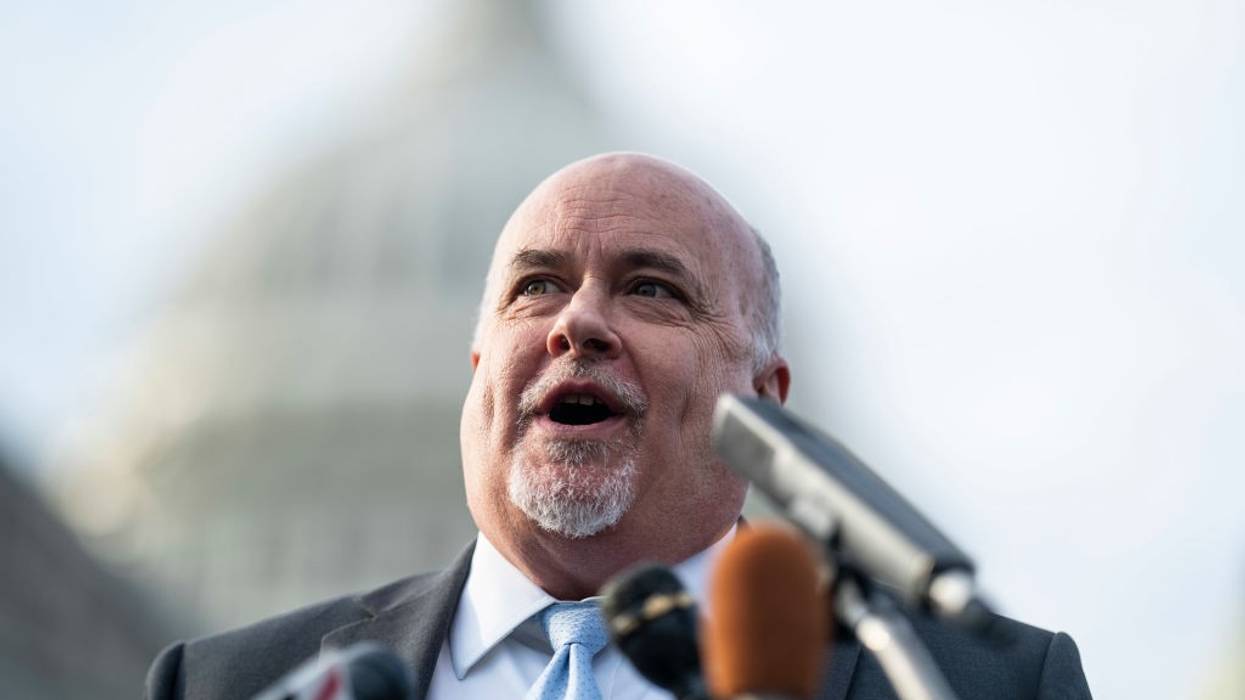
"I would recommend 'Orange Is the New Black,'" said the Wisconsin Democrat. "We're feeling it at the pumps and clearly this kind of behavior, we know, isn't isolated."
As Federal Trade Commission Chair Lina Khan appeared before a U.S. House of Representatives subcommittee on Wednesday, Congressman Mark Pocan highlighted recent FTC action against fossil fuel industry price fixing and urged criminal consequences.
"I just did a little napkin math," Pocan (D-Wis.) said. If collusion led to a $0.40-0.60 increase in the price for a gallon of gas for a vehicle, "for the average person filling their tank, that's $8 or $10 a week," he explained. "That's $500 a year of added cost."
If half of the residents in Pocan's congressional district have a car, "that's $175 million a year," he said. If that figure is applied across all 435 districts, it translates to billions of dollars "that we're being gouged because of someone like this who's trying to price collude," he continued, referring to Scott Sheffield, the founder and longtime CEO of Pioneer Natural Resources.
The FTC earlier this month barred Sheffield from serving on the board of directors of or as an adviser to ExxonMobil, which just acquired Pioneer, due to his alleged collusion with the representatives of the Organization of Petroleum Exporting Countries (OPEC) and OPEC+.
While welcoming the FTC's move, Pocan noted that "if you commit theft, the average sentence... in the United States is 23 months" and the multibillion-dollar profit that fossil fuel giants make from price gouging "is more than grand larceny theft."
🚨BIG: @RepMarkPocan applauds @FTC for revealing an oil price-fixing scheme that cost Americans billions from 2021-2023.
"I just did a little napkin math ... That's $175 million a year—just for people in my district—that we're being gouged." pic.twitter.com/maM8Uk6usY
— American Economic Liberties Project (@econliberties) May 15, 2024
"What else can we do to these oil companies that are ripping us off?" the congressman asked Khan, an appointee of President Joe Biden with "a pro-working families record."
The FTC chair responded that "price fixing and output reduction in a coordinated way can be criminal violations of the antitrust laws. As enforcers we can't specifically speak to what we're referring and what we're not, but as a general matter, it's been a priority of mine to make sure we are referring more criminal candidates to the Justice Department, because we need to make sure companies and executives aren't just treating fines as a cost of doing business and that they take seriously the rule of law."
Referencing a television show that takes place in federal prison, Pocan told her that "I would recommend 'Orange Is the New Black,' if we need to, to make a point. It would be helpful because we're feeling it at the pumps and clearly this kind of behavior, we know, isn't isolated."
Sharing a video of his remarks on social media, Pocan declared: "Unacceptable! A slap on the wrist isn't enough. I think jail time should seriously be considered."
As the American Economic Liberties Project (AELP) pointed out, Pocan wasn't the only lawmaker to reference the recent price fixing revelations during the Wednesday hearing; he was joined by Reps. Matt Cartwright (D-Pa.) and Rosa DeLauro (D-Conn.).
"Finally it's being noticed!" said AELP's Matt Stoller, who has written about the alleged collusion. "Dem House members get it!"
Stoller wasn't alone in welcoming the discussion in Congress—after days of limited attention on the issue among national figures.
"This illegal oil corporation price fixing conspiracy cost Americans as much as $2,100. Per year," said More Perfect Union, sharing a video of Pocan and citing The American Prospect.
The Ohio AFL-CIO stressed: "Greedflation is not inflation. Pass it on."
Noting that Sheffield is getting a $68 million "golden parachute on his way out," former U.S. Labor Secretary Robert Reich argued Wednesday: "That money (and more) should be refunded to the American people. Not sent to his bank account."
Groundwork Collaborative executive director Lindsay Owens similarly said last week that "the Department of Justice should criminally prosecute Scott Sheffield and Congress should tax back the industry's windfall profits and issue every American a refund."

The Groundwork Collaborative's leader also said that "the Department of Justice should criminally prosecute Scott Sheffield," the former Pioneer CEO whom the FTC blocked from joining ExxonMobil's board.
Groundwork Collaborative executive director Lindsay Owens on Tuesday responded to U.S. government allegations of fossil fuel industry price fixing with calls for federal prosecution and congressional action to return money to the American public.
"Americans have been working harder and harder to cover rising energy costs, with the understanding that supply chain snags and geopolitical forces were keeping prices high," Owens said. "Now the Federal Trade Commission has uncovered the real source behind the price at the pump: collusion."
"The Department of Justice should criminally prosecute Scott Sheffield and Congress should tax back the industry's windfall profits and issue every American a refund," she added, referring to Pioneer Natural Resources' founder and longtime CEO.
Owens' statement came after members of the Federal Trade Commission (FTC) declined to contest ExxonMobil's controversial $64.5 billion acquisition of Pioneer—which was completed Friday—but approved a consent order barring Sheffield from serving on Exxon's board of directors or as an adviser to the fossil fuel giant.
"This complaint is a wake-up call about the dangerous consolidation of Big Oil's economic and political power."
The FTC voted 3-2 to accept the order and place related documents on the record for public comment. Citing communications including in-person meetings, public statements, text messages, and WhatsApp conversations, a commission complaint accuses Sheffield of trying to collude with the representatives of the Organization of Petroleum Exporting Countries (OPEC) and OPEC+.
"Mr. Sheffield's past conduct makes it crystal clear that he should be nowhere near Exxon's boardroom. American consumers shouldn't pay unfair prices at the pump simply to pad a corporate executive's pocketbook," said Kyle Mach, deputy director of the FTC's Bureau of Competition. "The FTC will remain vigilant in its enforcement efforts to protect competition in these vital markets."
Pioneer told Fortune that the company and its founder "believe that the FTC's complaint reflects a fundamental misunderstanding of the U.S. and global oil markets and misreads the nature and intent of Mr. Sheffield's actions," but neither party would take "any steps to prevent the merger from closing."
ExxonMobil "learned of the FTC's allegations regarding Sheffield from the agency and said in a statement that they are 'entirely inconsistent with how we do business,'" according to Fortune. "Exxon has agreed to the terms of the consent decree," which also "prohibits the oil giant from appointing any Pioneer employee or director to its board for five years."
Still, since the FTC's allegations were initially reported by The Wall Street Journal last week and then confirmed with the complaint's release, demands for additional action by the U.S. Department of Justice (DOJ) and Congress have mounted.
Cassidy DiPaola, Fossil Free Media's director of communications, on Monday called the complaint "explosive" and said that Democrats "must respond with bold action to hold this rogue industry accountable," including:
"But accountability is just the first step. This complaint is a wake-up call about the dangerous consolidation of Big Oil's economic and political power. We can't let them use megamergers to entrench their control and crush clean energy competition," she stressed. "Ultimately, this is about the future we choose: One where we remain at the mercy of Big Oil's greed and destruction, or one where clean, democratically controlled energy powers our communities. It's time to make the right choice."
In response to the Journal's reporting, Tyson Slocum, director of Public Citizen's Energy Program, similarly said that "Congress must immediately hold hearings on Big Oil's alleged collusion with OPEC to raise gasoline prices for Americans."
"Congress must not only investigate Pioneer's alleged role in conspiring with OPEC, but whether there existed a broader conspiracy by U.S. oil companies to collude with OPEC nations," he argued. "Big Oil must be held accountable for any conspiracy by or among American oil companies and OPEC members."
The reporting was notably published on the same day as the U.S. Senate Budget Committee's hearing about a nearly three-year investigation into fossil fuel companies and trade groups' decadeslong "campaign of deception and distraction," which has evolved from denying the planet-heating impact of their products to pretending to be part of the solution to the climate emergency.
"The joint report and documents we discovered show how, time and again, the biggest oil and gas corporations say one thing for the purposes of public consumption but do something completely different to protect their profits," Rep. Jamie Raskin (D-Md.), the ranking member on the House Oversight Committee, testified during the hearing. "Company officials will admit the terrifying reality of their business model behind closed doors but say something entirely different, false, and soothing to the public."