

SUBSCRIBE TO OUR FREE NEWSLETTER
Daily news & progressive opinion—funded by the people, not the corporations—delivered straight to your inbox.
5
#000000
#FFFFFF
To donate by check, phone, or other method, see our More Ways to Give page.
Daily news & progressive opinion—funded by the people, not the corporations—delivered straight to your inbox.
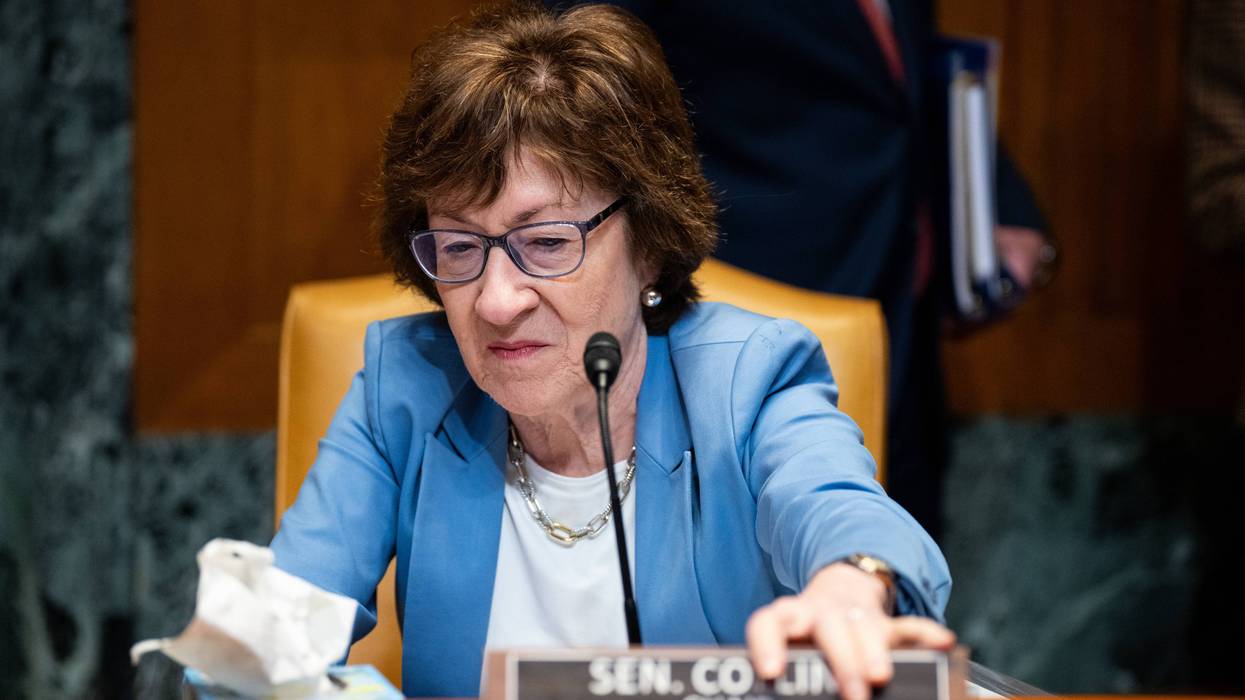
"Susan Collins cares far more about protecting bank executives’ millions than protecting the rest of us from BS overdraft fees," said Platner's campaign manager.
Graham Platner's campaign is accusing Sen. Susan Collins of siding with banking interests after she joined Senate Republicans in blocking a Democratic measure to protect consumers from unexpected overdraft fees.
On Wednesday, the GOP voted largely along party lines against a set of Democratic resolutions aiming to restore Consumer Financial Protection Bureau (CFPB) policies killed by the Trump administration.
In what its acting director, Russell Vought, has described as an effort to effectively dismantle the bureau, which has been credited with delivering more than $21 billion in consumer relief since its creation, he has rescinded 67 policies that protected Americans from junk fees, medical debt, lending discrimination, and other financial abuses.
One resolution voted down Wednesday would have restored a scrapped CFPB guidance against debt collectors hounding consumers over false or inflated medical debts. Another would have reaffirmed that the bureau can scrutinize financial companies for predatory credit practices aimed at military families.
These Democratic resolutions were not expected to pass in a Republican-controlled Senate, but were instead meant to force Republicans to put themselves on the record as standing against consumer interests.
As President Donald Trump takes a beating from voters on the economy, the votes will serve as ammunition as Democrats run with the message that the GOP has "abandoned consumers and is making life more expensive for them," as the CFPB's architect, Sen. Elizabeth Warren (D-Mass), said on Wednesday.
Platner is already deploying that ammunition in one of November's marquee races, hammering Collins (R-Maine) for voting with the GOP against restoring a guidance enacted by the Biden administration that required banks to obtain customers' consent before charging overdraft fees for ATM and one-time debit card transactions.
"Last night, Susan Collins voted once again to make it easier for big banks to hit Maine families with predatory overdraft fees," his campaign said in an email on Thursday. "Her vote to block even a debate on restoring basic consumer protections was just the latest reminder of where Collins' real loyalties lie."
"There is no legitimate policy rationale for voting against basic consumer protections on overdraft fees,” said Platner's campaign manager, Ben Chin. “But Susan Collins cares far more about protecting bank executives’ millions than protecting the rest of us from BS overdraft fees. This vote is yet another example of this deeply unfortunate reality.”
According to data from OpenSecrets, Collins has received nearly $1.8 million this cycle in contributions from the financial sector, including more than $570,000 from private equity and investment firms, which the Platner campaign said were "among the most predatory actors in the American economy."
She's also received more than $44,000 from commercial banks and holding companies that have a particular interest in her stance on overdraft fees.
The Pine Tree Results PAC, which has thrown about $12.7 million behind Collins, likewise got nearly a third of its funding from figures in the financial sector, particularly in private equity and hedge funds with a broader interest in neutering the CFPB.
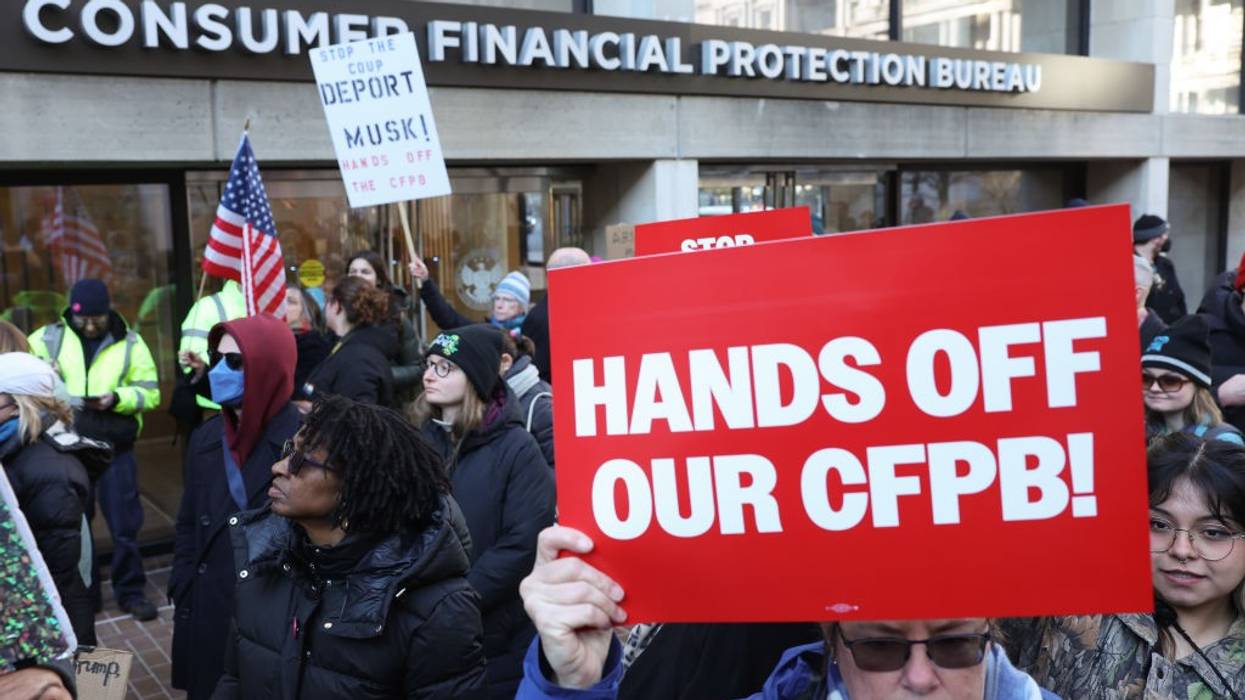
Congress can’t allow the White House to eliminate an agency that’s helped millions of Americans, with billions of dollars returned to them by scams, fraudsters, and megabanks that prey on low-income citizens.
Over the past year, the Trump administration has sought to gut the Consumer Financial Protection Bureau through cuts and layoffs, and by hamstringing its enforcement powers, claiming the agency is hurting large banks through overregulation. Acting CFPB Director Russ Vought has sought to reduce the agency's staff by 90% and to freeze spending since February.
A group of 21 states, plus the District of Columbia, sued the Trump administration in December to stop it from defunding the CFPB. The administration responded by telling the court that the government is legally barred from seeking new funding from the Federal Reserve, the bureau’s primary source of money, alluding to the fact that the agency will eventually go broke later this year. The next step in the case will be the DC Court of Appeals to hear arguments in late February.
The CFPB's enforcement actions, like the 22 pending cases against banks, highlight its vital role in safeguarding consumers from unfair practices, which the current threats jeopardize.
So, what does this mean for the country? The CFPB's weakening could leave consumers vulnerable to predatory practices, unfair fees, and fraud, risking their financial stability.
The Biden administration's pressure on banks and financial institutions on the issue led them to agree to refund more than $240 million to customers, a win secured by actual, formal regulation. Trump and Vought have rolled that back, too.
The CFPB’s Small Dollar Rule was created to curb abusive payday lending practices, especially repeated debit attempts that drain bank accounts and trigger cascading overdraft and Non-Sufficient Funds (NSF) fees. That goal is sound and worthy. The problem is not the rule’s intent, but how it operates alongside bank fee structures and in a financial marketplace devoid of smart, progressive-minded credit options.
The small dollar rule makes automatic repayments—which help keep the cost of borrowing to the bare minimum—incredibly tricky to execute. After two consecutive failed payment attempts, covered lenders generally cannot try again unless the borrower specifically authorizes another attempt, which can leave payments stalled when ordinary life disruptions intervene. Regulators have warned that charging multiple NSF fees tied to re-presented transactions can harm consumers. This is true not just because a single missed payment can still trigger NSF fee collection and financial harm, undermining a rule meant to protect borrowers acting in good faith. It’s also because lenders are now further limiting credit to the most high-risk borrowers, including gig economy workers, who are also those most in need of emergency credit, forcing them to borrow via ultra-expensive bank and credit union overdrafts and NSFs. And when payments are not made, inevitably, borrowers’ personal credit ratings take a hit. Of course, this affects poor people and those with bad credit harder than anyone else.
Trump and Vought's shuttering of the CFPB without fixing this situation, including by pushing banks hard to provide credit to consumers at lower cost and even by standing up a viable alternative to current credit options through something like Postal Banking, would make the problem of high-interest debt worse for Americans. Moreover, because Trump and Vought refuse to act against extortionate overdraft and NSF fees, as the Biden administration did, they’re exposing consumers to high-cost debt, where they effectively borrow from the bank, too. The Biden administration's pressure on banks and financial institutions on the issue led them to agree to refund more than $240 million to customers, a win secured by actual, formal regulation. Trump and Vought have rolled that back, too.
The CFPB has largely helped people when they have problems with a financial institution, product, or transaction by allowing customers to submit complaints, which the agency then works on their behalf. Since its inception, 98% of the 9 million total complaints have received “timely responses” from the institutions or companies to which customers reported them to the CFPB. Of all the complaints, almost 400,000 were submitted by US military members, and nearly 200,000 were submitted by seniors.
The results have been staggering. CFPB data as of December, 2024 shows a whopping $21 billion has been returned to more than 205 million Americans who were financially harmed by institutions. In addition, over $5 billion in civil penalties have been imposed on guilty banks and individuals.
Congress can’t allow the White House to eliminate an agency that’s helped millions of Americans, with billions of dollars returned to them by scams, fraudsters, and megabanks that prey on low-income citizens. And if the Trump administration is determined to do so, it’s time for congressional Democrats to focus on developing credit alternatives that can allow consumers to escape some of the financial madness.
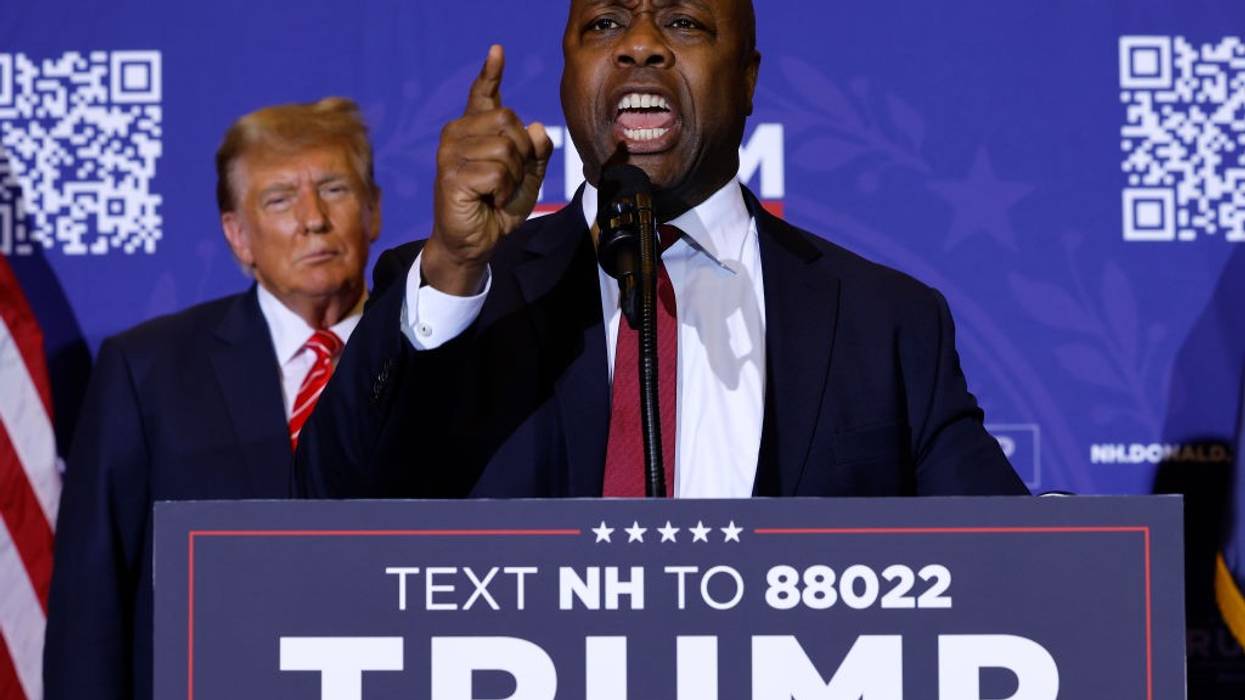
"This is just the latest broken promise from Republicans, who have used their short time in power to already cater to special interests over hardworking Americans," said one watchdog leader.
A U.S. watchdog group on Tuesday slammed Republicans in Congress for trying to kill the Consumer Financial Protection Bureau's overdraft rule as U.S. President Donald Trump and billionaire Elon Musk target the CFPB as a whole.
The Accountable.US statement came in response to Senate Banking Committee Chair Tim Scott (R-S.C.) and House Financial Services Committee Chair French Hill (R-Ark.) recently introducing a Congressional Review Act (CRA) resolution to overturn the rule that capped most overdraft fees at $5, which was finalized in December, near the end of the former President Joe Biden's term.
"Overdraft fees affect a huge portion of American families with 17% of households with checking accounts paying overdraft or [nonsufficient funds] fees in 2023," Accountable.US noted. "This action would open the door for $35 overdraft fees—a decision that would cost American households an average of $225 each year."
The watchdog's executive director, Tony Carrk, declared that "undoing the CFPB's overdraft fee rule is a gift to big banks and a gut punch to the wallets of millions of Americans across the country."
"Deceitful and excessive overdraft fees cost Americans billions of dollars every year, but the Trump administration and Republicans in Congress don't seem to care any longer about lowering costs for Americans now that they're in charge," he continued. "This is just the latest broken promise from Republicans, who have used their short time in power to already cater to special interests over hardworking Americans."
When the Republican chairs introduced their CRA resolution last week, Scott called the Biden-era CFPB rule an example of the "pursuit of political headlines over sound policies," and Hill described it "midnight rulemaking" and "another form of government price controls that hurt consumers who deserve financial protections and greater choice."
Meanwhile, when the CFPB finalized the rule, the agency said that it "took action to close an outdated overdraft loophole that exempted overdraft loans from lending laws." At the time, the bureau was still directed by Biden appointee Rohit Chopra, who highlighted that large banks' exploitation of the loophole had "drained billions of dollars from Americans' deposit accounts."
The rule "was scheduled to become effective in October," but "because of acting Director Russ Vought's unlawful order stalling all CFPB work, the effective date has been suspended," The American Prospect reported Monday. "If Congress passes the CRA resolution, the overdraft rule could not come back in any 'substantially similar' form. So it matters if congressional Republicans decide to support allowing banks to impose additional junk fees worth billions of dollars."
The outlet also pointed out that "because CRA resolutions cannot be stopped by a filibuster, they represent some of the most likely legislative actions of the early Trump term," given Republicans' narrow majorities in Congress."
It's not just the rule that's in jeopardy; the entire agency is at risk. Trump and Musk, the leader of the president's Department of Government Efficiency (DOGE)—though perhaps not on paper—are working to gut the federal workforce and slash spending, and they have the CFPB in their crosshairs.
An agreement reached Friday in federal court halted mass firings at the CFPB and barred the bureau and its temporary leader, Vought—who also leads the Office of Management and Budget—from purging data or defunding the agency while the case moves forward. However, Trump and Musk are expected to continue their effort.
"The same billionaires trying to kill the CFPB are the ones who profit off predatory loans, sky-high fees, and financial scams that target young people," Corryn G. Freeman, executive director of the youth-focused Future Coalition, said Monday. "The CFPB should be strengthened, not eliminated. If Musk and his allies succeed in gutting this agency, it will be open season on young consumers with no one left to protect them."
One advocate called the CFPB's new rule "a major milestone in its effort to level the playing field between regular people and big banks."
The Consumer Financial Protection Bureau, one of President-elect Donald Trump's top expected targets as he plans to dismantle parts of the federal government after taking office in January, announced on Thursday its latest action aimed at saving households across the U.S. hundreds of dollars in fees each year.
The agency issued a final rule to close a 55-year-old loophole that has allowed big banks to collect billions of dollars in overdraft fees from consumers each year,
The rule makes significant updates to federal regulations for financial institutions' overdraft fees, ordering banks with more than $10 billion in assets to choose between several options:
The final rule is expected to save Americans $5 billion annually in overdraft fees, or about $225 per household that pays overdraft fees.
Adam Rust, director of financial services at the Consumer Federation of America, called the rule "a major milestone" in the CFPB's efforts "to level the playing field between regular people and big banks."
"No one should have to pick between paying a junk overdraft fee or buying groceries," said Rust. "This rule gives banks a choice: they can charge a reasonable fee that does not exploit their customers, or they can treat these loan products as an extension of credit and comply with existing lending laws."
The rule is set to go into effect next October, but the incoming Trump administration could put its implementation in jeopardy. Trump has named billionaire Tesla CEO Elon Musk to co-lead the Department of Government Efficiency, an advisory body he hopes to create. Musk has signaled that he wants to "delete" the CFPB, echoing a proposal within the right-wing policy agenda Project 2025, which was co-authored by many officials from the first Trump term.
"The CFPB is cracking down on these excessive junk fees and requiring big banks to come clean about the interest rate they're charging on overdraft loans."
"It is critical that incoming and returning members of Congress and President-elect Trump side with voters struggling in this economy and support the CFPB's overdraft rule," said Lauren Saunders, associate director at the National Consumer Law Center (NCLC). "This rule is an example of the CFPB's hard work for everyday Americans."
In recent decades, banks have used overdraft fees as profit drivers which increase consumer costs by billions of dollars every year while causing tens of millions to lose access to banking services and face negative credit reports that can harm their financial futures.
The Federal Reserve Board exempted banks from Truth in Lending Act protections in 1969, allowing them to charge overdraft fees without disclosing their terms to consumers.
"For far too long, the largest banks have exploited a legal loophole that has drained billions of dollars from Americans' deposit accounts," said CFPB Director Rohit Chopra. "The CFPB is cracking down on these excessive junk fees and requiring big banks to come clean about the interest rate they're charging on overdraft loans."
Government watchdog Accountable.US credited the CFPB with cracking down on overdraft fees despite aggressive campaigning against the action by Wall Street, which has claimed the fees have benefits for American families.
Accountable.US noted that Republican Reps. Patrick McHenry of North Carolina and Andy Barr of Kentucky have appeared to lift their criticisms of the rule straight from industry talking points, claiming that reforming overdraft fee rules would "limit consumer choice, stifle innovation, and ultimately raise the cost of banking for all consumers."
Similarly, in April Barr claimed at a hearing that "the vast majority of Americans" believe credit card late fees are legitimate after the Biden administration unveiled a rule capping the fees at $8.
"Americans pay billions in overdraft fees every year, but the CFPB's final rule is putting an end to the $35 surprise fee," said Liz Zelnick, director of the Economic Security and Corporate Power Program at Accountable.US. "Despite efforts to block the rule and protect petty profits by big bank CEOs and lobbyists, the Biden administration's initiative will protect our wallets from an exploitative profit-maximizing tactic."
The new overdraft fee rule follows a $95 million enforcement action against Navy Federal Credit Union for illegal surprise overdraft fees and similar actions against Wells Fargo, Regions Bank, and Atlantic Union.
Consumers have saved $6 billion annually through the CFPB's initiative to curb junk fees, which has led multiple banks to reduce or eliminate their fees.
"Big banks that charge high fees for overdrafts are not providing a courtesy to consumers—it's a form of predatory lending that exacerbates wealth disparities and racial inequalities," said Carla Sanchez-Adams, senior attorney at NCLC. "The CFPB's overdraft rule ensures that the most vulnerable consumers are protected from big banks trying to pad their profits with junk fees."

When banks hit people with an overdraft fee, they end up further in the hole—to the benefit of the bank.
Poverty is expensive in this country.
Few things illustrate that truism like overdraft charges and late fees, which are often little more than outrageous penalties for not having enough money. But there are plans in the works at the Consumer Financial Protection Bureau (CFPB) to rein in these abusive practices.
Overdraft fees occur when a customer attempts to withdraw more money from their account than is available, but the banking institution covers the transaction—for a fee. The CFPB is proposing rules to close loopholes in rules on overdraft fees by establishing a benchmark that banks cannot exceed.
Consumers will appreciate strong action on these issues. And consumers vote!
Over a quarter of Americans live in a household that was charged an overdraft fee in the past year, but especially harmed are those who have the least to begin with. These overdraft fees are structured to prey on consumers already in a financially precarious position. The impact skews toward low-income households and people of color. Young people are also more likely to be affected.
When banks hit people with an overdraft fee, they end up further in the hole—to the benefit of the bank. “Overdraft fees are not so much a useful service as they are a lucrative profit center underwritten by the most economically vulnerable consumers,” said Kimberly Fountain, consumer field manager at Americans for Financial Reform.
Overdraft fees affect credit scores and can even lead to account closures, leaving people without access to banking services altogether. More than any other group, Black Americans tend to be underbanked or unbanked.
As with overdraft fees, banks foist the burden of late fees on people living paycheck to paycheck, low to moderate income consumers, and people of color.
More than 80% of adults have at least one credit card—and these cards are full of junk fees. Late fees alone cost consumers $14 billion a year—and low-income earners pay about twice as much in fees as higher-income earners.
These late fees are not based on any sort of need for the bank. The CFPB found that banks take a fee almost five times greater than the cost to the bank of a late payment.
These practices also reinforce the racial wealth gap. Data shows that banks have often charged those living in neighborhoods with populations of color a higher interest rate. And places with a higher Black or Hispanic population are charged on average more than $25 in late fees, while in places where the Black population is nearly zero, people pay less than $20.
In a new consumer protection action, the CFPB is limiting the amount companies can charge for a late fee to a more reasonable $8.
Fee reforms work. In 2009, Congress passed the Credit CARD Act, which required banks to give consumers enough time to pay their bills, eliminated retroactive rate increases, and curbed excessive marketing to young adults. Careful study of the CARD Act found that the market became more transparent and many fees went away. By 2013, the law was saving Americans $20.8 billion a year.
Consumers will appreciate strong action on these issues. And consumers vote! About 82% of U.S. adults support lowering the maximum late fee, 68% support the 15-day grace period, and 84% support requiring companies to remind consumers of late fees.
The CFPB should keep at it. Making ends meet in this country is hard enough without being charged for coming up short.
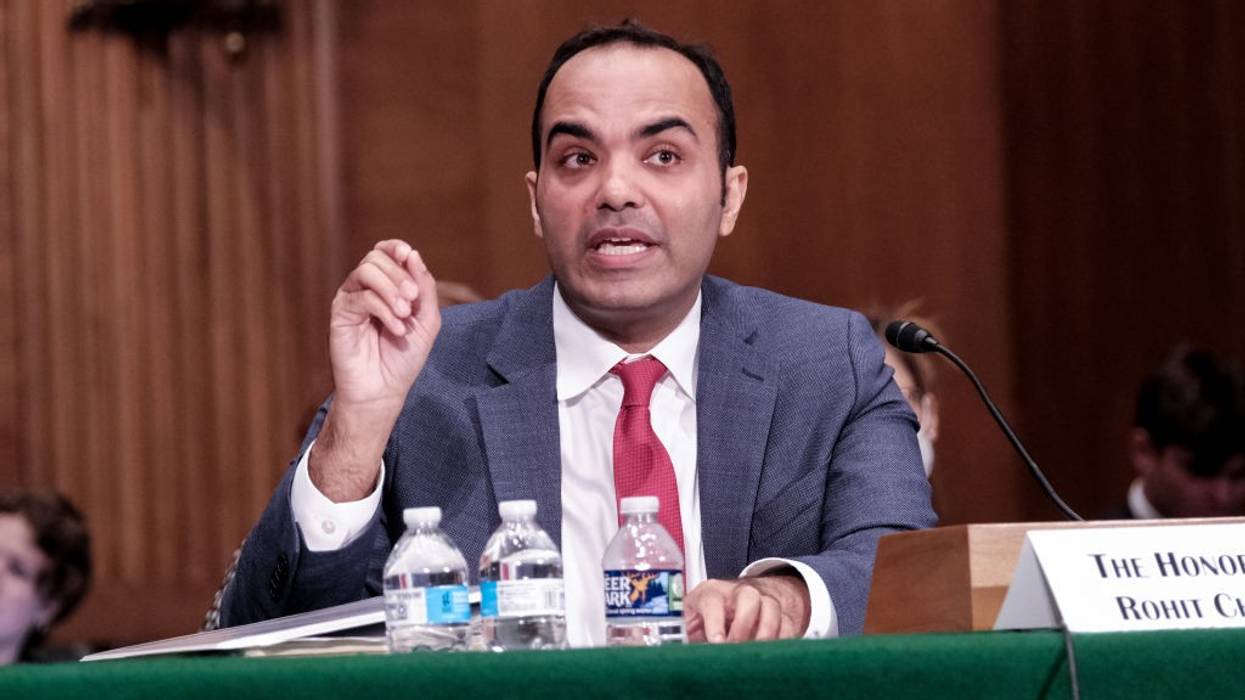
"The CFPB is proposing clear, enforceable rules that will reduce overdraft fees and save Americans billions, closing another lucrative regulatory loophole banks use to prey on consumers," said one advocate.
In a move cheered by progressive advocates, the U.S. Consumer Financial Protection Bureau on Wednesday proposed a new rule limiting how the nation's biggest banks can charge overdraft fees.
The CFPB said its proposal "would close an outdated loophole that exempts overdraft lending services from long-standing provisions of the Truth in Lending Act and other consumer financial protection laws."
"For decades, very large financial institutions have been able to issue highly profitable overdraft loans, which have garnered them billions of dollars in revenue annually," the agency explained. "Under the proposal, large banks would be free to extend overdraft loans if they complied with long-standing lending laws, including disclosing any applicable interest rate."
The Federal Reserve Board initially created an exemption from the Truth in Lending Act—which required lenders to clearly disclose the cost of credit to borrowers—half a century ago to allow banks to recover costs incurred when they honored checks from customers who inadvertently overdrew their accounts. This was deemed necessary at a time when most workers were paid by mailed checks with uncertain clearance periods.
However, as the CFPB noted:
In the 1990s and early 2000s, with the rise of debit cards, institutions began raising fees and using the exemption to churn high volumes of overdraft loans on debit card transactions. Annual overdraft fee revenue in 2019 was an estimated $12.6 billion. And, in 2022, Wells Fargo and JPMorgan Chase led the way—accounting for one-third of overdraft revenue reported by banks over $1 billion.
According to a January report from the watchdog Accountable.US, the 10 largest U.S. banks raked in more than $2.3 billion in overdraft fees during just the first nine months of 2023.
"Today, we are proposing rules to close a long-standing loophole that allowed many large banks to transform overdraft into a massive junk fee harvesting machine," CFPB Director Rohit Chopra said in a statement.
President Joe Biden touted the proposal in a statement noting that "for too long, some banks have charged exorbitant overdraft fees—sometimes $30 or more—that often hit the most vulnerable Americans the hardest, all while banks pad their bottom lines."
"Banks call it a service—I call it exploitation," the president added. "Today's proposal would cut the average overdraft fee by more than half, saving the typical American family that pays these fees $150 a year."
Groups including Accountable.US, the American Economic Liberties Project, Demand Progress, and the Revolving Door Project hailed the proposed rule.
"American consumers strongly support the Biden administration's crackdown on overdraft fees that will lower their costs by billions of dollars every year," said Liz Zelnick, director of the Economic Security & Corporate Power Program at Accountable.US. "While the administration is once again siding with consumers over greedy corporations, Republicans in Congress are lining up behind bank and credit union CEOs and lobbyists who gouge consumers to pad their massive profits."
"The last thing many families living paycheck to paycheck need is a surprise $35 overdraft charge on a gallon of milk or loaf of bread, yet many Republicans in Congress say Americans should be grateful for the hard lesson in corporate greed," added Zelnick.
Shahid Naeem, senior policy analyst at the American Economic Liberties Project, asserted that "while some banks have already responded to CFPB pressure and reduced or eliminated these fees, Americans shouldn't have to rely on the discretion of individual banks."
"The CFPB is proposing clear, enforceable rules that will reduce overdraft fees and save Americans billions, closing another lucrative regulatory loophole banks use to prey on consumers," he added.
Emily Peterson-Cassin, Demand Progress Education Fund director of Corporate Power, argued that "we must put an end to big banks stealing money directly from the pockets of the American people through their junk fees on bank account overdrafts."
"These fees add up to billions of dollars for banks—and most of that money comes from households struggling to make ends meet, where a few dollars could mean having to choose between paying rent on time, affording a critical prescription, or putting enough food on the table," she continued.
"We applaud the CFPB for taking a step toward restoring a more appropriate balance between customer and bank, where customers can trust their banks not to exploit them," Peterson-Cassin added.
Revolving Door Project executive director Jeff Hauser said that "the CFPB is doing what it was designed to do, and now the biggest threat is that America's most exploitative companies want payoff for decades of corrupt investment in our nation's courts by having the Supreme Court gut the bureau itself."
Along with noting the court's forthcoming CFPB decision, Hauser argued, "Civil society must plan to bring enormous pushback on Supreme Court justices and other judges corrupted by the likes of Charles Koch and Harlan Crow if any of the CFPB's commonsense consumer protections are overturned by our sadly activist judiciary."