

SUBSCRIBE TO OUR FREE NEWSLETTER
Daily news & progressive opinion—funded by the people, not the corporations—delivered straight to your inbox.
5
#000000
#FFFFFF
To donate by check, phone, or other method, see our More Ways to Give page.
Daily news & progressive opinion—funded by the people, not the corporations—delivered straight to your inbox.
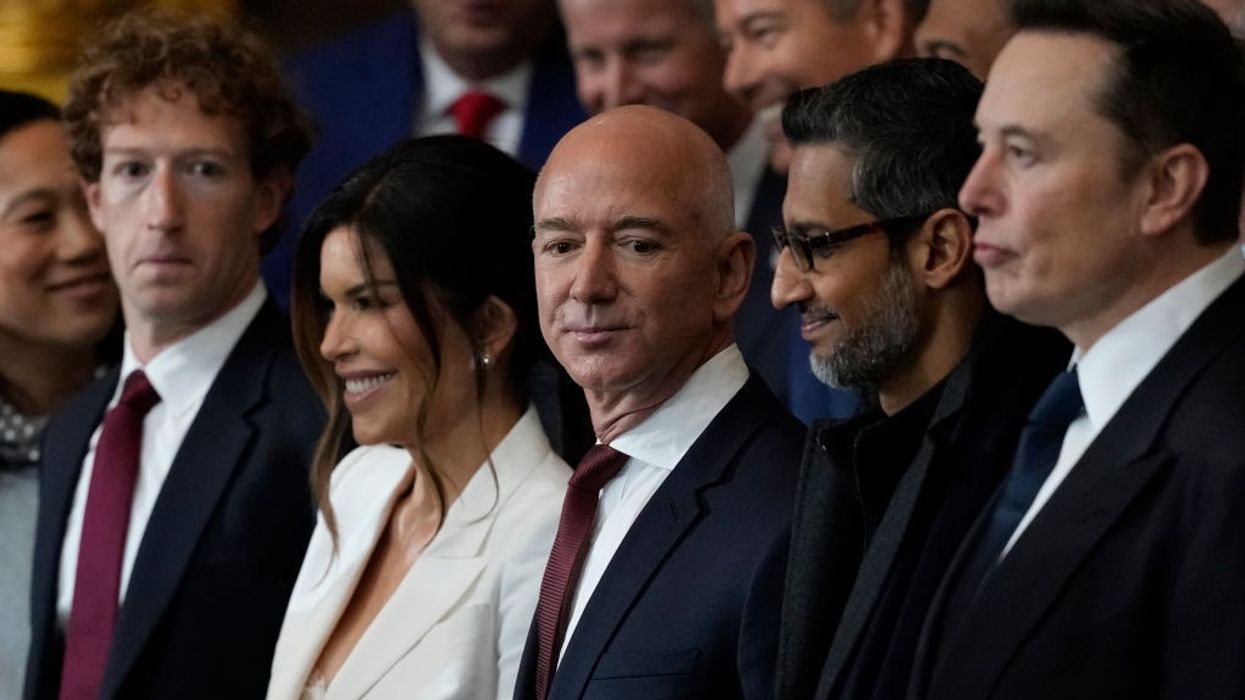
The commission voted 4-0 to dismiss the complaint against the newspaper owned by billionaire Jeff Bezos—who donated $1 million to Trump's inauguration and cracked down on criticism of the president at the paper.
The Federal Election Commission on Thursday issued a unanimous decision dismissing a complaint by U.S. President Donald Trump's 2024 campaign accusing The Washington Post of "illegal corporate in-kind contributions" to then-Vice President Kamala Harris' failed Democratic presidential campaign.
The campaign finance watchdog OpenSecrets.org reported that the FEC commissioners voted 4-0 to reject the Trump team's allegation that the Post bought social media ads in a bid to boost news articles critical of the Republican nominee.
Lawyers for the Post—which is owned by billionaire Jeff Bezos, who donated $1 million to Trump's inauguration and sat with fellow oligarchs Elon Musk and Mark Zuckerberg at the January swearing-in, and who has cracked down on criticism of the president and his Cabinet at the paper—called the Trump campaign's allegations "speculative and demonstrably false."
As OpenSecrets.org's Dave Levinthal wrote:
Trump's campaign had alleged that The Washington Post was conducting a "dark money corporate campaign in opposition to President Donald J. Trump" and used "its own online advertising efforts to promote Kamala Harris' presidential candidacy... Trump's campaign also argued that the Post was not entitled to what's known as a "press exemption" for political content because it was "not functioning within the scope of a legitimate press entity."
The FEC general counsel's office disagreed and advised the commissioners to dismiss the complaint based on "an internal 'scoring criteria' for agency resources," Levinthal explained, adding that "the Post 'appears to have been acting within its legitimate press function and thus its activities are protected' by federal election laws' exemption for overtly journalistic activities."
"Given that low rating and the apparent applicability of the press exemption, we recommend that the commission dismiss the complaint, consistent with the commission's prosecutorial discretion to determine the proper ordering of its priorities and use of agency resources," the office advised.
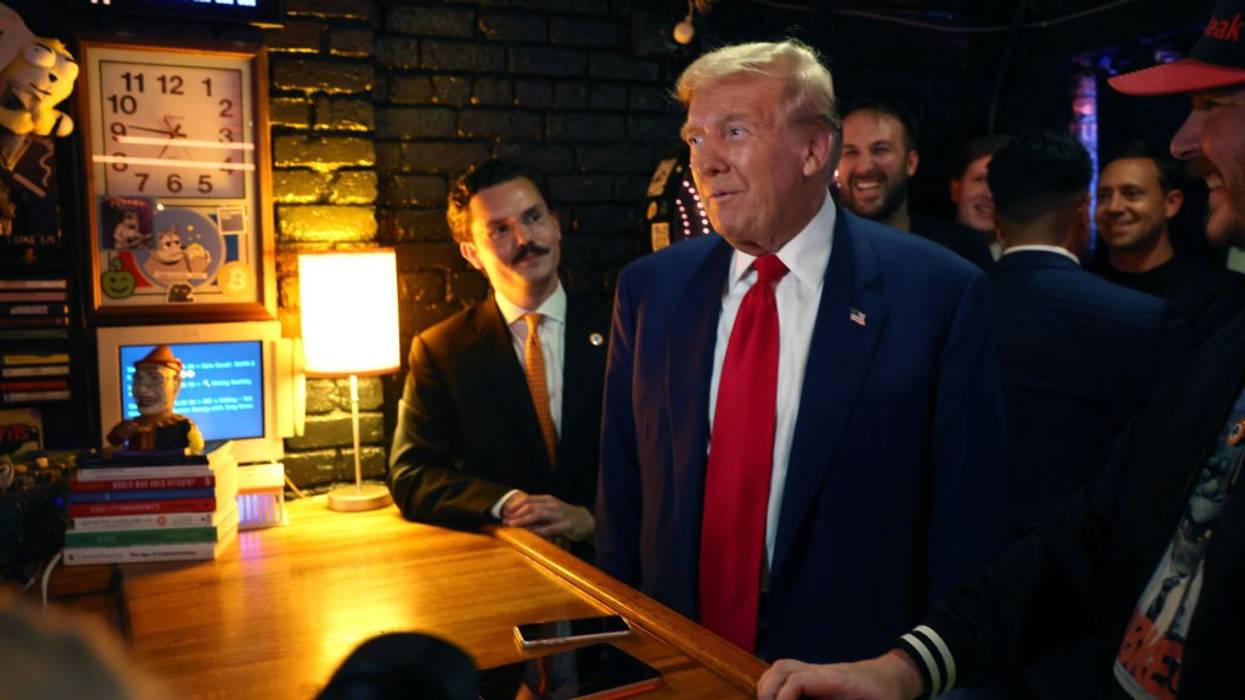
"This is an absolutely devastating development on the precipice of the next administration," said one journalist.
Journalists and other critics of how money influences U.S. politics expressed alarm and disappointment in response to Friday reporting that shortly after the nation's latest election, the research nonprofit OpenSecrets had to lay off a third of its staff.
Citing a current staffer, Politico's Daniel Lippman revealed that OpenSecrets "laid off 10 employees yesterday due to financial difficulties" and "much of the research team were among the casualties, which constituted around a third of the group's total headcount."
According to the Politico Playbook newsletter:
Executive director Hilary Braseth wrote in an email to supporters that "OpenSecrets remains committed to its mission—serving as the trusted authority on money in American politics—but our task has become more difficult as groups have opted to fund a partisan outcome rather than nonpartisan democratic infrastructure."
She said in a subsequent email to Playbook that the layoffs were "a necessary first step to make our organization sustainable," and that she had "no doubt that our team will continue to produce the high-quality data that the public has come to rely on."
With a mission "to serve as the trusted authority on money in American politics," OpenSecrets envisions a country in which citizens "use data on money in politics to create a more vibrant, representative, and responsive democracy."
In response to the layoffs, numerous reporters took to social media on Friday to share how they—like Common Dreams—have used what National Public Radio media correspondent David Folkenflik called that "an invaluable resource for many a journalist and researcher—utterly nonpartisan but a source for transparency about money in politics now under financial threat."
"Terrible news!" declared NerdWallet data journalist Joe Yerardi. "The folks at OpenSecrets have helped me so many times on stories. The [organization] does such vital work."
Other reactions included:
Republican President-elect Donald Trump—known for "outright scandals and blatant corruption" during his first term—defeated Democratic Vice President Kamala Harris on Election Day earlier this week, . The GOP also seized control of the U.S. Senate and is on track to win a majority in the House of Representatives.
In a Tuesday analysis, OpenSecrets' Albert Serna Jr. and Anna Massoglia detailed how about $16 billion "went to influence federal elections and another $4.6 billion was raised by state candidates, party committees, and ballot measure committees for 2023 and 2024 elections."
The pair also highlighted Tuesday that this cycle "has broken the record for outside spending," with about $4.5 billion from independent groups such as super political action committees; dark money accounted for over $1 billion in total contributions to organizations like super PACs; top donors had outsize influence; and donations to support or defeat various ballot measures have also set "several records."
Jimmy Cloutier, a former OpenSecrets reporting fellow now at the Pittsburgh Post-Gazette, said Friday in response to the layoffs that "I'm devastated for my former colleagues—and shocked that this news comes just days after the most expensive election in U.S. history."
Investigative journalist Dave Levinthal, who also previously worked for the organization, said that "this is heartbreaking news, not just for us OpenSecrets alums, but anyone who cares about genuinely nonpartisan research and reporting plus political/governmental transparency."
Healthcare Across Borders executive director Jodi Jacobson said Friday that "this is unacceptable and unconscionable and shows how perverse our funding streams are. We can sink over a billion into a political campaign but not fund one of the most critical tools of accountability at a time when we need it most?"
Some responded to the layoff news with calls for donations to OpenSecrets. Filmmaker Adam McKay declared: "Legacy news media has all but blacked out money's outsized control of [government] so this is one of the few places to find out who is bribing your candidate or [representative]. Donate if you can ASAP."
Issue One research director Michael Beckels said: "Care about being able to follow the money in politics? Today would be a good day to donate—or become a monthly donor—OpenSecretsDC, one of the best groups around for understanding the flow of money in state and federal elections."
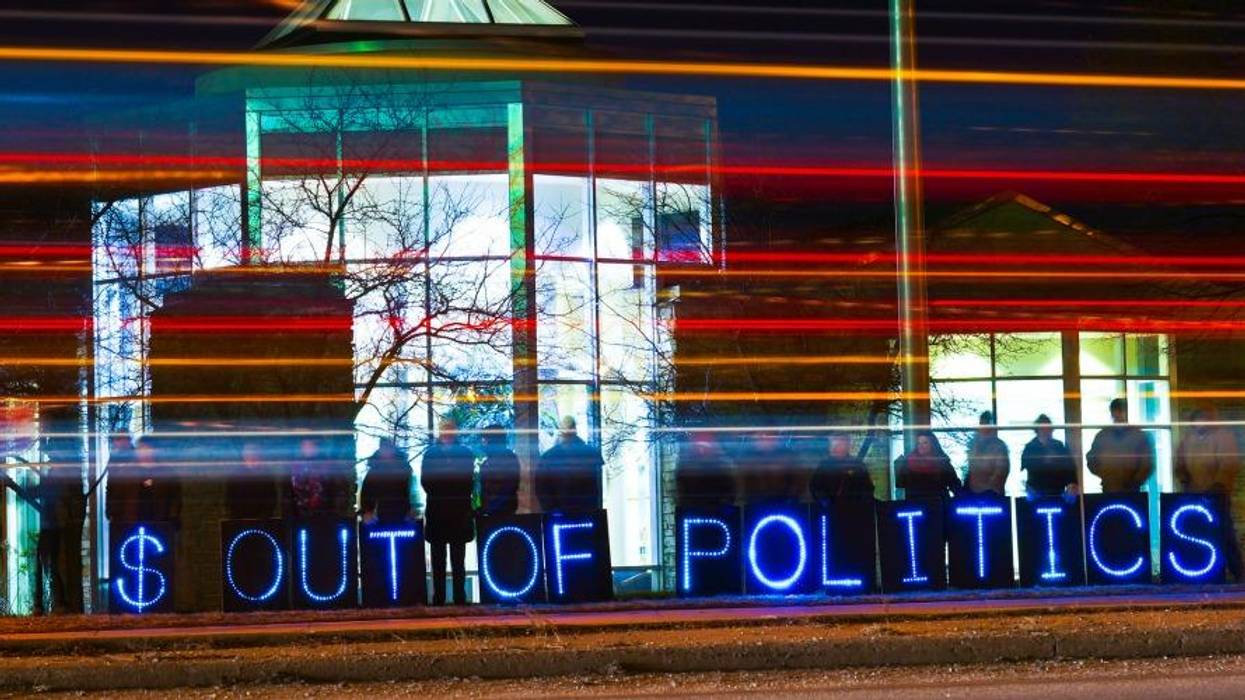
"Outside group spending this year is almost double the rate of any prior year," noted one critic. "Not a good thing."
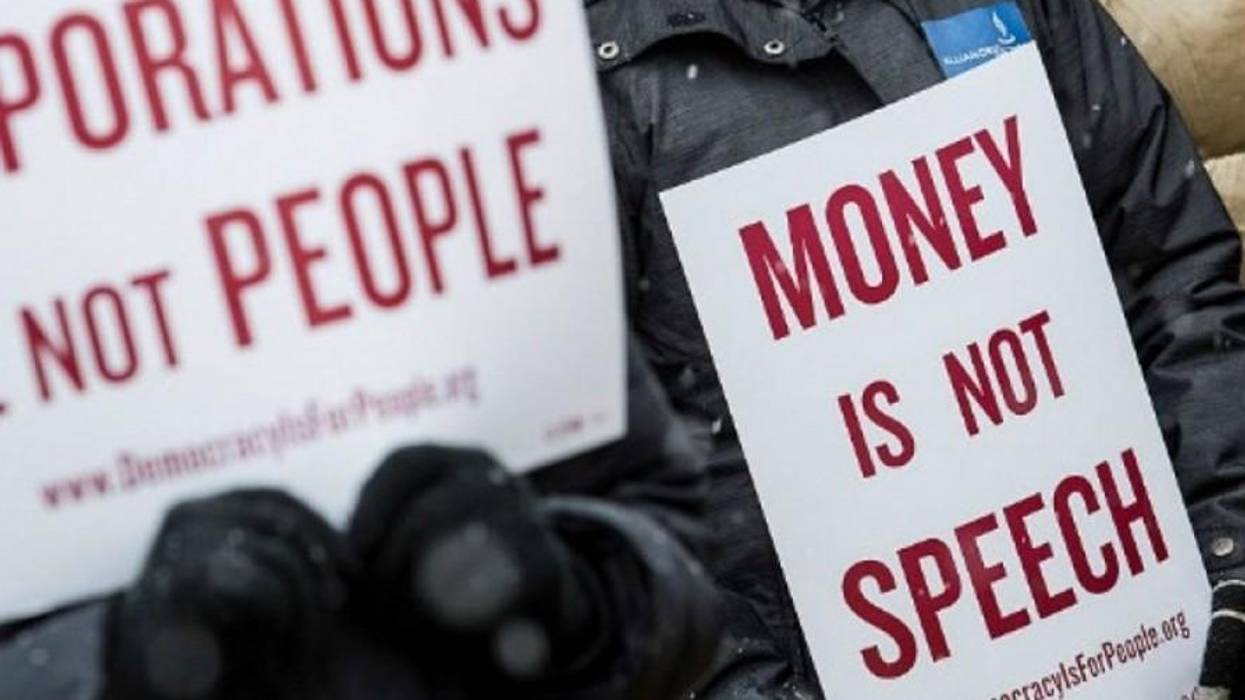
Empowered by the U.S. Supreme Court's 2010 Citizens United v. Federal Election Commission ruling allowing unlimited independent financial contributions to support political campaigns, outside spending during the current election cycle has hit a record $1 billion, according to a report published Thursday by the watchdog group OpenSecrets.
"Super PACs and other outside groups that can raise and spend unlimited sums of money have poured about $1.1 billion into 2024 federal elections as of August 15—nearly twice what similar groups spent over the same period in the 2020 presidential election cycle when independent expenditures hit an all-time record," OpenSecrets said.
"More than half of all outside spending during the 2024 cycle—about $585.8 million—has gone into the presidential election, which saw an especially expensive Republican presidential nominating contest," the group added.
"The largest spender, by far, is former President Donald Trump's flagship super PAC, Make America Great Again Inc.," the report notes. "To date, MAGA Inc. has spent about $125.1 million boosting Trump in the presidential election, including nearly $33.2 million attacking his GOP rivals and more than $65.6 million opposing President Joe Biden."
"Future Forward and American Bridge 21st Century, the first and second-largest Democratic hybrid PACs, have spent a combined $74.7 million on the presidential race as of August 15," the publication adds. "Both super PACs pivoted to supporting Vice President Kamala Harris after Biden suspended his campaign last month."
Other key findings in the report include:
AIPAC—which vowed to spend $100 million on 2024 elections—played a key role in defeating Democratic Reps. Jamaal Bowman (N.Y.) and Cori Bush (Mo.) in recent primaries. The group has come under fire for attacking Black and brown members of Congress and for supporting Republicans who took part in Trump's attempt to overturn the 2020 presidential election results.
In an effort to curb the flood of dark money and other outside spending, House Democrats led by Reps. Adam Schiff (Calif.), Pramila Jayapal (Wash.), Dean Phillips (Minn.), and Jim McGovern (Mass.) last year
proposed a constitutional amendment to overturn Citizens United.
" Citizens United was one of the most egregious enablers of special interest money, but it was only the latest in a long line of Supreme Court cases that opened the floodgates," Schiff's office said at the time. "To truly rein in dark money, we must amend our Constitution."
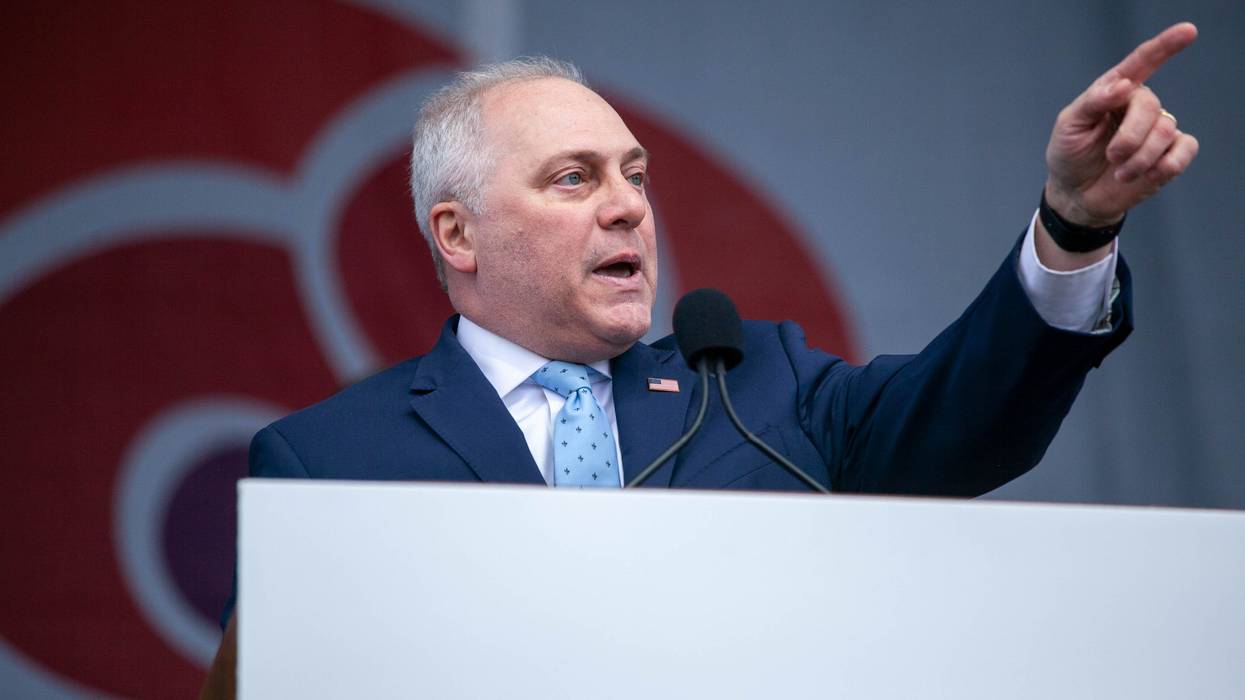
"Big Oil CEOs are out for themselves and the politicians who support their quest to drill for profit at the expense of the American people," said a spokesperson for Accountable.US, which highlighted the donation.
U.S. House Majority Leader Steve Scalise received a $40,000 campaign donation from the political action committee of a Big Oil CEO who allegedly colluded with the Organization of Petroleum Exporting Countries to drive up energy prices, the watchdog Accountable.US noted Monday.
Scalise (R-La.)—who has made opposing efforts to protect public lands from fossil fuel drilling a top legislative priority—took the money from the Williams Companies PAC, whose board includes Pioneer Natural Resources CEO Scott Sheffield, who was accused last month by the U.S. Federal Trade Commission (FTC) of holding private conversations with the OPEC cartel in which he allegedly assured members that his company would throttle production, creating an artificial scarcity in a bid to boost oil prices.
The majority leader ranks fourth among all House lawmakers in 2023-24 campaign contributions from oil and gas interests, according to the watchdog OpenSecrets. His $325,833 in Big Oil contributions trails only Rep. August Pfluger (R-Texas), who took $572,421; former House Speaker Kevin McCarthy (R-Calif.), who received $335,399; and House Speaker Mike Johnson (R-La.), who got $328,019.
"If Congressman Scalise wants to protect American consumers he should start by holding accountable Big Oil price gougers."
"Big Oil CEOs are out for themselves and the politicians who support their quest to drill for profit at the expense of the American people," Accountable.US spokesperson Chris Marshall said in a statement Monday. "So if Congressman Scalise wants to protect American consumers he should start by holding accountable Big Oil price gougers."
The FTC alleges in a complaint that "Sheffield has, through public statements and private communications, attempted to collude with the representatives of [OPEC] and a related cartel of other oil-producing countries known as OPEC+ to reduce output of oil and gas, which would result in Americans paying higher prices at the pump, to inflate profits for his company."
The regulator subsequently barred Sheffield from joining the board of ExxonMobil, which bought Pioneer, over the alleged collusion.
"Mr. Sheffield's past conduct makes it crystal clear that he should be nowhere near Exxon's boardroom," FTC Bureau of Competition Deputy Director Kyle Mach said in a statement last month. "American consumers shouldn't pay unfair prices at the pump simply to pad a corporate executive's pocketbook."
Senate Majority Leader Chuck Schumer took to the upper chamber's floor Monday to reiterate his call for the U.S. Department of Justice (DOJ) to investigate Big Oil collusion and price fixing.
"It's not hard to feel the frustration—the sheer exasperation—felt by millions when America's biggest oil companies rake in record profits but still raise prices at the pump. It is deeply, deeply unfair—and now we have reason to believe that in some cases it may be unlawful," the senator said.
Schumer called the FTC allegations against Sheffield "very, very troubling."
"This is what frustrates Americans so much about Big Oil: Even when they're making money hand over fist they'll keep raising prices on us, they will keep squeezing us for everything we've got," he said. "And now they may—may—have crossed the line into unlawful behavior."
"So the DOJ needs to step in and determine if any laws against collusion or price-fixing have been broken," Schumer added. "At minimum, the American people deserve to know if Big Oil executives are conspiring with each other or with OPEC behind our backs to illegally raise prices at the pump."
"Contributions from dark money groups and shell companies are outpacing all prior elections and may even surpass the roughly $660 million in contributions from unknown sources that flooded 2020 elections."
Dark money groups are spending at record levels in their efforts to influence the outcome of the 2024 U.S. elections, an analysis published Wednesday by OpenSecrets revealed.
According to the watchdog, the "unprecedented surge" in spending by dark money groups—which, thanks to the U.S. Supreme Court's 2010 Citizens United v. Federal Election Commission ruling don't have to disclose their donors—topped $162 million in 2023, "surpassing the level of dark contributions seen at the same point in any prior election cycle."
"So far this election cycle, contributions from dark money groups and shell companies are outpacing all prior elections and may even surpass the roughly $660 million in contributions from unknown sources that flooded 2020 elections—a cycle that attracted over $1 billion in total dark money," the group said.
According to OpenSecrets' analysis, super PACs and other dark money groups supporting Democrats have spent $85 million during this election cycle, while contributions backing Republicans have totaled $74 million so far. If the trend holds, this will be the fourth consecutive election cycle in which Democrats enjoyed a dark money advantage.
Americans for Prosperity Action, a right-wing hybrid PAC led by billionaire Charles Koch, has reported around $25 million in contributions so far this election cycle—far more than any other dark money group. Senate Majority PAC, which supports Democrats, has spent over $16.7 million, while the conservative Congressional Leadership Fund is in third place with more than $15.8 million in donations.
In an effort to tackle dark money's corrupting influence, U.S. Sen. Sheldon Whitehouse (D-R.I.) and Rep. Judy Chu (D-Calif.) last month introduced legislation aimed at closing a loophole that lets wealthy individuals make tax-free asset donations to dark money groups.
Dark money is back in the headlines amid scrutiny over the right-wing billionaires behind the upcoming No Labels third-party "unity" ticket and $100 million blitz unleashed by the American Israel Political Action Committee against Democrats who criticize Israel's genocidal war on Gaza.