

SUBSCRIBE TO OUR FREE NEWSLETTER
Daily news & progressive opinion—funded by the people, not the corporations—delivered straight to your inbox.
5
#000000
#FFFFFF
To donate by check, phone, or other method, see our More Ways to Give page.
Daily news & progressive opinion—funded by the people, not the corporations—delivered straight to your inbox.
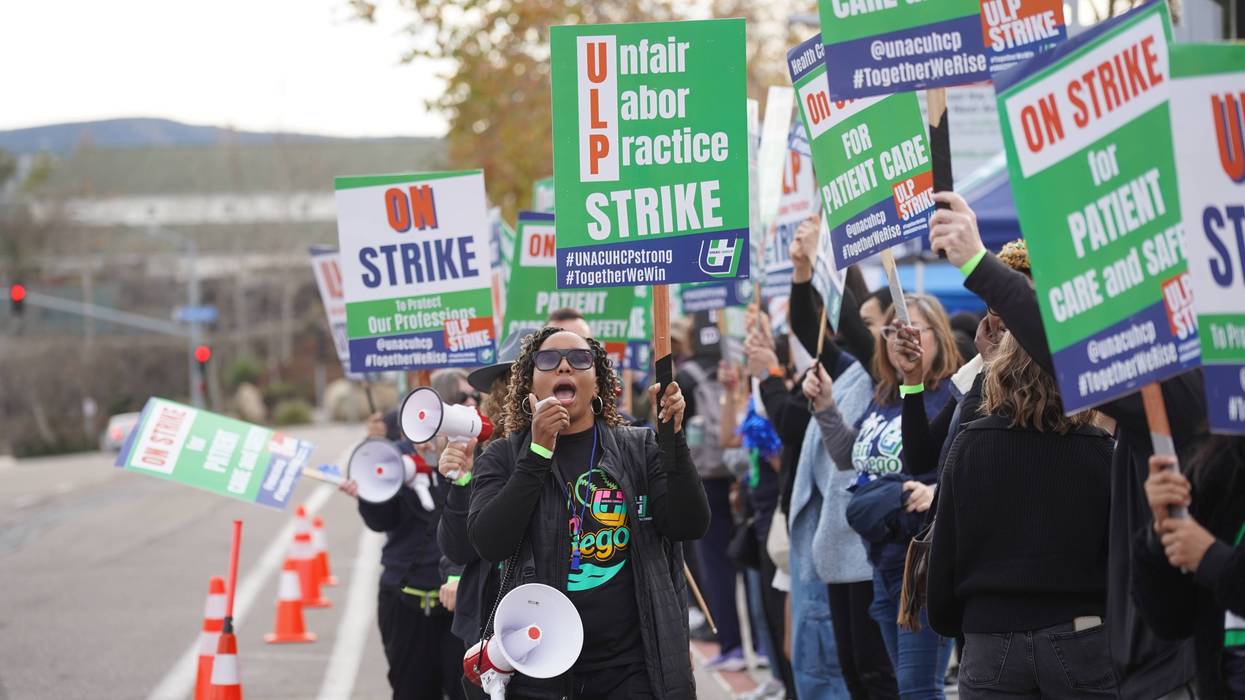
The head of the striking nurses' union says Kaiser Permanente would "rather protect an enormous financial cushion than protect patients and the people who care for them."
More than 30,000 Kaiser Permanente nurses and other healthcare professionals walked off the job Monday in two western states, accusing their employer of caring more about profits than patients and highlighting what they say are KP's unfair labor practices.
United Nurses Associations of California/Union of Health Care Professionals (UNAC/UHCP)—a member of the Alliance of Healthcare Unions (AHCU)—said that 31,000 frontline registered nurses and other medical workers at more than two dozen KP hospitals and hundreds of clinics in California and Hawaii went on an Unfair Labor Practice (ULP) strike that would continue indefinitely until they get a fair contract.
"On the picket lines, healthcare workers will call attention to what’s at stake in settling a fair contract: the growing crisis caused by Kaiser’s failure to invest in safe staffing levels, timely access to quality care, and fair wages for frontline caregivers," UNAC/UHCP said in a statement Monday.
Registered nurse and UNAC/UHCP president Charmaine Morales said: “We’re not going on strike to make noise. We’re striking because Kaiser has committed serious unfair labor practices and because Kaiser refuses to bargain in good faith over staffing that protects patients, workload standards that stop moral injury, and the respect and dignity that Kaiser caregivers have been denied for far too long."
“Striking is the lawful power of working people, and we are prepared to use it on behalf of our profession and patients," Morales added.
ON STRIKE: The UNAC/UHCP Unfair Labor Practice strike starts TODAY! 31,000+ Kaiser Permanente nurses and health care workers in CA and Hawai'i are holding the line for quality patient care and a fair contract! #TogetherWeWin #SafeStaffingSavesLives #PatientsOverProfits
[image or embed]
— AFSCME (@afscme.bsky.social) January 26, 2026 at 9:57 AM
The new strike follows last October's walk-off by over 75,000 nurses and allied healthcare workers at KP facilities in California, Oregon, Washington, and Hawaii over stalled contract negotiations and other issues including pay, staffing levels, and working conditions.
UNAC/UHCP had been negotiating with KP since last May. After KP management left the bargaining table last month, the union filed an unfair labor practices complaint with the National Labor Relations Board, which has cited KP for numerous violations in recent years.
KP is the nation's largest integrated managed care consortium of nonprofit and for-profit entities. According to a 2025 investigation by Matthew Cunningham-Cook for the Center for Media and Democracy in conjunction with the American Prospect, KP "is sitting on $67.4 billion in reserves, up from $40 billion just four years ago."
Kaiser collected $12.9 billion in net income in 2024 and $7.9 billion through the third quarter of 2025.
A new UNAC/UHCP report, "Profits Over Patients," details how KP "has strayed from its founding mission and moved towards profit, expansion, and Wall Street-style asset accumulation that has created real consequences for patient care and caregiver well-being."
Morales said that “when Kaiser says it doesn’t have resources to fix staffing, what we hear is that a nonprofit health care organization would rather protect an enormous financial cushion than protect patients and the people who care for them."
UFW in solidarity with the 31,000 nurses and health care workers who are on strike in California and Hawaii.#UnionStrong #1U
[image or embed]
— United Farm Workers (@ufw.bsky.social) January 26, 2026 at 10:47 AM
Zach Pritchett, an emergency room nurse at Kaiser Permanente Medical Center in Los Angeles, told LA Progressive, “I see the end result of the poor staffing every single day."
“What I’m seeing in the ER are Kaiser members who can’t get appointments for months at a time with their own primary care physicians—so they wind up here," he added.
Some strikers drew attention to the killing by Trump administration immigration enforcers of intensive care registered nurse Alex Pretti in Minneapolis on Saturday.
"He is one of us." "He was trying to help a woman stand up and he was assassinated. He did what nurses do, take care of others." "There's so many people here that will do the same."
Kaiser nurses on strike in California speak against ICE murder of nurse Alex Pretti pic.twitter.com/2k54Ojuqn9
— World Socialist Web Site (@WSWS_Updates) January 26, 2026
KP responded to the new strike in a statement declaring, "Our focus remains on reaching agreements that recognize the vital contributions of our employees while ensuring high-quality, affordable care."
"We have proposed 21.5% wage increases—our strongest national bargaining offer ever—and we are prepared to close agreements at local tables now," it addded. "Employees deserve their raises, and patients deserve our full attention, not prolonged disputes."
On a picket line outside KP's Oakland Medical Center, San Francisco nurse anesthetist Jessica Servin told KQED that “we’re fighting for our livelihoods, we’re fighting for patient care."
“I believed their values and their mission statement,” Servin said of KP, where she's worked for 20 years. “It feels like they’re deviating from the foundation of why Kaiser was built. It feels kind of sad to be here and realize that Kaiser is choosing profit over patients.”
National figures supporting the strike include Sen. Bernie Sanders (I-Vt.), who posted on Bluesky, "I stand in solidarity with the more than 31,000 Kaiser nurses and healthcare workers on strike in California and Hawaii."
"It’s well past time for Kaiser to return to the table with a fair offer for their workers that includes safer staffing ratios and higher wages," he added.
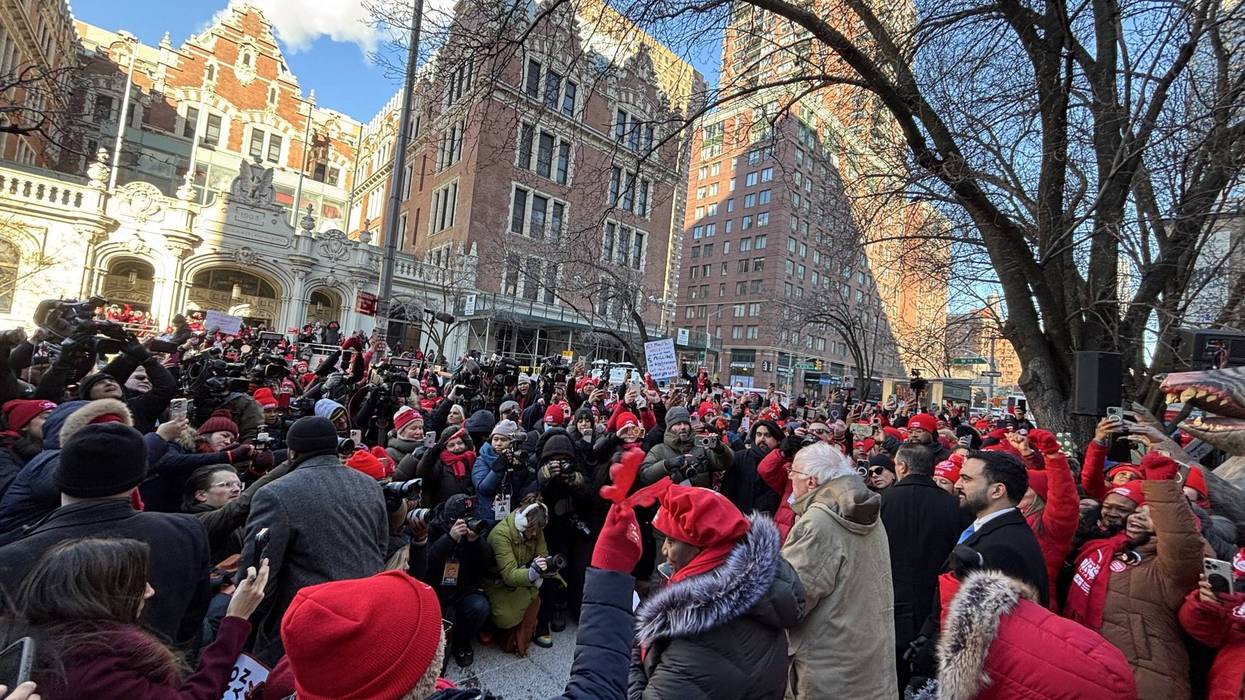
"Don't tell me you can't provide a good nurse-staff ratio when you're paying your CEO at New York Presbyterian $26 million a year, the CEO at Montefiore $16 million a year, Mount Sinai $5 million a year," said Sen. Bernie Sanders.
As the largest nurses strike in the history of New York City marched into its second week with no resolution in sight, US Sen. Bernie Sanders (I-Vt.) and Mayor Zohran Mamdani joined hundreds of picketers in the bitter cold on Tuesday to support their fight for better pay and workplace protections.
Last week, the New York State Nurses Association (NYSNA) announced that nearly 15,000 NewYork-Presbyterian, Mount Sinai, and Montefiore hospital employees had "no choice" but to go on strike after the hospitals failed to meet their demands for safe staffing, workplace violence protections, safeguards against the use of artificial intelligence in healthcare, and to maintain 100% of their healthcare benefits.
Outside Mount Sinai West on 10th Avenue, Mamdani, attending his second picket, called for a "swift and urgent resolution" to the workers' demands after negotiations with the hospitals stalled last week and the chains began hiring replacement workers.
"This is about safe working conditions. This is about a fair contract. This is about dignity. And today is day nine—day nine—of those demands, and I want you to know that wherever I go in New York City, I hear about the plight of our nurses," the democratic socialist mayor said. "Now is your time of need, where we can ensure that this is a city that you don't just work in but a city that you can also live in."
In comments to CBS News New York, the hospital chains have scoffed at the NYSNA's demands for a 25% pay increase, especially in the wake of massive healthcare funding cuts from President Donald Trump's One Big Beautiful Bill Act last year.
A spokesperson for NewYork-Presbyterian said its nurses—who it said earn $163,000 on average—are among the highest-paid in the city, calling demands for a pay increase "unrealistic." A Montefiore spokesperson told the network that progress on negotiations will be impossible until the nurses "back away from their reckless and dangerous $3.6 billion demands."
But New York is also one of the most expensive cities in the world to live in. According to the Massachusetts Institute of Technology’s Living Wage calculator, the nurses' wages are often barely enough to meet a family's basic needs, especially for single parents with children.
NYSNA, meanwhile, has said management "is threatening to discontinue or radically cut nurses’ health benefits" and has done nothing to combat severe understaffing.
"We’re talking an emergency room filled to the brink,” said one of the strikers, staff nurse Morgan Betancourt. “Ninety patients, and we have maybe nine nurses.”
On Tuesday, Sanders (I-Vt.) emphasized that the hospitals' sudden frugality has been of little concern when it comes to compensating hospital executives.
"Don't tell me you can't provide a good nurse-staff ratio when you're paying your CEO at NewYork Presbyterian $26 million a year, the CEO at Montefiore $16 million a year, Mount Sinai $5 million a year," Sanders shouted to applause from the strikers. "Don't tell me you can't treat nurses with dignity when you're spending hundreds of millions of dollars on traveling nurses."
According to the Greater New York Hospital Association, the three hospitals combined had spent approximately $100 million to pay temporary nurses as of the fourth day of the strike. Temporary staffing agencies have required hospitals to pay scabs two to three times as much as they'd pay their regular nurses, Bloomberg reported.
Negotiations remain at a total standstill after breaking down last week. While the hospitals claim the union refused to budge on unreasonable demands, Jonathan Hunter, a negotiator for Mount Sinai nurses, told Spectrum News NY1, "They basically stonewalled us, presented us with nothing, and we left with nothing."
The strike has left the hospital system in a state of upheaval, forcing some patients to be moved and nonemergency surgeries to be canceled. Mamdani said it's all the more reason for the hospitals to reach an agreement with their workers.
"Too often when we see a strike, people forget that that is not where workers want to be," Mamdani said. "A strike is an act of last resort. What workers want is to be back at work. So what this will mean is making that possible. And so we call on every side to come back to that negotiating table. Have a swift and urgent resolution."
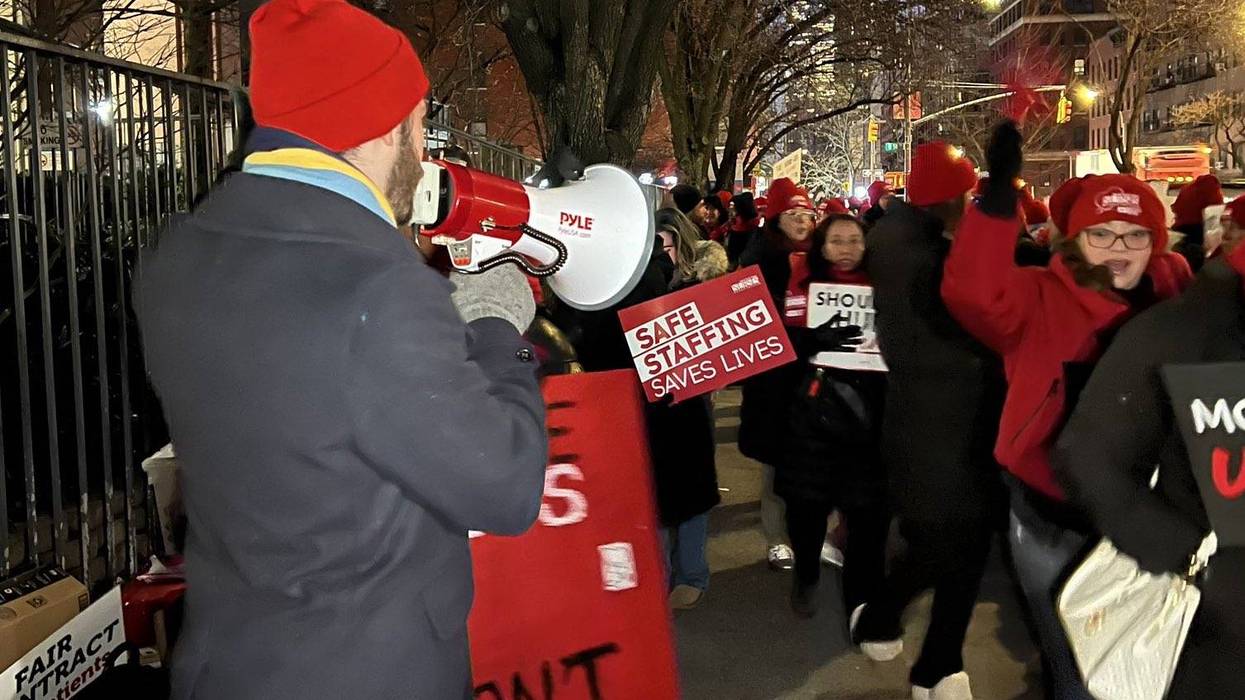
"No nurse should be asked to accept less pay, fewer benefits, or less dignity for doing lifesaving work," said New York City Mayor Zohran Mamdani.
Thousands of nurses are hitting the picket lines in what will be the largest nurses strike in the history of New York City.
The New York State Nurses Association (NYSNA) on Monday announced that nearly 15,000 nurses at Mount Sinai Hospital, Mount Sinai Morningside and West, Montefiore, and NewYork-Presbyterian are going on strike after "greedy hospital management at these wealthy private hospitals have given frontline nurses no other choice."
The NYSNA posted a long list of sticking points on contract negotiations, including "safe staffing for our patients, protections from workplace violence, and healthcare for frontline nurses."
NYSNA president Nancy Hagans said that any patients in need of care at these hospitals should enter them, emphasizing that "going into the hospital to get the care you need is not crossing our strike line." She also encouraged patients to join the picket line with the nurses after receiving care.
New York City Mayor Zohran Mamdani spoke out in solidarity with the striking nurses, while also emphasizing the importance of "ensuring New Yorkers have the care they need... especially during flu season."
"No New Yorker should have to fear losing access to healthcare," Mamdani wrote in a social media post. "And no nurse should be asked to accept less pay, fewer benefits, or less dignity for doing lifesaving work. Our nurses have kept this city alive through its hardest moments. Their value is not negotiable."
Sen. Bernie Sanders (I-Vt.) also expressed support for the striking nurses, while denouncing "NewYork-Presbyterian, Montefiore, and Mount Sinai hospitals for being willing to spend millions on replacement nurses rather than bargain for a fair contract."
The NYSNA also got a boost from 1199SEIU, which is the largest union of healthcare workers in New York.
"At this time of unprecedented cuts to Medicaid and other healthcare programs by Republican leaders in Washington, DC healthcare workers should not bear the brunt of funding shortfalls," said 1199SEIU president Yvonne Armstrong. "More than ever, we need stability in our healthcare system, which means investing in the type of good healthcare jobs which are fundamental to the wellbeing of caregivers and the communities they serve."
Armstrong also called on the hospitals to "bargain in good faith with NYSNA, refrain from committing unfair labor practices, and sign fair contracts that honor nurses’ contributions."
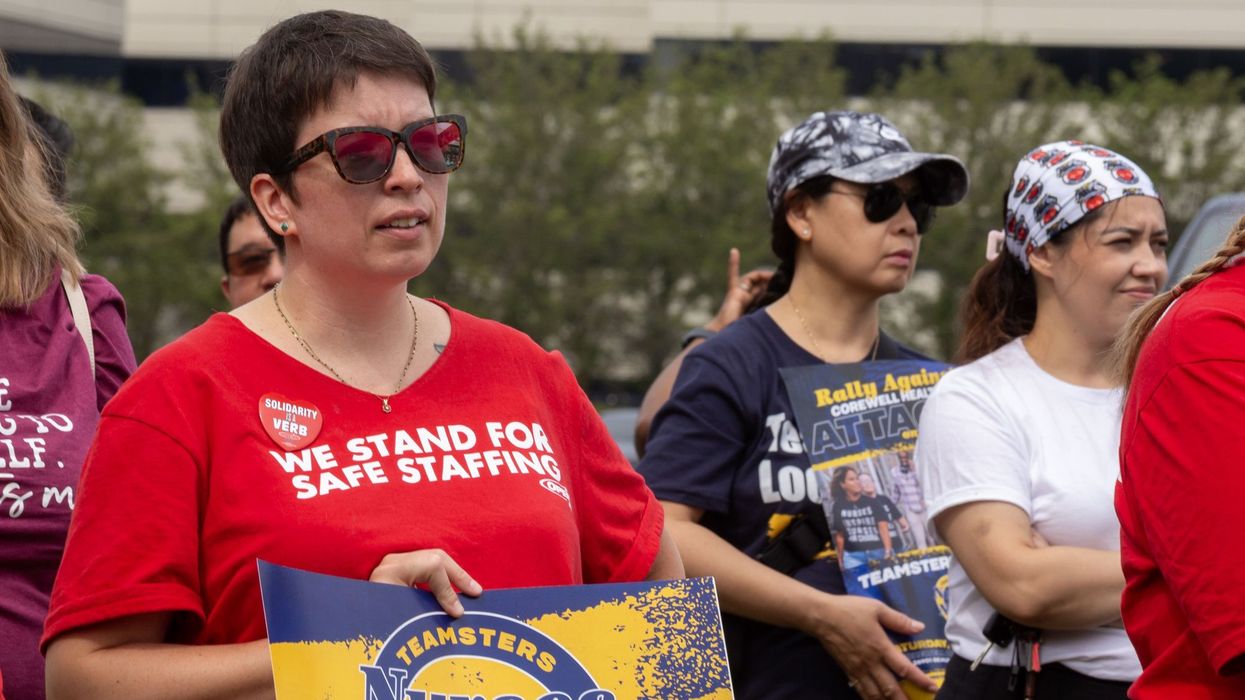
The Trump administration has excluded nurses from a key loan program designed to help those with professional degrees. This is not only a slap in the face to nurses everywhere, but puts all Americans seeking care at increased risk and further harms our broken healthcare system.
Apart from his “concepts of a plan,” it’s clear that Donald Trump doesn’t know much about healthcare. But there is one cardinal rule: don’t mess with nurses. After all, these are the folks who keep our healthcare system alive. My mother and grandmother are both nurses. They work brutal hours under nonstop pressure, juggling complex cases, emotional trauma, and physical exhaustion, while still showing up every day with the skill, compassion, and steady judgment required. As someone who’s led two of Michigan’s largest health departments, I know that if we want stronger hospitals, better patient outcomes, and a reliable healthcare workforce, we have to invest in our nurses and their education.
But Trump’s Department of Education decided to move us in exactly the opposite direction. Under rules buried deep in his “Big Beautiful Bill,” only certain graduate programs qualify as “professional degrees” eligible for higher loan caps, up to $50,000 a year or $200,000 total. And unbelievably, graduate nursing programs were excluded from that list of programs.
Our federal government wants to make it harder for nurses to step into the roles our healthcare system desperately needs to fill? Yes, you’re reading that right. This not only is a slap in the face to nurses everywhere, it leaves Americans with less options and safety in the care we can receive. As a doctor, I know our system is nothing without the care nurses provide. These continued attacks on Medicare and now on nurses from the White House are taking our broken system to the brink of failure, straining our country’s staffing crisis. This will hit rural hospitals hardest, where nurse practitioners are already providing so much primary care to patients.
I can’t think of a career more worthy of a “professional” designation than nursing, the most honest and trusted profession in America. President Trump has messed with the wrong folks.
Your circumstances shouldn’t hold you back from being able to pursue the kind of career and education you deserve. Federal student loans are one of the most effective tools we have to recruit talented folks into the nursing profession and make sure they can keep growing in their careers. When nurses can afford to become NPs, midwives, specialists, and educators, hospitals stay safely staffed and patients get the care they deserve.
Here in Michigan, we’re facing a projected 19% shortage of nurses by 2037. It’s not hard to understand why. Across the state, nurses are facing increasingly brutal working conditions as our healthcare systems consolidate, and the CEOs at the top put profits over patients. In the past few months, I’ve joined striking nurses in Mount Clemens, Rochester, and Grand Blanc who are all calling for safer staffing. And I can’t think of a career more worthy of a “professional” designation than nursing, the most honest and trusted profession in America. President Trump has messed with the wrong folks.
Without nurses, we are all worse off. We know you can’t strengthen the healthcare workforce by choking off the pathway to advanced training. And you cannot improve patient care while putting up new barriers for the very people who provide it.
Make no mistake, this is straight from the Project 2025 playbook. We knew they wanted to defund female-dominated professions (about 90 percent of nurses are women), come for working class Americans, and make education and healthcare even less accessible.
These loans aren’t a luxury. They’re how working nurses, the backbone of our hospitals, move into the advanced roles our health system depends on. The cost of attendance for nurses pursuing graduate degrees on average is over $30,000 per year, which exceeds the proposed annual cap of $20,500 per year. Without accessible loans, we lose future providers to burnout, stalled careers, and financial barriers that shut out entire communities.
We need loan programs that open doors, not close them.
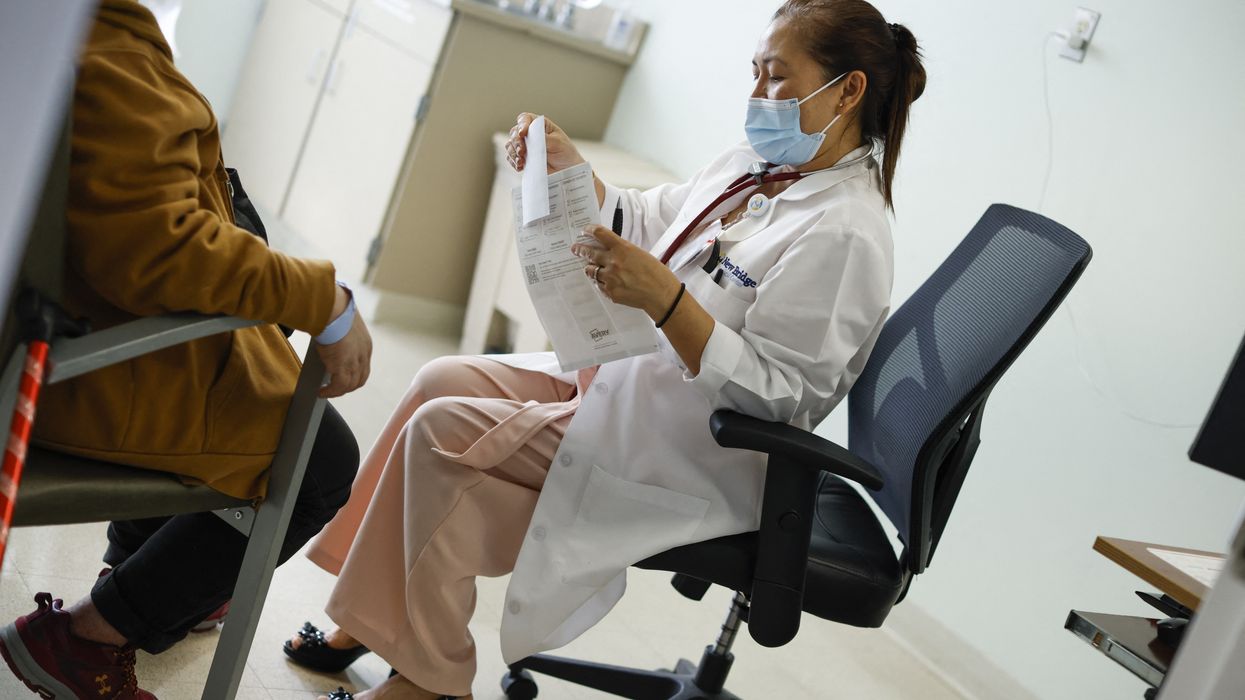
"These apps are a symptom of broken healthcare infrastructure that is now victim to corporate takeovers. Failing to act on both fronts poses risks to our healthcare system and the workers who power it," wrote one of the researchers.
While gig work is fairly common in a number of sectors in the American economy, a brief released Tuesday by the progressive-leaning think tank the Roosevelt Institute details how the gig model now has its tentacles in the healthcare industry, and argues it is creating new hazards for workers and patients.
The brief, authored by Groundwork Collaborative fellow Katie Wells and King's College London lecturer Funda Ustek Spilda, sounds the alarm over "on-demand nursing firms" such as CareRev, Clipboard Health, ShiftKey, ShiftMed, and others which have gained traction by promising hospitals more control and nurses and nursing assistants more flexibility.
Practically speaking, these "new Uber-style apps use algorithmic scheduling, staffing, and management technologies—software often touted by companies as cutting-edge 'AI,' or artificial intelligence—to connect understaffed medical facilities with nearby nurses and nursing assistants looking for work," according to the brief.
The authors, whose research was largely based on interviews with 29 gig nurses, argued that these apps "encourage nurses to work for less pay," do not offer nurses clarity when it comes to scheduling and amount or type of work, are not sufficiently concerned with worker safety, and "can threaten patient well-being by placing nurses in unfamiliar clinical environments with no onboarding or facility training."
These platforms are also using the same tactics as the ride-hailing service Uber when it comes to lobbying state legislatures in order to shield themselves from labor regulations, according to the authors, who noted that larger hospital systems in the country have included gig nurses in their operations since 2016.
The researchers argued that while the rates on a platform like ShiftKey can be higher for nurses and nurses assistants, nursing on-demand platforms can create a race to the bottom for wages: "The nurses and nursing assistants who use these apps must pay fees to bid on shifts, and they win those bids by offering to work for lower hourly rates than their fellow workers."
When the nursing on-demand firms classify the workers as self-employed, nurses and nursing assistants are also exposed to higher risk because they are "excluded from the protections of local, state, and federal law on minimum wage, overtime pay, workers' compensation, retirement benefits, employment-based health insurance, and paid sick days."
Workers are also rated based on facility feedback and determinations made by the algorithm, and can be penalized if they cancel a shift because they are sick or have a conflict, per the report.
"In at least one case, a nursing assistant went into work at a hospital while sick with Covid-19 because she could not figure out how to cancel a shift without lowering her rating," according to the authors.
By way of background, the authors of the brief also argue that the often-invoked "nursing shortage" is actually misleading term. In fact, there is no shortage of available nurses and nursing assistants, but rather a "growing number of nurses and nursing assistants who refuse to accept chronically understaffed, underpaid, unsafe, and high-stress workplaces," according to the brief, which cites outside research.
In fact, many of the workers interviewed said they would continue working for nursing on demand services because broadly speaking they like the work. According to the brief, interviewees said "over and over again how important flexible schedules are to their lives, especially their own caregiving, be it for children, spouses, or elders"—though the authors of the study wrote that this does not mean the concerns expressed by the workers are not worth paying attention to.
The rise of gig nursing is taking place on the backdrop of increasing corporate ownership over the healthcare industry writ large, including the rise of private equity ownership of medical facilities and medical staffing agencies.
"Policymakers need to be proactive and step in to regulate these platforms and provide proper labor protections for all nurses, gig and non-gig alike," said Wells in a Tuesday statement. "But these apps are a symptom of broken healthcare infrastructure that is now victim to corporate takeovers. Failing to act on both fronts poses risks to our healthcare system and the workers who power it."
Wells also told The Guardian that the gig companies don't release data and the industry is unregulated, meaning the true extent to which the U.S. healthcare system is leaning on gig nurses is unknown—but she said it is clearly a growing trend.
These on-demand nursing apps can also have a negative impact on patients, according to sources the authors spoke with. One nurse recounted that "there have been times when I've been unable to access patient records or find supply closets."
"Other workers report that the lack of management and resources can result in major safety lapses for patients, such as gig nurses not being able to get updated information on patient medications or instructions about whether patients need help with feeding," the authors wrote.
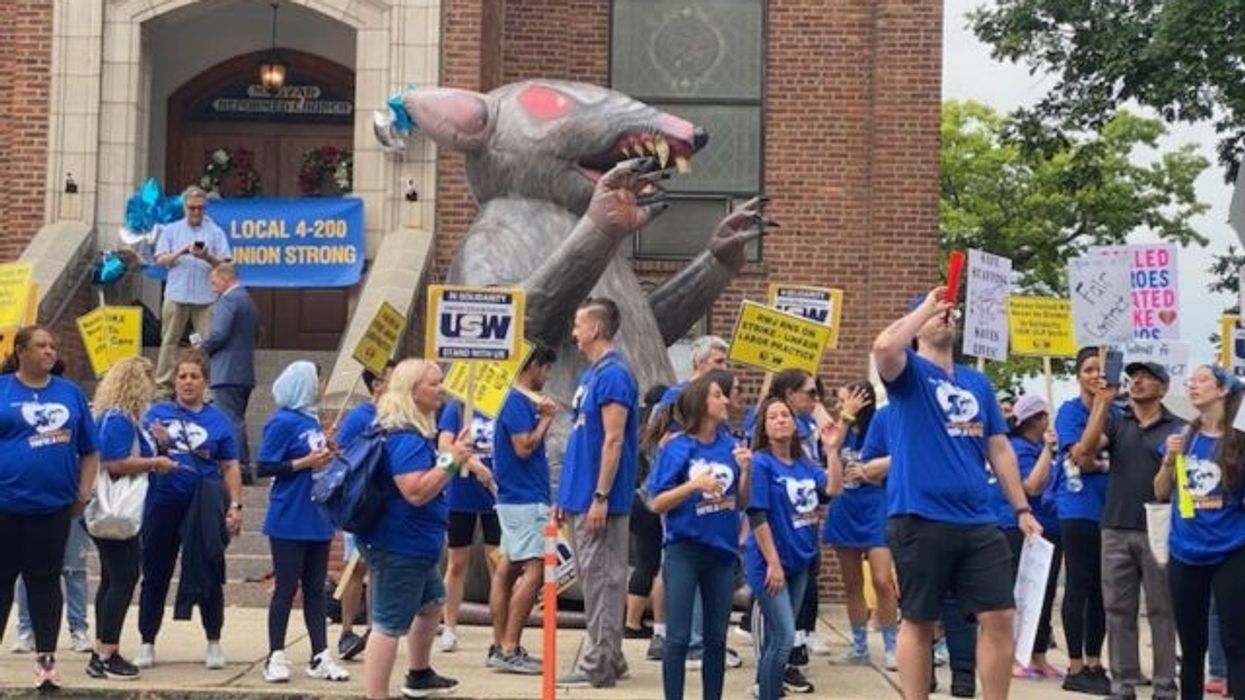
The strike has led many of the nurses to discuss the ways that understaffing, paperwork, and the bottom-line efficiency fixation that are inherent in capitalist organizations eat into the quality of care they can give.
Since the nurses of RWJBarnabas hospital in New Brunswick, New Jersey, first struck early in August, I have had many conversations with them while visiting their picket lines. From the beginning, I have been struck by the extent to which they miss their work and their patients, and by their desire to increase the ratio of nurses to patients so the patients can get the care they need.
This obviously does not fit the stereotype that people only work for the paycheck. It also raises questions about the meaning of work, and about why capitalism creates pressures that operate to destroy the worthwhile and even fun parts of jobs.
Marxist and other theories of alienation often seem to say that workers hate their jobs because capitalism has created alienated work. In its narrowest sense, “alienation” simply means that much of the value of the work that workers do is taken away from the worker and becomes profit for the employers. More broadly, alienation means that employers control what workers do, the conditions in which they do it, and the product of the labor, and that the result is to remove control, creativity, and joy from the job.
The pleasure they should get from taking care of the patients is whittled away day by day as paperwork and understaffing mean they cannot give the patients the care they need.
Yet this is not what I am hearing from the nurses. And, I might add, it is not what I heard from truck drivers when I studied one of their Los Angeles local unions 50 years ago. (See Teamsters Rank and File, Columbia University Press, 1982.) Drivers saw what they were doing as useful, enjoyed “building up their routes” and pleasing the people to whom they made deliveries, and resented it when employers took action that might have increased their profits, but hurt their customers and the drivers’ relationships with the customers.
What does all this mean? To me, it means that people get joy and pleasure out of helping other people. This is particularly evident with the nurses: The ways they help their patients are very meaningful to them, and, when they are striking, they miss those patients who have recurrent need for care and who they have come to know. As they tell me, the replacement (scab) nurses do not know these patients and will not take as good care of them.
I think this goes very deep into who people are and what society is like. In Marx’s terms, I think helping other people is part of our “species-being,” built into our history and our cultures by many centuries of experience. We like to produce use values for other people, whether this is by taking care of them when they are sick or by delivering goods to them. Undoubtedly, nurses feel this more that truck drivers, since their involvement with other people is more intense and concrete.
Unfortunately, capitalism is a system built to produce and increase profits by focusing on exchange value rather than use value. In terms of the nurses, even though they work for what is ostensibly a nonprofit hospital, they are under constant pressure to work harder, and to serve more patients, and sicker patients, with fewer nurses, while the chief executive officer and other higher-ups make $10 million and even more each year. As one nurse phrased it to me, what they care about is the records we enter into our computers more than the patients. These records, it should be noted, are the basis for the billing that brings the money in. Record-keeping also takes nurses’ time away from the patients.
One nurse told me about what the pressure to do more with fewer people means in practice. She is one of a few workers assigned to an intensive care unit for children. One day, another unit had a staff shortage, so the employer moved all the nurses from her unit to another floor to work with other patients. Her primary assignment that day had been intake—to admit children who needed intensive care to the unit, including filling out the relevant paperwork on the computer. On this particular day, she was admitting a child to the unit when alarms went off for two other children on the unit. In human terms: One child needed to be admitted, and two others had potentially life-threatening emergencies at the same time. Although a particularly bad instance of how understaffing works, this ethical dilemma and associated pain and trauma to the nurses occurs in less acute forms every few days. Yet the paperwork gets filled out, the money comes in, and, in spite of the understaffing, some of the children do get good care even if others end up dead or seriously harmed by inadequate care.
What does this mean for the nurses? They feel guilt and conflict over the decisions their employers force them to make about who does and who does not get seen when. They see their dignity attacked, and their professional knowledge debased, when their supervisors ignore their warnings and their concerns. And the pleasure they should get from taking care of the patients is whittled away day by day as paperwork and understaffing mean they cannot give the patients the care they need.
One of the potential ways in which this strike can help is by forcing safe staffing legislation through the state legislature—although so far, the governor and legislature seem cool to this idea, perhaps because of their economic and personal ties to RWJBarnabas management and to the “healthcare” industry more generally. Another is that they may win contractual provisions that help them defend safe staffing levels. A third is that the heightened solidarity they have built up with each other will let them resist managers’ bad decisions more effectively on a day-to-day basis.
In addition, the strike has led many of the nurses to think and discuss the meaning of their jobs and the ways that understaffing, paperwork, and the bottom-line efficiency fixation that are inherent in capitalist organizations eat into the quality of care they can give, their sense of dignity, and the joy they should get from taking care of the sick. In my view, the only way to solve these problems for them and for future generations is to replace capitalism with a new system that some of us call “socialism,” with the understanding that we will only come to understand this new system as we build it. I hope some of these nurses, and billions of other people in addition, will come to agree with me on that before capitalism creates an unlivable environment for humanity.

"It is unacceptable that millions of Americans throughout our country do not have access to affordable, high-quality primary care and are unable to get the healthcare they need when they need it."
After weeks of negotiations, Independent Sen. Bernie Sanders of Vermont and Republican Sen. Roger Marshall of Kansas announced Thursday that they have reached an agreement on a bill to confront the United States' primary care crisis, which has left millions of people across the nation without access to critical healthcare.
Sanders, the chair of the Senate Health, Education, Labor, and Pensions (HELP) Committee, said in a statement that the new legislation marks a "historic" effort "to expand primary care and to reduce the massive shortage of nurses and primary care doctors in America."
According to a report released earlier this year by the National Association of Community Health Centers, more than 100 million people in the U.S. face difficulty accessing primary care, which is often the initial point of contact for patients seeking care.
The U.S. underinvests in primary care compared to other wealthy nations, despite spending more on healthcare overall.
"It is unacceptable that millions of Americans throughout our country do not have access to affordable, high-quality primary care and are unable to get the healthcare they need when they need it," the Vermont senator said. "Every major medical organization understands that our investment in primary care is woefully inadequate. They understand that focusing on disease prevention and providing more Americans with a medical home instead of relying on expensive emergency rooms for primary care will not only save lives and human suffering, it will save money."
The new bipartisan legislation includes nearly $6 billion in mandatory annual funding for community health centers over the next three years, according to a summary of the measure. If Congress doesn't act by the end of the month, community health centers—which provide primary care to tens of millions of vulnerable Americans—will face steep funding cuts.
The Sanders-Marshall legislation also includes funding that would support an estimated 2,000 primary care physicians over the next decade.
Additionally, the measure would boost funding for the National Health Service Corps to support scholarships and debt relief for doctors, nurses, and other healthcare professionals.
Recent data suggests the U.S. could see a shortage of up to 124,000 physicians over the next decade. Elisabeth Rosenthal of KFF Health News noted last week that "the percentage of U.S. doctors in adult primary care has been declining for years and is now about 25%—a tipping point beyond which many Americans won't be able to find a family doctor at all."
The nursing shortage is also severe and could soon get much worse. One study released earlier this year estimated that around 100,000 registered nurses in the U.S. left their jobs over the past two years—often due to pandemic-related stress—and more than 610,000 more intend to leave over the next four years.
Sanders and Marshall's legislation, which is set to be marked up in the Senate HELP Committee on September 21, would provide $1.2 billion in grants to state universities and community colleges with the goal of boosting the number of students enrolled in registered nursing programs.
Marshall, the top Republican on HELP's Subcommittee on Primary Health and Retirement Security, said in a statement that the new bill "recognizes and addresses the challenges our healthcare industry is facing, like the shortage of nurses and primary care doctors, and includes programs to bolster the workforce in a fiscally responsible way."
According to Sanders' office, the legislation would be "fully paid for by combating the enormous waste, fraud, and abuse in the healthcare system, making it easier for patients to access low-cost generic drugs, and holding pharmacy benefit managers accountable, among other provisions."
In remarks on the Senate floor on Thursday, Sanders noted that "in Vermont and all over this country, our people often have to wait months in order to get an appointment with a doctor and, in some cases, they have to travel very long distances to get the healthcare they need."
"It is literally insane," said Sanders, "that millions of Americans with nonemergency healthcare needs get their primary care in a hospital emergency room."
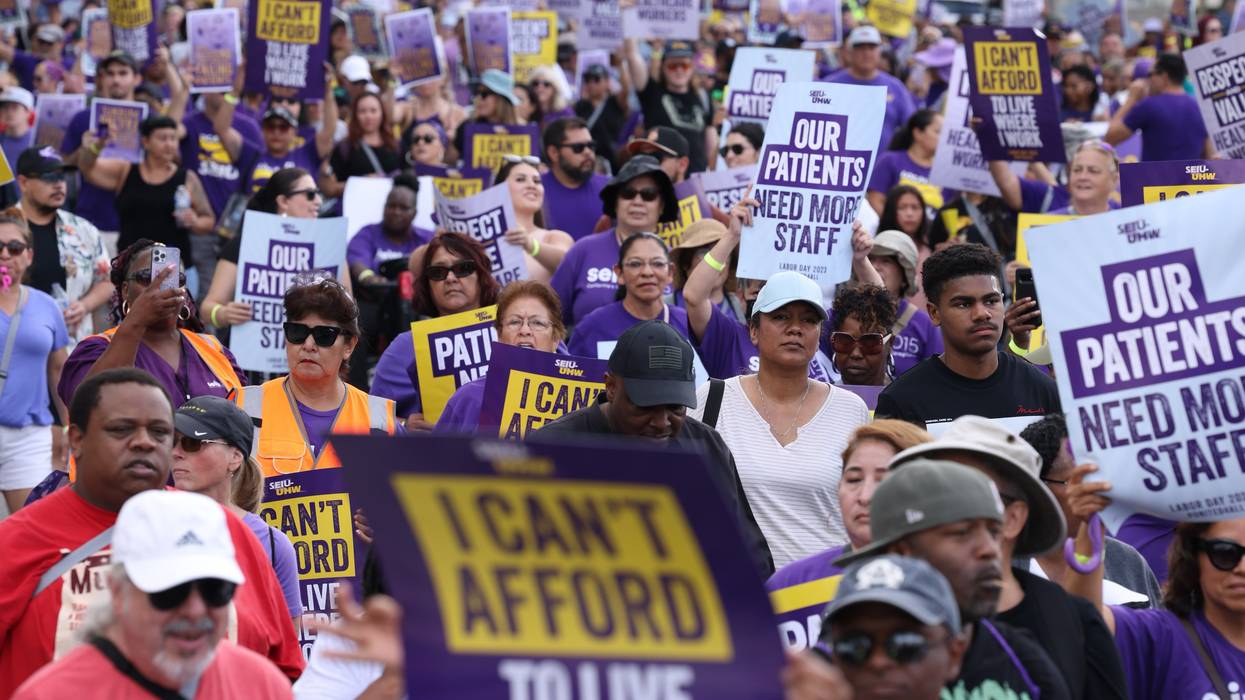
"We are prepared to do whatever it takes, even get arrested in an act of civil disobedience, to stand up for our patients," said one Kaiser Permanente worker.
Dozens of healthcare workers were arrested in Los Angeles on Monday after sitting in the street outside of a Kaiser Permanente facility to demand that providers address dangerously low staffing levels at hospitals in California and across the country.
The civil disobedience came as the workers prepared for what could be the largest healthcare strike in U.S. history. Late last month, 85,000 Kaiser Permanente employees represented by the Coalition of Kaiser Permanente Unions began voting on whether to authorize a strike over the nonprofit hospital system's alleged unfair labor practices during ongoing contract negotiations.
The current contract expires on September 30.
"We are burnt out, stretched thin, and fed up after years of the pandemic and chronic short staffing," Datosha Williams, a service representative at Kaiser Permanente South Bay, said Monday. "Healthcare providers are failing workers and patients, and we are at crisis levels in our hospitals and medical centers."
"Our employers take in billions of dollars in profits, yet they refuse to safely staff their facilities or pay many of their workers a living wage," Williams added. "We are prepared to do whatever it takes, even get arrested in an act of civil disobedience, to stand up for our patients."
Kaiser Permanente reported nearly $3.3 billion in net income during the first half of 2023. In 2021, Kaiser CEO Greg Adams brought in more than $16 million in total compensation.
According to the Coalition of Kaiser Permanente Unions, the hospital system "has investments of $113 billion in the U.S. and abroad, including in fossil fuels, casinos, for-profit prisons, alcohol companies, military weapons, and more."
Healthcare workers, meanwhile, say they're being overworked and underpaid, and many are struggling to make ends meet amid high costs of living.
"We have healthcare employees leaving left and right, and we have corporate greed that is trying to pretend that this staffing shortage is not real," Jessica Cruz, a nurse at Kaiser Permanente Los Angeles Medical Center, told LAist.
"We are risking arrest, and the reason why we're doing it is that we need everyone to know that this crisis is real," said Cruz, who was among the 25 workers arrested during the Labor Day protest.
A recent survey of tens of thousands of healthcare workers across California found that 83% reported understaffing in their departments, and 65% said they have witnessed or heard of care being delayed or denied due to staff shortages.
Additionally, more than 40% of the workers surveyed said they feel pressured to neglect safety protocols and skip breaks or meals due to short staffing.
"It's heartbreaking to see our patients suffer from long wait times for the care they need, all because Kaiser won't put patient and worker safety first," Paula Coleman, a clinical laboratory assistant at Kaiser Permanente in Englewood, Colorado, said in a statement late last month. "We will have no choice but to vote to strike if Kaiser won't bargain in good faith and let us give patients the quality care they deserve."
A local NBC affiliate reported Monday that 99% of Colorado Kaiser employees represented by SEIU Local 105 have voted to authorize a strike.

"It is absurd for RWJBH to claim it can afford to pay its executives millions, yet is somehow unable to provide its nurses fair raises," said the senator.
Voicing his support for nearly 2,000 nurses at one of New Jersey's largest hospitals as they approach the third full week of their work stoppage, U.S. Sen. Bernie Sanders on Tuesday called for a fair contract for the nurses and condemned their hospital network's use of replacement nurses during the strike instead of negotiating "in good faith."
Unionized nurses who are represented by United Steel Workers Local 4-200 have been on strike since August 4 in protest of stagnant wages and unsafe staffing ratios even as executives at Robert Wood Johnson University Hospital (RWJUH) are paid millions per year.
The nurses began contract negotiations in April, and three offers by RWJUH failed to provide fair working conditions, the union says. The most recent offer included a 15.6% raise over three years but also would have penalized nurses for taking sick days—putting the health of patients and staff at risk.
The hospital has only hired 150 new nurses since 2022, according to NJ Spotlight News, and the union says staff shortages have left nurses—including those taking care of some of the most vulnerable patients in the Neonatal Intensive Care Unit—struggling to provide care.
"We're tired! We're burnt out! We're going and going—all day, every day!" nurse Sue Sienkiewicz told NJ Spotlight News on August 4. "All shifts. Not getting breaks, because you're too busy to take a break."
In his letter to RWJ Barnabas Health (RWJBH) president and CEO Mark E. Manigan, Sanders also noted that nurses have faced restrictions on their own healthcare plans and are permitted only to use providers within the RWJBH system.
"The hospital has the means and ability to reduce costs and provide affordable healthcare benefits to its workers," said Sanders. "Instead, the hospital continues to see nurses' health costs as another means to profit and has refused to provide a meaningful counteroffer in recent negotiation."
In contract negotiations, nurses at RWJUH were offered a raise of just $1 per hour for on-call shifts only, "which, after adjusting for inflation, would amount to a significant pay cut," said the senator.
"While RWJBH continues to make millions in revenues, the wages for the nurses at RWJUH are not keeping pace with the rising cost of living," he added. "It is absurd for RWJBH to claim it can afford to pay its executives millions, yet is somehow unable to provide its nurses fair raises."
The hospital further proved it has the resources to pay nurses earlier this month when it hired non-union nurses to replace the striking health professionals.
"Let's be clear: If RWJBH can afford to hire these replacement nurses and pay their executives millions each year, they can afford a contract that keeps nurses safe and provides living wages and good benefits," said Sanders. "These workers have been on the frontlines in our fight against Covid-19 and have risked their lives to save patients under challenging conditions. They deserve better."
The senator concluded by calling on Manigan and other officials to return to the bargaining table.
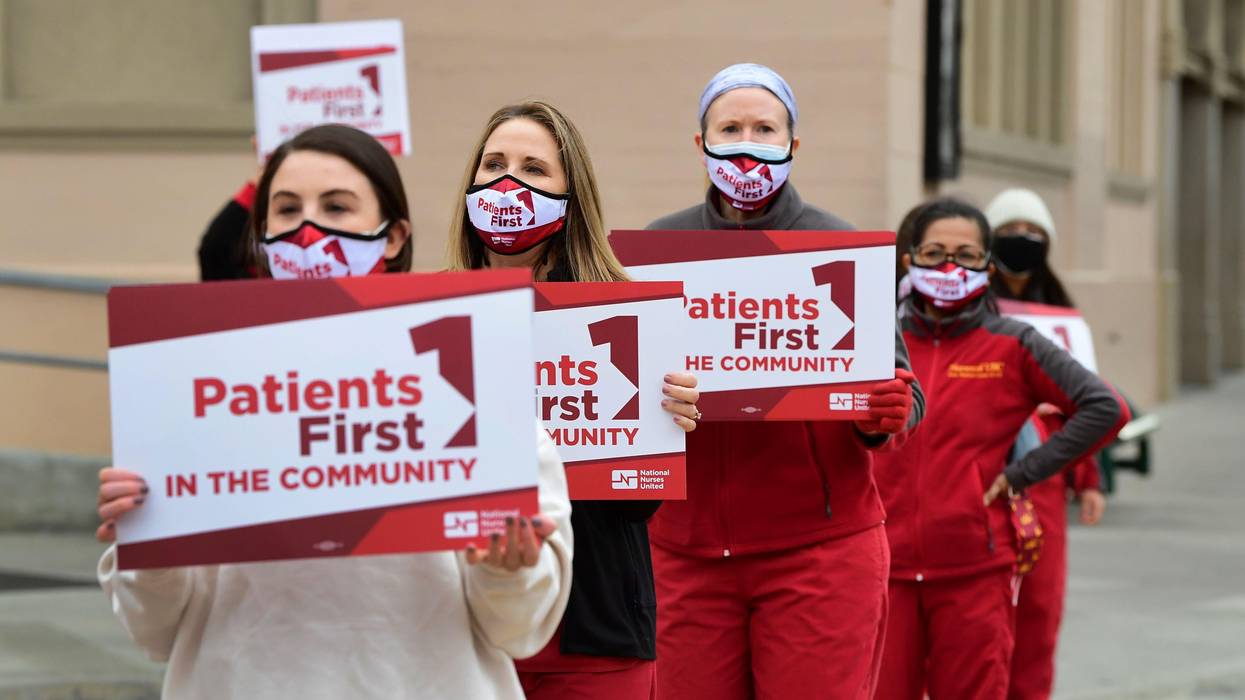
The lack of investment in the care sector not only jeopardizes economic growth but also perpetuates a disregard for the significant contributions of care workers—contributions that have gone unnoticed for far too long.
The pandemic spotlighted the indispensable role care workers play in upholding the health, well-being, and economic equilibrium of individuals, families, and communities. Amid widespread care center closures, millions of Americans found themselves devoid of care worker support, leading to a marked decrease in labor force participation, especially among women.
Next month, Americans may once again experience a critical gap in care services if funding from the American Rescue Plan’s childcare stabilization fund is not renewed. One year after the Inflation Reduction Act’s and CHIPS and Science Act’s extraordinary investments in clean energy and semiconductors, it’s clear that industrial policies work and that the care sector is in dire need of investment.
Presently, more than 4.8 million Americans provide care work such as childcare, eldercare, and health and disability services. When we add teachers to this equation, the number balloons to 12.2 million workers—amounting to about 7.6% of the total workforce. This care workforce endured some of the harshest working conditions during the pandemic, deepening the legacy of systemic worker exploitation in the industry.
Policymakers have not undertaken successful initiatives to enhance working conditions for care workers or to modernize the sector to better align with the nation’s care needs.
As a result, more than 230,000 workers have transitioned from care work since February 2020. Childcare worker employment has plummeted by 101,000, and care aides and assistants have seen a reduction of 141,000 since the pandemic started. Additionally, the number of elementary and middle school teachers has dwindled by 4.4%, resulting in approximately 16,000 fewer educators.
This decline in care work employment stems largely from a decline in new entrants to the field, as younger women have opted for other industries instead. Yet, policymakers have not undertaken successful initiatives to enhance working conditions for care workers or to modernize the sector to better align with the nation’s care needs. In the absence of adequate public investments, employment in the care work sector is expected to continue its decline.
This vacuum has far-reaching economic implications, affecting labor force participation, productivity, and prices—the foundations of economic growth (Lagarde and Ostry 2018). Data shows that while prime-age women’s participation increased, the decline in labor force participation among women over 54 has offset this positive trend—dragging down the overall labor force participation rate of women.
Additionally, the dearth of healthcare support workers—nurses, psychiatric aides, occupational therapy assistants, home health aides—has overburdened existing staff, leading to burnout and high turnover. Consequently, patient care levels have suffered, culminating in adverse health outcomes. As an aging population grapples with a rise in pandemic-induced disabilities, the demand for care services is set to soar, driving up medical care expenses. The anticipated need for 2 million healthcare occupation jobs by 2031 indicates an impending surge in medical care costs that could accelerate inflation.
The lack of investment in the care sector not only jeopardizes economic growth but also perpetuates a disregard for the significant contributions of care workers—contributions that have gone unnoticed for far too long. President Joe Biden proposed investments in the care sector in 2021 as part of his Build Back Better legislative package, but those provisions were cut in negotiations with Congress over the Inflation Reduction Act.
As implementation of the IRA continues, care work still deserves to be one of the administration’s primary issues. In the absence of an industrial policy that bolsters care work, investments in various industries and the broader economy will be severely compromised, as will the economic security of care workers.