

SUBSCRIBE TO OUR FREE NEWSLETTER
Daily news & progressive opinion—funded by the people, not the corporations—delivered straight to your inbox.
5
#000000
#FFFFFF
To donate by check, phone, or other method, see our More Ways to Give page.
Daily news & progressive opinion—funded by the people, not the corporations—delivered straight to your inbox.

"This opinion is about protecting Trump and his allies from any real accountability, no matter where the questions come from—Congress, the courts, or investigators of any kind."
Just days after Senate Republicans confirmed US Attorney General Todd Blanche, the Department of Justice this week issued a legal opinion on executive privilege that was swiftly condemned as an attempt to unfairly protect some of President Donald Trump's top advisers from any accountability.
Historically, the president has been allowed to assert executive privilege over communications with executive branch staff, protecting them from disclosure.
However, the DOJ’s Office of Legal Counsel (OLC) said in a Monday memo that "presidential communications with private advisers can fall within the scope of executive privilege so long as they relate to official presidential decisionmaking, involve or reflect communications with the president or his direct advisers, and are confidential."
The memo is signed by Assistant Attorney General T. Elliot Gaiser. HuffPost reported that a DOJ official "argued its veracity by comparing it to a similar one made by President George W. Bush's attorney general in 2007."
"While the issue has not been litigated frequently, the opinion reaffirms the long-standing position of the office going back at least as far as Paul Clement in 2007 and arguably as far back as 1972," the unnamed official said.
Jonathan Shaub, a University of Kentucky School of Law professor who served in the Obama administration’s OLC, told CNN: "I would say it's not inconsistent with past positions... But it's never been stated publicly."
Shaub also told Axios that "it really could be a pretty significant weapon" for the second Trump administration "to deflect a lot of that congressional investigation of private parties."
Republicans are at risk of losing control of both chambers of Congress in the November midterm elections, and if they do, Democratic majorities could move to impeach Trump a historic third time—for everything from the Trump family's profiteering off of the presidency to his illegal war on Iran.
The Not Above the Law coalition's co-chairs—Brett Edkins of Stand Up America, Praveen Fernandes of the Constitutional Accountability Center, Lisa Gilbert of Public Citizen, and Kelsey Herbert of MoveOn—said Tuesday that "Todd Blanche's Justice Department is doing what it always does: attempting to shield Donald Trump and the people around him before anyone can hold them accountable."
"This opinion is about protecting Trump and his allies from any real accountability, no matter where the questions come from—Congress, the courts, or investigators of any kind," they argued. "Every senator who voted to confirm Blanche knew exactly what kind of Justice Department they were signing off on. They own it now."
Senate Minority Leader Chuck Schumer (D-NY)—who may not have enough support to lead Democrats even if they reclaim the upper chamber in November—was similarly critical, concluding: "Donald Trump is scared. He knows accountability is coming."
"He’s using his newly installed attorney general/personal lawyer, Todd Blanche, to cover up his communications with private advisers and special interest cronies," Schumer said on Facebook. "These are the actions of someone with something to hide. And it shows he is petrified of the questions a Democratic Congress will demand answers to. We will not let Trump escape the accountability he deserves."
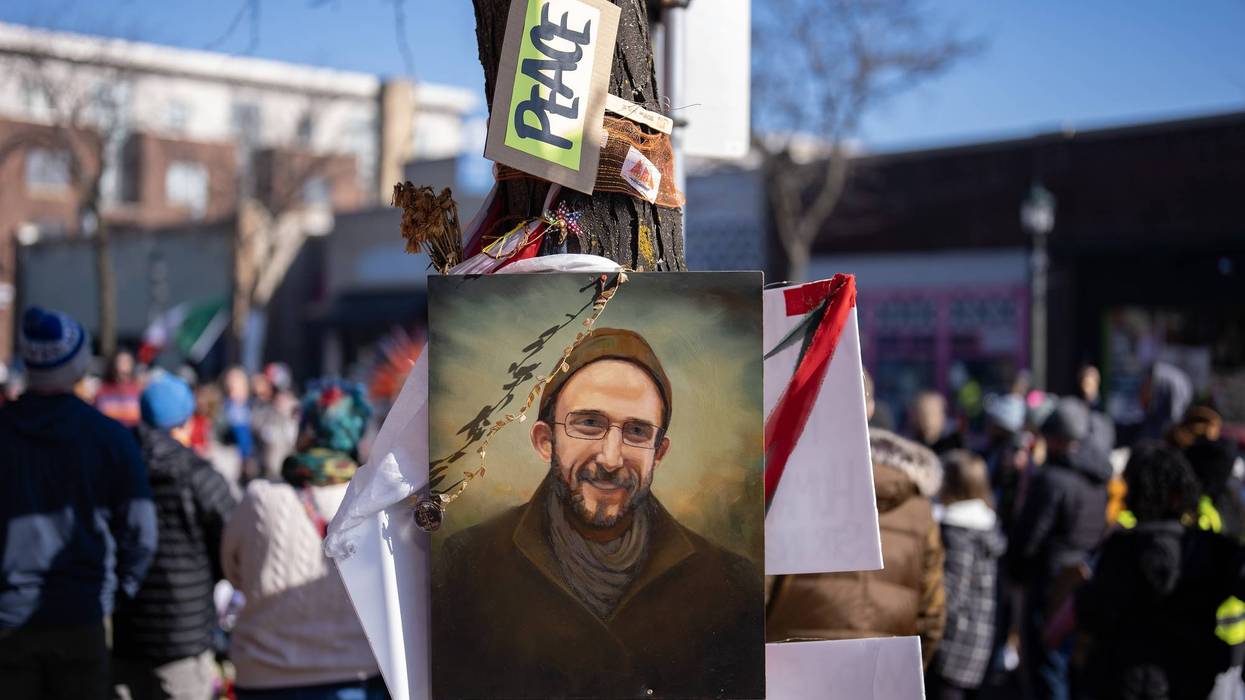
"The Trump administration is sending a clear message: federal law enforcement can kill with absolute impunity."
A broad coalition of organizations on Tuesday accused the Trump administration of trying to sabotage a genuine investigation into the killing of Alex Pretti, the intensive care nurse who was fatally shot by federal immigration enforcement agents last month.
In a statement released by the Not Above the Law Coalition, the groups pointed to recent reporting about the FBI denying Minnesota law enforcement officials access to evidence gathered in relation to the Pretti shooting as proof that the administration has no intention of conducting an independent investigation into his death, which has been ruled a homicide by the Hennepin County medical examiner.
"By blocking Minnesota's investigation and attempting to shield agents from accountability," said the groups, "the Trump administration is sending a clear message: federal law enforcement can kill with absolute impunity. This move attempts to place federal agents above the law and beyond the reach of justice."
The groups noted that the administration was breaking with decades of standard practices by not cooperating with local police and prosecutors to investigate Pretti's death, and they warned it could set a dangerous precedent for future shootings carried out by federal officers.
"We demand immediate action," they concluded. "Mandatory independent investigations for all federal use of deadly force, recognition of state authority to investigate federal misconduct, federal cooperation with local investigators, and real consequences for constitutional violations. Without accountability, we allow federal forces to operate with impunity and face no consequences for taking American lives."
Included among the statement's signatories were the ACLU, Citizens for Responsibility and Ethics in Washington, Common Cause, Indivisible, Public Citizen, and the Revolving Door Project.
The Minnesota Bureau of Criminal Apprehension (BCA) said last week that it was continuing its probe into Pretti's killing, even without the assistance of federal investigators.
“The BCA will present its findings without recommendation to the appropriate prosecutorial authorities for review," the agency vowed.
In addition to investigating the Pretti killing, the BCA is also conducting probes into the fatal shooting of Minneapolis mother Renee Good and the shooting of Venezuelan immigrant Julio Cesar Sosa-Celis.
Hennepin County Attorney Mary Moriarty last week similarly said that her office was not getting any help from the federal government in its investigation into the Pretti shooting, though she said her team was continuing to gather evidence and interview witnesses.
Moriarty emphasized that her office, which is currently working with the Minnesota BCA in its investigation, can bring criminal charges against federal immigration officers if it has enough evidence to do so, even without the cooperation of the Trump administration.
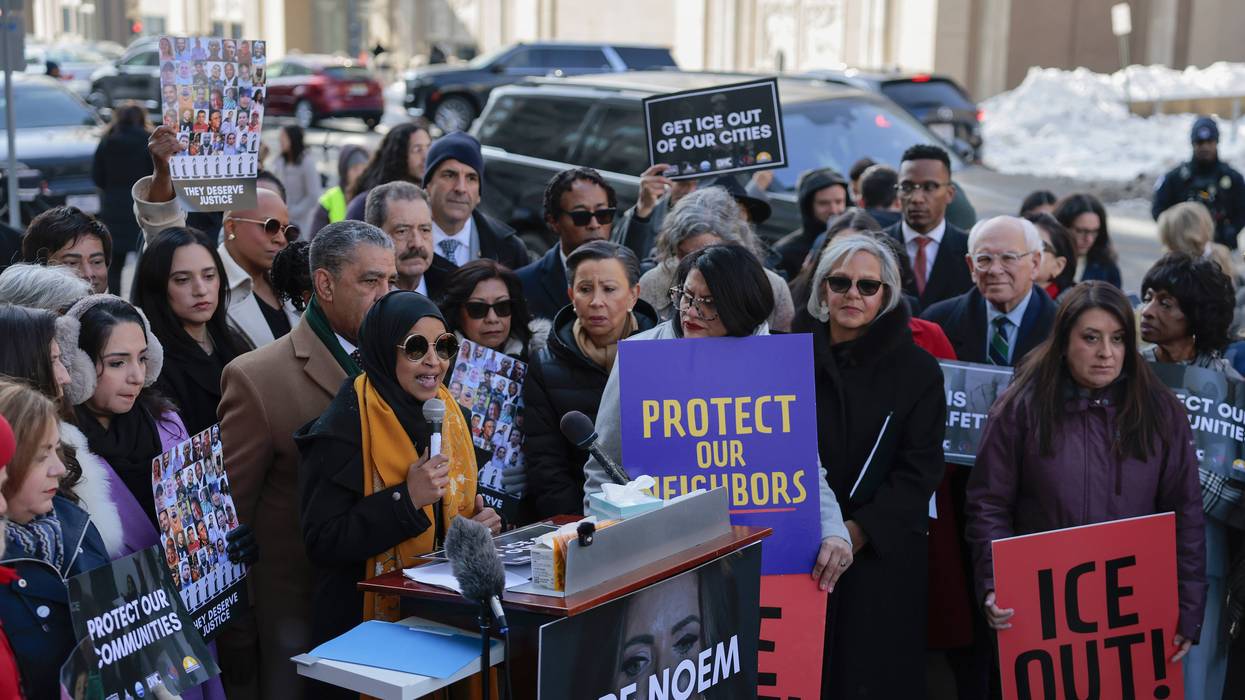
"Every single ICE and CBP agent should be out of Minnesota," the congresswoman said. "The terror campaign must stop."
President Donald Trump's "border czar," Tom Homan, announced Wednesday that 700 immigration agents are leaving Minnesota, but with around 2,000 expected to remain there, Democratic Congresswoman Ilhan Omar, whose district includes Minneapolis, declared that the drawdown is "not enough."
As part of Trump's "Operation Metro Surge," agents with Customs and Border Protection (CBP) and Immigration and Customs Enforcement (ICE) have invaded multiple Minnesota cities, including Minneapolis and Saint Paul, and committed various acts of violence, such as fatally shooting Alex Pretti and Renee Good.
In a pair of social media posts about Homan's announcement, Omar argued that "every single ICE and CBP agent should be out of Minnesota. The terror campaign must stop."
"This occupation has to end!" she added, also renewing her call to abolish ICE—a position adopted by growing shares of federal lawmakers and the public as Trump's mass deportation agenda has hit Minnesota's Twin Cities, the Chicago and Los Angeles metropolitan areas, multiple cities in Maine, and other communities across the United States.
In Congress, where a fight over funding for CBP and ICE's parent agency, the Department of Homeland Security, is playing out, Omar has stood with other progressives in recent votes. The bill signed by Trump on Tuesday only funds DHS through the middle of the month, though Republicans gave ICE an extra $75 billion in last year's budget package.
During an on-camera interview with NBC News' Tom Llamas, Trump said that the reduction of agents came from him. After the president's factually dubious rant about crime rates, Llamas asked what he had learned from the operation in Minnesota. Trump responded: "I learned that maybe we can use a little bit of a softer touch. But you still have to be tough."
"We're really dealing with really hard criminals," Trump added. Despite claims from him and others in the administration that recent operations have targeted "the worst of the worst," data have repeatedly shown that most immigrants detained by federal officials over the past year don't have any criminal convictions.
Operation Metro Surge has been met with persistent protests in Minnesota and solidarity actions across the United States. Jaylani Hussein, executive director of the Minnesota chapter of the Council on American-Islamic Relations, said Wednesday that "the limited drawdown of ICE agents from Minnesota is not a concession. It is a direct response to Minnesotans standing up to unconstitutional federal overreach."
"Minnesotans are winning against this attack on all our communities by organizing, resisting, and defending our constitutional rights. But this moment should not be a victory lap," Hussein continued. "It must instead be a call to continue pushing for justice. The deaths of Renee Good and Alex Pretti at the hands of federal immigration agents remain uninvestigated, and communities and prosecutors alike have raised grave concerns about violations of their oaths and the Constitution. This is not the time to pull back, it is the time to deepen our resilience, increase our support for one another, and keep fighting for our democracy and accountability until justice is served."
The Not Above the Law coalition's co-chairs—Praveen Fernandes of the Constitutional Accountability Center, Kelsey Herbert of MoveOn, Lisa Gilbert of Public Citizen, and Brett Edkins, of Stand Up America—similarly said that "Tom Homan's announcement that 700 federal immigration agents will be withdrawn from Minnesota is more a minor concession than a meaningful policy shift."
"The vast majority—approximately 2,000 federal agents—remain deployed in the state, and enforcement operations continue unabated," the co-chairs stressed. "This token gesture does nothing to address the ongoing terror families face or the constitutional crisis this administration's actions have created."
“The killings of Minnesotans demand real accountability," they added. "Families torn apart by raids and alleged constitutional violations deserve justice. Real change means the complete withdrawal of all federal forces conducting these operations in Minnesota, full accountability for the deaths and violations that have occurred, and congressional action to restore the rule of law. The American people deserve better than political theater when constitutional rights hang in the balance."
On Tuesday, the state and national ACLU asked the United Nations Committee on the Elimination of Racial Discrimination to "use its early warning and urgent action procedure in response to the human rights crisis following the Trump administration's deployment of federal forces" in the Twin Cities.
"The Trump administration's ongoing immigration enforcement operations in Minnesota are being carried out by thousands of masked federal agents in military gear who are ignoring basic constitutional and human rights of Minnesotans," said Teresa Nelson, legal director of the ACLU of Minnesota. "Their targeting of our Somali and Latino communities threatens Minnesotans’ most fundamental rights, and it has spread fear among immigrant communities and neighborhoods."
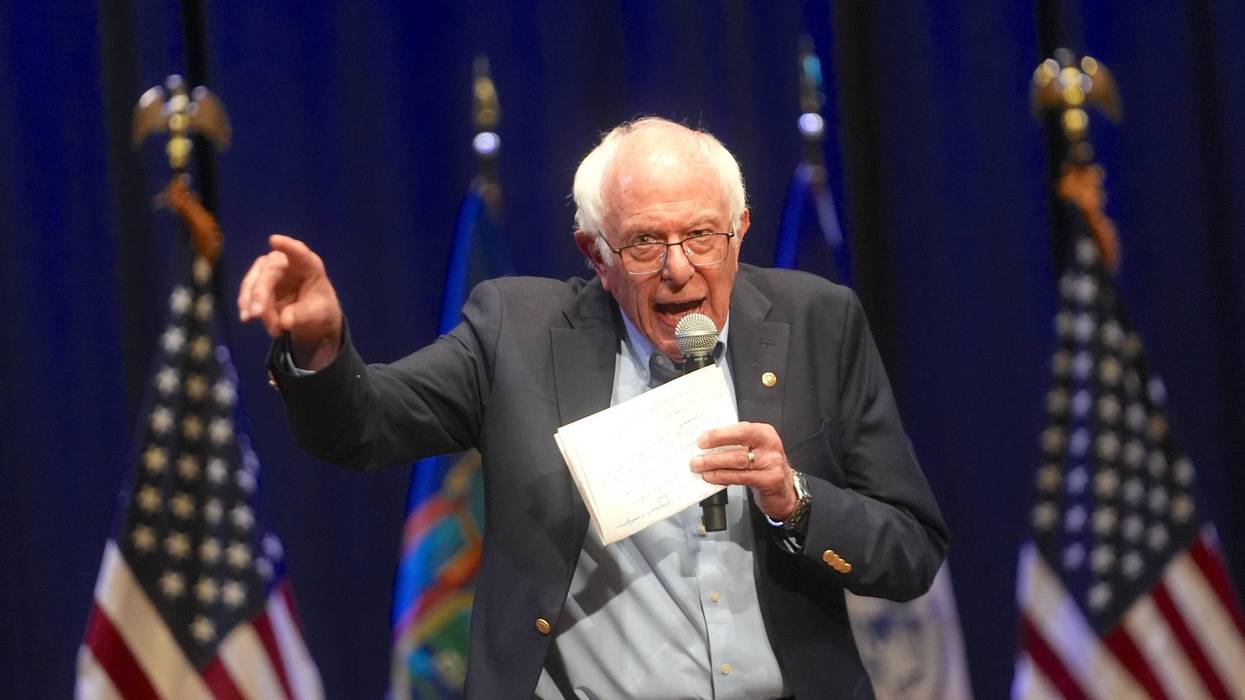
"We must not allow our great country, the United States of America, to become an authoritarian society."
Sen. Bernie Sanders on Monday warned that the Trump administration's targeting of Federal Reserve Chairman Jerome Powell for criminal investigation was part of a broader pattern of intimidation aimed at quelling dissent.
In a prepared statement, Sanders (I-Vt.) acknowledged that he had his own disagreements with Powell, a conservative Republican who was first appointed by President Donald Trump to be chairman of the Federal Reserve in 2017.
However, Sanders said political disagreements had nothing to do with the Department of Justice launching a criminal probe of Powell.
"In a democracy, debate and disagreement are normal," Sanders said. "But Donald Trump does not 'disagree' with his opponents. In his pursuit of absolute power, he attempts to destroy anyone who stands in his way. He's actively prosecuting Powell not because the Fed chair broke the law, but because he won't bend the knee to Donald Trump."
Sanders noted that Powell was only the latest target of the Trump administration's vindictive retribution.
"When Sen. Mark Kelly (R-Ariz.) spoke out against Donald Trump's authoritarian rhetoric and threats toward political opponents, Trump didn't agree," Sanders explained. "He had his Defense Department investigate Kelly for misconduct and threatened to have him executed."
Sanders also pointed to the prosecutions of New York Attorney General Letitia James and former FBI Director James Comey, as well as his threats against assorted other critics, as evidence that Trump seeks to "intimidate and destroy... as part of his march to authoritarianism."
"We must not allow our great country, the United States of America, to become an authoritarian society," Sanders concluded. "Trump's persecution of his political opponents must end."
The co-chairs of the Not Above the Law coalition–Lisa Gilbert, co-president of Public Citizen; Praveen Fernandes, vice president of the Constitutional Accountability Center; Kelsey Herbert, campaign director at MoveOn; and Brett Edkins, managing director for policy and political affairs at Stand Up America—also denounced the investigation into Powell as politically motivated on Monday, while arguing it was part of an effort to stifle dissent in the US.
"Whether targeting federal judges, members of Congress, civil society organizations, or now the chair of the Federal Reserve, Trump weaponizes the full force of government against anyone who won't submit to his will," they said. "Undermining the Federal Reserve threatens Americans’ jobs and savings, and our nation’s economy."

“Our military exists to defend the nation and protect our freedoms, not to be weaponized against American cities," said critics.
President Donald Trump alarmed many critics this week when he once again mused about deploying the military on the streets of US cities.
As reported by The New York Times, Trump told a group of American troops stationed in Japan on Tuesday that he could send the military into US cities under the pretense of fighting crime.
"We have cities that are troubled, we can’t have cities that are troubled," Trump said. "And we’re sending in our National Guard, and if we need more than the National Guard, we’ll send more than the National Guard, because we’re going to have safe cities."
Trump has deployed the National Guard to cities including Los Angeles, Chicago, Memphis, and Portland in recent months, but local and state officials have opposed the deployment in most cases and have filed legal challenges. Most recently, a federal appeals court voted on Tuesday to rehear the administration's case pushing to send the National Guard to Portland—vacating an earlier decision that allowed Trump to federalize Oregon's troops.
On Wednesday, Trump was asked by a New York Times reporter to specify what he meant when he said he could send "more than the National Guard" into American cities, and he replied that he could send any branch of the military he wanted without any oversight from courts or from Congress.
"If I want to enact a certain act, I'm allowed to do it," Trump said. "I'd be allowed to do whatever I want. The courts wouldn't get involved. Nobody would get involved. And I could send the Army, Navy, Air Force, Marines—I could send anybody I wanted."
Q: What did you mean last night when you said you were prepared to send 'more than the National Guard' into American cities?
TRUMP: Sure, I'd do that. As you know I'm allowed to do that
Q: Do you mean other branches of the military you'd send in?
TRUMP: If it were -- who are… pic.twitter.com/5O733Mas5V
— Aaron Rupar (@atrupar) October 29, 2025
The president threatened to invoke the Insurrection Act earlier this month, falsely claiming the law gives him "unquestioned power." The Insurrection Act allows presidents to deploy federal troops to enforce US laws in cases of extreme emergency, such as violent rebellions—but local officials in the cities Trump has targeted so far have categorically denied that anti-Trump protests there meet the high threshold for invoking the law.
The co-chairs of the Not Above the Law Coalition—Lisa Gilbert, co-president of Public Citizen; Praveen Fernandes, vice president of the Constitutional Accountability Center; Kelsey Herbert, campaign director at MoveOn; and Brett Edkins, managing director for policy and political affairs at Stand Up America—condemned Trump's threats on Tuesday as "unlawful and un-American."
"Our military exists to defend the nation and protect our freedoms, not to be weaponized against American cities," they said. "In his remarks today, Trump claimed that he and his administration cronies 'can do as we want to do.' That is as dangerous as it is unlawful and un-American."
Trump's use of the American military for domestic law enforcement purposes was also condemned by Ret. Maj. Gen. Randy Manner, a former top official at the National Guard.
Writing in the Home of the Brave newsletter, Manner condemned Trump's National Guard deployments to US cities as "un-American and wrong."
Manner noted that the National Guard has traditionally existed to augment US forces overseas during times of war, and also to serve at the request of state governors during times of emergencies. Using the National Guard to do standard police work, Manner added, is simply unprecedented.
"Our military is not trained in law enforcement," he argued. "There are absolutely zero situations where our National Guard should be on the streets of America as a status quo measure, absent some acute short-term crisis. We would never send our sheriff’s deputies to Afghanistan for a special operation; it’s just as illogical to send highly trained combat soldiers and put them into civilian law enforcement roles."
Trump first began musing about deploying the US military on American soil during the 2024 election campaign, when he said he could use it to take down a group of US citizens whom he described as "the enemy from within." Trump ratcheted up his threats last month when he told a group of assembled US generals that "we should use some of these dangerous cities as training grounds for our military."
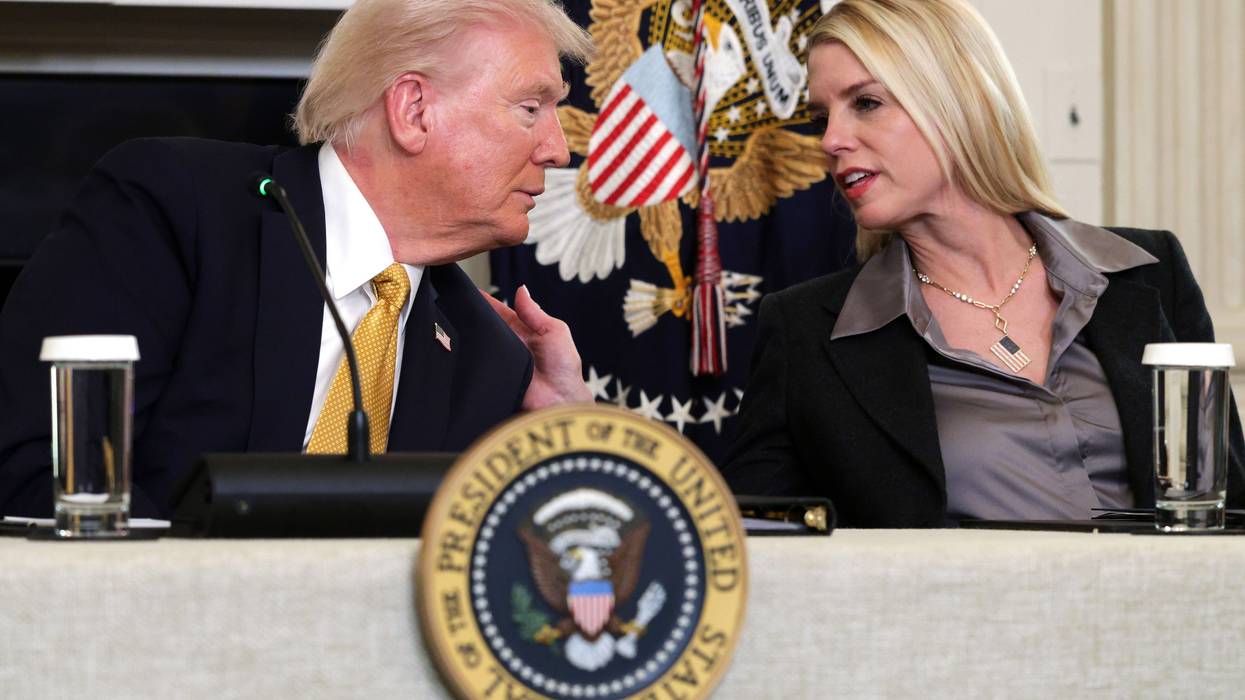
"The American people see exactly what's happening: Trump has corrupted the Department of Justice, turning it into his personal revenge machine," said the Not Above the Law coalition's co-chairs.
As President Donald Trump's ex-adviser John Bolton, former Federal Bureau of Investigation Director James Comey, and Democratic New York Attorney General Letitia James fight the various charges against them, polling published Thursday shows a majority of American adults think the Republican leader is using US law enforcement "to go after his enemies."
Reuters/Ipsos asked 4,385 adults on October 15-20 whether Trump was abusing federal law enforcement in this way. Fifty-five percent of all respondents said yes, including 85% of Democrats, 29% of Republicans, and 55% of adults who identified as "other." Just 26% of all respondents said no. The other 19% said they didn't know or skipped the question.
The Not Above the Law coalition's co-chairs—Praveen Fernandes of the Constitutional Accountability Center, Kelsey Herbert of MoveOn, Lisa Gilbert of Public Citizen, and Brett Edkins of Stand Up America—have forcefully spoken out against Trump's abuse of the US Department of Justice (DOJ). They responded to the survey results in a statement.
"The American people see exactly what's happening: Trump has corrupted the Department of Justice, turning it into his personal revenge machine," they said. "When 55% of Americans—including 3 in 10 Republicans—recognize that the president is abusing law enforcement to prosecute his enemies, it's clear this isn't a partisan issue anymore. It's a threat to the rule of law that transcends party lines."
"The pattern is undeniable: James Comey, Letitia James, John Bolton—all Trump critics charged after he publicly demanded their prosecution. DOJ has been co-opted to serve the president, not the public," the co-chairs continued.
Trump-appointed US Attorney General Pam Bondi, who leads the DOJ, and FBI Director Kash Patel, whose bureau is in the department, have both been accused of abusing their positions and politicizing their agencies for the president.
More than half of Americans, including about three in 10 Republicans, believe President Donald Trump is using federal law enforcement to go after his enemies, according to a new Reuters/Ipsos poll.www.reuters.com/world/us/maj...
[image or embed]
— Brad Heath (@bradheath.bsky.social) October 23, 2025 at 10:17 AM
Comey pleaded not guilty earlier this month. His legal team is seeking the dismissal of charges stemming from his congressional testimony, arguing that the case is politically motivated and that Trump "defectively appointed" Lindsey Halligan, a former insurance lawyer, as interim US attorney in the Eastern District of Virginia.
James—who successfully prosecuted Trump for financial crimes—pleaded not guilty to mortgage fraud charges Friday morning, a day after her attorneys told the same court that she is also seeking to have her case dismissed and challenging "the unlawful appointment" of Halligan.
After James' Friday arraignment, Stand Up America executive director Christina Harvey said: "Let's be clear: The Department of Justice is targeting Attorney General James because she dared to hold Trump accountable and won. Meanwhile, the Department turns a blind eye as Trump and his cronies cash in on the presidency, even when they're caught red-handed taking $50,000 in exchange for promised government contracts."
"Trump is acting like a wannabe dictator—trying to jail his political enemies, defying the courts, and deploying the military against his own people. That’s not leadership, it's tyranny," Harvey stressed. "This isn't just about one case or one prosecutor. The weaponization of the justice system is a threat to every American. If Trump is allowed to abuse the DOJ to punish his critics, then no one is safe."
Halligan is not handling Bolton's Espionage Act case in Maryland, which began under the Biden administration. While he has also pleaded not guilty, experts have pointed out that, as University of Alabama law professor and former US attorney Joyce Vance put it, "instead of the factually deficient indictments we're seen in the other cases, this is the sort of detailed indictment we are used to seeing in a serious matter."
Regardless of how those cases play out, the coalition co-chairs said that "this poll confirms what we've been warning about: Trump's abuse of power is eroding faith in federal institutions as neutral enforcers of the law and deepening the divisions tearing our country apart. Trump's actions threaten the freedom and safety of all Americans."
The poll also found that Americans are increasingly concerned about "US political division and conflict"—43%, up from 39% two years ago. Additionally, 61% of respondents believe ongoing redistricting efforts aimed at next year's midterm elections are bad for democracy, and the same percentage said it is no longer possible to draw political maps fairly.
In addition to the DOJ prosecuting Trump's political enemies and Republican state lawmakers gerrymandering in the middle of the decade to appease him, the president has designated antifa—an anti-fascist movement with no central organizational structure or leaders—as a domestic terrorist group and, relatedly, issued National Security Presidential Memorandum 7.
While dozens of congressional Democrats warned last week that "the sweeping language and broad authority in these directives pose serious constitutional, statutory, and civil liberties risks, especially if used to target political dissent, protest, or ideological speech," Congressman Lance Gooden (R-Texas) urged the DOJ to investigate the National Lawyers Guild (NLG) for "close ties with left-wing extremists and domestic terrorist organizations like antifa."
Responding on Thursday, the group said that "we all know that this is not the first time the NLG has faced political attacks from the US government. Since our founding in 1937, NLG members have been at the frontlines of defending those who challenge fascism and have been the target of state repression. This is a history we are proud of... The NLG will continue to speak out in support of activists and movements most targeted by state repression."