

SUBSCRIBE TO OUR FREE NEWSLETTER
Daily news & progressive opinion—funded by the people, not the corporations—delivered straight to your inbox.
5
#000000
#FFFFFF
To donate by check, phone, or other method, see our More Ways to Give page.
Daily news & progressive opinion—funded by the people, not the corporations—delivered straight to your inbox.
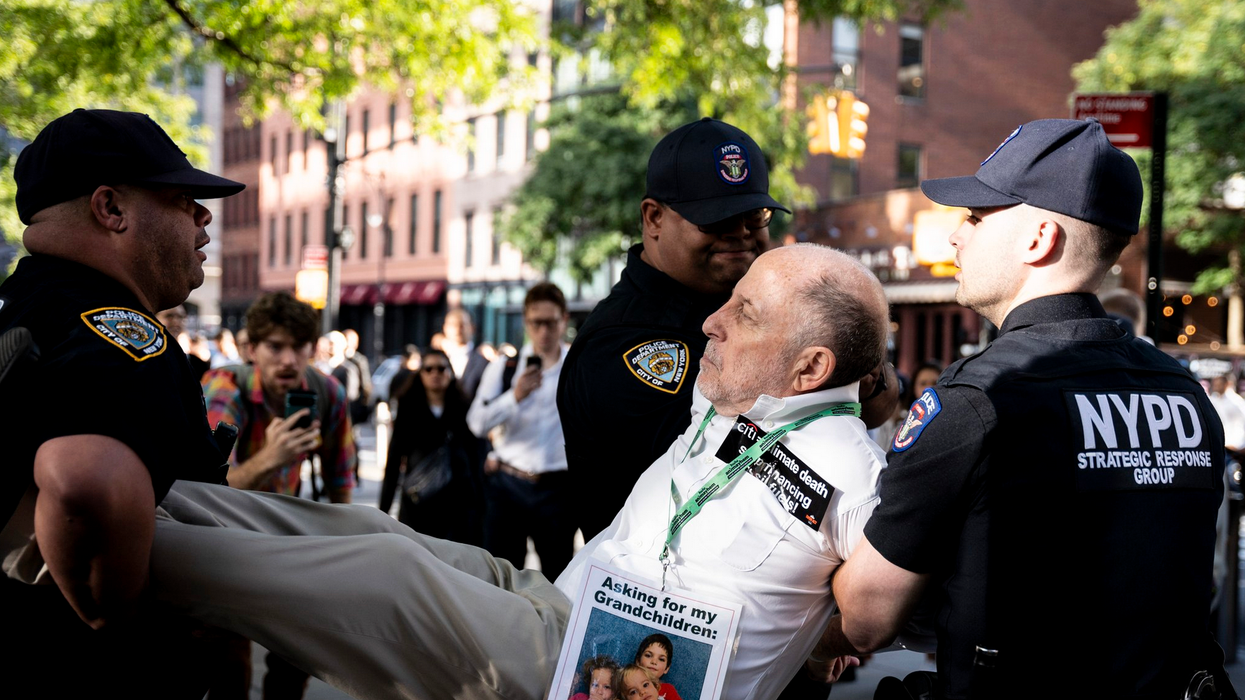
"We're here for you and your children," one campaigner told a police officer who was arresting her. "We're here for our world."
Closing out a "historic" summer of civil disobedience—but with no plans to back off their demands that Wall Street divest from planet-heating fossil fuels—the "Summer of Heat" campaign blockaded the entrance of Citibank's headquarters in New York for an hour on Thursday.
At the 32nd protest held by Stop the Money Pipeline, New York Communities for Change, and other groups since June 10, organizers said 50 people were arrested, including climate scientists and an advocate dressed as an orca—a reference to numerous cases of whales ramming and sinking luxury yachts in recent years.
"The water is too damn hot!" said the costumed protester. "Stop funding fossil fuels."
Summer of Heat has targeted Citibank due to its status as Wall Street's largest funder of methane gas extraction since 2016 and the second-worst funder of oil, coal, and gas projects in recent years, spending $396.3 billion from 2016-23.
For an hour, roughly 1,000 Citibank employees were barred from entering the building as protesters blocked the doors.
"I've been studying climate change since 1982 and no one is listening to the data," said biologist and anti-fracking advocate Sandra Steingraber—who has joined multiple Summer of Heat actions—as she was arrested. "So today they're going to have to listen to my body blocking the doors of the world's largest funder of new fossil fuel projects."
More than 5,000 people have joined Summer of Heat protests since June, and there have been more than 600 arrests. Citibank's response to the demonstrators has escalated to violence at times, with a security guard punching one protester in the building's lobby last month.
One woman told police arresting her on Thursday that her grandson suffers from asthma resulting from wildfire smoke, which climate scientists have linked to fossil fuel extraction and planetary heating.
"We're here for you and your children," she told an officer. "We're here for our world."
As the campaigners blocked the Citibank entrance, cellist John Mark Rozendaal and Stop the Money Pipeline director Alec Connon were preparing to attend a court hearing on Friday regarding assault and criminal contempt charges. Connon has said he was "falsely accused of assault by Citibank security so they could get a restraining order" keeping him from returning to protests at the headquarters.
Mary Lawlor, United Nations special rapporteur on human rights defenders, expressed "strong concern at the charges" and said she would be "closely following" the trial.
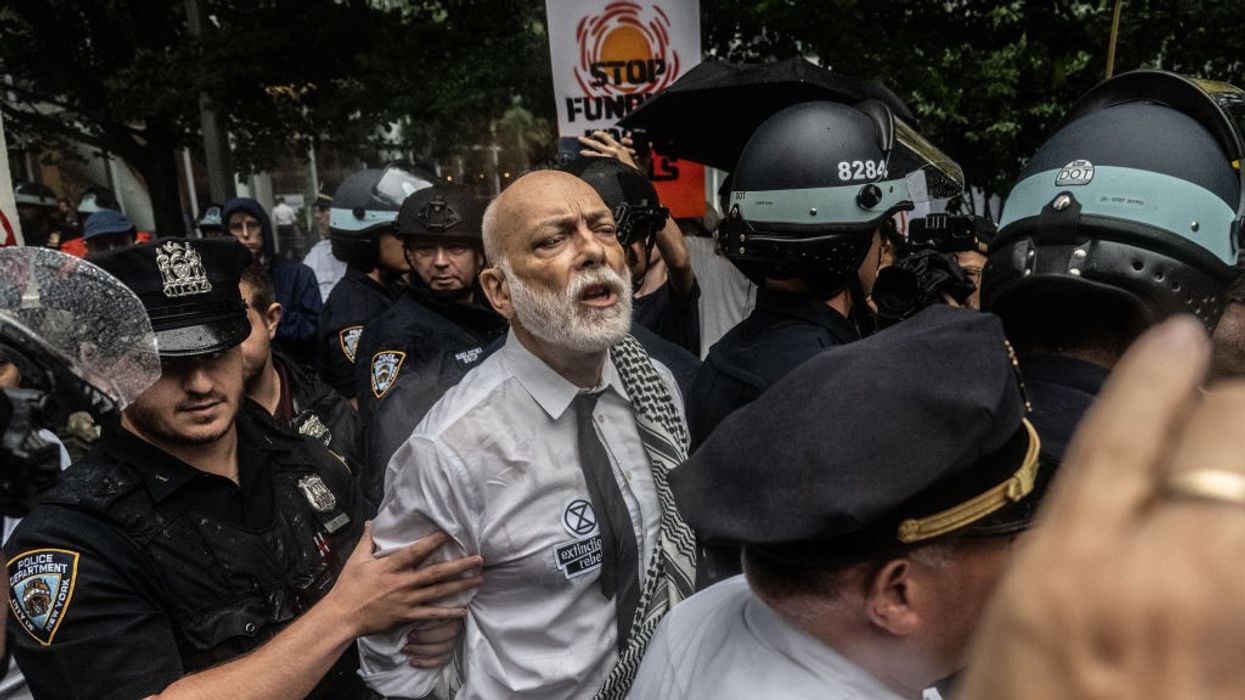
"Rather than doing something about its role in the climate crisis, Citi is choosing instead to target climate activists with false charges and unwarranted arrests," said cellist John Mark Rozendaal.
Climate campaigners expressed incredulous outrage Thursday following the arrest of a 63-year-old Extinction Rebellion activist who violated a dubious restraining order by playing a cello outside Citibank's New York headquarters during a protest against the bank's funding of fossil fuel projects.
John Mark Rozendaal, a professional cellist and grandfather, performed Bach's "Suites for Cello" before he was arrested in the public plaza outside Citibank's headquarters in Lower Manhattan during a "Summer of Heat on Wall Street" protest against banks' fossil fuel financing. New York Police Department (NYPD) officers also arrested 14 peaceful protesters who encircled Rozendaal.
Last month, a Citibank security guard obtained what Extinction Rebellion said was an unconstitutional restraining order against Rozendaal and another activist, Stop the Money Pipeline director Alec Connon. According to the activists, the security guard claimed he was assaulted after hitting his head on a plastic pipe that demonstrators were using to block an entrance to the bank.
Rozendaal and Connon were warned that any violation of the restraining order could result in criminal contempt charges carrying a maximum sentence of seven years in prison.
"Over the last decade, Citibank has been the world's number one funder of fossil fuel expansion," Rozendaal said Thursday. "Yet rather than doing something about its role in the climate crisis, Citi is choosing instead to target climate activists with false charges and unwarranted arrests."
Thousands of people have rallied to demand an end to fossil fuel financing during two months of ongoing Summer of Heat demonstrations. More than 475 activists—including scientists, faith leaders, elders, students, and parents—have been arrested during the protests.
"It's alarming that Citibank is resorting to scare tactics to intimidate climate activists that are simply trying to get the bank to stop financing the fossil fuel industry that is killing our planet and polluting our communities," Democratic New York City Councilwoman Sandy Nurse said in response to Rozendaal's arrest.
"Citi should stop targeting activists and focus instead on ending its support for fossil fuels," Nurse added.
The Center for International Environmental Law, a Washington, D.C.-based nonprofit advocacy group, said that "the use of vague restraining orders to keep protesters away from Citi's New York headquarters represents a troubling effort to suppress these lawful demonstrations and mute advocacy for a just and sustainable world."
"Such measures not only threaten democratic freedoms and hinder crucial advocacy against environmental racism, but most importantly undermine efforts to challenge the financial underpinnings of the climate crisis," the group added.
New York Communities for Change climate campaigner Alice Hu said on social media that "it's wild Citi would have NYPD arrest the 63-year-old peaceful protester for *checks notes* playing the cello."
"But, ultimately unsurprising from the top funder of new fossil fuels since 2016," Hu added. "After all, the floods, fires, and famines that Citi funds are the epitome of violence."
Rafael Shimunov, who hosts the "Beyond the Pale" program on left-wing New York radio station WBAI, quipped, "Thank you NYPD and Citibank, our streets are so much safer without this 63-year-old cellist on them."
The Summer of Heat on Wall Street is set to continue next week, as immigration rights groups are planning to lead a "Migrants Grieve and Rage Against Climate Destruction" day of action outside Citibank's headquarters on August 13.
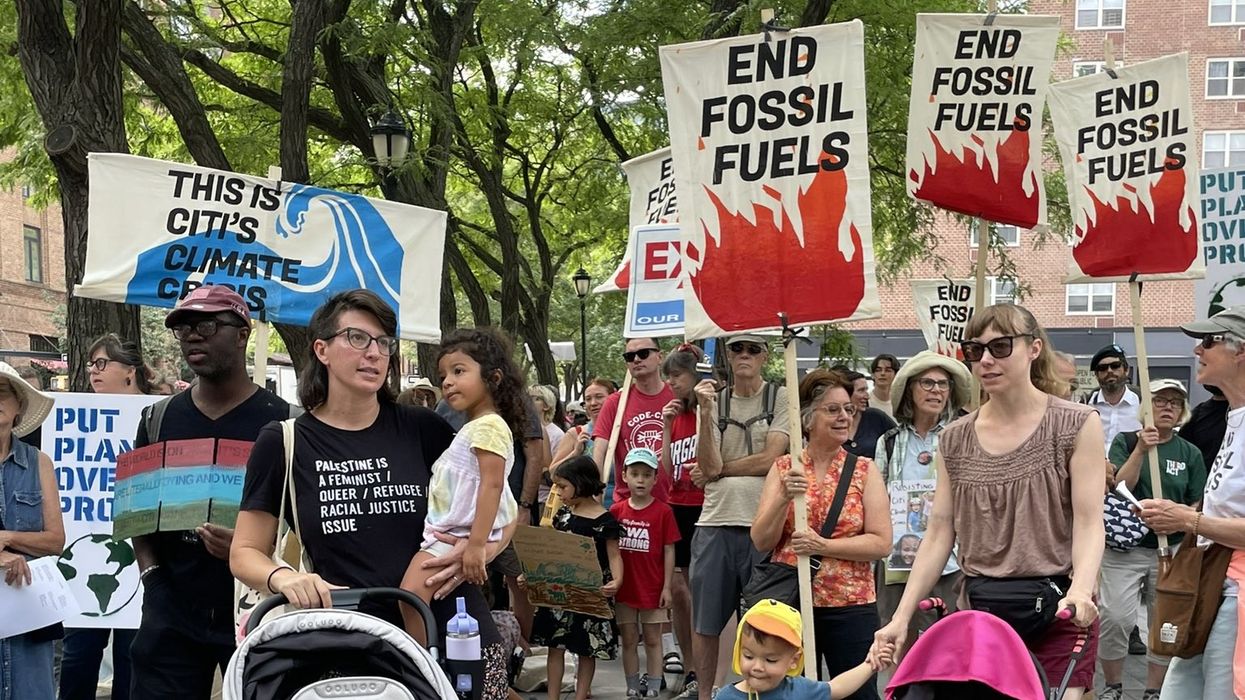
Dozens of climate campaigners were arrested for protesting the multinational bank's financing of new fossil fuel development.
Hundreds of activists, largely mothers and their kids, protested outside Citigroup CEO Jane Fraser's luxury apartment building in New York City on Saturday, calling for the multinational bank she leads to stop funding fossil fuel expansion.
The protest, at which 59 people were arrested, was part of the Summer of Heat, a program of nonviolent direct action led by five climate advocacy groups that has targeted Citigroup because it's a leading funder of the fossil fuel industry.
The activists set up a memorial on the sidewalk outside Fraser's building dedicated to the tens of millions of children who've been displaced because of climate change in recent years.
Marlena Fontes, a director at Climate Defenders who organized the action, explained the impact of climate change on her family in a speech to gathered protesters. She said that when haze from Canadian wildfires covered New York City last year, her son was afraid, and her one-year-old daughter had an asthma attack.
"She was just one of many, many children on this planet who are being affected by the climate crisis," Fontes said.
BREAKING: NYPD arrests grandparents, parents, students, scientists and clergy outside of @Citibank CEO Jane Fraser’s NYC penthouse.
Citi keeps pouring billions into oil, gas and coal projects killing our kids. Jane can’t hide from responsibility. #SummerofHeat pic.twitter.com/0FUBStYvuK
— New York Communities for Change (@nychange) July 27, 2024
The protestors marched from Citigroup's headquarters to the apartment building, located a few blocks away. About 200 or 300 people took part in the protest, and 59 were arrested; the police were on site before they even arrived, Alicé Nascimento, policy director at New York Communities for Change, one of the Summer of Heat organizing groups, told Common Dreams. The other organizing groups are Climate Defenders, Climate Organizing Hub, Stop the Money Pipeline, and the youth-led Planet Over Profit.
BREAKING: Hundreds of parents and climate activists are about to descend onto the luxury apartment complex of Jane Fraser, the high powered CEO of @Citibank, the world’s biggest funder of fossil fuel expansion.
We’re taking the crisis to her doorstep. #SummerofHeat pic.twitter.com/50zGKVBwjT
— New York Communities for Change (@nychange) July 27, 2024
Summer of Heat, which began actions in early June, has turned out to be aptly named, as the summer has been full of deadly heatwaves in the U.S. and across the northern hemisphere. Saturday's action came following a week of extreme global temperatures: Monday was the hottest day in recorded history, breaking a record set just the day before. United Nations Secretary-General António Guterres on Thursday called for coordinated global action to deal with extreme heat, including by transitioning away from fossil fuels.
Corporations like Citigroup make that transition far more difficult, campaigners say. Citigroup was responsible for providing more financing to companies developing new fossil fuel projects than any other bank in the world for the period from 2015 to 2023, according to a Banking on Climate Chaos report published in May. In terms of overall financing to fossil fuel companies, Citigroup ranked second in the world, behind only JPMorgan Chase, at nearly $400 billion during that period.
Saturday's action was the first of the summer targeted at Fraser's home, though a smaller group of campaigners did protest there in February. Fraser has in the past expressed a willingness to take a climate into account in Citigroup's dealings.
Rachel Rivera, a member of New York Communities for Change, spoke to the gathered protesters about the struggles that her family has faced in the past and in the recent extreme heat. She was displaced during Hurricane Sandy in 2012 and lost loved ones in Puerto Rico to Hurricane Maria in 2017. A mother of six, she said that last week her 10-year-old daughter had to be hospitalized and intubated due to respiratory seizures brought on by the extreme heat.
"Jane Fraser should walk a mile in my shoes," she said.
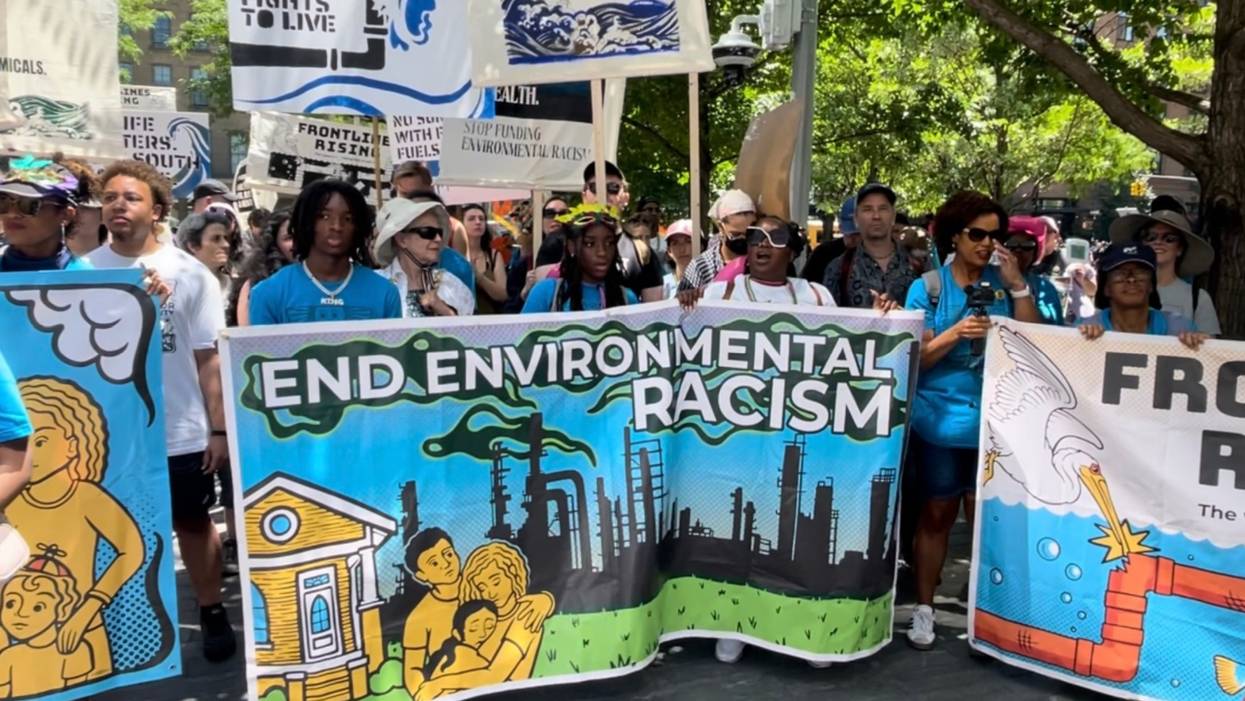
Scores of activists were arrested Friday during a protest outside Citigroup's New York City headquarters, where demonstrators condemned what organizers called the megabank's "racist investments devastating Black and brown communities" and fueling the worsening climate emergency.
Around 1,000 people including environmental leaders from the Gulf Coast of Texas and Louisiana gathered at Zuccotti Park in Lower Manhattan's Financial District, where they rallied before marching to "demand that Wall Street stop funding the fossil fuel projects causing environmental devastation in mostly Black and brown communities in the Gulf South and across the globe."
The march ended at Citigroup's headquarters on the west side of Lower Manhattan, where organizers from New York Communities for Change said 68 people were arrested. The group said a total of 259 activists have been arrested during ongoing Summer of Heat on Wall Street protests, which it organized along with Stop the Money Pipeline, Climate Defenders, and Planet Over Profit.
"On Monday, climate activists from the Gulf South and allies held a roving speak out in front of financial institutions backing the fossil fuel industry, including KKR, BlackRock, and Bank of America," New York Communities for Change said. "On Wednesday, protesters held a civil disobedience action in front of the insurance conglomerate Chubb, which insures petrochemical projects destroying the climate in the Gulf South and around the globe."
One of the protest's organizers, Roishetta Ozane—who founded the Vessel Project of Louisiana—said that "projects that kill our communities like Freeport LNG (liquefied natural gas), Cameron LNG, Corpus Christi LNG, and others would not exist without the backing of financial institutions like Citigroup."
"Money made from them is blood money," Ozane added. "Since they destroy our homes, we're coming to pay them a visit. We will break this cycle of violence and exploitation now because later is too late. We want Citigroup to stop funding fossil fuels and to stop hurting our communities and our families."
As Stop the Money Pipeline coordinator Alec Connon explained in an opinion piece published earlier this month by Common Dreams:
Since the adoption of the Paris agreement in 2015, Citi has provided $204.46 billion in financing to the company's most rapidly developing new coal, oil, and gas fields. Remarkably, Citi has provided more money to those oil and gas companies than even JPMorgan Chase―the bank that climate activists like to call the 'Doomsday Bank.'
To be clear, I'm talking here only about the financing Citi has provided for companies developing new oil and gas reserves, not merely investing in infrastructure to keep the oil pumping from existing reserves. When we take into account financing to all fossil fuel companies, Citi has provided a little shy of $400 billion to coal, oil, and gas companies since 2015.
Citigroup contends that it is "supporting the transition to a low-carbon economy through our net zero commitments and our $1 trillion sustainable finance goal," and that its "approach reflects the need to transition while also continuing to meet global energy needs."
However, Climate Defenders organizing director Marlena Fontes countered that "Citi's business model is frying our planet."
"Every credible climate scientist says that we can't afford to put one more penny into fossil fuels, but Citi is the number one funder of fossil fuel expansion in the world," Fontes added. "Until Citi stops funding fossil fuels, they can expect resistance from everyday people like us who want our children to be able to play outside without coughing on wildfire smoke or getting sick from deadly heatwaves."
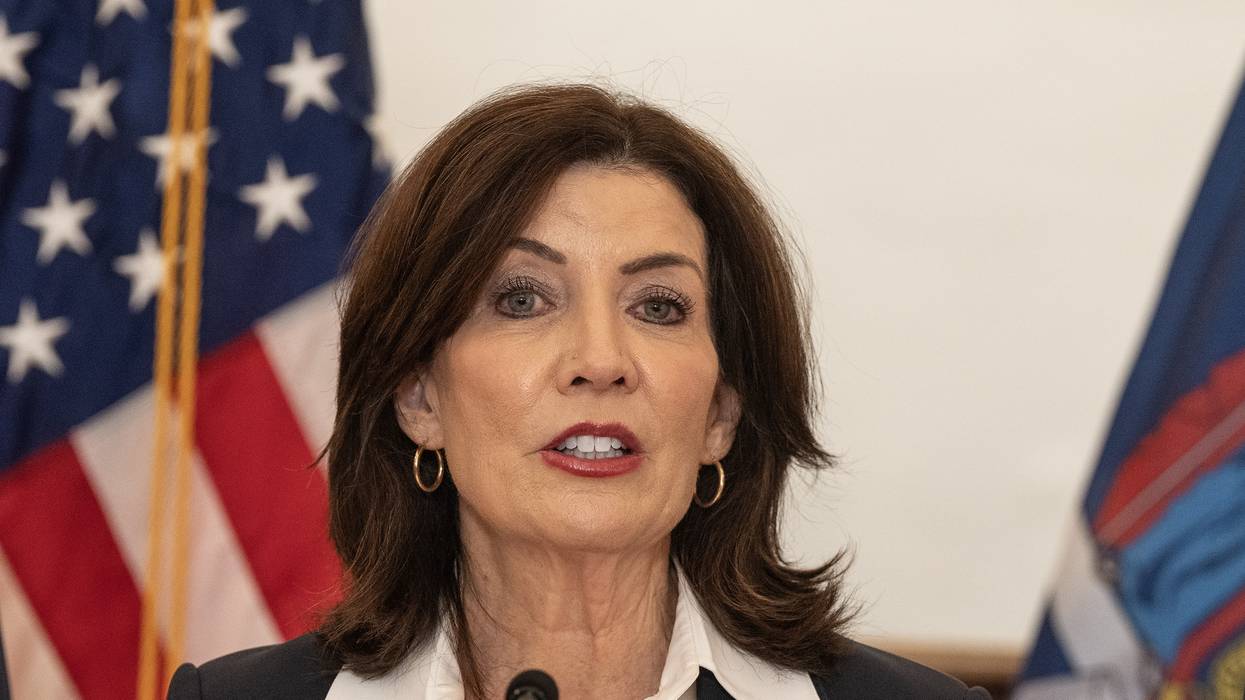
Climate advocate Bill McKibben called the reversal "the most aggressively anti-environmental stand I can recall a major Democratic governor taking."
"Betrayal."
"A generational setback for climate policy."
"The kind of sabotage by a leader that warrants impeachment."
Those were just some of the ways New Yorkers and climate advocates described Gov. Kathy Hochul's decision to cancel a first-in-the-nation congestion pricing plan for New York City on Wednesday.
Although the move will directly impact a relatively small percentage of U.S. residents' daily lives, critics said the move will stymie progress that could ultimately have been seen across the country—instead dooming communities to continued reliance on vehicles and the planet-heating emissions they cause.
A year after signaling approval for the congestion pricing plan, which was years in the making, the Democratic governor stunned campaigners Wednesday when she released a pre-recorded message announcing that "circumstances have changed" and would not allow the policy to take effect on June 30 as planned.
Under the plan, drivers who entered certain parts of Manhattan would be charged $15, with the projected annual revenue of $1 billion accounting for 50% of the funds needed for the Metropolitan Transportation Authority's (MTA) upgrades to its system.
The MTA's Capital Program is now on hold, according to 6sqft, jeopardizing 23,000 jobs and imperiling the city's ability to improve reliability for working New Yorkers—56% of whom do not own a car—and make subway stations more accessible.
Local groups Riders Alliance and Transportation Alternatives announced plans for an emergency lobby day in Albany on Friday, where they said they would tell Hochul and state lawmakers to say "no to defunding our transit system."
Hochul said she was considering a new tax on businesses to fill in the $1 billion funding gap caused by her decision, but that would require approval by the New York Legislature, whose session ends this week.
The Tri-State Transportation Campaign (TSTC) found in a recent analysis that more than 97% of people who commute from suburbs in New York and New Jersey would not be impacted financially by the congestion pricing plan. Looking at 217 legislative districts across the New York City metropolitan area, the percentage of commuters who would have to pay the $15 toll did not exceed 4%, and was 0-1% in most districts.
"Our members don't ride Escalades to Broadway shows. They use transit," said grassroots civil society group New York Communities for Change.
The TSTC noted that the state Legislature promised the congestion pricing plan to working families who rely on public transportation nearly five years ago.
"We urge the governor to stick to her guns and implement this transformative policy," said the group. "This is the pivotal moment. Please, Gov. Hochul, don't turn your back on the families counting on you to provide cleaner air and faster commutes for everyone."
Third Act founder and author Bill McKibben said Hochul's decision—reportedly encouraged by U.S. House Minority Leader Hakeem Jeffries (D-N.Y.) in an effort to win a Democratic majority in Congress this year—amounts to "a real betrayal."
"This is stupid policy—it's the most aggressively anti-environmental stand I can recall a major Democratic governor taking," wrote McKibben in his newsletter, The Crucial Years. "This kind of system has been a huge success in the European cities that have tried it, like London and Milan; Manhattan (as advocates back to Jimmy Breslin and Norman Mailer have noted) would be an incredibly sweet place with many fewer cars."
Sunrise Movement NYC suggested Hochul's decision was the result of $100,000 in donations to her campaigns from the auto industry, which is hosting a fundraiser for the governor next week with tickets costing $5,000 and up.
"Congestion pricing would save countless lives through reduced traffic across the city, cleaner air, and faster response times by first responders," said the group. "Gov. Hochul cannot usurp congestion pricing unilaterally... We call on the Legislature and the MTA to remain steadfast in the implementation of congestion pricing."
A Dutch study published last year found that although congestion pricing was unpopular when it was first implemented in cities including London, Stockholm, Singapore, and Edinburgh, support grew after the policies went into effect.
"In terms of what's best for the largest number of people, congestion pricing is it, because it brings air quality benefits, it brings lower traffic benefits, and it brings transit improvements to the entire city," Kate Slevin, executive director of the Regional Plan Association in New York, told HuffPost.
Journalist Robinson Meyer said that in terms of the generational climate impact it will have, Hochul's reversal on congestion pricing would ultimately be "worse than the Mountain Valley pipeline, worse than Alaska's Willow project," because of the lost opportunity to bring similar policies to other U.S. cities.
"New York was bushwhacking a trail for everyone else to follow," wrote Meyer. "If congestion policy was a success there, then other American cities could experiment with it in some form... By shuttering the policy in New York, she has poisoned pro-climate urban policies everywhere."
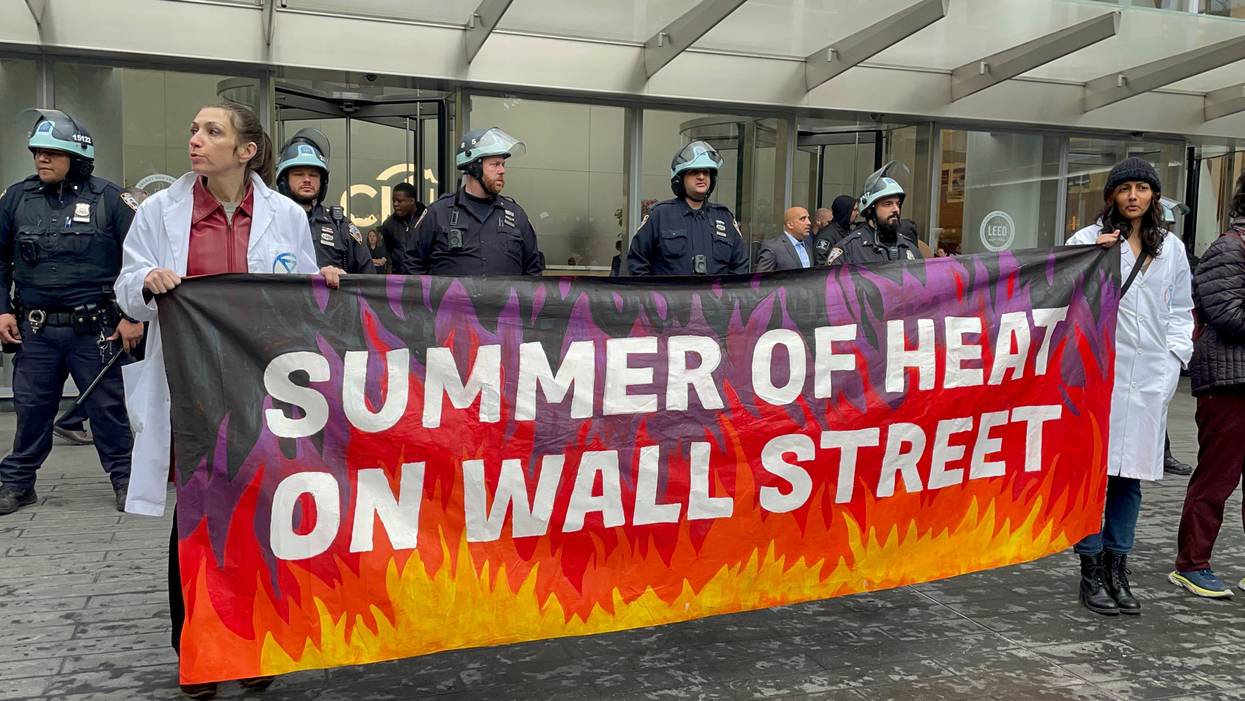
"Through people-powered resistance, we can give money a conscience and stop Citi's destruction of our planet," said one Indigenous campaigner.
Twenty more demonstrators were arrested Thursday, the second day of Earth Week protests targeting Citigroup's Manhattan headquarters in what organizers called "the beginning of a wave of direct actions to take place over the summer targeting big banks for creating climate chaos that is killing our communities and our planet."
Protest organizers—who include Climate Defenders, New York Communities for Change, Planet over Profit, and Stop the Money Pipeline—said 53 activists were arrested over two days of demonstrations, which included blocking the entrance to Citigroup's headquarters, to "demand that the bank stop funding fossil fuels."
Organizers said this week's demonstrations "were just the beginning" of what they're calling a "Summer of Heat" targeting big banks for their role in the climate emergency and for "polluting our land, air, and water, and threatening the health of children, families, and our planet." Citigroup is the world's second-largest fossil fuel financier.
"We're holding Citi accountable for financing dirty fossil fuels from Canada to Latin America and beyond," said Chief Na'moks of the Wet'suwet'en Nation, one of several Indigenous leaders who took part in the action. "Through people-powered resistance, we can give money a conscience and stop Citi's destruction of our planet."
Jonathan Westin, executive director of Climate Defenders, asserted that "Citigroup's racist funding of oil, coal, and gas is creating climate chaos that's devastating communities of color across the country."
"We're taking action to tell Citi that we won't put up with their environmental racism for one more day," Westin continued. "Our communities have reached the boiling point. Our children have asthma, our city's sky was orange, and our air polluted because of the climate crisis caused by Citi and Wall Street."
"We're going to keep organizing and taking direct action until Citi listens to us," he vowed.
Stop the Money Pipeline co-director Alec Connon said: "To have any chance of reigning in the climate crisis, we must stop investing in fossil fuel expansion. Yet, Citibank is pumping billions of dollars into new coal, oil, and gas projects."
"We're here to make it clear: If they're going to fund the companies disrupting our climate and our lives, we're going to disrupt their business," Connon added.
Activists have repeatedly targeted Citigroup in recent years as the megabank has pumped more than $300 billion into fossil fuel investments around the world since the Paris climate agreement.
According to the protest organizers:
Citi has provided $668 million in funding to Formosa Plastics between 2001-2021, which is trying to build a $9.4 billion plastics facility in a majority Black community in the heart of Cancer Alley in Louisiana.
Citigroup is also one of the biggest funders of state-run oil and gas companies in the Amazon basin, pumping in over $40 billion between 2016-2020, and a major backer of Petroperú, which has been involved in oil spills and Indigenous rights violations.
"From wildfires, heatwaves, and floods to deadly air pollution and mass drought, Citi's fossil fuel financing is killing us," said Alice Hu of New York Communities for Change. "We've sent polite petitions and had pleading meetings with bank representatives, but Citi refuses to stop pouring billions each year into coal, oil, and gas."
"That's why we're fighting for our lives now with the best tool we have left: mass, nonviolent disruptive civil disobedience," Hu added.

Now is the time to keep building momentum and bringing a lot more pressure to bear, because we’ve hardly won yet.
The rain was pouring down hard, but that didn’t seem to deter the big protest crowd gathered outside the Federal Reserve building. Amid the typical Monday morning bustle of Wall Street, we chanted for the Fed to stop fossil fuel financing as cops arrested row after row of protesters blocking the building’s entrances during what ultimately became the largest climate-focused civil disobedience ever in New York City.
We were coming off the 75,000-person March to End Fossil Fuels the previous day: a protest that shattered our attendance expectations as organizers, uplifted our spirits, and landed on the front page of The New York Times the next day. Earlier that week, hundreds of activists and groups like Climate Defenders, Oil & Gas Action Network, Stop the Money Pipeline, and my own, New York Communities for Change, had disrupted two of the largest fossil fuel financiers in the world, shutting down Citi’s global headquarters for a whole morning and halting traffic in front of BlackRock’s global HQ. With Planet Over Profit, a youth-led group I co-founded, we forced the Museum of Modern Art to close for an afternoon because of its ties to dirty fossil fuel investor KKR. And the morning after shutting down the Fed, another dirty financier, Bank of America, found its New York office the site of another act of civil disobedience.
Others reflecting on these protests have noted how this September felt like a potential turning point. The U.S. climate movement enjoyed the biggest revival of street protest since the pandemic. With the march, unlike previous climate mass mobilizations, we were laser focused on calling out a specific decision-maker (President Joe Biden), making it impossible for him to ignore the broad-based, diverse support for our laser-focused specific demand (ending fossil fuels). And when it came to Wall Street, with thousands of white-collar Citi employees unable to get into work for hours, for example, we made it clear that if Citi’s bottom line included profiting off fossil fuels, then that bottom line would not go undisrupted.
If we’re to have any chance of ending fossil fuels, and transitioning to a more just system, we need sustained, committed resistance against these fossil fuel-loving powers that be.
We sent a statement of intent to both Biden and Wall Street: End fossil fuels, or expect resistance. Now it’s time to keep building on that momentum, and bring a lot more pressure to bear, because we’ve hardly won yet.
Politicians continue to approve new fossil fuel permits, and financiers continue to move more fossil fuel financing. It’s not for lack of awareness: These are well-informed elites who know well the scientific consensus that we have already maxed out our carbon budget with existing projects and that our carbon accounts cannot afford any more fossil fuel expansion. Nor do the actual financials necessitate fossil fuels: Power from renewables is now cheaper to produce than power from fossil fuels in many places, and besides, we simply cannot enjoy stable, functional global economies on a planet beset by endless storms and fires, widespread drought and famine, and hundreds of millions crossing borders to flee unlivable conditions.
The simple reason the fossil fuel industry and its enablers won’t change course on their own is because the status quo is working splendidly for them right now. Oil majors have been reporting record-breaking profits, and generally speaking, elites have continued to consolidate their wealth and power within a global political economy still powered largely by fossil fuels. (For instance, in 2015, the richest 1% in the world owned as much as the remaining 99% combined; those state of affairs have only worsened during a pandemic during which those at the top gained trillions in wealth while ordinary people suffered.)
Plus, these planet-wrecking elites, as Andreas Malm writes, “do not worry at the sight of islands sinking; they do not run from the roar of the approaching hurricanes; their fingers never need to touch the stalks from withered harvests; their mouths do not become sticky and dry after a day with nothing to drink.” The climate crisis may be coming for the whole world over at some point—but those at the very top do not currently face many serious consequences, and many of them may assume that they never really will in their lifetimes. Meanwhile, there are fossil fuel lobbies to please, and fossil fuel profits to reap.
So: We’re up against immensely powerful fossil fuel executives and some of the most powerful financiers and politicians in the world. All of them are highly incentivized to maintain the status quo of enabling mass death. If we’re to have any chance of ending fossil fuels, and transitioning to a more just system, we need sustained, committed resistance against these fossil fuel-loving powers that be.
If you are a bank like Citi that continually pours billions into fossil fuels each year: You should not expect to be able to operate and greenwash without having your bottom line impacted and the lives of your business elite constantly disrupted. Your CEOs and execs should expect to be challenged at public events, your offices’ operations should be continually disturbed, your brand and client deals should be scrutinized and protested. If you are Biden, who approves climate bomb after climate bomb, you and your administration should assume there will be disruptions at your public appearances and lagging enthusiasm from your base to turn out to the polls next fall.
What hangs in the balance, after all, is everything we know and love. We want to enjoy safe, stable societies; we want to breathe clean air, drink clean water; we want to live rich, dignified lives uninterrupted by profound climate upheaval. And we won’t be able to do that for much longer on this planet if we don’t force a move away from fossil fuels with serious, sustained pressure.
We don’t live in a world yet in which fossil fuel-loving politicians and capitalists face constant, sustained pressure, direct action, and disruption of business-as-usual. So let’s keep rolling up our sleeves. Let’s keep organizing more people. And let’s keep escalating with more hard-hitting protest to force an end to fossil fuels. If they don’t at the moment have enough incentive to give up their profits to save our lives—well, then let’s create some incentive for them.
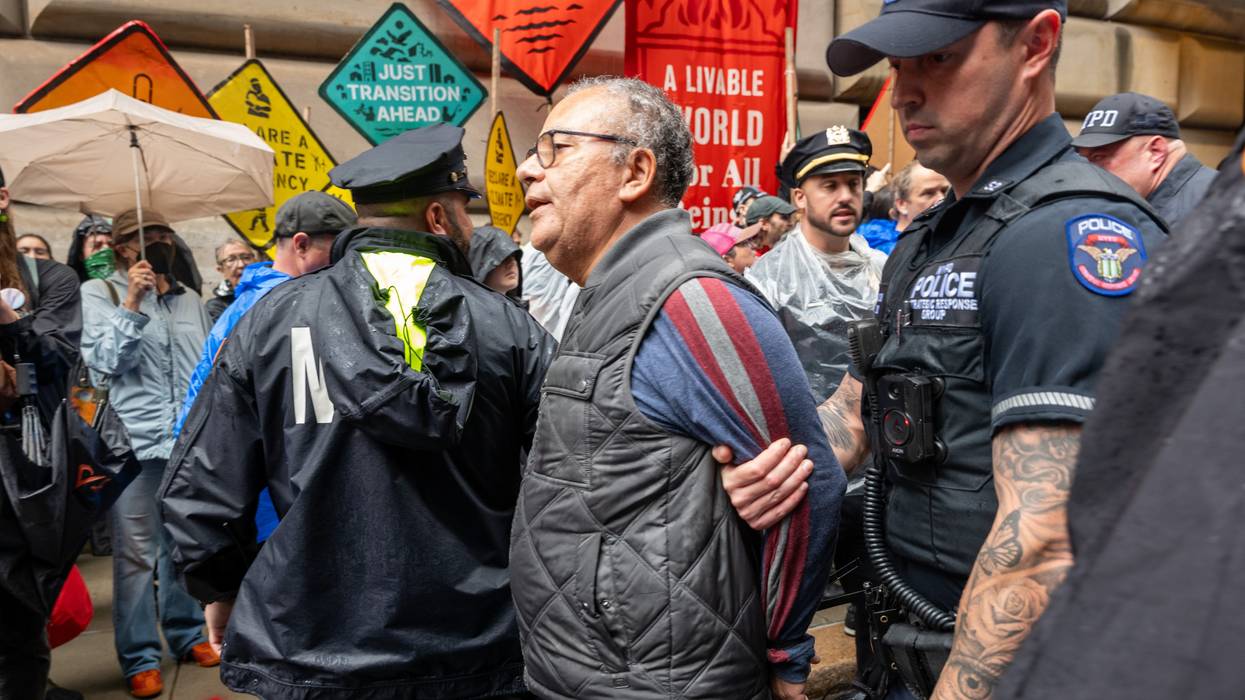
The activist group Climate Defiance asked: "Why are we getting handcuffed while people who literally torch the planet get celebrated for their 'civility' and their 'moderation'?"
A day after tens of thousands of climate activists marched through Manhattan's Upper East Side demanding an end to oil, gas, and coal production, thousands more demonstrators hit the streets of Lower Manhattan Monday, where more than 100 people were arrested while surrounding the Federal Reserve Bank of New York to protest fossil fuel financing.
Protesters chanted slogans like "No oil, no gas, fossil fuels can kiss my ass" and "We need clean air, not another billionaire" as they marched from Zuccotti Park—ground zero of the 2011 Occupy Wall Street movement—to pre-selected sites in the Financial District. Witnesses said many of the activists attempted to reach the New York Stock Exchange but were blocked by police.
"We're here to wake up the regulators who are asleep at the wheel as they continue to let Wall Street lead us into ANOTHER financial crash with their fossil fuel financing," the Stop the Money Pipeline coalition explained on social media.
Local and national media reported New York Police Department (NYPD) officers arrested 114 protesters and charged them with civil disobedience Monday after they blocked entrances to the Fed building. Most of those arrested were expected to be booked and released.
"I'm being arrested for exercising my First Amendment right to protest because Joe Manchin is putting a 300-mile-long pipeline through my home state of West Virginia and President [Joe] Biden allowed him to do it for nothing in return," explained Climate Defiance organizer Rylee Haught on social media, referring to the right-wing Democratic senator and the Mountain Valley Pipeline.
As she was led away by an NYPD officer, a tearful Haught said Biden "sold us out."
"He promised to end drilling on federal lands, and he's selling out Appalachia's future for profit," she added.
Responding to the "block-long" line of arrestees, Climate Defiance asked: "Why are we getting handcuffed while people who literally torch the planet get celebrated for their 'civility' and their 'moderation'?"
Alicé Nascimento of New York Communities for Change told WABC that the protests—which are part of Climate Week and are timed to coincide with this week's United Nations Climate Ambition Summit—are "our last resort."
"We're bringing the crisis to their doorstep and this is what it looks like," said Nascimento.
As they have at similar demonstrations, protesters called on Biden to stop approving new fossil fuel projects and declare a climate emergency. Some had a message for the president and his administration.
"We hold the power of the people, the power you need to win this election," 17-year-old Brooklynite Emma Buretta of the youth-led protest group Fridays for Future told WABC. "If you want to win in 2024, if you do not want the blood of my generation to be on your hands, end fossil fuels."

"Citi is the world's second-largest financier of fossil fuels," noted one group taking part in the protest. "How do these people sleep at night? How?"
Declaring a #ClimateShutdown, hundreds of activists blockaded the entrances of Citibank's Lower Manhattan headquarters Thursday morning to demand that the financial giant end fossil fuel financing and stop greenwashing its record of planet-heating investments.
"We're shutting down Citibank, the world's second-largest funder of fossil fuels," the activist group Stop the Money Pipeline explained on X, the social platform formerly known as Twitter. "Citi says it's a climate leader, but it's also the main financier of oil expansion in the Amazon."
Jay Waxse of Climate Defiance told Common Dreams that 25 activists were arrested at the protest, including two of the group's organizers.
Citibank is "torching the planet," said Waxse, "so the least we can do is disrupt business as usual."
" Workers were talking. Executives were reeling," Waxse added. "Citi must change their ways, or we'll be back."
Another group, Climate Defiance, said sources informed it that "every door in the Citibank HQ has been shuttered" and that "the bank just went into lockdown over the climate protest."
"Thousands of bankers are now getting turned away, angry and confused," the group added, posting photos supporting its claim.
According to a report published earlier this month by a coalition of green groups, JPMorgan Chase ($434.2 billion), Citibank ($332.9 billion), Wells Fargo ($318.2 billion), and Bank of America ($281.2 billion) have been the world's biggest fossil fuel financiers since the Paris climate agreement took effect in 2016. Those four banks alone accounted for 28% of all identified fossil fuel financing in 2022.
Groups participating in or supporting Thursday's direct action include Oil & Gas Action Network, Stop the Money Pipeline, Climate Defiance, Climate Organizing Hub, Climate Defenders, Youth Climate Finance Alliance, and New York Communities for Change.
"Since the Paris agreement was adopted, Wall Street banks have provided $1.4 trillion to the fossil fuel industry," Stop the Money Pipeline's website explains. "Big asset managers are the world's largest investors in coal, oil, and gas. Insurance companies provide insurance for new fossil fuel projects without which they could not be built."
"The fossil fuel corporations driving the climate crisis depend on this support of the financial sector," the group added. "That's why we're pushing banks, insurance companies, and asset managers to end fossil financing. If we stop the flow of money, we stop the flow of oil."

The goal of the New York protest was to call out President Biden for backtracking on his climate commitments by approving fossil fuel developments like the Willow project.
Climate campaigners including actress and activist Jane Fonda and human rights lawyer Steven Donziger took over New York's Fifth Avenue Wednesday night outside a $25,000-per-plate fundraiser for President Joe Biden's reelection bid.
The coalition of protesters assembled under the banner of Climate Defiance, which broke onto the scene by blockading the White House Correspondents' Dinner last month. The activists called on Biden to honor his climate commitments as he seeks reelection.
"The goal was to call out President Biden on his backtracking on climate and to make sure that people understand he promised to be better on climate than he has been," New York Communities for Change senior director of data and research José González, who attended the protest, told Common Dreams.
Climate Defiance is a new group that uses nonviolent direct action to push for climate policies in line with scientific reality. Their goals include ending oil and gas drilling on public lands and waters, stopping the practice of allowing frontline communities to serve as "sacrifice zones" for extractive industries, and making support for fossil fuels as taboo on the left as opposing abortion rights or gay marriage. They proposed the idea for Wednesday's protest, while New York Communities for Change helped to coordinate local participation, González said.
One of Climate Defiance's goals is to "make clear to Democratic lawmakers that the youth vote will only deliver for them if they deliver for us," and this last point was a major theme at Wednesday's protest, which took place blocks away from the Upper East Side home of former Blackstone executive Tony James, where Biden was attending a $25,000-per-plate fundraiser for his 2024 reelection campaign, The Villager reported.
"The president is over there taking corporate money," Donziger—who challenged Chevron over oil spills in the Ecuadorian Amazon and ended up under house arrest when the company retaliated against him—said at the protest, as the Independent reported. "He claims to be the climate president yet he's taking corporate money from these industries that are destroying the planet. You cannot do both."
"He was elected by people who were very concerned about it, who trusted him."
Young and climate-focused voters have felt betrayed by Biden after he ran on a promise to end fossil fuel extraction on public land, but has since approved more oil and gas drilling permits during his first two years than former President Donald Trump during the same timeframe.
"He was elected by people who were very concerned about it, who trusted him," González told Common Dreams.
Biden has especially come under fire for approving the controversial Willow project in Alaska, which could release around 280 million metric tons of carbon dioxide into the atmosphere, despite the fact that the International Energy Agency has said that governments must avoid new fossil fuel developments if they want to reach net-zero by 2050 and limit global warming to 1.5°C above preindustrial levels.
Michael Greenberg of Climate Defiance criticized Biden for attending a dinner at an apartment worth $29.4 million while refusing to respond to the more than three million people who signed a petition opposing the Willow project. Greenberg observed that the president's approval ratings have decreased since he approved the ConocoPhillips' drilling plan.
"Climate voters elected Joe Biden and we cannot and will not be ignored," Greenberg said.
Laura of the Sunrise Movement—which helped get out the youth vote for Biden in 2020— implied in an interview with Jon Farina that the president was hurting his 2024 chances by not taking a stronger stand against new fossil fuel projects.
"We can't tell people to vote for him in the next election if he is not going to protect our planet, protect our future, and phase down fossil fuels in the next six, seven years," Laura said.
The 50 to 100 activists first gathered in Doris C. Freedman Plaza for a rally, then marched up Fifth Avenue toward the building where the fundraiser was being held. Gonzalez said they made it within eye-shot of the building before the 10 to 12 police barricading the street stopped their progress.
Chants included, "Joe Biden, get off it. Put people over profit," and, "We need clean air! Not another billionaire!"
Among the coalition were members of Sunrise Movement NYC, New York Communities for Change, Food & Water Watch, Climate Defenders, Climate Families NYC, and Reclaim Our Tomorrow, González confirmed.
He said that he sensed a shift in tone at the demonstration, as people who were worried about the climate emergency and angry at Biden's actions or lack thereof felt prepared to take their activism to the next level, and he said this was reflected in Fonda's remarks.
"Now is the time for civil disobedience, right?" she asked the crowd. "We've marched. We've protested. We've written. We've made speeches. We have to up the ante now to save our planet and our future. The window on that is closing rapidly, and we have to do something about it, and we have to be very brave."
González also said that passersby seemed more eager than usual to give their numbers and get involved, and that they only faced one right-wing counterprotester.
Going forward, González said the coalition represented by Wednesday's protest will continue to put pressure on Biden across the country.
"I don't think we see a choice," he said. "This has to happen now. There needs to be a plan to wean the country, the world off of fossil fuels. That's what we want."