

SUBSCRIBE TO OUR FREE NEWSLETTER
Daily news & progressive opinion—funded by the people, not the corporations—delivered straight to your inbox.
5
#000000
#FFFFFF
To donate by check, phone, or other method, see our More Ways to Give page.
Daily news & progressive opinion—funded by the people, not the corporations—delivered straight to your inbox.

Estefany Rodríguez's detention "has had a chilling effect, undermining journalists’ ability, especially local reporters, to cover their communities without fear of retaliation," according to one advocate.
Immigrant rights and press freedom groups were celebrating Friday after Nashville journalist Estefany Rodríguez was released from a US Immigration and Customs Enforcement detention center in Louisiana, two weeks after she was detained—but advocates said they would continue challenging the violation of Rodríguez's rights and demanded the Trump administration end its targeting of journalists amid its anti-immigration crackdown.
Rodríguez was freed on a $10,000 bond, more than two weeks after the Nashville Noticias reporter was detained outside a gym while traveling in her marked press vehicle.
As Common Dreams reported, press freedom advocates expressed concern that Rodríguez was detained in retaliation for her reporting on ICE's mass detention and deportation operation under President Donald Trump.
An ICE officer told her lawyer after her arrest that Rodríguez had been labeled a "flight risk" because she "missed" two meetings at the local ICE office—although the agency had previously informed her lawyer and her husband that she didn't need to go to the meetings.
Nora Benavidez, senior counsel of the media rights group Free Press, said the group welcomed the news of Rodríguez's release but emphasized that "while this is a victory for Rodríguez, her free speech rights, and the communities she reports for, the fight is not over."
"We remain troubled by the federal government’s ongoing campaign to silence and deport reporters who cover the administration’s gross mistreatment of immigrants," said Benavidez. "We will continue to fight for Rodríguez and her right to report free from retaliation while we challenge the federal government’s relentless assaults on the First Amendment across this country.”
"Press freedom is not theoretical—it is tested in moments like this. Safeguarding it means removing unnecessary barriers and ensuring that journalists, especially those serving vulnerable communities, can report freely and without fear."
Rodríguez was arrested weeks after journalists Don Lemon and Georgia Fort were arrested for reporting on an anti-ICE protest at a church in Minneapolis. Emmy-winning journalist Mario Guevara was arrested last June after reporting on a No Kings protest against Trump in Atlanta; he was detained for more than 100 days before being deported to El Salvador.
Rodríguez arrived in the US lawfully in 2021 from her native Colombia, where she faced threats due to her reporting work. She applied for asylum before her visa expired.
Nashville Banner reported that Rodríguez was granted the bond by a judge on Monday, but a mandatory stay allowed ICE attorneys the opportunity to appeal the decision, which they ultimately did not. Then it took a day for Rodríguez's family to post the bond through an electronic system on Wednesday, which required approval since they were first-time users.
The bureaucratic delays added to the ordeal Rodríguez faced during her detention, during which she was not able to contact her attorneys until March 14. She first spent a week in a county jail in Alabama where guards placed her in isolation for five days, claiming she had contracted lice. According to Nashville Banner, before she was transferred to the center in Louisiana, the guards "took her to the shower, made her strip naked, and poured cleaning liquid over her head." The substance made Rodríguez's eyes burn, and the outlet reported that "she believed the liquid was also used to clean floors."
Following her release, Rodríguez's legal case is ongoing. Her lawyers filed an emergency petition for a writ of habeas corpus in federal court. Government lawyers are now arguing the case is moot because Rodríguez has been released, but her attorneys are seeking an evidentiary hearing to obtain an injunction against her potential redetenion.
"We plan to proceed with the habeas petition that was filed on March 4, challenging both her warrantless arrest and retaliation for her exercise of First Amendment rights," said Mike Holley, an attorney with the Tennessee Immigrant and Refugee Rights Coalition. "Through that petition, we are seeking not only her complete release, but an order prohibiting ICE from mistreating her in a similar way in the future.”
In the petition, Rodríguez's legal team argued her detention has violated her First, Fourth, and Fifth amendment rights and asserted that she was detained in relation to her coverage of ICE operations.
Jose Zamora, regional director of the Americas for the Committee to Protect Journalists, said Rodríguez's detention "has had a chilling effect, undermining journalists’ ability, especially local reporters, to cover their communities without fear of retaliation."
“The government must uphold press freedom and ensure all journalists can work safely and without reprisal," said Zamora.
Mark Schoeff Jr., president of the National Press Club, said that Rodríguez's case "should never have reached this point."
"We urge authorities to drop any further action against Ms. Rodríguez and allow her to continue her work without interference. She is a community-focused journalist whose reporting serves the public interest, and she must be able to work openly and cooperatively as she seeks to resolve her legal status in the United States," said Schoeff. "A free press depends on the ability of journalists to report without fear of detention or retaliation. Reporters cannot do their jobs if they fear detention for doing their jobs."
"Press freedom is not theoretical—it is tested in moments like this," he added. "Safeguarding it means removing unnecessary barriers and ensuring that journalists, especially those serving vulnerable communities, can report freely and without fear."
"ICE abductions of noncitizen journalists take the reporters best equipped to cover immigration enforcement off the beat."
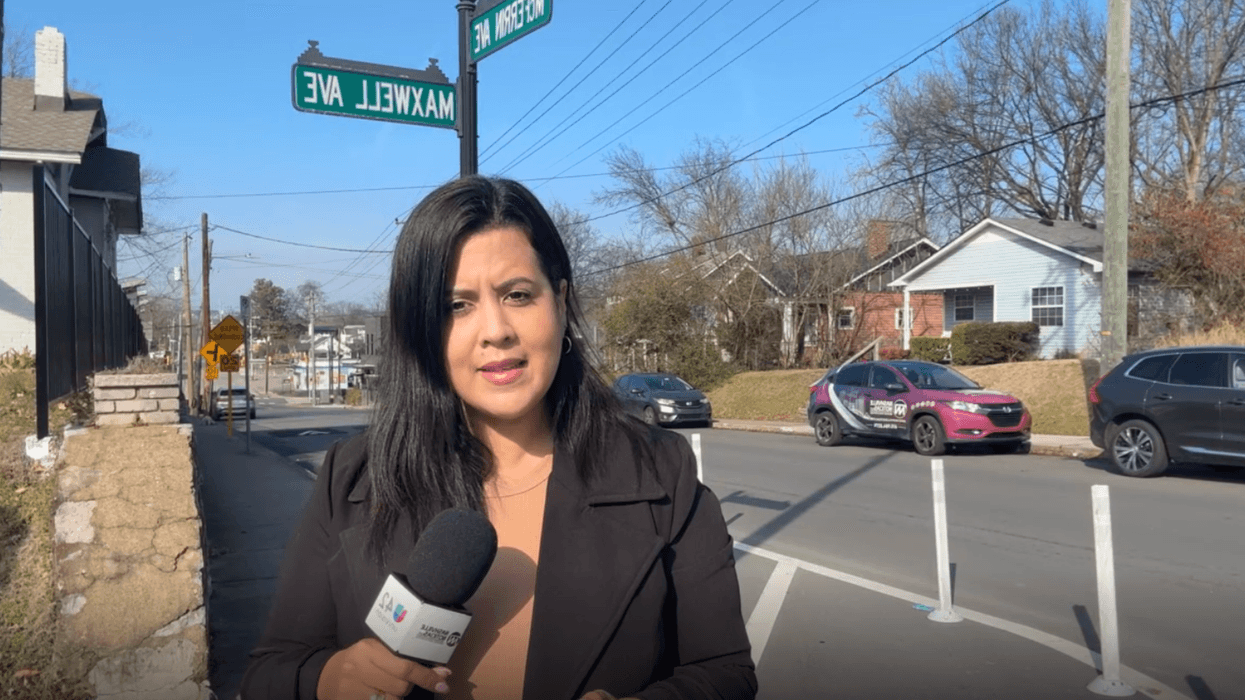
Press freedom groups on Friday were calling for the immediate release of Estefany Rodríguez, a journalist with Nashville Noticias and Univision 42 Nashville, after she was detained by federal immigration agents while traveling in her marked press vehicle.
The Freedom of the Press Foundation said it was not yet clear whether Rodríguez was detained "in retaliation for her reporting" on US Immigration and Customs Enforcement's (ICE) mass detention and deportation operation under President Donald Trump.
"But we certainly wouldn't be surprised," said the group in a statement on social media. "ICE abductions of noncitizen journalists take the reporters best equipped to cover immigration enforcement off the beat."
Rodríguez was with her husband, a US citizen, on Wednesday when she was arrested outside a gym. She was in a car marked with the Nashville Noticias logo when several other vehicles surrounded her, the outlet said in a statement Friday.
"Several men got out and demanded that our colleague be taken into custody for reasons that the legal team will specify at a later date," said Nashville Noticias. "Estefany Rodríguez was taken to a detention center."
Pablo Manríquez of Migrant Insider reported Friday that Rodríguez had been taken to the Central Louisiana ICE Processing Center, "a facility infamous for solitary confinement and sexual abuse by guards against detainees."
Nashville Banner reported that Rodríguez arrived in the US in 2021 on a tourist visa and then applied for political asylum. Her lawyer, Joel Coxander, told the outlet that Rodríguez had reported on armed groups in her native Colombia and had received threats for doing so, leading her to file at least one police report before coming to the US. After getting married, the Columbia Journalism Review (CJR) reported, Rodríguez "filed for permission to adjust her status to that of a lawful permanent resident."
She had never had an interaction with ICE until January 8, Nashville Banner reported, when she received a G-56 "call-in" letter asking her to come in to a local ICE office for "processing and additional information" on January 26.
Coxander told Nashville Banner that the letter advised Rodríguez to come to a meeting to "help ensure the best outcome for your case." She was also told she would receive a Notice to Appear (NTA) at the meeting, an official document initiating an immigration court case.
The local office was closed on January 26 due to inclement weather, and a makeup appointment was scheduled for February 25.
Media and an associate of Coxander's went to the ICE office two days before the rescheduled appointment to confirm whether Rodríguez had to go to the meeting and ask if the NTA could simply be sent to her attorneys. They were told no appointment was in the system for Rodríguez and a third appointment was scheduled for March 17.
Nine days later, Rodríguez was arrested, with ICE agents presenting the NTA rather than a warrant after they surrounded her car.
An ICE officer at the local office told Coxander's associate after Rodríguez was detained that she had been arrested because she was considered a "flight risk" because she had "missed" two meetings.
“She’s being told, ‘We’re holding it against you that you didn’t do this thing we told you you didn’t have to do,” Coxander told Nashville Banner. “They’re saying, ‘Hey, you didn’t show up to this invitation letter, so you’re a full flight risk.’”
Rodríguez has covered ICE's operations in Nashville. CJR reported that on Tuesday, the day before she was arrested, Rodríguez "reported from the parking lot of a residential complex where three ICE agents detained a man believed to be of Venezuelan origin."
Her arrest comes weeks after federal agents arrested journalists Don Lemon and Georgia Fort, accusing the two US citizens of conspiring with organizers to disrupt a church service at a protest they were covering. Last June, an Emmy-winning reporter named Mario Guevara was arrested and held for more than 100 days before being deported. His deportation "is believed to be the first case of a journalist being removed from the US in retaliation for their work," wrote CJR's Carolina Abbott Galvão.
The Tennessee Immigrant and Refugee Rights Coalition said Rodríguez is a "beloved community member and trusted journalist in the community."
"It’s not lost on us that as a reporter, Estefany honestly and courageously told real stories about the harms caused by ICE and the people they targeted and detained," said the group.
Media Action Plan, a Canada-based press freedom group, said Rodríguez's arrest "is another attack on the free press."
Rodríguez's husband set up a GoFundMe for the family, which also includes a young daughter. The fundraiser had raised nearly $9,000 as of Friday afternoon.
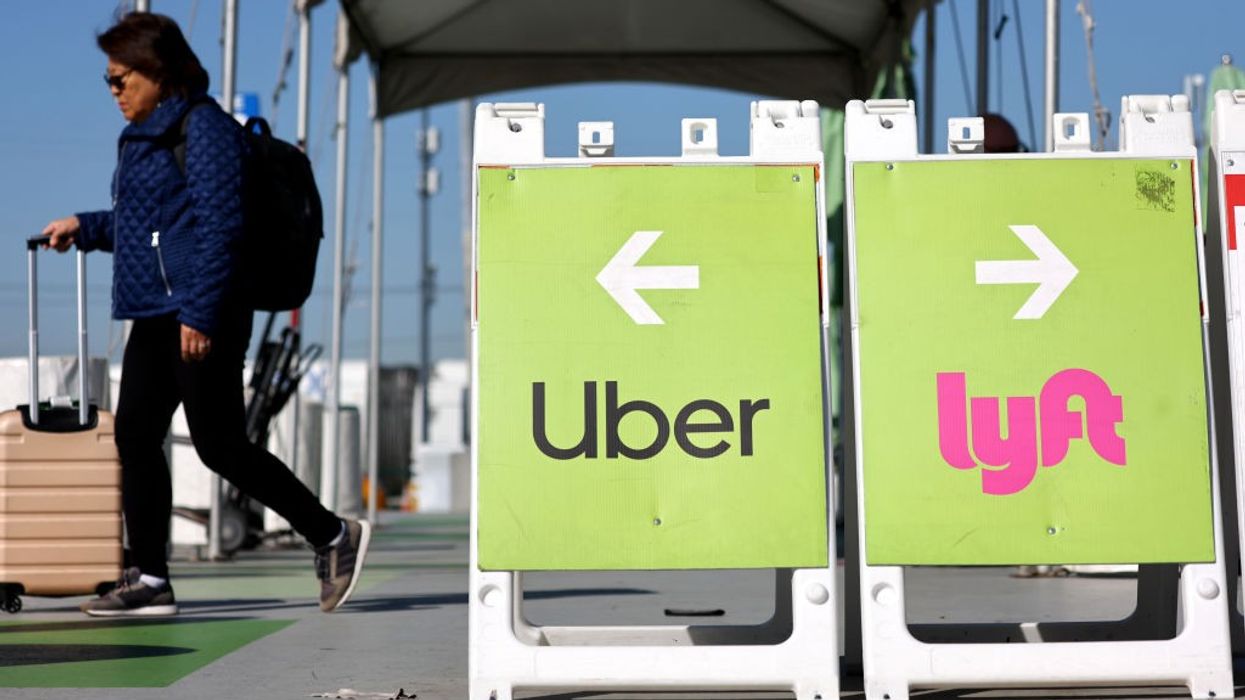
"Uber, Lyft, and Metro Nashville Airport Authority are engaging in an inappropriate and malicious alliance to destroy dozens of livelihoods," said the Tennessee Drivers Union.
A Tennessee union announced Monday that 34 Uber and Lyft drivers received messages "informing them that they had been permanently banned" from working at Nashville's airport after joining scores of workers for a peaceful caravan there last month to support a state bill that would impact the companies.
The Tennessee Drivers Union (TDU) said in a statement that some participants, "including those in the passenger's seat not driving," were banned from providing rides at Nashville International Airport following the February 14 action, during which "participating Uber and Lyft drivers had their apps turned off."
In a message to one Uber driver obtained by Common Dreams, the company said that "Nashville International Airport (BNA) notified us that you conducted a pickup on the arrivals level of the terminal. Please note that all pickups must occur in the Uber-designated zone."
"Due to the nature of the incident, the airport is restricting certain driver-partners from accepting rides or dropping passengers off at BNA permanently, pursuant to the terms of Uber's agreement with the airport," Uber continued. "Your account appeared on the list. For that reason, your account has been permanently blocked from operating at BNA. Contact the airport for more information."
A message to a Lyft driver similarly said that "it has been reported that you were conduct detrimental to the orderly operation of the airport. That being said, at the request of the airport, you are prohibited from operating on BNA airport property indefinitely."
"To prevent future suspensions, carefully review the BNA rules and regulations," Lyft added. "Please note, citations may be given if you operate on BNA property during your suspension, and you will be responsible for paying them."
Lyft and Uber have not responded to Common Dreams' requests for comment on the bans, which come as working people face high costs and a billionaire-led assault on the federal government.
TDU said Monday that "Uber, Lyft, and Metro Nashville Airport Authority are engaging in an inappropriate and malicious alliance to destroy dozens of livelihoods. The airport is one of the only opportunities for ride-share drivers to make barely above minimum wage."
"This is an attack against dozens of workers, their families, and their communities," the union continued, noting the millions of dollars in fees the airport gets from drivers and Metro Nashville Airport Authority CEO Doug Kreulen's $600,000 salary.
As Common Dreams reported last year, TDU has sounded the alarm about working conditions for drivers at BNA. Union members kicked off Labor Day weekend in 2024 with a strike to draw attention to demands including a cap on the number of ride-share drivers in the area, an expansion of their airport lot, and clean, working bathrooms on-site.
TDU said Monday that "this retaliation isn't a mistake," arguing that "Uber and Lyft are threatened" by Tennessee House Bill 879/Senate Bill 818, introduced last month by state Rep. Rush Bricken (R-47) and Sen. Joey Hensley (R-28).
The bill text begins by highlighting that "Tennessee is the only state in the Southeast that allows out-of-state ride-hail drivers to operate within the state, while Tennessee ride-hail drivers may not work in surrounding states."
"Tennesseans who live and work in our communities, contributing directly to our local economy, struggle to compete with an oversaturated market of out-of-state drivers," the legislation explains, calling for "a basic licensing regime."
The bill would require ride-hail drivers operating in the state to have a "transportation network license," which would require a Tennessee driver's license, or proof of residency in DeSoto County, Mississippi, or Crittenden County, Arkansas.
Companies that allow drivers to provide rides without a Tennessee-issued transportation network license would be hit with a $1,000 penalty per violation and could ultimately be banned from operating in the state.
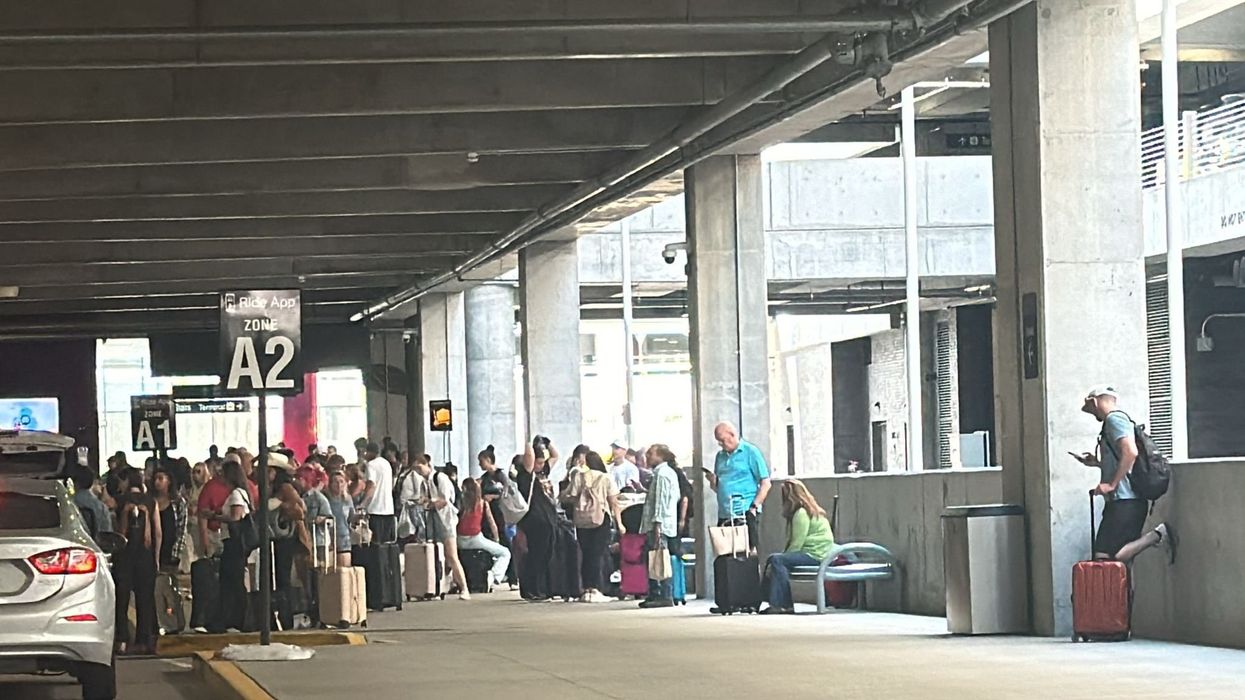
"This is something we're doing for all of us," said a Tennessee Drivers Union co-president.
Drivers for the ride-hailing companies Lyft and Uber are demanding better pay and work conditions by beginning Labor Day weekend with a Friday strike at Nashville International Airport.
"The Tennessee Drivers Union (TDU) has strategically chosen Labor Day weekend to stage its strike," the group said in a statement. "The weekend, which draws thousands of visitors to Nashville's music, entertainment, and tourist venues, highlights the $31 billion industry that relies heavily on the labor of ride-share drivers to generate profits."
In addition to the airport strike, which began at 1:00 pm and was set to continue until at least 7:00 pm, the drivers planned to "lead a caravan through Broadway in downtown Nashville, the center of Tennessee's country music tourism industry."
WPLN reported that "at one point, the airport shut down access to the ride-share lot and refused to allow more drivers to enter and join the strike on Friday."
TDU co-president Kovan said that "this is something we're doing for all of us, not for a single individual, whether you are Uber Black, a regular Uber, or a taxi driver," and "this is gonna be the beginning of a nightmare" for the companies.
The union is calling for meetings with Nashville Mayor Freddie O'Connell and the Metropolitan Council, the Metropolitan Nashville Airport Authority, and the Transportation Licensing Commission to go over demands, based on surveying hundreds of drivers.
The workers said they want an expansion of their airport lot as soon as possible and clean, working bathrooms on-site, a 9:00 pm cutoff for scooters in the city, a cap on the number of ride-share drivers in the area, enforcement of the prohibition on fake taxis, and a "dignified" wage.
"The drivers are doing everything. The gas comes out of the drivers' pay, the repairs of the car because it is a personal car, so if they're giving the driver just 45% of the fare, that leaves everybody struggling," a six-year driver in Nashville, who requested anonymity for fear of retaliation, told The Guardian. "In one hour, I can drive from the airport to downtown or downtown to the airport and get $8 to $10, and then a different hour I can get $17. We need the pay to be consistent."
Citing delays in waiting for fares, receiving tickets without warnings, and inadequate airport bathrooms, the driver said, "That's why we came together."
"With the current economic situation, it is really difficult to meet family needs or what you need to survive. We're trying to fight for our rights," he explained. "We also don't want passengers to be overcharged by Uber. When they take over 50% or 60% of the ride fare, they are counting on us getting tips from riders, but the way we are struggling we understand people are struggling, so not everyone tips."
While Lyft and Uber drivers in Nashville joined delivery service workers for Amazon Flex, DoorDash, Grubhub, Instacart, Postmates, and other companies in a strike on May 1, or International Workers' Day, TDU said Friday that "this ride-share organizing effort is the first of its size to occur in the Deep South, in an explicitly anti-worker state."
A report released last month by the Economic Policy Institute (EPI) details how "for at least the last 40 years, pay and job quality for workers across the South has been inferior compared to other regions—thanks to the racist and anti-worker Southern economic development model."
"In addition to right-to-work laws and the overall opposition from political leaders across the region, workers seeking to organize a union typically face intense opposition from employers," the EPI report says. "Further, because of the political opposition to unions, when workers try to organize, employers know that they can illegally intimidate them, refuse to recognize the union, or negotiate a contract in bad faith—with little to no fear of being held accountable by political leaders."
In April, as Volkswagen employees in Chattanooga began voting on whether to join the United Auto Workers, six Southern Republican governors, including Tennessee's, released a joint statement saying they were "highly concerned about the unionization campaign driven by misinformation and scare tactics that the UAW has brought into our states."
The Volkswagen employees ultimately voted to join the UAW. The EPI report emphasizes that "workers must be able to come together in a union to demand fair wages and benefits, a safe working environment, and the ability to have a say about their workplace—even when politicians are intransigent."
TDU co-president Arkangelo on Friday also stressed how important it is to "always stand in solidarity with one another," saying that "if we don't come together as people striving for their rights then we will continue to suffer and [be] robbed by two giants, Uber and Lyft."
"There are too many Americans trying to survive and raise families on $9, $10, or $12 an hour," said the senator. "This injustice must end."
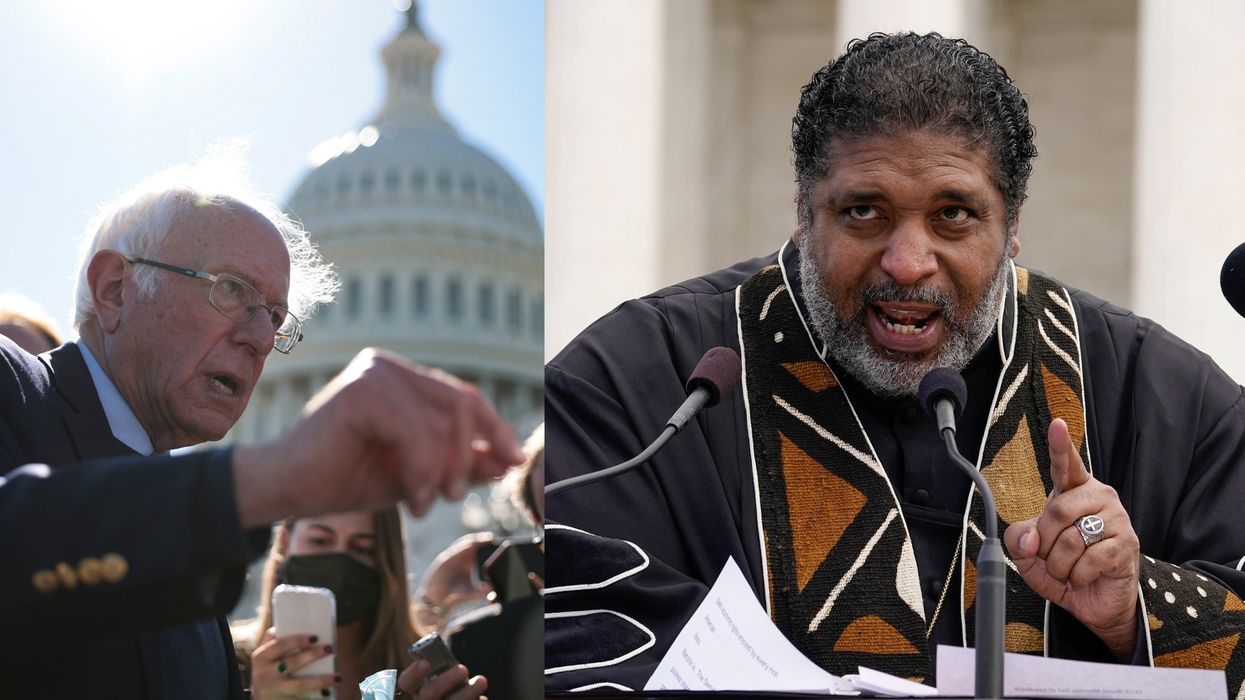
On the heels of launching an effort to raise the federal minimum wage to $17 an hour over five years, U.S. Sen. Bernie Sanders on Monday announced upcoming rallies to demand the pay hike in three states, where he will be joined by Bishop William Barber II.
Barber, founding director of the Center for Public Theology and Public Policy at Yale Divinity School, plans to join Sanders (I-Vt.) to "make the moral case for raising wages."
Sanders and Barber are first headed to Durham, North Carolina, where they are set to be joined by Democratic Durham County Commissioner Nida Allam—who worked for the senator's 2016 presidential campaign—for a 7:00 pm ET rally at the Hayti Heritage Center on June 1.
The pair then plans to visit the Henderson A. Johnson Memorial Gymnasium at Fisk University in Nashville, Tennessee at 7:00 pm CT on June 2. State Rep. Justin Jones (D-52)—who gained national attention earlier this year for being expelled by GOP legislators over a protest demanding gun control, only to be promptly reinstated by Nashville's Metropolitan Council—is expected to join them.
A third rally hosted by the International Longshoremen's Association Local 1422 at their union hall in Charleston, South Carolina is scheduled for 4:00 pm ET on June 3. State Rep. Wendell Gilliard (D-111) plans to join the event, in partnership with the South Carolina AFL-CIO.
"Low-income workers need a pay raise and the American people want them to get that raise."
A longtime advocate of increasing the U.S. minimum wage, Sanders and labor leaders announced their push for $17 per hour earlier this month. Though several states have set higher minimums, the federal rate of $7.25 hasn't changed since 2009.
"At a time of massive and growing income and wealth inequality and record-breaking corporate profits, we must stand up for working families—many of whom are struggling every day to provide a minimal standard of living for their families," Sanders—who chairs the Senate Health, Education, Labor, and Pensions (HELP) Committee—said Monday.
"There are too many Americans trying to survive and raise families on $9, $10, or $12 an hour. It cannot be done. This injustice must end," he added. "Low-income workers need a pay raise and the American people want them to get that raise."
The progressive think tank Data for Progress last week released polling results that show 76% of likely voters across party lines would support a $17 hourly minimum wage—and 74% would support $20.
The survey, conducted in early May, also revealed that all likely voters believe Americans need to earn $26.20 per hour "to have a decent quality of life (that is, the ability to afford basic necessities such as groceries, rent or mortgage payments, transportation, and other essential bills without struggling)."
Plans for the rally series come after researchers at the University of California, Berkeley kicked off May by putting out a working paper that shows significant minimum wage increases can have positive effects on earnings and employment—countering claims from corporate lobbying groups that oppose such pay hikes.
While Sanders has the power to ensure his panel takes up the issue, legislation to increase the minimum wage nationwide is unlikely to reach President Joe Biden's desk, given the Republican-controlled House of Representatives and a Senate that still includes
Democrats who partnered with the GOP in 2021 to block a measure that would have mandated a $15 hourly rate.
"The world is watching Tennessee," the lawyers wrote, adding that any retributive action would be unconstitutional and "require redress."
Ahead of the Nashville Metropolitan Council voting Monday to reappoint Tennessee Rep. Justin Jones to the state House of Representatives, attorneys for him and ousted Rep. Justin Pearson warned Republican legislators not to further retaliate against the pair.
The letter from the six attorneys, including former U.S. Attorney General Eric Holder, to Tennessee House Speaker Cameron Sexton (R-25) came after Republicans in the chamber voted last Thursday to expel Jones (D-52) and Pearson (D-86) over their protest in support of gun control after the Covenant School shooting in Nashville.
The missive also follows Pearson saying in a televised interview that he has "heard that people in the state Legislature and in Nashville are actually threatening our Shelby County commissioners to not reappoint me, or they're going to take away funding that's in the government's budget for projects that the mayor and others have asked for."
The GOP state lawmakers expelled Jones and Pearson "not for any criminal or unethical act, but for merely exercising their constitutional rights," the Democrats' lawyers wrote. "In so acting, the House Republicans not only wrongfully stripped these representatives of their rights as duly-elected legislators but also disenfranchised the voters they were elected to represent."
"Their partisan expulsion was extraordinary, illegal, and without any historical or legal precedent," the attorneys continued. "The House must not now compound its errors by further retributive actions."
Should the Metro Nashville Council and Shelby County Commission vote to reinstate Jones and Pearson, the letter states, "such reappointment must lead to the full and immediate restoration of their rights as members of the House."
They "should be promptly sworn back in as members of the General Assembly and granted the same benefits, rights, duties, and liberties as any other member," the letter asserts. "That includes, but is not limited to, returning their parking and badge access to the state Capitol, which was cut off before their expulsion, restoring their benefits, including healthcare, which was immediately cut off upon expulsion, returning their status on committees, and being allowed to, in all manners, conduct legislative business the same as any other member."
"The world is watching Tennessee," the letter declares. "Any partisan retributive action, such as the discriminatory treatment of elected officials, or threats or actions to withhold funding for government programs, would constitute further unconstitutional action that would require redress."
In a statement Monday evening, Tennessee House Majority Leader William Lamberth (R-44) and Republican Caucus Chairman Jeremy Faison (R-11) said that "should any expelled member be reappointed, we will welcome them. Like everyone else, they are expected to follow the rules of the House as well as state law."
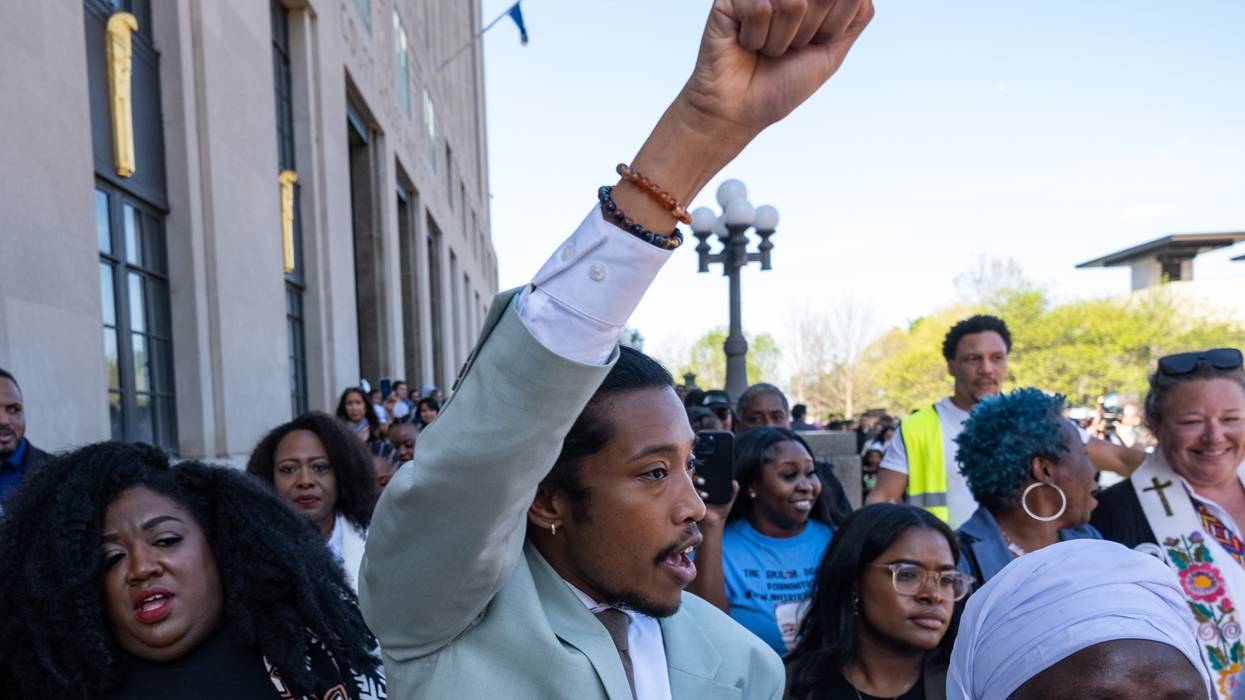
Jones returned to the House for Monday's evening session, fist raised.

"Voters in District 52 elected Justin Jones to be their voice at the statehouse, and that voice was taken away this past week," said Nashville's mayor. "So let's give them their voice back."
Cheers erupted Monday evening after Nashville's Metropolitan Council unanimously reappointed Democratic Rep. Justin Jones to the Tennessee House of Representatives after Republicans expelled him from the chamber last week over a gun control protest.
In sharp contrast with the Republican-dominated House's 72-25 expulsion vote on Thursday, all 36 council members supported Jones reclaiming his seat representing District 52.
Just before the "unprecedented" vote, Democratic Nashville Mayor John Cooper declared that "voters in District 52 elected Justin Jones to be their voice at the statehouse, and that voice was taken away this past week. So let's give them their voice back. I call on this body to vote unanimously, right now, to do just that."
Jones was the only candidate even considered. He was nominated by Delishia Porterfield, the Democratic council member for District 29, who called his expulsion a "miscarriage of justice."
Ahead of the Tennessee House's Monday night session, Jones marched with a police escort from City Hall to the state Capitol, where protesters chanted, "Welcome home!"
As The Tennessean reports:
Jones took a bullhorn in his hands and began speaking.
"Today we sent a clear message to Speaker Cameron Sexton [R-25] that the people will not allow his crimes against democracy to happen without challenge," he said. "This is not about one person. It's not about one position. It's about a movement of people empowered to restore the soul of what this building should represent and that is democracy."
Chancellor I'Ashea L. Myles led Jones in his oath on the steps of the Capitol as cheers erupted from the crowd. When he was done, he raised his fist into the air.
Along with Jones, Rep. Justin Pearson (D-86), a fellow young Black man, was expelled from the House last week. A third GOP expulsion resolution targeting Rep. Gloria Johnson (D-13), who is white, failed.
As Jones returned to the chamber Monday evening, he walked with Johnson—one arm linked with hers, and the other raised, with his hand in a fist.

"This is what folks really have to realize," said former state Rep. Justin Pearson. "The power structure in the state of Tennessee is always wielding against the minority party and people."
One of the Tennessee Democrats who was removed last week by the Republican-dominated state House said Sunday that GOP lawmakers have threatened county officials with funding cuts in an effort to deter them from voting to reinstate the expelled representative.
"I would be honored to accept the appointment of the Shelby County Commission," former state Rep. Justin Pearson said of the local body that is set to meet on Wednesday to decide who will fill the empty seat until a special election is held. Pearson told NBC News on Sunday that he intends to run in the special election triggered by his widely condemned expulsion, which stemmed from his participation in a gun control protest on the state House floor following a school shooting in Nashville.
The Memphis Democrat said he has "heard that people in the state legislature and in Nashville are actually threatening our Shelby County commissioners to not reappoint me, or they're going to take away funding that's in the government's budget for projects that the mayor and others have asked for."
"This is what folks really have to realize," said Pearson. "The power structure in the state of Tennessee is always wielding against the minority party and people."
Late last week, Shelby County Commissioner Erika Sugarmon told local reporters that members of the body are "being threatened by the state to take away funding, needed funding to run our schools, to run our municipalities."
"This is about bullying people into submission. And enough is enough," said Sugarmon. "We've got to stand for something or fall for everything. And we've been bullied by the state for too long now."
It's unclear whether Pearson has enough support among the 13 Shelby County commissioners to win reinstatement ahead of the coming special election.
Mickell Lowery, the chair of the commission, said in a statement Sunday that "the protests at the state Capitol by citizens recently impacted by the senseless deaths of three nine-year-old children and three adults entrusted with their care at their school was understandable given the fact that the gun laws in the state of Tennessee are becoming nearly nonexistent."
"It is equally understandable that the leadership of the state House of Representatives felt a strong message had to be sent to those who transgressed the rules," said Lowery. "However, I believe the expulsion of State Representative Justin Pearson was conducted in a hasty manner without consideration of other corrective action methods. I also believe that the ramifications for our great state are still yet to be seen."
"Coincidentally, this has directly affected me as I too reside in State House District 86," he continued. "I am amongst the over 68,000 citizens who were stripped of having a representative at the state due to the unfortunate outcome of the State Assembly's vote. Therefore, the Shelby County Board of Commissioners will consider the action to reappoint Mr. Justin Pearson to his duly elected position to represent the citizens in District 86 for the State of Tennessee House of Representatives in a special called meeting on Wednesday, April 12, 2023 at 1:30 PM."
Rep. Justin Jones, a Nashville Democrat who was expelled along with Pearson for showing solidarity with demonstrators on the state House floor, reportedly has the support of a majority of the Nashville Metropolitan Council members expected to convene Monday to vote on the removed lawmaker's reinstatement.
Jones warned last week that Tennessee House Republicans could refuse to seat him and Pearson if they are reappointed or if they win a special election.
In his NBC appearance on Sunday, Jones said the resounding national response to his and Pearson's expulsion makes clear that the Tennessee GOP's "attack on democracy will not go on unchallenged."
"The Tennessee House Republicans' attempt to crucify democracy has instead resurrected a movement led by young people to restore our democracy, to build a multiracial coalition," Jones said. "We will continue to fight for our constituents."

One organizer said that if Tennessee lawmakers "actually cared about protecting kids" they would "address what kills kids every single day" instead of banning books and drag shows.
A week after six people including three 9-year-old children were shot dead in a Nashville elementary school and two days before planned nationwide protests, thousands of students walked out of classrooms across the Tennesee capital on Monday to demand gun control laws.
The advocacy group March for Our Lives (MFOL)—founded after the 2018 Marjory Stoneman Douglas High School massacre in Parkland, Florida—organized Monday's protest to urge state lawmakers pass gun control legislation including better background checks and a ban assault weapons.
"The purpose of the rally is to show that the community has had enough and we are demanding change from the Tennessee Legislature," MFOL national organizer Ezri Tyler explained to WKRN.
"It's not drag queens. It's not books. Children are dying because of guns."
"The message overall is we know that right now, Tennessee is engaging in this culture war, where they're harming our communities by banning drag, by banning books, banning gender-affirming care," Tyler added. "But if they actually cared about protecting kids, as they claimed they would address what kills every single day, which is guns."
Gun violence is the leading cause of death for U.S. children.
MFOL organizer Brynn Jones told WKRN that "it hits closer and closer, the longer and longer that you're, you know, hearing these stories just being like that it's the same story over and over again.
"But then hearing it on Monday that it was in Tennessee, it was in Nashville, 20 minutes from where I grew up, 20 minutes from where I go to school, hit incredibly close to home and felt personal in a way that it usually doesn't," Jones added.
Thousands of students marched to Legislative Plaza near the Tennessee State Capitol chanting "stop gun violence, we will not be silenced" and other slogans. Video recorded inside the Capitol showed demonstrators confronting state Rep. William Lamberth (R-44) and asking him why lawmakers won't "ban assault rifles."
The LGBTQ+ advocacy group GLAAD tweeted: "It's not drag queens. It's not books. Children are dying because of guns. GLAAD stands with all of the students during today's walkout at the Tennessee State Capitol. Ban assault weapons—not drag performers, books, or lifesaving care for trans people."
However, Tennessee's Republican-controlled Legislature and GOP Gov. Bill Lee have gone in the opposite direction.
As The Associated Press reports:
Already this year, Republican lawmakers have introduced bills that would make it easier to arm teachers and allow college students to carry weapons on campus. Democratic-led efforts to strengthen gun safety measures have faltered. On Tuesday, lawmakers delayed taking up any of the contentious gun-related bills, saying they wanted to offer respect to the community.
The most significant movement involves the state’s permitless carry law. In 2021, Lee led the charge to allow most adults 21 and older to carry handguns without first obtaining a permit that requires clearing a state background check and training. Thereafter, gun manufacturer Smith & Wesson announced plans to relocate its headquarters to Tennessee due to the state's "support for the 2nd Amendment."
Tennessee state Rep. Justin Jones (D-52) said that three Democratic lawmakers were kicked off their committees and threatened with expulsion for standing with their constituents and demanding gun control legislation.
Monday's protest in Nashville came before another youth-led gun control group, Students Demand Action, is set to lead nationwide student walkouts on Wednesday.
"Being a student shouldn't be a death sentence but once again, gun violence has forced its way into our schools, leaving nothing but pain, trauma, and tragedy in its wake," the group said in a preview of Wednesday's action. "We need more than thoughts and prayers. We demand action from our lawmakers now."
Students Demand Action continued:
School shootings like this are not acts of nature—no other peer nation allows students to be shot and killed in schools like this. And it's not just gun violence in our schools. In America and in Tennessee, guns are the number one killer of American youth, and Tennessee lawmakers have done nothing but gut gun safety laws, putting gun industry profits ahead of the safety of our children.
"We won't accept a country where gunfire can ring out at any moment, whether it's while grocery shopping at a supermarket, hanging out at a park in your community, attending a party, or going to a restaurant for dinner," Students Demand Action added. "We deserve more."
The shooting took place less than a month after Republican Gov. Bill Lee signed legislation banning gender-affirming healthcare for transgender youths and public drag shows, both of which the GOP claimed were aimed at protecting children.
This is a developing story... Please check back for updates...
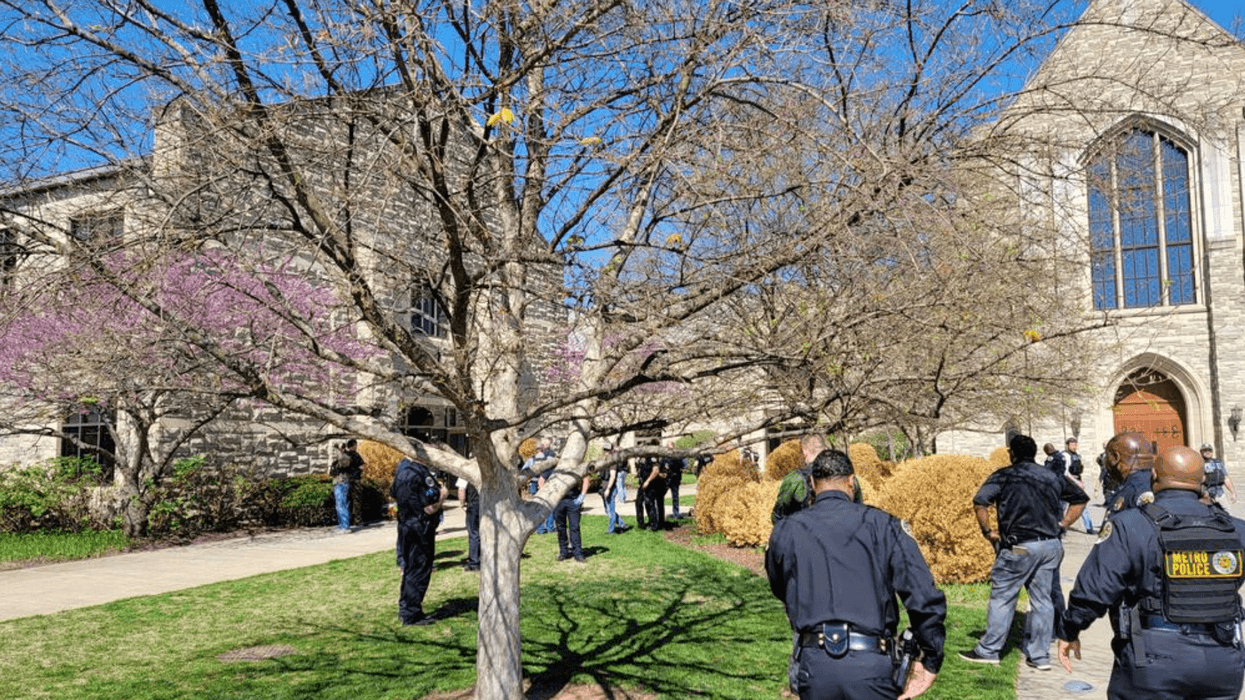
Three children and three adults were killed Monday by a shooter at the Covenant School, a private Christian school in Nashville which serves students from preschool through sixth grade.
The suspected killer—identified by police as 28-year-old Aubrey Hale—was "engaged by police" who arrived at the scene Monday morning, and was reported dead, according to The Tennessean.
Speaking to reporters, Nashville Police Chief John Drake said a clear motive has yet to be confirmed, but he did reference a map and manifesto by the alleged shooter and confirmed the shooting was a "targeted attack."
In an earlier news briefing, Metropolitan Nashville Police Department spokesperson Don Aaron said the shooter was armed with at least two assault rifles and a handgun.
After initial unclear statements about Hale's gender identity in the wake of the massacre, Nashville police in a statement on Tuesday said Hale "was assigned female at birth," but confirmed the shooter used "male pronouns on a social media profile."
Geoff Bennett of PBS Newshour reported the suspect entered the school through a side entrance.
Police responded to a call at 10:13 am regarding an "active shooter."
The Nashville Fire Department reported on Twitter that officials had set up a family reunification center at a nearby church at 2100 Woodmont Boulevard.
As Fox News covered the police department's press conference, a woman stepped up to a microphone on camera and asked the assembled news team, "Aren't you guys tired of being here and having to cover all of these mass shootings?"
"How is this still happening?" said the woman, who said she was from Highland Park, Illinois and survived the mass shooting there last summer. "How are our children still dying and why are we failing them?"
The Fellowship of Reconciliation (FOR), the nation's oldest interfaith peace organization, said the shooting is only the latest which must force Americans to "face the irrefutable fact that uncontrolled access to firearms endangers us all."
"FOR calls on lawmakers and communities to take immediate action to finally prioritize life over the profits of firearm companies," said the organization. "As we bear witness to psalms being inscribed on assault weapons, we call out the perversion of our faith. Mary, the resolute mother of humanity, stood at the foot of the cross witnessing brutality, inhumanity, and death being inflicted on her child. Today we are all parents looking on as the brutality and death from another mass shooting, a crucifixion, is inflicted on our children."
"Like the Israelites stood praying at the shores of the Red Sea, as the Passover story tells," the group continued, "we must act to manifest our prayers and create a new covenant committed to honoring and saving lives rather than filling the coffers of firearms manufacturers."
Shannon Watts, founder of gun control group Moms Demand Action, took aim at Republican lawmakers in the state including Rep. Andy Ogles, who posed with his family holding assault rifles in front of their Christmas tree last year. Ogles represents the district where the Covenant School is located.
Watts also condemned Republican Gov. Bill Lee, who said he was "praying for the school, congregation, and Nashville community."
Lee signed legislation in 2021 to allow most adults in Tennessee carry a handgun without a permit.
Earlier this month, Lee also made Tennessee the first U.S. state to criminalize public drag shows, on the same day that he signed legislation banning gender-affirming healthcare for transgender youth. Both laws, Republicans said, were aimed at protecting children.
"Just a reminder that the people talking about library books, history classes, and drag queens don't really give a shit about the well-being of children in this country," said Robert Maguire, research director for Citizens for Responsibility and Ethics in Washington.