

SUBSCRIBE TO OUR FREE NEWSLETTER
Daily news & progressive opinion—funded by the people, not the corporations—delivered straight to your inbox.
5
#000000
#FFFFFF
To donate by check, phone, or other method, see our More Ways to Give page.
Daily news & progressive opinion—funded by the people, not the corporations—delivered straight to your inbox.

"When the federal government puts fear between people and the ballot box, that is voter intimidation—plain and simple."
A coalition of civil rights and labor groups led by the NAACP sued the Trump administration Friday in a bid to prevent armed federal agents from being deployed at or near polling places during November's midterm elections, warning that the threatened presence of such officers could intimidate voters of color and repress turnout.
The lawsuit was filed in the US District Court for the District of Columbia by the NAACP, National Urban League, Mi Familia en Accion, OCA-Asian Pacific American Advocates, SEIU, American Federation of Teachers, International Union of Painters, and United Food and Commercial Workers International.
The complaint names senior Trump administration officials as defendants, including Homeland Security Secretary Markwayne Mullin, Attorney General Todd Blanche, FBI Director Kash Patel, and White House border czar Tom Homan. The lawsuit seeks an order barring the administration from "deploying agents in a manner that unlawfully intimidates voters or anyone urging or aiding voters."
The plaintiffs are represented by the Legal Defense Fund, Asian American Legal Defense and Education Fund (AALDEF), Brennan Center for Justice at NYU Law, LatinoJustice PRLDEF, National Immigration Law Center, Protect Democracy, and Democracy Defenders Fund. They argue that the administration's policies and statements have created a reasonable fear among Black, Latino, Asian American, naturalized, immigrant, and mixed-status voters that they could face questioning, surveillance, detention, or force while voting.
Asked in May whether he would send National Guard troops or ICE agents to polling locations, President Donald Trump refused to rule out such a move, saying that he would “do anything necessary to make sure we have honest elections.”
Other senior administration officials have similarly refused to rule out the deployment of federal forces to polling places in the name of fighting voter fraud—which is extremely rare.
The Justice Department, meanwhile, has denied that it is preparing to send agents to polling places. Spokesperson Kiersten Pels called such suggestions "fearmongering," while Mullin has said ICE would not patrol polling locations.
The coalition is suing under Section 11(b) of the Voting Rights Act, which prohibits intimidation, threats, or coercion of people for voting or attempting to vote, as well as those assisting others in voting.
“All American voters have the sacred right to have a voice in our democracy, and should be able to exercise that right freely and without fear,” said Janai Nelson, president and director-counsel of the Legal Defense Fund.
“Using federal law enforcement as a scare tactic to target and intimidate Black communities is illegal and antithetical to the promise of a multiracial democracy that was enshrined in the Voting Rights Act," Nelson added. "Neither Black, Latino, Asian, or any other voters nor any other communities should ever again face the threats of terror and intimidation at the ballot box that defined the Jim Crow era.”
“We are experiencing a level of voter intimidation like we haven’t seen since the civil rights era."
AALDEF executive director Bethany Li asserted that "when the federal government puts fear between people and the ballot box, that is voter intimidation—plain and simple."
“We are experiencing a level of voter intimidation like we haven’t seen since the civil rights era, when local governments and the KKK openly intimidated Black voters," Li added. "This time, it is the federal government ordering ICE and other federal law enforcement to intimidate naturalized citizen voters and immigrant communities. In 2026, voters should not have to choose between their safety and their right to vote.”
NAACP general counsel Kristen Clarke said the threatened deployment would turn polling places into "militarized zones."
"Turning the fundamental right of exercising our vote into a high-stakes encounter with the militarized strong arm of the current administration isn't protection and it isn't oversight; it's disenfranchisement, period," she argued.
The lawsuit comes one week after a similar challenge was filed by the League of United Latin American Citizens, UnidosUS, Common Cause, and the city and county of Denver, Colorado. That case cites an 1865 federal law that generally prohibits federal officials from bringing "troops or armed men" to places where elections are being held, except when necessary to repel armed enemies of the United States.
“The Trump administration has been waging a campaign to undermine American elections, and their insinuations that federal law enforcement agents might be at the polls this November are part of that effort,” Jasleen Singh, senior counsel and manager in the Brennan Center’s Democracy Program, said during Friday's announcement of the new suit. “We’re bringing this lawsuit so that voters are protected against intimidation and can have their voices heard.”
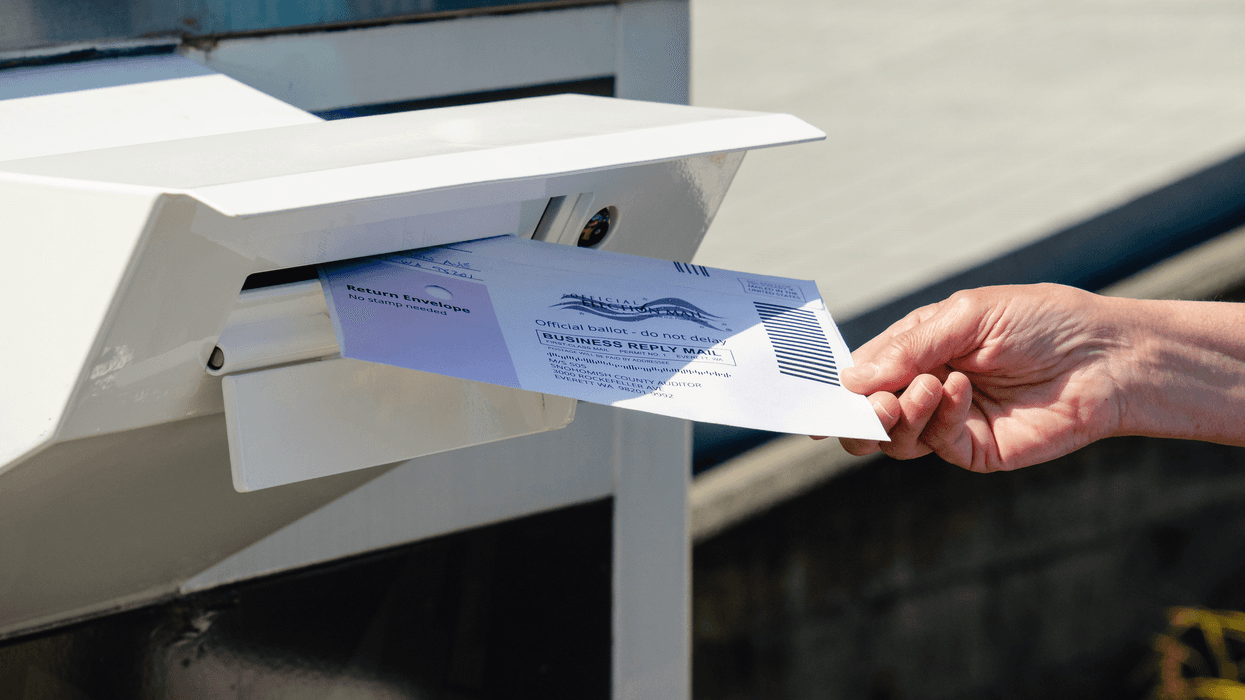
“These mail-in ballot restrictions threaten to disenfranchise millions of eligible voters who rely on mail voting to participate in our democracy," said one advocate.
A day after a federal judge lifted her injunction on President Donald Trump's executive order targeting mail-in ballots, a quartet of civil rights groups on Thursday filed fresh claims in their lawsuit challenging the administration's weaponization of the US Postal Service to attack the right to vote under the pretense of fighting nearly nonexistent fraud.
The Lawyers’ Committee for Civil Rights Under Law, NAACP, Common Cause, and Black Voters Matter Fund argued in the US District Court for the District of Columbia that Trump’s March 31 executive order unlawfully attempts to federalize important parts of election administration—especially voter eligibility verification and mail-ballot delivery—by presidential fiat, without authorization from Congress, while creating serious risks of disenfranchisement and misuse of personal data.
The plaintiffs—and many legal experts—argue that the US Constitution gives the states and Congress the authority to regulate federal elections, not the president.
"Our democracy is under attack," NAACP president and CEO Derrick Johnson said Thursday in a statement. "No federal entity should be allowed to implement last-minute rules that disenfranchise voters and override state election laws."
"This new USPS rule is a direct assault on the fundamental freedoms of millions of Americans—particularly Black voters, communities of color, seniors, military members, and rural residents—just weeks before a critical election,” Johnson added, referring to November's pmidterms. "We will not stand idly by while the voices of the people are silenced. We must protect every eligible citizen’s right to cast their ballot.”
Damon Hewitt, president and executive director of the Lawyers’ Committee for Civil Rights Under Law, warned that “these mail-in ballot restrictions threaten to disenfranchise millions of eligible voters who rely on mail voting to participate in our democracy while balancing work, caregiving responsibilities, disabilities, and other realities of daily life."
"The Trump administration is trying to limit access to the ballot, sow confusion at the polls, and to use the ensuing chaos as an excuse to exert power over agencies and processes in a politicized way," Hewitt added. “We will not let this or any administration further undermine our democratic process. We will fight to ensure our elections are free and fair, and that eligible voters are not shut out—especially Black voters and other voters of color, who are frequently targeted by voter suppression schemes.”
Several courts had ruled against Trump's order. But this week, the US Supreme Court cleared the way for the administration to proceed with its plans, and on Wednesday US District Judge Indira Talwani, an appointee of former President Barack Obama, was compelled to lift her injunction on the executive order as a result of the high court's decision.
Also on Wednesday, the groups behind the case before Talwani moved to block the Postal Service rule, as did a coalition of two dozen Democratic state attorneys general, whose initial challenge had resulted in the ruling from the Supreme Court—which found that the AGs filed their first suit prematurely.
Republicans including Trump—who has repeatedly voted by mail—have used fearmongering and disinformation to push the nearly nonexistent “threat” of voter fraud, especially in regard to mailed ballots, and noncitizens voting in US elections.
“Mail-in voting is so safe that even the president has used it twice this year,” Common Cause president and CEO Virginia Kase Solomón said on Thursday. “The Postal Service exists to deliver our mail, not to be weaponized by this administration to silence voters. Common Cause will keep fighting to protect a democracy where people choose their leaders—not the other way around.”
Trump’s March order is part of a broader attack on voting rights that includes pushing an updated version of Republicans’ so-called SAVE America Act, which would mandate proof of citizenship and strict photo ID requirements to register to vote in federal elections. The legislation, which was passed by the House of Representatives in February, is stalled in the narrowly split Senate, where it lacks the support of 60 lawmakers needed to avoid a Democrat filibuster.
"Mail-in voting gives people the freedom and flexibility to participate in our democracy, and we should be honest about what these efforts to restrict it are really doing: creating barriers to the ballot under the guise of election security," Black Voters Matter Fund co-founders Cliff Albright and LaTosha Brown said in a joint statement Thursday. "We are not fooled. This is the same old playbook—manufacture confusion, create unnecessary hurdles, and chip away at voting access."
“When the same politicians who defend their own access to mail-in voting move to restrict that access for others, the hypocrisy is hard to ignore," Albright and Brown continued. "We cannot allow voter suppression to be repackaged as voter protection or allow political interference to determine who gets to participate and whose voice counts."
"This is not about making democracy more secure; it is about reshaping who can fully participate in it," they added. "We will continue to call these efforts what they are and fight for every eligible voter’s freedom to make their voice heard.”

“USPS’ plan was unwise, unlawful, and a threat to the millions of voters who rely on mailed ballots to participate in our democracy," said one case litigant.
In a ruling hailed by democracy defenders, a federal court on Wednesday halted the US Postal Service's implementation of President Donald Trump's March executive order targeting mail-in ballots as part of his administration's broader attack on voting rights.
Judge Emmet Sullivan of the US District Court for the District of Columbia granted a request by the NAACP to enforce a 2021 settlement agreement requiring the USPS to protect mail-in voting and prioritize delivery of mail related to elections through 2028.
The request followed the Postal Service's publication last month of a proposed rule that would block the delivery of mail-in ballots to voters in states where election officials refused to provide certain information to USPS or use a specific envelope design. That proposal came after Trump's March executive order directing federal agencies to create a nationwide list of eligible voters using federal data.
The directive also requires the Postal Service to verify that mail-in ballots are sent and returned only by eligible voters, preserve election-related records for a longer period, and exercise heightened oversight of mailed ballots.
The Public Citizen Litigation Group and Legal Defense Fund (LDF) filed a motion on behalf of the NAACP asserting that the proposed rule "manifests USPS’ intent not to deliver certain mail-in ballots, establishing a process that directly violates its obligations under the agreement."
“The court today correctly recognized that USPS’ plan to create roadblocks to mail-in voting was inconsistent with its commitment to timely deliver election mail,” Public Citizen Litigation Group director Allison Zieve said in a statement following Sullivan's ruling. “USPS’ plan was unwise, unlawful, and a threat to the millions of voters who rely on mailed ballots to participate in our democracy.”
🚨BREAKING: In the latest blow to President Donald Trump’s anti-voting agenda, a federal court on Wednesday granted the NAACP’s request to halt the U.S. Postal Service’s (USPS) implementation of his executive order against mail voting. www.democracydocket.com/news-alerts/...
[image or embed]
— Marc Elias (@marcelias.bsky.social) July 1, 2026 at 1:41 PM
LDF associate director-counsel Sam Spital said, “Today’s decision recognizes that USPS cannot disregard its legal obligation to timely deliver mail-in ballots to all voters."
"We are glad that the court blocked a blatant attempt to renege on this commitment through a proposed rule that ran the risk of undermining the fairness of our national elections, creating particular dangers for Black voters," Spital continued. "LDF will continue to defend our democracy and combat unlawful restrictions of the right to vote.”
Anthony P. Ashton, senior associate general counsel at the NAACP, called the decision "a critical step in protecting the rights of voters who rely on the timely delivery of mail-in ballots to participate in our democracy."
Ashton continued:
The proposed USPS changes would have created unnecessary and unlawful barriers, in direct violation of the USPS’ mandate to prioritize election mail. Those barriers could have disproportionately harmed Black voters, who are more likely to rely on mail voting due to long-standing inequities in access. Put simply, the use of mail-in voting helps reduce voter intimidation at the polls and election day dirty tricks. This decision makes clear that access to the ballot cannot be tied to arbitrary requirements. The NAACP will continue to hold this government accountable when it attempts to undermine fair and equal access to the electoral process.
Wednesday's order—from a judge who's been appointed to various positions by Republican and Democratic presidents throughout his career—is the latest in a string of federal court rulings against Trump's attacks on voting rights, crowned by Monday's Watson v. Republican National Committee US Supreme Court decision, in which the justices affirmed that states may count ballots received after Election Day if they were postmarked in time.
Last week, a federal judge in Massachusetts sided with Democratic state attorneys who challenged Trump's March 2025 executive order that requires Americans to show proof of citizenship when registering to vote, while another judge in the same district blocked parts of the president's March 2026 order, which included the USPS directive.
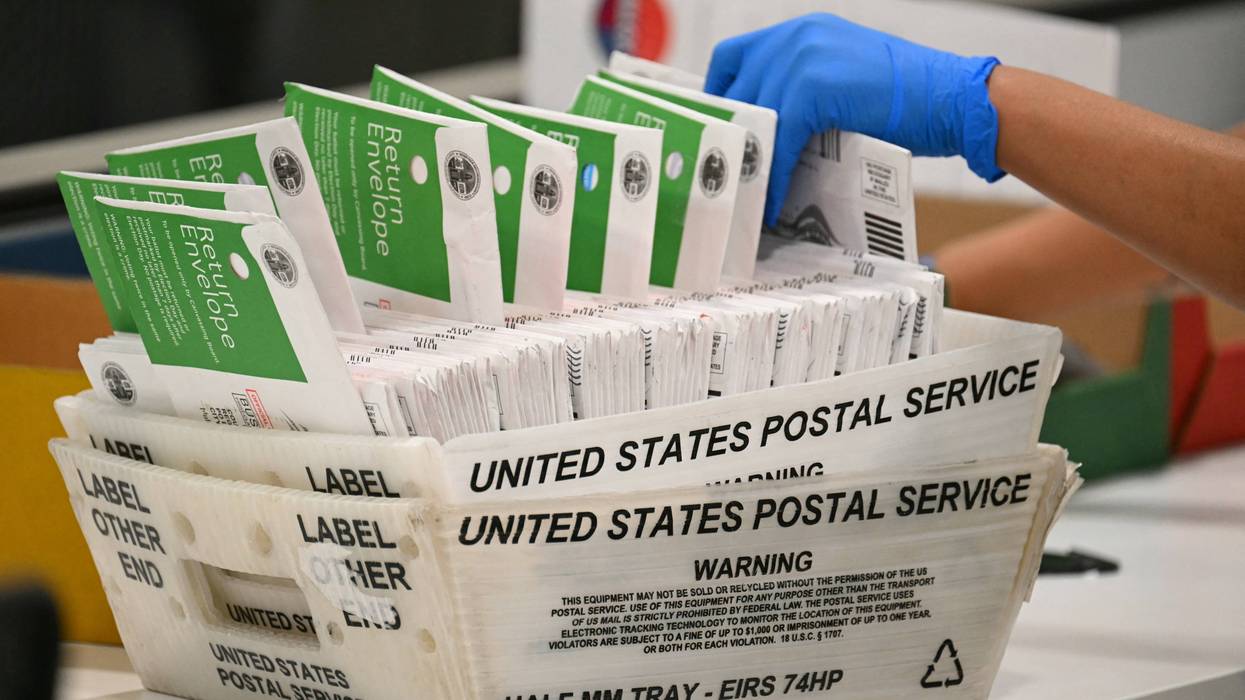
"That this administration would direct USPS to adopt measures to impede voters from casting their ballots is shameful."
A leading civil rights organization on Wednesday accused the US Postal Service of unlawful complicity in President Donald Trump's assault on mail-in voting, which he launched in late March with an alarming executive order that is facing its own legal challenges.
With a new legal motion filed in a federal court in Washington, DC, the NAACP is challenging rules the Postal Service unveiled last week that would require states to notify USPS "of the individuals to whom they are mailing a mail-in or absentee ballot." The rules would also "identify new standards for the envelope design and review for outbound and return ballot envelopes."
The NAACP's filing—which reignites a pandemic-era legal fight—warns that under the proposed rule, "USPS would refuse to transmit mail-in ballots in states that did not use specific envelopes with specific codes, and would refuse to deliver ballots for voters not included on a state-specific Mail-In and Absentee Participation List."
That would violate a previous USPS agreement, reached in 2021, to prioritize "timely delivery of election mail" and run afoul of federal law, the motion argues, calling for a swift injunction to stop the Postal Service from implementing the rules.
“The proposed rule manifests USPS’ intent to disregard its commitment to timely deliver mail-in ballots to all voters,” said Sam Spital, associate director-counsel of the NAACP Legal Defense Fund (LDF). “This all is part of a coordinated effort by this Administration to create chaos and confusion in our elections, which creates particular dangers for Black voters who are already at the greatest risk of suffering discrimination in voting. The attempt to usurp the right of eligible voters to cast mail-in ballots is directly contrary to the legally enforceable agreement the parties reached in this case, and to USPS’ obligations under federal law. We are confident it will be rejected by the courts.”
Allison Zieve, director of Public Citizen Litigation Group—which joined LDF in filing the suit on behalf of the NAACP—said it is "shameful" that the Trump administration would "direct USPS to adopt measures to impede voters from casting their ballots."
"And that USPS would allow itself to be used for political purposes to advance the president’s irrational objection to mail-in voting is disgraceful, unlawful, and contrary to the commitments it made to settle our [2020] litigation," Zieve added.
The proposed USPS rules stem from an executive order that Trump issued on March 31, instructing the agency to obtain from states "a list of voters eligible to vote in a federal election in such state to whom the state intends to provide a mail-in or absentee ballot to be transmitted via the USPS." Trump directed his handpicked postmaster general, David Steiner, to advance "provisions specifying that the USPS shall not transmit mail-in or absentee ballots from any individual" who is not included on state mail-in ballot participation lists.
Last week, a Trump-appointed federal judge in Washington, DC declined to immediately block the president's executive order. But another federal judge in Boston "sharply questioned" Trump's order during a hearing for a similar yet separate legal challenge earlier this week.
Attorneys representing the plaintiffs in the latter case said in a statement after Tuesday's hearing that "the Trump administration is attempting to seize that power for itself with an unlawful and dangerous executive order."
"Together with our courageous clients, we’re seeking a preliminary injunction to stop further chaos in our elections, uphold the rule of law, and protect the millions of citizens who rely on mail-in voting, including people with disabilities, students, rural voters, and the elderly," the attorneys said. "We won't let the Trump administration continue to trample on the fundamental right to vote.”
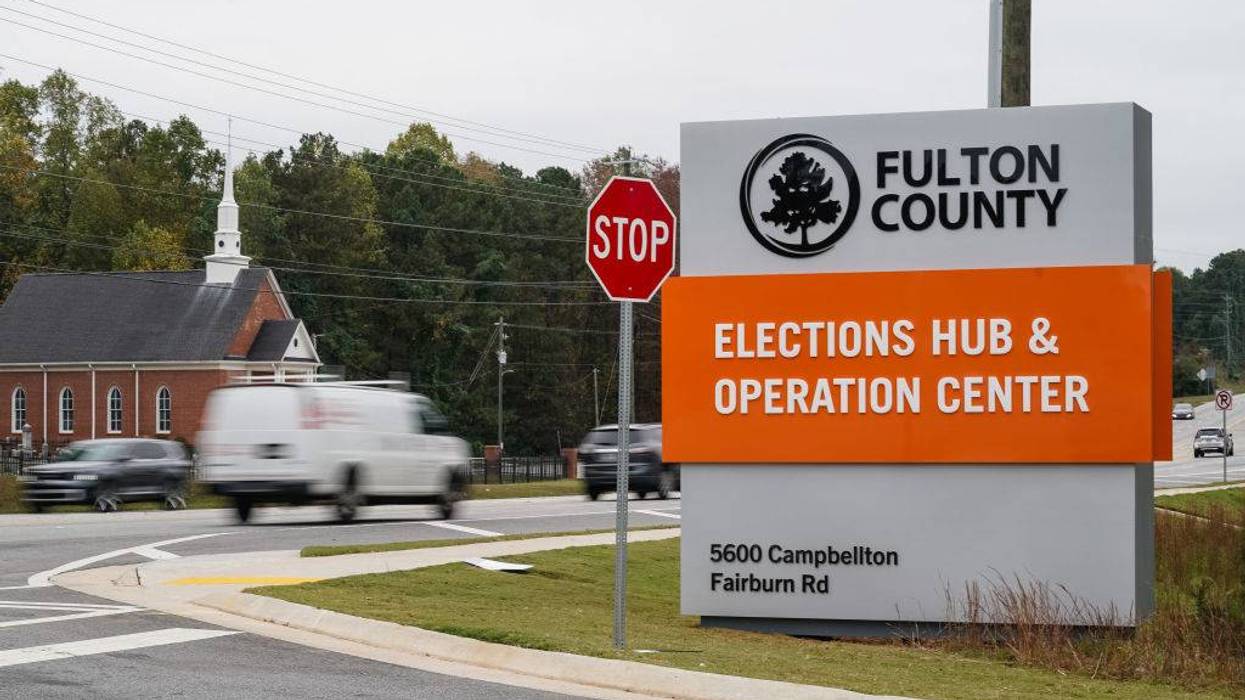
“We have very serious concerns about what the Trump administration could do with the voting records of thousands of people from Fulton County."
Civil rights organizations are demanding that a federal court place restrictions on the Trump administration's use of materials seizedduring its unprecedented raid on an elections center in Fulton County, Georgia in January.
Five groups—the Lawyers' Committee for Civil Rights Under Law, the NAACP, the Georgia State Conference of the NAACP, the Atlanta branch of the NAACP, and the Georgia Coalition for the People’s Agenda—on Monday asked the Atlanta Division of the US District Court for the Northern District of Georgia to bar the administration from using any materials seized from the Fulton County Election Hub and Operations center for anything other than the criminal investigation outlined in the search warrant used to justify the raid.
Among other things, this would bar the administration from using materials taken from the center for voter roll maintenance, election administration, or the enforcement of federal immigration laws.
The groups argued the constraints are necessary to enforce "statutory protections for the right to vote, voter privacy, and ballot secrecy, which are fundamentally critical given the unprecedented assaults on the administration of elections."
Additionally, the groups asked the court to force the administration to create and publicly disclose a full inventory of materials seized from the voting center, as well as a catalog of all people who have accessed the materials during the investigation.
Damon Hewitt, president and executive director of the Lawyers’ Committee for Civil Rights Under Law, claimed that the seizure of materials related to the 2020 presidential election was a continuation of Trump's years-long quest to overturn his loss to former President Joe Biden.
Hewitt also warned the raid on the Fulton County elections center should be seen as part of an assault on voter rights throughout the US.
"These actions are part of a larger pattern," he explained. "We are witnessing a broad-scale assault on fair elections on many fronts, from going after voting records and squeezing out Black voters through redistricting, to improperly purging voters from the rolls and making it harder for everyone to vote. Some have called what we are witnessing a ‘soft coup’. Whatever we call it, we must all understand that our democracy is at risk."
Robert Weiner, director of the voting rights project at the Lawyers’ Committee for Civil Rights Under Law, said the seizure of materials raised major privacy issues for Fulton County voters.
"We have very serious concerns about what the Trump administration could do with the voting records of thousands of people from Fulton County," said Weiner. "We are talking about sensitive private information. After the DOGE disaster, voters need to be confident their private information is in safe and trustworthy hands."
The FBI last month executed a search warrant at the Fulton County election center that allowed federal agents to seize 2020 election ballots, tabulator tapes, digital data, and voter rolls.
Shortly after the raid, Fulton County Commissioner Mo Ivory predicted that this kind of operation would likely be spreading to other counties and states.
“Fulton County is right now the target," Ivory said. "But it is coming to a place near you. This is the beginning of the chaos of 2026 that is about to ensue."
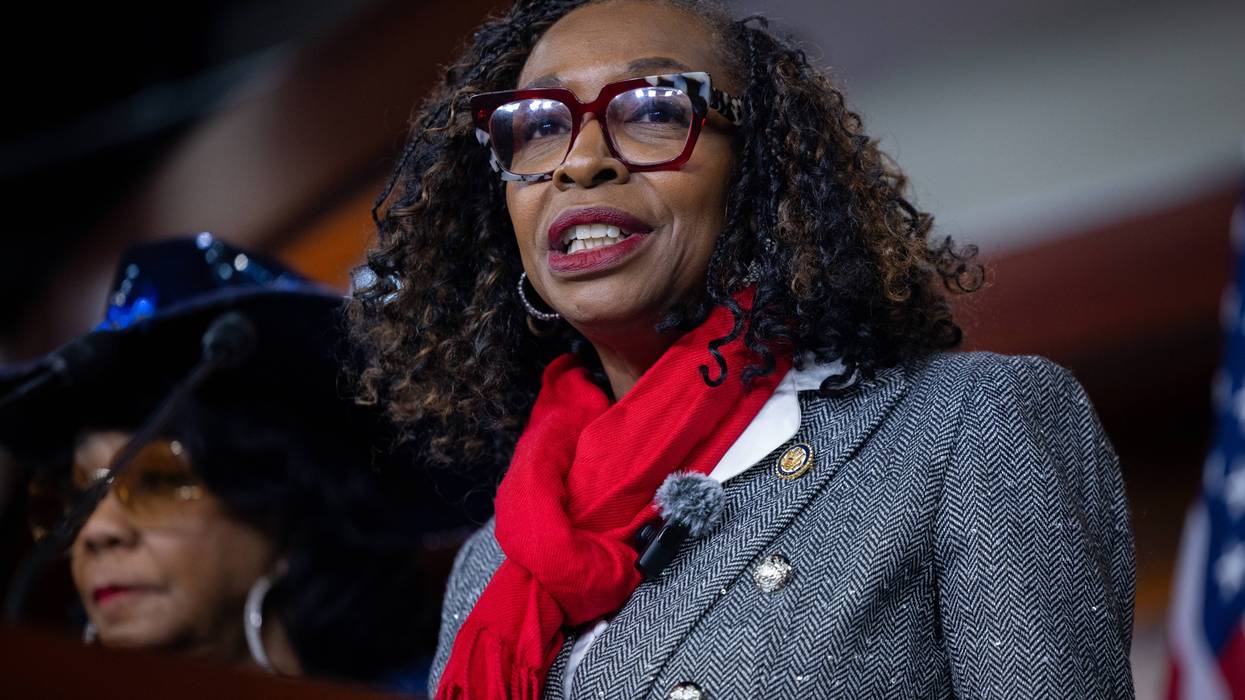
"Bigotry has been his brand since day 1," said Congresswoman Yvette Clarke.
As President Donald Trump refuses to apologize for a now-deleted social media post in which former President Barack Obama and his wife Michelle Obama are portrayed as apes, the head of the Congressional Black Caucus on Friday blasted what she called the "bigoted and racist regime" in the White House.
“It’s very clear that there was an intent to harm people, to hurt people, with this video,” Congressional Black Caucus Chair Yvette Clarke (D-NY) said in an interview with the Associated Press. "Every week we are, as the American people, put in a position where we have to respond to something very cruel or something extremely off-putting that this administration does. It’s a part of their M.O. at this point."
After dismissing the widespread revulsion—including by some Republican lawmakers—over Trump's sharing of the racist election conspiracy video on his Truth Social network as "fake outrage," the White House subsequently claimed that an aide "erroneously made the post," which was deleted after nearly 12 hours online.
The president told reporters aboard Air Force one Friday evening, "I didn't make a mistake" and that he is the "least racist president you've had in a long time."
Trump launched his political career by amplifying the conspiracy theory that Barack Obama was not born in the United States and his 2016 presidential campaign by calling Mexicans "rapists." Since then, he has made numerous bigoted statements about racial minorities, immigrants, Muslims, women, and others.
Brushing off the administration's explanation for Trump's post, Clarke said that "they don’t tell the truth."
"If there wasn’t a climate, a toxic and racist climate within the White House, we wouldn’t see this type of behavior regardless of who it’s coming from," she contended.
"Here we are, in the year 2026, celebrating the 250th anniversary of the United States of America, the 100th anniversary of the commemoration of Black history, and this is what comes out of the White House on a Friday morning," the congresswoman added. "It’s beneath all of us."
Asked what it means that Trump—who rarely retracts anything—deleted the post, Clarke said, "I think it’s more of a political expediency than it is any moral compass."
"As my mother would say," she added, "'Too late. Mercy’s gone.'"
Civil rights groups also condemned Trump, with Color of Change posting on Facebook that "this is white supremacy expressed from the Oval Office."
"Trump resents what the Obamas represent: A Black family that is accomplished, respected, and widely admired," the group continued. "Their success contradicts the worldview he has spent years promoting. His attacks follow a clear trajectory—from birther conspiracies questioning Obama's legitimacy, to false accusations of treason, to now circulating imagery rooted in centuries of racial dehumanization used to justify slavery, lynching, and violence."
"Republican leadership has been silent," Color of Change added. "Elected officials who refuse to condemn this behavior are choosing to normalize it."
NAACP president Derrick Johnson said in a statement that "Donald Trump's video is blatantly racist, disgusting, and utterly despicable."
Johnson asserted that Trump is attempting to distract from the cost of living crisis and Jeffrey Epstein scandal.
"You know who isn't in the Epstein files? Barack Obama," he said. "You know who actually improved the economy as president? Barack Obama."
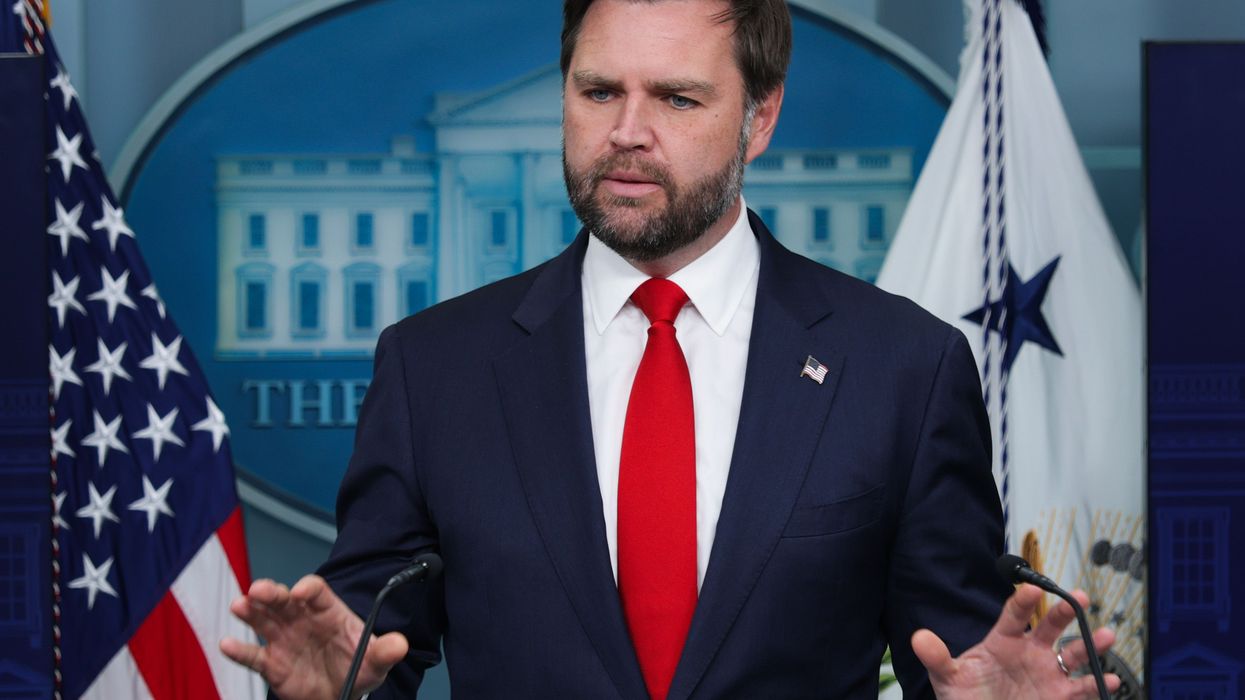
"The guardrails are gone," warned Democratic political strategist David Axelrod.
Vice President JD Vance sparked alarm on Sunday when he said that President Donald Trump was considering invoking the Insurrection Act under the pretenses of combating violent crime in US cities.
During an interview on NBC's "Meet the Press," host Kristen Welker asked Vance if Trump was "seriously considering" invoking the Insurrection Act, which would allow him to use the US military to carry out law enforcement operations.
Vance responded by saying Trump is "looking at all his options," and added that he hasn't felt the need to invoke it for the time being.
Vance proceeded to justify invoking the Insurrection Act, which he said could be necessary to protect the work of Immigration and Customs Enforcement (ICE) officials.
"We have to remember why we're talking about this, Kristen," he said. "Because crime has gotten out of control in our cities, because ICE agents, the people enforcing our immigration laws, have faced a 1,000% increase in violent attacks against them. We have people right now who are going out there, who are doing the job the president asked them to do, who are enforcing our immigration laws, they're being assaulted."
Welker countered by noting that a judge in Illinois found last week that the ICE facility in Broadview, Illinois has remained entirely open and operational despite being the target of protesters in recent weeks.
She also informed Vance that crime has been coming down significantly in both Chicago and Portland, two US cities where Trump has tried to deploy National Guard forces.
"Kristen, crime is down in Chicago and Portland often because they're so overwhelmed at the local level, they're not even keeping their statistics properly," Vance replied, without providing any evidence to back up his claim.
WELKER: Are you seriously looking at invoking the Insurrection Act?
VANCE: The president is looking at all of his options, right now he hasn't felt he needed to. But we have to remember we are talking about this because crime has gotten out of control in our cities
WELKER:… pic.twitter.com/vBBPkUidPu
— Aaron Rupar (@atrupar) October 12, 2025
Vance's justifications for invoking the Insurrection Act on the grounds that he laid out drew alarmed reactions from many critics.
"This is a pretext to take over American cities by force," wrote CNN political commentator Karen Finney in a post on X.
Shannon Watts, the founder of anti-gun violence organization Moms Demand Action, linked Vance's comments to the current shutdown of the federal government and questioned whether the government deserved to be funded when its executive branch was threatening to unleash the military against its own citizens.
"Why should Democrats vote to open the government while this is still happening?" she asked.
Cornell William Brooks, a professor at the Harvard Kennedy School and former president of the NAACP, argued in a post on Bluesky that Vance's comments show that the Trump administration "insults your intelligence."
"The same administration that fired an economist for reporting statistics on the economy," he wrote, "is asking you to not believe lower statistics on crime, not see safer streets, and accept the National Guard in your front yard."
Democratic political strategist David Axelrod warned that the Trump administration seems genuinely eager to send troops into US cities.
"Believe them when they tell you what they're planning, folks," he wrote. "Trump wanted to use American troops against Americans in his first term, and was dissuaded by responsible civilian and military leaders. No more. The guardrails are gone."
Attorney George Conway, a former Republican who left the party over its embrace of Trump, responded to Vance's comments by posting a video of anti-ICE protesters in Chicago dancing in the streets to the classic Neil Diamond hit, "Sweet Caroline."
Asked by Kristen Welker on Meet the Press this morning whether the White House was seriously considering invoking the Insurrection Act, Vice President Vance said, "The president is looking at all his options." pic.twitter.com/GVKxXf2YmI
— George Conway 👊🇺🇸🔥 (@gtconway3d) October 12, 2025
Talk of invoking the Insurrection Act has ramped up in recent weeks, despite the fact that protests against ICE facilities in Illinois and Oregon have remained overwhelmingly peaceful and have featured impromptu dance parties carried out by people dressed in inflatable animal costumes.
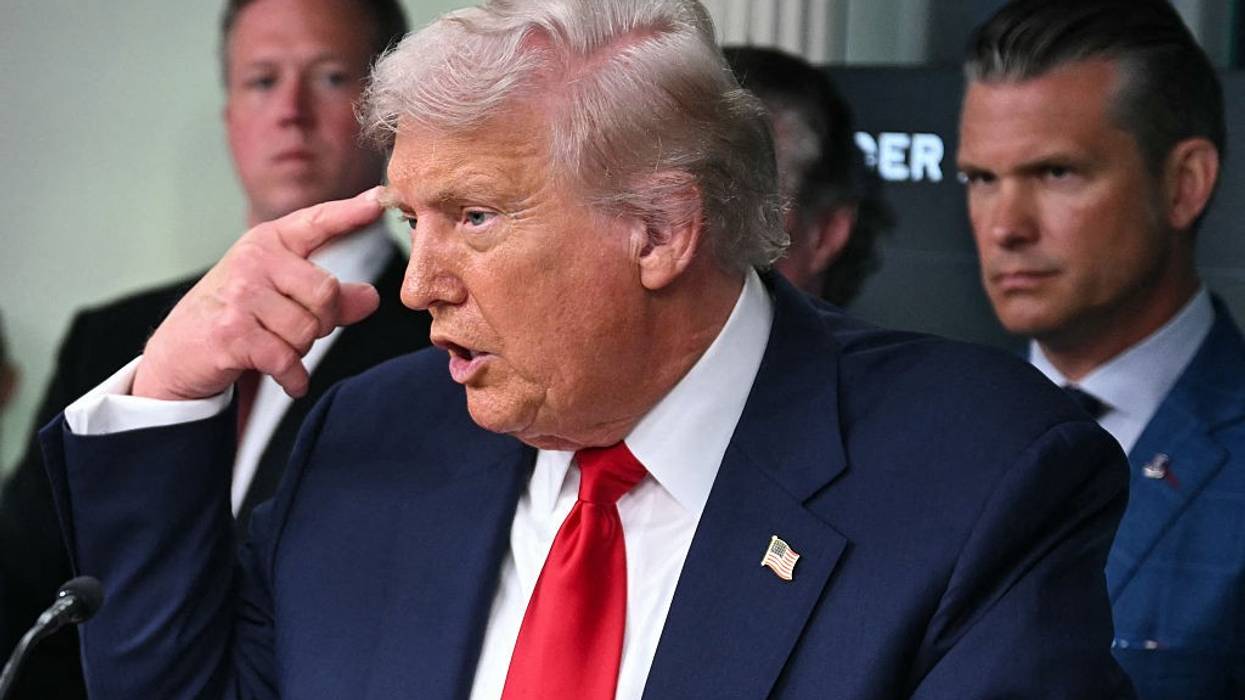
"The administration's actions are unprecedented, unnecessary, and unlawful," declared Washington, D.C. Attorney General Brian Schwalb.
U.S. President Donald Trump on Monday moved to deploy the National Guard on the streets of Washington, D.C., while also officially taking over the city's police department.
What's more, Trump suggested that this could be a model for other American cities.
As reported by NBC News, Trump said during his announcement on plans to deploy the National Guard in the nation's capital that "other cities are hopefully watching this" and that he hoped it would make them "self-clean up, and maybe they'll self-do this and get rid of the cashless bail thing and all of the things that caused the problem."
Trump then named Baltimore, Oakland, New York, and Chicago as potential future targets for National Guard deployments and other measures.
Shortly after Trump made his announcement, Washington, D.C. Attorney General Brian Schwalb indicated that he was not taking the president's attempt to take over his city's police force lying down.
"The administration's actions are unprecedented, unnecessary, and unlawful," he declared in a post on X. "There is no crime emergency in the District of Columbia. Violent crime in D.C. reached historic 30-year lows last year, and is down another 26% so far this year. We are considering all of our options and will do what is necessary to protect the rights and safety of District residents."
Rep. Mary Gay Scanlon (D-Pa.) was also quick to condemn the president's takeover of D.C. law enforcement as an unnecessary power grab.
"The president's attempt to federalize the D.C. Metropolitan Police Department and deploy the National Guard on the streets of our nation's capital is an abuse of power," she said. "It's an egotistical, pathetic attempt to stoke fear and distract from his failures: America is less affordable, healthy, and safe under this administration."
Minnesota Gov. Tim Walz, who last year served as the Democratic Party's vice-presidential nominee, chided critics who had accused him in the past of exaggerating the authoritarian threat of a second Trump term.
"The road to authoritarianism is littered with people telling you you're overreacting," he wrote on X.
The NAACP, meanwhile, compared Trump's enthusiasm for deploying the National Guard in Washington, D.C. to purportedly battle crime with the lackadaisical attitude he took toward deploying the National Guard when his supporters violently stormed the United States Capitol building on January 6, 2021.
"As a reminder: The same president who proclaims he wants to take back our capital during a historic 30-year low crime rate also couldn't find the National Guard on Jan. 6," the organization wrote.
Public Citizen co-presidents Lisa Gilbert and Robert Weissman issued a joint statement slamming Trump's actions and outright labeling him a "despot."
"As autocrats commonly do, Trump is seeking control over the national capital in order to intimidate and squelch dissent," they said. "Like despots around the world and throughout history, Trump is also relying on the pretextual deployment of military force to intimidate and project power, to suppress protest and undercut democracy."
As reported by Politico, Trump's seizure of the D.C. police is on borrowed time from a legal perspective. While the Home Rule Act gives Trump the power to take control of the D.C. police force for emergencies, this power only lasts for 30 days, after which he must seek authorization from Congress to maintain control.
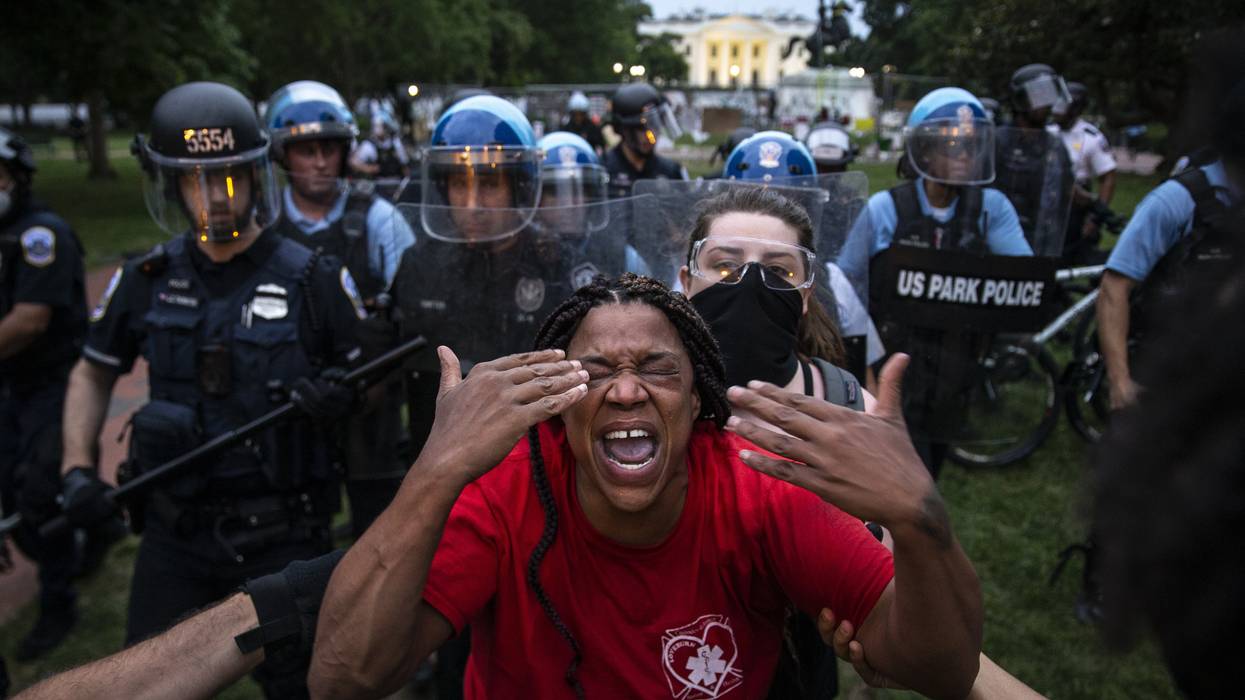
One critic called the move "an unprecedented abandonment of the Department of Justice's responsibility to enforce civil rights laws and protect communities from unlawful police abuse."
Racial justice advocates decried Wednesday's announcement by the U.S. Department of Justice that it will end law enforcement reform and accountability efforts, including the Biden administration's agreements with the cities of Minneapolis and Louisville—a move that came just days before the fifth anniversary of George Floyd's murder by a Minneapolis cop.
The Department of Justice's (DOJ) Civil Rights Division said it is dropping lawsuits against the Minneapolis and Louisville police departments and ending pending consent decrees—court-enforceable agreements under which law enforcement agencies commit to reform—with the two cities. The deals, which have been submitted to judges for approval, have been held up in federal court as the Trump administration has sought to block their implementation.
The Civil Rights Division said it "will also be closing its investigations into, and retracting the Biden administration's findings of constitutional violations on the part of," the Louisiana State Police and police departments in Phoenix; Memphis; Oklahoma City; Trenton, New Jersey; and Mount Vernon, New York.
To “disappear” DOJ findings like this is the most disturbing and disgraceful part. A key advantage of DOJ pattern & practice investigations is that DOJ has the resources to absorb the cost of generating the findings that indiv civ rights groups suing police depts find onerous & often prohibitive.
[image or embed]
— Sherrilyn Ifill ( @sifill.bsky.social) May 21, 2025 at 8:02 AM
Civil rights lawyer Benjamin Crump, who represents the families of George Floyd—murdered by then-Minneapolis police officer Derek Chauvin on May 25, 2020—and Breoanna Taylor, who was killed earlier that year by Louisville police, called the DOJ announcement a "slap in the face."
"Just days before the fifth anniversary of George Floyd's murder—a moment that galvanized a global movement for justice—the U.S. Department of Justice has chosen to turn its back on the very communities it pledged to protect," Crump said in a statement Wednesday.
"By walking away from consent decrees in Minneapolis and Louisville, and closing its investigation into the Memphis Police Department while retracting findings of serious constitutional violations, the DOJ is not just rolling back reform, it is attempting to erase truth and contradicting the very principles for which justice stands," he asserted.
"These consent decrees and investigations were not symbolic gestures, they were lifelines for communities crying out for change, rooted in years of organizing, suffering, and advocacy," Crump continued, adding that the DOJ's moves "will only deepen the divide between law enforcement and the people they are sworn to protect and serve."
Congresswoman Jasmine Crockett (D-Texas) lamented the DOJ move and accused the Trump administration of acting "like Breonna Taylor and George Floyd's lives didn't mean a damn thing."
Democratic Minneapolis Mayor Jacob Frey said his city would proceed with reforms despite the DOJ's announcement, while questioning the move's timing.
"The Trump administration is a mess. It is predictable that they would move for a dismissal the very same week that George Floyd was murdered five years ago," he said. "What this shows is that all [President] Donald Trump really cares about is political theater."
The DOJ claimed the Biden administration falsely accused the Minneapolis and Louisville police departments of "widespread patterns of unconstitutional policing practices by wrongly equating statistical disparities with intentional discrimination and heavily relying on flawed methodologies and incomplete data."
"These sweeping consent decrees would have imposed years of micromanagement of local police departments by federal courts and expensive independent monitors, and potentially hundreds of millions of dollars of compliance costs, without a legally or factually adequate basis for doing so," the agency argued.
Assistant Attorney General Harmeet Dhillon—the conspiracy theorist who heads the Civil Rights Division despite, or perhaps because of, her troubled history of working against voting, reproductive, LGBTQ+, and other civil rights—said in a statement Wednesday that her agency is ending the Biden administration's "failed experiment of handcuffing local leaders and police departments with factually unjustified consent decrees."
"Overbroad police consent decrees divest local control of policing from communities where it belongs, turning that power over to unelected and unaccountable bureaucrats, often with an anti-police agenda," Dhillon added.
"DOJ's actions today amount to a public declaration that law enforcement agencies are above the law."
Legal Defense Fund director of strategic initiatives Jin Hee Lee called the DOJ announcement "an unprecedented abandonment of the Department of Justice's responsibility to enforce civil rights laws and protect communities from unlawful police abuse."
Lee said the DOJ investigations that led to the consent decrees "revealed a litany of systemic harms to community members, whom officers are sworn to protect—from wanton violence and sexual misconduct to unlawful stops, searches, and arrests, and racially discriminatory policing."
"By abandoning its obligation to pursue legal remedies that would stem this unlawful conduct, DOJ necessarily condones it," Lee added. "DOJ's actions today amount to a public declaration that law enforcement agencies are above the law."
NAACP president Derrick Johnson said on social media, "It's no surprise that Trump's Department of Coverups and Vengeance isn't seeking justice."
"It's been five years, and police reform legislation still hasn't passed in Congress, and police departments still haven't been held accountable," Johnson added, referring to Floyd's murder. "Five years."
Furthermore, speculation is growing over the prospect of Trump pardoning Chauvin. Addressing the possibility, Democratic Minnesota Gov. Tim Walzsaid earlier this week that "if Chauvin's federal conviction is pardoned, he will still have to serve the remainder of his 22-and-a-half-year state prison sentence for murder and manslaughter."
Opponents vowed to fight the Trump administration's civil rights pushback.
"Let me be clear: We will not give up," Crump said. "This movement will not be swayed or deterred by fickle politics. It is anchored in the irrefutable truth that Black lives matter, and that justice should not depend on who is in power."
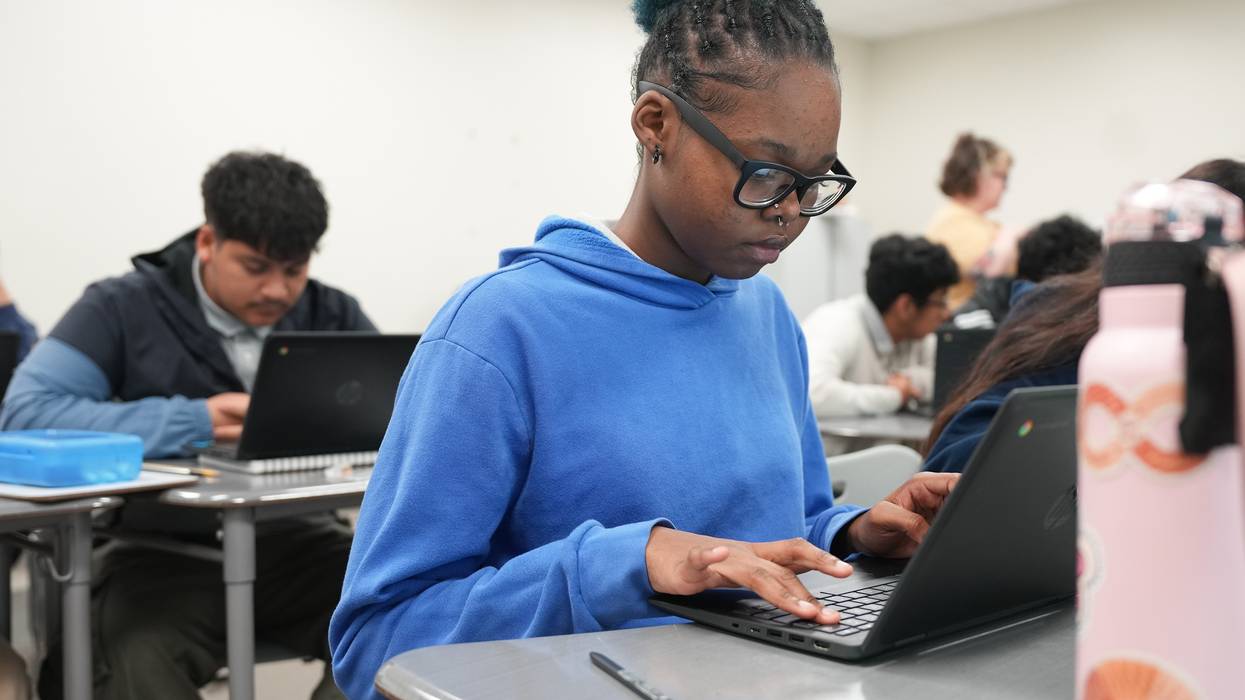
"Education is power," said one advocate. "The forceful elimination of thousands of essential workers will harm the most vulnerable in our communities."
The nation's largest labor union, representing more than 3 million educators, is among several groups that filed a lawsuit against the Trump administration Monday to demand a federal court "immediately halt the government's attempt to dismantle" the U.S. Department of Education—warning that the move by President Donald Trump is clearly illegal and "puts at risk the millions of vulnerable students."
The National Education Association (NEA) said it is joining the National Association for the Advancement of Colored People (NAACP), AFSCME Maryland Council 3, and several public school parents in suing the administration days after Trump signed an executive order calling on Education Secretary Linda McMahon to take "all necessary steps to facilitate the closure of the Department of Education."
That directive followed the slashing of roughly half of the workforce at the Department of Education and the termination of $1.5 billion in contracts and grants for educational programs that had already been approved by Congress, and came a day before the president announced that $1.8 trillion in student loan debt would be overseen by the Small Business Administration instead of the DOE, while the Health and Human Services Department will direct programs for students with disabilities.
The administration has insisted the DOE is rife with "bureaucratic bloat" and waste—the same accusations Trump and his billionaire ally, Elon Musk of the so-called Department of Government Efficiency, have lobbed at programs like Social Security, Medicaid, and other services for low-income and working Americans as they've sought to secure $4.5 trillion in permanent tax cuts for the richest Americans.
The steps the administration has taken against the DOE "constitute a de facto dismantling of the department by executive fiat," reads the complaint filed Monday, noting that "the Constitution gives power over 'the establishment of offices [and] the determination of their functions and jurisdiction' to Congress—not to the president or any officer working under him."
"America's educators and parents won't be silent as Donald Trump, Elon Musk, and Linda McMahon try to steal opportunities from our students, our families, and our communities to pay for tax cuts for billionaires."
The attempted closure of the DOE is the latest of several actions taken by the Trump administration that violate the Constitution, said the NEA, because the department is a "congressionally created federal agency" and its dismantling "requires congressional approval."
Federal courts have blocked Trump's attempt to freeze federal grants and loans, noting that the president cannot halt funding that has been appropriated by Congress, and his deportation of Venezuelan immigrants to El Salvador under the Alien Enemies Act after opponents argued in court that Trump was "trying to write Congress' limits out of the act."
Aaron Ament, president of the Student Defense and Education Law Center, which is representing the plaintiffs in the lawsuit filed Monday, noted that McMahon "has acknowledged they can't legally shut down the Department of Education without Congress."
"Yet that is, for all intents and purposes, exactly what they are doing," said Ament, "a brazen violation of the law that will upend the lives of countless students and families."
Advocates have warned that while state and local governments oversee the vast majority of the U.S. public education system, shutting down the DOE jeopardizes funding an support for students who have disabilities, live in rural areas, and face discrimination.
It would also make it "impossible for the department to ensure that federal education funding actually is spent as Congress intended" and could "reduce access to Pell Grants, upend repayments for student loan borrowers, and invite fraudulent and predatory behavior from unscrupulous institutions of higher education," said the NEA.
The union's president, Becky Pringle, said Monday that "gutting the Department of Education will hurt all students by sending class sizes soaring, cutting job training programs, making higher education more out of reach, taking away special education services for students with disabilities, and gutting student civil rights protections."
"America's educators and parents won't be silent as Donald Trump, Elon Musk, and Linda McMahon try to steal opportunities from our students, our families, and our communities to pay for tax cuts for billionaires," said Pringle. "Parents, educators, and community leaders know this will widen the gaps in education, which is why we will do everything in our power to protect our students and their futures."
Derrick Johnson, president and CEO of the NAACP, said Trump's overarching goal in dismantling the DOE is "deliberately destroying the pathway many Americans have to a better life."
"Education is power," said Johnson. "The forceful elimination of thousands of essential workers will harm the most vulnerable in our communities. The NAACP and our partners are equipped with the necessary legal measures to prevent this unlawful attack on our children's future."