
SUBSCRIBE TO OUR FREE NEWSLETTER
Daily news & progressive opinion—funded by the people, not the corporations—delivered straight to your inbox.
5
#000000
#FFFFFF
To donate by check, phone, or other method, see our More Ways to Give page.


Daily news & progressive opinion—funded by the people, not the corporations—delivered straight to your inbox.
The president of the National Education Association said Republicans are attacking the union because "the billionaires that fund their campaigns don't want educators to have a voice."
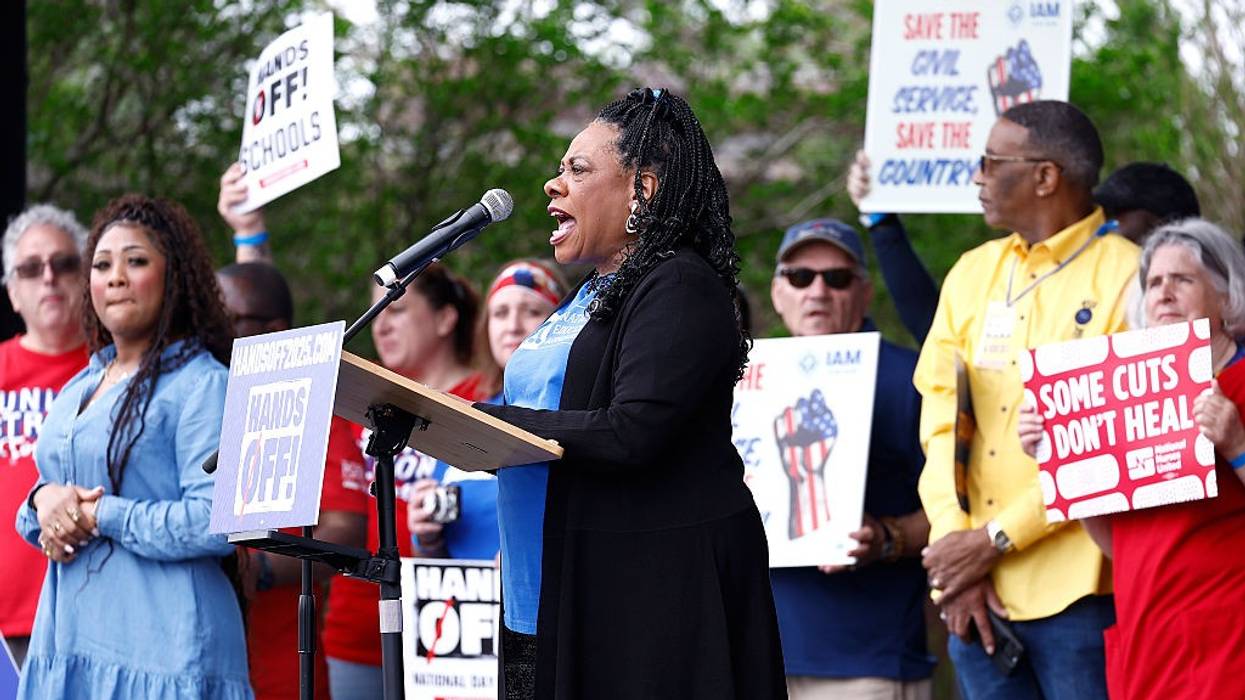
A group of congressional Republicans introduced legislation Wednesday that would revoke the federal charter of the National Education Association, the largest teachers union in the United States and an organization that has mobilized against the Trump administration's far-right agenda—which includes an ongoing effort to dismantle the Department of Education.
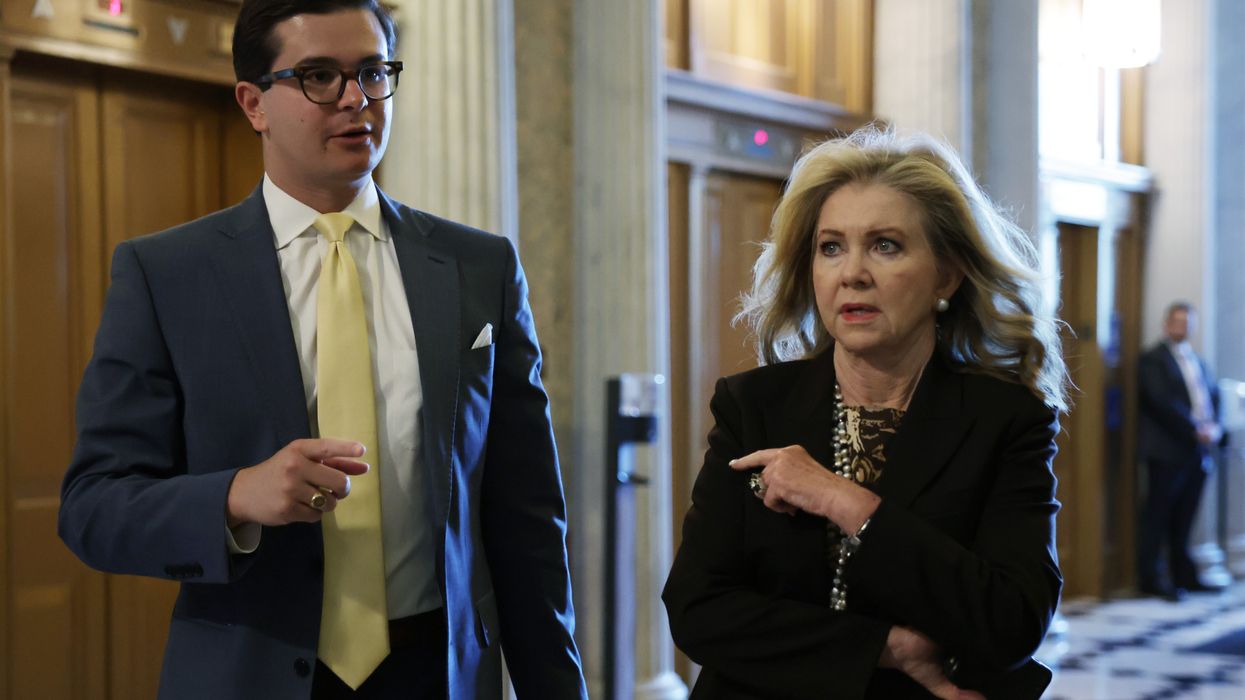
The bill, titled the National Education Association Charter Repeal Act, was introduced in the U.S. House by Rep. Mark Harris (R-N.C.) and in the Senate by Sen. Marsha Blackburn (R-Tenn.).
The GOP lawmakers pointed specifically to the union's recent decision to cut ties with the Anti-Defamation League and the NEA representative assembly's adoption earlier this month of a pledge to "defend democracy against [President Donald] Trump's embrace of fascism."
Blackburn, a supporter of privatized charter schools who has endorsed Trump's effort to eliminate the Education Department, accused the NEA of embracing "radical left policies and antisemitism." Harris declared that "it's time to remove Congress' seal of approval from this rogue organization."
Becky Pringle, the union's president, hit back at Blackburn, Harris, and other supporters of the legislation, saying in a statement that "rather than supporting students and educators, some anti-public education politicians are now introducing legislation to repeal the National Education Association charter because the billionaires that fund their campaigns don't want educators to have a voice."
"Let me be clear—public school educators will never stop advocating for our students and communities, and the National Education Association will never stop lifting up the voice of those educators who dedicate their lives to the success of all of our students," said Pringle.
"Some in Congress want to destroy them because they don't like what the NEA says and does."
The NEA, which currently has around 3 million members across the U.S., was chartered by Congress in 1906 to "promote the cause of education in the United States" and "elevate the character and advance the interests of the profession of teaching." The organization was originally founded in 1857.
Republican lawmakers have been working for years to strip the NEA of its federal charter to express disapproval of the organization's support for progressive causes.
Education Week noted that the legislation introduced Wednesday "echoes the Heritage Foundation's conservative Project 2025 plan that has guided much of the Trump administration's education policy, and it could find more traction in the current GOP-controlled Congress."
The outlet observed that the the anti-union Freedom Foundation, which supports the GOP legislation, has called on Congress "to, among other things, bar the NEA from traditional labor union activities such as engaging in electoral politics, lobbying, or collecting dues, and require it to 'actively intervene to prevent any strikes or work stoppages by its affiliates.'"
"Revoking the NEA's charter would not, on its own, do any of those things," Education Week reported. "But Aaron Withe, chief executive officer of the Freedom Foundation, suggested that additional legislation would be introduced next week, 'whether that be removing [the NEA charter] entirely, or stripping it, or changing how it operates.'"
Maya Wiley, president and CEO of the Leadership Conference on Civil and Human Rights, said in a statement Wednesday that the NEA is "one of the most powerful voices for public education" and warned that "some in Congress want to destroy them because they don't like what the NEA says and does."
"This administration is trying to end the Department of Education and silence opposition, and it is attacking labor unions, law firms, news outlets, colleges and universities, philanthropy, and many of our members. We will not be silent," said Wiley. "Congress must reject this attack on the NEA and defend the constitutional principles that guarantee all Americans the right to organize, advocate, and petition government."
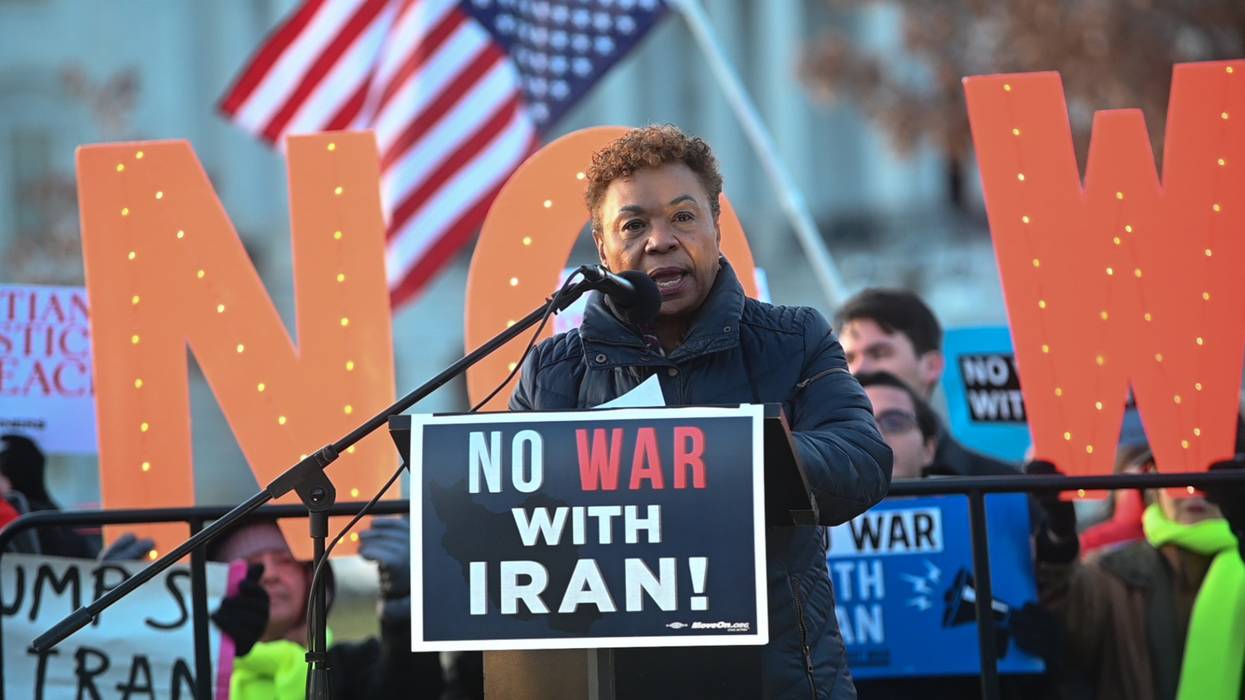
"We must resist the U.S. becoming embroiled in another costly conflict abroad," said U.S. Rep. Barbara Lee.
Progressives in the U.S. Congress on Sunday urged the Biden administration to resist calls for an attack on Iran following the country's
retaliation against Israel for the deadly bombing of Tehran's consulate in Syria earlier this month.
The hawkish rhetoric came from both sides of the political aisle in the U.S.—Israel's main ally and weapons supplier.
U.S. Rep. Ritchie Torres (D-N.Y.), one of Congress' most fervent supporters of Israel's war on Gaza, claimed Iran is "the single most destabilizing force in the Middle East" and "must be held accountable for the aggression it has long shown toward Israel not only directly but also indirectly through proxies like Hezbollah, Hamas, and the Houthis."
U.S. Sen. Marsha Blackburn (R-Tenn.), directing her message at President Joe Biden, was more explicit in demanding an immediate military response from the U.S.
"We must move quickly and launch aggressive retaliatory strikes on Iran," Blackburn wrote on social media.
The number two Republican in the U.S. House, Rep. Steve Scalise (R-La.),
said Saturday that the chamber would "move from its previously announced legislative schedule next week to instead consider legislation that supports our ally Israel and holds Iran and its terrorist proxies accountable."
"The House of Representatives stands strongly with Israel, and there must be consequences for this unprovoked attack," Scalise added. "More details on the legislative items to be considered will be forthcoming."
"As leaders in Washington jump to call for war with Iran and rush additional offensive weapons to the Israeli military, we need to exercise restraint and use every diplomatic tool to de-escalate tensions."
Iran's launch of hundreds of drones and missiles on Saturday marked its first direct assault on Israel, which has repeatedly engaged in covert attacks inside Iranian territory. On April 1, Israel bombed Iran's consulate in the Syrian capital, killing diplomats and a senior Islamic Revolutionary Guard Corps commander.
Iran said its retaliatory firing of missiles and drones—most of which were intercepted—was in line with international law. One person, a seven-year-old girl, was seriously injured in the attack.
Israeli officials immediately vowed revenge, a pledge that intensified global calls for restraint to prevent the regional war in the Middle East from spiraling further out of control.
As
The Intercept's Ken Klippenstein and Daniel Boguslaw noted Sunday, the conflict "now involves at least 16 different countries," including the U.S., which "flew aircraft and launched air defense missiles from at least eight countries, while Iran and its proxies fired weapons from Iraq, Syria, and Yemen."
U.S. Rep. Cori Bush (D-Mo.), a vocal supporter of a cease-fire in Gaza, issued a statement Sunday condemning both Israel's attack on Iran's consulate and Tehran's response, which she said "threaten civilian lives and regional war."
"I also condemn the calls by members of Congress and others to initiate war with Iran; to do so without congressional authorization is blatantly unconstitutional," Bush said. "We cannot let the warmongers win; our country and our world are calling for restraint, de-escalation, a lasting cease-fire, and diplomacy. Our government must listen. That is how we save lives."
Bush urged the Biden administration to "take immediate steps, including at the U.N. Security Council and G7, to de-escalate and facilitate an immediate, lasting cease-fire in the region."
U.S. Rep. Barbara Lee (D-Calif.), the lone congressional no vote against the war in Afghanistan, similarly called on the Biden administration to "lead efforts toward de-escalation, diplomacy, and securing a permanent cease-fire in Gaza."
"We must resist the U.S. becoming embroiled in another costly conflict abroad, but rather lead toward peace and security in the region," Lee added.
Axios reported Sunday that Biden told Israeli Prime Minister Benjamin Netanyahu directly that the U.S. would not "support any Israeli counterattack against Iran." An unnamed official told the outlet that "when Biden told Netanyahu that the U.S. will not participate in any offensive operations against Iran and will not support such operations, Netanyahu said he understood."
Echoing her progressive colleagues, U.S. Rep. Ilhan Omar (D-Minn.)
said Sunday that "as leaders in Washington jump to call for war with Iran and rush additional offensive weapons to the Israeli military, we need to exercise restraint and use every diplomatic tool to de-escalate tensions."
"Civilians in not only Gaza, Israel, the West Bank, and Iran but also Lebanon, Syria, Iraq, and Yemen are bearing the brunt of this escalation, and there must be a cease-fire on all sides," said Omar. "I will continue to call for de-escalation, restraint, and lasting peace."
It is disheartening to see the very tools of social change activism used by the civil rights movement getting ruthlessly dismantled thanks to the self-interest and greed of politicians and corporations.
Six Decades Ago, Dr. Martin Luther King, Jr. led the March on Washington, turning the tide of public opinion and leading to the passage of the Civil Rights Act of 1964 and the Voting Rights Act of 1965.
That legacy of protest and advocacy continues today but it is under attack, which is why we must be honest and critical as we reflect on the current status of civil rights and activism in the U.S.
As always, during this time of year when we honor Dr. King’s legacy and plan to celebrate Black History Month, we see a great deal of platitudinal quotes and simplified portrayals along with an underlying tone of proverbial pats on our collective backs for a job well done, for progress.
Dr. King’s life was tragically taken in Tennessee, and now, Sen. Marsha Blackburn, representing the same state, chooses to tarnish his legacy by undermining the spirit of democracy and activism that he dedicated his life for.
As an activist and community organizer, collective action in the form of protest was Dr. King’s primary tool. What would he make of the government reprisals we see across the globe against protesters? As a gifted orator and preacher, he used his voice as a catalyst for mobilizing people and shifting culture. What would he say about the proliferation in censorship and other tactics of repression and regressive policies?
We ask these questions because by doing so we are able to pave another path toward justice and a world that truly upholds the legacy of the civil rights movement. The attacks on dissent and free speech that we are seeing today are heartbreaking, but there’s also the tremendous will of people who refuse to give up, a resilience and staying power that is reminiscent of the civil rights movement.
Increasingly, protest is becoming a less viable instrument for social change and holding powerful entities such as elected officials, police, and corporations accountable. From the persecution of Cop City protesters in Georgia to the widespread attempts to squash civil disobedience, a strategy that Dr. King came to see as the necessary tool of the oppressed, we are witnessing a crisis unfold for social change organizing.
Thanks to the lobbying power of big corporations and police unions, hundreds of anti-protest bills have been introduced in the United States since 2017 in nearly all 50 states to interfere in the long legacy of American protest, with policies ranging from dramatically increased civil fines for protesters and criminal penalties for specific forms of protest.
Last week, Sens. Marsha Blackburn (R-Tenn.), and Thom Tillis (R-N.C.), introduced S. 3492, a federal bill that would create penalties for protesters who block or “attempt” or “conspire” to block public roads and highways. The “Safe and Open Streets Act” would essentially make the long-held practice of collective action in our nation’s history a crime punishable by a fine of an unspecified amount and incarceration in a federal prison for up to five years. The pretext of safety and open streets cannot overshadow the potential abuse and selective enforcement that is inherent in this and other anti-protest legislation.
The Equity Alliance, a Tennessee-based grassroots organization that works to build Black political power and where Tequila is the CEO, finds bitter irony in the fact that Dr. King’s life was tragically taken in Tennessee, and now, Blackburn, representing the same state, chooses to tarnish his legacy by undermining the spirit of democracy and activism that he dedicated his life for.
How far have we come if more than five decades after Selma, we are seeing protesters against Cop City, a multiplex police training facility in Georgia, being charged as domestic terrorists?
But this is not unique to the United States; individual freedoms are getting abrogated across the world. Countries such as Argentina and many countries across Europe are also seeing a steady and consistent effort by their governments to prevent people from speaking up, taking action, and putting pressure on their elected officials to listen to the will of the people.
More recently, we have seen a worldwide crackdown on protests against the war in Gaza, which also runs counter to the principles that Dr. King espoused around global solidarity. A year before his death, he famously made a speech at Riverside Church in New York City entitled “Beyond Vietnam: A Time to Break Silence,” in which he not only denounced the war but also the censorship of free speech. Moreover, Dr. King sought international connections and solidarity with movements for freedom across the globe from anti-colonialist struggles in Africa to the movement for Dalit freedom in India.
The ripple effects of right-wing repressive policies that we are seeing today along with the attacks on dissent and the severe injuries caused by the overuse of “less lethal weapons” against protesters would also be deeply disconcerting to him. The violent attacks on protesters by police forces and individuals invested in upholding the status quo would likely serve as a reminder of the brutality that came upon civil rights protesters in Selma in 1965 and the violence inflicted on Black bodies by white individuals for hundreds of years. How far have we come if more than five decades after Selma, we are seeing protesters against Cop City, a multiplex police training facility in Georgia, being charged as domestic terrorists?
Defending Rights and Dissent, a D.C.-based organization that works to strengthen participatory democracy and the right to political expression and where Sue is the executive director, has been tracking the settlements from police departments in the aftermath of the 2020 Black Lives Matter uprising. Police departments from across the country have paid out over $113 million to protesters that were harmed by police. We imagine this underhanded admission of culpability would be troubling to Dr. King because, on the one hand, yes, protesters have more legal recourse than protesters had during his time, but this is yet another reminder of the unchecked power of law enforcement and the continued and disproportionate violence inflicted on Black, Indigenous, and people of color.
And yet despite all these setbacks to progress and injustice, we believe that Dr. King would have been heartened by the millions of people around the world who refuse to be silenced. This is encouraging and surely a vestige of the influence that he and so many other social change movement leaders of the past set in motion for future generations.
Realistically speaking, we know the euphemistic arc toward freedom has been more of a zigzag line across history. The struggle for freedom and belonging is part of human existence; it is an unavoidable part of life. However, it is disheartening to see the very tools of social change activism used by the civil rights movement getting ruthlessly dismantled thanks to the self-interest and greed of politicians and corporations.
This time of year as we make time to honor Black freedom fighters, we must commit to a truthful assessment of where we are in carrying the torch of justice that Dr. King set aflame for the world and recommit to reigniting it by pushing back on all attempts to repress people power.
"Elected officials who align themselves with this unpopular and greedy industry, against the will of voters, do so at their own political risk," said one patient advocate.
Republican lawmakers who support Big Pharma's efforts to block Medicare from negotiating for lower drug prices do so at their own peril, said an advocacy group Tuesday as it released polling data that shows the U.S. public overwhelmingly opposes drug companies' scheme.
Along with Hart Research Associates and GS Strategy Group, Patients for Affordable Drugs Now (P4ADNOW) polled 1,000 likely voters from August 23-27 and found that respondents opposed the numerous lawsuits the pharmaceutical industry has filed to block implementation of the Inflation Reduction Act's provision allowing Medicare to negotiate.
Seventy-two percent of voters said the law should be implemented, and 77% said they didn't believe the industry's claim that it's suing because of concerns about the provision's constitutionality—saying they think companies are only concerned it will reduce their profits, which reached a combined $110 billion last year for the eight largest pharma firms.
"The American people understand the lawsuits to block lower drug prices through Medicare negotiation are not about looking after the best interests of patients and consumers, but about the industry seeking to restore its unilateral power to dictate prices of brand name drugs without limits in the United States," said David Mitchell, founder of P4ADNOW. "The lawsuits are a naked assault against the will of the American people, and we stand with the people."
Ninety percent of respondents said lowering drug prices should be an important or a top priority for Congress, and 53% said they had an unfavorable view of drug companies after learning of the lawsuits they have filed against the Biden administration. Eighty-four percent supported allowing Medicare to negotiate directly with drug companies to lower costs for patients.
The poll was released less than a month after the Biden administration announced the first 10 prescriptions that will be subject to the negotiations, drawing applause from Democratic lawmakers and patient advocates.
Republicans such as Sens. Marsha Blackburn of Tennessee and Mike Crapo of Idaho—who received a combined $468,900 in campaign donations from pharma companies and their political action committees from 2017-22—have joined the industry in attacking the law, claiming it will "stunt the development of lifesaving treatments and cures," as Blackburn said last month.
Only 18% of voters included in the poll agreed that the law will harm research and development in the industry, while 67% believed drug companies will still be able to make huge profits and find new treatments and cures for diseases.
"Efforts in Congress to undermine implementation of the Inflation Reduction Act fly in the face of the wishes of the overwhelming majority of voters—84% of whom support the law, including 93% of Democrats, 78% of independents and 80% of Republicans," said Mitchell. "Elected officials who align themselves with this unpopular and greedy industry, against the will of voters, do so at their own political risk."
Merith Basey, executive director of P4ADNOW, noted that pharmaceutical companies draw huge profits in other high-income countries, despite the fact that they negotiate drug prices with federal agencies working on behalf of patients.
"Those nations have better health outcomes, longer life expectancy, and for lower cost," said Basey. "It's in the United States that the drug industry seeks to fleece patients with unlimited pricing power."
"Did a Big Pharma CEO write these talking points for you on the back of a campaign check?" one critic asked Republican Sen. Marsha Blackburn.
Polling data released this week shows that nearly 90% of Republican voters support allowing Medicare to negotiate drug prices directly with pharmaceutical companies.
But congressional Republicans—many of whom receive substantial funding from the pharmaceutical industry—have staked out the opposite position, bashing the Biden administration's rollout of the initial list of medications that will be subject to price negotiations and parroting drugmakers' arguments against the popular reforms.
"The Inflation Reduction Act's socialist drug price controls will stunt the development of lifesaving treatments and cures while granting the government more unnecessary control over Americans' lives," Sen. Marsha Blackburn (R-Tenn.) wrote on social media, invoking the well-worn and misleading narrative that curbing medicine costs would stifle innovation.
Blackburn received $215,500 in campaign donations from pharma and other health product PACs between 2017 and 2022, according to OpenSecrets.
"Did a Big Pharma CEO write these talking points for you on the back of a campaign check?" Tennessee State Rep. Gloria Johnson (D-90) wrote in response to Blackburn. (Johnson is currently exploring a U.S. Senate run against the Republican.)
Every GOP lawmaker in the U.S. House and Senate voted against the Inflation Reduction Act (IRA), which requires Medicare to negotiate the prices of a subset of high-cost prescription drugs. After the legislation passed, Republicans swiftly began working to roll it back, taking specific aim at Medicare's new authority to negotiate drug prices, which are far higher in the U.S. than in other wealthy nations.
Republican presidential candidates—including former President Donald Trump, the frontrunner for the GOP nomination—have also vocally criticized the law and suggested they would work to repeal it if they win in 2024.
Earlier this week, the Centers for Medicare and Medicaid Services listed the first 10 drugs it plans to negotiate, drawing predictable backlash from the pharmaceutical industry, which lobbied against the IRA's passage and is now suing over the drug pricing provisions. Several of the drugs included on the initial list were already set to face generic competition in the coming years.
The Congressional Budget Office has estimated that the IRA's drug pricing reforms will save Medicare $160 billion over the next decade.
"Any effort by far-right Republicans to paint lowering the costs of prescription drug prices for Americans as a bad thing is laughable."
With President Joe Biden looking to make the drug price negotiations a centerpiece of his 2024 reelection campaign, Republican strategists are urging the GOP to aggressively counter the White House with messaging that mirrors industry claims about the IRA's potential impact on innovation—claims that advocates have long dismissed as false and self-serving.
"Republicans have to figure out how to go after it," Joe Grogan, a Republican strategist who served as a domestic policy adviser for Trump, told Politico. "They go after it by taking it head on: it is killing clinical programs, fundamentally restricting the amount of treatments."
Some GOP lawmakers are taking just that approach.
Sen. Mike Crapo (R-Idaho), whose campaign received $253,400 from pharma and health product PACs between 2017 and 2022, said in a statement Tuesday that Medicare price negotiations "risk reversing decades of progress on bringing lifesaving treatments and medical breakthroughs to American patients."
Rep. Jason Smith (R-Mo.), who has received donations from drug companies that are suing the Biden administration over the price negotiations, added that "the Biden administration is trying to take a victory lap while at the same time they are pricing seniors out of their healthcare and ensuring future cures never reach those who need them."
A 2021 report by Patients for Affordable Drugs concluded that "Big Pharma's innovation argument just does not stand up to scrutiny," noting that "the money that U.S.-based drug companies make by charging Americans high prices is 76% greater than what's needed to fund their entire global research and development expenditures."
Democrats have vowed to combat attempts by the pharmaceutical industry and Republicans to sabotage or repeal the IRA, which represents a modest effort to rein in drugmakers' power to drive up prices.
"The products that will now be subject to negotiation are used by millions of seniors in Medicare each year, costing each of them thousands of dollars," said Sen. Ron Wyden (D-Ore.), chair of the Senate Finance Committee. "I will be following the negotiation process closely and will fight any attempt by Big Pharma to undo or undermine the progress that's been made."
Rep. Raja Krishnamoorthi (D-Ill.) argued Wednesday that "any effort by far-right Republicans to paint lowering the costs of prescription drug prices for Americans as a bad thing is laughable."
"Honestly, Tennesseans deserve someone who will stand up to corrupt special interests, fight for lower costs so that every family can build a good life, and that's not Marsha Blackburn," said state Rep. Gloria Johnson.
Politico's Friday reporting that one of the "Tennessee Three"—Democratic state Rep. Gloria Johnson—is considering a run next year for the seat held by GOP U.S. Sen. Marsha Blackburn generated excitement across the Volunteer State and throughout the country.
Welcoming the "amazing news" that the Democrat may try to challenge the first-term Republican, Victor Shi, the youngest elected delegate for President Joe Biden in 2020, tweeted that "Tennessee deserves so much better than Marsha."
Johnson, who represents District 90, "is a friend, she has fought time and time again for Gen Z and young people (as both a teacher and state rep.)," Shi added. "She is the perfect person to be the next U.S. senator from Tennessee."
Kyle Tharp of the newsletter FWIW simply said, "Run, Gloria, Run!"
"I'm taking a serious look at the race and having conversations with folks that are hungry for better leadership in Washington," Johnson told Politico. "Honestly, Tennesseans deserve someone who will stand up to corrupt special interests, fight for lower costs so that every family can build a good life, and that's not Marsha Blackburn."
Johnson is expected to make a decision about whether to run by the end of the summer. Politico noted that she would not "have the primary field to herself. Marquita Bradshaw, an environmental activist and her party's 2020 Senate nominee, has filed to run again. Three years ago, she bested James Mackler, the candidate preferred by national Democrats, and then lost to incumbent Bill Hagerty by 27 points."
The former teacher has previously confirmed she is weighing a Senate run, telling the Chattanooga Times Free Press in late May that "there have been a whole lot of people, very serious people, asking me to do it. And so I told them I would seriously consider doing it."
"It needs to be done. People want somebody who will stand up for Tennessee families, and they just don't feel Marsha's doing the job. There's a lot of issues with Marsha, I believe. Mainly, what I hear is she's not voting for Tennessee families," Johnson added.
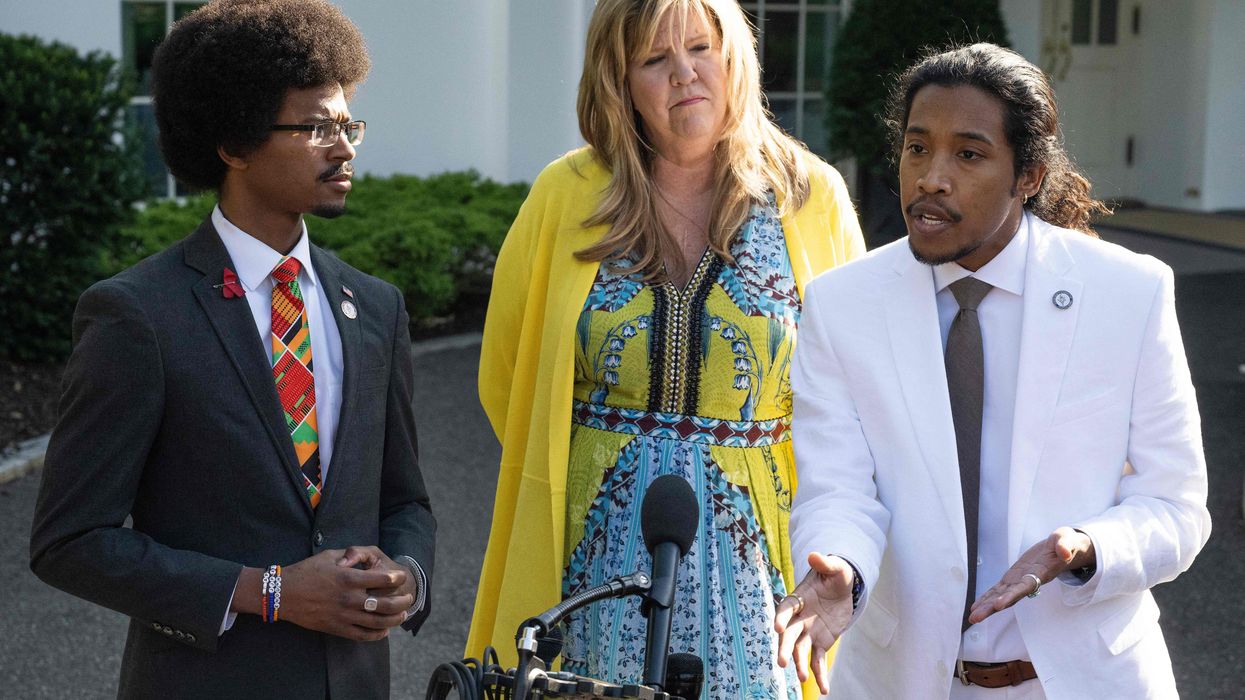
In April, Johnson and two of her Democratic colleagues in the Tennessee House of Representatives faced a GOP-led expulsion effort over the trio's protest for gun control legislation on the chamber floor in the wake of the Covenant School shooting.
Tennessee Republicans ultimately declined to oust Johnson, a white woman in her 60s, but they expelled Reps. Justin Jones and Justin J. Pearson —though local councils swiftly voted to send both younger Black men back to the chamber.
The multiday battle garnered intense media attention and elevated the Tennessee Three to national platforms. Asked by reporters at the time why she was spared expulsion, Johnson said: "I'll answer your question; it might have to do with the color of our skin."
A new analysis shows Republicans on the Senate Judiciary Committee have received more than $450,000 from the same GOP megadonor who has lavished Justice Clarence Thomas with undisclosed gifts.
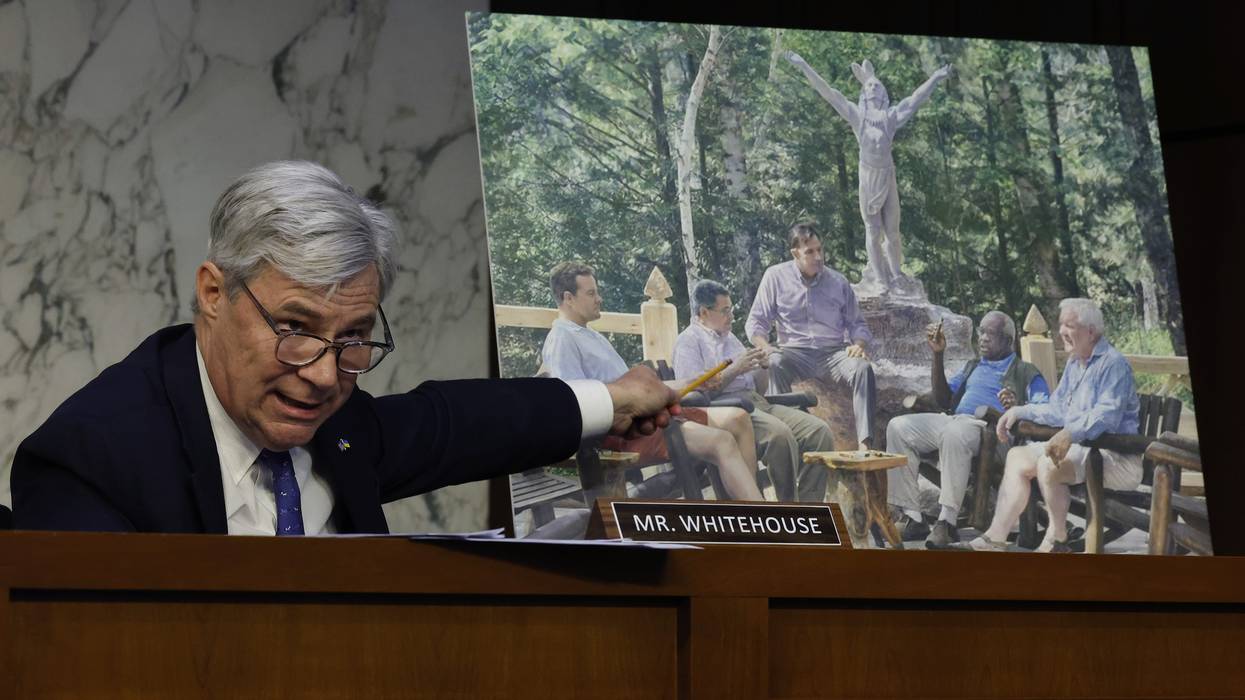
The Senate Judiciary Committee on Monday sent a letter asking Harlan Crow—the billionaire GOP megadonor who has secretly showered U.S. Supreme Court Justice Clarence Thomas with hundreds of thousands of dollars in gifts since the mid-1990s—to provide a full accounting of his financial ties to Thomas and any other judges on the high court.
It comes as "no surprise" that none of the panel's nine Republicans signed the letter, Accountable.US declared Tuesday, because they have collectively accepted nearly half a million dollars in campaign cash from Crow since the turn of the century, as a new analysis from the watchdog group shows.
Last month, one day after ProPublica published its bombshell report on Crow's under-the-table funding of near-annual luxury vacations for Thomas—the first of what would become many revelations about the two men's financial relationship—Accountable.US calculated that the current Republican members of the Senate Judiciary Committee received $453,300 from Crow between 2001 and 2022. The group revised that figure up to $457,000 on Tuesday in light of a $3,700 donation Crow made to Sen. John Cornyn (R-Texas) earlier this year.
The following is a list of Crow's total contributions to the nine GOP lawmakers on the panel as well as their affiliated PACs and joint fundraising committees, in descending order:
"There should be bipartisan outrage about the undisclosed gifts and travel billionaire megadonor Harlan Crow has given Justice Thomas," Accountable.US president Kyle Herrig said last month. "Senate Judiciary Republicans should join their Democratic colleagues to act. However, their silence so far may be because they have received hundreds of thousands of dollars from Crow as well."
"The highest court in the land should have the highest ethical standards," he added. "When it doesn't, Congress should exert its oversight authority."
Not only have Republicans on the Senate Judiciary Committee with apparent conflicts of interest refused to join their Democratic colleagues in trying to establish enforceable ethics rules for the Supreme Court, but they have attempted to downplay the seriousness of the court's growing crisis of legitimacy.
Several of the panel's GOP members used last week's hearing on proposed Supreme Court ethics reforms—a hearing Chief Justice John Roberts refused to testify at despite mounting evidence of possible corruption involving Thomas and others, including Roberts himself as well as Justice Neil Gorsuch—as "an opportunity for political grandstanding and performative outrage," Accountable.US noted Tuesday.
"Cornyn claimed Congress did not have the authority to regulate the courts due to separation of powers—a claim that was disproven by an expert witness that testified at the hearing," Accountable.US pointed out. "Cruz claimed the hearing was not about judicial ethics, but instead, was an attempt to attack Justice Thomas for having rich friends."
Lee went so far as to say that "when this chapter of American history is written, those who attack Justice Thomas today will be justly dismissed as intolerant bigots."
Meanwhile, Graham, the ranking member, accused the left of trying to "delegitimize the court and cherry-pick examples to make a point." Echoing his right-wing ally, Grassley argued that recent revelations are part of a long-term effort to "cast doubt on certain judges and justices, all because the left is opposed to recent court rulings."
Kennedy, for his part, denounced "attacks on conservative justices" as "targeted" and "exaggerated" and dismissed proposed Supreme Court ethics rules as "unnecessary."
Two days after right-wing senators accused reform advocates of launching what Cruz called a "smear campaign" against Thomas, ProPublica revealed that Crow also paid tens of thousands of dollars for the jurist's grandnephew to attend a pair of elite private schools. This came after earlier exposés about Crow footing the bill for yacht trips, buying and remodeling Thomas' mother's home, and more.
Given the mounting evidence of potential connections between Crow's gifts, which Thomas sought to keep hidden, and Thomas' inclination to rule in ways favorable to his superrich benefactor, calls for the judge to resign or face impeachment are growing.
Not only does Crow have links to numerous right-wing groups involved in Supreme Court cases since Thomas was first confirmed to the bench in 1991, but his own real estate company, Crow Holdings, was directly implicated in a 2021 case before the court.
As The Lever reported last month, Thomas voted to end the Covid-era federal eviction moratorium after Crow Holdings called the lifesaving policy a threat to its "profit margins." Now, as a group of New York City landlords prepares to ask the high court to overturn local rent control laws condemned by Crow Holdings—a move that would endanger rent stabilization efforts nationwide—"there is no indication" Thomas would recuse himself, the outlet noted.
Moreover, as Common Dreams reported last week, an Americans for Tax Fairness analysis of campaign finance data shows that after Thomas provided a deciding vote in the Citizens United v. Federal Election Commission case, the Crow family's average annual campaign contributions soared by 862%, from $163,241 before 2010 to $1.57 million since.
This massive increase, which is partly reflected in Crow's donations to Republicans on the Senate Judiciary Committee, underscores how the 5-4 ruling that effectively legalized unlimited political spending has strengthened the wealthy's ability to shape electoral outcomes, further undermining U.S. democracy.
On Tuesday, The Lever argued that the main goal of Crow and other billionaires who provide gifts and outside money to members of the Supreme Court is not to obtain certain decisions in specific cases, given that the court's right-wing ideologues would likely rule conservatively anyway, but to prevent GOP appointees from becoming more liberal over time—a phenomenon that has occurred in the past.
Alluding to Monday's letter from Senate Judiciary Committee Chair Dick Durbin (D-Ill.), The Washington Post reported that "if Crow ignores the request for information by the committee's May 22 deadline, it's unclear what Durbin's next move would be."
The San Francisco Chronicle reported Tuesday that Sen. Dianne Feinstein (D-Calif.) is returning to Capitol Hill after an illness kept her away from the Senate since February. Feinstein's absence has left Durbin without a majority on the panel, enabling the GOP minority to impede action, but her return would open up options.
In an interview with CNN on Sunday, Durbin did not rule out the possibility of a subpoena, saying that "everything is on the table."
In addition to the implementation of robust ethics rules, progressives have called for other far-reaching changes to disempower the country's "rogue" Supreme Court justices, including expanding the court. Seats have been added seven times throughout U.S. history.
Polling data shows that public approval of the nation's chief judicial body has decreased sharply in the months since its reactionary supermajority eliminated the constitutional right to abortion care, among other harmful and unpopular decisions. According to a survey conducted last month, nearly two-thirds of U.S. adults no longer have confidence in the high court.