

SUBSCRIBE TO OUR FREE NEWSLETTER
Daily news & progressive opinion—funded by the people, not the corporations—delivered straight to your inbox.
5
#000000
#FFFFFF
To donate by check, phone, or other method, see our More Ways to Give page.
Daily news & progressive opinion—funded by the people, not the corporations—delivered straight to your inbox.
As long as Democrats keep putting their finger to the wind and trying to follow the right-wing narrative instead of reshaping the narrative to one that is better for the country, they are going to keep losing.
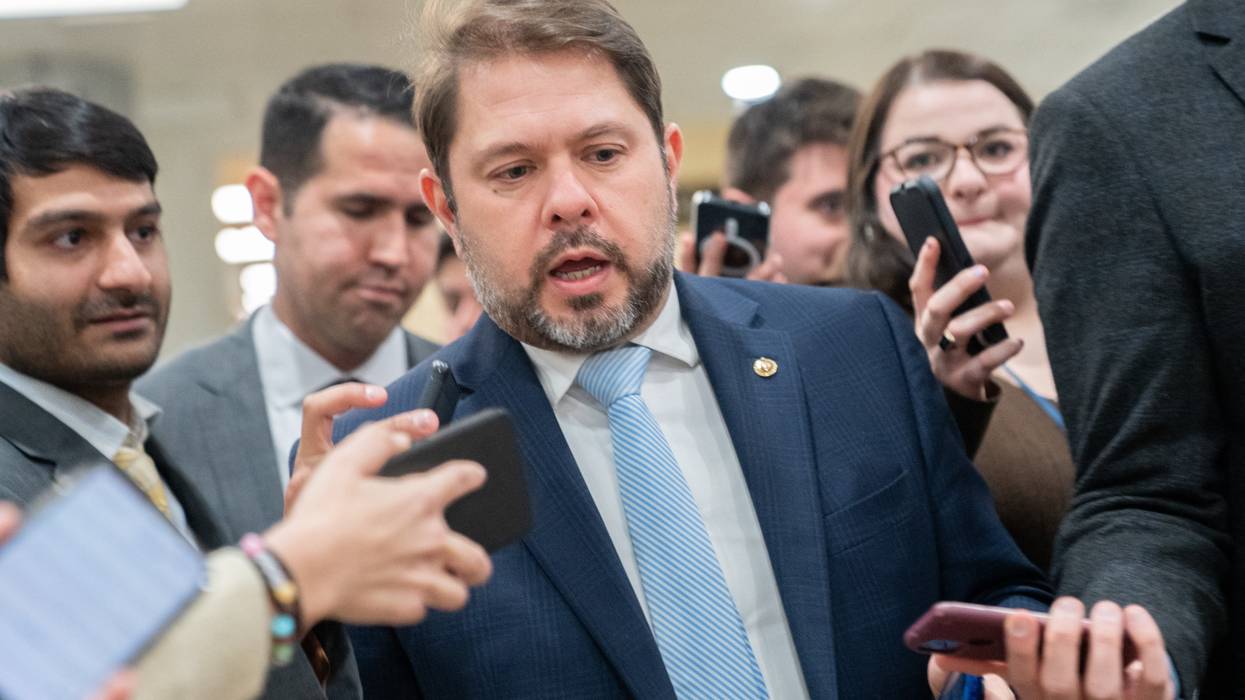
In a recent article published by NPR titled, “New to the Senate, Gallego Challenges Democrats’ Views on 'Working-Class Latinos’,” the newly elected Senator from Arizona, Ruben Gallego, defends his co-sponsoring of the Laken Riley Act.
Responding to his critics, Gallego stated, “They’re welcome to give me advice and everything else like that… but don’t come and try to lie to me and say that that’s where the Latino voter is… because that’s not the case.”
Gallego’s statement is very telling. It gives us critical insight into the way Democrats think, why they keep shifting to the right, and why they are doomed to keep losing in the face of a Republican Party that is becoming increasingly authoritarian and detached from reality.
In the quote above, Gallego is saying that Latino voters, like other voters, are also “concerned” about new immigrant arrivals at the border. He therefore reasons he has to speak to that concern by supporting militarized right-wing immigration policies, many of which are actually causing the crisis at the border. The Laken Riley Act is not only a due-process nightmare, allowing for detention of noncitizens who have merely been accused of minor crimes like shoplifting, but it will also allow red state attorneys general to sue future Democratic administrations for their immigration policies, effectively kneecapping any immigration policy change they may want to enact and thwarting the exclusive federal authority over immigration law. Gallego’s logic is that it’s OK to sponsor unconstitutional laws because the voters he has spoken to want “tougher” immigration laws.
This thinking perfectly encapsulates what is wrong with the Democratic Party. It is a failed political calculus that has led to decades of bad immigration policy outcomes and repeated electoral defeat. Democratic politicians look to where the polls are, look to the narratives in the public discourse (often planted there by bad faith right-wing propaganda outlets like Fox News), and then try to move their policy prescriptions toward what they perceive to be public sentiment. They should do the exact opposite, i.e. they should hold a core of strong policy beliefs and use those to drive a narrative on issues that addresses people’s concerns. Democratic, consultant-filtered thinking is completely backward because it fails to take into consideration that public sentiment is fluid and can be shifted with a compelling narrative. Instead, Democrats take the narratives blasted out by the right-wing propaganda machine and try to adjust their policies to fit them.
The “immigrants are dangerous” narrative is not only demonstrably false (immigrants, both documented and undocumented, commit crime at a lower rate than citizens do), but when Democrats concede this narrative, they are setting the stage for their own defeat. Instead of implicitly endorsing the “dangerous immigrant” framework, Democrats should counter it with a narrative about how immigration is good for the country, immigrants are less likely to commit crimes than citizens are, and that right-wing policy is the cause of illegal immigration. If the public buys into the “dangerous immigrant” narrative, they are always going to be more receptive to the Republican Party because the Republicans are always going to push further and further to the right. If you think immigrants are dangerous criminals, you are going to support the guy who is talking about walls and tough policies, instead of the party that is constantly giving mixed messages about how immigrants are good but also that they are the ones who are really “tough” on the border.
Instead of giving the Republicans the strength and uphill advantage of conceding their narratives, the Democrats need to flip the script by embracing immigration so that they are the ones attacking from an uphill position of strength.
The effectiveness of the Republican narrative on immigration, even though it is completely false, is reflected in several data points, such as the fact that immigration is a bigger priority to more Americans now than it was a year ago, as well as the reports showing that many Latinos have bought into the right-wing narrative and voted for Trump under the impression that he would only deport the “bad” undocumented immigrants. Of course, this has turned out to be completely false, as Donald Trump’s press secretary recently confirmed that they view all undocumented immigrants as criminals, even if they don’t have a criminal record.
In the NPR article cited at the beginning of my piece, Gallego says, “It’s usually white liberals that are talking to liberal Latinos, and they are essentially saying that’s what working-class Latinos feel and think about immigration… when in reality, they don’t.” I think Gallego is pointing to something that is true, but he’s got the wrong takeaway. For too long, the Democratic Party has assumed that barbaric right-wing immigration policy will inherently drive Latinos to vote for the Democrats. Gallego is essentially saying, “Working class Latinos are concerned about illegal immigration, so Democrats should move to the right on this issue.” I think the more accurate takeaway is that Latinos, just like anyone else, can be susceptible to the right-wing “dangerous immigrant” narrative. Even though right-wing immigration policy will disproportionately impact the Latino community, if the Democrats allow the “dangerous immigrant” narrative to take hold, more and more Latinos will vote Republican. I think the takeaway that Gallego is missing is that, instead of endorsing the right-wing immigration narrative, it is essential for the Democrats to offer a framing of the immigration issue that counters the one pushed by the Republicans.
When Republicans fearmonger about immigrant crime, Democrats need to push back with a factual narrative like this: “Immigration is good for the country and good for the economy. Study after study shows that immigrants commit crime at a lower rate than U.S. citizens. Republicans love to complain about illegal immigration, but their policies are actually the main cause of illegal immigration. The best way to reduce illegal immigration is to give people more legal pathways to come to the U.S. and stop the conservative policies that cause them to flee their home countries. Instead, Republicans want to cut off pathways for legal immigration, and pursue disruptive policies that make conditions worse in Latin America and the Caribbean.” If Democrats can convince the public that immigration is good, immigrants are not dangerous, and that Republicans are the cause of illegal immigration, it will lead the public to move away from the Republican party.
As long as Democrats keep putting their finger to the wind and trying to follow the right-wing narrative instead of reshaping the narrative to one that is better for the country, better for immigrants, and better for their political prospects, they are going to keep losing and the nation is going to experience increasingly worse immigration policy outcomes. In The Art of War, Sun-Tzu wrote, “So in war, the way is to avoid what is strong, and strike at what is weak,” as well as, “It is a military axiom not to advance uphill against the enemy, nor to oppose him when he comes downhill.” Instead of giving the Republicans the strength and uphill advantage of conceding their narratives, the Democrats need to flip the script by embracing immigration so that they are the ones attacking from an uphill position of strength. This is not limited to immigration. Indeed, it is applicable to all issues. The Democrats need to steer the carriage of public discourse and opinion in the direction they want it to go, instead of being tied to the back of it and getting dragged along.
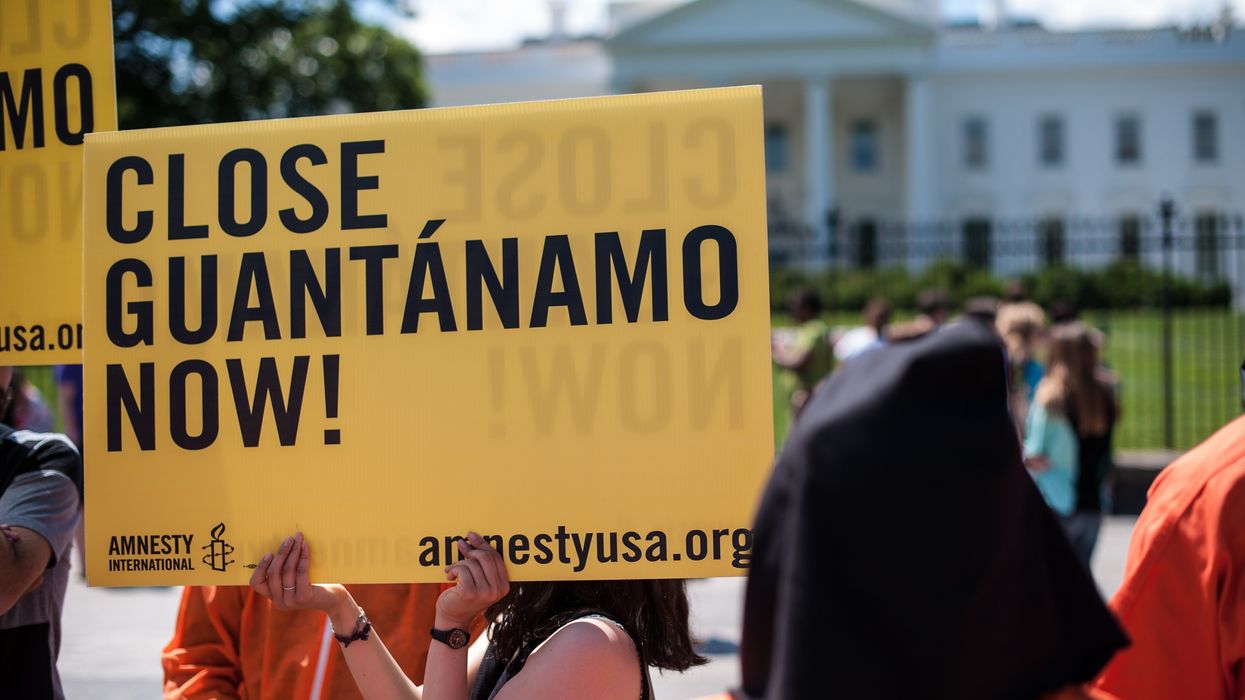
"Guantánamo has long been a stain on America's human rights record. Using it to detain migrants would be a dangerous escalation of anti-immigrant policies," wrote one immigrant advocate.
U.S. President Donald Trump's announcement Wednesday that he is ordering officials to prepare the Guantánamo Bay Naval Base in Cuba to house tens of thousands of migrants was met with swift condemnation from rights groups this week.
"Guantánamo has long been a stain on America's human rights record. Using it to detain migrants would be a dangerous escalation of anti-immigrant policies," wrote Guerline Jozef, executive director at Haitian Bridge Alliance, an immigrant advocacy group, in a statement on Friday.
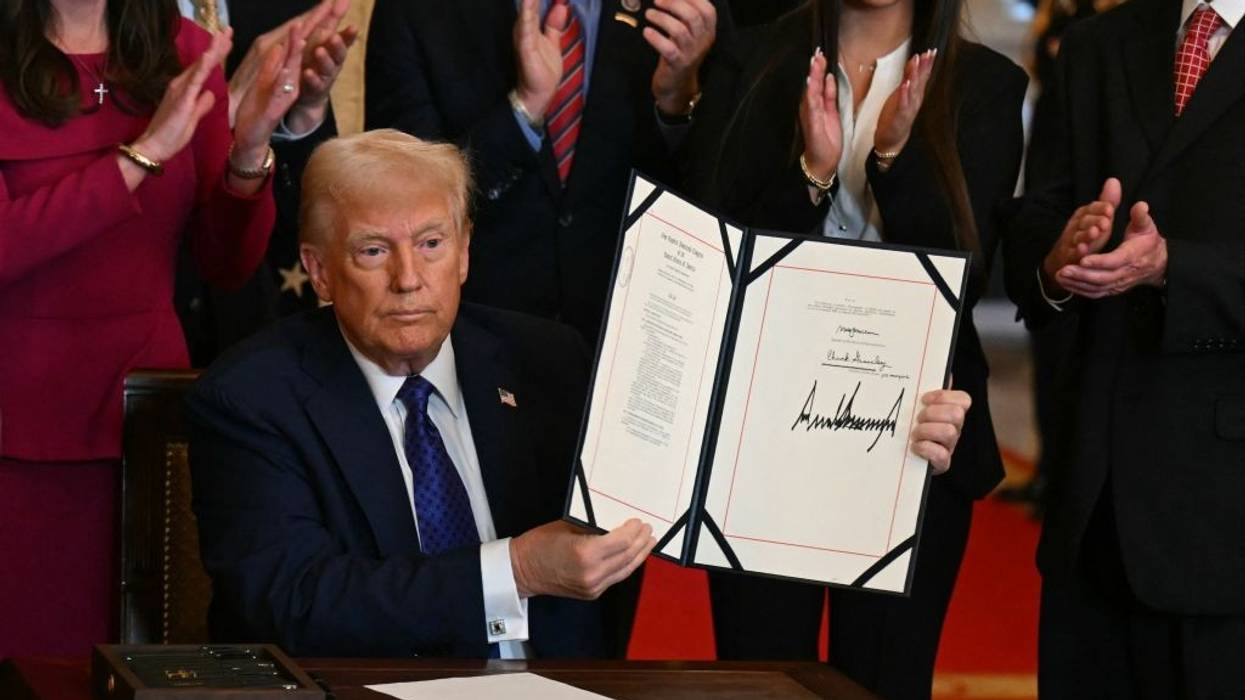
Trump announced the plan during a signing ceremony for the Laken Riley Act, legislation that strips due process rights from millions of undocumented immigrants, saying, "we have 30,000 beds in Guantánamo to detain the worst criminal illegal aliens threatening the American people."
A presidential action published by the White House that same day called on the Secretary of Defense and the Secretary of Homeland Security "to take all appropriate actions to expand the Migrant Operations Center at Naval Station Guantánamo Bay to full capacity to provide additional detention space for high-priority criminal aliens." The memorandum did not state how many migrants are expected to be detained there.
Vincent Warren, executive director of the Center for Constitutional Rights, called the move a decision that "should horrify us all."
"The order... sends a clear message: migrants and asylum seekers are being cast as the new terrorist threat, deserving to be discarded in an island prison, removed from legal and social services and supports," Warren continued.
Congressional Hispanic Caucus Chair Adriano Espaillat (D-N.Y.) said in a Thursday statement that he is "deeply troubled" by the plan, arguing that it raises "serious human rights concerns, risks significant abuses, and would impose unnecessary costs on taxpayers." Amnesty International has also decried the announcement.
Guantánamo Bay's military prison has become associated with the repression and violence carried out by the United States during the "War on Terror" that launched after the September 11, 2001 terrorist attacks. It has been used to hold hundreds of foreign terrorism suspects, many without charge, since it opened in 2002.
Facilities at Guantánamo Bay facilities have also been used to detain asylum seekers, migrants, and refugees for decades, but not in the manner that Trump is now suggesting.
Both Presidents George H.W. Bush and Bill Clinton processed Haitian refugees at Guantánamo Bay, but those were people taken into custody at sea, not brought from the U.S. mainland. And while the Biden administration last year considered processing Haitian migrants there as well, it never followed through with the policy.
Looking ahead, Warren of the Center for Constitutional Rights also vowed to fight back, saying his group "has challenged the U.S. government's use of Guantánamo in all its incarnations, and we, along with our partners, will do so again."
"The Laken Riley Act capitalizes on a horrible tragedy in order to advance President Trump's anti-immigrant agenda by scapegoating people seeking safety," said one campaigner.
Human rights defenders decried U.S. President Donald Trump's signing of legislation Wednesday that critics warn will strip due process rights from millions of people while harming some of the most vulnerable members of society, including migrant children, victims of sexual violence, and survivors of domestic abuse.
Trump signed the Laken Riley Act—named after a young woman murdered last year by a Venezuelan man who, according to U.S. Immigration and Customs Enforcement (ICE), entered the United States illegally—calling it a "landmark law" that "will save countless innocent American lives."
"The Laken Riley Act is based upon false, xenophobic narratives that dehumanize and criminalize an entire group of people due to the actions of one person."
However, Amy Fischer, director of the ACLU's Refugee and Migrant Rights Program, said in a statement Wednesday that "the Laken Riley Act capitalizes on a horrible tragedy in order to advance President Trump's anti-immigrant agenda by scapegoating people seeking safety and stripping away their right to due process."
"This legislation mandates the arrest and detention of our undocumented neighbors for being convicted or charged of any theft, shoplifting, burglary, or larceny offense," Fischer noted. "Mandatory detention solely for being accused of theft strips people of their right to due process and constitutes arbitrary detention under international human rights law."
"The Laken Riley Act is based upon false, xenophobic narratives that dehumanize and criminalize an entire group of people due to the actions of one person," Fischer added. "It will separate families and make our communities less safe. It is simply unconscionable for Congress to create a new mechanism that gives people the power to falsely accuse immigrants of theft knowing their detention is mandatory."
As the Lawyers' Committee for Civil Rights of the Bay Area, which called the law "shameful and unconstitutional," noted Wednesday: "This bill does not require a conviction—simply being accused of a crime is enough to force individuals into mandatory detention without review by any judge. In doing so, the law strips due process protections and allows for discrimination against vulnerable immigrant communities."
The group continued:
The federal government already has the power to detain and deport individuals who commit criminal acts. But in our legal system, judges act as a constitutionally required check on police actions. This new law removes that check. It is a direct attack on the constitutional rights of immigrants and communities of color, and it erodes the civil liberties of American society at large. It will incentivize racial profiling and divert law enforcement resources away from real threats, making our communities less safe.
"Lawyers' Committee and our partners vow to challenge this unconstitutional law in court," Bianca Sierra Wolff, the group's executive director, said in a statement. "We will not stand by while the rights of immigrants and communities of color are trampled for political gain."
Writing for Common Dreams Wednesday, National Center for Youth Law senior director Neha Desai and NCYL attorney Melissa Adamson lamented the Laken Riley Act's passage and urged Congress, both chambers of which passed the law with bipartisan support, to "do the right thing" by introducing "new legislation to protect children from this draconian law."
"Policymakers on both sides of the political aisle seem all too eager to support legislation that ignores that immigrant children are human beings, worthy of the same care and protections that their own children enjoy," Desai and Adamson contended. "It is deeply disheartening to see lawmakers shift with the political winds rather than hold true to fundamental values. Congress must not acquiesce to a country in which the rejection of children's rights is the norm."
Shares in private prison companies have skyrocketed since Trump won last November's election, partly in anticipation of a boom in business due to the Laken Riley Act and the broader campaign of mass deportations now underway.
On Wednesday, Trump also said he would instruct the Pentagon and Department of Homeland Security to prepare a detention facility—some critics called it a "concentration camp"—capable of holding 30,000 migrants at the notorious offshore Guantánamo Bay prison run by the U.S. military in Cuba.

Policymakers on both sides of the political aisle seem all too eager to support legislation that ignores that immigrant children are human beings, worthy of the same care and protections that their own children enjoy.
U.S. President Donald Trump is about to sign legislation so sweeping and reckless that it could force a kindergartener merely charged with stealing a lollipop into indefinite detention at a federal immigration facility.
With bipartisan support, lawmakers have pushed through the Laken Riley Act, which expands the categories of offenses that require mandatory federal immigration detention by Immigration and Customs Enforcement (ICE) to include minor theft-related crimes, such as shoplifting—without exempting children. This bill doesn’t even require a child to be charged or convicted of a crime before being indefinitely imprisoned.
It has no minimum age limit, so anyone old enough to commit shoplifting or other property crimes would be treated the same as adults under this bill. Twenty-four states have no minimum age for prosecuting children, meaning that, in certain states, even a five-year-old could be imprisoned under this extreme legislation.
It’s not too late for Congress to do the right thing and introduce new legislation to protect children from this draconian law. A course correction is urgently needed.
Congress quickly pushed through this far-reaching legislation and bypassed the traditional process which requires thoughtful discussion and debate. Sixty-four senators and 263 representatives voted for this short-sighted act, and untold children across the country will suffer because of it. Did those who voted for it realize that the Laken Riley Act is so extreme it applies to children, without exception; will lead to thousands of children being detained; raises profound due process questions; and will separate thousands of parents from their children?
For 30 years, we at the National Center for Youth Law have served as co-counsel on the landmark Flores case, which establishes minimum protections for children detained in federal immigration custody. We’ve interviewed hundreds of children in federal immigration facilities, and we have seen detention—even brief detention—cause significant mental and physical harm. Under the Laken Riley Act, children could be held indefinitely—for months or even years—in juvenile detention facilities that have historically been the site of abuse and neglect.
It’s not too late for Congress to do the right thing and introduce new legislation to protect children from this draconian law. A course correction is urgently needed.
But the Laken Riley Act is just the beginning. Immigrant children and youth are already under direct attack by an onslaught of executive orders and government actions that threaten their safety, health, and future.
Recent executive orders purport to end constitutionally-protected birthright citizenship, close the border to children and families seeking asylum, and indefinitely suspend all refugee admissions—including refugee children. Immigration enforcement policies that have been in place since 2011 have been eliminated, undermining the safety of children and families attending school, seeking medical care, and praying in churches. Coordinated raids are already tearing families apart and striking fear in immigrant communities. There are even promises to reopen family detention centers and end longstanding protections for detained children.
Policymakers on both sides of the political aisle seem all too eager to support legislation that ignores that immigrant children are human beings, worthy of the same care and protections that their own children enjoy. It is deeply disheartening to see lawmakers shift with the political winds rather than hold true to fundamental values.
Congress must not acquiesce to a country in which the rejection of children’s rights is the norm. Although the political voices for the humane treatment of immigrant children have fallen largely silent, a handful of steadfast champions remain. We applaud the congressmembers that continue to stand up for these children’s rights. We are hopeful that their colleagues will regain their moral compass to guide them as we navigate continuous assaults on children in the months and years ahead.
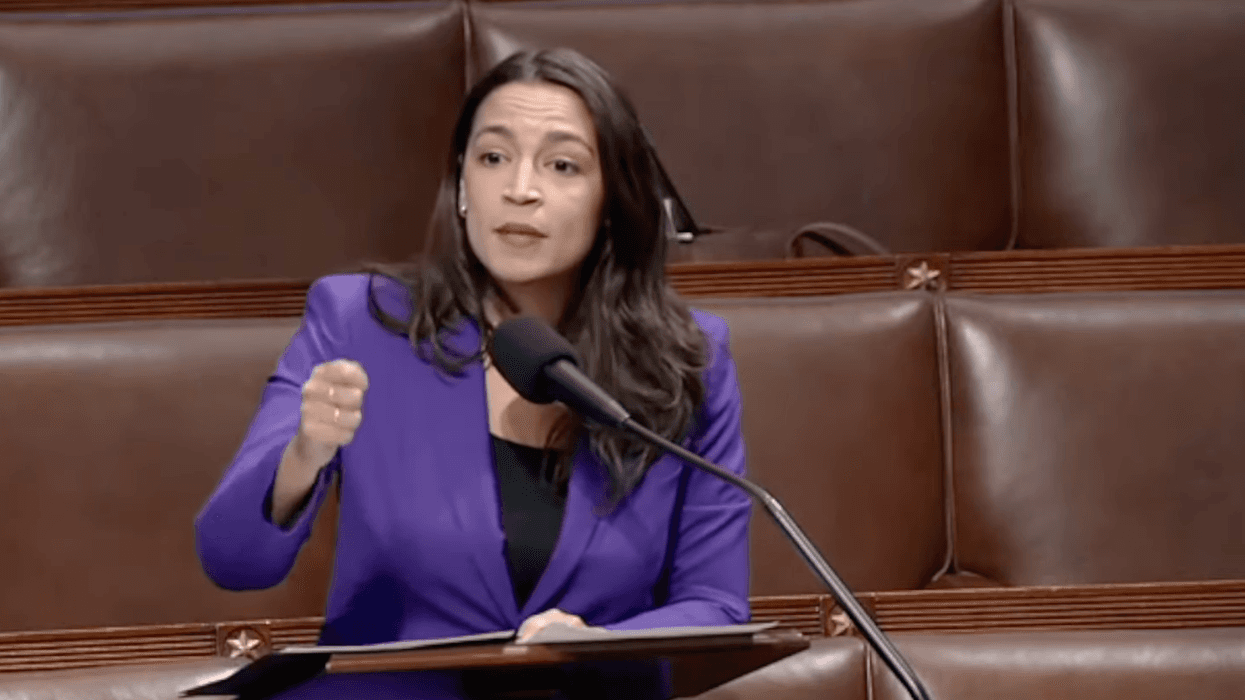
"Look at what members of Congress are invested in private prison companies," said Ocasio-Cortez.
"It's corruption in plain sight."
That's how U.S. Rep. Alexandria Ocasio-Cortez (D-N.Y.) described congressional colleagues who support Republican-authored legislation that immigrant rights advocates warn is a right-wing power grab under the guise of public safety.
The Laken Riley Act—named after a young woman murdered last year by a Venezuelan man who, according to U.S. Immigration and Customs Enforcement (ICE), entered the United States illegally—was passed by a vote of 263-156 in the House of Representatives on Wednesday afternoon. Forty-six Democrats and every Republican present voted "yes." That was a near-identical tally to the 264-159 vote on a previous version of the bill passed earlier this month.
Senate lawmakers passed the bill on Monday, with 12 Democrats joining 52 Republicans in voting for the measure, which, among other things, expands mandatory federal detention of undocumented immigrants who are accused of even relatively minor crimes. With the House's Wednesday vote, the Laken Riley Act is set to be the first bill signed into law since President Donald Trump returned to office.
Speaking on the House floor on Wednesday, Ocasio-Cortez said:
I want the American people to know, with eyes wide open, what is inside this bill because we stand here just two days after President Trump gave unconditional pardons to violent criminals who attacked our nation's Capitol on January 6th, and these are the people who want you to believe, who want us to believe that they're trying to quote unquote "keep criminals off the streets," when they are opening the floodgates...
In this bill, if a person is so much as accused of a crime, if someone wants to point a finger and accuse someone of shoplifting, they will be rounded up and put into a private detention camp and... sent out for deportation without a day in court, without a moment to assert their right, and without a moment to assert the privilege of innocent until proven guilty without being found guilty of a crime they will be rounded up, that is what is inside this bill, a fundamental suspension of a core American value, and that is why I rise to oppose it.
"You may wonder why so many of our friends across the aisle who care so deeply about the rule of law happen to be so desperate to pass this bill," Ocasio-Cortez continued. "Look no further than the price tag of this bill, $83 billion. [Lawmakers] know that it can't be paid for. They know that the capacity is not there, and you know what will be there? Private prison companies are going to get flooded with money."
"Look at what members of Congress are invested in private prison companies who receive this kind of money and look at the votes on this bill," she added. "It is atrocious that people are lining their pockets with private prison profits in the name of a horrific tragedy and the victim of a crime. It is shameful. It is absolutely shameful."
The congresswoman's comments came two days after Trump reversed a 2021 executive order issued by former Democratic President Joe Biden meant to phase out U.S. Department of Justice contracts with private prisons. Despite Biden's order, more than 90% of people held by ICE in July 2023 were locked up in for-profit facilities, which are rife with serious human rights abuses, according to the ACLU and other advocacy groups.
Anthony Enriquez, vice president of U.S. advocacy and litigation at Robert F. Kennedy Human Rights and Hill opinion contributor, recently called the Laken Riley Act "a sweetheart deal for the private prison industry."
"Private prison executives look poised to pull off a multibillion-dollar cash grab at taxpayer expense via a cynical ploy to capitalize on the tragic death of a Georgia nursing student," he warned.
Shares in private prison stocks, which had been languishing for much of 2024, have soared since Trump's victory in November, with GeoGroup surging more than 127% since Election Day and competitor CoreCivic up over 63%.
Responding to reporting that ICE is preparing to more than double its detention capacity by opening 18 new facilities, American Immigration Council senior fellow Aaron Reichlin-Melnick said on social media Wednesday: "That would likely mean tens of billions in taxpayer funds sent to private prison companies. They are salivating."

The bill, noted one opponent, "has some egregious provisions that will have dramatic consequences beyond its stated goal of locking up undocumented individuals like the man who murdered Laken Riley."
A dozen U.S. Senate Democrats on Monday helped the GOP pass the Laken Riley Act—an immigration bill decried as a far-right power grab—just hours after Republican President Donald Trump was sworn in for a second term.
Those 12 Democrats are Sens. Catherine Cortez Masto (Nev.), John Fetterman (D-Pa.), Ruben Gallego (Ariz.), Maggie Hassan (N.H.), Mark Kelly (Ariz.), Jon Ossoff (Ga.), Gary Peters (Mich.), Jacky Rosen (Nev.), Jeanne Shaheen (N.H.), Elissa Slotkin (Mich.), Mark Warner (Va.), and Raphael Warnock (Ga.). Fetterman and Gallego co-sponsored the bill.
A version of the legislation—named for a 22-year-old woman murdered by a Venezuelan migrant in Georgia last year—was passed by the House of Representatives earlier this month in a 264-159 vote, with support from 48 Democrats. However, it must be approved by the chamber again before it will head to Trump's desk.
"I just voted against the Laken Riley Act," said Senate Judiciary Committee Ranking Member Dick Durbin (D-Ill.). "This bill won't accomplish its goals. I'm disappointed in its passage as it stands, and I'm deeply concerned about how it will be implemented."
Writing to members of Congress ahead of the Senate's 64-35 vote, over 70 national groups said that "the senselessness of the murder of Laken Riley does not justify making unprecedented changes to immigration detention laws that—like all mandatory incarceration provisions—will only result in more discrimination while doing little to increase public safety."
Urging lawmakers to oppose the bill the coalition explained:
S. 5 would require the mandatory detention—without any possibility of bond—of undocumented persons who are merely arrested for or charged with certain offenses, including misdemeanor shoplifting. It does not require conviction. There is no statute of limitations, and the bill does not specify any process by which a person might contest either their immigration detention or the underlying criminal charges (if charges are even pursued). Mandatory immigration detention on the basis of a mere arrest is unprecedented, and it would invite abuses that almost certainly would disproportionately impact people of color.
We are also concerned with language in the bill that would give states standing to sue the federal government over any allegation that the federal government is improperly implementing immigration laws, such as detention and removal provisions, visa provisions, or its discretionary parole authority. This language would open the floodgates to litigation, and it would enable individual states to shape federal immigration policies.
"Laken Riley should be with us today. Her murder is a tragedy, and the perpetrator should be held fully accountable," said Sen. Jeff Merkley (D-Ore.) after the vote. "The Laken Riley Act, however, has some egregious provisions that will have dramatic consequences beyond its stated goal of locking up undocumented individuals like the man who murdered Laken Riley. Specifically, it requires mandatory imprisonment for undocumented children who have never been charged with or convicted of a crime. This is twisted."
"We've seen time and again the damage the federal government can cause our children with dangerous immigration policies like this," he added. "I will continue to champion proposals that keep all of us safe, fix America's broken immigration system, and strengthen our border security. Our families and communities demand nothing less."
The Senate vote came as Trump began imposing his anti-immigrant agenda with a slew of executive orders. The Republican, who campaigned on mass deportations and ending birthright citizenship, is expected to sign the Laken Riley Act once it reaches him.
"Trump's first actions as president show us exactly who he is and what he believes about America," said Congresswoman Delia Ramirez (D-Ill.). "While he talked about unity, he used his first moment in the office to stoke fear and fuel division. While he talked about a 'golden age,' he signed unconstitutional and un-American executive orders that gut equality initiatives, criminalize immigrants, end asylum, roll back climate protections, and endanger our national security. There is nothing great about an America that denies peoples' civil rights, refuses refuge to the persecuted, or denies future generations clean air and water."
"I believe America is greatest when we pursue justice, equality, and peace and honor our shared humanity," she added. "This daughter of immigrants, citizen by birthright, and congresista from a district that celebrates our diversity, stands ready to fight for the soul of our nation. Regardless of who is president, I will continue to fight for the policies working people demand: affordable housing and healthcare, good-paying jobs, clean air and water, public safety, and comprehensive immigration reform."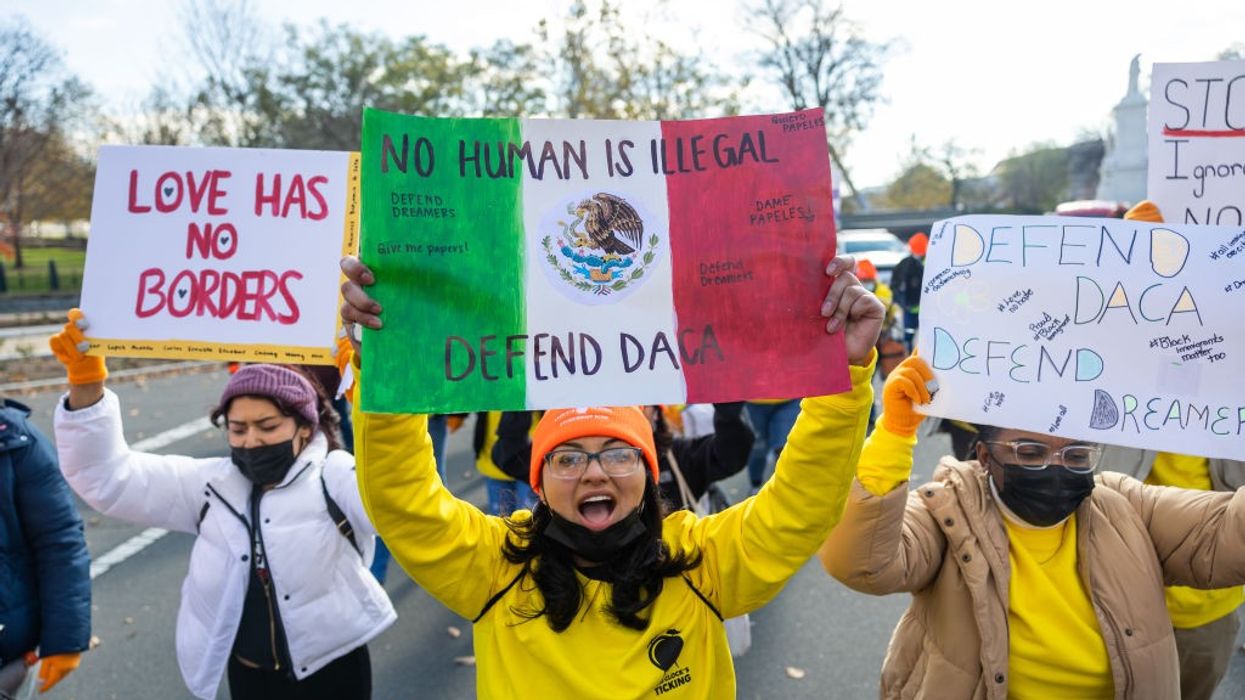
"It is long past time for DACA recipients, and so many others, to have a pathway to citizenship," said one migrant rights advocate.
Migrant rights advocates vowed to keep fighting after a federal appeals court on Friday dealt a blow to a program providing work permits and deportation relief to hundreds of thousands of undocumented immigrants brought to the United States as children—shortly before the Monday inauguration of Republican President-elect Donald Trump, who campaigned on mass deportations.
Deferred Action for Childhood Arrivals (DACA) has been ensnarled in legal battles since it was first introduced by the Obama-Biden administration in 2012. Friday's ruling from a three-judge panel of the U.S. Court of Appeals for the 5th Circuit stems from Republican-led states challenging the Biden-Harris administration's attempt to strengthen the program in 2022.
In 2023, U.S. District Court Judge Andrew Hanen from the Southern District of Texasfound that the DACA rule from the previous year was unlawful and issued a nationwide injunction, though he left the program in place for current recipients. On Friday, the panel partly agreed but limited the injunction to Texas and blocked its decision from taking effect pending further appeal.
"We demand Congress find a way to urgently pass permanent protections for as many people as possible."
"The ruling restores DACA in 49 states, providing temporary relief for thousands of young people who study, work, and contribute to our nation. And all current DACA recipients remain protected, and able to renew their DACA grants, until this case concludes its journey through the courts," explained Nina Perales, vice president of litigation at MALDEF, which represents DACA recipients—often called Dreamers, due to related federal legislation that's never made it through Congress.
MALDEF president and general counsel Thomas A. Saenz said that "the panel's overreliance on the 5th Circuit's previous flawed analysis of standing and of the legality of DACA in its entirety make this decision itself ill-informed and nonconforming with respect to current federal law. Thus, we will be carefully considering, with our clients, the best options for preserving the work authorization (and forbearance) of all DACA recipients and DACA-eligible immigrants."
Saenz added that the panel's unanimous decision "presents squarely the question to be answered by Congress and the new administration: Will you finally accede to the expressed desires of bipartisan supermajorities of voters nationwide to preserve and protect the national asset that is made up of our DACA recipients and other DACA-eligible immigrants?"
Advocates for Dreamers, including some Democrats in Congress, also criticized the panel's ruling and called for legislative action.
National Immigration Law Center president Kica Matos
said Friday that the "ruling, just days before Donald Trump takes office, adds to the cruel uncertainty that immigrant youth have endured throughout years of politicized attacks on DACA."
"We also recognize that the incoming administration is likely to resume its assault on DACA and immigrant youth," Matos continued, referencing the Trump-Pence administration's effort to kill the program. "We will confront these attacks with the same force we used to defeat Trump's last attempt to end DACA. It's past time for politicians and courts to stop playing games with the lives of immigrant youth."
FWD.us president Todd Schulte said the new decision "is important and should be read in full," stressing that even the conservative court "made clear in its ruling the deep value of DACA by highlighting that ending the policy would do substantial harm to DACA recipients."
"A few weeks ago, President-elect Trump made welcome comments acknowledging that providing a pathway to citizenship for Dreamers is the best path forward for our country," he noted. "He now has a unique opportunity to protect DACA recipients and secure permanent protections for Dreamers."
"First, he should ensure that DACA stays in place by continuing to enact the policy as president and not supporting litigation against it," Schulte argued. "Second, he should also work with Republicans and Democrats to pass narrowly targeted legislation that specifically provides Dreamers the permanent protections that are best for them and all Americans."
"No one should have to live their life from court decision to court decision, nor in two-year increments. DACA has transformed the lives of so many. It is long past time for DACA recipients, and so many others, to have a pathway to citizenship," he added. As of October, there were over 537,000 active DACA recipients, according to federal data.
Greisa Martinez Rosas, executive director of United We Dream, said that the panel's decision "continues to baselessly attack immigrant young people, while also proving that our communities are essential to the economy and the future of the United States. This is why the 5th Circuit Court has kept renewals alive."
The advocate, who is undocumented, asserted that "the court's insistence on attacking DACA is especially concerning given" that 10 Senate Democrats on Friday joined Republicans in advancing the Laken Riley Act, "a bill that will put the lives of millions of people in danger of racial profiling as well as inhumane and indefinite detention."
"All the while, Trump is set to take office in just two days, pledging to carry out destructive mass raids and deportations quickly and forcefully," she pointed out. Late Friday,
The Wall Street Journal reported that the Trump-Vance administration is set to begin its promised deportations on Tuesday with an operation targeting residents of Chicago, Illinois.
"The pieces of Trump's destructive agenda have been laid out clearly," said Martinez Rosas. "Congress cannot continue to willfully ignore Trump's goal to target as many immigrants as possible and wreak complete havoc on families, cities, local economies, workplaces, and more nationwide. We demand Congress find a way to urgently pass permanent protections for as many people as possible, and for elected officials at every single level—from governors, mayors, and more—to seize every opportunity to reject Trump's agenda now and immediately shore up protections for immigrants nationwide."
Senate Democratic Leader Chuck Schumer (D-N.Y.) said in a statement about the Friday ruling that "the 5th Circuit is a renegade court. To say DACA is unconstitutional is not only cruel but way out of the mainstream of legal thinking."
"President-elect Donald Trump has said that he wants to do 'something about the Dreamers' and that he will work with Democrats on a plan, something I will take him up on while he is in office," he pledged.
Schumer wasn't alone. Sen. Alex Padilla (D-Calif.) said the "terrible" ruling "is another harsh reminder of the constant uncertainty DACA recipients face," while Sen. Dick Durbin (D-Ill.)—who has fought for Dreamers on Capitol Hill for over two decades—declared "the 5th Circuit DACA decision creates a force that will require a Washington response."
Even Sen. Catherine Cortez Masto (D-Nev.), who helped Republicans tee up the Laken Riley Act for a final vote next week, said that "I strongly disagree" with the ruling and called for a legislative fix.
In the House of Representatives—also narrowly controlled by Republicans—Democrats similarly urged action. Rep. Delia Ramirez (D-Ill.), the daughter of Guatemalan immigrants whose district includes part of Chicago, said that the ruling "only adds to the uncertainty and fear of countless immigrant and mixed-status families."
"If you are eligible, renew your DACA—don't wait!" she said. "To our Dreamers—¡Esta lucha no termina aquí! The fight continues until each of our immigrant neighbors has the safety, stability, and dignity they deserve."

This bill would strip judges of discretion and require immigrants to be detained and subject to deportation if they’re accused—not even convicted—of even minor offenses, benefiting private prison companies.
You’re reading the words of a formerly undocumented immigrant.
When I fled El Salvador four decades ago, I was 12 years old and alone. I wanted to escape the country’s civil war, where U.S.-backed death squads had made murders and rape our daily reality.
I reunited with my sisters, my only surviving family, in Wichita, Kansas. Once there, I helped open churches, started businesses, and raised three daughters. There were times I wasn’t sure we’d make it to the end of the month, but I was grateful for the sense of peace and security we were able to create here.
We all have a stake in stopping private prison corporations from becoming more powerful, regardless of our language, race, gender, or community.
That’s why I’m so alarmed that the new Republican-led Congress has chosen to open with a bill, H.R. 29, that strikes fear in the hearts of immigrant families all across the country. This bill would strip judges of discretion and require immigrants to be detained and subject to deportation if they’re accused—not even convicted—of even minor offenses like shoplifting.
This major assault on due process won’t keep anyone safer. It would terrorize all immigrants in this country, who studies show are much less likely to commit crimes of any kind than native-born Americans.
So who benefits from H.R. 29? Private prison corporations like CoreCivic and GEO Group, who made a fortune during the last Trump administration by running private prisons for Immigration and Customs Enforcement (ICE).
CoreCivic and GEO kept immigrants and asylum seekers in inhumane and toxic conditions with poor hygiene and exposed women and children to sexual predators. Under this new law, cynical executives will siphon off more public dollars, and wealthy investors will reap more rewards, from abusing and demonizing people seeking refuge from violence or poverty.
When President-elect Donald Trump won, private prison stocks soared. Why? Because investors anticipated making a fortune detaining immigrants. More than 90% of migrants detained by ICE end up in for-profit facilities.
GEO Group, which maxed out its campaign contributions to Trump, told its investors they could make almost $400 million per year supporting “future needs for ICE and the federal government” in a second Trump term. Their stock price nearly doubled in November.
Whether those detained are guilty or not, CoreCivic and GEO get paid. That’s what H.R. 29 is for: advancing corporate greed, not protecting Americans.
We all have a stake in stopping private prison corporations from becoming more powerful, regardless of our language, race, gender, or community. In addition to jailing immigrants, for-profit prison companies also look for ways to put citizens in prison more often—and for longer—so they can make more money.
Whenever we allow fundamental rights to be taken away, we erode our shared humanity and diminish all of our rights and freedoms.
The people behind H.R. 29 want us to be afraid of each other so we won’t stand together. They want to be able to barge into our homes, schools, and churches to take our neighbors and loved ones away. They want workers to be too scared to stand up to their bosses’ abuse. All so their donors in the private prison industry can make more money.
Democrats will need to find their way in this new Congress. Falling in line behind nativist fear-mongers who take millions in campaign contributions from the private-prison industry is not the right way to do it.
Americans demand better. We want true leadership with an affirmative vision for the future of this country and dignity for all people, including immigrants.
H.R. 29 targets whole communities because of the language we speak and the color of our skin. Instead, our elected leaders, regardless of party, must work to address people’s needs through building an economy that works for all of us, not just the wealthy few.

"This bill is political grandstanding at its worst," said one lawmaker.
With the U.S. Senate poised to vote on the Laken Riley Act on Friday, immigrant rights advocates are warning that—despite claims from proponents that the bill is aimed at protecting American communities from violent crime—supporters of the legislation are actually advancing a dangerous "Trojan horse" and securing a power grab for xenophobic right-wing authorities.
The bill is named after Laken Riley, a Georgia woman who was killed last February while she was jogging. Jose Antonio Ibarra, an undocumented immigrant from Venezuela, was convicted of her murder in November, and the case was a focal point of President-elect Donald Trump's campaign last year.
But as Vanessa Cárdenas, executive director of immigrant rights group America's Voice, said Thursday, the bill "is filled with unrelated and sweeping measures that won't improve public safety."
Central provisions in the legislation, which passed in the House on Tuesday with the support of 37 Democrats along with the entire Republican caucus, would require immigration officers to detain undocumented immigrants who are accused of theft, including shoplifting—an apparent response to the fact that Ibarra was cited for shoplifting in Georgia but was not detained before he killed Riley.
Critics have expressed outrage over the provision, with Cárdenas saying it would trample "important due process principles—greenlighting detention and deportation for those accused, rather than convicted of low-level crimes."
"It's no surprise Republicans are continuing to exploit a horrific act of violence and portray immigrants as dangerous threats to America, despite the reality that immigrants have a lower crime rate than the native-born," said Cárdenas. "And it also should be no surprise to any close observers of right-wing politics that the bill being pushed this week doesn't seek to improve public safety or even focus on public safety threats."
At Arizona Republic, editor Elvia Díaz advised readers, "Don't be fooled by soundbites."
"Republicans and now Democrats, too, want you to believe the Laken Riley Act is about deporting shoplifters," she wrote. "It's a power grab by states to dismantle federal authority over immigration enforcement."
In a column at MSNBC on Wednesday, Aaron Reichlin-Melnick, a senior fellow at the American Immigration Council, wrote that Republicans pushing the bill are asking the question: "Who runs the U.S. immigration system?"
The answer, backed up by numerous courts, has been the federal government, but the bill would give broad new authorities to state officials, such as attorneys general, to file legal challenges in order to have specific immigrants detained and to force the State Department to block visas from countries that won't accept immigrants who are deported.
"Giving states a veto power over thousands of decisions made every day by federal law enforcement officers and leaders will complicate immigration issues in every community and threaten to set off international incidents which could hurt U.S. interests around the globe," wrote Reichlin-Melnick.
The visa provision could impact countries such as China and India, which have "historically not cooperated fully with the United States on deportations," and where more than 1.8 million immigrant and short-term visas were issued to nationals in 2023.
"Because the United States is so intertwined with these countries, administrations of both parties have been unwilling to threaten blanket visa bans as a punishment for not accepting deportees," wrote Reichlin-Melnick. "Yet should the Laken Riley Act become law, that decision may no longer be in the hands of our nation's top diplomats and law enforcement officers; it could be in the hands of a single federal district court judge in Texas or Louisiana."
He continued:
What could this look like in practice? Imagine a person from China living in Texas on an H-1B visa who commits an offense that leads to a deportation order. If China does not accept the deportation, [Texas Attorney General] Ken Paxton could go to court seeking to force the federal government to ban all visas from China (or maybe just all H-1B visas) without having to worry about taking the blame for the economic or diplomatic fallout to the United States.
"What happened to Laken Riley was a terrible tragedy, and the perpetrator has been sentenced to life in prison for his heinous acts," wrote Reichlin-Melnick on Wednesday. "But just as Willie Horton's bad acts decades ago were not a justification for supercharging a system of mass incarceration, the heinous acts of Jose Ibarra should not be an excuse to flip our system of constitutional governance on its head and empower individual states and federal judges to run immigration law."
Rep. Jim McGovern (D-Mass.), who opposed the bill this week, said he has heard from "a lot of people who say they support this bill, but who don't seem to know what it really does."
"For example, if this bill is signed into law, a 12-year-old kid brought here by a parent could be LOCKED IN ICE DETENTION if they are accused—not even convicted, simple accused—of stealing a candy bar," McGovern said in a post on X, referring to U.S. Immigration and Customs Enforcement..
Kylie Cheung of Jezebel pointed out that while Republicans have held the Laken Riley Act up as essential legislation to protect women from violence, "these lawmakers don't care about women's safety or high rates of femicide perpetrated by people with citizenship—they've cut all actual resources for victims. They just want to gut basic civil liberties."
Immigration attorney Ben Winograd of the Immigrant & Refugee Appellate Center offered a hypothetical scenario under the bill: "Imagine a man who is a U.S. citizen marries a woman who entered the country illegally. He abuses her constantly, and after learning that she intends to leave him, he calls the police and (falsely) claims that she stole some of his property."
"If the police arrest the woman, she would be subject to mandatory detention while in removal proceedings—even if the police determined that the accusation was bogus," said Winograd. "The Laken Riley Act would allow any person with a grudge against an undocumented immigrant to make them subject to indefinite mandatory detention simply by leveling a false accusation of theft."
All the Senate Republicans are sponsoring the bill, which was cleared for a vote on Thursday, with Sens. John Fetterman (D-Pa.) and Ruben Gallego (D-Ariz.) joining them. In order to overcome a filibuster the GOP needs just six more Democrats to support the legislation.
Sen. Andy Kim (D-N.J.), one of nine senators who opposed advancing the bill on Thursday, said he is in favor of "bipartisan action to fix our broken immigration system."
"I stand ready to work across the aisle to get it done," he said. "Let's start from a foundation grounded in our Constitution."