SUBSCRIBE TO OUR FREE NEWSLETTER
Daily news & progressive opinion—funded by the people, not the corporations—delivered straight to your inbox.
5
#000000
#FFFFFF
To donate by check, phone, or other method, see our More Ways to Give page.


Daily news & progressive opinion—funded by the people, not the corporations—delivered straight to your inbox.
The American Foreign Service Association said the move "tells our public servants that loyalty to country is no longer enough—that experience and oath to the Constitution take a back seat to political loyalty."
Following Politico's Friday reporting that "the Trump administration is recalling a number of career ambassadors appointed by former President Joe Biden," several news outlets confirmed Monday that the purge is affecting at least 29 diplomats.
"This is a standard process in any administration," an unnamed senior official at the US Department of State claimed to multiple journalists. "An ambassador is a personal representative of the president, and it is the president's right to ensure that he has individuals in these countries who advance the 'America First' agenda."
However, Nikki Gamer, a spokesperson for the diplomats' union, the American Foreign Service Association (AFSA), told the New York Times that "those affected report being notified abruptly, typically by phone, with no explanation provided."
"That method is highly irregular," she said. "The lack of transparency and process breaks sharply with long-standing norms."
Gamer told Reuters that "abrupt, unexplained recalls reflect the same pattern of institutional sabotage and politicization our survey data shows is already harming morale, effectiveness, and US credibility abroad."
In a statement, the AFSA added: "To remove these senior diplomats without cause or justification sends a dangerous message. It tells our public servants that loyalty to country is no longer enough—that experience and oath to the Constitution take a back seat to political loyalty."
According to the Associated Press:
Africa is the continent most affected by the removals, with ambassadors from 13 countries being removed: Burundi, Cameroon, Cape Verde, Gabon, Ivory Coast, Madagascar, Mauritius, Niger, Nigeria, Rwanda, Senegal, Somalia, and Uganda.
Second is Asia, with ambassadorial changes coming to six countries: Fiji, Laos, the Marshall Islands, Papua New Guinea, the Philippines, and Vietnam affected.
Four countries in Europe (Armenia, North Macedonia, Montenegro, and Slovakia) are affected; as are two each in the Middle East (Algeria and Egypt); South and Central Asia (Nepal and Sri Lanka); and the Western Hemisphere (Guatemala and Suriname).
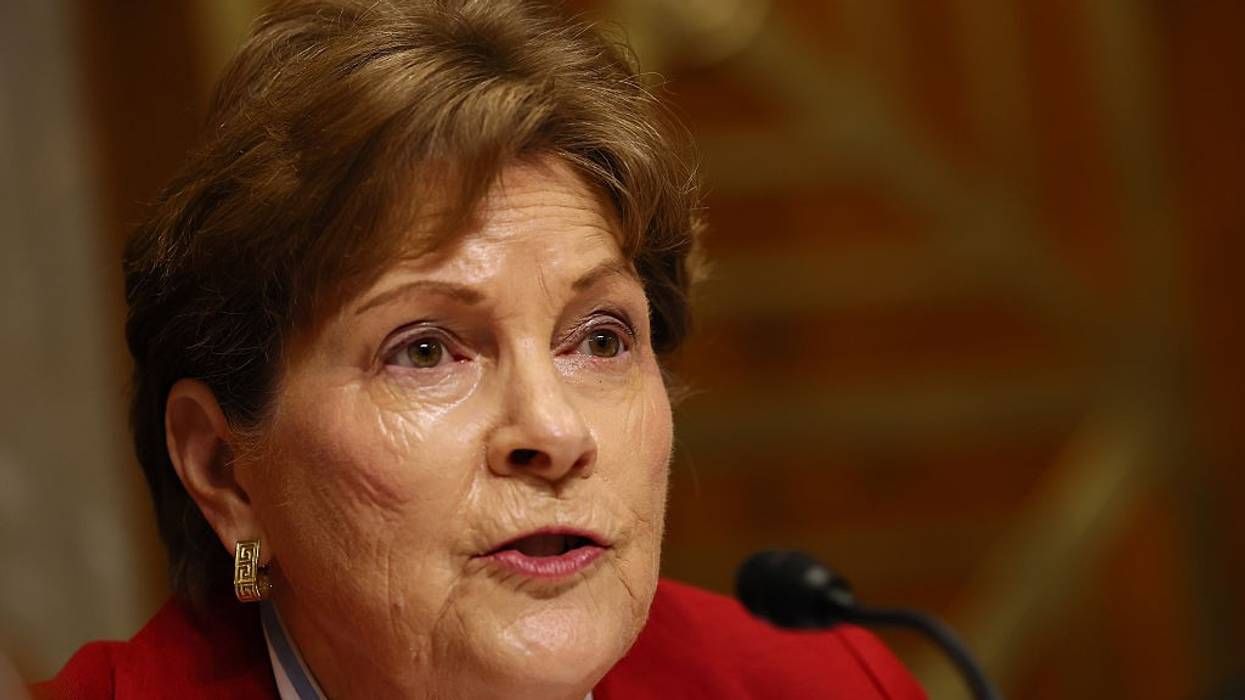
Noting that there are about 80 vacant ambassadorships, Senate Foreign Relations Committee Ranking Member Jeanne Shaheen (D-NH) accused President Donald Trump of "giving away US leadership to China and Russia by removing qualified career ambassadors who serve faithfully no matter who's in power."
Eric Rubin, a retired career diplomat and former AFSA president, similarly highlighted that over half of US embassies won't have a confirmed ambassador, which he called "a serious insult to the countries affected, and a huge gift to China."
"This has never happened in the 101-year history of the US Foreign Service," Rubin told CNN. "Ambassadors serve at the pleasure of the president. But every president has kept most career professional ambassadors in place until their successors are confirmed by the Senate."
"The ambassadors who have been dismissed will mostly have to retire, which means the State Department will lose a large number of our most senior, experienced, and accomplished professionals," he explained. "This is bad for our diplomacy, bad for our national security, and bad for our influence in the world."
"We should have done more," said Jeanne Shaheen, the top Democrat on the Senate Foreign Relations Committee. "Everybody should have said more sooner."
The top Democrat on the Senate Foreign Relations Committee said Sunday that Congress had failed to act to prevent starvation in Gaza, which she acknowledged was the fault of Israel's blockade on aid entering the strip.
On Friday, the UN-backed Integrated Food Security Phase Classification (IPC) declared that an "entirely man-made" famine is taking place in Gaza—marking just the fifth time the notoriously cautious organization has declared a famine since it was established in 2004.
In reaction to this news, Sen. Jeanne Shaheen (D-N.H.) issued her most forceful condemnation of Israel's actions in an interview on CBS's Face the Nation, describing it as "a shameful black mark on humanity that the world has allowed this to happen and that Israel is allowing this to happen."
(Video: Face the Nation)
Shaheen, who was calling in from Amman, Jordan, after visiting the country's Humanitarian Assistance Program, said, "They are trying to get 150 trucks a day into Israel."
"Israel," the senator said, "has prevented those trucks from going in in a way that would provide the nutrition that Gazans need to prevent starvation."
According to the IPC report, a quarter of all Palestinians in Gaza–more than 500,000 people–are starving, with that number expected to rise to more than 640,000 by the end of September.
Rebuking claims from Prime Minister Benjamin Netanyahu's office that famine designation was an antisemitic "blood libel," Shaheen said, "The reality is that we have people dying because they are systematically being starved to death because Israel is refusing to allow in the humanitarian aid that people need to keep alive."
"Not only that," she said, "they've already started planning another incursion into Gaza in ways that are going to kill more people."
"This is not acceptable," she said. "The world needs to speak out."
The world, notably, has been speaking out against Israel's conduct in Gaza for well over a year as evidence mounted of its leaders' genocidal intent.
South Africa accused Israel of genocide in January 2024, citing statements by numerous top Israeli officials who expressed the goal of wiping out or displacing the people of Gaza entirely, often through the policy of intentional starvation.
The IPC, meanwhile, warned as early as December 2023 that Gaza faced a "very high risk of famine" unless access to humanitarian aid was improved immediately.
Shaheen, who has since said she will not seek reelection in 2026, was among the first wave of Democrats to publicly break with the mainstream party line on Gaza, saying that then-President Joe Biden was "too slow in pushing Netanyahu to come to a ceasefire," and voting to block weapons shipments to Israel. However, she did not voice these criticisms until December 2024, after Donald Trump had already been reelected.
It took until late last month—when starvation had become so widespread that one in five children in Gaza City faced malnutrition—for the majority of Senate Democrats to finally back a resolution to block more arms to Israel.
"We should be doing more, and we should have done more. Absolutely," Shaheen said Sunday. "Everybody should have said more sooner."
One observer called the proposal "nothing less than an assault on American diplomacy."
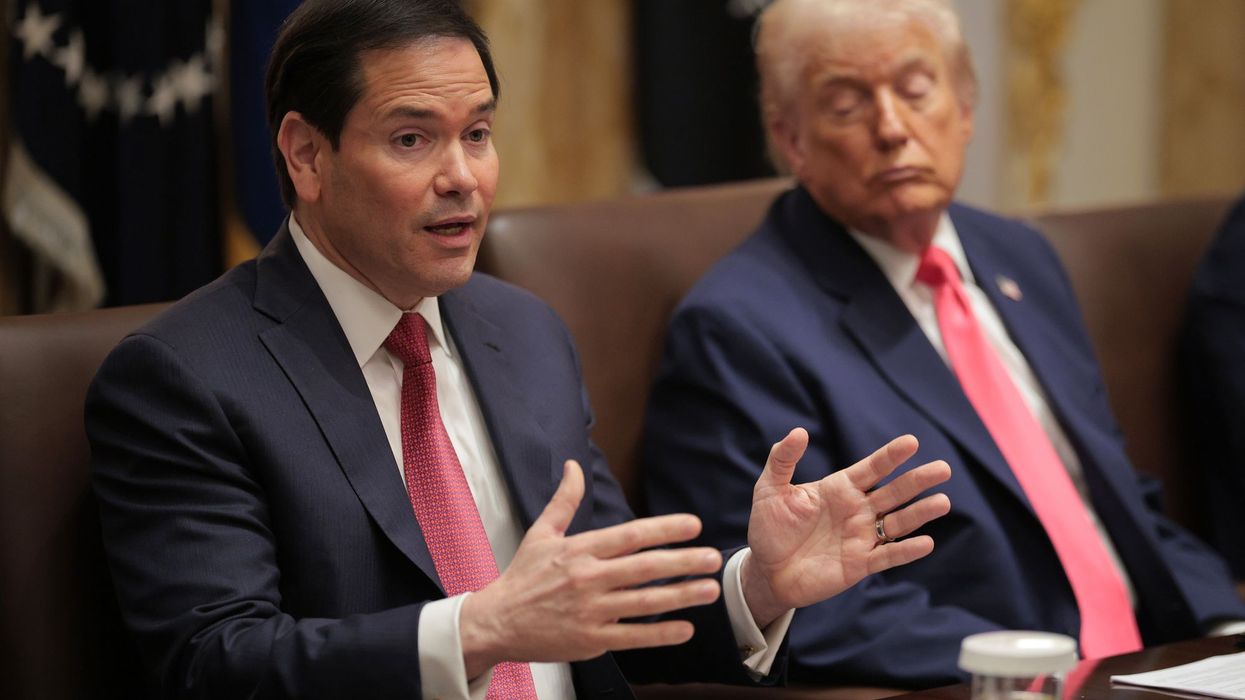
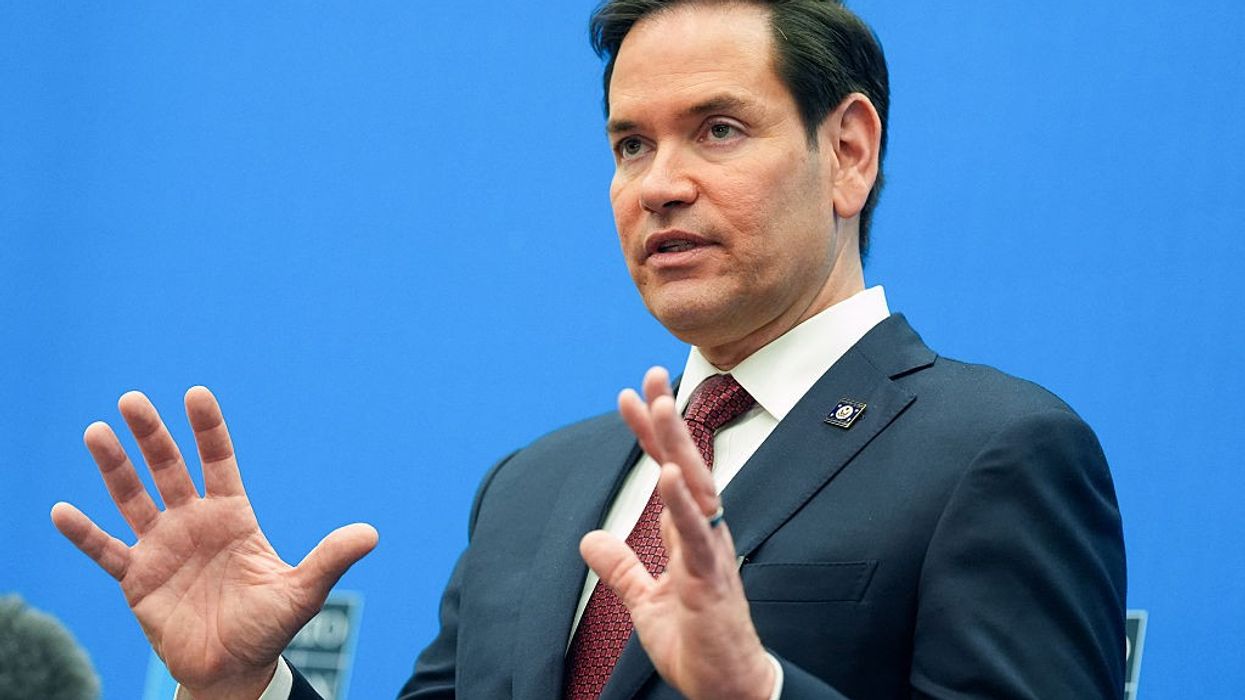
Secretary of State Marco Rubio's plan to streamline what he called the "bloated" State Department by slashing staff and closing or consolidating bureaus was widely criticized Tuesday as a dangerous retreat from diplomacy and soft power that would weaken U.S. standing abroad and boost adversaries.
"In its current form, the department is bloated, bureaucratic, and unable to perform its essential diplomatic mission in this new era of great power competition," Rubio said in a statement. "Over the past 15 years, the department's footprint has had unprecedented growth and costs have soared."
"But far from seeing a return on investment, taxpayers have seen less effective and efficient diplomacy," he added. "The sprawling bureaucracy created a system more beholden to radical political ideology than advancing America's core national interests. That is why today I am announcing a comprehensive reorganization plan that will bring the department into the 21st century."
Marco Rubio says the State Department has been “beholden to radical political ideology.” Also known as democracy.
[image or embed]
— Mark Jacob ( @markjacob.bsky.social) April 22, 2025 at 9:45 AM
Rubio's proposal includes a 15% department-wide staff reduction, the elimination of 132 of the agency's 734 bureaus and offices, and the consolidation of many others, according to reports. Bureaus and programs expected to be eliminated or merged include the Office of Global Women's Issues; the war crimes and civilian protection divisions; and the agency's diversity, equity, and inclusion efforts, which have been banned throughout the executive branch. The position of special climate envoy will also be eliminated.
The Office of Civilian Security, Democracy, and Human Rights is slated to be replaced by a new division for the coordination for foreign assistance and humanitarian affairs that will assume responsibilities once shouldered by the embattled U.S. Agency for International Development. Already under siege by Elon Musk's Department of Government Efficiency, USAID is reeling from Rubio's announcement last month that the vast majority of its programs would be canceled.
Christopher Le Mon, a former senior department official during the Biden administration, told The New York Times Tuesday that the plan's human rights scaleback "sends a clear signal that the Trump administration cares less about fundamental freedoms than it does about cutting deals with autocrats and tyrants."
In a Substack post published Tuesday, Rubio accused the Bureau of Democracy, Human Rights, and Labor of becoming "a platform for left-wing activists to wage vendettas against 'anti-woke' leaders" and the Bureau of Population, Refugees, and Migration of funneling "millions of taxpayer dollars to international organizations and NGOs that facilitated mass migration around the world, including the invasion on our southern border."
Responding to this, Brandon Wu, director of policy and campaigns at ActionAid USA, said that "Secretary Rubio's rant against the Bureau of Democracy, Human Rights, and Labor as the carrier of a leftist agenda lays the administration's intentions bare: Their decimation of the State Department is part of an unhinged crusade against perceived 'woke' policies and practices, not a coherent plan for reform."
"The idea that any part of the State Department was supporting an 'invasion' of the U.S. southern border is similarly ludicrous," Wu added. "The proposed staff reductions at the State Department, when taken in conjunction with the dismantling of USAID, will hamper the diplomatic engagement with the rest of the world. This is a deeply unserious proposal that will not make the U.S. safer or stronger."
"Trump has said he wants to be a president who ends wars, but moves like this will make that much more difficult."
Dylan Williams, vice president for government affairs at the Center for International Policy, a Washington, D.C.-based think tank, called Rubio's plan "nothing less than an assault on American diplomacy" that will "further decimate U.S. influence and standing in the world, undermining our fundamental security and other critical interests."
"Coupled with the administration's intention to dramatically increase military spending, this decimation of the State Department also serves as a clear indication that it is prioritizing militarism over diplomacy," Williams said. "Donald Trump has said he wants to be a president who ends wars, but moves like this will make that much more difficult."
Democratic lawmakers also condemned Rubio's proposal, with Sen. Jeanne Shaheen (D-N.H.), the ranking member of the Senate Foreign Relations Committee, asserting that "any changes to the State Department and USAID must be carefully weighed with the real costs to American security and leadership."
"As I and many of my Democratic colleagues have made clear, we welcome reforms where needed—but they must be done with care," she continued. "Elon Musk and his team have engaged in a slash-and-burn campaign targeting federal employees, terminating critical programs at State and USAID, undermining our allies, and diminishing American leadership in the world."
"A strong and mission-ready State Department advances American national security interests, opens up new markets for American workers and companies, and promotes global peace and stability," Shaheen added. "It remains to be seen how the administration's latest proposals will achieve that goal."
Rep. Gregory Meeks (D-N.Y.), the ranking member of the House Foreign Affairs Committee, warned that Rubio's proposed reorganization "would leave the State Department ill-equipped to advance U.S. national security interests."
"The vital work left on Secretary Rubio's cutting-room floor represents significant pillars of our foreign policy long supported by Democrats and Republicans alike, including former Sen. Rubio—not 'radical ideologies' as he now claims," Meeks added. "Retreating from this work will further erode our national security and undermine our influence on the world stage."