

SUBSCRIBE TO OUR FREE NEWSLETTER
Daily news & progressive opinion—funded by the people, not the corporations—delivered straight to your inbox.
5
#000000
#FFFFFF
To donate by check, phone, or other method, see our More Ways to Give page.
Daily news & progressive opinion—funded by the people, not the corporations—delivered straight to your inbox.
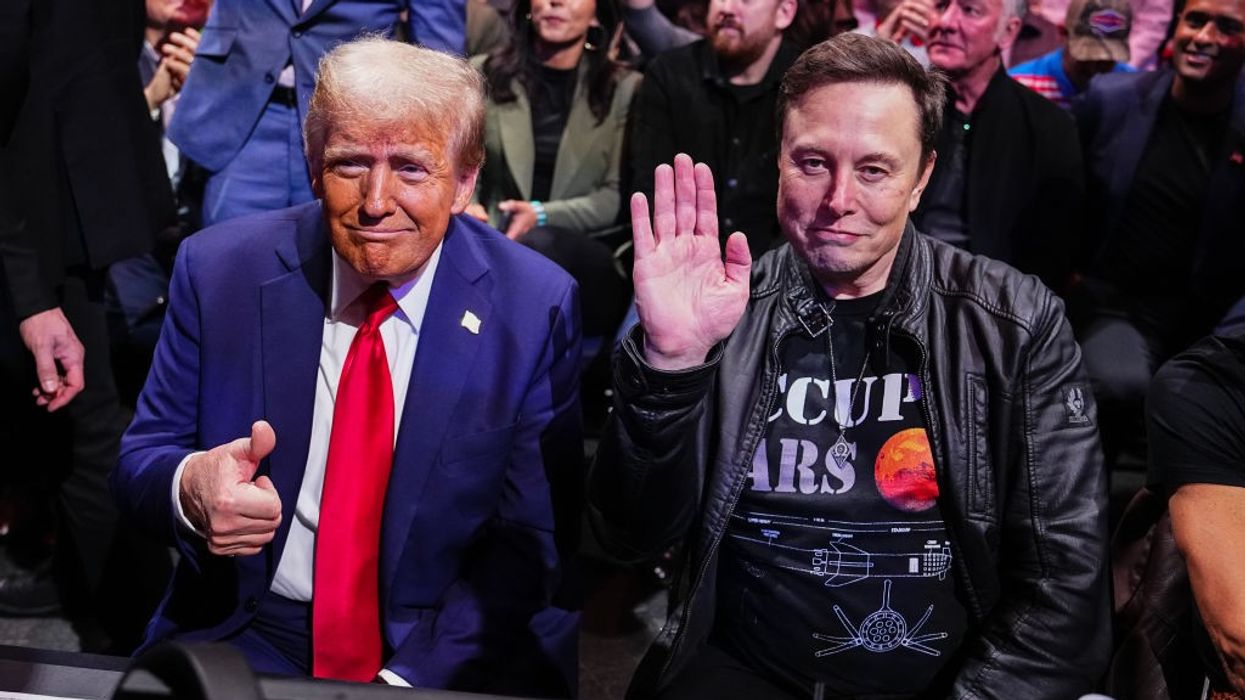
"If you think back at the last economic crashes... the rich were able to buy up assets on the cheap and emerged even wealthier and more powerful than before," noted one progressive commentator.
Are U.S. President Donald Trump, top adviser Elon Musk, and allied oligarchs deliberately trying to tank the economy in order to line their own gilded pockets?
More and more observers from both sides of the political aisle are asking the question this week as the U.S. president implemented steep tariffs on some of the country's biggest trade partners, threatened a global trade war, and is taking chainsaw to government spending and programs—policies that, while inflicting economic pain upon nearly everyone else, could dramatically boost their already stratospheric wealth.
Numerous observers have likened it to the " disaster capitalism" examined in Naomi Klein's seminal 2007 book, The Shock Doctrine: The Rise of Disaster Capitalism—politicians and plutocrats exploit the chaos of natural or human-caused crises to push through unpopular policies like privatization and deregulation that harm the masses while boosting the wealth and power of the ruling class.
Economic alarm bells were already ringing before Trump's 25% tariffs on most products from Canada and Mexico and an additional 10% on China—for a total of 20%—took effect on Tuesday, prompting retaliatory measures and threats of more to come.
Then, during his rambling joint address to Congress on Tuesday night, Trump threatened to impose reciprocal tariffs on every nation on Earth starting April 2 (because he "didn't want to be accused of April Fools' Day") if those countries did not lower barriers to trade with the United States.
@jamellebouie Replying to @C. Stetzer ♬ original sound - b-boy bouiebaisse
New York Times economic policy reporters Alan Rappeport and Ana Swanson called Trump's sweeping tariffs "one of the biggest gambles of his presidency," and a move "that risks undermining the United States economy."
But what if that's the whole point?
"I've been entertaining this theory a little bit more lately, because [Trump's] economic moves seem so stupid and terrible and counterproductive without thinking that he is intentionally trying to cause harm," progressive political commentator Krystal Ball—who also has a degree in economics and is a certified public accountant— said Tuesday on the social media site X.
Ball cited an X
post by Saikat Chakrabarti, a progressive Democrat running for Congresswoman Nancy Pelosi's (D-Calif.) House seat who worked on Wall Street for six years and helped found the online payment processing company Stripe, in which he accused Trump of "manufacturing a recession."
"But it makes sense when you realize his goal is to create something like Russia where the economy is run by a few oligarchs loyal to him," Chakrabarti added. "Creating that state is hard in a large, dynamic, powerful economy with too many actors who can oppose him. So he's accelerating concentrating money and power into the hands of his loyalists while he crashes the rest out."
Responding to this, Ball asserted that "at this point, until proven otherwise, the primary actor in the government and the economy is actually Elon, so I think it makes sense to think of Elon's incentives here and what he may actually want to accomplish."
"If you think back at the last economic crashes—both in Covid and in the 2008 financial crash—while initially everyone suffered, including the rich, out of both, the rich were able to buy up assets on the cheap and emerged even wealthier and more powerful than before," she noted.
"So in 2008, not only did they get their own custom bailout, but they were able to buy housing stock at absurdly low prices," Ball recalled. "The rich got richer than ever, inequality skyrocketed, and the big banks got bigger than ever."
"Same deal with the Covid-era recession," she continued. "So, while again, everyone suffered initially, there was a huge bailout package which, yes, did benefit ordinary people, but if you look at who came out really on top... you could see people like Elon Musk, people like Jeff Bezos, people like Mark Zuckerberg getting far wealthier. Their net worths, which were already very high, skyrocketed beyond anyone's wildest dreams."
Indeed, as Common Dreams reported, 700 billionaires got $1.7 trillion richer during two years of pandemic. Between March 2020 and April 2022, Musk got 10 times richer, while Zuckerberg's net worth more than tripled and Bezos' grew by nearly $80 billion, according to Forbes.
"Here's the other piece that's worth thinking about as well," Ball added. "Crash and crisis leads to governments and authoritarian leaders claiming more power for themselves. They can use the crisis and the emergency as a justification for taking on extraordinary powers and for taking extraordinary measures... measures that can be custom fit to primarily benefit oligarchs like Elon Musk."
"So I don't know guys, while we're running around here going... 'can't they understand how this is going to be devastating for the economy,' maybe they do understand," she concluded, "and maybe that's kind of the point."
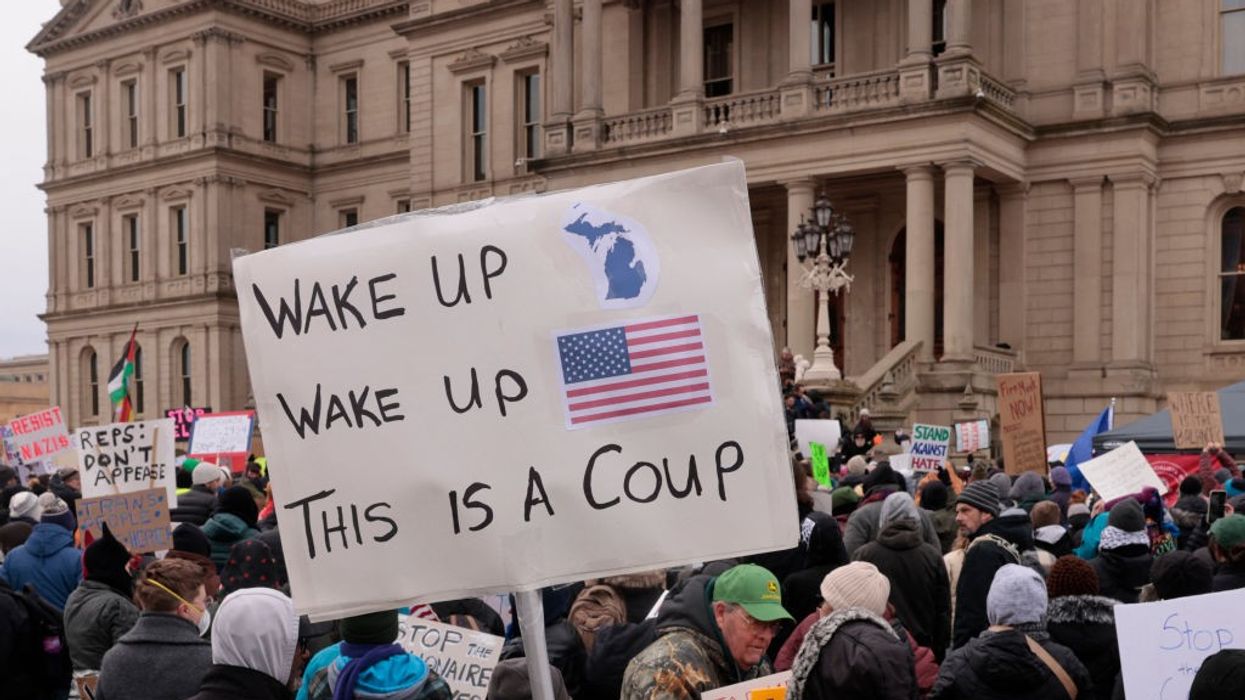
"The single most un-American and anti-constitutional statement ever uttered by an American president."
Fears that the United States is in the midst of a constitutional crisis—or something significantly worse—intensified Saturday after President Donald Trump wrote in a social media post that "he who saves his country does not violate any law," a variation of a quote attributed to Napoleon Bonaparte.
Trump's post on X—the platform owned by billionaire shadow government leader Elon Musk—came as his administration continued its sweeping and destructive assault on the federal government and workforce, running roughshod over the law in the process.
Trump's post Saturday was the latest brazen signal that the president doesn't recognize limits on his authority to impose his far-right agenda.
New York Times columnist Jamelle Bouie called Trump's message "the single most un-American and anti-constitutional statement ever uttered by an American president."
Since taking office less than a month ago, Trump and Musk have moved aggressively to dismantle federal agencies and remove any officials who could shine light on or obstruct their efforts.
Trump, his handpicked Cabinet officials, and Musk have also disregarded or openly attacked the other two co-equal branches of government, accusing judges who have moved to halt or limit the new administration's actions of being Democratic partisans.
In some cases, the Trump administration has actively defied rulings from federal courts, an alarming indication of what's to come.
Yasmin Abusaif and Douglas Keith of the Brennan Center for Justice noted Friday that "the last time the United States saw widespread open defiance of court orders by elected officials was when governors in Southern states refused to integrate their schools after the Supreme Court ruled against segregation in public education in Brown v. Board of Education."
"President Dwight Eisenhower—though he was no fan of the court's decision—ultimately dispatched troops to the South to help enforce the ruling, saying, 'The Supreme Court has spoken and I am sworn to uphold the constitutional process in this country, and I will obey,'" Abusaif and Keith continued. "The governors' efforts to defy court orders are widely acknowledged as one of the most shameful periods in U.S. history."
Frank Bowman, a law professor and former federal and state prosecutor, wrote for Slate last week that "with each passing day, the practical ability of the courts to stop, or even materially hinder, the catastrophe diminishes."
"If Trump successfully defies the courts," Bowman added, "the only remaining obstacle to dictatorship will be public revulsion, national popular protest, and the hope that such a reaction would cause Trump to retreat and, at long last, recall some fraction of the Republican Party to its constitutional duty."
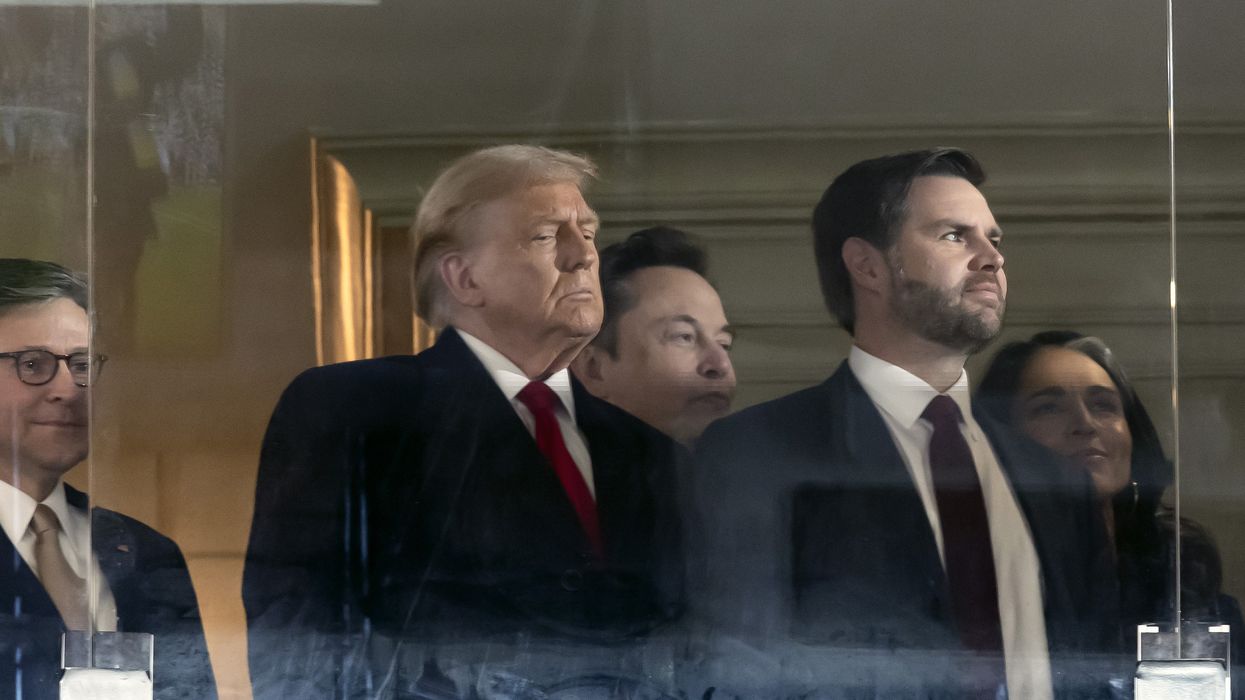
One watchdog noted the "rank hypocrisy of the entire Trump transition team operating in the shadows with private servers and emails even after Donald Trump screamed from the hilltops at the very idea in the past."
The watchdog group Accountable.US is sounding the alarm on reporting that President-elect Donald Trump's transition team is eschewing government issued email addresses and devices and instead conducting business using private emails—whipping up fears that sensitive government information could be exposed.
"Never mind the rank hypocrisy of the entire Trump transition team operating in the shadows with private servers and emails even after Donald Trump screamed from the hilltops at the very idea in the past," said Kayla Hancock, director of the Trump Accountability War Room for Accountable.US in a statement Thursday. "The real problem is how reckless and irresponsible the Trump team is treating serious national security risks so that they can conduct business and solicit donations without scrutiny."
Accountable.US also called the practice a "recipe for corruption."
Trump hammered then-presidential candidate Hillary Clinton on the campaign trail in 2016 over her use of a private email server when she was secretary of state.
New York Times opinion columnist Jamelle Bouie made a remark similar to that of Accountable.US, writing that "I recall a time when using a private email server was the single greatest scandal in American history."
Politico, which reported on the Trump team's use of private emails earlier this week, wrote that "the private emails have agency employees considering insisting on in-person meetings and document exchanges that they otherwise would have conducted electronically, according to two federal officials granted anonymity to discuss a sensitive situation."
Fears are high especially in light of recent hacking attempts from China and Iran that targeted Trump and other top officials, per Politico. Transition business is being handled using domains like "@transition47.com" and "@trumpvancetransition.com" as opposed to .gov accounts.
According to Politico, "this break with tradition stems from the Trump team forgoing federal funding and the ethics and transparency requirements that come with it."
The Trump transition team has declined to sign a memorandum of understanding with the General Services Administration that would provide federal funding for the transition in exchange for strict limits on donations. Without the agreement in place, "Trump can raise unlimited amounts of money from unknown donors to pay for the staff, travel and office space involved in preparing to take over the government," according to The New York Times.
The Trump transition team has signed other agreements that will help an already delayed transition process proceed—for example, an agreement to allow the Justice Department to conduct background checks on his nominees and appointees.
In their statement, Accountable.US also called out the transition team for not signing the agreement to cap donations.
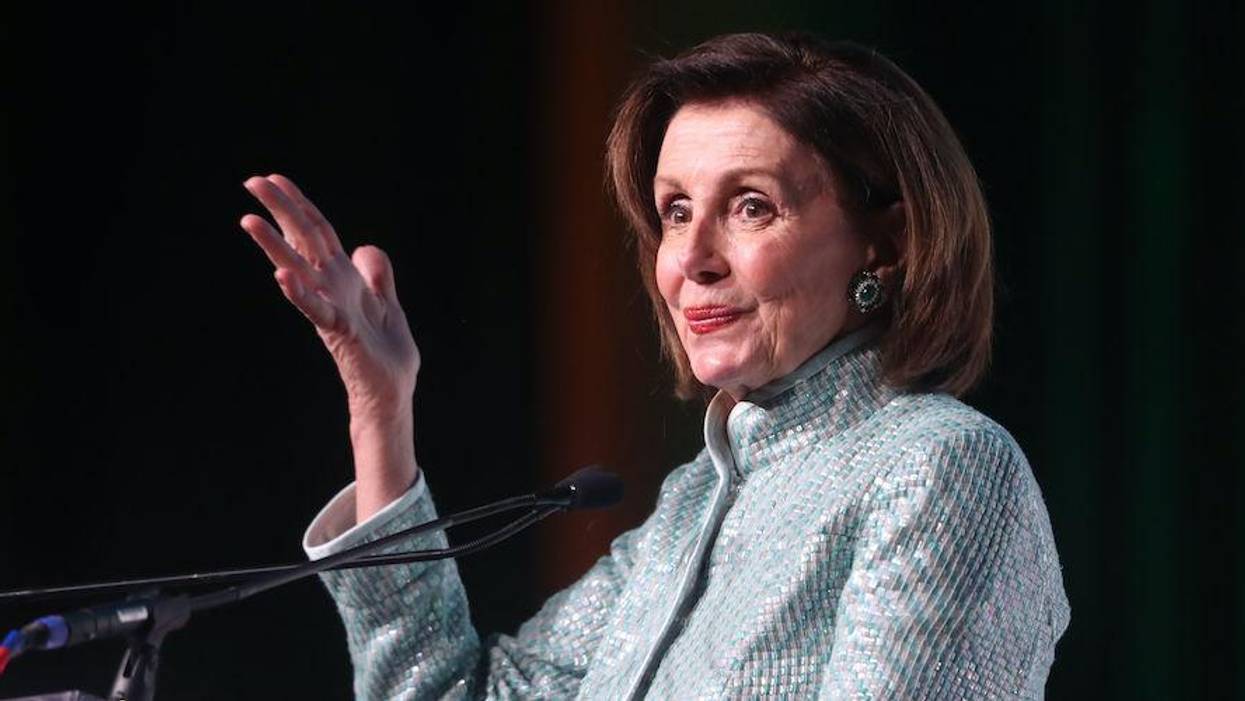
Progressives erupted with frustration and anger Wednesday over days of reporting that House Speaker Nancy Pelosi would not consider cash payments for Americans without means-testing despite the ongoing coronavirus outbreak that has ground the U.S. economy almost to a standstill.
President Donald Trump and his fellow Republicans have taken the opportunity to outflank Pelosi and House Democrats on the payments, leading to anger from the left.
"I truly don't know how to describe how maddening it is that Republicans and Trump officials are to the left of Congressional Dem leadership on this issue," tweeted activist Jordan Uhl.
Direct cash payments would be a salve to the gaping wound left in the U.S. economy by the pandemic.
"We are the wealthiest nation in human history, and have the lowest borrowing costs of any major government on the planet, and thus, can easily afford to contain the pandemic and keep our people well provisioned simultaneously," Eric Levitz wrote Tuesday for New York Magazine. "All we need is for Congress to overcome its superstitions about deficits, and supply the economy with the many trillions of dollars in stimulus that even many center-right economists say we need."
As the crisis has deepened, the political ground on cash payments has shifted substantitally, with bipartisan Congressional support for the proposal.
As the Washington Post reported, proposals from the White House and Pelosi both have some restrictions, though the California Democrat's plan appears more complicated:
On Tuesday, Treasury Secretary Steve Mnuchin told congressional Republicans that the White House was putting together a package that would send out $250 billion in checks by the end of April, though they would be means-tested to some degree, meaning wealthier families wouldn't get them.
[...]
Separately, House Speaker Nancy Pelosi (D-Calif.) supports a more targeted approach to those hit hardest by any economic downturn, as opposed to money sent to every American, and Pelosi wants this done via refundable tax credits, expanded unemployment, and possibly direct cash payments as well.
"Nancy Pelosi is officially to the right of Tom Cotton on economic support for American families," HuffPost reporter Zach Carter tweeted on Sunday. "This is a total failure of Democratic Party leadership."
Pelosi's deputy chief of staff Drew Hammill on Twitter Tuesday emphasized that any aid "MUST be targeted" for the Speaker to approve it, drawing further anger from the left.
"Why?" asked New York Times columnist Jamelle Bouie. "If we agree that the crisis is stark and immediate, and we know that precise targeting takes time and administrative effort, why make that a requirement when you can simply disburse the funds *now* and collect from high-income recipients *later*?"
New Consensus president Saikat Chakrabarti was flabbergasted at Pelosi's resistance to payments for all Americans.
"This crazy obsession in Dem leadership with looking 'reasonable' by not 'doing too much' is about as impractical and insane as you can get in the face of a pandemic," Chakrabarti tweeted.
Sen. Bernie Sanders (I-Vt.), a candidate for the 2020 Democratic presidential nomination, has proposed a $2 trillion package including direct payments to Americans. Journalist Walker Bragman on Wednesday noted the absurdity of Trump being closer to Sanders on relief than Democratic leadership.
"Trump, who bungled the early response to coronavirus, is starting to take actions resembling Bernie Sanders' proposals--monthly checks, ramping up production via the Defense Production Act, freezing foreclosures and evictions," said Bragman. "All while Dems push things like tax rebates. Baffling."