

SUBSCRIBE TO OUR FREE NEWSLETTER
Daily news & progressive opinion—funded by the people, not the corporations—delivered straight to your inbox.
5
#000000
#FFFFFF
To donate by check, phone, or other method, see our More Ways to Give page.
Daily news & progressive opinion—funded by the people, not the corporations—delivered straight to your inbox.
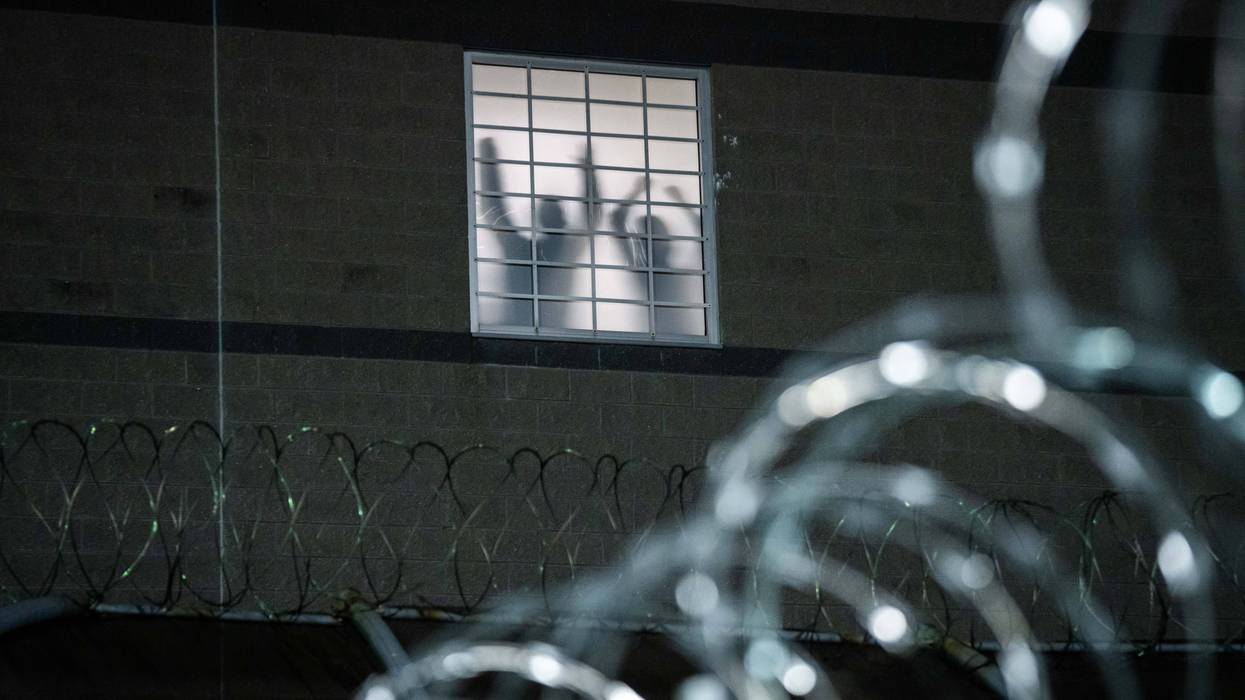
"Hiding prisoners from the courts is unconstitutional," said one expert.
Critics reacted with horror to a Monday report from The Associated Press detailing how US Immigration and Customs Enforcement has abruptly ended its practice of disclosing the locations of thousands of detainees.
According to the AP, ICE "has stopped publicly revealing where it is holding... detainees who are subject to final deportation orders, an unannounced move that has made it far more difficult for lawyers and relatives to find them."
Immigration attorneys who spoke with the AP said that their clients had "vanished" from the system after ICE removed them from its online detainee locator system last week.
Greg Chen, senior director of government relations at the American Immigration Lawyers Association, told the AP that families of detainees "are freaking out because they think the person has been deported and they don’t know where the person might be."
Chen added that the new policy has "serious implications" for attorneys' ability to make contact with their clients.
Michelle Mendez, legal director at the National Immigration Project, told the AP that the new policy is "just another iteration of disappearing people."
"Why would we do that in the United States of America?" Mendez asked. "It's something we’d hear about in another country and be concerned about individual rights and due process."
Tom Jawetz, senior fellow at the Center for American Progress, echoed Mendez's analysis, writing in a social media post that the AP report reveals "an official government policy of disappearing people," as "systems for attorneys and loved ones to know where—even whether—a person with a final removal order is in ICE custody have been wiped clean."
Aaron Reichlin-Melnick, senior fellow at the American Immigration Council, described the new ICE policy as "unprecedented" for US immigration enforcement.
"People who have been detained for months are suddenly disappearing from the locator system—even if they haven't been moved anywhere," Reichlin-Melnick explained. "And people newly arrested are not showing up at all, their location now hidden from view."
Georgetown University political scientist Jonathan Ladd argued that the ICE policy was a fundamental violation of long-established rights in the US that date to before the country's official founding.
"The government moving or hiding jailed people to avoid review by courts isn't some loophole in our habeas corpus rights," Ladd explained. "This government behavior has been considered a violation of the people's habeas corpus rights since at least the Habeas Corpus Act of 1679."
Ladd further pointed out that "habeas corpus rights are guaranteed by Article I of our Constitution," which means "hiding prisoners from the courts is unconstitutional."
Journalist Gillian Brockell observed that the new ICE policy "will make it nearly impossible to file habeas petitions, because attorneys won’t even know what federal district their client has been moved to to stage for their removal."
Among those sharing the AP report on social media was Kate Lincoln-Goldfinch, an attorney for Wilbur Rafael Garces Perez, a 28-year-old Venezuelan shot by ICE in Austin, Texas on Sunday.
Initially, she and the immigrant's wife could not make contact with him, because ICE moved him from the hospital "to an undisclosed location," but Lincoln-Goldfinch said Monday afternoon that her client "is being held at Pearsall for interrogation."
"We got Wilber on the phone live from detention at the press conference," the attorney added. "He says he still has the bullet lodged in his shoulder. He says he is not doing well and has not received the medical care he needs."

In some cases, the administration has kept immigrants locked up even after a judge has ordered their release, according to an investigation by Reuters.
Judges across the country have ruled more than 4,400 times since the start of October that US Immigration and Customs Enforcement has illegally detained immigrants, according to a Reuters investigation published Saturday.
As President Donald Trump carries out his unprecedented "mass deportation" crusade, the number of people in ICE custody ballooned to 68,000 this month, up 75% from when he took office.
Midway through 2025, the administration had begun pushing for a daily quota of 3,000 arrests per day, with the goal of reaching 1 million per year. This has led to the targeting of mostly people with no criminal records rather than the "worst of the worst," as the administration often claims.
Reuters' reporting suggests chasing this number has also resulted in a staggering number of arrests that judges have later found to be illegal.
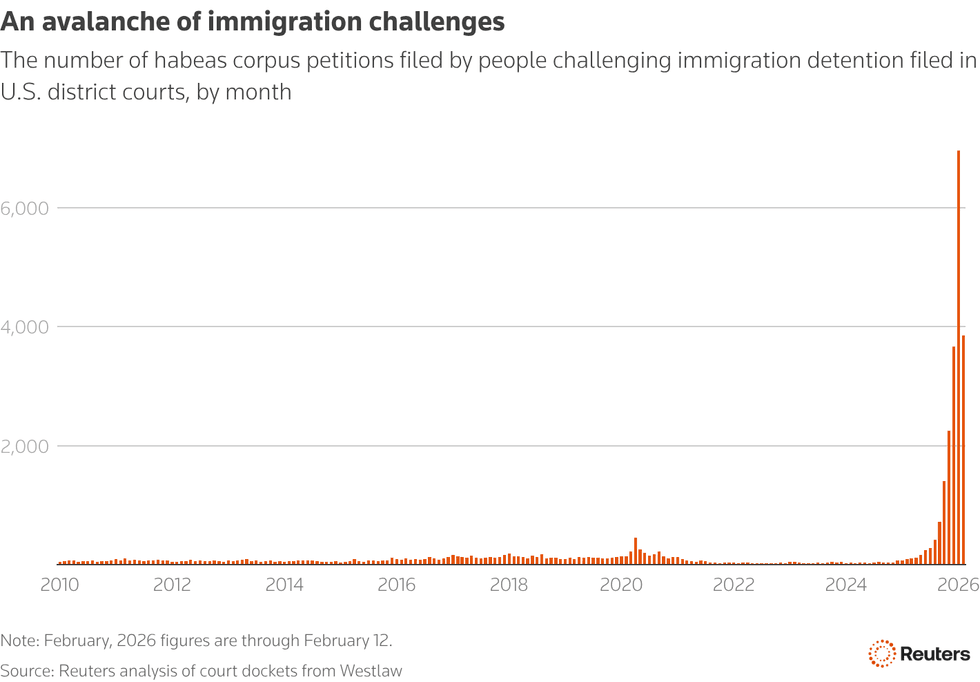
Since the beginning of Trump's term, immigrants have filed more than 20,200 habeas corpus petitions, claiming they were held indefinitely without trial in violation of the Constitution.
In at least 4,421 cases, more than 400 federal judges have ruled that their detentions were illegal.
Last month, more than 6,000 habeas petitions were filed. Prior to the second Trump administration, no other month dating back to 2010 had seen even 500.
 (Graphic by Reuters)
In part due to the sheer volume of legal challenges, the Trump administration has often failed to comply with court rulings, leaving people locked up even after judges ordered them to be released.
Reuters' new report is the most comprehensive examination to date of the administration's routine violation of the law with respect to immigration enforcement. But the extent to which federal immigration agencies have violated the law under Trump is hardly new information.
In a ruling last month, Chief Judge Patrick J. Schiltz of the US District Court in Minnesota—a conservative jurist appointed by former President George W. Bush—provided a list of nearly 100 court orders ICE had violated just that month while deployed as part of Trump's Operation Metro Surge.
The report of ICE's systemic violation of the law comes as the agency faces heightened scrutiny on Capitol Hill, with leaders of the agency called to testify and Democrats attempting to hold up funding in order to force reforms to ICE's conduct, which resulted in a partial shutdown beginning Saturday.
Following the release of Reuters' report, Rep. Ted Lieu (D-Calif.) directed a pointed question over social media to Kristi Noem, the secretary of the Department of Homeland Security, which oversees ICE.
"Why do your out-of-control agents keep violating federal law?" he said. "I look forward to seeing you testify under oath at the House Judiciary Committee in early March."
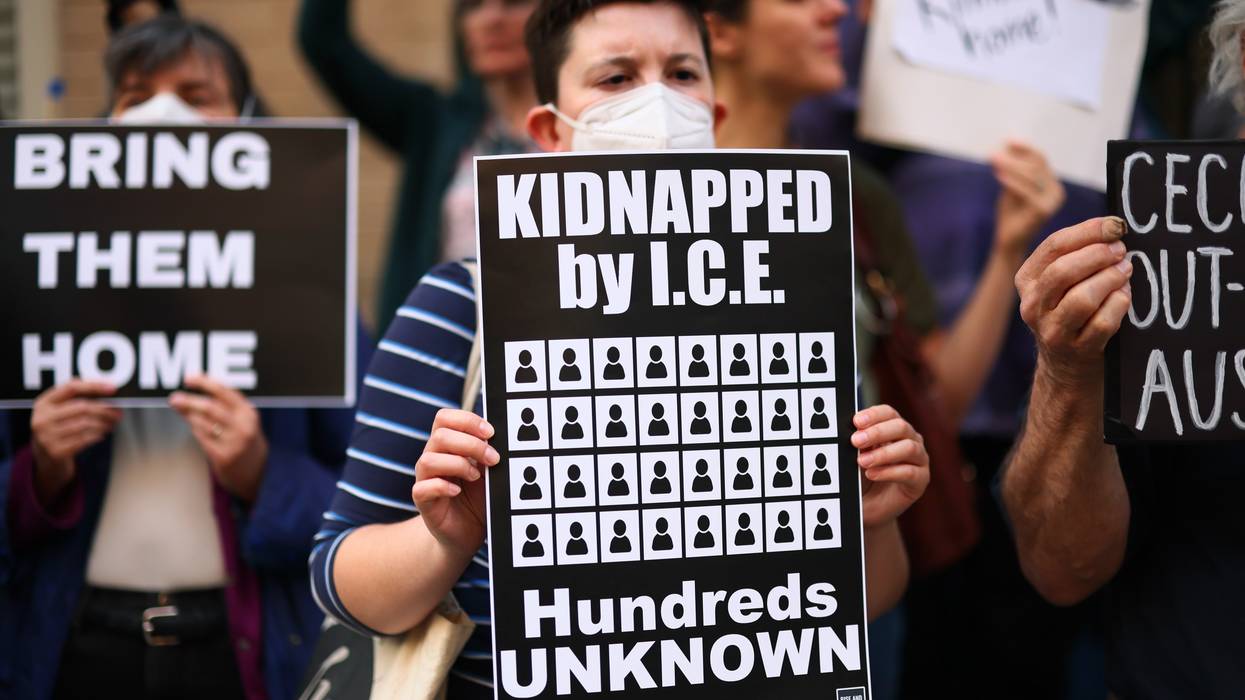
"Today's ruling affirms what every American knows: In the United States, people are entitled to due process and no one should be removed from the country without it."
The Trump administration has a week to resolve what a federal judge in Washington, D.C. said has become a Kafkaesque legal battle for more than 130 Venezuelan people who were summarily expelled from the United States, after the judge ruled late Wednesday that the mass removal of the men was unlawful.
Chief Judge James Boasberg of the U.S. District Court in Washington, D.C. ordered the Trump administration to provide the migrants with habeas corpus relief and gave officials a week to propose, in writing, how they will ensure the imprisoned men will be permitted to fight their expulsion and detention in court.
The plaintiffs "never had any opportunity to challenge the government's say-so," said Boasberg, noting that since the Venezuelan men were sent to El Salvador—with President Donald Trump and other officials claiming they were members of the gang Tren de Aragua— "significant evidence has come to light indicating that many of those currently entombed in [prison] have no connection to the gang and thus languish in a foreign prison on flimsy, even frivolous accusations."
Boasberg compared the ordeal of the Venezuelan migrants to Franz Kafka's The Trial, in which the protagonist is arrested for an unspecified crime.
"In our nation—unlike the one into which K. awakes—the government's mere promise that there has been no mistake does not suffice," wrote Boasberg.
A "lengthy ruling" that begins "by quoting from Franz Kafka's The Trial, a novel associated with an absurd legal ordeal... could be a bad sign for the government," wrote legal analyst Jordan Rubin at NBC News.
The ruling is the latest demand from Boasberg that the Trump administration provide due process to people it sent to El Salvador's Terrorism Confinement Center (CECOT).
He issued a temporary restraining order in March after Trump invoked the Alien Enemies Act—a law previously only used during wartime to detain or deport citizens of countries the U.S. was fighting—and demanded that the administration turn back planes carrying 137 Venezuelans to El Salvador. He later threatened to hold administration officials in contempt for ignoring the order.
Skye Perryman, president and CEO of Democracy Forward, which is helping to represent plaintiffs in the case, J.G.G. v. Trump, said that "today's ruling affirms what every American knows: In the United States, people are entitled to due process and no one should be removed from the country without it."
"What has long separated the United States from autocratic regimes is the recognition of this process. We will continue to oppose this administration’s attempts to re-write the protections afforded under our Constitution," said Perryman.
Following the ruling, U.S. Rep. Pramila Jayapal (D-Wash.) said, "the administration must act."
Scott Michelman, legal director at the ACLU of the District of Columbia, said the ruling "vindicates one of the most fundamental promises of our nation's Constitution: that a person cannot be deprived of life, liberty, or property without due process of law. At stake in this case is no less than whether a U.S. president can, at will, disappear people he views as enemies. No practice could be more odious to our Constitution."
In April, the U.S. Supreme Court ruled that the administration could resume removals under the Alien Enemies Act but said officials must provide people with sufficient notice before they were expelled.
The ruling prevented Boasberg from granting nationwide relief to migrants who are detained in state and federal detention centers, but the ACLU asked the judge to consider the case of the men who had already been sent to CECOT.
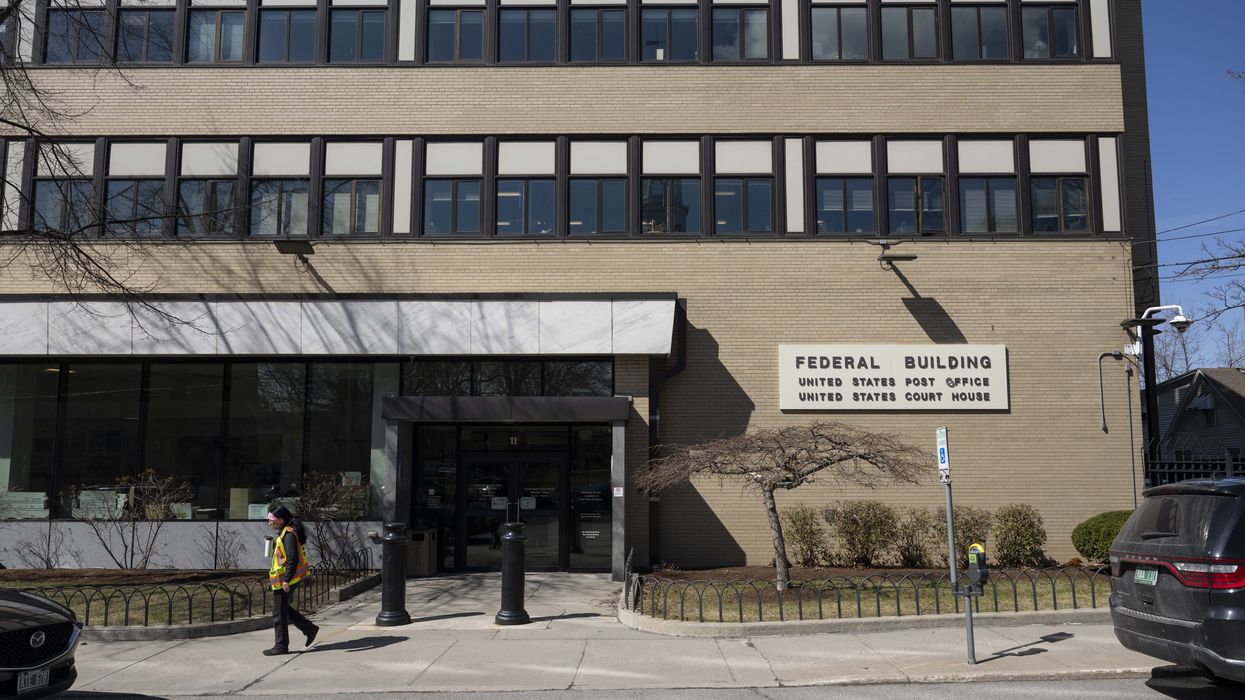
Vermont Federal District Court orders ICE to free a Harvard scientist in the “most valued and needed field in current medical research,” but her fate remains uncertain.
Much more is at stake in Kseniia Petrova’s case than a handful of frozen French frog embryos. The latest scene in the drama played out Wednesday morning at Vermont District Court with 50 or so supporters. In contrast to the hundreds of signs for the Madhawi and Ozturk hearings, just one older woman held a small brown cardboard square she must have made herself: “Free Kseniia Petrova.”
“Do you have a connection to this case?” I asked her. Her faded T-shirt looked so different from the fashionable garb of the city scientists and allies.
“I’m just an American who’s fed up with what’s going on,” she said. She understood the importance of this moment, and so did District Judge Christina Reiss. Why were we in this Vermont courtroom again? Yet another person detained in Boston by Immigration and Customs Enforcement (ICE) was whisked away and jailed in Vermont, where their attorney filed for habeas corpus, the process for challenging wrongful detention. Wednesday’s hearing was primarily on the question of whether bail would be granted.
At every stage, this case has been handled as if a neighbor who let his dog poop on someone’s lawn was put in jail for a month and charged with criminal trespassing and environmental endangerment.
Ten minutes before the hearing began, Petrova herself appeared on two big screens, a diminutive figure imprisoned in a small white room. Alone, not even an interpreter. Her dark brown hair and eyes stood out against her pale skin. She wore prison garb, an ill-fitting, short-sleeved khaki shirt with a white tee beneath it. Even so, she looked cold, holding herself.
By noon, the rule of law had won again in Vermont. Judge Reiss ruled that customs officers do not, in her words, have the power of the Secretary of State to revoke a visa on the spot. This was done to Petrova with no factual or legal basis. A customs violation is not a reason for being inadmissible to the United States. The judge brushed aside the government’s notion that there had been any undue delay in filing for habeas corpus. She ordered that Petrova be freed from ICE custody on bail, telling the government to propose release conditions by May 30. She did stop short of granting Petrova’s request that ICE be ordered not to rearrest her as soon as she is free, although her lawyer pointed out that there is strong reason to be apprehensive.
Kseniia Petrova did her boss a favor by agreeing to carry a package of frog embryos back from France for another lab leader. Perhaps she expected to be in the hands of a more rational system than she faced in Russia, which she fled after her arrest for opposing the war in Ukraine. Text exchanges after her plane landed in Boston show her light mood about the fertilized eggs: “I can’t swallow them!” she replied when asked what her plan was for getting the items through customs. But what should have been a light comedy of errors turned into a Chekovian plot with shocking escalations.
When a dog identified something unusual in Petrova’s suitcase, she was taken aside, and the scientific samples were revealed. The customs official said they had revoked her visa, meaning she was in the country illegally; she was told she could return to France and reapply to the U.S., or be sent to Russia. She chose France, an offer which was then revoked, and ICE locked her up in Vermont, then Louisiana. At every stage, this case has been handled as if a neighbor who let his dog poop on someone’s lawn was put in jail for a month and charged with criminal trespassing and environmental endangerment.
Just how serious was Petrova’s infraction? And is the person who committed it a danger to society? A flight risk?
In court Wednesday, the founder of the field of regenerative medicine, Dr. Michael West, testified that the samples were “inert, nontoxic, nonliving,” in no way a hazard. When he said they had no commercial value, Petrova visibly chuckled. He likened them to “shoe leather” as a source of potential biological hazards.
When asked about Petrova’s science, Dr. West said that she is doing excellent work in the “most valued and needed field in current medical research.”
“Would you hire her?” Dr. West was asked.
“In a heartbeat,” he replied. That got a big smile from Petrova—and a garbled objection from the government.
Prof. Marc Kirschner, Petrova’s ultimate boss, came personally to testify from the laboratory which bears his name at Harvard Medical School. He spoke of Petrova’s “significant impact” on his laboratory. Her absence is keenly felt. Her particular contribution was finding ways to quantify the “amazing pictures of tissues” from the lab’s newly invented microscope. Dr. Kirschner too was unable to imagine that she would be a danger to society. Petrova’s scientific peers also testified that she loves her job, and misses her work, her friends, and colleagues. Petrova wrote that the lab was a “paradise.” Is that the word of someone who wants to flee?
Would it have been better judgment for Petrova to submit paperwork for the preserved frog eggs? Of course. But has anyone who has ever crossed an international boundary not quietly carried at least one dubious item at some point? The government’s response to this minor offense has been Orwellian. Judge Reiss said, “The government is essentially saying, ‘We revoked your visa, now you have no documentation and now we’re going to place you in removal proceedings.’” Then the government detained her. When a bail hearing was scheduled that could result in Petrova’s release, the government only took two hours to trump up criminal charges against her. It was an obvious ploy to keep her in custody even if the judge released her.
Behavior which usually results in a small fine suddenly became criminal—subject to fines of up to $250,000 and up to 20 years in prison. Comparable cases involve boots made of endangered sea turtles or living birds smuggled in panty hose.
Do these twists and turns sound like the United States of America, or like Vladimir Putin’s Russia? At this point, Petrova will only go free if the Massachusetts Criminal Court also grants bail—and if ICE doesn’t snap her up again, or deport her to Russia. As Judge Reiss said, “Ms. Petrova’s life and well-being are in peril if she is deported to Russia,” and she is serving our national interests in research where answers are desperately needed.
So far, this drama has been something of a farce. Let’s not allow it to end in tragedy.
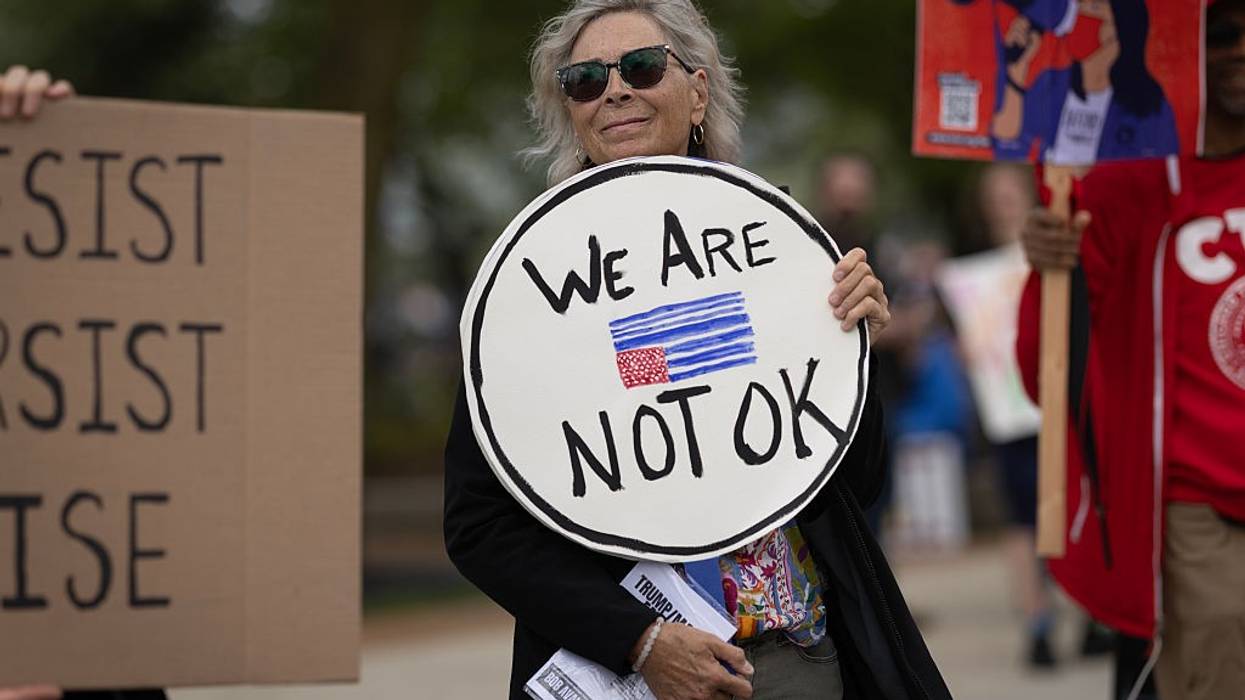
Things are not well here, but the good, if not happy, news is that millions here have not rolled over and played dead.
Dear Taka,
You asked for news and some analysis about what is happening here in the U.S. You may be sorry that you asked.
Back in February, I shocked a Bikini Day* workshop by reporting about what could only be described as fascist assaults on U.S. constitutional democracy. Unfortunately, I was not exaggerating. Trump and his MAGA allies are in the midst of fighting a counterrevolution to consolidate white supremacy, to multiply the obscene wealth of the richest oligarchs—especially Trump and his family—in the tradition of monarchs and feudal lords, and to impose the structures and repression necessary to maintain a plutocratic, and potentially military, dictatorship.
Drawing on the foundation of the Heritage Foundation’s Project 2025 report, from day one of Trump 2.0 ambitious and opportunistic operatives and incompetent but loyal cabinet members, Trump has excelled in further enriching himself and his cabinet while doing his best to deliver punishing retribution to all who have or will challenge him, including leading celebrities like Bruce Springsteen and Beyonce. With a firehose of Executive Orders—many either unconstitutional or illegal—Trump has sought to remake U.S. government in the kleptocratic tradition of the 1890s Gilded Age, spiked by nostalgic efforts to recreate Jim Crow apartheid, and smash-and-grab imperialism (think Greenland, Panama, and Gaza).
Trump is no intellectual shining light, but he rules in the autocratic, but less enlightened tradition of former French President De Gaulle. In 1950, soon after assuming power, De Gaulle humiliatingly upbraided a member of his cabinet by saying that the official had been appointed to his position because he was stupid, and that his stupidity ensured his loyalty.
On the subject of stupidity, just the other day Kristi Noem—the current head of Homeland Security and former governor of South Dakota who once boasted about shooting her dog—revealed her dangerous ignorance. This is the beautiful cabinet member who recently and obscenely posed in a tight sweater, pin up style, in front of hundreds of jailed and dehumanized deportees in a El Salvador gulag jail that has been compared to Nazi concentration camps. She demonstrated the truth of the Gaullist model of Trump/MAGA rule when she was asked during a Senate hearing if she knew the meaning of habeas corpus. She failed that basic test, saying that it is a law that allows the president to deport immigrants. She didn’t flinch when she was then corrected with news that it is the 13th century’s most essential and founding principle of Anglo-Saxon governance. Referred to as “show us the body,” the writ of habeas corpus established the right of anyone who has been imprisoned to come before a judge for adjudication of the legality of his or her detention. And it was written into the U.S. Constitution 250 years ago in direct response to the abuses of King George III. Without the right of habeas corpus, we are all vulnerable to arbitrary arrest, imprisonment, and of being disappeared.
But clearly Trump is not all powerful. In the tradition of a schoolyard bully, he is brutal to those he sees as weak, but he retreats when those with as much or more power stand up to him. He retreated when Putin and Netanyahu refused his efforts to win ceasefires in Ukraine and Gaza and when China embarrassingly forced him to back down from threatened 145% tariffs.
Our good fortune is that despite Republicans clicking their heels and saluting every Trumpian whim or executive order and the business-as-usual instances of most Congressional Democrats, three hopeful guardrails—in the form of the stock market, the courts, and a popular opposition movement—have emerged. Trump measures his political standing and survival by the daily Dow Jones average (which dropped 800 points the other day, losing a LOT of people a LOT of money). And the courts have almost consistently ruled against his illegal deportations, shuttering government agencies, and withholding funds from universities.
The outstanding questions on which our future depends are whether Trump will obey Supreme Court decisions, and if martial law will be declared to prevent the 2026 Congressional elections, which Trump and MAGA likely will lose. Vice President JD Vance (it hurts to refer to that lost soul as vice president) has said that the Trump government need not obey court rulings. As the saying has it, the Supreme Court has no army to enforce its decisions, and as we saw with Trump’s January 6, 2021, attempted coup and his more recent pardoning of insurrectionists, Trump, MAGA, and their armed goons do not feel bound to honor electoral democracy.
The good, if not happy, news is that millions here have not rolled over and played dead. In a worst-case scenario, those of us committed to constitutional democracy and the rights and freedoms that flow from it may need to insist on popular sovereignty via a massive and nationwide general strike.
An estimated five million people came out to protest in major cities and smaller towns on April 5, and there have been almost daily demonstrations ever since. These actions give us affirmation, stoke our courage, and prepare the way for the future. It is my sense that if we are prepared, Trump’s refusal to fulfill a particularly significant Supreme Court order or the cancellation of the 2026 election could serve as the trigger for a general strike.
We have a lot of organizing to do between now and then and recalling the past some of us are stressing the absolute importance of remaining and calling for NONVIOLENT resistance. Dictators, kings, and autocrats from time immemorial have inserted violent agents provocateurs into popular movements to discredit them. The history of the Nazi 1933 Reichstag fire hangs over us, and the Palestine rights movement just suffered significant blowback when a frustrated and lost soul assassinated two Israeli embassy employees in Washington, D.C.
It is an uphill struggle and hardly an entirely new situation. I’ve been reminded how the masters of wealth in Germany in the 1920s and 30s believed that they could use and control Hitler and his Nazis to reinforce their privilege and power. They were quickly swallowed up by Nazi totalitarianism once they’d bought the 1933 election for Hitler. Trump’s father was a Ku Klux Klan slumlord. The roots of MAGA lie in racism and in the myth of the “Lost Cause” of the Confederacy during our civil war. And over the last couple of years several compelling histories have been written about the failed U.S. coups of the 1930s and that era’s American Firsters who were manipulated by German agents.
Moving from abstractions, histories, and systems analyses, let me provide the texture of detail, we can turn to the May 21 edition of last week’s New York Times. More than 100 days into the Kakistocracy (the word for a corrupt, incompetent autocracy) we could read the following headlines in that paper:
That was all in a single day’s depressing paper. And if that wasn’t enough, the day ended with the Times reporting that in a classical dictatorial action, the Trump administration banned Harvard University from enrolling foreign students. Ninety years ago, during the Great Depression and Jim Crow apartheid, the liberal theologian and later Cold Warrior Reinhold Niebuhr wrote that a critical method used by those exercising illegitimate power to retain their ill-gotten privilege is to deny education and knowledge to those they are committed to exploiting. The attack on Harvard and the other pinnacles of U.S. academia is being pursued under the false flag of antisemitism. Harvard’s president is Jewish, and Secretary of Defense Hegseth just appointed an openly antisemitic woman who shares neo-Nazi posts as the Pentagon’s spokesperson.
Fortunately, those who skipped to a Times op-ed page last week in order to preserve their sanity and to contain their fears came to an excellent and encouraging article by Nicholas Kristoff. “Well-Tested Ways to Undermine Autocrats.” It drew heavily upon and shared the scholar Gene Sharp’s studies of nonviolent actions to fight for democracy: humor and mockery (Czechoslovakia and China,) call out their corruption (Navalny in Russia as the outstanding example,) and focusing on the power of one: “individual tragedy rather than the sea of oppression (the abused fruit seller in Tunisia who sparked Arab Spring or Iranian women who refuse to wear the hijab.)
Lani and I, who as white citizens are not yet especially vulnerable, will be outside the Massachusetts State House on Monday at an Indivisible rally. Our demand: Massachusetts’ lackluster Democratic governor should order the police to arrest masked and unidentifiable ICE (Immigration, Control and Enforcement) operatives who are kidnapping our immigrant neighbors and even some U.S. citizens from our streets.
More than a few of us take heart and courage from African Americans’ centuries of struggle for freedom and dignity and from resistance to fascist dictatorships around the world. How could we not be inspired by the European women and men we knew in the 1970s who had engaged in resistance to Hitler’s rule or by your compatriots who were harassed and jailed for refusing to kowtow to 1930s and 40s Japanese militarism? And I take heart from an Argentine friend who over breakfast remarked that her mother had survived and “lived through two coups.” And then there are the Hibakusha* who say, “Never Give Up!”
P.S. There is also the reality of Trump’s acceleration of the American Empire’s decline. In high school and college, we were taught that there was a taboo against naming our country an Empire, but we were instructed there is a straight line from the Greek, Roman, and British empires down to our land of liberty. Two years ago, I finally read Mary Beard’s SPQR Roman history. She argues that the Roman republic was corrupted and brought to an end after roughly 500 years by too much wealth, deluging Rome’s political system, and by militarism brought home from Rome’s foreign conquests and colonial rule. Oh, so familiar!
*For U.S. readers with whom this letter is being shared Bikini Day is an annual commemoration of the 1954 Bravo H-Bomb test, 1,000 times more powerful than the Hiroshima A-bomb. It decimated Bikini Atoll in the Marshall Island, poisoned Japanese fishermen and much of Japan’s food supply, and sparked the creation of Japan’s peace and disarmament movement. And Hibakusha are A- and H- Bomb victim survivors.

"The level of abject stupidity" in President Donald Trump's leadership team "is mindblowing," said one critic of the homeland security secretary.
Fueling further alarm over the Trump administration's lurch toward authoritarianism, U.S. Homeland Security Secretary Kristi Noem could not accurately describe the principle of habeas corpus when asked a question that may appear on a junior high school student's civics exam during a Tuesday morning Senate hearing.
"So Secretary Noem, what is habeas corpus?" Sen. Maggie Hassan (D-N.H.) asked during the Senate Committee on Homeland Security and Governmental Affairs hearing about the fiscal year 2026 budget request.
"Well," Noem responded, "habeas corpus is a constitutional right that the president has to be able to remove people from this country and suspend their right to—"
At that point, Hassan cut her off, saying: "Let me stop you... That's incorrect... Habeas corpus is the legal principle that requires that the government provide a public reason for detaining and imprisoning people."
"If not for that protection, the government could simply arrest people, including American citizens, and hold them indefinitely for no reason," Hassan continued. "Habeas corpus is the foundational right that separates free societies like America from police states like North Korea. As a senator from the 'Live Free or Die' state, this matters a lot to me and my constituents, and to all Americans."
"So, Secretary Noem, do you support the core protection that habeas corpus provides that the government must provide a public reason in order to detain and imprison someone?" the senator asked.
The secretary replied: "Yeah, I support habeas corpus. I also recognize that the president of the United States has the authority under the Constitution to decide if it should be suspended or not. Let us be clear, though, that this president—"
Hassan interjected again, pointing out that "it has never been done without approval of Congress," and even former President Abraham Lincoln got retroactive approval for his suspension during the U.S. Civil War.
HASSAN: What is habeas corpus? NOEM: Habeas corpus is a constitutional right that the president has to be able to remove people from this country HASSAN: That's incorrect
[image or embed]
— Aaron Rupar ( @atrupar.com) May 20, 2025 at 10:16 AM
Lawyers, journalists, and other critics described Noem's remarks as "highly concerning," "embarrassing," and "jaw-dropping."
"This is extraordinary," said Aaron Reichlin-Melnick, senior fellow at the American Immigration Council. "The secretary of Homeland Security doesn't know what the right of habeas corpus is (the ancient right to go to court to challenge government detention) and offers an incoherent definition which suggests she thinks it's a presidential power to deport people?"
Independent journalist and legal analyst Katie Phang declared that "the level of abject stupidity" in President Donald Trump's Cabinet picks "is mindblowing."
Habeas corpus is Latin for "that you have the body." As Cornell University's Legal Information Institute (LII) explains: "In the U.S. system, federal courts can use the writ of habeas corpus to determine if a state's detention of a prisoner is valid. A writ of habeas corpus is used to bring a prisoner or other detainee (e.g. institutionalized mental patient) before the court to determine if the person's imprisonment or detention is lawful."
The U.S. Constitution states that "the privileges of the writ of habeas corpus shall not be suspended unless when in cases of rebellion or invasion the public safety may require it."
LII notes that "only Congress has the power to suspend the writ of habeas corpus, either by its own affirmative actions or through an express delegation to the executive. The executive does not have the independent authority to suspend the writ." Since the late 1700s, Congress has passed various related laws.
Later in Tuesday's hearing, Sen. Andy Kim (D-N.J.) asked Noem, "Can you confirm to us that you understand that any suspension of habeas corpus requires an act of Congress?"
Noem said: "President Lincoln executed habeas corpus in the past with a retroactive action by Congress. I believe that any president that was able to do that in the past, it should be afforded to our current-day president."
"This president has never said that he's going to do this," Noem continued. "He's never communicated to me or his administration that they're going to consider suspending habeas corpus, but I do think the Constitution allows them the right to consider it."
KIM: Do you know what section of the Constitution the suspension clause of habeas corpus is in? NOEM: I do not. Nope. KIM: Do you know which article is it in? NOEM: I do not, sir.
[image or embed]
— Aaron Rupar ( @atrupar.com) May 20, 2025 at 10:55 AM
Trump's second administration has framed unauthorized immigration as "the invasion at the southern border."
White House Deputy Chief of Staff Stephen Millertold reporters earlier this month that the "the Constitution is clear—and that of course is the supreme law of the land—that the privilege of the writ of habeas corpus can be suspended in a time of invasion, so it's an option we're actively looking at" as part of the Trump administration's pursuit of mass deportations.
Miller suggested the possible suspension of habeas corpus—or attempt at it—depends on what courts do. The Trump administration has targeted multiple legal immigrants who have been critical of the U.S.-backed Israeli assault on the Gaza Strip for deportation. Some of them have recently been freed from detention by federal judges in response to their legal teams filing habeas corpus petitions.
Republicans narrowly control both chambers of Congress, but it's not clear all GOP members would support a suspension.
"I was a conservative Republican long before Donald Trump became a Republican, joined the Reform Party, became a Democrat, became a Republican again, became an Independent, and finally returned to the Republican Party," David Chung, an editorial fellow at Iowa's The Gazette, wrote Sunday. "But after reading this column, I'm sure some of my Republican friends will accuse me of being a RINO—a Republican in Name Only."
Chung highlighted that after Miller's remarks, during a U.S. House of Representatives hearing last Wednesday, Rep. Eli Crane (R-Ariz.) asked Noem if the current state of illegal immigration into the United States met the "invasion" requirements for a suspension. The secretary said, "I'm not a constitutional lawyer, but I believe it does."
Recalling the case of Mollie Tibbets, a University of Iowa student murdered by an undocumented man, Chung wrote that "I want to see violent, criminal aliens (legal or illegal) imprisoned, deported, or both, just as much as the next Republican. But I believe that our Constitution and laws are robust enough to accomplish this without trampling on fundamental rights."
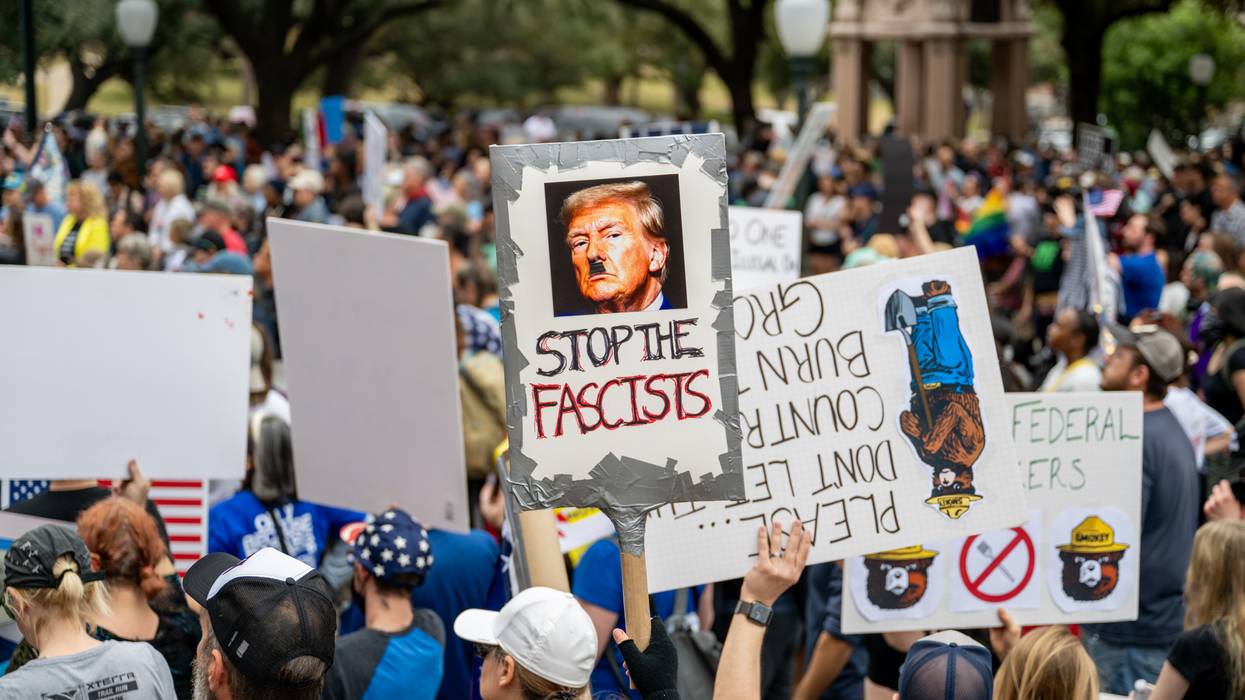
The structural conditions that have historically preceded ethnic cleansing are now observable in the administration’s deportation efforts.
I have taught AP U.S. history for years, as well as Government and World History courses. I have written an original curriculum for Honors Economics. I coached successful Public Forum and Policy debate teams for five years. In addition to my professional experience, I am a close reader of both historical scholarship and current events. The conclusions that follow are drawn from a systematic comparison of this year’s immigration and due process developments with established patterns in the historical record.
The federal government is executing a coordinated legal and administrative campaign aimed at the identification, arrest, and removal of millions of undocumented immigrants. These efforts rely on expanded authority for military and federal agencies, the criminalization of municipal noncooperation, and the systematic dismantling of legal protections previously afforded to vulnerable populations. Though presented as standard immigration enforcement, the structure and language of these measures reflect a state-directed attempt to displace a racially and ethnically defined group. The legal apparatus includes provisions for indefinite detention, the arrest of elected officials, and the use of private contractors to operate beyond traditional channels of accountability.
These policies are not theoretical. They are codified in executive orders, agency directives, and prosecutorial actions. The stated goal exceeds the undocumented population, and enforcement does not rely on individualized findings of legal status. It is categorical. The administration describes its targets as “invaders” and “vermin” and frames sanctuary jurisdictions as criminal conspiracies. These terms do not function as rhetoric. They define policy. Laws criminalizing refusal to comply with deportation efforts are designed to eliminate legal and institutional resistance.
The most effective deterrent to escalation remains noncompliance at every level of implementation.
What follows is a chronology of recent actions taken or proposed during the second Trump administration, aligned with legal precedents from early Nazi Germany. These are not metaphors. Each section pairs language from contemporary United States policy with that of the 1930s German state, using identical structure and phrasing where historically appropriate. The purpose is to allow for clear legal comparison of governance models used to execute racialized mass removal.
In January 2025, President Donald Trump signed Executive Order 14159 titled “Protecting the American People Against Invasion.” The order suspended habeas corpus protections for undocumented immigrants, expanded federal authority over sanctuary jurisdictions, and authorized indefinite detention and mass deputization of local police under 287(g) agreements.
On February 28, 1933, Adolf Hitler enacted the Decree of the Reich President for the Protection of People and State. The decree suspended habeas corpus, granted the central government power over state authorities, and permitted indefinite detention and mass deputization of local police to suppress declared enemies of the state.
In April 2025, the Trump administration began removing civil servants based on prior involvement in diversity or civil rights programs. A directive issued April 2 targeted officials for dismissal or reassignment solely for ideological nonconformity.
On April 7, 1933, Hitler’s regime enacted the Law for the Restoration of the Professional Civil Service. This measure removed Jews and political opponents from public office based on ancestry or beliefs and mandated reassignment or termination for ideological deviation.
In May 2025, the Department of Justice ordered the identification of state and local officials who refused to assist with federal immigration enforcement. These officials were targeted for prosecution under statutes related to obstruction and harboring.
In March 1933, the Nazi regime began detaining opposition party members and regional officials who resisted centralized directives. Local leaders were prosecuted or removed for obstructing enforcement of national laws.
In February 2025, the Trump administration revoked federal support for PBS and NPR and initiated reviews of media funding for ideological violations. The stated aim was to eliminate sources of disinformation and enforce loyalty to national priorities.
In March 1933, the Nazi government enacted the Editors Law, revoked press credentials from noncompliant outlets, and placed all broadcast content under state control. The purpose was to remove disloyal voices and ensure total ideological conformity.
In May 2025, a Wisconsin judge was arrested for allegedly aiding an undocumented immigrant. Federal officials warned that similar acts of judicial noncooperation could be prosecuted as subversion.
In July 1933, the Nazi regime dismissed judges deemed politically unreliable and established special courts. Judges who issued rulings contrary to regime policy were disciplined or removed.
In April 2025, Trump officials proposed turning military bases into detention centers for families without legal review. These facilities would be operated by private contractors under emergency protocols.
In June 1933, Nazi authorities converted military and industrial sites into concentration camps. The camps detained prisoners without court oversight and were run by SS forces under emergency powers.
In May 2025, the Department of Homeland Security announced it was considering the arrest of Democratic members of Congress who protested at an Immigration and Customs Enforcement facility. They were accused of obstructing federal officers and interfering with detention protocols.
In March 1933, the Nazi regime arrested parliamentary members and accused them of obstructing national authority. Resistance to regime policy was criminalized as a threat to public order.
Trump has constantly proposed legislation to end birthright citizenship for children of undocumented parents. His proposals aim to redefine legal membership in the national community.
In 1935, the Nazi regime enacted the Reich Citizenship Law. The law stripped Jews of citizenship and redefined the legal criteria for national belonging.
The current phase of the Trump administration’s immigration policy reflects an early stage rather than a peak of repression. The legal and operational structure for targeted mass removal is being assembled through executive orders, bureaucratic purges, and prosecutorial test cases that redefine the limits of federal authority.
The scale of proposed removals exceeds historical precedent but has not yet reached full execution. Institutional resistance is inconsistent but has not been eliminated. Local and state officials retain procedural leverage if they choose to apply it. The most effective deterrent to escalation remains noncompliance at every level of implementation.
The policy direction is explicit. Continued repression is not a possibility but a stated intention. The presence of Latino Americans in federal agencies and military institutions has not prevented policy targeting based on national origin or perceived foreignness. Participation does not provide exemption from removal. The structural conditions that have historically preceded ethnic cleansing are now observable. The determining factor will be whether enough people act before enforcement becomes normalized.

"We don't live in a dictatorship or a monarchy," said Rep. Delia Ramirez. "Trump's will is not the guiding doctrine of the nation, and our country is not a playground for his and your twisted authoritarian fantasies."
U.S. Rep. Delia Ramirez has led calls for Homeland Security Secretary Kristi Noem to resign for weeks, condemning her prominent role in overseeing the Trump administration's virulently anti-immigrant agenda—but on Wednesday she took a rare in-person opportunity to once again call on the far-right Republican to step down.
"For weeks and weeks we've been waiting for Secretary Noem to come before our committee," said Ramirez (D-Ill.) in a video she posted online ahead of the House Homeland Security Committee hearing. "I'm not going to sit there and just let her lie under oath about all the horrifying things that she's doing... I say enough is enough, and in just a few minutes, I'm going to say that to her face, because it's about damn time that person, that secretary, resigns."
Ramirez began her remarks in the hearing by asking Noem a rapid-fire set of questions, clarifying whether the secretary believes the judicial and legislative branches of government are co-equal branches—facts that have been disregarded by the Trump administration as it has flouted a federal judge's order to stop expelling Venezuelan migrants under the Alien Enemies Act, moved to shutter federal agencies created by Congress, and canceled funding appropriated by Congress.
Despite Noem's claim in the hearing that she and the administration respect bedrock laws meant to maintain checks and balances in the federal government, Ramirez noted in the hearing that Noem has "repeatedly disregarded the law" since being confirmed as homeland security secretary.
As Ramirez said:
You closed offices established in law, including the Office for Civil Rights and Civil Liberties, the Office of the Immigration Detention Ombudsman, and the Office of the Citizenship and Immigration Services Ombudsman.
You canceled contracts for programs authorized in law, including shelter and services programs, and citizenship and integration grants.
You obstructed and roughed up members of this committee as they conducted congressional oversight.
You redirected funds to terrorize our communities, create taxpayer-funded political propaganda campaigns, and hold sick, disrespectful press conferences in my state, where let me be clear, you are not welcome.
You corruptly used emergency authority to avoid procurement to make [President Donald] Trump's private prison donors richer by directing $45 billion to them for expanded [Immigration and Customs Enforcement] detention centers.
You defunded work to address real threats to the homeland, while you pursue the college newspaper editor, labor leaders, and a Harvard scientist who failed to declare frog embryos at the airport.
Ramirez said she found it "laughable" when Noem affirmed that she swore to uphold and defend the U.S. Constitution when she took her oath of office.
"You don't behave like someone who takes that oath seriously," said Ramirez. "We don't live in a dictatorship or a monarchy. Trump's will is not the guiding doctrine of the nation, and our country is not a playground for his and your twisted authoritarian fantasies."
"YOU have betrayed the sacred fundamentals of your oath; YOU are not fit to hold the office, and I, again—to your face—demand your resignation and place that request on the record," Ramirez concluded.
The congresswoman also sent a letter to Noem reiterating the demand for her resignation and condemning Department of Homeland Security officials for unlawfully raiding homes and expelling "immigrants, legal residents, and citizens alike," including a number of children.
She also reiterated Sen. Chris Murphy's (D-Conn.) concern, expressed at a hearing last week, that Noem's department is "out of control" and is rapidly "running out of money to execute the horrors we are witnessing."
Noem is also "running out of excuses for [her] despicable actions," Ramirez wrote.
Podcast host Jim Stewartson said that with Ramirez's questioning, she addressed "the Trump regime in its full criminal, anti-democratic, illiberal horror."
"Delia Ramirez finally cuts through the bullshit and lays it all on the table," he said.
At Wednesday's hearing, Noem suggested that under the U.S. Constitution, Trump has the authority to suspend habeas corpus, an idea that's been floated by White House Deputy Chief of Staff Stephen Miller.
Rights groups have filed numerous habeas corpus petitions to challenge the detentions of foreign students including Mahmoud Khalil, Rümeysa Öztürk, and Badar Khan Suri; Öztürk and Suri have been released from detention in recent days.
The Constitution allows for the suspension of habeas corpus, under which people have the right to challenge their detention, only "in cases of rebellion or invasion the public safety may require it."
The administration has pushed the idea that the U.S. is facing an "invasion" by the Venezuelan gang Tren de Aragua, and has used that claim to expel hundreds of migrants to El Salvador.
"No government has the right to arbitrarily take your freedom away," said Democratic Illinois Gov. JB Pritzker after Miller discussed the idea Tuesday. "Preserving habeas corpus is not optional. It's a fundamental concept of justice that people have fought and died for."
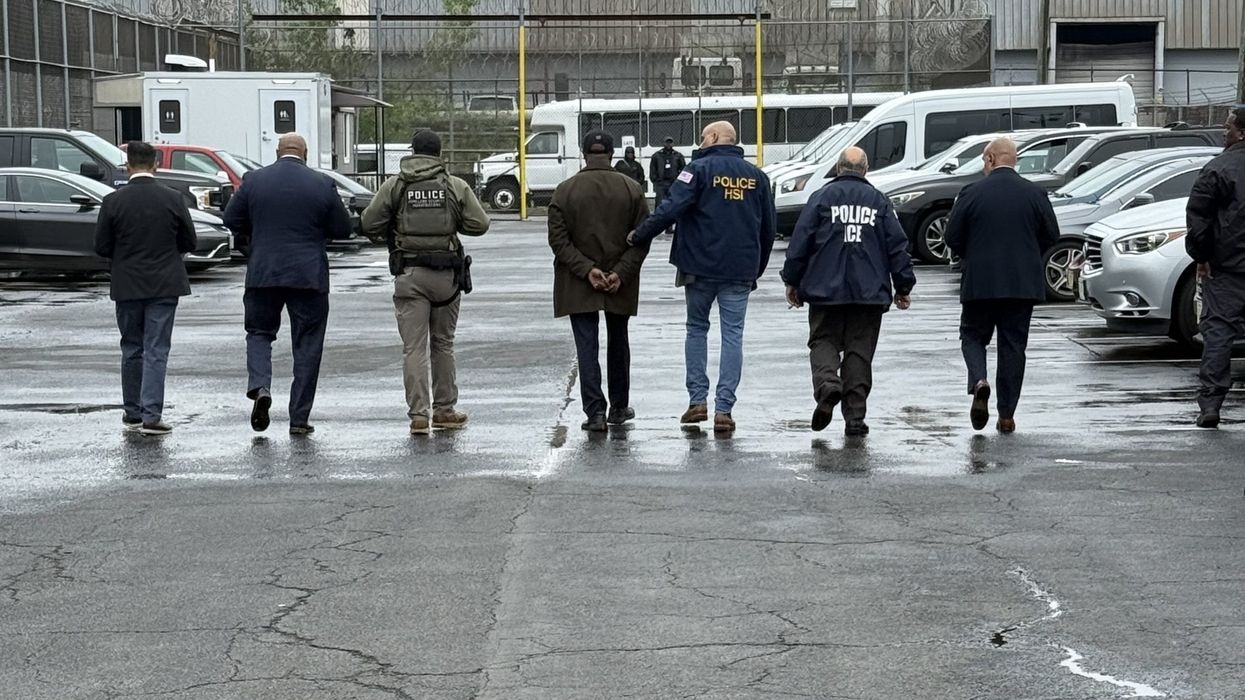
Despite repeated legal setbacks demanding an end to these autocratic practices, the Trump administration continues its assault on the rule of law.
For all the autocratic abuses that characterize U.S. President Donald Trump’s second tenure, nothing more parallels the historic pattern of dictatorships than the kidnapping of disfavored individuals by armed agents of the state. Then concealing them in detention facilities, including as a prelude for some to be renditioned to horrific prisons in foreign countries. All while trampling on constitutional protections of legal due process, often ignoring court orders to stop it.
"The one power you cannot give the executive is the power to arbitrarily imprison people who oppose the regime,” says Sen. Chris Murphy (D-Conn.). “Today it may be an El Salvadorian immigrant or a foreign student, but tomorrow it is you or me. The slope to despotism can be slippery and quick.”
“In fascist states, individual rights had no autonomous existence,” writes Robert Paxton in The Anatomy of Fascism. “The State of Law vanished, along with the principles of due process” for “guaranteed equitable treatment by the courts and state agencies. A suspect acquitted in a German court of law could be rearrested by agents of the regime at the courthouse door and put in a concentration camp without any further legal procedure.”
For some of those snatched off the streets, at home, from their car with children in the back, or in a courtroom, the ultimate destination is a foreign hellhole.
Despite repeated legal setbacks demanding an end to these autocratic practices, the Trump administration continues to escalate the assault on the rule of law. Recent incidents illustrate the rising danger.
Federal agents have begun targeting judges and elected officials. In late April, the FBI arrested sitting state court Judge Hannah Dugan in Milwaukee on charges of obstructing immigration agents for allowing an undocumented immigrant who had properly appeared for a hearing to evade the federal officers who were waiting outside her courtroom.
Judge Dugan was handcuffed behind her back, her ankles later shackled, and publicly paraded outside. FBI director Kash Patel celebrated the arrest by posting a photo on X in a display obviously intended to intimidate other judges, as over 150 former state and federal judges emphasized in a letter. Attorney General Pam Bondi doubled down proclaiming, “nobody is above the law,” apparently omitting her boss, Donald Trump.
Then, on May 9, federal agents arrested Newark, New Jersey Mayor Ras Baraka for alleged “trespassing” when he, Reps. Bonnie Watson Coleman (D-N.J.), Rob Menendez (D-N.J.) and LaMonica McIver (D-N.J.), arrived to inspect a New Jersey Immigration and Customs Enforcement (ICE) detention facility that Baraka says has operated in violation of city and state certification of occupancy, inspections, and permits laws. A Department of Homeland Security official menaced that arrests are “definitely on the table" for the Congress members, despite their oversight rights at federal facilities, claiming they were “body-slamming” an ICE agent.
Persecution of judges and elected officials and warnings by Trump prosecutors to other critics are designed to silence resistance, as experienced in other dictatorial regimes. In Strongmen: Mussolini to the Present, Ruth Ben-Ghiat quotes Spanish philosopher José Ortega y Gasset reflecting on Franco’s murderous regime. “The threat in my mind of an eventual violence, coercion, or sanction that other people are going to exercise against me” bred conformity.
These steps coincide with the seizure of undocumented persons, foreign students, and even U.S. citizens by ICE and other federal agents. They are then hastily transferred to detention facilities in preparation for deportation or rendition abroad, typically without evidence, barring rights of due process, depriving them of contact with family or legal counsel, in open defiance of court orders.
Due process is mandated by the Constitution’s Fifth and 14th Amendments stating no “person,” not just citizens, can be “deprived of life, liberty, or property” without legal protection under law. Separately, the Constitution declares a right of habeas corpus, the ability to go to court to ensure a person is not improperly charged or unjustly imprisoned, as former Justice Department prosecutor Andrew Weissmann explained on MSNBC.
In its crusade for mass deportations and renditions, the administration is “actively looking” at formal suspension of habeas corpus, says Stephen Miller, Trump’s White House deputy chief of staff and its most fanatical architect of immigration policy. Georgetown University Law Center professor Steve Vladeck notes that "Miller doesn’t deign to mention that the near-universal consensus is that only Congress can suspend habeas corpus—and that unilateral suspensions by the president are per se unconstitutional.”
Habeas corpus has been postponed just four times in U.S. history—during the Civil War, in response to the post-Reconstruction KKK terror campaign in the South, amid an insurrection against the U.S. 1905 occupation of the Philippines, and after the 1941 Pearl Harbor attack in Hawaii.
For some of those snatched off the streets, at home, from their car with children in the back, or in a courtroom, the ultimate destination is a foreign hellhole. By early May, Trump had already deported 152,000 people, according to the Department of Homeland Security.
More than 200 were dispatched to the notorious Terrorism Confinement Center (CECOT) in El Salvador, in flagrant disregard of court rulings. One of them is Kilmar Abrego Garcia. Trump has doggedly rejected a unanimous Supreme Court order he “facilitate” his return despite the administration’s admission he was deported by mistake.
Further, Trump has expelled hundreds of others to countries not their own, including to Costa Rica, Panama, and the Guantánamo Bay prison in occupied Cuba. Secretary of State Marco Rubio has made it clear he is scouring for more rendition locations. “We are working with other countries to say… will you do this as a favor to us?... And the further away from America, the better.”
One plan near fruition this month, until blocked by a court order, involved expelling Filipino, Laotian, Vietnamese, and Mexican migrants to detention centers in Libya, which Amnesty International has depicted as a “hellscape.” Most, said Human Rights Watch, are “controlled by abusive, unaccountable armed groups. Such violations include severe overcrowding, beatings, torture, lack of food and water, forced labor, sexual assault and rape, and exploitation of children.”
Beatings, torture, and starvation in CECOT and Libyan camps are chilling reminders of the most brutal end game of death camps by fascist dictatorships from Hitler’s Nazi Germany to Franco’s Spain, Pinochet’s Chile, and others. “The global history of (concentration) camps shows that most internees die from disease, overwork, or starvation rather than from execution,” notes Ruth Ben-Ghiat.
Within days of being appointed Chancellor of Germany in 1933, Hitler established models other authoritarian regimes would follow. Hermann Göring, second only to Hitler, was granted “extraordinary police powers” to brutally assault and round up political adversaries “with increasing ruthlessness,” writes Peter Fritzsche in Hitler’s First Hundred Days.
Soon, after a fire ravaged the Reichstag, Germany’s parliament, the Nazis enacted emergency legislation to fully unleash dictatorial powers, to ratchet up arrests, press censorship, and repression. Similarly, Trump has invoked the 1798 Alien Enemies Act and is scheming to use the 1792 Insurrection Act and other emergency laws to legitimize autocratic moves, despite not meeting the constitutional requirements for either.
Fortunately, many Americans are aware of the history and what is at stake, tens of millions have protested in the streets, and Trump has failed to complete neutralization of the courts and political opposition, not for lack of trying.
By late March 1933, the Nazis had opened their first of many concentration camps, Dachau, near Munich, initially to incarcerate communists, socialists, then social democrats, gay men, gypsies, others labeled “asocials,” and eventually Jews. Notes Fritzsche, the Nazis, aided by friendly press coverage, successfully painted opponents as the “enemies from within” and racist and antisemitic dehumanization of their enemies as “subhuman”—a practice Trump has also employed.
“What distinguishes a concentration camp from a prison,” states the U.S. Holocaust Memorial Museum, “is that it functions outside of a judicial system. The major purpose of the earliest concentration camps during the 1930s was to imprison and intimidate the leaders of political, social, and cultural movements that the Nazis perceived to be a threat to the survival of the regime.”
Fortunately, many Americans are aware of the history and what is at stake, tens of millions have protested in the streets, and Trump has failed to complete neutralization of the courts and political opposition, not for lack of trying.
Victories have been won. One notable example is the court ordered freedom for Tufts University doctoral student Rümeysa Öztürk released from a Louisiana detention center after she was frighteningly seized by masked federal agents on the street for the “crime” of writing an op-ed protesting the Israeli-U.S. war in Gaza. The job for all of us is to build on that, and to never stop the pressure.

The ruling in Rümeysa Öztürk's case came less than 24 hours after courts ruled that Badar Khan Suri's case must be heard in Virginia and that Mahmoud Khalil's case must remain in New Jersey.
On Wednesday, Tufts University student Rümeysa Öztürk was the third detained international scholar in 24 hours to secure a victory in a case against the Trump administration when a federal appeals panel ordered the government to return Öztürk to Vermont from the crowded Louisiana detention center to which she was sent hours after plainclothes immigration agents arrested her in March.
The Second U.S. Circuit Court of Appeals handed down its ruling weeks after U.S. District Judge William K. Sessions III in Vermont ordered the administration to return Öztürk to the New England state, where she had been located when her attorneys filed a habeas corpus petition on her behalf.
Sessions' ruling had demanded that Öztürk be returned to Vermont for a hearing by May 1, but she remained in Louisiana—where the Trump administration has sent numerous foreign students marked for deportation to ensure their cases would be handled by conservative judges—as the White House appealed the case to the Second U.S. Circuit Court of Appeals.
That court said Wednesday that Öztürk must be sent back to Vermont by May 14, where a federal judge will hold a hearing on her habeas corpus petition on May 22. A bail hearing for Öztürk's release will also be held on May 9.
Öztürk's lawyers argue that the government is unconstitutionally retaliating against her for co-writing an op-ed in her school newspaper last year in which she called on Tufts to divest from companies tied to Israel and its bombardment of Gaza. She was detained in March by plainclothes immigration agents—some of whom wore masks—near her apartment in Somerville, Massachusetts.
"No one should be arrested and locked up for their political views," said Esha Bhandari, deputy director of the ACLU's Speech, Privacy, and Technology Project, which is helping to represent Öztürk. "Every day that Rümeysa Öztürk remains in detention is a day too long. We're grateful the court refused the government’s attempt to keep her isolated from her community and her legal counsel as she pursues her case for release."
Lawyers recently submitted new filings in Öztürk's case in Vermont, describing her living conditions for nearly two months in Louisiana.
In a cramped room with 23 other women, Öztürk has suffered progressively more severe asthma attacks and has been exposed to triggers for her asthma, including insect and rodent droppings and a lack of fresh air.
"Rümeysa has suffered six weeks in crowded confinement without adequate access to medical care and in conditions that doctors say risk exacerbating her asthma attacks. Her detention—over an op-ed she co-authored in her student newspaper—is as cruel as it is unconstitutional," said Jessie Rossman, legal director for the ACLU of Massachusetts. "Today, we moved one step closer to returning Rümeysa to her community and studies in Massachusetts."
With Öztürk expected to return to Vermont within days, the ACLU this week was also celebrating another "huge blow for the Trump administration" in the case of Georgetown University postdoctoral fellow Badar Khan Suri, who was also arrested in March by masked immigration agents before being secretly transported first to Louisiana and then to Texas.
A federal court ruled Suri's habeas corpus case should be heard in a court in Virginia, where he was living with his wife and young children when he was detained.
The Department of Homeland Security said Suri was "rendered deportable" under the Immigration and Nationality Act because he was found "spreading Hamas propaganda and promoting antisemitism on social media"—claims for which DHS offered no evidence.
His lawyers have argued he was being detained for constitutionally protected speech in support of Palestinian rights.
A federal court in Virginia is now set to hear Suri's case regarding his demand to be returned to Virginia and released on bond on May 14.
Eden Heilman, legal director for the ACLU of Virginia, said the court rejected the Trump administration's effort to "find a court it believed would be friendlier to its unlawful detention of people advocating for Palestinian rights."
"We are pleased the court saw through the Trump administration's attempts to manipulate the law, and we won't stop fighting until Dr. Khan Suri is reunited with his family," said Heilman.
Meanwhile, the Third Circuit Court of Appeals in Philadelphia on Tuesday rejected the Trump administration's effort to appeal the issue of where former Columbia University student organizer Mahmoud Khalil's habeas corpus case should be heard, ensuring that a federal court in New Jersey—where Khalil was detained when the petition was filed—will remain the venue for the case.
The administration has been pushing for Khalil's case to be heard in Louisiana, where he has also been in Immigration and Customs Enforcement detention since March, when ICE agents accosted him and his pregnant wife and took him away in an unmarked vehicle—eventually sending him 1,400 miles away from his wife and his legal counsel, where he remained last month during the birth of his first child.
Brett Max Kaufman, senior counsel with the ACLU's Speech, Privacy, and Technology Project, expressed hope that Tuesday's ruling "sends a strong message to other courts around the country facing government attempts to shop for favorable jurisdictions by moving people detained on unconstitutional immigration charges around."
"It is the fundamental job of the judiciary," said Kaufman, "to stand up to this kind of government manipulation of our basic rights."