
SUBSCRIBE TO OUR FREE NEWSLETTER
Daily news & progressive opinion—funded by the people, not the corporations—delivered straight to your inbox.
5
#000000
#FFFFFF
To donate by check, phone, or other method, see our More Ways to Give page.


Daily news & progressive opinion—funded by the people, not the corporations—delivered straight to your inbox.
Cancer and other noncommunicable diseases remain chronically underfunded in low- and middle-income countries. This neglect is not only unjust; it is destabilizing.
As the year draws to a close, I find myself thinking about what lingers after the headlines fade.
I am thinking about the corridors of a cancer conference in Tunisia, where doctors, nurses, scientists, students, and patients from across Africa gathered with a shared purpose: to reduce the burden of cancer in places too often overlooked. In conversation after conversation, I heard stories of ingenuity and quiet endurance; clinicians delivering chemotherapy with limited supplies, researchers building cancer registries on borrowed computers, patients selling what little they own to stay alive.
One young oncologist from Rwanda told me he is learning to speak differently with his patients about cancer. Not just about treatment protocols, but about fear, dignity, and hope. He explained how language itself can heal, how empathy can ease suffering even when resources are scarce. I called him the prophet—not because he predicted outcomes, but because he understood that healing begins with trust.
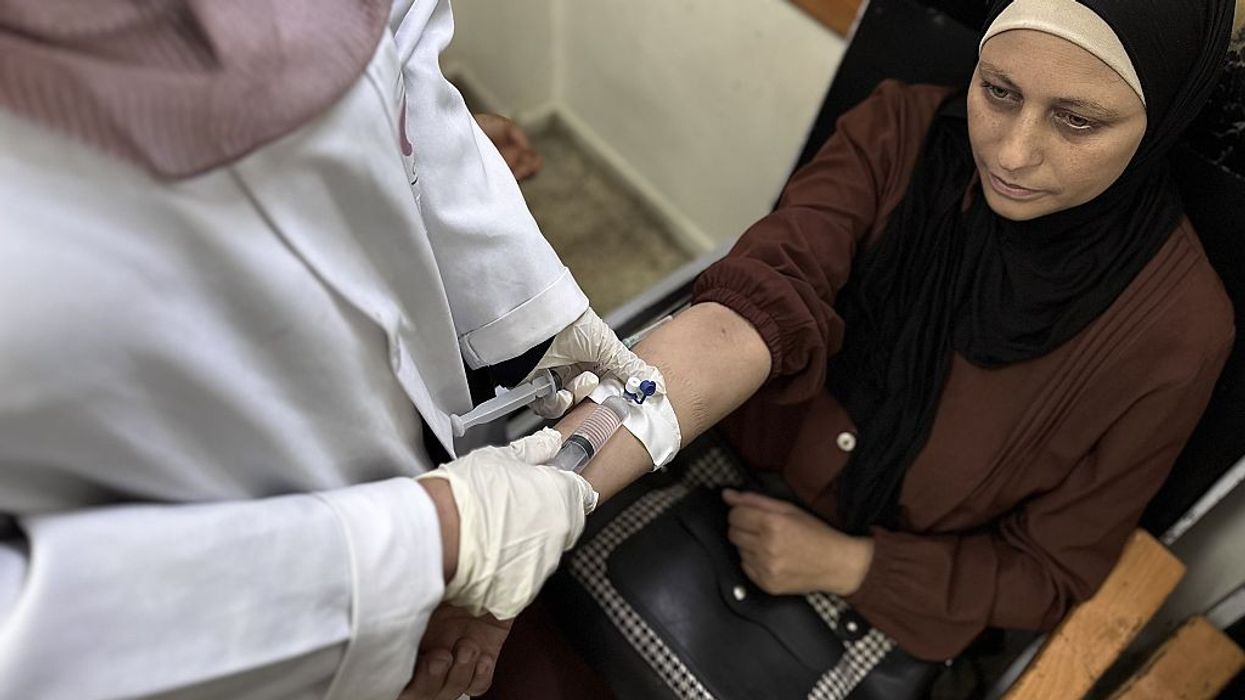
A breast cancer survivor from Gaza spoke of women forced to leave home in search of treatment, only to face drug shortages and fractured care across borders. Their struggle is not only against disease, but against politics and geography that interrupt therapy and shorten lives.
If the year ahead is to mean progress, it will depend on whether we choose to align wealth with wisdom and urgency with solidarity.
These stories stayed with me when I returned home; and when I read, almost casually, about tens of millions of dollars spent to influence a single political race in New York City. I could not stop doing the math. How many nurses could that money train? How many pathology labs could it equip? How many mothers could it help live long enough to watch their children grow?
We live in a moment when the science to dramatically reduce cancer and other noncommunicable diseases already exists. Prevention works. Diagnostics work. Treatment works. Yet survival remains a cruel lottery of birth. A child with leukemia in Boston, Heidelberg, or Tokyo has more than an 80% chance of survival. The same child in Kampala, Dhaka, Sana’a, or Gaza faces odds closer to 20%; not because science has failed, but because access has.
This inequity is not academic for me. I am living with stage IV cancer. My treatment is possible not because I am exceptional, but because of where I live. My ZIP code granted me specialists, hospitals, and medicines that millions of people around the world cannot access. In an era of breathtaking biomedical progress, this disparity is increasingly difficult to defend.
Meanwhile, vast sums continue to flow effortlessly toward political influence, luxury consumption, and fleeting spectacle; multimillion-dollar celebrations, couture collections, brief trips to the edge of space. Excess has always existed, and it always will. The question is not whether extravagance can be eliminated, but whether it must remain our highest expression of success.
History shows us another option. Coordinated global investment transformed the trajectory of HIV, tuberculosis, and malaria. Millions of lives were saved not because the science was perfect, but because resources were mobilized with urgency and moral clarity. When funding aligns with purpose, outcomes change—quickly and dramatically.
Yet cancer and other noncommunicable diseases, now responsible for most deaths worldwide, remain chronically underfunded in low- and middle-income countries. This neglect is not only unjust; it is destabilizing. Untreated cancer weakens families, strains health systems, and erodes trust in institutions. The consequences ripple far beyond individual patients.
As the year ends, it is worth asking what our spending reveals about our values. Conferences like the one I attended in Tunisia are not only scientific gatherings; they are moral ones. They confront us with the gap between what is possible and what we choose to prioritize.
We live in a world of abundance and absence, sometimes within the same news cycle. One story celebrates money deployed for influence; another recounts lives lost for lack of basic medicine. These are not separate realities. They are the result of collective choices.
As the new year begins, we will make choices—about budgets, priorities, and what we choose to celebrate. Those choices will determine who receives care and who waits, who lives and who is left behind. Science has already shown us what is possible. If the year ahead is to mean progress, it will depend on whether we choose to align wealth with wisdom and urgency with solidarity, deciding, at last, that saving lives deserves the same resolve we devote to influence, attention, and prestige.
Global inequality--"a vicious cycle of disadvantage"--threatens the lives and futures of tens of millions of children around the world, according to a new report from UNICEF.
The annual State of the World's Children report, released Tuesday, warns that unless serious steps are taken to narrow the gap between the rich and poor, 69 million children under five will die from mostly preventable causes, 167 million children will live in poverty, and 750 million women will have been married as children by 2030.
"Taken together, these deprivations effectively cut childhood short, robbing millions of children of the very things that define what it is to be a child: play, laughter, growth and learning."
--UNICEF
"As we look around the world today, we're confronted with an uncomfortable but undeniable truth: Millions of children's lives are blighted for no other reason than the country, the community, the gender, or the circumstances into which they are born," UNICEF executive director Anthony Lake writes in his introduction to the report (pdf).
"Before they draw their first breath," he continues, "the life chances of poor and excluded children are often being shaped by inequities. Disadvantage and discrimination against their communities and families will help determine whether they live or die, whether they have a chance to learn and later earn a decent living. Conflicts, crises and climate-related disasters deepen their deprivation and diminish their potential."
Nowhere is the situation "grimmer" than in sub-Saharan Africa, the report finds, where at least 247 million children--or 2 in 3--live in multidimensional poverty. By 2030, fully 9 out of 10 children in this region will be living in extreme poverty.
As UNICEF notes, poverty is about more than money, "[f]or children and adolescents. They experience it in the form of deprivations that affect multiple aspects of their lives--including their chances of attending school, being well nourished, and having access to health care, safe drinking water, and sanitation.
"Taken together," the report reads, "these deprivations effectively cut childhood short, robbing millions of children of the very things that define what it is to be a child: play, laughter, growth, and learning."
Coming less than a year after world governments signed onto 17 Sustainable Development Goals that aim to " leave no one behind," the findings are "another example of where the gap between the rhetoric of leaving no one behind, and the reality of what donors and governments do is very, very stark," lead report author Kevin Watkins told the Guardian.
"The truth is that governments have signed up to these commitments on leaving no one behind with absolutely no intention, for the most part, of doing anything that will promote the interests of those left behind," he said. "The challenge really is how do we use this new framing, the 'no one left behind' language...to galvanize the movement that can push governments to deliver."
Among UNICEF's recommendations to tackle the crisis are increased investment in vaccines, insecticide-treated mosquito nets, and nutritional supplements for the most excluded children and communities; cash transfers that enable children to stay in school longer; and "an integrated approach to development and humanitarian action" that recognizes the overlapping nature of global crises.
As Lake says in his introduction: "Inequity is not inevitable. Inequality is a choice. Promoting equity--a fair chance for every child, for all children--is also a choice. A choice we can make and must make."
A warming climate is exacerbating global inequality by pushing critical natural resources, such as fish stocks, away from impoverished equatorial regions and making them more exploitable by the wealthy, according to a study released on Wednesday.
While the gap between the rich and poor in the U.S. and worldwide has expanded at a mind-boggling pace in recent decades, the new study, designed by scientists at Princeton, Rutgers, Yale, and Arizona State, shows that the frightening speed with which the globe is warming will only compound the economic trend.
The study looked specifically at fish to better understand the phenomenon.
"We tend to think of climate change as just a problem of physics and biology," Malin Pinsky, professor of ecology and evolution at Rutgers, explained to Rutgers Today. "But people react to climate change as well, and at the moment, we don't understand the impacts of human behavior on natural resources affected by climate change."
To examine those impacts, Pinsky told the newspaper that "[w]hat we find is that natural resources like fish are being pushed around by climate change and that changes who gets access to them."
The study, published in the journal Nature Climate Change, looked at what the authors call "inclusive wealth," or the "sum of a community's capital assets."
Rutgers Today reports that the researchers examined natural resources such as fish and forests, a community's infrastructure—buildings, roads, factories—and its population's education level and health.
The newspaper wrote:
Pinsky reports that the stronger and more conservation-oriented a community's natural resource management, the higher the value it places on its natural resources, whether those resources are increasing or diminishing. If wealthier communities and countries are more likely to have strong resource management, these wealthy groups are more likely to benefit, thus exacerbating inequality.
The study used data collected by Pinsky in his studies of fish migration and applied a mathematical formula created by Yale University economist Eli Fenichel to illustrate the connection between the migration of natural resources and the migration of wealth. The scientists created two fictitious fishery-dependent communities, Northport and Southport, and used Fenichel's formula to examine future interactions between them and their fish stocks.
The findings also echo the changes and depletion reported by commercial and Indigenous fisheries worldwide.
The researchers observed that "a changing climate can reallocate natural capital, change the value of all forms of capital, and lead to mass redistribution of wealth."