

SUBSCRIBE TO OUR FREE NEWSLETTER
Daily news & progressive opinion—funded by the people, not the corporations—delivered straight to your inbox.
5
#000000
#FFFFFF
To donate by check, phone, or other method, see our More Ways to Give page.
Daily news & progressive opinion—funded by the people, not the corporations—delivered straight to your inbox.

"This administration wants to break the spirit of working people in this country, but we will not be broken," said National Nurses United.
Days after the Trump administration said in federal court that it would not move ahead with its plan to end collective bargaining agreements for more than 400,000 government employees until litigation on the issue concluded, the largest federal employees union on Wednesday pledged to fight back against the secretary of veterans affairs' decision to move forward with slashing labor protections.
Secretary of Veterans Affairs Doug Collins notified the American Federation of Government Employees (AFGE) and several other unions that he was implementing an executive order signed by President Donald Trump, which required the termination of collective bargaining agreements for agencies whose missions are related to national security.
Labor protections, including those that ensure work disputes can be resolved by a neutral party and that union leaders can take part in contract negotiations, would be eliminated for more than 400,000 employees at the Department of Veterans Affairs (VA) under the executive order.
Collins said in a letter to AFGE leaders that police officers, firefighters, and security guards would be exempt from the order ending collective bargaining rights, but that the VA "no longer recognizes AFGE as the exclusive representative of any other VA bargaining unit employee," including doctors, nurses, benefits specialists, lawyers, dentists, mental health specialists, and other employees.
A panel on the U.S. Court of Appeals for the Ninth Circuit last Friday ruled that the administration could move forward with the executive order directing federal agencies to end collective bargaining with federal unions including the AFGE, but the three judges on the panel said they came to that conclusion in part because the White House had said it wouldn't end the labor agreements until the court case was resolved.
Trump has claimed the order is essential to protect national security, suggesting union protections have gotten in the way of maintaining "a responsive and accountable civil service."
"Protecting America's national security is a core constitutional duty, and President Trump refuses to let union obstruction interfere with his efforts to protect Americans and our national interests," reads the executive order signed in March, which quickly became the subject of a lawsuit filed by unions including the AFGE, National Nurses United (NNU), and the American Federation of Labor and Congress of Industrial Organizations (AFL-CIO).
The plaintiffs have argued that the order will impact agencies whose missions are not directly related to national security, including the Environmental Protection Agency and the Department of Health and Human Services.
The AFGE also noted Wednesday that Collins' move is inconsistent with guidance from the Office of Personnel Management, which instructs agencies "not to terminate any [collective bargaining agreements] until the conclusion of litigation."
Everett Kelley, national president of the AFGE, said the "decision to rip up the negotiated union contract for majority of [the VA's] workforce is another clear example of retaliation against AFGE members for speaking out against the illegal, anti-worker, and anti-veteran policies of this administration."
VA employees, said Kelley, spoke out against Trump's plan to cut 83,000 jobs at the agency "and consistently educated the American people about how private, for-profit veteran healthcare is more expensive and results in worse outcomes for veterans."
Congressional Republicans have pushed for the privatization of veterans' healthcare, advocating for the Veterans' ACCESS Act, which has been framed as a bill that would "reduce wait times and empower veterans through online self-scheduling," as Rolling Stone reported recently, but would push veterans toward seeking care in the private sector. Collins has also pledged to bring more "choice" to veterans seeking healthcare.
"We don't apologize for protecting veteran healthcare and will continue to fight for our members and the veterans they care for," said Kelley.
National Nurses United (NNU), which represents about 16,000 nurses who work at 23 facilities operated by the VA and whose contracts were also terminated by Collins, said the effort "to erase our collective bargaining agreements is a blatant attempt to bust our unions and to silence the nurses and workers who are standing on the frontlines to protect our country's fundamental institutions."
"We know this administration is hellbent on silencing nurses and other VA workers to steamroll the destruction of the VA. This administration is marching toward the privatization of veteran care so they can move billions of taxpayer money out of the VA system, which is proven to provide excellent veteran-centric care, and into the coffers of private health care corporations run by billionaires," said NNU in a statement.
The union said it would continue to challenge Trump's executive order in court, calling it an "unconstitutional retaliation against the unions for engaging in activity protected by the First Amendment."
Liz Shuler, president of the AFL-CIO, said that "every American who cares about the fundamental freedoms of working people should be outraged by this attack on workers' ability to speak out and stand up at the VA."
"It's clear this is explicit retaliation against VA workers whose unions are standing up to the administration's illegal actions in court and in the streets," said Shuler. "The Trump administration may think they can rip up our contracts and silence anyone who pushes back against their unlawful and anti-worker actions, but we aren't going anywhere. The labor movement will continue to fight this all-out assault on workers with everything we have—and we're calling on Americans across this country to join us."
Trump is the Johnny Appleseed of ignorance. It sprouts wherever he goes. And this ignorance has proven to be deadly.
“Ignorance is death, knowledge is life. Life is of very little value, if it is a life in the dark, groping through ignorance and misery.”—Swami Vivekananda
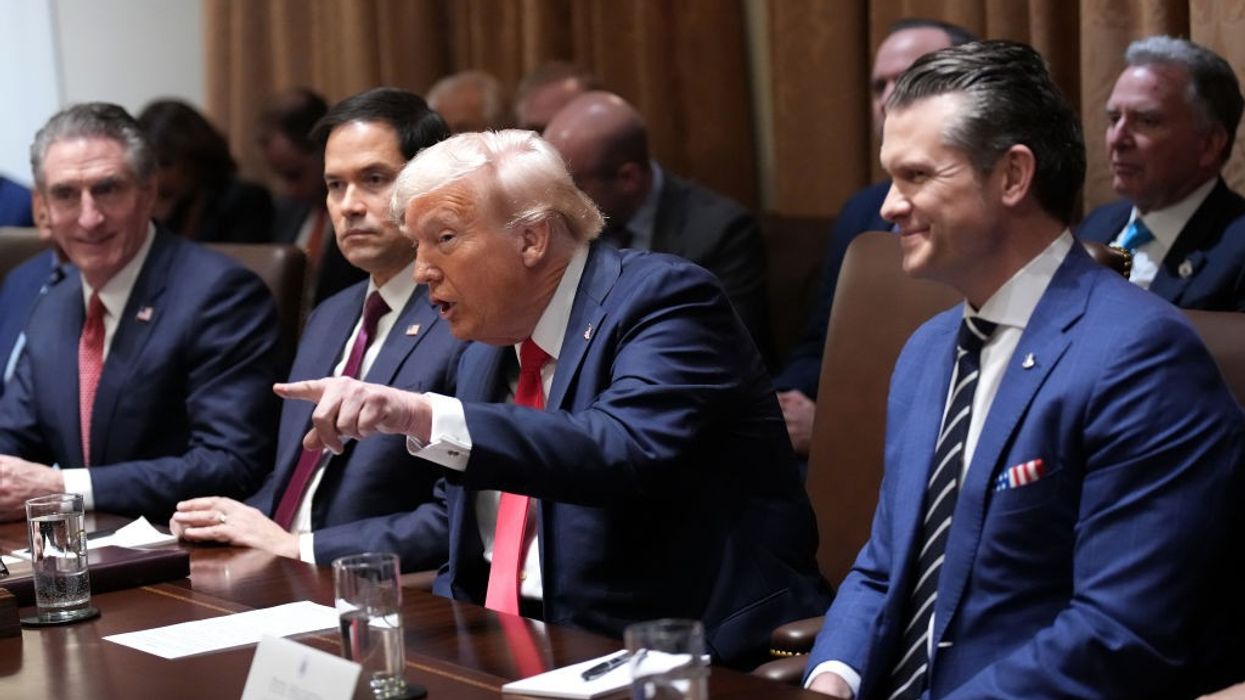
“Ignorance is death”—could there be a better description of U.S. President Donald Trump? Ignorance is Trump’s stock and trade, his life’s mission. He luxuriates in it and wears it as a crown. As a lover of ignorance, he surrounds himself with fellow travelers. He picked a Fox News blowhard as secretary of defense, an anti-vaxxer nutcase as his secretary of Health and Human Services, and a totally unqualified sycophant as national intelligence director. In short, some of the government’s top officials charged with the health and defense of the American people are totally unqualified.
As they say, what could go wrong?
At the same time, Trump empowered Elon Musk and his band of spoiled children to begin mass terminations of federal employees. Moving at the speed of light, using both terminations and pressured early retirements, they forced people out by the thousands, often without the slightest idea of what job they did or what disruptions their departures might cause. And surprise—almost immediately agencies started asking some of these terminated, but indispensable, civil servants to return to their jobs.
At least the families of those who die will know their loved ones gave their lives for a greater purpose—tax cuts for the wealthy.
As much as his ignorance in running the government has harmed this country, the worst part isn’t his own incompetence at governing. It is the way he has managed, with the help of the far-right machine, to reengineer the thinking of millions of people to view ignorance as a virtue. Under this “through the looking glass” view of the world, shooting from the hip is better than expertise and careful reflection. And this extends to the belief that one’s own gut feeling on scientific subjects, such as global warming and vaccinations, is more reliable than multiple studies produced under the scientific method.
Trump is the Johnny Appleseed of ignorance. It sprouts wherever he goes. And this ignorance has proven to be deadly. The best-known example, of course, has been his response to the Covid-19 pandemic during its earlier, more deadly, phase. From the beginning, Trump did everything he could to minimize the danger and spread conspiracy theories. He advocated quack remedies, discouraged mask wearing, and undermined scientific evidence. According to a study in The Lancet, Trumps actions during the early years of the pandemic caused hundreds of thousands of unnecessary deaths.
And these deaths were more concentrated in red states than in blue states. For many of these victims, trusting Donald Trump was their last mistake.
But the countless thousands of unnecessary deaths that occurred during the Covid-19 pandemic almost seems small by comparison with the expected death toll from Trump’s arbitrary cancellation of U.S. Agency for International Development payments for food and medicine to desperately poor people. It is projected that this action, if continued, will, by itself, cause 14 million preventable deaths by 2030.
But at least the families of those who die will know their loved ones gave their lives for a greater purpose—tax cuts for the wealthy.
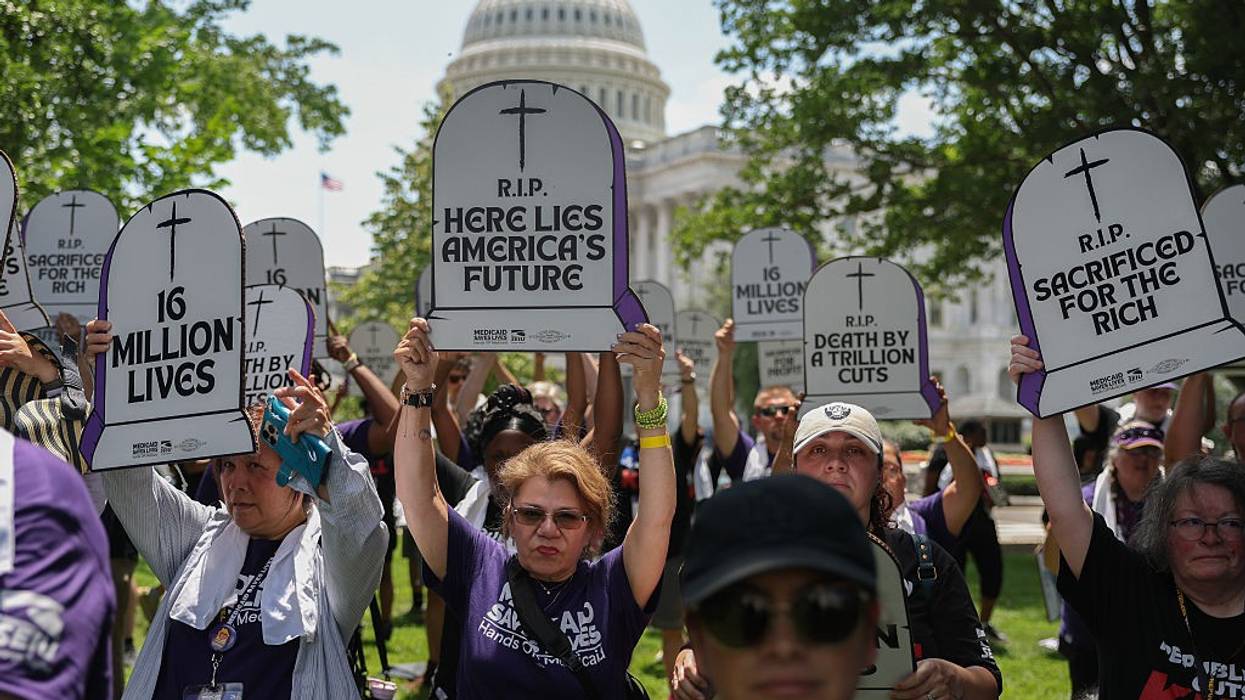
And Trump is far from done. According to experts at Yale University and the University of Pennsylvania, his so-called “Big Beautiful Bill” will result in millions of people losing their medical coverage, which is expected to cause 51,000 or more deaths annually. And deaths are only a small part of the misery caused by loss of medical insurance. People without coverage tend to be sicker. They live in fear that one serious illness or injury will wipe them out financially. People living in rural communities face the potential loss of local hospitals due to reduced Medicaid payments.
Then, of course, there is climate change. It is estimated that global warming will result in 250,000 additional deaths every year from 2030 to 2050. What is most disturbing about Trump’s actions is that he is not just opposing new governmental efforts to fight climate change. He is aggressively attacking current efforts, public and private, to combat the problem. He began by dreaming up a nonexistent national energy crisis to push for increased production and use of oil, gas, and coal. At the same time, he has attacked, and continues to attack, environmentally friendly energy sources including solar and wind power—something that makes no sense from either an environmental or an economic standpoint.
Whether we like it or not, reality doesn’t give way to our personal beliefs. A particularly tragic example of this, as discussed above, involves the thousands of people who, with a big push from Trump, believed to the core of their souls that Covid-19 was a fraud. But the strength of their belief didn’t cause the virus to pass them by.
Ignorance is death. It always will be.
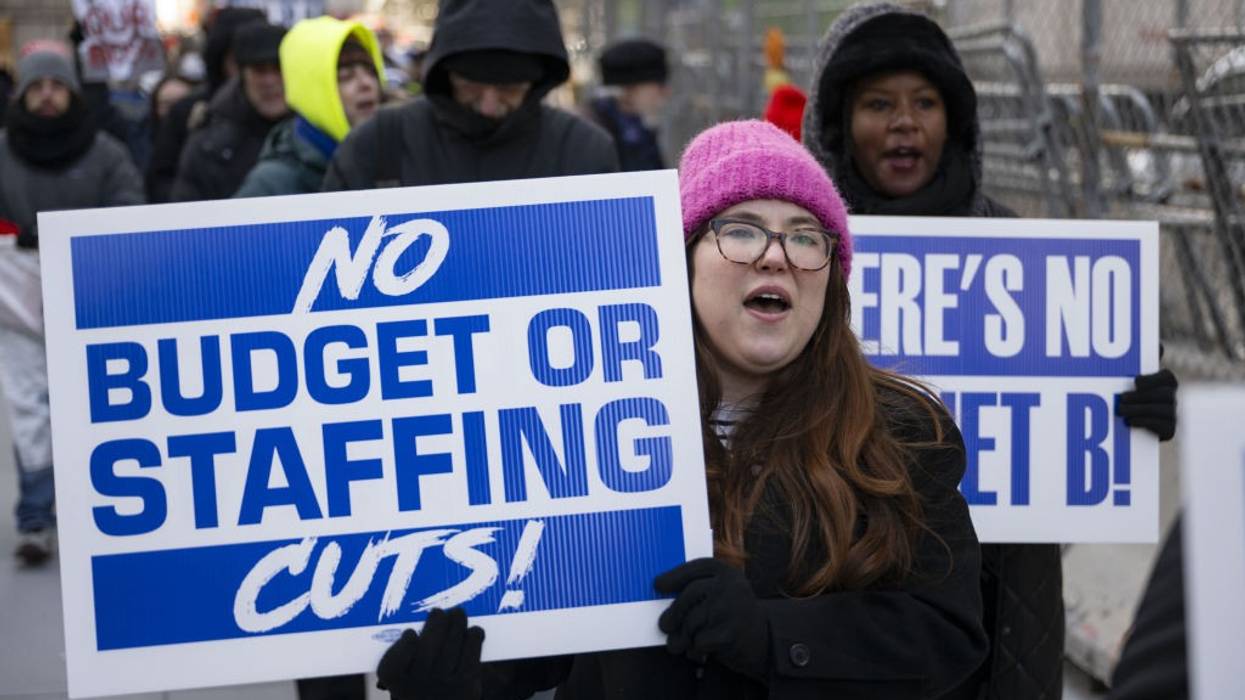
The coalition behind the legal challenge the Court's decision "rightfully maintains the block on the Trump-Vance administration's unlawful, disruptive, and destructive reorganization of the federal government."
The 9th Circuit Court of Appeals on Friday night kept in place a block on President Donald Trump's efforts for massive firings and agency restructuring across the federal government, saying a far-reaching executive order signed in February went way beyond his constitutional authority and that the potential harm caused by the terminations warrants the hold while legal challenges continue to play out in the courts.
"The Executive Order at issue here far exceeds the President's supervisory powers under the Constitution," the appeals court wrote in its 2-1 decision.
The majority decision, written by Senior Circuit Judge William Fletcher, noted that while "the President enjoys significant removal power with respect to the appointed officers of federal agencies," the kind of far-reaching approach represented by Trump's executive order "has long been subject to Congressional approval."
According to the Associated Press:
The Republican administration had sought an emergency stay of an injunction issued by U.S. Judge Susan Illston of San Francisco in a lawsuit brought by labor unions and cities, including San Francisco and Chicago, and the group Democracy Forward.
The Justice Department has also previously appealed her ruling to the Supreme Court, one of a string of emergency appeals arguing federal judges had overstepped their authority.
In a statement late Friday, the coalition behind the lawsuit that challenge Trump's order—which includes nationwide labor unions and non-profit groups as well as cities and counties in California, Illinois, Maryland, Texas, and Washington—welcomed the ruling as it once again slammed Trump's assault on the nation's federal workforce and the rule of law.
The 9th Circuit's decision, the coalition said, "rightfully maintains the block on the Trump-Vance administration's unlawful, disruptive, and destructive reorganization of the federal government."
Trump's actions, the statement continued, "have already thrown agencies into chaos, disrupting critical services to people and communities across our nation. Each of us represents communities deeply invested in the efficiency of the federal government – laying off federal employees en masse and reorganizing government functions haphazardly does not achieve that. We are gratified by the court's decision today to allow the pause of these harmful actions to endure while our case proceeds."
"The Trump administration's reckless attempt to dismantle our government without congressional approval threatens vital services Americans depend on every day—from caring for veterans and safeguarding public health, to protecting our environment and maintaining national security," said Everett Kelley, president of the American Federation of Government Employees (AFGE) union, the nation's largest federal worker union and a party to the suit, in response to the ruling. “This illegal power grab would gut federal agencies, disrupt communities nationwide, and put critical public services at risk. AFGE is proud to stand shoulder-to-shoulder with this coalition to protect not just the patriotic public servants we represent, but the integrity of American government and the essential services that our nation deserves."
In addition to hurting everyday folks, these federal budget cuts will provide cover for the huge tax cut for wealthy Americans the Republican House just passed.
On February 11, without providing any evidence, U.S. President Donald Trump declared that the so-called “Department of Government Efficiency,” or DOGE, was in the process of eliminating “billions and billions of dollars in waste, fraud, and abuse” in the federal government. This is an old, but politically persuasive claim Republicans and their Heritage Foundation allies have made for decades.
The problem is, as some have no doubt realized, that DOGE is not about waste and inefficiency in government. It’s the culmination of a very long-standing neoliberal strategy to get rid of a federal government that can provide help to a wide variety of people in need, limit the worst excesses of the private sector, and shore up stressed local communities, among other good causes that the private sector is notoriously unable to accomplish.
Some of you may remember former President Ronald Reagan’s quip, “Government is not the solution; government is the problem.” Well, we’ve lived 45 years under that hoariest of myths, and most Americans have paid a heavy price for it.
In brief, we have government of the rich, by the rich, and for the rich.
How does the Trump administration and its hatchet man, Elon Musk, fit into this? Most obviously through their massive layoffs of federal employees and by eliminating or slashing federal program after federal program. The effects of DOGE will be felt by a vast majority of non-wealthy Americans: veterans, workers, children, people who are sick or need healthcare, the elderly, people with low-to-modest incomes, people victimized by the rapidly increasing environmental disasters, local communities; the list goes on and on. Lumped under the “waste and inefficiency” category are the thousands of arbitrarily fired public employees who have served the public with dedication and integrity.
In reality, DOGE has two aims: The first is to make government so inept that more and more people will wonder why they’re paying taxes for a seemingly incompetent government. DOGE should really be called DOGI—the Department of Government Ineptitude. That would fit nicely with the host of misfits and incompetents Trump has appointed to head various federal departments.
But the other clear objective is that, in addition to hurting everyday folks, these federal budget cuts will provide cover for the huge tax cut for wealthy Americans the Republican House just passed. As in the past, the tax cut will likely give people in the lower 90% of income levels an extremely modest tax cut, but the real beneficiaries will be the wealthiest Americans who already enjoy wealth most people can’t even imagine. And, as in the past, the tax cuts will be “justified”by the myth that cutting taxes for the wealthy and corporations will generate economic growth—i.e., jobs.
Unfortunately, we’ve been here before. The Reagan administration slashed taxes for the wealthiest Americans and corporations, thereby creating a huge federal deficit, yet the tax cuts failed to generate significant job growth. Instead, they ushered in the era of enormous inequality that is still with us. Most Americans saw no increase in their incomes. The George W Bush pro-rich tax cuts had similar effects, as did the huge pro-rich tax cuts of the first Trump administration. One result is that wages for most Americans have been largely stagnant for 50 years. There is no economic growth magic in these kinds of tax cuts.
But “tax cuts” sound good to people who struggle to make ends meet, and therein lies their appeal. However, the real problem isn’t the level of federal taxes, it’s the inequality in who bears the burden of those taxes.
Like many things in the U.S., taxes impose the heaviest burdens on those with modest incomes. This wasn’t always the case, of course. From the 1940s to mid-1960 the richest Americans were taxed at a 91% rate on taxable income. Today, thanks to these tax cuts, their rate is 37%. Similarly, the capital gains tax, corporate taxes, and estate taxes have all been significantly reduced, benefitting you know who.
Thanks to these tax cuts, the growing inequality in wages and salaries, and an all-out attack on labor union organizing over the past 45 years, we have witnessed a massive transfer of wealth from the middle class to the wealthiest families in America—one reason we hear so much about billionaires these days. In fact, a recent study published in The New York Times, reported that, for the first time, billionaires paid a lower effective tax rate than working class Americans.
Beyond the grotesque unfairness of this system, the truly ominous outcome is what this means for “our” government. Thanks to Republican-appointed Supreme Court majorities, campaign contributions have been classified as “speech,” meaning that restricting campaign contributions violates the First Amendment, no matter what this does to democracy. And so, in 2024, 150 billionaires contributed a total of $1.9 billion to political campaigns. In brief, we have government of the rich, by the rich, and for the rich.
If you feel the government has passed you by, welcome to the majority of Americans who don’t really have much of a voice in our political system. That, rather than alleged “waste, fraud, and abuse,” is what is wrong with our government.
"We swore to serve the American people and uphold our oath to the Constitution across presidential administrations," they wrote. "However, it has become clear that we can no longer honor those commitments."
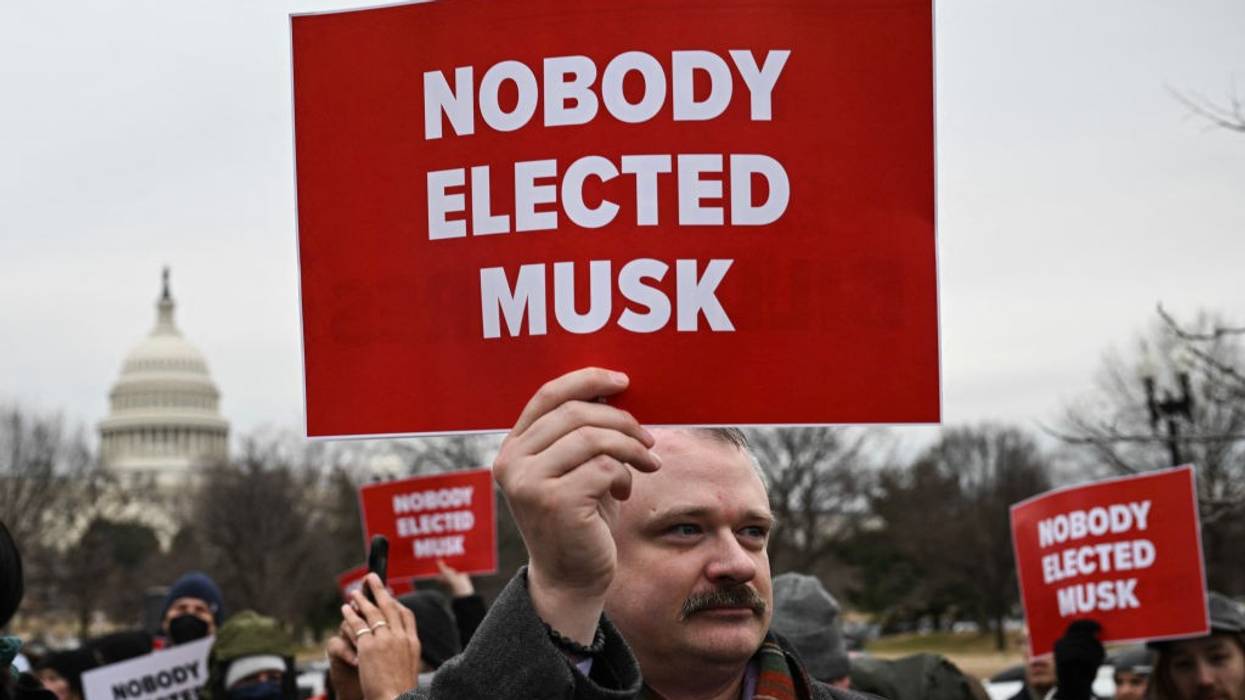
Over 20 U.S. federal tech workers who were forced into President Donald Trump and billionaire Elon Musk's Department of Government Efficiency resigned in protest on Tuesday, according to a joint letter obtained by The Associated Press.
The 21 data scientists, engineers, and product managers were initially part of the United States Digital Service, established during the Obama administration. However, one of Trump's first executive orders states that it "is hereby publicly renamed as the United States DOGE Service (USDS) and shall be established in the Executive Office of the President."
As the AP detailed, "earlier this month, about 40 staffers in the office were laid off," leaving about 65 employees who "were integrated into DOGE's government-slashing effort." About a third of the spared workers—who previously worked for companies such as Amazon and Google—joined the mass resignation.
"We swore to serve the American people and uphold our oath to the Constitution across presidential administrations," wrote the 21 staffers, according to the news agency. "However, it has become clear that we can no longer honor those commitments."
"We will not use our skills as technologists to compromise core government systems, jeopardize Americans' sensitive data, or dismantle critical public services," they explained. "We will not lend our expertise to carry out or legitimize DOGE's actions."
Their resignation letter sounds the alarm about recent interviews conducted by Musk loyalists that "created significant security risks," noting that "several of these interviewers refused to identify themselves, asked questions about political loyalty, attempted to pit colleagues against each other, and demonstrated limited technical ability."
The letter also criticizes the recent USDS layoffs that "focused on people in roles like designers, product managers, human resources, and contracting staff," according to the AP, which cited interviews with current and former staff.
"These highly skilled civil servants were working to modernize Social Security, veterans' services, tax filing, healthcare, disaster relief, student aid, and other critical services," the letter states. "Their removal endangers millions of Americans who rely on these services every day. The sudden loss of their technology expertise makes critical systems and American's data less safe."
The firings at USDS are just part of Musk and Trump's sweeping effort to slash government spending and the federal workforce.
"Musk clearly loves to depict DOGE as a lean, mean efficiency machine," Intelligencer columnist Ed Kilgore wrote last week. "But it seems increasingly obvious that its efforts to reduce personnel levels and spending mostly reflect an ideology that treats whole areas of government as illegitimate and completely arbitrary reductions in force as a valuable end in themselves."
Fueling such arguments, the AP revealed Tuesday that nearly 40% of the federal contracts the Trump administration has canceled won't save any money. The Musk-led effort "published an updated list Monday of nearly 2,300 contracts that agencies terminated in recent weeks across the federal government," the news agency reported. "Data published on DOGE's 'Wall of Receipts' shows that more than one-third of the contract cancellations, 794 in all, are expected to yield no savings."
Reporting on DOGE's failures and the mass resignation came amid mixed messaging about a Saturday email from the Office of Personnel Management (OPM), the government's human resources agency, ordering federal workers to respond by the end of Monday with five bullet points listing what they did last week. Musk said on his social media platform X that "failure to respond will be taken as a resignation."
Then, Politico and The Washington Post reported Monday that the Trump administration had told federal department heads that they could direct staff to ignore the list requirement and Musk's threat, and emails from agency leaders informing workers they should not respond began circulating on social media.
Further adding to the confusion, the president told reporters Monday afternoon that anyone who doesn't reply would be "sort of semi-fired—or you're fired," and Musk later wrote on X: "Subject to the discretion of the president, they will be given another chance. Failure to respond a second time will result in termination."
Meanwhile, a Monday guidance from OPM states in part that responses to the initial Saturday email "should be directed to agency leadership," who "may exclude personnel from this expectation at their discretion and should inform OPM of the categories of the employees excluded and reasons for exclusion."
Everett Kelley, national president of the American Federation of Government Employees, a union that has pushed back on DOGE initiatives, said in a Monday statement that "Elon Musk's latest email fiasco is yet another example of the chaotic and callous treatment of federal employees that has been the hallmark of Trump's second term."
"It was nothing but a cynical attempt to demean federal workers and terrorize them into quitting," Kelley continued. "To be clear, federal employees report to the agencies who employ them through established chains of command. They do not report to OPM, 'DOGE,' and definitely not to Elon Musk."
"I'm glad reality is teaching them the lessons they refuse to teach themselves on how to run a functional civil service," the union leader added. "Make no mistake we will continue to hold Elon Musk and the entire Trump administration accountable for their illegal actions."
While DOGE has
hit some legal snags thanks to challenges from unions and other critics, the Trump administration has demonstrated a willingness to defy court orders and congressional Republicans are already targeting some federal judges with articles of impeachment for impeding the president's agenda.

The top pollster on the president's 2024 campaign issued a dire warning to Republicans in a recent poll, showing swing district voters do not approve of the massive cuts the GOP is weighing in its budget plan.
At the annual Conservative Political Action Conference on Saturday, U.S. President Donald Trump told his Republican supporters that, having overseen the firing of roughly 30,000 federal employees and backed proposals to slash the Medicaid and Medicare programs that millions of Americans across the political spectrum rely on, he has "not yet begun to fight."
But his promise came as Republican lawmakers across the country faced the wrath of voters over the Trump agenda and the president's own pollster warned that moving forward with GOP plans to hand out $4.5 trillion in tax cuts to corporations and the wealthy—an endeavor that would require cutting crucial public programs—will be perilous for the party.
As Common Dreams reported on Friday, Rep. Rich McCormick (R-Ga.) was asked at a town hall this week why the firing of federal employees at the Centers for Disease Control and Prevention have been so "radical and extremist," and with federal lawmakers back in their districts this weekend for their first recess of Trump's second term, McCormick wasn't alone in hearing from angry voters.
Right-wing commentator Erick Erickson claimed McCormick's experience was an anomaly and the result of Democrats mobilizing their voters, but Leah Greenberg, co-founder of the progressive advocacy group Indivisible, asked him to explain "why there have also been furious crowds" in several other states since the congressional recess began.
The New York Times reported that in his solidly Republican district in East Texas, Rep. Pete Sessions (R-Texas) heard from voters from both sides of the aisle who wanted his guarantee that the GOP will not make cuts to the social safety net.
"When are you going to wrest control back from the executive and stop hurting your constituents?" asked one woman.
Trump has pushed forward a plan to circumvent congressional power since taking office, issuing executive orders to roll back regulations that only Congress has the authority to undo and attempting to freeze federal funding that has already been appropriated.
Rep. Nick Begich (R-Alaska), who told constituents he is a member of the "DOGE caucus," referring to the Trump-created Department of Government Efficiency that's led by tech mogul Elon Musk, faced a similar question from a voter who described himself as a "lifelong Republican."
"I am in the majority, I think, with a lot of Americans, a lot of Alaskans, that are really concerned that we have an executive branch that is more than willing to push or remove the guardrails that are on the executive branch, and what we need from Congress and from the courts is to play that checks and balances role," said the voter.
In Oklahoma, a Republican voter asked Rep. Stephanie Bice (R-Okla.) in a telephone town hall Friday how DOGE, "with some college whiz kids from a computer terminal in Washington, D.C., without even getting into the field, after about a week or maybe two, have determined that it's OK to cut veterans' benefits?"
Another registered Republican told Bice that only a month into Trump's second term, "this administration has gone absolutely off the tracks long ago."
Rep. Cliff Bentz, the only Republican member of Oregon's congressional delegation, was confronted at a town hall on Wednesday by a woman who condemned the administration for firing federal workers "on the spot for performance when we all know how hard these people work"—an apparent reference to the mass firing of probationary workers who have been on the job for less than a year.
The New Republic columnist Greg Sargent mused Sunday that DOGE is starting to resemble former President George W. Bush's response to Hurricane Katrina, "with mounting public concerns about the human toll of the administration's malevolence and incompetence."
The apparent backlash comes as House Republicans prepare to vote on a budget plan including cuts to Medicaid and food assistance—a proposal GOP members who narrowly won their seats in November have expressed major concerns about voting for. With voters in swing districts as well as solidly red areas expressing discontent with the early weeks of the Trump administration, Republican lawmakers' continued support for massive cuts in public spending could wipe out the party's narrow majority in the House in the 2026 elections.
Tony Fabrizio, who was the president's top pollster on his 2024 campaign, warned in a recent memo that majorities of voters in competitive Republican districts are "worried about their personal financial situation," and Trump's approval in those districts is at 47%.
Sixty-three percent of respondents told Fabrizio that tax policy should support working families, and 80% said they support extending the Affordable Care Act health insurance subsidies that expire this year.
"Extending these subsidies will collide with the bedrock GOP ideological commitment to policies that take from poor and working people to keep taxes low on rich people and corporations," wrote Sargent at The New Republic on Saturday. "Trump and Republicans will again want to advance those broad priorities, but they've also been shown repeatedly to be a big political loser. We now have this straight from Trump's own pollster, who is effectively warning them off of doing exactly that. But as should be overwhelmingly clear by now, they are very much poised not to listen."
As Republican lawmakers faced questions from angry voters about DOGE's seizure of confidential government data and cuts to federal agencies overseeing healthcare research, education, workers' rights, and other operations impacting ordinary Americans' lives, Trump said Saturday in a post on his social media platform, Truth Social, that he would like to Musk "get even more aggressive."
Musk appeared to respond to the demand by sending an email to federal employees through the Office of Personnel Management, asking them to provide five examples of work they completed last week and warning that a failure to respond by Monday at midnight would be understood as a resignation.
That email was followed by directives from the State Department and the FBI asking employees not to respond to Musk's demand.
As outlets including the Times and The Washington Post reported that DOGE's so-called "Wall of Receipts"—purported to show $55 billion in savings as the advisory body slashes government agencies and contracts—actually shows hundreds of contracts that were already complete and didn't result in any money going back to the federal government, Sargent wrote that the department is turning into a "fiasco for Elon Musk on multiple fronts."
Musk's latest email to federal workers, said Sargent, "should be seen as a sad little stunt, a desperate effort to make DOGE appear focused and effective when one revelation after another is revealing that it's a fiasco, a comedy of errors, an absolute joke."
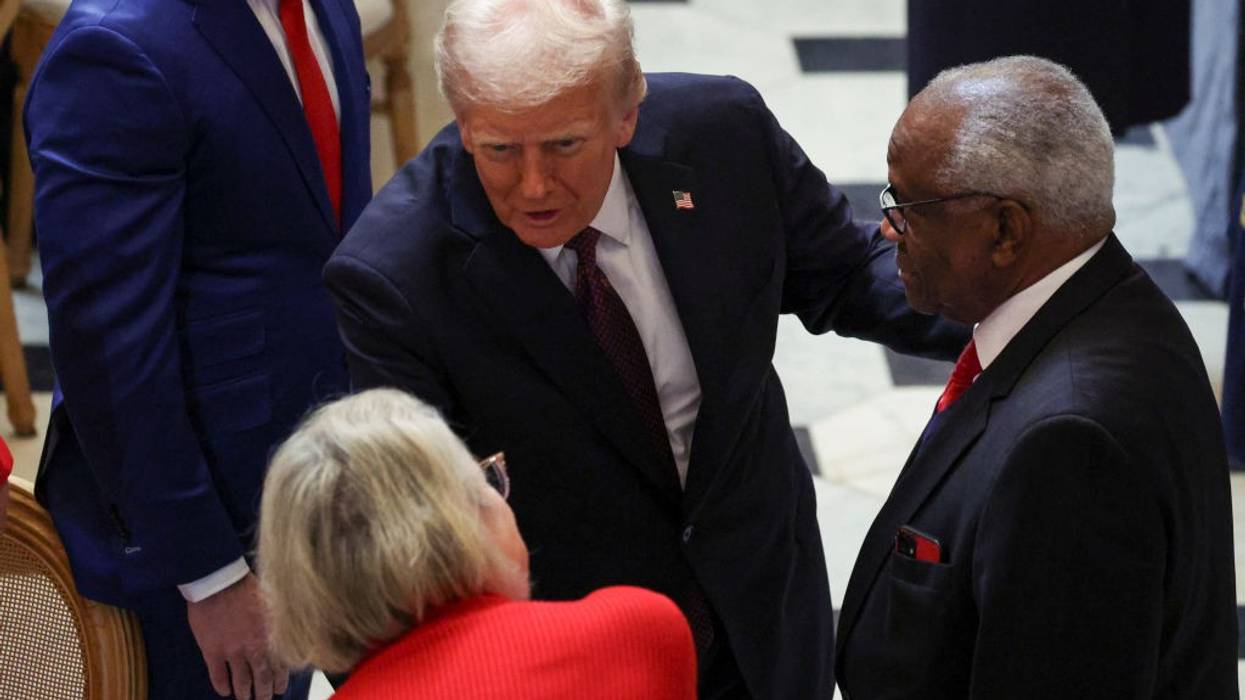
Today especially, remember that we celebrate President's Day—not Dictator's Day—for a reason.
It is well to remind ourselves that today is President’s Day, not Dictator’s Day.
Of all the things the framers of the Constitution worried about, their biggest worry was that a president would become as powerful as a king. Which is why they created Congress and the judiciary — to check and constrain him.
Fast forward to the first Gilded Age of the late nineteenth century, when inequalities of income and wealth had become extreme that the so-called “Robber Barons” of the era (think Elon Musk, Jeff Bezos, and Mark Zuckerberg) controlled the economy, and corruption was rampant. (I say “first” Gilded Age because we are now clearly in the second.)
Reformers of that era created an income tax to try to limit the Robber Barons’ incomes, limits on corporate campaign expenditures to limit their political reach, and independent regulatory agencies to limit their power. The Federal Trade Commission, for example, was established as an independent agency in 1914, to take on corporate monopolies and fraud.
Fast forward again to today. There are by now 19 independent regulatory agencies, including the Securities and Exchange Commission, the Federal Reserve, the Commodity Futures Trading Commission, the National Labor Relations Board, the Federal Deposit Insurance Corporation, the Consumer Financial Protection Bureau, and the Office of Special Counsel.
These independent agencies, staffed with experts, have become a major countervailing power to the political clout of large corporations.
But I fear that the Supreme Court is about to end their independence.
On Sunday, White House lawyers asked the justices to allow Trump to fire the head of an independent watchdog agency. It’s the first case to reach the Supreme Court arising from the blizzard of actions taken by Trump in the early weeks of the new administration.
The White House’s emergency application asks the Supreme Court to vacate a federal trial judge’s order temporarily reinstating Hampton Dellinger, head of the Office of Special Counsel.
The Office of Special Counsel — a little-known but important independent agency — enforces federal whistleblower laws, which protect whistleblowers from political retribution, and the Hatch Act, which prohibits federal employees from engaging in most political activity.
In the 1978 law that established the Office of Special Counsel, Congress gave the Counsel a five-year term and provided that he or she could be removed only for “inefficiency, neglect of duty, or malfeasance in office.”
But Trump’s one-sentence email to Dellinger on Feb. 7 gave no reasons for firing him, effective immediately.
Dellinger sued. He called his removal illegal and argued that nothing about his performance could possibly meet the standard Congress laid out for dismissing a special counsel:
“Since my arrival at OSC last year, I could not be more proud of all we have accomplished. The agency’s work has earned praise from advocates for whistleblowers, veterans, and others. The effort to remove me has no factual nor legal basis — none — which means it is illegal.”
Since February 7, Dellinger has continued to police the government against Hatch Act and whistle-blower violations — even when they have involved federal workers who allegedly discriminated against Trump. (In a complaint filed last Tuesday, Dellinger alleged that, during a hurricane response in October, an aid supervisor for the Federal Emergency Management Agency illegally instructed FEMA workers not to visit homes with Trump signs.)
Last Monday night, Judge Amy Berman Jackson of the Federal District Court in Washington issued a temporary restraining order blocking Trump from firing Dellinger.
Judge Jackson wrote that the 1978 law “expresses Congress’s clear intent to ensure the independence of the special counsel and insulate his work from being buffeted by the winds of political change,” adding that the government’s “only response to this inarguable reading of the text is that the statute is unconstitutional.”
On Saturday, a divided three-judge panel of the U.S. Court of Appeals for the D.C. Circuit rejected Trump’s emergency motion for a stay of Judge Jackson’s ruling. The unsigned majority opinion said the government’s motion was premature.
“The question here is not whether the president is entitled to prompt review of his important constitutional arguments. Of course he is. The issue before us is whether his mere claim of extraordinary harm justifies this court’s immediate review, which would essentially remove the legal issues from the district court’s ambit before its proceedings have concluded.”
In its Sunday filing before the Supreme Court, the White House said the Supreme Court “should not allow lower courts to seize executive power by dictating to the president how long he must continue employing an agency head against his will.” Translated: Congress can not limit the president’s power to fire heads of independent agencies.
Make no mistake. This is a fundamental challenge to the basic idea — part of the fabric of our government for well over a century — that Congress has the power to create independent agencies.
Trump’s emergency application took direct aim at a precedent from 1935 in which the Supreme Court unanimously ruled that Congress can shield independent agencies from politics.
That case, Humphrey’s Executor v. United States, concerned a federal law that protected commissioners of the Federal Trade Commission, saying they could be removed only for “inefficiency, neglect of duty or malfeasance in office” — the same language that Congress used decades later to protect the Special Counsel.
Franklin D. Roosevelt nonetheless fired a commissioner, William Humphrey, arguing only that Humphrey’s actions were not aligned with the administration’s policy goals. The Supreme Court held that the firing was unlawful and the law establishing the independence of the Federal Trade Commission was constitutional.
Fast forward again. The Roberts Supreme Court doesn’t like independent regulatory agencies. Most of the current justices subscribe to what’s called the “unitary executive” theory, a bonkers notion that the framers intended for a president to have total control over every aspect of the executive branch.
In 2020, the Roberts Supreme Court laid the groundwork for reversing Humphrey’s Executor in a case involving the Consumer Financial Protection Bureau. The law that created the Bureau — again, using language identical to that at issue in Humphrey’s Executor and in Dellinger’s case — said the president could remove its director only for “inefficiency, neglect of duty or malfeasance in office.”
In a 5-to-4 decision, the Supreme Court struck down that provision, ruling that it violated the separation of powers and that the president could remove the bureau’s director for any reason. Roberts, writing for the majority, said the presidency requires an “energetic executive.” He continued:
“In our constitutional system, the executive power belongs to the president, and that power generally includes the ability to supervise and remove the agents who wield executive power in his stead.”
Two justices — Clarence Thomas and Neil M. Gorsuch — would have pulled the plug on independent agencies then and there. Thomas wrote:
“The decision in Humphrey’s Executor poses a direct threat to our constitutional structure and, as a result, the liberty of the American people. With today’s decision, the court has repudiated almost every aspect of Humphrey’s Executor. In a future case, I would repudiate what is left of this erroneous precedent.”
Justice Elena Kagan, writing for what was then the court’s four liberals, dissented, saying the Constitution did not address the scope of the president’s power to fire subordinates. Congress should therefore be free, she said, to grant agencies “a measure of independence from political pressure.”
That 2020 decision by the majority of the Supreme Court anticipated the Supreme Court’s decision last July that granted Trump, then a private citizen, immunity from prosecution for any “official” conduct during his first term.
So what now? I’m afraid the Trump White House and the Supreme Court have teed up the Dellinger case to mark the end of Humphries Executor — and therefore the practical end of independent agencies. They may carve out the Federal Reserve on some pretext, but they are bent on centralizing presidential power.
I wish I could be more hopeful, but I honestly don’t see any other decision emerging from this high court.
Celebrate President’s Day today, not Dictator’s Day. And don’t, whatever you do, give up hope. This is all part of democracy’s stress test. I guarantee that eventually democracy will come out stronger for it.

The incident came the day after a similar struggle in the Treasury Department, in which a top official resigned after refusing to grant DOGE access to a vital payment system.
The Trump administration put two U.S. Agency for International Development security officials on administrative leave late Saturday after they refused to grant employees from Elon Musk's Department of Government Efficiency access to classified files, in the latest example of DOGE's attempt to impose its will on the federal government.
The DOGE members were ultimately able to see the files, which were located in a restricted area and included intelligence reports, a former U.S. official told The Associated Press on Sunday.
Matt Hopson, who was appointed by Trump as USAID's chief of staff, resigned after the security officials were put on leave, sources familiar with the situation told Reuters.
The incident at USAID came the day after a similar struggle in the Treasury Department, in which a top official resigned after refusing to grant DOGE access to the payment system that disburses Social Security, Medicare, and other government funds. DOGE was then able to access that system as well.
CNN described the Saturday night tussle at USAID:
According to sources, personnel from the Musk-created office physically tried to access the USAID headquarters in Washington, D.C. and were stopped. The DOGE personnel demanded to be let in and threatened to call U.S. Marshals to be allowed access, two of the sources said.
The DOGE personnel wanted to gain access to USAID security systems and personnel files, three sources said. Two of those sources also said the DOGE personnel wanted access to classified information, which only those with security clearances and a specific need to know are able to access.
A former and a current U.S. official told AP that the security officers were required by law to block the DOGE team's access because its members lacked the proper security clearance. The officials were identified as USAID Director of Security John Voorhees and his deputy Brian McGill.
Following the incident, Musk lashed out at USAID on social media several times on Sunday, calling it a "criminal organization" and saying it was "time for it to die."
The Washington Post reported that "by Sunday afternoon, USAID's X account had been taken down, with a message saying the account 'doesn't exist.'"
USAID has been in the crosshairs of the Trump administration and Musk's attempts to cut government spending since President Donald Trump took office in January. On his first day, Trump issued an executive order pausing foreign aid spending for 90 days, which was followed by a January 24 State Department directive mandating that the government not provide any assistance through USAID without department approval.
The administration then placed dozens of senior USAID officials on leave, arguing without proof that they were violating the spending freeze. Further, it forced Nicholas Gottlieb, director of employee and labor relations at USAID, on administrative leave after he refused to carry out a rash of firings demanded by the administration and DOGE, which he deemed "illegal."
On Sunday morning, nearly 30 USAID Legislative and Public Affairs employees discovered they had lost email access, according to Reuters, raising the total number of USAID employees put on administrative leave to almost 100.
CNN recounted reports that the administration wants to close USAID and bring it under the fold of the State Department. Its website stopped working on Saturday.
However, USAID is not the only government agency that has been targeted by Musk's DOGE, which has also locked career civil servants out of a database of federal employees at the Office of Personnel Management. Musk's allies have reportedly taken control of the agency.
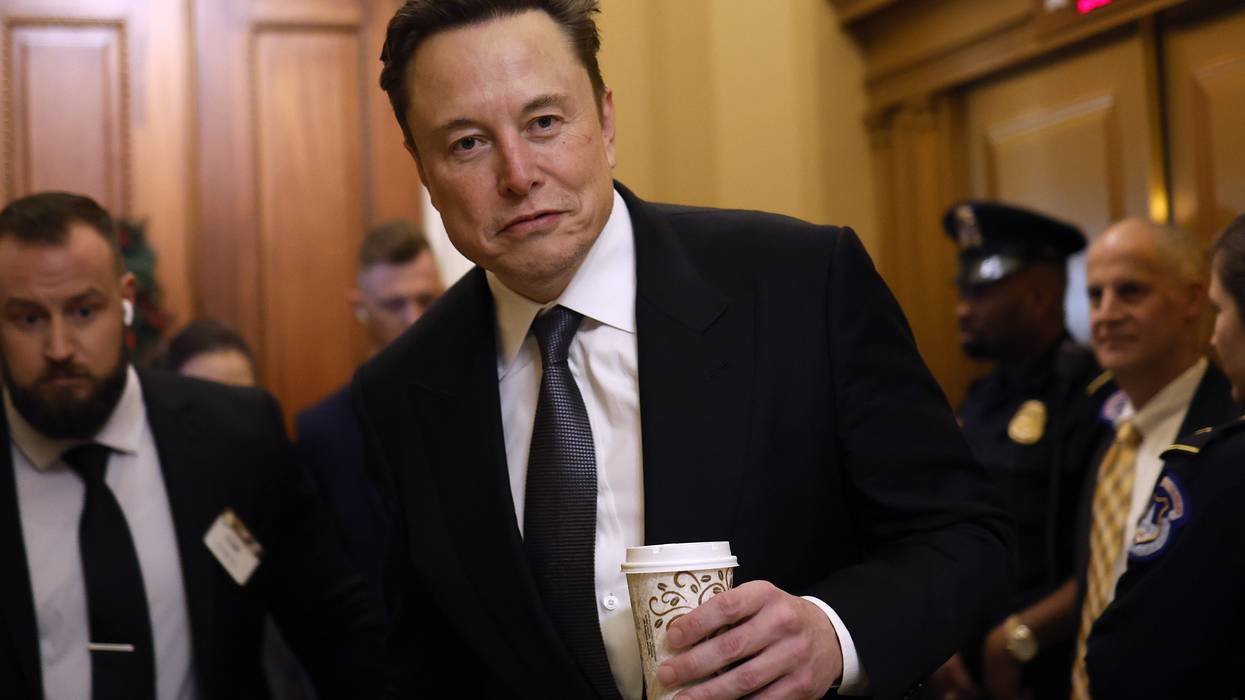
"This fight is about fairness, accountability, and the integrity of our government," said AFGE national president Everett Kelley.
The legal fight over President Donald Trump's "Department of Government Efficiency" kicked off less than hour into his presidency with a flurry of lawsuits filed in federal court—including multiple that allege the body is in violation of the the 1972 Federal Advisory Committee Act.
Trump tapped billionaire and Tesla CEO Elon Musk and tech entrepreneur Vivek Ramaswamy to run the Department of Government Efficiency (DOGE), which was conceived by Trump to help aid with cuts to government spending and regulation. (Ramaswamy, however, is reportedly departing DOGE to launch a bid for Ohio governor).
In a Monday statement announcing one of the lawsuits, Skye Perryman, CEO of Democracy Forward, said that "allowing unelected billionaires to run roughshod over essential services without being transparent about their operations does not achieve the efficiency the American people want to see from their government and only threatens to further undermine the public's trust."
Democracy Forward is serving as co-legal counsel in one of three lawsuits alleging Federal Advisory Committee Act violations. That complaint was filed by a diverse group of plaintiffs, including the advocacy organization the American Public Health Association, the union the American Federation of Teachers, the veterans group the Minority Veterans of America, the progressive veterans group VoteVets Action Fund, the consumer advocacy group the Center for Auto Safety, and the watchdog group Citizens for Responsibility and Ethics in Washington (CREW).
A second was filed by the watchdog group Public Citizen, the watchdog nonprofit State Democracy Defenders Fund, and the federal employees union the American Federation of Government Employees (AFGE). A third was filed by the public interest firm the National Security Counselors.
"This fight is about fairness, accountability, and the integrity of our government," said AFGE national president Everett Kelley in a statement Monday. "Federal employees are not the problem—they are the solution. They deserve to have their voices heard in decisions that affect their work, their agencies, and the public they serve."
Plaintiffs in the first three suits argue that DOGE is operating as a federal advisory committee but not adhering to regulations overseeing those bodies.
Under the 1972 law, federal advisory committees—bodies that advise federal decision-makers on policy, which are also known as FACAs—must do things like furnish meeting minutes and make their meetings open to the public. The groups must also establish a charter and ensure the viewpoints of its members are "fairly balanced."
According to the complaint co-authored by lawyers with Democracy Forward and CREW, the defendants—who include DOGE and the Office of Management and Budget—"have taken no action to comply with FACA, including by making a formal determination that DOGE's creation serves the public interest, nor have they filed a charter identifying the scope of DOGE’s work."
The lawsuit also alleges that "DOGE's membership does not include anyone who brings the perspective of the people and communities that will be most directly affected by the drastic cuts to the federal programs and services that DOGE will recommend."
The complaint co-authored by Public Citizen also makes the same argument regarding balanced viewpoints. Each of the plaintiffs listed in that suit appealed to have representatives from their respective groups join DOGE in order to offer expertise, according to the filing.
" Elon Musk and Vivek Ramaswamy both hold financial interests that will be directly affected by federal budgetary policies—presenting substantial conflict of interest concerns," said Lisa Gilbert, co-president of Public Citizen, in an early January statement regarding her request to join DOGE.
Two of Musk's companies account for at least $15.4 billion in government contracts over the past 10 years, according to New York Times reporting from October. Ramaswamy's perch atop DOGE could also present conflicts of interest stemming from financial interests he has in multiple companies with exposure to the federal government, the Times reported before revelations of his plans to leave DOGE.
Also Monday, the conservation organization the Center for Biological Diversity sued to obtain public records showing how "people claiming to represent DOGE" have communicated with the White House since the presidential transition began.
In t complaint, the Center for Biological Diversity argues that they filed an unfilled public records request with the Office of Management and Budget for materials that would "shed valuable light on any directives or communications with OMB regarding DOGE and its objectives, which will shed light on the new administration's intended operations and responses as they take office."
"Whether it's Trump or Elon Musk who's really running the government, we're a nation of laws and the people have a right to know what Musk and his cronies have been up to during the transition," said Kierán Suckling, executive director of the Center for Biological Diversity, in a statement Monday.
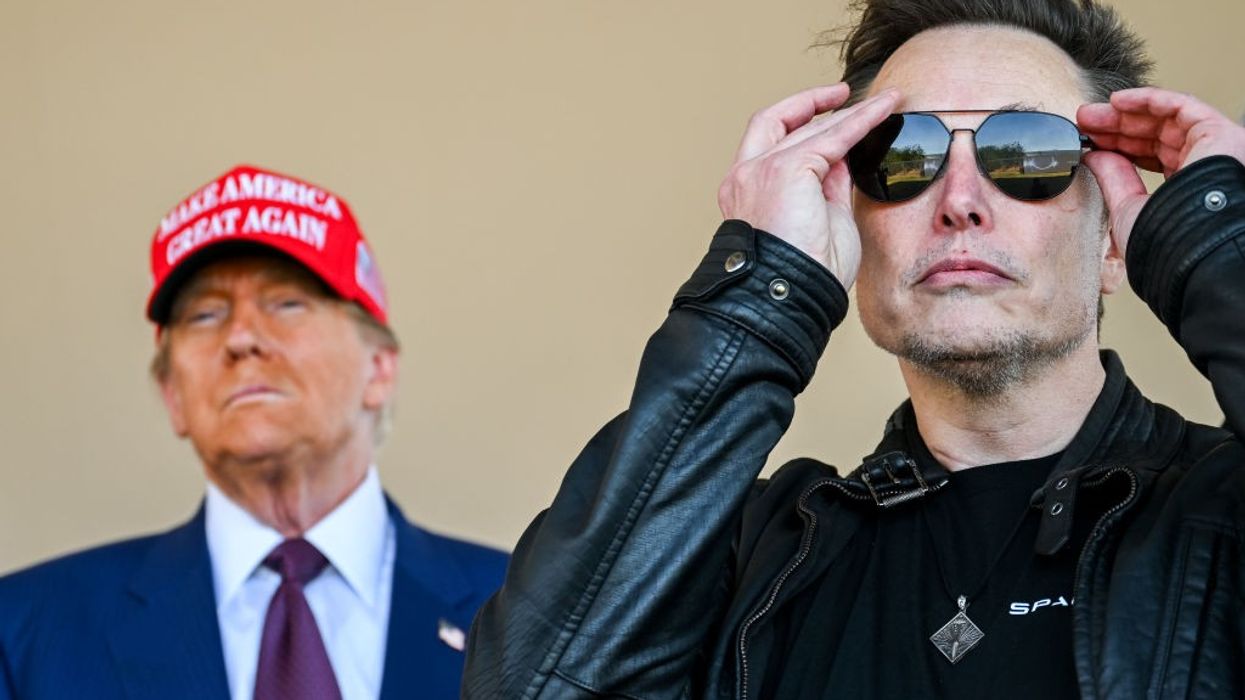
Is DOGE just short for greedy libertarian billionaire dipshits?
This week, Elon Musk and Vivek Ramaswamy, the co-directors of a non-existent Department of Government Efficiency (or DOGE), authored a Wall Street Journal op-ed outlining their vision for restructuring the entire federal government. The piece, entitled “The DOGE Plan to Reform Government," is notable for the combination of its breadth in scope and utter cluelessness.
As a key point, the duo decries “millions of unelected, unappointed civil servants” within an “ever-growing bureaucracy [which] represents an existential threat to our republic.” In fact, there are currently a total of less than 3 million federal civilian employees. This workforce is smaller than the same total in 1990. It is also smaller than the federal civilian workforce at the end of World War II, some 80 years ago.
Contrary to the impression that federal employment is spiraling out of control, overall, the total federal workforce has remained largely static, despite steady population growth over the decades. In addition, well more than one-third of all federal civilian employees now work in just three agencies: Defense, Veterans Affairs, and Homeland Security. These departments are hardly hotbeds of what they are calling “illicit regulations.”
Their assumption, prior to any analysis, is that thousands of federal workers should be fired. Their thesis does not allow for the possibility that some federal agencies are significantly understaffed. Also unmentioned are government contractor jobs, such as those at Musk’s Space X, estimated to number well more than double the total of all federal civilian employees who are supposed to manage this ever-growing stream of funding with fewer people.
To guide these reductions, they propose that the “number of federal employees to cut should be at least proportionate to the number of federal regulations that are nullified.” What, if anything, does that mean for agencies such as the National Park Service, Social Security Administration, or the State Department—agencies with big workforces but little regulatory footprint?
Contrary to the impression that federal employment is spiraling out of control, overall, the total federal workforce has remained largely static, despite steady population growth over the decades.
Even more striking is that these two themselves concede they do not have any concrete idea of what needs to be changed. That is because, as they profess, they are “entrepreneurs” with no expertise in this field. Instead, this effort will rely upon a yet-to-be-assembled “lean team of small-government crusaders, including some of the sharpest technical and legal minds in America.”
Presumably, these "sharpest minds" will want to be paid a salary commensurate with their market value. Consequently, this hiring spree would be a curious first step in an effort to cut costs and reduce federal payrolls.
Despite pledging to cutback agency staffing, Musk and Ramaswamy say they will be working “with experts embedded in government agencies, aided by advanced technology” to compile a “list of regulations” for President Trump to suspend enforcement or “initiate the process for review and rescission.” Notably, these embedded, apparently otherwise unoccupied “experts” resemble the very people this duo wants to fire on day one.
Moreover, the idea that “advanced technology” would serve as a magic wand to analyze the need for regulations sounds somewhat fanciful. Presumably, in this world of regulation by chatbots, AI would need a detailed orientation before being effectively unleashed government-wide.
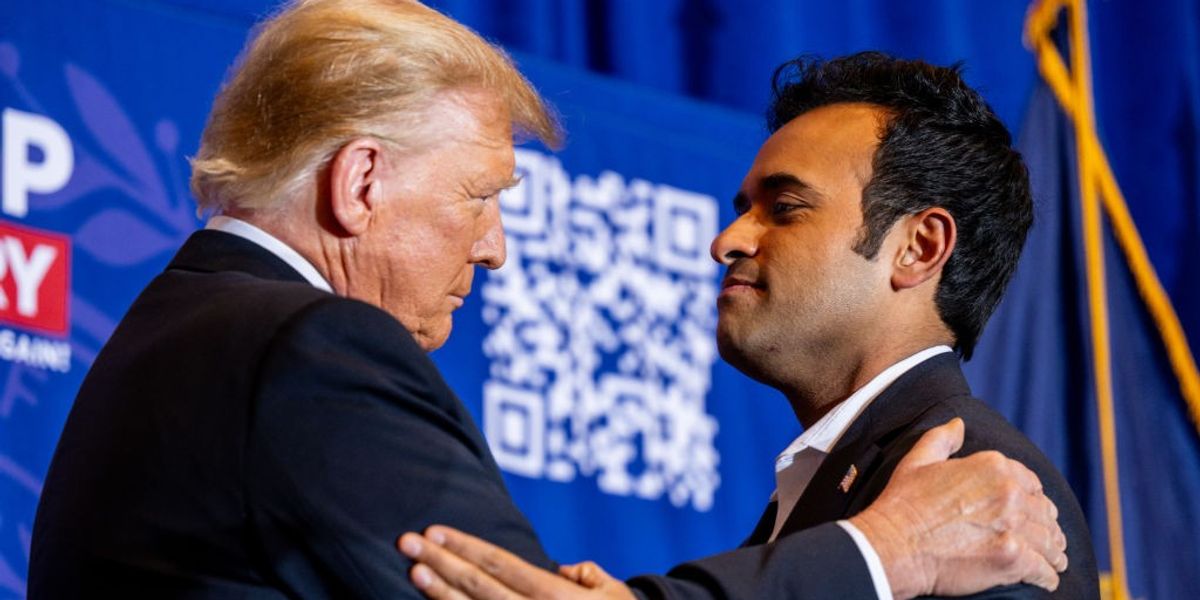 Republican presidential candidate, former U.S. President Donald Trump greets U.S. entrepreneur Vivek Ramaswamy while speaking during a campaign rally at the Atkinson Country Club on January 16, 2024 in Atkinson, New Hampshire. (Photo by Brandon Bell/Getty Image)
Perhaps the most eyebrow-raising part of their essay is their vow to stand up to the “entrenched interests in Washington” who benefit from unjustified government largesse. Yet, one of the most favored special interests, in terms of billions in subsidies consumed, is the oil and gas industry. This is the same industry that Candidate Trump has promised behind closed doors to protect in return for their campaign contributions. This is one promise he can be expected to keep.
In addition, despite portraying themselves as disinterested “volunteers” guided only by the U.S. Constitution as their "North Star," Mr. Musk has substantial business dealings with the federal government. Presumably, the billions NASA spends on Space X contracts will be spared DOGE's harshest scrutiny.
One of the very few specific examples the pair cites is the nearly trillion-dollar Pentagon, which cannot pass an agency-wide audit. However, to manage this fiscal behemoth, President-elect Trump has tapped Pete Hegseth, a person with no discernible management experience whatsoever.
Nor is it a promising sign that the House of Representatives is creating a new subcommittee to liaison with DOGE to be headed by one Marjorie Taylor Greene. This would appear to illustrate the widely held belief that cluelessness is not a quality improved by doubling down.