

SUBSCRIBE TO OUR FREE NEWSLETTER
Daily news & progressive opinion—funded by the people, not the corporations—delivered straight to your inbox.
5
#000000
#FFFFFF
To donate by check, phone, or other method, see our More Ways to Give page.
Daily news & progressive opinion—funded by the people, not the corporations—delivered straight to your inbox.
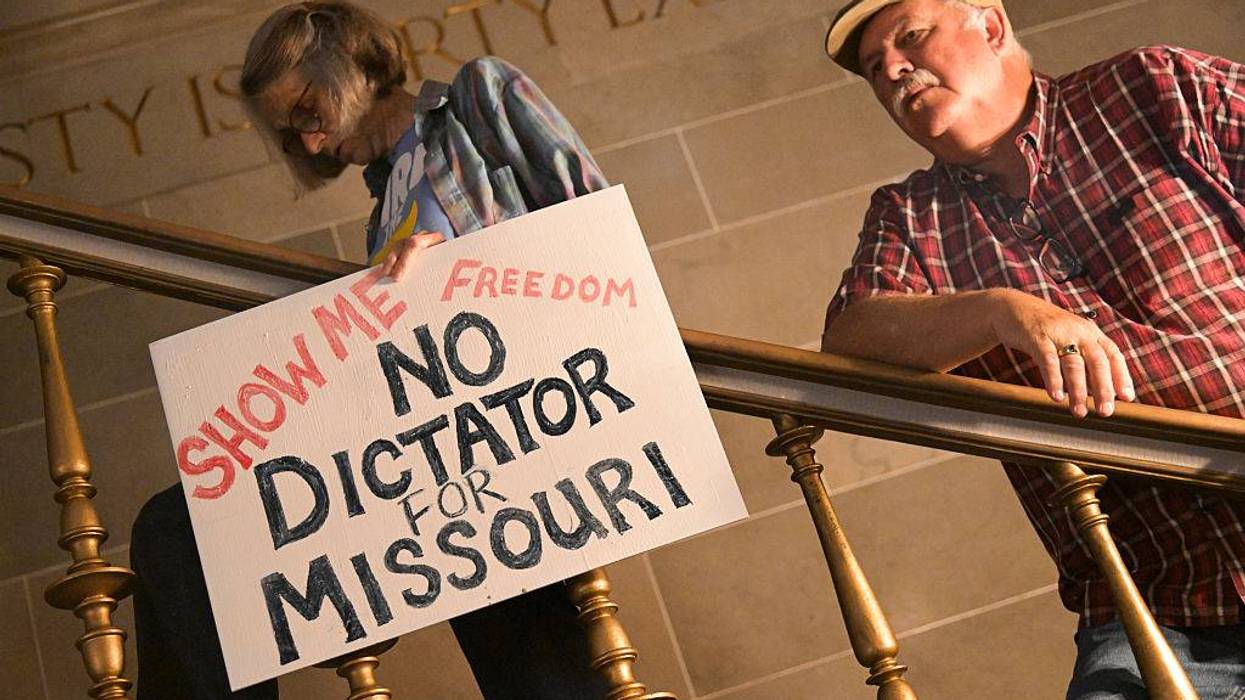
"What voters are saying now is that democracy is sacred."
Organizers in Missouri on Sunday said they reached an important milestone in a campaign to put a constitutional amendment on the ballot this year that would stop Republican officials in the state from trying to sabotage ballot initiatives.
Respect Missouri Voters, a coalition aimed at protecting and strengthening the state's ballot initiative process, announced that it has delivered more than 367,000 signatures to the Missouri Secretary of State's office in favor of a constitutional amendment that enact two key policies to protect voter-passed laws.
First, as the Fairness Project summarized on Monday, it would "require that all future ballot measures in the state be summarized for voters in fair, clear, and easily understandable terms"; and second, it would demand "that any attempt by the Legislature to refer a voter-approved measure back to the ballot clear an 80% threshold in each chamber, a high bar designed to prevent politicians from undoing what voters have already decided."
The first part of the amendment is aimed at addressing problems created by Republican Missouri Secretary of State Denny Hoskins, who has repeatedly been taken to court for writing ballot initiative summaries that advocates say are misleading or provide incomplete information about what the initiatives would do.
As the Missouri Independent reported in February, a total of five summaries written by Hoskins have been thrown out by courts since October, as "judges at every level of Missouri’s court system have stepped in to block or rewrite ballot language" drafted by the secretary of state.
The second part of the amendment, meanwhile, was written in response to Republican legislators' efforts to overturn ballot initiatives passed in 2024 that legalized abortion in Missouri and established mandatory paid sick leave.
Kelly Hall, executive director of the Fairness Project, a key backer of Respect Missouri Voters, said the gathering of more than 367,000 signatures is "a promising milestone for Missouri voters and for direct democracy."
"Perhaps more than in any other state, voters in Missouri understand what is at stake,” Hall added. "It’s in Missouri that extremist politicians have worked overtime to undermine the will of their voters, whether it’s been fighting to reinstate a wildly unpopular ban on access to abortion care, gerrymandering congressional districts, or undermining the ballot measure process. What voters are saying now is that democracy is sacred."
However, it's not just Missouri where direct democracy is under attack. The Fairness Project reported last September that “extremist” legislators across the United States “escalated their efforts to dismantle the ballot measure process in 2025 by 95%.”
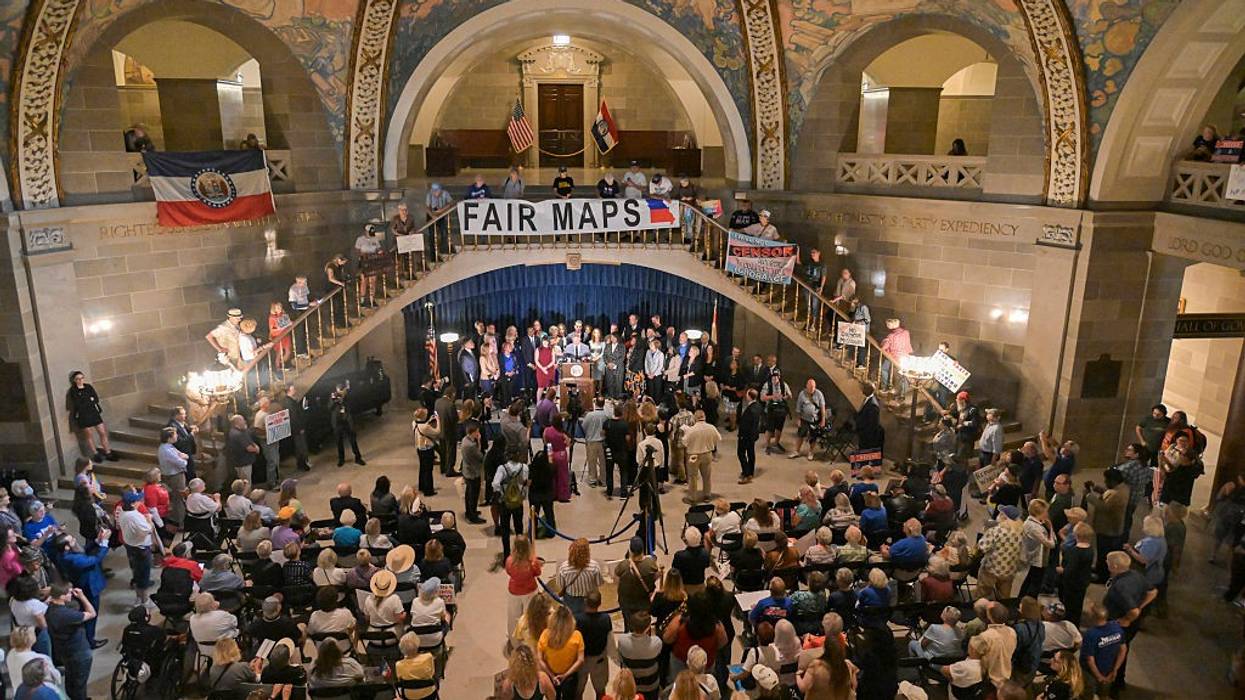
"If our communities are needlessly split by these new lines, we would no longer see our strong values reflected in the priorities of our congressional representatives," said plaintiff Terrence Wise.
Missouri voters sued on Friday after GOP state legislators sent a new congressional map, rigged for Republicans at the request of US President Donald Trump, to Gov. Mike Kehoe's desk.
Republicans' pending map for the 2026 midterm elections targets the 5th Congressional District, currently represented by Democratic Rep. Emanuel Cleaver. Voters from the district, including Missouri Workers Center leader Terrence Wise, launched the legal challenge, represented by the Campaign Legal Center along with the state and national ACLU.
"Kansas City has been home for me my entire adult life," said Wise. "Voting is an important tool in our toolbox, so that we have the freedom to make our voices heard through a member of Congress who understands Kansas City's history of racial and economic segregation along the Troost Divide, and represents our needs. If our communities are needlessly split by these new lines, we would no longer see our strong values reflected in the priorities of our congressional representatives."
Marc Elias, the founder of Democracy Docket and an elections attorney for Democrats, also repeatedly vowed this week that "if and when the GOP enacts this map, Missouri will be sued."
"Missouri Republicans have ignored the demands of their constituents in order to follow the demands of a power-hungry administration in Washington."
The governor called a special session for the map after Texas Republicans successfully redrew their congressional districts to appease Trump last month. Kehoe said on social media Friday that "the Missouri FIRST Map has officially passed the Missouri Senate and is now headed to my desk, where we will review the legislation and sign it into law soon."
Former US Attorney General Eric Holder Jr., who now leads the National Democratic Redistricting Committee, warned in a statement that "Missouri is now poised to join North Carolina and Texas as among the most egregiously gerrymandered states in the nation. Missouri Republicans have ignored the demands of their constituents in order to follow the demands of a power-hungry administration in Washington."
"Missouri Republicans rejected a similar gerrymander just three years ago," Holder pointed out. "But now they have caved to anti-democracy politicians and powerful special interests in Washington who ordered them to rig the map. These same forces ripped away healthcare from millions of Americans and handed out a tax cut to the very wealthy."
"Republicans in Congress and the White House are terrified of a system where both parties can compete for the House majority, and instead seek a system that shields them from accountability at the ballot box," he added. "Missourians will not have fair and effective representation under this new, truly shameful gerrymander. It is not only legally indefensible, it is also morally wrong."
As The Kansas City Star reported, Democrats, who hold just 10 of the Missouri Senate's 34 seats, "attempted to block the legislation from coming to a vote through multiple filibusters," but "Republicans deployed a series of rarely used procedural maneuvers to shut down the filibusters and force a vote," ultimately passing the House-approved bill 21-11 on Friday.
"What we're seeing in Jefferson City isn't just a gerrymander, it's a dangerous precedent," said Missouri state Rep. Ray Reed (D-83), who engaged in a sit-in at the House to protest the bill. "Our institutions only work when we respect the process. Skipping debate, shutting out voices, and following orders from Donald Trump undermines the very foundation of our democracy."
Cleaver said in a Friday statement that he was "deeply disappointed" with the state Legislature, and he knows "the people of Missouri share in that disappointment."
"Despite tens of thousands of Missourians taking the time to call their state lawmakers and travel to Jefferson City to voice their opposition," Cleaver said, "Republicans in the Missouri Legislature followed the marching orders dictated by power brokers in DC and took the unprecedented step of enacting mid-decade redistricting without an updated census."
"I want to be very clear to those who are frustrated by today's outcome: This fight is far from over," he added. "Together, in the courts and in the streets, we will continue pushing to ensure the law is upheld, justice prevails, and this unconstitutional gerrymander is defeated."
In addition to court challenges, the new congressional map is also the target of People NOT Politicians, a group behind a ballot measure that aims to overturn it.
"This is nothing less than an unconstitutional power grab—a blatant attempt to rig the 2026 elections before a single vote is cast," Elsa Rainey, a spokesperson for the group, said after the Senate vote. "It violates Missouri law, slices apart communities, and strikes at the core of our democratic system."
During Kehoe's special session, Missouri Republicans also passed an attack on citizen initiative petitions that, if approved by voters, will make it harder to pass future amendments to the state constitution—an effort inspired by GOP anger over progressive victories at the ballot box on abortion rights, Medicaid, and recreational marijuana.
"By calling this special session and targeting citizens' right to access the ballot measure process, Missouri's governor and his allies in the state Legislature are joining a growing national movement dedicated to silencing citizens and undermining our democracy," said Kelly Hall, executive director of the Fairness Project.
The Fairness Project, which advocates for passing progressive policy via direct democracy, earlier this week published a report detailing how "extremist" legislators across the United States are ramping up efforts to dismantle the ballot measure process.
"Sadly, what we are seeing in Missouri is nothing new, but we as Americans should all be horrified by what is happening in Jefferson City and condemn the attempts by this governor and his allies in the Legislature to further erode our cherished democracy," Hall said Friday. "With this special session, extremist politicians in Missouri have declared war on direct democracy and vowed to silence the very citizens they have sworn to represent."
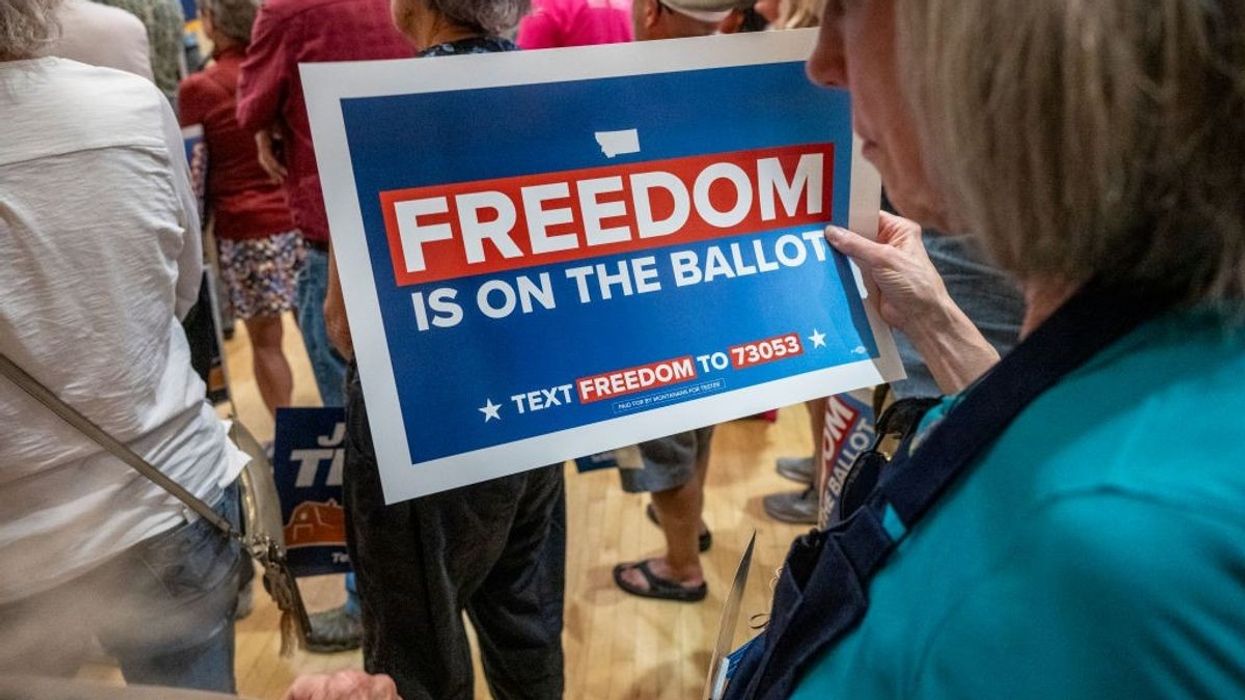
As Missouri House Republicans on Tuesday advanced a congressional map rigged for the GOP and new limits for citizen initiative petitions, an advocacy group that promotes progressive policies via direct democracy revealed that "extremist" legislators across the United States "escalated their efforts to dismantle the ballot measure process in 2025 by 95%."
The Fairness Project has "won 39 ballot measures to raise wages, protect abortion rights, stop predatory payday lenders, expand healthcare access, secure more paid time off, and other life-changing policies for more than 23 million people." The group's new report, Direct Democracy Under Assault, details recent GOP moves to thwart such progress.
"During the 2023 legislative session, 76 bills were introduced that would restrict or undermine the ballot initiative process, which was until then the highest number on record," according to the report. "For further perspective, only 33 ballot measure attack bills were tracked in 2017, and a grand total of 377 bills attacking ballot measure processes were proposed by state legislatures in the 23-year span between 2000 and 2023. To see 148 in a single year, 2025, is an extreme acceleration."
"Lawmakers have not just been toying with the idea of undermining ballot measure processes; they've been passing these attacks into law," the publication emphasizes. "As of June 2025, 51 bills altering the ballot measure process had already passed state houses. For comparison, the annual average of enacted attacks on direct democracy between 2018 and 2023 was 34 enacted bills. Once again, 2025 is a troubling outlier."
"The erosion of our democracy isn't just happening in the Oval Office; it's happening in our home states when politicians attack the ballot measure process."
This year's GOP-led efforts to limit direct democracy at the state level come as Republican US President Donald Trump has returned to power and swiftly engaged in various attacks on democracy, from gutting the federal government—including the voting rights unit at the Department of Justice—to issuing a series of unconstitutional executive orders.
"While citizens are rightfully focused on the horror unfolding in Washington, extremist politicians are taking advantage of the moment and attacking the most powerful tools voters have at their disposal to make their voices heard," said Kelly Hall, the Fairness Project's executive director. "The erosion of our democracy isn't just happening in the Oval Office; it's happening in our home states when politicians attack the ballot measure process and replace the will of the voters with their own political agendas."
State legislators have pursued a range of attacks on the ballot measure process. The report notes that "one common tactic—used in states like Ohio, Missouri, Florida, Arizona, and Arkansas—is raising the threshold for passage to a supermajority, making it harder for citizen-led initiatives to succeed."
"Other strategies include increasing signature requirements, imposing strict rules on how and where signatures can be gathered, limiting what issues a ballot measure can address, and imposing high costs on advocates attempting to use their direct democracy rights," the document continues.
Hall stressed that "this isn't reform; it's a calculated effort to strip voters of their constitutional right to shape policy."
While the project tracked bills across 15 states, the report gives special attention to eight "where especially aggressive efforts threaten to significantly erode voters' access to direct democracy." They are Arkansas, Florida, Missouri, Montana, North Dakota, Oklahoma, South Dakota, and Utah.
In Arkansas, for example, during the 2025 legislative session alone, state lawmakers imposed burdensome rules on local initiatives, "criminalized small mistakes," passed restrictions on ballot language, gave the attorney general veto power over petitions, and more. The report says that "taken together, these laws represent a coordinated and deeply undemocratic
effort to strip power from Arkansas voters and insulate elected officials from direct public accountability."
The League of Women Voters of Arkansas is fighting back, and in April filed a federal lawsuit against eight new laws that David Couch, the plaintiffs' lead attorney, said "weaponize bureaucracy to suppress citizen participation and violate the fundamental rights guaranteed by both the Arkansas and US Constitutions."
There's also litigation in Florida and Oklahoma, while in North Dakota, South Dakota, and Utah, voters will decide next year whether to raise the threshold for future constitutional amendments or citizen-initiated ballot measures from a simple majority to 60%.
"Every voter should be alarmed that politicians are systematically taking away our rights to make change through the ballot," said Hall. "This isn't a time to back down—in fact, these cowardly attacks only underscore the urgent need to defend ballot measures and, by extension, defend our democracy."
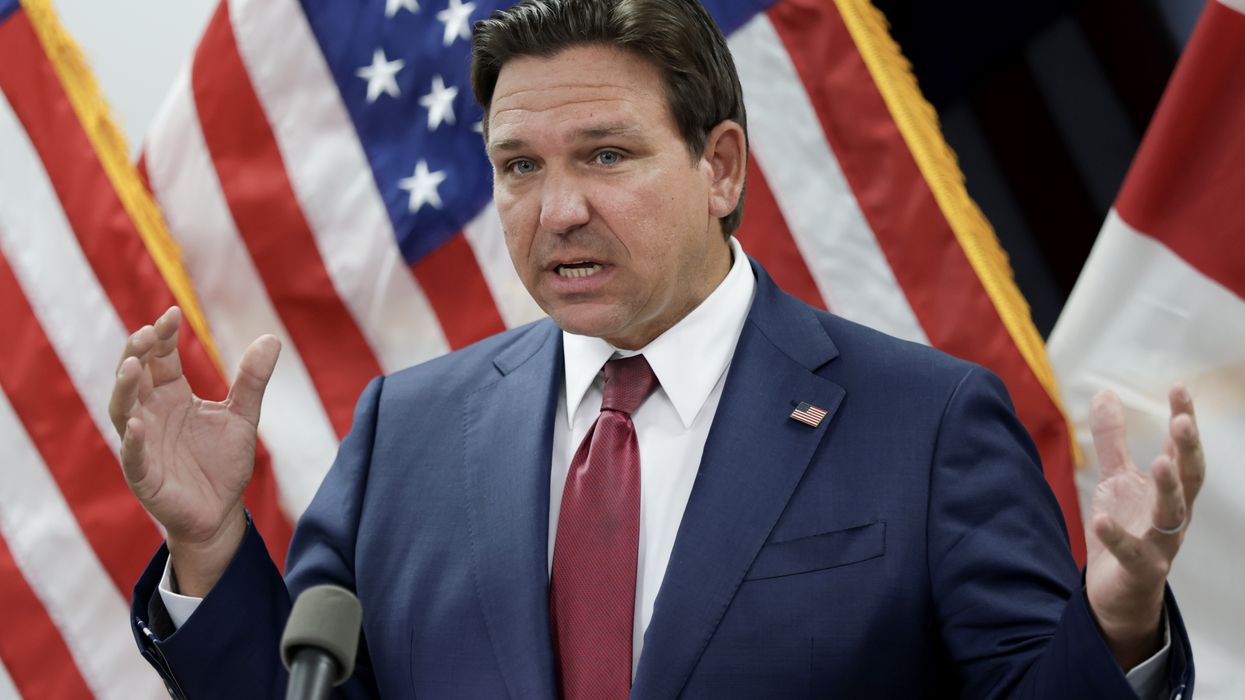
"We believe in democracy, and we believe that when politicians fail to act, the people have the right to step in," said the campaign manager of Florida Decides Healthcare, a plaintiff in the suit.
Florida Decides Healthcare, a political committee and nonprofit that is fighting for expanded Medicaid eligibility in the Sunshine State, on Sunday sued the Florida secretary of state and other state officials, challenging a law Republican Gov. Ron DeSantis signed last week that makes it tougher for citizens to get constitutional amendments on the ballot.
According to the lawsuit, which was filed in federal court, Florida Decides Healthcare (FDH) is working to qualify a ballot measure to appear on the 2026 general election ballot that, if voted through, would expand Medicaid coverage in Florida.
Provisions in H.B. 1205 include decreased time for organizers to submit signed petitions and increased monetary penalties for violations. The law also makes it a third-degree felony for anyone other than a registered petition circulator to collect or physically possess more than 25 signed petition forms beyond ones own and immediate family members.
"Because of H.B. 1205's punitive and onerous restrictions, set to go into effect in the middle of FDH's ongoing petition drive, the organization faces the real and imminent threat of being unable to continue its operations," according to the suit. "H.B. 1205 creates intolerable uncertainty, exposes FDH to ruinous civil and criminal penalties, and could ultimately force FDH to shut down its campaign entirely."
According to a statement from FDH, the lawsuit contends that the bill is a "direct assault" on the citizen-led constitutional amendment process in Florida, "a vital democratic tool that gives everyday Floridians the power to propose ballot initiatives."
H.B. 1205 creates "vague" and "punitive" restrictions around the process that will have a chilling impact on political speech and dissuade civic engagement, according to the group.
The Elias Law Group, a prominent Democratic law firm, and the Southern Poverty Law Center, a racial justice and legal advocacy group, are lending legal support to FDH.
This targeting of the citizens amendment process comes less than one year after two ballot initiatives in Florida narrowly failed. Amendment 4 sought to ensure the right to an abortion up until fetal viability. The measure narrowly failed, falling short of the 60% majority needed to pass, meaning Florida will remain under a six-week abortion ban. Amendment 3 sought to legalize marijuana and also failed. Groups backing the initiatives raised tens of millions of dollars.
According to the Orlando Sentinel, the DeSantis administration used public money to run ads targeting the initiatives, and defended the ad campaigns as educational.
"Floridians have a constitutional right to change policy themselves. State legislators have now effectively silenced their constituents, all in order to maintain their chokehold on policymaking," said Kelly Hall, executive director of the Fairness Project, in a statement on Tuesday. The Fairness Project was among the groups that backed Amendment 4 last fall.
"It's the ultimate cowardly act—for politicians to enact minority rule when they know their policies don't align with the will of the majority," Hall added. "Sadly, this is nothing new for DeSantis, who used extraordinarily undemocratic means to block the will of the people during the 2024 election."
Mitch Emerson, campaign manager for Florida Decides Healthcare, similarly called the law "cowardly." Emerson is also a plaintiff in the suit.
"It's not reform—it's repression. We are filing this lawsuit because we refuse to let them silence the people of Florida," said Emerson in a statement on Monday. "We believe in democracy, and we believe that when politicians fail to act, the people have the right to step in. Floridians are ready to vote for Medicaid expansion—and we intend to make sure they get that chance."
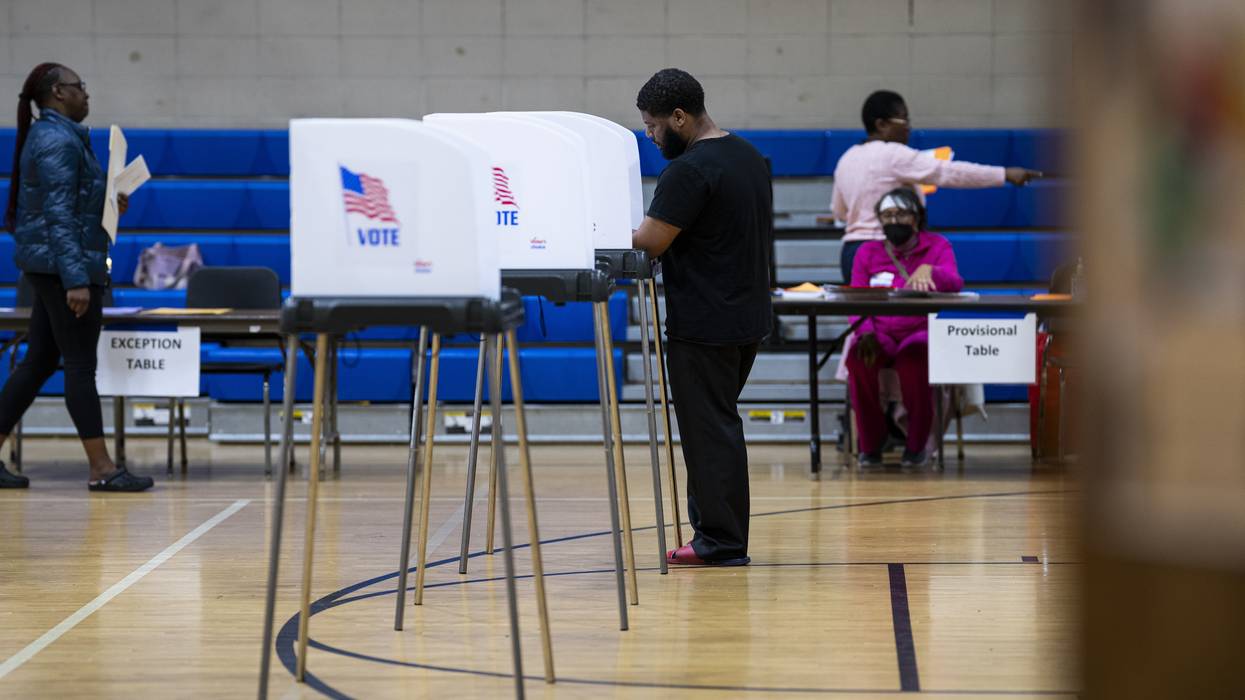
"Ballot measures have been a lifeline to working people," said one campaign leader. "Legislators are trying to systematically take that power away."
As Americans face the reality of President Donald Trump's second term and the mass firings, takeover of federal agencies by billionaire mogul Elon Musk, and looming trade war that have come with it, the direct democracy advocacy group Fairness Project warned of a "major attack" on voters' rights taking place at the state level across the country.
While many in the U.S. have been focused on the actions of the Trump administration, said the group in a Thursday statement, legislators in over 15 states have introduced more than 100 bills to stop citizen-led initiatives from being placed on ballots in upcoming elections—and to stop them from becoming law even if a majority of voters support the measures.
"We're sounding the alarm: Direct democracy is being threatened right under our noses," said Kelly Hall, executive director of the Fairness Project. "Ballot measures have been a lifeline to working people in red and purple states, allowing them to make change even when politicians fail to represent their interests. Legislators are trying to systematically take that power away."
The Fairness Project has supported dozens of successful ballot measure campaigns to expand healthcare access, raise minimum wages, and win paid time off policies for roughly 18 million people across the country.
The group was the biggest funder of abortion rights ballot measures in the last election cycle, working to ensure campaigners in Missouri and Arizona collected enough signatures to get questions about expanding abortion rights on ballots. Both ballot initiatives were approved by voters in November.
The Fairness Project was also involved in a 2023 campaign to stop a Republican-backed measure in Ohio that would have required a 60% supermajority to pass any future constitutional amendments.
In six of the states currently pushing attacks on ballot measures—Oklahoma, Arizona, Missouri, North Dakota, South Dakota, and Idaho—Republicans are making similar attempts to raise the threshold for passing ballot measures from a simple majority to 60%.
If they succeed in passing the proposals, said the Fairness Project, the GOP will be "effectively enacting minority rule."
Lawmakers are also advancing bills that would apply onerous signature requirements to the ballot measure process.
In Florida, Republican Gov. Ron DeSantis' proposed changes to ballot initiative laws include requiring individual voters to complete a petition in person at an election office or by mail in order to express support for a measure, instead of allowing sponsors to pay workers to collect signatures in public.
"They want to kill the process," Angelo Paparella, president of a group that has run several petition drives in the state, told Axios last month.
The Arkansas state Senate this month passed several bills regulating how citizen-led initiatives make it onto ballots, including one requiring canvassers to request a photo ID from signers; one requiring potential signers to read the ballot title of a petition or have it read aloud to them; and one requiring canvassers to file an affidavit certifying they complied with state law when collecting signatures.
"This is their playbook: When cowardly politicians know they can't win with voters on the issues, they try to change the rules of the game," Hall said Thursday.
Earlier this week, Mississippi voters once again lost out on the chance to place measures on statewide ballots, which was permitted in the state until the state Supreme Court struck down the ballot initiative process in 2021.
Lawmakers allowed a proposal to partially restore the process to die ahead of a legislative deadline.
"This means voters still have no direct way to propose new state laws, to change state laws, or to change the Constitution," reported Taylor Vance of Mississippi Today.
Hall said the Fairness Project will continue fighting attacks on representative direct democracy nationwide.
"Voters are paying attention to this widespread attack on their constitutional rights, and they're fighting back," said Hall. "Americans deserve leaders who respect our democracy."

"The people voted, the court responded, and we will do our part: serving Missourians in their home state," said the president and CEO of Comprehensive Health of Planned Parenthood Great Plains.
Reproductive rights groups celebrated on Friday after a Missouri judge temporarily blocked significant abortion restrictions that were kept in place despite voters' approval of a constitutional amendment guaranteeing the right to the procedure.
Comprehensive Health of Planned Parenthood of Great Plains announced that "abortion care will be restored immediately" following the decision from Judge Jerri Zhang, who sided with Planned Parenthood in blocking licensing rules that advocates said were a major obstacle to abortion access.
As The Associated Press reported, "Planned Parenthood argued that the licensing law required providers to give 'medically unnecessary and invasive' pelvic exams to anyone receiving an abortion, including medication abortions."
"It also included 'medically irrelevant' size requirements for hallways, rooms, and doors," AP added.
Alexis McGill Johnson, president and CEO of Planned Parenthood Federation of America, said in a statement that the Friday ruling "is the direct result of Missouri abortion providers' tenacity and determination to fight for their patients."
"As our fight for patients' access to abortion continues across the country, we will look towards the brave providers and advocates in Missouri, who weathered years of attacks while continuing to serve their communities," said McGill Johnson. "Not only are they making abortion access a reality in Missouri, but they are showing us the way forward. Planned Parenthood Federation of America is proud to continue this fight alongside Missouri's advocates and healthcare providers, until every person can exercise their right to reproductive freedom."
Kelly Hall, executive director of the Fairness Project, applauded the ruling as "a decisive win for the people, for reproductive freedom, and for direct democracy."
The judge's decision came as Missouri Republicans continued working to reverse the abortion rights amendment approved by state voters in November.
The Missouri Independent reported last month that "Republican lawmakers have already filed dozens of bills aimed at weakening or overturning Amendment 3," proposals that include "returning to voters to ask to re-impose Missouri's abortion ban, as well as smaller measures attempting to set parameters around" the amendment.
Emily Wales, president and CEO of Comprehensive Health of Planned Parenthood Great Plains, said Friday that "today's decision is a triumph for all Missourians: for the voters who demanded their rights, for the medical providers we trust to provide care, and most importantly, for patients who will now be able to receive high-quality care without fear."
"The people voted, the court responded, and we will do our part: serving Missourians in their home state," Wales added.
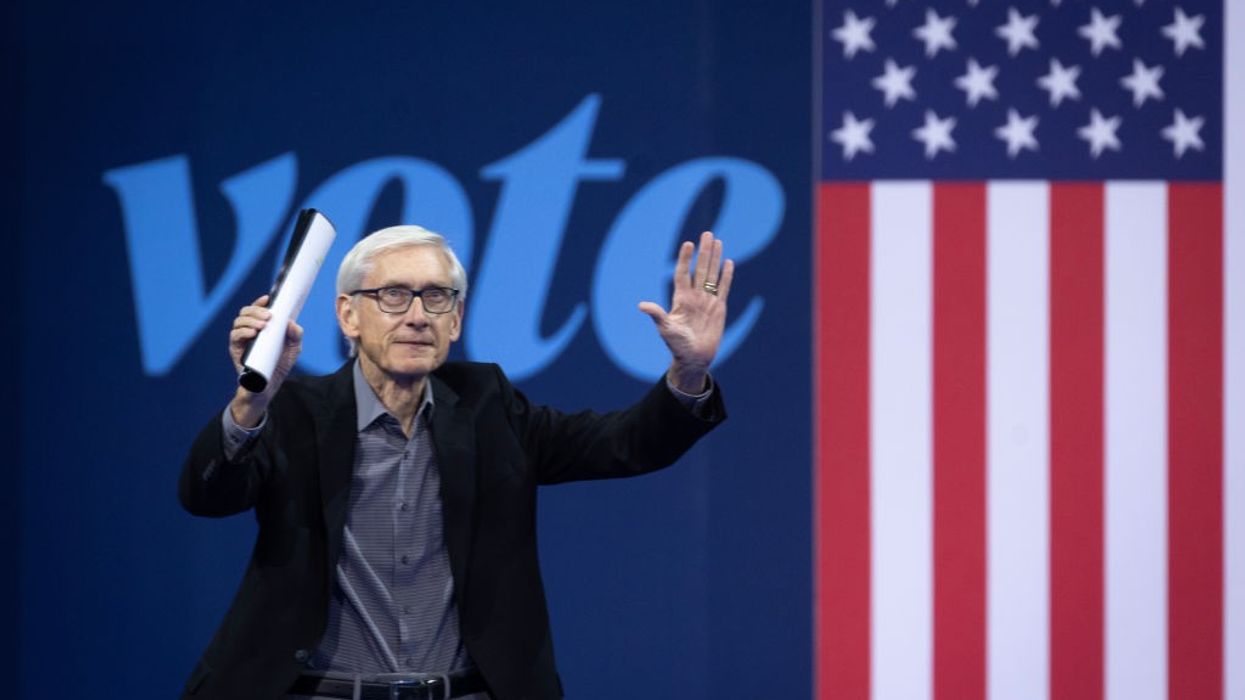
Gov. Tony Evers' suggested priorities for state ballot measures include abortion rights, expanding public healthcare for low-income people, gun safety reform, and marijuana legalization.
Amid discussions across the United States about how to fight for progressive policies given the federal government's looming Republican trifecta, Democratic Wisconsin Gov. Tony Evers on Wednesday renewed his call for letting voters in his state initiate ballot measures.
" Republicans' message to Wisconsinites is crystal clear—anything that gives the people of Wisconsin a voice and direct input on the policies of our state is 'dead on arrival,'" Evers said in a Wednesday statement. "That's breathtaking."
Wisconsin is among the two dozen U.S. states that don't allow citizen-initiated ballot measures, according to Ballotpedia. In the Badger State, only lawmakers can put a proposed constitutional amendment on the ballot, after it passes two consecutive legislative sessions.
Evers, who is halfway through his second term, is fighting for a citizen-initiated option, despite opposition from Republican state lawmakers. The governor is including his proposal for ballot measures from voters in his budget for 2025-27, as he detailed in a video posted on social media.
"The will of the people should be the law of the land. Republican lawmakers have repeatedly worked to put constitutional amendments on the ballot that Republicans drafted, and Republicans passed, all while Republicans refuse to give that same power to the people of Wisconsin. And that's wrong," Evers told reporters on Friday, according to the Milwaukee Journal Sentinel.
Despite new political maps for the November elections, Republicans retained control of the Wisconsin State Legislature, with a 54-45 majority in the Assembly and 18-15 majority in the Senate. Key lawmakers, including Assembly Speaker Robin Vos (R-63) and Senate Majority Leader Devin LeMahieu (R-9), have made their opposition to Evers' proposal clear.
While opposing Evers' effort to boost direct democracy in the state, Wisconsin's Republican legislators have taken advantage of the state's existing process. The Senate on Wednesday voted along party lines for a proposed constitutional amendment to require voter ID for elections—continuing a trend from last year.
Evers' office explained that "Wisconsinites saw five statewide referenda questions in 2024—the most in a single year in over four decades, according to a report from the Milwaukee Journal Sentinel—all of which were drafted, legislatively passed, and placed on the ballot by Republican lawmakers, largely without direct input from the people of Wisconsin."
The governor said Wednesday that "Republican lawmakers in the next week are set to add yet another constitutional amendment to the ballot while telling Wisconsinites they can't have that same power. If Republicans are going to continue to legislate by constitutional amendment, then they should be willing to give Wisconsinites that same opportunity. Pretty simple stuff."
His office also suggested some potential ballot measure priorities: "legalizing and regulating marijuana, ensuring access to safe and legal abortion, expanding BadgerCare, and enacting commonsense gun safety reform policies."
Amid a fresh wave of Republican policymakers' attacks on reproductive freedom in the wake of the U.S. Supreme Court's right-wing majority reversing Roe v. Wade in 2022, several states have passed protections via ballot measures, including 7 of 10 states in November. Another top priority in recent cycles has been measures to help workers, including raising the minimum wage.
"As Americans prepare for the conservative headwinds in Washington, ballot measures offer a way to circumvent regressive political agendas and partisan gridlock to make change for working families, according to the Fairness Project, an advocacy group that supports progressive citizen-led initiatives.
The Fairness Project last month released a report detailing how it "has an unmatched number of victories on progressive ballot measure campaigns across the country, having won a total of 39 campaigns across 20 states since 2016," including nine efforts in the last cycle.
"We won in some of the deepest red, most conservative places in our country," noted Kelly Hall, the group's executive director, in a statement. "We won against vehement opposition and politicians who tried to stack the odds in their favor. And we won on issues like abortion, paid leave, and raising the minimum wage—issues politicians have failed to advance for their constituents for decades."
"We're not stopping. In fact, we're going on offense," Hall added. "The power of ballot measures is that the American people don't have to wait—they can make change themselves. And we intend to support them with everything we have."

"Anti-abortion opponents are trying everything to keep abortion rights questions away from voters—but their dirty tricks keep failing," said one campaigner.
Reproductive freedom defenders on Tuesday cheered the Missouri Supreme Court's restoration of an abortion rights referendum—one of numerous 2024 ballot initiatives seeking to codify access to the healthcare procedure in states from coast to coast.
Missouri's highest court overturned Cole County Judge Christopher Limbaugh's ruling removing Amendment 3—also known as the Right to Reproductive Freedom initiative—from the November 5 ballot. Limbaugh ordered Republican Missouri Secretary of State Jay Ashcroft, who decertified the measure on Monday, to place it back on the ballot.
“The majority of Missourians want politicians out of their exam rooms, and today's decision by the Missouri Supreme Court keeps those politicians out of the voting booth as well," Planned Parenthood Great Rivers Action vice president of external affairs Margot Riphagen
said on social media. "On November 5, Missouri voters will declare their right to reproductive freedom, ensuring decisions about our bodies and our healthcare—including abortion—stay between us, our families, and our providers."
Kelly Hall, executive director of the Fairness Project—which provides funding and technical assistance to abortion rights campaigns in Missouri, Arizona, Montana, and Florida—said in a statement that "anti-abortion opponents are trying everything to keep abortion rights questions away from voters—but their dirty tricks keep failing. They know that when voters have a say, reproductive freedom is upheld time and time again."
Chris Hatfield, a lawyer representing abortion rights groups in the case, told The New York Times: "This is a big deal. The court will send a message today about whether, in our little corner of the democracy, the government will honor the will of the people, or will have it snatched away."
Missouri has one of the nation's most draconian abortion bans, with the procedure
prohibited in almost all circumstances "except in cases of medical emergency." The ban—which dates to 2019—took effect when the U.S. Supreme Court overturned Roe v. Wade in 2022.
The Midwestern state joins
at least seven others in which abortion will be on the ballot this November. Every abortion rights ballot measure since the overturn of Roe has passed.
In neighboring Nebraska, the state Supreme Court on Monday
heard arguments in three lawsuits filed by activists trying to keep multiple abortion rights referenda off the ballot.
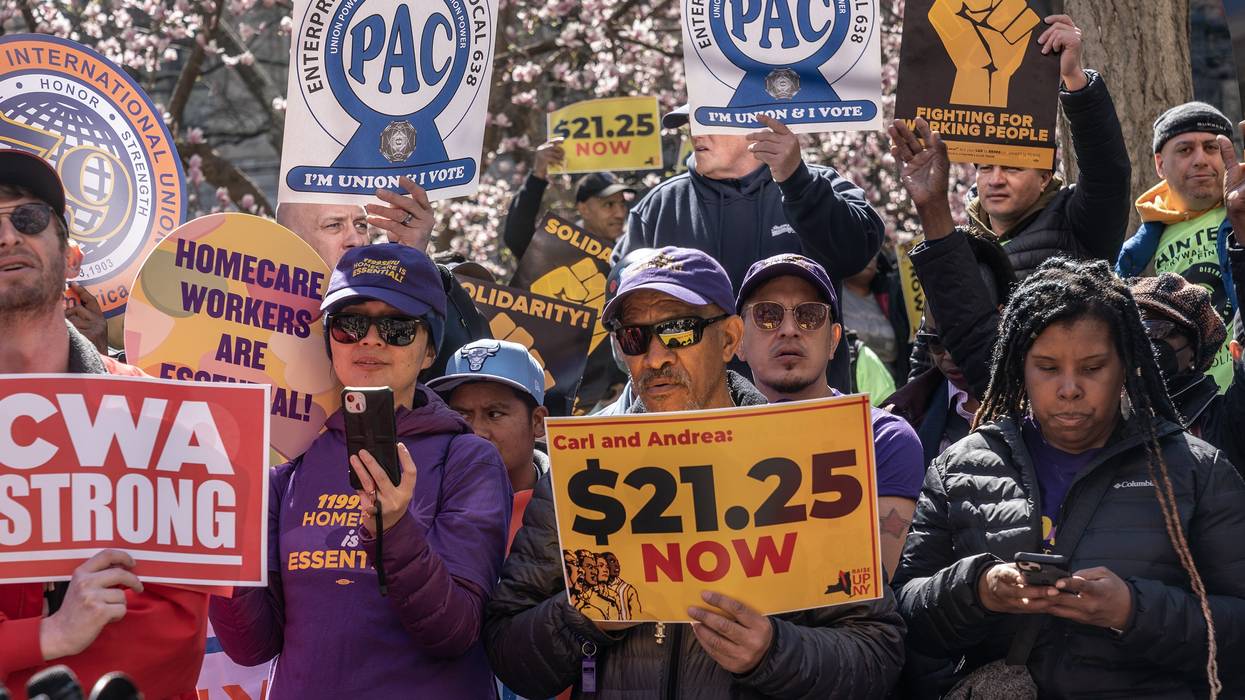
"Voters understand that raising the minimum wage is the right thing to do, even if their elected officials in state legislatures and Washington, D.C. remain inactive."
Former U.S. President Barack Obama had been in office for just over six months when the federal minimum wage was raised to a paltry $7.25 an hour—where it remains today, 15 years later.
Wednesday marked exactly a decade and a half since the federal wage floor was last lifted, an occasion that advocates used to tout state-level pay hikes and make the case for a long-overdue national increase, particularly as the nation's billionaires and corporations do better than ever.
"Workers can't afford to wait for Congress to act; they need to feed their families, pay their bills, and take care of their loved ones," said Kelly Hall, executive director of the Fairness Project, a group that has backed ballot measures across the U.S. that have resulted in over $22 billion in additional earnings for workers.
"This year, we see a clear path to victory in Alaska and Missouri because when voters have the chance, they choose higher wages," Hall continued, referring to minimum wage ballot initiatives in the two states. "Voters understand that raising the minimum wage is the right thing to do, even if their elected officials in state legislatures and Washington, D.C. remain inactive."
"It's been 15 years since the federal minimum wage was increased," Hall added, "and while this is both an economic and moral failing, we believe the solution lies in direct democracy through the ballot box."
A lot's changed since July 24, 2009. Barack Obama was president. Netflix was still mailing out DVDs in red envelopes.
What hasn't changed? The federal minimum wage of $7.25/hr. It is long past time to raise it. pic.twitter.com/gCY6FTWs9t
— Robert Reich (@RBReich) July 24, 2024
Years of inaction and obstruction by corporate-backed lawmakers in the U.S. Congress have spurred states and localities to raise their minimum wages well above the federal floor.
This year alone, according to the National Employment Law Project (NELP), 25 states and 65 localities across the U.S. will raise their minimum wages, providing pay boosts for millions of workers.
"November 2024's election will provide even more opportunities for progress, as Arizona, Alaska, and Oklahoma will all likely have questions on the ballot on whether or not their state minimum wages should increase," Kyle Ross of the Center for American Progress noted Wednesday. "Voters in these states should take advantage of this chance to give workers a much-needed raise."
Twenty U.S. states still have minimum wages pegged to the federal floor, which is worth less today than "at any time since 1949," Axios' Emily Peck observed Wednesday.
Some lawmakers at the federal level have pushed, without success, for legislation that would raise the federal minimum wage. Last year, Sen. Bernie Sanders (I-Vt.) and Rep. Bobby Scott (D-Va.) introduced a bill that would incrementally hike the national wage floor to $17 an hour by 2028 and index it to median wages in subsequent years.
The measure did not receive a vote in the House or Senate. According to the Economic Policy Institute, 31 million U.S. workers are paid less than $17 an hour.
"The minimum wage has fallen so far behind the cost of living that millions of workers are earning wages too low to live on at the minimum wage and above it," Holly Sklar, CEO of Business for a Fair Minimum Wage, said in a statement. "That's bad for workers and businesses."
"Local businesses depend on customers who make enough to buy their products and services," Sklar added. "Raising the minimum wage boosts consumer spending and helps businesses hire and retain employees. Businesses that are more invested in their employees benefit from lower turnover and increased productivity, and the kind of customer service that keeps customers coming back."
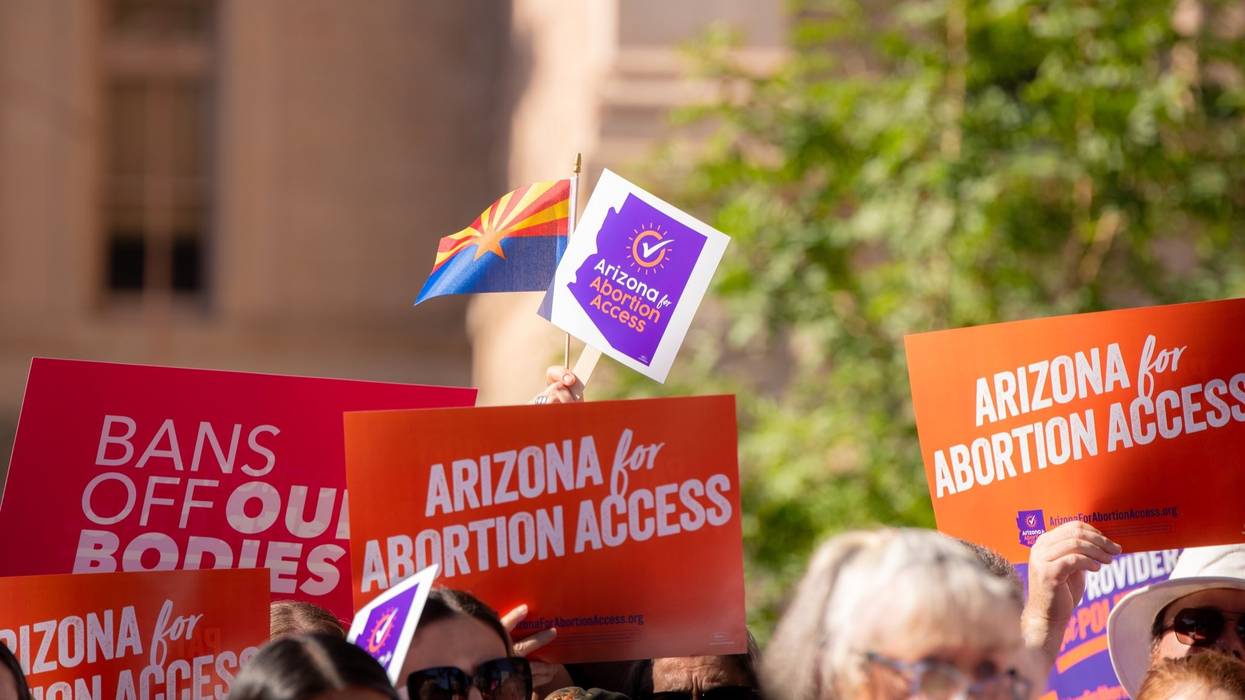
"The enthusiasm we've seen from Arizona voters for this constitutional amendment is unprecedented, and we're ready to stand with them through Election Day and restore the reproductive freedom they deserve."
Campaigners on Wednesday turned in 823,685 signatures—more than double the 383,923 required—to the Arizona secretary of state's office to get a proposed state constitutional amendment protecting abortion rights on the November ballot.
"What we're turning in is a show of strength of the campaign, but also strength of the issue of protecting abortion," said Chris Love, a spokesperson for Arizona for Abortion Access. "And I'm confident that we will obviously appear on the ballot, but more importantly, I'm confident that we'll win in November."
County election officials and Democratic Arizona Secretary of State Adrian Fontes will now work on reviewing the signatures and formally certifying the ballot measure by late next month.
Arizona for Abortion Access campaign manager Cheryl Bruce declared that "this is the most signatures ever gathered for a ballot measure in Arizona history, which is a testament to the broad support among Arizona voters for restoring and protecting abortion access in Arizona."
"An astonishing signature collection effort from volunteers, organizers, advocates, patients, and providers in Arizona has made this moment possible."
The Arizona Republic reported that "the secretary of state does not keep data that would easily confirm the number of signatures is the most in state history," but "the number far outpaces that of popular petition campaigns in recent years."
Fontes' office does publish voter registration data. As of April, there were 4,058,320 registered voters—meaning more than 1 in 5 signed their names in support of the abortion rights campaign, which is backed by groups including the ACLU of Arizona, the Fairness Project, Planned Parenthood Advocates of Arizona, and Reproductive Freedom for All Arizona.
"An astonishing signature collection effort from volunteers, organizers, advocates, patients, and providers in Arizona has made this moment possible, and we're thrilled to be part of it," said Fairness Project executive director Kelly Hall in a statement.
"While extreme politicians in Phoenix have allowed a 15-week abortion ban to block patients from getting the care they need, the Arizona for Abortion Access campaign has worked tirelessly to let voters have a say in their own healthcare decisions," she continued. "The enthusiasm we've seen from Arizona voters for this constitutional amendment is unprecedented, and we're ready to stand with them through Election Day and restore the reproductive freedom they deserve."
The effort to pass the Arizona Abortion Access Act began last summer—before a nationally watched legal battle earlier this year: The Arizona Supreme Court upheld an 1864 abortion ban that included no exceptions for rape or incest, then the Arizona Legislature passed and Democratic Gov. Katie Hobbs signed a bill to repeal it.
Still, in addition to banning abortion after 15 weeks, Arizona has rules that make it harder to get care. The proposed amendment would affirm a fundamental right to abortion until fetal viability and limit state restrictions. It would also protect access to care after viability if a healthcare provider determines ending a pregnancy is needed for the patient's life or health.
Reproductive freedom has been a key issue at all levels of American politics since the U.S. Supreme Court's right-wing supermajority reversed Roe v. Wade with their Dobbs v. Jackson Women's Health Organization ruling two years ago, which bolstered GOP efforts to attack access to abortion care—along with birth control.
It remains a top issue going into the November election. Along with choosing which party controls the White House and Congress, voters in several states are set to weigh in on ballot measures designed to protect reproductive rights. The Associated Press published a graphic showing the states where such measures are on the ballot pending:
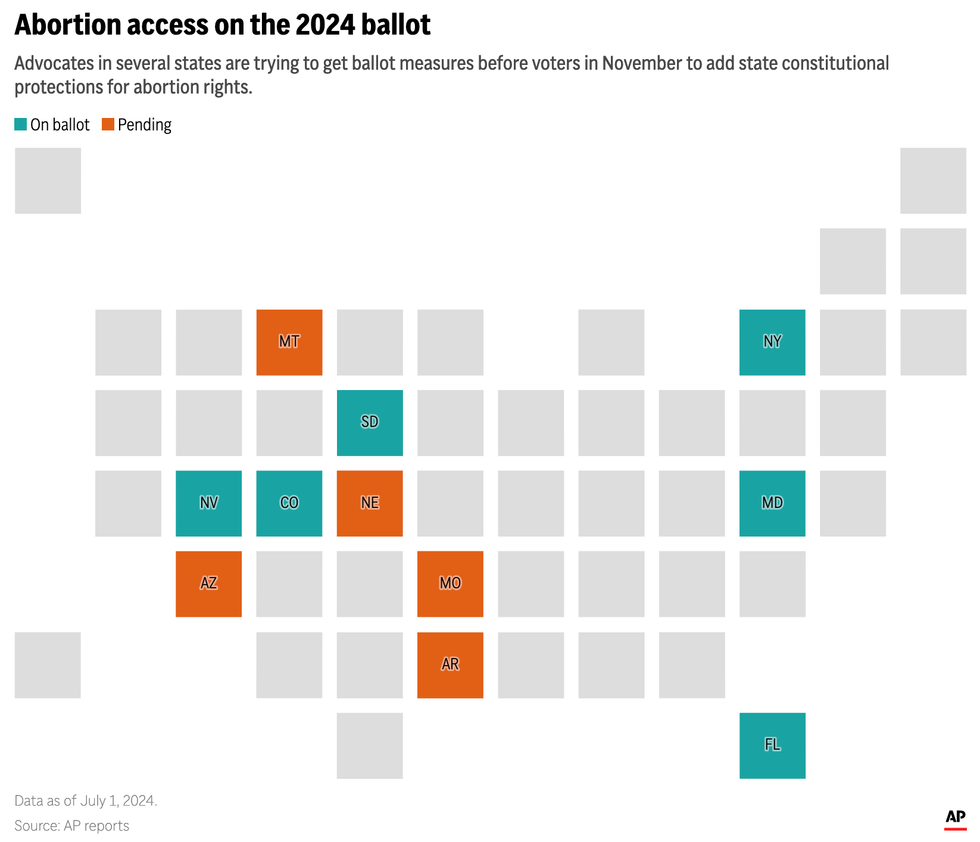
"Supporters of an Arkansas proposal to scale back the state's abortion ban face a Friday deadline to submit petitions to qualify for the November ballot," according to the AP. "The group behind the measure, Arkansans for Limited Government, said on Facebook and Instagram on Tuesday that it still needed 8,200 signatures out of the 90,704 required."