

SUBSCRIBE TO OUR FREE NEWSLETTER
Daily news & progressive opinion—funded by the people, not the corporations—delivered straight to your inbox.
5
#000000
#FFFFFF
To donate by check, phone, or other method, see our More Ways to Give page.
Daily news & progressive opinion—funded by the people, not the corporations—delivered straight to your inbox.
“This investigation provides one of the clearest and most damning views yet into Intellexa’s internal operations and technology," said Amnesty International Security Lab technologist Jurre van Bergen.
Highly invasive spyware from consortium led by a former senior Israeli intelligence official and sanctioned by the US government is still being used to target people in multiple countries, a joint investigation published Thursday revealed.
Inside Story in Greece, Haaretz in Israel, Swiss-based WAV Research Collective, and Amnesty International collaborated on the investigation into Intellexa Consortium, maker of Predator commercial spyware. The "Intellexa Leaks" show that clients in Pakistan—and likely also in other countries—are using Predator to spy on people, including a featured Pakistani human rights lawyer.
“This investigation provides one of the clearest and most damning views yet into Intellexa’s internal operations and technology," said Amnesty International Security Lab technologist Jurre van Bergen.
🚨Intellexa Leaks:"Among the most startling findings is evidence that—at the time of the leaked training videos—Intellexa retained the capability to remotely access Predator customer systems, even those physically located on the premises of its govt customers."securitylab.amnesty.org/latest/2025/...
[image or embed]
— Vas Panagiotopoulos (@vaspanagiotopoulos.com) December 3, 2025 at 9:07 PM
Predator works by sending malicious links to a targeted phone or other hardware. When the victim clicks the link, the spyware infects and provide access to the targeted device, including its encrypted instant messages on applications such as Signal and WhatsApp, as well as stored passwords, emails, contact lists, call logs, microphones, audio recordings, and more. The spyware then uploads gleaned data to a Predator back-end server.
The new investigation also revealed that in addition to the aforementioned "one-click" attacks, Intellexa has developed "zero-click" capabilities in which devices are infected via malicious advertising.
In March 2024, the US Treasury Department sanctioned two people and five entities associated with Intellexa for their alleged role "in developing, operating, and distributing commercial spyware technology used to target Americans, including US government officials, journalists, and policy experts."
"The proliferation of commercial spyware poses distinct and growing security risks to the United States and has been misused by foreign actors to enable human rights abuses and the targeting of dissidents around the world for repression and reprisal," the department said at the time.
Those sanctioned include Intellexa, its founder Tal Jonathan Dilian—a former chief commander of the Israel Defense Forces' top-secret Technological Unit—his wife and business partner Sara Aleksandra Fayssal Hamou; and three companies within the Intellexa Consortium based in North Macedonia, Hungary, and Ireland.
In September 2024, Treasury sanctioned five more people and one more entity associated with the Intellexa Consortium, including Felix Bitzios, owner of an Intellexa consortium company accused of selling Predator to an unnamed foreign government, for alleged activities likely posing "a significant threat to the national security, foreign policy, or economic health or financial stability of the United States."
The Intellexa Leaks reveal that new consortium employees were trained using a video demonstrating Predator capabilities on live clients. raising serious questions regarding clients' understanding of or consent to such access.
"The fact that, at least in some cases, Intellexa appears to have retained the capability to remotely access Predator customer logs—allowing company staff to see details of surveillance operations and targeted individuals raises questions about its own human rights due diligence processes," said van Bergen.
"If a mercenary spyware company is found to be directly involved in the operation of its product, then by human rights standards, it could potentially leave them open to claims of liability in cases of misuse and if any human rights abuses are caused by the use of spyware," he added.
Dilian, Hamou, Bitzios, and Giannis Lavranos—whose company Krikel purchased Predator spyware—are currently on trial in Greece for allegedly violating the privacy of Greek journalist Thanasis Koukakis and Artemis Seaford, a Greek-American woman who worked for tech giant Meta. Dilian denies any wrongdoing or involvement in the case.
Earlier this week, former Intellexa pre-sale engineer Panagiotis Koutsios testified about traveling to countries including Colombia, Kazakhstan, Kenya, Mexico, Mongolia, the United Kingdom, and Uzbekistan, where he pitched Predator to public, intelligence, and state security agencies.
The new joint investigation follows Amnesty International's "Predator Files," a 2023 report detailing "how a suite of highly invasive surveillance technologies supplied by the Intellexa alliance is being sold and transferred around the world with impunity."
The Predator case has drawn comparisons with Pegasus, the zero-click spyware made by the Israeli firm NSO Group that has been used by governments, spy agencies, and others to invade the privacy of targeted world leaders, political opponents, dissidents, journalists, and others.
The public must be vigilant about those who claim vigilance as a mandate without bounds. A republic cannot outsource its conscience to machines and contractors.
The feed has eyes. What you share to stay connected now feeds one of the world’s largest surveillance machines. This isn’t paranoia, it’s policy. You do not need to speak to be seen. Every word you read, every post you linger on, every silence you leave behind is measured and stored. The watchers need no warrant—only your attention.
Each post, like, and photograph you share enters a room you cannot see. The visible audience, friends and followers, is only the front row. Behind them sit analysts, contractors, and automated systems that harvest words at scale. Over the last decade, the federal security apparatus has turned public social media into a continuous stream of open-source intelligence. What began as episodic checks for imminent threats matured into standing watch floors, shared databases, and automated scoring systems that never sleep. The rationale is familiar: national security, fraud prevention, situational awareness. The reality is starker: Everyday conversation now runs through a mesh of government and corporate surveillance that treats public speech, and the behavior around it, as raw material.
You do not need to speak to be seen. The act of being online is enough. Every scroll, pause, and click is recorded, analyzed, and translated into behavioral data. Algorithms study not only what we share but what we read and ignore, and how long our eyes linger. Silence becomes signal, and absence becomes information. The watchers often need no warrant for public content or purchased metadata, only your connection. In this architecture of observation, even passivity is participation.
This did not happen all at once. It arrived through privacy impact assessments, procurement notices, and contracts that layered capability upon capability. The Department of Homeland Security (DHS) built watch centers to monitor incidents. Immigration and Customs Enforcement folded social content into investigative suites that already pull from commercial dossiers. Customs and Border Protection (CBP) linked open posts to location data bought from brokers. The FBI refined its triage flows for threats flagged by platforms. The Department of Defense and the National Security Agency fused foreign collection and information operations with real-time analytics.
Little of this resembles a traditional wiretap, yet the effect is broader because the systems harvest not just speech but the measurable traces of attention. Most of it rests on the claim that publicly available information is fair game. The law has not caught up with the scale or speed of the tools. The culture has not caught up either.
The next turn of the wheel is underway. Immigration and Customs Enforcement plans two round-the-clock social media hubs, one in Vermont and one in California, staffed by private contractors for continuous scanning and rapid referral to Enforcement and Removal Operations. The target turnaround for urgent leads is 30 minutes. That is not investigation after suspicion. That is suspicion manufactured at industrial speed. The new programs remain at the request-for-information stage, yet align with an unmistakable trend. Surveillance shifts from ad hoc to ambient, from a hand search to machine triage, from situational awareness to an enforcement pipeline that links a post to a doorstep.
The line between looking and profiling thins because the input is no longer just what we say but what our attention patterns imply.
Artificial intelligence makes the expansion feel inevitable. Algorithms digest millions of posts per hour. They perform sentiment analysis, entity extraction, facial matching, and network mapping. They learn from the telemetry that follows a user: time on page, scroll depth, replay of a clip, the cadence of a feed. They correlate a pseudonymous handle with a résumé, a family photo, and a travel record. Data brokers fill in addresses, vehicles, and associates. What once took weeks now takes minutes. Scale is the selling point. It is also the danger. Misclassification travels as fast as truth, and error at scale becomes a kind of policy.
George Orwell warned that “to see what is in front of one’s nose needs a constant struggle.” The struggle today is to see how platform design, optimized for engagement, creates the very data that fuels surveillance. Engagement generates signals, signals invite monitoring, and monitoring, once normalized, reshapes speech and behavior. A feed that measures both speech and engagement patterns maps our concerns as readily as our views.
Defenders of the current model say agencies only view public content. That reassurance misses the point. Public is not the same as harmless. Aggregation transforms meaning. When the government buys location histories from data brokers, then overlays them with social content, it tracks lives without ever crossing a courthouse threshold. CBP has done so with products like Venntel and Babel Street, as documented in privacy assessments and Freedom of Information Act releases. A phone that appears at a protest can be matched to a home, a workplace, a network of friends, and an online persona that vents frustration in a late-night post. Add behavioral traces from passive use, where someone lingers and what they never click, and the portrait grows intimate enough to feel like surveillance inside the mind.
The FBI’s posture has evolved as well, particularly after January 6. Government Accountability Office reviews describe changes to how the bureau receives and acts on platform tips, along with persistent questions about the balance between public safety and overreach. The lesson is not that monitoring never helps. The lesson is that systems built for crisis have a way of becoming permanent, especially when they are fed by constant behavioral data that never stops arriving. Permanence demands stronger rules than we currently have.
Meanwhile, the DHS Privacy Office continues to publish assessments for publicly available social media monitoring and situational awareness. These documents describe scope and mitigations, and they reveal how far the concept has stretched. As geospatial, behavioral, and predictive analytics enter the toolkit, awareness becomes analysis, and analysis becomes anticipation. The line between looking and profiling thins because the input is no longer just what we say but what our attention patterns imply.
The First Amendment restrains the state from punishing lawful speech. It does not prevent the state from watching speech at scale, nor does it account for the scoring of attention. That gap produces a chilling effect that is hard to measure yet easy to feel. People who believe they are watched temper their words and their reading. They avoid organizing, and they avoid reading what might be misunderstood. This is not melodrama. It is basic social psychology. Those who already live closer to the line feel the pressure first: immigrants, religious and ethnic minorities, journalists, activists. Because enforcement databases are not neutral, they reproduce historical biases unless aggressively corrected.
Error is not theoretical. Facial recognition has misidentified innocent people. Network analysis has flagged friends and relatives who shared nothing but proximity. A meme or a lyric, stripped of context, can be scored as a threat. Behavioral profiles amplify risk because passivity can be interpreted as intent when reduced to metrics. The human fail-safe does not always work because human judgment is shaped by the authority of data. When an algorithm says possible risk, the cost of ignoring it feels higher than the cost of quietly adding a name to a file. What begins as prudence ends as normalization. What begins as a passive trace ends as a profile.
Fourth Amendment doctrine still leans on the idea that what we expose to the public is unprotected. That formulation collapses when the observer is a system that never forgets and draws inferences from attention as well as expression. Carpenter v. United States recognized a version of this problem for cell-site records, yet the holding has not been extended to the government purchase of similar data from brokers or to the bulk ingestion of content that individuals intend for limited audiences. First Amendment jurisprudence condemns overt retaliation against speakers. It has little to say about surveillance programs that corrode participation, including the act of reading, without ever bringing a case to court. Due process requires notice and an opportunity to contest. There is no notice when the flag is silent and the consequences are dispersed across a dozen small harms, each one deniable. There is no docket for the weight assigned to your pauses.
Wendell Phillips wrote, “Eternal vigilance is the price of liberty.” The line is often used to defend surveillance. It reads differently from the other side of the glass. The public must be vigilant about those who claim vigilance as a mandate without bounds. A republic cannot outsource its conscience to machines and contractors.
You cannot solve a policy failure with personal hygiene, but you can buy time. Treat every post as a public record that might be copied, scraped, and stored. Remove precise locations from images. Turn off facial tagging and minimize connections between accounts. Separate roles. If you organize, separate that work from family and professional identities with different emails, phone numbers, and sign ins. Use two-factor authentication everywhere. Prefer end-to-end encrypted tools like Signal for sensitive conversations. Scrub photo metadata before upload. Search your own name and handles in a private browser, then request removal from data-broker sites. Build a small circle that helps one another keep settings tight and recognize phishing and social engineering. These habits are not retreat. They are discipline.
The right to be unobserved is not a luxury. It is the quiet foundation of every other liberty.
Adopt the same care for reading as for posting. Log out when you can, block third-party trackers, limit platform time, and assume that dwell time and scroll depth are being recorded. Adjust feed settings to avoid autoplay and personalized tracking where possible. Use privacy-respecting browsers and extensions that reduce passive telemetry. Small frictions slow the flow of behavioral data that feeds automated suspicion.
Push outward as well. Read the transparency reports that platforms publish. They reveal how often governments request data and how often companies comply. Support groups that litigate and legislate for restraint, including the Electronic Frontier Foundation, the Brennan Center for Justice, and the Center for Democracy and Technology. Demand specific reforms: warrant requirements for government purchase of location and browsing data, public inventories of social media monitoring contracts and tools, independent audits of watch centers with accuracy and bias metrics, and accessible avenues for redress when the system gets it wrong. Insist on disclosure of passive telemetry collection and retention, not only subpoenas for content.
The digital commons was built on a promise of connection. Surveillance bends that commons toward control. It does so quietly, through dashboards and metrics that reward extraction of both speech and attention. The remedy begins with naming what has happened, then insisting that the rules match the power of the tools. A healthy public sphere allows risk. It tolerates anger and error. It places human judgment above automated suspicion. It restores the burden of proof to the state. It recognizes that attention is speech by another name, and that freedom requires privacy in attention as well as privacy in voice.
You do not need to disappear to stay free. You need clarity, patience, and a stubborn loyalty to truth in a time that rewards distraction. The watchers will say the threat leaves no choice, that vigilance demands vision turned outward. History says freedom depends on the courage to look inward first. The digital world was built as a commons, a place to connect and create, yet it is becoming a hall of mirrors where every glance becomes a record and every silence a signal. Freedom will not survive by accident. It must be practiced—one mindful post, one untracked thought, one refusal to mistake visibility for worth. The right to be unobserved is not a luxury. It is the quiet foundation of every other liberty. Guard even the silence, for in the end it may be the only voice that still belongs to you.

One ACLU campaigner blasted the justices for "giving the executive branch unprecedented power to silence speech it doesn't like."
The United States Supreme Court on Friday unanimously upheld a federal law banning TikTok if its Chinese parent company does not sell the popular social media app by Sunday.
The justices ruled in TikTok v. Garland, an unsigned opinion, that "Congress has determined that divestiture is necessary to address its well-supported national security concerns regarding TikTok's data collection practices and relationship with a foreign adversary."
"The problem appears real and the response to it not unconstitutional," the high court wrote. "Speaking with and in favor of a foreign adversary is one thing. Allowing a foreign adversary to spy on Americans is another."
President Joe Bidensigned legislation last April forcing ByteDance, which owns TikTok, to sell the app to a non-Chinese company within a year or face a nationwide ban. Proponents of the ban cited national security concerns, while digital rights and free speech defenders condemned the law.
Approximately 170 million Americans use TikTok, which is especially popular with younger people and small-to-medium-sized businesses, and contributes tens of billions of dollars to the U.S. economy annually.
The ACLU—which this week called TikTok v. Garland "one of the most important First Amendment cases of our time"—condemned Friday's decision as "a major blow to freedom of expression online."
"The Supreme Court's ruling is incredibly disappointing, allowing the government to shut down an entire platform and the free speech rights of so many based on fear-mongering and speculation," ACLU National Security Project deputy director Patrick Toomey said in a statement.
"By refusing to block this ban, the Supreme Court is giving the executive branch unprecedented power to silence speech it doesn't like, increasing the danger that sweeping invocations of 'national security' will trump our constitutional rights," Toomey added.
The digital rights group Electronic Frontier Foundation (EFF) said in response to Friday's ruling, "We are deeply disappointed that the court failed to require the strict First Amendment scrutiny required in a case like this, which would've led to the inescapable conclusion that the government's desire to prevent potential future harm had to be rejected as infringing millions of Americans' constitutionally protected free speech."
"We are disappointed to see the court sweep past the undisputed content-based justification for the law—to control what speech Americans see and share with each other—and rule only based on the shaky data privacy concerns," EFF added.
The Biden administrationsaid Friday that it would leave enforcement of any ban up to the incoming Trump administration.
The Washington Post reported Thursday that Republican U.S President-elect Donald Trump, who is set to take office next week, is weighing an executive order to suspend enforcement of the ban for 60-90 days.
U.S. Sen. Ed Markey (D-Mass.), who earlier this week introduced a bill to delay ByteDance's sale deadline until October, said Friday: "I am deeply disappointed by the Supreme Court's decision to uphold the TikTok ban. I am not done fighting to pass my 270-day extension. We need more time."
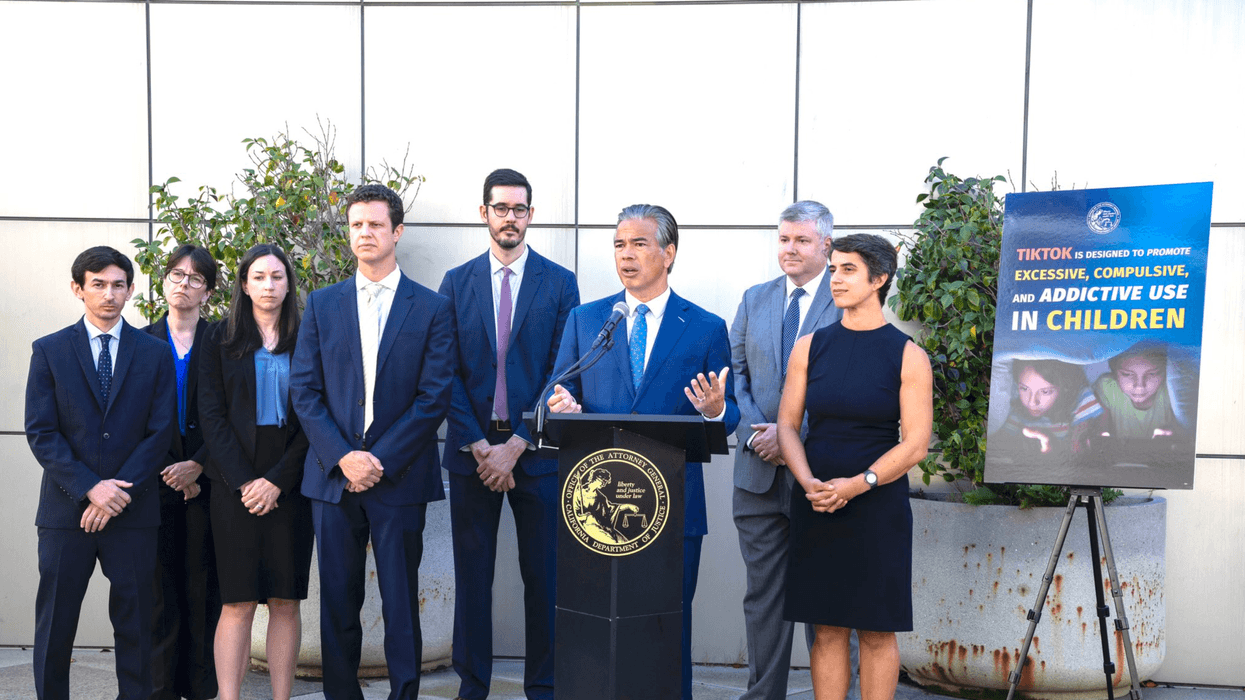
"We are suing TikTok to protect young people and help combat the nationwide youth mental health crisis," explained New York Attorney General Letitia James.
Attorneys general from over a dozen states and the District of Columbia on Tuesday announced lawsuits against TikTok, accusing the company behind the popular social media platform of deliberately making the site addictive for children and deceiving the public about its dangers.
"We're suing the social media giant TikTok for exploiting young users and deceiving the public about the dangers the platform poses to our youth," Democratic California Attorney General Rob Bonta
explained Tuesday morning in San Francisco. "Together, with my fellow state AGs, we will hold TikTok to account, stop its exploitation of our young people, and end its deceit."
New York Attorney General Letitia James, also a Democrat, said in a
statement that "young people are struggling with their mental health because of addictive social media platforms like TikTok."
"TikTok claims that their platform is safe for young people, but that is far from true," she continued. "In New York and across the country, young people have died or gotten injured doing dangerous TikTok challenges and many more are feeling more sad, anxious, and depressed because of TikTok's addictive features."
"Today, we are suing TikTok to protect young people and help combat the nationwide youth mental health crisis," James added. "Kids and families across the country are desperate for help to address this crisis, and we are doing everything in our power to protect them."
James' office said in a
statement:
TikTok uses a variety of addictive features to keep users on its platform longer, which leads to poorer mental health outcomes. Multiple studies have found a link between excessive social media use, poor sleep quality, and poor mental health among young people. According to the U.S. surgeon general, young people who spend more than three hours per day on social media face double the risk of experiencing poor mental health outcomes, including symptoms of depression and anxiety.
According to James' office, TikTok's addictive features include:
The attorneys general also accuse TikTok of violating the Children's Online Privacy Protection Act, which is meant to shield children's online data; of falsely claiming that its platform is safe for children; and of lying about the effectiveness of its so-called safety tools meant to mitigate harms to youth.
In addition to California and New York, the following states are part of the new lawsuit: Illinois, Kentucky, Louisiana, Massachusetts, Mississippi, North Carolina, New Jersey, Oregon, South Carolina, Vermont, and Washington. So is the District of Columbia.
All told, 23 states have now filed lawsuits targeting TikTok's harms to children.
However, the issue is by no means limited to TikTok. Last October, dozens of U.S. states
sued Meta—which owns the social media sites Facebook and Instagram—for allegedly violating consumer protection laws by designing their apps to be addictive, especially to minors.
Twitter, the social platform known as X since shortly after it was
purchased by Elon Musk in 2022 for $44 billion, was sued in 2021 by child sex trafficking victims for allowing the publication of sexually explicit images of minors and refusing to remove them as requested by the plaintiffs and their parents.
Last month, the U.S. Federal Trade Commissionpublished a report detailing how social media and streaming companies endanger children and teens who use their platforms. The report's publication sparked renewed calls for Congress to pass legislation including the Children and Teens' Online Privacy Protection Act and Kids Online Safety Act (KOSA) to better safeguard minors against the companies' predatory practices.
However, rights groups including the ACLU condemned KOSA, which the civil liberties organization
warned "would violate the First Amendment by enabling the federal government to dictate what information people can access online and encourage social media platforms to censor protected speech."
The two bills—which were
overwhelmingly passed by the U.S. Senate in July—were last month approved for advancement in the House of Representatives.
In May 2023, U.S. Surgeon General Dr. Vivek Murthy issued an advisory on "the growing concerns about the effects of social media on youth mental health."
The White House simultaneously announced the creation of a federal task force "to advance the health, safety, and privacy of minors online with particular attention to preventing and mitigating the adverse health effects of online platforms."
Murthy has also called for tobacco-like warning labels on social media to address the platform's possible harms to children and teens.
Some critics are wary of singling out TikTok—which is owned by the Chinese company ByteDance—for political or xenophobic purposes.
Earlier this year, U.S. President Joe Bidensigned into law a $95 billion foreign aid package containing a possible nationwide TikTok ban. The legislation requires ByteDance to sell TikTok to a non-Chinese company within a year or face a federal ban. TikTok subsequently sued the federal government over the potential ban.
Approximately 170 million Americans use TikTok, which is especially popular among members of Gen-Z and small-to-medium-sized businesses, and contributes tens of billions of dollars to the U.S. economy annually.
Evan Greer, who heads the digital rights group Fight for the Future, slammed the law as "one of the stupidest and most authoritarian pieces of tech legislation we've seen in years."
However, children's advocates welcomed the new lawsuits.
"We are pleased to see so many state attorneys general holding TikTok accountable for deliberately causing harms to young people," said Josh Golin, executive director of Fairplay. "Between state and private lawsuits, state legislation, and Federal Trade Commission enforcement actions, the tide is turning against Big Tech, and it's clear the status quo of social media companies harming kids cannot and will not continue."
"Now we need leaders in the House to join their Senate counterparts in passing the Kids Online Safety Act and the Children and Teens' Online Privacy Protection Act so that all platforms, not just those involved in legal settlements, will have to be safe by design for children from day one," Golin added.
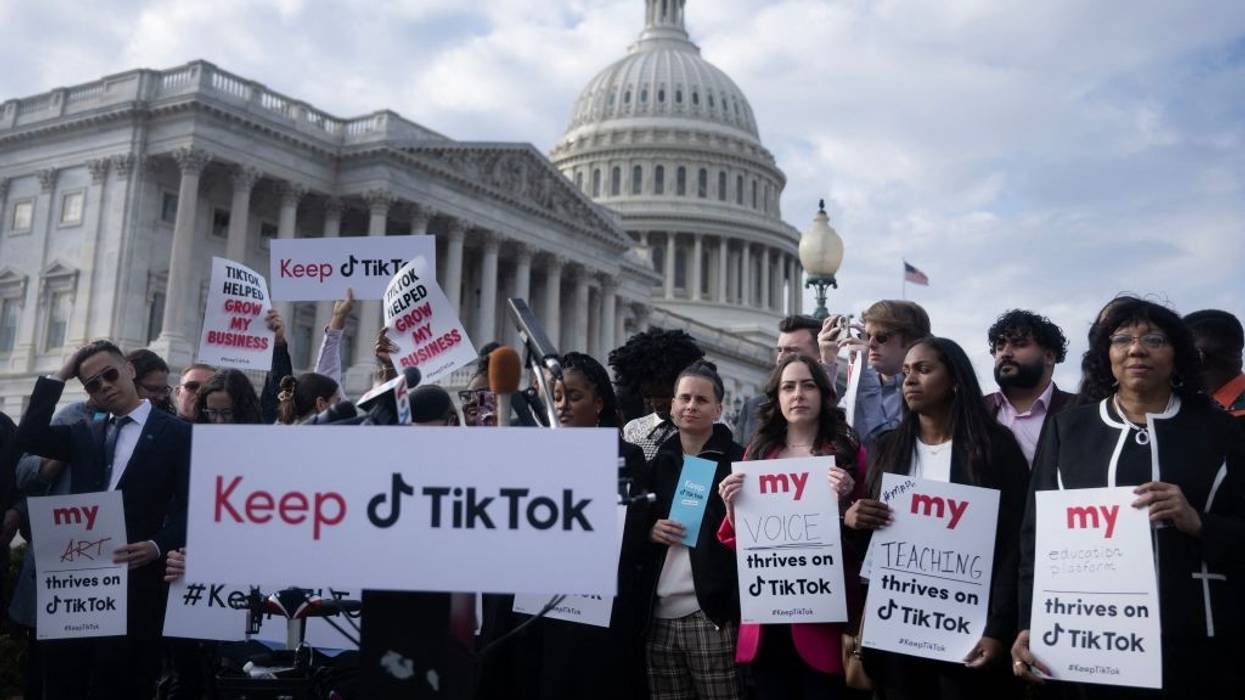
One critic said that "the bill doesn't touch the homegrown spyware U.S. companies churn out" and "also strikes at the First Amendment right to receive information."
Digital rights defenders on Wednesday slammed the passage of a U.S. foreign aid package containing a possible nationwide TikTok ban as unconstitutional, xenophobic, and ill-advised during an election year in which President Joe Biden desperately needs as many young votes as possible.
Biden signed the $95 billion bill late Wednesday morning after senators voted 79-18 the previous evening to approve the package, which includes tens of billions of dollars in U.S. military assistance for Ukraine, Taiwan, and Israel—which is waging a genocidal war against Palestinians in Gaza.
One of the bill's provisions would force ByteDance, TikTok's Chinese parent company, to sell the app to a non-Chinese company within a year or face a federal ban. Approximately 170 million Americans use TikTok, which is especially popular among members of Gen-Z and small-to-medium-sized businesses, and
contributes tens of billions of dollars to the U.S. economy annually.
"Whether it's dressed up as a ban or a forced sale, the bill targeting TikTok is one of the stupidest and most authoritarian pieces of tech legislation we've seen in years," Fight for the Future director Evan Greer said in a statement.
Jenna Leventoff, senior policy counsel at the ACLU, called the provision "nothing more than an unconstitutional ban in disguise."
"Banning a social media platform that hundreds of millions of Americans use to express themselves would have devastating consequences for all of our First Amendment rights, and will almost certainly be struck down in court," she added.
Jameel Jaffer, executive director of the Knight First Amendment Institute at Columbia University,
said:
The First Amendment means that the government can't restrict Americans' access to ideas, information, or media from abroad without a very good reason for it—and no such reason exists here. Repackaging the government's reasons for the ban in the language of "national security" does not change the analysis. There's no national security exception to the First Amendment, and creating such an exception would make the First Amendment a dead letter.
Proponents of the possible ban attempted to spin it as something else and pointed to precedents including the 2020 forced sale of the popular LGBTQ+ dating app Grindr, formerly owned by a Chinese company.
"I want to be very clear: This is not a 'TikTok ban,'" Sen. John Fetterman (D-Pa.), who voted to approve the bill, said in a statement. "I have no interest in banning TikTok. This bill will simply make TikTok safer by separating it from the Chinese Communist Party so that the data of 170 million Americans—many of whom are children—is protected."
Senate Commerce Committee Chair Maria Cantwell (D-Wash.) said before Tuesday's vote that "Congress is acting to prevent foreign adversaries from conducting espionage, surveillance, maligned operations, harming vulnerable Americans, our servicemen and women, and our U.S. government personnel."
"Banning TikTok without passing real tech regulation will just further entrench monopolies like Meta and Google, without doing anything to protect Americans from data harvesting or government propaganda."
However, Kate Ruane, who directs the Center for Democracy & Technology's Free Expression Project, asserted that "Congress shouldn't be in the business of banning platforms. They should be working to enact comprehensive privacy legislation that protects our private data no matter where we choose to engage online."
Greer said that "not only is this bill laughably unconstitutional and a blatant assault on free expression and human rights, it's also a perfect way to derail momentum toward more meaningful policies like privacy and antitrust legislation that would actually address the harms of Big Tech and surveillance capitalism."
Greer continued:
Banning TikTok without passing real tech regulation will just further entrench monopolies like Meta and Google, without doing anything to protect Americans from data harvesting or government propaganda.
We could be months away from another Trump administration, and top Democrats are busy expanding mass surveillance authority and setting the precedent that the government can ban an entire social media app based on vague 'national security' concerns that haven't been explained to the public.
Some critics questioned the wisdom of Biden signing off on a potential ban of the most popular social media app among many young users during an election year in which many younger voters are disappointed in the president's record on climate, student debt relief, the Gaza genocide, and more.
One user of X, the social platform formerly known as Twitter, said earlier this year that signing the bill would demonstrate a "comical level of political malpractice, the equivalent of seeing the rake on the ground and purposefully stepping on it."
Moments after Biden signed the bill, TikTok CEO Shou Zi Chew
vowed, "We aren't going anywhere."
"The facts and the Constitution are on our side and we expect to prevail again," he said, referring to the three times when federal judges blocked efforts to ban TikTok.
TikTok CEO Shou Chew responds to the bill that could ban the app: “Make no mistake, this is a ban, a ban of TikTok and a ban on you and your voice.”
“Rest assured, we aren’t going anywhere.”
pic.twitter.com/qElI8JvY0D
— philip lewis (@Phil_Lewis_) April 24, 2024
In the most recent case, U.S. District Court Judge Donald Molloy ruled last December that a Montana law that would have banned the app "violates the Constitution in more ways than one" and had a "pervasive undertone of anti-Chinese sentiment."
It is unclear who would buy TikTok. Analysts estimate the platform is worth upward of $100 billion, placing it out of reach for all but the biggest U.S. tech titans and, ironically, setting up possible antitrust challenges from the very administration that ultimately forced the sale.
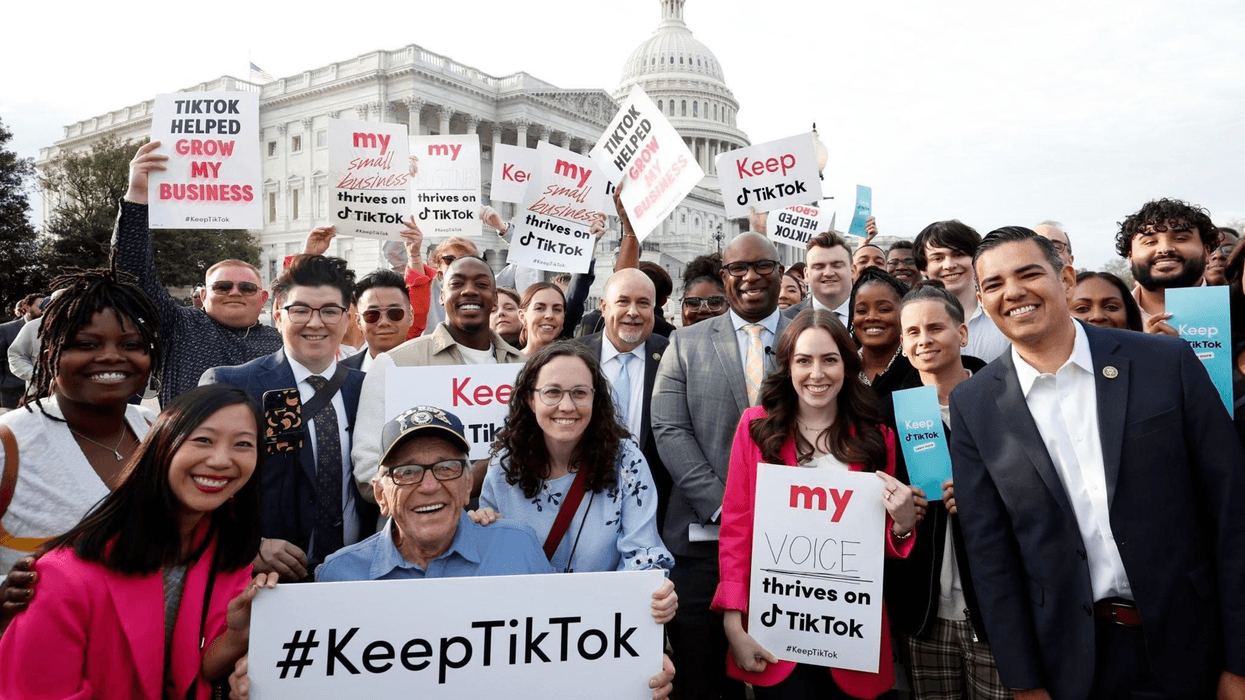
"Don't ban TikTok," said Fight for the Future. "Pass a goddamn privacy law."
U.S. progressives on Wednesday decried what they called a xenophobic censorship bill passed by House lawmakers that would ban TikTok if its Chinese parent company doesn't sell its stake in the popular social media app, with critics arguing that Congress should instead pass a comprehensive digital privacy law.
Lawmakers passed the Protecting Americans From Foreign Adversary Controlled Applications Act in an overwhelmingly bipartisan 352-65 vote. The legislation "prohibits distributing, maintaining, or providing internet hosting services for a foreign adversary-controlled application" like TikTok, a wholly owned subsidiary of the Chinese tech company ByteDance.
Fifty House Democrats and 15 Republicans voted against the bill.
"I voted no on the TikTok forced sale bill," Rep. Greg Casar (D-Texas) said in a statement. "While I have serious data privacy concerns with TikTok, this bill was rapidly rushed to a vote by the Republicans with almost no public scrutiny—and that's a recipe for unintended consequences."
"We need well-vetted, robust protections for TikTok users," Casar added. "Today's bill simply may not work."
Congresswoman Ilhan Omar (D-Minn.), who also voted no, said on social media that "not only are there First Amendment concerns, this is bad policy."
"We should create actual standards and regulations around privacy violations across social media companies—not target platforms we don't like," she added.
Rep. Barbara Lee (D-Calif.), another no vote, said that "rather than target one company in a rushed and secretive process, Congress should pass comprehensive data privacy protections and do a better job of informing the public of the threats these companies may pose to national security."
Proponents of the bill, which was rushed to a vote after a closed-door hearing, argue that because ByteDance is beholden to the Chinese government, TikTok could be compelled to disclose data on the approximately 170 million Americans who use the app.
If passed by the Senate and signed into law by President Joe Biden—who has vowed to approve the legislation—ByteDance will have six months to divest from TikTok or it will be banned from U.S. app stores and web hosts.
Responding to the vote, Chinese Foreign Ministry spokesperson Wang Wenbin accused the U.S. government of "resorting to hegemonic moves when one could not succeed in fair competition."
Wang added that the move "disrupts the normal operation of businesses, undermines the confidence of international investors in the investment environment, sabotages the normal economic and trade order in the world, and will eventually backfire on the U.S. itself."
"The rhetoric fueling a TikTok ban is a xenophobic, moral panic about the content on TikTok."
Civil liberties and digital rights groups blasted the House vote, with the ACLU accusing lawmakers of "violating the free speech rights of millions of Americans who use the platform daily to communicate and stay informed."
Fight for the Future said that "the rhetoric fueling a TikTok ban is a xenophobic, moral panic about the content on TikTok, disregarding... users in the U.S. that use the app for news, small business, community organizing, and free expression."
"Don't ban TikTok," the group asserted on social media. "Pass a goddamn privacy law."
Other critics highlighted U.S. tech giants' rampant abuse of user privacy. RootsAction called the bill a "serious First Amendment violation and an infringement upon free speech" that "does very little to address broader concerns about privacy rights, as U.S. based social media companies extensively violate those rights."
Jenna Ruddock, an attorney at Free Press Action, said in a
statement:
TikTok isn't perfect, but banning it is the wrong solution. Like all popular platforms, including those that Meta and Google own, TikTok collects too much data on its users. But unilaterally dismantling spaces for free expression limits people's access to information and cuts off avenues for creators to build community. The legislation also fails to meaningfully protect our privacy or address the national security concerns the bill's sponsors have raised.
"Banning a single platform will not address the problem at the root of the entire tech landscape," Ruddock contended, for "at any given time, dozens of corporations are tracking us, analyzing our behavior, and profiting off of our private information."
"It's ridiculous for Congress to single out one app while failing to act on this huge problem that's prevalent across all social media," she added. "Lawmakers should instead pass a federal privacy law that would limit how all companies collect, store, analyze, and sell our personal data."
Some critics linked the legislation to U.S. support for Israel's genocide in Gaza and TikTok users' prolific advocacy for Palestine, with RootsAction noting that the American Israel Public Affairs Committee was the leading campaign contributor to bill author Rep. Mike Gallagher (R-Wis.) during the 2021-22 election cycle.
The peace group CodePink quipped, "As Israel drops U.S. bombs on civilians daily, they'd rather ban an app than a genocide."
The legislation now heads to the Senate, where Majority Leader Chuck Schumer (D-N.Y.) only said that the chamber "will review" the bill.
"Make no mistake: The House's TikTok bill is a ban, and it's blatant censorship," ACLU senior policy counsel Jenna Leventoff argued. "Today, the House of Representatives voted to violate the First Amendment rights of more than half of the country. The Senate must reject this unconstitutional and reckless bill."
"Whilst the Parliament fought hard to limit the damage, the overall package on biometric surveillance and profiling is at best lukewarm," said one advocate.
Privacy advocates on Saturday said the AI Act, a sweeping proposed law to regulate artificial intelligence in the European Union whose language was finalized Friday, appeared likely to fail at protecting the public from one of AI's greatest threats: live facial recognition.
Representatives of the European Commission spent 37 hours this week negotiating provisions in the AI Act with the European Council and European Parliament, running up against Council representatives from France, Germany, and Italy who sought to water down the bill in the late stages of talks.
Thierry Breton, the European commissioner for internal market and a key negotiator of the deal, said the final product would establish the E.U. as "a pioneer, understanding the importance of its role as global standard setter."
But Amnesty Tech, the branch of global human rights group Amnesty International that focuses on technology and surveillance, was among the groups that raised concerns about the bloc's failure to include "an unconditional ban on live facial recognition," which was in an earlier draft, in the legislation.
The three institutions, said Mher Hakobyan, Amnesty Tech's advocacy adviser on AI, "in effect greenlighted dystopian digital surveillance in the 27 EU Member States, setting a devastating precedent globally concerning AI regulation."
"While proponents argue that the draft allows only limited use of facial recognition and subject to safeguards, Amnesty's research in New York City, Occupied Palestinian Territories, Hyderabad, and elsewhere demonstrates that no safeguards can prevent the human rights harms that facial recognition inflicts, which is why an outright ban is needed," said Hakobyan. "Not ensuring a full ban on facial recognition is therefore a hugely missed opportunity to stop and prevent colossal damage to human rights, civic space, and rule of law that are already under threat throughout the E.U."
The bill is focused on protecting Europeans against other significant risks of AI, including the automation of jobs, the spread of misinformation, and national security threats.
Tech companies would be required to complete rigorous testing on AI software before operating in the EU, particularly for applications like self-driving vehicles.
Tools that could pose risks to hiring practices would also need to be subjected to risk assessments, and human oversight would be required in deploying the software,
AI systems including chatbots would be subjected to new transparency rules to avoid the creation of manipulated images and videos—known as deepfakes—without the public knowing that the images were generated by AI.
The indiscriminate scraping of internet or security footage images to create facial recognition databases would also be outright banned.
But the proposed AI Act, which could be passed before the end of the European Parliament session ends in May, includes exemptions to facial recognition provisions, allowing law enforcement agencies to use live facial recognition to search for human trafficking victims, prevent terrorist attacks, and arrest suspects of certain violent crimes.
Ella Jakubowska, a senior policy adviser at European Digital Rights, told The Washington Post that "some human rights safeguards have been won" in the AI Act.
"It's hard to be excited about a law which has, for the first time in the E.U., taken steps to legalize live public facial recognition across the bloc," Jakubowska told Reuters. "Whilst the Parliament fought hard to limit the damage, the overall package on biometric surveillance and profiling is at best lukewarm."
Hakobyan also noted that the bill did not include a ban on "the export of harmful AI technologies, including for social scoring, which would be illegal in the E.U."
"Allowing European companies to profit off from technologies that the law recognizes impermissibly harm human rights in their home states establishes a dangerous double standard," said Hakobyan.
After passage, many AI Act provisions would not take effect for 12 to 24 months.
Andreas Liebl, managing director of the German company AppliedAI Initiative, acknowledged that the law would likely have an impact on tech companies' ability to operate in the European Union.
"There will be a couple of innovations that are just not possible or economically feasible anymore," Liebl told the Post.
But Kris Shrishak, a senior fellow at the Irish Council for Civil Liberties, told The New York Times that the E.U. will have to prove its "regulatory prowess" after the law is passed.
"Without strong enforcement," said Shrishak, "this deal will have no meaning."
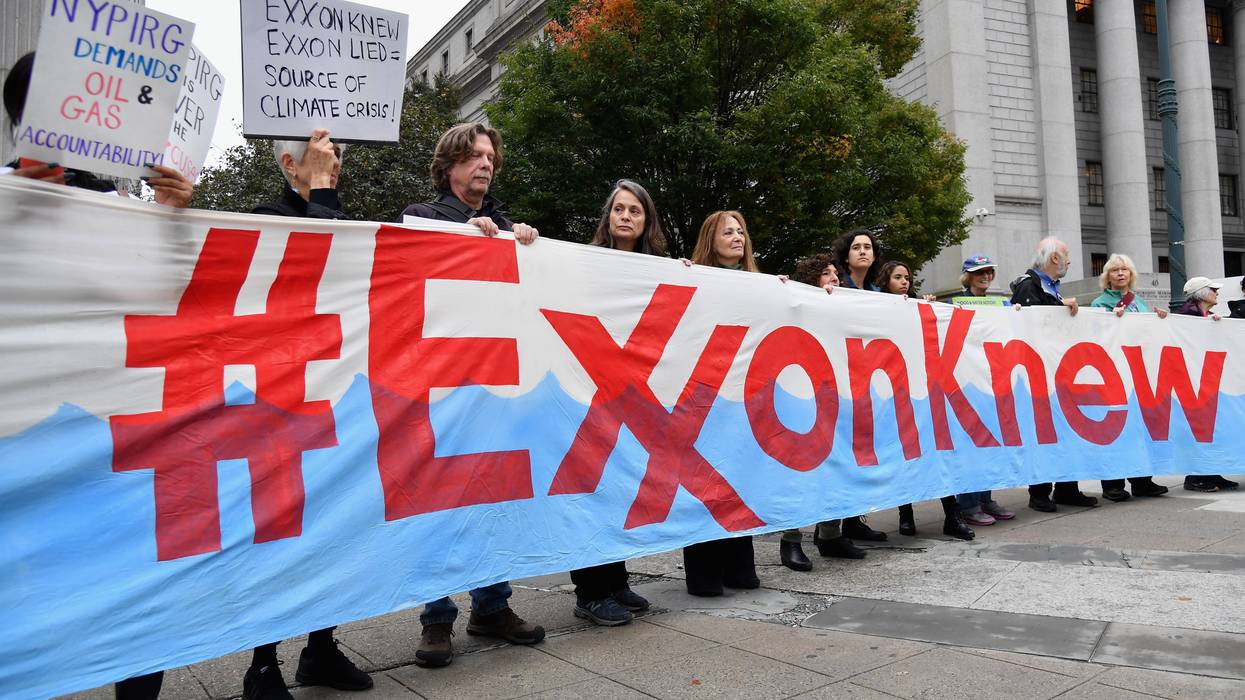
"Justice will not be completely served in this case until those who hired Azari are exposed and held to account," said one climate campaigner after the "Dark Basin" ringleader was sentenced.
An Israeli private investigator sentenced Thursday to more than six-and-a-half years behind bars for his role in orchestrating a massive computer-hacking campaign targeting U.S. climate activists said "there will come a day" when mysterious details of the case—possibly including who paid him—will be revealed.
Aviram Azari, a 52-year-old former police officer from Kiryat Yam in northern Israel, was sentenced to 80 months imprisonment, with 48 months served, after pleading guilty to "computer intrusion, wire fraud, and aggravated identity theft in connection with his involvement in a massive computer-hacking campaign targeting companies and individuals in the U.S. and around the world," according to U.S. Attorney for the Southern District of New York Damian Williams.
"I ask for forgiveness," Azari told the federal court. "You don't know everything. There will come a day."
One of Azari's victims reportedly told him that "if you are truly sorry, you should be giving the names of the people who hired you."
Azari, a self-described "hacker-for-hire," ran a sweeping international spearphishing attack called "Dark Basin" that employed groups of hackers to steal emails and other digital documents from U.S. climate activists, government officials in African nations, members of a Mexican political party, and critics of a German company. Clients paid Azari approximately $4.8 million over five years for managing the campaign.
Citizen Lab, a Canadian digital watchdog group, first reported on Dark Basin in 2020. According to the group's research, numerous progressive organizations—including Public Citizen, Greenpeace, 350.org, the Union of Concerned Scientists, and Oil Change International—were among those targeted.
Prosecutors said stolen emails were leaked to media outlets, some of which published reports "appeared designed to undermine the integrity" of the #ExxonKnew movement and investigations into ExxonMobil's climate cover-up.
The U.S. government hasn't said who hired Azari to target the climate activists. But in an October sentencing memo, federal prosecutors in New York described how ExxonMobil tried to take advantage of the material that Azari's group stole.
Prosecutors noted a private email between climate activists that ExxonMobil had publicized on its website. The document was about a 2016 meeting to convince the public that ExxonMobil was a "corrupt institution" that pushed the world toward "climate chaos and grave harm" because of its decadeslong campaign to cast doubt on global warming.
"The 'Dark Basin' cyberattack offers an acute reminder of the vested interests at play in obscuring the role of fossil fuel companies in driving the climate crisis," Kathy Mulvey, the accountability campaign director at the Union of Concerned Scientists, said in a statement. "While the conviction and sentencing of Mr. Azari has shed light on the hacking-for-hire enterprise, we're eager to see the bad actors behind the attack publicly named and held accountable."
"As the fossil fuel industry intensifies its efforts to thwart climate lawsuits that seek to hold them accountable for their deception and the devastating damage caused by their products, this sentencing serves as a stark reminder of the lengths powerful corporations and special interests will go to evade responsibility," Mulvey added. "Now more than ever, scientists, advocates, and our policymakers must fight back against scare tactics, delay maneuvers, or other abuses of power from this industry. A safer, healthier, and more just future is at stake."
Greenpeace USA executive director Ebony Twilley Martin said in a statement that "we are pleased to see federal prosecutors taking legal action against those who use underhanded tactics like hacking to target public interest advocates."
"That said, justice will not be completely served in this case until those who hired Azari are exposed and held to account," she continued. "Whoever that is though, they ultimately failed. They failed to stop elected leaders across the country from pursuing some level of accountability for actions that—over time—amount to one of the greatest corporate crimes against humanity ever committed."
"Overwhelmingly, the American people want climate action, and Big Oil will use every tool in their toolbox to stop it," Martin added. "Cyberattacks like this are one of the many tactics designed to silence and oppose climate activists. They have serious impacts on people's lives—and thus their ability to do the important work of protecting our planet."

"Musk is trying to 'shoot the messenger' who highlights the toxic content on his platform rather than deal with the toxic environment he's created."
The internet watchdog Center for Countering Digital Hate hit back at billionaire Elon Musk Tuesday after X—his company formerly known as Twitter—sued the organization over its research into the dissemination of hate speech on the social media platform.
In a complaint filed Monday in the U.S. District Court for Northern California in San Francisco, X accused the Center for Countering Digital Hate (CCDH)—a nonprofit with offices in the U.S. and United Kingdom—of "using flawed methodologies to advance incorrect, misleading narratives" and engaging in a series of unlawful acts designed to improperly gain access to protected X Corp. data" after the group published research critical of the social platform's failure to tackle hate speech.
One CCDH analysis found that X failed to remove 99% of hate speech posted by Twitter Blue users, who pay an $8 monthly subscription fee.
"Elon Musk's latest legal move is straight out of the authoritarian playbook—he is now showing he will stop at nothing to silence anyone who criticizes him for his own decisions and actions," CCDH founder and CEO Imran Ahmed said in response to X's lawsuit.
"The Center for Countering Digital Hate's research shows that hate and disinformation is spreading like wildfire on the platform under Musk's ownership and this lawsuit is a direct attempt to silence those efforts," Ahmed continued. "People don't want to see or be associated with hate, antisemitism, and the dangerous content that we all see proliferating on X."
"Musk is trying to 'shoot the messenger' who highlights the toxic content on his platform rather than deal with the toxic environment he's created," he added. "CCDH has no intention of stopping our independent research—Musk will not bully us into silence."
Since purchasing Twitter for $44 billion last year, Musk has laid off around 80% of the company's workforce, including many content moderators. Last December, the company dissolved its Trust and Safety Council, an independent advisory board of around 100 human and civil rights experts.
Meanwhile, Musk—who describes himself as a "free speech absolutist" even as he allegedly purges left-wing users—has welcomed or reinstated the accounts of white supremacists, anti-LGBTQ+ bigots, election conspiracy theorists, antisemites, and others.
"This is an unprecedented escalation by a social media company against independent researchers. Musk has just declared open war," Ahmed told The Associated Press on Sunday. "If Musk succeeds in silencing us other researchers will be next in line."
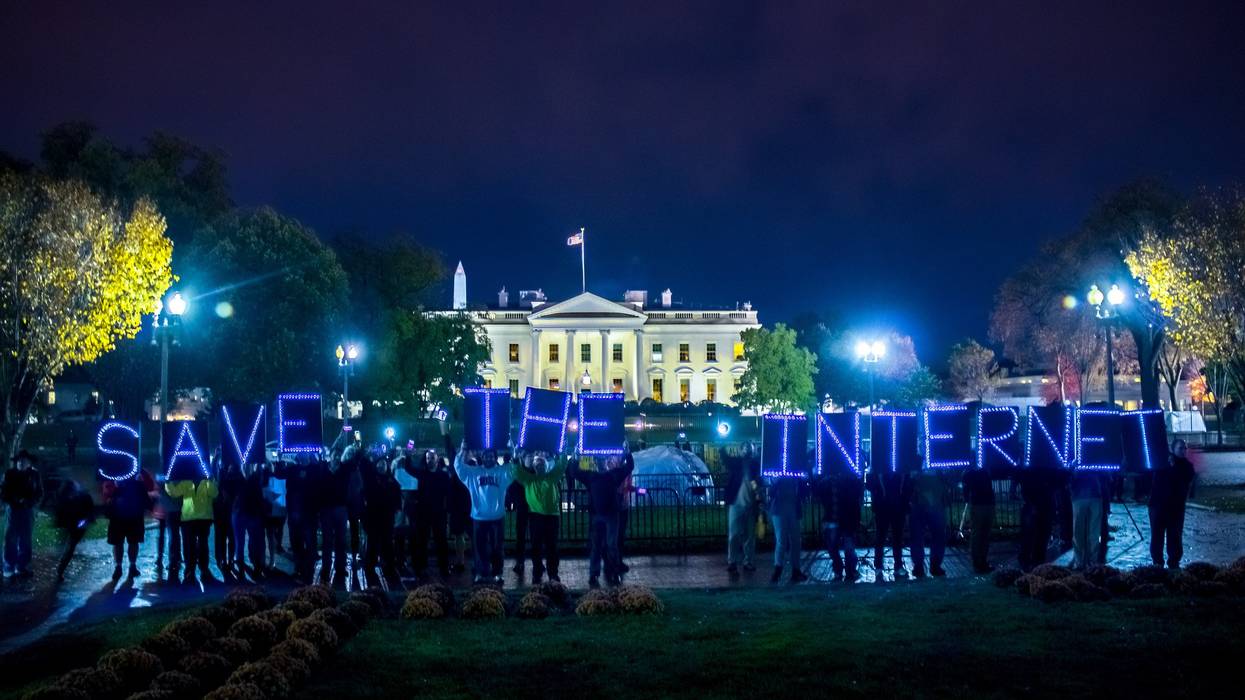
The coalition is "demanding that Congress focus on passing badly needed comprehensive privacy legislation to actually protect us from the harms of Big Tech companies and data brokers."
A coalition of digital rights groups is sounding the alarm as U.S. lawmakers try "to push through a swarm of harmful internet bills that would severely impact human rights, expand surveillance, and enable censorship" online by launching a week of action Thursday to demand Congress pass comprehensive data privacy legislation instead.
Groups including Fight for the Future, Electronic Frontier Foundation (EFF), and the ACLU kicked off the weeklong campaign against #BadInternetBills with a call to action for activists and a vow to "get loud about our opposition" to five bills and "demanding that Congress focus on passing badly needed comprehensive privacy legislation to actually protect us from the harms of Big Tech companies and data brokers, instead of pushing through misguided legislation before August congressional recess."
During the week of action, participants will "drive emails and phone calls to legislators and urge influencers and online communities to speak out against misguided legislation," including:
Opponents say the 2018 law known as SESTA/FOSTA has forced sex workers—both voluntary and trafficked—"offline and into harm's way," according to a May plea from more than 100 groups warning of the privacy and other risks of the EARN IT Act.
"Let's be clear: These bills would create a clear avenue to remove important, protected speech from the internet, and our ability to communicate without the government seeing," the group stressed.
"These bills also create an outsized risk that any user-posted speech with even vague ties to sex and sexuality, including speech on reproductive, sex worker, and LGBTQ+ rights will be removed," the ACLU added.
EFF argued: "The Cooper Davis Act would turn some of the most popular online platforms into Drug Enforcement Administration informants. The content-scanning tools that would likely be used have large error rates, and would sweep up innocent conversations, including discussions about past drug use or treatment."
"This bill contains no warrant requirement, no required notice, and limited user protections, and deserves to be defeated on the Senate floor," the organization added.