

SUBSCRIBE TO OUR FREE NEWSLETTER
Daily news & progressive opinion—funded by the people, not the corporations—delivered straight to your inbox.
5
#000000
#FFFFFF
To donate by check, phone, or other method, see our More Ways to Give page.
Daily news & progressive opinion—funded by the people, not the corporations—delivered straight to your inbox.
I acknowledge not being a deficit hawk, but I suspect most of the politicians in Washington are, and certainly anyone who thinks we need to be paying down the debt should be screaming bloody murder.
I learned basic arithmetic skills in third grade. I wasn’t exceptional; everyone in my public school third grade class learned them. Of course, we all can now use computers to have calculations done for us in a fraction of a second. But still, somehow we have major national debates that show zero understanding of even the most basic arithmetic.
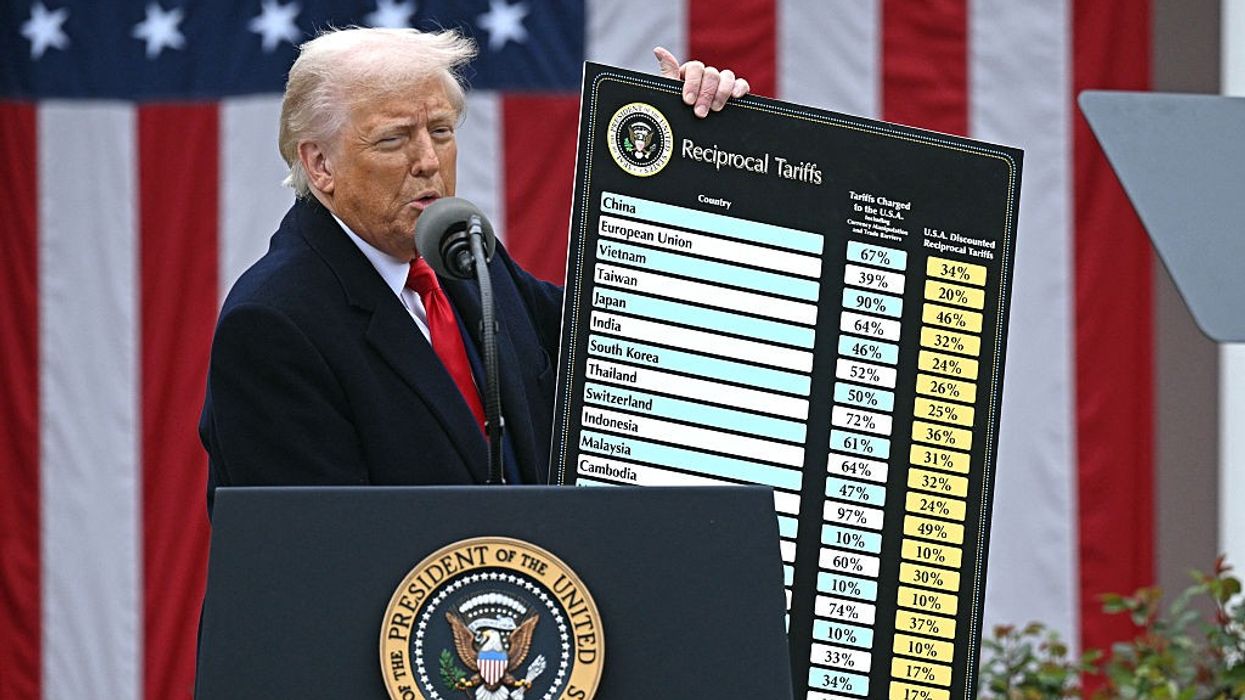
The latest example is the $2,000 tariff dividend check that Trump is promising us. The arithmetic here is about as simple as it gets. We have roughly 340 million people in the country. Let’s say 10 percent don’t get the check because they meet Trump’s category of “high-income.”
That leaves over 300 million people getting Trump’s $2,000 checks. That comes to more than $600 billion. Trump’s tariffs are raising around $270 billion. That means we will be paying out $330 billion more in Trump tariff dividend checks than he is raising in tariff revenue. That would add $270 billion to the deficit—this coming from the same guy who is making an obsession of paying down our national debt.
And just to be clear, we were already looking at a budget deficit for 2026 of $1.8 trillion. If we add $330 billion, the deficit for the fiscal year will be $2.1 trillion. To put this in simple language that even a reporter for a major national news outlet can understand, Trump is proposing to add $2.1 trillion to the debt in 2026; he is not paying it down.
I acknowledge not being a deficit hawk and am not terrified by a deficit of this size, which is roughly 7 percent of GDP. But I suspect most of the politicians in Washington are, and certainly anyone who thinks we need to be paying down the debt should be screaming bloody murder.
But watching the reaction in major media outlets, there seems almost no appreciation of the fact that Trump was floating what would ordinarily be considered a very large increase in the deficit. In fact, if Trump were to give this tariff dividend check every year over the next decade, it would add close to $4 trillion to the debt (counting interest payments), almost as much as the big tax cut Congress approved earlier this year.
It’s also worth comparing Trump’s tariff dividends to other items in the news. The government shutdown was in large part over the $35 billion in annual payments for enhanced subsidies for people buying insurance in Obamacare exchanges. Trump and Republicans in Congress claimed that we didn’t have the money to pay for these subsidies. Trump’s tariff dividend checks would cost more than 17 times as much as the enhanced insurance subsidies.
To make another comparison, Trump saved us around $6 billion a year by shutting down PEPFAR, the program that has saved tens of millions of lives by treating people in Africa for AIDS. This means that Trump’s tariff dividend checks will cost us 100 times as much as the AIDS program that he said we couldn’t afford.
And just to throw in one more comparison, the annual appropriation for public broadcasting was $550 million. Trump’s tariff dividend checks would cost more than 1,000 times as much as the government’s payments for public broadcasting.
People can differ in their views on how important it is to save lives in Africa or provide people here with healthcare. They may also differ in their assessments of how important deficits are. But it really would be good if media outlets could make knowledge of third grade arithmetic a job requirement for reporters who deal with budget issues. It should be their job to provide meaningful information to the public on the topic. Letting someone talk about $2,000 dividend checks, and also about paying down the debt, is a sick joke.

Defeating Republican efforts to slash health coverage for the nation's poor, said one observer, is also an opportunity "to expose and deepen the fractures in Trump's coalition, and to shatter the illusion that he can't be stopped."
Defenders of Medicaid are sounding the alarm over plans by the Republican Party—led by President Donald Trump and House Speaker Mike Johnson—to eviscerate the nation's healthcare system used by low-income individuals and families, warning that the attack would jeopardize healthcare for tens of millions of the poorest Americans as part of an effort to give the wealthiest individuals and corporations massive tax breaks.
Internal divisions within the House GOP caucus have hinged on the overall size of cuts to federal spending in their yet-to-be-released budget blueprint, with competing proposals ranging from $1.25 trillion in cuts up to $2.5 trillion. Of that overall number, hundreds of billions in Medicaid cuts may come in the form of block grants to states, caps on per capita costs, and work requirements.
"For months," wrote Paul Heideman on Monday in Jacobin, "Republicans have said that their budget will cut spending in order to pay for making permanent Trump's tax cuts for the rich, which are set to expire this year."
One of the key targets of their austerity plan, he notes, is Medicaid, which Republicans, as reported by Politico on Tuesday, believe they can cut by an estimated $800 billion or more over the next decade.
"They are cutting healthcare to pay for tax cuts for billionaires."
Echoing the call of other progressive voices, Heideman argues that opponents should seize on the tensions within the GOP—where right-wing hardliners are openly calling for cuts while those in more swing districts have expressed increasing anxiety about what happens politically if they take the axe to a program that is resoundingly popular with voters.
CNN reporting on Monday about the behind-the-scenes maneuvering within the caucus quoted one unnamed Republican lawmaker who said that some members want "to cut to the bone" when in it comes to Medicaid and other programs. While the lawmaker said they were "willing to cut a lot" from the federal budget, "if you cut the essential stuff that affects people every day, you will lose the majority in two years. I can guarantee it.”
Meanwhile, Politico offered more evidence that Trump and House Republicans are still not on the same page:
GOP leaders told senior Republicans in a series of private meetings Monday that Trump wasn’t yet on board with the major Medicaid cuts it would take to secure up to an additional $800 billion in savings, according to three people familiar with the conversations who, like the others, were granted anonymity to describe the private talks.
Johnson and senior Republicans are wary of pursuing the Medicaid reforms only for Trump to publicly bash the move. GOP leaders indicated in private meetings Monday that "they need to work with Trump" on the Medicaid issue before proceeding, according to one of the people.
As Heideman notes, one can't fully understand the attacks on Medicaid—which could boot tens of millions of people out of the program—without recognizing the GOP's parallel strategy for massive tax giveaways for the rich and corporations:
Republicans are hoping to extend the tax cuts passed in Donald Trump's first term. These tax cuts, which were the only substantial legislative accomplishment of Trump's first term, were massively skewed toward the rich. The average household in the top 1 percent of income earners received about $60,000, while the average of the bottom 80 percent of households received only $762.
All of this largesse for the rich was expensive; estimates are it will cost the government nearly $2 trillion over ten years. Because of this, a number of Republicans in Congress insist that any extension of the tax cut must be accompanied by spending cuts to prevent it from adding massively to the deficit. With a razor-thin majority in the House, these deficit hawks could sink any attempt by Trump and the GOP leadership to ram the cuts through in spite of their impact on the deficit. Finding a way to substantially cut Medicaid spending has thus become central to the larger GOP budget plan.
On Tuesday, the Center on Budget and Policy Priorities (CBPP) detailed how one Republican approach to cutting Medicaid—a federal spending freeze that would cap per capita costs—would drastically increase financial pressure on the state programs that administer Medicaid programs.
"If federal funding drops sharply," warned Elizabeth Zhang, a CBPP research assistant, "states would be forced to scale back Medicaid by cutting people from the program, slashing benefits for remaining enrollees, reducing payments to hospitals and physicians—or a combination of all three. This would harm Medicaid enrollees across the program."
Pushing back against the proposed assault on a program that serves over 80 million people each year, all 47 members of the Senate Democratic Caucus on Monday sent a letter to Majority Leader John Thune (R-S.D.) saying he and his Republican colleagues should "reject proposals that use Medicaid as a piggy bank for partisan priorities and continue to defend the importance of this vital program." According to the letter:
Republicans are proposing cuts to the Medicaid program from hundreds of billions to multiple trillions of dollars. Cuts to Medicaid through drastically changing the program's financing structure or imposing additional barriers to coverage are dangerous to the millions of people who rely on the program. These proposals will also force states to make difficult decisions that will result in millions getting kicked off their coverage and providers struggling to keep their practices open. States simply cannot absorb these massive funding cuts without hurting children, seniors, people with disabilities, tribal populations, patients with chronic illnesses, and many other Americans who rely on Medicaid.
"The American people should be assured," the letter concluded, "that Medicaid will be protected."
Last week, as Common Dreams reported, a separate CBPP report estimated that a GOP proposal to institute work requirements for Medicaid recipients could result in 36 million people being axed from the life-saving program. Predictions such as this could be why, as Politico noted, "Trump and his team are worried those cuts will invite political blowback."
The problem for progressives is that Republicans have discovered that while cuts to Medicaid are demonstrably unpopular with the voting public, the implementation of so-called "work requirements" has received more traction in opinion polls. As such, GOP leaders, including House Majority Leader Rep. Steve Scalise (R-La.), may believe they have a new way to trick people into helping them undermine or destroy the program.
This is why Heideman argues it is key for Medicaid defenders to be adamant in their opposition and clear in their messaging when it comes to work requirements or other deceptive messaging about Republican intentions.
Work requirements for Medicaid, Heideman argues, should be called exactly what they are: cuts. As he explains:
During the first Trump administration, states were granted waivers to institute work requirements. Only Arkansas actually implemented the policy, and the results are instructive. About a quarter of Medicaid recipients subject to the requirement (about 18,000 people) lost coverage while the waiver was in effect. Yet the requirement produced zero effect on employment. People kicked off Medicaid were no more likely to have jobs than they were while they were on it.
The reason for this is simple. Most people on Medicaid are already working. Among those that aren’t, most are either disabled, taking care of a family member, or going to school. There simply aren’t that many people on Medicaid who could go get a job, even if their health care is cut off. Moreover, work requirements often lead to people who technically shouldn’t be removed from the program being kicked off because they haven’t supplied the proper paperwork establishing their employment. Work requirements do nothing to make people work more. They simply kick people off the rolls.
Larry Levitt, executive vice president for health policy at Kaiser Family Foundation, pointed out last week that "92% of Medicaid adult enrollees are working, or are not working due to caregiving, an illness or disability, or school attendance."
So while Speaker Johnson and other Republican leaders have tried to say they are not proposing cuts to Medicaid in their pending budget blueprint, informed critics are pointing out that this a blatant falsehood.
Heideman says that the battle to defend the program is important in its own right but also has broader political implications.
"Defeating Medicaid cuts is an urgent priority over the coming months," he argues. "It's an opportunity to reestablish the popularity of the welfare state as a principle of American politics and to hand Trump and the GOP a much-needed defeat. Because of the GOP's disarray, it also has the potential to hamstring the party's only substantive legislative priority. Finally, this kind of work can provide some balance and ability for longer-term coordination amid the daily outrage that the administration is committing. The Left should not let this opportunity slip by."
The deficit squawks who attend each year seek to reverse the progress we’ve made investing in workers, families, and the economy in order to invest in the wealthiest Americans and large corporations.
After narrowly avoiding a shutdown for the second time in less than two months, lawmakers have gone home to enjoy the Thanksgiving holiday without making sustained investments in the critical programs that empower millions of American families and enable our economy to thrive.
Programs that provide nutritional assistance to women and children or offer housing assistance will face multiple funding cliffs early in the new year because extremists in Congress are only interested in advancing the economic interests of the very rich—and partying with them.
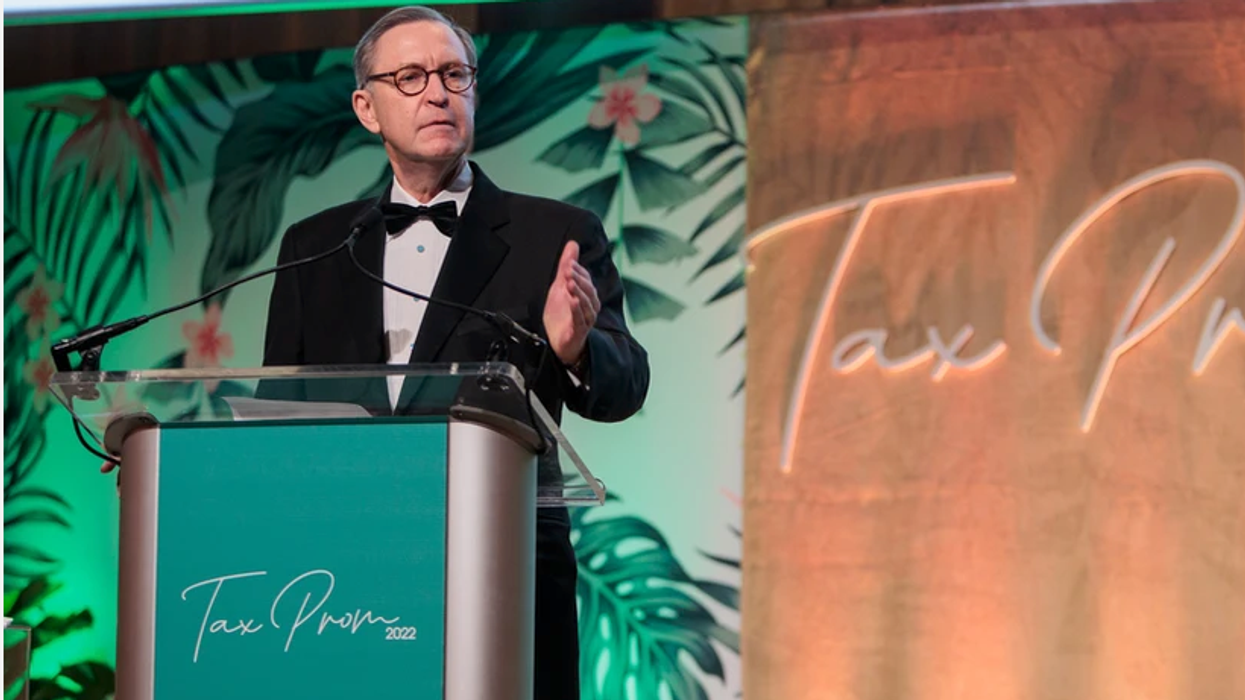
Just hours after avoiding a shutdown, tax policy wonks, lawmakers, and staff, polished their shoes, pressed their tuxedos, and attended “Tax Prom,” an annual fundraiser to support the anti-tax Tax Foundation. The organization is a classic D.C. deficit squawk: it flies its Wall Street coop when big corporations want tax cuts, and screeches when it's time to invest in the rest of us.
Deficit squawks are loudly—and predictably—trying their best to turn back this economic progress by proposing significant cuts to the social programs that help power our economy and constantly bringing the government to the brink of shutdown.
For instance, the organization advocated for Presidents George W. Bush's and Donald Trump's tax cut packages, both of which were disproportionately skewed toward the very rich and large corporations, but lowered overall revenue to just 16.5% of GDP in fiscal year 2023 and caused the national deficit to grow.
On May 17 of this year, Scott Hodge, the organization’s President Emeritus, seized on the growing debt to warn the Senate Budget Committee that "the only sustainable solution to stabilize the debt” isn’t increasing revenue or ensuring the wealthiest among us pay their fair share in taxes – it’s “controlling spending." In other words: cut Medicare, Social Security, and other critical programs working Americans rely on.
Sounds familiar, right?
And while it’s no surprise to see conservative economic luminaries and corporate sponsors from big oil, pharma, and the tax prep industry attending and funding the annual celebration, the Foundation’s ability to attract support from more progressive voices is more alarming.
In past years, the Foundation has honored Senate Finance Chairman Ron Wyden, former Senator Max Baucus, and Rep. Richard Neal. In 2023, it bestowed its distinguished service award on Sen. Maggie Hassan – the first time the Foundation celebrated an elected Democrat for “their efforts to advance sound tax policy” since 2016.
That may not be coincidental, since deficit squawks are building momentum for a new round of policies that benefit the ultrarich.
It comes at a time when our economy, powered by the administration’s hard-fought public investments, continues its record-breaking recovery. Real economic growth was at 4.9 percent last quarter, unemployment is below 4 percent for the 20th straight month, and workers are banding together and demanding more, leading to strong wage growth and a wave of union organizing.
Deficit squawks, meanwhile, are loudly—and predictably—trying their best to turn back this economic progress by proposing significant cuts to the social programs that help power our economy and constantly bringing the government to the brink of shutdown. They’re also ringing the alarm about the nation's growing level of debt and calling for a bipartisan fiscal commission to address the so-called crisis.
Deficit squawks seek to reverse the progress we’ve made investing in workers, families, and the economy in order to invest in the wealthiest Americans and large corporations. It’s clear deficit squawks are stuck in the past, advocating for economic policies that are as unpopular and out of date as pale blue ruffle suits. Elected officials committed to building a modern economy that works for all of us should leave Tax Prom in the past.
Congress is about to engage in another major fight over the federal budget deficit, the national debt, and the debt ceiling.
Republicans are already talking about holding Social Security and Medicare "hostage" during negotiations--hell-bent on getting cuts in exchange for a debt limit hike.
Days ago, U.S. Treasury Secretary Jacob Lew asked whether our nation would "muster the political will to avoid the self-inflicted wounds that come from a political stalemate."
It's a fair question. And there's only one economically sound answer: Congress must raise the debt ceiling, end the sequester, put more people to work, and increase our investment in education and infrastructure.
Here are the three reasons why Republican deficit hawks are wrong. (Please watch and share our attached video.)
FIRST: Deficit and debt numbers are meaningless on their own. They have to be viewed as a percentage of the national economy.
That ratio is critical. As long as the yearly deficit continues to drop as a percentage of the national economy, as it has for several years, we can more easily pay what we owe.
SECOND: America needs to run larger deficits when many people are unemployed or underemployed - as they still are today, when millions remain too discouraged to look for jobs and millions more are in part-time jobs and need full-time work.
As we've known for years - in every economic downturn and in every struggling recovery - more government spending helps create jobs - teachers, fire fighters, police officers, social workers, people to rebuild roads and bridges and parks. And the people in these jobs create far more jobs when they spend their paychecks.
This kind of spending grows the economy, increasing tax revenues and allowing the deficit to shrink in proportion.
Doing the opposite - cutting back spending when a lot of people are still out of work - as Congress has done with the sequester, as much of Europe has done - causes economies to slow or even shrink, which makes the deficit larger in proportion.
This is why austerity economics is a recipe for disaster, as in Greece. Creditors and institutions worried about Greece's debt forced it to cut spending. The spending cuts led to a huge economic recession, reducing tax revenues and worsening the debt crisis.
THIRD AND FINALLY: Deficit spending on investments like education and infrastructure differs from other forms of spending because this spending builds productivity and future economic growth.
It's like a family borrowing money to send a kid to college or start a business. It should be done if the likely return on the investment exceeds the borrowing costs.
Keep these three principles in mind and you won't be fooled by scare tactics of the deficit hawks.
And you'll understand why we have to raise the debt ceiling, end the sequester, put more people to work, and increase rather than decrease spending on vital public investments like education and infrastructure.
Simpson-Bowles Urge Action to Fix the DebtCo-founders of the Campaign to Fix the Debt Alan Simpson and Erskine Bowles give straight talk on the national debt. The gross ...
The Campaign to Fix the Debt, the $40 million dollar astroturf "supergroup" that CMD exposed on the cover of the Nation magazine, has shifted into high gear in an effort to leverage the debt ceiling crisis into cuts to Social Security and Medicare.
Today, the group launched a six figure TV ad buy that reaches new heights of hypocrisy -- and that is saying a lot.
Former U.S. Senator Alan Simpson and Morgan Stanley board member Erskine Bowles have long been spokespersons for Fix the Debt. The "folksy" Simpson: "For cryin' out loud, Erskine, who isn't fed up with what's goin' on in Washington?" The Bowles tsk tsk: "These politicians are playing games jerking our country around from crisis to crisis."
This is rich from a group that has been hyping a debt and deficit crisis since its launch in July 2012, even though the deficit has been cut in half in recent years. In January 2013 Fix the Debt steering committee member and former Tennessee Governor Phil Bredesen admitted that Fix the Debt's strategy was to create an "artificial crisis" to achieve a "grand bargain" on Medicare and Social Security.
Moreover, Fix the Debt was started with a $5 million donation from crisis king Pete Peterson. Peterson has been warning that our Social Security would create a "Pearl Harbor" type crisis for decades as my colleague Lisa Graves documented in her Nation piece "Peterson's Long History of Deficit Scaremongering."
Bowles and Simpson have long been Peterson retainers. Peterson launched a massive effort to prop up the Simpson-Bowles commission and its $4 trillion austerity package, he bankrolled "America Speaks" town hall meetings, launched a TV ad campaign and bankrolled bus tours to the heartland to gin up a faint patina of grassroots support for austerity.
For the Fix the Debt austerity hounds, cuts are the goal as their latest letter makes clear. Under their "chained CPI" proposal, over the next 25 years the average retired federal employee would lose $48,000; the average Social Security recipient would lose $23,000; and, the average military retiree would lose $42,000, says U.S. Senator Bernie Sanders.
Make no mistake a Simpson-Bowles type plan would be disastrous for our economy, costing some 4 million jobs for starters says the Economic Policy Institute.
Cartoonist Mark Fiore brilliantly skewers the phony Fix the Debt gang in his new video.
As the debt ceiling looms and the horse trading continues, you can follow the conversation on Twitter at #nocuts and learn more at PetersonPyramid.org.
Pete Peterson Exposed: The "Grand Bargain" HoaxThe "Grand Bargain" is a hoax. Find out more about who's behind the push for austerity in deficit hawk America. Learn more about ...