

SUBSCRIBE TO OUR FREE NEWSLETTER
Daily news & progressive opinion—funded by the people, not the corporations—delivered straight to your inbox.
5
#000000
#FFFFFF
To donate by check, phone, or other method, see our More Ways to Give page.
Daily news & progressive opinion—funded by the people, not the corporations—delivered straight to your inbox.
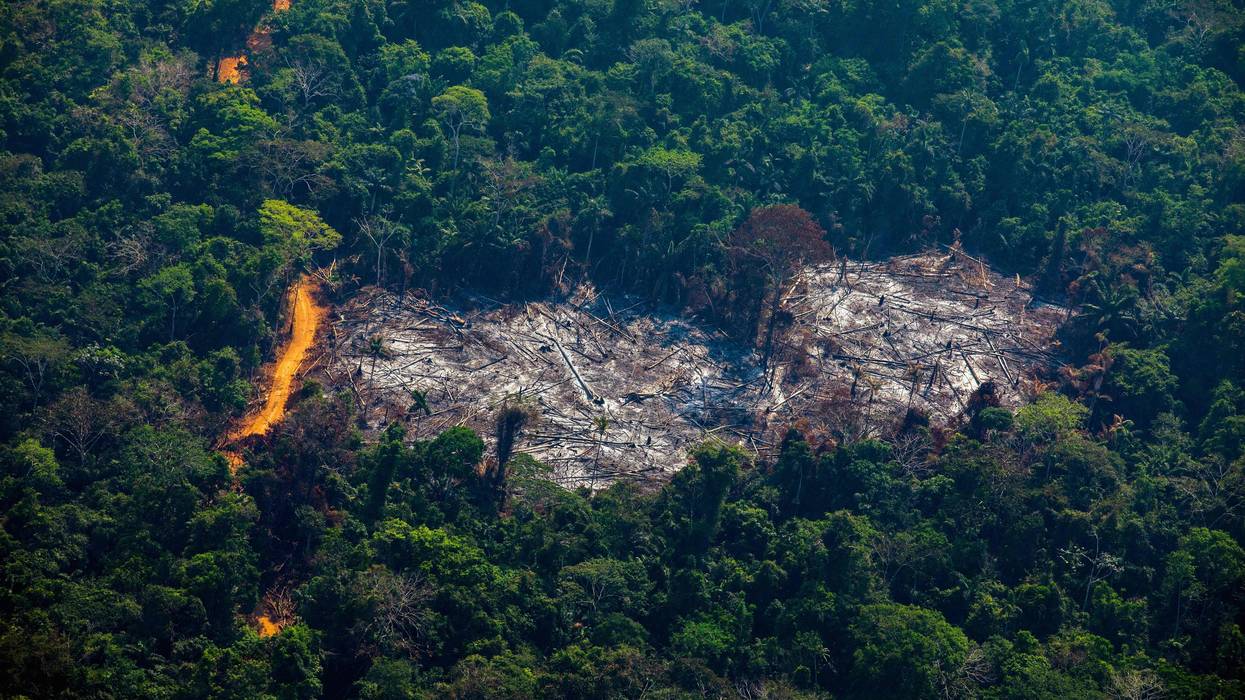
The world's largest rainforest showed "ominous indicators," including wildfires and extreme drought, in 2024.
The Amazon, sometimes called the "lungs of the planet," this year showed signs of further inching toward a much-feared tipping point, threatening the very existence of the world's largest rainforest.
Rampant wildfires and extreme drought ravaged large parts of the Amazon in 2024. The fires and dry conditions were fueled by deforestation and the El Niño weather pattern, and also made worse by climate change, according to the World Economic Forum. "The number of fires reached its highest level in 14 years this September," the group reported in October.
Drought has also impacted the Amazon River, causing one of the river's main tributaries to drop to its lowest level ever recorded, according to October reporting from The Associated Press. The drop in the river has negatively impacted local economies and food supplies.
Andrew Miller, advocacy director at Amazon Watch, told the AP last week that the fires and droughts experienced across the Amazon in 2024 "could be ominous indicators that we are reaching the long-feared ecological tipping point."
"Humanity's window of opportunity to reverse this trend is shrinking, but still open," he said.
The Amazon plays a vital role in keeping the planet healthy. 150-200 billion tons of carbon are stored in the Amazon, and it also carries 20% of the earth's fresh water to sea.
According to the World Economic Forum, if the Amazon tipping point is reached, "it will release billions of tonnes of CO2 into the atmosphere through fires and plants dying off. This would further exacerbate climate change and make the 1.5°C goal impossible to achieve. It would also alter weather patterns, which would impact agricultural productivity and global food supplies."
A paper published in the journal Nature in February indicates that up to half of the rainforest could hit a tipping point by the middle of the century. "We estimate that by 2050, 10% to 47% of Amazonian forests will be exposed to compounding disturbances that may trigger unexpected ecosystem transitions and potentially exacerbate regional climate change," explained the researchers behind the paper.
However, it wasn't all bad news out of the Amazon in 2024. According to the AP, the amount of deforestation in Brazil and Colombia declined in this year. In Brazil, which houses the largest chunk of the Amazon, forest loss dropped 30.6% compared to the year prior, bringing it to the lowest level of destruction in nearly a decade.
The improvement is an about-face from a couple of years ago, when the country registered 15-year high of deforestation during the leadership of former far-right President Jair Bolsonaro. Brazil is now led by the left-wing President Luiz Inácio Lula da Silva, who—despite presiding over this drop in deforestation—has also come under scrutiny, as AP noted, by environmentalist for backing projects that they argue could harm the environment.
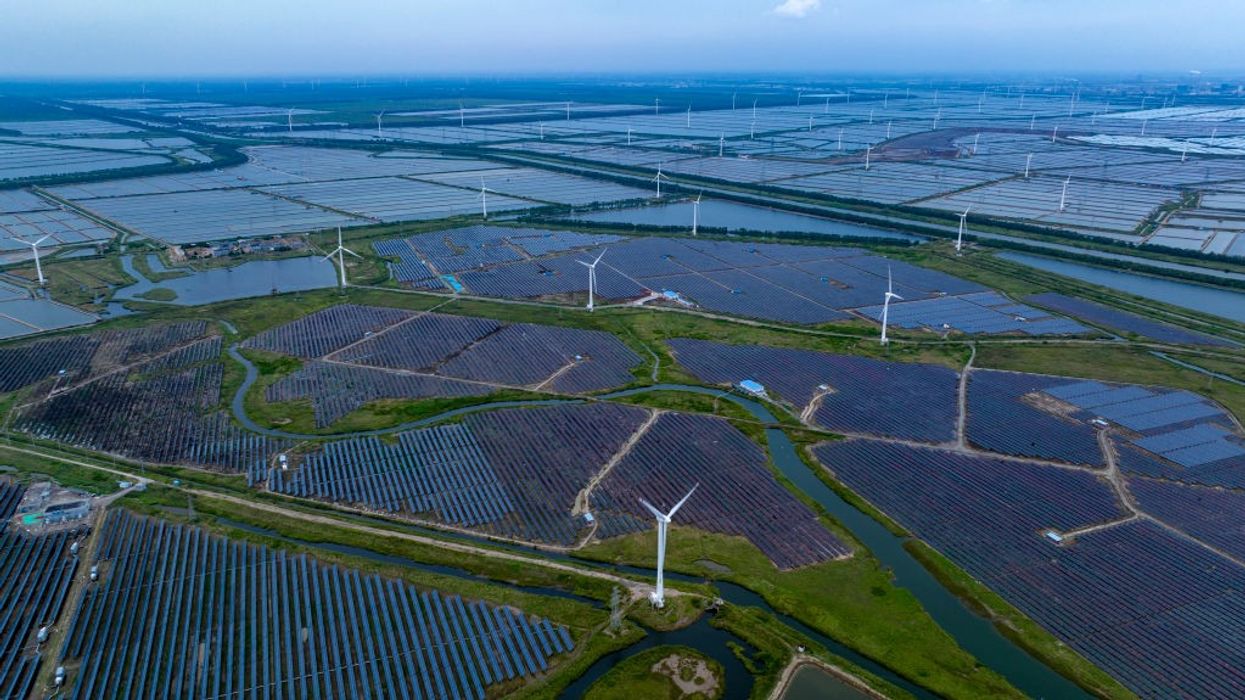
Historically, an overhaul for humanity's energy system would take hundreds or many thousands of years. The rapid shift to cleaner, more sustainable sources of power generations will easily be the most ambitious enterprise our species has ever undertaken.
Humanity’s transition from relying overwhelmingly on fossil fuels to instead using alternative low-carbon energy sources is sometimes said to be unstoppable and exponential. A boosterish attitude on the part of many renewable energy advocates is understandable: overcoming people’s climate despair and sowing confidence could help muster the needed groundswell of motivation to end our collective fossil fuel dependency. But occasionally a reality check is in order.
The reality is that energy transitions are a big deal, and they typically take centuries to unfold. Historically, they’ve been transformative for societies—whether we’re speaking of humanity’s taming of fire hundreds of thousands of years ago, the agricultural revolution 10,000 years ago, or our adoption of fossil fuels starting roughly 200 years ago. Given (1) the current size of the human population (there are eight times as many of us alive today as there were in 1820, when the fossil fuel energy transition was getting underway), (2) the vast scale of the global economy, and (3) the unprecedented speed with which the transition will have to be made in order to avert catastrophic climate change, a rapid renewable energy transition is easily the most ambitious enterprise our species has ever undertaken.
As we’ll see, the evidence shows that the transition is still in its earliest stages, and at the current rate, it will fail to avert a climate catastrophe in which an unimaginable number of people will either die or be forced to migrate, with most ecosystems transformed beyond recognition.
Implementing these seven steps will change everything. The result will be a world that’s less crowded, one where nature is recovering rather than retreating, and one in which people are healthier (because they’re not soaked in pollution) and happier.
We’ll unpack the reasons why the transition is currently such an uphill slog. Then, crucially, we’ll explore what a real energy transition would look like, and how to make it happen.
Despite trillions of dollars having been spent on renewable energy infrastructure, carbon emissions are still increasing, not decreasing, and the share of world energy coming from fossil fuels is only slightly less today than it was 20 years ago. In 2024, the world is using more oil, coal, and natural gas than it did in 2023.
While the U.S. and many European nations have seen a declining share of their electricity production coming from coal, the continuing global growth in fossil fuel usage and CO2 emissions overshadows any cause for celebration.
Why is the rapid deployment of renewable energy not resulting in declining fossil fuel usage? The main culprit is economic growth, which consumes more energy and materials. So far, the amount of annual growth in the world’s energy usage has exceeded the amount of energy added each year from new solar panels and wind turbines. Fossil fuels have supplied the difference.
So, for the time being at least, we are not experiencing a real energy transition. All that humanity is doing is adding energy from renewable sources to the growing amount of energy it derives from fossil fuels. The much-touted energy transition could, if somewhat cynically, be described as just an aspirational grail.
How long would it take for humanity to fully replace fossil fuels with renewable energy sources, accounting for both the current growth trajectory of solar and wind power, and also the continued expansion of the global economy at the recent rate of 3 percent per year? Economic models suggest the world could obtain most of its electricity from renewables by 2060 (though many nations are not on a path to reach even this modest marker). However, electricity represents only about 20 percent of the world’s final energy usage; transitioning the other 80 percent of energy usage would take longer—likely many decades.
However, to avert catastrophic climate change, the global scientific community says we need to achieve net-zero carbon emissions by 2050—i.e., in just 25 years. Since it seems physically impossible to get all of our energy from renewables that soon while still growing the economy at recent rates, the IPCC (the international agency tasked with studying climate change and its possible remedies) assumes that humanity will somehow adopt carbon capture and sequestration technologies at scale—including technologies that have been shown not to work—even though there is no existing way of paying for this vast industrial build-out. This wishful thinking on the part of the IPCC is surely proof that the energy transition is not happening at sufficient speed.
Why isn’t it? One reason is that governments, businesses, and an awful lot of regular folks are clinging to an unrealistic goal for the transition. Another reason is that there is insufficient tactical and strategic global management of the overall effort. We’ll address these problems separately, and in the process uncover what it would take to nurture a true energy transition.
At the heart of most discussions about the energy transition lie two enormous assumptions: that the transition will leave us with a global industrial economy similar to today’s in terms of its scale and services, and that this future renewable-energy economy will continue to grow, as the fossil-fueled economy has done in recent decades. But both of these assumptions are unrealistic. They flow from a largely unstated goal: we want the energy transition to be completely painless, with no sacrifice of profit or convenience. That goal is understandable, since it would presumably be easier to enlist the public, governments, and businesses in an enormous new task if no cost is incurred (though the history of overwhelming societal effort and sacrifice during wartime might lead us to question that presumption).
But the energy transition will undoubtedly entail costs. Aside from tens of trillions of dollars in required monetary investment, the energy transition will itself require energy—lots of it. It will take energy to build solar panels, wind turbines, heat pumps, electric vehicles, electric farm machinery, zero-carbon aircraft, batteries, and the rest of the vast panoply of devices that would be required to operate an electrified global industrial economy at current scale.
In the early stages of the transition, most of that energy for building new low-carbon infrastructure will have to come from fossil fuels, since those fuels still supply over 80 percent of world energy (bootstrapping the transition—using only renewable energy to build transition-related machinery—would take far too long). So, the transition itself, especially if undertaken quickly, will entail a large pulse of carbon emissions. Teams of scientists have been seeking to estimate the size of that pulse; one group suggests that transition-related emissions will be substantial, ranging from 70 to 395 billion metric tons of CO2 “with a cross-scenario average of 195 GtCO2”—the equivalent of more than five years’ worth of global carbon CO2 emissions at current rates. The only ways to minimize these transition-related emissions would be, first, to aim to build a substantially smaller global energy system than the one we are trying to replace; and second, to significantly reduce energy usage for non-transition-related purposes—including transportation and manufacturing, cornerstones of our current economy—during the transition.
In addition to energy, the transition will require materials. While our current fossil-fuel energy regime extracts billions of tons of coal, oil, and gas, plus much smaller amounts of iron, bauxite, and other ores for making drills, pipelines, pumps, and other related equipment, the construction of renewable energy infrastructure at commensurate scale would require far larger quantities of non-fuel raw materials—including copper, iron, aluminum, lithium, iridium, gallium, sand, and rare earth elements.
While some estimates suggest that global reserves of these elements are sufficient for the initial build-out of renewable-energy infrastructure at scale, there are still two big challenges. First: obtaining these materials will require greatly expanding extractive industries along with their supply chains. These industries are inherently polluting, and they inevitably degrade land. For example, to produce one ton of copper ore, over 125 tons of rock and soil must be displaced. The rock-to-metal ratio is even worse for some other ores. Mining operations often take place on Indigenous peoples’ lands and the tailings from those operations often pollute rivers and streams. Non-human species and communities in the global South are already traumatized by land degradation and toxification; greatly expanding resource extraction—including deep-sea mining—would only deepen and multiply the wounds.
The second materials challenge: renewable energy infrastructure will have to be replaced periodically—every 25 to 50 years. Even if Earth’s minerals are sufficient for the first full-scale build-out of panels, turbines, and batteries, will limited mineral abundance permit continual replacements? Transition advocates say that we can avoid depleting the planet’s ores by recycling minerals and metals after constructing the first iteration of solar-and-wind technology. However, recycling is never complete, with some materials degraded in the process. One analysis suggests recycling would only buy a couple of centuries’ worth of time before depletion would bring an end to the regime of replaceable renewable-energy machines—and that’s assuming a widespread, coordinated implementation of recycling on an unprecedented scale. Again, the only real long-term solution is to aim for a much smaller global energy system.
The transition of society from fossil fuel dependency to reliance on low-carbon energy sources will be impossible to achieve without also reducing overall energy usage substantially and maintaining this lower rate of energy usage indefinitely. This transition isn’t just about building lots of solar panels, wind turbines, and batteries. It is about organizing society differently so that is uses much less energy and gets whatever energy it uses from sources that can be sustained over the long run.
Step one: Cap global fossil fuel extraction through global treaty, and annually lower the cap. We will not reduce carbon emissions until we reduce fossil fuel usage—it’s just that simple. Rather than trying to do this by adding renewable energy (which so far hasn’t resulted in a lessening of emissions), it makes far more sense simply to limit fossil fuel extraction. I wrote up the basics of a treaty along these lines several years ago in my book, The Oil Depletion Protocol.
Step two: Manage energy demand fairly. Reducing fossil fuel extraction presents a problem. Where will we get the energy required for transition purposes? Realistically, it can only be obtained by repurposing energy we’re currently using for non-transition purposes. That means most people, especially in highly industrialized countries, would have to use significantly less energy, both directly and also indirectly (in terms of energy embedded in products, and in services provided by society, such as road building). To accomplish this with the minimum of societal stress will require a social means of managing energy demand.
The fairest and most direct way to manage energy demand is via quota rationing. Tradable Energy Quotas (TEQs) is a system designed two decades ago by British economist David Fleming; it rewards energy savers and gently punishes energy guzzlers while ensuring that everyone gets energy they actually need. Every adult would be given an equal free entitlement of TEQs units each week. If you use less than your entitlement of units, you can sell your surplus. If you need more, you can buy them. All trading takes place at a single national price, which will rise and fall in line with demand.
Step three: Manage the public’s material expectations. Persuading people to accept using less energy will be hard, if everyone still wants to use more. Therefore, it will be necessary to manage the public’s expectations. This may sound technocratic and scary, but in fact society has already been managing the public’s expectations for over a century via advertising—which constantly delivers messages encouraging everyone to consume as much as they can. Now we need different messages to set different expectations.
What’s our objective in life? Is it to have as much stuff as possible, or to be happy and secure? Our current economic system assumes the former, and we have instituted an economic goal (constant growth) and an indicator (gross domestic product, or GDP) to help us achieve that goal. But ever-more people using ever-more stuff and energy leads to increased rates of depletion, pollution, and degradation, thereby imperiling the survival of humanity and the rest of the biosphere. In addition, the goal of happiness and security is more in line with cultural traditions and human psychology. If happiness and security are to be our goals, we should adopt indicators that help us achieve them. Instead of GDP, which simply measures the amount of money changing hands in a country annually, we should measure societal success by monitoring human well-being. The tiny country of Bhutan has been doing this for decades with its Gross National Happiness (GNH) indicator, which it has offered as a model for the rest of the world.
Step four: Aim for population decline. If population is always growing while available energy is capped, that means ever-less energy will be available per capita. Even if societies ditch GDP and adopt GNH, the prospect of continually declining energy availability will present adaptive challenges. How can energy scarcity impacts be minimized? The obvious solution: welcome population decline and plan accordingly.
Global population will start to decline sometime during this century. Fertility rates are falling worldwide, and China, Japan, Germany, and many other nations are already seeing population shrinkage. Rather than viewing this as a problem, we should see it as an opportunity. With fewer people, energy decline will be less of a burden on a per capita basis. There are also side benefits: a smaller population puts less pressure on wild nature, and often results in rising wages. We should stop pushing a pro-natalist agenda; ensure that women have the educational opportunities, social standing, security, and access to birth control to make their own childbearing choices; incentivize small families, and aim for the long-term goal of a stable global population closer to the number of people who were alive at the start of the fossil-fuel revolution (even though voluntary population shrinkage will be too slow to help us much in reaching immediate emissions reduction targets).
Step five: Target technological research and development to the transition. Today the main test of any new technology is simply its profitability. However, the transition will require new technologies to meet an entirely different set of criteria, including low-energy operation and minimization of exotic and toxic materials. Fortunately, there is already a subculture of engineers developing low-energy and intermediate technologies that could help run a right-sized circular economy.
Step six: Institute technological triage. Many of our existing technologies don’t meet these new criteria. So, during the transition, we will be letting go of familiar but ultimately destructive and unsustainable machines.
Some energy-guzzling machines—such as gasoline-powered leaf blowers—will be easy to say goodbye to. Commercial aircraft will be harder. Artificial intelligence is an energy guzzler we managed to live without until very recently; perhaps it’s best if we bid it a quick farewell. Cruise ships? Easy: downsize them, replace their engines with sails, and expect to take just one grand voyage during your lifetime. Weapons industries offer plenty of examples of machines we could live without. Of course, giving up some of our labor-saving devices will require us to learn useful skills—which could end up providing us with more exercise. For guidance along these lines, consult the rich literature of technology criticism.
Step seven: Help nature absorb excess carbon. The IPCC is right: if we’re to avert catastrophic climate change we need to capture carbon from the air and sequester it for a long time. But not with machines. Nature already removes and stores enormous amounts of carbon; we just need to help it do more (rather than reducing its carbon-capturing capabilities, which is what humanity is doing now). Reform agriculture to build soil rather than destroy it. Restore ecosystems, including grasslands, wetlands, forests, and coral reefs.
Implementing these seven steps will change everything. The result will be a world that’s less crowded, one where nature is recovering rather than retreating, and one in which people are healthier (because they’re not soaked in pollution) and happier.
Granted, this seven-step program appears politically unachievable today. But that’s largely because humanity hasn’t yet fully faced the failure of our current path of prioritizing immediate profits and comfort above long-term survival—and the consequences of that failure. Given better knowledge of where we’re currently headed, and the alternatives, what is politically impossible today could quickly become inevitable.
Social philosopher Roman Krznaric writes that profound social transformations are often tied to wars, natural disasters, or revolutions. But crisis alone is not positively transformative. There must also be ideas available for different ways to organize society, and social movements energized by those ideas. We have a crisis and (as we have just seen) some good ideas for how to do things differently. Now we need a movement.
Building a movement takes political and social organizing skills, time, and hard work. Even if you don’t have the skills for organizing, you can help the cause by learning what a real energy transition requires and then educating the people you know; by advocating for degrowth or related policies; and by reducing your own energy and materials consumption. Calculate your ecological footprint and shrink it over time, using goals and strategies, and tell your family and friends what you are doing and why.
Even with a new social movement advocating for a real energy transition, there is no guarantee that civilization will emerge from this century of unraveling in a recognizable form. But we all need to understand: this is a fight for survival in which cooperation and sacrifice are required, just as in total war. Until we feel that level of shared urgency, there will be no real energy transition, and little prospect for a desirable human future.

"I'd make this the lead story in every paper and newscast on the planet," said Bill McKibben. "If we don't understand the depth of the climate crisis, we will not act in time."
The average monthly concentration of carbon dioxide in the atmosphere jumped by a record 4.7 parts per million between March 2023 and March 2024, according to new data from NOAA's Mauna Loa Observatory in Hawaii.
The spike, reported by the University of California, San Diego's Scripps Institution of Oceanography on Wednesday, reveals "the increasing pace of CO2 addition to the atmosphere by human activities," the university said.
"I'd make this the lead story in every paper and newscast on the planet," author and long-time climate activist Bill McKibbenwrote on social media in response to the news. "If we don't understand the depth of the climate crisis, we will not act in time."
"Human activity has caused CO2 to rocket upwards. It makes me sad more than anything. It's sad what we are doing."
Scientists have been tracking rising CO2 concentrations from Mauna Loa since 1958, and their upward trajectory has come to be known as the "Keeling Curve," named for Charles Keeling, who began the measurements. The curve has become an important symbol of the climate crisis—making visible how the burning of fossil fuels and the clearing of vegetation has released more and more CO2 into the atmosphere, where it traps heat from escaping into space and raises global temperatures.
For most of human history, concentrations have hovered around 280ppm, and the curve's first measurement put them at 313. Sixty-five years later, C02 concentrations averaged 419.3 ppm in 2023, a level not seen since 4.3 million years ago when sea levels were around 75 feet higher and parts of today's Arctic tundra were forests. As of Wednesday, the Keeling Curve reported a daily concentration of 426.72 ppm.
The record jump from March 2023 to March 2024 surpasses the last record jump of 4.1 ppm from June 2015 to June 2016.
"We sadly continue to break records in the CO2 rise rate," Ralph Keeling, Charles' son who now directs the Scripps CO2 Program, said. "The ultimate reason is continued global growth in the consumption of fossil fuels."
The record leaps from both 2015-2016 and 2023-2024 were also influenced by active El Niño events. The El Niño phenomenon increases atmospheric carbon dioxide because it leads to warmer, drier temperatures in the tropics, which decrease vegetation and encourage fires. Atmospheric CO2 levels tend to rise especially quickly toward the end of an El Niño cycle, and last March's CO2 levels were unusually low, leading to a larger gap in the 12-month period.
This year's rate of increase during the current El Niño is significantly larger than the one that took place in 2016. As Scripps explained:
The increase from February 2023 to February of this year was 4.0 ppm, compared to 3.7 for the 2016 El Niño. The increase from January 2023 to January of this year was 3.4 ppm, compared to 2.6 for the 2016 El Niño.
The growth rate from April 2023 to April 2024 dropped to 3.6 ppm, but taking into account the first four months of 2024, the growth rate is well above that for 2016. If this El Niño follows the pattern of the last El Niño, the world might experience a very high growth rate for several more months, Keeling said.
However, any regular climate variations such as El Niño events occur over the longer-term rise in both fossil fuel emissions and greenhouse gas levels.
"The rate of rise will almost certainly come down, but it is still rising and in order to stabilize the climate, you need CO2 level to be falling," Keeling told The Guardian. "Clearly, that isn't happening. Human activity has caused CO2 to rocket upwards. It makes me sad more than anything. It's sad what we are doing."
Jeff Goodell, author of The Heat Will Kill You First, wrote in response, "We're riding the Venus Express."
The record jump in CO2 concentrations comes as 2023 was the hottest year both on record and in around 100,000 years. Of the 12 months covered by the March 2023 to March 2024 period, 10 of them (June through March) were the hottest of that month on record.

One environmental activist urged U.S. President Joe Biden to take action to "usher out the era of climate-destroying cars and trucks."
Although the total number of automobiles sold globally fell slightly last year, worldwide sales of sport utility vehicles rose significantly, with 330 million SUVs now on—and off—the world's roads emitting more planet-heating greenhouse gases than all but five nations, an analysis published Monday revealed.
The International Energy Agency (IEA) reports total car sales fell nearly 0.5% to around 75 million units in 2022. SUV sales, however, were up around 3% "despite supply chain obstacles and rising inflation."
"In 2022, SUVs accounted for around 46% of global car sales, with noticeable growth coming in the United States, India, and Europe," the report says.
IEA noted that "an increasing number of SUVs were electric, accounting for around 16% of total SUV sales in 2022, above the average overall market share for EVs. For the first time ever, electric SUVs last year accounted for over half of global electric car sales."
However, the "strong increase in sales of electric models was not enough to prevent carbon dioxide (CO2) emissions from SUVs worldwide reaching almost 1 billion tons in 2022," the agency said.
Put another way, if SUVs were a country, it would be the world's sixth-biggest carbon polluter.
"Rapidly increasing the number of electric cars on the road in place of conventional cars is a key part of reaching net-zero emissions by mid-century," the IEA report asserts. "At the same time, SUVs require larger batteries to power them, so a growing electric SUV market would impose additional pressure on battery supply chains and further increase demand for the critical minerals needed to make the batteries."
"Addressing those risks ahead of time is possible through a number of actions: downsizing of the average car size; increasing battery swapping; and investing in innovative battery technologies," the analysis continues. "Those strategies would keep in check the investment requirements for developing the cobalt, copper, lithium, and nickel resources needed to satisfy the increasing uptake of EVs."
Climate and environmental campaigners in the United States urged President Joe Biden to take action to boost EV production.
"Cutting auto pollution by 75% by 2030 is the biggest single step America can take to prevent catastrophic global warming."
"While automakers talk out of both sides of their tailpipes, President Biden can take action to usher out the era of climate-destroying cars and trucks," Dan Becker, director of the Center for Biological Diversity's Safe Climate Transport Campaign, said in a statement.
"The president needs to set standards that dramatically boost EV production and require automakers to slash the pollution caused by new gas-burning vehicles in the meantime," he added. "Cutting auto pollution by 75% by 2030 is the biggest single step America can take to prevent catastrophic global warming."
Amanda Pantoja, a sustainable communities program consultant with GreenLatinos, asserted that "our communities need clean air, not more toxic auto pollution."
"Setting the highest clean car standards is essential to achieving environmental justice for low-income communities of color disproportionately impacted by vehicle emissions," Pantoja explained. "President Biden must deliver on his commitment to advance zero-emission transportation and ensure that vulnerable populations have access to clean vehicles in their neighborhoods."
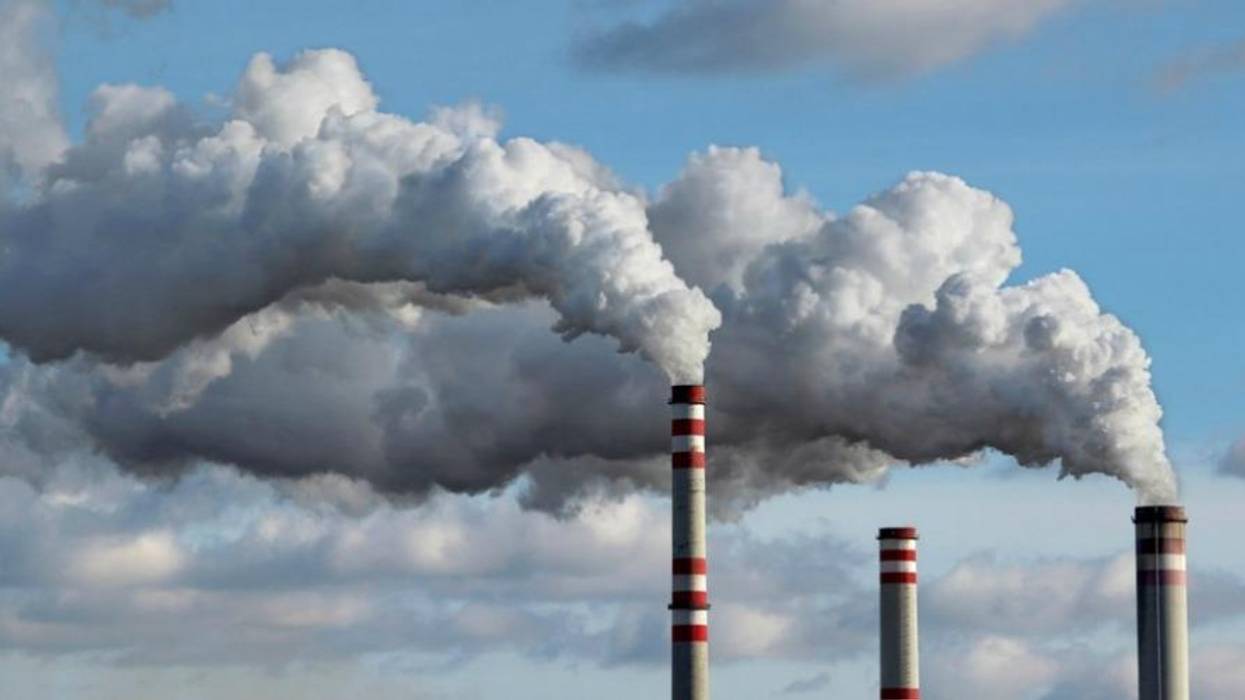
We are on the verge of an amazing new, low-carbon America. CO2 emissions will be with us for years to come, but by 2030 perhaps we can start talking about the beginning of the end.
In the midst of World War II, on November 10, 1942, Winston Churchill said of the war: “Now this is not the end. It is not even the beginning of the end. But it is, perhaps, the end of the beginning.”
The year 2022 was disappointing for the stated American goal of reducing the country’s carbon dioxide emissions, which rose by 1.5%. In contrast, China’s emissions fell by 0.9% and Europe, despite the Putin energy crisis decreased its output by 0.8%.
The Inflation Reduction Act has $369 billion in it to promote green energy.
The Biden administration and U.S. civil society organizations and private companies, however, laid the groundwork for potentially impressive U.S. progress through the rest of this decade. That is, 2022 may have been the end of the beginning.
The Infrastructure and Jobs Act passed a little over a year ago contained $7.5 billion for zero- and low-emission buses and ferries, and another $7.5 billion for a nation-wide network of electric car chargers. It contains $105 billion to upgrade and expand public transportation, which will mean fewer people dependent on automobiles. Even the monies dedicated to improving port and airport infrastructure have a mandate to reduce congestion and carbon emissions.
While initially Postmaster Louis DeJoy, a Trump-era holdover, was dragging his feet on electric vehicle purchase, he caved to pressure from the administration and Congress and has agreed to purchase at least 66,000 battery-electric vehicles through 2028 as part of a 106,000 vehicle purchase plan. He is also expanding USPS parking structures and putting in electric chargers. All environmentalists would have been pleased if he would move even faster. Still, there are only 1.7 million EVs on the road in the US (up from 400,000 in the second quarter of 2018), and 66,000 would be 4% of all those existing electric vehicles. The more EVs are bought, the more the price of the batteries will fall and the more their efficiency will increase. Automobile costs are expected to fall over the next decade as a result, and big government purchases will be very helpful.
This year, 18% of new car registrations in California were electric, and about 6% in the country as a whole. That is a big increase from almost zero just a few years ago. All the big auto firms are betting the farm on going electric, and with Biden administration help are building billions of dollars worth of new battery plants. It will take a few years for this build-out to come to fruition, but when it happens, it will be like opening the floodgates.
There are only 229 coal-fired power plants left in the U.S. In November, President Joe Biden pledged to close them all. Despite the energy crisis, nearly 6% (11,778 megawatts) of U.S. coal-fired generation capacity is expected to shut down in 2022. If we can double that rate of closure every year for the next ten years, they will all be gone by 2032, which is a reasonable expectation. The cost of solar-wind-battery generation will fall over that period, making coal prohibitively expensive. In fact, coal is already expensive, costing about 6 cents a kilowatt hour to generate electricity. That does not count all the health and climate damage it does. If that were figured in, it would be more like 80 cents a kilowatt hour. In contrast, wind and solar are roughly 4 cents a kilowatt hour and have been falling. In very sunny states solar could be as little as 2 cents a kilowatt hour.
Battery storage capacity is also increasing rapidly throughout the states, which can cover at least some high-demand periods. California is up to 3 gigawatts, with plans for more.
The Inflation Reduction Act has $369 billion in it to promote green energy. The Biden Administration is letting leases for offshore wind farms. $4 billion in bids were let for New York and New Jersey alone, and over $700 million for installations off the coast of California. Likewise, Houston and New Orleans have their eyes on this energy source. Off the coast of the Atlantic and the Gulf of Mexico the shelf is shallow enough so that wind turbines can be anchored to the sea bottom. The Pacific is so deep off California that firms will have to put up floating wind turbines, of a sort that have been installed off the coast of Scotland. The U.S. has lagged behind on offshore wind as an energy source, having almost none right now. But in two years, that will begin changing. One advantage of offshore wind is that winds blow more steadily out at sea and so those turbines can take up some of the slack from solar panels, which go dark at sundown.
We are on the verge of an amazing new, low-carbon America. CO2 emissions will be with us for years to come, but by 2030 perhaps we can start talking about the beginning of the end.
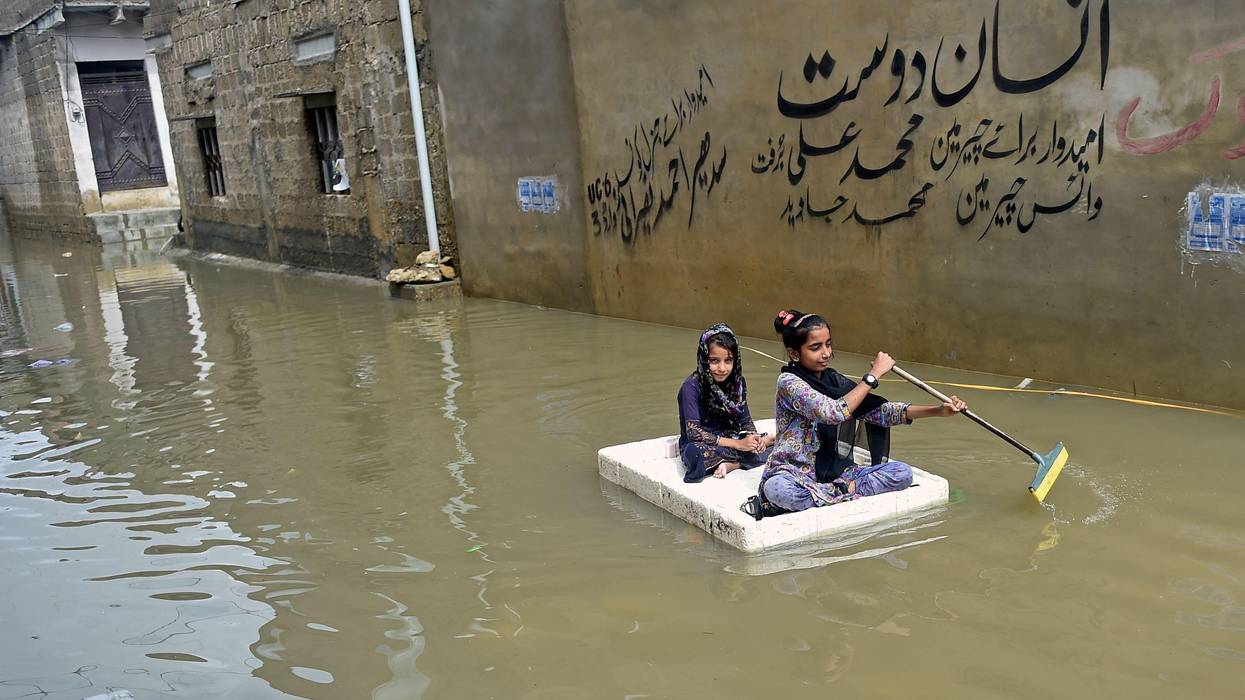
CNN reports that satellite photos show that the overflowing Indus has created a new body of water in southern Pakistan some 62 miles (100km) wide. It will take days or weeks for the water to recede, and in the meantime millions are left homeless and over all, 33 million people have been affected by the worst monsoon floods in recorded history. CNN quotes Pakistan's Climate Minister Sherry Rahman as saying "That parts of the country 'resemble a small ocean,' and that 'by the time this is over, we could well have one-quarter or one-third of Pakistan under water.'"
Because of our burning of fossil fuels to drive cars and heat and cool buildings, the world is heating up. But the Indian Ocean is heating up a third faster than the rest of the world. Very warm waters in the Bay of Bengal are helping create more destructive cyclones and flooding. The air over warming waters contains more moisture than the 20th century average. Warming waters also make the winds that blow over them more erratic, and wayward winds from the Arabian Sea helped push the heavy monsoon rains farther north than they usually extend.
We don't have to look far for the culprits. J. Blunden, and T. Boyer, Eds., 2022: "State of the Climate in 2021" Bull. Amer. Meteor. Soc., 103 (8), Si-S465, https://doi.org/10.1175/2022BAMSStateoftheClimate provides a state of the climate report for 2021.
It isn't good news. The concentration in the atmosphere of carbon dioxide increased another 2.6 parts per million, to a year-long average of 414.7 parts per million of CO2. We should be trying to get to zero increases of carbon dioxide, not increasing it. Arctic snow cores show that there hasn't been that must CO2 in the atmosphere for at least 800,000 years, i.e. nearly a million years. It turns out that if you go back to "1 million Years B.C." you don't find Raquel Welch, you find a steaming tropics of a world. The growth rate for methane was the highest on record. Methane is 25 times more potent than carbon dioxide as a heat-trapping gas, and CO2 isn't any slouch itself. Methane, though, dissipates quickly if you don't keep adding to it in the stratosphere, in as little as nine years. If you put carbon dioxide up there, though, it can last thousands and thousands of years. It is gradually absorbed by the oceans or igneous rocks, but he ocean may reach its capacity for absorption of CO2 in only 15 years, after which the stuff will just stay up there, making earth hot.
The report says that Death Valley, California, reached 54.4degC (130.46 F.) for the second time since records have been kept. Across the global ice concentrations or "cryosphere," glaciers lost ice mass for the 34th consecutive year. Now the BBC is predicting that in the near future the glacier ice lost will become so great that it will threaten the water supplies of Switzerland and other European countries.
And in horrific news for Bangladesh and Egypt, the report says, "Across the world's oceans, global mean sea level was record high for the 10th consecutive year, reaching 97.0 mm above the 1993 average when satellite measurements began, an increase of 4.9 mm over 2020."
Seas rising, carbon dioxide concentrations in the atmosphere rising to best a million-year-old-record, super-monsoons. We can change all this, but we have to hurry to shut down CO2 emissions quickly.
A historic event took place on Earth Day 2016. It was a decisive moment for the planet. On Friday, April 22nd around 60 heads of state gathered at the United Nations in New York for the signing of the Paris Climate Agreement. 175 governments took the first step of signing onto the deal and according to the White House at least 34 countries, representing 49% of greenhouse gas emissions have formally ratified the Paris Agreement. It was 'the largest ever single-day turn-out for a signing ceremony,' indicating 'strong international commitment to deliver on the promises.
I was at COP21 in Paris when negotiators finally agreed the Paris Agreement, the first legally binding global climate deal: the culmination of 21 years of international negotiation and United Nations Framework Convention on Climate Change (UNFCCC) process: a massive global political mobilization in response to the looming threat of catastrophic climate change. It scales up ambition from the previous international instrument, the Kyoto Protocol, by placing mitigation and adaptation obligations on all Parties. The Agreement includes elements of previous international agreements and follows on from the Kyoto Protocol and the shameful failure of the Copenhagen Accord. The Paris Agreement is an unprecedented evolution in both international law and climate change law. We all hope that it will be enough to save the planet.
The program for the opening ceremony included messages from civil society, a UN messenger for Peace, participation of schoolchildren and a performance by the Julliard Quintet. The ceremony itself was preceded by a high level debate on climate change and sustainability. These are perceived as hopeful signs that the Paris Agreement will be inclusive and fulfill the needs of all, including the most vulnerable. "At the ceremony Hindou Oumarou Ibrahim, an indigenous women's leader from Chad, called on countries to follow through on their promises. Temperatures in her country were already a blistering 48C (118F), she said, and climate change threatened to obliterate billions spent on development aid over recent decades."
I welcome the commitments of the Paris Agreement, which "aims... to strengthen the global response to the threat of climate change, in the context of sustainable development and efforts to eradicate poverty... to pursue efforts to limit the temperature increase to 1.5degC above preindustrial levels." The agreement commits to "adapt to the adverse impacts of climate change and foster climate resilience," to "Making finance flows consistent with a pathway towards low greenhouse gas emissions and climate resilient development," all "implemented to reflect equity and the principle of common but differentiated responsibilities." These pledges are a great step forward in the race against catastrophic climate change.
I am very concerned, however, about the Agreement's provision to hold "the increase in the global average temperature to well below 2 degC above pre-industrial levels." This is a dangerous equivocation. By now we all know that a 2degC target is woefully inadequate.
THE 1.5 DEGREE CELSIUS TARGET
Some critics have been skeptical about the Paris Agreement, and expressed doubts that governments have either the intention or the ability to live up to their promises -- I share their doubts. NASA climate scientist Professor James Hansen, one of the world's foremost authorities on climate change, said of the agreement, "It's a fraud really, a fake... It's just bullshit for them to say: 'We'll have a 2C warming target and then try to do a little better every five years.' It's just worthless words. There is no action, just promises.'"George Monbiot writes of the Paris Agreement, "By comparison to what it could have been, it's a miracle. By comparison to what it should have been, it's a disaster."
Scientists at MIT say that under the current Intended Nationally Determined Contributions (INDCs) the global average temperature will soar by as much as 3.7 degrees Celsius above pre-industrial levels by 2100. This is far above the 1.5 degree Celsius target, which, as President Hollande memorably stated at the opening of COP21 in Paris, is the 'absolute ceiling' for global temperature rise if we are to prevent climate catastrophe. Anything above 1.5 degrees C is a death sentence for us and for the planet.
A new report released in the Earth Systems Dynamics Journal in April 2016 maps the different consequences between a 1.5 and a 2 degree Celsius warmer world. Unsurprisingly, the 2 degree scenario is apocalyptic: extreme weather events, water scarcity, reduced crop yields, coral reef degradation and sea-level rise. We are already well on our way to creating this future. 2014 saw record-breaking temperatures and 2015 was the hottest year on record. 2016 has already surpassed previous temperature highs: in February, the global temperature was 1.34C above the average from 1951-1980, according to Nasa data.
We have now arrived at the tipping point. There is no more time for procrastination, or half-measures. The time is now, and there is no Plan B.
POLITICAL WILL
Enforcing the Paris Agreement will need world leaders' commitment for many years to come. The agreement is vulnerable, because it is subject to the vagaries of political will, and to changes in administration. President Obama has, to date, been more committed to combating climate change than any other U.S. President in recent history, and he is a key supporter of the agreement.
What happens, it has been asked, when Obama's administration comes to its end? What if the unthinkable happens and Donald Trump takes the White House? Would Trump feel bound by the Paris Agreement and continue the US's current trajectory towards decarbonization and lowering emissions? Not bloody likely. Hopefully the US will escape the fate of a Trump administration. The only hope is that Hillary Clinton, if she becomes the next President of the U.S., will demonstrate the same, or greater commitment as President Obama has done to the Paris Agreement.
THE RENEWABLE ENERGY REVOLUTION
In order for the Paris Agreement to keep the warming of the world below the 1.5 degree Celsius target governments must commit to reducing CO2 emissions "in accordance with best available science." They must commit to halt the burning of fossil fuels, which have already formed a toxic "blanket" around the earth - they must "leave it in the ground." On April 22nd, at the signing ceremony, more than 170 countries vowed to put an end to the age of fossil fuels. These are fine words; but they will remain only words if countries don't commit to eradicating fossil fuels from our energy systems. They must embark upon a renewable energy revolution now.
The transition to renewable energy is urgent and necessary; and it is already bringing great economic benefit across the world. The International Energy Agency has forecast that renewables will produce more power than coal within 15 years. In July 2015, on a windy day, Denmark's wind farms produced between 116 and 140 percent of the national electricity requirements. Mexican energy firm TAU has saved so much through use of renewable energy, that they provide their customers with as much free electricity as they wish between 9 p.m. and 6 a.m. "A network of land-based 2.5 MW wind turbines... operating at as little as 20% of their rated capacity, could supply more than 40 times current worldwide consumption of electricity, more than 5 times total global use of energy in all forms," according to Harvard University. If solar's current rate of growth continues, its output could match world power demand in just 18 years time. Big banks like UBS and Citigroup are investing heavily in solar, a market Deutsche Bank estimates will be worth a staggering $5 trillion in 2035. 'The sun has become mainstream, and... promises to democratise energy generation,' writes Leonie Greene in the Telegraph.
CO2 emissions reductions that meet the ambition of the Paris Agreement can only be achieved if a transition occurs from fossil fuels to renewables and if the 196 countries that gathered in Paris implement what the Agreement sets out on sequestration and decarbonisation. Article 4.1 of the Agreement states that "In order to achieve the long-term temperature goal ... Parties aim to reach global peaking of greenhouse gas emissions as soon as possible ... and to undertake rapid reductions thereafter in accordance with best available science, so as to achieve a balance between anthropogenic emissions by sources and removals by sinks of greenhouse gases in the second half of this century..."
One of the highlights of COP21 was Al Gore's speech "Impacts and Solutions to the Climate Crisis." Before a packed crowd of more than 2,000 people he sounded the death knell for fossil fuels with a sobering and powerful address, in which he championed the viability of renewable energy.
However, not everyone has seen the (solar-powered) light. Oil and gas are currently the cheapest they have been for many years and this is a dangerous incentive for energy corporations. "A critical point is that while the world's governments have signed on the dotted line, the world's companies have not... As long as fossil fuel energy is cheaper than renewables, oil gas and coal will be dispensed by the energy companies and burned by us all in vast quantities." Herbert Girardet writes in his article "COP-out in Paris," in Resurgence and Ecologist magazine, May/ June 2016. China, India and Indonesia are investing as heavily as ever in coal-powered electricity generation. Here in Great Britain, Prime Minister David Cameron has enthusiastically adopted fracking, touting it as the solution for energy independence for the UK despite the irrefutable evidence that fracking causes earthquakes, contamination of aquifers, leakage of toxic chemicals into the ground, air pollution, increased road traffic and significantly contributes to climate change. Each well drilled requires millions of litres of water, which places an immense strain on resources.
EXTREME WEATHER EVENTS
In his speech Al Gore mentioned the Weather Disasters report from the United Nations Office for Disaster Risk Reduction (UNISDR), released a week before COP21 got underway, which details how 90% of the natural disasters during the last 20 years have been caused by extreme weather events. The report records 6,457 floods, storms, heat waves, droughts and other weather-related disasters, claiming the lives of 606,000 people, an average of some 30,000 per year, with an additional 4.1 billion people injured, left homeless or in need of emergency assistance. Gore said "This is the acceleration of the climate crisis ... It's like a nature hike through the book of Revelations."
The figures in the report for this year end in August 2015, but -- needless to say -- weather related disasters continue to ravage the world. In the whole of 2015 earthquakes, floods, heat waves and landslides left 22,773 people dead, affected 98.6 million others and caused $66.5bn (PS47bn) of economic damage. In December 2015 a powerful winter cyclone left devastation across the globe, leading to two tornado outbreaks in the United States and disastrous river flooding, driving temperatures in the North Pole up to 50 degrees above average. On 13 January this year a huge, dry electrical storm set more than 70 fires rampaging across the island of Tasmania, destroying most of the island's UNESCO world heritage site, which contained unique, ancient and irreplaceable ecosystems, including many trees that were over a thousand years old. This month devastating floods killed 53 people in Pakistan alone.
FOREST LANDSCAPE RESTORATION AND THE BONN CHALLENGE
In order to preserve the planet and combat climate change, we must preserve the forests - between now and 2020 alone, we stand to lose 1,460,000,000 acres of tropical forest and 273,750 species. We must also restore degraded, and deforested land to purpose. There are 2 billion hectares of degraded and deforested land across the world with potential for restoration. Restoration of degraded and deforested lands is not simply about planting trees. People and communities are at the heart of the restoration effort, which transforms barren or degraded areas of land into healthy, fertile working landscapes. Restored land can be put to a mosaic of uses such as agriculture, protected wildlife reserves, ecological corridors, regenerated forests, managed plantations, agroforestry systems and river or lakeside plantings to protect waterways.
The Bonn Challenge was established by the German Government and the International Union for the Conservation of Nature (IUCN) at a ministerial roundtable in September 2011. It is the largest restoration initiative the world has ever seen. The objective of the Bonn Challenge was originally to restore 150 million hectares of degraded and deforested land across the world by 2020. The New York Declaration on Forests raised the Bonn Challenge ambition in September 2014 by calling for restoration of an additional 200 million hectares by 2030, bringing the total target to 350 million hectares by 2030.
Achieving the 350 million hectare by 2030 goal would result in estimates of 0.6 - 1.7 Gt CO2 sequestered per on year average, reaching 1.6 - 3.4 Gt per year in 2030 and totalling 11.8 - 33.5 Gt over the period 2011-2030. Even restoring 150 million hectares would capture 47 Gigatonnes of CO2, and reduce the emissions gap by 17%. Forest restoration is invaluable in the race to tackle climate change. That is why, in 2012, I became IUCN Ambassador for the Bonn Challenge. Not only is forest landscape restoration a critical tool against climate change, it is an issue of the most basic human rights: the right to food, shelter, clean water and sustainable livelihoods. The Bianca Jagger Human Rights Foundation (BJHRF) of which I am Founder, President and Chief Executive, is committed to forest conservation and restoration. Almost 20 million hectares have already been pledged by governments, communities and the private sector. Commitments of further 40 million hectares are being finalised.
INDIGENOUS PEOPLE'S RIGHTS
I am concerned by the lack of protection for the rights of indigenous peoples in the Paris Agreement, who have time and again been proven the best custodians of ecosystems, including forests. According to Victoria Tauli-Corpuz, UN Special Rapporteur on the Rights of Indigenous Peoples, "studies over the last year have shown that indigenous peoples outperform every other owner, public or private entities on forest conservation." According to the Center for World Indigenous Peoples, it was pressure from the United States, the European Union, and Norwegian delegates at COP21 which 'caused reference to the "rights of Indigenous peoples" to be cut from the binding portion of the Paris Agreement, relegating the only mention of Indigenous rights to the purely aspirational preamble.' Megan Davis, UN Permanent Forum on Indigenous Issues Chair, said in her statement to the COP, "Sadly, the agreement asks States to merely consider their human rights obligations, rather than comply with them."
The critical role of indigenous people in combating climate change is recognised in the Paris Agreement -- but their rights are not protected. Article 7.5 of the Paris Agreement acknowledges "that adaptation action should follow a country-driven, gender-responsive, participatory and fully transparent approach, taking into consideration vulnerable groups, communities and ecosystems, and should be based on and guided by the best available science and, as appropriate, traditional knowledge, knowledge of indigenous peoples and local knowledge systems."
WOMEN
Article 7.5's language regarding women, "a gender-responsive... approach," is also weak and non-binding. It has long been established that women are disproportionately affected by climate change, especially in poorer countries. They are often most responsible for food production, household water supply and energy for heating and cooking - activities which will be seriously impacted by climate change. Yet women are often underrepresented or excluded from decision-making.
We cannot combat climate change without involving all stakeholders, including women and indigenous people, and their rights should have been at the heart of the Paris Agreement.
FINANCING
The Agreement provides $100 bn in financing to compensate poorer countries' for 'loss and damage,' mitigation and adaptation. But this is a drop in the ocean, to put it mildly. Much more financing is needed to ensure that low lying and developing countries don't pay the price for decades of reckless gas guzzling, coal burning and emissions by the richest countries.
CONCLUSION
To hold "the increase in the global average temperature to well below 2 degC above pre-industrial levels" is a mockery. Much as I applaud the historic diplomatic achievements the agreement represents, the treaty contains fatal flaws that threaten us and the planet. This is the most important treaty the world has ever known; world leaders should have come away with an agreement that is bold and ambitious enough to save us from climate catastrophe. As the climate demonstrators at COP21 called out, as they assembled peacefully in the conference halls and Paris streets, as was written large on the signs they carried aloft: it is "1.5 to stay alive."
For years, many activists, scientists, and analysts have warned that if we are to keep global warming to 2 degrees Celsius, we must never burn a significant quantity of fossil fuel reserves.
The latest warning came late last month from the Governor of the Bank of England, Mark Carney, who warned about the risks of climate change - or as he called it - the "tragedy of the horizon".
Carney cautioned that "the vast majority of reserves" of oil, gas, and coal could become "stranded" and "unburnable."
Big Oil's response to Carney and others has been that the world needs oil, so we will continue drilling regardless. The industry has essentially acted like a drunk in a bar, ignoring repeated warnings that drinking too much could have catastrophic consequences. Instead of sobering up, it has continued hitting the bottle. Well, finally, BP has woken up and belatedly smelt the coffee.
Yesterday the company's chief economist gave a speech on the "new economies of oil" and admitted that, due to concerns over climate change, the world's oil resources are unlikely to ever be fully exploited.
"The growing recognition that concerns about carbon emissions and climate change means that it is increasingly unlikely that the world's reserves of oil will ever be exhausted," said Spencer Dale, the Group's chief executive, at a conference in London.
He added that as international concern over climate change increases, especially in the run-up to the Paris meeting in December this year, there may be far-reaching consequences for Big Oil: "If that sense of urgency translates into policies, this could have significant implications for the long-run demand for all fossil fuels."
The speech is the clearest acknowledgment yet by a major oil company that fossil fuels must stay underground. Its significance should not be underestimated. Dale also admitted that the relative oil price will not necessarily increase over time due to climate constraints.
He explained in detail the climate calculations that people have been discussing for a while. Existing reserves of fossil fuels—i.e., oil, gas, and coal—if used in their entirety would generate somewhere over 2.8 trillion tonnes of CO2, well more than the 1 trillion tonnes or so the scientific community considers consistent with limiting the rise in global mean temperatures to no more than 2C," he warned.
"And this takes no account of the discoveries being made all the time or of the vast resources of fossil fuels not yet booked as reserves," he added.
His admission was welcomed by Carbon Tracker, one of the groups that has led on the issue of unburnable carbon and stranded assets.
"As BP now recognizes, there is a substantial risk in the system of 'peak [oil] demand'," Anthony Hobley CEO of Carbon Tracker told the Guardian. "This arises from a perfect storm of factors including ever cheaper clean energy, ever more efficient use of energy, rising fossil fuel costs, and climate policy. These are key factors the industry has repeatedly underestimated."
The following remarks were made at the conclusion of the UN climate talks, which formally concluded in Bonn, Germany, on Thursday.
This week -- and the past few months -- have seen an incredible surge of momentum for climate action around the world. Climate action is in the air.
"Much more work to be done, but change is going to come."
People, businesses, faith communities, and even some politicians, are showing that they are ready to turn away from fossil fuels and towards a 100% renewable energy future.I have a three-page list of accomplishments from outside this process, but since there's limited time, let me share just a few highlights.
First, the fossil fuel divestment campaign is on a winning streak.
Last week, Norway's $890 billion dollar government pension fund sold close to $9 billion worth of coal investments. In the last month, Oxford University, Edinburgh University, Georgetown University, the insurance company AXA and more, have also made divestment commitments with banks like Credit Agricole refusing to finance new coal. And campaigns continue to grow at hundreds more institutions around the world.
Businesses are also moving their money in the right direction. IKEA recently pledged EUR1 billion euro of climate finance. No offense to rich countries, but if a furniture store is making a EUR1 billion euro commitment, you could probably up your game.
Some politicians do seem to be getting the message. The mountain air must have been invigorating, because this week the G7 leaders announced an end to the fossil fuel age, agreeing to decarbonize the global economy and transform their energy sectors. While these long-term goals are promising, short-term action is still grossly lacking. In the real world, the only way to match that rhetoric will be for the G7 to start leaving fossil fuels in the ground, while providing the finance and support for others to do the same.
Let's look at the road map to get to this fossil-free destination.
Leaders are responding because the public demand for action is undeniable. New data from World Wide Views show that 80% of people around the world are very concerned about climate change. And 68% of citizens think tackling climate change will improve their quality of life. Also, according to a report by the International Trade Union Confederation - 9 out of 10 people want to see leaders take climate action.
That demand will only grow louder over the months ahead.
Just next week, we will welcome the Pope's climate encyclical, which we expect to issue a clear moral call for action. Soon after, the medical community will weigh in on the health impacts of climate change with the new Lancet commission report.
And the people will keep marching: mobilizations are planned across Europe and around the world. Just this morning, activists with the German group Ende Gelande hosted an action training outside this conference center to prepare for a mass protest of the Rhineland coal mines, the largest source of CO2 emissions in Europe, located just 40km from here in Bonn.
All these actions should send shivers down the spines of the fossil fuel industry. Much more work to be done, but change is going to come. In many places it already has.
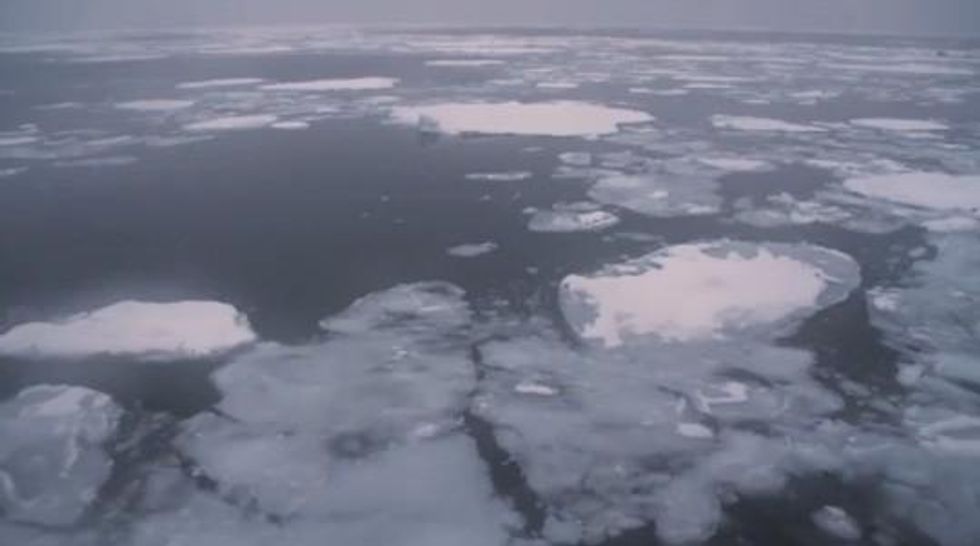
The rapidly acidifying Arctic Ocean caused by absorbing the world's CO2 emissions have pushed us beyond "critical thresholds," with widespread impacts to be felt for "tens of thousands of years" even if we stopped emissions, say scientists.
The three-year assessment from a team of international scientists is being released at the Arctic Monitoring and Assessment Programme's (AMAP) International Conference on Arctic Ocean Acidification starting Monday in Bergen, Norway, and details how the phenomenon dubbed "climate change's evil twin" is causing a global problem.
"Continued rapid change is a certainty," Bellerby told BBC News.
"We have already passed critical thresholds," warned Bellerby. "Even if we stop emissions now, acidification will last tens of thousands of years. It is a very big experiment."
Sam Dupont, Researcher at the University of Gothenburg, says that "something really unique is happening. This is the first time that we as humans are changing the whole planet; we are actually acidifying the whole ocean today."
"The most optimistic prediction," Dupont says, "tells us that within few decades, by the end of this century, the ocean will be two times more acidic. And we also know that it might be even faster in the Arctic."
The impacts of this acidification will be widespread, as Dupont explains.