

SUBSCRIBE TO OUR FREE NEWSLETTER
Daily news & progressive opinion—funded by the people, not the corporations—delivered straight to your inbox.
5
#000000
#FFFFFF
To donate by check, phone, or other method, see our More Ways to Give page.
Daily news & progressive opinion—funded by the people, not the corporations—delivered straight to your inbox.
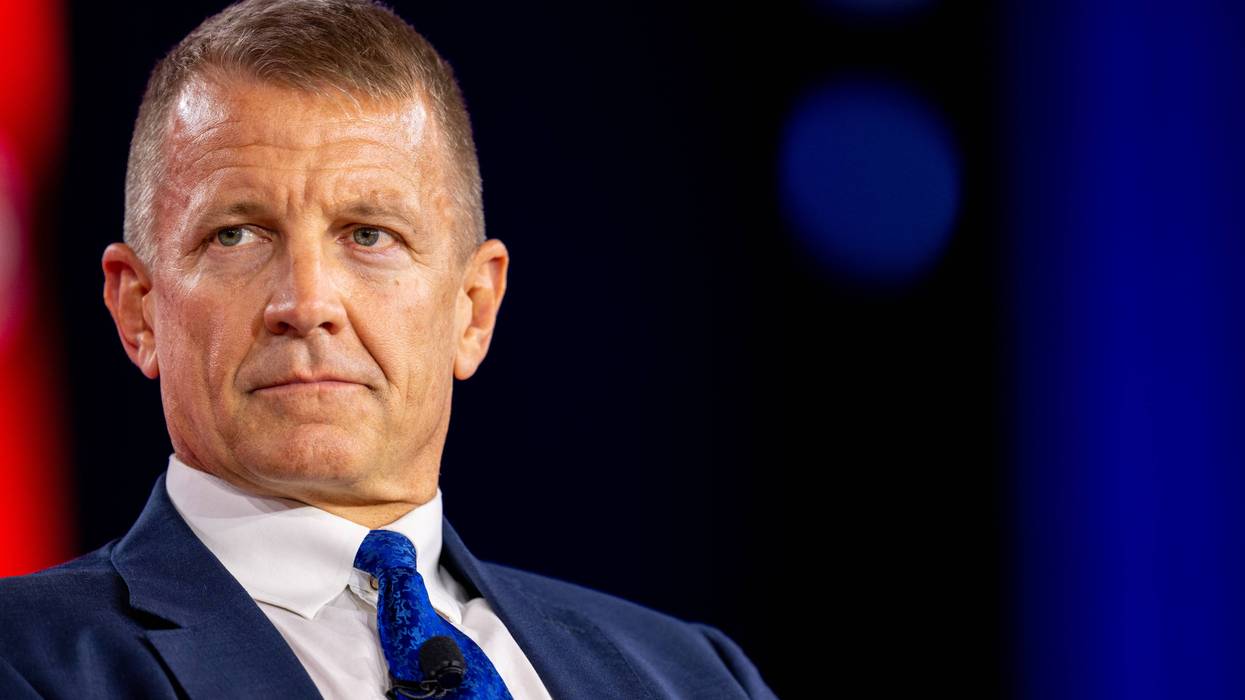
Prince’s private military firm Vectus Global has helped carry out a Haitian government drone campaign that has killed dozens of civilians, including children.
A Democratic congressman said he is ramping up oversight as the Trump administration plans to strengthen its ties to a private military contractor in Haiti run by the president's close ally Erik Prince, which has conducted drone strikes that have killed dozens of innocent Haitians.
At a hearing of the House Foreign Affairs Committee on Tuesday, Rep. Joaquin Castro (D-Texas) grilled State and Defense department officials on the Pentagon's plans to “formalize” coordination among the United Nations-backed Gang Suppression Force, the Haitian government’s anti-gang task force and the contractor, Vectus Global.
Vectus was launched in 2025 by Prince, the former CEO of the mercenary group Blackwater, which became infamous for killing civilians during the war in Iraq. Near the end of his first term, President Donald Trump pardoned a group of Blackwater guards who'd been serving prison sentences for massacring 14 Iraqi civilians in Baghdad in 2007.
Though Prince never held an official position in Trump’s administrations, his sister Betsy DeVos has, and he's a major donor who has been described as an influential shadow adviser to the president on foreign policy. During Trump's second term, he's expanded his private security operations into the Democratic Republic of the Congo and Ecuador as well.
As Castro pointed out on Tuesday, Vectus' track record in Haiti has not been much better than Blackwater's.
He cited a March report from Human Rights Watch which found that between March 1, 2025 and January 21, 2026, drone strikes launched in Haiti killed 43 adults who were not members of criminal groups, as well as 17 children. Another 49 people without criminal ties were injured.
On September 20, a kamikaze drone detonated outside a recreational complex in Port-au-Prince, where the leader of a criminal group was distributing gifts to children. The attack killed nine children and one other person who was not a gang member, according to Human Rights Watch.
One mother described rushing to the hospital to find her 3-year-old daughter and her husband had been killed in the attack.
"When I saw them, my daughter’s foot was crushed, and she had other holes in her body," she said.
Another resident who arrived after the explosion said she saw a woman clutching her child.
"The explosion had taken off the baby’s two feet,” he said.
Gorkowski said that Vectus' operations with the task force in Haiti had become "more and more discriminant" as time has passed and said its efforts against gangs had been a "considerable success."
"It looks like they've killed 17 children and 43 adults who were not associated with any criminal group," Castro responded. "Certainly we would expect more discrimination or discernment than that."
According to a report from the UN mission in Haiti, the killing of civilians by drones in the country has continued. Between January and March 2026, drones killed or injured at least 69 more people who were not found to be gang members, including five children.
During the first quarter of 2026, security-force operations killed 1,149 people and injured 454. Among those casualties, 196 people unaffiliated with gangs were killed, and 192 were injured—making up about 24% of the total casualties.
It is unclear what involvement Vectus may have had with non-drone-related attacks. According to a UN report in March, Vectus has also been involved in task force attacks involving "helicopter gunfire."
A State Department official told Reuters that because they are foreign government contractors, US citizens working for Vectus were not required to disclose their activities, and the US has had no oversight over the group's operations.
"Private military contractors like Vectus Global are putting innocent Haitians at risk," Castro said on Tuesday. "I will continue to conduct oversight of these operations and demand congressional scrutiny."
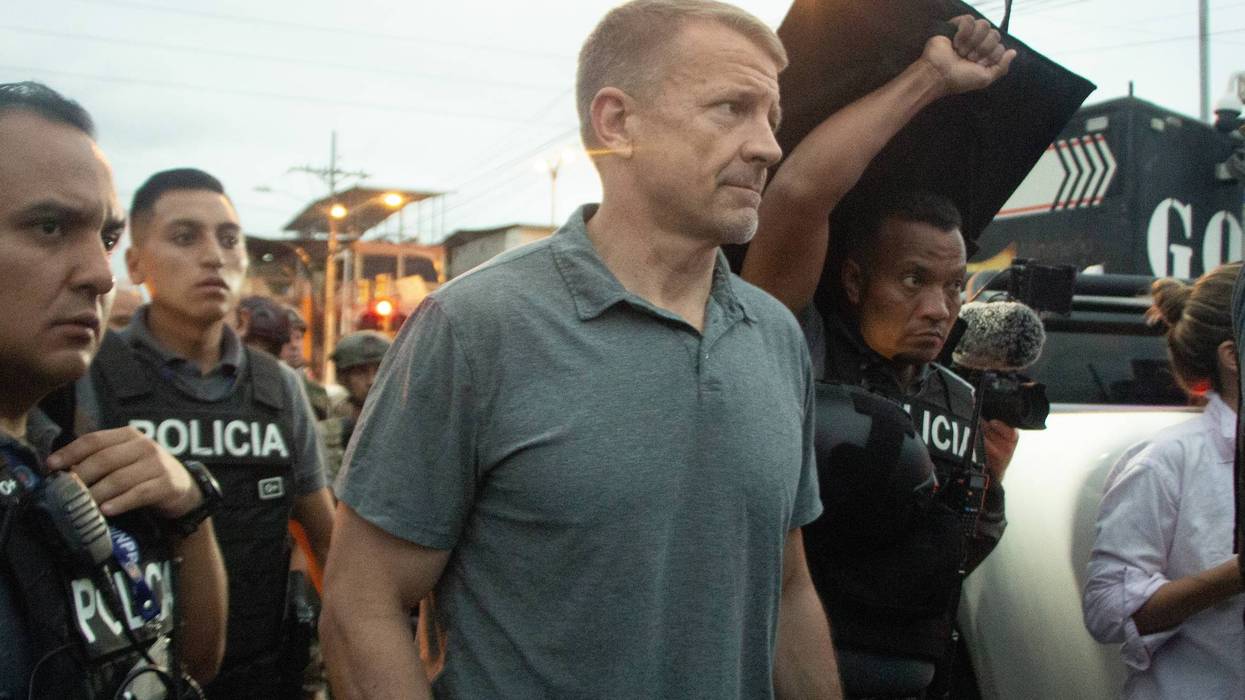
Erik Prince, the notorious founder of Blackwater, has reportedly been floated as a possible option as the Trump administration seeks help securing and exploiting Venezuela's oil operations.
The Trump administration is reportedly planning to hire private military contractors—including possibly the notorious mercenary Erik Prince—to provide security as the US works to plunder Venezuela's massive oil reserves.
CNN reported Thursday that "multiple private security companies are already jockeying to get involved in the US presence in Venezuela" as American oil giants push for physical security guarantees before they back President Donald Trump's push for $100 billion in investment in the country.
"Interest is high given the potential payday; during the Iraq War, the US spent some $138 billion on private security, logistics, and reconstruction contractors," the outlet noted. "One source suggested that Erik Prince, the former Blackwater founder and controversial Trump ally, could also be tapped for help. Prince’s Blackwater played an outsized role in Iraq after the 2003 US invasion, providing security, logistics, and support for oil infrastructure. But the firm came under intense scrutiny following the 2007 deadly shooting of Iraqi civilians."
Prince is currently operating in the region, having partnered with Ecuador's right-wing government as part of a crackdown on organized crime that has been replete with human rights abuses.
News of the Trump administration's potential use of private mercenaries in Venezuela came after the US officially completed its first sale of Venezuelan oil. The sale, valued at $500 million, came days after Trump met with top oil executives at the White House to discuss efforts to exploit Venezuela's oil reserves following the illegal US abduction of President Nicolás Maduro earlier this month.
Darren Woods, the CEO of Exxon Mobil, said his company would need "durable investment protections" before making any commitments in Venezuela.
CNN reported Thursday that the Pentagon has "put out a Request for Information to contractors about their ability to support possible US military operations in Venezuela."
"Contractors are also in touch with the State Department’s overseas building operations office to cite interest in providing security if and when the US embassy in Venezuela reopens," according to CNN.
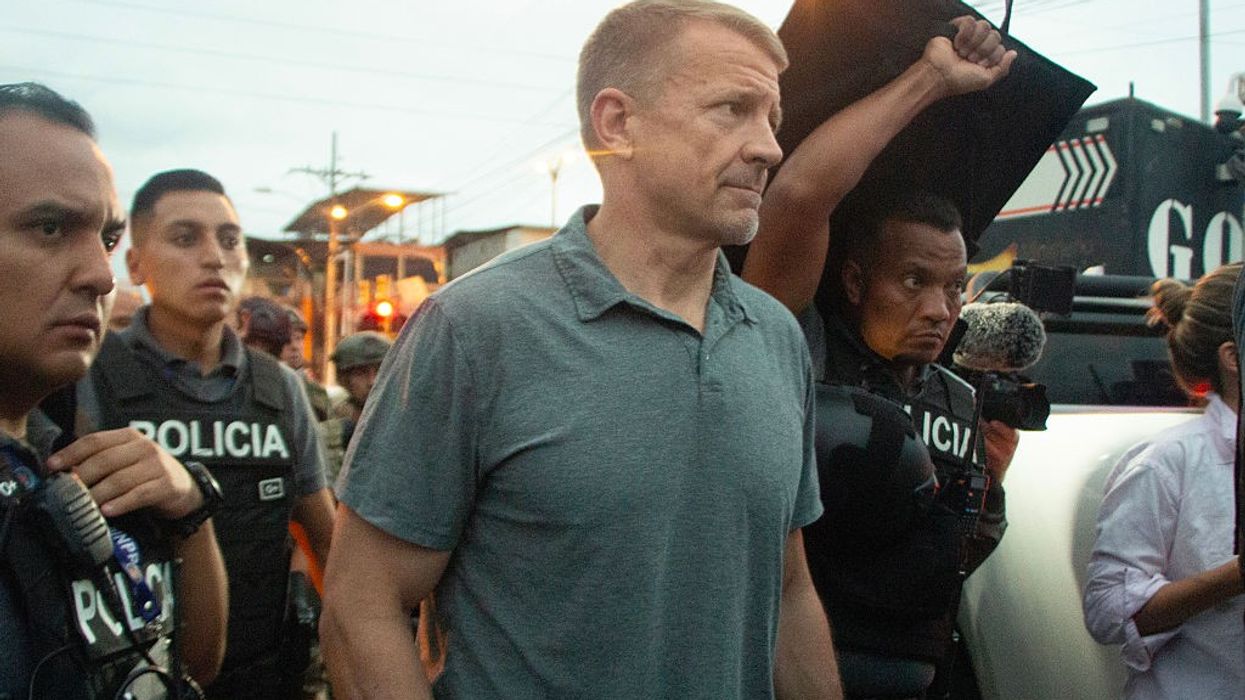
"It's hard to overstate how badly wrong bringing in foreign mercenaries, such as those allied with Erik Prince, will likely go given the current security, social, and political dynamics," one journalist warned.
"What could possibly go wrong?"
That's a question New York Times readers sarcastically asked on social media Wednesday, after the newspaper reported that Erik Prince, founder of the notorious mercenary firm Blackwater and a key ally of U.S. President Donald Trump, is working with Haiti's interim government "to conduct lethal operations against gangs that are terrorizing the nation and threatening to take over its capital."
The newspaper noted that Prince declined to comment, and while Blackwater is now defunct, the former Navy SEAL "owns other private military entities." The reporting is based on unnamed American and Haitian officials and other security experts.
"Haiti's government has hired American contractors, including Mr. Prince, in recent months to work on a secret task force to deploy drones meant to kill gang members," who "have been killing civilians and seizing control of vast areas of territory" in the Caribbean country, the Times detailed.
"Mr. Prince's team has been operating the drones since March, but the authorities have yet to announce the death or capture of a single high-value target," according to the paper. Pierre Espérance, executive director of the National Human Rights Defense Network in Haiti, said the drone attacks have killed more than 200 people.
American journalist Michael Deibert said on social media, "If this story is accurate, on what authority does Haiti's unelected, temporary interim [government] invite foreign forces into the country and by what means—with whose money—do they intend to pay them for their work there?"
The U.S. State Department has poured millions into Haiti's National Police but told the Times it is not paying Prince.
Deibert said that "as someone who has reported on Haiti's armed groups for 25 years, it's hard to overstate how badly wrong bringing in foreign mercenaries, such as those allied with Erik Prince, will likely go given the current security, social, and political dynamics in the country."
This is Bad. Like Capital B. www.nytimes.com/2025/05/28/u...
[image or embed]
— r: The Alignment Problem, Christian (@jacky.wtf) May 28, 2025 at 5:44 PM
Also weighing in on social media, Keanu Heydari, a history Ph.D. candidate at the University of Michigan, said: "A lot's going on here! A majority-Black nation, hollowed out by decades of foreign intervention, 'turning to' a white war profiteer to restore 'order.' That is not about logistics, this is about coloniality."
Heydari continued:
This isn't a story about drones and gangs. It's about how the world has made it structurally impossible for Haiti to govern itself—then offers mercenaries as a "solution." Haiti's sovereignty has been chipped away by debt, coups, U.N. missions, and now private warlords.
Why does Erik Prince show up where Black and Brown countries are in crisis? Because the global market rewards violence disguised as security, especially when it's sold by Westerners to postcolonial states. It's racial capitalism in full view.
The NYT missed the story: This isn't a desperate government making tough choices. It's a story of empire outsourcing control, where mercenaries profit from the very chaos empire helped produce. Haiti deserves justice, not occupation by other means.
The Times article follows The Economist's reporting earlier this month that Haiti's interim government, the Transitional Presidential Council, "is so desperate that it is exploring deals with private military contractors. It has been talking to Osprey Global Solutions, a firm based in North Carolina. The founder of Blackwater, Erik Prince, visited Haiti in April to negotiate contracts to provide attack drones and training for an anti-gang task force. The council declined to comment."
In response to that paragraph in the May 7 article, Jake Johnston, director of international research at the Center for Economic and Policy Research and author of Aid State: Elite Panic, Disaster Capitalism, and the Battle to Control Haiti, also asked, "What could possibly go wrong?"
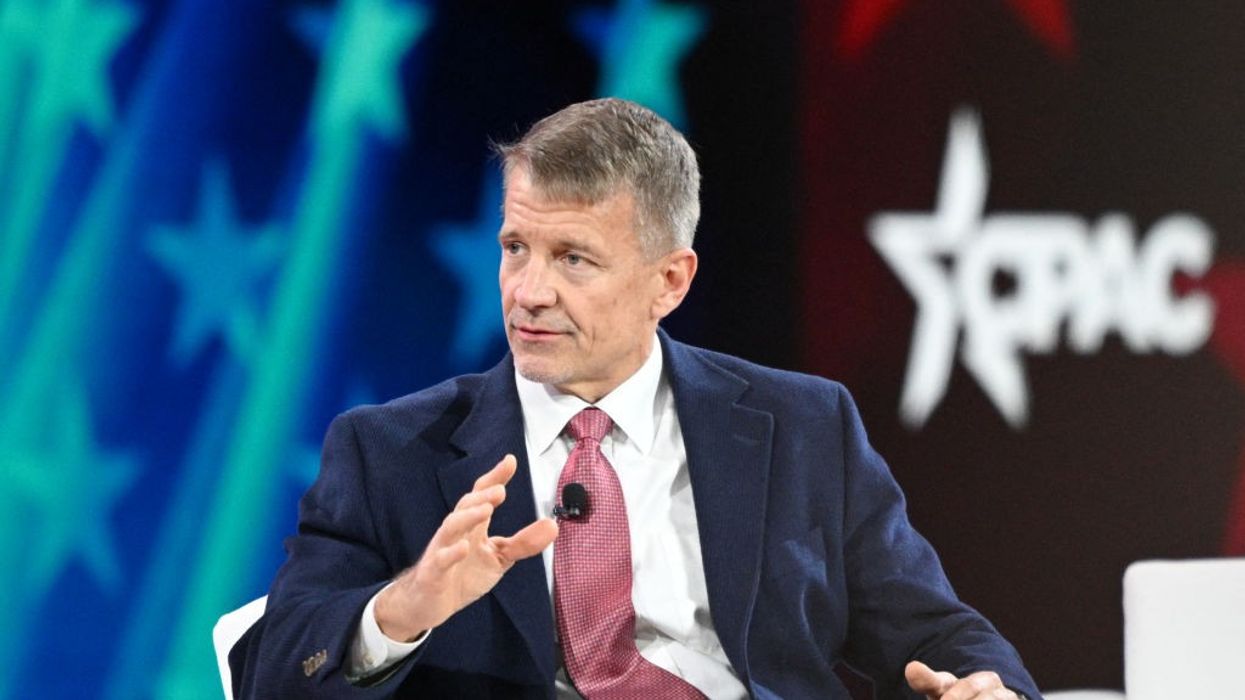
"War profiteer Erik Prince, the same man infamous for spreading chaos and profiting off human suffering, is signing up to help carry out Trump's mass deportation and family separation agenda," said one critic.
Private military contractors including Erik Prince—the founder and ex-CEO of the notorious mercenary firm formerly known as Blackwater—pitched advisers to President Donald Trump a $25 billion plan to deport 12 million undocumented immigrants before the 2026 midterm elections using a "small army" of citizens, a fleet of 100 private planes, and a network of "processing camps," according to Tuesday reporting.
Politico's Dasha Burns and Myah Ward reported that the 26-page blueprint for an aggressive mass deportation campaign, a copy of which was obtained by the journalists, was presented to advisers to Trump before his inauguration. The group of private contractors, who call themselves 2USV, is led by Prince and also includes former Blackwater chief operating officer Bill Mathews.
Burns and Ward wrote:
Deporting 12 million people in two years "would require the government to eject nearly 500,000 illegal aliens per month," the document says. "To keep pace with the Trump deportations, it would require a 600% increase in activity. It is unlikely that the government could swell its internal ranks to keep pace with this demand... in order to process this enormous number of deportations, the government should enlist outside assistance."
Top White House officials are having multiple conversations with military cfontractors, coinciding with Republicans' mad dash on Capitol Hill to secure more resources for the president's immigration crackdown. Immigration and Customs Enforcement (ICE) increased arrests during Trump's first couple of weeks in office, but the pace has since slowed, and arrests do not always equal deportations.
To boost deportations, the 2USV plan calls for deputizing 10,000 private citizens, forming a "skip tracing team" to locate targeted immigrants, a "screening team of 2,000 attorneys and paralegals," a "bounty program which provides a cash reward for each illegal alien held by a state or local law enforcement officer," and "mass deportation hearings." Legal experts warn that components of the plan likely run afoul of the law.
It is unclear whether Trump has seen the 2USV white paper. White House spokesperson Kush Desai told Politico that the Trump administration "remains aligned on and committed to a whole-of-government approach to securing our borders, mass deporting criminal illegal migrants, and enforcing our immigration laws."
Prince, a former U.S. Navy SEAL, founded Blackwater—now called Constellis—in 1997. He rose to prominence during the George W. Bush administration and the so-called War on Terror, in which the U.S. relied heavily upon private contractors.
On September 16, 2007, Blackwater guards
massacred 17 men, women, and children in Nisour Square in Baghdad, Iraq. This was one of at least several incidents in which the company's mercenaries harmed Iraqi civilians. Trump pardoned four of the Nisour Square killers—who had been sentenced to 12 years to life in prison for crimes including first-degree murder—in 2020 shortly before his first term ended.
Trump and Prince have long enjoyed warm relations. Prince was a major Trump donor whose sister, Betsy DeVos, served as education secretary during his first administration. Prince also reportedly helped raise money to spy on progressives and Democratic organizations opposed to Trump, and was involved in former senior Trump adviser Steve Bannon's fraudulent campaign to ostensibly build a wall along the U.S.-Mexican border.
Last year, Venezuelan authorities launched an investigation into an online site allegedly fronted by Prince that raised funds for the ouster of Venezuelan President Nicolas Maduro.
Critics interviewed by Burns and Ward cast doubts on 2USV's plan, with former ICE Chief of Staff Jason P. Houser saying that "the idea of forcibly removing 12 million people from the United States is not just operationally impossible—it is a moral and economic catastrophe in the making."
Responding to the Politico report, Beatriz Lopez, co-executive director of the Immigration Hub, an advocacy group, said in a statement that "war profiteer Erik Prince, the same man infamous for spreading chaos and profiting off human suffering, is signing up to help carry out Trump's mass deportation and family separation agenda."
"Simply put, this despicable plan will deploy mass internment, detention camps, and a civilian army to come after our neighbors, family, and friends," she continued. "At $25 billion, this cruel machinery would merely be the opening act in Trump and [White House Deputy Chief of Staff] Stephen Miller's $350 billion campaign of state-sanctioned 'hunts' for immigrant families."
"We're witnessing the deliberate transformation of everyday Americans—parents dropping children at school, healthcare workers saving lives, farmers feeding our nation—into targets who, if the Trump administration has it their way, could be hunted by an unaccountable militia motivated by profit and prejudice," Lopez added. "As Trump expands the definition of who is 'deportable,' the circle of safety shrinks until it contains only those who share his extreme vision. Today immigrants, tomorrow anyone who opposes them."
"Our leaders face a defining choice: stand against this atrocity now, or be complicit in what history will remember as America's darkest chapter," she warned.
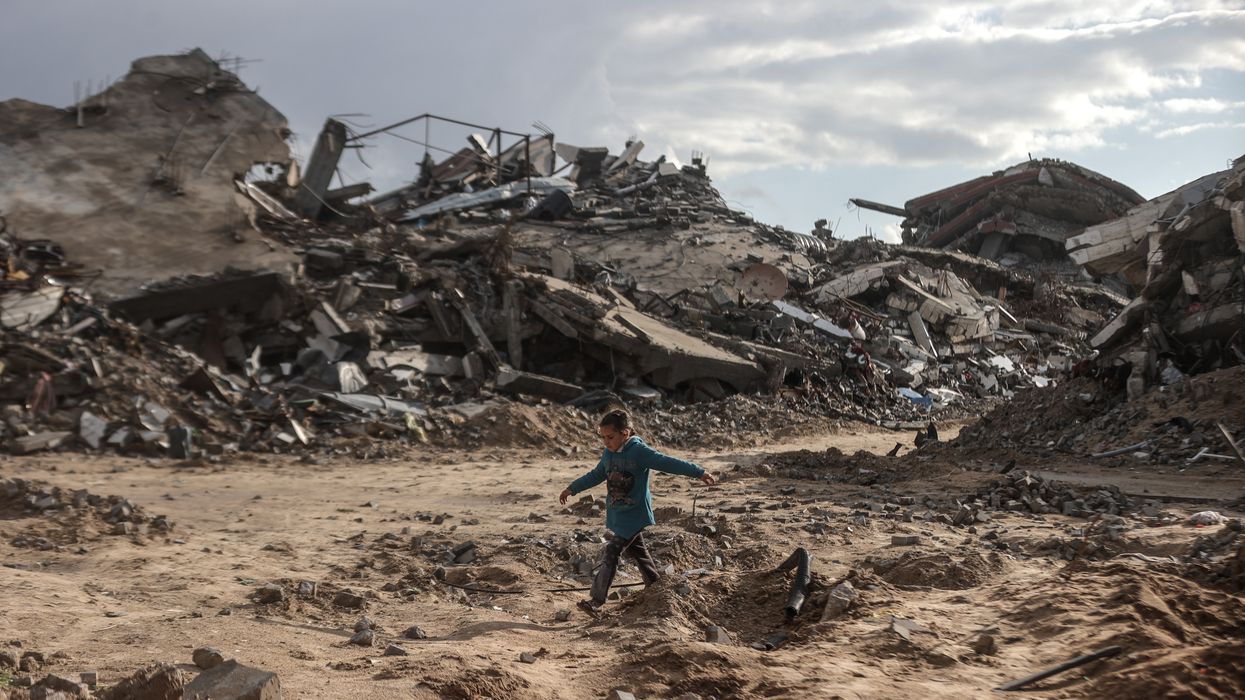
Nearly 100 former U.S. special forces are patrolling a checkpoint in the middle of Gaza, as Palestinians return to their homes in the north. If the history of American mercenaries tells us anything, then this could turn deadly.
Armed to the teeth with M4 rifles and Glock pistols and pockets stuffed with their $10,000 advance plus some, 96 former U.S. special forces veterans are currently stationed in Gaza.
These mercenaries have been hired by UG Solutions, a North Carolina-based military contractor, to patrol the intersection that Israel used to separate the north from the south of Gaza. What the Occupation called the “Netzarim Corridor” split Gaza with a fortified, wide road to resupply weapons and tanks as well as providing a vantage point to launch attacks on both the north and the south. Named after the settler encampment in the same area from 1975-2005, the area was once again made into a violent and deadly zone. After the occupation forces withdrew from the intersection, the decomposing bodies and skeletal remains of Palestinian people were found.
In a recruiting email from UG Solutions, the company describes the primary purpose of the soldiers as “internal vehicle checkpoint management and vehicle inspection.” They claim to be searching for weapons moving in Gaza, of course only on Palestinians, not their or their colleagues’ own American and Israeli guns, nor those of the Israeli occupation forces (IOF.) We know this means that these soldiers are doing the work of the occupation forces. Like the checkpoints that slice into the occupied West Bank and Jerusalem, these armed and oppressive checkpoints aim to terrorize Palestinians, securitize their land, and provide outposts for attacks. As the cease-fire unfolds in stages, all eyes should be on these checkpoints to ensure all soldiers are removed, American or Israeli.
The presence of U.S. mercenaries in Gaza highlights a disturbing pattern of American involvement in the region’s violence.
The images of these mercenaries, being paid a minimum of $1,100 a day, standing with their sunglasses and rifles next to Palestinians trying to travel in their own land is infuriating. But it’s also revealing. American boots have been on the ground in Gaza many times over the past 15 months of the accelerated genocide, and certainly before that. You might recall the since-deleted photograph accidentally posted by the White House’s Instagram account that revealed the high-level U.S. Delta Squad were in Gaza. Not to mention the many, many Americans in the IOF—either settlers or enthusiastic killers traveling from the U.S.—who have had their hand in committing genocide, perhaps recording a video celebrating themselves blowing up a mosque or parading in their victims’ undergarments, before returning to the United States—if not after taking a brief vacation to Dubai or Brazil first.
This is not the first time that U.S. private mercenaries have been hired to provide assistance to U.S. military invasions. Blackwater, a private mercenary company also headquartered in North Carolina, was hired to send U.S. mercenaries to both Afghanistan and Iraq shortly after the U.S. invasions. Between 2001 and 2007, Blackwater received $1 billion in U.S. government contracts. On September 16, 2007, Blackwater mercenaries massacred 17 Iraqi civilians, aged between 9 and 77, and wounded 20 people in Nisour Square, Baghdad. Four Blackwater mercenaries were convicted of their murders: Dustin Heard, Evan Liberty, Nicholas Slatten, and Paul Slough. Despite the global outrage, Blackwater CEO, Erik Prince, maintained that they acted “appropriately” and, in his first term, U.S. President Donald Trump pardoned all of the killers.
The Nisour Square massacre is but one example of the violence of Blackwater in Iraq. Between 2005 and 2007, U.S. mercenaries attacked Iraqi civilians at least 195 times. The actions of Blackrock employees revealed in the WikiLeaks’ War Logs uncover that these were not only random acts of violence but how the private soldiers were acting in coordination with the U.S. military itself. Blackwater is but one of the many companies like it that exerted imperialist violence on behalf of the U.S. empire. The U.S. government turned to using privatized militaries to outsource accountability and actions, often opting for private contractors in the years after they officially withdrew from countries, or in places where they wanted a presence but fewer U.S. soldiers.
The presence of U.S. mercenaries in Gaza highlights a disturbing pattern of American involvement in the region’s violence. In Gaza today, these mercenaries fulfill a role without scrutiny that neither the U.S. military nor Israeli occupation forces could with the same guns and boots but different logos. These soldiers, whether it’s the IOF, Blackwater, U.S. military, or UG Solutions, only mean violence for the Palestinian people. The continuation of using private mercenaries reflects the unaccountability and disregard for Palestinian lives that characterizes U.S. foreign policy in the region, underscoring the need for global scrutiny and calls for justice as the potential for escalated violence continues.

Private military contractors are now an essential part of America's increasingly privatized wars and will continue to be so, in seemingly ever greater numbers.
The way mercenary leader Yevgeny Prigozhin and his private army have been waging a significant part of Vladimir Putin’s war in Ukraine has been well covered in the American media, not least of all because his firm, the Wagner Group, draws most of its men from Russia’s prison system. Wagner offers “freedom” from Putin’s labor camps only to send those released convicts to the front lines of the conflict, often on brutal suicide missions.
At least the Russian president and his state-run media make no secret of his regime’s alliance with Wagner. The American government, on the other hand, seldom acknowledges its own version of the privatization of war — the tens of thousands of private security contractors it’s used in its misguided war on terror, involving military and intelligence operations in a staggering 85 countries.
At least as far back as the Civil War through World Wars I and II, the Korean and Vietnam Wars, and the first Gulf War, “contractors,” as we like to call them, have long been with us. Only recently, however, have they begun playing such a large role in our wars, with an estimated 10% to 20% of them directly involved in combat and intelligence operations.
Contractors have both committed horrific abuses and acted bravely under fire (because they have all too often been under fire). From torture at Abu Ghraib prison in Iraq to interrogations at the Guantánamo Bay detention camp, from employees of the private security firm Blackwater indiscriminately firing on unarmed Iraqi civilians to contractors defending a U.S. base under attack in Afghanistan, they have been an essential part of the war on terror. And yes, they both killed Afghans and helped some who had worked as support contractors escape from Taliban rule.
The involvement of private companies has allowed Washington to continue to conduct its operations around the globe, even if many Americans think that our war on terror in Afghanistan, Iraq, and elsewhere has ended. I tried looking for any kind of a survey of how many of us realize that it continues in Iraq and elsewhere, but all I could find was pollster Nate Silver’s analysis of “lessons learned” from that global conflict, as if it were part of our history. And unless respondents were caring for a combat-wounded veteran, they tended not to look unfavorably on sending our troops into battle in distant lands — so scratch that as a lesson learned from our forever wars.
None of this surprises me. American troops are no longer getting killed in significant numbers, nor are as many crowding the waitlists at backlogged Veterans Affairs hospitals as would be the case if those troops had been the only ones doing the fighting.
At points during this century’s war on terror, in fact, the U.S. used more civilian contractors in its ongoing wars than uniformed military personnel. In fact, as of 2019, according to Brown University’s Costs of War Project, which I co-founded, there were 50% more contractors than troops in the U.S. Central Command region that includes Afghanistan, Iraq, and 18 other countries in the Middle East, as well as Central and South Asia. As recently as December 2022, the Pentagon had about 22,000 contractors deployed throughout that region, with nearly 8,000 concentrated in Iraq and Syria. To be sure, most of those workers were unarmed and providing food service, communications aid, and the like. Even more tellingly, roughly two thirds of them were citizens of other countries, particularly lower-income ones.
In 2020, retired Army Officer Danny Sjursen offered an interesting explanation for how the war on terror was then becoming ever more privatized: the Covid-19 pandemic had changed the Pentagon’s war-making strategy as the public began to question how much money and how many lives were being expended on war abroad rather than healthcare at home. As a result, Sjursen argued, the U.S. had begun deploying ever more contractors, remote drones, CIA paramilitaries, and (often abusive) local forces in that war on terror while U.S. troops were redeployed to Europe and the Pacific to contain a resurgent Russia and China. In other words, during the pandemic, Washington placed ever more dirty work in corporate and foreign hands.
(Not) Counting Contractors
It’s been a challenge to write about private security contractors because our government does anything but a good job of counting them. Though the Defense Department keeps quarterly records of how many civilian contractors it employs and where, they exclude employees contracted with the Central Intelligence Agency or the State Department.
When Costs of War first tried to count contractor deaths by searching official government sources, we came up short. The spouse of a gravely wounded armed contractor directed me to her blog, where she had started to compile a list of just such deaths based on daily Google searches, even as she worked hard caring for her spouse and managing his disability paperwork. She and I eventually lost touch and it appears that she stopped compiling such numbers long ago. Still, we at the project took a page from her book, while adding reported war deaths among foreign nationals working for the Pentagon to our formula. Costs of War researchers then estimated that 8,000 contractors had been killed in our wars in the Middle East as of 2019, or about 1,000 more than the U.S. troops who died during the same period.
Social scientists Ori Swed and Thomas Crosbie have tried to extrapolate from reported contractor deaths in order to paint a picture of who they were while still alive. They believe that most of them were white veterans in their forties; many were former Special Forces operatives and a number of former officers with college degrees).
Limited Choices for Veterans
How do people of relative racial, economic, and gendered privilege end up in positions that, while well-paid, are even more precarious than being in the armed forces? As a therapist serving military families and as a military spouse, I would say that the path to security contracting reflects a deep cultural divide in our society between military and civilian life. Although veteran unemployment rates are marginally lower than those in the civilian population, many of them tend to seek out what they know best and that means military training, staffing, weapons production — and, for some, combat.
I recently spoke with one Marine infantry veteran who had completed four combat tours. He told me that, after leaving the service, he lacked a community that understood what he had been through. He sought to avoid social isolation by getting a government job. However, after applying for several in law enforcement agencies, he “failed” lie detector tests (owing to the common stress reactions of war-traumatized veterans). Having accidentally stumbled on a veteran-support nonprofit group, he ultimately found connections that led him to decide to return to school and retrain in a new profession. But, as he pointed out, “many of my other friends from the Marines numbed their pain with drugs or by going back to war as security contractors.”
Not everyone views contracting as a strategy of last resort. Still, I find it revealing of the limited sense of possibility such veterans experience that the top five companies employing them are large corporations servicing the Department of Defense through activities like information technology support, weapons production, or offers of personnel, both armed and not.
The Corporate Wounded
And keep in mind that such jobs are anything but easy. Many veterans find themselves facing yet more of the same — quick, successive combat deployments as contractors.
Anyone in this era of insurance mega-corporations who has ever had to battle for coverage is aware that doing so isn’t easy. Private insurers can maximize their profits by holding onto premium payments as long as possible while denying covered services.
A federal law called the Defense Base Act (1941) (DBA) requires that corporations fund workers’ compensation claims for their employees laboring under U.S. contracts, regardless of their nationalities, with the taxpayer footing the bill. The program grew exponentially after the start of the war on terror, but insurance companies have not consistently met their obligations under the law. In 2008, a joint investigation by the Los Angeles Times and ProPublica found that insurers like Chicago-based CAN Financial Corps were earning up to 50% profits on some of their war-zone policies, while many employees of contractors lacked adequate care and compensation for their injuries.
Even after Congress called on the Pentagon and the Department of Labor to better enforce the DBA in 2011, some companies continued to operate with impunity vis–à–vis their own workers, sometimes even failing to purchase insurance for them or refusing to help them file claims as required by law. While insurance companies made tens of millions of dollars in profits during the second decade of the war on terror, between 2009 and 2021, the Department of Labor fined insurers of those contracting corporations a total of only $3,250 for failing to report DBA claims.
Privatizing Foreign Policy
At its core, the war on terror sought to create an image of the U.S. abroad as a beacon of democracy and the rule of law. Yet there is probably no better evidence of how poorly this worked in practice at home and abroad than the little noted (mis)use of security contractors. Without their ever truly being seen, they prolonged that global set of conflicts, inflicting damage on other societies and being damaged themselves in America’s name. Last month, the Costs of War Project reported that the U.S. is now using subcontractors Bancroft Global Development and Pacific Architects and Engineers to train the Somali National Army in its counterterrorism efforts. Meanwhile, the U.S. intervention there has only helped precipitate a further rise in terrorist attacks in the region.
The global presence created by such contractors also manifests itself in how we respond to threats to their lives. In March 2023, a self-destructing drone exploded at a U.S. maintenance facility on a coalition base in northeastern Syria, killing a contractor employed by the Pentagon and injuring another, while wounding five American soldiers. After that drone was found to be of Iranian origin, President Biden ordered an air strike on facilities in Syria used by Iranian-allied forces. Defense Secretary Lloyd Austin stated, “No group will strike our troops with impunity.” While he later expressed condolences to the family of the contractor who was the only one killed in that attack, his statement could have more explicitly acknowledged that contractors are even more numerous than troops among the dead from our forever wars.
In late December 2019, a contractor working as an interpreter on a U.S. military base in Iraq was killed by rockets fired by an Iranian-backed militia. Shortly afterward, then-President Trump ordered an air strike that killed the commander of an elite Iranian military unit, sparking concern about a dangerous escalation with that country. Trump later tweeted, “Iran killed an American contractor, wounding many. We strongly responded, and always will.”
I can’t believe I’m saying this, but Trump’s tweet was more honest than Austin’s official statement: such contractors are now an essential part of America’s increasingly privatized wars and will continue to be so, in seemingly ever greater numbers. Even though retaliating for attacks on their lives has little to do with effective counterterrorism (as the Costs of War Project has long made clear), bearing witness to war casualties in all their grim diversity is the least the rest of us can do as American citizens. Because how can we know whether — and for whom — our shadowy, shape-shifting wars “work” if we continue to let our leaders wage an increasingly privatized version of them in ways meant to obscure our view of the carnage they’ve caused?

Peace advocates responded with disgust to the Navy's decision to name its new warship after the two battles of Fallujah, during which U.S. troops massacred Iraqi civilians.
"Fallujah was a giant American war crime in Iraq."
"The future America-class amphibious ship will be named the USS Fallujah, LHA-9," Navy Secretary Carlos Del Toro announced Tuesday in a speech at Marine Barracks Washington, D.C. "The future USS Fallujah will commemorate the first and second battles of Fallujah, American-led offenses during the Iraq War."
Del Toro called it "an honor for me, and for our nation, to memorialize the Marines, the soldiers, and coalition forces that fought valiantly and those that sacrificed their lives during both battles of Fallujah."
U.S. troops slaughtered approximately 600 Iraqi civilians--including more than 300 women and children--along with 200 insurgents during the First Battle of Fallujah. Code-named Operation Vigilant Resolve, the battle was launched in April 2004 to avenge the deaths of four Blackwater contractors. Twenty-seven U.S. soldiers were killed during the retaliatory siege.
The Second Battle of Fallujah, known as Operation Phantom Fury, was fought from November to December 2004 to recapture the city from insurgent forces. In the process, U.S.-led occupation forces killed between 581 and 670 civilians across nine neighborhoods, according to Iraq Body Count.
"With over 100 coalition forces killed and 600 wounded, Operation Phantom Fury is considered to be the bloodiest engagement to the Iraq War and the fiercest serving combat involving U.S. Marines since the Vietnam War's battle of Hue City," said Del Toro. "This namesake deserves to be in the pantheon of iconic Marine Corps battles, and the LHA's unique capabilities will serve as a stark reminder to everyone around the world of the bravery, the courage, and commitment to freedom displayed by those who fought in those battles."
Critics called the Navy's commemoration of the battles of Fallujah "shameful."
"Some of the most heinous U.S. war crimes committed during the Iraq War took place in the city of Fallujah," The Intercept's Jeremy Scahill, who reported from Iraq during the U.S. invasion, wrote Wednesday on social media.
In a 2007 appearance on the Bill Moyers show, Scahill described the siege of Fallujah as "one of the most brutal and sustained U.S. operations of the occupation," telling Moyers that the Pentagon's murderous response to the killing of Blackwater contractors set a dangerous precedent.
In 2016, journalist Hope Hodge Seck wrote about what she called "the whisper campaign for a USS Fallujah."
"At the time, it seemed unlikely to ever happen," she tweeted Tuesday. "But now it has."
Construction on the 45,000 metric-ton vessel, the first U.S. warship named after a post-9/11 battle, is set to begin this month at the Mississippi-based Ingalls Shipbuilding, which secured a $2.4 billion contract in October.
Civilians in Fallujah, meanwhile, continue to suffer from a sharp rise in birth defects that has occurred in the wake of the 2003 invasion.

It was deja vue all over again.
--Attributed to Yogi Berra
They're still with us--the Prince family that is. It's hard not to marvel at their staying power. Those with long memories will recall the great trump friend and cabinet member of the trump administration Betsy Dee Prince. By the time we got her, of course, she was married, and was known as Betsy De Vos. She was especially distinguished since she was one of the few trump appointed cabinet secretaries who managed to hang on to her position for the four years the trump was living in the White House.
Throughout the trump White House years, she was the Secretary of Education. In that capacity she did so many great things for the education of wealthy children that it is hard to recall them all. A couple of her more recent ones, however, serve as good examples of her efforts on their behalf. During the second month of the COVID 19-pandemic in 2020, she demanded that public schools reopen in the fall. She said that if they didn't she'd send their money to private and religious schools. In May she used federal coronavirus relief funds to create a $180 million voucher program for private and religious schools.
The good works of Betsy and her family were not limited to helping private and religious schools. In May 2020 it was disclosed that Betsy and other family members had funded the Honest Election Project. Its goal was to fight efforts to expand vote-by-mail options in the 2020 elections. Betsy's brother, Erik Prince, was also involved in assorted companies that were engaged in non-education ventures. One of them was Blackwater USA.
In its early incarnation, Blackwater USA was a training facility for special operations personnel. In its later years its operations were expanded to protect U.S. personnel in Iraq and Afghanistan. Among services rendered, a Congressional Report found, Mr. Prince's employees at Blackwater Worldwide were involved in almost 200 shootings between 2005 and 2007 in Iraq. Not all of the shootings were directed at enemy combatants. Among the non-enemy shootings was a December 24, 2006 shooting of one of the men guarding Iraqi Vice President, Adel Abdul Mahdi. He was killed by a drunk Blackwater employee.. On February 4, 2007, an Iraqi journalist was killed by another Blackwater employee. On September 9 five people near a government building were killed by one of the Blackwater employees; three days later five people were wounded by Blackwater employees, and four days after that seventeen Iraqis were killed by Blackwater employees in Nisour Square. As a result of that last shooting, four of the men involved were tried in the United States. One of them was sentenced to life in prison without parole after being convicted of murder and three of the men were convicted of manslaughter and weapons charges. All were pardoned by the trump in the blissful waning days of his White House tenure.
Prince sold Blackwater in 2010 after he settled federal investigations into its activities in Iraq by paying $42 million in fines. Notwithstanding the hefty fines it paid for the conduct of its employees during their years in Iraq, the overall operation was profitable for Erik. Over the course of its operations Blackwater billed the United States Government more than $1 billion for services it had rendered. Ridding himself of Blackwater has not, however, removed Erik from having an interest in military matters in that part of the world. On February 26, 2021 it was reported that Erik is once again under investigation for his military activities although no longer in Iraq or Afghanistan. According a recently released United Nations report, he has selected a new venue. It is Libya.
A United Nations panel of experts began investigating Erik's activities in connection with his possible participation in activities that were violations of an extant arms embargo on Libya. As a result of that investigation, the panel prepared a report that has been viewed by assorted sources that are now disclosing the report's conclusions. Among other things the report concludes that Erik helped arms suppliers evade an arms embargo that was imposed on Libya by the United Nations. The New York Times reported that Erik had, among other things, furnished weapons and a force of armed mercenaries to a militia commander whose goal was to overthrow the extant government in Syria. According to the New York Times the forces were exceptionally well equipped. They were armed with gunboats, attack aircraft and cyberwarfare capabilities. The operation provided by Erik reportedly cost $80 million which seems like a lot until you recall that when he disbanded Blackwater he had paid $42 million in fines which, in the Prince scheme of things, suggests those large numbers may be large but they're not intolerable.
It is not now known whether Erik will suffer any adverse consequences as a result of the report. His reaction to the report was not surprising. He denied all its conclusions. As he said to one reporter: "My name has become click bait for people who like to weave conspiracy theories together. And if they throw my name in, it always attracts attention. And it's pretty damn sickening." Some might conclude that comment by suggesting to Erik: "So is your conduct."
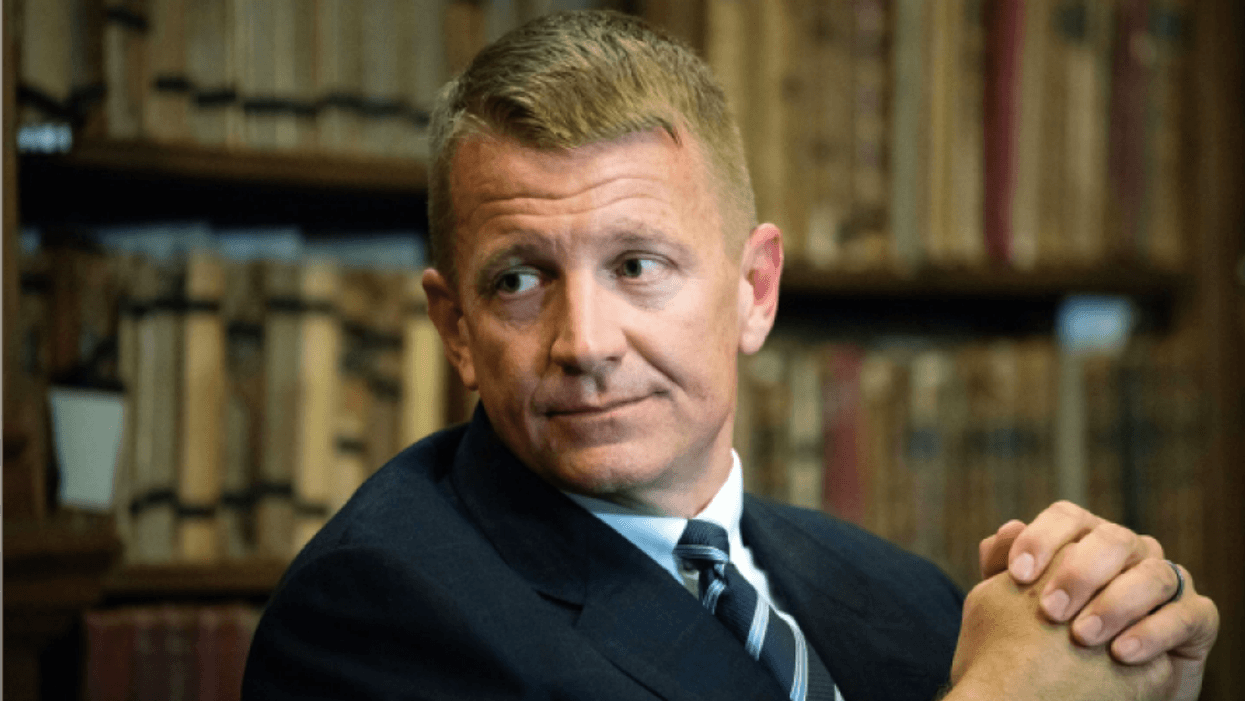
Erik Prince, the founder and former CEO of the mercenary firm Blackwater and a close ally of former President Donald Trump, sent weapons to a Libyan warlord in violation of a United Nations arms embargo, according to a confidential U.N. document reported Friday by the New York Times.
"To what degree did Trump help facilitate this war alongside Erik Prince?"
--Anas el-Gomati,
Sadeq Institute
The U.N. report, which investigators sent to the Security Council on Thursday, reportedly details how Prince sent foreign mercenaries armed with attack aircraft, gunboats, and cyberwarfare capabilities to support renegade military commander Khalifa Haftar during a major 2019 battle in eastern Libya.
According to the U.N. report, the mercenary operation cost $80 million and included a plan to form a hit squad to locate and assassinate commanders opposed to Haftar.
Haftar, a one-time CIA asset considered Libya's most powerful warlord, has fought to overthrow the North African nation's internationally recognized government during the country's second civil war since the overthrow of longtime dictator Muammar Gaddafi in the 2011 Arab Spring revolts. Haftar has enjoyed various degrees of support from Egypt, the United Arab Emirates, and Russia. British, French, U.S., and UAE warplanes have also assisted his forces.
In 2019, Trump reportedly granted permission for Haftar--who stands accused of ordering his troops to commit war crimes--to launch an air campaign against the U.N.-backed Government of National Accord, attacks which killed hundreds of civilians in the Libyan capital of Tripoli.
The U.N. report raises questions about whether Trump was complicit in Prince's violation of the international arms embargo against Haftar's forces.
Anas el-Gomati, director of Libyan think tank Sadeq Institute, told Al Jazeera that using mercenaries allows leaders to "outright refuse that you have any knowledge of what's going on."
"To what degree did Trump help facilitate this war alongside Erik Prince?" asked el-Gomati, who also wondered whether "Erik Prince was coordinating with Russian Wagner Group mercenaries in Libya, and has helped them establish a foothold in the way he helped the United Arab Emirates establish a foothold in Libya."
Another unanswered question is who funded Prince's $80 million operation. Wolfram Lacher, a Libya expert at the German Institute for International and Security Affairs, told the Times that Prince has "been linked to the Trump administration, the Emirati leadership, and the Russians."
"For me, the question is who is tacitly backing him?" asked Lacher.
Prince, a former U.S. Navy SEAL, founded Blackwater--now called Constellis after multiple sales--in 1997. He rose to prominence during the George W. Bush administration and the so-called War on Terror, in which the U.S. relied heavily upon private contractors. On September 16, 2007, Blackwater guards massacred 17 men, women, and children in Nisour Square in Baghdad, Iraq.
Last December, Trump pardoned four of the Nisour Square killers, who had been sentenced to 12 years to life in prison for crimes including first-degree murder.
Trump and Prince have long enjoyed warm relations. Prince was a major Trump donor whose sister, Betsy DeVos, was confirmed as secretary of education in 2017.
This isn't the first time Prince has been accused of breaking domestic and international laws against weapons transfers. In 2012 his anti-piracy security force in Somalia was accused by the U.N. of "the most brazen violation of the arms embargo by a private security company." Prince was also reportedly the target of an FBI investigation last year for weaponizing crop dusters.

Thou art a God ready to pardon, gracious and merciful, slow to anger, and of great kindness. --The Holy Bible, The Book of Nehemiah
It was a great week for forgiveness. It was the week that the Christian world was celebrating the birth of Christ. Christ was a friend to sinners during his brief life. Even as he was having a last meal with his disciples and facing the end of his life, he forgave the sins of a man who was brought to him seeking forgiveness. When on the cross he asked for forgiveness for those responsible for his crucifixion.
Like Jesus, trump who was facing the end of his life as president, found it in his heart extend forgiveness to a wide variety of people. Unlike those Jesus forgave who were facing the prospect of punishment for their sins at some future time, however, the trump bestowed forgiveness on sinners who had already been punished for their sins. The sins for which many of the pardons were forgiven were sins committed by people who in sinning had shown their loyalty to the trump during the period he was applying for residency in the White House or during the time he occupied the premises. There were, however, a few exceptions to that.
Among the exceptions were pardons given to four murderers who committed their murders in Iraq while in the employ of Eric Prince, the brother of Betsy DeVos, the Secretary of Education during the trump administration. The four murderers worked for Erick Prince's company, Blackwater Worldwide, a security firm. The pardons of the murderers had the unfortunate side effect of once again drawing attention to the fact that a cabinet secretary's brother employed murderers. Such renewed, and almost certainly unwelcome attention on Betsy and Eric, did nothing to reduce the joy the four murderers almost certainly felt upon learning that their sins had been forgiven, as it were, and they would soon be free to walk the streets again and obtain gainful employment. The fact that it once again drew attention to Eric and Betsy was something about which, as the vernacular has it, they could not have cared less.
Charles Kushner's pardon was somewhat different, and had he known of the pardon in advance, he might have suggested that the trump not bother issuing it. Unlike the pardon the trump bestowed on four murderers who were, as a result of the pardon, able to return to normal lives, Charles had been convicted of criminal conduct almost 20 years before his pardon was bestowed. His punishment of a relatively short time in prison has been fully served.
The crimes of which Charles had been convicted included such mundane things as 18 counts of illegal campaign contributions, tax evasion, and witness tampering. Drawing attention to his conviction for two of those crimes was not the reason Charles did not want the pardon bestowed. It had to do with his conviction for witness tampering. The witness tampering charge pertained to interactions between him, his sister, and her husband. The tampering took place before he was convicted or had even been threatened with being charged with any criminal conduct. He would happily have had that conduct forgotten and not restored to public consciousness by issuance of the pardon. It was not to be and herewith a brief history.
The Justice Department was investigating Charles for tax fraud and Charles's sister, Ethel Schuler and her husband, William, were cooperating with the Justice Department in its investigation. When Charles learned of their cooperation he was, for obvious reasons, outraged at such sibling betrayal. Accordingly he resolved to even the score and chose a unique way to do that.
Charles hired a prostitute to use her charms to seduce his brother-in-law, William. He arranged for the encounter to be recorded on video, if not for posterity, at least for a long enough time that he could use it to revenge himself for what he perceived to be sibling perfidy. After the encounter between William and the prostitute had taken place and successfully filmed, Charles sent the video to his sister on the occasion of her son's engagement party that she was hosting.
Considering this behavior some 20 years later, an impartial observer might consider Charles's behavior particularly egregious since it could not have had any effect on the investigation and might have caused his sister's marriage to fail. Be that as it may. That is what he did. But for the pardon, most of us would have completely forgotten that unfortunate episode in the otherwise exemplary life of Charles Kushner. If asked about the pardon now that it has been issued, Charles might consider adopting the attitude displayed by Jesus when on the cross and ask God to forgive trump because he doesn't know what he is doing. The rest of us could join in that since we have all suffered the consequences of having the trump demonstrate repeatedly that he hasn't known what he's been doing for the last four years.