SUBSCRIBE TO OUR FREE NEWSLETTER
Daily news & progressive opinion—funded by the people, not the corporations—delivered straight to your inbox.
5
#000000
#FFFFFF
To donate by check, phone, or other method, see our More Ways to Give page.


Daily news & progressive opinion—funded by the people, not the corporations—delivered straight to your inbox.

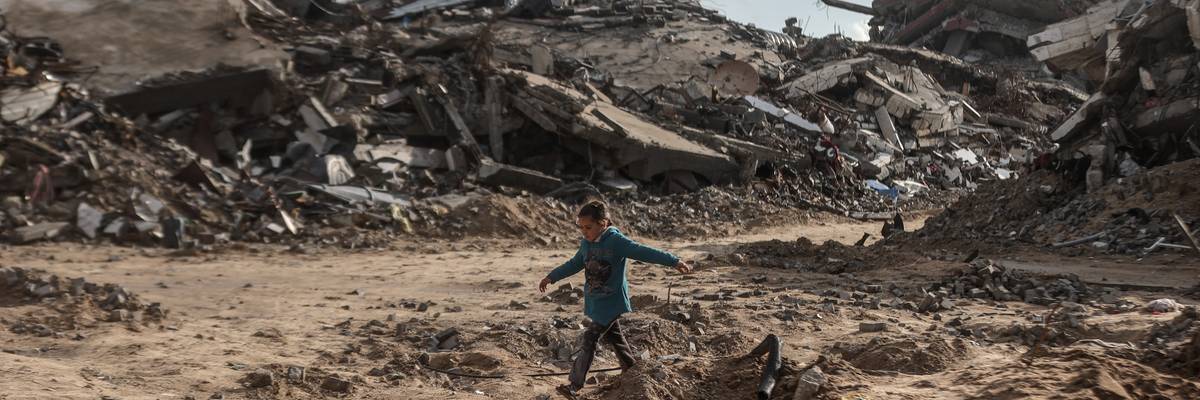
Citizens in the Sheikh Ajlin neighborhood of Gaza City continue to live in makeshift tents amid the rubble of their houses that were destroyed by Israeli attacks during the cold weather, on February 12, 2025, in Gaza.
Nearly 100 former U.S. special forces are patrolling a checkpoint in the middle of Gaza, as Palestinians return to their homes in the north. If the history of American mercenaries tells us anything, then this could turn deadly.
Armed to the teeth with M4 rifles and Glock pistols and pockets stuffed with their $10,000 advance plus some, 96 former U.S. special forces veterans are currently stationed in Gaza.
These mercenaries have been hired by UG Solutions, a North Carolina-based military contractor, to patrol the intersection that Israel used to separate the north from the south of Gaza. What the Occupation called the “Netzarim Corridor” split Gaza with a fortified, wide road to resupply weapons and tanks as well as providing a vantage point to launch attacks on both the north and the south. Named after the settler encampment in the same area from 1975-2005, the area was once again made into a violent and deadly zone. After the occupation forces withdrew from the intersection, the decomposing bodies and skeletal remains of Palestinian people were found.
In a recruiting email from UG Solutions, the company describes the primary purpose of the soldiers as “internal vehicle checkpoint management and vehicle inspection.” They claim to be searching for weapons moving in Gaza, of course only on Palestinians, not their or their colleagues’ own American and Israeli guns, nor those of the Israeli occupation forces (IOF.) We know this means that these soldiers are doing the work of the occupation forces. Like the checkpoints that slice into the occupied West Bank and Jerusalem, these armed and oppressive checkpoints aim to terrorize Palestinians, securitize their land, and provide outposts for attacks. As the cease-fire unfolds in stages, all eyes should be on these checkpoints to ensure all soldiers are removed, American or Israeli.
The presence of U.S. mercenaries in Gaza highlights a disturbing pattern of American involvement in the region’s violence.
The images of these mercenaries, being paid a minimum of $1,100 a day, standing with their sunglasses and rifles next to Palestinians trying to travel in their own land is infuriating. But it’s also revealing. American boots have been on the ground in Gaza many times over the past 15 months of the accelerated genocide, and certainly before that. You might recall the since-deleted photograph accidentally posted by the White House’s Instagram account that revealed the high-level U.S. Delta Squad were in Gaza. Not to mention the many, many Americans in the IOF—either settlers or enthusiastic killers traveling from the U.S.—who have had their hand in committing genocide, perhaps recording a video celebrating themselves blowing up a mosque or parading in their victims’ undergarments, before returning to the United States—if not after taking a brief vacation to Dubai or Brazil first.
This is not the first time that U.S. private mercenaries have been hired to provide assistance to U.S. military invasions. Blackwater, a private mercenary company also headquartered in North Carolina, was hired to send U.S. mercenaries to both Afghanistan and Iraq shortly after the U.S. invasions. Between 2001 and 2007, Blackwater received $1 billion in U.S. government contracts. On September 16, 2007, Blackwater mercenaries massacred 17 Iraqi civilians, aged between 9 and 77, and wounded 20 people in Nisour Square, Baghdad. Four Blackwater mercenaries were convicted of their murders: Dustin Heard, Evan Liberty, Nicholas Slatten, and Paul Slough. Despite the global outrage, Blackwater CEO, Erik Prince, maintained that they acted “appropriately” and, in his first term, U.S. President Donald Trump pardoned all of the killers.
The Nisour Square massacre is but one example of the violence of Blackwater in Iraq. Between 2005 and 2007, U.S. mercenaries attacked Iraqi civilians at least 195 times. The actions of Blackrock employees revealed in the WikiLeaks’ War Logs uncover that these were not only random acts of violence but how the private soldiers were acting in coordination with the U.S. military itself. Blackwater is but one of the many companies like it that exerted imperialist violence on behalf of the U.S. empire. The U.S. government turned to using privatized militaries to outsource accountability and actions, often opting for private contractors in the years after they officially withdrew from countries, or in places where they wanted a presence but fewer U.S. soldiers.
The presence of U.S. mercenaries in Gaza highlights a disturbing pattern of American involvement in the region’s violence. In Gaza today, these mercenaries fulfill a role without scrutiny that neither the U.S. military nor Israeli occupation forces could with the same guns and boots but different logos. These soldiers, whether it’s the IOF, Blackwater, U.S. military, or UG Solutions, only mean violence for the Palestinian people. The continuation of using private mercenaries reflects the unaccountability and disregard for Palestinian lives that characterizes U.S. foreign policy in the region, underscoring the need for global scrutiny and calls for justice as the potential for escalated violence continues.

Dear Common Dreams reader, It’s been nearly 30 years since I co-founded Common Dreams with my late wife, Lina Newhouser. We had the radical notion that journalism should serve the public good, not corporate profits. It was clear to us from the outset what it would take to build such a project. No paid advertisements. No corporate sponsors. No millionaire publisher telling us what to think or do. Many people said we wouldn't last a year, but we proved those doubters wrong. Together with a tremendous team of journalists and dedicated staff, we built an independent media outlet free from the constraints of profits and corporate control. Our mission has always been simple: To inform. To inspire. To ignite change for the common good. Building Common Dreams was not easy. Our survival was never guaranteed. When you take on the most powerful forces—Wall Street greed, fossil fuel industry destruction, Big Tech lobbyists, and uber-rich oligarchs who have spent billions upon billions rigging the economy and democracy in their favor—the only bulwark you have is supporters who believe in your work. But here’s the urgent message from me today. It's never been this bad out there. And it's never been this hard to keep us going. At the very moment Common Dreams is most needed, the threats we face are intensifying. We need your support now more than ever. We don't accept corporate advertising and never will. We don't have a paywall because we don't think people should be blocked from critical news based on their ability to pay. Everything we do is funded by the donations of readers like you. When everyone does the little they can afford, we are strong. But if that support retreats or dries up, so do we. Will you donate now to make sure Common Dreams not only survives but thrives? —Craig Brown, Co-founder |
Armed to the teeth with M4 rifles and Glock pistols and pockets stuffed with their $10,000 advance plus some, 96 former U.S. special forces veterans are currently stationed in Gaza.
These mercenaries have been hired by UG Solutions, a North Carolina-based military contractor, to patrol the intersection that Israel used to separate the north from the south of Gaza. What the Occupation called the “Netzarim Corridor” split Gaza with a fortified, wide road to resupply weapons and tanks as well as providing a vantage point to launch attacks on both the north and the south. Named after the settler encampment in the same area from 1975-2005, the area was once again made into a violent and deadly zone. After the occupation forces withdrew from the intersection, the decomposing bodies and skeletal remains of Palestinian people were found.
In a recruiting email from UG Solutions, the company describes the primary purpose of the soldiers as “internal vehicle checkpoint management and vehicle inspection.” They claim to be searching for weapons moving in Gaza, of course only on Palestinians, not their or their colleagues’ own American and Israeli guns, nor those of the Israeli occupation forces (IOF.) We know this means that these soldiers are doing the work of the occupation forces. Like the checkpoints that slice into the occupied West Bank and Jerusalem, these armed and oppressive checkpoints aim to terrorize Palestinians, securitize their land, and provide outposts for attacks. As the cease-fire unfolds in stages, all eyes should be on these checkpoints to ensure all soldiers are removed, American or Israeli.
The presence of U.S. mercenaries in Gaza highlights a disturbing pattern of American involvement in the region’s violence.
The images of these mercenaries, being paid a minimum of $1,100 a day, standing with their sunglasses and rifles next to Palestinians trying to travel in their own land is infuriating. But it’s also revealing. American boots have been on the ground in Gaza many times over the past 15 months of the accelerated genocide, and certainly before that. You might recall the since-deleted photograph accidentally posted by the White House’s Instagram account that revealed the high-level U.S. Delta Squad were in Gaza. Not to mention the many, many Americans in the IOF—either settlers or enthusiastic killers traveling from the U.S.—who have had their hand in committing genocide, perhaps recording a video celebrating themselves blowing up a mosque or parading in their victims’ undergarments, before returning to the United States—if not after taking a brief vacation to Dubai or Brazil first.
This is not the first time that U.S. private mercenaries have been hired to provide assistance to U.S. military invasions. Blackwater, a private mercenary company also headquartered in North Carolina, was hired to send U.S. mercenaries to both Afghanistan and Iraq shortly after the U.S. invasions. Between 2001 and 2007, Blackwater received $1 billion in U.S. government contracts. On September 16, 2007, Blackwater mercenaries massacred 17 Iraqi civilians, aged between 9 and 77, and wounded 20 people in Nisour Square, Baghdad. Four Blackwater mercenaries were convicted of their murders: Dustin Heard, Evan Liberty, Nicholas Slatten, and Paul Slough. Despite the global outrage, Blackwater CEO, Erik Prince, maintained that they acted “appropriately” and, in his first term, U.S. President Donald Trump pardoned all of the killers.
The Nisour Square massacre is but one example of the violence of Blackwater in Iraq. Between 2005 and 2007, U.S. mercenaries attacked Iraqi civilians at least 195 times. The actions of Blackrock employees revealed in the WikiLeaks’ War Logs uncover that these were not only random acts of violence but how the private soldiers were acting in coordination with the U.S. military itself. Blackwater is but one of the many companies like it that exerted imperialist violence on behalf of the U.S. empire. The U.S. government turned to using privatized militaries to outsource accountability and actions, often opting for private contractors in the years after they officially withdrew from countries, or in places where they wanted a presence but fewer U.S. soldiers.
The presence of U.S. mercenaries in Gaza highlights a disturbing pattern of American involvement in the region’s violence. In Gaza today, these mercenaries fulfill a role without scrutiny that neither the U.S. military nor Israeli occupation forces could with the same guns and boots but different logos. These soldiers, whether it’s the IOF, Blackwater, U.S. military, or UG Solutions, only mean violence for the Palestinian people. The continuation of using private mercenaries reflects the unaccountability and disregard for Palestinian lives that characterizes U.S. foreign policy in the region, underscoring the need for global scrutiny and calls for justice as the potential for escalated violence continues.
Armed to the teeth with M4 rifles and Glock pistols and pockets stuffed with their $10,000 advance plus some, 96 former U.S. special forces veterans are currently stationed in Gaza.
These mercenaries have been hired by UG Solutions, a North Carolina-based military contractor, to patrol the intersection that Israel used to separate the north from the south of Gaza. What the Occupation called the “Netzarim Corridor” split Gaza with a fortified, wide road to resupply weapons and tanks as well as providing a vantage point to launch attacks on both the north and the south. Named after the settler encampment in the same area from 1975-2005, the area was once again made into a violent and deadly zone. After the occupation forces withdrew from the intersection, the decomposing bodies and skeletal remains of Palestinian people were found.
In a recruiting email from UG Solutions, the company describes the primary purpose of the soldiers as “internal vehicle checkpoint management and vehicle inspection.” They claim to be searching for weapons moving in Gaza, of course only on Palestinians, not their or their colleagues’ own American and Israeli guns, nor those of the Israeli occupation forces (IOF.) We know this means that these soldiers are doing the work of the occupation forces. Like the checkpoints that slice into the occupied West Bank and Jerusalem, these armed and oppressive checkpoints aim to terrorize Palestinians, securitize their land, and provide outposts for attacks. As the cease-fire unfolds in stages, all eyes should be on these checkpoints to ensure all soldiers are removed, American or Israeli.
The presence of U.S. mercenaries in Gaza highlights a disturbing pattern of American involvement in the region’s violence.
The images of these mercenaries, being paid a minimum of $1,100 a day, standing with their sunglasses and rifles next to Palestinians trying to travel in their own land is infuriating. But it’s also revealing. American boots have been on the ground in Gaza many times over the past 15 months of the accelerated genocide, and certainly before that. You might recall the since-deleted photograph accidentally posted by the White House’s Instagram account that revealed the high-level U.S. Delta Squad were in Gaza. Not to mention the many, many Americans in the IOF—either settlers or enthusiastic killers traveling from the U.S.—who have had their hand in committing genocide, perhaps recording a video celebrating themselves blowing up a mosque or parading in their victims’ undergarments, before returning to the United States—if not after taking a brief vacation to Dubai or Brazil first.
This is not the first time that U.S. private mercenaries have been hired to provide assistance to U.S. military invasions. Blackwater, a private mercenary company also headquartered in North Carolina, was hired to send U.S. mercenaries to both Afghanistan and Iraq shortly after the U.S. invasions. Between 2001 and 2007, Blackwater received $1 billion in U.S. government contracts. On September 16, 2007, Blackwater mercenaries massacred 17 Iraqi civilians, aged between 9 and 77, and wounded 20 people in Nisour Square, Baghdad. Four Blackwater mercenaries were convicted of their murders: Dustin Heard, Evan Liberty, Nicholas Slatten, and Paul Slough. Despite the global outrage, Blackwater CEO, Erik Prince, maintained that they acted “appropriately” and, in his first term, U.S. President Donald Trump pardoned all of the killers.
The Nisour Square massacre is but one example of the violence of Blackwater in Iraq. Between 2005 and 2007, U.S. mercenaries attacked Iraqi civilians at least 195 times. The actions of Blackrock employees revealed in the WikiLeaks’ War Logs uncover that these were not only random acts of violence but how the private soldiers were acting in coordination with the U.S. military itself. Blackwater is but one of the many companies like it that exerted imperialist violence on behalf of the U.S. empire. The U.S. government turned to using privatized militaries to outsource accountability and actions, often opting for private contractors in the years after they officially withdrew from countries, or in places where they wanted a presence but fewer U.S. soldiers.
The presence of U.S. mercenaries in Gaza highlights a disturbing pattern of American involvement in the region’s violence. In Gaza today, these mercenaries fulfill a role without scrutiny that neither the U.S. military nor Israeli occupation forces could with the same guns and boots but different logos. These soldiers, whether it’s the IOF, Blackwater, U.S. military, or UG Solutions, only mean violence for the Palestinian people. The continuation of using private mercenaries reflects the unaccountability and disregard for Palestinian lives that characterizes U.S. foreign policy in the region, underscoring the need for global scrutiny and calls for justice as the potential for escalated violence continues.