

SUBSCRIBE TO OUR FREE NEWSLETTER
Daily news & progressive opinion—funded by the people, not the corporations—delivered straight to your inbox.
5
#000000
#FFFFFF
To donate by check, phone, or other method, see our More Ways to Give page.
Daily news & progressive opinion—funded by the people, not the corporations—delivered straight to your inbox.
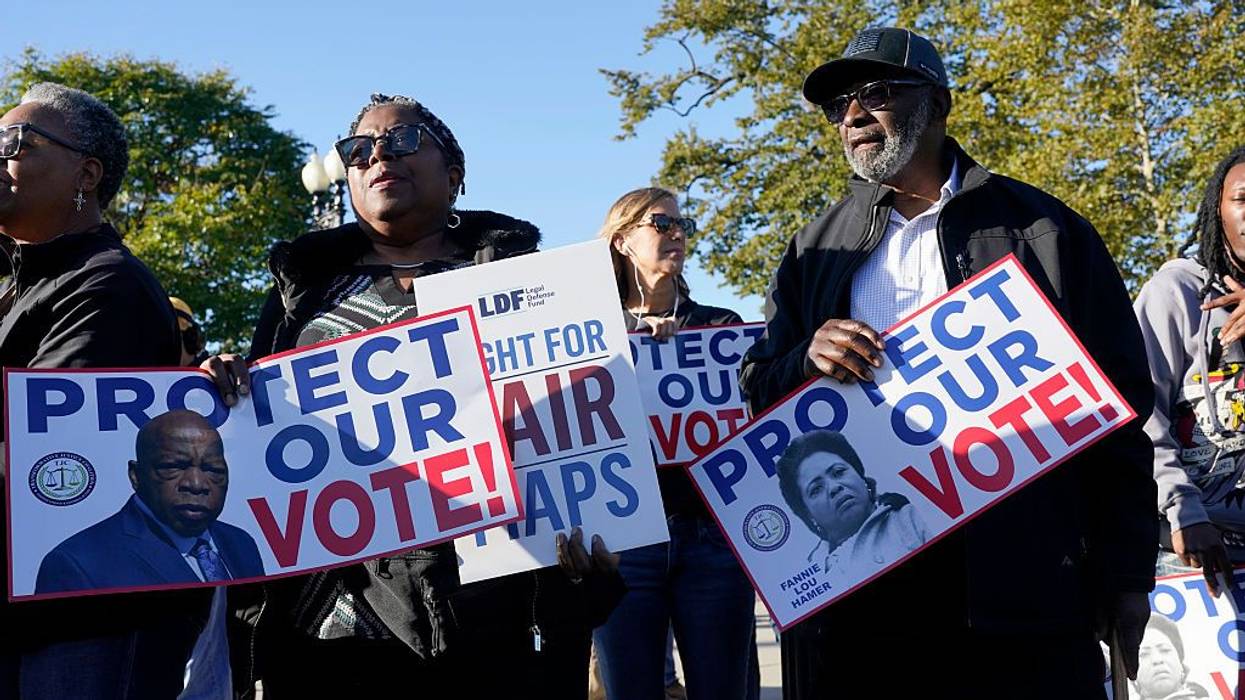
If the court dismantles Section 2 of the Voting Rights Act and allows overtly racist gerrymanders, one report estimates that Republicans will be virtually guaranteed an additional 19 seats in the 2026 midterms.
The US Supreme Court will rehear a case on Wednesday that could strike a death blow to the Voting Rights Act and, in the process, virtually guarantee that Republicans hang on to power in the 2026 midterm elections and well into the future.
At issue in the case, Louisiana v. Callais, is Section 2 of the VRA, which outlaws racially discriminatory redistricting. Max Flugrath, communications director for the voting rights group Fair Fight Action, wrote for Slate that "by taking the unusual step of reopening arguments, legal experts believe, the court's far-right majority may have telegraphed its intent to dismantle Section 2."
"If it falls, the impact will reverberate far beyond Louisiana, reshaping political power across the entire country," he said.
According to a report from Fair Fight and Black Voters Matter, if Section 2 is dismantled, it would guarantee Republicans an additional 19 safe seats in the US House of Representatives, and as many as 27 when combined with the GOP’s Trump-led push for mid-decade gerrymandering.
"It's enough to cement one-party control of the US House for at least a generation," according to the report.
The origins of the case itself are highly unusual. It began typically enough, with a conservative Fifth Circuit Court affirming a lower court's ruling that the congressional maps drawn by the state GOP in 2022 constituted an illegal racial gerrymander. Despite Black residents making up roughly a third of Louisiana’s population, many of them were crammed into a single district, while the other five in the state remained majority white.
After the court ruling, Republican Gov. Jeff Landry convened an emergency legislative session to draw new maps that complied with the court's order and granted another majority-Black district. But shortly after the map was finalized, it was challenged by a group of white voters, who alleged that by drawing new maps that gave Black voters fairer representation, Louisiana's legislature was effectively enacting an illegal racial gerrymander against voters who are not Black.
"Their logic twists the 14th and 15th Amendments—which were themselves created to protect voting rights—in an attempt to destroy them," Flugrath said. "The argument should have been laughed out of court. Instead, a lower court embraced it, and an appeal was accepted by the Supreme Court."
The Supreme Court heard oral arguments on the new case in March, but—in an extraordinarily rare move—chose not to issue a ruling. Instead, it punted the case to its next term in October, directing the parties involved to center their arguments on the question of whether the Fifth Circuit's requirement for the legislature to create a second majority-minority district violated the 14th or 15th Amendments.
Michael Li, senior counsel for the Brennan Center for Justice, told the Louisiana Illuminator that it was "an ominous question" for the court to pose because it would allow for states to carry out racially motivated redistricting while removing the legal framework to counter them.
The Supreme Court rejected similar claims of discrimination against white people in the 2022 Allen v. Milligan case out of Alabama, which the court decided 5-4 with conservative Justices John Roberts and Brett Kavanaugh joining the three liberals to uphold section 2.
However, Kavanaugh signaled that he may be willing to side with such arguments in different circumstances. He noted in his concurring opinion that he agreed with a point made by Justice Clarence Thomas in his dissent that "even if Congress… could constitutionally authorize race-based redistricting under Section 2 for some period of time, the authority to conduct race-based redistricting cannot extend indefinitely into the future."
As Matt Ford wrote for the New Republic in July, "The temporal argument, as Kavanaugh phrased it, is telling":
In the mid-20th century, the federal government dismantled nearly all of the legal architecture of Jim Crow racial apartheid in the American South and elsewhere. Congress enacted powerful laws like the Voting Rights Act that created new tools to challenge specific laws and practices. The Supreme Court's liberal majority overturned past errors like Plessy v. Ferguson, which entrenched de jure racial segregation, and breathed new life into the Reconstruction-era amendments.
The Roberts Court is apparently unwilling to strike down those laws or overturn those rulings on the merits—that is to say, they have yet to rule that those civil rights efforts were unconstitutional in the 1950s or 1960s. Doing so would be tantamount to embracing Jim Crow again. Instead, they have argued that the laws and rulings are no longer permissible because they solved the problem, or at least have done so sufficiently to render them unnecessary.
Assuming all the other conservatives stay the course, Kavanaugh alone switching sides in the Callais case would be enough to functionally destroy Section 2.
If this does happen, Flugrath warned that "politicians who gerrymander to silence voters of color will have a new defense: Fixing racial discrimination is discrimination itself. It's an Orwellian logic that would make it nearly impossible to challenge unfair maps—not just in Congress but in state legislatures, city councils, and school boards across the country."
"The result would essentially be a return to the pre-1965 Jim Crow playbook, masked in pseudo-constitutional language," he continued. "If Section 2 falls, we could see an existential shift in power—a system in which representation reflects not the will of the people but the will of those in power. Congress would become insulated from accountability, its makeup preserved by maps drawn to protect incumbents."
With oral arguments beginning Wednesday, protesters assembled outside the Supreme Court, with signs bearing the image of the late civil rights icons John Lewis and Fannie Lou Hamer. Dr. Press Robinson, who has been part of the legal team arguing for fair maps in Louisiana since 2022, said this case is a battle to maintain the legal equality that those figures fought to secure.
"Section 2 of the Voting Rights Act guarantees that communities of color have an equal opportunity to elect candidates of their choice. It is one of the last remaining tools we have to protect against racial discrimination in voting and ensure that historically silenced voices are heard," Robinson said in an op-ed for the ACLU. "We need fair maps because they are the foundation of a representative democracy. Without them, entire communities are silenced because the game is rigged before it's even started."
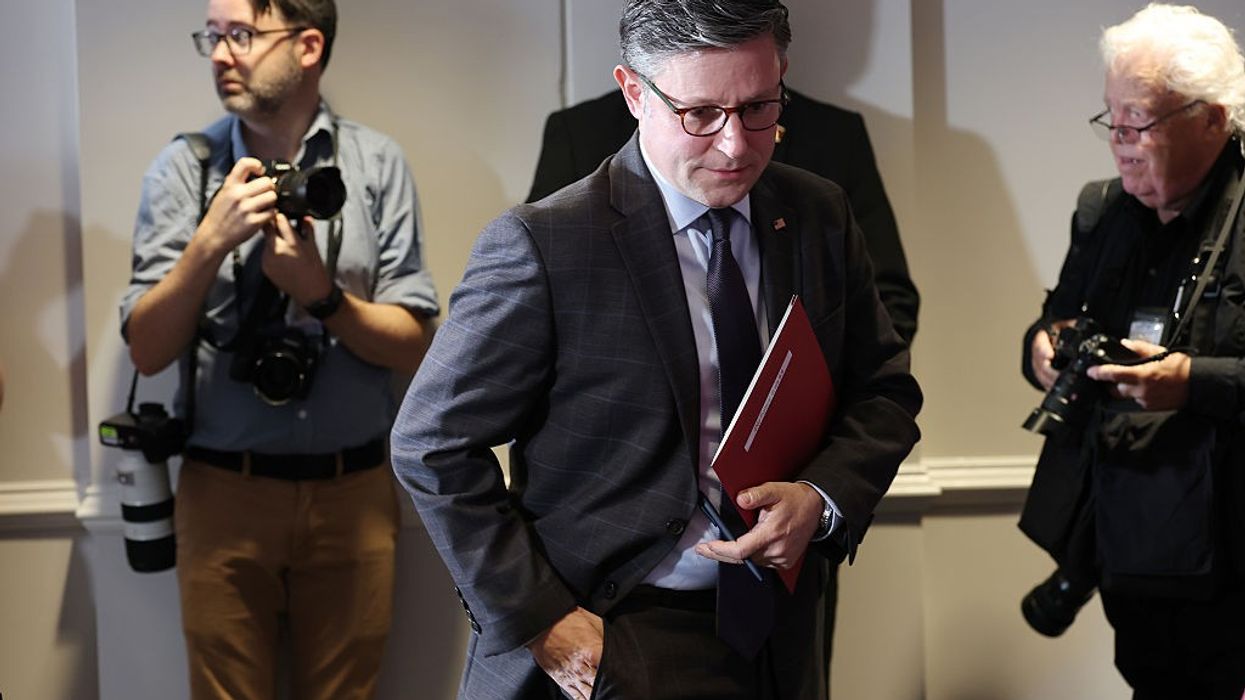
Health insurance premiums are expected to rise significantly for approximately 22 million Americans after Republicans ended a tax credit for those enrolled in programs under the Affordable Care Act.
Democratic leaders said Thursday that they plan to hold up negotiations on a potential government shutdown unless Republicans agree to forfeit a policy change that is expected to dramatically raise health insurance premiums for millions of Americans.
Health insurance premiums are expected to rise significantly for approximately 22 million Americans enrolled in Affordable Care Act (ACA) marketplace plans after Republicans refused to extend enhanced tax credits when passing Trump's "One Big Beautiful Bill Act" in July.
In remarks on Capitol Hill Thursday, Senate Minority Leader Chuck Schumer (D-N.Y.) said he and Democratic House Leader Hakeem Jeffries (N.Y.) were in total agreement not to negotiate unless Republicans agree to extend the tax credits.
“On this issue, we’re totally united. The Republicans have to come to meet with us in a true bipartisan negotiation to satisfy the American people’s needs on healthcare, or they won't get our votes, plain and simple,” Schumer warned at a press conference.
"We will not support a partisan spending agreement that continues to rip away healthcare from the American people. Period. Full stop,” Jeffries said.
The enhanced tax credits, which were created in 2021 under the American Rescue Plan Act and later extended through the Inflation Reduction Act in 2022, are credited with reducing the insurance premiums of millions of people who purchase health insurance through government exchanges.
The tax credits have reduced insurance premiums by 44% on average—over $700 per enrollee—and have contributed to the number of people purchasing insurance on the exchanges more than doubling to over 24 million in 2025.
According to a report released Wednesday by KFF:
Nine in 10 enrollees (92%) receive some amount of premium tax credit. If these enhanced tax credits expire at the end of 2025, out-of-pocket premiums would rise by over 75% on average for the vast majority of individuals and families buying coverage through the Affordable Care Act (ACA) Marketplaces.
The increases come as insurance companies, citing "slumping share prices," per the Financial Times, are planning the largest hike to premiums in 15 years, including an 18% increase for those buying from ACA exchanges.
These increases will come on top of those already expected as a result of a Trump administration rule passed in June, which increased the maximum percentages of income and raw dollar amounts that insurance plans could charge patients out-of-pocket for care.
According to the Center for Budget and Policy Priorities, these changes "will make coverage less affordable for millions of people." The CBPP estimates that "a family of four making $85,000 will have to pay an additional $197 in premiums for coverage in 2026" while a "family of two or more people on the same plan could face an additional $900 in medical bills if a family member is seriously ill or injured in 2026, and an individual enrolled in self-only coverage could face an additional $450 in medical bills."
In all, the Congressional Budget Office estimated in May that as a result of these mounting costs, over 5 million people will no longer be able to afford their health insurance plans.
"The death star of American healthcare, the insurance companies are preparing to blow up the lives of millions of middle-class families," warned journalist David Sirota in a podcast for The Lever.
Republicans in Congress are facing mounting pressure to extend the tax credits and stave off the premium hikes. Last week, 11 Republicans in Congress signed onto a bill that would extend the credits through 2026, allowing them to avoid the issue until after the midterm elections.
A survey conducted in July by two of Trump's most trusted pollsters, Tony Fabrizio and Bob Ward, found that for Republicans in the most competitive districts, "a 3-point deficit becomes a 15-point deficit" against the generic Democrat if they allow the healthcare premium tax credit to expire.
House Speaker Mike Johnson (R-La.) has stayed coy about whether he and the Republican caucus plan to support extending the credits.
"I'm not going to forecast that right now," Johnson told reporters earlier this week, while also saying, "There's a lot of opposition to it as well."
Democrats, meanwhile, have proposed a competing bill to make the subsidies permanent and are hoping to use this month's budget showdown to force Republicans to make concessions on the issue.
As David Dayen wrote Monday for the American Prospect, it sets up a challenging strategic and moral dilemma for Democrats:
On the one hand, Democrats fighting for healthcare benefits speaks to an issue where they have the highest level of support from the public. They would credibly be able to tell voters that they fought for lower costs during an affordability crisis and won, and that more of that will happen if they are given power in the midterms.
On the other hand, Republicans willingly drove the healthcare system toward the point of oblivion, and some may question why Democrats would offer a lifeline to bail them out. In this reading, relieving Republicans of the consequences of their health care plans would be harmful to Democratic midterm chances; Trump would take credit for keeping health care costs low.
What's clear, Dayen said, is that "unless action is taken, it will be an enormous example of Trump's failure to rein in the runaway cost of living."
Lisa Gilbert, co-president of Public Citizen, urged Democrats to stand firm as the fight over a potential government shutdown heats up.
"If Republicans refuse to negotiate and move away from their cost-increasing agenda, then it is Republicans who will be forcing a government-wide shutdown," Gilbert said. "There should be no deal without assurances that the budget will be honored and not impounded, and one that returns care to the American people.”
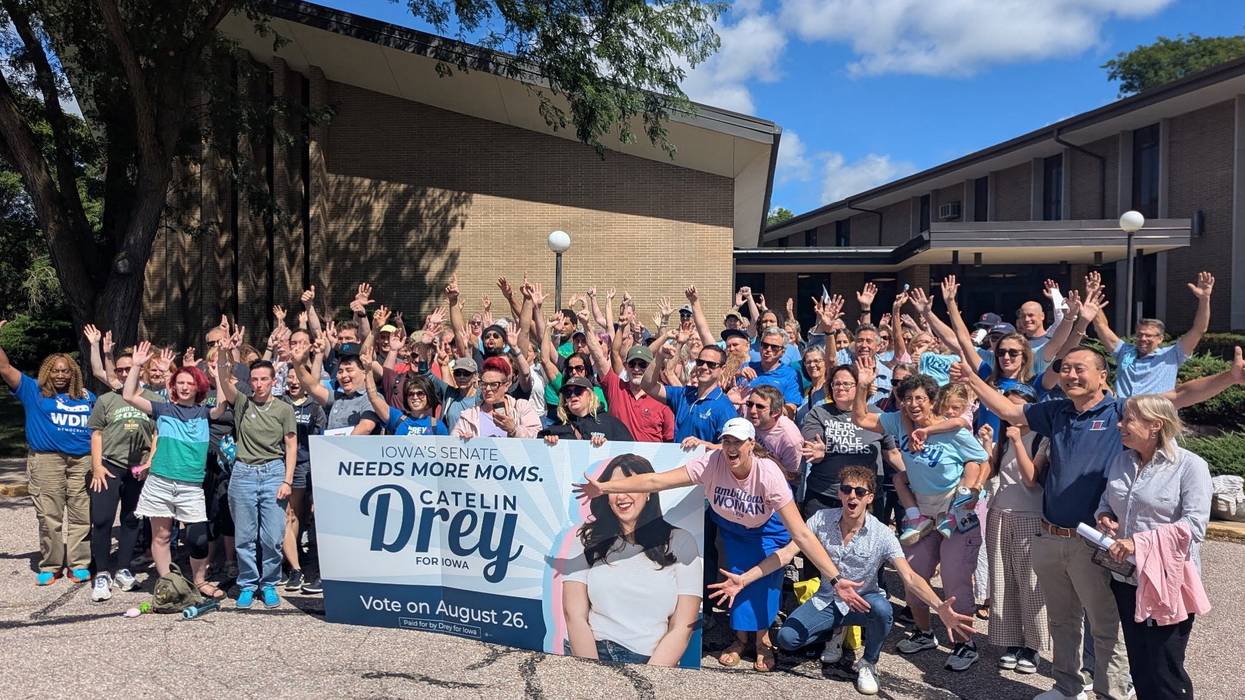
In a race that bodes well for Democrats' hopes in 2026, Catelin Drey won by championing "affordable housing, childcare, and healthcare, strong public schools, and bodily autonomy," wrote one progressive Iowa journalist.
Democrats have broken the GOP stranglehold over Iowa's statehouse with a resounding win in a special election for the state Senate on Tuesday.
In the Sioux City-area district that Donald Trump carried by more than 11 points in 2024 and which had been won by Republicans for 13 consecutive years, Democrat Catelin Drey is projected to have won a convincing 55% of the vote over her Republican opponent, Christopher Prosch.
By taking the vacant seat, Democrats not only added to the mounting evidence for a coming anti-Trump backlash in the midterms, but also ended the Republican supermajority in Iowa's state Senate, which has allowed the GOP to spend the past three years curtailing abortion rights, stripping civil rights protections from transgender people, and chipping away at public education.
Additionally, the Democrats have thrown up a barrier to Republican Gov. Kim Reynolds, who needs a supermajority to confirm appointments and will now require some measure of bipartisan approval.
Like other successful Democratic candidates, Drey's message focused on affordability, with a special emphasis on the cost of living for families. Her slogan was "Iowa's Senate needs more moms."
"She has highlighted issues of particular importance to young parents," wrote Laura Belin for the progressive Iowa politics site Bleeding Heartland. "Affordable housing, childcare, and healthcare, strong public schools, and bodily autonomy."
Drey seized on outrage toward Republican attempts to defund public schools. Teachers, she said in one ad, "shouldn't have to rely on GoFundMes just to do their jobs."
"One takeaway from the Iowa special election: don't listen to centrist Democrats on education," said Jennifer Berkshire, an education writer for The Nation and the New Republic. "Catelin Drey made defending and funding public schools a focal point of her campaign and called for rolling back Iowa's controversial school voucher program."
Drey's victory adds to the already mounting pile of evidence that backlash towards President Donald Trump, whose approval ratings have skidded to near-record lows in recent weeks, will manifest at the ballot box next November.
G. Elliott Morris, a political data journalist, wrote Wednesday in his Strength in Numbers newsletter that "there have been plenty of special elections" this year, with "all of them suggesting a pretty sizable leftward shift in the electoral environment since November 2024."
Citing data from The Downballot's special election tracker, Morris wrote:
On average in 2025, Democratic candidates in special elections are running about 16 percentage points ahead of Kamala Harris’s margin versus Donald Trump in last year’s presidential election. That is 5-6 points higher than the average Democratic overperformance in 2017.
These crushing results, Democratic strategists say, are the reason behind Republicans' frantic efforts to ratchet up gerrymandering in states like Texas, where they control the state legislature.
"If you're wondering why Republicans are gerrymandering the fuck out of red states," said Democratic fundraiser Mike Nellis, "Democrats just flipped a Trump [+11] Iowa Senate seat. That's what they're afraid of."
With Drey's victory, Iowa Democrats have now won four consecutive special elections held in the state, flipping two other Republican-held seats. Riding that wave of optimism, they now have their sights set on a greater target: Iowa's two-term senator Joni Ernst, who comes up for reelection in 2026.
Defeating Ernst would be a significant boost to Democrats' efforts to regain control of the Senate in 2026. That effort may have been helped along by Ernst herself, who responded to questions at a town hall earlier this year about her support for savage cuts to healthcare in the GOP's One Big Beautiful Bill Act by callously remarking, "Well, we are all going to die."
An internal poll published Tuesday showed Democratic state senator Zach Wahls, one of many Democrats vying for the party's nomination, edging Ernst out in a hypothetical general election. Other polls show the race to be within the margin of error.
In a video posted to X, Wahls said Tuesday's Democratic victory is further evidence that "the state is in play," after not having elected a Democratic senator since 2008.
"Iowans are sick of the inability of the current administration and politicians like Joni Ernst to deal with rising costs. They are sick of the corruption, and they are ready for change," Wahls said. "We are going to flip this US Senate seat, the exact same way that Catelin Drey flipped her state Senate seat."
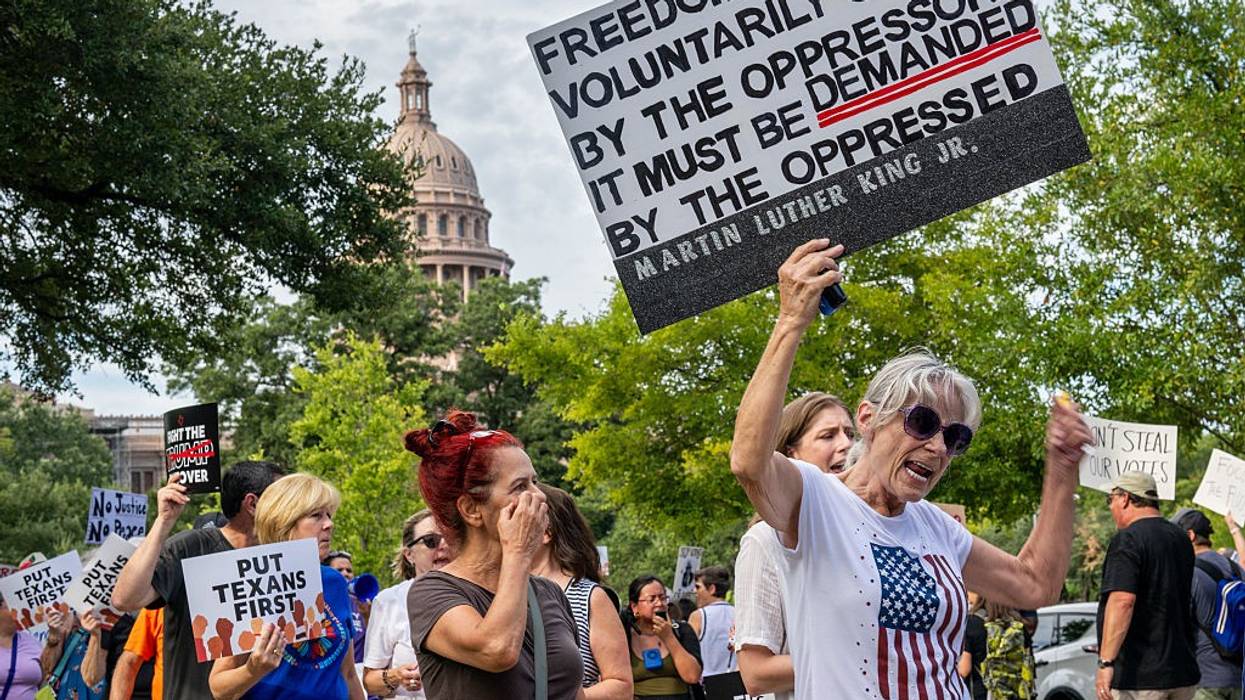
Rep. Greg Casar accused Trump and his Republican allies of "trying to pull off the most corrupt bargain I've ever seen."
Progressives rallied across the country on Saturday to protest against US President Donald Trump's attempts to get Republican-run state legislatures to redraw their maps to benefit GOP candidates in the 2026 midterm elections.
The anchor rally for the nationwide "Fight the Trump Takeover" protests was held in Austin, Texas, where Republicans in the state are poised to become the first in the nation to redraw their maps at the president's behest.
Progressives in the Lone Star State capital rallied against Trump and Texas Gov. Greg Abbott for breaking with historical precedent by carrying out congressional redistricting in the middle of the decade. Independent experts have estimated that the Texas gerrymandering alone could yield the GOP five additional seats in the US House of Representatives.
Speaking before a boisterous crowd of thousands of people, Rep. Lloyd Doggett (D-Texas) charged that the Texas GOP was drawing up "districts set up to elect a Trump minion" in next year's midterms. However, Doggett also said that progressives should still try to compete in these districts, whose residents voted for Trump in the 2024 election but who also have histories of supporting Democratic candidates.
"Next year, [Trump is] not going to be on the ballot to draw the MAGA vote," said Doggett. "Is there anyone here who believes that we ought to abandon any of these redrawn districts and surrender them to Trump?"
Leonard Aguilar, the secretary-treasurer of Texas AFL-CIO, attacked Abbott for doing the president's bidding even as people in central Texas are still struggling in the aftermath of the deadly floods last month that killed at least 136 people.
"It's time for Gov. Abbott to cut the bullshit," he said. "We need help now but he's working at the behest of the president, on behalf of Trump... He's letting Trump take over Texas!"
Aguilar also speculated that Trump is fixated on having Texas redraw its maps because he "knows he's in trouble and he wants to change the rules midstream."
Rep. Greg Casar (D-Texas) went through a litany of grievances against Trump and the Republican Party, ranging from the Texas redistricting plan, to hardline immigration policies, to the massive GOP budget package passed last month that is projected to kick 17 million Americans off of Medicaid.
However, Casar also said that he felt hope watching how people in Austin were fighting back against Trump and his policies.
"I'm proud that our city is fighting," he said. "I'm proud of the grit that we have even when the odds are stacked against us. The only answer to oligarchy is organization."
Casar went on to accuse Trump and Republicans or "trying to pull off the most corrupt bargain I've ever seen," and then added that "as they try to kick us off our healthcare, as they try to rig this election, we're not going to let them!"
Saturday's protests are being done in partnership with several prominent progressive groups, including Indivisible, MoveOn, Human Rights Campaign, Public Citizen, and the Communication Workers of America. Some Texas-specific groups—including Texas Freedom Network, Texas AFL-CIO, and Texas for All—are also partners in the protest.
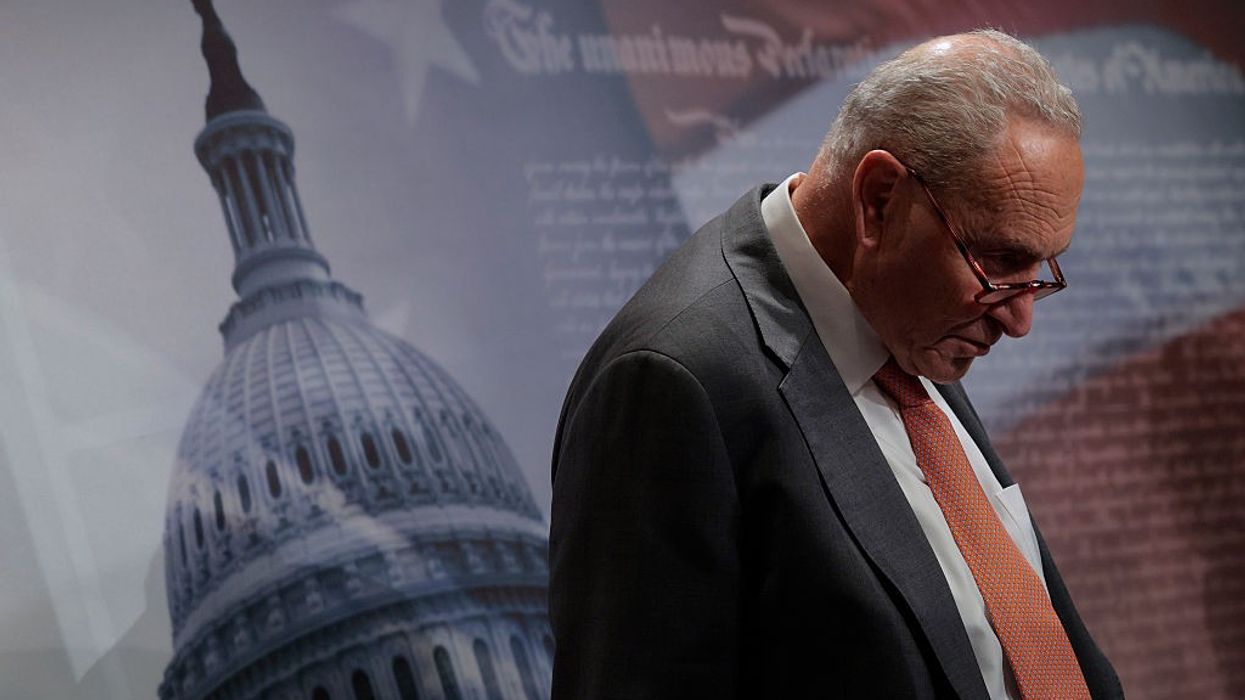
"Voters have made their feelings clear," said the leader of Justice Democrats. "The majority do not see themselves in this party and do not believe in its leaders or many of its representatives."
A top progressive leader has given her prescription for how the Democratic Party can begin to retake power from US President Donald Trump: Ousting "corporate-funded" candidates.
Justice Democrats executive director Alexandra Rojas wrote Thursday in The Guardian that, "If the Democratic Party wants to win back power in 2028," its members need to begin to redefine themselves in the 2026 midterms.
"Voters have made their feelings clear, a majority do not see themselves in this party and do not believe in its leaders or many of its representatives," Rojas said. "They need a new generation of leaders with fresh faces and bold ideas, unbought by corporate super [political action committees] and billionaire donors, to give them a new path and vision to believe in."
Despite Trump's increasing unpopularity, a Gallup poll from July 31 found that the Democratic Party still has record-low approval across the country.
Rojas called for "working-class, progressive primary challenges to the overwhelming number of corporate Democratic incumbents who have rightfully been dubbed as do-nothing electeds."
According to a Reuters/Ipsos poll conducted in June, nearly two-thirds of self-identified Democrats said they desired new leadership, with many believing that the party did not share top priorities, like universal healthcare, affordable childcare, and higher taxes on the rich.
Young voters were especially dissatisfied with the current state of the party and were much less likely to believe the party shared their priorities.
Democrats have made some moves to address their "gerontocracy" problem—switching out the moribund then-President Joe Biden with Vice President Kamala Harris in the 2024 presidential race and swapping out longtime House Speaker Rep. Nancy Pelosi (Calif.) for the younger Rep. Hakeem Jeffries (N.Y.).
But Rojas says a face-lift for the party is not enough. They also need fresh ideas.
"Voters are also not simply seeking to replace their aging corporate shill representatives with younger corporate shills," she said. "More of the same from a younger generation is still more of the same."
Outside of a "small handful of outspoken progressives," she said the party has often been too eager to kowtow to Trump and tow the line of billionaire donors.
"Too many Democratic groups, and even some that call themselves progressive, are encouraging candidates' silence in the face of lobbies like [the America-Israel Public Affairs Committee] (AIPAC) and crypto's multimillion-dollar threats," she said.
A Public Citizen report found that in 2024, Democratic candidates and aligned PACs received millions of dollars from crypto firms like Coinbase, Ripple, and Andreesen Horowitz.
According to OpenSecrets, 58% of the 212 Democrats elected to the House in 2024—135 of them—received money from AIPAC, with an average contribution of $117,334. In the Senate, 17 Democrats who won their elections received donations—$195,015 on average.
The two top Democrats in Congress—Jeffries and Senate Minority Leader Chuck Schumer (D-N.Y.)—both have long histories of support from AIPAC, and embraced crypto with open arms after the industry flooded the 2024 campaign with cash.
"Too often, we hear from candidates and members who claim they are with us on the policy, but can't speak out on it because AIPAC or crypto will spend against them," Rojas said. "Silence is cowardice, and cowardice inspires no one."
Rojas noted Rep. Summer Lee (D-Pa.), who was elected in 2022 despite an onslaught of attacks from AIPAC and who has since gone on to introduce legislation to ban super PACs from federal elections, as an example of this model's success.
"The path to more Democratic victories," Rojas said, "is not around, behind, and under these lobbies, but it's right through them, taking them head-on and ridding them from our politics once and for all."

"If Trump is allowed to rip the Voting Rights Act to shreds here in Central Texas, his ploy will spread like wildfire across the country," said Casar.
The Texas Republican Party drew heavy criticism on Wednesday after it unveiled a redrawn map of their state's congressional districts aimed at squeezing out Democrats even further.
In an analysis of the new map, Cook Political Report analyst Dave Wasserman projected that it could help Republicans post a net gain of as many as five seats in the House of Representatives during next year's midterm elections.
Among other things, Wasserman found that the map pushes the districts of several incumbent Democrats, including Reps. Henry Cuellar and Vicente Gonzalez, into more Trump-friendly terrain. Wasserman adds that this might not necessarily doom these Democrats if the party has a strong overall midterm performance next year.
"It's clear what Republicans' strategy is here," Wasserman wrote on X. "Create as many solid Trump seats as possible while *increasing* the number of Hispanic-majority seats by population, even though Hispanic *voters* will be well south of 40% of the electorate in several of them."
Rep. Greg Casar (D-Texas), the chairman of the Congressional Progressive Caucus whose current district would be obliterated by the new map, delivered a scathing rebuke of the proposal.
"Merging the 35th and the 37th districts is illegal voter suppression of Black and Latino Central Texans," he said. "By merging our Central Texas districts, [U.S. President] Trump wants to commit yet another crime—this time, against Texas voters and against Martin Luther King's Voting Rights Act of 1965."
Casar also warned that the Texas GOP scheme would become a blueprint for other GOP-run states unless it's stopped.
"If Trump is allowed to rip the Voting Rights Act to shreds here in Central Texas, his ploy will spread like wildfire across the country," he said. "Everyone who cares about our democracy must mobilize against this illegal map."
Marina Jenkins, executive director of the National Redistricting Foundation, issued a similarly critical statement about the Texas GOP's new map.
"This proposed map is a racially discriminatory, brazen power grab," she said. "It is an insult to all Texans, who have demonstrated overwhelming, bipartisan opposition to President Trump's order to draw a mid-decade gerrymander. Texans deserve better than this, and if the legislature and the governor follow through with enacting this egregious gerrymander, it will face fierce legal challenges."
The Trump White House pushed Texas Republicans to redraw their map this year in order to help the party in the 2026 midterm elections, despite the fact that redistricting normally occurs only once every decade. Democrats across the country have decried the move and Democratic-run states such as California and New York have threatened to redraw their own maps to benefit their party.
Republicans in the House of Representatives currently hold a slim 219-212 majority that will likely grow even slimmer in the coming months as elections occur to replace three Democratic representatives who have died in office in the last year.
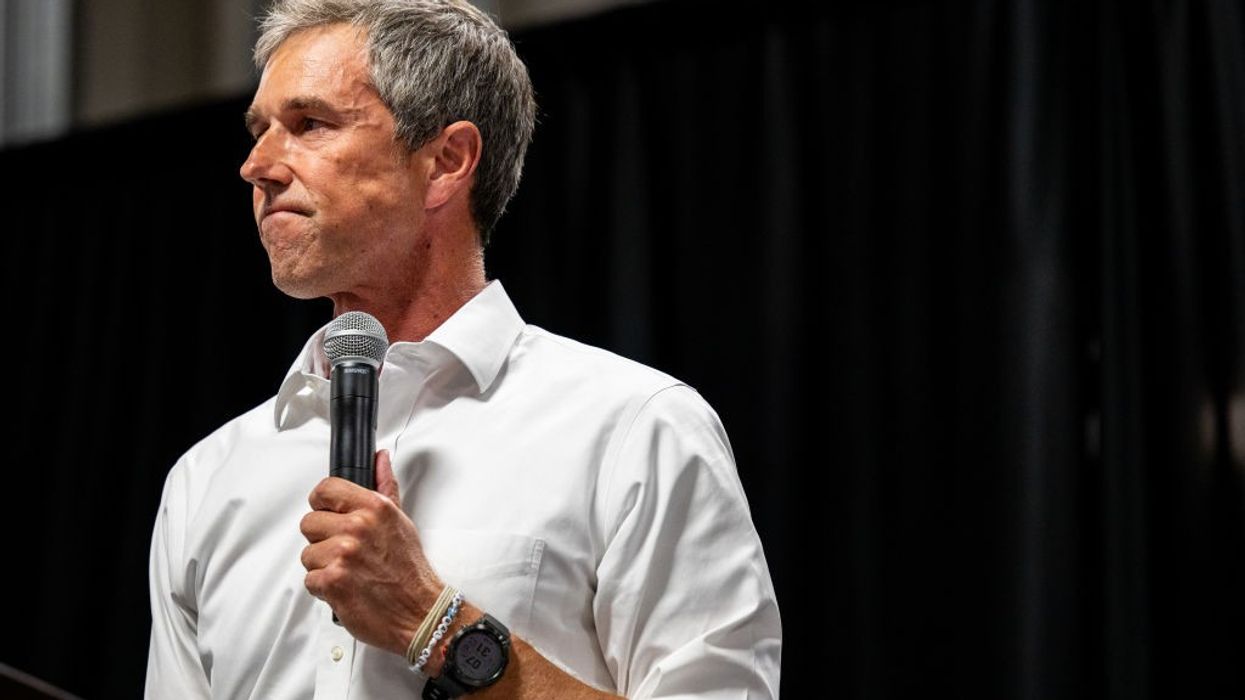
"I think Democrats in the past too often have been more concerned with being right than being in power," O'Rourke said in a CNN interview. "We've seen Republicans only care about being in power regardless of what is right."
As Republicans move forward with an aggressive effort to gerrymander Texas in the coming year, former Rep. Beto O'Rourke called on Democrats Sunday to "match fire with fire" in blue states.
Texas Gov. Greg Abbott said last week he'd follow through on a proposal from President Donald Trump, press legislators to re-draw congressional maps to maximally favor Republicans in the Lone Star State through a highly unusual mid-decade redistricting push.
The effort may net the GOP another five seats in the 2026 midterms. Trump has suggested Republicans push their advantages in "other states" as well, including Ohio.
In response, California Gov. Gavin Newsom said he'd attempt to subvert California's independent state redistricting commission—which seeks to draw maps as fairly as possible—to instead pursue a maximum partisan gerrymander to favor Democrats.
Democrats have tended to be at the forefront of efforts to eliminate partisan redistricting. O'Rourke, a Democrat, has previously called for his state of Texas to have its districts drawn not by political parties but by an independent nonpartisan commission.
But in an interview with CNN's Jake Tapper Sunday, O'Rourke said that while he still disagreed with gerrymandering on principle, as long as Republicans are willing to use it, Democrats need to be willing to play the same game.
"I think Democrats in the past too often have been more concerned with being right than being in power," O'Rourke said. "We've seen Republicans only care about being in power regardless of what is right."
Asked about Newsom's efforts in California, O'Rourke said, "We have to be absolutely ruthless about getting back in power."
He called on Democrats in other blue states to press their advantages as far as possible too.
"In California, in Illinois, in New York, wherever we have the trifecta of power, we have to use that to its absolute extent," he said.
Should Newsom's effort to get around California's redistricting commission succeed, it could net Democrats an additional five to seven seats in the House. With Republicans clinging to just a three-seat majority, it could prove decisive.
However, the plan is a long shot. In 2010, California voters elected to enshrine the independent commission into the state constitution.
Newsom has said that when it comes to stripping the commission of its power, "it's all on the table," including calling a special session of the state legislature and introducing another ballot measure to the public, which he said he thinks they'd win.
He also said there were "other avenues" to consider, like having the legislature draw districts "in between" censuses.
Newsom described this as a legal gray area, since the constitutional amendment only requires the independent commission to create new maps after each census, but says nothing about its role in redistricting mid-decade. However, Dan Vicuña, a redistricting expert at the watchdog group Common Cause, told The Guardian that such an effort was "not lawful in any way."
Newsom said that Republicans, who don't have to worry about redistricting commissions in the states they control, "are playing by a different set of rules."
"From my perspective, if we're going to play fair in a world that is wholly unfair, we may have the higher moral ground, but the ground is shifting from underneath us, and I think we have to wake up to that reality," said the California governor.
The governors of Illinois and New York, meanwhile, have stayed mum on the question of whether they may attempt similar attempts at aggressive redistricting.
Illinois has no rules against partisan gerrymandering and its maps are already heavily weighted in Democrats' favor following the most recent redistricting effort in 2021.
New York's maps are only "slightly" weighted in favor of Democrats and could be made more lopsided. During the most recent redistricting session, which was the subject of a lengthy court battle, Gov. Kathy Hochul agreed to maps that left the seven seats controlled by Republicans intact.
There, the legislature can draw maps, but they must be approved by an independent redistricting committee.
According to reporting by CNN Sunday, Democrats are nevertheless looking into possible efforts to maximize their advantages in New York and other states like New Jersey, Minnesota, and Washington.
In response to Trump's effort to expand Republicans' seats, House Minority Leader Hakeem Jeffries (D-N.Y.) renewed calls for "fair maps" throughout the country, though he declined to comment on Newsom's efforts.
Jeffries is reportedly meeting with Hochul about the possibility of making the maps more "fair," by which he may mean maximizing the Democrats' advantage. This would likely necessitate dispensing with the independent redistricting commission, as Newsom hopes to do.
"If Republicans want to play by these rules, then I think that we shouldn't have one set of rules for one and the other set of rules for another," Rep. Alexandria Ocasio-Cortez (D-N.Y.) told CNN. "I think we need to even the playing board."