SUBSCRIBE TO OUR FREE NEWSLETTER
Daily news & progressive opinion—funded by the people, not the corporations—delivered straight to your inbox.
5
#000000
#FFFFFF
To donate by check, phone, or other method, see our More Ways to Give page.
Daily news & progressive opinion—funded by the people, not the corporations—delivered straight to your inbox.
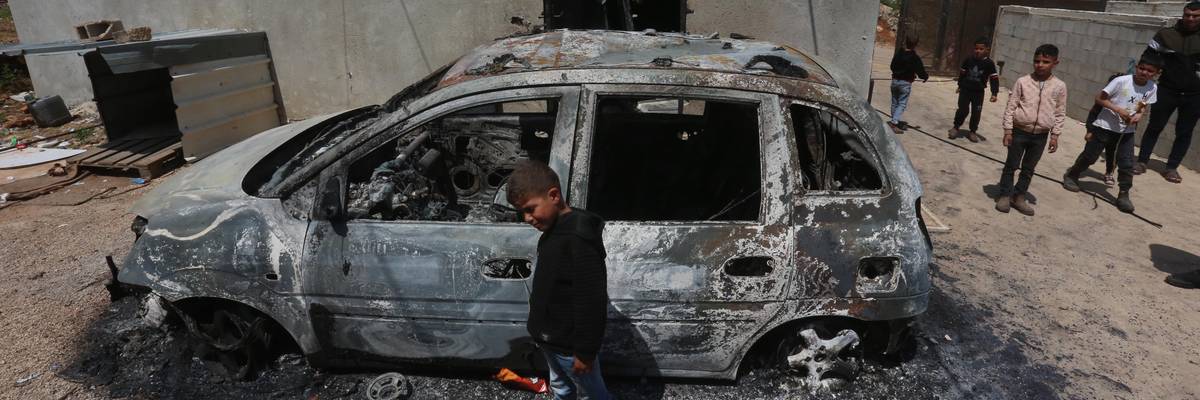
A view of heavily damaged car is seen as Jewish settlers reportedly set fire to Palestinian homes and vehicles in Qusra town in Nablus, West Bank on April 14, 2024.
If an American participates in organized violence against civilians abroad, that person should be investigated. If evidence supports it, they should be prosecuted under applicable US law.
In a rare quiet moment inside the resuscitation room at Nasser Hospital in Gaza, I stood beside a young Palestinian man helping us treat waves of wounded children. He worked with calm precision. Focused. Unflinching.
Then he told me about his brother. Beaten nearly to death by Israeli settlers in the West Bank. Not once. Repeatedly. Ribs broken. Face shattered. The attacks ended only when his family fled the land they had farmed for generations.
“They wanted us gone,” he said. Some of the men who carry out this violence hold United States passports.
They live under American law. They vote in American elections. Then they travel abroad and take part in acts that, in any other context, would be recognized without hesitation: assault, arson, organized racial violence. Homes burned. Crops destroyed. Families driven off land.
An American who beats a man because of his ethnicity, drives him from his home, and destroys the means by which his family survives is not transformed into something else by crossing a border.
And then they return. They pass through US customs. They resume their lives. No charges. No investigation. No meaningful consequence.
This is not an abstraction. Human rights organizations, Israeli and international alike, have documented repeated incidents of settler violence in the West Bank: physical attacks on civilians, destruction of agricultural land, the burning of homes and olive groves, often carried out with little immediate accountability.
Some of those involved are Americans. Under US law, citizenship is extraordinarily difficult to revoke. The Supreme Court has made that clear. But citizenship is not the only instrument of accountability, and treating it as such allows something far worse to persist: impunity.
If an American participates in organized violence against civilians abroad, that person should be investigated. If evidence supports it, they should be prosecuted under applicable US law. If their actions meet the threshold of coordinated or systematic violence, then sanctions, asset restrictions, and limits on international travel should follow.
A passport should not function as a safe harbor.
In 2024, the United States took limited steps to sanction individuals and entities linked to settler violence. It was an acknowledgment, however modest, that this problem exists. In early 2025, that framework was dismantled.
The message was clear. Even minimal accountability was negotiable.
Meanwhile, the violence continues. This is where the question becomes unavoidable.
What does it mean for Israel, a country that defines itself as a democracy under law, to tolerate or fail to prevent organized violence by settlers against civilians in the West Bank?
And what does it mean for the United States to allow its own citizens to participate in that violence and return home untouched?
These are not separate questions. They are reflections of the same failure.
An American who beats a man because of his ethnicity, drives him from his home, and destroys the means by which his family survives is not transformed into something else by crossing a border. Geography does not dilute the crime. It only obscures it.
If that same act occurred in the United States, there would be no ambiguity in how it is described or prosecuted.
When it occurs in the West Bank as part of a broader pattern of displacement, it demands the same clarity.
The tools for accountability already exist. Federal statutes governing violent crime, conspiracy, and, in certain cases, war crimes. Sanctions authorities. Civil liability. Immigration and travel restrictions.
What is missing is not law. It is willingness.
Impunity is not an accident here. It is a decision, made repeatedly, on both sides of the ocean.
The man I met in Gaza was not asking for revenge. He was asking for the violence to stop. He was asking for a form of justice that does not end at a checkpoint or a border crossing.
A United States passport should carry weight. It should represent a commitment to law, not an escape from it.
Right now, in too many cases, it does the opposite. And everyone involved knows it.
Dear Common Dreams reader, It’s been nearly 30 years since I co-founded Common Dreams with my late wife, Lina Newhouser. We had the radical notion that journalism should serve the public good, not corporate profits. It was clear to us from the outset what it would take to build such a project. No paid advertisements. No corporate sponsors. No millionaire publisher telling us what to think or do. Many people said we wouldn't last a year, but we proved those doubters wrong. Together with a tremendous team of journalists and dedicated staff, we built an independent media outlet free from the constraints of profits and corporate control. Our mission has always been simple: To inform. To inspire. To ignite change for the common good. Building Common Dreams was not easy. Our survival was never guaranteed. When you take on the most powerful forces—Wall Street greed, fossil fuel industry destruction, Big Tech lobbyists, and uber-rich oligarchs who have spent billions upon billions rigging the economy and democracy in their favor—the only bulwark you have is supporters who believe in your work. But here’s the urgent message from me today. It's never been this bad out there. And it's never been this hard to keep us going. At the very moment Common Dreams is most needed, the threats we face are intensifying. We need your support now more than ever. We don't accept corporate advertising and never will. We don't have a paywall because we don't think people should be blocked from critical news based on their ability to pay. Everything we do is funded by the donations of readers like you. When everyone does the little they can afford, we are strong. But if that support retreats or dries up, so do we. Will you donate now to make sure Common Dreams not only survives but thrives? —Craig Brown, Co-founder |
In a rare quiet moment inside the resuscitation room at Nasser Hospital in Gaza, I stood beside a young Palestinian man helping us treat waves of wounded children. He worked with calm precision. Focused. Unflinching.
Then he told me about his brother. Beaten nearly to death by Israeli settlers in the West Bank. Not once. Repeatedly. Ribs broken. Face shattered. The attacks ended only when his family fled the land they had farmed for generations.
“They wanted us gone,” he said. Some of the men who carry out this violence hold United States passports.
They live under American law. They vote in American elections. Then they travel abroad and take part in acts that, in any other context, would be recognized without hesitation: assault, arson, organized racial violence. Homes burned. Crops destroyed. Families driven off land.
An American who beats a man because of his ethnicity, drives him from his home, and destroys the means by which his family survives is not transformed into something else by crossing a border.
And then they return. They pass through US customs. They resume their lives. No charges. No investigation. No meaningful consequence.
This is not an abstraction. Human rights organizations, Israeli and international alike, have documented repeated incidents of settler violence in the West Bank: physical attacks on civilians, destruction of agricultural land, the burning of homes and olive groves, often carried out with little immediate accountability.
Some of those involved are Americans. Under US law, citizenship is extraordinarily difficult to revoke. The Supreme Court has made that clear. But citizenship is not the only instrument of accountability, and treating it as such allows something far worse to persist: impunity.
If an American participates in organized violence against civilians abroad, that person should be investigated. If evidence supports it, they should be prosecuted under applicable US law. If their actions meet the threshold of coordinated or systematic violence, then sanctions, asset restrictions, and limits on international travel should follow.
A passport should not function as a safe harbor.
In 2024, the United States took limited steps to sanction individuals and entities linked to settler violence. It was an acknowledgment, however modest, that this problem exists. In early 2025, that framework was dismantled.
The message was clear. Even minimal accountability was negotiable.
Meanwhile, the violence continues. This is where the question becomes unavoidable.
What does it mean for Israel, a country that defines itself as a democracy under law, to tolerate or fail to prevent organized violence by settlers against civilians in the West Bank?
And what does it mean for the United States to allow its own citizens to participate in that violence and return home untouched?
These are not separate questions. They are reflections of the same failure.
An American who beats a man because of his ethnicity, drives him from his home, and destroys the means by which his family survives is not transformed into something else by crossing a border. Geography does not dilute the crime. It only obscures it.
If that same act occurred in the United States, there would be no ambiguity in how it is described or prosecuted.
When it occurs in the West Bank as part of a broader pattern of displacement, it demands the same clarity.
The tools for accountability already exist. Federal statutes governing violent crime, conspiracy, and, in certain cases, war crimes. Sanctions authorities. Civil liability. Immigration and travel restrictions.
What is missing is not law. It is willingness.
Impunity is not an accident here. It is a decision, made repeatedly, on both sides of the ocean.
The man I met in Gaza was not asking for revenge. He was asking for the violence to stop. He was asking for a form of justice that does not end at a checkpoint or a border crossing.
A United States passport should carry weight. It should represent a commitment to law, not an escape from it.
Right now, in too many cases, it does the opposite. And everyone involved knows it.
In a rare quiet moment inside the resuscitation room at Nasser Hospital in Gaza, I stood beside a young Palestinian man helping us treat waves of wounded children. He worked with calm precision. Focused. Unflinching.
Then he told me about his brother. Beaten nearly to death by Israeli settlers in the West Bank. Not once. Repeatedly. Ribs broken. Face shattered. The attacks ended only when his family fled the land they had farmed for generations.
“They wanted us gone,” he said. Some of the men who carry out this violence hold United States passports.
They live under American law. They vote in American elections. Then they travel abroad and take part in acts that, in any other context, would be recognized without hesitation: assault, arson, organized racial violence. Homes burned. Crops destroyed. Families driven off land.
An American who beats a man because of his ethnicity, drives him from his home, and destroys the means by which his family survives is not transformed into something else by crossing a border.
And then they return. They pass through US customs. They resume their lives. No charges. No investigation. No meaningful consequence.
This is not an abstraction. Human rights organizations, Israeli and international alike, have documented repeated incidents of settler violence in the West Bank: physical attacks on civilians, destruction of agricultural land, the burning of homes and olive groves, often carried out with little immediate accountability.
Some of those involved are Americans. Under US law, citizenship is extraordinarily difficult to revoke. The Supreme Court has made that clear. But citizenship is not the only instrument of accountability, and treating it as such allows something far worse to persist: impunity.
If an American participates in organized violence against civilians abroad, that person should be investigated. If evidence supports it, they should be prosecuted under applicable US law. If their actions meet the threshold of coordinated or systematic violence, then sanctions, asset restrictions, and limits on international travel should follow.
A passport should not function as a safe harbor.
In 2024, the United States took limited steps to sanction individuals and entities linked to settler violence. It was an acknowledgment, however modest, that this problem exists. In early 2025, that framework was dismantled.
The message was clear. Even minimal accountability was negotiable.
Meanwhile, the violence continues. This is where the question becomes unavoidable.
What does it mean for Israel, a country that defines itself as a democracy under law, to tolerate or fail to prevent organized violence by settlers against civilians in the West Bank?
And what does it mean for the United States to allow its own citizens to participate in that violence and return home untouched?
These are not separate questions. They are reflections of the same failure.
An American who beats a man because of his ethnicity, drives him from his home, and destroys the means by which his family survives is not transformed into something else by crossing a border. Geography does not dilute the crime. It only obscures it.
If that same act occurred in the United States, there would be no ambiguity in how it is described or prosecuted.
When it occurs in the West Bank as part of a broader pattern of displacement, it demands the same clarity.
The tools for accountability already exist. Federal statutes governing violent crime, conspiracy, and, in certain cases, war crimes. Sanctions authorities. Civil liability. Immigration and travel restrictions.
What is missing is not law. It is willingness.
Impunity is not an accident here. It is a decision, made repeatedly, on both sides of the ocean.
The man I met in Gaza was not asking for revenge. He was asking for the violence to stop. He was asking for a form of justice that does not end at a checkpoint or a border crossing.
A United States passport should carry weight. It should represent a commitment to law, not an escape from it.
Right now, in too many cases, it does the opposite. And everyone involved knows it.