SUBSCRIBE TO OUR FREE NEWSLETTER
Daily news & progressive opinion—funded by the people, not the corporations—delivered straight to your inbox.
5
#000000
#FFFFFF
To donate by check, phone, or other method, see our More Ways to Give page.
Daily news & progressive opinion—funded by the people, not the corporations—delivered straight to your inbox.
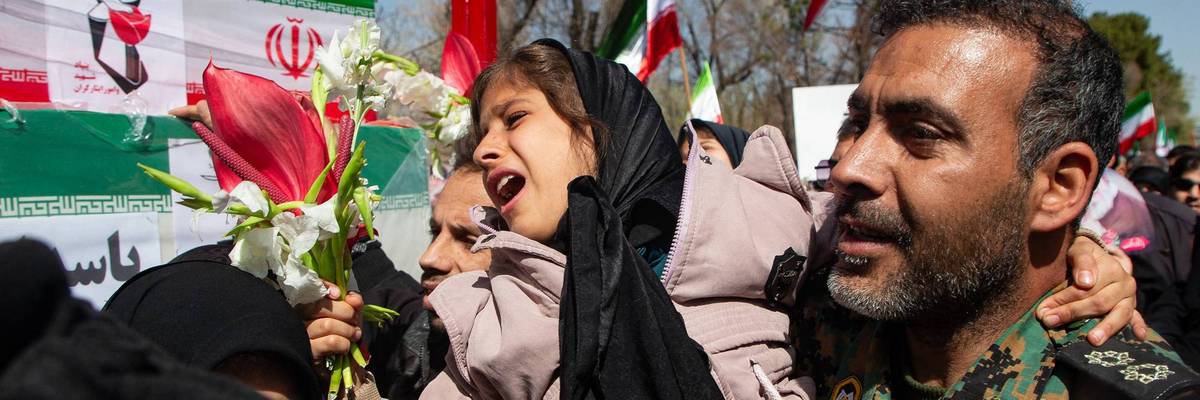
What was once covert, controversial, and constrained is now overt, normalized, and defended.
For decades, the United States moved from covert assassination plots to openly embracing assassination or “targeted killing” as policy. Now, in its war with Iran, that evolution is reaching its most dangerous phase.
On March 17th and 18th, the United States and Israel assassinated three senior Iranian government officials in targeted air strikes: Ali Larijani, the secretary of Iran’s Supreme National Security Council; Brigadier General Gholamreza Soleimani, the commander of Iran’s Basij domestic security forces; and Esmaeil Khatib, Iran’s Intelligence Minister.
The missile that killed Ali Larijani also demolished an apartment building and killed more than a hundred people. Israeli defense minister Israel Katz announced that Israeli forces were now authorized to assassinate any senior Iranian official whenever they can, and they have continued to do so, bringing the number of Iranian officials assassinated in the past year to at least seventy.
The assassination of Ali Larijani is a blow to the already fraught chances for a negotiated peace between Iran and the United States and Israel. Ali Larijani was an experienced, pragmatic senior official who had played leading roles in negotiations with the US and other world powers since 2005.
What was once covert, controversial, and constrained is now overt, normalized, and defended.
Larijani had degrees in math and computer science, attended the revered seminary in Qom, and fought in the Iran-Iraq War, rising to the rank of brigadier-general in Iran’s Revolutionary Guard Corps. After the war, he managed Iran’s state broadcasting service, earned a doctorate in Western Philosophy from the University of Tehran, and wrote three books on the philosophy of Immanuel Kant, before entering politics and government in 2005. In 2024, Larijani wrote a book on political philosophy, titled Reason and Tranquility in Governance.
If the US hoped to make peace and restore relations with Iran, Ali Larijani would have been a potential negotiating partner. The decision to assassinate Larijani two weeks into this war suggests that US leaders had no interest in negotiations.
Another possibility is even more chilling. Israeli leaders may have viewed Larijani as a potential off-ramp and deliberately eliminated him to ensure the war continues.
That killing was followed by an unprecedented Israeli strike on Iran’s South Pars gas field—the largest in the world and a shared resource with Qatar. Iran retaliated with missile strikes on energy infrastructure across Israel and the Gulf. In Qatar, damage to the Ras Laffan LNG terminal—one of the world’s most critical gas hubs—could take years and billions of dollars to repair.
As global energy markets reeled, US officials confirmed to The Wall Street Journal that the South Pars attack had been coordinated with Washington, contradicting denials from President Trump.
The pattern is unmistakable. As one analyst put it, Israel appears to be escalating deliberately—eliminating moderates within Iran while striking critical infrastructure—to provoke a wider regional war that leaves no room for de-escalation.
Analysts debate how much Israel is driving this escalation and how much US officials are fully aligned. But an imperial power cannot outsource responsibility. As Harry Truman’s famous desk sign declared: The buck stops here.
In its alliance with Israel, the United States has normalized the systematic assassination of foreign leaders—from Palestine, and Lebanon, to Syria, Yemen and now Iran. This is not new. In 2020, President Trump ordered the drone strike that killed Iranian General Qassem Soleimani and Iraqi leader Abu Mahdi al-Muhandis, the deputy head of Iraq’s Popular Mobilization Forces (PMF) that had joined with US forces to fight the Islamic State.
Yet assassination is explicitly prohibited under US law. Executive Order 12333 states clearly: “No person employed by or acting on behalf of the United States Government shall engage in, or conspire to engage in, assassination.”
That prohibition emerged from the Church Committee’s investigation into US assassination plots against Fidel Castro in Cuba, Patrice Lumumba in the Congo, Rafael Trujillo in the Dominican Republic, Ngo Dinh Diem in South Vietnam, and General René Schneider in Chile.
It also reflects long-standing international law, including the Hague and Geneva Conventions.
After 9/11, however, the United States systematically ignored or circumvented many of the constraints of US and international law. As US invasions and occupations of Afghanistan and Iraq led to widespread armed resistance, Defense Secretary Donald Rumsfeld began arguing for what he called “manhunts,” to deploy US special operations forces to hunt down suspected resistance leaders and kill them, as Israeli undercover units already did in occupied Palestine.
General Charles Holland, the head of US Special Operations Command, refused to authorize such operations, but his retirement in October 2003 allowed Rumsfeld to appoint more like-minded officials to senior positions and bring in the Israelis to train American death squads in Israel and North Carolina.
“Dead men tell no tales,” as the saying goes, and there has been almost no accountability for the resulting killings, which systematically killed thousands of civilians in Iraq and Afghanistan. Two senior US commanders told the Washington Post that only about 50% of “kill or capture” raids by Joint Special Operations Command targeted the “right” or intended people or homes, while troops involved in these raids said that that assessment greatly overstated their rate of success.
Drone warfare accelerated the trend. Under President Obama, strikes expanded tenfold, turning targeted killing into a central pillar of US policy. By 2011, night raids in Afghanistan numbered in the hundreds each month, alienating the Afghan people and ultimately ensuring the defeat of the US occupation and the return of the Taliban.
Now US and Israeli forces are using air and drone strikes to assassinate Iranian leaders and kill civilians in Palestine, Lebanon and Iran. The language of restraint has disappeared, replaced by open celebration of “lethality” and threats of further war crimes.What was once covert, controversial, and constrained is now overt, normalized, and defended.
The United States now faces a stark choice: to continue down this path of lawless violence, or to turn the page on our nation’s life of international crime and finally, genuinely embrace diplomacy and peaceful coexistence with our neighbors.
The cumulative effect is stark: the United States has made assassination and extrajudicial killing routine instruments of policy, as it tramples the UN Charter, the Hague and Geneva Conventions and its own laws—undermining the very international legal order it claims to uphold.
Meanwhile, a multipolar world is emerging, driven largely by nations of the Global South. But the transition to a peaceful, sustainable world is far from certain. The greatest obstacle in its way is the continued reliance of the United States on the illegal threat and use of military force and economic coercion to try to maintain its own dominance.
Iran exercised restraint for decades in the face of false accusations regarding nuclear weapons, “maximum pressure” economic sanctions and escalating threats and attacks by the US and Israel. It quietly built up its defenses and military strategies for the day that it would need them, and that day has come.
The failure of the international community to stop successive US wars of aggression poses an existential threat to the UN Charter and the post–World War II order. As Colombian President Gustavo Petro warned at the CELAC Summit on March 21: “The more serious humanity’s problems become, the fewer tools we have for collective action. And that path leads only to barbarism.”
The United States now faces a stark choice: to continue down this path of lawless violence, or to turn the page on our nation’s life of international crime and finally, genuinely embrace diplomacy and peaceful coexistence with our neighbors, as the UN Charter requires.
For Americans—and for the world—that choice is becoming a matter of survival.
Dear Common Dreams reader, It’s been nearly 30 years since I co-founded Common Dreams with my late wife, Lina Newhouser. We had the radical notion that journalism should serve the public good, not corporate profits. It was clear to us from the outset what it would take to build such a project. No paid advertisements. No corporate sponsors. No millionaire publisher telling us what to think or do. Many people said we wouldn't last a year, but we proved those doubters wrong. Together with a tremendous team of journalists and dedicated staff, we built an independent media outlet free from the constraints of profits and corporate control. Our mission has always been simple: To inform. To inspire. To ignite change for the common good. Building Common Dreams was not easy. Our survival was never guaranteed. When you take on the most powerful forces—Wall Street greed, fossil fuel industry destruction, Big Tech lobbyists, and uber-rich oligarchs who have spent billions upon billions rigging the economy and democracy in their favor—the only bulwark you have is supporters who believe in your work. But here’s the urgent message from me today. It's never been this bad out there. And it's never been this hard to keep us going. At the very moment Common Dreams is most needed, the threats we face are intensifying. We need your support now more than ever. We don't accept corporate advertising and never will. We don't have a paywall because we don't think people should be blocked from critical news based on their ability to pay. Everything we do is funded by the donations of readers like you. When everyone does the little they can afford, we are strong. But if that support retreats or dries up, so do we. Will you donate now to make sure Common Dreams not only survives but thrives? —Craig Brown, Co-founder |
For decades, the United States moved from covert assassination plots to openly embracing assassination or “targeted killing” as policy. Now, in its war with Iran, that evolution is reaching its most dangerous phase.
On March 17th and 18th, the United States and Israel assassinated three senior Iranian government officials in targeted air strikes: Ali Larijani, the secretary of Iran’s Supreme National Security Council; Brigadier General Gholamreza Soleimani, the commander of Iran’s Basij domestic security forces; and Esmaeil Khatib, Iran’s Intelligence Minister.
The missile that killed Ali Larijani also demolished an apartment building and killed more than a hundred people. Israeli defense minister Israel Katz announced that Israeli forces were now authorized to assassinate any senior Iranian official whenever they can, and they have continued to do so, bringing the number of Iranian officials assassinated in the past year to at least seventy.
The assassination of Ali Larijani is a blow to the already fraught chances for a negotiated peace between Iran and the United States and Israel. Ali Larijani was an experienced, pragmatic senior official who had played leading roles in negotiations with the US and other world powers since 2005.
What was once covert, controversial, and constrained is now overt, normalized, and defended.
Larijani had degrees in math and computer science, attended the revered seminary in Qom, and fought in the Iran-Iraq War, rising to the rank of brigadier-general in Iran’s Revolutionary Guard Corps. After the war, he managed Iran’s state broadcasting service, earned a doctorate in Western Philosophy from the University of Tehran, and wrote three books on the philosophy of Immanuel Kant, before entering politics and government in 2005. In 2024, Larijani wrote a book on political philosophy, titled Reason and Tranquility in Governance.
If the US hoped to make peace and restore relations with Iran, Ali Larijani would have been a potential negotiating partner. The decision to assassinate Larijani two weeks into this war suggests that US leaders had no interest in negotiations.
Another possibility is even more chilling. Israeli leaders may have viewed Larijani as a potential off-ramp and deliberately eliminated him to ensure the war continues.
That killing was followed by an unprecedented Israeli strike on Iran’s South Pars gas field—the largest in the world and a shared resource with Qatar. Iran retaliated with missile strikes on energy infrastructure across Israel and the Gulf. In Qatar, damage to the Ras Laffan LNG terminal—one of the world’s most critical gas hubs—could take years and billions of dollars to repair.
As global energy markets reeled, US officials confirmed to The Wall Street Journal that the South Pars attack had been coordinated with Washington, contradicting denials from President Trump.
The pattern is unmistakable. As one analyst put it, Israel appears to be escalating deliberately—eliminating moderates within Iran while striking critical infrastructure—to provoke a wider regional war that leaves no room for de-escalation.
Analysts debate how much Israel is driving this escalation and how much US officials are fully aligned. But an imperial power cannot outsource responsibility. As Harry Truman’s famous desk sign declared: The buck stops here.
In its alliance with Israel, the United States has normalized the systematic assassination of foreign leaders—from Palestine, and Lebanon, to Syria, Yemen and now Iran. This is not new. In 2020, President Trump ordered the drone strike that killed Iranian General Qassem Soleimani and Iraqi leader Abu Mahdi al-Muhandis, the deputy head of Iraq’s Popular Mobilization Forces (PMF) that had joined with US forces to fight the Islamic State.
Yet assassination is explicitly prohibited under US law. Executive Order 12333 states clearly: “No person employed by or acting on behalf of the United States Government shall engage in, or conspire to engage in, assassination.”
That prohibition emerged from the Church Committee’s investigation into US assassination plots against Fidel Castro in Cuba, Patrice Lumumba in the Congo, Rafael Trujillo in the Dominican Republic, Ngo Dinh Diem in South Vietnam, and General René Schneider in Chile.
It also reflects long-standing international law, including the Hague and Geneva Conventions.
After 9/11, however, the United States systematically ignored or circumvented many of the constraints of US and international law. As US invasions and occupations of Afghanistan and Iraq led to widespread armed resistance, Defense Secretary Donald Rumsfeld began arguing for what he called “manhunts,” to deploy US special operations forces to hunt down suspected resistance leaders and kill them, as Israeli undercover units already did in occupied Palestine.
General Charles Holland, the head of US Special Operations Command, refused to authorize such operations, but his retirement in October 2003 allowed Rumsfeld to appoint more like-minded officials to senior positions and bring in the Israelis to train American death squads in Israel and North Carolina.
“Dead men tell no tales,” as the saying goes, and there has been almost no accountability for the resulting killings, which systematically killed thousands of civilians in Iraq and Afghanistan. Two senior US commanders told the Washington Post that only about 50% of “kill or capture” raids by Joint Special Operations Command targeted the “right” or intended people or homes, while troops involved in these raids said that that assessment greatly overstated their rate of success.
Drone warfare accelerated the trend. Under President Obama, strikes expanded tenfold, turning targeted killing into a central pillar of US policy. By 2011, night raids in Afghanistan numbered in the hundreds each month, alienating the Afghan people and ultimately ensuring the defeat of the US occupation and the return of the Taliban.
Now US and Israeli forces are using air and drone strikes to assassinate Iranian leaders and kill civilians in Palestine, Lebanon and Iran. The language of restraint has disappeared, replaced by open celebration of “lethality” and threats of further war crimes.What was once covert, controversial, and constrained is now overt, normalized, and defended.
The United States now faces a stark choice: to continue down this path of lawless violence, or to turn the page on our nation’s life of international crime and finally, genuinely embrace diplomacy and peaceful coexistence with our neighbors.
The cumulative effect is stark: the United States has made assassination and extrajudicial killing routine instruments of policy, as it tramples the UN Charter, the Hague and Geneva Conventions and its own laws—undermining the very international legal order it claims to uphold.
Meanwhile, a multipolar world is emerging, driven largely by nations of the Global South. But the transition to a peaceful, sustainable world is far from certain. The greatest obstacle in its way is the continued reliance of the United States on the illegal threat and use of military force and economic coercion to try to maintain its own dominance.
Iran exercised restraint for decades in the face of false accusations regarding nuclear weapons, “maximum pressure” economic sanctions and escalating threats and attacks by the US and Israel. It quietly built up its defenses and military strategies for the day that it would need them, and that day has come.
The failure of the international community to stop successive US wars of aggression poses an existential threat to the UN Charter and the post–World War II order. As Colombian President Gustavo Petro warned at the CELAC Summit on March 21: “The more serious humanity’s problems become, the fewer tools we have for collective action. And that path leads only to barbarism.”
The United States now faces a stark choice: to continue down this path of lawless violence, or to turn the page on our nation’s life of international crime and finally, genuinely embrace diplomacy and peaceful coexistence with our neighbors, as the UN Charter requires.
For Americans—and for the world—that choice is becoming a matter of survival.
For decades, the United States moved from covert assassination plots to openly embracing assassination or “targeted killing” as policy. Now, in its war with Iran, that evolution is reaching its most dangerous phase.
On March 17th and 18th, the United States and Israel assassinated three senior Iranian government officials in targeted air strikes: Ali Larijani, the secretary of Iran’s Supreme National Security Council; Brigadier General Gholamreza Soleimani, the commander of Iran’s Basij domestic security forces; and Esmaeil Khatib, Iran’s Intelligence Minister.
The missile that killed Ali Larijani also demolished an apartment building and killed more than a hundred people. Israeli defense minister Israel Katz announced that Israeli forces were now authorized to assassinate any senior Iranian official whenever they can, and they have continued to do so, bringing the number of Iranian officials assassinated in the past year to at least seventy.
The assassination of Ali Larijani is a blow to the already fraught chances for a negotiated peace between Iran and the United States and Israel. Ali Larijani was an experienced, pragmatic senior official who had played leading roles in negotiations with the US and other world powers since 2005.
What was once covert, controversial, and constrained is now overt, normalized, and defended.
Larijani had degrees in math and computer science, attended the revered seminary in Qom, and fought in the Iran-Iraq War, rising to the rank of brigadier-general in Iran’s Revolutionary Guard Corps. After the war, he managed Iran’s state broadcasting service, earned a doctorate in Western Philosophy from the University of Tehran, and wrote three books on the philosophy of Immanuel Kant, before entering politics and government in 2005. In 2024, Larijani wrote a book on political philosophy, titled Reason and Tranquility in Governance.
If the US hoped to make peace and restore relations with Iran, Ali Larijani would have been a potential negotiating partner. The decision to assassinate Larijani two weeks into this war suggests that US leaders had no interest in negotiations.
Another possibility is even more chilling. Israeli leaders may have viewed Larijani as a potential off-ramp and deliberately eliminated him to ensure the war continues.
That killing was followed by an unprecedented Israeli strike on Iran’s South Pars gas field—the largest in the world and a shared resource with Qatar. Iran retaliated with missile strikes on energy infrastructure across Israel and the Gulf. In Qatar, damage to the Ras Laffan LNG terminal—one of the world’s most critical gas hubs—could take years and billions of dollars to repair.
As global energy markets reeled, US officials confirmed to The Wall Street Journal that the South Pars attack had been coordinated with Washington, contradicting denials from President Trump.
The pattern is unmistakable. As one analyst put it, Israel appears to be escalating deliberately—eliminating moderates within Iran while striking critical infrastructure—to provoke a wider regional war that leaves no room for de-escalation.
Analysts debate how much Israel is driving this escalation and how much US officials are fully aligned. But an imperial power cannot outsource responsibility. As Harry Truman’s famous desk sign declared: The buck stops here.
In its alliance with Israel, the United States has normalized the systematic assassination of foreign leaders—from Palestine, and Lebanon, to Syria, Yemen and now Iran. This is not new. In 2020, President Trump ordered the drone strike that killed Iranian General Qassem Soleimani and Iraqi leader Abu Mahdi al-Muhandis, the deputy head of Iraq’s Popular Mobilization Forces (PMF) that had joined with US forces to fight the Islamic State.
Yet assassination is explicitly prohibited under US law. Executive Order 12333 states clearly: “No person employed by or acting on behalf of the United States Government shall engage in, or conspire to engage in, assassination.”
That prohibition emerged from the Church Committee’s investigation into US assassination plots against Fidel Castro in Cuba, Patrice Lumumba in the Congo, Rafael Trujillo in the Dominican Republic, Ngo Dinh Diem in South Vietnam, and General René Schneider in Chile.
It also reflects long-standing international law, including the Hague and Geneva Conventions.
After 9/11, however, the United States systematically ignored or circumvented many of the constraints of US and international law. As US invasions and occupations of Afghanistan and Iraq led to widespread armed resistance, Defense Secretary Donald Rumsfeld began arguing for what he called “manhunts,” to deploy US special operations forces to hunt down suspected resistance leaders and kill them, as Israeli undercover units already did in occupied Palestine.
General Charles Holland, the head of US Special Operations Command, refused to authorize such operations, but his retirement in October 2003 allowed Rumsfeld to appoint more like-minded officials to senior positions and bring in the Israelis to train American death squads in Israel and North Carolina.
“Dead men tell no tales,” as the saying goes, and there has been almost no accountability for the resulting killings, which systematically killed thousands of civilians in Iraq and Afghanistan. Two senior US commanders told the Washington Post that only about 50% of “kill or capture” raids by Joint Special Operations Command targeted the “right” or intended people or homes, while troops involved in these raids said that that assessment greatly overstated their rate of success.
Drone warfare accelerated the trend. Under President Obama, strikes expanded tenfold, turning targeted killing into a central pillar of US policy. By 2011, night raids in Afghanistan numbered in the hundreds each month, alienating the Afghan people and ultimately ensuring the defeat of the US occupation and the return of the Taliban.
Now US and Israeli forces are using air and drone strikes to assassinate Iranian leaders and kill civilians in Palestine, Lebanon and Iran. The language of restraint has disappeared, replaced by open celebration of “lethality” and threats of further war crimes.What was once covert, controversial, and constrained is now overt, normalized, and defended.
The United States now faces a stark choice: to continue down this path of lawless violence, or to turn the page on our nation’s life of international crime and finally, genuinely embrace diplomacy and peaceful coexistence with our neighbors.
The cumulative effect is stark: the United States has made assassination and extrajudicial killing routine instruments of policy, as it tramples the UN Charter, the Hague and Geneva Conventions and its own laws—undermining the very international legal order it claims to uphold.
Meanwhile, a multipolar world is emerging, driven largely by nations of the Global South. But the transition to a peaceful, sustainable world is far from certain. The greatest obstacle in its way is the continued reliance of the United States on the illegal threat and use of military force and economic coercion to try to maintain its own dominance.
Iran exercised restraint for decades in the face of false accusations regarding nuclear weapons, “maximum pressure” economic sanctions and escalating threats and attacks by the US and Israel. It quietly built up its defenses and military strategies for the day that it would need them, and that day has come.
The failure of the international community to stop successive US wars of aggression poses an existential threat to the UN Charter and the post–World War II order. As Colombian President Gustavo Petro warned at the CELAC Summit on March 21: “The more serious humanity’s problems become, the fewer tools we have for collective action. And that path leads only to barbarism.”
The United States now faces a stark choice: to continue down this path of lawless violence, or to turn the page on our nation’s life of international crime and finally, genuinely embrace diplomacy and peaceful coexistence with our neighbors, as the UN Charter requires.
For Americans—and for the world—that choice is becoming a matter of survival.