SUBSCRIBE TO OUR FREE NEWSLETTER
Daily news & progressive opinion—funded by the people, not the corporations—delivered straight to your inbox.
5
#000000
#FFFFFF
To donate by check, phone, or other method, see our More Ways to Give page.
Daily news & progressive opinion—funded by the people, not the corporations—delivered straight to your inbox.
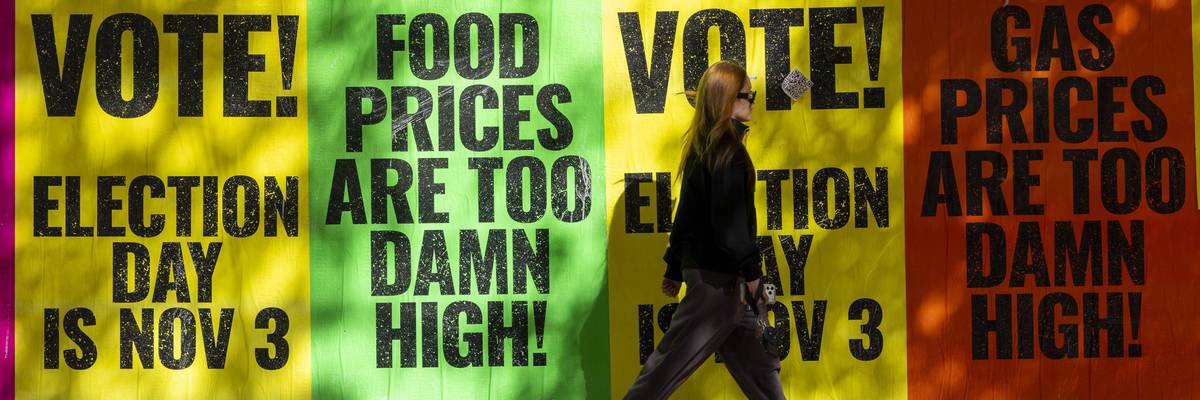
A person walks past political signs plastered along E. Broad St. on Tuesday, November 03, 2026 in Richmond, Virginia.
The Democratic wave is an opportunity to expose the machinery of corruption—and demonstrate that even the most powerful political organizations are not beyond accountability.
The much-anticipated U.S. midterm elections—so consequential, in fact, to President Donald Trump that he promised Americans $5,000 in cash if Republicans prevailed—have drawn to a close. As of writing, the much-discussed “blue tsunami” has become a political reality: Democrats have seized control of both the Senate and the House of Representatives, delivering a stunning repudiation of a president whose second administration has been nothing short of disastrous.
The political ramifications are immense. Although Democrats lack the two-thirds Senate majority necessary to convict and remove Trump following impeachment, they will soon possess something they have been deprived of for two years: the institutional power to investigate his administration, subpoena witnesses, compel testimony, and expose the inner workings of a political machine that has operated with extraordinary impunity.
It is difficult to imagine that they will not exercise it. It is also not particularly difficult to understand why the American electorate delivered this verdict. By nearly every reasonable measure of basic governance, the second Trump administration has been among the most catastrophic in modern American history.
A man who repeatedly escapes accountability may eventually conclude that accountability itself is impossible.
The administration's disastrous war with Iran, coupled with a worsening cost-of-living crisis, has alienated millions of Americans. According to national exit polling conducted by SSRS for NBC News and other major news organizations, 74% of voters considered the war a crucial or major factor in their congressional vote. Nearly nine in ten identified the cost of living as a significant electoral consideration.
Yet these failures represent only part of the story. There is also the administration’s systematic degradation of the institutions upon which American constitutional government depends: its efforts to transform the justice system into an instrument of personal and political power, its contempt for institutional independence, and its extraordinary solicitude toward powerful figures implicated in the Jeffrey Epstein scandal.
Altogether, these are symptoms of something considerably more serious: the gradual transformation of republican government into a personalist political order, in which the distinction between the public interest and the private interests of those who wield power becomes increasingly difficult to discern.
Despite the electoral repudiation, Americans must endure another two years of this presidency. A Democratic Congress will almost certainly frustrate Trump’s ambitions to enact further major legislation. But we should not underestimate his capacity to inflict considerable damage through the powers of the executive branch, nor should we assume that electoral defeat will produce moderation in a man who has spent his political career treating accountability as a personal affront.
For more than a decade, the American people—and particularly our youth—have been presented with an extraordinary moral spectacle: the apparent demonstration that crime does, in fact, pay. But it does not merely pay. Under the appropriate circumstances, it can catapult a man to the highest office in the United States and, consequently, to the summit of global political power.
It can insulate the powerful from accountability for the most grievous forms of misconduct. It can transform public notoriety into political capital, criminal convictions into badges of persecution, and the very institutions designed to administer justice into instruments for frustrating it.
As I have witnessed through my own investigative work in Kentucky, even allegations involving the gravest crimes can become entangled in political relationships, institutional failures, and networks of influence that discourage scrutiny. The lesson communicated to ordinary Americans is that justice is not a universal principle but a privilege distributed according to one’s position within the prevailing social hierarchy.
That truth is negotiable. That social standing depends less upon one’s character than upon one's capacity to cultivate powerful patrons, command attention, and impose a preferred narrative upon others; in other words, on which narcissist can demonstrate the most supply. This is the logic of a social contract that is fraying, if not already approaching rupture.
History offers numerous examples of political societies arriving at such a condition. Rarely have they emerged without undergoing some painful process of moral and institutional rejuvenation. I believe, however, there is good reason for hope.
For all its apparent strength, corruption contains the seeds of its own destruction. The habitual liar gradually loses his relationship with truth. The manipulator comes to perceive every human relationship as a contest of domination. The corrupt official, accustomed to treating public institutions as extensions of his private interests, eventually loses the capacity to distinguish legitimate authority from personal power.
Consider Trump, who has spent decades treating reality as something to be managed through the fabrication of narratives. For much of his life, this strategy has worked. But therein lies the problem: A man who repeatedly escapes accountability may eventually conclude that accountability itself is impossible. He mistakes the temporary weakness of institutions for their permanent incapacity to act.
I have observed something remarkably similar through my investigative work in Northern Kentucky, where I have spent years examining allegations of political corruption, organized criminal activity, and institutional misconduct. What has become increasingly apparent is that even the most entrenched political organizations possess vulnerabilities arising directly from the mechanisms that make them powerful.
Indeed, their greatest strengths can become their greatest weaknesses. Money becomes evidence of illicit proceeds. Coordination becomes evidence of conspiracy. The suppression of information becomes obstruction of justice. Pressure exerted upon witnesses becomes intimidation. And seemingly isolated instances of corruption, examined collectively, may reveal an organized criminal enterprise.
This is the fundamental asymmetry of corruption: The organization that once derived its power from secrecy, coordination, and mutual protection may discover that those same characteristics expose its members to collective legal liability.
The same principle applies to the Trump administration. Its political strength has depended upon personal loyalty, narrative control, and institutional intimidation. Yet under rigorous scrutiny, these relationships may become sources of extraordinary vulnerability, and, as they say, there is no honor among thieves.
The congressional investigations Democrats can now initiate will not automatically restore the rule of law. But they present an opportunity to reconstruct the factual record, expose wrongdoing, and, where evidence warrants, pursue accountability.
The stakes extend considerably beyond Trump himself. The great danger of his presidency has been the normalization of a political culture in which truth is an inconvenience, justice an instrument of factional struggle, and public office an opportunity for private enrichment. These kinds of habits do not disappear when an election is lost.
Today, the American people have now delivered an important political verdict. What remains is the considerably more difficult task of recovering the moral and institutional foundations of our republic.
Yet we need only look around us to recognize that these political arrangements are neither invincible nor permanent. We have witnessed the defeat of the Bolsonaro political dynasty in Brazil, the collapse of Viktor Orbán’s 16-year hold on power in Hungary, Israel’s growing international isolation following its devastation of Gaza, and Ukraine’s extraordinary resistance to Vladimir Putin’s war of aggression.
These struggles are far from over, and their outcomes are by no means assured. But everywhere we look, political orders built upon intimidation, deception, and the presumption of impunity are encountering resistance.
While our friends around the world are disillusioned, sometimes even furious, with what Americans have permitted to happen in our name, I suspect that much of this anger comes from something deeper: a profound disappointment in what they know we are capable of becoming.
They expect more of us, and we should expect more of ourselves. Today, the American people have now delivered an important political verdict. What remains is the considerably more difficult task of recovering the moral and institutional foundations of our republic.
That requires more than defeating one man or one political party, but confronting the corruption that has flourished around us, restoring our relationship with truth, and remembering that self-government means we have a collective responsibility to maintain the rule of law. The opportunity is now ours, so we had better get our house in order.
This country and this world are at a monumental crossroads. US voters have an opportunity to beat back the forces of fascism and confront the billionaires who are rigging the economy, our media system, and our democracy, making it increasingly impossible for ordinary people to get by. We’re not just talking about the election. We’re talking about what must be done once these fascist elements are vanquished from power. We need a bolder set of solutions than what either major party has so far been willing to offer and a working-class movement ready to fight like hell for it. Trump didn't emerge from nowhere. The conditions that fueled MAGA authoritarianism were created by decades of radical neoliberal economic policies and a corrupt political system dominated by corporate interests. They slashed taxes on the super-rich, promising that the benefits would trickle down. They said giveaways to the corporate titans would make life more affordable for the rest of us. It was all bullshit. And when a bitter, betrayed populace searches for someone to blame, right-wing demagogues have little trouble finding scapegoats. People know when they're being lied to, but you won't hear any of this from the corporate media. Only independent journalism—powered and funded by people who believe in building a better world—can deliver truly trustworthy daily news. If you share our vision, please contribute whatever you can to sustain our work. |
The much-anticipated U.S. midterm elections—so consequential, in fact, to President Donald Trump that he promised Americans $5,000 in cash if Republicans prevailed—have drawn to a close. As of writing, the much-discussed “blue tsunami” has become a political reality: Democrats have seized control of both the Senate and the House of Representatives, delivering a stunning repudiation of a president whose second administration has been nothing short of disastrous.
The political ramifications are immense. Although Democrats lack the two-thirds Senate majority necessary to convict and remove Trump following impeachment, they will soon possess something they have been deprived of for two years: the institutional power to investigate his administration, subpoena witnesses, compel testimony, and expose the inner workings of a political machine that has operated with extraordinary impunity.
It is difficult to imagine that they will not exercise it. It is also not particularly difficult to understand why the American electorate delivered this verdict. By nearly every reasonable measure of basic governance, the second Trump administration has been among the most catastrophic in modern American history.
A man who repeatedly escapes accountability may eventually conclude that accountability itself is impossible.
The administration's disastrous war with Iran, coupled with a worsening cost-of-living crisis, has alienated millions of Americans. According to national exit polling conducted by SSRS for NBC News and other major news organizations, 74% of voters considered the war a crucial or major factor in their congressional vote. Nearly nine in ten identified the cost of living as a significant electoral consideration.
Yet these failures represent only part of the story. There is also the administration’s systematic degradation of the institutions upon which American constitutional government depends: its efforts to transform the justice system into an instrument of personal and political power, its contempt for institutional independence, and its extraordinary solicitude toward powerful figures implicated in the Jeffrey Epstein scandal.
Altogether, these are symptoms of something considerably more serious: the gradual transformation of republican government into a personalist political order, in which the distinction between the public interest and the private interests of those who wield power becomes increasingly difficult to discern.
Despite the electoral repudiation, Americans must endure another two years of this presidency. A Democratic Congress will almost certainly frustrate Trump’s ambitions to enact further major legislation. But we should not underestimate his capacity to inflict considerable damage through the powers of the executive branch, nor should we assume that electoral defeat will produce moderation in a man who has spent his political career treating accountability as a personal affront.
For more than a decade, the American people—and particularly our youth—have been presented with an extraordinary moral spectacle: the apparent demonstration that crime does, in fact, pay. But it does not merely pay. Under the appropriate circumstances, it can catapult a man to the highest office in the United States and, consequently, to the summit of global political power.
It can insulate the powerful from accountability for the most grievous forms of misconduct. It can transform public notoriety into political capital, criminal convictions into badges of persecution, and the very institutions designed to administer justice into instruments for frustrating it.
As I have witnessed through my own investigative work in Kentucky, even allegations involving the gravest crimes can become entangled in political relationships, institutional failures, and networks of influence that discourage scrutiny. The lesson communicated to ordinary Americans is that justice is not a universal principle but a privilege distributed according to one’s position within the prevailing social hierarchy.
That truth is negotiable. That social standing depends less upon one’s character than upon one's capacity to cultivate powerful patrons, command attention, and impose a preferred narrative upon others; in other words, on which narcissist can demonstrate the most supply. This is the logic of a social contract that is fraying, if not already approaching rupture.
History offers numerous examples of political societies arriving at such a condition. Rarely have they emerged without undergoing some painful process of moral and institutional rejuvenation. I believe, however, there is good reason for hope.
For all its apparent strength, corruption contains the seeds of its own destruction. The habitual liar gradually loses his relationship with truth. The manipulator comes to perceive every human relationship as a contest of domination. The corrupt official, accustomed to treating public institutions as extensions of his private interests, eventually loses the capacity to distinguish legitimate authority from personal power.
Consider Trump, who has spent decades treating reality as something to be managed through the fabrication of narratives. For much of his life, this strategy has worked. But therein lies the problem: A man who repeatedly escapes accountability may eventually conclude that accountability itself is impossible. He mistakes the temporary weakness of institutions for their permanent incapacity to act.
I have observed something remarkably similar through my investigative work in Northern Kentucky, where I have spent years examining allegations of political corruption, organized criminal activity, and institutional misconduct. What has become increasingly apparent is that even the most entrenched political organizations possess vulnerabilities arising directly from the mechanisms that make them powerful.
Indeed, their greatest strengths can become their greatest weaknesses. Money becomes evidence of illicit proceeds. Coordination becomes evidence of conspiracy. The suppression of information becomes obstruction of justice. Pressure exerted upon witnesses becomes intimidation. And seemingly isolated instances of corruption, examined collectively, may reveal an organized criminal enterprise.
This is the fundamental asymmetry of corruption: The organization that once derived its power from secrecy, coordination, and mutual protection may discover that those same characteristics expose its members to collective legal liability.
The same principle applies to the Trump administration. Its political strength has depended upon personal loyalty, narrative control, and institutional intimidation. Yet under rigorous scrutiny, these relationships may become sources of extraordinary vulnerability, and, as they say, there is no honor among thieves.
The congressional investigations Democrats can now initiate will not automatically restore the rule of law. But they present an opportunity to reconstruct the factual record, expose wrongdoing, and, where evidence warrants, pursue accountability.
The stakes extend considerably beyond Trump himself. The great danger of his presidency has been the normalization of a political culture in which truth is an inconvenience, justice an instrument of factional struggle, and public office an opportunity for private enrichment. These kinds of habits do not disappear when an election is lost.
Today, the American people have now delivered an important political verdict. What remains is the considerably more difficult task of recovering the moral and institutional foundations of our republic.
Yet we need only look around us to recognize that these political arrangements are neither invincible nor permanent. We have witnessed the defeat of the Bolsonaro political dynasty in Brazil, the collapse of Viktor Orbán’s 16-year hold on power in Hungary, Israel’s growing international isolation following its devastation of Gaza, and Ukraine’s extraordinary resistance to Vladimir Putin’s war of aggression.
These struggles are far from over, and their outcomes are by no means assured. But everywhere we look, political orders built upon intimidation, deception, and the presumption of impunity are encountering resistance.
While our friends around the world are disillusioned, sometimes even furious, with what Americans have permitted to happen in our name, I suspect that much of this anger comes from something deeper: a profound disappointment in what they know we are capable of becoming.
They expect more of us, and we should expect more of ourselves. Today, the American people have now delivered an important political verdict. What remains is the considerably more difficult task of recovering the moral and institutional foundations of our republic.
That requires more than defeating one man or one political party, but confronting the corruption that has flourished around us, restoring our relationship with truth, and remembering that self-government means we have a collective responsibility to maintain the rule of law. The opportunity is now ours, so we had better get our house in order.