5
#000000
#FFFFFF
To donate by check, phone, or other method, see our More Ways to Give page.
Daily news & progressive opinion—funded by the people, not the corporations—delivered straight to your inbox.

A close-up shows a woman shopping at a convenience store and checking her receipt while exiting.
New technology is enabling companies to reinvent the rip-off right under our noses; we need new laws to protect us.
Every day, companies find better, and sneakier, ways to reach deeper into our wallets.
They trap us in subscriptions, bury fees until checkout, use algorithms to collude with competitors, and mine our personal data to charge us the most we’re willing to pay. With each trick and tactic, companies are reinventing the rip-off right under our noses. And, as families strain under the rising cost of living, these practices are coming for every line of the household budget.
Algorithmic price-fixing is one of the most powerful tools in that arsenal. Price-fixing no longer requires a smoky back room. Today, technology can do CEOs’ dirty work for them. From rent to gasoline, this algorithmic price-fixing playbook is wreaking havoc on family budgets.
Putting food on the table and a roof over your head is hard enough without greedy corporations squeezing you for all you’re worth.
In June, a class-action lawsuit in California alleged that AI-powered pricing tool Kalibrate helped more than 1,700 gas stations coordinate and inflate prices at the pump. Drivers paid a hefty price, as Kalibrate allegedly pushed gas prices up by as much as 30 cents a gallon in some markets—a roughly $4 billion dollar dent in Californians’ budgets. Similar schemes could well be underway in other states.
Meanwhile, in the rental market, the blockbuster RealPage lawsuit alleged that the company’s leasing software pooled landlords’ data and spit out rent recommendations that helped landlords raise rents in lockstep. In some buildings using RealPage, rents jumped by as much as 33% in a single year—more than eight times the increase in a comparable building that didn’t use the software.
Another weapon in the gouger’s arsenal is dynamic pricing. Americans are familiar with prices that fluctuate when supply is scarce—say, seats on a plane or rooms at a hotel. But today, companies are pushing the practice well beyond contexts of scarcity.
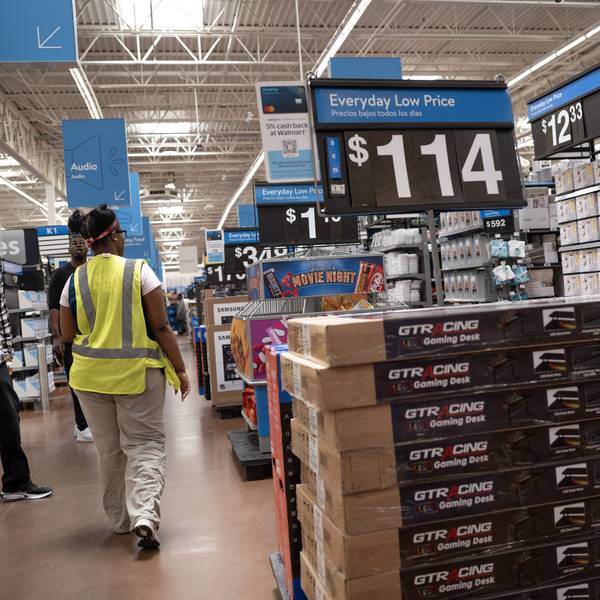
For example, shoppers might find that sunscreen and bottled water have changed prices overnight in Las Vegas hotel lobby shops. And as stores like Walmart and Kroger install electronic shelf labels across thousands of stores, the infrastructure for high-frequency dynamic pricing in brick and mortar shopping is taking shape.
And companies aren’t just changing prices at high speed, they’re changing prices based on who’s shopping. Surveillance pricing, or the tactic of using personal data to squeeze each consumer to their breaking point, is being deployed all across the market.
Shoppers who are near a Target, for example, have been charged higher prices than those shopping at home. And on platforms like Booking.com, users from wealthier cities may see higher prices for identical hotel rooms. Companies have stopped merely pricing products. Now, they are pricing people, too.
Shoppers know the deck is stacked in corporations’ favor, and they’re tired of being spied on and ripped off.
A reckoning over what Americans are owed in the modern marketplace is long overdue. The market has changed at warp speed, but our guardrails haven’t kept up. Without new protections, the price tag we’ve taken for granted for more than 100 years is at risk of extinction.
In my new book Gouged, I offer one path forward: the Shoppers’ Bill of Rights.
From ensuring that the price you see is the price you pay to banning surveillance pricing to giving mom and pops on Main Street a fair shot against the big box stores and requiring AI assistants to act in shoppers’ best interest, it lays the baseline for a fair marketplace, putting simple guardrails around the technologies, tricks, and traps that companies are using to gouge us.
Lawmakers in some states are already taking strides independently, with roughly 90 bills introduced to counter these unfair pricing tactics in just the last two years.
But we shouldn’t settle for leaving shoppers vulnerable if they step across the street or cross state lines. Putting food on the table and a roof over your head is hard enough without greedy corporations squeezing you for all you’re worth. A Shoppers’ Bill of Rights would be a good place to start to restore the basic bargain between shoppers and corporations.
Dear Common Dreams reader, It’s been nearly 30 years since I co-founded Common Dreams with my late wife, Lina Newhouser. We had the radical notion that journalism should serve the public good, not corporate profits. It was clear to us from the outset what it would take to build such a project. No paid advertisements. No corporate sponsors. No millionaire publisher telling us what to think or do. Many people said we wouldn't last a year, but we proved those doubters wrong. Together with a tremendous team of journalists and dedicated staff, we built an independent media outlet free from the constraints of profits and corporate control. Our mission has always been simple: To inform. To inspire. To ignite change for the common good. Building Common Dreams was not easy. Our survival was never guaranteed. When you take on the most powerful forces—Wall Street greed, fossil fuel industry destruction, Big Tech lobbyists, and uber-rich oligarchs who have spent billions upon billions rigging the economy and democracy in their favor—the only bulwark you have is supporters who believe in your work. But here’s the urgent message from me today. It's never been this bad out there. And it's never been this hard to keep us going. At the very moment Common Dreams is most needed, the threats we face are intensifying. We need your support now more than ever. We don't accept corporate advertising and never will. We don't have a paywall because we don't think people should be blocked from critical news based on their ability to pay. Everything we do is funded by the donations of readers like you. When everyone does the little they can afford, we are strong. But if that support retreats or dries up, so do we. Will you donate now to make sure Common Dreams not only survives but thrives? —Craig Brown, Co-founder |
Every day, companies find better, and sneakier, ways to reach deeper into our wallets.
They trap us in subscriptions, bury fees until checkout, use algorithms to collude with competitors, and mine our personal data to charge us the most we’re willing to pay. With each trick and tactic, companies are reinventing the rip-off right under our noses. And, as families strain under the rising cost of living, these practices are coming for every line of the household budget.
Algorithmic price-fixing is one of the most powerful tools in that arsenal. Price-fixing no longer requires a smoky back room. Today, technology can do CEOs’ dirty work for them. From rent to gasoline, this algorithmic price-fixing playbook is wreaking havoc on family budgets.
Putting food on the table and a roof over your head is hard enough without greedy corporations squeezing you for all you’re worth.
In June, a class-action lawsuit in California alleged that AI-powered pricing tool Kalibrate helped more than 1,700 gas stations coordinate and inflate prices at the pump. Drivers paid a hefty price, as Kalibrate allegedly pushed gas prices up by as much as 30 cents a gallon in some markets—a roughly $4 billion dollar dent in Californians’ budgets. Similar schemes could well be underway in other states.
Meanwhile, in the rental market, the blockbuster RealPage lawsuit alleged that the company’s leasing software pooled landlords’ data and spit out rent recommendations that helped landlords raise rents in lockstep. In some buildings using RealPage, rents jumped by as much as 33% in a single year—more than eight times the increase in a comparable building that didn’t use the software.
Another weapon in the gouger’s arsenal is dynamic pricing. Americans are familiar with prices that fluctuate when supply is scarce—say, seats on a plane or rooms at a hotel. But today, companies are pushing the practice well beyond contexts of scarcity.
For example, shoppers might find that sunscreen and bottled water have changed prices overnight in Las Vegas hotel lobby shops. And as stores like Walmart and Kroger install electronic shelf labels across thousands of stores, the infrastructure for high-frequency dynamic pricing in brick and mortar shopping is taking shape.
And companies aren’t just changing prices at high speed, they’re changing prices based on who’s shopping. Surveillance pricing, or the tactic of using personal data to squeeze each consumer to their breaking point, is being deployed all across the market.
Shoppers who are near a Target, for example, have been charged higher prices than those shopping at home. And on platforms like Booking.com, users from wealthier cities may see higher prices for identical hotel rooms. Companies have stopped merely pricing products. Now, they are pricing people, too.
Shoppers know the deck is stacked in corporations’ favor, and they’re tired of being spied on and ripped off.
A reckoning over what Americans are owed in the modern marketplace is long overdue. The market has changed at warp speed, but our guardrails haven’t kept up. Without new protections, the price tag we’ve taken for granted for more than 100 years is at risk of extinction.
In my new book Gouged, I offer one path forward: the Shoppers’ Bill of Rights.
From ensuring that the price you see is the price you pay to banning surveillance pricing to giving mom and pops on Main Street a fair shot against the big box stores and requiring AI assistants to act in shoppers’ best interest, it lays the baseline for a fair marketplace, putting simple guardrails around the technologies, tricks, and traps that companies are using to gouge us.
Lawmakers in some states are already taking strides independently, with roughly 90 bills introduced to counter these unfair pricing tactics in just the last two years.
But we shouldn’t settle for leaving shoppers vulnerable if they step across the street or cross state lines. Putting food on the table and a roof over your head is hard enough without greedy corporations squeezing you for all you’re worth. A Shoppers’ Bill of Rights would be a good place to start to restore the basic bargain between shoppers and corporations.
Every day, companies find better, and sneakier, ways to reach deeper into our wallets.
They trap us in subscriptions, bury fees until checkout, use algorithms to collude with competitors, and mine our personal data to charge us the most we’re willing to pay. With each trick and tactic, companies are reinventing the rip-off right under our noses. And, as families strain under the rising cost of living, these practices are coming for every line of the household budget.
Algorithmic price-fixing is one of the most powerful tools in that arsenal. Price-fixing no longer requires a smoky back room. Today, technology can do CEOs’ dirty work for them. From rent to gasoline, this algorithmic price-fixing playbook is wreaking havoc on family budgets.
Putting food on the table and a roof over your head is hard enough without greedy corporations squeezing you for all you’re worth.
In June, a class-action lawsuit in California alleged that AI-powered pricing tool Kalibrate helped more than 1,700 gas stations coordinate and inflate prices at the pump. Drivers paid a hefty price, as Kalibrate allegedly pushed gas prices up by as much as 30 cents a gallon in some markets—a roughly $4 billion dollar dent in Californians’ budgets. Similar schemes could well be underway in other states.
Meanwhile, in the rental market, the blockbuster RealPage lawsuit alleged that the company’s leasing software pooled landlords’ data and spit out rent recommendations that helped landlords raise rents in lockstep. In some buildings using RealPage, rents jumped by as much as 33% in a single year—more than eight times the increase in a comparable building that didn’t use the software.
Another weapon in the gouger’s arsenal is dynamic pricing. Americans are familiar with prices that fluctuate when supply is scarce—say, seats on a plane or rooms at a hotel. But today, companies are pushing the practice well beyond contexts of scarcity.
For example, shoppers might find that sunscreen and bottled water have changed prices overnight in Las Vegas hotel lobby shops. And as stores like Walmart and Kroger install electronic shelf labels across thousands of stores, the infrastructure for high-frequency dynamic pricing in brick and mortar shopping is taking shape.
And companies aren’t just changing prices at high speed, they’re changing prices based on who’s shopping. Surveillance pricing, or the tactic of using personal data to squeeze each consumer to their breaking point, is being deployed all across the market.
Shoppers who are near a Target, for example, have been charged higher prices than those shopping at home. And on platforms like Booking.com, users from wealthier cities may see higher prices for identical hotel rooms. Companies have stopped merely pricing products. Now, they are pricing people, too.
Shoppers know the deck is stacked in corporations’ favor, and they’re tired of being spied on and ripped off.
A reckoning over what Americans are owed in the modern marketplace is long overdue. The market has changed at warp speed, but our guardrails haven’t kept up. Without new protections, the price tag we’ve taken for granted for more than 100 years is at risk of extinction.
In my new book Gouged, I offer one path forward: the Shoppers’ Bill of Rights.
From ensuring that the price you see is the price you pay to banning surveillance pricing to giving mom and pops on Main Street a fair shot against the big box stores and requiring AI assistants to act in shoppers’ best interest, it lays the baseline for a fair marketplace, putting simple guardrails around the technologies, tricks, and traps that companies are using to gouge us.
Lawmakers in some states are already taking strides independently, with roughly 90 bills introduced to counter these unfair pricing tactics in just the last two years.
But we shouldn’t settle for leaving shoppers vulnerable if they step across the street or cross state lines. Putting food on the table and a roof over your head is hard enough without greedy corporations squeezing you for all you’re worth. A Shoppers’ Bill of Rights would be a good place to start to restore the basic bargain between shoppers and corporations.