SUBSCRIBE TO OUR FREE NEWSLETTER
Daily news & progressive opinion—funded by the people, not the corporations—delivered straight to your inbox.
5
#000000
#FFFFFF
To donate by check, phone, or other method, see our More Ways to Give page.
Daily news & progressive opinion—funded by the people, not the corporations—delivered straight to your inbox.
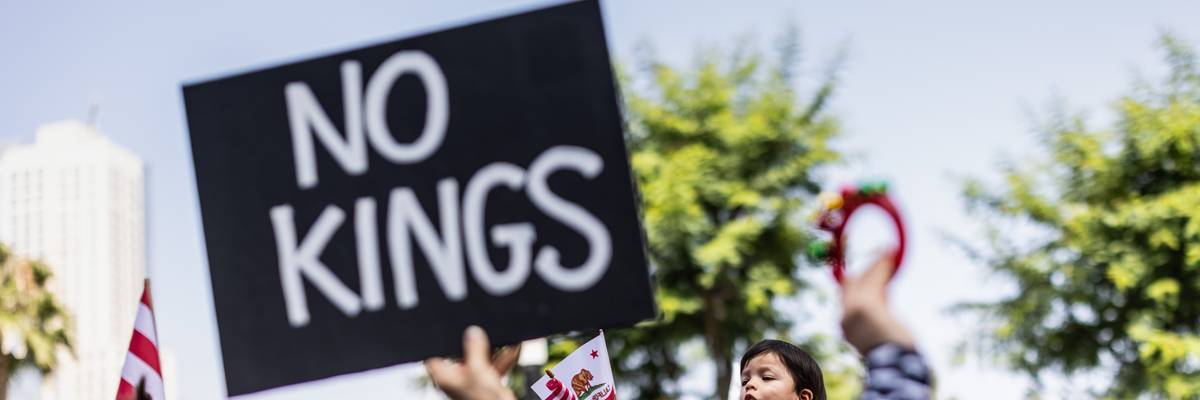
Protestors march during an anti-Trump "No Kings Day" demonstration in a city that has been the focus of protests against President Donald Trump's immigration raids on June 14, 2025 in downtown Los Angeles, California.
What should or can we all do next? And beyond stopping or toppling Trump, what is the larger goal and vision?
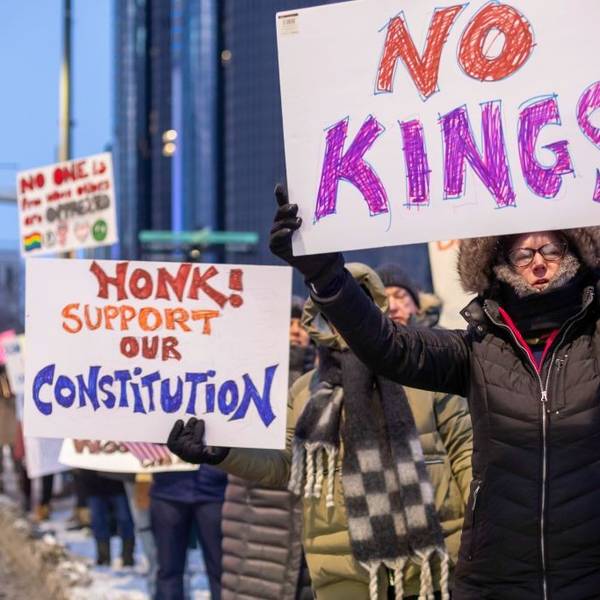
The June 14 “No Kings Day” outpouring was truly historic. An estimated 5 million people (some estimates from organizers run closer to 10 million) flooded the streets in more than 2,100 cities and towns across the nation, peacefully expressing their outrage at President Donald Trump’s unrelenting assaults on immigrants, democracy, the Constitution, science, diversity, government services, and more.
To paraphrase the target of this uprising, we’ve rarely seen anything like this. “No Kings Day” protests, taking place in all 50 states, including massive crowds in Red states, may well be America’s biggest single day of protest against a U.S. president and his policies. (By some accounts, “No Kings Day” ranks third among all U.S. protests for a single-day turnout.)
Throughout the next day, the internet was wallpapered with photographs of huge red-state crowds, everywhere: Sugarland, Texas. Blount County, Tennessee. Omaha, Nebraska. Hot Springs, Arkansas. Jackson, Mississippi. Indianapolis, Indiana. Birmingham, Alabama. Everywhere.
This country will need more direct action and nonviolent civil disobedience, in far greater numbers, to stop or slow Trump’s grotesquely harmful and destructive agenda.
This immense upwelling provided a thunderous rebuke of Trump’s fascistic conjoining of his birthday and the U.S. Army’s military parade, replete with tanks rolling through the nation’s capital, an autocratic-style show of force. It was also a mammoth repudiation of Trump’s fascistic, Constitution-defying deployment of the Marines and the California National Guard to quell protests in Los Angeles.
If anyone doubts Trump’s push toward autocracy, consider his comments warning against any “No Kings” protests in Washington, D. C. during his military parade:
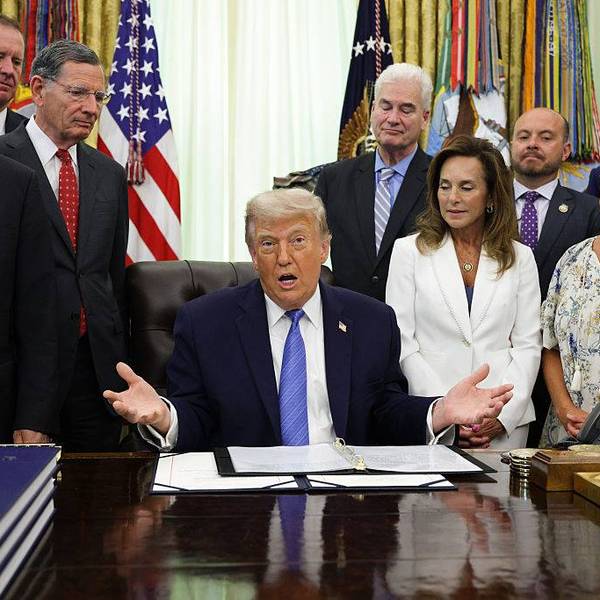
“We’re going to celebrate big on Saturday,” Trump told reporters in the Oval Office right after he spoke about sending the National Guard and Marines to Los Angeles to quell protests there. “If any protesters want to come out, they will be met with very big force.”
Veterans decried Trump’s threats as contradicting the very principles soldiers are told to defend. Michael T. McPhearson, a veteran and director of Veterans for Peace and a protest organizer, told media, “President Trump threatened Americans coming to exercise their first amendment rights would be met with ‘great force’. We are the actual people who put uniforms on because we believe in the freedoms this country is supposed to be about, and we will not be intimidated into silence.”
There is no telling what’s next, but “No Kings” seems poised to be an important turning point in the rising nationwide resistance to Trump. While awe-inspiring protests in New York City, Los Angeles, and San Francisco exceeded expectations, even more portentous were the jam-packed streets and squares of red-state cities and towns.
These protests were no doubt fertilized by the “Against Oligarchy” tour of Sen. Bernie Sanders (I-Vt.) and Rep. Alexandria Ocasio-Cortez (D-N.Y.), who drew vast crowds of Americans fed up with Trump’s agenda of enriching the rich while scapegoating immigrants and poor people.
Robert Reich encapsulated the absurd contradictions neatly, writing: “Trump threw himself a $45M military parade birthday bash while trying to pass the biggest healthcare and SNAP cuts in history—all to pay for tax cuts for the ultra-wealthy. This is what oligarchy looks like.”
With the growing red-state upwellings, Republican politicians must now take notice, as growing portions of their own voters are displeased with Trump’s chaotic and autocratic ways. Any loosening or erosion of Trump’s tenuous hold over Congress could throw wrenches in his agenda by peeling away votes.
How do we build on this potent “Kings Day” momentum? What should or can we all do next? And beyond stopping or toppling Trump, what is the larger goal and vision?
The answers are still evolving. But coalitions are congealing, more and more Americans are rising up, and in addition to outrage there is an unmistakable politics of love and solidarity at the protests—from mutual aid to various expressions of a progressive patriotism, to desperately clarion calls for love over hatred and division.
Still, amid the excitement and inspiration, we must continue asking: What happens the day after the protest? Where is it all going, and how can we harness and organize this tremendous rising energy and impassioned concern? The Democrats remain adrift and often bizarrely bereft and still don’t show much clarity or momentum beyond their fairly unified opposition to Trump. Democrats’ poll numbers remain dreary, and despite the skyrocketing rage about Trump and his policies, their midterms prospects range from dubious to unclear.
“No Kings Day” was historic and could be a turning point in the proliferating resistance to Trump’s fascism and bigotry. In the view of many, including this writer, it is time to start organizing toward a truly effective General Strike, or at least a less-universal yet still huge “generalized strike” that can still have significant impact. There have been various random calls for this on social media, of course, but they haven’t been organized or well-thought-out. A real General Strike or generalized strike must involve major labor unions, supported and amplified by the many social and political movements arrayed against this regime.
There is a great deal to say about the history, strategies, and organizing of general strikes. The idea can’t be taken blithely and must be planned and coordinated over months to have a shot at being effective. There are ways to shut down ‘business as usual’ while maintaining critical, life-preserving services and public safety. A mass social strike involving at least large portions of organized labor can make a powerful statement about not only our numbers but our commitment to stopping Trump.
Trump’s fascistic crackdowns are growing more intense, horrifying, and horrendous by the day and week. Several major political opponents have now been either arrested or attacked. We saw Sen. Alex Padilla’s (D-Calif.) violent removal by Homeland Security agents for simply shouting questions at a press conference; before that, Newark Mayor Ras Baraka and U.S. Rep. LaMonica McIver (D-N.J.) were arrested for attempting to inspect an Immigration and Customs Enforcement (ICE) facility; and on Tuesday, Trump’s ICE (including some wearing face masks, according to reports) arrested and detained New York City Comptroller Brad Lander. The country will need more mass actions that, while peaceful and nonviolent, go beyond protest. Things will likely get worse in coming days, weeks, and months.
This country will need more direct action and nonviolent civil disobedience, in far greater numbers, to stop or slow Trump’s grotesquely harmful and destructive agenda.
With “No Kings Day,” the resistance movements have arrived. We many millions rained on Trump’s little, failed military parade (photos showed Trump watching glumly across from empty bleachers, and he reportedly reamed out Defense Secretary Hegseth for the dismal event).
What we do now and next with this tremendous groundswell of outrage, concern, and love, is up to all of us. And as Trump’s fascistic flailing intensifies, we will truly need all of us. No Kings. Just we, the people.
Dear Common Dreams reader, It’s been nearly 30 years since I co-founded Common Dreams with my late wife, Lina Newhouser. We had the radical notion that journalism should serve the public good, not corporate profits. It was clear to us from the outset what it would take to build such a project. No paid advertisements. No corporate sponsors. No millionaire publisher telling us what to think or do. Many people said we wouldn't last a year, but we proved those doubters wrong. Together with a tremendous team of journalists and dedicated staff, we built an independent media outlet free from the constraints of profits and corporate control. Our mission has always been simple: To inform. To inspire. To ignite change for the common good. Building Common Dreams was not easy. Our survival was never guaranteed. When you take on the most powerful forces—Wall Street greed, fossil fuel industry destruction, Big Tech lobbyists, and uber-rich oligarchs who have spent billions upon billions rigging the economy and democracy in their favor—the only bulwark you have is supporters who believe in your work. But here’s the urgent message from me today. It's never been this bad out there. And it's never been this hard to keep us going. At the very moment Common Dreams is most needed, the threats we face are intensifying. We need your support now more than ever. We don't accept corporate advertising and never will. We don't have a paywall because we don't think people should be blocked from critical news based on their ability to pay. Everything we do is funded by the donations of readers like you. When everyone does the little they can afford, we are strong. But if that support retreats or dries up, so do we. Will you donate now to make sure Common Dreams not only survives but thrives? —Craig Brown, Co-founder |
The June 14 “No Kings Day” outpouring was truly historic. An estimated 5 million people (some estimates from organizers run closer to 10 million) flooded the streets in more than 2,100 cities and towns across the nation, peacefully expressing their outrage at President Donald Trump’s unrelenting assaults on immigrants, democracy, the Constitution, science, diversity, government services, and more.
To paraphrase the target of this uprising, we’ve rarely seen anything like this. “No Kings Day” protests, taking place in all 50 states, including massive crowds in Red states, may well be America’s biggest single day of protest against a U.S. president and his policies. (By some accounts, “No Kings Day” ranks third among all U.S. protests for a single-day turnout.)
Throughout the next day, the internet was wallpapered with photographs of huge red-state crowds, everywhere: Sugarland, Texas. Blount County, Tennessee. Omaha, Nebraska. Hot Springs, Arkansas. Jackson, Mississippi. Indianapolis, Indiana. Birmingham, Alabama. Everywhere.
This country will need more direct action and nonviolent civil disobedience, in far greater numbers, to stop or slow Trump’s grotesquely harmful and destructive agenda.
This immense upwelling provided a thunderous rebuke of Trump’s fascistic conjoining of his birthday and the U.S. Army’s military parade, replete with tanks rolling through the nation’s capital, an autocratic-style show of force. It was also a mammoth repudiation of Trump’s fascistic, Constitution-defying deployment of the Marines and the California National Guard to quell protests in Los Angeles.
If anyone doubts Trump’s push toward autocracy, consider his comments warning against any “No Kings” protests in Washington, D. C. during his military parade:
“We’re going to celebrate big on Saturday,” Trump told reporters in the Oval Office right after he spoke about sending the National Guard and Marines to Los Angeles to quell protests there. “If any protesters want to come out, they will be met with very big force.”
Veterans decried Trump’s threats as contradicting the very principles soldiers are told to defend. Michael T. McPhearson, a veteran and director of Veterans for Peace and a protest organizer, told media, “President Trump threatened Americans coming to exercise their first amendment rights would be met with ‘great force’. We are the actual people who put uniforms on because we believe in the freedoms this country is supposed to be about, and we will not be intimidated into silence.”
There is no telling what’s next, but “No Kings” seems poised to be an important turning point in the rising nationwide resistance to Trump. While awe-inspiring protests in New York City, Los Angeles, and San Francisco exceeded expectations, even more portentous were the jam-packed streets and squares of red-state cities and towns.
These protests were no doubt fertilized by the “Against Oligarchy” tour of Sen. Bernie Sanders (I-Vt.) and Rep. Alexandria Ocasio-Cortez (D-N.Y.), who drew vast crowds of Americans fed up with Trump’s agenda of enriching the rich while scapegoating immigrants and poor people.
Robert Reich encapsulated the absurd contradictions neatly, writing: “Trump threw himself a $45M military parade birthday bash while trying to pass the biggest healthcare and SNAP cuts in history—all to pay for tax cuts for the ultra-wealthy. This is what oligarchy looks like.”
With the growing red-state upwellings, Republican politicians must now take notice, as growing portions of their own voters are displeased with Trump’s chaotic and autocratic ways. Any loosening or erosion of Trump’s tenuous hold over Congress could throw wrenches in his agenda by peeling away votes.
How do we build on this potent “Kings Day” momentum? What should or can we all do next? And beyond stopping or toppling Trump, what is the larger goal and vision?
The answers are still evolving. But coalitions are congealing, more and more Americans are rising up, and in addition to outrage there is an unmistakable politics of love and solidarity at the protests—from mutual aid to various expressions of a progressive patriotism, to desperately clarion calls for love over hatred and division.
Still, amid the excitement and inspiration, we must continue asking: What happens the day after the protest? Where is it all going, and how can we harness and organize this tremendous rising energy and impassioned concern? The Democrats remain adrift and often bizarrely bereft and still don’t show much clarity or momentum beyond their fairly unified opposition to Trump. Democrats’ poll numbers remain dreary, and despite the skyrocketing rage about Trump and his policies, their midterms prospects range from dubious to unclear.
“No Kings Day” was historic and could be a turning point in the proliferating resistance to Trump’s fascism and bigotry. In the view of many, including this writer, it is time to start organizing toward a truly effective General Strike, or at least a less-universal yet still huge “generalized strike” that can still have significant impact. There have been various random calls for this on social media, of course, but they haven’t been organized or well-thought-out. A real General Strike or generalized strike must involve major labor unions, supported and amplified by the many social and political movements arrayed against this regime.
There is a great deal to say about the history, strategies, and organizing of general strikes. The idea can’t be taken blithely and must be planned and coordinated over months to have a shot at being effective. There are ways to shut down ‘business as usual’ while maintaining critical, life-preserving services and public safety. A mass social strike involving at least large portions of organized labor can make a powerful statement about not only our numbers but our commitment to stopping Trump.
Trump’s fascistic crackdowns are growing more intense, horrifying, and horrendous by the day and week. Several major political opponents have now been either arrested or attacked. We saw Sen. Alex Padilla’s (D-Calif.) violent removal by Homeland Security agents for simply shouting questions at a press conference; before that, Newark Mayor Ras Baraka and U.S. Rep. LaMonica McIver (D-N.J.) were arrested for attempting to inspect an Immigration and Customs Enforcement (ICE) facility; and on Tuesday, Trump’s ICE (including some wearing face masks, according to reports) arrested and detained New York City Comptroller Brad Lander. The country will need more mass actions that, while peaceful and nonviolent, go beyond protest. Things will likely get worse in coming days, weeks, and months.
This country will need more direct action and nonviolent civil disobedience, in far greater numbers, to stop or slow Trump’s grotesquely harmful and destructive agenda.
With “No Kings Day,” the resistance movements have arrived. We many millions rained on Trump’s little, failed military parade (photos showed Trump watching glumly across from empty bleachers, and he reportedly reamed out Defense Secretary Hegseth for the dismal event).
What we do now and next with this tremendous groundswell of outrage, concern, and love, is up to all of us. And as Trump’s fascistic flailing intensifies, we will truly need all of us. No Kings. Just we, the people.
The June 14 “No Kings Day” outpouring was truly historic. An estimated 5 million people (some estimates from organizers run closer to 10 million) flooded the streets in more than 2,100 cities and towns across the nation, peacefully expressing their outrage at President Donald Trump’s unrelenting assaults on immigrants, democracy, the Constitution, science, diversity, government services, and more.
To paraphrase the target of this uprising, we’ve rarely seen anything like this. “No Kings Day” protests, taking place in all 50 states, including massive crowds in Red states, may well be America’s biggest single day of protest against a U.S. president and his policies. (By some accounts, “No Kings Day” ranks third among all U.S. protests for a single-day turnout.)
Throughout the next day, the internet was wallpapered with photographs of huge red-state crowds, everywhere: Sugarland, Texas. Blount County, Tennessee. Omaha, Nebraska. Hot Springs, Arkansas. Jackson, Mississippi. Indianapolis, Indiana. Birmingham, Alabama. Everywhere.
This country will need more direct action and nonviolent civil disobedience, in far greater numbers, to stop or slow Trump’s grotesquely harmful and destructive agenda.
This immense upwelling provided a thunderous rebuke of Trump’s fascistic conjoining of his birthday and the U.S. Army’s military parade, replete with tanks rolling through the nation’s capital, an autocratic-style show of force. It was also a mammoth repudiation of Trump’s fascistic, Constitution-defying deployment of the Marines and the California National Guard to quell protests in Los Angeles.
If anyone doubts Trump’s push toward autocracy, consider his comments warning against any “No Kings” protests in Washington, D. C. during his military parade:
“We’re going to celebrate big on Saturday,” Trump told reporters in the Oval Office right after he spoke about sending the National Guard and Marines to Los Angeles to quell protests there. “If any protesters want to come out, they will be met with very big force.”
Veterans decried Trump’s threats as contradicting the very principles soldiers are told to defend. Michael T. McPhearson, a veteran and director of Veterans for Peace and a protest organizer, told media, “President Trump threatened Americans coming to exercise their first amendment rights would be met with ‘great force’. We are the actual people who put uniforms on because we believe in the freedoms this country is supposed to be about, and we will not be intimidated into silence.”
There is no telling what’s next, but “No Kings” seems poised to be an important turning point in the rising nationwide resistance to Trump. While awe-inspiring protests in New York City, Los Angeles, and San Francisco exceeded expectations, even more portentous were the jam-packed streets and squares of red-state cities and towns.
These protests were no doubt fertilized by the “Against Oligarchy” tour of Sen. Bernie Sanders (I-Vt.) and Rep. Alexandria Ocasio-Cortez (D-N.Y.), who drew vast crowds of Americans fed up with Trump’s agenda of enriching the rich while scapegoating immigrants and poor people.
Robert Reich encapsulated the absurd contradictions neatly, writing: “Trump threw himself a $45M military parade birthday bash while trying to pass the biggest healthcare and SNAP cuts in history—all to pay for tax cuts for the ultra-wealthy. This is what oligarchy looks like.”
With the growing red-state upwellings, Republican politicians must now take notice, as growing portions of their own voters are displeased with Trump’s chaotic and autocratic ways. Any loosening or erosion of Trump’s tenuous hold over Congress could throw wrenches in his agenda by peeling away votes.
How do we build on this potent “Kings Day” momentum? What should or can we all do next? And beyond stopping or toppling Trump, what is the larger goal and vision?
The answers are still evolving. But coalitions are congealing, more and more Americans are rising up, and in addition to outrage there is an unmistakable politics of love and solidarity at the protests—from mutual aid to various expressions of a progressive patriotism, to desperately clarion calls for love over hatred and division.
Still, amid the excitement and inspiration, we must continue asking: What happens the day after the protest? Where is it all going, and how can we harness and organize this tremendous rising energy and impassioned concern? The Democrats remain adrift and often bizarrely bereft and still don’t show much clarity or momentum beyond their fairly unified opposition to Trump. Democrats’ poll numbers remain dreary, and despite the skyrocketing rage about Trump and his policies, their midterms prospects range from dubious to unclear.
“No Kings Day” was historic and could be a turning point in the proliferating resistance to Trump’s fascism and bigotry. In the view of many, including this writer, it is time to start organizing toward a truly effective General Strike, or at least a less-universal yet still huge “generalized strike” that can still have significant impact. There have been various random calls for this on social media, of course, but they haven’t been organized or well-thought-out. A real General Strike or generalized strike must involve major labor unions, supported and amplified by the many social and political movements arrayed against this regime.
There is a great deal to say about the history, strategies, and organizing of general strikes. The idea can’t be taken blithely and must be planned and coordinated over months to have a shot at being effective. There are ways to shut down ‘business as usual’ while maintaining critical, life-preserving services and public safety. A mass social strike involving at least large portions of organized labor can make a powerful statement about not only our numbers but our commitment to stopping Trump.
Trump’s fascistic crackdowns are growing more intense, horrifying, and horrendous by the day and week. Several major political opponents have now been either arrested or attacked. We saw Sen. Alex Padilla’s (D-Calif.) violent removal by Homeland Security agents for simply shouting questions at a press conference; before that, Newark Mayor Ras Baraka and U.S. Rep. LaMonica McIver (D-N.J.) were arrested for attempting to inspect an Immigration and Customs Enforcement (ICE) facility; and on Tuesday, Trump’s ICE (including some wearing face masks, according to reports) arrested and detained New York City Comptroller Brad Lander. The country will need more mass actions that, while peaceful and nonviolent, go beyond protest. Things will likely get worse in coming days, weeks, and months.
This country will need more direct action and nonviolent civil disobedience, in far greater numbers, to stop or slow Trump’s grotesquely harmful and destructive agenda.
With “No Kings Day,” the resistance movements have arrived. We many millions rained on Trump’s little, failed military parade (photos showed Trump watching glumly across from empty bleachers, and he reportedly reamed out Defense Secretary Hegseth for the dismal event).
What we do now and next with this tremendous groundswell of outrage, concern, and love, is up to all of us. And as Trump’s fascistic flailing intensifies, we will truly need all of us. No Kings. Just we, the people.