Muslim Candidates Are Still Treated as Suspects. Voters Are Starting to See Through It.
From Mamdani to Hamawy to El-Sayed, Muslim progressives keep getting smeared as terrorists by Republicans and self-styled centrists alike, and they keep winning anyway.
When I first ran for the Princeton school board, I did something I doubt my opponents ever considered. Before knocking on a single door, I asked respected leaders in my community to vouch publicly for my character. I wanted voters to hear from people they trusted that I was a mother, a neighbor, and a public servant, not a threat.
I lost anyway. In a down-ballot race, where many voters know little about the candidates beyond their names, I believe mine worked against me the moment voters read it.
My experience is not unusual. Since 9/11, Muslim American candidates have been held to an impossible standard: we must be flawless, and even then, we are viewed through the lens of terrorism. A new report from the Rutgers Center for Security, Race and Rights, Punished for Participating, documents this pattern across more than 31 case studies from 2001 to 2026. Despite historic gains (more than 255 Muslim Americans held elected office by this summer), Muslim candidates face a mainstreamed backlash built on conspiracy theories of a "Sharia" takeover, gendered stereotypes, political violence, and presumptions of antisemitism. The report's core finding is painfully simple: Muslims are punished for doing one of the most American things there is, running for office.
Islamophobia is not a Republican monopoly. Some self-styled centrists in the Democratic Party reach for the same smears, and for the same reason: they feel threatened by the rise of progressive Muslims who are winning.
Recent election cycles proved the point three times over.
In New York, Zohran Mamdani was branded "a jihadist candidate" by Republican Rep. Elise Stefanik, while former Gov. Andrew Cuomo, a fellow Democrat, mused on the radio about Mamdani in City Hall during "another 9/11." The Institute for Social Policy and Understanding's new toolkit on countering Islamophobia cites an analysis of more than 35,000 posts on X targeting Mamdani, with an estimated reach of 1.5 billion people. Seventy-two percent framed him as an extremist or terrorist.
In New Jersey's 12th Congressional District, which includes Princeton, Democratic candidate Dr. Adam Hamawy is a retired Army combat surgeon who once saved Senator Tammy Duckworth's life after she was wounded when her helicopter was shot down in Iraq. Dr. Hamawy was called a "radical extremist" by a Democratic primary rival over testimony he was subpoenaed to give as a witness in a trial three decades ago.
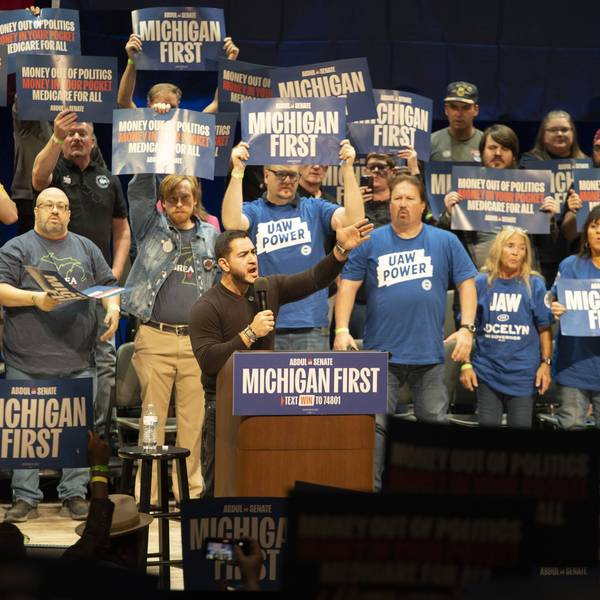
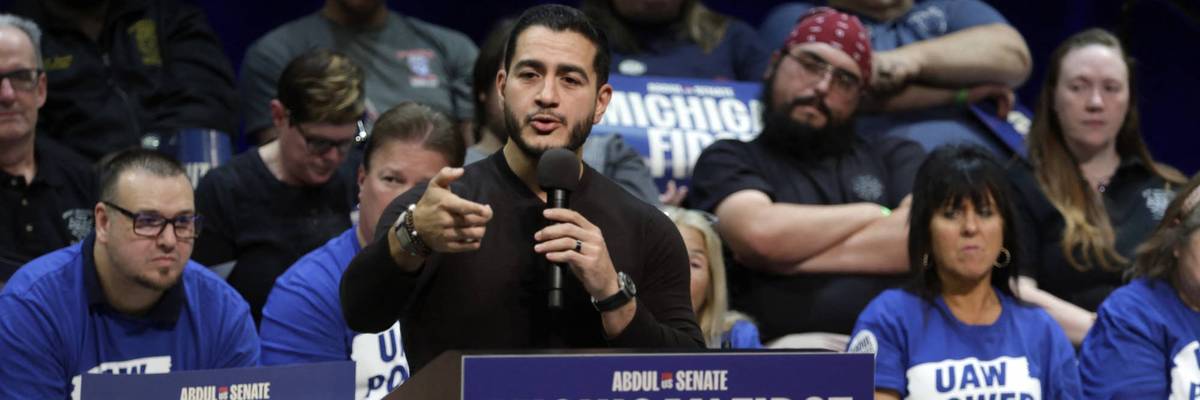
In Michigan, Democratic Senate nominee Abdul El-Sayed has been called a "jihadist" by President Trump himself, who has taken to calling him "Muhammad," and Republicans are making false allegations about his associations with terrorist groups.
Here is the reason for hope: All three won their primaries, and Mamdani went on to become New York's first Muslim mayor. American voters are growing more sophisticated at spotting Islamophobia and are more willing to reject it.
But winning does not erase the toll. ISPU's research finds that 63% of American Muslims reported religious discrimination in the past year. Its Islamophobia Index, which measures how strongly the public endorses anti-Muslim stereotypes, jumped from 25 in 2022 to 33 in 2025. After the 2024 election, Muslims were the faith group most likely to fear for their personal safety.
Every Muslim candidate carries that weight onto the campaign trail, and the CSRR report warns that this hostility discourages other Muslims from running at all. Living under constant accusation is grueling.
What stuns me most is who is doing the accusing. Islamophobia is not a Republican monopoly. Some self-styled centrists in the Democratic Party reach for the same smears, and for the same reason: they feel threatened by the rise of progressive Muslims who are winning. There is nothing moderate about recycling the far right’s oldest slander. When a so-called centrist calls a Muslim candidate an extremist, they are borrowing a right-wing script and selling it as common sense.
Voters are tired of elected officials who answer to wealthy donors, corporate special interests, and foreign governments instead of ordinary people and our most vulnerable communities. Progressive Muslim candidates are winning because they speak to that frustration: Hamawy on Medicare for All and medical debt, El-Sayed on rejecting corporate influence, and Mamdani on affordability. Rather than shift their allegiance back to everyday voters, some entrenched politicians would rather cast suspicion on the people beating them. It is a game of thrones, played with our names.
Voters are tired of elected officials who answer to wealthy donors, corporate special interests, and foreign governments instead of ordinary people and our most vulnerable communities.
This is not a new American fight. In 1869, Frederick Douglass argued that the nation’s strength lay in being a “composite nation,” open to people of every race and creed. In 1915, Louis Brandeis, who would soon become the first Jewish justice on the Supreme Court, told an audience at Boston’s Faneuil Hall:
Let us not forget that many a poor immigrant comes to us from distant lands, ignorant of our language, strange in tattered clothes and with jarring manners, who is already truly American in this most important sense; who has long shared our ideals and who, oppressed and persecuted abroad, has yearned for our land of liberty and for the opportunity of aiding in the realization of its aims.
Douglass and Brandeis believed American ideals should reach beyond ethnicity, skin color, or religion. The question before us is whether America will fulfill the aspiration they championed, or fall back on the creed of the Confederacy and the defenders of Jim Crow. The nativists and bigots never went away. They simply found new targets until the country was roused to fight for its ideals. Now is the time to recognize that this collective courage is needed again.
There are concrete ways to end this bigotry. CSRR calls for state and federal task forces on Islamophobia, modeled on those confronting antisemitism, and for law enforcement training to protect Muslim candidates and officials, who are frequent targets of threats. ISPU urges civic groups to train, equip, support, and protect Muslims who run for office. It also poses a question every leader should answer honestly: Do you use the words "radical" and "extremist" only when you talk about Muslims?
But the most immediate solution doesn't require a task force. We need our friends, neighbors, and allies to call out Islamophobia whenever they see it. We especially need elected officials at every level, from school boards to Congress, to speak up when a Muslim candidate or colleague is targeted, no matter which party the attack comes from. When allies stay silent, these smears look acceptable. When a colleague pushes back publicly, voters learn that these attacks are out of bounds.
Voters can keep doing what they did last year and this year: judge candidates and elected officials by our records. But let us be honest about what is under attack. It is not only our names. It is our faith. The smears insist that a devout Muslim cannot also be a faithful public servant. The opposite is true. My faith teaches that every person carries dignity, that justice must be upheld even when it costs us, and that a society is measured by how it treats its most vulnerable. Those values are why so many of us run: to fight for health care, fair wages, good schools, and equal protection for every neighbor. Our faith is not a threat to American democracy. It is the reason we show up to serve.
We are at a crossroads
This country and this world are at a monumental crossroads. In a few short weeks, US voters will have an opportunity to beat back the forces of fascism and confront the billionaires who are rigging the economy, our media system, and our democracy, making it increasingly impossible for ordinary people to get by. We’re not just talking about the election. We’re talking about what must be done once these fascist elements are vanquished from power. We need a bolder set of solutions than what either major party has so far been willing to offer and a working-class movement ready to fight like hell for it. Trump didn't emerge from nowhere. The conditions that fueled MAGA authoritarianism were created by decades of radical neoliberal economic policies and a corrupt political system dominated by corporate interests. They slashed taxes on the super-rich, promising that the benefits would trickle down. They said giveaways to the corporate titans would make life more affordable for the rest of us. It was all bullshit. And when a bitter, betrayed populace searches for someone to blame, right-wing demagogues have little trouble finding scapegoats. People know when they're being lied to, but you won't hear any of this from the corporate media. Only independent journalism—powered and funded by people who believe in building a better world—can deliver truly trustworthy daily news. Our Fall Campaign is underway, and we need your help. To power our newsroom through the rest of the year, we need to raise $125,000 by midnight on October 31. So if you share our vision, please contribute whatever you can to sustain our work. |
Afsheen A. Shamsi is a national board member for Emgage Action, a national Muslim-American advocacy group that supports and advocates for just policies that strengthen our pluralistic democracy and protect human rights at home and abroad.
When I first ran for the Princeton school board, I did something I doubt my opponents ever considered. Before knocking on a single door, I asked respected leaders in my community to vouch publicly for my character. I wanted voters to hear from people they trusted that I was a mother, a neighbor, and a public servant, not a threat.
I lost anyway. In a down-ballot race, where many voters know little about the candidates beyond their names, I believe mine worked against me the moment voters read it.
My experience is not unusual. Since 9/11, Muslim American candidates have been held to an impossible standard: we must be flawless, and even then, we are viewed through the lens of terrorism. A new report from the Rutgers Center for Security, Race and Rights, Punished for Participating, documents this pattern across more than 31 case studies from 2001 to 2026. Despite historic gains (more than 255 Muslim Americans held elected office by this summer), Muslim candidates face a mainstreamed backlash built on conspiracy theories of a "Sharia" takeover, gendered stereotypes, political violence, and presumptions of antisemitism. The report's core finding is painfully simple: Muslims are punished for doing one of the most American things there is, running for office.
Islamophobia is not a Republican monopoly. Some self-styled centrists in the Democratic Party reach for the same smears, and for the same reason: they feel threatened by the rise of progressive Muslims who are winning.
Recent election cycles proved the point three times over.
In New York, Zohran Mamdani was branded "a jihadist candidate" by Republican Rep. Elise Stefanik, while former Gov. Andrew Cuomo, a fellow Democrat, mused on the radio about Mamdani in City Hall during "another 9/11." The Institute for Social Policy and Understanding's new toolkit on countering Islamophobia cites an analysis of more than 35,000 posts on X targeting Mamdani, with an estimated reach of 1.5 billion people. Seventy-two percent framed him as an extremist or terrorist.
In New Jersey's 12th Congressional District, which includes Princeton, Democratic candidate Dr. Adam Hamawy is a retired Army combat surgeon who once saved Senator Tammy Duckworth's life after she was wounded when her helicopter was shot down in Iraq. Dr. Hamawy was called a "radical extremist" by a Democratic primary rival over testimony he was subpoenaed to give as a witness in a trial three decades ago.
In Michigan, Democratic Senate nominee Abdul El-Sayed has been called a "jihadist" by President Trump himself, who has taken to calling him "Muhammad," and Republicans are making false allegations about his associations with terrorist groups.
Here is the reason for hope: All three won their primaries, and Mamdani went on to become New York's first Muslim mayor. American voters are growing more sophisticated at spotting Islamophobia and are more willing to reject it.
But winning does not erase the toll. ISPU's research finds that 63% of American Muslims reported religious discrimination in the past year. Its Islamophobia Index, which measures how strongly the public endorses anti-Muslim stereotypes, jumped from 25 in 2022 to 33 in 2025. After the 2024 election, Muslims were the faith group most likely to fear for their personal safety.
Every Muslim candidate carries that weight onto the campaign trail, and the CSRR report warns that this hostility discourages other Muslims from running at all. Living under constant accusation is grueling.
What stuns me most is who is doing the accusing. Islamophobia is not a Republican monopoly. Some self-styled centrists in the Democratic Party reach for the same smears, and for the same reason: they feel threatened by the rise of progressive Muslims who are winning. There is nothing moderate about recycling the far right’s oldest slander. When a so-called centrist calls a Muslim candidate an extremist, they are borrowing a right-wing script and selling it as common sense.
Voters are tired of elected officials who answer to wealthy donors, corporate special interests, and foreign governments instead of ordinary people and our most vulnerable communities. Progressive Muslim candidates are winning because they speak to that frustration: Hamawy on Medicare for All and medical debt, El-Sayed on rejecting corporate influence, and Mamdani on affordability. Rather than shift their allegiance back to everyday voters, some entrenched politicians would rather cast suspicion on the people beating them. It is a game of thrones, played with our names.
Voters are tired of elected officials who answer to wealthy donors, corporate special interests, and foreign governments instead of ordinary people and our most vulnerable communities.
This is not a new American fight. In 1869, Frederick Douglass argued that the nation’s strength lay in being a “composite nation,” open to people of every race and creed. In 1915, Louis Brandeis, who would soon become the first Jewish justice on the Supreme Court, told an audience at Boston’s Faneuil Hall:
Let us not forget that many a poor immigrant comes to us from distant lands, ignorant of our language, strange in tattered clothes and with jarring manners, who is already truly American in this most important sense; who has long shared our ideals and who, oppressed and persecuted abroad, has yearned for our land of liberty and for the opportunity of aiding in the realization of its aims.
Douglass and Brandeis believed American ideals should reach beyond ethnicity, skin color, or religion. The question before us is whether America will fulfill the aspiration they championed, or fall back on the creed of the Confederacy and the defenders of Jim Crow. The nativists and bigots never went away. They simply found new targets until the country was roused to fight for its ideals. Now is the time to recognize that this collective courage is needed again.
There are concrete ways to end this bigotry. CSRR calls for state and federal task forces on Islamophobia, modeled on those confronting antisemitism, and for law enforcement training to protect Muslim candidates and officials, who are frequent targets of threats. ISPU urges civic groups to train, equip, support, and protect Muslims who run for office. It also poses a question every leader should answer honestly: Do you use the words "radical" and "extremist" only when you talk about Muslims?
But the most immediate solution doesn't require a task force. We need our friends, neighbors, and allies to call out Islamophobia whenever they see it. We especially need elected officials at every level, from school boards to Congress, to speak up when a Muslim candidate or colleague is targeted, no matter which party the attack comes from. When allies stay silent, these smears look acceptable. When a colleague pushes back publicly, voters learn that these attacks are out of bounds.
Voters can keep doing what they did last year and this year: judge candidates and elected officials by our records. But let us be honest about what is under attack. It is not only our names. It is our faith. The smears insist that a devout Muslim cannot also be a faithful public servant. The opposite is true. My faith teaches that every person carries dignity, that justice must be upheld even when it costs us, and that a society is measured by how it treats its most vulnerable. Those values are why so many of us run: to fight for health care, fair wages, good schools, and equal protection for every neighbor. Our faith is not a threat to American democracy. It is the reason we show up to serve.
- 'Insufferable Islamophobia': Senate Dems Could Help GOP Tank 1st Muslim Fed Appeals Judge ›
- What Do You Tell a Child When a Teacher Disparages Her Religion? ›
- 'Vicious Islamophobia': GOP Calls for Deportation of US Citizen Mamdani ›
- 'I'll Be Senator Mohamed to You, Bro': El-Sayed Hits Back at Trump's Islamophobic Attacks ›