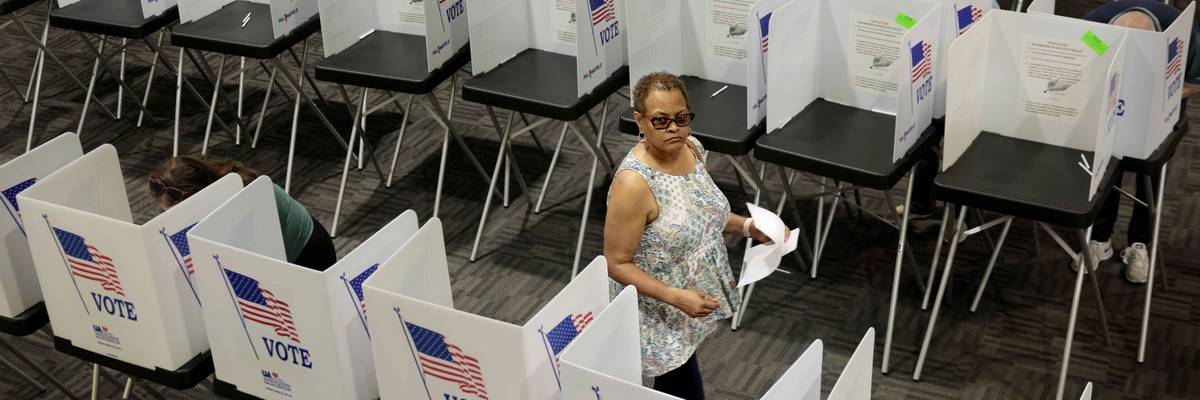
St. Charles County resident Pamela Dear leaves a voting booth on Thursday, July 23, 2026, as she and others cast their votes on the second day of No Excuse Absentee Voting at the St. Charles County Election Authority.
You Can Fight Trump's Voter Suppression Efforts With One Simple Action: Voting
The effort to undermine the election is failing. It will succeed only if citizens stay home.
Benjamin Franklin wrote, “Never trouble trouble until trouble troubles you.” That’s not quite our approach at the Brennan Center. We worry. (Dr. Franklin also advised, “An ounce of prevention is worth a pound of cure.”)
What are we particularly concerned about as we look toward November?
Voter confusion is perhaps the biggest risk. People ask, understandably, can they still vote by mail? Will I need to show a passport or birth certificate to register? It has been many years since the freedom to vote has faced so many proposed challenges, and never before from the federal government. With all the news and noise, citizens cannot be expected to follow the executive edicts and ping-ponging court rulings in minute detail.
In fact, for voters, very little has actually changed. Congress and courts blocked all those bad ideas. The SAVE Act never passed. As a general matter, citizens can cast ballots as before.
After all the push and pull, voters can make their voices heard. Make a plan to vote. Vote early if possible. In person, with a drop box, or if necessary, using the mail.
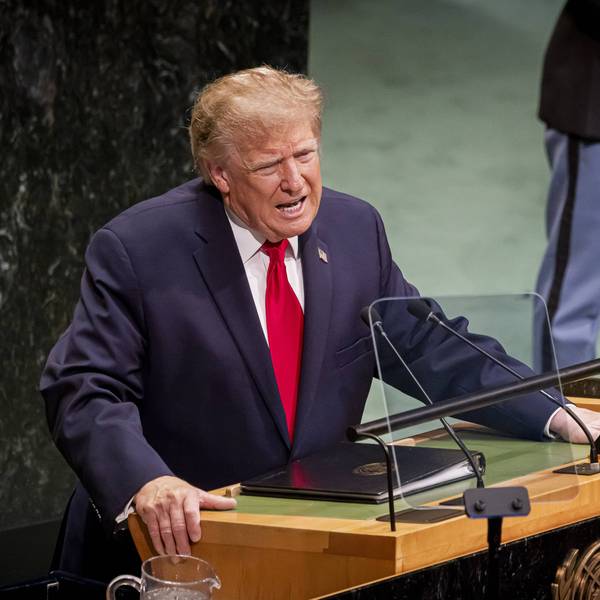
With less than two months to go, President Donald Trump’s drive to undermine the election is failing. Judges, states and counties, and voting rights groups have blocked his moves. If we keep at it, we can have free and fair elections in 2026.
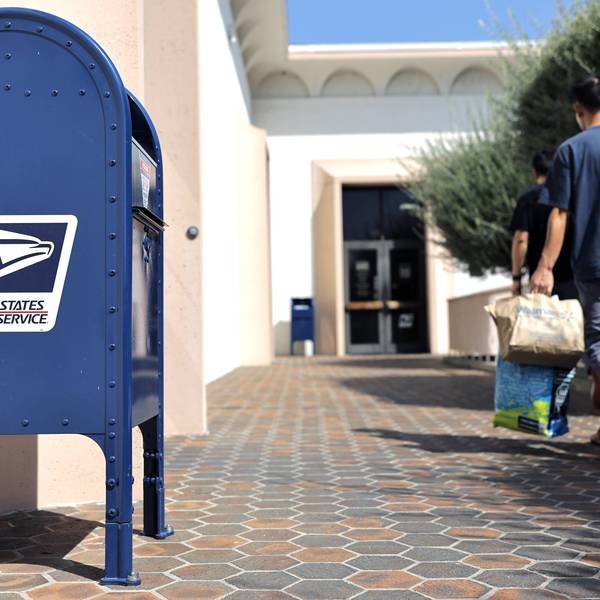
What else keeps us on edge? The Supreme Court, of course. It is now considering whether to undo a trial court’s decision blocking a rule that would allow the US Postal Service to withhold mail ballots. The trial court determined that rule is illegal and unconstitutional.
If the court allows the USPS to implement its rule, it would introduce chaos and disenfranchise many voters just before the election, as a USPS whistleblower explained in a friend-of-the-court brief detailing the agency’s rushed and flawed process to implement the rule. The court will likely rule in a matter of days on the administration’s request to allow the USPS rule. Fingers crossed.
Here’s a third concern: a growing risk of foreign interference. America is at war. (An illegal, unauthorized war, worth noting.) In 1980, the “October surprise” was the notion that Iran would release Americans it held hostage to influence that year’s election. Let’s hope that Iranian hackers do not produce a digital “October surprise” this year.
Iran has shown its ability to break into municipal water systems in Minnesota. In previous elections, Russia and China have tried to sway voters or attack registration lists. Trump’s purge of election security offices means that American elections have less federal protection against malevolent foreign hackers than before.
States have worked hard to get ready. And it’s important to remember that there is no way for even the most sophisticated schemer to change the results. Voting machines are not connected to the internet. And citizens cast ballots with a paper record, which can be audited and recounted.
Some of our worries are decreasing.
First, “ICE at the polls.” That could still happen. But deployment of federal forces is illegal under numerous federal and state laws. The chairman of the Joint Chiefs of Staff pledged recently not to use federal troops, correctly asserting, “Election administration and security remain the fundamental responsibility of state and local officials.” We have growing confidence that courts would step in fast. At the Brennan Center, we are prepared to sue if necessary. The briefs are written, and the toner is in the printer.
Then there are the Justice Department observers deployed to some states. They are annoying and often seem like a bit of a mess. But they too are subject to the laws that prohibit voter intimidation, and state officials are prepared to speak up if observers are disruptive.
And as for the worry that electoral winners won’t be certified, we are increasingly confident that courts will step in here, too. Judges have been heroes and upheld the rule of law.
But courts are not enough. We need a citizen mobilization to watch polls, help voters, and blow the whistle on abuse. That, too, gives hope.
It’s going to be a busy two months. No doubt Trump and his partisans will fling new charges every few days. All that clatter can confuse voters further. Perhaps that’s part of the goal.
So for all of us who want voters to have their say in 2026, a chief job is to stay calm and make clear that—as of right now, at least—little has changed. That’s a task for the news media. Public officials should be clear and calm. We who fight for voting rights must measure our own tone, so as not to rattle confidence.
After all the push and pull, voters can make their voices heard. Make a plan to vote. Vote early if possible. In person, with a drop box, or if necessary, using the mail. As we’ve said before, the effort to undermine the election is failing. It will succeed only if citizens stay home.
We are at a crossroads
This country and this world are at a monumental crossroads. In a few short weeks, US voters will have an opportunity to beat back the forces of fascism and confront the billionaires who are rigging the economy, our media system, and our democracy, making it increasingly impossible for ordinary people to get by. We’re not just talking about the election. We’re talking about what must be done once these fascist elements are vanquished from power. We need a bolder set of solutions than what either major party has so far been willing to offer and a working-class movement ready to fight like hell for it. Trump didn't emerge from nowhere. The conditions that fueled MAGA authoritarianism were created by decades of radical neoliberal economic policies and a corrupt political system dominated by corporate interests. They slashed taxes on the super-rich, promising that the benefits would trickle down. They said giveaways to the corporate titans would make life more affordable for the rest of us. It was all bullshit. And when a bitter, betrayed populace searches for someone to blame, right-wing demagogues have little trouble finding scapegoats. People know when they're being lied to, but you won't hear any of this from the corporate media. Only independent journalism—powered and funded by people who believe in building a better world—can deliver truly trustworthy daily news. Our Fall Campaign is underway, and we need your help. To power our newsroom through the rest of the year, we need to raise $125,000 by midnight on October 31. So if you share our vision, please contribute whatever you can to sustain our work. |
Benjamin Franklin wrote, “Never trouble trouble until trouble troubles you.” That’s not quite our approach at the Brennan Center. We worry. (Dr. Franklin also advised, “An ounce of prevention is worth a pound of cure.”)
What are we particularly concerned about as we look toward November?
Voter confusion is perhaps the biggest risk. People ask, understandably, can they still vote by mail? Will I need to show a passport or birth certificate to register? It has been many years since the freedom to vote has faced so many proposed challenges, and never before from the federal government. With all the news and noise, citizens cannot be expected to follow the executive edicts and ping-ponging court rulings in minute detail.
In fact, for voters, very little has actually changed. Congress and courts blocked all those bad ideas. The SAVE Act never passed. As a general matter, citizens can cast ballots as before.
After all the push and pull, voters can make their voices heard. Make a plan to vote. Vote early if possible. In person, with a drop box, or if necessary, using the mail.
With less than two months to go, President Donald Trump’s drive to undermine the election is failing. Judges, states and counties, and voting rights groups have blocked his moves. If we keep at it, we can have free and fair elections in 2026.
What else keeps us on edge? The Supreme Court, of course. It is now considering whether to undo a trial court’s decision blocking a rule that would allow the US Postal Service to withhold mail ballots. The trial court determined that rule is illegal and unconstitutional.
If the court allows the USPS to implement its rule, it would introduce chaos and disenfranchise many voters just before the election, as a USPS whistleblower explained in a friend-of-the-court brief detailing the agency’s rushed and flawed process to implement the rule. The court will likely rule in a matter of days on the administration’s request to allow the USPS rule. Fingers crossed.
Here’s a third concern: a growing risk of foreign interference. America is at war. (An illegal, unauthorized war, worth noting.) In 1980, the “October surprise” was the notion that Iran would release Americans it held hostage to influence that year’s election. Let’s hope that Iranian hackers do not produce a digital “October surprise” this year.
Iran has shown its ability to break into municipal water systems in Minnesota. In previous elections, Russia and China have tried to sway voters or attack registration lists. Trump’s purge of election security offices means that American elections have less federal protection against malevolent foreign hackers than before.
States have worked hard to get ready. And it’s important to remember that there is no way for even the most sophisticated schemer to change the results. Voting machines are not connected to the internet. And citizens cast ballots with a paper record, which can be audited and recounted.
Some of our worries are decreasing.
First, “ICE at the polls.” That could still happen. But deployment of federal forces is illegal under numerous federal and state laws. The chairman of the Joint Chiefs of Staff pledged recently not to use federal troops, correctly asserting, “Election administration and security remain the fundamental responsibility of state and local officials.” We have growing confidence that courts would step in fast. At the Brennan Center, we are prepared to sue if necessary. The briefs are written, and the toner is in the printer.
Then there are the Justice Department observers deployed to some states. They are annoying and often seem like a bit of a mess. But they too are subject to the laws that prohibit voter intimidation, and state officials are prepared to speak up if observers are disruptive.
And as for the worry that electoral winners won’t be certified, we are increasingly confident that courts will step in here, too. Judges have been heroes and upheld the rule of law.
But courts are not enough. We need a citizen mobilization to watch polls, help voters, and blow the whistle on abuse. That, too, gives hope.
It’s going to be a busy two months. No doubt Trump and his partisans will fling new charges every few days. All that clatter can confuse voters further. Perhaps that’s part of the goal.
So for all of us who want voters to have their say in 2026, a chief job is to stay calm and make clear that—as of right now, at least—little has changed. That’s a task for the news media. Public officials should be clear and calm. We who fight for voting rights must measure our own tone, so as not to rattle confidence.
After all the push and pull, voters can make their voices heard. Make a plan to vote. Vote early if possible. In person, with a drop box, or if necessary, using the mail. As we’ve said before, the effort to undermine the election is failing. It will succeed only if citizens stay home.
- 'Our Democracy Depends on Rejecting This Charade': GOP Pushes Bills to Prevent Millions From Voting ›
- 100 Years Later, We’re Still Fighting for the Right to Vote and Equal Pay ›
- 'Democracy Is Under Attack': Civil Rights Lawsuit Aims to Block Trump Assault on Mail-In Voting ›
- How Voter Suppression Imperils the Midterms ›
- How Advocates Are Fighting Voter Suppression ›
Benjamin Franklin wrote, “Never trouble trouble until trouble troubles you.” That’s not quite our approach at the Brennan Center. We worry. (Dr. Franklin also advised, “An ounce of prevention is worth a pound of cure.”)
What are we particularly concerned about as we look toward November?
Voter confusion is perhaps the biggest risk. People ask, understandably, can they still vote by mail? Will I need to show a passport or birth certificate to register? It has been many years since the freedom to vote has faced so many proposed challenges, and never before from the federal government. With all the news and noise, citizens cannot be expected to follow the executive edicts and ping-ponging court rulings in minute detail.
In fact, for voters, very little has actually changed. Congress and courts blocked all those bad ideas. The SAVE Act never passed. As a general matter, citizens can cast ballots as before.
After all the push and pull, voters can make their voices heard. Make a plan to vote. Vote early if possible. In person, with a drop box, or if necessary, using the mail.
With less than two months to go, President Donald Trump’s drive to undermine the election is failing. Judges, states and counties, and voting rights groups have blocked his moves. If we keep at it, we can have free and fair elections in 2026.
What else keeps us on edge? The Supreme Court, of course. It is now considering whether to undo a trial court’s decision blocking a rule that would allow the US Postal Service to withhold mail ballots. The trial court determined that rule is illegal and unconstitutional.
If the court allows the USPS to implement its rule, it would introduce chaos and disenfranchise many voters just before the election, as a USPS whistleblower explained in a friend-of-the-court brief detailing the agency’s rushed and flawed process to implement the rule. The court will likely rule in a matter of days on the administration’s request to allow the USPS rule. Fingers crossed.
Here’s a third concern: a growing risk of foreign interference. America is at war. (An illegal, unauthorized war, worth noting.) In 1980, the “October surprise” was the notion that Iran would release Americans it held hostage to influence that year’s election. Let’s hope that Iranian hackers do not produce a digital “October surprise” this year.
Iran has shown its ability to break into municipal water systems in Minnesota. In previous elections, Russia and China have tried to sway voters or attack registration lists. Trump’s purge of election security offices means that American elections have less federal protection against malevolent foreign hackers than before.
States have worked hard to get ready. And it’s important to remember that there is no way for even the most sophisticated schemer to change the results. Voting machines are not connected to the internet. And citizens cast ballots with a paper record, which can be audited and recounted.
Some of our worries are decreasing.
First, “ICE at the polls.” That could still happen. But deployment of federal forces is illegal under numerous federal and state laws. The chairman of the Joint Chiefs of Staff pledged recently not to use federal troops, correctly asserting, “Election administration and security remain the fundamental responsibility of state and local officials.” We have growing confidence that courts would step in fast. At the Brennan Center, we are prepared to sue if necessary. The briefs are written, and the toner is in the printer.
Then there are the Justice Department observers deployed to some states. They are annoying and often seem like a bit of a mess. But they too are subject to the laws that prohibit voter intimidation, and state officials are prepared to speak up if observers are disruptive.
And as for the worry that electoral winners won’t be certified, we are increasingly confident that courts will step in here, too. Judges have been heroes and upheld the rule of law.
But courts are not enough. We need a citizen mobilization to watch polls, help voters, and blow the whistle on abuse. That, too, gives hope.
It’s going to be a busy two months. No doubt Trump and his partisans will fling new charges every few days. All that clatter can confuse voters further. Perhaps that’s part of the goal.
So for all of us who want voters to have their say in 2026, a chief job is to stay calm and make clear that—as of right now, at least—little has changed. That’s a task for the news media. Public officials should be clear and calm. We who fight for voting rights must measure our own tone, so as not to rattle confidence.
After all the push and pull, voters can make their voices heard. Make a plan to vote. Vote early if possible. In person, with a drop box, or if necessary, using the mail. As we’ve said before, the effort to undermine the election is failing. It will succeed only if citizens stay home.
- 'Our Democracy Depends on Rejecting This Charade': GOP Pushes Bills to Prevent Millions From Voting ›
- 100 Years Later, We’re Still Fighting for the Right to Vote and Equal Pay ›
- 'Democracy Is Under Attack': Civil Rights Lawsuit Aims to Block Trump Assault on Mail-In Voting ›
- How Voter Suppression Imperils the Midterms ›
- How Advocates Are Fighting Voter Suppression ›