SUBSCRIBE TO OUR FREE NEWSLETTER
Daily news & progressive opinion—funded by the people, not the corporations—delivered straight to your inbox.
5
#000000
#FFFFFF
To donate by check, phone, or other method, see our More Ways to Give page.
Daily news & progressive opinion—funded by the people, not the corporations—delivered straight to your inbox.
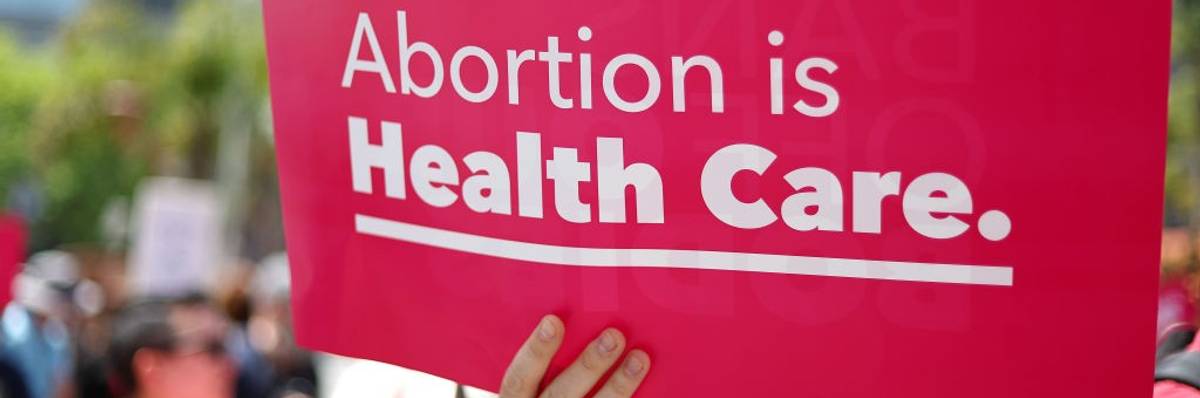
Protestors demonstrate at the March for Reproductive Rights organized by Women’s March L.A. on April 15, 2023 in Los Angeles, California.
The scope of reproductive healthcare that women can receive is highly dependent on where they live, creating a system of inequalities and further exacerbating health disparities.
In the year since the U.S. Supreme Court’s Dobbs v. Jackson ruling struck down the constitutional right to abortion, society has been seeing the results of a post-Roe world.
While there is no law in the U.S. that regulates what a man can do with his body, the reproductive health of women is now more regulated than it has been in 50 years. And the scope of reproductive healthcare that women can receive is highly dependent on where they live.
This creates a system of inequalities and further exacerbates health disparities.
While there is no law in the U.S. that regulates what a man can do with his body, the reproductive health of women is now more regulated than it has been in 50 years.
I am a nurse practitioner who studies women’s reproductive health across the lifespan.
My research found that college women are concerned about pregnancy, but they lack knowledge and skills about navigating sexual consent and often participate in sexual activity without explicit consent, leaving them at risk for not using contraception and exposure to sexually transmitted infections.
These findings indicate that women are at risk of pregnancy at a historic time when women’s reproductive rights in the U.S. are restricted and not guaranteed.
The Dobbs v. Jackson ruling returned decisions regarding abortion to individual states. This has led to a patchwork of laws that span the entire range from complete bans and tight restrictions to full state protection for abortion.
In some states, such as Texas, Louisiana, and Mississippi, abortion is banned beginning at six weeks gestational age, when very few women even know they are pregnant. Other states, such as Massachusetts, Vermont, New York, and Oregon, have enacted state-level protections for abortion.
The patchwork of state laws also results in a great deal of confusion. In the past year, women’s rights organizations and women’s health advocates have brought numerous legal challenges to restrictive abortion laws. These cases have halted the implementation of some of the strictest abortion regulations until additional court rulings are finalized.
Abortion training is considered essential healthcare and a core competency for physicians in obstetrics and gynecology, or OB-GYN, residency programs. Approximately 50% of OB-GYN residency programs are located in states with restricted or highly restricted access to abortion. This will logically result in not only fewer healthcare providers being trained to perform gynecologic procedures for abortion, but also other conditions such as miscarriage, fetal death, and nonviable pregnancies.
In states with changing abortion laws and legal challenges to new laws, physicians are uncertain of what procedures can be legally done. Penalties for violating abortion laws may include arrest, loss of medical license, fines, and discipline by state boards of medicine.
As a result, physicians are choosing to leave states with the most restrictive abortion laws, and clinics are closing, which is contributing to the current shortage of healthcare providers.
The unequal access to abortion procedures across the country is most directly affecting the poorest women in the U.S.
Currently, 12 states restrict abortion coverage by private insurance, and more than 30 states prohibit public Medicaid payment for abortion. Women who qualify for Medicaid are among the poorest in the U.S. Lack of access to abortion limits education and wage earning and contributes to poverty. States with the most restrictive abortion laws also have limited access to pregnancy care and supportive programs for pregnant and parenting women.
In addition, traveling to a different state to obtain an abortion is often not possible for poor women. Lack of transportation and limited financial resources reduce or eliminate options to obtain an abortion in a different geographic location.
What’s more, states with the most abortion restrictions have some of the worst pregnancy and maternal health outcomes for women, especially women of color.
What’s more, states with the most abortion restrictions have some of the worst pregnancy and maternal health outcomes for women, especially women of color. Pregnancy itself is associated with a risk of dying.
Maternal morbidity is the term used to describe short- or long-term health problems that result from pregnancy. Maternal mortality refers to the death of women during pregnancy or within the first six weeks after birth.
For example, Mississippi and Louisiana have the highest rates of maternal mortality in the U.S. and also have the most restrictive abortion laws. Black women have the highest maternal mortality of all races and ethnicities. Women in these states who are unable to terminate a pregnancy have a higher risk of dying as a result of the pregnancy than women in other states.
Additionally, research shows that a woman’s risk of dying related to pregnancy or childbirth is about 14 times higher than the risk of death from an abortion.
In addition to the increased risks of death, there are other physical and mental health implications associated with carrying an undesired pregnancy to term. Being denied access to abortion is associated with increased anxiety and fewer future plans for the next year. Research also shows that not being able to obtain an abortion makes women more likely to live below the federal poverty level and to lack partner support.
Conversely, research has shown that there are few if any significant negative mental health outcomes among women who have abortions.
Restricting legal abortion increases the risk that women will seek out pregnancy termination from unskilled people in unsafe settings. Or they may not seek care quickly for pregnancy complications due to fear of being accused of a crime.
In Texas, physicians are reporting an increase in sepsis, or an overwhelming response to infection, from incomplete abortions. These physicians predict that sepsis will become the leading cause of maternal death in Texas.
“I didn’t know I was important enough to draw boundaries around what people could and couldn’t do with my body.”
Prior to 1973, when Roe v. Wade established constitutional protection for abortion in the U.S., women often resorted to unsafe methods to induce abortion that resulted in a high death toll. Septic abortion wards—or designated areas of hospitals where women were treated for sepsis as a result of illegal abortions—were common. In 1965, 17% of all deaths related to pregnancy were attributed to illegal abortion.
Now that the constitutional right to abortion has been eliminated, more women will inevitably die or become seriously ill due to lack of safe access to abortion services. In states with the most restrictions on abortion, whether a woman meets the criteria for an exemption to save the life of the mother may be decided by a hospital committee. This can delay necessary care and increase the risk to the mother.
Said one: “I didn’t know I was important enough to draw boundaries around what people could and couldn’t do with my body.”
In the U.S., more than 25% of women will experience physical or sexual violence in their lifetime. Violence from an intimate partner is a leading reason for abortion. My research shows that women affected by violence have a higher risk of pregnancy and that college women are at increased risk of nonconsensual and forced sexual encounters.
Currently, there are 14 states with abortion bans that contain no exception for rape or incest or require that the sexual assault be reported to law enforcement to qualify for exception.
Research has shown that women often don’t report sexual assault due to stigma, embarrassment, or fear of not being believed. Even if women qualify for an abortion as a result of sexual violence, those who have not filed a formal police report lack “proof” that their pregnancy resulted from assault.
While the changes that have occurred since the fall of Roe one year ago are already deeply concerning, the full effect of eliminating the constitutional right to an abortion won’t be known for years. And as laws are enacted and subsequently challenged, uncertainty and confusion regarding women’s reproductive healthcare will undoubtedly continue for years to come.
Dear Common Dreams reader, It’s been nearly 30 years since I co-founded Common Dreams with my late wife, Lina Newhouser. We had the radical notion that journalism should serve the public good, not corporate profits. It was clear to us from the outset what it would take to build such a project. No paid advertisements. No corporate sponsors. No millionaire publisher telling us what to think or do. Many people said we wouldn't last a year, but we proved those doubters wrong. Together with a tremendous team of journalists and dedicated staff, we built an independent media outlet free from the constraints of profits and corporate control. Our mission has always been simple: To inform. To inspire. To ignite change for the common good. Building Common Dreams was not easy. Our survival was never guaranteed. When you take on the most powerful forces—Wall Street greed, fossil fuel industry destruction, Big Tech lobbyists, and uber-rich oligarchs who have spent billions upon billions rigging the economy and democracy in their favor—the only bulwark you have is supporters who believe in your work. But here’s the urgent message from me today. It's never been this bad out there. And it's never been this hard to keep us going. At the very moment Common Dreams is most needed, the threats we face are intensifying. We need your support now more than ever. We don't accept corporate advertising and never will. We don't have a paywall because we don't think people should be blocked from critical news based on their ability to pay. Everything we do is funded by the donations of readers like you. When everyone does the little they can afford, we are strong. But if that support retreats or dries up, so do we. Will you donate now to make sure Common Dreams not only survives but thrives? —Craig Brown, Co-founder |
In the year since the U.S. Supreme Court’s Dobbs v. Jackson ruling struck down the constitutional right to abortion, society has been seeing the results of a post-Roe world.
While there is no law in the U.S. that regulates what a man can do with his body, the reproductive health of women is now more regulated than it has been in 50 years. And the scope of reproductive healthcare that women can receive is highly dependent on where they live.
This creates a system of inequalities and further exacerbates health disparities.
While there is no law in the U.S. that regulates what a man can do with his body, the reproductive health of women is now more regulated than it has been in 50 years.
I am a nurse practitioner who studies women’s reproductive health across the lifespan.
My research found that college women are concerned about pregnancy, but they lack knowledge and skills about navigating sexual consent and often participate in sexual activity without explicit consent, leaving them at risk for not using contraception and exposure to sexually transmitted infections.
These findings indicate that women are at risk of pregnancy at a historic time when women’s reproductive rights in the U.S. are restricted and not guaranteed.
The Dobbs v. Jackson ruling returned decisions regarding abortion to individual states. This has led to a patchwork of laws that span the entire range from complete bans and tight restrictions to full state protection for abortion.
In some states, such as Texas, Louisiana, and Mississippi, abortion is banned beginning at six weeks gestational age, when very few women even know they are pregnant. Other states, such as Massachusetts, Vermont, New York, and Oregon, have enacted state-level protections for abortion.
The patchwork of state laws also results in a great deal of confusion. In the past year, women’s rights organizations and women’s health advocates have brought numerous legal challenges to restrictive abortion laws. These cases have halted the implementation of some of the strictest abortion regulations until additional court rulings are finalized.
Abortion training is considered essential healthcare and a core competency for physicians in obstetrics and gynecology, or OB-GYN, residency programs. Approximately 50% of OB-GYN residency programs are located in states with restricted or highly restricted access to abortion. This will logically result in not only fewer healthcare providers being trained to perform gynecologic procedures for abortion, but also other conditions such as miscarriage, fetal death, and nonviable pregnancies.
In states with changing abortion laws and legal challenges to new laws, physicians are uncertain of what procedures can be legally done. Penalties for violating abortion laws may include arrest, loss of medical license, fines, and discipline by state boards of medicine.
As a result, physicians are choosing to leave states with the most restrictive abortion laws, and clinics are closing, which is contributing to the current shortage of healthcare providers.
The unequal access to abortion procedures across the country is most directly affecting the poorest women in the U.S.
Currently, 12 states restrict abortion coverage by private insurance, and more than 30 states prohibit public Medicaid payment for abortion. Women who qualify for Medicaid are among the poorest in the U.S. Lack of access to abortion limits education and wage earning and contributes to poverty. States with the most restrictive abortion laws also have limited access to pregnancy care and supportive programs for pregnant and parenting women.
In addition, traveling to a different state to obtain an abortion is often not possible for poor women. Lack of transportation and limited financial resources reduce or eliminate options to obtain an abortion in a different geographic location.
What’s more, states with the most abortion restrictions have some of the worst pregnancy and maternal health outcomes for women, especially women of color.
What’s more, states with the most abortion restrictions have some of the worst pregnancy and maternal health outcomes for women, especially women of color. Pregnancy itself is associated with a risk of dying.
Maternal morbidity is the term used to describe short- or long-term health problems that result from pregnancy. Maternal mortality refers to the death of women during pregnancy or within the first six weeks after birth.
For example, Mississippi and Louisiana have the highest rates of maternal mortality in the U.S. and also have the most restrictive abortion laws. Black women have the highest maternal mortality of all races and ethnicities. Women in these states who are unable to terminate a pregnancy have a higher risk of dying as a result of the pregnancy than women in other states.
Additionally, research shows that a woman’s risk of dying related to pregnancy or childbirth is about 14 times higher than the risk of death from an abortion.
In addition to the increased risks of death, there are other physical and mental health implications associated with carrying an undesired pregnancy to term. Being denied access to abortion is associated with increased anxiety and fewer future plans for the next year. Research also shows that not being able to obtain an abortion makes women more likely to live below the federal poverty level and to lack partner support.
Conversely, research has shown that there are few if any significant negative mental health outcomes among women who have abortions.
Restricting legal abortion increases the risk that women will seek out pregnancy termination from unskilled people in unsafe settings. Or they may not seek care quickly for pregnancy complications due to fear of being accused of a crime.
In Texas, physicians are reporting an increase in sepsis, or an overwhelming response to infection, from incomplete abortions. These physicians predict that sepsis will become the leading cause of maternal death in Texas.
“I didn’t know I was important enough to draw boundaries around what people could and couldn’t do with my body.”
Prior to 1973, when Roe v. Wade established constitutional protection for abortion in the U.S., women often resorted to unsafe methods to induce abortion that resulted in a high death toll. Septic abortion wards—or designated areas of hospitals where women were treated for sepsis as a result of illegal abortions—were common. In 1965, 17% of all deaths related to pregnancy were attributed to illegal abortion.
Now that the constitutional right to abortion has been eliminated, more women will inevitably die or become seriously ill due to lack of safe access to abortion services. In states with the most restrictions on abortion, whether a woman meets the criteria for an exemption to save the life of the mother may be decided by a hospital committee. This can delay necessary care and increase the risk to the mother.
Said one: “I didn’t know I was important enough to draw boundaries around what people could and couldn’t do with my body.”
In the U.S., more than 25% of women will experience physical or sexual violence in their lifetime. Violence from an intimate partner is a leading reason for abortion. My research shows that women affected by violence have a higher risk of pregnancy and that college women are at increased risk of nonconsensual and forced sexual encounters.
Currently, there are 14 states with abortion bans that contain no exception for rape or incest or require that the sexual assault be reported to law enforcement to qualify for exception.
Research has shown that women often don’t report sexual assault due to stigma, embarrassment, or fear of not being believed. Even if women qualify for an abortion as a result of sexual violence, those who have not filed a formal police report lack “proof” that their pregnancy resulted from assault.
While the changes that have occurred since the fall of Roe one year ago are already deeply concerning, the full effect of eliminating the constitutional right to an abortion won’t be known for years. And as laws are enacted and subsequently challenged, uncertainty and confusion regarding women’s reproductive healthcare will undoubtedly continue for years to come.
In the year since the U.S. Supreme Court’s Dobbs v. Jackson ruling struck down the constitutional right to abortion, society has been seeing the results of a post-Roe world.
While there is no law in the U.S. that regulates what a man can do with his body, the reproductive health of women is now more regulated than it has been in 50 years. And the scope of reproductive healthcare that women can receive is highly dependent on where they live.
This creates a system of inequalities and further exacerbates health disparities.
While there is no law in the U.S. that regulates what a man can do with his body, the reproductive health of women is now more regulated than it has been in 50 years.
I am a nurse practitioner who studies women’s reproductive health across the lifespan.
My research found that college women are concerned about pregnancy, but they lack knowledge and skills about navigating sexual consent and often participate in sexual activity without explicit consent, leaving them at risk for not using contraception and exposure to sexually transmitted infections.
These findings indicate that women are at risk of pregnancy at a historic time when women’s reproductive rights in the U.S. are restricted and not guaranteed.
The Dobbs v. Jackson ruling returned decisions regarding abortion to individual states. This has led to a patchwork of laws that span the entire range from complete bans and tight restrictions to full state protection for abortion.
In some states, such as Texas, Louisiana, and Mississippi, abortion is banned beginning at six weeks gestational age, when very few women even know they are pregnant. Other states, such as Massachusetts, Vermont, New York, and Oregon, have enacted state-level protections for abortion.
The patchwork of state laws also results in a great deal of confusion. In the past year, women’s rights organizations and women’s health advocates have brought numerous legal challenges to restrictive abortion laws. These cases have halted the implementation of some of the strictest abortion regulations until additional court rulings are finalized.
Abortion training is considered essential healthcare and a core competency for physicians in obstetrics and gynecology, or OB-GYN, residency programs. Approximately 50% of OB-GYN residency programs are located in states with restricted or highly restricted access to abortion. This will logically result in not only fewer healthcare providers being trained to perform gynecologic procedures for abortion, but also other conditions such as miscarriage, fetal death, and nonviable pregnancies.
In states with changing abortion laws and legal challenges to new laws, physicians are uncertain of what procedures can be legally done. Penalties for violating abortion laws may include arrest, loss of medical license, fines, and discipline by state boards of medicine.
As a result, physicians are choosing to leave states with the most restrictive abortion laws, and clinics are closing, which is contributing to the current shortage of healthcare providers.
The unequal access to abortion procedures across the country is most directly affecting the poorest women in the U.S.
Currently, 12 states restrict abortion coverage by private insurance, and more than 30 states prohibit public Medicaid payment for abortion. Women who qualify for Medicaid are among the poorest in the U.S. Lack of access to abortion limits education and wage earning and contributes to poverty. States with the most restrictive abortion laws also have limited access to pregnancy care and supportive programs for pregnant and parenting women.
In addition, traveling to a different state to obtain an abortion is often not possible for poor women. Lack of transportation and limited financial resources reduce or eliminate options to obtain an abortion in a different geographic location.
What’s more, states with the most abortion restrictions have some of the worst pregnancy and maternal health outcomes for women, especially women of color.
What’s more, states with the most abortion restrictions have some of the worst pregnancy and maternal health outcomes for women, especially women of color. Pregnancy itself is associated with a risk of dying.
Maternal morbidity is the term used to describe short- or long-term health problems that result from pregnancy. Maternal mortality refers to the death of women during pregnancy or within the first six weeks after birth.
For example, Mississippi and Louisiana have the highest rates of maternal mortality in the U.S. and also have the most restrictive abortion laws. Black women have the highest maternal mortality of all races and ethnicities. Women in these states who are unable to terminate a pregnancy have a higher risk of dying as a result of the pregnancy than women in other states.
Additionally, research shows that a woman’s risk of dying related to pregnancy or childbirth is about 14 times higher than the risk of death from an abortion.
In addition to the increased risks of death, there are other physical and mental health implications associated with carrying an undesired pregnancy to term. Being denied access to abortion is associated with increased anxiety and fewer future plans for the next year. Research also shows that not being able to obtain an abortion makes women more likely to live below the federal poverty level and to lack partner support.
Conversely, research has shown that there are few if any significant negative mental health outcomes among women who have abortions.
Restricting legal abortion increases the risk that women will seek out pregnancy termination from unskilled people in unsafe settings. Or they may not seek care quickly for pregnancy complications due to fear of being accused of a crime.
In Texas, physicians are reporting an increase in sepsis, or an overwhelming response to infection, from incomplete abortions. These physicians predict that sepsis will become the leading cause of maternal death in Texas.
“I didn’t know I was important enough to draw boundaries around what people could and couldn’t do with my body.”
Prior to 1973, when Roe v. Wade established constitutional protection for abortion in the U.S., women often resorted to unsafe methods to induce abortion that resulted in a high death toll. Septic abortion wards—or designated areas of hospitals where women were treated for sepsis as a result of illegal abortions—were common. In 1965, 17% of all deaths related to pregnancy were attributed to illegal abortion.
Now that the constitutional right to abortion has been eliminated, more women will inevitably die or become seriously ill due to lack of safe access to abortion services. In states with the most restrictions on abortion, whether a woman meets the criteria for an exemption to save the life of the mother may be decided by a hospital committee. This can delay necessary care and increase the risk to the mother.
Said one: “I didn’t know I was important enough to draw boundaries around what people could and couldn’t do with my body.”
In the U.S., more than 25% of women will experience physical or sexual violence in their lifetime. Violence from an intimate partner is a leading reason for abortion. My research shows that women affected by violence have a higher risk of pregnancy and that college women are at increased risk of nonconsensual and forced sexual encounters.
Currently, there are 14 states with abortion bans that contain no exception for rape or incest or require that the sexual assault be reported to law enforcement to qualify for exception.
Research has shown that women often don’t report sexual assault due to stigma, embarrassment, or fear of not being believed. Even if women qualify for an abortion as a result of sexual violence, those who have not filed a formal police report lack “proof” that their pregnancy resulted from assault.
While the changes that have occurred since the fall of Roe one year ago are already deeply concerning, the full effect of eliminating the constitutional right to an abortion won’t be known for years. And as laws are enacted and subsequently challenged, uncertainty and confusion regarding women’s reproductive healthcare will undoubtedly continue for years to come.