SUBSCRIBE TO OUR FREE NEWSLETTER
Daily news & progressive opinion—funded by the people, not the corporations—delivered straight to your inbox.
5
#000000
#FFFFFF
To donate by check, phone, or other method, see our More Ways to Give page.
Daily news & progressive opinion—funded by the people, not the corporations—delivered straight to your inbox.
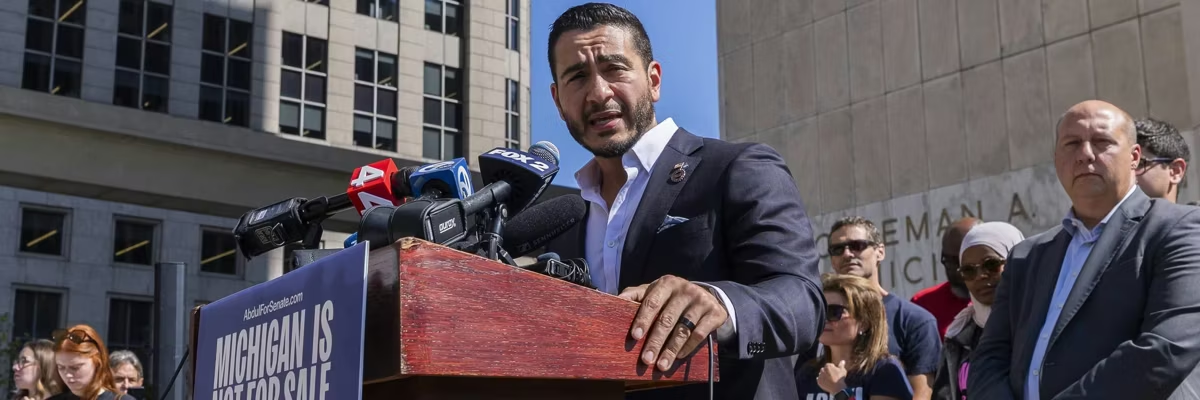
Michigan Democratic Senate primary winner Abdul El-Sayed speaks during a press conference in front of the Spirit of Detroit statue on August 5, 2026 in Detroit, Michigan.
Polls of physicians consistently show majority support for universal programs like Medicare for All—support that is only growing among younger doctors and those working in corporate-style health systems.
It’s time.
It’s time for Americans to finally have healthcare that’s compassionate and effective.
When I became a doctor 44 years ago I volunteered at a free clinic for patients without health insurance. I remember our clientele: a substitute teacher, a self-employed plumber, and other working people who weren’t offered coverage by an employer and couldn’t afford it on their own.
These weren’t freeloaders. They were neighbors, family members, and friends who earned too much to qualify for Medicaid, but still didn’t have health coverage through their jobs.
During his run for the US Senate, Dr. El-Sayed has been an enthusiastic supporter of Medicare for All, which would provide better care for everybody.
I wondered then, “Why should our ability to have health insurance depend on where we work?” I never got an answer.
Decades later, when the Affordable Care Act (ACA) passed, our clinic’s clientele changed dramatically. Gone were the self-employed or under-employed patients; they had gained coverage through ACA plans. Until now. This year, ACA premiums are going up 50% or more, which means many people are disenrolling. I’ll be seeing these folks in the free clinic again.
Our healthcare system is broken. We have poorer health outcomes than in other “less fortunate” countries, meaning our people are dying earlier and suffering more. Meanwhile, trying to navigate our hundreds of health plans is a nightmare for doctors, as each plan has its own rules for preauthorizations, deductibles, and copays. Patients are also unhappy with these restrictions, no matter what kind of coverage they have.
Thankfully, there is one exception: Medicare. This longstanding program covers medical care for seniors and people with disabilities, and it works. Even those who favor smaller government agree, “Don’t touch my Medicare!”
I’ve seen the benefits. In my later years I worked as a nursing home doctor, caring for patients who were rehabilitating from a stroke or surgery before they could safely return home. Medicare covered 100% of the cost for up to 21 days and 80% for another three months, as long as the need and attempts at progress were shown.
What if everybody in our country had high-quality coverage through an even better version of traditional Medicare? What if we had improved Medicare for All?
This is the program proposed by Abdul El-Sayed, who trained as a physician, led the health departments in Detroit and Wayne County, and no doubt shares my experiences with our broken healthcare system. Polls of physicians consistently show majority support for universal programs like Medicare for All—support that is only growing among younger doctors and those working in corporate-style health systems.
During his run for the US Senate, Dr. El-Sayed has been an enthusiastic supporter of Medicare for All, which would provide better care for everybody.
Under our current system, millions of uninsured people hold off on getting care until they have an emergency, simply because they can’t afford it. By then, problems that could have been prevented or treated easily become very dangerous and expensive.
Under Medicare for All, a strong focus on primary care would encourage preventive measures and early diagnoses. This would give us an opportunity to reduce the extremely high cost of managing diseases that, too often, haven’t been addressed over a lifetime of inadequate care.
Medicare for All would also make improvements to the existing program such as eliminating out-of-pocket costs; negotiating lower drug prices across the board; and adding long overdue coverage such as vision, dental, hearing, and long-term care. All this while maintaining the best features of Medicare like guaranteed coverage and free choice of medical provider.
It’s time to make our healthcare system work effectively for everybody. It’s time—it’s past time—for Medicare for All.
Dear Common Dreams reader, It’s been nearly 30 years since I co-founded Common Dreams with my late wife, Lina Newhouser. We had the radical notion that journalism should serve the public good, not corporate profits. It was clear to us from the outset what it would take to build such a project. No paid advertisements. No corporate sponsors. No millionaire publisher telling us what to think or do. Many people said we wouldn't last a year, but we proved those doubters wrong. Together with a tremendous team of journalists and dedicated staff, we built an independent media outlet free from the constraints of profits and corporate control. Our mission has always been simple: To inform. To inspire. To ignite change for the common good. Building Common Dreams was not easy. Our survival was never guaranteed. When you take on the most powerful forces—Wall Street greed, fossil fuel industry destruction, Big Tech lobbyists, and uber-rich oligarchs who have spent billions upon billions rigging the economy and democracy in their favor—the only bulwark you have is supporters who believe in your work. But here’s the urgent message from me today. It's never been this bad out there. And it's never been this hard to keep us going. At the very moment Common Dreams is most needed, the threats we face are intensifying. We need your support now more than ever. We don't accept corporate advertising and never will. We don't have a paywall because we don't think people should be blocked from critical news based on their ability to pay. Everything we do is funded by the donations of readers like you. When everyone does the little they can afford, we are strong. But if that support retreats or dries up, so do we. Will you donate now to make sure Common Dreams not only survives but thrives? —Craig Brown, Co-founder |
It’s time.
It’s time for Americans to finally have healthcare that’s compassionate and effective.
When I became a doctor 44 years ago I volunteered at a free clinic for patients without health insurance. I remember our clientele: a substitute teacher, a self-employed plumber, and other working people who weren’t offered coverage by an employer and couldn’t afford it on their own.
These weren’t freeloaders. They were neighbors, family members, and friends who earned too much to qualify for Medicaid, but still didn’t have health coverage through their jobs.
During his run for the US Senate, Dr. El-Sayed has been an enthusiastic supporter of Medicare for All, which would provide better care for everybody.
I wondered then, “Why should our ability to have health insurance depend on where we work?” I never got an answer.
Decades later, when the Affordable Care Act (ACA) passed, our clinic’s clientele changed dramatically. Gone were the self-employed or under-employed patients; they had gained coverage through ACA plans. Until now. This year, ACA premiums are going up 50% or more, which means many people are disenrolling. I’ll be seeing these folks in the free clinic again.
Our healthcare system is broken. We have poorer health outcomes than in other “less fortunate” countries, meaning our people are dying earlier and suffering more. Meanwhile, trying to navigate our hundreds of health plans is a nightmare for doctors, as each plan has its own rules for preauthorizations, deductibles, and copays. Patients are also unhappy with these restrictions, no matter what kind of coverage they have.
Thankfully, there is one exception: Medicare. This longstanding program covers medical care for seniors and people with disabilities, and it works. Even those who favor smaller government agree, “Don’t touch my Medicare!”
I’ve seen the benefits. In my later years I worked as a nursing home doctor, caring for patients who were rehabilitating from a stroke or surgery before they could safely return home. Medicare covered 100% of the cost for up to 21 days and 80% for another three months, as long as the need and attempts at progress were shown.
What if everybody in our country had high-quality coverage through an even better version of traditional Medicare? What if we had improved Medicare for All?
This is the program proposed by Abdul El-Sayed, who trained as a physician, led the health departments in Detroit and Wayne County, and no doubt shares my experiences with our broken healthcare system. Polls of physicians consistently show majority support for universal programs like Medicare for All—support that is only growing among younger doctors and those working in corporate-style health systems.
During his run for the US Senate, Dr. El-Sayed has been an enthusiastic supporter of Medicare for All, which would provide better care for everybody.
Under our current system, millions of uninsured people hold off on getting care until they have an emergency, simply because they can’t afford it. By then, problems that could have been prevented or treated easily become very dangerous and expensive.
Under Medicare for All, a strong focus on primary care would encourage preventive measures and early diagnoses. This would give us an opportunity to reduce the extremely high cost of managing diseases that, too often, haven’t been addressed over a lifetime of inadequate care.
Medicare for All would also make improvements to the existing program such as eliminating out-of-pocket costs; negotiating lower drug prices across the board; and adding long overdue coverage such as vision, dental, hearing, and long-term care. All this while maintaining the best features of Medicare like guaranteed coverage and free choice of medical provider.
It’s time to make our healthcare system work effectively for everybody. It’s time—it’s past time—for Medicare for All.
It’s time.
It’s time for Americans to finally have healthcare that’s compassionate and effective.
When I became a doctor 44 years ago I volunteered at a free clinic for patients without health insurance. I remember our clientele: a substitute teacher, a self-employed plumber, and other working people who weren’t offered coverage by an employer and couldn’t afford it on their own.
These weren’t freeloaders. They were neighbors, family members, and friends who earned too much to qualify for Medicaid, but still didn’t have health coverage through their jobs.
During his run for the US Senate, Dr. El-Sayed has been an enthusiastic supporter of Medicare for All, which would provide better care for everybody.
I wondered then, “Why should our ability to have health insurance depend on where we work?” I never got an answer.
Decades later, when the Affordable Care Act (ACA) passed, our clinic’s clientele changed dramatically. Gone were the self-employed or under-employed patients; they had gained coverage through ACA plans. Until now. This year, ACA premiums are going up 50% or more, which means many people are disenrolling. I’ll be seeing these folks in the free clinic again.
Our healthcare system is broken. We have poorer health outcomes than in other “less fortunate” countries, meaning our people are dying earlier and suffering more. Meanwhile, trying to navigate our hundreds of health plans is a nightmare for doctors, as each plan has its own rules for preauthorizations, deductibles, and copays. Patients are also unhappy with these restrictions, no matter what kind of coverage they have.
Thankfully, there is one exception: Medicare. This longstanding program covers medical care for seniors and people with disabilities, and it works. Even those who favor smaller government agree, “Don’t touch my Medicare!”
I’ve seen the benefits. In my later years I worked as a nursing home doctor, caring for patients who were rehabilitating from a stroke or surgery before they could safely return home. Medicare covered 100% of the cost for up to 21 days and 80% for another three months, as long as the need and attempts at progress were shown.
What if everybody in our country had high-quality coverage through an even better version of traditional Medicare? What if we had improved Medicare for All?
This is the program proposed by Abdul El-Sayed, who trained as a physician, led the health departments in Detroit and Wayne County, and no doubt shares my experiences with our broken healthcare system. Polls of physicians consistently show majority support for universal programs like Medicare for All—support that is only growing among younger doctors and those working in corporate-style health systems.
During his run for the US Senate, Dr. El-Sayed has been an enthusiastic supporter of Medicare for All, which would provide better care for everybody.
Under our current system, millions of uninsured people hold off on getting care until they have an emergency, simply because they can’t afford it. By then, problems that could have been prevented or treated easily become very dangerous and expensive.
Under Medicare for All, a strong focus on primary care would encourage preventive measures and early diagnoses. This would give us an opportunity to reduce the extremely high cost of managing diseases that, too often, haven’t been addressed over a lifetime of inadequate care.
Medicare for All would also make improvements to the existing program such as eliminating out-of-pocket costs; negotiating lower drug prices across the board; and adding long overdue coverage such as vision, dental, hearing, and long-term care. All this while maintaining the best features of Medicare like guaranteed coverage and free choice of medical provider.
It’s time to make our healthcare system work effectively for everybody. It’s time—it’s past time—for Medicare for All.