5
#000000
#FFFFFF
To donate by check, phone, or other method, see our More Ways to Give page.
Daily news & progressive opinion—funded by the people, not the corporations—delivered straight to your inbox.
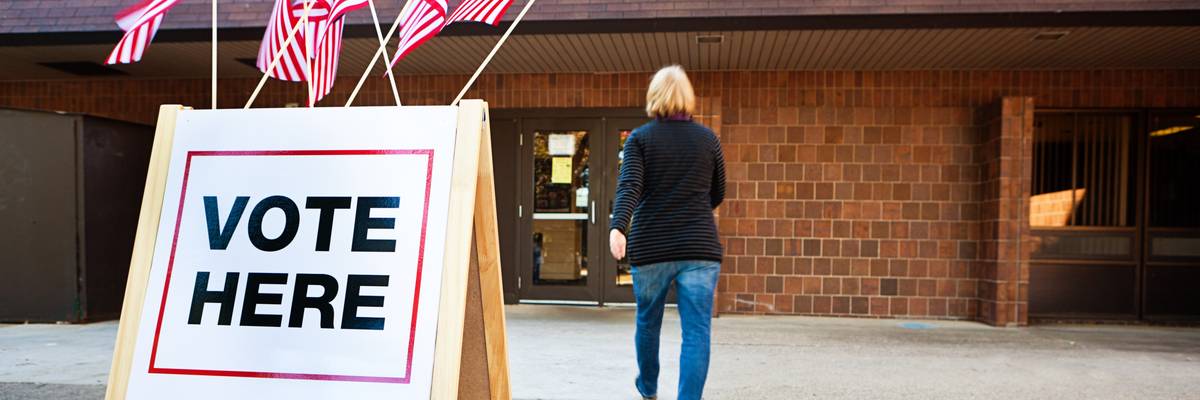
Corporations in Delaware, writes Hartmann, "can now decide who’s going to run the government, what the laws are, and... even what regulations companies must follow and what limits there are on their behavior."
In the United States of America, this is what it has come to.
Corporations can now vote in Delaware. And they’re doing it.
Seriously. Not dystopian science fiction or a new novel by an AI version of George Orwell. Actual corporations — what America’s first Supreme Court Justice, John Marshall, in 1819 called “an artificial being, invisible, intangible, and existing only in contemplation of law” — are today voting in elections for everything from the mayor and town council to referendums on corporate taxes and limits on corporate behavior.
What could possibly go wrong?
There are, after all, more corporations than people in Delaware. They can now decide who’s going to run the government, what the laws are, and — through their votes to elect humans who’ll take corporate money to do what corporations want (something else that corrupt Republicans on the Supreme Court legalized) — even what regulations companies must follow and what limits there are on their behavior.
In a few weeks, my next book will be coming out, “Who Killed the American Dream: The Greatest Political Crime Ever Told,” and the timing couldn’t be more synchronous.
The book, written like a murder mystery but 100% true, tells the story of how a corrupt Supreme Court clerk conspired with a corrupt Supreme Court justice to hand “corporate personhood” to the railroad corporations that were then among the richest and most powerful in the world.
The decision was handed down in 1886; in it, the Court itself didn’t say a single word about corporate personhood. Back then corporations had the rights of “artificial persons” so they could pay taxes, own land, and execute contracts and lawsuits, but nobody seriously claimed they could assert human rights like free speech, privacy, or the right to vote.
But the clerk of the Court, a wealthy plutocrat named John Chandler Bancroft Davis, slipped into the headnote of the case — a commentary for law students and others wanting a summary of a decision, which carries absolutely no legal weight whatsoever — that the Chief Justice, Morrison Remick Waite, had claimed corporations were “persons,” implying they had rights under the 14th Amendment.
The railroads then hired a few retired members of Congress who were on the committees that wrote the Amendment as frontmen and for the next five years they traveled the country claiming that the “actual intent” of the authors of the 14th Amendment was to grant human rights to corporations, not former slaves.
Their efforts worked; just ten years later, in the Covington & Lexington Turnpike v. Sandford case, the Court cited the Santa Clara decision and ruled:
“[C]orporations are persons within the meaning of the constitutional provisions forbidding the deprivation of property without due process of law as well as a denial of the equal protection of the laws.”
That badly abused Amendment, ratified on July 9, 1868, was written to liberate formerly enslaved people, and its language is pretty clear about that:
“No state shall make or enforce any law which shall abridge the privileges or immunities of citizens of the United States; nor shall any state deprive any person of life, liberty, or property, without due process of law; nor deny to any person within its jurisdiction the equal protection of the laws.” (emphasis added)
The railroad corporations claimed that because they were taxed at different rates on property they owned in Santa Clara and Santa Ana counties in California, they were “persons” being denied the “equal protection of the law.” The Court determined that the California constitution already dealt with tax issues like that, giving the railroad the relief they wanted, but there was no federal action at all.
However, the lie about corporate personhood buried in the headnote took root and lives on to this day. For example, yesterday afternoon I asked DuckDuckGo’s AI the question:
“Who won the 1886 Santa Clara Supreme Court decision?”
And the answer I got back was:
“The Southern Pacific Railroad Company won the 1886 Santa Clara County v. Southern Pacific Railroad decision. The Supreme Court ruled in favor of the railroad, affirming that corporations are considered ‘persons’ under the Fourteenth Amendment.”
None of that is true, but it was nonetheless the basis of the 1978 First National Bank v Bellotti decision written by Lewis Powell himself (of “Powell Memo” fame), claiming that because corporations are “persons” with rights under the Bill of Rights — including the First Amendment right to free speech — they could spend big bucks to swing elections. In that decision, the Court majority footnoted:
“It has been settled for almost a century that corporations are persons within the meaning of the Fourteenth Amendment. Santa Clara County v. Southern Pacific R. Co., 118 U. S. 394 (1886); see Covington & Lexington Turnpike R. Co. v. Sandford, 164 U. S. 578 (1896).”
Because corporations don’t have mouths to speak with, Powell reasoned, their money served the same purpose. So they could “speak” freely with millions thrown into elections, corrupting our democracy to their benefit and our detriment.
Two years earlier, in Buckley v Valeo, the Court had struck down the 1970s campaign contribution limits Congress put into law after the Nixon bribery scandals. They ruled that wealthy Senator James Buckley (brother of William F. Buckley) could use his own money to finance his election campaign because his money was functionally the same thing as his First Amendment-protected free speech.
Which led straight to Clarence Thomas — the most corrupt Supreme Court justice in history, then on the take from a Nazi-memorabilia-collecting rightwing billionaire — to cast the deciding vote in Citizens United.
That bizarre decision blew up hundreds of campaign finance and other good-government laws, claiming that there should be virtually no limits on the money morbidly rich individuals, corporations, and even foreign entities could pour into US elections.
Clarence Thomas even cited the Bellotti case and, thus, its reference to Santa Clara to justify handing our democratic processes over to the richest people and biggest companies in the nation.
And now we’ve arrived at terminal insanity. As Reuters reported on Tuesday:
“A judge in Delaware, where many big U.S. companies are incorporated, ruled on Tuesday that a small town that allows corporations to vote in municipal elections was not violating the state’s constitution.
“Delaware Superior Court Judge Craig Karsnitz said the beach town of Fenwick Island was not diluting human votes by allowing companies and other legal entities that own property to cast votes in municipal elections.”
More corporations are incorporated in Delaware than any other state in the nation because of that state’s lax corporate laws and low corporate taxes: there are more corporations in the state than people.
And now they can vote.
I wrote Who Stole the American Dream? to wake people up to the corruption of our democracy by the rich and powerful, particularly the corporate “artificial beings” that keep buying off judges and politicians because of corrupt Supreme Court cases citing that corrupt headnote, starting with Santa Clara and then going to Covington and then straight-lined to Bellotti and Citizens United.
The entire thing is a fraud, a 140-year-long scam, as knowledgeable legislators like Sheldon Whitehouse, Bernie Sanders, Ro Khanna, Mark Pocan, Alexandria Ocasio-Cortez, Pramila Jayapal, and Elizabeth Warren will tell you in a New York minute.
And it needs to be overturned.
There are a few ways to do that, the most effective being a constitutional amendment, but reorganizing the Supreme Court and even strong legislation can take a bite out of it. I detail them all in the book, and good government groups like Move to Amend and Public Citizen have been on this case for years.
The situation, after all, has become so bad that I suggested in my book Rebooting the American Dream (which Bernie read from on the floor of the Senate in his famous filibuster) that members of Congress should be required to wear NASCAR-style patches to let folks know which corporations are “sponsoring” them.
If we don’t get active and take back our democracy for humans, corporations may one day vote one of themselves into office and the Republican majority on the Supreme Court will probably simply nod along.
Dear Common Dreams reader, It’s been nearly 30 years since I co-founded Common Dreams with my late wife, Lina Newhouser. We had the radical notion that journalism should serve the public good, not corporate profits. It was clear to us from the outset what it would take to build such a project. No paid advertisements. No corporate sponsors. No millionaire publisher telling us what to think or do. Many people said we wouldn't last a year, but we proved those doubters wrong. Together with a tremendous team of journalists and dedicated staff, we built an independent media outlet free from the constraints of profits and corporate control. Our mission has always been simple: To inform. To inspire. To ignite change for the common good. Building Common Dreams was not easy. Our survival was never guaranteed. When you take on the most powerful forces—Wall Street greed, fossil fuel industry destruction, Big Tech lobbyists, and uber-rich oligarchs who have spent billions upon billions rigging the economy and democracy in their favor—the only bulwark you have is supporters who believe in your work. But here’s the urgent message from me today. It's never been this bad out there. And it's never been this hard to keep us going. At the very moment Common Dreams is most needed, the threats we face are intensifying. We need your support now more than ever. We don't accept corporate advertising and never will. We don't have a paywall because we don't think people should be blocked from critical news based on their ability to pay. Everything we do is funded by the donations of readers like you. When everyone does the little they can afford, we are strong. But if that support retreats or dries up, so do we. Will you donate now to make sure Common Dreams not only survives but thrives? —Craig Brown, Co-founder |
Corporations can now vote in Delaware. And they’re doing it.
Seriously. Not dystopian science fiction or a new novel by an AI version of George Orwell. Actual corporations — what America’s first Supreme Court Justice, John Marshall, in 1819 called “an artificial being, invisible, intangible, and existing only in contemplation of law” — are today voting in elections for everything from the mayor and town council to referendums on corporate taxes and limits on corporate behavior.
What could possibly go wrong?
There are, after all, more corporations than people in Delaware. They can now decide who’s going to run the government, what the laws are, and — through their votes to elect humans who’ll take corporate money to do what corporations want (something else that corrupt Republicans on the Supreme Court legalized) — even what regulations companies must follow and what limits there are on their behavior.
In a few weeks, my next book will be coming out, “Who Killed the American Dream: The Greatest Political Crime Ever Told,” and the timing couldn’t be more synchronous.
The book, written like a murder mystery but 100% true, tells the story of how a corrupt Supreme Court clerk conspired with a corrupt Supreme Court justice to hand “corporate personhood” to the railroad corporations that were then among the richest and most powerful in the world.
The decision was handed down in 1886; in it, the Court itself didn’t say a single word about corporate personhood. Back then corporations had the rights of “artificial persons” so they could pay taxes, own land, and execute contracts and lawsuits, but nobody seriously claimed they could assert human rights like free speech, privacy, or the right to vote.
But the clerk of the Court, a wealthy plutocrat named John Chandler Bancroft Davis, slipped into the headnote of the case — a commentary for law students and others wanting a summary of a decision, which carries absolutely no legal weight whatsoever — that the Chief Justice, Morrison Remick Waite, had claimed corporations were “persons,” implying they had rights under the 14th Amendment.
The railroads then hired a few retired members of Congress who were on the committees that wrote the Amendment as frontmen and for the next five years they traveled the country claiming that the “actual intent” of the authors of the 14th Amendment was to grant human rights to corporations, not former slaves.
Their efforts worked; just ten years later, in the Covington & Lexington Turnpike v. Sandford case, the Court cited the Santa Clara decision and ruled:
“[C]orporations are persons within the meaning of the constitutional provisions forbidding the deprivation of property without due process of law as well as a denial of the equal protection of the laws.”
That badly abused Amendment, ratified on July 9, 1868, was written to liberate formerly enslaved people, and its language is pretty clear about that:
“No state shall make or enforce any law which shall abridge the privileges or immunities of citizens of the United States; nor shall any state deprive any person of life, liberty, or property, without due process of law; nor deny to any person within its jurisdiction the equal protection of the laws.” (emphasis added)
The railroad corporations claimed that because they were taxed at different rates on property they owned in Santa Clara and Santa Ana counties in California, they were “persons” being denied the “equal protection of the law.” The Court determined that the California constitution already dealt with tax issues like that, giving the railroad the relief they wanted, but there was no federal action at all.
However, the lie about corporate personhood buried in the headnote took root and lives on to this day. For example, yesterday afternoon I asked DuckDuckGo’s AI the question:
“Who won the 1886 Santa Clara Supreme Court decision?”
And the answer I got back was:
“The Southern Pacific Railroad Company won the 1886 Santa Clara County v. Southern Pacific Railroad decision. The Supreme Court ruled in favor of the railroad, affirming that corporations are considered ‘persons’ under the Fourteenth Amendment.”
None of that is true, but it was nonetheless the basis of the 1978 First National Bank v Bellotti decision written by Lewis Powell himself (of “Powell Memo” fame), claiming that because corporations are “persons” with rights under the Bill of Rights — including the First Amendment right to free speech — they could spend big bucks to swing elections. In that decision, the Court majority footnoted:
“It has been settled for almost a century that corporations are persons within the meaning of the Fourteenth Amendment. Santa Clara County v. Southern Pacific R. Co., 118 U. S. 394 (1886); see Covington & Lexington Turnpike R. Co. v. Sandford, 164 U. S. 578 (1896).”
Because corporations don’t have mouths to speak with, Powell reasoned, their money served the same purpose. So they could “speak” freely with millions thrown into elections, corrupting our democracy to their benefit and our detriment.
Two years earlier, in Buckley v Valeo, the Court had struck down the 1970s campaign contribution limits Congress put into law after the Nixon bribery scandals. They ruled that wealthy Senator James Buckley (brother of William F. Buckley) could use his own money to finance his election campaign because his money was functionally the same thing as his First Amendment-protected free speech.
Which led straight to Clarence Thomas — the most corrupt Supreme Court justice in history, then on the take from a Nazi-memorabilia-collecting rightwing billionaire — to cast the deciding vote in Citizens United.
That bizarre decision blew up hundreds of campaign finance and other good-government laws, claiming that there should be virtually no limits on the money morbidly rich individuals, corporations, and even foreign entities could pour into US elections.
Clarence Thomas even cited the Bellotti case and, thus, its reference to Santa Clara to justify handing our democratic processes over to the richest people and biggest companies in the nation.
And now we’ve arrived at terminal insanity. As Reuters reported on Tuesday:
“A judge in Delaware, where many big U.S. companies are incorporated, ruled on Tuesday that a small town that allows corporations to vote in municipal elections was not violating the state’s constitution.
“Delaware Superior Court Judge Craig Karsnitz said the beach town of Fenwick Island was not diluting human votes by allowing companies and other legal entities that own property to cast votes in municipal elections.”
More corporations are incorporated in Delaware than any other state in the nation because of that state’s lax corporate laws and low corporate taxes: there are more corporations in the state than people.
And now they can vote.
I wrote Who Stole the American Dream? to wake people up to the corruption of our democracy by the rich and powerful, particularly the corporate “artificial beings” that keep buying off judges and politicians because of corrupt Supreme Court cases citing that corrupt headnote, starting with Santa Clara and then going to Covington and then straight-lined to Bellotti and Citizens United.
The entire thing is a fraud, a 140-year-long scam, as knowledgeable legislators like Sheldon Whitehouse, Bernie Sanders, Ro Khanna, Mark Pocan, Alexandria Ocasio-Cortez, Pramila Jayapal, and Elizabeth Warren will tell you in a New York minute.
And it needs to be overturned.
There are a few ways to do that, the most effective being a constitutional amendment, but reorganizing the Supreme Court and even strong legislation can take a bite out of it. I detail them all in the book, and good government groups like Move to Amend and Public Citizen have been on this case for years.
The situation, after all, has become so bad that I suggested in my book Rebooting the American Dream (which Bernie read from on the floor of the Senate in his famous filibuster) that members of Congress should be required to wear NASCAR-style patches to let folks know which corporations are “sponsoring” them.
If we don’t get active and take back our democracy for humans, corporations may one day vote one of themselves into office and the Republican majority on the Supreme Court will probably simply nod along.
Corporations can now vote in Delaware. And they’re doing it.
Seriously. Not dystopian science fiction or a new novel by an AI version of George Orwell. Actual corporations — what America’s first Supreme Court Justice, John Marshall, in 1819 called “an artificial being, invisible, intangible, and existing only in contemplation of law” — are today voting in elections for everything from the mayor and town council to referendums on corporate taxes and limits on corporate behavior.
What could possibly go wrong?
There are, after all, more corporations than people in Delaware. They can now decide who’s going to run the government, what the laws are, and — through their votes to elect humans who’ll take corporate money to do what corporations want (something else that corrupt Republicans on the Supreme Court legalized) — even what regulations companies must follow and what limits there are on their behavior.
In a few weeks, my next book will be coming out, “Who Killed the American Dream: The Greatest Political Crime Ever Told,” and the timing couldn’t be more synchronous.
The book, written like a murder mystery but 100% true, tells the story of how a corrupt Supreme Court clerk conspired with a corrupt Supreme Court justice to hand “corporate personhood” to the railroad corporations that were then among the richest and most powerful in the world.
The decision was handed down in 1886; in it, the Court itself didn’t say a single word about corporate personhood. Back then corporations had the rights of “artificial persons” so they could pay taxes, own land, and execute contracts and lawsuits, but nobody seriously claimed they could assert human rights like free speech, privacy, or the right to vote.
But the clerk of the Court, a wealthy plutocrat named John Chandler Bancroft Davis, slipped into the headnote of the case — a commentary for law students and others wanting a summary of a decision, which carries absolutely no legal weight whatsoever — that the Chief Justice, Morrison Remick Waite, had claimed corporations were “persons,” implying they had rights under the 14th Amendment.
The railroads then hired a few retired members of Congress who were on the committees that wrote the Amendment as frontmen and for the next five years they traveled the country claiming that the “actual intent” of the authors of the 14th Amendment was to grant human rights to corporations, not former slaves.
Their efforts worked; just ten years later, in the Covington & Lexington Turnpike v. Sandford case, the Court cited the Santa Clara decision and ruled:
“[C]orporations are persons within the meaning of the constitutional provisions forbidding the deprivation of property without due process of law as well as a denial of the equal protection of the laws.”
That badly abused Amendment, ratified on July 9, 1868, was written to liberate formerly enslaved people, and its language is pretty clear about that:
“No state shall make or enforce any law which shall abridge the privileges or immunities of citizens of the United States; nor shall any state deprive any person of life, liberty, or property, without due process of law; nor deny to any person within its jurisdiction the equal protection of the laws.” (emphasis added)
The railroad corporations claimed that because they were taxed at different rates on property they owned in Santa Clara and Santa Ana counties in California, they were “persons” being denied the “equal protection of the law.” The Court determined that the California constitution already dealt with tax issues like that, giving the railroad the relief they wanted, but there was no federal action at all.
However, the lie about corporate personhood buried in the headnote took root and lives on to this day. For example, yesterday afternoon I asked DuckDuckGo’s AI the question:
“Who won the 1886 Santa Clara Supreme Court decision?”
And the answer I got back was:
“The Southern Pacific Railroad Company won the 1886 Santa Clara County v. Southern Pacific Railroad decision. The Supreme Court ruled in favor of the railroad, affirming that corporations are considered ‘persons’ under the Fourteenth Amendment.”
None of that is true, but it was nonetheless the basis of the 1978 First National Bank v Bellotti decision written by Lewis Powell himself (of “Powell Memo” fame), claiming that because corporations are “persons” with rights under the Bill of Rights — including the First Amendment right to free speech — they could spend big bucks to swing elections. In that decision, the Court majority footnoted:
“It has been settled for almost a century that corporations are persons within the meaning of the Fourteenth Amendment. Santa Clara County v. Southern Pacific R. Co., 118 U. S. 394 (1886); see Covington & Lexington Turnpike R. Co. v. Sandford, 164 U. S. 578 (1896).”
Because corporations don’t have mouths to speak with, Powell reasoned, their money served the same purpose. So they could “speak” freely with millions thrown into elections, corrupting our democracy to their benefit and our detriment.
Two years earlier, in Buckley v Valeo, the Court had struck down the 1970s campaign contribution limits Congress put into law after the Nixon bribery scandals. They ruled that wealthy Senator James Buckley (brother of William F. Buckley) could use his own money to finance his election campaign because his money was functionally the same thing as his First Amendment-protected free speech.
Which led straight to Clarence Thomas — the most corrupt Supreme Court justice in history, then on the take from a Nazi-memorabilia-collecting rightwing billionaire — to cast the deciding vote in Citizens United.
That bizarre decision blew up hundreds of campaign finance and other good-government laws, claiming that there should be virtually no limits on the money morbidly rich individuals, corporations, and even foreign entities could pour into US elections.
Clarence Thomas even cited the Bellotti case and, thus, its reference to Santa Clara to justify handing our democratic processes over to the richest people and biggest companies in the nation.
And now we’ve arrived at terminal insanity. As Reuters reported on Tuesday:
“A judge in Delaware, where many big U.S. companies are incorporated, ruled on Tuesday that a small town that allows corporations to vote in municipal elections was not violating the state’s constitution.
“Delaware Superior Court Judge Craig Karsnitz said the beach town of Fenwick Island was not diluting human votes by allowing companies and other legal entities that own property to cast votes in municipal elections.”
More corporations are incorporated in Delaware than any other state in the nation because of that state’s lax corporate laws and low corporate taxes: there are more corporations in the state than people.
And now they can vote.
I wrote Who Stole the American Dream? to wake people up to the corruption of our democracy by the rich and powerful, particularly the corporate “artificial beings” that keep buying off judges and politicians because of corrupt Supreme Court cases citing that corrupt headnote, starting with Santa Clara and then going to Covington and then straight-lined to Bellotti and Citizens United.
The entire thing is a fraud, a 140-year-long scam, as knowledgeable legislators like Sheldon Whitehouse, Bernie Sanders, Ro Khanna, Mark Pocan, Alexandria Ocasio-Cortez, Pramila Jayapal, and Elizabeth Warren will tell you in a New York minute.
And it needs to be overturned.
There are a few ways to do that, the most effective being a constitutional amendment, but reorganizing the Supreme Court and even strong legislation can take a bite out of it. I detail them all in the book, and good government groups like Move to Amend and Public Citizen have been on this case for years.
The situation, after all, has become so bad that I suggested in my book Rebooting the American Dream (which Bernie read from on the floor of the Senate in his famous filibuster) that members of Congress should be required to wear NASCAR-style patches to let folks know which corporations are “sponsoring” them.
If we don’t get active and take back our democracy for humans, corporations may one day vote one of themselves into office and the Republican majority on the Supreme Court will probably simply nod along.