SUBSCRIBE TO OUR FREE NEWSLETTER
Daily news & progressive opinion—funded by the people, not the corporations—delivered straight to your inbox.
5
#000000
#FFFFFF
To donate by check, phone, or other method, see our More Ways to Give page.
Daily news & progressive opinion—funded by the people, not the corporations—delivered straight to your inbox.
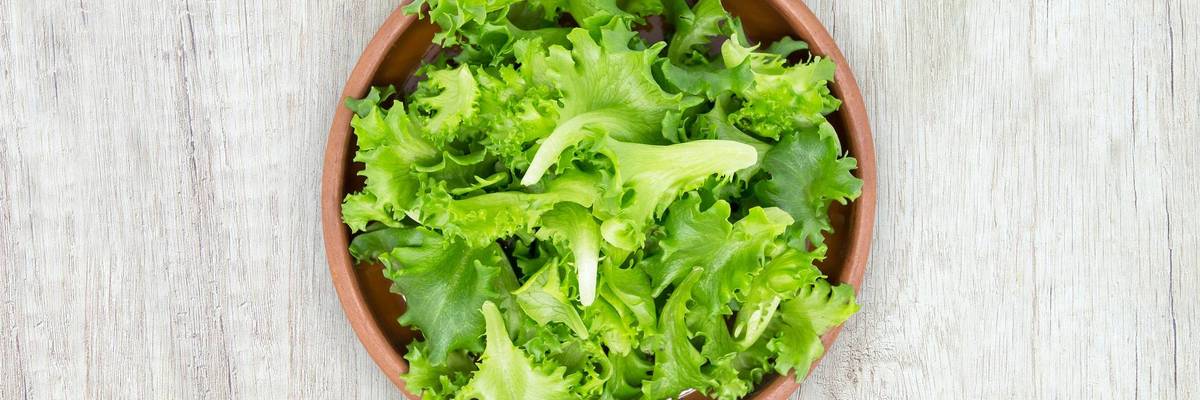
Lettuce is shown in a bowl.
What will help prevent future outbreaks is restoring and expanding regulatory agencies tracking infectious outbreaks, and breaking up food monopolies while sustaining and strengthening small farms.
The recent, record-breaking outbreak of Cyclospora infections linked to lettuce consumption has left Americans wondering what food is safe to eat.
What brands of lettuce are safe and which aren’t are important questions. But even more important might be why such outbreaks happen in the first place—and how our government has made them increasingly likely.
Nobody wants explosive diarrhea—and yet the way our federal government has left us unprotected is enough to make one sick.
The chief culprit in the cyclosporiasis debacle is our centralized, monopoly-based food system. The outbreak has been linked to Taylor Fresh Foods, which supplies many restaurants. Many brands of bagged lettuce and salad are also Taylor products—whether consumers realize it or not.
Last year the administration weakened the nation’s already thin food safety monitoring service, FoodNet, by making it optional to track numerous types of infections—including cyclosporiasis.
In fact, according to Farm Action, “Just four companies—Taylor Fresh Foods, Cultrale-Safra, Itochu, and Bonduelle—control 54% of the US fresh-cut salad market.” Similarly, only a handful of corporations control meat, dairy, grains, and beverages. Another handful controls food distribution.
This means that the industry practices giving rise to contaminated foods happen on a very large scale—and those foods are then distributed all over the country. That a single outbreak in one company can potentially impact the entire nation is a grave weakness in the food system.
Monopolies like Taylor Farms use the profits they generate from dominating our food supplies to lobby the federal government for weaker oversight. According to Wired, the company has contributed millions of dollars to conservative political committees, including a super PAC called MAGA Inc.
It has also spent hundreds of thousands of dollars to directly lobby against food safety regulations. News even emerged recently of representatives from Taylor Farms calling the White House to try to delay a recall of their lettuce.
The Trump administration has been more than happy to comply with Big Food’s wishes to reap billions in profits with little oversight.
Last year the administration weakened the nation’s already thin food safety monitoring service, FoodNet, by making it optional to track numerous types of infections—including cyclosporiasis. “We’re really gutting one of the cornerstones of food safety,” epidemiologist Elaine Scallan Walter warned The New York Times last September.
Mega monopolies aren’t just bad for our gut. They also contribute to higher prices and reduced access to fresh foods.
Their sheer size gives them what Civil Eats called “enormous power to make decisions about what food is produced how, where, and by whom, and who gets to eat it.” Big Food companies have repeatedly been found guilty of illegal price fixing. They routinely package the same foods under different labels to give the impression of diversity and competition.
Small farms are one important solution. Their supply chains are localized, making it easier to track and stop infections before they spread on a national scale. Independent farmers are selling out of lettuce at farmers markets as people seek out clean greens.
Yet instead of promoting and aiding small farmers—as he promised to do when running for president in 2024—President Donald Trump has cut back support for training new farmers, who might be competitors to companies like Taylor Farms.
His administration also cut a program that matched small producers with food banks—feeding hungry people while financially stabilizing independent farmers—along with a disaster aid program for minority farmers. The funding losses have left small farmers reeling.
What will help prevent future outbreaks is restoring and expanding regulatory agencies tracking infectious outbreaks. And breaking up food monopolies while sustaining and strengthening small farms.
The question is: Will the federal government have the guts to do what it takes to protect the American people’s guts?
Dear Common Dreams reader, It’s been nearly 30 years since I co-founded Common Dreams with my late wife, Lina Newhouser. We had the radical notion that journalism should serve the public good, not corporate profits. It was clear to us from the outset what it would take to build such a project. No paid advertisements. No corporate sponsors. No millionaire publisher telling us what to think or do. Many people said we wouldn't last a year, but we proved those doubters wrong. Together with a tremendous team of journalists and dedicated staff, we built an independent media outlet free from the constraints of profits and corporate control. Our mission has always been simple: To inform. To inspire. To ignite change for the common good. Building Common Dreams was not easy. Our survival was never guaranteed. When you take on the most powerful forces—Wall Street greed, fossil fuel industry destruction, Big Tech lobbyists, and uber-rich oligarchs who have spent billions upon billions rigging the economy and democracy in their favor—the only bulwark you have is supporters who believe in your work. But here’s the urgent message from me today. It's never been this bad out there. And it's never been this hard to keep us going. At the very moment Common Dreams is most needed, the threats we face are intensifying. We need your support now more than ever. We don't accept corporate advertising and never will. We don't have a paywall because we don't think people should be blocked from critical news based on their ability to pay. Everything we do is funded by the donations of readers like you. When everyone does the little they can afford, we are strong. But if that support retreats or dries up, so do we. Will you donate now to make sure Common Dreams not only survives but thrives? —Craig Brown, Co-founder |
The recent, record-breaking outbreak of Cyclospora infections linked to lettuce consumption has left Americans wondering what food is safe to eat.
What brands of lettuce are safe and which aren’t are important questions. But even more important might be why such outbreaks happen in the first place—and how our government has made them increasingly likely.
Nobody wants explosive diarrhea—and yet the way our federal government has left us unprotected is enough to make one sick.
The chief culprit in the cyclosporiasis debacle is our centralized, monopoly-based food system. The outbreak has been linked to Taylor Fresh Foods, which supplies many restaurants. Many brands of bagged lettuce and salad are also Taylor products—whether consumers realize it or not.
Last year the administration weakened the nation’s already thin food safety monitoring service, FoodNet, by making it optional to track numerous types of infections—including cyclosporiasis.
In fact, according to Farm Action, “Just four companies—Taylor Fresh Foods, Cultrale-Safra, Itochu, and Bonduelle—control 54% of the US fresh-cut salad market.” Similarly, only a handful of corporations control meat, dairy, grains, and beverages. Another handful controls food distribution.
This means that the industry practices giving rise to contaminated foods happen on a very large scale—and those foods are then distributed all over the country. That a single outbreak in one company can potentially impact the entire nation is a grave weakness in the food system.
Monopolies like Taylor Farms use the profits they generate from dominating our food supplies to lobby the federal government for weaker oversight. According to Wired, the company has contributed millions of dollars to conservative political committees, including a super PAC called MAGA Inc.
It has also spent hundreds of thousands of dollars to directly lobby against food safety regulations. News even emerged recently of representatives from Taylor Farms calling the White House to try to delay a recall of their lettuce.
The Trump administration has been more than happy to comply with Big Food’s wishes to reap billions in profits with little oversight.
Last year the administration weakened the nation’s already thin food safety monitoring service, FoodNet, by making it optional to track numerous types of infections—including cyclosporiasis. “We’re really gutting one of the cornerstones of food safety,” epidemiologist Elaine Scallan Walter warned The New York Times last September.
Mega monopolies aren’t just bad for our gut. They also contribute to higher prices and reduced access to fresh foods.
Their sheer size gives them what Civil Eats called “enormous power to make decisions about what food is produced how, where, and by whom, and who gets to eat it.” Big Food companies have repeatedly been found guilty of illegal price fixing. They routinely package the same foods under different labels to give the impression of diversity and competition.
Small farms are one important solution. Their supply chains are localized, making it easier to track and stop infections before they spread on a national scale. Independent farmers are selling out of lettuce at farmers markets as people seek out clean greens.
Yet instead of promoting and aiding small farmers—as he promised to do when running for president in 2024—President Donald Trump has cut back support for training new farmers, who might be competitors to companies like Taylor Farms.
His administration also cut a program that matched small producers with food banks—feeding hungry people while financially stabilizing independent farmers—along with a disaster aid program for minority farmers. The funding losses have left small farmers reeling.
What will help prevent future outbreaks is restoring and expanding regulatory agencies tracking infectious outbreaks. And breaking up food monopolies while sustaining and strengthening small farms.
The question is: Will the federal government have the guts to do what it takes to protect the American people’s guts?
The recent, record-breaking outbreak of Cyclospora infections linked to lettuce consumption has left Americans wondering what food is safe to eat.
What brands of lettuce are safe and which aren’t are important questions. But even more important might be why such outbreaks happen in the first place—and how our government has made them increasingly likely.
Nobody wants explosive diarrhea—and yet the way our federal government has left us unprotected is enough to make one sick.
The chief culprit in the cyclosporiasis debacle is our centralized, monopoly-based food system. The outbreak has been linked to Taylor Fresh Foods, which supplies many restaurants. Many brands of bagged lettuce and salad are also Taylor products—whether consumers realize it or not.
Last year the administration weakened the nation’s already thin food safety monitoring service, FoodNet, by making it optional to track numerous types of infections—including cyclosporiasis.
In fact, according to Farm Action, “Just four companies—Taylor Fresh Foods, Cultrale-Safra, Itochu, and Bonduelle—control 54% of the US fresh-cut salad market.” Similarly, only a handful of corporations control meat, dairy, grains, and beverages. Another handful controls food distribution.
This means that the industry practices giving rise to contaminated foods happen on a very large scale—and those foods are then distributed all over the country. That a single outbreak in one company can potentially impact the entire nation is a grave weakness in the food system.
Monopolies like Taylor Farms use the profits they generate from dominating our food supplies to lobby the federal government for weaker oversight. According to Wired, the company has contributed millions of dollars to conservative political committees, including a super PAC called MAGA Inc.
It has also spent hundreds of thousands of dollars to directly lobby against food safety regulations. News even emerged recently of representatives from Taylor Farms calling the White House to try to delay a recall of their lettuce.
The Trump administration has been more than happy to comply with Big Food’s wishes to reap billions in profits with little oversight.
Last year the administration weakened the nation’s already thin food safety monitoring service, FoodNet, by making it optional to track numerous types of infections—including cyclosporiasis. “We’re really gutting one of the cornerstones of food safety,” epidemiologist Elaine Scallan Walter warned The New York Times last September.
Mega monopolies aren’t just bad for our gut. They also contribute to higher prices and reduced access to fresh foods.
Their sheer size gives them what Civil Eats called “enormous power to make decisions about what food is produced how, where, and by whom, and who gets to eat it.” Big Food companies have repeatedly been found guilty of illegal price fixing. They routinely package the same foods under different labels to give the impression of diversity and competition.
Small farms are one important solution. Their supply chains are localized, making it easier to track and stop infections before they spread on a national scale. Independent farmers are selling out of lettuce at farmers markets as people seek out clean greens.
Yet instead of promoting and aiding small farmers—as he promised to do when running for president in 2024—President Donald Trump has cut back support for training new farmers, who might be competitors to companies like Taylor Farms.
His administration also cut a program that matched small producers with food banks—feeding hungry people while financially stabilizing independent farmers—along with a disaster aid program for minority farmers. The funding losses have left small farmers reeling.
What will help prevent future outbreaks is restoring and expanding regulatory agencies tracking infectious outbreaks. And breaking up food monopolies while sustaining and strengthening small farms.
The question is: Will the federal government have the guts to do what it takes to protect the American people’s guts?