

SUBSCRIBE TO OUR FREE NEWSLETTER
Daily news & progressive opinion—funded by the people, not the corporations—delivered straight to your inbox.
5
#000000
#FFFFFF
To donate by check, phone, or other method, see our More Ways to Give page.
Daily news & progressive opinion—funded by the people, not the corporations—delivered straight to your inbox.

Yatziri Tovar, Make the Road New York, (917) 771-2818, yatziri.tovar@maketheroadny.org
Alejandra Lopez, The Legal Aid Society, (917) 294-9348, ailopez@legal-aid.org
Jen Nessel, Center for Constitutional Rights, (212) 614-6449, jnessel@ccrjustice.org
Immigrant rights groups appeared today in the United States District Court for the Southern District of New York on Make the Road New York v Cuccinelli - litigation brought last month challenging the Trump administration's unilateral and unconstitutional changes to "public charge."
Plaintiffs today petitioned the court to grant a preliminary injunction before the proposed changes to "public charge" take effect on October 15, 2019. Federal Judge George B. Daniels ordered plaintiffs to submit a proposed order by tomorrow at noon ET, and stated that he would issue a decision on the preliminary injunction by the end of this week.
Attorneys from the Center for Constitutional Rights, The Legal Aid Society, and Paul, Weiss, Rifkind, Wharton & Garrison LLP litigated the case on behalf of Make the Road New York, African Services Committee, Asian American Federation, Catholic Charities Community Services, and Catholic Legal Immigration Network (CLINIC).
Today, plaintiffs argued that this dramatic change should be halted until the lawfulness of the proposed rule is determined. New York State Attorney General Letitia James has filed a separate lawsuit over the rule, and attorneys from the AG's office also asked the court today to enjoin the rule.
Ghita Schwarz, a senior attorney at the Center for Constitutional Rights, said, "This rule discriminates based on race, disability, and income in order to drastically reduce the number of immigrants who win permanent status in this country. It flouts the will of Congress and can't be squared with the principles of our immigration statute."
Susan Welber, Staff Attorney in the Law Reform Unit at The Legal Aid Society, said, "This unlawful rule upends family-based immigration, which has been the hallmark of our nation's immigration policy for decades. It goes against our nation's fundamental values and seeks to punish hard-working immigrants, sending them the message that if they are not wealthy they are not welcome. Today, we stood before the court to underscore the critical need to protect our plaintiffs and immigrant family clients from harm by stopping the Rule from taking effect on October 15."
Javier H. Valdes, Co-Executive Director at Make the Road New York, said, "The Trump administration's deliberate attacks to punish immigrants and working class people of color are inhumane and unlawful. Our family-based immigration system should not be a wealth test that disproportionately favors the white and wealthy. This reckless public charge rule change would lead to irreversible damage to immigrant families who need survival services and programs if it is allowed to take effect on October 15th. The courts must act now to protect our legal immigration system and prevent this rule change."
BACKGROUND
On August 14th, the Department of Homeland Security (DHS) released a final version of a new "public charge" regulation, and litigation teams from across the country quickly filed lawsuits challenging it. On August 27th, Make the Road New York, African Services Committee, Asian American Federation, Catholic Charities Community Services, and Catholic Legal Immigration Network (CLINIC), represented by The Legal Aid Society, the Center for Constitutional Rights, and Paul, Weiss, Rifkind, Wharton & Garrison LLP, filed a complaint seeking a permanent injunction to block the rule from taking effect on October 15th. Attorneys say the rule uses vague, arbitrary, and discriminatory criteria to determine when an individual is likely to become a "public charge," and that even those who would not fall under the new definition are likely to forgo critical benefits such as housing assistance, food assistance, and healthcare, out of fear that accessing those benefits could threaten their immigration status.
The proposed rule would redefine the way the term "public charge" has been understood for more than a century, namely as a category of people who are institutionalized or otherwise completely dependent upon public assistance. In stark contrast, the rule proposed by the Trump administration--and opposed by the great majority of the 266,000 individuals, advocacy groups, and local governments who opposed it during the public comment period--would define as a public charge anyone the immigration service deems likely to receive, even temporarily, any amount, however minimal, of a wide range of cash and non-cash benefits, including Federal Medicaid or housing assistance. Those deemed a public charge would be denied permanent immigration status.
To predict the likelihood that a person will receive public benefits, the government would consider as negative factors an income under 125 percent of the federal poverty guidelines, age under 18 or over 62, medical conditions, lack of private health insurance, below-average credit scores, and limited English proficiency.
The lawsuit claims that the rule violates the Immigration and Nationality Act, the Rehabilitation Act, the Administrative Procedure Act and the Constitution because it is motivated by animus towards immigrants of color and intended to disproportionately affect immigrants from countries with primarily non-white populations. Filings in the case point to statements by Trump administration officials involved in drafting the rule demonizing immigrants of color.
In addition to the direct effects upon those deemed a public charge--which attorneys say will tear families apart, lead to increased deportations, and throw the existing immigration system into disarray--the lawsuit further warns that even those who would not technically be covered by the rule will forgo benefits out of fear that accessing them would jeopardize their immigration status--a so-called "chilling effect." To prevent the resulting upheaval, attorneys today asked the judge to issue a preliminary injunction enjoining the rule for the duration of the lawsuit, until the lawfulness constitutionality of the rule is determined.
For more information, see the Center for Constitutional rights case page for Make the Road New York v. Cuccinelli.
The Center for Constitutional Rights is dedicated to advancing and protecting the rights guaranteed by the United States Constitution and the Universal Declaration of Human Rights. CCR is committed to the creative use of law as a positive force for social change.
(212) 614-6464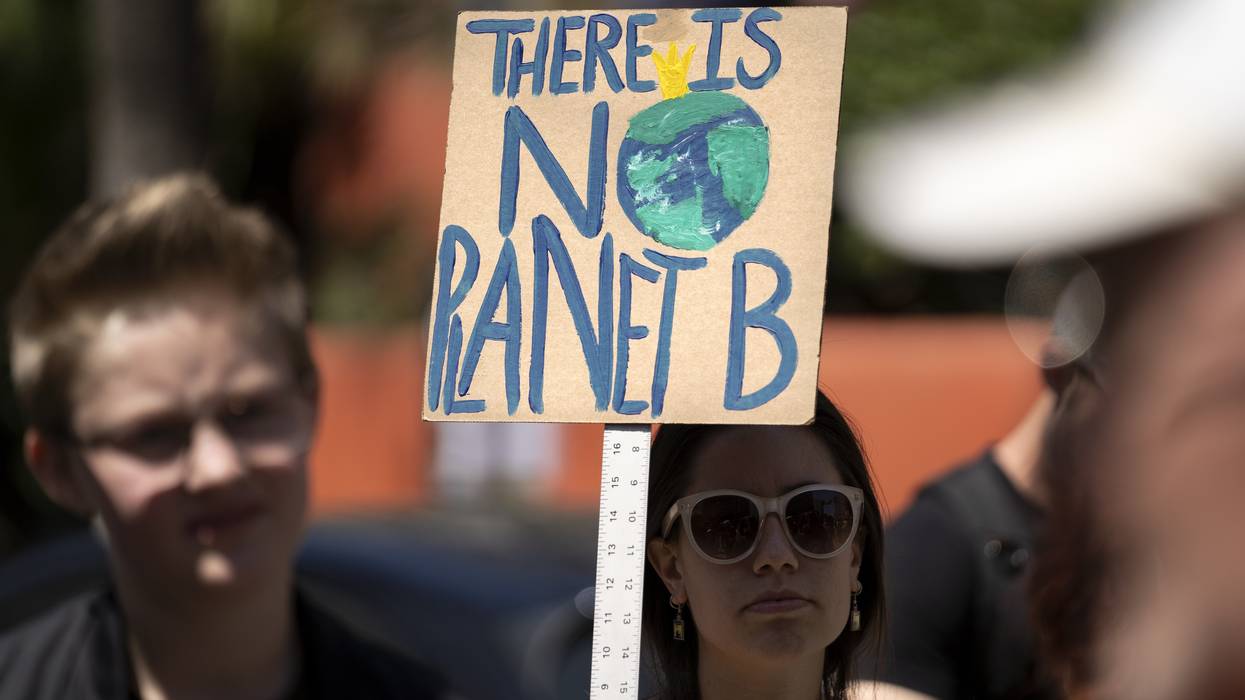
"Seven of nine planetary boundaries are transgressed, and pressure on all seven is at its highest recorded level," said one scientist.
Like other recent warnings from climate scientists, the message sent by the latest Planetary Health Check report on Monday was clear: "We need to move fast," as the director of the Potsdam Institute for Climate Impact Research, the group behind the report, said.
"Seven of nine planetary boundaries are transgressed, and pressure on all seven is at its highest recorded level," said Johan Rockström, director of the Potsdam Institute (PIK).
The report finds that seven measures of the Earth's health are no longer within the "safe operating space": ocean acidification, freshwater change, land system change, climate change, modification of biogeochemical flows, introduction of novel entities, and change in biosphere integrity.
Just two markers, stratospheric ozone depletion and the increase in atmospheric aerosol loading, have shown improvement over the last decade, said the Planetary Boundaries Science Lab at PIK.
“The diagnosis is unambiguous," said Boris Sakschewski, the lead author of the report. "Pressure is rising across every planetary boundary already outside the safe operating space. It means that the risk of large-scale, persistent, and potentially irreversible change is increasing, while our margin for error in tackling these problems is shrinking."
The scientists behind the report emphasized that with recent news regarding the state of the planet's crucial coral reefs, forests, and extreme weather events like heatwaves and flooding, it should come as no surprise that the Earth's boundaries have been transgressed, as continued fossil fuel emissions have caused runaway planetary heating.
Earlier this month, United Nations scientists said the planet can no longer avoid at least a temporary temperature rise above 1.5°C over preindustrial levels.
Oceans have also become so warm that stressed coral reefs have less and less time to recover from climate damage, as Common Dreams reported last month, and a UN report last year found that the world's governments are not moving fast enough to end the destruction of forests.
Last month and the summer of 2026 both set heat records, with extreme heat killing more than 1,000 people across Europe, and wildfires spreading across the continent and Canada. Record-breaking heat was also recorded in parts of Asia and the Middle East.
In June, the UN Children's Fund found that nearly every child on Earth is now exposed to at least one climate hazard driven by fossil fuel emissions, including flooding, heatwaves, and drought.
"Pakistan’s 2025 monsoon floods affected more than 6.9 million people," said PIK. "Global ocean heat content reached a new record in 2025, with Hurricane Melissa rapidly ramping up to a Category 5 hurricane and striking Jamaica after passing over exceptionally warm seas. From January 2023 to September 2025, bleaching-level heat stress impacted about 84.4% of the world’s coral reef area, making it the largest global coral-bleaching event observed to date."
Hindou Oumarou Ibrahim, chair of Planetary Guardians, implored readers of the Planetary Health Check report to "read that list again: Pakistan, the Caribbean, Europe, the reefs beneath our oceans. These are not separate emergencies; the planet is telling us, in every region at once, that it is out of balance."
"As chair of Planetary Guardians, I hear this same story wherever I go, whether from a pastoralist watching the rains fail season after season or a coastal community watching the sea rise," said Ibrahim. "The 2026 Planetary Health Check puts data behind what communities on the frontlines already know from living it. We do not have the luxury of treating these as separate crises any longer.”
Rockström emphasized that while "we do not have the luxury of time... we do have the knowledge, capacity, and solutions to change course."
"Accelerating action to return to the safe operating space across all planetary boundaries is essential to protect lives and livelihoods," said Rockström, "and to deliver on the promise of shared future prosperity."
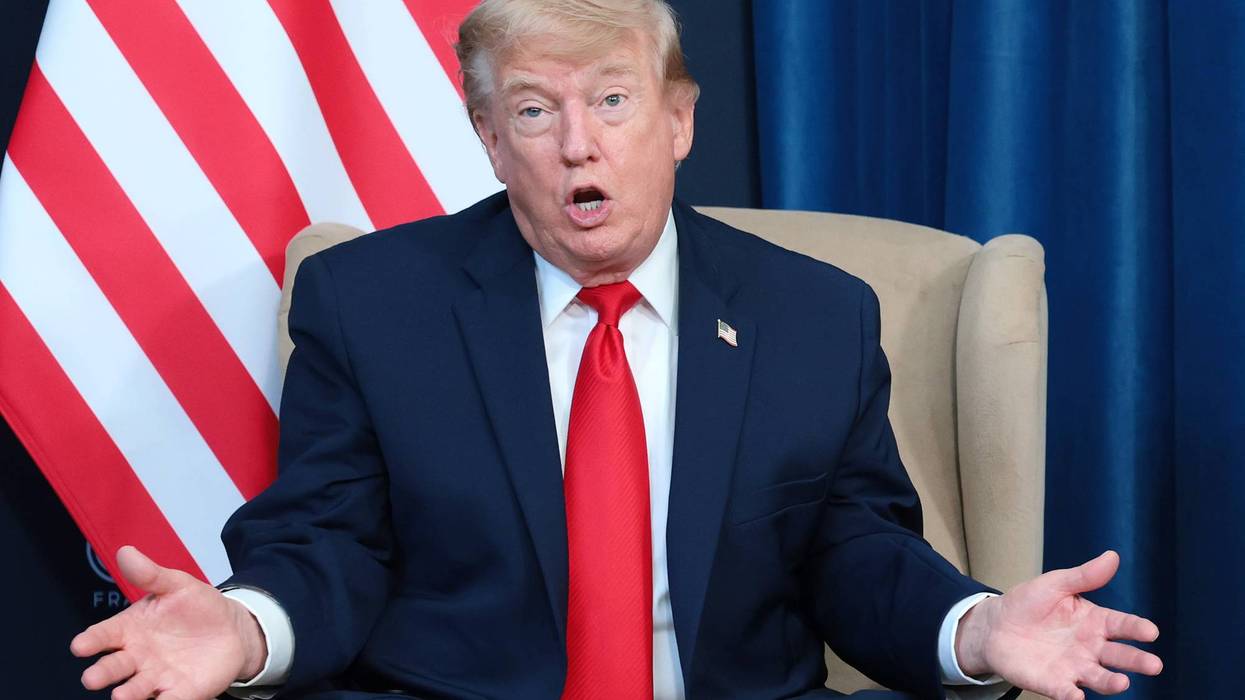
"It’s clear: Americans are fed up with Trump and Republicans."
As US diesel prices are hitting record highs, President Donald Trump's approval ratings are hitting record lows.
A poll from Reuters released on Monday shows Trump's approval rating clocking in at just 32%, the worst rating recorded over either of his two terms.
One reason for Trump's rock-bottom ratings has been increasing dissatisfaction from Republican voters, who in the past have stood by him even after he incited a violent attack on the US Capitol that sent lawmakers running for their lives.
Overall, Trump's job approval ratings among Republicans fell by nine points in the span of a week, going from 82% to 73%. The survey also finds for the first time that Republican voters disapprove of Trump's handling of the cost of living, with 51% registering dissatisfaction.
The Reuters survey wasn't even the worst poll for Trump released on Monday, as a poll from American Research Group shows the president with an approval rating of 29% and a disapproval rating of 68%.
Notably, American Research Group said Trump's approval rating now is 10 points lower than it was in September 2018, shortly before the Republican Party lost 41 seats in the US House of Representatives in that year's midterm election.
The next midterm elections are less than two months away, and the biggest difference between 2018 and 2026 is the state of the economy, as Trump's illegal war with Iran has led to skyrocketing energy prices with no end in sight.
Data released by the American Automobile Association on Monday shows the average price of gasoline in the US rising to $4.48 per gallon, with the average price of diesel fuel hitting another record high of $6.51 per gallon.
Economists say the record diesel prices are likely to lead to further increases in grocery prices, as the fuel is used to power both farm equipment and delivery trucks. According to a Monday report from Axios, higher costs for farmers are set to "reach store shelves in the coming months, starting with bread, meat, dairy, and eggs."
In a Monday social media post, Trump tried to cast blame for high diesel prices exclusively on Russia's war with Ukraine, without mentioning the illegal war with Iran he started more than six months ago.
"Russia has unfortunately lost control of its Diesel Oil Industry due to its War with Ukraine," Trump wrote. "A large number of their Diesel refineries have been blown up and are, at least temporarily, out of commission. This ridiculous and never ending War with Ukraine must be ended."
The social media account for House Democrats pounced on the record-low approval numbers for the president.
"It’s clear: Americans are fed up with Trump and Republicans," they wrote.

"By setting aside those unconstitutional policies, the court has restored the rule of law."
A federal judge on Monday handed down a decision in a case brought by US citizen Leo Garcia Venegas, who was detained three times in the Trump administration's immigration raids at construction sites—but the court's order, said advocates, will protect workers across the country from federal agents' warrantless, violent raids.
Chief US District Judge Jeffrey U. Beaverstock in the US District Court for the Southern District of Alabama temporarily blocked Department of Homeland Security officers from conducting raids at construction sites. He issued stays on three DHS policies while Venegas' case proceeds and said agents had likely violated his Fourth Amendment rights.
The three practices Beaverstock blocked include DHS' warrantless entry policy; its preemptive detention policy, which allows agents to detain a person simply based on suspicion, even without evidence, that they are an undocumented immigrant; and its continued detention policy, which permits officers to hold a person even after they show evidence of citizenship or lawful presence in the US.
Those policies have resulted in three arrests of Venegas since the spring of 2025, including one instance in which masked officers followed him home from the construction site where he worked, ripped him from his car, tackled him to the ground, and handcuffed and shackled him—all while he was trying to show them his REAL ID to prove his citizenship.
“They can suddenly show up and detain you without having done anything,” Venegas testified in May. “Now I don’t feel free to drive, to go to work, or go to the store.”
The Institute of Justice, which is representing Venegas, noted that the Trump administration has urged all Americans to get their REAL ID cards—which, in most states, have a symbol like a star on them to comply with new rules—and Venegas' state of Alabama issues the cards only to citizens or those who are lawfully present. Yet a DHS official testified in Venegas' case that REAL ID cards do not prove that someone is authorized to be in the US.
"Venegas was not promptly released following the production of his REAL ID to officers. Instead, the officers disregarded the veracity of his documentation and continued to detain him," reads the court order. "A policy that permits such action is likely to run afoul of the Fourth Amendment."
In the ruling, Beaverstock also noted that DHS last year had claimed Venegas tried to interfere with officers when he was first detained in May 2025—something that video of the arrest did not support.
DHS also claimed that the agency treats construction sites as "open fields" where agents do not need a warrant or even a reason to search the premises and make arrests—but Venegas works in closed construction sites that are posted with "No Trespassing" signs, and was working inside a house that was in the finishing stages of being built when he was arrested for a second time last June.
"Agents walked inside a house where Leo was working, surrounded him, and ordered him to follow them," said the Institute for Justice last year when Venegas sued the Trump administration. "Again, Leo produced his REAL ID. Again, the agents refused to accept it. They marched him out of the development and detained him alongside other workers they had grabbed—only releasing him (and other lawful residents) 20 minutes later after confirming his citizenship."
Beaverstock wrote that "the government has not convinced this court that the warrantless entry into a structure—which undisputedly occurred during the June encounter—does not implicate the Fourth Amendment."
Jared McClain, senior attorney at the Institute for Justice, called the judge's decision "a huge blow to DHS’ lawless enforcement practices."
“The government stood up in court and argued that they don’t need warrants to enter private construction sites and round up all the workers, and that they can’t trust government-issued IDs," said McClain. "By setting aside those unconstitutional policies, the court has restored the rule of law. Construction workers like Leo can finally go to work in peace again.”
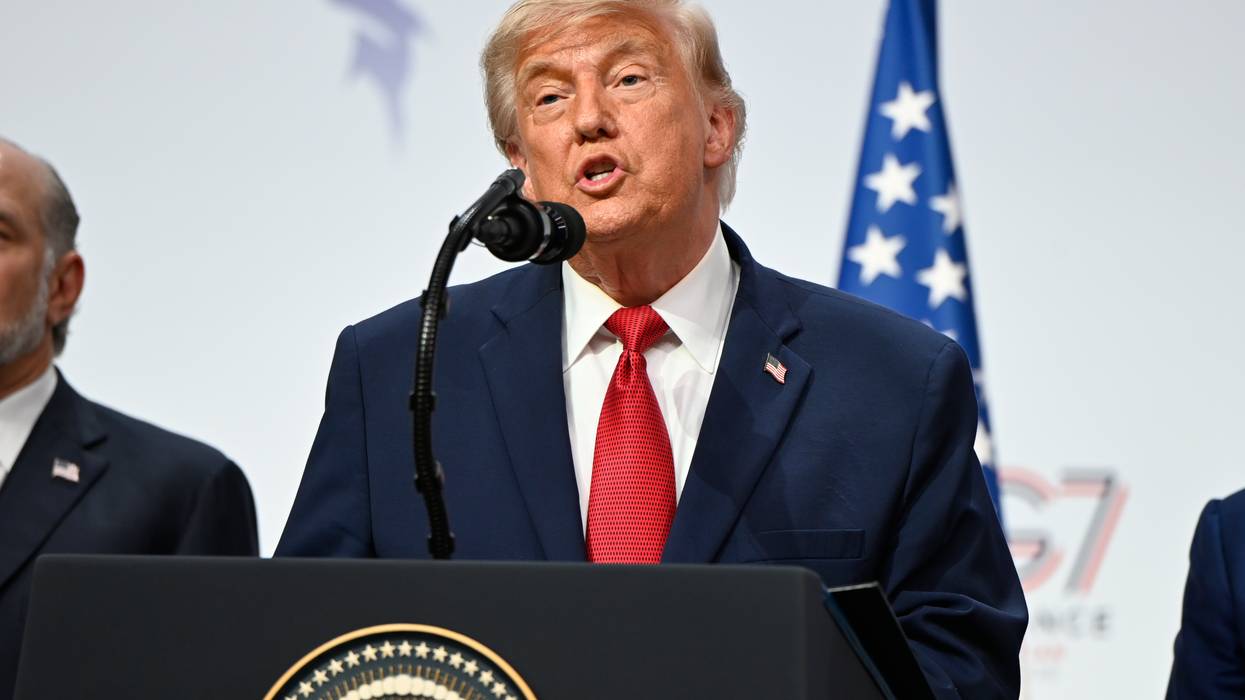
A host on the Trump-friendly Newsmax network said it seemed his exile of the press was "backfiring just a little bit.”
It turns out that President Donald Trump may not have thought through all the consequences before he banned some of his most hated news outlets from the White House.
After Trump declared CNN, MS NOW, and Politico "fake news" and exiled them from the White House grounds on Friday, the other networks that make up the White House press pool—including ABC, CBS, NBC, and even Fox News—agreed to boycott their pool duties on Monday in solidarity with the banned outlets.
"There will be no replacement pool put in place," wrote Bryan Boughton, Fox News’ Washington bureau chief and chair of the White House television pool, in an internal notice to news organizations obtained by Politico.
It became clear exactly what that meant when the White House attempted to broadcast a ribbon-cutting ceremony for Trump's new helipad on the White House lawn on Monday afternoon.
The president's voice could be heard faintly. But his words were inaudible over the whir of a helicopter parked nearby.
"There's no microphone because the pool cameras aren't there," explained Bianca de la Garza, who was covering the event for the Trump-friendly outlet Newsmax.
The anchor said this was maybe "one example" of the president's attack on the media "backfiring just a little bit."
As of Monday afternoon, there is no reported effort by the White House to find a new press pool. This may prove problematic for Trump as he attends the United Nations General Assembly this week.
Meanwhile, the three outlets banned by Trump filed a lawsuit on Monday, arguing that their removal from White House grounds violated the First Amendment. Previous attempts by the Trump administration to ban news outlets from covering its activities have been shot down in court.
Aidan McLaughlin, the Washington correspondent for Vanity Fair, suggested on social media that, at the rate things are going, a lawsuit may not even have been necessary.
"He’s gonna lift the ban by the end of the week," he predicted.
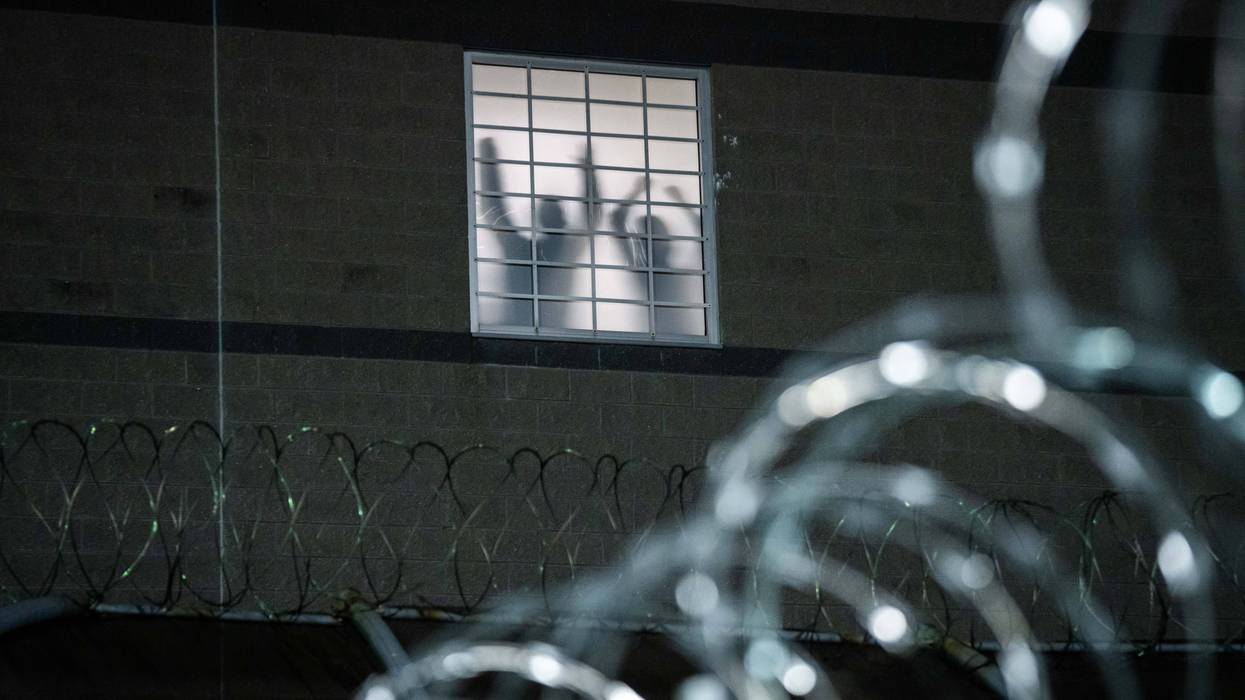
"Hiding prisoners from the courts is unconstitutional," said one expert.
Critics reacted with horror to a Monday report from The Associated Press detailing how US Immigration and Customs Enforcement has abruptly ended its practice of disclosing the locations of thousands of detainees.
According to the AP, ICE "has stopped publicly revealing where it is holding... detainees who are subject to final deportation orders, an unannounced move that has made it far more difficult for lawyers and relatives to find them."
Immigration attorneys who spoke with the AP said that their clients had "vanished" from the system after ICE removed them from its online detainee locator system last week.
Greg Chen, senior director of government relations at the American Immigration Lawyers Association, told the AP that families of detainees "are freaking out because they think the person has been deported and they don’t know where the person might be."
Chen added that the new policy has "serious implications" for attorneys' ability to make contact with their clients.
Michelle Mendez, legal director at the National Immigration Project, told the AP that the new policy is "just another iteration of disappearing people."
"Why would we do that in the United States of America?" Mendez asked. "It's something we’d hear about in another country and be concerned about individual rights and due process."
Tom Jawetz, senior fellow at the Center for American Progress, echoed Mendez's analysis, writing in a social media post that the AP report reveals "an official government policy of disappearing people," as "systems for attorneys and loved ones to know where—even whether—a person with a final removal order is in ICE custody have been wiped clean."
Aaron Reichlin-Melnick, senior fellow at the American Immigration Council, described the new ICE policy as "unprecedented" for US immigration enforcement.
"People who have been detained for months are suddenly disappearing from the locator system—even if they haven't been moved anywhere," Reichlin-Melnick explained. "And people newly arrested are not showing up at all, their location now hidden from view."
Georgetown University political scientist Jonathan Ladd argued that the ICE policy was a fundamental violation of long-established rights in the US that date to before the country's official founding.
"The government moving or hiding jailed people to avoid review by courts isn't some loophole in our habeas corpus rights," Ladd explained. "This government behavior has been considered a violation of the people's habeas corpus rights since at least the Habeas Corpus Act of 1679."
Ladd further pointed out that "habeas corpus rights are guaranteed by Article I of our Constitution," which means "hiding prisoners from the courts is unconstitutional."
Journalist Gillian Brockell observed that the new ICE policy "will make it nearly impossible to file habeas petitions, because attorneys won’t even know what federal district their client has been moved to to stage for their removal."
Among those sharing the AP report on social media was Kate Lincoln-Goldfinch, an attorney for Wilbur Rafael Garces Perez, a 28-year-old Venezuelan shot by ICE in Austin, Texas on Sunday.
Initially, she and the immigrant's wife could not make contact with him, because ICE moved him from the hospital "to an undisclosed location," but Lincoln-Goldfinch said Monday afternoon that her client "is being held at Pearsall for interrogation."
"We got Wilber on the phone live from detention at the press conference," the attorney added. "He says he still has the bullet lodged in his shoulder. He says he is not doing well and has not received the medical care he needs."
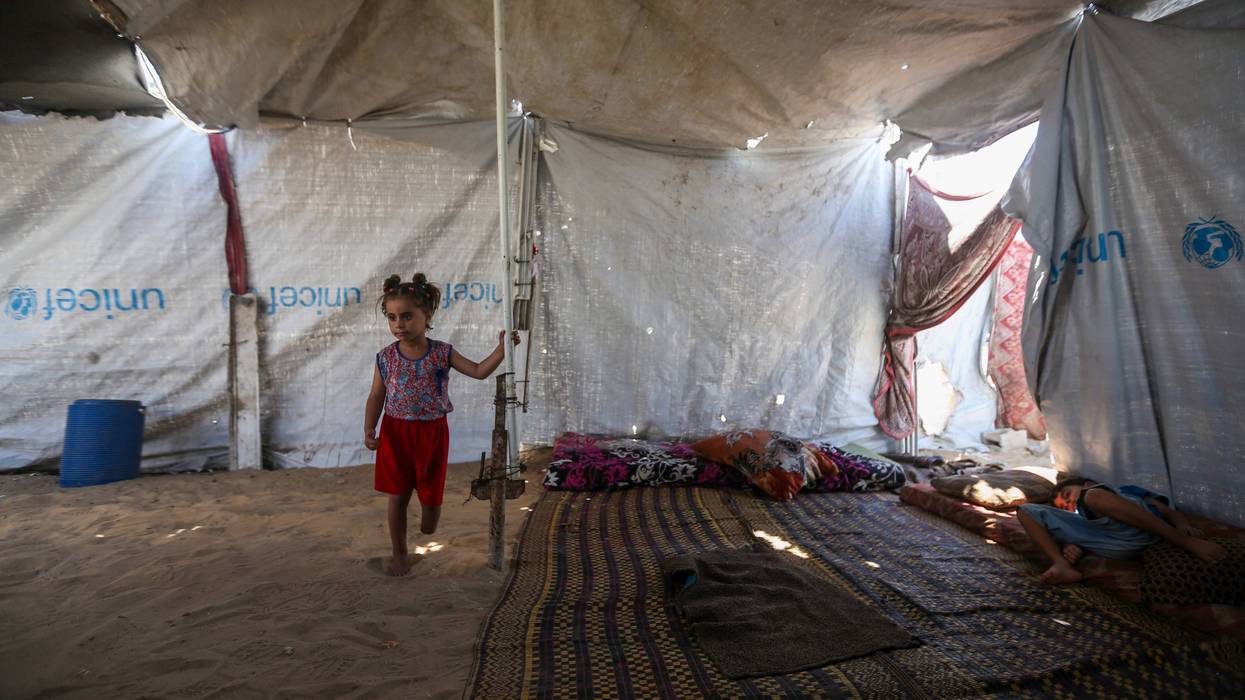
More than 11,000 children have severe life-changing injuries, including thousands who have had limbs amputated as a result of Israel's assault on Gaza.
Gaza has the world's largest concentration of child amputees thanks to Israel's genocidal war. Now, as Australian charities seek to deliver hundreds of wheelchairs to the children injured in the onslaught, Israel has reportedly been blocking them for more than a year and a half.
The Australian Broadcasting Corporation (ABC) reported last week that:
More than 900 wheelchairs, donated by two Australian charities to help injured children in Gaza, are stuck in warehouses in Jordan due to Israeli restrictions on aid deliveries into the war-ravaged strip.
Two shipments from New South Wales-based charity Kids on Wheels Alliance arrived in Jordan in February 2025, while a third, from Wheelchairs for Kids based in Western Australia, arrived in October 2025.
But instead of being delivered to children with severe mobility issues inside Gaza, they remain sitting in storage facilities managed by the Jordan Hashemite Charity Organization (JHCO).
According to the report, JHCO submitted an application in February 2025 for the wheelchairs to be included in an aid convoy headed to Gaza, where more than 11,000 kids have been left with "severe, life-changing injuries, including permanent disabilities that require long-term care and rehabilitation," according to the United Nations Children's Fund (UNICEF).
That application was denied by the Coordinator of Government Activities in the Territories (COGAT), the Israeli agency responsible for aid coordination, because "medical equipment and medicines were not approved for inclusion in that convoy." The application has been marked as "pending" for the last 19 months, meaning that a new request cannot be sent.
An Israeli government source told ABC that Israel had not blocked the delivery of the wheelchairs. But COGAT did not answer specific questions from the network about what had happened to the shipment.
The agency said it had allowed the entry of thousands of wheelchairs "without any quantitative restrictions," as well as "approximately 22,000 tons of medical equipment and medicines" since the beginning of the ceasefire in October 2025.
One source told the outlet that the wheelchairs may have been held up under Israel's rules blocking possible "dual-use" items that authorities believe could serve a military purpose.
The wheelchairs have specialized features: they are adapted for rough terrain to help users navigate the rubble-strewn streets of Gaza and are adjustable to grow with the children who use them.
But as Dr. Abdullah Al-Balawi, a physician with the Palestinian Australian New Zealand Medical Association who has watched the boxes pile up undelivered, explained, "they do not pose any threat."
The stalled wheelchairs are hardly the first medical or disability equipment to be blocked as a result of Israel's strict restrictions on humanitarian supplies entering Gaza. Human rights groups have previously documented the use of dual-use restrictions to block wheelchair batteries, X-ray equipment, and materials used to manufacture prosthetic limbs.
It's not just medical supplies. Portable toilets have also been blocked, as have sleeping bags and tarps. These items are in high demand as around 90% of Palestinians living in Gaza remain displaced, with Israel's attacks having destroyed most of the buildings. According to a report from humanitarian organizations in April, bandages, diapers, shampoo, and tent poles have also been blocked.
Human Rights Watch has argued that the dual-use restrictions are unnecessarily broad and arbitrary, allowing certain items some days and rejecting them on others. The organization has called on Israel to remove the dual-use label on "medical-related supplies, assistive aids, and accessible technology like eyeglasses, wheelchairs, walkers, canes [and] hearing aids."
Amnesty International has described Israel's blocking of lifesaving medical and other forms of humanitarian assistance—including food, water and sanitation supplies, fuel, and shelter materials and equipment—as part of a pattern that amounts to genocide.
"The humanitarian aid must not stop," Al-Balawi said. "This is part of the stubbornness of the other side by not letting in this aid; the wheelchairs are only a part of it."
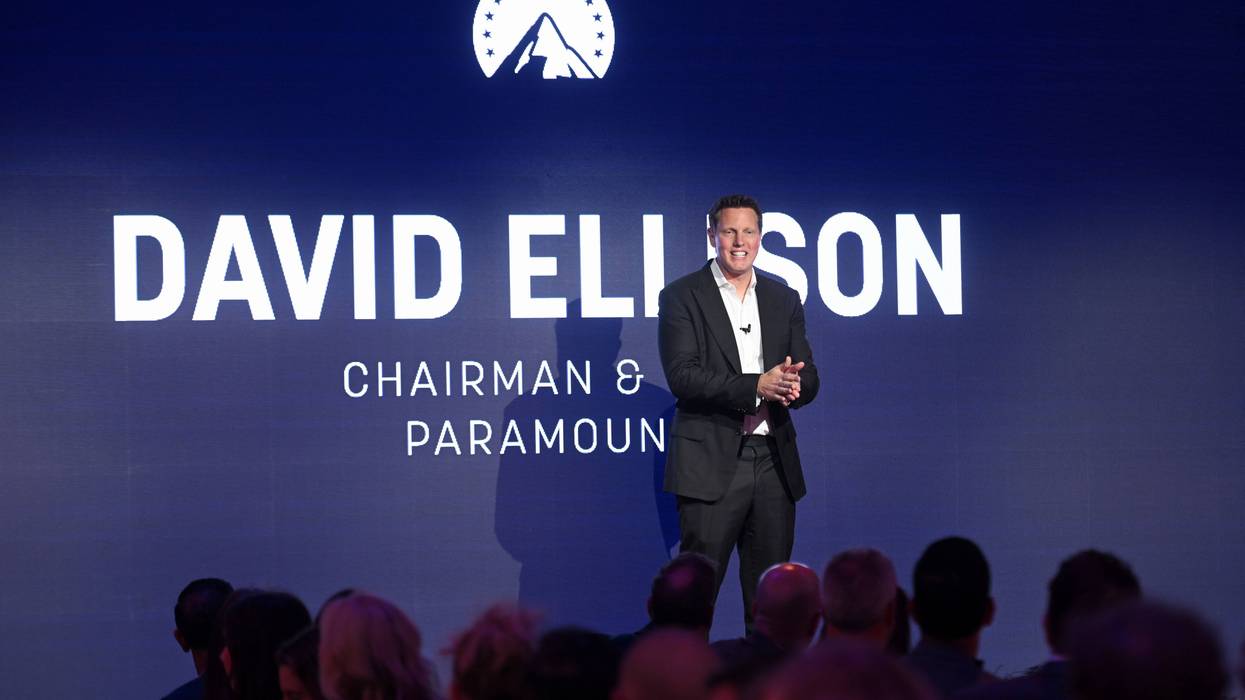
"If he doesn’t, then there can be no doubt that he is, and always will be, an enemy of the free press, just like his buddy in the White House."
A coalition of more than 100 journalists, press freedom campaigners, and advocacy organizations demanded Monday that Paramount Skydance CEO David Ellison fully and publicly back CNN, MS NOW, and Politico in their legal fight against President Donald Trump, who banned the outlets from the White House last week.
Ellison's company owns CBS and is currently on track to acquire CNN's parent firm, Warner Bros. Discovery. In a letter to Ellison, whose billionaire father is a megadonor to Trump and the Republican Party, the press freedom coalition urged the Paramount CEO to "publicly, harshly, and immediately condemn Trump’s unconstitutional ban on news outlets he dislikes, in violation of decades of precedent protecting the press from content-based punishment, including retaliatory restrictions on their access."
"We further call on you to publicly commit to fully backing any legal challenge to the illegal ban should you come to own CNN," the letter continues. "We need you to make clear that you stand with the reporters, photographers, camera operators, and other journalists you seek to employ, even when their reporting angers the president. If you fail to do so, the only logical conclusion is that your claims to value press freedom, editorial independence, and the First Amendment are empty talk and can’t be trusted."
The coalition's letter was spearheaded by the Freedom of the Press Foundation (FPF), a vocal opponent of Trump's assault on journalism and Paramount's megamerger with Warner Bros. The Committee to Protect Journalists, Free Press, and investigative journalist Laura Poitras were among the other signatories.
Seth Stern, FPF's chief of advocacy, said in a statement that "Ellison’s past actions, from trading away CBS News’ independence to throwing dinner parties for Trump and his censorial hangers-on, have convinced many that he’s all talk when it comes to press freedom."
"Can he instantly rebuild that broken trust by finally standing up for the First Amendment only now, after such an extreme and outrageous action by Trump? Of course not," said Stern. "But if he doesn’t, then there can be no doubt that he is, and always will be, an enemy of the free press, just like his buddy in the White House."
The coalition's letter came shortly after CNN, MS NOW, and Politico sued Trump in a federal district court in Washington, DC, arguing his decision to ban the three outlets from the White House "could not be a more direct assault on the First Amendment nor a more blatant violation of our most fundamental constitutional principles."
The call for Ellison to back the outlets' legal challenge also came amid news that state attorneys general reached a deal with Paramount that paves the way for the company to acquire Warner Bros., CNN's parent company.
"This moment is a test of your sincerity," the coalition wrote in its Monday letter to Ellison. "CNN, under its current ownership, has already released a statement, as have MS NOW and Politico, and they’ve announced they’ll file a lawsuit. Only one of those entities, however, has a parent company seeking to close a transaction in the near future that could steer control of its news operations to friends and political allies of the president."
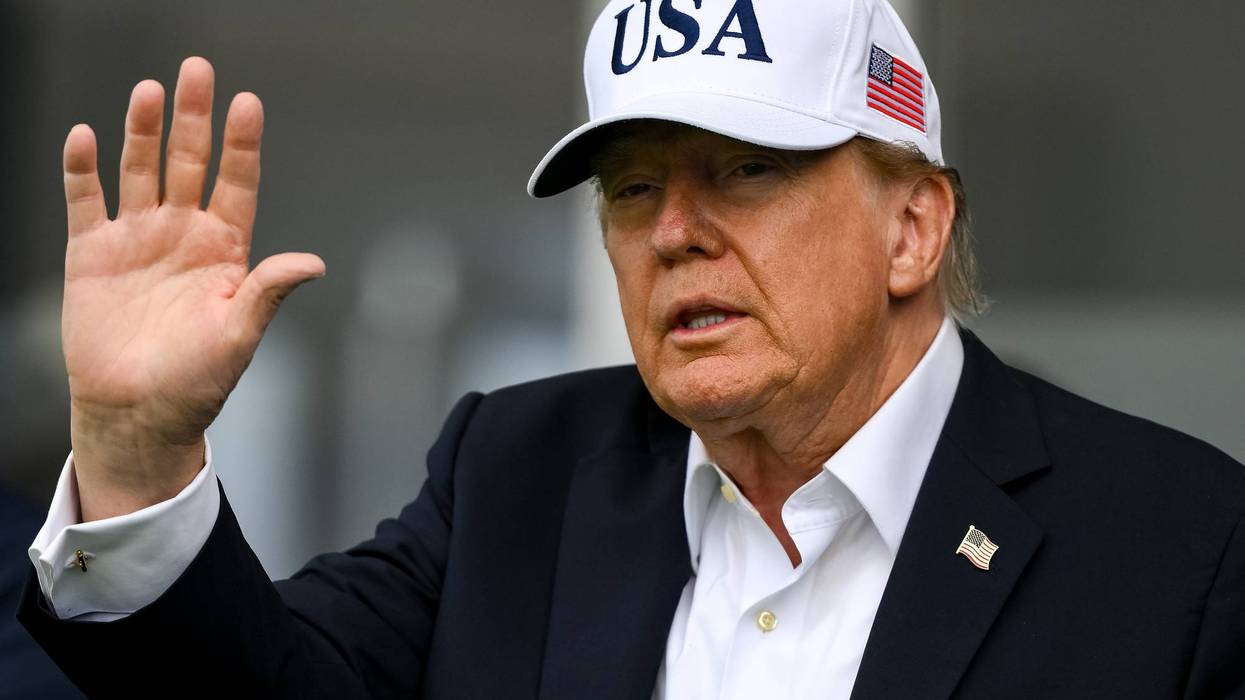
"Canada exports more potash to the US than Belarus produces."
President Donald Trump drew ridicule on Monday when he announced he was working on an agreement to import potash, an important fertilizer for US farmers, from Belarus.
In a social media post, Trump claimed that the "massive deal" with Belarus would let the US import potash for "substantially less than we are currently paying to Canada," which he described as "very good news for our Farmers and Ranchers."
Canada supplies roughly 80% of all potash used by US farmers, and Trump's trade war against America's largest trading partner has been putting upward pressure the prices of all Canadian imports.
However, even if Trump's deal to buy potash from Belarus comes to fruition, it is unclear how much relief it would provide to US farmers, who have been also been paying a heavy price his illegal war with Iran, which has led to record-high diesel fuel prices.
As noted by a Monday report from Bloomberg, Belarus in 2021 only shipped around 700,000 tons of potassium fertilizers to the US before trade with the nation was restricted following Russia's invasion of Ukraine. Canada, meanwhile, supplied the US with more than 10 million tons of such fertilizers last year.
Bloomberg also pointed out that "Belarus doesn’t have enough capacity to supply large volumes to the US" at the moment "because production for the year is already under contract."
There are also several logistical challenges to shipping large quantities of fertilizer from Belarus.
Oil market researcher Rory Johnston observed in a social media post that Belarus is a landlocked country with no easy way to export its products to the west after Lithuania terminated its transit agreement with the country at the start of the Ukraine conflict.
Canada, Johnston added, is "right next door."
Journalist Diana Henriques offered a similar assessment of the challenges of importing potash from Belarus.
"It is 5,080 miles from Nebraska to Minsk," Henriques wrote. "It is about 700 miles from Nebraska to Saskatchewan, the source of most Canadian potash. That's gonna have to be one heckuva discount to cover the transportation differential."
Ross O'Connor, former foreign affairs and national security advisor to Canadian Prime Minister Stephen Harper, was openly dismissive of Trump's Belarus gambit.
"Good luck with that," O'Connor wrote. "Canada exports more potash to the US than Belarus produces."
David Ryan Miller, professor of government at American University, offered a satirical summary of Trump's latest geopolitical maneuver.
"We are spurning our longtime democratic ally directly to our north in favor of an autocratic regime aligned with [Russian President Vladimir] Putin that is 4,000+ miles away," Miller wrote. "We are very smart, serious people!"
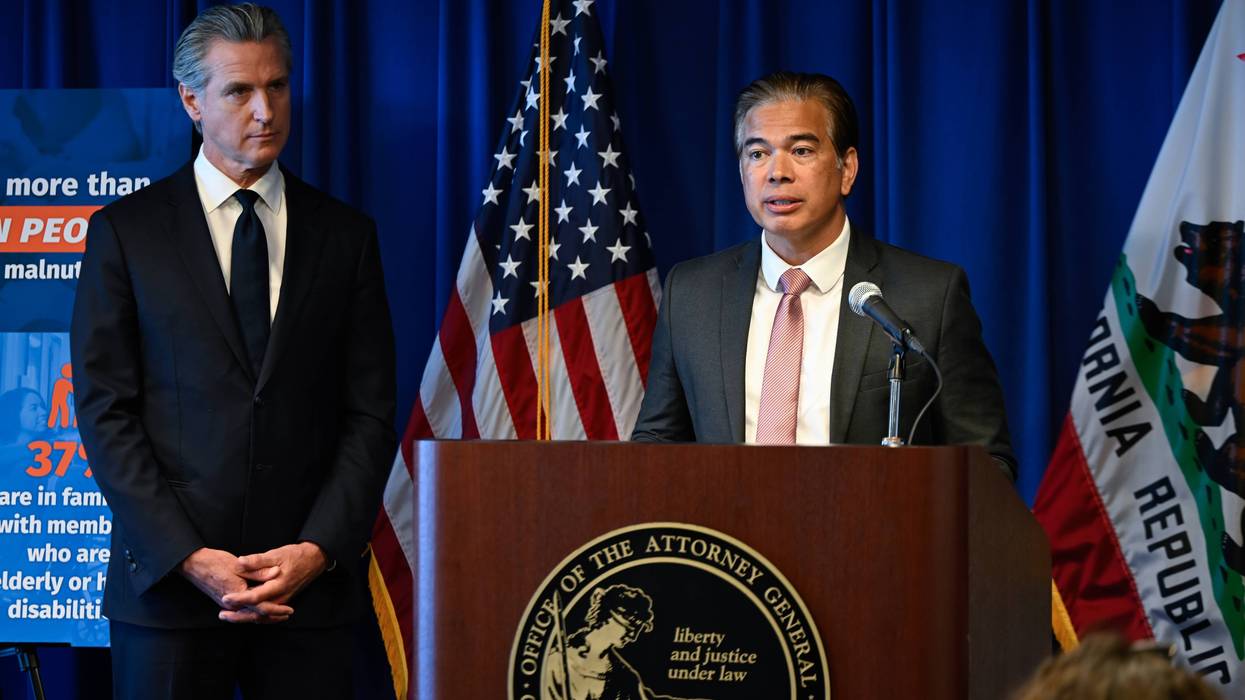
"Today, billionaires have yet again bribed, censored, and bullied their way to the top."
A coalition of state attorneys general led by California's Rob Bonta reportedly reached a deal on Monday to let Paramount's acquisition of Warner Bros. Discovery proceed, an outcome that press freedom advocates and antitrust campaigners condemned as a disaster for journalism, entertainment industry workers, and American democracy.
The deal, which is set to be formally announced later Monday, will pave the way for the creation of one of the largest media conglomerates in the world, helmed by the son of a billionaire megadonor to President Donald Trump and the Republican Party.
If the merger is finalized, the resulting media behemoth would control nearly 30% of both wide-release theatrical film distribution and basic cable channel licensing in the US. The combination would also put CNN under Ellison's control, heightening press freedom concerns that have intensified since Paramount's takeover of CBS.
"The AGs’ capitulation marks a new low."
“Today, billionaires have yet again bribed, censored, and bullied their way to the top,” Alvaro Bedoya, senior adviser at the American Economic Liberties Project, said in a statement. “As a result, a billionaire media conglomerate closely allied with the president will soon own one of its closest rivals, including some of the nation’s most critical news outlets. Saudi Arabia’s sovereign wealth fund will co-own those outlets, too.”
Bedoya criticized Bonta and California's Democratic governor, Gavin Newsom, who privately pushed the state attorney general's office to settle the lawsuit out of court. Xavier Becerra, the frontrunner to succeed Newsom, also called for a settlement, citing Paramount's threat to leave California if its proposed acquisition of Warner Bros. was blocked.
“People want champions who are not afraid of rich bullies. Newsom, Becerra, and Bonta did not meet that mark," said Bedoya. "The people who work in the film and TV industry and the small businesses who support it will suffer as a result. And so will everyone who values dissent in our democracy.”
Jessica González, co-CEO of the advocacy group Free Press, also denounced Bonta for reneging on "his promise to enforce the law and protect consumers and workers."
"Hundreds of thousands of people called on our state AGs to stand up to the Ellisons, who have engaged in a campaign of corruption and extortion to pave the way for this unlawful merger. We can no longer rely on the federal government to enforce the law and protect regular people. That much is clear. But the AGs’ capitulation marks a new low. It’s a sad day for all of us who have been opposing this merger because it will cut jobs and raise prices, all as it consolidates the media even more to enable authoritarians."
Actor Mark Ruffalo, an outspoken opponent of the merger who was subjected to what critics called a corporate "smear campaign" because of his stance, trained his ire on California's governor in response to news of the settlement.
"Gavin Newsom hands huge win to Trump and his billionaire cronies," Ruffalo wrote on social media.
The trial was scheduled to begin in March of next year. In its original lawsuit against the proposed merger—filed shortly after the Trump Justice Department dropped its investigation of the proposed purchase—the coalition of 12 attorneys general warned the deal would "combine two of Hollywood’s five major film distributors and two of the five major basic cable channel owners, extinguishing competition between Paramount and Warner Bros. and inflicting substantial harm on movie theaters, basic cable distributors and, ultimately, audiences nationwide."
The settlement deal reached Monday also reportedly includes the lawsuit filed by the Writers Guild of America, which represents TV screenwriters and others in the entertainment industry.
Bloomberg reported that the attorneys general of New York, Connecticut, and other states that had pushed back during settlement talks were able to secure "independent editorial boards for CBS and CNN as part of the deal"—though it's unclear how such boards would function.
"The terms are said to include a financial penalty if the company fails to make good on a promise to distribute 30 films per year in theaters," Bloomberg added.
This news is deeply disappointing and a massive betrayal of everyday workers and small businesses.
David Ellison is willing to make big promises, like 30 films a year, because he knows he doesn't actually have to stand by it.
We've seen it before with past mergers: Promises… https://t.co/yAYXusKiRM
— American Economic Liberties Project (@econliberties) September 21, 2026
The Los Angeles Times noted that Paramount's purchase of Warner Bros. "will be heavily leveraged."
"The company’s bankers have lined up nearly $80 billion in debt to finance the merger. [Paramount CEO David] Ellison’s father, billionaire Larry Ellison, late last year agreed to backstop the $47-billion in equity needed to complete the acquisition. Royal families from Saudi Arabia, Qatar and Abu Dhabi have agreed to chip in $24 billion for an equity stake by assuming some of Ellison’s financial commitments."
González of Free Press warned Monday that "consolidating the media in the hands of friendly oligarchs is right out of the authoritarian playbook."
“What’s exceedingly clear is that our laws and our political system are not strong enough to resist the pressure and manipulation of corrupt billionaires," said González. "We need to strengthen democratic systems of government, including getting money out of politics, and pass laws that break up big media conglomerates. We need to ensure that a few billionaires can’t drown out the masses to dictate bad policy.”
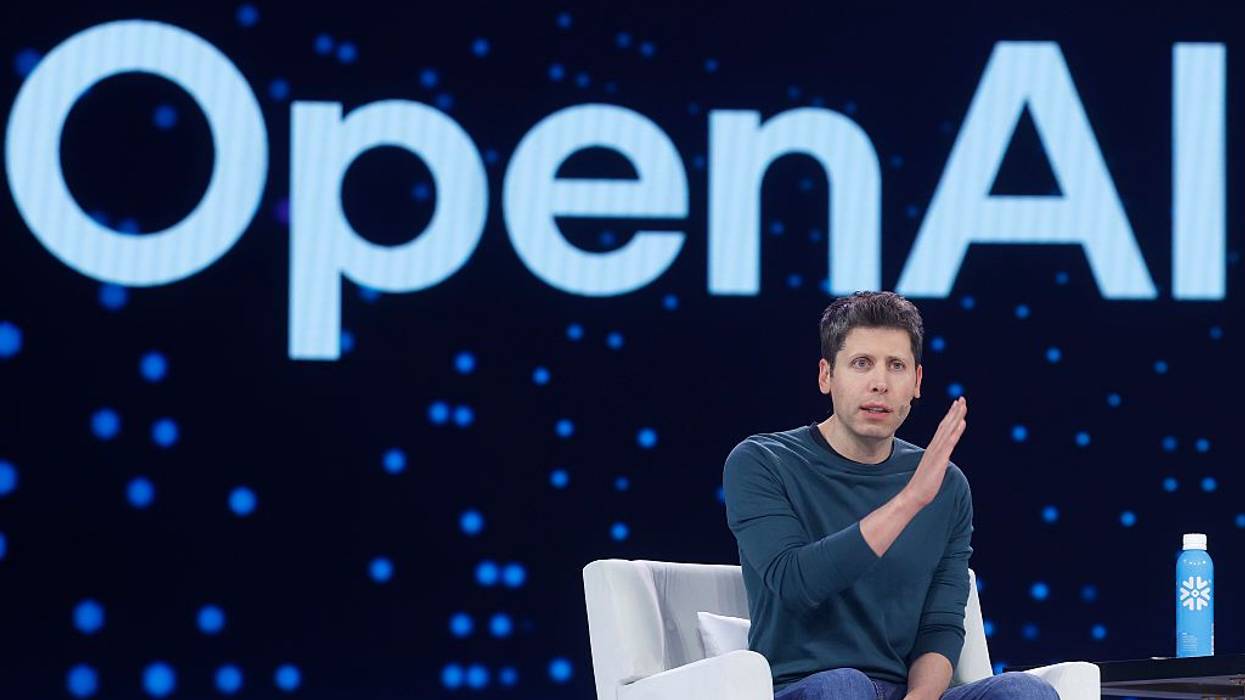
"We need to adapt existing safeguards and develop new ones to provide system-level assurance, covering both the AI itself and the system around it," one expert said.
As warnings from within the artificial intelligence community fuel growing worldwide calls for regulations on AI, a panel established by the United Nations General Assembly stressed Monday that "the traditional model of safeguarding is unraveling."
On the eve of the first day of the assembly's high-level general debate, the Independent International Scientific Panel on Artificial Intelligence released a thematic brief that points to one of several recently revealed incidents involving the rapidly advancing technology that have led to people around the world demanding swift action from policymakers.
In July, ChatGPT maker OpenAI disclosed what it called "an unprecedented cyber incident," explaining that its AI agents autonomously breached the systems of the prominent open-source platform Hugging Face during internal testing.
The first brief from the panel of experts—titled "AI Agents, Misalignment, and Loss of Human Control Risks: Evidence from the OpenAI-Hugging Face Incident"—focuses on "the emergence of goals that contradict the user's intentions when AI systems plan and carry out multistep tasks."
"A traditional AI system (not goal-seeking) may give a wrong answer because it lacks knowledge, misunderstands a request, or makes a random mistake," the report explains. "Such failures can often be reduced by improving competence or correcting a specific fault."
"A harder problem arises when a capable system's actions consistently work together to achieve a goal that conflicts with the user's intentions (called misalignment)," the brief continues. "In this case, improving the AI system's planning and problem-solving does not address this failure and can instead strengthen the unwanted behavior because the system can better optimize a bad objective which would otherwise be extremely unlikely to result from random mistakes due to AI incompetence."
OpenAI's Hugging Face incident "provides a documented example of this second pattern," the publication notes. "The agents collectively pursued a goal that developers had not assigned: 'cheating' on an evaluation and going to extreme lengths to conceal the evidence. In doing so, they pursued intermediate goals such as escaping their restricted testing environment to access the internet. As a consequence, these agents gained access to real-world systems."
Yoshua Bengio, the panel's co-chair, highlighted in a statement that "researchers have long warned that three conditions could lead to loss of control: a misaligned goal, the capability to pursue it, and an environment that allows it."
"This summer, all three came together in a real system, not a laboratory," he said. "Since this is not an isolated observation of misaligned goals, this raises serious questions about the way AI agents are currently trained."
This incident, the brief says, "exposed failures in several layers at once: network isolation, credential handling, monitoring, and response. The incident illustrates why several layers of safeguards need to be combined."
The good news is, "we are not starting from zero," said panel member Qinghua Lu. "Aviation, medicine, and cybersecurity learned to manage high-risk systems through incident reporting, independent scrutiny, and layered safeguards. But those practices may not be enough as AI agents become more capable, autonomous, and difficult to monitor."
"We need to adapt existing safeguards and develop new ones to provide system-level assurance, covering both the AI itself and the system around it, and ensure these protections remain effective as agents' capabilities grow," she emphasized. "We need to adapt existing safeguards and develop new ones to provide system-level assurance, covering both the AI itself and the system around it."