

SUBSCRIBE TO OUR FREE NEWSLETTER
Daily news & progressive opinion—funded by the people, not the corporations—delivered straight to your inbox.
5
#000000
#FFFFFF
To donate by check, phone, or other method, see our More Ways to Give page.
Daily news & progressive opinion—funded by the people, not the corporations—delivered straight to your inbox.
Katherine Paul, Organic Consumers Association, katherine@organicconsumers.org, 207.653.3090; Zach Lingley, Preti Flaherty, 207-902-0179, ZLingley@Preti.com.
Lawmakers from both parties joined with concerned citizens and representatives from several non-profits at the Maine State House today, March 19, to roll out a landmark initiative that would place Maine at the forefront of the food safety movement.
"Mainers overwhelmingly support the right to know if the food they put on the dinner table every night contains genetically modified organisms. Sixty-seven countries that represent sixty-five percent of the world's population have already embraced transparency through GMO labelling. We believe that Maine is ready to lead the nation and adopt this common-sense requirement to ensure that we have a choice in the types of foods we decide to feed to our children," said Katherine Paul, a resident of Freeport, Maine, and associate director of the Organic Consumers Association (OCA). OCA, is a consumer advocacy group that promotes food safety initiatives on behalf of more than one million consumers, including 25,000 network members in Maine.
LD 991 would require foods distributed in Maine to include a label if genetically modified organisms were used to produce the final product.
"Take a look at any food product that you see in the grocery store. There are labels that show nutritional facts such as total calories, sugars, and carbohydrates, labels that indicate measurements, like the number of ounces in a soda, and in many cases, bottle deposit information for several different states, not to mention constant re-branding for marketing purposes. Opponents of this bill contend that labeling will place a hardship on producers. But this argument simply fails to pass the straight-faced test," said Rep. Michelle Dunphy, D-Old Town, the bill's lead sponsor.
In 2013, Maine legislators passed a law that would require labeling for foods that contain genetically modified organisms, but only if five contiguous states passed a similar requirement first. This effectively allows Maine to be held hostage on this issue until New Hampshire decides to pass a similar law.
Rep. Deb Sanderson R- Chelsea said: "As Mainers, I'm sure we can all agree that this is a decision we do not need New Hampshire to make for us. The right to know what is in our food is a decades-old ideal that started with President Kennedy's Consumer Bill of Rights in 1962. It is high time that Maine adjust its laws to apply to 21st century bio-engineering practices."
Legislators from all four caucuses have joined forces in sponsoring this initiative that is part of a growing national movement towards a more cognitive approach to healthy food practices. On Thursday, some categorized the lack of a labeling requirement as an "inside job" by big agriculture.
Rep. Dustin White, R-Washburn, one of Maine's youngest legislators at age 23, echoed those sentiments: "The millennial generation, my generation, has to step forward and stop the cycle of nepotism that has seen big agriculture become intertwined with big government at nearly all levels. This is a common sense initiative. You've heard the numbers--97 percent of people support the right to know-why is this even up for debate?"
The Organic Consumers Association (OCA) is an online and grassroots 501(c)3 nonprofit public interest organization, and the only organization in the U.S. focused exclusively on promoting the views and interests of the nation's estimated 50 million consumers of organically and socially responsibly produced food and other products. OCA educates and advocates on behalf of organic consumers, engages consumers in marketplace pressure campaigns, and works to advance sound food and farming policy through grassroots lobbying. We address crucial issues around food safety, industrial agriculture, genetic engineering, children's health, corporate accountability, Fair Trade, environmental sustainability, including pesticide use, and other food- and agriculture-related topics.
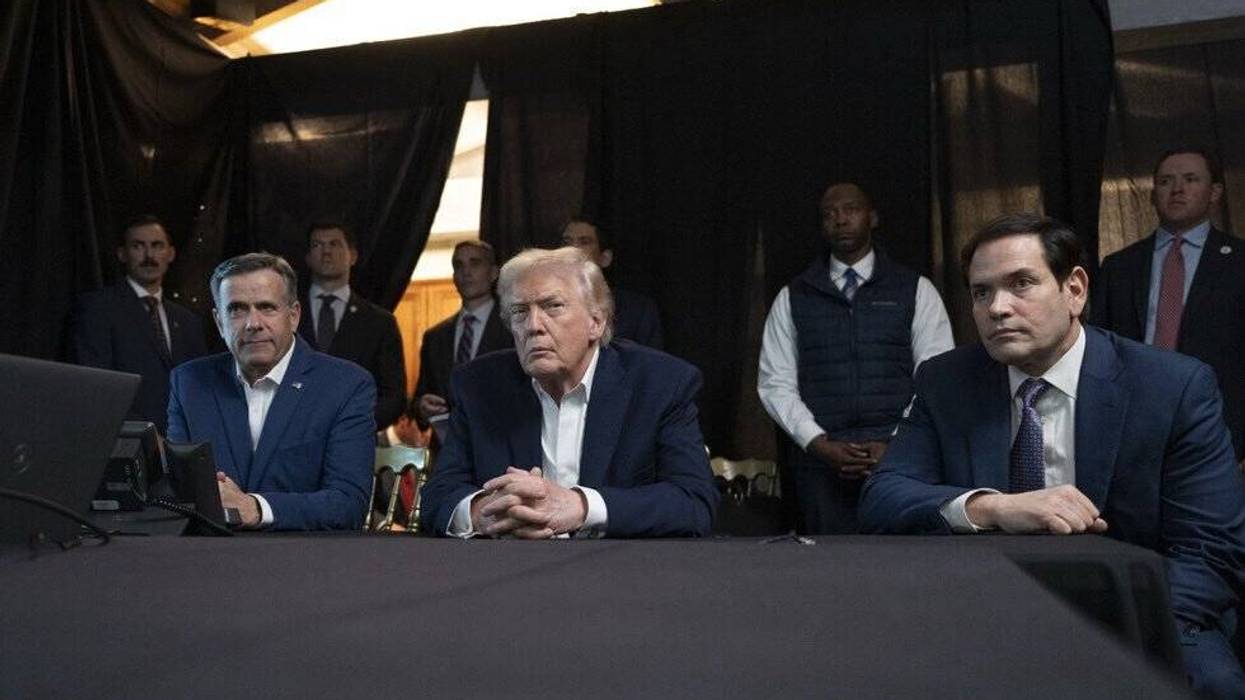
The revelation comes as the State Department "has been on a full-throttle media blitz," noted one writer, "painting Cuba as an espionage superpower and a threat to US national security."
After months of President Donald Trump threatening a US takeover of Cuba and ramping up a decadeslong economic assault of the island, The New York Times revealed Wednesday that the Central Intelligence Agency created a related task force, "setting in motion plans for a more concerted campaign to pressure the Cuban government to make the economic, political, and leadership changes."
"In 1960, the CIA established an earlier Cuba task force, whose members oversaw the failed, agency-backed invasion of Cuba the next year known as the Bay of Pigs," the newspaper noted. "The people briefed on the new task force said its mandate is more limited: to create fissures among the Cuban political elite, in hope of pressuring the Cubans to replace perceived anti-American hard-liners with more practical leaders more amenable to Mr. Trump's demands."
Despite the anonymous sources' claims about the differences from over a half-century ago, Eva Golinger, an American lawyer who wrote multiple books about former Venezuelan President Hugo Chávez, simply responded, "Bay of Pigs reloaded."
The Times article—on which the CIA declined to comment—came a day after Politico reported that "the US has increased its intelligence assets in Cuba in recent months as it pushes the country's communist regime to reform or fall from power, according to two people familiar with the Trump administration's plans for the island."
The agency also declined to comment on Politico's piece, which pointed out that "US military operations are often preceded by increased American intelligence activity. CIA efforts to track the whereabouts of Venezuelan leader Nicolas Maduro reportedly played a critical role this January in the successful US operation to capture him."
Sharing Politico's coverage on social media, Andrés Pertierra, a Cuba historian at the University of Wisconsin-Madison, said that it is "hard to say at this point to what degree this is theater aimed at rattling the cage in Havana or performing strength to Miami, on the one hand, or some kind of prelude to an actual escalation, on the other, given recent months of warnings of escalation that went nowhere."
Enrique "Ric" Prado, a Cuban exile who served in various posts at the CIA, "is convinced that Washington is preparing a definitive blow against the island regime," El País reported early Wednesday. He predicted, "Cuba is the next apple to fall from the tree."
This week's reporting followed the July release of a "McCarthyite" US Department of State document that was widely decried as an "attack on Americans' constitutional rights to free speech and assembly," as well as an attempt to justify an invasion of Cuba, where the Trump administration has fueled a humanitarian crisis.
"For nearly seven decades, the Cuban regime has waged a sustained campaign of subversion against the United States," the department's report begins, "that has infiltrated the highest reaches of the US government, recruited and cultivated generations of American activists, backed an unprecedented wave of left-wing terrorism on American soil, and carried out one of the most durable and damaging foreign intelligence penetrations in American history."
Promoting the publication on social media, US Secretary of State Marco Rubio—the son of Cuban immigrants and a longtime advocate of regime change on the island—claimed his department was "exposing the full history of Cuban espionage and subversion in our country."
During a Sunday interview with Fox News host Lara Trump, the president’s daughter-in-law, Rubio repeated claims from the report and called the island nation, about 90 miles south of Florida and home to roughly 10 million people, "an influence and espionage superpower." His comments drew criticism from Democrats in Congress, the Cuban foreign minister, and other experts.

"At a time when families are struggling to afford groceries, gas, healthcare, and childcare, Congress cannot throw hundreds of billions of dollars at Trump’s ‘Golden Fleet,’" said one Democratic senator.
The Trump administration's controversial plan to build a new "Golden Fleet" of guided-missile battleships is drawing mounting criticism from budget watchdogs, defense analysts, and Democratic lawmakers, who warn the proposal would put taxpayers on the hook for what could be the costliest naval procurement in US history.
The nonpartisan Congressional Budget Office (CBO) on Wednesday said the cost to build 15 Trump-class nuclear-powered battleships is approximately $275 billion in current dollars through 2056—roughly 50% more than a previous estimate.
"Under the 2027 shipbuilding plan, compared with the 2025 plan, the Navy would purchase substantially more large surface combatants," the CBO said. "The average annual amount of funding needed to buy surface combatants would rise by slightly more than two-thirds, from about $11 billion to $19 billion."
"By 2035, the Navy's 2027 plan would more than double the tonnage of large surface combatants that shipbuilders would need to produce," the office added. "Overall, the tonnage of large surface combatants to be constructed would need to increase by 60%, while the tonnage of small surface combatants would decrease by about 40%. Accommodating such a sizable increase in the production of large surface combatants could be a challenge for the shipbuilding industry."
One journalist noted that the Trump-class battleships' cost would make them "the most expensive US warships ever produced."
President Donald Trump claimed in December that his proposed Golden Fleet would "help maintain American military supremacy, revive the American shipbuilding industry, and inspire fear in America’s enemies all over the world."
The president explicitly linked his desire to revive battleships—which were last built in the US in 1944 and were all decommissioned by the early 1990s—to his affinity for the 1950s television documentary series "Victory at Sea."
Critics say the program will inflate already historically high military budgets while diverting hundreds of billions of dollars that would be better spent on underfunded social programs.
"At a time when families are struggling to afford groceries, gas, healthcare, and childcare, Congress cannot throw hundreds of billions of dollars at Trump’s ‘Golden Fleet,’ including plastering his name across a new battleship," Senate Budget Committee Ranking Member Jeff Merkley (D-Ore.) said Wednesday in response to the CBO analysis.
"Congress cannot afford to commit to another massive military boondoggle that will only succeed in filling the coffers of the military-industrial complex."
"Just like Trump’s ‘Golden Dome,’ the ‘Golden Fleet’ is expected to cost much more than previously estimated," he continued, referring to the president's proposed missile defense system that Sen. Ed Markey (D-Mass.) derided as a "dangerous $1.2 trillion boondoggle."
“While we continue to see too many Pentagon programs burdened by cost overruns, delays, and unrealistic promises that fail to meet reality, Congress cannot afford to commit to another massive military boondoggle that will only succeed in filling the coffers of the military-industrial complex," Merkley added. "I will work with my colleagues on the Appropriations Committee to reject moving forward with this wasteful project, and instead invest in programs that help families thrive."
In addition to cost, military experts and others noted the obsolescence of battleships—which are now all scrapped or museum pieces—and the fact that they make great big targets.
Among the most outspoken critics of the Golden Fleet is Mark Cancian of the Center for Strategic and International Studies (CSIS), who has argued that the ships represent a throwback to outdated naval warfare doctrine.
Rather than concentrating enormous combat power in a handful of exceptionally expensive vessels, Cancian has said the Navy's own operational concepts increasingly emphasize "distributed maritime operations," the spreading of offensive capabilities across larger numbers of smaller, networked ships that are harder for adversaries to target.
Bernard Loo, a senior fellow at the Rajaratnam School of International Studies in Singapore, was even more blunt in a December CBNC interview, calling the proposed Trump-class ships "bomb magnets."
“The size and the prestige value of it all make it an even more tempting target," Loo added.

Critics like Fight for the Future fear that "these bills would allow Trump's FTC to wipe abortion, sex ed, and LGBTQ resources off the internet while instating nationwide age verification requirements."
The US Senate Commerce Committee on Wednesday advanced a package of bills intended to protect children online, despite free speech and privacy concerns long raised by civil liberties groups about such proposals, particularly those that require or urge websites to implement age verification systems.
The panel moved forward the Kids Online Safety Act (KOSA)—versions of which have been considered in Congress for years—as well as the Children's Artificial Intelligence Toy Safety Act; the Children's Health, Advancement, Trust, Boundaries, and Oversight in Technology (CHATBOT) Act; and the Youth AI Privacy Act
Some advocacy groups welcomed the development, with Fairplay executive director Josh Golin saying that "the Senate version of KOSA is the most protective, popular, and bipartisan of all children's online safety legislation under consideration. It would be the most important new law to protect kids online in nearly 30 years."
"We are also pleased to see the committee advance both the Youth AI Privacy Act and the CHATBOT Act," Golin continued. "The danger AI chatbots pose to children and teens is a growing crisis. These bills would add deeply needed protections to help mitigate chatbot harms, including strong default settings for long-term memory use, a ban on advertising to minors through a chatbot, a ban on using the data of minors to train AI models, and prohibitions on features that cause compulsive use."
The committee did not advance the Shielding Children's Retinas from Egregious Exposure on the Net (SCREEN) Act, which would require pornography websites to verify users' ages so they can block minors, because low attendance led to a failure to meet quorum.
Ahead of the bill markup, the Center for Democracy & Technology wrote to committee Chair Ted Cruz (R-Texas) and Ranking Member Maria Cantwell (D-Wash.) to raise alarm about KOSA, the CHATBOT Act, and the SCREEN Act, while acknowledging that the Youth AI Privacy Act "would create important safeguards for the use of minors' data by generative AI services."
The group also stressed that "enacting comprehensive consumer privacy legislation that meaningfully realigns consumer expectations and incentives for online business models is the best path forward to protecting children and everyone online and to addressing root causes of harms related to minors’ activities on social media, generative AI models, and other internet-enabled services."
CDT supports tackling the data practices that put young people at risk. But proposals that encourage age verification or restrict access to lawful content risk undermining privacy and constitutional rights. Read our letter:
[image or embed]
— Center for Democracy & Technology (@cdt.org) August 5, 2026 at 12:09 PM
The Senate action came after a bipartisan vote by the House of Representatives in June to pass the Kids Internet and Digital Safety (KIDS) Act, which "took portions from 14 digital safety bills—including the SCREEN Act," as The Hill reported Wednesday. "The House's version of KOSA eliminated a 'duty of care' provision that is a redline for the Senate's co-authors, Sens. Marsha Blackburn (R-Tenn.) and Richard Blumenthal (D-Conn.), who called the package 'dead on arrival' in the Senate last month."
"The provision would have legally required platforms to 'exercise reasonable care' to prevent harms to minors. Harms include eating disorders, suicide, substance use disorders, and sexual exploitation," the outlet detailed. "The KIDS Act faces long odds in the Senate as a result, making Cruz's decision to take up some of the bills individually instead not surprising."
Earlier this week, the Electronic Frontier Foundation argued that "the Senate should reject KOSA's privacy risks," emphasizing that the duty of care obligations included in the upper chamber's version "only work if online services know which users are minors. That means more platforms will be pressured to implement age verification or age estimation systems."
Ahead of the House vote earlier this year, the ACLU's Jenna Leventoff and Christopher Anders similarly noted that "KOSA, although purporting not to require age verification, would nevertheless strongly incentivize it."
The ACLU experts warned that age verification will "severely jeopardize user privacy by turning droves of information over to platforms" and "threatens the First Amendment rights of adults," who may not be able "to verify their ages (because they lack valid identification, face technological difficulties, or lack digital skills), or can but "might still be reluctant to access information online over a fear that a data breach could lead to the disclosure of sensitive information contained within their browsing history."
After the Senate votes on Wednesday, Leventoff reiterated: "Bills that incentivize or require age verification promise safety, but all they deliver is a future where everyone has to undergo invasive identity verification measures that will almost certainly put their sensitive data at risk. We shouldn't need to fork over our IDs, biometrics, or personal information to access the internet, but that's exactly what will happen if these bills become law."
"When the data used to verify a users' age is combined with other commercially available data," she warned, "it can enable adversarial nations to track and attack troops, allow stalkers to locate their victims, and allow scammers to target those who will be most susceptible to their schemes."
Together, these bills would allow Trump’s FTC to wipe abortion, sex ed, & LGBTQ resources off the Internet while instating nationwide age verification requirements. This could mean scanning your face or sending in your government ID just to post on Bluesky! ❌Take action: fftf.link/bib
[image or embed]
— Fight for the Future (@fightforthefuture.org) August 4, 2026 at 12:09 PM
Fight for the Future also called out the Senate panel on Wednesday, with campaign director Sarah Philips saying that "Congress is once again doing political theater instead of actually meaningfully regulating the business model of Big Tech companies."
"The Senate Commerce Committee is rushing out bad internet bills so they can go out and campaign on them even knowing they are doomed to failure, either because they will be rejected by the House or overturned by the courts for being unconstitutional," Philips said. "Young people have been calling and emailing Congress on this issue for years, and have been rallying around the world against proposals to fence them off from the internet for a reason. They can see through these efforts. They know more censorship and surveillance, more data collection for companies, and all of us having to turn over ID in order to interact online is not safety."
"We've had hearing after hearing on this issue for the last few years instead of actually moving against the tide of tech corporate power that is making our future unlivable and exploiting our data for profit," Philips added. "We want to protect kids, but we want those proposals to actually do the work, instead of just making an easy headline for congressional leadership. Anyone in Congress still pushing censorship and surveillance bills under the facade of kids safety has failed us, especially members that claim to support trans kids and every community currently being attacked by the Trump administration."

"I think it shows you how deeply out of touch the Republican Party is with the concerns of working-class Americans."
New York City Mayor Zohran Mamdani on Wednesday hit back at House Speaker Mike Johnson (R-La.) over a fearmongering social media post in which the Republican warned of "radical Marxist Democrats" determined "to destroy the very foundations that make us the envy of the entire world."
During a press conference, the democratic socialist mayor was asked to comment on the post, in which Johnson said the US was in danger of "being overrun by mini-Mamdanis" if Republicans lost control of Congress this fall.
Mamdani responded by speculating that Johnson's post was in reaction to the victory of Abdul El-Sayed in the Democratic US Senate primary in Michigan on Tuesday.
Noting that El-Sayed campaigned on a slogan of, "Money out of politics, money in your pocket, Medicare for All," the mayor questioned why Johnson found such promises so threatening.
Reporter: Mike Johnson said in an X post: “There is an urgent question facing America. Are we going to maintain our status as the world’s greatest superpower and beacon of liberty, opportunity, and security, or allow radical Marxist Democrats to destroy the very foundations that… pic.twitter.com/EuZVUtTJP6
— Acyn (@Acyn) August 5, 2026
"If those simple commitments and beliefs are what drive Rep. Johnson to these kinds of conclusions," Mamdani said, "I think it shows you how deeply out of touch the Republican Party is with the concerns of working-class Americans."
The mayor then alluded to the hurdles that El-Sayed had to overcome to win the election, including organizations such as the American Israel Public Affairs Committee (AIPAC), which alone spent $30 million to defeat him.
"Despite him facing more than $60 million in outside spending," Mamdani said, "he was able to prevail with a focus on the cost-of-living crisis, and the way in which healthcare is exceedingly out of reach for those who have helped make this country what it is."
The Associated Press declared El-Sayed the winner of the often contentious primary on Wednesday morning, and many establishment Democrats—including his top rival, Rep. Haley Stevens (D-Mich.)—rallied behind him as the party's nominee.

The US is still the only developed country that doesn't require any paid vacation time by law.
Though they may work in the land of the free, Americans are getting a lot less free time than their counterparts around the world.
The US is the only developed nation that doesn't require employers to grant workers any paid vacation time. And according to a report out Wednesday, the average American is receiving less time off than what many of their peers consider the bare minimum.
Twenty-five countries in the Organization for Economic Cooperation and Development (OECD) require employers to grant at least 20 days of paid time off to their workers.
Workers in the UK are guaranteed at least 28 days of lounging each year by law, while those in Sweden, France, Denmark, and Austria get a minimum of 25 days off.
Americans, meanwhile, are receiving just 10 vacation days per year on average, according to the analysis, titled "No Vacation Nation," by John Schmitt, a fellow at the Center for Economic and Policy Research.
That is the bare minimum for countries ranking at the bottom of the OECD list, Japan and Canada, which each require full-time workers to get at least 10 days off.
And the Americans getting time off at all are the lucky ones. Around 43% of workers in the bottom quarter of earners don't get any paid vacation time, while just 38% of part-time workers do.
“Every other comparable country in the world guarantees workers a decent minimum amount of paid vacation. In the United States, we don’t require employers to give any,” Schmitt said. “As a result, almost a quarter of our workforce has nothing at all, and the average for those workers who do have paid vacation is near the bottom of the minimum required by law in the rest of the world’s rich countries.”
Vacation days are just one of many areas where American workers are guaranteed less than their counterparts in other wealthy nations. The US is also the only OECD country with no national requirement for paid maternity leave or sick leave.
Members of the Congressional Progressive Caucus have pushed for paid time off to be included in its "New Affordability Agenda," a package of bills focused on labor and the cost of living that they hope will pass if Democrats retake Congress this November.
They've included a bill introduced last year by Rep. Seth Magaziner (D-RI) which requires two weeks of paid vacation for full-time workers.

The US military's partnership with Ecuador has already been associated with unexplained drone strikes and torture of people wrongfully accused of drug trafficking.
The US and Ecuadorian joint attacks that occurred in March at a rural dairy farm where officials insisted drug traffickers were operating "could replicate over the rest of 2026" across Latin America, said one expert after the Pentagon announced that its boat bombing campaign would be expanded to "defeat all threats" within countries across the region.
US Southern Command, which has overseen the boat bombings—up to now known as Operation Southern Spear—and the killings of at least 221 people, announced Tuesday that the operation will now be known as Joint Task Force Western Hemisphere, with the US military "taking the fight to the enemy."
The "fight" the military referred to is largely against drug cartels operating in Latin America, with which President Donald Trump has claimed the US is in an "armed conflict."
But the US Congress has not authorized the attacks the US military has carried out as it's claimed to be fighting "narco-terrorists," including at least 66 boat bombings in the Caribbean Sea and eastern Pacific Ocean—an operation that has cost $820 million so far.
Lawmakers from both sides of the aisle have introduced war powers resolutions aimed at stopping the Trump administration from continuing the boat bombings, but the efforts have failed, even as families have filed legal complaints alleging that their loved ones were wrongfully killed in the attacks.
The Drug Enforcement Agency's own data recently showed that the bombing of boats suspected of carrying drugs has done little-to-nothing to stop illegal substances from entering the US, while international law experts have emphasized that even if the US has been accurately targeting drug traffickers, the killings could constitute war crimes or mass murder.
Now, releasing a promotional video that resembled an action movie trailer, US Southern Command on Tuesday pledged to "synchronize US military operations with allies and partners to counter threats, strengthen regional security, and respond rapidly to crises across the Western Hemisphere."
JTF-WHEM is taking the fight to the enemy.
“Along with our Americas Counter Cartel Coalition partners, we will locate, close with, and destroy the enemies that threaten our hemisphere.” — #SOUTHCOM Commander Gen. Francis L. Donovan@DeptofWar @SecWar @The24MEU @USMC @USNavy… pic.twitter.com/k60WWBWOcf
— U.S. Southern Command (@Southcom) August 4, 2026
"Along with our America's Counter Cartel Coalition partners, we will locate, close with, and destroy the enemies that threaten our hemisphere," said Commander Francis Donovan of US Southern Command.
Donovan noted that 18 countries have backed the United States' stated mission of halting drug trafficking out of Latin America.
As Adam Isacson, the director for defense oversight at the Washington Office on Latin America, pointed out, leaders in Colombia and Peru have both expressed interest in hosting joint military operations with the US on their own soil.
President-elect Abelardo de la Espriella of Colombia has said he plans to join Trump's Shield of the Americas alliance, a group right-wing government across the hemisphere that have pledged to join in the fight against drug cartels—but which the civil society group Justice for Colombia warned may ultimately "impose US strategic interests on the region and could target left-wing activists and other opponents."
"Colombian communities have long opposed purely military solutions to the existence of armed groups," said the group last month. "Many welcomed peace talks under the [President Gustavo] Petro government, while highlighting that more needed to be done to protect social activists and deal with root causes of conflict. Many now fear that they will be targeted in a renewed emphasis on conflict."
Newly inaugurated Peruvian President Keiko Fujimori has also signaled a willingness to join the alliance after having campaigned on fighting crime rates in the South American country.
The Trump administration has also pushed Guatemalan and Honduran leaders to approve joint strikes against suspected drug gangs inside their borders.
With Joint Task Force dWestern Hemisphere, said New York Times reporter Maria Abi-Habib, the Pentagon is "standing up a task force that will see Latin American countries accept joint US strikes inside their borders. It moves the boat strikes from international waters to sovereign inland territories across the region."
US Southern Command spoke approvingly of a raid Guatemala conducted on an alleged drug lab earlier this year, saying in a social media post that the operation showed a "commitment to take the fight to narco-terrorists in their country."
Two people familiar with the push in Guatemala told the Times that the administration was advocating for joint strikes in the country to ultimately pressure Mexico, where President Claudia Sheinbaum has rejected similar requests.
Ecuador's partnership with Trump has brought allegations of torture, arbitrary detention, and unexplained drone strikes on at least three Ecuadorian fishing boats. In June, the prosecutor investigating the boat attacks was killed in an apparent assassination.
"Ecuador has been the proving ground" for Trump's so-called "Donroe Doctrine," said Drop Site News reporter Camila Lourdes Galarza, adding that the "media silence" regarding the US military's expansion in the region "has severely compromised all analysis."
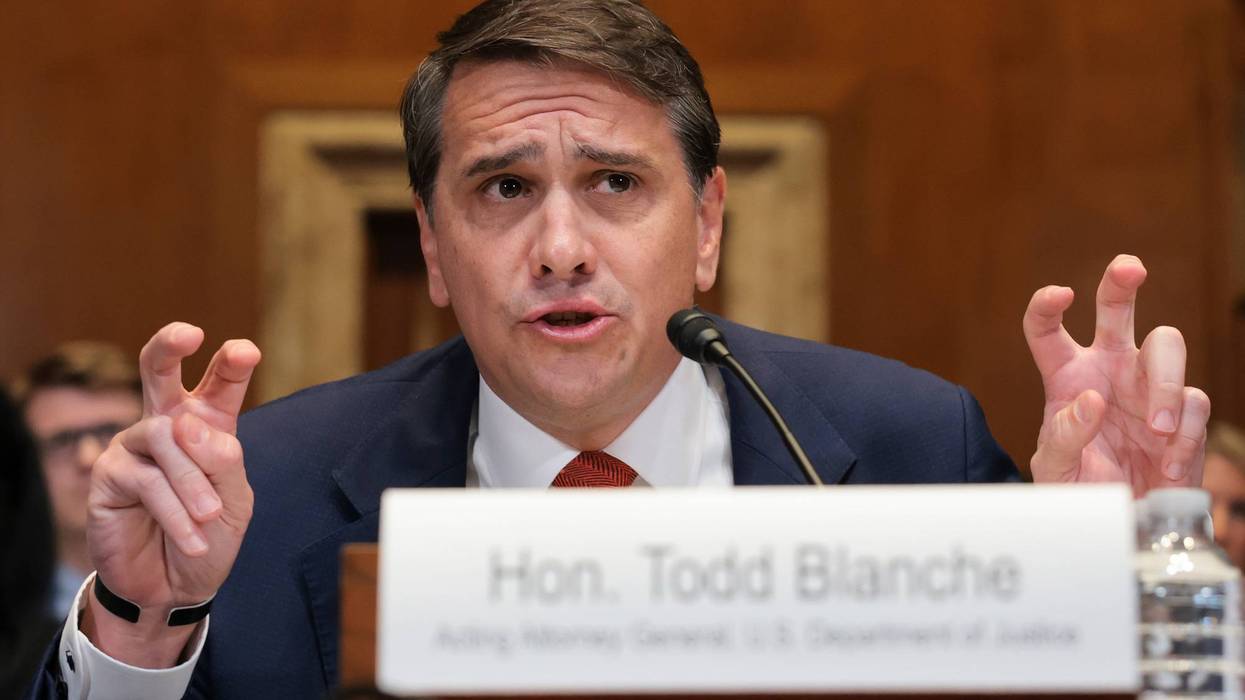
"Anti-abortion zealots like Todd Blanche would not stop until they could restrict our bodily autonomy to the furthest degree," said one critic.
Reproductive rights groups are sounding the alarm about a recent pledge made by acting US Attorney General Todd Blanche to make every state adhere to anti-abortion laws passed in red states.
In a phone call last week hosted by the White House Faith Office, Blanche told a religious group that he would work would work to ensure the US Supreme Court's Dobbs v. Jackson Women's Health Organization decision that overturned the constitutional right to an abortion “becomes permanent in every single state.”
During the call, Blanche hinted that the Trump administration would place restrictions on the ability to mail drugs such as mifepristone to states that have outlawed abortion.
"If states have said, ‘We are going to protect the unborn and we’re going to protect every life from the moment of conception,’ we’re putting practices and policies in place so that other states and other organizations can’t attack that,” Blanche said. "They can’t do things like they’re doing with mailing in mail-order drugs."
In an analysis published Wednesday, journalist Jessica Valenti argued that Blanche's pledge would not result in a nationwide ban on abortions, but rather "stopping the shipping of abortion medication under the auspices of adhering to Dobbs."
"If we lost telemedicine abortion, there would be devastating national consequences," Valenti emphasized. "You could even argue—and I have!—that banning the shipping of abortion pills amounts to a backdoor national ban."
In a Tuesday social media post, Sen. Tina Smith (D-Minn.) highlighted Blanche's call and warned that confirming him as AG permanently would be a green light to assault women's rights.
"Todd Blanche made clear in these secret calls with anti-choice activists that he wants to resurrect the Comstock Act—an antiquated anti-vice law from before women had the right to vote—to ban sending medication abortion in the mail," wrote Smith. "Republicans will likely do what they always do and confirm Blanche as attorney general despite all of this, and once again, women across America will pay the price."
Mini Timmaraju, president and CEO of Reproductive Freedom for All, accused Blanche of "making dangerous promises behind closed doors to weaponize the Justice Department to enact a national abortion ban."
"We must believe Blanche when he says he will come for our rights," Timmaraju added. "Republicans are using every lever of government to attack reproductive freedom, and voters will make their voices heard this November to take our Congress back from these extremists."
Nourbese Flint, president of All* Above All, called Blanche's promise "an open declaration of his intention to use the Justice Department to stop the delivery of abortion medication."
"The lie they told us in the aftermath of Dobbs was that it was about sending abortion law back to the states," Flint said, "but we have known all along that anti-abortion zealots like Todd Blanche would not stop until they could restrict our bodily autonomy to the furthest degree."

Rights groups warned that giving Secretary Pete Hegseth near-total control of what is released under the Freedom of Information Act "will naturally favor politicization and avoiding embarrassment over public transparency."
Press freedom organizations are urging Congress to reject a proposal that they warn could allow the Pentagon to withhold massive amounts of unclassified information from the public.
As part of its recent budget package, the Department of Defense submitted a proposal to Congress in late June that would create a new exception to the Freedom of Information Act (FOIA), allowing the defense secretary to bar certain "controlled unclassified information" (CUI) from public disclosure if the military determines that the national security risk outweighs the public interest.
CUI is a broad category of information that is not classified but that the government considers sensitive enough to be distributed only to specific people. But under current law, the government can only refuse to release information requested through FOIA if it meets certain exemptions, such as properly classified national security material, protected personal information, privileged internal communications, or records whose release could compromise law enforcement.
The new law would change this, allowing the defense secretary to declare almost any unclassified Pentagon record as both CUI and “national security information" to prevent it from being released. This could affect access to countless documents of significant public importance—from reports on investigations into military action, to internal records about the military's rules of engagement, to audit and oversight records.
"The CUI standard is already so broad that were it to be incorporated as a FOIA exemption for the Defense Department, massive amounts of important information would be yanked from the public," wrote Adam A. Marshall, the director of the Reporters Committee for Freedom of the Press. "That would be disastrous, especially when the Defense Department is at the forefront of so many stories the public needs to know about, from the United States’ war with Iran to the targeted destruction of boats in the Caribbean and eastern Pacific."
Clayton Weimers, the executive director of Reporters Without Borders North America, argued that the proposed rule change was unnecessary.
"The Pentagon already has extensive authority to protect genuine national security secrets. What it is asking Congress for now is something entirely different: the power to hide unclassified information from the public," he said. "At a time when the Department of Defense controls nearly one trillion dollars in taxpayer funding and makes decisions that can shape war and peace, the public deserves more transparency, not more secrecy."
Under Secretary Pete Hegseth, the Pentagon has attempted to dramatically clamp down on the flow of public information. It has held far fewer press briefings than previous administrations, issued requirements that reporters pledge not to release "unauthorized" information, and booted credentialed press from Pentagon offices in favor of administration-friendly outlets and influencers.
Secrecy has grown amid President Donald Trump's war against Iran, with the Pentagon withholding information about hundreds of US military injuries from the public and altering publicly available death counts to exclude the names of four US personnel recently slain in the region.
Last week, a coalition of more than 40 press freedom, civil rights, and watchdog organizations, led by Reporters Without Borders, sent a letter to members of the House Oversight Committee, arguing that giving the defense secretary final say over what information is made public would be especially dangerous and "will naturally favor politicization and avoiding embarrassment over public transparency."
Under the Trump administration, the Pentagon has already been much less willing to comply with FOIA requests than under the Biden administration. Pentagon data show that it took more than 30% longer, on average, to respond to complex FOIA requests in 2025 than in 2024, and that it granted only 17% of FOIA requests in full.
"The Pentagon is already too secretive, and the last thing it needs is a rubber stamp to hide unclassified records under the guise of national security," said Lauren Harper, the Daniel Ellsberg chair on government secrecy at the Freedom of the Press Foundation. “We don’t need the Pentagon hiding more information from FOIA. We need it to actually respond to public records requests, we need it to stop harassing journalists for doing their job, and we need it to be transparent and accountable to the public, service members, and their families.”
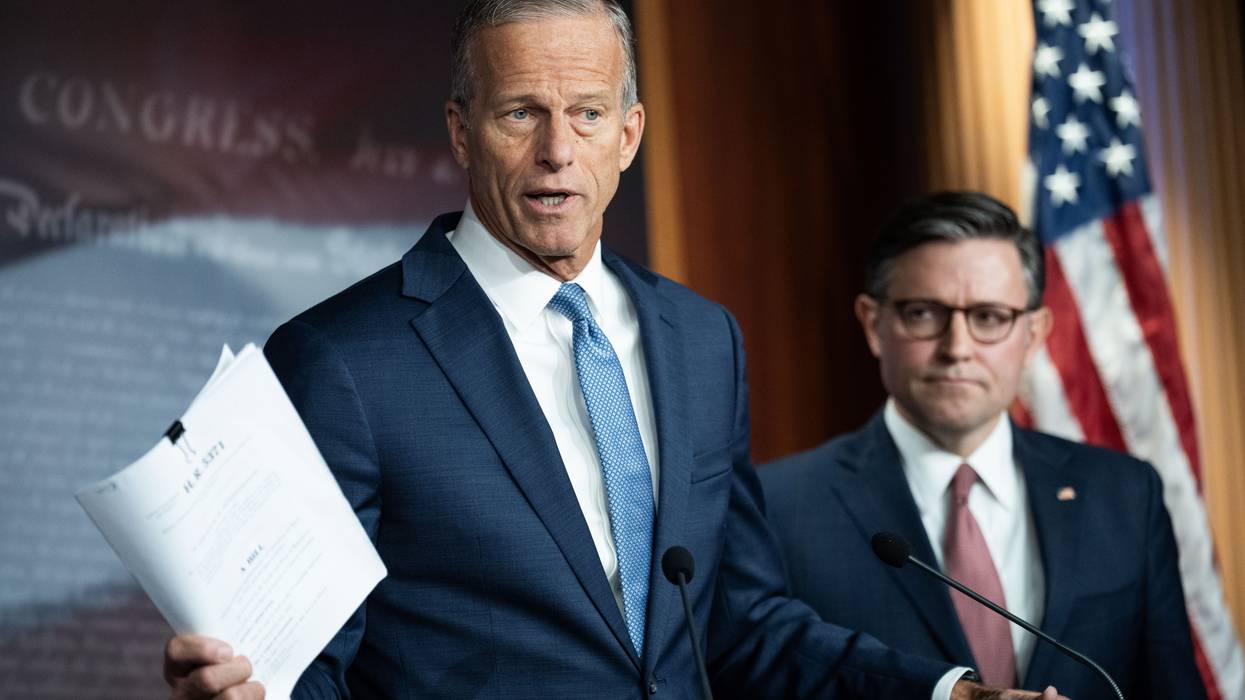
"A plan you will not show the voters before they vote is not reassurance. It is a warning and revealing of Republican priorities.”
In early June, Republican House Speaker Mike Johnson said the GOP has a "plan" to reform Social Security, Medicare, and Medicaid—but would not release the details until "next year," after the 2026 midterms.
But a group of Senate Democrats argued in a letter to Republican leaders on Wednesday that "Americans deserve to have full transparency into Republican plans to attack earned benefits like Social Security." The Democrats—led by Sens. Elizabeth Warren of Massachusetts, Ron Wyden of Oregon, and Chuck Schumer of New York—wrote that "it is time for Republicans to put their money where their mouth is" and "release the plan referenced by Speaker Johnson."
The letter was released as the Senate Finance Committee convened a hearing titled "Exploring Process Approaches for Addressing Social Security Solvency," where Wyden and other Democrats blasted proposals to raise the retirement age and cut Social Security benefits through unaccountable commissions.
"Every time Republicans get their hands on these sorts of ideas for Social Security, life gets worse for older people that count on it to get by," said Wyden, the top Democrat on the Senate Finance Committee. "All we need to do is require billionaires, who have seen their wealth skyrocket to over $9 trillion this year while working people struggle with their grocery bills, to pay their fair share."
According to Social Security's Board of Trustees, the New Deal program's Old-Age and Survivors Insurance Trust Fund will be unable to pay out full benefits by the end of 2032. Members of the Senate Democratic caucus, including Sen. Bernie Sanders (I-Vt.) and Sheldon Whitehouse (D-RI), have introduced legislation that would extend Social Security's ability to pay full benefits for the next 75 years—but neither bill has garnered Republican support.
"We've got a plan. We're not ashamed of our plan," Whitehouse said during Wednesday's hearing. "You actually make people who are making huge amounts of income pay the same Social Security taxes as everybody else, all the way up the rest of their income."
"It's just a question of political will," the senator continued, "and of some people not wanting to own what they want to do to Social Security."
In a radio interview earlier this year, Johnson (R-La) declared that Social Security, Medicare, and Medicaid must be "adjusted and fixed," but did not offer any specific details or policy prescriptions.
"We have a plan to do that," Johnson said, "next year."
House Republicans have previously floated changes such as raising the full Social Security retirement age, which would cut benefits across the board.
In their Wednesday letter to Johnson and Senate Majority Leader John Thune (R-SD), Senate Democrats wrote that "it is critical that the American people understand where Republicans truly stand regarding our preeminent economic security program."
"For decades, Republicans have attacked and undercut Social Security, aiming to cut benefits or privatize the program," the Democratic lawmakers wrote. "A plan you will not show the voters before they vote is not reassurance. It is a warning and revealing of Republican priorities.”

One group said the people of Detroit "will soon have a representative who prioritizes the people of the district over Israel’s genocide."
Michigan state Rep. Donavan McKinney has defeated incumbent Congressman Shri Thanedar in Tuesday's 13th Congressional District Democratic primary, delivering yet another rebuke to corporate-backed Democrats and their support for Israel as it continues its US-backed genocidal assault on Gaza.
The Associated Press called the race for McKinney (D-11) just before 10:00 am local time on Wednesday, with preliminary results showing the 34-year-old Detroit sonative received 51.9% of the vote, while Thanedar—whose close ties to corporate interests made him a frequent target of progressive criticism—received 48.1%, with 99% of all votes tallied.
McKinney—a 34-year-old organizer backed by social democrats including US Sen. Bernie Sanders (I-Vt.) and Rep. Rashida Tlaib (D-Mich.)—ran a campaign centered on working-class issues like affordable housing, healthcare, labor rights, and environmental justice.
He also sharply criticized US support for Israel's war in Gaza—which a United Nations Commission of Inquiry last year called a genocide—joining a growing number of progressive candidates calling for an end to the billions of dollars in annual armed aid the US provides Israel and a permanent ceasefire. His stance won him widespread support in a district with a significant and growing Arab American and Muslim population.
Congratulations to @donavanmckinney.bsky.social Mi-13 will soon have a representative who prioritizes the people of the district over Israel's genocide.Donavan is a real fighter who doesn't just talk about change, he delivers it!Let’s go!!!
[image or embed]
— PAL PAC (@votepalpac.bsky.social) August 5, 2026 at 7:08 AM
“Detroit, I am honored beyond measure to be your Democratic nominee to represent the Mighty 13th in Congress," McKinney said in a statement published by Michigan Advance. "I am so proud that our community is sending me to Congress to fight for a better future—because that means our movement has shown them a fighter is what they truly deserve in Washington."
“Today, we showed why being always with the people is more than a slogan—it’s a roadmap for the Democratic Party on how to move forward to defeat the fascism and divisiveness harming our country, and to deliver the leadership the Mighty 13th deserves," he added. "Taking back our seat and taking back our power has always been at the core of our movement, and I’m so excited for all that our community will accomplish together.”
Democratic Socialists of America congratulated McKinney—a DSA member—in a Bluesky post touting his progressive platform.
Congratulations to Donavan McKinney on winning his congressional primary, unseating a millionaire AIPAC stooge! Donavan is a former union member fighting to get money out of politics, a green new deal, and union jobs. @donavanmckinney.bsky.social @detroitdsa.bsky.social
[image or embed]
— Democratic Socialists of America (@demsocialists.bsky.social) August 5, 2026 at 7:33 AM
Indivisible, which organizes against what it calls a "fascistic clown show of a regime"—the Trump administration—hailed McKinney's victory as "a huge win for working families."
"In addition to overcoming millions in outside spending, Donavan defeated a multimillionaire incumbent who enriched himself in office and voted to enrich [President Donald Trump]," the group added. "This is how we build a better Democratic Party!"
McKinney's victory came amid a wave of wins for progressives in Michigan and across the country.
Michigan voters also nominated progressive Abdul El-Sayed for the US Senate after he narrowly defeated Congresswoman Haley Stevens (D-Mich.) despite tens of millions of dollars in outside spending, much of it from pro-Israel groups like the American Israel Public Affairs Committee (AIPAC) and its United Democracy Project.
Meanwhile, Sunrise Movement co-founder Will Lawrence won the Democratic nomination in Michigan's battleground 7th Congressional District, underscoring what supporters called the strength of climate-focused and working-class organizing.
Progressive candidates also notched victories in several Michigan state legislative contests backed by the DSA, Working Families Party, Our Revolution, and other left-leaning groups.
In metro Detroit, Chris Gilmer-Hill unseated incumbent state Rep. Helena Scott (D-8) after running on a platform centered on labor rights, housing affordability, and universal healthcare. In a closely watched state Senate primary, Abbas Alawieh—a co-founder of Michigan's Uncommitted movement, which emerged in protest of the Biden administration's support for Israel's annihilation of Gaza—handily won the Democratic nomination over state Rep. Erin Byrnes (D-15). Joanna Whaley, a former megachurch pastor, is set to become the first transgender member of the state Legislature after comfortably winning her race against opponents including former state Rep. Frank Liberati (D-13), who tried to disqualify Whaley because she did not run under her deadname.
Reacting to the wins, Our Revolution executive director Joseph Geevarghese said Wednesday that "Michigan voters rejected the idea that elections can simply be bought, and they rejected a politics that asks them to settle for the status quo."
Tuesday's victories in Michigan point to a Democratic electorate that is apparently becoming more willing to reject candidates aligned with corporate donors and AIPAC in favor of unapologetic working-class progressives. While establishment Democrats and outside groups continue to wield enormous financial power—and have scored victories of their own, including incumbent Rep. Wesley Bell's defeat of former Congresswoman Cori Bush in Missouri—Tuesday's wins added to mounting evidence that working-class, pro-Palestine candidates are reshaping the Democratic agenda from coast to coast, including in crucial battleground states.
"Ordinary people understand what's happening in this country. They know the economy is rigged against working families," Geevarghese said. "They know our campaign finance system allows billionaires and special interests to buy power. And they're tired of a political establishment that too often protects that broken system instead of confronting it."