

SUBSCRIBE TO OUR FREE NEWSLETTER
Daily news & progressive opinion—funded by the people, not the corporations—delivered straight to your inbox.
5
#000000
#FFFFFF
To donate by check, phone, or other method, see our More Ways to Give page.
Daily news & progressive opinion—funded by the people, not the corporations—delivered straight to your inbox.
Vermont Senator Bernie Sanders' recent introduction of a single-payer healthcare reform bill in the U. S. Senate has drawn praise from Vermont labor leaders. "At a time when incredible pressure is being brought to bear on our representatives to support reform proposals that do little more than bail out the private insurance companies, Senator Sanders has taken his place among those of us who believe that healthcare should be a birthright of all Americans. We applaud his principled leadership," said Traven Leyson, President of the Washington/Orange/Lamoille Counties Central Labor Council.
The Bill, the "American Health Security Act of 2009," Senate Bill 703, is the first piece of single-payer legislation introduced in the Senate since the 2002 death of Minnesota Senator Paul Wellstone. Under its provisions, patients could seek care from a doctor or hospital of their choice under a federally funded plan administered by the states. Unlike reform proposals being floated by Senators Baucus and Kennedy, S. 703 would eliminate the role of private health insurance companies in healthcare delivery, producing administrative savings in excess of $400 billion per year.
"So long as we remain dependent on private insurance companies," said Senator Sanders, we're never going to have quality, cost effective healthcare for all Americans." S. 703 would also provide resources to train additional primary care physicians and fully fund community health centers, which many rural Vermont residents depend upon.
"Healthcare costs are the biggest source of contention in contract negotiations these days," remarked Amalgamated Lithographers/ IBT Local One Vice President Dan Brush. "We can no longer solve this problem at the bargaining table. Senator Sanders' proposal will help restore the competitiveness of American industry while guaranteeing healthcare for all Americans."
"The Sanders Bill would provide a great economic stimulus for working people," adds Damon Hall of Ironworkers Local 7. "Since the start of this economic crisis, over half a million workers per month have been losing their employer-provided health insurance."
"The Vermont AFL-CIO is one of 39 state labor federations that have long supported HR 676 (the House of Representatives' version of single payer healthcare reform)," said Lindol Atkins, President of the Vermont AFL-CIO. "We are proud that Senator Sanders is standing up for the people of Vermont and the whole nation by taking the lead in introducing this Bill into the Senate."
Atkins also serves on the National Advisory Board of the Labor Campaign for Single Payer and has supported efforts to lobby both houses of Congress and the Obama administration to enact comprehensive healthcare reform. "We intend to ask Senator Leahy to co-sponsor this vital piece of legislation," he added.
Vermont labor leaders are gearing up for a statewide rally for Healthcare As A Human Right at 12:00 noon on Friday, May 1 at the Vermont Statehouse. The event is being coordinated by the Vermont Workers Center-Jobs with Justice and has been endorsed by over 90 organizations in the state. More information is available at: https://www.workerscenter.org/healthcare .
The primary purpose of the Labor Campaign for Single-Payer Health Care is to increase grassroots labor support for H.R. 676 as an essential element in winning the support of Congress to enact the National Health Care Act "Medicare for All" as the public policy of this country because we believe that health care is a human right.

"THIS from the administration that said there was no money for food assistance, Medicaid, and healthcare tax credits."
While economists have warned for months that the true cost of President Donald Trump's illegal war on Iran could be trillions of dollars, US Defense Secretary Pete Hegseth estimated on Tuesday that it's currently about $37.5 billion.
That figure came from a line of questioning by US Sen. Dick Durbin (D-Ill.), as Hegseth appeared before the Senate Appropriations Committee to support Trump's June supplemental funding request, which includes tens of billions for the Pentagon.
Hegseth told Durbin that the $37.5 billion estimate includes what's been spent so far, plus some projected spending through the end of the fiscal year in September—an exchange quickly met with fury by various critics, many of whom pointed out the range of ways that money could have been better spent by an administration allegedly dedicated to combating "waste, fraud, and abuse."
"Imagine all the better things that could have been done with $37.5 billion," Jonathan Cohn, political director for the group Progressive Mass, wrote on Bluesky.
Noting that the Strait of Hormuz "is still closed," progressive writer Alex Cole similarly said, "Imagine what $37.5 billion could've done for veterans, schools, or healthcare."
Congressman James Walkinshaw (D-Va.) specifically noted: "That could cover a full school year of free lunches for 30 million children. Or a full year of childcare for nearly 2 million kids."
"Trump finds money for war while families get excuses," he added, as working people struggle with rising costs of housing, groceries, and gasoline—the price of which has soared due to Iran restricting strait traffic over US attacks.
Trump’s war on Iran has so far cost taxpayers $37.5 BILLION.As if skyrocketing gas prices weren’t enough, Trump also expects us to foot this bill.Trump’s illegal forever war has spiraled out of control.
— Public Citizen (@publiccitizen.bsky.social) July 21, 2026 at 5:00 PM
The liberal political group American Bridge 21st Century highlighted how Trump and congressional Republicans have attacked programs for working families while giving more tax cuts to billionaires and waging war on Iran.
"THIS from the administration that said there was no money for food assistance, Medicaid, and healthcare tax credits," the organization said.
Since Trump joined with Israel to start bombing Iran on February 28, most congressional Democrats, legal experts, and other critics have argued that the war—for which the president never secured support from Congress—is not only foolish but also unlawful under both international and US law.
Citing Trump’s attempts to evade limits of the War Powers Act of 1973, Congressman John Larson (D-Conn.) said Monday that he is preparing legal action against the administration and a new bill to cut off funding for the war on Iran, which has killed over 3,000 people according to the Iranian government.
Previous war cost estimates from the US Department of Defense have been met with scrutiny. After Pentagon comptroller Jules "Jay" Hurst offered the $25 billion figure in April, Stephen Semler, a senior fellow at the Center for International Policy, estimated that the government spent at least $71.8 billion during the first two months of the war, or around $1.2 billion per day.
As for the US death toll, at least 17 service members have been killed and many more wounded. The New York Times revealed Monday that the Pentagon hid dozens of American military injuries from Iranian strikes on bases in Jordan last week.
Two Iranian-Americans, a US veteran, and a nurse disrupted Hegseth's Tuesday appearance before the Senate, according to CodePink. In addition to that anti-war group, the protesters were from the National Iranian American Council (NIAC) and Vets About Face DMV.
"Pete Hegseth and this administration will be remembered for the killing of innocent civilians and children. They have protected neither the American people nor our security, only the interests that have lined their pockets,” said Bella of NIAC, who joined the protest, in a statement.
"While Americans struggle to afford their lives, this government always finds billions to bomb our families in Iran, Palestine, Lebanon, and elsewhere," Bella added. "This is a repugnant betrayal of humanity. It is illegal, and the American people will hold them accountable."

One US author called the staggering surge a "reproductive genocide that Western feminists can't be allowed to ignore."
A senior medical official in the Gaza Strip sounded the alarm on Tuesday over a dramatic rise in miscarriages in the Palestinian exclave, with nearly 4,000 cases reported during the first half of 2026 amid Israel's ongoing genocide.
Gaza Medical Relief Director Bassam Zaqout said that 3,958 miscarriages were recorded in Gaza during the first half of this year—an increase the doctor called "unprecedented," and a serious risk to the health of pregnant women and their unborn fetuses.
Zaqout cited the soaring miscarriage rate to factors in Israel's genocidal assault on Gaza, including the destruction of the strip's infrastructure, unsanitary living conditions in camps for forcibly displaced Palestinians—where numerous babies have died of hypothermia—lack of hot water and hygiene supplies, and relentless terror caused by Israel Defense Forces bombing.
The Gaza Health Ministry documented 921 miscarriages and 2,004 live births in April. This staggering ratio—460 miscarriages for every 1,000 live births—is more than double that in neighboring nations Israel and Egypt.
Live births have also dropped dramatically in Gaza this year, from 5,210 in January, to 3,433 in February, 3,233 in March, 2,004 in April, and just 1,701 in May 2026, according to the ministry.
Last month, the Gaza Center for Human Rights said that the alarming rise in miscarriages is due to the systematic destruction of Gaza’s healthcare system, repeated attacks on hospitals, and widespread deprivation of food, medicine, and essential medical services amid 33 months of what United Nations experts and others have described as a genocide.
The Gaza Center for Human Rights said the following factors are the most significant drivers of the miscarriage crisis:
The center also noted that Article II of the Genocide Convention—the legal basis for the South Africa-led genocide case against Israel currently before the International Court of Justice—includes “imposing measures intended to prevent births within the group” in its definition of the crime.
United Nations officials and other experts have accused Israel of “systematically” using reproductive, sexual, and other forms of gender-based violence against Palestinians in Gaza and committing “genocidal acts” by deliberately destroying reproductive and healthcare facilities in the strip.
There has also been a documented surge in birth defects among Gaza newborns. According to the Gaza Health Ministry, congenital anomalies doubled in 2025 compared with 2022.
Successive medical warnings of a long-term health catastrophe in the Gaza Strip, with a notable increase in fetal deformities and miscarriages resulting from the harsh conditions of war. pic.twitter.com/T2rN6XQec6
— Eye on Palestine (@EyeonPalestine) June 25, 2026
Experts attribute the increase to many of the same factors driving miscarriages, pointing to contaminated water and widespread malnutrition, including the former famine that killed at least hundreds of Palestinians in Gaza, many of them children and infants.
Zaqout warned that Gaza’s health crisis is worsening as severe shortages of medicines, equipment, diagnostic tools, and laboratory supplies persist amid the strip's heavily damaged healthcare infrastructure and ongoing siege. He also noted the epidemics of diseases such as chickenpox, waterborne illnesses, and respiratory infections.
Numerous Palestinian women have lost their pregnancies due to direct acute trauma inflicted by Israeli bombs and bullets, which have often also killed would-be mothers. Israeli invaders have also ordered the evacuation of Gaza's hospitals, forcing staff to leave prematurely born babies to die and decompose in incubators.
A United Nations commission of inquiry reported last month that approximately 30% of the more than 73,000 Palestinians killed during Israel's 33-month war on Gaza were children—many of whom were deliberately targeted. Israeli forces have killed more than 21,500 Gazan children, including 1,022 babies, since the October 7, 2023 Hamas-led attack, according to the Gaza Government Media Office.
The United Nations Children's Fund has called Gaza "the most dangerous place in the world to be a child."

"Big Oil and the gas industry knew decades ago that methane was a harmful climate pollutant, but they manufactured the myth of ‘clean’ natural gas in order to protect and expand their business."
Gas companies knew about the climate harms of natural gas much earlier than previously thought and downplayed them to the public, according to a new trove of documents unearthed by an environmental activist group on Monday.
A report released Monday by the Center for Climate Integrity (CCI) found that—much like Big Oil had deceived the public about the planet-heating impact of oil—gas companies that pushed their product as a "clean" alternative had downplayed natural gas' production of methane, a greenhouse gas that is about 80 times more potent than carbon dioxide over the first 20 years.
The report, which was created through an examination of newly discovered documents and confidential reports, as well as expert interviews, determines that the industry was aware of these harms as far back as 1968, when a report commissioned by the American Petroleum Institute found that methane in the atmosphere was connected to “oil fields” and “[gas] distribution system leakage."
"Big Oil and the gas industry knew decades ago that methane was a harmful climate pollutant, but they manufactured the myth of ‘clean’ natural gas in order to protect and expand their business, with no regard for public health or the climate impacts that they knew would result,” said Richard Wiles, president of CCI.
The report examines how the American Gas Association (AGA), an industry group representing many industry giants, hired top public relations firms to change the nation's perceptions of gas as a dangerous pollutant.
Despite acknowledging behind the scenes that they lacked “clear, simple, substantiating facts" to vouch for its safety, industry ad campaigns sought to associate gas with nature, simplicity, and cleanliness. One campaign emphasized that it was "cleaner than coal" and created "virtually no emissions."
The industry also created its own research institute to peddle studies to the public that disrupted a growing consensus around the dangers of methane by emphasizing the uncertainty of the findings and casting doubt on their connection to natural gas.
All the while, internal industry research was finding that methane was not only a major driver of the greenhouse effect, but was being released in far greater quantities than previously known, to the point where it was just as dirty, if not dirtier than coal.
Despite this, the industry helped to keep the "myth" of clean natural gas alive for decades. In the 1990s, the industry funded and provided much of the underlying data for an Environmental Protection Agency (EPA) study concluding that the amount of methane produced by natural gas was low enough that it could be considered a "bridge fuel" to reduce emissions.
Though later research would demonstrate that the study had vastly underestimated the amount of methane being emitted by gas producers, the damage had been done, and the number was cited by the industry for decades to promote its product as a green alternative.
According to a poll conducted by CCI with Data for Progress, 50% of likely voters still believe that natural gas is a form of "clean energy."
“The fraud of clean natural gas has been essential to the industry’s success in the marketplace, and the idea that gas is climate-friendly has been at the heart of the rapid expansion of gas infrastructure over the last two decades,” the report says.
The Center for Climate Integrity has argued that fossil fuel companies should be required to compensate the public for decades of deception that has contributed to the climate crisis.
"Officials who continue to justify expanding natural gas reliance by still claiming it’s clean or safe for the climate are using the same script and manipulated science that gas executives and their PR teams concocted decades ago," Wiles said. "It’s time that these profoundly dangerous lies are finally put to rest. By exposing the gas industry’s deception, we can get one step closer to accountability.”
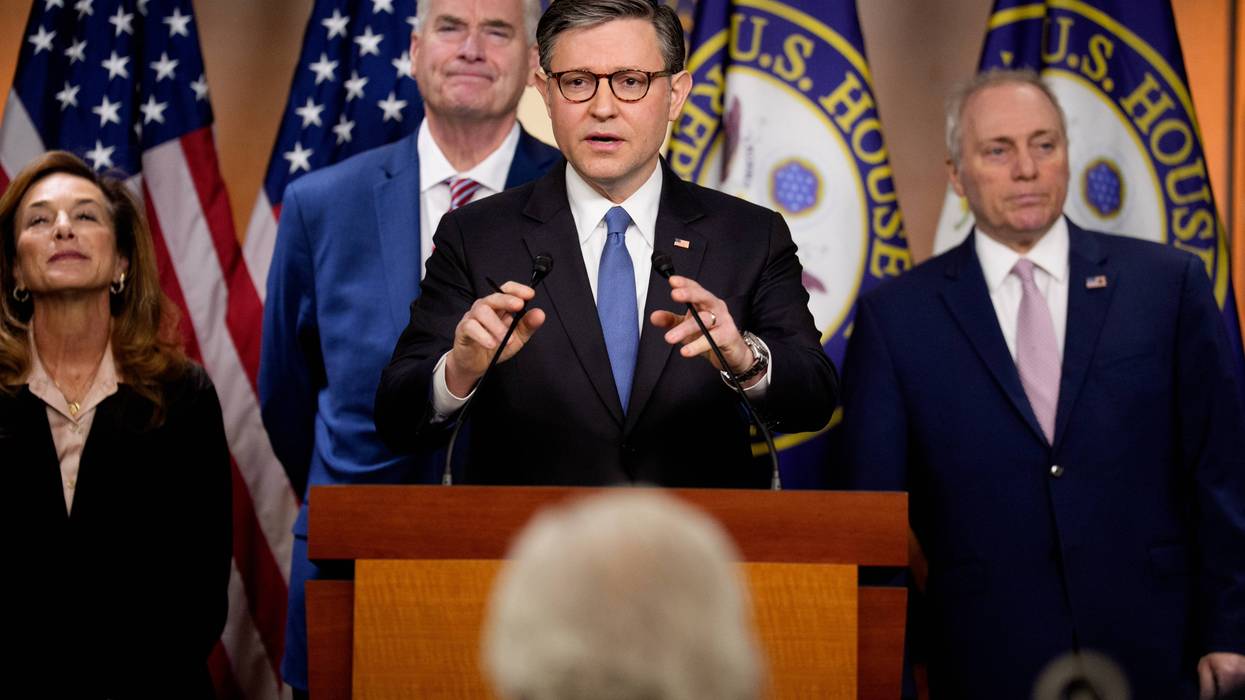
"Republicans are trying to pull a trick this week," said US Rep. Alexandria Ocasio-Cortez.
Democrats on Capitol Hill and voting rights advocates on Tuesday sounded the alarm about Republicans in the House of Representatives trying to push through voter suppression legislation under cover of passing a ban on congressional stock trading.
According to a Tuesday report from Roll Call, House GOP leaders recently added "unrelated language" to what was a bipartisan bill banning congressional stock trading that would "require voters to produce photo ID at the polls, a signature issue for President Donald Trump."
Rep. Alexandria Ocasio-Cortez (D-NY) hammered Republicans for what she said were underhanded tactics that are undermining what had been a serious bipartisan effort to halt congressional stock trading.
"Republicans are trying to pull a trick this week," Ocasio-Cortez wrote in a social media post. "They say we are voting on an 'insider trading' bill, but have snuck in massive SAVE Act-style voter suppression measures to it. This is a GOP effort to sabotage national mail-in voting, disguised as a trading ban. I’m voting NO."
Rep. Yvette Clarke (D-NY), chair of the Congressional Black Caucus, said that the caucus was opposing the GOP's legislation not just for its attacks on voting rights, but because it only forces congresspeople to stop making new stock trades, while not requiring them to divest of their current holdings.
"House Republicans are not serious about enacting a meaningful congressional stock trading ban," said Clarke. "The combined Stop Insider Trading Act and Voter ID Act... would allow members of Congress to continue owning, selling, and, in some cases, purchasing individual stocks while simultaneously imposing stricter voter ID requirements that would make it harder for millions of eligible Americans to vote."
"This bill is a Trojan horse," Clarke added, "using the premise of congressional ethics reform to advance a broader effort to restrict access to the ballot box."
The Campaign Legal Center (CLC) on Monday sent lawmakers a letter opposing the GOP-backed legislation, which it said would "impose onerous new requirements on voting."
Among other things, the group said the proposed legislation would "demand Americans provide ID to cast a ballot but only accept an unreasonably narrow list of acceptable types of documentation," excluding the kind of "widely held and reliable forms of ID that young people and voters of color disproportionally rely on."
The CLC also said the bill doesn't provide "sufficient safeguards" for voters wrongly deemed ineligible to prove they are legally allowed to participate in US elections.
A page on congressional contact portal 5 Calls recommended users oppose the GOP-backed bill, which it described as "partisan legislation" that "uses the guise of much-needed ethics reform to sneak through an unpopular and unrelated attack on voting rights."

“US-Ecuador cooperation on security has been too opaque and too dangerous for Ecuadorians," said a representative for Human Rights Watch.
Human rights advocates are urging Congress to investigate the deepening military relationship between the US and Ecuador, which they say has been marred by severe abuses against civilians, including torture, arbitrary detentions, unexplained drone strikes, and disappearances.
A report out Tuesday from Human Rights Watch documents how the Trump administration's cooperation with the right-wing government of Ecuadorian President Daniel Noboa in response to organized crime in the country has been carried out under a veil of secrecy that has left few safeguards in place to protect human rights.
Dozens of victims, witnesses, lawyers, and others were interviewed for the report, which provides details about four incidents in which ordinary people were subject to abuse allegedly by Ecuadorian forces trained and armed by the United States as part of what the governments have called "Operation Total Extermination."
In one case—which was reported on by Common Dreams after being documented by local outlets in early March—Ecuadorian soldiers partnered with the US and stormed into the rural town of San Martín along the Colombian border in search of facilities owned by an armed group known as the Border Commandos.
Soldiers detained four dairy farmers without evidence of a crime and interrogated them for hours while beating, kicking, and striking them with rifle butts. One of the men said he was taken to the main house on the farm and waterboarded. According to the men, the soldiers doused the house with gasoline and set the property on fire.
Soldiers fired their weapons at another group of villagers who'd come to ask about the workers, which caused them to flee.
The four men were later taken to an unidentified military facility, where they said they were doused with water and electrocuted. Two of the men said soldiers pointed guns at them and threatened to kill them and cut off their fingers unless they confessed where they were keeping drugs and arms.
The men were released hours later without charges, and prosecutors said the soldiers failed to provide sufficient evidence to charge them. Human Rights Watch found they had no criminal records.
Days later, the military returned and dropped munitions on the remnants of the burned property and two others that had been abandoned. Human Rights Watch did not find evidence that the destroyed properties had any connection to armed criminal groups.
In a hearing before the US Senate Armed Services Committee, Gen. Francis L. Donovan described the operation as a "success" and said Ecuadorian forces had acted "professionally." The Trump administration has said US forces were "present" for the operation, but has not disclosed their role in the bombing of the houses or the torture of the farmworkers.
The Human Rights Watch report also details three attacks on fishing boats between January and March off the coast of the Galápagos Islands, which are possessed by Ecuador.
On January 20, the Fiorella disappeared along with eight crew members who remain missing more than six months later. Two surviving crew members, who'd left the main vessel to set fishing lines, said they suddenly lost contact with the ship while they were waiting to be picked up. As they searched for the vessel, they saw a "column of smoke" off in the distance, but no sign of the Fiorella.
They added that in the days before the ship went missing, they had seen what they thought were surveillance drones flying overhead as well as a gray patrol vessel flying an American flag nearby.
The families of the eight missing sailors have been demanding answers about their whereabouts for months with little response from the Ecuadorian government. The United Nations has issued urgent actions on behalf of the fishermen, calling on Ecuador to immediately search for them.
"The families of the eight individuals whose whereabouts are unknown fear that this is a case of enforced disappearance at the hands of the United States," said Ana Piquer, Americas director at Amnesty International, on Monday. "The US and Ecuadorian authorities must confirm or deny whether state agents from either country were involved, take all necessary steps to ascertain the fate and whereabouts of the victims, and provide reliable evidence showing what happened to them."
In March, two other boats—La Negra Francisca Duarte II and Don Maca—were hit with drones off the Galápagos. In both cases, the shipwrecked men were picked up by a blue and white ship by armed personnel wearing American military attire.
The fishermen were hooded, tied up, and in some cases beaten before being left on a hot metal deck for several hours without food, water, or adequate medical care.
Members of both crews said they saw the alleged US personnel destroy their fishing boats. They were then handed off to Salvadoran authorities and later sent back to Ecuador. Several of the men sustained serious injuries from the drone attacks, including severe burns, hearing loss, vision loss, broken and dislocated bones, and wounds from drone propellers.
Ecuadorian authorities have not confirmed that the attacks took place. According to the captain of La Negra Francisca Duarte II, and later an Ecuadorian port captain, Ecuadorian Coast Guard officers had boarded their ship for a routine inspection and found no evidence of illicit activity, just eight hours before the vessel was struck. No such inspections were reported aboard Don Maca.
The attacks closely resemble the ongoing campaign of extrajudicial boat bombings carried out by the United States, known as "Operation Southern Spear," in which at least 221 people have been killed across more than 60 attacks.
Though 13 of the survivors said they were detained by what appeared to be US personnel, the Department of Defense and Coast Guard denied involvement in all three attacks off the Galápagos.
“US-Ecuador cooperation on security has been too opaque and too dangerous for Ecuadorians,” said Juanita Goebertus, Americas director at Human Rights Watch. “Before more harm is done, the US Congress should demand real answers and effective safeguards.”
“Joint security operations against organized crime," Goebertus added, "should not become a cover for abuses."

"I don't feel like there is a ceasefire at all," said a man who witnessed an Israeli missile attack on a hospital.
Palestinian officials said an Israel Defense Forces drone strike burned a family of six alive in their Gaza City home on Tuesday, a bombing that followed the massacre of another Palestinian family over the weekend and other attacks—including one on a hospital—as the Israeli genocide continues amid a nominal ceasefire.
The Palestinian Red Crescent Society said that rescue workers initially recovered the charred bodies of a mother, later identified as Salsabeel el-Masri, and her four children from their home in the Sabra neighborhood of Gaza City. Husband and father Firas el-Masri was later confirmed killed in the same strike.
The couple's three daughters and son—Faryal, Salma, Amira, and Naeem—ranged in age from 6 to 13.
 (Photo by el-Masri family/X)
At least some members of the family—who were sleeping when their home was bombed—were apparently not killed by the blast.
"They were all burned so much that our crews couldn't reach them," said Palestinian Civil Defense spokesperson Mahmoud Basal. "They were screaming and begging us to get them before they were martyred, but all attempts failed."
Video recordings of the airstrike's aftermath show first responders desperately trying to extinguish the blaze caused by the attack and retrieving the burnt victims' bodies.
Ahmed el-Masri told the Emirati newspaper The National that his brother's "entire family was wiped out from the civil registry."
"Martyred child Ameera Al-Masri, a charred corpse"
Today, from Gaza City, Israel has wiped out the Al-Masri family in a targeted airstrike on their flat. pic.twitter.com/XmLL3Rde0M
— Abubaker Abed (@AbubakerAbedW) July 21, 2026
The el-Masri family is one of approximately 2,700 erased from the registry since Israel launched its war on Gaza in retaliation for the Hamas-led attack of October 7, 2023, according to an Al Jazeera analysis published in January.
The Israel Defense Forces confirmed the bombing, claiming the strike was targeting a Hamas member. The IDF dramatically loosened its rules of engagement following the October 7 attack, effectively allowing an unlimited number of civilians to be killed when targeting a single Hamas member, no matter how low-ranking.
Reuters reported at least six more Palestinians were killed by Israeli strikes later on Tuesday, including one targeting a vehicle in the central Gaza Strip.
On Monday, an IDF missile attack on the al-Yemen al-Saeed Hospital in northern Gaza's Jabalia refugee camp killed at least two people and wounded 16 others, including women and children.
“The children were having fun and playing football, and suddenly they started screaming,” eyewitness Youssef Akasha told Drop Site News contributor Mohamed Ahmed. “We found many children lying on the ground, women screaming, and young men running to rescue the wounded."
Graphic video footage shows children, including infants, being treated for shrapnel embedded in their bodies.
Israel's attack on the el-Masri family followed a Saturday IDF airstrike on the home of the Nasman family in the al-Nasser neighborhood of Gaza City that killed five people. The Israeli newspaper Haaretz reported that Adham Nasman, 42; his wife, Marwa, 40; and three of their children—Arwa, 8, Ibrahim, 16, and Yahya, 18—were killed, and that Adham was apparently the intended target.
The couple's 13-year-old son, also named Adham, was not home at the time of the strike. Video footage published by photojournalist Nahed Hajjaj shows the grieving boy beside the bodies of his slain family.
Ayham Nasman, the sole survivor of his immediate family, returned to find his father, mother, and three siblings killed after an Israeli strike hit their residential apartment in Gaza's Al-Nasr neighborhood.
Ayham survived because he was not inside the apartment when it was… pic.twitter.com/86Co3JlI4r
— Middle East Eye (@MiddleEastEye) July 19, 2026
In another massacre on Saturday, an Israeli drone bombed a funeral in the Nuseirat refugee camp for a man who was allegedly a member of Palestinian Islamic Jihad, who had been killed earlier the same day in another IDF strike. Eight people were killed and 20 others wounded in the second attack, according to Palestinian, Israeli, and international media reports.
Israel's US-backed assault on Gaza has left more than 250,000 Palestinians dead, maimed, or missing since October 2023 and around 2 million people forcibly displaced, starved, or sickened. Over 21,500 children—1,022 of them babies—are among the more than 73,000 Palestinians killed by Israeli forces during the war that scholars, jurists, human rights groups, a panel of United Nations experts, and others say is a genocide.
Israel is facing a genocide case filed by South Africa at the International Court of Justice and supported by nearly 20 nations, while Israeli Prime Minister Benjamin Netanyahu and Yoav Gallant—his former defense minister who ordered the "complete siege" on Gaza that fueled famine and disease—are wanted by the International Criminal Court for alleged crimes against humanity and war crimes, including murder and forced starvation.
The IDF's continued attacks come despite a US-backed ceasefire that went into effect last October. Since then, more than 1,160 Palestinians—most of them civilians—have been killed and over 3,750 others wounded by Israeli forces, according to the Gaza Health Ministry.
“Nine months after the announcement of a ceasefire, still nowhere is safe for Palestinians in Gaza,” UN human rights spokesperson Thameen Al-Kheetan told reporters in Geneva on Tuesday. "The killing of civilians in these attacks raises concerns of continuing violations of international humanitarian law, war crimes and other possible atrocity crimes in Gaza. Under international law, deliberately attacking civilians is a war crime."
Akasha, who witnessed the Jabalia hospital bombing, told Drop Site News, “I don’t feel like there is a ceasefire at all."

“The Democratic Party needs to have a different approach," said Jackson, "and I don’t believe it’s going to happen with Sen. Schumer."
In Maine, endorsements have poured in over the past several days for former state Senate President Troy Jackson after county-level committee votes over the weekend, where the fifth-generation logger secured the support of more than two-thirds of the delegates who will attend a statewide convention to nominate the Democratic US Senate candidate on July 25.
But while welcoming the support of labor unions and his former opponents in the contest to replace Graham Platner, Jackson said the backing of Senate Minority Leader Chuck Schumer (D-NY) is not something he'll pursue. Jackson also said that, if elected to the Senate, he would not support Schumer as leader of the chamber's Democratic caucus.
“The Democratic Party needs to have a different approach—getting people back in the party, getting working-class, everyday people back in the party—and I don’t believe it’s going to happen with Sen. Schumer,” Jackson told The New York Times in an interview published Tuesday.
Regarding support from Schumer and the national party, Jackson said there would "have to be no strings."
“I’d have to find out what that entailed,” added Jackson, a former logger with strong labor ties. “I mean, if his help comes, absolutely no strings."
Like progressives who have won recent primary races in New York and Colorado and are running in states including Michigan and Florida, Jackson is a supporter of expanding Medicare to everyone in the US and has denounced US military aid for Israel. He has recently expressed support for abolishing US Immigration and Customs Enforcement following the agency's killing of Biddeford, Maine resident Johan Sebastián Durán Guerrero and has called for new taxes on billionaires and "greedy corporations," echoing Platner, who ended his campaign earlier this month after being accused of sexual assault.
Last year, Schumer pushed Democratic Gov. Janet Mills to run against Platner as the political newcomer was mobilizing voters from across the political spectrum all around the state with his working-class-focused platform.
Schumer is a strong supporter of continuing to provide Israel with military aid, even as leading Holocaust scholars and human rights organizations say the attacks the country has waged in Gaza since October 2023 amount to genocide.
Jackson told the Times that "obviously" progressive Sen. Bernie Sanders (I-Vt.) would be his first choice to succeed Schumer as Senate leader, but expressed doubt that the Democratic establishment would support the Vermont senator, who is consistently ranked as the most popular member of the Senate among voters.
“If I am lucky enough," Jackson said, "I guess I’ll have to survey the field."
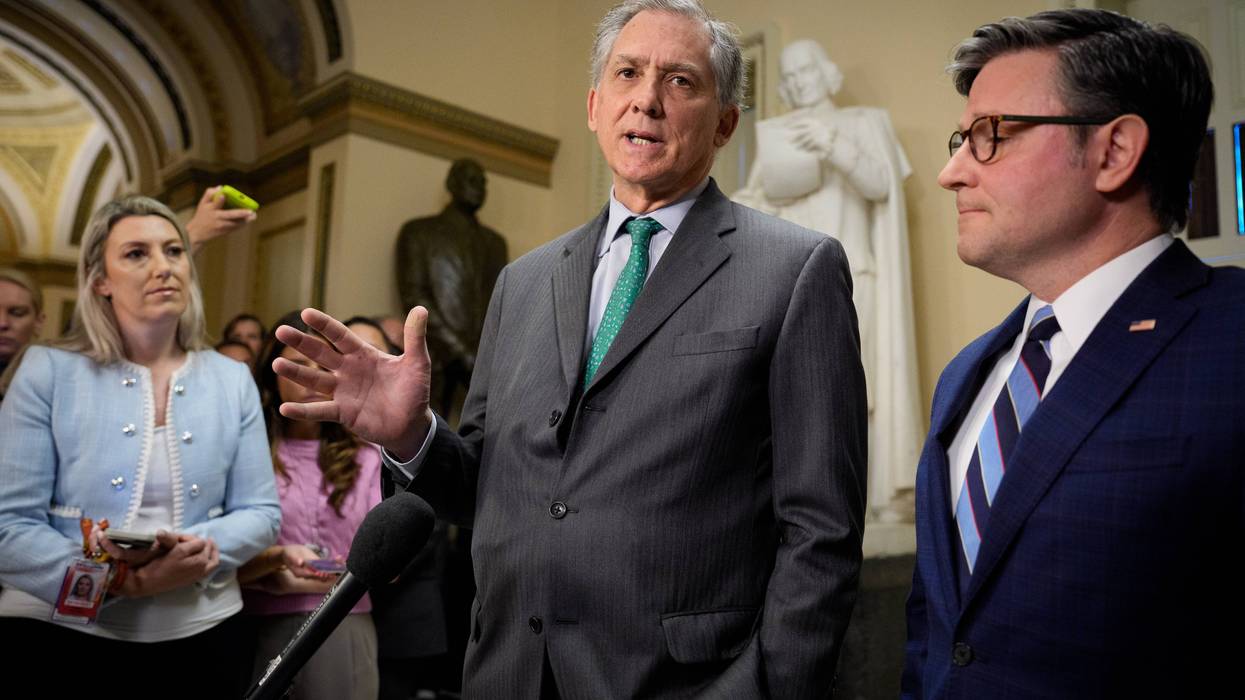
The Republican legislative package "would leave the financial system dramatically weaker and make future bank failures and publicly financed bailouts more likely," warned one advocacy group.
A broad coalition of advocacy organizations and labor unions warned Tuesday that Republican legislation currently moving through the US House of Representatives would deregulate Wall Street giants and increase the risk of another financial disaster under the guise of aiding community banks.
"This dangerous bank deregulation package would undermine core safeguards and supervision, push risk into the shadows, and make the next publicly financed bailout more likely," an alliance of 28 advocacy groups wrote in a letter to members of Congress. "Further deregulation is especially alarming at a time when financial regulatory agencies are under political attack, pursuing industry-friendly agendas, and starved of resources, and when there is effectively no oversight of financial markets."
Proponents of the GOP's Main Street Capital Access Act (HR 6955), which is backed by major bank lobbying organizations and some Democratic lawmakers, characterize the bill as an effort to bolster small financial institutions by reducing their regulatory burdens. Oscar Valdés Viera, senior policy analyst for private equity and capital markets at Americans for Financial Reform, said that's a ruse.
"Instead of providing meaningful relief from sky high credit card interest rates and late fees, this bill just lets big banks off the hook by weakening oversight, enacting carve-outs and exemptions from banking laws, and creating a pathway for banks to block commonsense regulatory safeguards that could reduce the likelihood and severity of financial crises," said Valdés Viera. "HR 6955 would automatically raise major regulatory thresholds, weaken bank examiners tools, create new avenues to contest supervisory and enforcement decisions, reduce meaningful competition review for many bank mergers, and expand merchant banking arrangements that blur the line between banking and commerce."
"The House majority is pushing a package of risky bank deregulation that is just another giveaway to Wall Street banks when the Congress should be laser focused on the affordability crisis," Valdés Viera said.
The advocacy coalition's letter urging lawmakers to block the legislative package—which could receive a vote in the House as early as Tuesday afternoon—points specifically to Sections 201-204 of the measure. The language in those sections, the coalition warned, "would raise statutory thresholds, extend 'tailoring' well beyond genuinely small and simple banks, and hard-wire automatic future threshold increases."
"As a result, fewer institutions, activities, and risks would remain within baseline guardrails even as the financial system grows more complex and interconnected," the coalition wrote. "The combined effect would be higher leverage and risk-taking, thinner cushions against losses, and weaker prudential standards. It would return the financial system to a pre-2008 pattern in which risk migrates out of view, problems build for years at midsize and large institutions, and the public is left holding the bag when those institutions fail."
The Main Street Capital Access Act, sponsored by Rep. French Hill (R-Ark.)—a major beneficiary of finance industry campaign cash—cleared the House Rules Committee on Monday. Punchbowl reported that Rep. Bill Foster (D-Ill.), the ranking member of the House Financial Services Committee's subcommittee on financial institutions, is urging his Democratic colleagues to support the legislation, despite opposition from the top Democrat on the committee, Rep. Maxine Waters (D-Calif.).
"HR 6955 is Wall Street deregulation hiding as a community bank bill," Waters said in her testimony before the House Rules Committee on Monday. "This bill lets even more of these large banks escape critical safeguards risking more failures. In fact, the sponsors of this bill were so zealous to raise thresholds, they increased one threshold that will aid bad actors who commit fraud against a bank."
"Instead of letting Wall Street put Americans and our economy at risk again," said Waters, "we should be working together to address the affordability crisis caused by Trump’s failed economic policies and endless war with Iran."

The president's attempt to control the commission "is particularly troublesome" given the financial stakes that he, his family, and his supporters have in products the agency regulates, said dozens of groups.
Nearly a month after the US Supreme Court overturned almost a century of precedent to give President Donald Trump king-like power to purge independent agencies, consumer groups on Tuesday sounded the alarm over his nominees to the Consumer Product Safety Commission.
Before the high court's recent ruling, Trump last year fired the three Democratic commissioners appointed by his predecessor—hamstringing the CPSC, which needs at least three members to conduct official business, but currently only has acting Chair Peter Feldman.
Trump nominated Karen Sessions as a commissioner in February and Brien Lorenze, the agency's executive director, in early June. Later last month, the GOP-controlled Senate began considering the nominees, but has not yet confirmed them.
In a Tuesday letter to Sens. Ted Cruz (R-Texas) and Maria Cantwell (D-Wash.)—respectively, the chair and ranking member of the Senate Committee on Commerce, Science, and Transportation—dozens of consumer groups detailed their concerns.
Led by the Consumer Federation of America and National Consumers League, the coalition urged the senators "to protect the independence and nonpartisanship" of "the nation's chief household product safety regulator," stressing that "hazards have no partisan leanings, and neither should the commission tasked with addressing them."
The letter highlights that the agency, created by Congress over five decades ago, cannot have more than three commissioners affiliated with the same political party, and the law bars all of them "from owning stock or bonds of substantial value in a company that sells or manufactures consumer products, or from being in 'any other manner pecuniarily interested in such a person.'"
"Historically, the agency's independence has buffered the commissioners from political pressure from the White House and large donors. This has ensured that the agency has acted with transparency and a diversity of views, which has benefited the American people," the groups wrote. "Further, the presence of minority commissioners provided a layer of oversight and accountability on CPSC actions."
"With this independent and nonpartisan structure, the CPSC has had a lifesaving effect," the coalition emphasized, pointing to drops in residential fires, child poisonings, bicycle and pool injuries, and deaths from cribs, garage door incidents, and refrigerator entrapments.
The organizations stressed their concern that Trump ousted "the three Democratic, Senate-confirmed CPSC commissioners" without cause, and then "nominated two individuals of his own political party, threatening to further undermine the independence and nonpartisanship of the CPSC."
"Silencing the voices of subject matter experts with whom the president politically disagrees or who may not serve his financial interests can have a chilling effect on the CPSC's functions," they argued. "The president's assertion of control over CPSC commissioners has eliminated the transparency provided by minority commissioners and the independence of those who remain."
"This is particularly troublesome given the conflict of interest created by the president's financial stake and those of his family and supporters in consumer products the CPSC is entrusted to regulate," the groups noted.
Specifically, as the letter lays out:
President Trump financially benefits from the distribution of a vast array of consumer products, including Trump Watches, Trump Sneakers, and "45" Guitars. The president also has substantial financial interests in major manufacturers, retailers, and online marketplaces, including Whirlpool Corp., Newell Rubbermaid, Macy’s Retail Holdings, and Amazon.com Inc. The Trump Organization, helmed by Donald Trump Jr. and Eric Trump, sells a wide variety of consumer products, including toys and children’s products; apparel, footwear, and accessories; sporting goods; pet products; and household goods such as drinkware, kitchenware, linens, candles, and home décor. First Lady Melania Trump, through MelaniaTrump.com, is associated with the sales of jewelry and Christmas ornaments. Lara Trump and Kai Trump sell apparel through their respective online stores. Secretary of Education Linda McMahon maintains a significant financial stake in TKO Group Holdings, which has lucrative licensing deals for World Wrestling Entertainment toys, apparel, and accessories. Mike Lindell, a prominent supporter of the president, is the founder of MyPillow, which sells bedding and apparel. Former special government employee Elon Musk profits from sales of Tesla’s Powerwall systems and the Tesla Cyberquad for children. Political ally and Ultimate Fighting Championship (UFC) CEO Dana White profits from UFC’s sale of apparel, combat-sport equipment, and collectibles.
"These extensive financial and familial interests heighten concerns that the president could use his authority to influence CPSC enforcement decisions in ways that protect his and his associates' interests, as the administration has done in matters before other federal agencies," the letter warns, citing various actions involving the US Department of Justice and Securities and Exchange Commission.
In addition to those actions—from the attempt to create an "Anti-Weaponization Fund" to pay off Trump allies, to dropping investigations into his backers—the president has blatantly cashed in on his return to the White House, pocketing at least $2.2 billion, according to recently released annual financial disclosures.
"We are concerned that without balanced representation at the CPSC, this small agency with a big mission will be unable to independently carry out its congressionally mandated duties and provide the public with the transparency it deserves," the coalition told Cruz and Cantwell. "The CPSC is no place for political favoritism. We therefore urge you to oppose reporting favorably the nominations of Brien Lorenze and Karen Sessions to serve as CPSC commissioners."
Nobel Prize-winning economist Paul Krugman described Trump's latest tariffs as "unutterably idiotic."
Critics are piling on President Donald Trump for once again picking a fight with the United States' top trading partner by moving to slap 50% tariffs on certain imported Canadian goods.
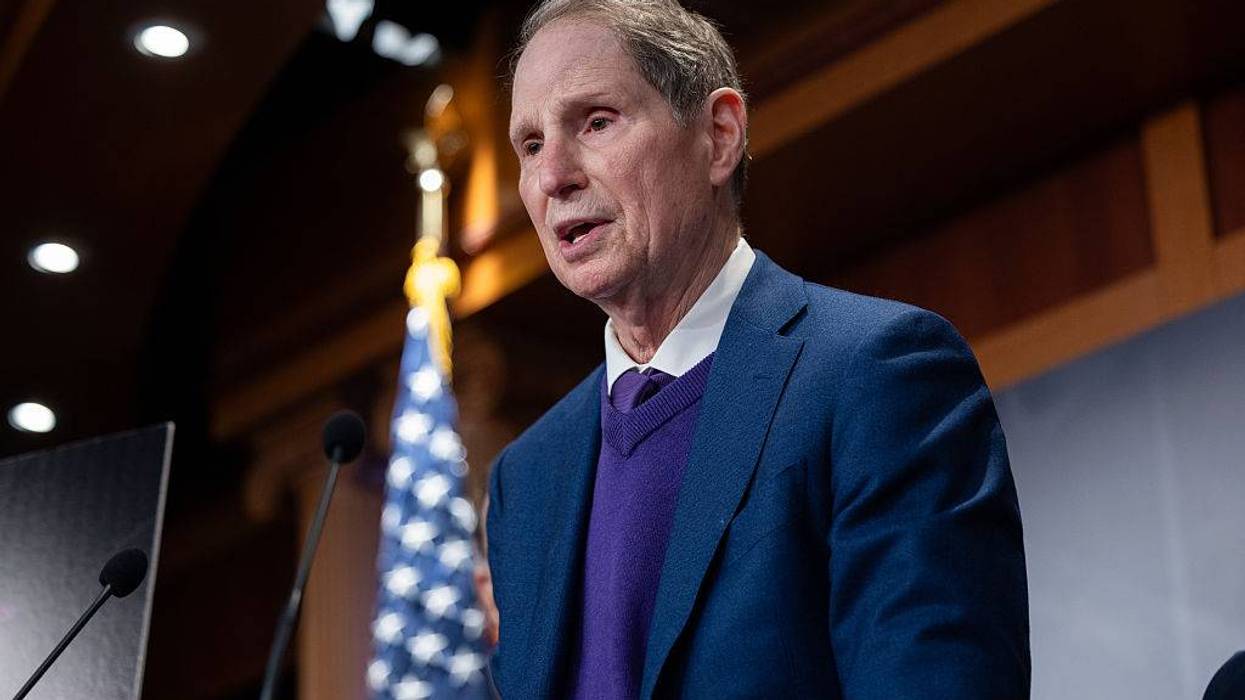
Sen. Ron Wyden (D-Ore.), ranking member of the Senate Finance Committee, said on Tuesday that Trump's latest broadside against Canada was "yet another shakedown that will raise the cost of living for Americans, their families, and small businesses across the country."
Wyden also said that Trump has "abused every trade authority at his disposal" and vowed to soon release a bill "to rein him in and put Congress back in the driver's seat" in crafting US trade policy.
Wyden wasn't the only Democrat to take a shot at Trump over his new economic attack on Canada.
Rep. Mike Levin (D-Calif.) called Trump's new tariffs "really dumb" given that they violate a trade deal that Trump himself negotiated with Canada and Mexico during his first term.
"You cannot negotiate a trade agreement, sign it, celebrate it, then blow it up and expect anyone to trust the next deal," said Levin. "And who actually pays? American importers and American families. Tariffs are a tax on us."
Rep. Jared Huffman (D-Calif.) predicted that US consumers would once again pay the price for the president's trade war.
"We're the ones who will eat the cost," wrote Huffman. "That's what happened with Trump's last tariff spree and it will happen again. Trump's failed foreign and economic policies are making life worse for hardworking people."
Nobel Prize-winning economist Paul Krugman on Tuesday published an analysis trying to make sense of the justifications for Trump's latest trade war with Canada, but he came up mostly empty.
"The White House fact sheet claims that the new tariffs are a response to Canadian policies that discriminate against US products," explained Krugman, "notably the moves by most Canadian provinces... to stop importation of US alcoholic beverages. But these policies were themselves a response to the tariffs on Canadian goods Trump had previously imposed."
Krugman then noted that Trump shifted his justification for the tariffs, saying they were designed to punish Canada after smoke generated by wildfires in Ontario billowed into the US last week.
However, Krugman found this explanation even more absurd.
"Blaming Canada for not controlling fires that are, in reality, largely a consequence of global warming," Krugman remarked, "is unutterably idiotic."
Krugman concluded his analysis by arguing that "whatever the real motivation for these new tariffs, they are almost surely illegal," noting that they run afoul of Trump's own North American trade deal.
Trump on Tuesday indicated that the tariffs on Canada were not actually a response to the wildfires, though he said his administration was looking at separate measures to punish the Canadian government for purportedly doing a poor job of managing its forests.
Q: Are the Canada tariffs in response to the wildfires?
Trump: No, We're looking at that separately. They need us to survive. Without us, there's no way they can survive pic.twitter.com/ycllBXmPTd
— Acyn (@Acyn) July 21, 2026
Several studies have found that Trump's tariffs, which he kicked off in April 2025, have cost US businesses and consumers hundreds of billions of dollars, as importers pass most of the increased costs imposed by the tariffs to consumers in the form of higher prices.