

SUBSCRIBE TO OUR FREE NEWSLETTER
Daily news & progressive opinion—funded by the people, not the corporations—delivered straight to your inbox.
5
#000000
#FFFFFF
To donate by check, phone, or other method, see our More Ways to Give page.
Daily news & progressive opinion—funded by the people, not the corporations—delivered straight to your inbox.
In a letter sent to members of Congress yesterday, 347
national, state and local organizations from across the country,
representing over eighteen million combined members, vowed to support
promises of change made by scores of successful candidates during the
2008 election, and to help "replace the failed trade policies of the
past with those that deliver broadly shared benefits."
The letter, sent by a diverse coalition of faith, family farm,
environmental, labor, and consumer groups, promised help push reform,
pledging "As the new Congress begins, we look forward to working with
you and the Obama Administration to seize this opportunity to create
better rules for trade policy."
"Free trade agreements with Colombia, Panama and Korea represent
more-of-the-same failed model backed by the Bush Administration, and
strongly rejected by voters," said Andy Gussert, CTC coalition
director. "Hundreds of groups are now organizing, rolling up their
sleeves, and pushing for reform, including support for Buy American
provisions in the stimulus package."
At this time, not one environmental, faith or labor organization in
America endorses passage of the Colombia Free Trade Agreement in its
current form, but many are pushing to construct trade agreements that
can gain a majority of congressional support.
Trade reform dominated Congressional races across the country in
2008, with more than one hundred different paid campaign ads focusing
on problems with NAFTA, CAFTA, offshoring and unsafe imports. A record
one hundred and five distinct campaign ads were produced by
Congressional, Senate and Presidential campaigns.
In 2008, 42 newly elected Freshman Senators and Representatives ran
on reforming the U.S. trade model. They joined over two dozen fair
traders first elected in 2006, making a combined total of 71 reformers
replacing those who previously supporting the status quo system based
on the failed North American Free Trade Agreement (NAFTA).
"Candidates ran hard on trade reform, and they won. Voters sent a
clear message - we support change," added Gussert. "We want to let
these newly elected trade champions know we support their campaign
message, and are here to help keep those promises."
In 2008 campaign spots, candidates supported "made-in-America tax
break to keep jobs right here," and highlighted how opponents "voted
for tax giveaways to companies that move jobs overseas." Many promised
to "oppose job killing trade deals like NAFTA and CAFTA, which cost our
state jobs." Some challengers reminded voters that the opponent "cast
the deciding vote on CAFTA" and "sided with George Bush on trade
policies to move our jobs overseas."
Barack Obama posted more than a dozen separate ads on trade reform,
including specific spots about mills shutting down as we offshore jobs,
and another on McCain purchasing foreign made automobiles. Obama also
rolled out radio spots criticizing McCain for the procurement position
on switching to foreign made motorcycles, rather than using
Harley-Davidson to supply the U.S. Secret Service. In June, John
McCain ran a pro-free-trade ad in Florida, supporting passage of the
stalled Colombia Trade Agreement.
Nearly three-quarters of Americans believe that a "free trade
agreement" has had a negative effect on their families. GOP voters, by
a two-to-one majority, agree that foreign trade has been bad for the
U.S. economy, because imports from abroad have reduced demand for
American-made goods, cost jobs here at home, and produced potentially
unsafe products. Majorities oppose NAFTA across every demographic,
making reform the predominate view of voters across the country.
Several 2008 Senate races, including Jeff Merkley in Oregon and Kay
Hagen in North Carolina, also made trade a centerpiece of their
campaign messages. The Democratic Senatorial Campaign Committee ran
seven trade ads across five states with top races. In 2006, nine
Senate challengers beat incumbents while running on fair trade reform
policies. All nine of those Senators then went on to vote against the
next free trade agreement put before the Senate, in December of 2007.
To see the letter supporting a new day in trade, visit our website at www.citizenstrade.org
The Citizens Trade Campaign (CTC) is a national coalition of environmental, labor, consumer, family farm, religious, and other civil society groups founded in 1992 to improve the North American Free Trade Agreement (NAFTA). We are united in a common belief that international trade and investment are not ends unto themselves, but instead must be viewed as a means for achieving other societal goals such as economic justice, human rights, healthy communities, and a sound environment.
(202) 494-8826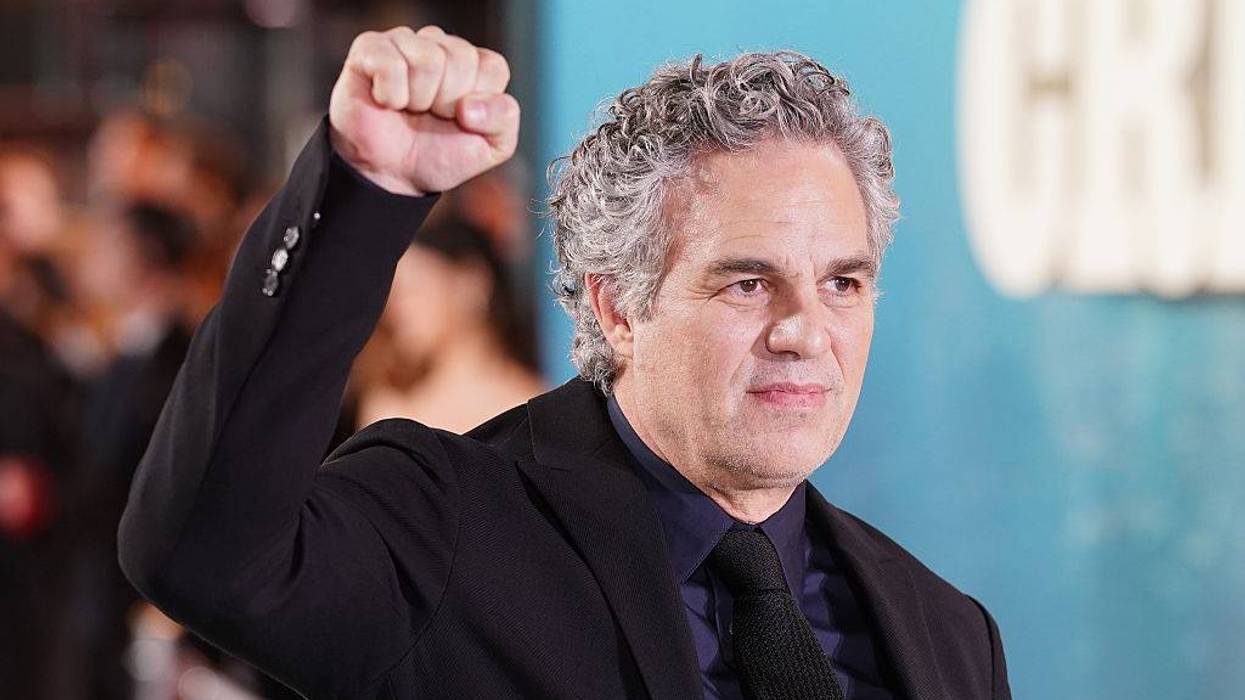
"The result will be fewer opportunities for creators, fewer jobs across the production ecosystem, higher costs, and less choice for audiences."
A group of Hollywood actors, directors, and producers on Monday published an open letter demanding the proposed merger between Paramount and Warner Bros. Discovery be blocked.
In their letter, the Hollywood heavyweights outlined the harms that would come from allowing Paramount—which is owned by David Ellison, son of billionaire Trump donor Larry Ellison—to acquire Warner Bros. Discovery.
"This transaction would further consolidate an already concentrated media landscape, reducing competition at a moment when our industries—and the audiences we serve—can least afford it," the letter states. "The result will be fewer opportunities for creators, fewer jobs across the production ecosystem, higher costs, and less choice for audiences in the United States and around the world. Alarmingly, this merger would reduce the number of major US film studios to just four."
The letter goes on to describe how consolidation in the entertainment industry has already "accelerated the disappearance of the mid-budget film, the erosion of independent distribution, the collapse of the international sales market, the elimination of meaningful profit participation, and the weakening of screen credit integrity."
Looking at the bigger picture, the letter notes that "competition is essential for a healthy economy and a healthy democracy," then goes on to praise California Attorney General Rob Bonta and other state AGs for filing legal actions aimed at blocking the merger amid fears that the Trump administration could rubber-stamp it.
"We are grateful for their leadership," the letter concludes, "and stand ready to support all efforts to preserve competition, protect jobs, and ensure a vibrant future for our industry, for American culture, and for our single most significant export."
Actor Mark Ruffalo, a signatory of the letter, published an article on his Substack page outlining his own reasons for opposing the merger, which he described as "the epitome of crony capitalism and the oligarchs consolidating more corporations and media power to shape the outcome of their business interests."
Ruffalo also said he's spoken with others in Hollywood who were reluctant to sign the letter over concerns about retaliation from Trump or Ellison should the attempt to block the merger fail.
"The people pushing monopolies such as this one use fear to keep the workers in line," Ruffalo said. "I have heard it time and time again from my fellows, they are afraid of retribution. Some didn’t want to sign because they are afraid. How sad is that? In America the artists are afraid to speak out against power."
Actress Jane Fonda, founder of the modern Committee for the First Amendment, said that the proposed Paramount-Warner Bros. merger "would be one of the most destructive threats to free speech and creative expression in our history," because it would put "unprecedented power in the hands of a single corporation that already appears to have proven itself willing to sacrifice integrity for political favor."
The letter earned praise from democracy and antitrust advocates, who argued that blocking the merger was necessary to stopping President Donald Trump's ambitions for a right-wing takeover of US media.
“The future of free media and a strong entertainment industry in America is at stake here,” said Norm Eisen, co-founder and executive chair of Democracy Defenders Fund. “This proposed merger would not only harm competition and creativity, it would erode the very bedrock of our democracy."
Matt Stoller, director of research at the American Economic Liberties Project, noted that "consolidation in Hollywood has been a disaster, and has led to the weak state of the industry," and said the Paramount-Warner Bros. merger needed to be blocked to prevent further damage.
"Not only does this kind of concentration hollow out creative markets," said Stoller, "it concentrates control over culture and information in the hands of a few unaccountable executives, and in this case totalitarian Gulf countries, undermining a free and pluralistic media ecosystem that democracy depends on."
"The extremist Netanyahu government that has committed genocide in Gaza does not need more military support from American taxpayers."
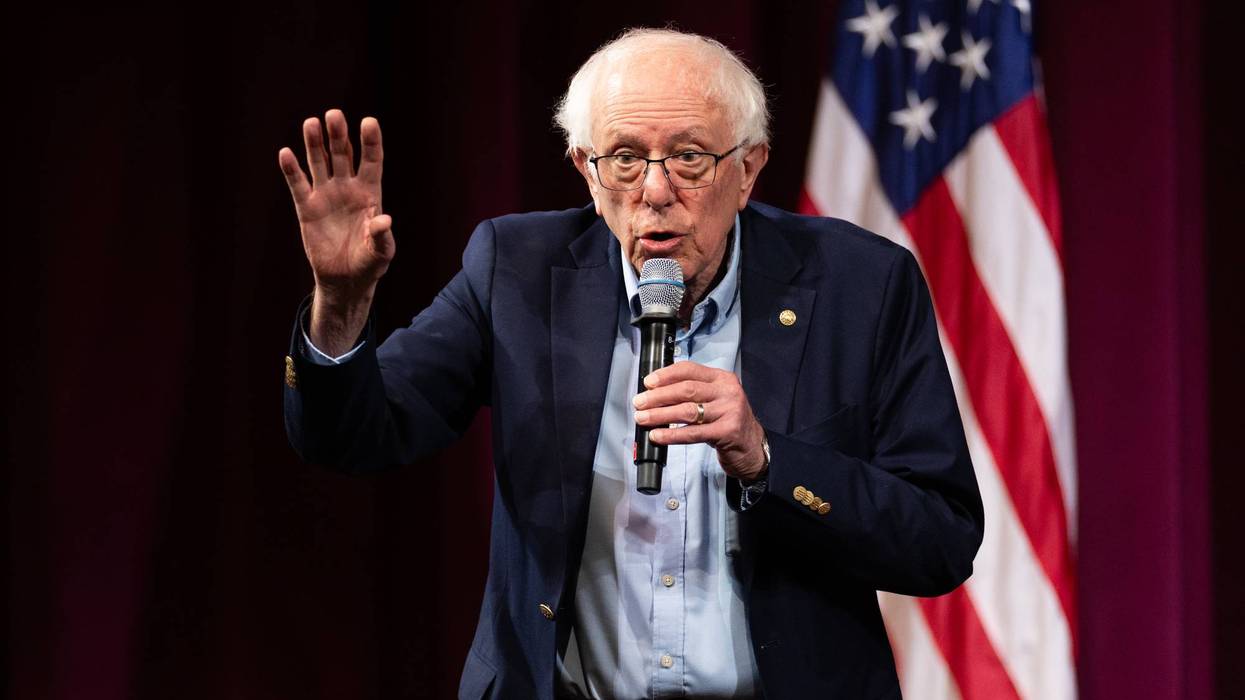
With members of Congress returning to Washington, DC, Sen. Bernie Sanders on Monday pledged that he will, yet again, force a vote aimed at cutting off the flow of US weapons to Israel over its genocide against Palestinians in the Gaza Strip.
"I will be forcing a vote on legislation to block the sale of nearly half a billion dollars worth of bombs and bulldozers to the Israeli military," Sanders (I-Vt.) said on social media, taking aim at Israeli Prime Minister Benjamin Netanyahu, who is wanted by the International Criminal Court over the mass slaughter in Gaza.
"The extremist Netanyahu government that has committed genocide in Gaza does not need more military support from American taxpayers," declared Sanders, who has forced multiple votes on measures targeting US arms to Israel since it began bombarding Gaza in retaliation for the Hamas-led October 7, 2023 attack.
The next vote, which could come as soon as Wednesday, follows a similar effort last July, when a majority of the Senate Democratic Caucus backed his resolutions disapproving of the Trump administration's sale of 1,000-pound bombs, Joint Direct Attack Munition guidance kits, and tens of thousands of assault rifles to the Israeli government. Previous votes had garnered less support.
"The American people do not want to spend billions to starve children in Gaza," Sanders said last summer, after the resolutions failed. "The Democrats are moving forward on this issue, and I look forward to Republican support in the near future."
Republicans currently have narrow majorities in both chambers of Congress, though Democrats aim to flip both in the November midterm elections.
According to a Pew Research poll released last week, 60% of US adults have an unfavorable view of Israel, up from 53% last year, and 59% have little or no confidence that Netanyahu will do the right thing regarding world affairs, up from 52% in 2025.
Although much of the world's attention has been focused on Netanyahu and President Donald Trump's war on Iran—and Israel's related assault on Lebanon—in recent weeks, Israeli forces have also continued to kill Palestinians in Gaza, despite an October 2025 ceasefire agreement.
As of Monday, Gaza officials put the death toll at 72,333, with another 172,202 wounded, though global experts have warned the true figures could be far higher. Over 750 deaths and 2,100 injuries have been recorded since the ceasefire took effect, with another 760 bodies recovered during that time.
"At least two children a day have been killed or injured in the six months since the ceasefire for Gaza was agreed," said Save the Children International CEO Inger Ashing last week, as her group and others released a report marking six months since the deal was reached. “This is not peace for children in Gaza. The ceasefire agreement has not translated into meaningful protection for children or created conditions for recovery."
Among the children killed was Ritaj Rihan, a 9-year-old girl reportedly shot by Israeli forces in front of her third grade class at Abu Ubaida bin al-Jarrah School in Beit Lahiya last week. The Gaza Ministry of Health said that "it was not an isolated incident, but a direct extension of a systematic policy targeting the Palestinian people."
The fight seemingly isn't over, with a spokesperson for the president pledging that he will "refile this powerhouse lawsuit," which critics have called part of his war on free speech.
A Florida-based federal judge on Monday dismissed President Donald Trump's $10 billion lawsuit against The Wall Street Journal over its reporting on a "bawdy" birthday letter the Republican allegedly gave to the late convicted sex offender Jeffrey Epstein.
Trump denies writing the letter or drawing the outline of a naked woman around the text. He sued the journalists behind the July report—Joseph Palazzolo and Khadeeja Safdar—and the newspaper, plus its parent company News Corp, chief executive Robert Thomson, and founder Rupert Murdoch.
The US House Committee on Oversight and Government Reform subsequently subpoenaed the Epstein estate for all materials that now-imprisoned co-conspirator Ghislaine Maxwell allegedly compiled for the dead financier's birthday book, including the letter attributed to Trump—and in September, the panel published those documents online.
US District Judge Darrin P. Gayles, an appointee of former President Barack Obama, found on Monday that Trump's "complaint fails to adequately allege actual malice." However, Gayles also gave Trump the opportunity to amend his filing within the next two weeks.
While The Wall Street Journal did not immediately respond to CNN's request for comment, a spokesperson for Trump's legal team said in a statement that the president intends to continue the case.
"President Trump will follow Judge Gayles' ruling and guidance to refile this powerhouse lawsuit against The Wall Street Journal and all of the other defendants," the spokesperson said. "The president will continue to hold accountable those who traffic in Fake News to mislead the American People."
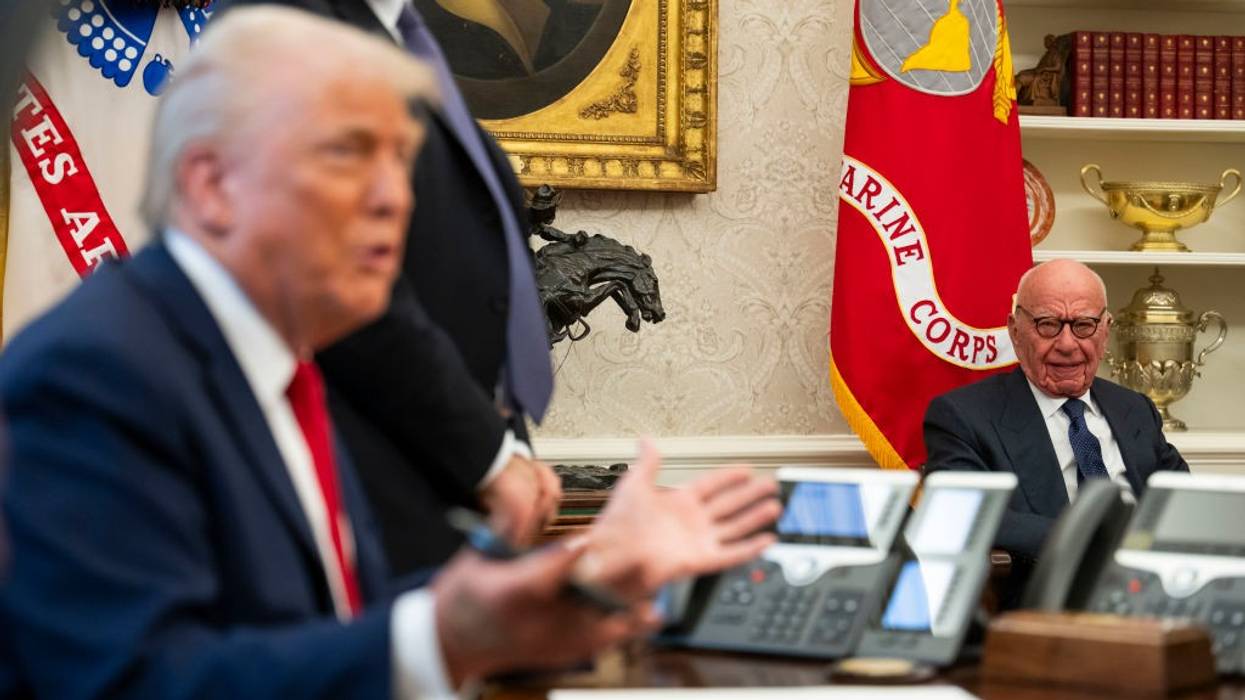
CNN noted that despite the legal battle, "the 95-year-old Murdoch has maintained a cozy if complicated relationship with the president, including multiple meetings at the White House in recent months."
The suit over the birthday letter to Epstein—whom Trump was publicly friends with in the 1980s and '90s until a reported falling out in the early 2000s—is just part of a sweeping effort by the president and his political enablers "to undermine and chill the most basic freedoms protected under the First Amendment," as the advocacy group Free Press put it in a December analysis.
In addition to the Journal case, examples included Trump's legal battles with the BBC and The New York Times, the White House taking control of the presidential press pool, the administration blocking The Associated Press from the Oval Office over its refusal to refer to the Gulf of Mexico as the Gulf of America, ABC temporarily suspending late-night host Jimmy Kimmel following comments from Trump's Federal Communications Commission chair, and the Pentagon's legally contested media policy.
Such attacks continue. Last month, as the costs of his unconstitutional war on Iran mounted, Trump floated "treason" charges against media outlets that he accused of reporting false information about the conflict.