SUBSCRIBE TO OUR FREE NEWSLETTER
Daily news & progressive opinion—funded by the people, not the corporations—delivered straight to your inbox.
5
#000000
#FFFFFF
To donate by check, phone, or other method, see our More Ways to Give page.
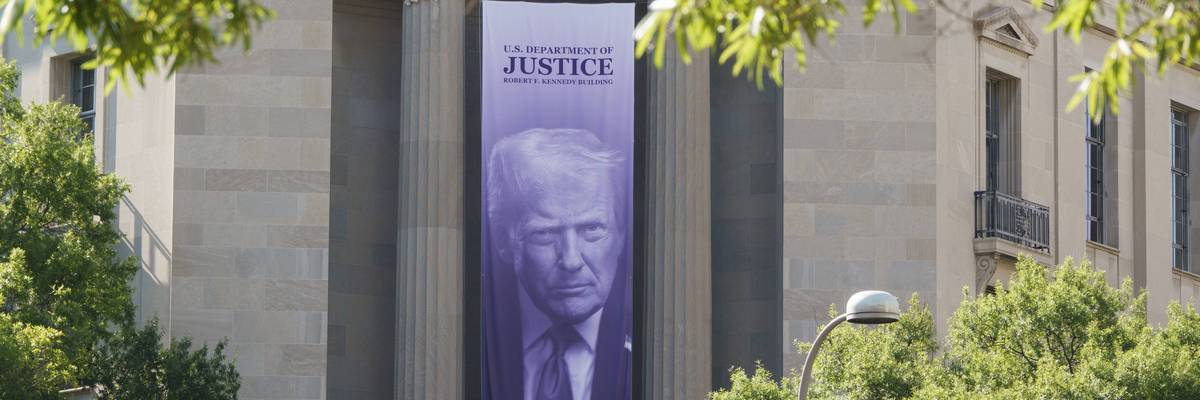
President Donald Trump stands apart from his predecessors with his use of government resources to glorify himself. During his second presidency, he has used taxpayer funds to blast the airwaves with ads singing his praises, drape giant banners of his face from agency buildings, and mint coins bearing his image.
Rep. Jamie Raskin (D-Md.) said the Smithsonian National Museum of American History—which houses some of the nation's most significant historical collections—should preserve artifacts like these as evidence of what he calls Trump's official "governmental propaganda" for future generations.
On Wednesday, Raskin announced a bill that would compel the Smithsonian to collect and preserve objects "reflecting the rise of governmental propaganda, corruption, and authoritarianism" under Trump's two presidencies.
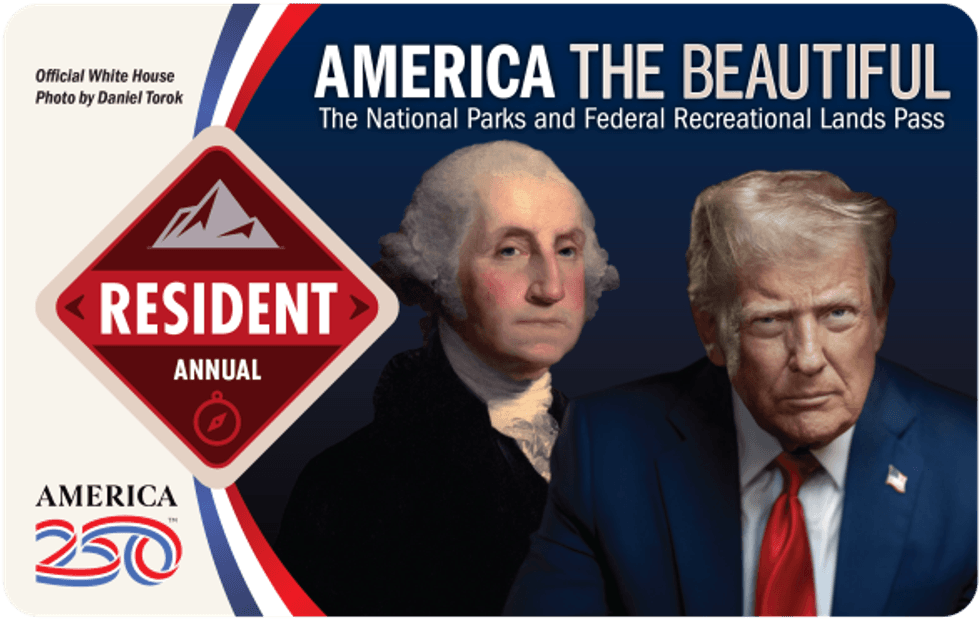 The 2026 America the Beautiful annual national parks pass features President Donald Trump alongside George Washington. (Photo from the US Department of the Interior via Wikimedia Commons)
The legislation comes amid Trump's attempts to warp the Smithsonian's content to reflect his personal view of the nation's history. In July, he signed an executive order directing the Interior Department to erect signs along the walkway warning that it contained exhibits that reflect the “personal, radical ideologies" of the curators.
The language is pulled from a 162-page report released that same month objecting to exhibits that they claim demonstrate "extreme political activism"—including some which highlight the experiences of immigrants, LGBTQ+ people, Native Americans, and other historically marginalized groups. It also claims that the museum does not adequately venerate the nation's founders, while accentuating their faults, including participation in slavery and other historic injustices.
Raskin said that the signs warning passersby of the Smithsonian's dangerous content—which are expected to cost $84,000 to install—are among the artifacts that should be preserved as an example of how authoritarians seek to control media, government, and culture.
He said the signs should be among several other "manifestations of authoritarian narcissism" that the museum should put on display, as well as the "Stalinist" banners of Trump's face that have adorned the departments of Agriculture, Labor, Justice, and Interior.
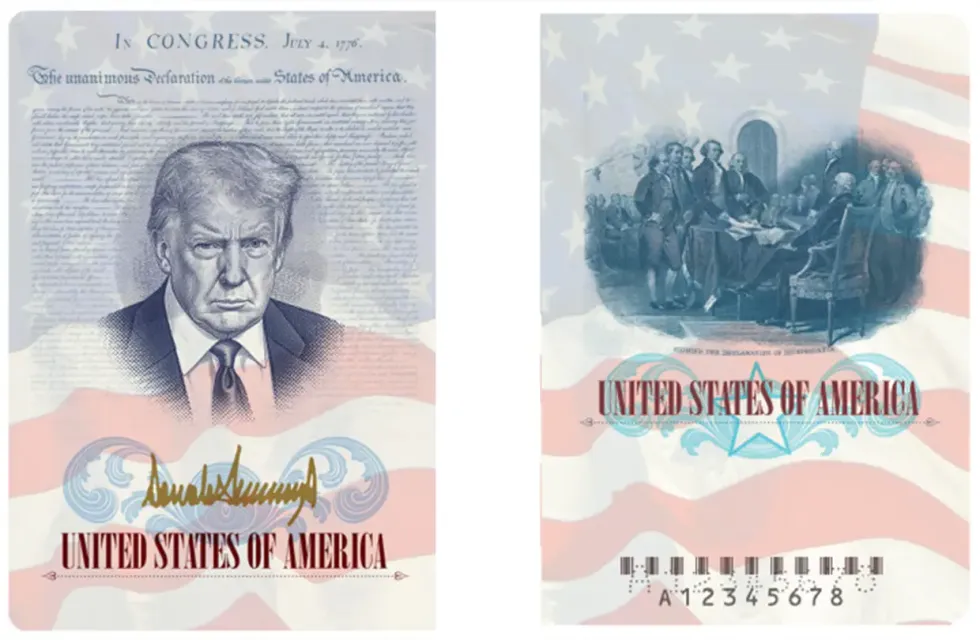 The inner cover of an official commemorative passport for the 250th anniversary of the United States, which featured the image of President Donald Trump. (Photo from the US Department of State via Wikimedia Commons)
In addition, Raskin said the exhibition should include other photos and videos captured by journalists and private citizens documenting the Trump era, as well as personal testimonials from Americans who "resisted and opposed the rise in authoritarianism," including those who participated in protest movements.
In March 2025, Trump signed an executive order directing the Smithsonian to purge its halls of what he called "improper ideology" or risk losing funding, which was followed by sweeping content reviews.
Earlier this week, The Atlantic reported that the White House had conditioned nearly $190 million in Smithsonian funding on its adherence to the order's vague ban on "exhibits or programs that degrade shared American values, divide Americans based on race, or promote programs or ideologies inconsistent with Federal law and policy.”
The museum has bowed to the pressure sometimes in ways that critics deemed "Orwellian," such as when references to Trump were scrubbed from an exhibit on presidential impeachments before being restored following backlash.
In January, a Smithsonian staff member told The Guardian that administrators had objected to the description of the World War II-era internment of Japanese Americans as "unjust" because the label could appear partisan. Another said they changed "diversity" to "variety" in text discussing astronomical objects, fearing that the administration might flag the word during its content reviews.
Raskin said his legislation is aimed at making sure this sort of heavy-handed censorship is not forgotten.
“To avoid repeating this descent into authoritarianism," he said, "we must study this corrupt president’s actions and allow the public to learn about the numerous tools he deployed while attempting to remake American history in his own image and according to his own autocratic and white nationalist beliefs.”
President Donald Trump stands apart from his predecessors with his use of government resources to glorify himself. During his second presidency, he has used taxpayer funds to blast the airwaves with ads singing his praises, drape giant banners of his face from agency buildings, and mint coins bearing his image.
Rep. Jamie Raskin (D-Md.) said the Smithsonian National Museum of American History—which houses some of the nation's most significant historical collections—should preserve artifacts like these as evidence of what he calls Trump's official "governmental propaganda" for future generations.
On Wednesday, Raskin announced a bill that would compel the Smithsonian to collect and preserve objects "reflecting the rise of governmental propaganda, corruption, and authoritarianism" under Trump's two presidencies.
The 2026 America the Beautiful annual national parks pass features President Donald Trump alongside George Washington. (Photo from the US Department of the Interior via Wikimedia Commons)
The legislation comes amid Trump's attempts to warp the Smithsonian's content to reflect his personal view of the nation's history. In July, he signed an executive order directing the Interior Department to erect signs along the walkway warning that it contained exhibits that reflect the “personal, radical ideologies" of the curators.
The language is pulled from a 162-page report released that same month objecting to exhibits that they claim demonstrate "extreme political activism"—including some which highlight the experiences of immigrants, LGBTQ+ people, Native Americans, and other historically marginalized groups. It also claims that the museum does not adequately venerate the nation's founders, while accentuating their faults, including participation in slavery and other historic injustices.
Raskin said that the signs warning passersby of the Smithsonian's dangerous content—which are expected to cost $84,000 to install—are among the artifacts that should be preserved as an example of how authoritarians seek to control media, government, and culture.
He said the signs should be among several other "manifestations of authoritarian narcissism" that the museum should put on display, as well as the "Stalinist" banners of Trump's face that have adorned the departments of Agriculture, Labor, Justice, and Interior.
The inner cover of an official commemorative passport for the 250th anniversary of the United States, which featured the image of President Donald Trump. (Photo from the US Department of State via Wikimedia Commons)
In addition, Raskin said the exhibition should include other photos and videos captured by journalists and private citizens documenting the Trump era, as well as personal testimonials from Americans who "resisted and opposed the rise in authoritarianism," including those who participated in protest movements.
In March 2025, Trump signed an executive order directing the Smithsonian to purge its halls of what he called "improper ideology" or risk losing funding, which was followed by sweeping content reviews.
Earlier this week, The Atlantic reported that the White House had conditioned nearly $190 million in Smithsonian funding on its adherence to the order's vague ban on "exhibits or programs that degrade shared American values, divide Americans based on race, or promote programs or ideologies inconsistent with Federal law and policy.”
The museum has bowed to the pressure sometimes in ways that critics deemed "Orwellian," such as when references to Trump were scrubbed from an exhibit on presidential impeachments before being restored following backlash.
In January, a Smithsonian staff member told The Guardian that administrators had objected to the description of the World War II-era internment of Japanese Americans as "unjust" because the label could appear partisan. Another said they changed "diversity" to "variety" in text discussing astronomical objects, fearing that the administration might flag the word during its content reviews.
Raskin said his legislation is aimed at making sure this sort of heavy-handed censorship is not forgotten.
“To avoid repeating this descent into authoritarianism," he said, "we must study this corrupt president’s actions and allow the public to learn about the numerous tools he deployed while attempting to remake American history in his own image and according to his own autocratic and white nationalist beliefs.”
President Donald Trump stands apart from his predecessors with his use of government resources to glorify himself. During his second presidency, he has used taxpayer funds to blast the airwaves with ads singing his praises, drape giant banners of his face from agency buildings, and mint coins bearing his image.
Rep. Jamie Raskin (D-Md.) said the Smithsonian National Museum of American History—which houses some of the nation's most significant historical collections—should preserve artifacts like these as evidence of what he calls Trump's official "governmental propaganda" for future generations.
On Wednesday, Raskin announced a bill that would compel the Smithsonian to collect and preserve objects "reflecting the rise of governmental propaganda, corruption, and authoritarianism" under Trump's two presidencies.
The 2026 America the Beautiful annual national parks pass features President Donald Trump alongside George Washington. (Photo from the US Department of the Interior via Wikimedia Commons)
The legislation comes amid Trump's attempts to warp the Smithsonian's content to reflect his personal view of the nation's history. In July, he signed an executive order directing the Interior Department to erect signs along the walkway warning that it contained exhibits that reflect the “personal, radical ideologies" of the curators.
The language is pulled from a 162-page report released that same month objecting to exhibits that they claim demonstrate "extreme political activism"—including some which highlight the experiences of immigrants, LGBTQ+ people, Native Americans, and other historically marginalized groups. It also claims that the museum does not adequately venerate the nation's founders, while accentuating their faults, including participation in slavery and other historic injustices.
Raskin said that the signs warning passersby of the Smithsonian's dangerous content—which are expected to cost $84,000 to install—are among the artifacts that should be preserved as an example of how authoritarians seek to control media, government, and culture.
He said the signs should be among several other "manifestations of authoritarian narcissism" that the museum should put on display, as well as the "Stalinist" banners of Trump's face that have adorned the departments of Agriculture, Labor, Justice, and Interior.
The inner cover of an official commemorative passport for the 250th anniversary of the United States, which featured the image of President Donald Trump. (Photo from the US Department of State via Wikimedia Commons)
In addition, Raskin said the exhibition should include other photos and videos captured by journalists and private citizens documenting the Trump era, as well as personal testimonials from Americans who "resisted and opposed the rise in authoritarianism," including those who participated in protest movements.
In March 2025, Trump signed an executive order directing the Smithsonian to purge its halls of what he called "improper ideology" or risk losing funding, which was followed by sweeping content reviews.
Earlier this week, The Atlantic reported that the White House had conditioned nearly $190 million in Smithsonian funding on its adherence to the order's vague ban on "exhibits or programs that degrade shared American values, divide Americans based on race, or promote programs or ideologies inconsistent with Federal law and policy.”
The museum has bowed to the pressure sometimes in ways that critics deemed "Orwellian," such as when references to Trump were scrubbed from an exhibit on presidential impeachments before being restored following backlash.
In January, a Smithsonian staff member told The Guardian that administrators had objected to the description of the World War II-era internment of Japanese Americans as "unjust" because the label could appear partisan. Another said they changed "diversity" to "variety" in text discussing astronomical objects, fearing that the administration might flag the word during its content reviews.
Raskin said his legislation is aimed at making sure this sort of heavy-handed censorship is not forgotten.
“To avoid repeating this descent into authoritarianism," he said, "we must study this corrupt president’s actions and allow the public to learn about the numerous tools he deployed while attempting to remake American history in his own image and according to his own autocratic and white nationalist beliefs.”