SUBSCRIBE TO OUR FREE NEWSLETTER
Daily news & progressive opinion—funded by the people, not the corporations—delivered straight to your inbox.
5
#000000
#FFFFFF
To donate by check, phone, or other method, see our More Ways to Give page.
Daily news & progressive opinion—funded by the people, not the corporations—delivered straight to your inbox.
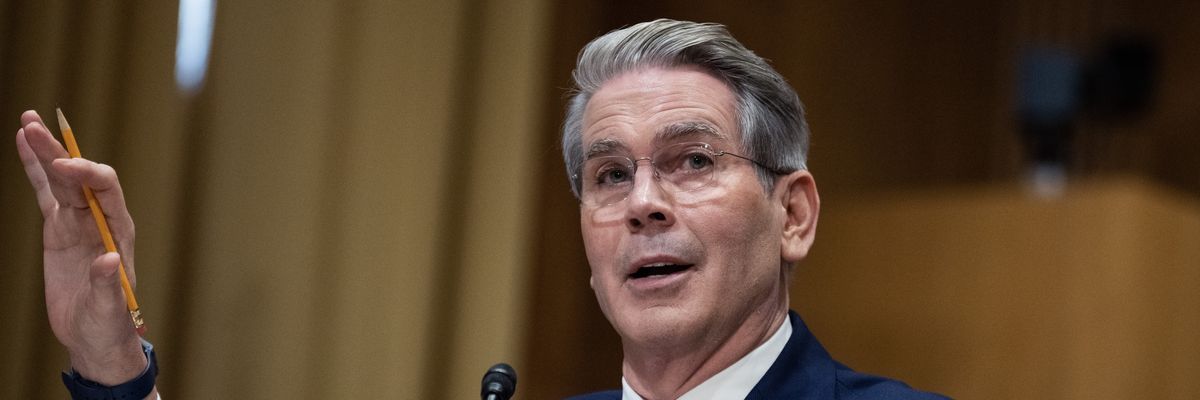
Scott Bessent, the nominee to be treasury secretary in the Trump administration, testifies during his Senate Finance Committee confirmation hearing in Washington, DC on January 16, 2025.
"There is no world in which the US preventing young Iranians from taking English proficiency tests leads to the opening of the Strait of Hormuz, and yet that appears to be the rationale for this cruel new policy.”
A leading grassroots advocacy group for the rights of Iranian Americans called on the Trump administration Monday to rescind the recent message it sent when it announced new sanctions against ordinary Iranians—"that the US is at war with the Iranian people"—and to ensure that "humanitarian, educational, and cultural" entities are exempt from the sanctions.
The National Iranian American Council (NIAC) wrote to Treasury Secretary Scott Bessent and Secretary of State Marco Rubio, warning of the "escalating harm caused by the imminent suspension of long-standing general licenses that had enabled American universities, educational testing and assessment organizations, and other entities to provide educational opportunities to Iranian nationals."
The group appealed to Bessent and Rubio following reports that the Education Testing Service, which administers the Test of English as a Foreign Language (TOEFL) and the Graduate Record Examination (GRE), has suspended testing in Iran following the sanctions. The Duolingo English Test, developed by the language course platform Duolingo, has also been made unavailable in Iran and for students with Iranian IDs.
Despite the fact that President Donald Trump's new sanctions, called "Operation Economic Outcast," are purported to target the Iranian government as it restricts access to the Strait of Hormuz in retaliation for the US-Israeli war against Iran, the policy changes have "no conceivable impact on the Iranian government," wrote NIAC president Jamal Abdi.
"Instead, it is already being felt by American entities and Iranian students," Abdi wrote. "Iranian students have been barred from taking key exams required for academic studies by US organizations."
Abdi called on the administration to immediately reinstate 31 CFR § 560.544, which authorizes "certain educational activities by US persons in third countries," and Iran General License G, which authorizes educational exchanges.
“The Trump administration would be wise to bolster the limited educational, humanitarian, and cultural channels that exist between ordinary Iranians and the United States, rather than send a message that the US is at war with the Iranian people.”
"For years, Iran was among the nations with the highest demand for TOEFL examinations," he wrote. "Regrettably, the severing of these key global educational testing platforms will create major hurdles for Iranian nationals pursuing international education."
The administration's policy changes leave Iranian students facing "overlapping barriers to studying in the United States: a travel ban preventing Iranians from securing US visas, alongside sanctions restricting access to English proficiency exams, educational services, and enrollment in US universities," said NIAC.
“There is no world in which the US preventing young Iranians from taking English proficiency tests leads to the opening of the Strait of Hormuz and yet that appears to be the rationale for this cruel new policy,” said Abdi in a statement. “The Trump administration would be wise to bolster the limited educational, humanitarian, and cultural channels that exist between ordinary Iranians and the United States, rather than send a message that the US is at war with the Iranian people.”
Abdi also urged Bessent and Rubio to reverse the suspension of licenses for Iranian Americans to send remittances to family members in Iran and those that allow sports matches between Iran and the US. The latter suspension, he wrote, "carries significant risk of complicating the 2028 Olympic Games in Los Angeles and reflects poorly on the US as a host nation while yielding no discernible benefit."
The exemptions that have been suspended by the White House, said Abdi, "were first established over a decade ago to resolve harmful unintended consequences of US sanctions, such as cutting ordinary Iranians off from academic opportunities."
"Now, it appears that these have become very much intended consequences aimed at the Iranian people, which is a self-defeating message for the US to send to Iranians and the world,” Abdi continued. “There is absolutely no justification for this."
Dear Common Dreams reader, It’s been nearly 30 years since I co-founded Common Dreams with my late wife, Lina Newhouser. We had the radical notion that journalism should serve the public good, not corporate profits. It was clear to us from the outset what it would take to build such a project. No paid advertisements. No corporate sponsors. No millionaire publisher telling us what to think or do. Many people said we wouldn't last a year, but we proved those doubters wrong. Together with a tremendous team of journalists and dedicated staff, we built an independent media outlet free from the constraints of profits and corporate control. Our mission has always been simple: To inform. To inspire. To ignite change for the common good. Building Common Dreams was not easy. Our survival was never guaranteed. When you take on the most powerful forces—Wall Street greed, fossil fuel industry destruction, Big Tech lobbyists, and uber-rich oligarchs who have spent billions upon billions rigging the economy and democracy in their favor—the only bulwark you have is supporters who believe in your work. But here’s the urgent message from me today. It's never been this bad out there. And it's never been this hard to keep us going. At the very moment Common Dreams is most needed, the threats we face are intensifying. We need your support now more than ever. We don't accept corporate advertising and never will. We don't have a paywall because we don't think people should be blocked from critical news based on their ability to pay. Everything we do is funded by the donations of readers like you. When everyone does the little they can afford, we are strong. But if that support retreats or dries up, so do we. Will you donate now to make sure Common Dreams not only survives but thrives? —Craig Brown, Co-founder |
A leading grassroots advocacy group for the rights of Iranian Americans called on the Trump administration Monday to rescind the recent message it sent when it announced new sanctions against ordinary Iranians—"that the US is at war with the Iranian people"—and to ensure that "humanitarian, educational, and cultural" entities are exempt from the sanctions.
The National Iranian American Council (NIAC) wrote to Treasury Secretary Scott Bessent and Secretary of State Marco Rubio, warning of the "escalating harm caused by the imminent suspension of long-standing general licenses that had enabled American universities, educational testing and assessment organizations, and other entities to provide educational opportunities to Iranian nationals."
The group appealed to Bessent and Rubio following reports that the Education Testing Service, which administers the Test of English as a Foreign Language (TOEFL) and the Graduate Record Examination (GRE), has suspended testing in Iran following the sanctions. The Duolingo English Test, developed by the language course platform Duolingo, has also been made unavailable in Iran and for students with Iranian IDs.
Despite the fact that President Donald Trump's new sanctions, called "Operation Economic Outcast," are purported to target the Iranian government as it restricts access to the Strait of Hormuz in retaliation for the US-Israeli war against Iran, the policy changes have "no conceivable impact on the Iranian government," wrote NIAC president Jamal Abdi.
"Instead, it is already being felt by American entities and Iranian students," Abdi wrote. "Iranian students have been barred from taking key exams required for academic studies by US organizations."
Abdi called on the administration to immediately reinstate 31 CFR § 560.544, which authorizes "certain educational activities by US persons in third countries," and Iran General License G, which authorizes educational exchanges.
“The Trump administration would be wise to bolster the limited educational, humanitarian, and cultural channels that exist between ordinary Iranians and the United States, rather than send a message that the US is at war with the Iranian people.”
"For years, Iran was among the nations with the highest demand for TOEFL examinations," he wrote. "Regrettably, the severing of these key global educational testing platforms will create major hurdles for Iranian nationals pursuing international education."
The administration's policy changes leave Iranian students facing "overlapping barriers to studying in the United States: a travel ban preventing Iranians from securing US visas, alongside sanctions restricting access to English proficiency exams, educational services, and enrollment in US universities," said NIAC.
“There is no world in which the US preventing young Iranians from taking English proficiency tests leads to the opening of the Strait of Hormuz and yet that appears to be the rationale for this cruel new policy,” said Abdi in a statement. “The Trump administration would be wise to bolster the limited educational, humanitarian, and cultural channels that exist between ordinary Iranians and the United States, rather than send a message that the US is at war with the Iranian people.”
Abdi also urged Bessent and Rubio to reverse the suspension of licenses for Iranian Americans to send remittances to family members in Iran and those that allow sports matches between Iran and the US. The latter suspension, he wrote, "carries significant risk of complicating the 2028 Olympic Games in Los Angeles and reflects poorly on the US as a host nation while yielding no discernible benefit."
The exemptions that have been suspended by the White House, said Abdi, "were first established over a decade ago to resolve harmful unintended consequences of US sanctions, such as cutting ordinary Iranians off from academic opportunities."
"Now, it appears that these have become very much intended consequences aimed at the Iranian people, which is a self-defeating message for the US to send to Iranians and the world,” Abdi continued. “There is absolutely no justification for this."
A leading grassroots advocacy group for the rights of Iranian Americans called on the Trump administration Monday to rescind the recent message it sent when it announced new sanctions against ordinary Iranians—"that the US is at war with the Iranian people"—and to ensure that "humanitarian, educational, and cultural" entities are exempt from the sanctions.
The National Iranian American Council (NIAC) wrote to Treasury Secretary Scott Bessent and Secretary of State Marco Rubio, warning of the "escalating harm caused by the imminent suspension of long-standing general licenses that had enabled American universities, educational testing and assessment organizations, and other entities to provide educational opportunities to Iranian nationals."
The group appealed to Bessent and Rubio following reports that the Education Testing Service, which administers the Test of English as a Foreign Language (TOEFL) and the Graduate Record Examination (GRE), has suspended testing in Iran following the sanctions. The Duolingo English Test, developed by the language course platform Duolingo, has also been made unavailable in Iran and for students with Iranian IDs.
Despite the fact that President Donald Trump's new sanctions, called "Operation Economic Outcast," are purported to target the Iranian government as it restricts access to the Strait of Hormuz in retaliation for the US-Israeli war against Iran, the policy changes have "no conceivable impact on the Iranian government," wrote NIAC president Jamal Abdi.
"Instead, it is already being felt by American entities and Iranian students," Abdi wrote. "Iranian students have been barred from taking key exams required for academic studies by US organizations."
Abdi called on the administration to immediately reinstate 31 CFR § 560.544, which authorizes "certain educational activities by US persons in third countries," and Iran General License G, which authorizes educational exchanges.
“The Trump administration would be wise to bolster the limited educational, humanitarian, and cultural channels that exist between ordinary Iranians and the United States, rather than send a message that the US is at war with the Iranian people.”
"For years, Iran was among the nations with the highest demand for TOEFL examinations," he wrote. "Regrettably, the severing of these key global educational testing platforms will create major hurdles for Iranian nationals pursuing international education."
The administration's policy changes leave Iranian students facing "overlapping barriers to studying in the United States: a travel ban preventing Iranians from securing US visas, alongside sanctions restricting access to English proficiency exams, educational services, and enrollment in US universities," said NIAC.
“There is no world in which the US preventing young Iranians from taking English proficiency tests leads to the opening of the Strait of Hormuz and yet that appears to be the rationale for this cruel new policy,” said Abdi in a statement. “The Trump administration would be wise to bolster the limited educational, humanitarian, and cultural channels that exist between ordinary Iranians and the United States, rather than send a message that the US is at war with the Iranian people.”
Abdi also urged Bessent and Rubio to reverse the suspension of licenses for Iranian Americans to send remittances to family members in Iran and those that allow sports matches between Iran and the US. The latter suspension, he wrote, "carries significant risk of complicating the 2028 Olympic Games in Los Angeles and reflects poorly on the US as a host nation while yielding no discernible benefit."
The exemptions that have been suspended by the White House, said Abdi, "were first established over a decade ago to resolve harmful unintended consequences of US sanctions, such as cutting ordinary Iranians off from academic opportunities."
"Now, it appears that these have become very much intended consequences aimed at the Iranian people, which is a self-defeating message for the US to send to Iranians and the world,” Abdi continued. “There is absolutely no justification for this."