SUBSCRIBE TO OUR FREE NEWSLETTER
Daily news & progressive opinion—funded by the people, not the corporations—delivered straight to your inbox.
5
#000000
#FFFFFF
To donate by check, phone, or other method, see our More Ways to Give page.
Daily news & progressive opinion—funded by the people, not the corporations—delivered straight to your inbox.
US District Judge Indira Talwani said states will "face irreparable harm where they are required to comply with a likely unconstitutional regulation for which compliance is practically impossible as to the 2026 midterm elections," now just two months away.
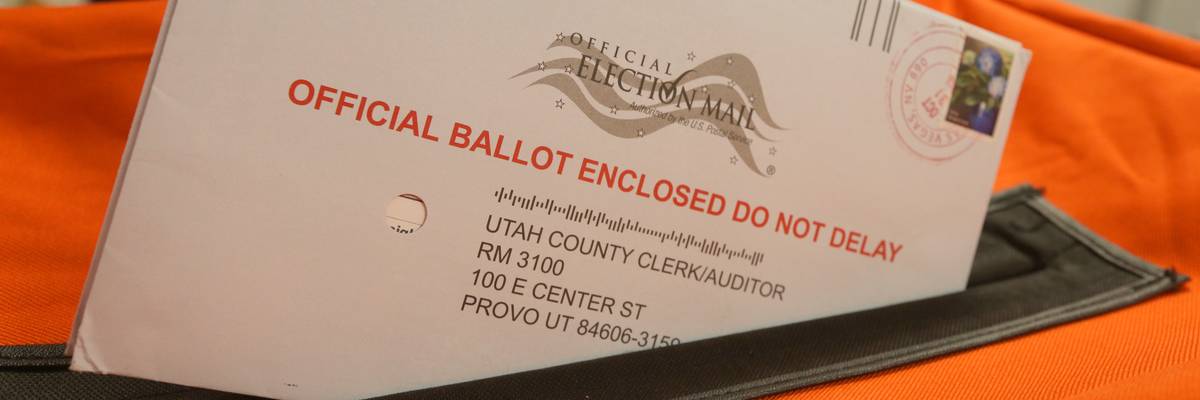
A federal judge in Boston on Thursday evening issued a new and complete block on rules recently set forth by the US Postal Service designed to severely restrict mail-in voting nationwide—a ruling that comes just days after the US Supreme Court put a hold on a previous, similar injunction against the rules that stemmed from an executive order issued last year by President Donald Trump.
US District Judge Indira Talwani said the group of Democratic-led states and voting rights group that filed separate legal challenges over the changes to how the USPS would handle mail-in ballots adequately proved that they would "face irreparable harm where they are required to comply with a likely unconstitutional regulation for which compliance is practically impossible as to the 2026 midterm elections, now little more than two months away."
When the Supreme Court ruled Monday on the lawsuit, it lifted a previous injunction ordered by Judge Talwani, ruling not on the legality of the rules themselves but arguing that the states and other plaintiffs did not have proper legal standing at the time because the Postal Service had yet to release the finalized rules stemming from Trump's order at the time the lawsuit was filed.
However, because the USPS did finalize its rules at the end of last week, Talwani's new temporary injunction ordered on Thursday would not fall prey to that dynamic. As the New York Times reports:
[Talwani] wrote that while the Supreme Court had “admonished” her on Monday that the Postal Service had not finalized any changes when the groups sued initially, making court action premature, the stakes had changed since then because of the step the agency took Friday to formalize its plan.
Her ruling marked the third court decision on the issue in less than a week, a whipsaw of action that threatened to confuse voters. But each delay has reduced the administration’s chances of clearing the legal hurdles to execute its logistically complicated mail-in ballot plan before the November election. She blocked the rule from taking effect for 14 days, and she had previously scheduled a hearing to discuss the legality of the rule on Sept. 3.
In her order, Judge Talwani explained that the prospect of the new rule suddenly taking effect carried “significant risk of their members’ disenfranchisement” for voting rights organizations, which had also sued, along with the states.
Counsel and plaintiffs in the lawsuit by voting rights groups—led by the League of Women Voters of Massachusetts—issued a statement welcoming Thursday's decision.
“The Administration previously dismissed plaintiffs’ ongoing harms from the executive order as speculative, but the newly finalized rule confirmed what plaintiffs have been saying all along," the statement read. "The Rule implements the Executive Order’s unprecedented attempt to usurp electoral authority from the states and Congress at the expense of voters. We welcome the court’s order, which recognized the immediate need to protect the entire electorate from the damaging impacts of this unlawful final rule in the lead-up to November’s general elections. This is an important step towards affirming the public’s confidence in the system of mail ballots, which thousands of eligible voters nationwide rely on as a core method of democratic participation.”
After Monday's ruling by the Supreme Court, the group's behind the challenge vowed to keep fighting and introduced a new round of legal challenges.
"USPS’s decision to rush this blatantly unconstitutional rule into effect just weeks before an election is the latest step in a rollout that has sown confusion at every turn and now threatens to disenfranchise voters who did everything right. This is chaos by design, and voters are the ones who will pay for it,” warned Sophia Lin Lakin, director of the ACLU's Voting Rights Project, on Wednesday.
Attorneys General from the coalition of 24 states that had challenged the rule also welcomed Talwani's latest intervention.
“From the beginning, it’s been clear that President Trump doesn’t understand how elections work. He’s repeatedly broken the law, so we’ve repeatedly taken him to court,” said California Attorney General Bonta in a statement. “On Monday, the US Supreme Court issued an order on the emergency docket stating we brought our lawsuit too early but did not address the merits of our challenge to the President’s executive order seeking to impose additional, unlawful restrictions on the ability to vote by mail. Just two days later, consistent with that order, we sued to stop the illegal USPS rule in its tracks. Today, the district court blocked the rule, making it clear that President Trump must keep his hands off our elections. The right to vote is a foundational principle of our democracy, and we’re making sure it remains protected for everyone.”
With the Trump administration almost certain to appeal, the case is likely headed back to the US Supreme Court, likely on a fast track, to decide the legal merits presented by the challengers.
Dear Common Dreams reader, It’s been nearly 30 years since I co-founded Common Dreams with my late wife, Lina Newhouser. We had the radical notion that journalism should serve the public good, not corporate profits. It was clear to us from the outset what it would take to build such a project. No paid advertisements. No corporate sponsors. No millionaire publisher telling us what to think or do. Many people said we wouldn't last a year, but we proved those doubters wrong. Together with a tremendous team of journalists and dedicated staff, we built an independent media outlet free from the constraints of profits and corporate control. Our mission has always been simple: To inform. To inspire. To ignite change for the common good. Building Common Dreams was not easy. Our survival was never guaranteed. When you take on the most powerful forces—Wall Street greed, fossil fuel industry destruction, Big Tech lobbyists, and uber-rich oligarchs who have spent billions upon billions rigging the economy and democracy in their favor—the only bulwark you have is supporters who believe in your work. But here’s the urgent message from me today. It's never been this bad out there. And it's never been this hard to keep us going. At the very moment Common Dreams is most needed, the threats we face are intensifying. We need your support now more than ever. We don't accept corporate advertising and never will. We don't have a paywall because we don't think people should be blocked from critical news based on their ability to pay. Everything we do is funded by the donations of readers like you. When everyone does the little they can afford, we are strong. But if that support retreats or dries up, so do we. Will you donate now to make sure Common Dreams not only survives but thrives? —Craig Brown, Co-founder |
A federal judge in Boston on Thursday evening issued a new and complete block on rules recently set forth by the US Postal Service designed to severely restrict mail-in voting nationwide—a ruling that comes just days after the US Supreme Court put a hold on a previous, similar injunction against the rules that stemmed from an executive order issued last year by President Donald Trump.
US District Judge Indira Talwani said the group of Democratic-led states and voting rights group that filed separate legal challenges over the changes to how the USPS would handle mail-in ballots adequately proved that they would "face irreparable harm where they are required to comply with a likely unconstitutional regulation for which compliance is practically impossible as to the 2026 midterm elections, now little more than two months away."
When the Supreme Court ruled Monday on the lawsuit, it lifted a previous injunction ordered by Judge Talwani, ruling not on the legality of the rules themselves but arguing that the states and other plaintiffs did not have proper legal standing at the time because the Postal Service had yet to release the finalized rules stemming from Trump's order at the time the lawsuit was filed.
However, because the USPS did finalize its rules at the end of last week, Talwani's new temporary injunction ordered on Thursday would not fall prey to that dynamic. As the New York Times reports:
[Talwani] wrote that while the Supreme Court had “admonished” her on Monday that the Postal Service had not finalized any changes when the groups sued initially, making court action premature, the stakes had changed since then because of the step the agency took Friday to formalize its plan.
Her ruling marked the third court decision on the issue in less than a week, a whipsaw of action that threatened to confuse voters. But each delay has reduced the administration’s chances of clearing the legal hurdles to execute its logistically complicated mail-in ballot plan before the November election. She blocked the rule from taking effect for 14 days, and she had previously scheduled a hearing to discuss the legality of the rule on Sept. 3.
In her order, Judge Talwani explained that the prospect of the new rule suddenly taking effect carried “significant risk of their members’ disenfranchisement” for voting rights organizations, which had also sued, along with the states.
Counsel and plaintiffs in the lawsuit by voting rights groups—led by the League of Women Voters of Massachusetts—issued a statement welcoming Thursday's decision.
“The Administration previously dismissed plaintiffs’ ongoing harms from the executive order as speculative, but the newly finalized rule confirmed what plaintiffs have been saying all along," the statement read. "The Rule implements the Executive Order’s unprecedented attempt to usurp electoral authority from the states and Congress at the expense of voters. We welcome the court’s order, which recognized the immediate need to protect the entire electorate from the damaging impacts of this unlawful final rule in the lead-up to November’s general elections. This is an important step towards affirming the public’s confidence in the system of mail ballots, which thousands of eligible voters nationwide rely on as a core method of democratic participation.”
After Monday's ruling by the Supreme Court, the group's behind the challenge vowed to keep fighting and introduced a new round of legal challenges.
"USPS’s decision to rush this blatantly unconstitutional rule into effect just weeks before an election is the latest step in a rollout that has sown confusion at every turn and now threatens to disenfranchise voters who did everything right. This is chaos by design, and voters are the ones who will pay for it,” warned Sophia Lin Lakin, director of the ACLU's Voting Rights Project, on Wednesday.
Attorneys General from the coalition of 24 states that had challenged the rule also welcomed Talwani's latest intervention.
“From the beginning, it’s been clear that President Trump doesn’t understand how elections work. He’s repeatedly broken the law, so we’ve repeatedly taken him to court,” said California Attorney General Bonta in a statement. “On Monday, the US Supreme Court issued an order on the emergency docket stating we brought our lawsuit too early but did not address the merits of our challenge to the President’s executive order seeking to impose additional, unlawful restrictions on the ability to vote by mail. Just two days later, consistent with that order, we sued to stop the illegal USPS rule in its tracks. Today, the district court blocked the rule, making it clear that President Trump must keep his hands off our elections. The right to vote is a foundational principle of our democracy, and we’re making sure it remains protected for everyone.”
With the Trump administration almost certain to appeal, the case is likely headed back to the US Supreme Court, likely on a fast track, to decide the legal merits presented by the challengers.
A federal judge in Boston on Thursday evening issued a new and complete block on rules recently set forth by the US Postal Service designed to severely restrict mail-in voting nationwide—a ruling that comes just days after the US Supreme Court put a hold on a previous, similar injunction against the rules that stemmed from an executive order issued last year by President Donald Trump.
US District Judge Indira Talwani said the group of Democratic-led states and voting rights group that filed separate legal challenges over the changes to how the USPS would handle mail-in ballots adequately proved that they would "face irreparable harm where they are required to comply with a likely unconstitutional regulation for which compliance is practically impossible as to the 2026 midterm elections, now little more than two months away."
When the Supreme Court ruled Monday on the lawsuit, it lifted a previous injunction ordered by Judge Talwani, ruling not on the legality of the rules themselves but arguing that the states and other plaintiffs did not have proper legal standing at the time because the Postal Service had yet to release the finalized rules stemming from Trump's order at the time the lawsuit was filed.
However, because the USPS did finalize its rules at the end of last week, Talwani's new temporary injunction ordered on Thursday would not fall prey to that dynamic. As the New York Times reports:
[Talwani] wrote that while the Supreme Court had “admonished” her on Monday that the Postal Service had not finalized any changes when the groups sued initially, making court action premature, the stakes had changed since then because of the step the agency took Friday to formalize its plan.
Her ruling marked the third court decision on the issue in less than a week, a whipsaw of action that threatened to confuse voters. But each delay has reduced the administration’s chances of clearing the legal hurdles to execute its logistically complicated mail-in ballot plan before the November election. She blocked the rule from taking effect for 14 days, and she had previously scheduled a hearing to discuss the legality of the rule on Sept. 3.
In her order, Judge Talwani explained that the prospect of the new rule suddenly taking effect carried “significant risk of their members’ disenfranchisement” for voting rights organizations, which had also sued, along with the states.
Counsel and plaintiffs in the lawsuit by voting rights groups—led by the League of Women Voters of Massachusetts—issued a statement welcoming Thursday's decision.
“The Administration previously dismissed plaintiffs’ ongoing harms from the executive order as speculative, but the newly finalized rule confirmed what plaintiffs have been saying all along," the statement read. "The Rule implements the Executive Order’s unprecedented attempt to usurp electoral authority from the states and Congress at the expense of voters. We welcome the court’s order, which recognized the immediate need to protect the entire electorate from the damaging impacts of this unlawful final rule in the lead-up to November’s general elections. This is an important step towards affirming the public’s confidence in the system of mail ballots, which thousands of eligible voters nationwide rely on as a core method of democratic participation.”
After Monday's ruling by the Supreme Court, the group's behind the challenge vowed to keep fighting and introduced a new round of legal challenges.
"USPS’s decision to rush this blatantly unconstitutional rule into effect just weeks before an election is the latest step in a rollout that has sown confusion at every turn and now threatens to disenfranchise voters who did everything right. This is chaos by design, and voters are the ones who will pay for it,” warned Sophia Lin Lakin, director of the ACLU's Voting Rights Project, on Wednesday.
Attorneys General from the coalition of 24 states that had challenged the rule also welcomed Talwani's latest intervention.
“From the beginning, it’s been clear that President Trump doesn’t understand how elections work. He’s repeatedly broken the law, so we’ve repeatedly taken him to court,” said California Attorney General Bonta in a statement. “On Monday, the US Supreme Court issued an order on the emergency docket stating we brought our lawsuit too early but did not address the merits of our challenge to the President’s executive order seeking to impose additional, unlawful restrictions on the ability to vote by mail. Just two days later, consistent with that order, we sued to stop the illegal USPS rule in its tracks. Today, the district court blocked the rule, making it clear that President Trump must keep his hands off our elections. The right to vote is a foundational principle of our democracy, and we’re making sure it remains protected for everyone.”
With the Trump administration almost certain to appeal, the case is likely headed back to the US Supreme Court, likely on a fast track, to decide the legal merits presented by the challengers.